Plant Microbiome Modulating Crop Protectant Market
Plant Microbiome Modulating Crop Protectant Market Size and Share Forecast Outlook 2026 to 2036
Plant microbiome modulating crop protectant market is projected to grow from USD 0.7 billion in 2026 to USD 2.2 billion by 2036, at a CAGR of 12.1%. Microbial Consortia Formulations will dominate with a 31.0% market share, while cereals & grains will lead the crop type segment with a 33.0% share.
Plant Microbiome Modulating Crop Protectant Market Forecast and Outlook 2026 to 2036
The global plant microbiome modulating crop protectant market is projected to grow from USD 0.69 billion in 2026 to approximately USD 2.15 billion by 2036, recording a forecast CAGR of 12.1%. Microbial consortia formulations lead product type with a 31% share, cereals & grains dominate crop type with 33%, and seed treatment commands the application method segment with a 41% market share.
Key Takeaways from the Plant Microbiome Modulating Crop Protectant Market Report
- Plant Microbiome Modulating Crop Protectant Market Value (2026): USD 0.69 billion
- Plant Microbiome Modulating Crop Protectant Market Forecast Value (2036): USD 2.15 billion
- Plant Microbiome Modulating Crop Protectant Market Forecast CAGR (2026 to 2036): 12.1%
- Leading Product Type: Microbial Consortia Formulations (31%)
- Leading Crop Type: Cereals & Grains (33%)
- Leading Application Method: Seed Treatment (41%)
- Key Growth Regions: North America, Latin America, Western Europe, Eastern Europe, East Asia, South Asia & Pacific, MEA
- Key Players: Bayer CropScience, BASF SE, Syngenta Group, Corteva Agriscience, Novozymes
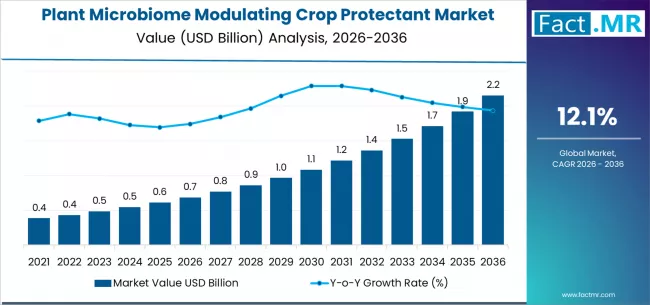
This rapid expansion is propelled by the urgent need for sustainable agricultural solutions that reduce chemical dependency while enhancing crop resilience. These protectants work by enriching beneficial soil and plant-associated microbial communities, which improve nutrient uptake, suppress pathogens, and help plants withstand abiotic stresses.
Advancements in microbial genomics and fermentation technology are significantly lowering production costs and improving product stability, making these biologicals more commercially viable. Stringent regulatory policies limiting chemical pesticide use and strong consumer demand for sustainably produced food are compelling growers to adopt microbiome-based solutions.
The convergence of precision agriculture tools, which allow for tailored application, and the integration of these products into conventional crop protection programs as complementary tools creates a robust growth pathway. The market is poised for significant penetration in regions with large-scale staple crop production and those actively promoting organic and regenerative farming practices.
Plant Microbiome Modulating Crop Protectant Market
| Metric | Value |
|---|---|
| Estimated Value (2026E) | USD 0.69 billion |
| Forecast Value (2036F) | USD 2.15 billion |
| Forecast CAGR (2026 to 2036) | 12.1% |
Segmentation Table
| Category | Segments |
|---|---|
| Product Type | Microbial Consortia Formulations, Beneficial Bacteria-based Protectants, Fungal-based Bioprotectants, Microbiome Activators & Stimulants, Others |
| Crop Type | Cereals & Grains, Fruits & Vegetables, Oilseeds & Pulses, Plantation & Specialty Crops, Others |
| Application Method | Seed Treatment, Soil Application, Foliar Spray |
| Region | North America, Latin America, Western Europe, Eastern Europe, East Asia, South Asia & Pacific, MEA |
Segmental Analysis
How do Microbial Consortia Formulations Drive Innovation through Synergistic Action?
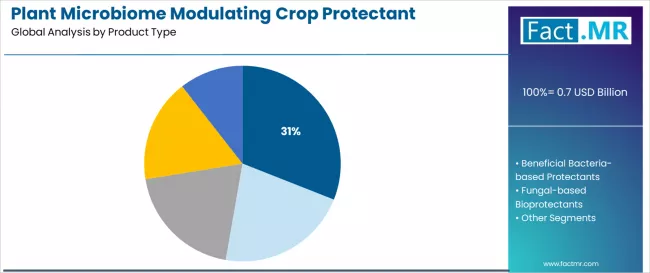
Microbial consortia formulations, leading with a 31% market share, represent the most advanced product category by leveraging synergistic interactions between multiple beneficial microorganisms. These multi-strain products offer broader and more resilient functionality compared to single-strain solutions, mimicking natural soil ecosystems.
They can simultaneously fix nitrogen, solubilize phosphorus, produce growth hormones, and induce systemic resistance in plants. This comprehensive approach to plant health management aligns with the holistic principles of regenerative agriculture. Their development is fueled by greater understanding of microbial ecology and advances in formulation technology that ensure the viability and compatibility of different strains within a single product.
What establishes Cereals & Grains as the Primary Crop Segment for Adoption?
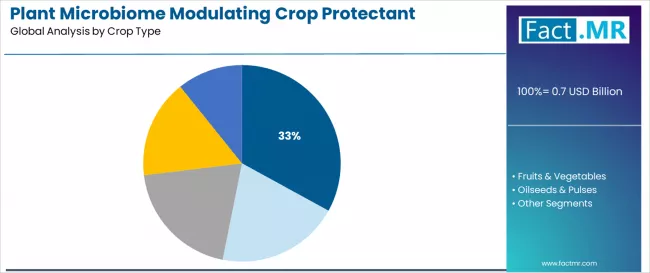
The cereals and grains segment commands a dominant 33% share due to the immense global acreage dedicated to staple crops like wheat, rice, and corn, where even marginal yield improvements have significant economic and food security impacts. The high cost of chemical inputs in these systems creates a strong incentive for integrating biological alternatives that can reduce expenditure.
Seed treatment, the leading application method, is perfectly suited for large-scale grain farming, ensuring early establishment of beneficial microbes. Furthermore, growing sustainability commitments from major food corporations and grain traders are pushing growers in this segment toward microbiome-based solutions to lower the environmental footprint of production.
Why does Seed Treatment Emerge as the Preferred Application Method for Lasting Effects?
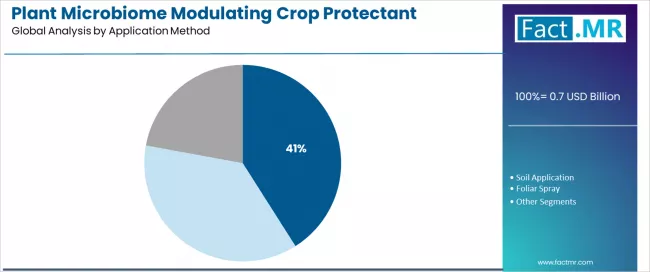
Seed treatment is the leading application method with a 41% share because it establishes a protective and beneficial microbial consortium directly in the rhizosphere from the moment of germination. This method provides the most efficient and targeted delivery, ensuring early colonization of young roots to enhance seedling vigor, improve stress tolerance, and protect against soil-borne diseases.
It integrates seamlessly into existing seed processing infrastructure with minimal additional labor or equipment costs for the farmer. The long-lasting effect of a well-established microbiome initiated at planting offers sustained benefits throughout the crop cycle, delivering strong value and justifying its preference over foliar or soil drench applications.
What are the Drivers, Restraints, and Key Trends of the Plant Microbiome Modulating Crop Protectant Market?
Market growth is primarily driven by the global shift toward sustainable agriculture, stringent regulations on chemical pesticides, and rising consumer demand for organic produce. Increased understanding of plant-microbe interactions through advanced research also fuels product development. Key restraints include variable field efficacy due to environmental factors, higher initial cost compared to conventional chemicals, and a slower visible action that challenges farmer perception. Technical challenges in mass-producing stable, viable microbial formulations also pose a hurdle.
Key trends include the development of customized microbial consortia tailored to specific crops, soils, and climatic conditions. The integration of microbiome modulators with biocontrol agents and biostimulants into combination products is gaining traction. There is also a growing focus on digital tools and diagnostics to map soil microbiomes and recommend targeted products, moving toward precision biological farming.
Analysis of the Plant Microbiome Modulating Crop Protectant Market by Key Countries

| Country | CAGR (2026-2036) |
|---|---|
| India | 14.20% |
| China | 12.50% |
| Brazil | 11.40% |
| USA | 10.10% |
| France | 9.30% |
How does India Lead Growth with a Push for Sustainable Staple Crop Production?
India exhibits the highest CAGR of 14.20%, driven by government initiatives promoting natural farming and reducing chemical fertilizer use. The massive scale of cereal and pulse production provides a vast addressable market.
Growing farmer awareness of soil health degradation and the success of early biological products are accelerating adoption. Local production of affordable microbial products and strong distribution networks in agricultural regions are key enablers for this rapid growth.
What Fuels China's Expansion through Policy-Led Agricultural Transformation?
China follows with a 12.50% CAGR, supported by national policies like the Zero-Growth Action Plan for Chemical Fertilizers and Pesticides. The country's large-scale vegetable and fruit production under protected cultivation values these protectants for residue-free harvests.
Significant government and corporate investment in agricultural biotechnology is yielding locally developed, high-quality microbial products tailored to Chinese soils and major crops, driving domestic adoption.
Why does Brazil show Strong Growth in Integrated Biologicial Systems?
Brazil's market grows at an 11.40% CAGR, fueled by its leadership in tropical agriculture and the widespread adoption of Integrated Pest Management (IPM) and no-till farming systems. These systems are highly compatible with microbiome enhancers.
The vast soybean and corn acreage presents a monumental opportunity for seed treatment applications. The progressive nature of Brazilian agribusiness, focused on productivity and sustainability for export markets, makes it a receptive early adopter of advanced biological solutions.
What Supports Robust Adoption in the USA’s Agricultural Market?
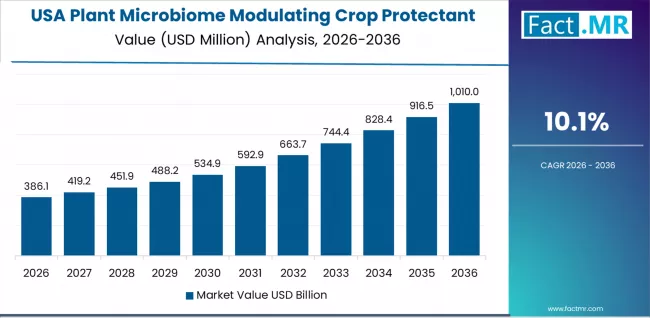
The USA progresses at a 10.10% CAGR, where adoption is driven by strong demand for regenerative practices from food companies and consumers. The well-developed distribution channels for seed treatment technologies facilitate easy integration.
Large-scale corn and soybean farmers are increasingly using these products as part of sophisticated biological stacks to optimize input efficiency and meet sustainability goals, supported by extensive agronomic research from both companies and universities.
How does France Exemplify European Leadership in Sustainable Farming?
France, with a CAGR of 9.30%, is a key European driver due to its ambitious national plans to drastically reduce pesticide use and promote agroecology. The strong presence of organic farming and value chains that reward sustainable practices creates a ready market.
French vineyards and high-value horticulture, sensitive to pesticide residues and soil health, are early and significant adopters of microbiome-based solutions to maintain quality and comply with stringent environmental standards.
Competitive Landscape of the Plant Microbiome Modulating Crop Protectant Market

The competitive landscape is characterized by intense rivalry between established agrochemical giants expanding into biologics and specialized biotechnology firms. Competition hinges on technological leadership in microbial strain discovery, fermentation, and formulation technologies that ensure product efficacy and shelf-life. Strategic partnerships with seed companies are crucial for integrating products into seed treatment pipelines.
Companies are heavily investing in field trial networks to generate robust, localized efficacy data and build agronomic support programs. A key differentiator is the development of proprietary microbial platforms and consortia that offer unique modes of action. Success in this market increasingly depends on combining scientific credibility with strong technical service to educate growers and ensure correct product use.
Key Players Profiled in the Plant Microbiome Modulating Crop Protectant Market
- Bayer CropScience
- BASF SE
- Syngenta Group
- Corteva Agriscience
- Novozymes
Scope of the Report
| Items | Values |
|---|---|
| Quantitative Units (2026) | USD 0.69 Billion |
| Product Type | Microbial Consortia Formulations, Beneficial Bacteria-based Protectants, Fungal-based Bioprotectants, Microbiome Activators & Stimulants, Others |
| Crop Type | Cereals & Grains, Fruits & Vegetables, Oilseeds & Pulses, Plantation & Specialty Crops, Others |
| Application Method | Seed Treatment, Soil Application, Foliar Spray |
| Regions Covered | North America, Latin America, Western Europe, Eastern Europe, East Asia, South Asia & Pacific, MEA |
| Countries Covered | USA, India, China, Brazil, France and others |
| Key Companies Profiled | Bayer CropScience, BASF SE, Syngenta Group, Corteva Agriscience, Novozymes |
| Additional Attributes | Dollar sales by product type, crop type, and application method; regional demand analysis; competitive landscape; grower adoption patterns; regulatory and sustainability trends; R&D focus areas |
Plant Microbiome Modulation Crop Protectant Market by Key Segments
-
Product Type :
- Microbial Consortia Formulations
- Beneficial Bacteria-based Protectants
- Fungal-based Bioprotectants
- Microbiome Activators & Stimulants
- Others
-
Crop Type :
- Cereals & Grains
- Fruits & Vegetables
- Oilseeds & Pulses
- Plantation & Specialty Crops
- Others
-
Application Method :
- Seed Treatment
- Soil Application
- Foliar Spray
-
Region :
-
North America
- USA
- Canada
-
Latin America
- Brazil
- Mexico
- Argentina
- Chile
- Rest of Latin America
-
Western Europe
- Germany
- UK
- France
- Spain
- Italy
- BENELUX
- Rest of Western Europe
-
Eastern Europe
- Poland
- Czech Republic
- Austria
- Hungary
- Rest of Eastern Europe
-
East Asia
- China
- Japan
- South Korea
- Rest of East Asia
-
South Asia & Pacific
- India
- Indonesia
- Australia
- Rest of South Asia & Pacific
-
MEA
- Saudi Arabia
- UAE
- Türkiye
- Rest of MEA
-
Table of Content
- Executive Summary
- Global Market Outlook
- Demand to side Trends
- Supply to side Trends
- Technology Roadmap Analysis
- Analysis and Recommendations
- Market Overview
- Market Coverage / Taxonomy
- Market Definition / Scope / Limitations
- Market Background
- Market Dynamics
- Drivers
- Restraints
- Opportunity
- Trends
- Scenario Forecast
- Demand in Optimistic Scenario
- Demand in Likely Scenario
- Demand in Conservative Scenario
- Opportunity Map Analysis
- Product Life Cycle Analysis
- Supply Chain Analysis
- Investment Feasibility Matrix
- Value Chain Analysis
- PESTLE and Porter’s Analysis
- Regulatory Landscape
- Regional Parent Market Outlook
- Production and Consumption Statistics
- Import and Export Statistics
- Market Dynamics
- Global Market Analysis 2021 to 2025 and Forecast, 2026 to 2036
- Historical Market Size Value (USD Million) Analysis, 2021 to 2025
- Current and Future Market Size Value (USD Million) Projections, 2026 to 2036
- Y to o to Y Growth Trend Analysis
- Absolute $ Opportunity Analysis
- Global Market Pricing Analysis 2021 to 2025 and Forecast 2026 to 2036
- Global Market Analysis 2021 to 2025 and Forecast 2026 to 2036, By Product Type
- Introduction / Key Findings
- Historical Market Size Value (USD Million) Analysis By Product Type, 2021 to 2025
- Current and Future Market Size Value (USD Million) Analysis and Forecast By Product Type, 2026 to 2036
- Microbial Consortia Formulations
- Beneficial Bacteria-based Protectants
- Fungal-based Bioprotectants
- Microbiome Activators & Stimulants
- Others
- Microbial Consortia Formulations
- Y to o to Y Growth Trend Analysis By Product Type, 2021 to 2025
- Absolute $ Opportunity Analysis By Product Type, 2026 to 2036
- Global Market Analysis 2021 to 2025 and Forecast 2026 to 2036, By Crop Type
- Introduction / Key Findings
- Historical Market Size Value (USD Million) Analysis By Crop Type, 2021 to 2025
- Current and Future Market Size Value (USD Million) Analysis and Forecast By Crop Type, 2026 to 2036
- Cereals & Grains
- Fruits & Vegetables
- Oilseeds & Pulses
- Plantation & Specialty Crops
- Others
- Cereals & Grains
- Y to o to Y Growth Trend Analysis By Crop Type, 2021 to 2025
- Absolute $ Opportunity Analysis By Crop Type, 2026 to 2036
- Global Market Analysis 2021 to 2025 and Forecast 2026 to 2036, By Application Method
- Introduction / Key Findings
- Historical Market Size Value (USD Million) Analysis By Application Method, 2021 to 2025
- Current and Future Market Size Value (USD Million) Analysis and Forecast By Application Method, 2026 to 2036
- Seed Treatment
- Soil Application
- Foliar Spray
- Seed Treatment
- Y to o to Y Growth Trend Analysis By Application Method, 2021 to 2025
- Absolute $ Opportunity Analysis By Application Method, 2026 to 2036
- Global Market Analysis 2021 to 2025 and Forecast 2026 to 2036, By Region
- Introduction
- Historical Market Size Value (USD Million) Analysis By Region, 2021 to 2025
- Current Market Size Value (USD Million) Analysis and Forecast By Region, 2026 to 2036
- North America
- Latin America
- Western Europe
- Eastern Europe
- East Asia
- South Asia and Pacific
- Middle East & Africa
- Market Attractiveness Analysis By Region
- North America Market Analysis 2021 to 2025 and Forecast 2026 to 2036, By Country
- Historical Market Size Value (USD Million) Trend Analysis By Market Taxonomy, 2021 to 2025
- Market Size Value (USD Million) Forecast By Market Taxonomy, 2026 to 2036
- By Country
- USA
- Canada
- Mexico
- By Product Type
- By Crop Type
- By Application Method
- By Country
- Market Attractiveness Analysis
- By Country
- By Product Type
- By Crop Type
- By Application Method
- Key Takeaways
- Latin America Market Analysis 2021 to 2025 and Forecast 2026 to 2036, By Country
- Historical Market Size Value (USD Million) Trend Analysis By Market Taxonomy, 2021 to 2025
- Market Size Value (USD Million) Forecast By Market Taxonomy, 2026 to 2036
- By Country
- Brazil
- Chile
- Rest of Latin America
- By Product Type
- By Crop Type
- By Application Method
- By Country
- Market Attractiveness Analysis
- By Country
- By Product Type
- By Crop Type
- By Application Method
- Key Takeaways
- Western Europe Market Analysis 2021 to 2025 and Forecast 2026 to 2036, By Country
- Historical Market Size Value (USD Million) Trend Analysis By Market Taxonomy, 2021 to 2025
- Market Size Value (USD Million) Forecast By Market Taxonomy, 2026 to 2036
- By Country
- Germany
- UK
- Italy
- Spain
- France
- Nordic
- BENELUX
- Rest of Western Europe
- By Product Type
- By Crop Type
- By Application Method
- By Country
- Market Attractiveness Analysis
- By Country
- By Product Type
- By Crop Type
- By Application Method
- Key Takeaways
- Eastern Europe Market Analysis 2021 to 2025 and Forecast 2026 to 2036, By Country
- Historical Market Size Value (USD Million) Trend Analysis By Market Taxonomy, 2021 to 2025
- Market Size Value (USD Million) Forecast By Market Taxonomy, 2026 to 2036
- By Country
- Russia
- Poland
- Hungary
- Balkan & Baltic
- Rest of Eastern Europe
- By Product Type
- By Crop Type
- By Application Method
- By Country
- Market Attractiveness Analysis
- By Country
- By Product Type
- By Crop Type
- By Application Method
- Key Takeaways
- East Asia Market Analysis 2021 to 2025 and Forecast 2026 to 2036, By Country
- Historical Market Size Value (USD Million) Trend Analysis By Market Taxonomy, 2021 to 2025
- Market Size Value (USD Million) Forecast By Market Taxonomy, 2026 to 2036
- By Country
- China
- Japan
- South Korea
- By Product Type
- By Crop Type
- By Application Method
- By Country
- Market Attractiveness Analysis
- By Country
- By Product Type
- By Crop Type
- By Application Method
- Key Takeaways
- South Asia and Pacific Market Analysis 2021 to 2025 and Forecast 2026 to 2036, By Country
- Historical Market Size Value (USD Million) Trend Analysis By Market Taxonomy, 2021 to 2025
- Market Size Value (USD Million) Forecast By Market Taxonomy, 2026 to 2036
- By Country
- India
- ASEAN
- Australia & New Zealand
- Rest of South Asia and Pacific
- By Product Type
- By Crop Type
- By Application Method
- By Country
- Market Attractiveness Analysis
- By Country
- By Product Type
- By Crop Type
- By Application Method
- Key Takeaways
- Middle East & Africa Market Analysis 2021 to 2025 and Forecast 2026 to 2036, By Country
- Historical Market Size Value (USD Million) Trend Analysis By Market Taxonomy, 2021 to 2025
- Market Size Value (USD Million) Forecast By Market Taxonomy, 2026 to 2036
- By Country
- Kingdom of Saudi Arabia
- Other GCC Countries
- Turkiye
- South Africa
- Other African Union
- Rest of Middle East & Africa
- By Product Type
- By Crop Type
- By Application Method
- By Country
- Market Attractiveness Analysis
- By Country
- By Product Type
- By Crop Type
- By Application Method
- Key Takeaways
- Key Countries Market Analysis
- USA
- Pricing Analysis
- Market Share Analysis, 2025
- By Product Type
- By Crop Type
- By Application Method
- Canada
- Pricing Analysis
- Market Share Analysis, 2025
- By Product Type
- By Crop Type
- By Application Method
- Mexico
- Pricing Analysis
- Market Share Analysis, 2025
- By Product Type
- By Crop Type
- By Application Method
- Brazil
- Pricing Analysis
- Market Share Analysis, 2025
- By Product Type
- By Crop Type
- By Application Method
- Chile
- Pricing Analysis
- Market Share Analysis, 2025
- By Product Type
- By Crop Type
- By Application Method
- Germany
- Pricing Analysis
- Market Share Analysis, 2025
- By Product Type
- By Crop Type
- By Application Method
- UK
- Pricing Analysis
- Market Share Analysis, 2025
- By Product Type
- By Crop Type
- By Application Method
- Italy
- Pricing Analysis
- Market Share Analysis, 2025
- By Product Type
- By Crop Type
- By Application Method
- Spain
- Pricing Analysis
- Market Share Analysis, 2025
- By Product Type
- By Crop Type
- By Application Method
- France
- Pricing Analysis
- Market Share Analysis, 2025
- By Product Type
- By Crop Type
- By Application Method
- India
- Pricing Analysis
- Market Share Analysis, 2025
- By Product Type
- By Crop Type
- By Application Method
- ASEAN
- Pricing Analysis
- Market Share Analysis, 2025
- By Product Type
- By Crop Type
- By Application Method
- Australia & New Zealand
- Pricing Analysis
- Market Share Analysis, 2025
- By Product Type
- By Crop Type
- By Application Method
- China
- Pricing Analysis
- Market Share Analysis, 2025
- By Product Type
- By Crop Type
- By Application Method
- Japan
- Pricing Analysis
- Market Share Analysis, 2025
- By Product Type
- By Crop Type
- By Application Method
- South Korea
- Pricing Analysis
- Market Share Analysis, 2025
- By Product Type
- By Crop Type
- By Application Method
- Russia
- Pricing Analysis
- Market Share Analysis, 2025
- By Product Type
- By Crop Type
- By Application Method
- Poland
- Pricing Analysis
- Market Share Analysis, 2025
- By Product Type
- By Crop Type
- By Application Method
- Hungary
- Pricing Analysis
- Market Share Analysis, 2025
- By Product Type
- By Crop Type
- By Application Method
- Kingdom of Saudi Arabia
- Pricing Analysis
- Market Share Analysis, 2025
- By Product Type
- By Crop Type
- By Application Method
- Turkiye
- Pricing Analysis
- Market Share Analysis, 2025
- By Product Type
- By Crop Type
- By Application Method
- South Africa
- Pricing Analysis
- Market Share Analysis, 2025
- By Product Type
- By Crop Type
- By Application Method
- USA
- Market Structure Analysis
- Competition Dashboard
- Competition Benchmarking
- Market Share Analysis of Top Players
- By Regional
- By Product Type
- By Crop Type
- By Application Method
- Competition Analysis
- Competition Deep Dive
- Bayer CropScience
- Overview
- Product Portfolio
- Profitability by Market Segments (Product/Age /Sales Channel/Region)
- Sales Footprint
- Strategy Overview
- Marketing Strategy
- Product Strategy
- Channel Strategy
- BASF SE
- Syngenta Group
- Corteva Agriscience
- Novozymes (Chr. Hansen)
- Bayer CropScience
- Competition Deep Dive
- Assumptions & Acronyms Used
- Research Methodology
List Of Table
- Table 1: Global Market Value (USD Million) Forecast by Region, 2021 to 2036
- Table 2: Global Market Value (USD Million) Forecast by Product Type, 2021 to 2036
- Table 3: Global Market Value (USD Million) Forecast by Crop Type, 2021 to 2036
- Table 4: Global Market Value (USD Million) Forecast by Application Method, 2021 to 2036
- Table 5: North America Market Value (USD Million) Forecast by Country, 2021 to 2036
- Table 6: North America Market Value (USD Million) Forecast by Product Type, 2021 to 2036
- Table 7: North America Market Value (USD Million) Forecast by Crop Type, 2021 to 2036
- Table 8: North America Market Value (USD Million) Forecast by Application Method, 2021 to 2036
- Table 9: Latin America Market Value (USD Million) Forecast by Country, 2021 to 2036
- Table 10: Latin America Market Value (USD Million) Forecast by Product Type, 2021 to 2036
- Table 11: Latin America Market Value (USD Million) Forecast by Crop Type, 2021 to 2036
- Table 12: Latin America Market Value (USD Million) Forecast by Application Method, 2021 to 2036
- Table 13: Western Europe Market Value (USD Million) Forecast by Country, 2021 to 2036
- Table 14: Western Europe Market Value (USD Million) Forecast by Product Type, 2021 to 2036
- Table 15: Western Europe Market Value (USD Million) Forecast by Crop Type, 2021 to 2036
- Table 16: Western Europe Market Value (USD Million) Forecast by Application Method, 2021 to 2036
- Table 17: Eastern Europe Market Value (USD Million) Forecast by Country, 2021 to 2036
- Table 18: Eastern Europe Market Value (USD Million) Forecast by Product Type, 2021 to 2036
- Table 19: Eastern Europe Market Value (USD Million) Forecast by Crop Type, 2021 to 2036
- Table 20: Eastern Europe Market Value (USD Million) Forecast by Application Method, 2021 to 2036
- Table 21: East Asia Market Value (USD Million) Forecast by Country, 2021 to 2036
- Table 22: East Asia Market Value (USD Million) Forecast by Product Type, 2021 to 2036
- Table 23: East Asia Market Value (USD Million) Forecast by Crop Type, 2021 to 2036
- Table 24: East Asia Market Value (USD Million) Forecast by Application Method, 2021 to 2036
- Table 25: South Asia and Pacific Market Value (USD Million) Forecast by Country, 2021 to 2036
- Table 26: South Asia and Pacific Market Value (USD Million) Forecast by Product Type, 2021 to 2036
- Table 27: South Asia and Pacific Market Value (USD Million) Forecast by Crop Type, 2021 to 2036
- Table 28: South Asia and Pacific Market Value (USD Million) Forecast by Application Method, 2021 to 2036
- Table 29: Middle East & Africa Market Value (USD Million) Forecast by Country, 2021 to 2036
- Table 30: Middle East & Africa Market Value (USD Million) Forecast by Product Type, 2021 to 2036
- Table 31: Middle East & Africa Market Value (USD Million) Forecast by Crop Type, 2021 to 2036
- Table 32: Middle East & Africa Market Value (USD Million) Forecast by Application Method, 2021 to 2036
List Of Figures
- Figure 1: Global Market Pricing Analysis
- Figure 2: Global Market Value (USD Million) Forecast 2021 to 2036
- Figure 3: Global Market Value Share and BPS Analysis by Product Type, 2026 and 2036
- Figure 4: Global Market Y to o to Y Growth Comparison by Product Type, 2026 to 2036
- Figure 5: Global Market Attractiveness Analysis by Product Type
- Figure 6: Global Market Value Share and BPS Analysis by Crop Type, 2026 and 2036
- Figure 7: Global Market Y to o to Y Growth Comparison by Crop Type, 2026 to 2036
- Figure 8: Global Market Attractiveness Analysis by Crop Type
- Figure 9: Global Market Value Share and BPS Analysis by Application Method, 2026 and 2036
- Figure 10: Global Market Y to o to Y Growth Comparison by Application Method, 2026 to 2036
- Figure 11: Global Market Attractiveness Analysis by Application Method
- Figure 12: Global Market Value (USD Million) Share and BPS Analysis by Region, 2026 and 2036
- Figure 13: Global Market Y to o to Y Growth Comparison by Region, 2026 to 2036
- Figure 14: Global Market Attractiveness Analysis by Region
- Figure 15: North America Market Incremental Dollar Opportunity, 2026 to 2036
- Figure 16: Latin America Market Incremental Dollar Opportunity, 2026 to 2036
- Figure 17: Western Europe Market Incremental Dollar Opportunity, 2026 to 2036
- Figure 18: Eastern Europe Market Incremental Dollar Opportunity, 2026 to 2036
- Figure 19: East Asia Market Incremental Dollar Opportunity, 2026 to 2036
- Figure 20: South Asia and Pacific Market Incremental Dollar Opportunity, 2026 to 2036
- Figure 21: Middle East & Africa Market Incremental Dollar Opportunity, 2026 to 2036
- Figure 22: North America Market Value Share and BPS Analysis by Country, 2026 and 2036
- Figure 23: North America Market Value Share and BPS Analysis by Product Type, 2026 and 2036
- Figure 24: North America Market Y to o to Y Growth Comparison by Product Type, 2026 to 2036
- Figure 25: North America Market Attractiveness Analysis by Product Type
- Figure 26: North America Market Value Share and BPS Analysis by Crop Type, 2026 and 2036
- Figure 27: North America Market Y to o to Y Growth Comparison by Crop Type, 2026 to 2036
- Figure 28: North America Market Attractiveness Analysis by Crop Type
- Figure 29: North America Market Value Share and BPS Analysis by Application Method, 2026 and 2036
- Figure 30: North America Market Y to o to Y Growth Comparison by Application Method, 2026 to 2036
- Figure 31: North America Market Attractiveness Analysis by Application Method
- Figure 32: Latin America Market Value Share and BPS Analysis by Country, 2026 and 2036
- Figure 33: Latin America Market Value Share and BPS Analysis by Product Type, 2026 and 2036
- Figure 34: Latin America Market Y to o to Y Growth Comparison by Product Type, 2026 to 2036
- Figure 35: Latin America Market Attractiveness Analysis by Product Type
- Figure 36: Latin America Market Value Share and BPS Analysis by Crop Type, 2026 and 2036
- Figure 37: Latin America Market Y to o to Y Growth Comparison by Crop Type, 2026 to 2036
- Figure 38: Latin America Market Attractiveness Analysis by Crop Type
- Figure 39: Latin America Market Value Share and BPS Analysis by Application Method, 2026 and 2036
- Figure 40: Latin America Market Y to o to Y Growth Comparison by Application Method, 2026 to 2036
- Figure 41: Latin America Market Attractiveness Analysis by Application Method
- Figure 42: Western Europe Market Value Share and BPS Analysis by Country, 2026 and 2036
- Figure 43: Western Europe Market Value Share and BPS Analysis by Product Type, 2026 and 2036
- Figure 44: Western Europe Market Y to o to Y Growth Comparison by Product Type, 2026 to 2036
- Figure 45: Western Europe Market Attractiveness Analysis by Product Type
- Figure 46: Western Europe Market Value Share and BPS Analysis by Crop Type, 2026 and 2036
- Figure 47: Western Europe Market Y to o to Y Growth Comparison by Crop Type, 2026 to 2036
- Figure 48: Western Europe Market Attractiveness Analysis by Crop Type
- Figure 49: Western Europe Market Value Share and BPS Analysis by Application Method, 2026 and 2036
- Figure 50: Western Europe Market Y to o to Y Growth Comparison by Application Method, 2026 to 2036
- Figure 51: Western Europe Market Attractiveness Analysis by Application Method
- Figure 52: Eastern Europe Market Value Share and BPS Analysis by Country, 2026 and 2036
- Figure 53: Eastern Europe Market Value Share and BPS Analysis by Product Type, 2026 and 2036
- Figure 54: Eastern Europe Market Y to o to Y Growth Comparison by Product Type, 2026 to 2036
- Figure 55: Eastern Europe Market Attractiveness Analysis by Product Type
- Figure 56: Eastern Europe Market Value Share and BPS Analysis by Crop Type, 2026 and 2036
- Figure 57: Eastern Europe Market Y to o to Y Growth Comparison by Crop Type, 2026 to 2036
- Figure 58: Eastern Europe Market Attractiveness Analysis by Crop Type
- Figure 59: Eastern Europe Market Value Share and BPS Analysis by Application Method, 2026 and 2036
- Figure 60: Eastern Europe Market Y to o to Y Growth Comparison by Application Method, 2026 to 2036
- Figure 61: Eastern Europe Market Attractiveness Analysis by Application Method
- Figure 62: East Asia Market Value Share and BPS Analysis by Country, 2026 and 2036
- Figure 63: East Asia Market Value Share and BPS Analysis by Product Type, 2026 and 2036
- Figure 64: East Asia Market Y to o to Y Growth Comparison by Product Type, 2026 to 2036
- Figure 65: East Asia Market Attractiveness Analysis by Product Type
- Figure 66: East Asia Market Value Share and BPS Analysis by Crop Type, 2026 and 2036
- Figure 67: East Asia Market Y to o to Y Growth Comparison by Crop Type, 2026 to 2036
- Figure 68: East Asia Market Attractiveness Analysis by Crop Type
- Figure 69: East Asia Market Value Share and BPS Analysis by Application Method, 2026 and 2036
- Figure 70: East Asia Market Y to o to Y Growth Comparison by Application Method, 2026 to 2036
- Figure 71: East Asia Market Attractiveness Analysis by Application Method
- Figure 72: South Asia and Pacific Market Value Share and BPS Analysis by Country, 2026 and 2036
- Figure 73: South Asia and Pacific Market Value Share and BPS Analysis by Product Type, 2026 and 2036
- Figure 74: South Asia and Pacific Market Y to o to Y Growth Comparison by Product Type, 2026 to 2036
- Figure 75: South Asia and Pacific Market Attractiveness Analysis by Product Type
- Figure 76: South Asia and Pacific Market Value Share and BPS Analysis by Crop Type, 2026 and 2036
- Figure 77: South Asia and Pacific Market Y to o to Y Growth Comparison by Crop Type, 2026 to 2036
- Figure 78: South Asia and Pacific Market Attractiveness Analysis by Crop Type
- Figure 79: South Asia and Pacific Market Value Share and BPS Analysis by Application Method, 2026 and 2036
- Figure 80: South Asia and Pacific Market Y to o to Y Growth Comparison by Application Method, 2026 to 2036
- Figure 81: South Asia and Pacific Market Attractiveness Analysis by Application Method
- Figure 82: Middle East & Africa Market Value Share and BPS Analysis by Country, 2026 and 2036
- Figure 83: Middle East & Africa Market Value Share and BPS Analysis by Product Type, 2026 and 2036
- Figure 84: Middle East & Africa Market Y to o to Y Growth Comparison by Product Type, 2026 to 2036
- Figure 85: Middle East & Africa Market Attractiveness Analysis by Product Type
- Figure 86: Middle East & Africa Market Value Share and BPS Analysis by Crop Type, 2026 and 2036
- Figure 87: Middle East & Africa Market Y to o to Y Growth Comparison by Crop Type, 2026 to 2036
- Figure 88: Middle East & Africa Market Attractiveness Analysis by Crop Type
- Figure 89: Middle East & Africa Market Value Share and BPS Analysis by Application Method, 2026 and 2036
- Figure 90: Middle East & Africa Market Y to o to Y Growth Comparison by Application Method, 2026 to 2036
- Figure 91: Middle East & Africa Market Attractiveness Analysis by Application Method
- Figure 92: Global Market - Tier Structure Analysis
- Figure 93: Global Market - Company Share Analysis
- FAQs -
How big is the plant microbiome modulating crop protectant market in 2026?
The global plant microbiome modulating crop protectant market is estimated to be valued at USD 0.7 billion in 2026.
What will be the size of plant microbiome modulating crop protectant market in 2036?
The market size for the plant microbiome modulating crop protectant market is projected to reach USD 2.2 billion by 2036.
How much will be the plant microbiome modulating crop protectant market growth between 2026 and 2036?
The plant microbiome modulating crop protectant market is expected to grow at a 12.1% CAGR between 2026 and 2036.
What are the key product types in the plant microbiome modulating crop protectant market?
The key product types in plant microbiome modulating crop protectant market are microbial consortia formulations, beneficial bacteria-based protectants, fungal-based bioprotectants, microbiome activators & stimulants and others.
Which crop type segment to contribute significant share in the plant microbiome modulating crop protectant market in 2026?
In terms of crop type, cereals & grains segment to command 33.0% share in the plant microbiome modulating crop protectant market in 2026.