Microplastic Aggregation and Removal Chemicals Market

Microplastic Aggregation and Removal Chemicals Market Size and Share Forecast Outlook 2026 to 2036

Microplastic aggregation and removal chemicals market is projected to grow from USD 370.0 million in 2026 to USD 959.7 million by 2036, at a CAGR of 10.0%. Flocculants (Organic & Inorganic) will dominate with a 32.0% market share, while municipal wastewater treatment plants will lead the application area segment with a 34.0% share.

Microplastic Aggregation and Removal Chemicals Market Forecast and Outlook 2026 to 2036

The global market for microplastic aggregation and removal chemicals is entering a critical growth phase, driven by escalating regulatory and public scrutiny over plastic pollution in aquatic environments. Projected to surge from USD 370.00 million in 2026 to USD 959.68 million by 2036, the market is set to expand at a CAGR of 10.0%.

Key Takeaways from the Microplastic Aggregation and Removal Chemicals Market

  • Market Value for 2026: USD 370.00 Million
  • Market Value for 2036: USD 959.68 Million
  • Forecast CAGR (2026-2036): 10.0%
  • Leading Chemical Type Share (2026): Flocculants (Organic & Inorganic) (32%)
  • Leading Application Area Share (2026): Municipal Wastewater Treatment Plants (34%)
  • Leading Treatment Method Share (2026): Chemical Agglomeration & Flocculation (38%)
  • Key Players in the Market: Kemira, Solenis, SNF Floerger, Veolia Water Technologies, Ecolab
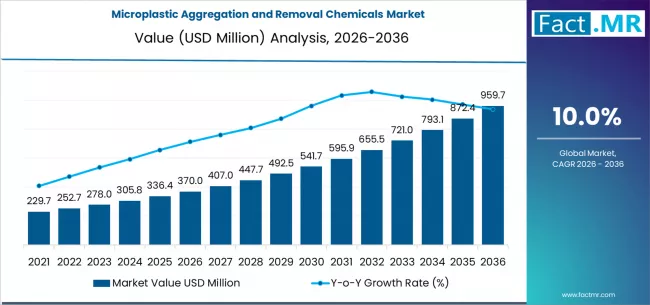
Microplastic Aggregation And Removal Chemicals Market Market Value Analysis

Flocculants, both organic and inorganic, represent the dominant chemical type, capturing a 32% market share. Municipal wastewater treatment plants constitute the primary application area, accounting for 34% of demand. Chemical agglomeration and flocculation remains the foremost treatment method, with a 38% share, leveraging established water treatment infrastructure for this emerging contaminant challenge.

This robust growth is fueled by the urgent global mandate to address microplastic contamination in water cycles. These tiny plastic particles, stemming from synthetic textiles, tire wear, and fragmented waste, evade conventional filtration. Specialty chemicals designed to aggregate and settle microplastics offer a practical and retrofittable solution within existing treatment trains. They are becoming essential for utilities and industries to meet upcoming effluent standards, protect receiving ecosystems, and assure drinking water safety.

Innovation focuses on developing highly selective chemistries that efficiently bind diverse microplastic polymers without interfering with standard treatment processes or generating excessive sludge. The market's advancement is centered on providing cost-effective, scalable solutions that can be deployed across the vast network of global water treatment infrastructure to stem the flow of microplastics into the environment.

Metric

Metric Value
Market Value (2026) USD 370.00 Million
Market Forecast Value (2036) USD 959.68 Million
Forecast CAGR (2026-2036) 10.0%

Category

Category Segments
Chemical Type Flocculants (Organic & Inorganic), Coagulants (Metal Salts, Bio-Based), Bio-Based Polymer Aggregation Agents, Surfactant-Enhanced Capture Agents, Other Specialty Microplastic Removal Chemicals
Application Area Municipal Wastewater Treatment Plants, Industrial Effluent Treatment, Stormwater & Urban Runoff Treatment, Drinking Water Treatment Facilities, Marine & River Water Remediation
Treatment Method Chemical Agglomeration & Flocculation, Membrane-Enhanced Chemical Treatment, Electrocoagulation with Chemical Enhancers, Hybrid Biological-Chemical Systems, Other Emerging Microplastic Removal Methods
Region North America, Latin America, Western Europe, Eastern Europe, East Asia, South Asia & Pacific, MEA

Segmental Analysis

By Chemical Type, Which Segment is Most Readily Deployed?
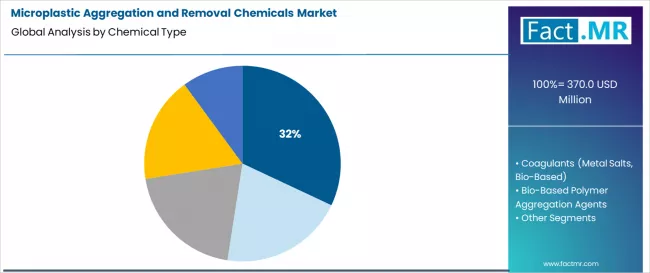
Microplastic Aggregation And Removal Chemicals Market Analysis By Chemical Type

Flocculants, particularly high-molecular-weight organic polymers, lead the market with a 32% share. Their dominance stems from their direct applicability within existing primary and secondary clarification stages at treatment plants.

These polymers work by forming bridges between suspended microplastic particles, creating larger, heavier aggregates that settle out or are more easily filtered. The ability to use familiar chemistry with potential formulation tweaks for plastic surfaces provides a low-barrier, effective entry point for widespread microplastic capture.

By Application Area, Which Sector Faces the Most Immediate Regulatory Pressure?
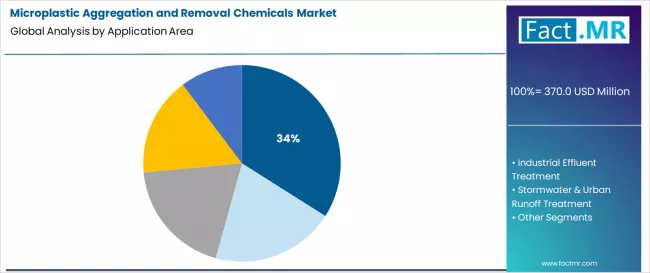
Microplastic Aggregation And Removal Chemicals Market Analysis By Application Area

Municipal wastewater treatment plants represent the largest application area, holding a 34% share. WWTPs are identified as significant point-source conduits for microplastics into rivers and oceans. Regulatory bodies in many regions are beginning to mandate monitoring and are expected to set removal efficiency standards.

Plant operators are proactively evaluating and implementing chemical-assisted removal as the most feasible near-term upgrade to handle influent loads from laundry, personal care products, and urban runoff, driving foundational demand.

By Treatment Method, Which Approach Leverages Existing Infrastructure?
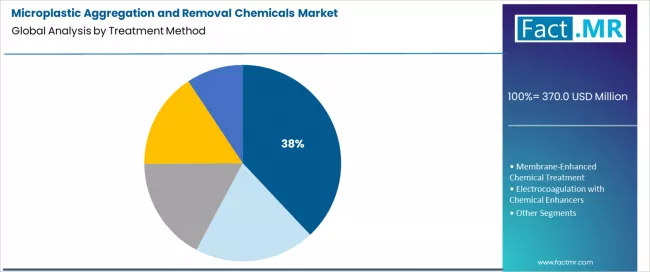
Microplastic Aggregation And Removal Chemicals Market Analysis By Treatment Method

Chemical agglomeration and flocculation is the leading treatment method, commanding a 38% share. This method's prominence is due to its seamless integration into the conventional physico-chemical treatment train already present at most water and wastewater facilities.

By enhancing clarification and sedimentation processes specifically for microplastics, it avoids the need for entirely new, capital-intensive unit operations. This retrofittable solution offers a cost-effective first line of defense, making it the preferred initial strategy for most utilities.

What are the Drivers, Restraints, and Key Trends of the Microplastic Removal Chemicals Market?

The primary market driver is the accelerating pace of regulatory development aimed at controlling microplastic emissions, particularly in the EU with its focus on product design and treatment, and in other regions updating water quality standards. Growing scientific consensus on the environmental and potential human health impacts of microplastics is translating into policy action. Simultaneously, rising public awareness and consumer pressure on brands and municipalities to address plastic pollution are creating a voluntary push for treatment upgrades even ahead of formal regulation.

A significant market restraint is the current lack of universally standardized methods for measuring microplastic concentrations and removal efficiencies, making performance validation and compliance monitoring challenging. The addition of chemicals must be carefully managed to avoid increasing sludge volume or altering its characteristics for disposal or reuse. There is also concern about ensuring that the chemicals used do not themselves present an environmental burden or lead to the formation of other undesirable byproducts.

Key trends include the development of bio-based and biodegradable polymer alternatives designed to perform aggregation without introducing persistent synthetic chemicals. Research is intensifying into surface-functionalized coagulants and magnetic particle systems that offer higher selectivity for specific plastic polymers and enable easier separation. The market is also moving toward integrated process solutions that combine optimized chemical dosing with advanced filtration or air flotation to achieve the high removal rates required for potable water reuse applications.

Analysis of the Microplastic Aggregation and Removal Chemicals Market by Key Countries
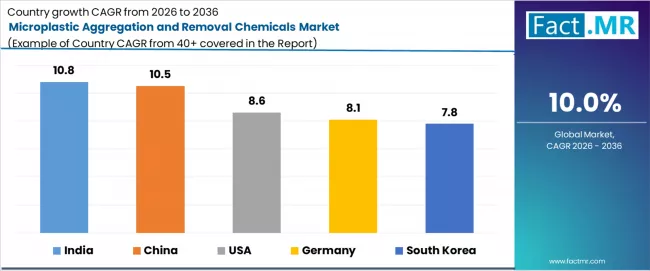
Microplastic Aggregation And Removal Chemicals Market Cagr Analysis By Country

Country CAGR (2026-2036)
India 10.80%
China 10.50%
USA 8.60%
Germany 8.10%
South Korea 7.80%

How do India’s Water Quality Challenges and Clean India Mission Drive Adoption?

India’s leading CAGR of 10.80% is propelled by its severe surface water pollution challenges and ambitious national missions like Namami Gange and the Clean India Mission. As the country invests heavily in new sewage treatment infrastructure and upgrades existing plants, there is a strategic opportunity to integrate emerging contaminant removal from the start. Regulatory updates focusing on river rejuvenation and the scale of the infrastructure rollout create a vast potential market for chemical solutions that can be scaled quickly across thousands of treatment plants.

What is the Impact of China’s Ecological Civilization Goals and Water Ten Plan?

China’s 10.50% growth is linked to its "Ecological Civilization" framework and the ongoing enforcement of the Water Ten Plan, which increasingly includes emerging pollutants. The government's directive to upgrade urban wastewater treatment to advanced standards is a key driver. China’s massive manufacturing sector also faces growing pressure to treat industrial effluents for microplastics, particularly from textiles and plastics production. This dual demand from municipal and industrial sectors fuels significant market growth.

How does the USA’s Regulatory Evolution and Focus on PFAS Influence the Market?
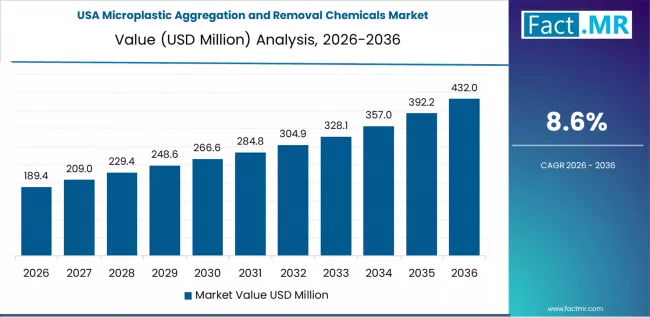
Microplastic Aggregation And Removal Chemicals Market Country Value Analysis

The USA’s 8.60% CAGR is supported by a growing regulatory focus on emerging contaminants at the state and federal level, with microplastics gaining attention following the path of PFAS. States like California are implementing monitoring requirements. The heightened national concern over drinking water safety and advanced treatment for reuse is pushing utilities to evaluate multi-contaminant removal strategies, where chemicals effective for microplastic agglomeration may see synergistic adoption.

Why is Germany a Key Market for Advanced Water Treatment Technologies?

Germany’s 8.10% growth reflects its position at the forefront of EU environmental regulation and water engineering. German water utilities and technology providers are actively researching and piloting microplastic removal techniques. The country's stringent approach to water protection and its leadership in developing DIN standards for microplastic analysis create a sophisticated, early-adopter market for high-performance, precision chemical and hybrid treatment systems.

What Role does South Korea’s Ocean Policy and Tech Innovation Play?

South Korea’s 7.80% growth is anchored in its strong maritime policies and history of grappling with marine plastic debris. The government's proactive stance on ocean protection drives investment in interception technologies at river mouths and wastewater outfalls. South Korea’s advanced tech industry fosters innovation in smart chemical dosing systems and novel capture materials, positioning it as a testing ground for next-generation microplastic removal solutions integrated with digital water management.

Competitive Landscape of the Microplastic Aggregation and Removal Chemicals Market
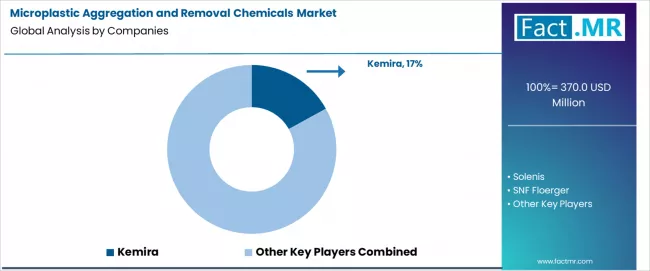
Microplastic Aggregation And Removal Chemicals Market Analysis By Company

Global water treatment chemical specialists leveraging their existing polymer science expertise and deep customer relationships dominate the competitive landscape. Leaders like Kemira and SNF Floerger compete by adapting their vast flocculant portfolios for microplastic capture and developing new, targeted formulations.

Competition centers on providing application-specific pilot data, demonstrating total cost-effectiveness including sludge impact, and offering integrated service models that include performance monitoring. A key differentiator is the ability to partner with engineering firms and municipalities to design complete treatment train upgrades, positioning chemicals as a core component of a broader microplastic mitigation strategy.

Key Players in the Microplastic Aggregation and Removal Chemicals Market

  • Kemira
  • Solenis
  • SNF Floerger
  • Veolia Water Technologies
  • Ecolab

Scope of Report

Items Values
Quantitative Units USD Million
Chemical Type Flocculants, Coagulants, Bio-Based Polymers, Surfactant-Enhanced Agents, Specialty Chemicals
Application Area Municipal WWTPs, Industrial Effluent, Stormwater, Drinking Water, Marine Remediation
Treatment Method Agglomeration/Flocculation, Membrane-Chemical, Electrocoagulation, Hybrid Biological-Chemical, Emerging Methods
Key Countries India, China, USA, Germany, South Korea
Key Companies Kemira, Solenis, SNF Floerger, Veolia Water Technologies, Ecolab
Additional Analysis Analysis of polymer-microplastic interaction mechanisms; impact on sludge dewaterability and disposal; fate of aggregated microplastics in sludge streams; removal efficiency for different polymer types and size ranges; development of standard testing protocols for chemical performance evaluation.

Market by Segments

  • Chemical Type :

    • Flocculants (Organic & Inorganic)
    • Coagulants (Metal Salts, Bio-Based)
    • Bio-Based Polymer Aggregation Agents
    • Surfactant-Enhanced Capture Agents
    • Other Specialty Microplastic Removal Chemicals
  • Application Area :

    • Municipal Wastewater Treatment Plants
    • Industrial Effluent Treatment
    • Stormwater & Urban Runoff Treatment
    • Drinking Water Treatment Facilities
    • Marine & River Water Remediation
  • Treatment Method :

    • Chemical Agglomeration & Flocculation
    • Membrane-Enhanced Chemical Treatment
    • Electrocoagulation with Chemical Enhancers
    • Hybrid Biological-Chemical Systems
    • Other Emerging Microplastic Removal Methods
  • Region :

    • North America

      • USA
      • Canada
    • Latin America

      • Brazil
      • Mexico
      • Argentina
      • Rest of Latin America
    • Western Europe

      • Germany
      • UK
      • France
      • Spain
      • Italy
      • BENELUX
      • Rest of Western Europe
    • Eastern Europe

      • Russia
      • Poland
      • Czech Republic
      • Rest of Eastern Europe
    • East Asia

      • China
      • Japan
      • South Korea
      • Rest of East Asia
    • South Asia & Pacific

      • India
      • ASEAN
      • Australia
      • Rest of South Asia & Pacific
    • MEA

      • Saudi Arabia
      • UAE
      • Turkiye
      • Rest of MEA

Table of Content

  1. Executive Summary
    • Global Market Outlook
    • Demand to side Trends
    • Supply to side Trends
    • Technology Roadmap Analysis
    • Analysis and Recommendations
  2. Market Overview
    • Market Coverage / Taxonomy
    • Market Definition / Scope / Limitations
  3. Market Background
    • Market Dynamics
      • Drivers
      • Restraints
      • Opportunity
      • Trends
    • Scenario Forecast
      • Demand in Optimistic Scenario
      • Demand in Likely Scenario
      • Demand in Conservative Scenario
    • Opportunity Map Analysis
    • Product Life Cycle Analysis
    • Supply Chain Analysis
    • Investment Feasibility Matrix
    • Value Chain Analysis
    • PESTLE and Porter’s Analysis
    • Regulatory Landscape
    • Regional Parent Market Outlook
    • Production and Consumption Statistics
    • Import and Export Statistics
  4. Global Market Analysis 2021 to 2025 and Forecast, 2026 to 2036
    • Historical Market Size Value (USD Million) Analysis, 2021 to 2025
    • Current and Future Market Size Value (USD Million) Projections, 2026 to 2036
      • Y to o to Y Growth Trend Analysis
      • Absolute $ Opportunity Analysis
  5. Global Market Pricing Analysis 2021 to 2025 and Forecast 2026 to 2036
  6. Global Market Analysis 2021 to 2025 and Forecast 2026 to 2036, By Chemical Type
    • Introduction / Key Findings
    • Historical Market Size Value (USD Million) Analysis By Chemical Type, 2021 to 2025
    • Current and Future Market Size Value (USD Million) Analysis and Forecast By Chemical Type, 2026 to 2036
      • Flocculants (Organic & Inorganic)
      • Coagulants (Metal Salts, Bio-Based)
      • Bio-Based Polymer Aggregation Agents
      • Surfactant-Enhanced Capture Agents
      • Other Specialty Microplastic Removal Chemicals
    • Y to o to Y Growth Trend Analysis By Chemical Type, 2021 to 2025
    • Absolute $ Opportunity Analysis By Chemical Type, 2026 to 2036
  7. Global Market Analysis 2021 to 2025 and Forecast 2026 to 2036, By Application Area
    • Introduction / Key Findings
    • Historical Market Size Value (USD Million) Analysis By Application Area, 2021 to 2025
    • Current and Future Market Size Value (USD Million) Analysis and Forecast By Application Area, 2026 to 2036
      • Municipal Wastewater Treatment Plants
      • Industrial Effluent Treatment
      • Stormwater & Urban Runoff Treatment
      • Drinking Water Treatment Facilities
      • Marine & River Water Remediation
    • Y to o to Y Growth Trend Analysis By Application Area, 2021 to 2025
    • Absolute $ Opportunity Analysis By Application Area, 2026 to 2036
  8. Global Market Analysis 2021 to 2025 and Forecast 2026 to 2036, By Treatment Method
    • Introduction / Key Findings
    • Historical Market Size Value (USD Million) Analysis By Treatment Method, 2021 to 2025
    • Current and Future Market Size Value (USD Million) Analysis and Forecast By Treatment Method, 2026 to 2036
      • Chemical Agglomeration & Flocculation
      • Membrane-Enhanced Chemical Treatment
      • Electrocoagulation with Chemical Enhancers
      • Hybrid Biological-Chemical Systems
      • Other Emerging Microplastic Removal Methods
    • Y to o to Y Growth Trend Analysis By Treatment Method, 2021 to 2025
    • Absolute $ Opportunity Analysis By Treatment Method, 2026 to 2036
  9. Global Market Analysis 2021 to 2025 and Forecast 2026 to 2036, By Region
    • Introduction
    • Historical Market Size Value (USD Million) Analysis By Region, 2021 to 2025
    • Current Market Size Value (USD Million) Analysis and Forecast By Region, 2026 to 2036
      • North America
      • Latin America
      • Western Europe
      • Eastern Europe
      • East Asia
      • South Asia and Pacific
      • Middle East & Africa
    • Market Attractiveness Analysis By Region
  10. North America Market Analysis 2021 to 2025 and Forecast 2026 to 2036, By Country
    • Historical Market Size Value (USD Million) Trend Analysis By Market Taxonomy, 2021 to 2025
    • Market Size Value (USD Million) Forecast By Market Taxonomy, 2026 to 2036
      • By Country
        • USA
        • Canada
        • Mexico
      • By Chemical Type
      • By Application Area
      • By Treatment Method
    • Market Attractiveness Analysis
      • By Country
      • By Chemical Type
      • By Application Area
      • By Treatment Method
    • Key Takeaways
  11. Latin America Market Analysis 2021 to 2025 and Forecast 2026 to 2036, By Country
    • Historical Market Size Value (USD Million) Trend Analysis By Market Taxonomy, 2021 to 2025
    • Market Size Value (USD Million) Forecast By Market Taxonomy, 2026 to 2036
      • By Country
        • Brazil
        • Chile
        • Rest of Latin America
      • By Chemical Type
      • By Application Area
      • By Treatment Method
    • Market Attractiveness Analysis
      • By Country
      • By Chemical Type
      • By Application Area
      • By Treatment Method
    • Key Takeaways
  12. Western Europe Market Analysis 2021 to 2025 and Forecast 2026 to 2036, By Country
    • Historical Market Size Value (USD Million) Trend Analysis By Market Taxonomy, 2021 to 2025
    • Market Size Value (USD Million) Forecast By Market Taxonomy, 2026 to 2036
      • By Country
        • Germany
        • UK
        • Italy
        • Spain
        • France
        • Nordic
        • BENELUX
        • Rest of Western Europe
      • By Chemical Type
      • By Application Area
      • By Treatment Method
    • Market Attractiveness Analysis
      • By Country
      • By Chemical Type
      • By Application Area
      • By Treatment Method
    • Key Takeaways
  13. Eastern Europe Market Analysis 2021 to 2025 and Forecast 2026 to 2036, By Country
    • Historical Market Size Value (USD Million) Trend Analysis By Market Taxonomy, 2021 to 2025
    • Market Size Value (USD Million) Forecast By Market Taxonomy, 2026 to 2036
      • By Country
        • Russia
        • Poland
        • Hungary
        • Balkan & Baltic
        • Rest of Eastern Europe
      • By Chemical Type
      • By Application Area
      • By Treatment Method
    • Market Attractiveness Analysis
      • By Country
      • By Chemical Type
      • By Application Area
      • By Treatment Method
    • Key Takeaways
  14. East Asia Market Analysis 2021 to 2025 and Forecast 2026 to 2036, By Country
    • Historical Market Size Value (USD Million) Trend Analysis By Market Taxonomy, 2021 to 2025
    • Market Size Value (USD Million) Forecast By Market Taxonomy, 2026 to 2036
      • By Country
        • China
        • Japan
        • South Korea
      • By Chemical Type
      • By Application Area
      • By Treatment Method
    • Market Attractiveness Analysis
      • By Country
      • By Chemical Type
      • By Application Area
      • By Treatment Method
    • Key Takeaways
  15. South Asia and Pacific Market Analysis 2021 to 2025 and Forecast 2026 to 2036, By Country
    • Historical Market Size Value (USD Million) Trend Analysis By Market Taxonomy, 2021 to 2025
    • Market Size Value (USD Million) Forecast By Market Taxonomy, 2026 to 2036
      • By Country
        • India
        • ASEAN
        • Australia & New Zealand
        • Rest of South Asia and Pacific
      • By Chemical Type
      • By Application Area
      • By Treatment Method
    • Market Attractiveness Analysis
      • By Country
      • By Chemical Type
      • By Application Area
      • By Treatment Method
    • Key Takeaways
  16. Middle East & Africa Market Analysis 2021 to 2025 and Forecast 2026 to 2036, By Country
    • Historical Market Size Value (USD Million) Trend Analysis By Market Taxonomy, 2021 to 2025
    • Market Size Value (USD Million) Forecast By Market Taxonomy, 2026 to 2036
      • By Country
        • Kingdom of Saudi Arabia
        • Other GCC Countries
        • Turkiye
        • South Africa
        • Other African Union
        • Rest of Middle East & Africa
      • By Chemical Type
      • By Application Area
      • By Treatment Method
    • Market Attractiveness Analysis
      • By Country
      • By Chemical Type
      • By Application Area
      • By Treatment Method
    • Key Takeaways
  17. Key Countries Market Analysis
    • USA
      • Pricing Analysis
      • Market Share Analysis, 2025
        • By Chemical Type
        • By Application Area
        • By Treatment Method
    • Canada
      • Pricing Analysis
      • Market Share Analysis, 2025
        • By Chemical Type
        • By Application Area
        • By Treatment Method
    • Mexico
      • Pricing Analysis
      • Market Share Analysis, 2025
        • By Chemical Type
        • By Application Area
        • By Treatment Method
    • Brazil
      • Pricing Analysis
      • Market Share Analysis, 2025
        • By Chemical Type
        • By Application Area
        • By Treatment Method
    • Chile
      • Pricing Analysis
      • Market Share Analysis, 2025
        • By Chemical Type
        • By Application Area
        • By Treatment Method
    • Germany
      • Pricing Analysis
      • Market Share Analysis, 2025
        • By Chemical Type
        • By Application Area
        • By Treatment Method
    • UK
      • Pricing Analysis
      • Market Share Analysis, 2025
        • By Chemical Type
        • By Application Area
        • By Treatment Method
    • Italy
      • Pricing Analysis
      • Market Share Analysis, 2025
        • By Chemical Type
        • By Application Area
        • By Treatment Method
    • Spain
      • Pricing Analysis
      • Market Share Analysis, 2025
        • By Chemical Type
        • By Application Area
        • By Treatment Method
    • France
      • Pricing Analysis
      • Market Share Analysis, 2025
        • By Chemical Type
        • By Application Area
        • By Treatment Method
    • India
      • Pricing Analysis
      • Market Share Analysis, 2025
        • By Chemical Type
        • By Application Area
        • By Treatment Method
    • ASEAN
      • Pricing Analysis
      • Market Share Analysis, 2025
        • By Chemical Type
        • By Application Area
        • By Treatment Method
    • Australia & New Zealand
      • Pricing Analysis
      • Market Share Analysis, 2025
        • By Chemical Type
        • By Application Area
        • By Treatment Method
    • China
      • Pricing Analysis
      • Market Share Analysis, 2025
        • By Chemical Type
        • By Application Area
        • By Treatment Method
    • Japan
      • Pricing Analysis
      • Market Share Analysis, 2025
        • By Chemical Type
        • By Application Area
        • By Treatment Method
    • South Korea
      • Pricing Analysis
      • Market Share Analysis, 2025
        • By Chemical Type
        • By Application Area
        • By Treatment Method
    • Russia
      • Pricing Analysis
      • Market Share Analysis, 2025
        • By Chemical Type
        • By Application Area
        • By Treatment Method
    • Poland
      • Pricing Analysis
      • Market Share Analysis, 2025
        • By Chemical Type
        • By Application Area
        • By Treatment Method
    • Hungary
      • Pricing Analysis
      • Market Share Analysis, 2025
        • By Chemical Type
        • By Application Area
        • By Treatment Method
    • Kingdom of Saudi Arabia
      • Pricing Analysis
      • Market Share Analysis, 2025
        • By Chemical Type
        • By Application Area
        • By Treatment Method
    • Turkiye
      • Pricing Analysis
      • Market Share Analysis, 2025
        • By Chemical Type
        • By Application Area
        • By Treatment Method
    • South Africa
      • Pricing Analysis
      • Market Share Analysis, 2025
        • By Chemical Type
        • By Application Area
        • By Treatment Method
  18. Market Structure Analysis
    • Competition Dashboard
    • Competition Benchmarking
    • Market Share Analysis of Top Players
      • By Regional
      • By Chemical Type
      • By Application Area
      • By Treatment Method
  19. Competition Analysis
    • Competition Deep Dive
      • Kemira
        • Overview
        • Product Portfolio
        • Profitability by Market Segments (Product/Age /Sales Channel/Region)
        • Sales Footprint
        • Strategy Overview
          • Marketing Strategy
          • Product Strategy
          • Channel Strategy
      • Solenis
      • SNF Floerger
      • Veolia Water Technologies
      • Ecolab
  20. Assumptions & Acronyms Used
  21. Research Methodology

List Of Table

  • Table 1: Global Market Value (USD Million) Forecast by Region, 2021 to 2036
  • Table 2: Global Market Value (USD Million) Forecast by Chemical Type, 2021 to 2036
  • Table 3: Global Market Value (USD Million) Forecast by Application Area, 2021 to 2036
  • Table 4: Global Market Value (USD Million) Forecast by Treatment Method, 2021 to 2036
  • Table 5: North America Market Value (USD Million) Forecast by Country, 2021 to 2036
  • Table 6: North America Market Value (USD Million) Forecast by Chemical Type, 2021 to 2036
  • Table 7: North America Market Value (USD Million) Forecast by Application Area, 2021 to 2036
  • Table 8: North America Market Value (USD Million) Forecast by Treatment Method, 2021 to 2036
  • Table 9: Latin America Market Value (USD Million) Forecast by Country, 2021 to 2036
  • Table 10: Latin America Market Value (USD Million) Forecast by Chemical Type, 2021 to 2036
  • Table 11: Latin America Market Value (USD Million) Forecast by Application Area, 2021 to 2036
  • Table 12: Latin America Market Value (USD Million) Forecast by Treatment Method, 2021 to 2036
  • Table 13: Western Europe Market Value (USD Million) Forecast by Country, 2021 to 2036
  • Table 14: Western Europe Market Value (USD Million) Forecast by Chemical Type, 2021 to 2036
  • Table 15: Western Europe Market Value (USD Million) Forecast by Application Area, 2021 to 2036
  • Table 16: Western Europe Market Value (USD Million) Forecast by Treatment Method, 2021 to 2036
  • Table 17: Eastern Europe Market Value (USD Million) Forecast by Country, 2021 to 2036
  • Table 18: Eastern Europe Market Value (USD Million) Forecast by Chemical Type, 2021 to 2036
  • Table 19: Eastern Europe Market Value (USD Million) Forecast by Application Area, 2021 to 2036
  • Table 20: Eastern Europe Market Value (USD Million) Forecast by Treatment Method, 2021 to 2036
  • Table 21: East Asia Market Value (USD Million) Forecast by Country, 2021 to 2036
  • Table 22: East Asia Market Value (USD Million) Forecast by Chemical Type, 2021 to 2036
  • Table 23: East Asia Market Value (USD Million) Forecast by Application Area, 2021 to 2036
  • Table 24: East Asia Market Value (USD Million) Forecast by Treatment Method, 2021 to 2036
  • Table 25: South Asia and Pacific Market Value (USD Million) Forecast by Country, 2021 to 2036
  • Table 26: South Asia and Pacific Market Value (USD Million) Forecast by Chemical Type, 2021 to 2036
  • Table 27: South Asia and Pacific Market Value (USD Million) Forecast by Application Area, 2021 to 2036
  • Table 28: South Asia and Pacific Market Value (USD Million) Forecast by Treatment Method, 2021 to 2036
  • Table 29: Middle East & Africa Market Value (USD Million) Forecast by Country, 2021 to 2036
  • Table 30: Middle East & Africa Market Value (USD Million) Forecast by Chemical Type, 2021 to 2036
  • Table 31: Middle East & Africa Market Value (USD Million) Forecast by Application Area, 2021 to 2036
  • Table 32: Middle East & Africa Market Value (USD Million) Forecast by Treatment Method, 2021 to 2036

List Of Figures

  • Figure 1: Global Market Pricing Analysis
  • Figure 2: Global Market Value (USD Million) Forecast 2021 to 2036
  • Figure 3: Global Market Value Share and BPS Analysis by Chemical Type, 2026 and 2036
  • Figure 4: Global Market Y to o to Y Growth Comparison by Chemical Type, 2026 to 2036
  • Figure 5: Global Market Attractiveness Analysis by Chemical Type
  • Figure 6: Global Market Value Share and BPS Analysis by Application Area, 2026 and 2036
  • Figure 7: Global Market Y to o to Y Growth Comparison by Application Area, 2026 to 2036
  • Figure 8: Global Market Attractiveness Analysis by Application Area
  • Figure 9: Global Market Value Share and BPS Analysis by Treatment Method, 2026 and 2036
  • Figure 10: Global Market Y to o to Y Growth Comparison by Treatment Method, 2026 to 2036
  • Figure 11: Global Market Attractiveness Analysis by Treatment Method
  • Figure 12: Global Market Value (USD Million) Share and BPS Analysis by Region, 2026 and 2036
  • Figure 13: Global Market Y to o to Y Growth Comparison by Region, 2026 to 2036
  • Figure 14: Global Market Attractiveness Analysis by Region
  • Figure 15: North America Market Incremental Dollar Opportunity, 2026 to 2036
  • Figure 16: Latin America Market Incremental Dollar Opportunity, 2026 to 2036
  • Figure 17: Western Europe Market Incremental Dollar Opportunity, 2026 to 2036
  • Figure 18: Eastern Europe Market Incremental Dollar Opportunity, 2026 to 2036
  • Figure 19: East Asia Market Incremental Dollar Opportunity, 2026 to 2036
  • Figure 20: South Asia and Pacific Market Incremental Dollar Opportunity, 2026 to 2036
  • Figure 21: Middle East & Africa Market Incremental Dollar Opportunity, 2026 to 2036
  • Figure 22: North America Market Value Share and BPS Analysis by Country, 2026 and 2036
  • Figure 23: North America Market Value Share and BPS Analysis by Chemical Type, 2026 and 2036
  • Figure 24: North America Market Y to o to Y Growth Comparison by Chemical Type, 2026 to 2036
  • Figure 25: North America Market Attractiveness Analysis by Chemical Type
  • Figure 26: North America Market Value Share and BPS Analysis by Application Area, 2026 and 2036
  • Figure 27: North America Market Y to o to Y Growth Comparison by Application Area, 2026 to 2036
  • Figure 28: North America Market Attractiveness Analysis by Application Area
  • Figure 29: North America Market Value Share and BPS Analysis by Treatment Method, 2026 and 2036
  • Figure 30: North America Market Y to o to Y Growth Comparison by Treatment Method, 2026 to 2036
  • Figure 31: North America Market Attractiveness Analysis by Treatment Method
  • Figure 32: Latin America Market Value Share and BPS Analysis by Country, 2026 and 2036
  • Figure 33: Latin America Market Value Share and BPS Analysis by Chemical Type, 2026 and 2036
  • Figure 34: Latin America Market Y to o to Y Growth Comparison by Chemical Type, 2026 to 2036
  • Figure 35: Latin America Market Attractiveness Analysis by Chemical Type
  • Figure 36: Latin America Market Value Share and BPS Analysis by Application Area, 2026 and 2036
  • Figure 37: Latin America Market Y to o to Y Growth Comparison by Application Area, 2026 to 2036
  • Figure 38: Latin America Market Attractiveness Analysis by Application Area
  • Figure 39: Latin America Market Value Share and BPS Analysis by Treatment Method, 2026 and 2036
  • Figure 40: Latin America Market Y to o to Y Growth Comparison by Treatment Method, 2026 to 2036
  • Figure 41: Latin America Market Attractiveness Analysis by Treatment Method
  • Figure 42: Western Europe Market Value Share and BPS Analysis by Country, 2026 and 2036
  • Figure 43: Western Europe Market Value Share and BPS Analysis by Chemical Type, 2026 and 2036
  • Figure 44: Western Europe Market Y to o to Y Growth Comparison by Chemical Type, 2026 to 2036
  • Figure 45: Western Europe Market Attractiveness Analysis by Chemical Type
  • Figure 46: Western Europe Market Value Share and BPS Analysis by Application Area, 2026 and 2036
  • Figure 47: Western Europe Market Y to o to Y Growth Comparison by Application Area, 2026 to 2036
  • Figure 48: Western Europe Market Attractiveness Analysis by Application Area
  • Figure 49: Western Europe Market Value Share and BPS Analysis by Treatment Method, 2026 and 2036
  • Figure 50: Western Europe Market Y to o to Y Growth Comparison by Treatment Method, 2026 to 2036
  • Figure 51: Western Europe Market Attractiveness Analysis by Treatment Method
  • Figure 52: Eastern Europe Market Value Share and BPS Analysis by Country, 2026 and 2036
  • Figure 53: Eastern Europe Market Value Share and BPS Analysis by Chemical Type, 2026 and 2036
  • Figure 54: Eastern Europe Market Y to o to Y Growth Comparison by Chemical Type, 2026 to 2036
  • Figure 55: Eastern Europe Market Attractiveness Analysis by Chemical Type
  • Figure 56: Eastern Europe Market Value Share and BPS Analysis by Application Area, 2026 and 2036
  • Figure 57: Eastern Europe Market Y to o to Y Growth Comparison by Application Area, 2026 to 2036
  • Figure 58: Eastern Europe Market Attractiveness Analysis by Application Area
  • Figure 59: Eastern Europe Market Value Share and BPS Analysis by Treatment Method, 2026 and 2036
  • Figure 60: Eastern Europe Market Y to o to Y Growth Comparison by Treatment Method, 2026 to 2036
  • Figure 61: Eastern Europe Market Attractiveness Analysis by Treatment Method
  • Figure 62: East Asia Market Value Share and BPS Analysis by Country, 2026 and 2036
  • Figure 63: East Asia Market Value Share and BPS Analysis by Chemical Type, 2026 and 2036
  • Figure 64: East Asia Market Y to o to Y Growth Comparison by Chemical Type, 2026 to 2036
  • Figure 65: East Asia Market Attractiveness Analysis by Chemical Type
  • Figure 66: East Asia Market Value Share and BPS Analysis by Application Area, 2026 and 2036
  • Figure 67: East Asia Market Y to o to Y Growth Comparison by Application Area, 2026 to 2036
  • Figure 68: East Asia Market Attractiveness Analysis by Application Area
  • Figure 69: East Asia Market Value Share and BPS Analysis by Treatment Method, 2026 and 2036
  • Figure 70: East Asia Market Y to o to Y Growth Comparison by Treatment Method, 2026 to 2036
  • Figure 71: East Asia Market Attractiveness Analysis by Treatment Method
  • Figure 72: South Asia and Pacific Market Value Share and BPS Analysis by Country, 2026 and 2036
  • Figure 73: South Asia and Pacific Market Value Share and BPS Analysis by Chemical Type, 2026 and 2036
  • Figure 74: South Asia and Pacific Market Y to o to Y Growth Comparison by Chemical Type, 2026 to 2036
  • Figure 75: South Asia and Pacific Market Attractiveness Analysis by Chemical Type
  • Figure 76: South Asia and Pacific Market Value Share and BPS Analysis by Application Area, 2026 and 2036
  • Figure 77: South Asia and Pacific Market Y to o to Y Growth Comparison by Application Area, 2026 to 2036
  • Figure 78: South Asia and Pacific Market Attractiveness Analysis by Application Area
  • Figure 79: South Asia and Pacific Market Value Share and BPS Analysis by Treatment Method, 2026 and 2036
  • Figure 80: South Asia and Pacific Market Y to o to Y Growth Comparison by Treatment Method, 2026 to 2036
  • Figure 81: South Asia and Pacific Market Attractiveness Analysis by Treatment Method
  • Figure 82: Middle East & Africa Market Value Share and BPS Analysis by Country, 2026 and 2036
  • Figure 83: Middle East & Africa Market Value Share and BPS Analysis by Chemical Type, 2026 and 2036
  • Figure 84: Middle East & Africa Market Y to o to Y Growth Comparison by Chemical Type, 2026 to 2036
  • Figure 85: Middle East & Africa Market Attractiveness Analysis by Chemical Type
  • Figure 86: Middle East & Africa Market Value Share and BPS Analysis by Application Area, 2026 and 2036
  • Figure 87: Middle East & Africa Market Y to o to Y Growth Comparison by Application Area, 2026 to 2036
  • Figure 88: Middle East & Africa Market Attractiveness Analysis by Application Area
  • Figure 89: Middle East & Africa Market Value Share and BPS Analysis by Treatment Method, 2026 and 2036
  • Figure 90: Middle East & Africa Market Y to o to Y Growth Comparison by Treatment Method, 2026 to 2036
  • Figure 91: Middle East & Africa Market Attractiveness Analysis by Treatment Method
  • Figure 92: Global Market - Tier Structure Analysis
  • Figure 93: Global Market - Company Share Analysis

- FAQs -

How big is the microplastic aggregation and removal chemicals market in 2026?

The global microplastic aggregation and removal chemicals market is estimated to be valued at USD 370.0 million in 2026.

What will be the size of microplastic aggregation and removal chemicals market in 2036?

The market size for the microplastic aggregation and removal chemicals market is projected to reach USD 959.7 million by 2036.

How much will be the microplastic aggregation and removal chemicals market growth between 2026 and 2036?

The microplastic aggregation and removal chemicals market is expected to grow at a 10.0% CAGR between 2026 and 2036.

What are the key product types in the microplastic aggregation and removal chemicals market?

The key product types in microplastic aggregation and removal chemicals market are flocculants (organic & inorganic), coagulants (metal salts, bio-based), bio-based polymer aggregation agents, surfactant-enhanced capture agents and other specialty microplastic removal chemicals.

Which application area segment to contribute significant share in the microplastic aggregation and removal chemicals market in 2026?

In terms of application area, municipal wastewater treatment plants segment to command 34.0% share in the microplastic aggregation and removal chemicals market in 2026.

Microplastic Aggregation and Removal Chemicals Market