Sports Dome Structures Market Size, Share, Growth and Forecast (2026 - 2036)
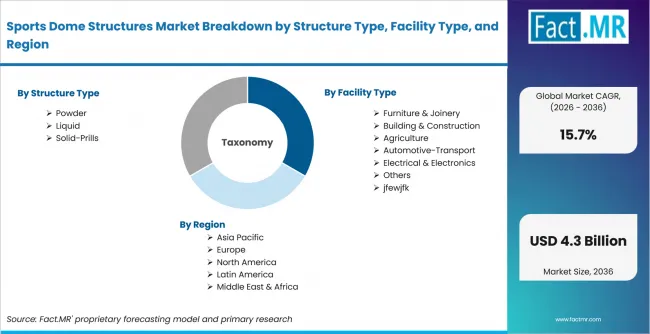
The Sports Dome Structures Market is segmented by Structure Type, by Material Type, by Facility Type, by End User, by Application and Region. Forecast for 2026 to 2036.
What is the sports dome structures market forecast to be worth by 2036?
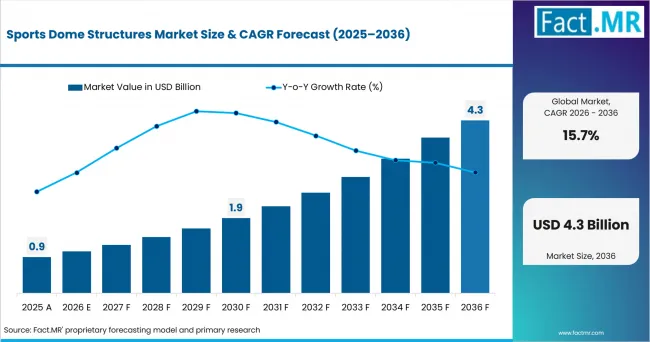
USD 1.0 billion in 2026 to USD 4.3 billion by 2036, at 15.7% CAGR.
- The Sports Dome Structures Market was valued at USD 0.9 billion in 2025.
- The market is estimated at USD 1.0 billion in 2026 and is projected to reach USD 4.3 billion by 2036.
- The market is forecast to expand at 15.7% CAGR during the forecast period as year-round sports participation increases and facility operators seek weather-independent infrastructure solutions.
What are the defining numbers behind sports dome structure growth?
USD 3.3 billion absolute opportunity by 2036 led by Japan, the United States and Saudi Arabia.
- Demand Drivers in the Market
- Growing demand for year-round sports participation continues supporting facility investments.
- Weather-independent infrastructure improves utilization rates and operational flexibility.
- Educational institutions are expanding indoor athletic facilities.
- Multi-sport complexes increasingly incorporate dome structures.
- Key Segments Analyzed
- By Structure Type: Air-Supported Domes are expected to hold 42.0% share in 2026.
- By Material Type: Fabric Membrane Structures are projected to account for 48.0% share in 2026.
- By Facility Type: Multi-Sport Facilities are expected to hold 46.0% share in 2026.
- By End User: Sports Clubs and Organizations are projected to account for 39.0% share in 2026.
- By Application: Training and Practice Facilities are expected to hold 44.0% share in 2026.
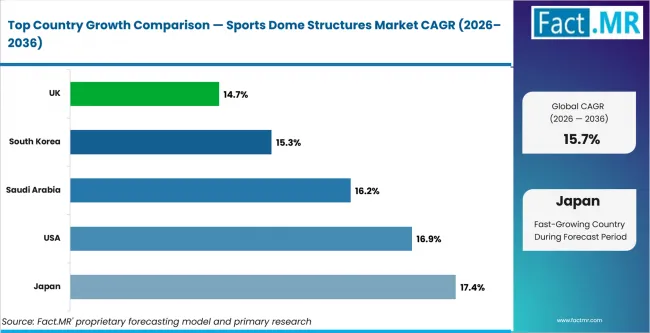
- By Geography: Japan is projected to record 17.4% CAGR through 2036.
- Analyst Opinion at Fact.MR
- Shambhu Nath Jha, Senior Analyst at Fact.MR, states, “The sports dome structures industry is evolving from seasonal infrastructure toward a strategic solution for maximizing facility utilization. Operators increasingly prioritize weather resilience and operational flexibility while controlling construction costs.”
- Strategic Implications
- Target regions with strong youth sports participation and facility shortages.
- Focus on operators benefiting from year-round usage models.
- Evaluate opportunities linked to educational and municipal sports infrastructure.
Sports dome structures provide enclosed environments for athletic training, competitions and recreational activities. These facilities support sports clubs and commercial operators. Rising demand for all-season sports infrastructure and growing investment in multi-purpose athletic facilities continue supporting market growth.
The Japan market is projected to record 17.4% CAGR through 2036, supported by strong domestic manufacturing capabilities and established dome structure expertise. The United States is expected to expand at 16.9% CAGR due to growing adoption of air-supported sports domes and seasonal bubble facilities. Saudi Arabia is forecast to grow at 16.2% CAGR as investments in sports infrastructure and climate-controlled recreation facilities accelerate. South Korea is projected to advance at 15.3% CAGR through increasing indoor sports facility development. The United Kingdom is expected to register 14.7% CAGR through 2036 as operators invest in weather-protected training infrastructure.
How does the sports dome structures market break down by segment?
Air-Supported Domes lead at 42.0%; Sports Clubs and Organizations lead at 39.0%.
Which structure type dominates?
Air-Supported Domes hold 42.0% share in 2026.
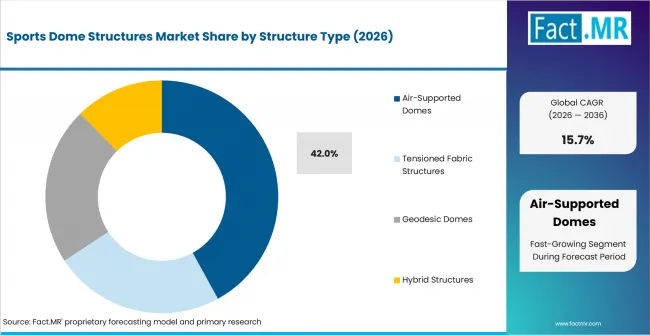
Air-supported domes lead because they provide large unobstructed playing areas while maintaining lower construction costs than conventional buildings. Their flexibility and rapid deployment capabilities continue supporting adoption across multiple sports applications. The arena features a distinctive roof and dome-like structure designed to support year-round sports and entertainment events.
Which material type dominates?
Fabric Membrane Structures account for 48.0% share in 2026.
Fabric membrane structures dominate because they offer lightweight construction and strong durability. Operators favor these materials due to lower maintenance requirements and energy-efficient performance. The Springfield Clinic Dome at Scheels Sports Park in Illinois is fully inflated, becoming the world's largest air-supported sports dome. The 715-foot-long structure is designed to host basketball, volleyball, soccer, and other indoor sports year-round, significantly expanding sports dome infrastructure capacity.
Which facility type dominates?
Multi-Sport Facilities hold 46.0% share in 2026.
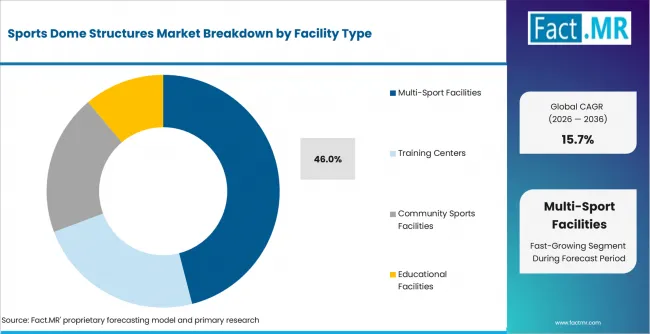
Multi-sport facilities dominate because operators increasingly seek infrastructure capable of supporting multiple activities throughout the year. Flexible layouts improve facility utilization and revenue opportunities.
Which end user dominates?
Sports Clubs and Organizations lead with 39.0% share in 2026.
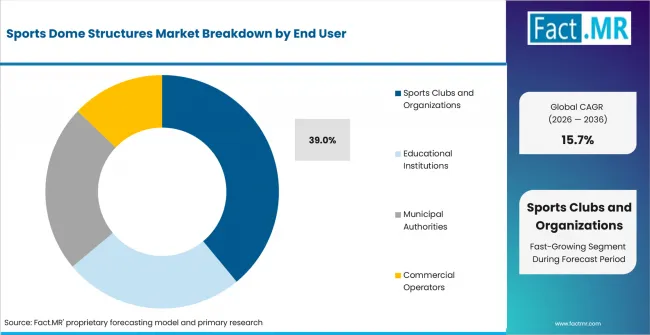
Sports clubs and organizations account for the largest share because they require reliable year-round training and competition environments. Growing participation levels continue supporting facility investments. The City of Brampton broke ground on the CAD 19 million Cassie Campbell Field Hockey Multisport Training Dome, an air-supported sports dome designed for year-round use. The facility will house a full-size field hockey pitch, running track, cricket and baseball batting cages, and supporting amenities, with completion expected in 2026.
Which application dominates?
Training and Practice Facilities account for 44.0% share in 2026.
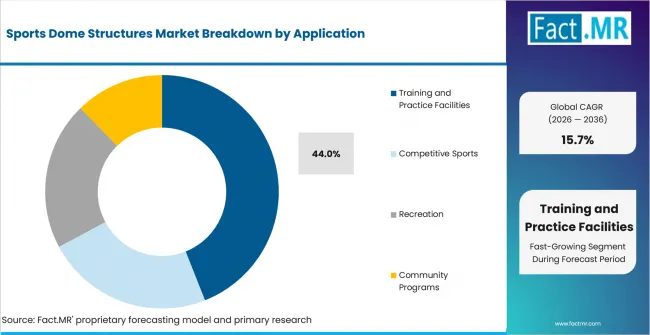
Training and practice facilities lead because athletes increasingly require consistent playing conditions regardless of weather. Dome structures help maintain uninterrupted training schedules throughout the year. The University of Lethbridge announced plans to build a 127,680-square-foot air-supported Multi-Sport Dome with a total project value of CAD 13.5 million. The year-round facility will include a turf field, sports courts, and a running track, significantly expanding indoor sports infrastructure in southern Alberta.
What is accelerating sports dome structure demand and what is holding it back?
Year-round sports participation drives demand while installation costs restrain adoption.
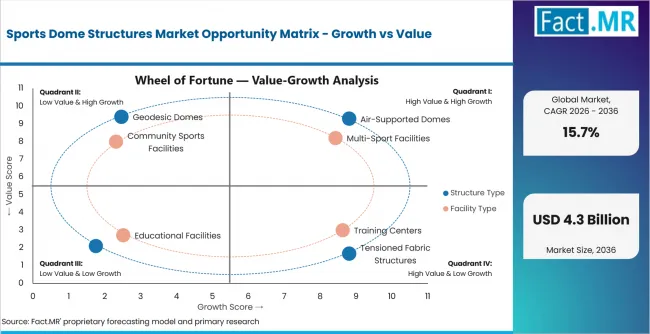
The primary growth driver is increasing demand for weather-independent sports infrastructure. Facility operators seek to maximize utilization while supporting consistent training and competition schedules. Growth in youth sports and community athletics further supports demand.
The primary restraint is the capital investment required for dome construction and supporting infrastructure. Maintenance requirements and energy costs can also affect project economics. Budget limitations may delay adoption among smaller organizations.
Where do the biggest sports dome structure opportunities sit?
Multi-sport complexes, educational facilities and municipal sports infrastructure.
- Multi-Sport Complexes
- Large athletic complexes increasingly utilize dome structures to support year-round programming. Flexible usage models create opportunities for higher facility utilization and revenue generation.
- Educational Institutions
- Schools and universities continue investing in covered sports facilities to expand athletic programs. Dome structures provide cost-effective solutions for training and competition needs.
- Municipal Sports Infrastructure
- Cities and local governments are incorporating dome facilities into community recreation projects. These facilities improve access to sports activities regardless of weather conditions.
Which countries are scaling sports dome structure adoption fastest?
Japan 17.4%, United States 16.9%, Saudi Arabia 16.2%, South Korea 15.3%, United Kingdom 14.7%.
.webp)
| Country | CAGR (2026-2036) |
|---|---|
| Japan | 17.4% |
| United States | 16.9% |
| Saudi Arabia | 16.2% |
| South Korea | 15.3% |
| United Kingdom | 14.7% |

Why is Japan leading the sports dome structures market?
17.4% CAGR, supported by strong dome engineering expertise and domestic manufacturing capabilities
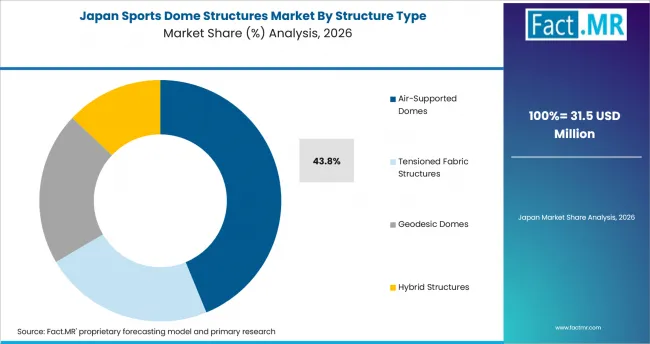
Japan is projected to record 17.4% CAGR through 2036 due to its established expertise in dome engineering and the strong presence of manufacturers such as Taiyo Kogyo. Demand remains supported by year-round sports participation and continued investment in advanced recreational infrastructure. Sports operators increasingly prefer dome facilities to improve utilization rates and reduce weather-related disruptions.
What is driving the United States bubble boom?
16.9% CAGR, driven by growing adoption of air-supported sports domes
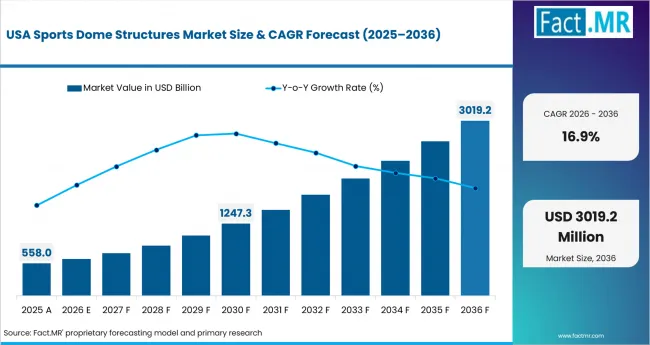
The United States is expected to post 16.9% CAGR by 2036 as air-supported sports bubbles become increasingly popular among schools, clubs and municipal facilities. Operators value their lower construction costs and ability to provide year-round playing environments. Rising participation in youth sports continues supporting demand for covered athletic facilities.
How is Saudi Arabia expanding dome infrastructure?
16.2% CAGR, fueled by investments in climate-controlled sports facilities
Saudi Arabia is forecast to advance at 16.2% CAGR through 2036 as investments in sports infrastructure and climate-controlled recreational facilities continue accelerating. Dome structures support broader efforts to expand sports participation and active lifestyle programs. New sports developments and entertainment projects are creating additional opportunities for dome installations.
What supports demand in South Korea?
15.3% CAGR, supported by growing indoor sports infrastructure development
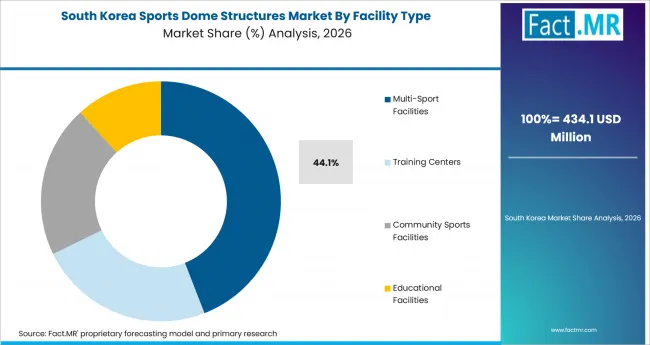
South Korea is expected to register 15.3% CAGR by 2036 due to growing investments in indoor sports infrastructure and community recreation facilities. Operators increasingly seek weather-independent venues to improve facility utilization. Demand is also supported by rising participation in organized sports and recreational activities.
Why is the United Kingdom an important market?
14.7% CAGR, driven by demand for weather-protected training facilities
The United Kingdom is projected to grow at 14.7% CAGR as sports organizations continue investing in weather-protected training environments. Demand is supported by the need to maintain consistent athletic schedules despite seasonal weather conditions. Educational institutions and community sports programs remain important contributors to facility development.
Who leads the sports dome structures landscape?
Taiyo Kogyo, Yeadon Domes, Arizon Building Systems, The Farley Group and Sportsfield Specialties lead through engineering expertise and dome infrastructure capabilities.
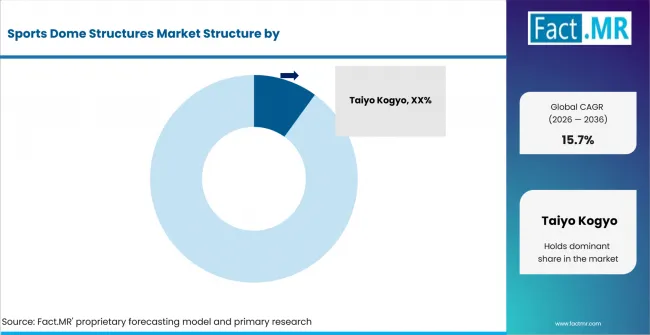
The market is characterized by competition focused on structural performance, durability and installation efficiency. Manufacturers continue investing in advanced membrane materials and energy-efficient climate control technologies to improve long-term facility performance. Customization capabilities and project execution expertise remain important competitive differentiators.
Taiyo Kogyo maintains a strong position through its expertise in membrane architecture and sports facility infrastructure. Yeadon Domes and Arizon Building Systems continue expanding through air-supported structure deployments across educational and community sports facilities. The Farley Group benefits from extensive experience in sports dome engineering and installation services. Sportsfield Specialties continues strengthening its presence through integrated sports facility solutions and infrastructure support services.
Competition through 2036 will depend on material innovation, energy efficiency and project execution capabilities. Companies that combine engineering expertise with long-term maintenance support and cost-effective deployment models will be better positioned to strengthen market share. Partnerships with educational institutions, municipalities and sports organizations are expected to remain important growth strategies.
Which companies are the key players?
Taiyo Kogyo, Yeadon Domes, Arizon Building Systems, The Farley Group and Sportsfield Specialties
- Taiyo Kogyo
- Yeadon Domes
- Arizon Building Systems
- The Farley Group
- Sportsfield Specialties
- Dome Technology
- Rubb Buildings
- Birdair
Bibliography
- [1] University of Lethbridge News. (2026, April 29). Landmark ULSU contribution supports addition of new Multi-Sport Dome to University of Lethbridge campus. University of Lethbridge.
- [2] City of Brampton. (2025). Cassie Campbell Field Hockey Multisport Training Dome. City of Brampton.
- [3] Taiyo Kogyo Corporation. (2026). Membrane structures and sports facilities. Taiyo Kogyo Corporation.
- [4] Yeadon Domes. (2026). Air-supported sports domes. Yeadon Domes.
- [5] Arizon Building Systems. (2026). Sports domes and air-supported structures. Arizon Building Systems.
This Report Addresses
- Market size and forecast assessment for sports dome structures.
- Analysis of structure technologies and material innovations.
- Evaluation of sports infrastructure investments and facility development trends.
- Assessment of year-round sports participation requirements.
- Competitive benchmarking of leading dome manufacturers.
- Analysis of growth drivers, restraints and emerging opportunities.
- Country-level demand outlook across major sports infrastructure markets.
- Strategic assessment of educational, municipal and commercial applications.
- Evaluation of dome deployment economics and facility utilization trends.
- Market forecasting supported by infrastructure analysis and industry interviews.
What does the sports dome structures market cover?
Sports dome facilities supporting year-round athletic activities, training and recreation.
The market covers air-supported domes, fabric structures, permanent dome facilities and multi-purpose sports enclosures. Revenue is generated through dome construction, installation, maintenance, engineering services and facility operations.
What is included in the scope?
Sports domes, air-supported structures, fabric-covered athletic facilities and associated infrastructure.
The scope includes structural systems, membrane technologies, climate control systems, lighting systems and maintenance services.
What is excluded from the scope?
Conventional stadium construction and non-sports temporary event structures.
The scope excludes traditional concrete stadiums, exhibition tents and non-athletic recreational buildings.
How was the analysis built?
100+ sources, 30+ infrastructure assessments, 25+ countries and industry interviews.
- Primary Research: Interviews with dome manufacturers, sports facility operators, engineers and infrastructure specialists.
- Desk Research: Analysis of sports facility investments, construction activity and participation trends.
- Market Sizing and Forecasting: Estimates based on dome installations, infrastructure spending and facility development activity.
- Data Validation and Update Cycle: Forecasts validated through project benchmarking, supplier disclosures and construction analysis.
What is the report's scope and coverage?
| Attribute | Details |
|---|---|
| Quantitative Units | USD Billion in 2026 to USD Billion by 2036 at CAGR |
| Market Definition | Covers dome-based sports infrastructure designed for year-round athletic activities |
| Structure Types Covered | Air-Supported Domes, Tensioned Fabric Structures, Geodesic Domes, Hybrid Structures |
| Material Types Covered | Fabric Membranes, ETFE Membranes, PVC Structures, Composite Materials |
| Facility Types Covered | Multi-Sport Facilities, Training Centers, Community Sports Facilities, Educational Facilities |
| End Users Covered | Sports Clubs, Educational Institutions, Municipal Authorities, Commercial Operators |
| Applications Covered | Training Facilities, Competitive Sports, Recreation, Community Programs |
| Regions Covered | North America, Western Europe, Asia Pacific, Latin America, Middle East & Africa |
| Key Countries Covered | United States, United Kingdom, Saudi Arabia, South Korea, Japan |
| Companies Covered | Taiyo Kogyo, Yeadon Domes, Arizon Building Systems, The Farley Group, Sportsfield Specialties, Dome Technology, Rubb Buildings |
| Forecast Period | 2026 to 2036 |
| Approach | Hybrid top-down and bottom-up methodology using sports dome installations, facility development activity, material-system pricing, supplier portfolios and operator validation. |
How is market segmented?
-
By Structure Type
- Air-Supported Domes
- Tensioned Fabric Structures
- Geodesic Domes
- Hybrid Structures
-
By Material Type
- Fabric Membranes
- ETFE Membranes
- PVC Structures
- Composite Materials
-
By Facility Type
- Multi-Sport Facilities
- Training Centers
- Community Sports Facilities
- Educational Facilities
-
By End User
- Sports Clubs and Organizations
- Educational Institutions
- Municipal Authorities
- Commercial Operators
-
By Application
- Training and Practice Facilities
- Competitive Sports
- Recreation
- Community Programs
-
By Region
- North America
- United States
- Canada
- Western Europe
- United Kingdom
- Germany
- France
- Italy
- Asia Pacific
- Japan
- South Korea
- China
- Australia
- Latin America
- Brazil
- Mexico
- Middle East & Africa
- Saudi Arabia
- UAE
- South Africa
- North America
- Frequently Asked Questions -
Which structure type leads the market?
Air-supported domes lead due to cost efficiency and rapid deployment capabilities.
Which material type dominates the market?
Fabric membrane structures hold 48.0% share in 2026.
What is driving demand for sports dome structures?
Year-round sports participation and weather-independent facility requirements are driving demand.
Which country is growing the fastest?
Japan is projected to record the highest CAGR through 2036.
What is the primary challenge facing the market?
High installation costs and long-term maintenance requirements remain key challenges.
Which end user accounts for the largest share?
Sports clubs and organizations hold 39.0% share in 2026.
What opportunities exist for manufacturers?
Educational facilities, multi-sport complexes and municipal infrastructure projects offer strong opportunities.
Why are schools investing in sports domes?
Sports domes provide reliable year-round athletic facilities and improve infrastructure utilization.
Table of Content
- Key Takeaways
- Market Size and CAGR
- Top Growth Driver
- Fastest Growing Segment
- Leading Region
- Key Companies
- Emerging Opportunities
- Executive Summary
- Global Market Outlook
- Demand-side Trends
- Supply-side Trends
- Technology Roadmap Analysis
- Analysis and Recommendations
- Analyst Perspective (What is happening? Why now? What should investors know?)
- Key Questions Answered
- How large is the market?
- What is the CAGR?
- What are key trends?
- Which region dominates?
- Who are the leaders?
- Market Overview
- Market Coverage / Taxonomy
- Market Definition / Scope / Limitations
- Research Methodology
- Chapter Orientation
- Analytical Lens and Working Hypotheses
- Market Structure, Signals, and Trend Drivers
- Benchmarking and Cross-market Comparability
- Market Sizing, Forecasting, and Opportunity Mapping
- Research Design and Evidence Framework
- Desk Research Programme (Secondary Evidence)
- Expert Input and Fieldwork (Primary Evidence)
- Tooling, Models, and Reference Databases
- Data Engineering and Model Build
- Quality Assurance and Audit Trail
- Market Background
- Market Dynamics (Drivers, Restraints, Opportunity, Trends)
- Scenario Forecast (Optimistic, Likely, Conservative)
- Impact Analysis
- AI Impact
- Sustainability Impact
- Regulatory Impact
- Technology Impact
- Consumer / Buyer Analysis
- Purchase Drivers
- Adoption Barriers
- Buyer Journey
- Opportunity Map Analysis
- Product Life Cycle Analysis
- Supply Chain Analysis
- Investment Feasibility Matrix
- Value Chain Analysis
- PESTLE and Porter's Analysis
- Regulatory Landscape
- Regional Parent Market Outlook
- Production and Consumption Statistics
- Import and Export Statistics
- Global Market Analysis and Forecast, 2021 to 2036
- Historical Market Size Value (USD Billion) Analysis, 2021 to 2025
- Current and Future Market Size Value (USD Billion) Projections, 2026 to 2036
- Y-o-Y Growth Trend Analysis
- Absolute $ Opportunity Analysis
- Global Market Pricing Analysis, 2021 to 2036
- Global Market Analysis and Forecast, By Structure Type, 2021 to 2036
- Introduction / Key Findings
- Historical Market Size Value (USD Billion) Analysis By Structure Type, 2021 to 2025
- Current and Future Market Size Value (USD Billion) Analysis and Forecast By Structure Type, 2026 to 2036
- Air-Supported Domes
- Tensioned Fabric Structures
- Geodesic Domes
- Hybrid Structures
- Y-o-Y Growth Trend Analysis By Structure Type, 2021 to 2025
- Absolute $ Opportunity Analysis By Structure Type, 2026 to 2036
- Global Market Analysis and Forecast, By Facility Type, 2021 to 2036
- Introduction / Key Findings
- Historical Market Size Value (USD Billion) Analysis By Facility Type, 2021 to 2025
- Current and Future Market Size Value (USD Billion) Analysis and Forecast By Facility Type, 2026 to 2036
- Multi-Sport Facilities
- Training Centers
- Community Sports Facilities
- Educational Facilities
- Y-o-Y Growth Trend Analysis By Facility Type, 2021 to 2025
- Absolute $ Opportunity Analysis By Facility Type, 2026 to 2036
- Global Market Analysis and Forecast, By End User, 2021 to 2036
- Introduction / Key Findings
- Historical Market Size Value (USD Billion) Analysis By End User, 2021 to 2025
- Current and Future Market Size Value (USD Billion) Analysis and Forecast By End User, 2026 to 2036
- Sports Clubs and Organizations
- Educational Institutions
- Municipal Authorities
- Commercial Operators
- Y-o-Y Growth Trend Analysis By End User, 2021 to 2025
- Absolute $ Opportunity Analysis By End User, 2026 to 2036
- Global Market Analysis and Forecast, By Application, 2021 to 2036
- Introduction / Key Findings
- Historical Market Size Value (USD Billion) Analysis By Application, 2021 to 2025
- Current and Future Market Size Value (USD Billion) Analysis and Forecast By Application, 2026 to 2036
- Training and Practice Facilities
- Competitive Sports
- Recreation
- Community Programs
- Y-o-Y Growth Trend Analysis By Application, 2021 to 2025
- Absolute $ Opportunity Analysis By Application, 2026 to 2036
- Global Market Analysis and Forecast, By Region, 2021 to 2036
- Introduction
- Historical Market Size Value (USD Billion) Analysis By Region, 2021 to 2025
- Current Market Size Value (USD Billion) Analysis and Forecast By Region, 2026 to 2036
- North America
- Latin America
- Western Europe
- Eastern Europe
- East Asia
- South Asia and Pacific
- Middle East & Africa
- Market Attractiveness Analysis By Region
- North America Market Analysis and Forecast, By Country, 2021 to 2036
- Historical Market Size Value (USD Billion) Trend Analysis By Market Taxonomy, 2021 to 2025
- Market Size Value (USD Billion) Forecast By Market Taxonomy, 2026 to 2036
- By Country
- USA
- Canada
- Mexico
- By Structure Type
- By Facility Type
- By End User
- By Application
- By Country
- Market Attractiveness Analysis
- By Country
- By Structure Type
- By Facility Type
- By End User
- By Application
- Key Takeaways
- Latin America Market Analysis and Forecast, By Country
- Historical Market Size Value (USD Billion) Trend Analysis By Market Taxonomy, 2021 to 2025
- Market Size Value (USD Billion) Forecast By Market Taxonomy, 2026 to 2036
- By Country
- Brazil
- Chile
- Rest of Latin America
- By Structure Type
- By Facility Type
- By End User
- By Application
- By Country
- Market Attractiveness Analysis
- By Country
- By Structure Type
- By Facility Type
- By End User
- By Application
- Key Takeaways
- Western Europe Market Analysis and Forecast, By Country
- Historical Market Size Value (USD Billion) Trend Analysis By Market Taxonomy, 2021 to 2025
- Market Size Value (USD Billion) Forecast By Market Taxonomy, 2026 to 2036
- By Country
- Germany
- UK
- Italy
- Spain
- France
- Nordic
- BENELUX
- Rest of Western Europe
- By Structure Type
- By Facility Type
- By End User
- By Application
- By Country
- Market Attractiveness Analysis
- By Country
- By Structure Type
- By Facility Type
- By End User
- By Application
- Key Takeaways
- Eastern Europe Market Analysis and Forecast, By Country
- Historical Market Size Value (USD Billion) Trend Analysis By Market Taxonomy, 2021 to 2025
- Market Size Value (USD Billion) Forecast By Market Taxonomy, 2026 to 2036
- By Country
- Russia
- Poland
- Hungary
- Balkan & Baltic
- Rest of Eastern Europe
- By Structure Type
- By Facility Type
- By End User
- By Application
- By Country
- Market Attractiveness Analysis
- By Country
- By Structure Type
- By Facility Type
- By End User
- By Application
- Key Takeaways
- East Asia Market Analysis and Forecast, By Country
- Historical Market Size Value (USD Billion) Trend Analysis By Market Taxonomy, 2021 to 2025
- Market Size Value (USD Billion) Forecast By Market Taxonomy, 2026 to 2036
- By Country
- China
- Japan
- South Korea
- By Structure Type
- By Facility Type
- By End User
- By Application
- By Country
- Market Attractiveness Analysis
- By Country
- By Structure Type
- By Facility Type
- By End User
- By Application
- Key Takeaways
- South Asia and Pacific Market Analysis and Forecast, By Country
- Historical Market Size Value (USD Billion) Trend Analysis By Market Taxonomy, 2021 to 2025
- Market Size Value (USD Billion) Forecast By Market Taxonomy, 2026 to 2036
- By Country
- India
- ASEAN
- Australia & New Zealand
- Rest of South Asia and Pacific
- By Structure Type
- By Facility Type
- By End User
- By Application
- By Country
- Market Attractiveness Analysis
- By Country
- By Structure Type
- By Facility Type
- By End User
- By Application
- Key Takeaways
- Middle East & Africa Market Analysis and Forecast, By Country
- Historical Market Size Value (USD Billion) Trend Analysis By Market Taxonomy, 2021 to 2025
- Market Size Value (USD Billion) Forecast By Market Taxonomy, 2026 to 2036
- By Country
- Kingdom of Saudi Arabia
- Other GCC Countries
- Turkiye
- South Africa
- Other African Union
- Rest of Middle East & Africa
- By Structure Type
- By Facility Type
- By End User
- By Application
- By Country
- Market Attractiveness Analysis
- By Country
- By Structure Type
- By Facility Type
- By End User
- By Application
- Key Takeaways
- Key Countries Market Analysis
- USA
- Pricing Analysis
- Market Share Analysis, 2025
- By Structure Type
- By Facility Type
- By End User
- By Application
- Canada
- Pricing Analysis
- Market Share Analysis, 2025
- By Structure Type
- By Facility Type
- By End User
- By Application
- Mexico
- Pricing Analysis
- Market Share Analysis, 2025
- By Structure Type
- By Facility Type
- By End User
- By Application
- Brazil
- Pricing Analysis
- Market Share Analysis, 2025
- By Structure Type
- By Facility Type
- By End User
- By Application
- Chile
- Pricing Analysis
- Market Share Analysis, 2025
- By Structure Type
- By Facility Type
- By End User
- By Application
- Germany
- Pricing Analysis
- Market Share Analysis, 2025
- By Structure Type
- By Facility Type
- By End User
- By Application
- UK
- Pricing Analysis
- Market Share Analysis, 2025
- By Structure Type
- By Facility Type
- By End User
- By Application
- Italy
- Pricing Analysis
- Market Share Analysis, 2025
- By Structure Type
- By Facility Type
- By End User
- By Application
- Spain
- Pricing Analysis
- Market Share Analysis, 2025
- By Structure Type
- By Facility Type
- By End User
- By Application
- France
- Pricing Analysis
- Market Share Analysis, 2025
- By Structure Type
- By Facility Type
- By End User
- By Application
- India
- Pricing Analysis
- Market Share Analysis, 2025
- By Structure Type
- By Facility Type
- By End User
- By Application
- ASEAN
- Pricing Analysis
- Market Share Analysis, 2025
- By Structure Type
- By Facility Type
- By End User
- By Application
- Australia & New Zealand
- Pricing Analysis
- Market Share Analysis, 2025
- By Structure Type
- By Facility Type
- By End User
- By Application
- China
- Pricing Analysis
- Market Share Analysis, 2025
- By Structure Type
- By Facility Type
- By End User
- By Application
- Japan
- Pricing Analysis
- Market Share Analysis, 2025
- By Structure Type
- By Facility Type
- By End User
- By Application
- South Korea
- Pricing Analysis
- Market Share Analysis, 2025
- By Structure Type
- By Facility Type
- By End User
- By Application
- Russia
- Pricing Analysis
- Market Share Analysis, 2025
- By Structure Type
- By Facility Type
- By End User
- By Application
- Poland
- Pricing Analysis
- Market Share Analysis, 2025
- By Structure Type
- By Facility Type
- By End User
- By Application
- Hungary
- Pricing Analysis
- Market Share Analysis, 2025
- By Structure Type
- By Facility Type
- By End User
- By Application
- Kingdom of Saudi Arabia
- Pricing Analysis
- Market Share Analysis, 2025
- By Structure Type
- By Facility Type
- By End User
- By Application
- Turkiye
- Pricing Analysis
- Market Share Analysis, 2025
- By Structure Type
- By Facility Type
- By End User
- By Application
- South Africa
- Pricing Analysis
- Market Share Analysis, 2025
- By Structure Type
- By Facility Type
- By End User
- By Application
- USA
- Market Structure Analysis
- Competition Dashboard
- Competition Benchmarking
- Market Share Analysis of Top Players
- By Regional
- By Structure Type
- By Facility Type
- By End User
- By Application
- Emerging Startups
- Innovation Benchmarking
- Competition Analysis
- Competition Deep Dive
- Taiyo Kogyo
- Overview
- Product Portfolio
- Profitability by Market Segments (Product/Age /Sales Channel/Region)
- Sales Footprint
- Strategy Overview
- Marketing Strategy
- Product Strategy
- Channel Strategy
- Yeadon Domes
- Arizon Building Systems
- The Farley Group
- Sportsfield Specialties
- Dome Technology
- Rubb Buildings
- Birdair
- Taiyo Kogyo
- Competition Deep Dive
- Case Studies
- Success Stories
- Recent Developments
- Assumptions & Acronyms Used
List Of Table
- Table 1: Global Market Value (USD Billion) Forecast by Region, 2021 - 2036
- Table 2: Global Market Value (USD Billion) Forecast by Structure Type, 2021 - 2036
- Table 3: Global Market Value (USD Billion) Forecast by Facility Type, 2021 - 2036
- Table 4: Global Market Value (USD Billion) Forecast by End User, 2021 - 2036
- Table 5: Global Market Value (USD Billion) Forecast by Application, 2021 - 2036
- Table 6: North America Market Value (USD Billion) Forecast by Country, 2021 - 2036
- Table 7: North America Market Value (USD Billion) Forecast by Structure Type, 2021 - 2036
- Table 8: North America Market Value (USD Billion) Forecast by Facility Type, 2021 - 2036
- Table 9: North America Market Value (USD Billion) Forecast by End User, 2021 - 2036
- Table 10: North America Market Value (USD Billion) Forecast by Application, 2021 - 2036
- Table 11: Latin America Market Value (USD Billion) Forecast by Country, 2021 - 2036
- Table 12: Latin America Market Value (USD Billion) Forecast by Structure Type, 2021 - 2036
- Table 13: Latin America Market Value (USD Billion) Forecast by Facility Type, 2021 - 2036
- Table 14: Latin America Market Value (USD Billion) Forecast by End User, 2021 - 2036
- Table 15: Latin America Market Value (USD Billion) Forecast by Application, 2021 - 2036
- Table 16: Western Europe Market Value (USD Billion) Forecast by Country, 2021 - 2036
- Table 17: Western Europe Market Value (USD Billion) Forecast by Structure Type, 2021 - 2036
- Table 18: Western Europe Market Value (USD Billion) Forecast by Facility Type, 2021 - 2036
- Table 19: Western Europe Market Value (USD Billion) Forecast by End User, 2021 - 2036
- Table 20: Western Europe Market Value (USD Billion) Forecast by Application, 2021 - 2036
- Table 21: Eastern Europe Market Value (USD Billion) Forecast by Country, 2021 - 2036
- Table 22: Eastern Europe Market Value (USD Billion) Forecast by Structure Type, 2021 - 2036
- Table 23: Eastern Europe Market Value (USD Billion) Forecast by Facility Type, 2021 - 2036
- Table 24: Eastern Europe Market Value (USD Billion) Forecast by End User, 2021 - 2036
- Table 25: Eastern Europe Market Value (USD Billion) Forecast by Application, 2021 - 2036
- Table 26: East Asia Market Value (USD Billion) Forecast by Country, 2021 - 2036
- Table 27: East Asia Market Value (USD Billion) Forecast by Structure Type, 2021 - 2036
- Table 28: East Asia Market Value (USD Billion) Forecast by Facility Type, 2021 - 2036
- Table 29: East Asia Market Value (USD Billion) Forecast by End User, 2021 - 2036
- Table 30: East Asia Market Value (USD Billion) Forecast by Application, 2021 - 2036
- Table 31: South Asia and Pacific Market Value (USD Billion) Forecast by Country, 2021 - 2036
- Table 32: South Asia and Pacific Market Value (USD Billion) Forecast by Structure Type, 2021 - 2036
- Table 33: South Asia and Pacific Market Value (USD Billion) Forecast by Facility Type, 2021 - 2036
- Table 34: South Asia and Pacific Market Value (USD Billion) Forecast by End User, 2021 - 2036
- Table 35: South Asia and Pacific Market Value (USD Billion) Forecast by Application, 2021 - 2036
- Table 36: Middle East & Africa Market Value (USD Billion) Forecast by Country, 2021 - 2036
- Table 37: Middle East & Africa Market Value (USD Billion) Forecast by Structure Type, 2021 - 2036
- Table 38: Middle East & Africa Market Value (USD Billion) Forecast by Facility Type, 2021 - 2036
- Table 39: Middle East & Africa Market Value (USD Billion) Forecast by End User, 2021 - 2036
- Table 40: Middle East & Africa Market Value (USD Billion) Forecast by Application, 2021 - 2036
List Of Figures
- Figure 1: Global Market Pricing Analysis
- Figure 2: Global Market Value (USD Billion) Forecast 2021-2036
- Figure 3: Global Market Value Share and BPS Analysis by Structure Type, 2021 - 2036
- Figure 4: Global Market Y-o-Y Growth Comparison by Structure Type, 2026-2036
- Figure 5: Global Market Attractiveness Analysis by Structure Type
- Figure 6: Global Market Value Share and BPS Analysis by Facility Type, 2021 - 2036
- Figure 7: Global Market Y-o-Y Growth Comparison by Facility Type, 2026-2036
- Figure 8: Global Market Attractiveness Analysis by Facility Type
- Figure 9: Global Market Value Share and BPS Analysis by End User, 2021 - 2036
- Figure 10: Global Market Y-o-Y Growth Comparison by End User, 2026-2036
- Figure 11: Global Market Attractiveness Analysis by End User
- Figure 12: Global Market Value Share and BPS Analysis by Application, 2021 - 2036
- Figure 13: Global Market Y-o-Y Growth Comparison by Application, 2026-2036
- Figure 14: Global Market Attractiveness Analysis by Application
- Figure 15: Global Market Value (USD Billion) Share and BPS Analysis by Region, 2021 - 2036
- Figure 16: Global Market Y-o-Y Growth Comparison by Region, 2026-2036
- Figure 17: Global Market Attractiveness Analysis by Region
- Figure 18: North America Market Incremental Dollar Opportunity, 2026-2036
- Figure 19: Latin America Market Incremental Dollar Opportunity, 2026-2036
- Figure 20: Western Europe Market Incremental Dollar Opportunity, 2026-2036
- Figure 21: Eastern Europe Market Incremental Dollar Opportunity, 2026-2036
- Figure 22: East Asia Market Incremental Dollar Opportunity, 2026-2036
- Figure 23: South Asia and Pacific Market Incremental Dollar Opportunity, 2026-2036
- Figure 24: Middle East & Africa Market Incremental Dollar Opportunity, 2026-2036
- Figure 25: North America Market Value Share and BPS Analysis by Country, 2021 - 2036
- Figure 26: North America Market Value Share and BPS Analysis by Structure Type, 2021 - 2036
- Figure 27: North America Market Y-o-Y Growth Comparison by Structure Type, 2026-2036
- Figure 28: North America Market Attractiveness Analysis by Structure Type
- Figure 29: North America Market Value Share and BPS Analysis by Facility Type, 2021 - 2036
- Figure 30: North America Market Y-o-Y Growth Comparison by Facility Type, 2026-2036
- Figure 31: North America Market Attractiveness Analysis by Facility Type
- Figure 32: North America Market Value Share and BPS Analysis by End User, 2021 - 2036
- Figure 33: North America Market Y-o-Y Growth Comparison by End User, 2026-2036
- Figure 34: North America Market Attractiveness Analysis by End User
- Figure 35: North America Market Value Share and BPS Analysis by Application, 2021 - 2036
- Figure 36: North America Market Y-o-Y Growth Comparison by Application, 2026-2036
- Figure 37: North America Market Attractiveness Analysis by Application
- Figure 38: Latin America Market Value Share and BPS Analysis by Country, 2021 - 2036
- Figure 39: Latin America Market Value Share and BPS Analysis by Structure Type, 2021 - 2036
- Figure 40: Latin America Market Y-o-Y Growth Comparison by Structure Type, 2026-2036
- Figure 41: Latin America Market Attractiveness Analysis by Structure Type
- Figure 42: Latin America Market Value Share and BPS Analysis by Facility Type, 2021 - 2036
- Figure 43: Latin America Market Y-o-Y Growth Comparison by Facility Type, 2026-2036
- Figure 44: Latin America Market Attractiveness Analysis by Facility Type
- Figure 45: Latin America Market Value Share and BPS Analysis by End User, 2021 - 2036
- Figure 46: Latin America Market Y-o-Y Growth Comparison by End User, 2026-2036
- Figure 47: Latin America Market Attractiveness Analysis by End User
- Figure 48: Latin America Market Value Share and BPS Analysis by Application, 2021 - 2036
- Figure 49: Latin America Market Y-o-Y Growth Comparison by Application, 2026-2036
- Figure 50: Latin America Market Attractiveness Analysis by Application
- Figure 51: Western Europe Market Value Share and BPS Analysis by Country, 2021 - 2036
- Figure 52: Western Europe Market Value Share and BPS Analysis by Structure Type, 2021 - 2036
- Figure 53: Western Europe Market Y-o-Y Growth Comparison by Structure Type, 2026-2036
- Figure 54: Western Europe Market Attractiveness Analysis by Structure Type
- Figure 55: Western Europe Market Value Share and BPS Analysis by Facility Type, 2021 - 2036
- Figure 56: Western Europe Market Y-o-Y Growth Comparison by Facility Type, 2026-2036
- Figure 57: Western Europe Market Attractiveness Analysis by Facility Type
- Figure 58: Western Europe Market Value Share and BPS Analysis by End User, 2021 - 2036
- Figure 59: Western Europe Market Y-o-Y Growth Comparison by End User, 2026-2036
- Figure 60: Western Europe Market Attractiveness Analysis by End User
- Figure 61: Western Europe Market Value Share and BPS Analysis by Application, 2021 - 2036
- Figure 62: Western Europe Market Y-o-Y Growth Comparison by Application, 2026-2036
- Figure 63: Western Europe Market Attractiveness Analysis by Application
- Figure 64: Eastern Europe Market Value Share and BPS Analysis by Country, 2021 - 2036
- Figure 65: Eastern Europe Market Value Share and BPS Analysis by Structure Type, 2021 - 2036
- Figure 66: Eastern Europe Market Y-o-Y Growth Comparison by Structure Type, 2026-2036
- Figure 67: Eastern Europe Market Attractiveness Analysis by Structure Type
- Figure 68: Eastern Europe Market Value Share and BPS Analysis by Facility Type, 2021 - 2036
- Figure 69: Eastern Europe Market Y-o-Y Growth Comparison by Facility Type, 2026-2036
- Figure 70: Eastern Europe Market Attractiveness Analysis by Facility Type
- Figure 71: Eastern Europe Market Value Share and BPS Analysis by End User, 2021 - 2036
- Figure 72: Eastern Europe Market Y-o-Y Growth Comparison by End User, 2026-2036
- Figure 73: Eastern Europe Market Attractiveness Analysis by End User
- Figure 74: Eastern Europe Market Value Share and BPS Analysis by Application, 2021 - 2036
- Figure 75: Eastern Europe Market Y-o-Y Growth Comparison by Application, 2026-2036
- Figure 76: Eastern Europe Market Attractiveness Analysis by Application
- Figure 77: East Asia Market Value Share and BPS Analysis by Country, 2021 - 2036
- Figure 78: East Asia Market Value Share and BPS Analysis by Structure Type, 2021 - 2036
- Figure 79: East Asia Market Y-o-Y Growth Comparison by Structure Type, 2026-2036
- Figure 80: East Asia Market Attractiveness Analysis by Structure Type
- Figure 81: East Asia Market Value Share and BPS Analysis by Facility Type, 2021 - 2036
- Figure 82: East Asia Market Y-o-Y Growth Comparison by Facility Type, 2026-2036
- Figure 83: East Asia Market Attractiveness Analysis by Facility Type
- Figure 84: East Asia Market Value Share and BPS Analysis by End User, 2021 - 2036
- Figure 85: East Asia Market Y-o-Y Growth Comparison by End User, 2026-2036
- Figure 86: East Asia Market Attractiveness Analysis by End User
- Figure 87: East Asia Market Value Share and BPS Analysis by Application, 2021 - 2036
- Figure 88: East Asia Market Y-o-Y Growth Comparison by Application, 2026-2036
- Figure 89: East Asia Market Attractiveness Analysis by Application
- Figure 90: South Asia and Pacific Market Value Share and BPS Analysis by Country, 2021 - 2036
- Figure 91: South Asia and Pacific Market Value Share and BPS Analysis by Structure Type, 2021 - 2036
- Figure 92: South Asia and Pacific Market Y-o-Y Growth Comparison by Structure Type, 2026-2036
- Figure 93: South Asia and Pacific Market Attractiveness Analysis by Structure Type
- Figure 94: South Asia and Pacific Market Value Share and BPS Analysis by Facility Type, 2021 - 2036
- Figure 95: South Asia and Pacific Market Y-o-Y Growth Comparison by Facility Type, 2026-2036
- Figure 96: South Asia and Pacific Market Attractiveness Analysis by Facility Type
- Figure 97: South Asia and Pacific Market Value Share and BPS Analysis by End User, 2021 - 2036
- Figure 98: South Asia and Pacific Market Y-o-Y Growth Comparison by End User, 2026-2036
- Figure 99: South Asia and Pacific Market Attractiveness Analysis by End User
- Figure 100: South Asia and Pacific Market Value Share and BPS Analysis by Application, 2021 - 2036
- Figure 101: South Asia and Pacific Market Y-o-Y Growth Comparison by Application, 2026-2036
- Figure 102: South Asia and Pacific Market Attractiveness Analysis by Application
- Figure 103: Middle East & Africa Market Value Share and BPS Analysis by Country, 2021 - 2036
- Figure 104: Middle East & Africa Market Value Share and BPS Analysis by Structure Type, 2021 - 2036
- Figure 105: Middle East & Africa Market Y-o-Y Growth Comparison by Structure Type, 2026-2036
- Figure 106: Middle East & Africa Market Attractiveness Analysis by Structure Type
- Figure 107: Middle East & Africa Market Value Share and BPS Analysis by Facility Type, 2021 - 2036
- Figure 108: Middle East & Africa Market Y-o-Y Growth Comparison by Facility Type, 2026-2036
- Figure 109: Middle East & Africa Market Attractiveness Analysis by Facility Type
- Figure 110: Middle East & Africa Market Value Share and BPS Analysis by End User, 2021 - 2036
- Figure 111: Middle East & Africa Market Y-o-Y Growth Comparison by End User, 2026-2036
- Figure 112: Middle East & Africa Market Attractiveness Analysis by End User
- Figure 113: Middle East & Africa Market Value Share and BPS Analysis by Application, 2021 - 2036
- Figure 114: Middle East & Africa Market Y-o-Y Growth Comparison by Application, 2026-2036
- Figure 115: Middle East & Africa Market Attractiveness Analysis by Application
- Figure 116: Global Market - Tier Structure Analysis
- Figure 117: Global Market - Company Share Analysis