Stablecoin Compliance & Treasury Services Market Size, Share, Growth and Forecast (2026 - 2036)
The Stablecoin Compliance & Treasury Services Market is segmented by Service Type, by Currency Focus, by Delivery Model, by Customer Type, by Use Case and Region. Forecast for 2026 to 2036.
What is the stablecoin compliance & treasury services market forecast to be worth by 2036?
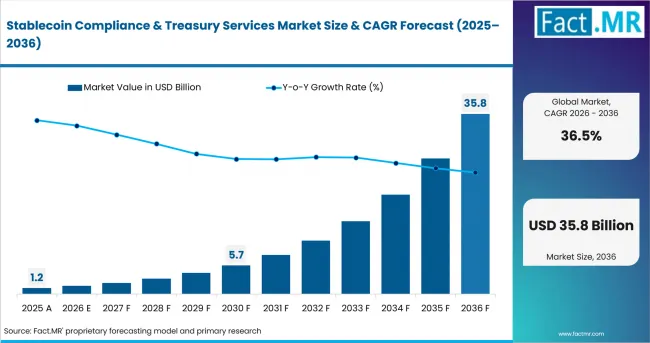
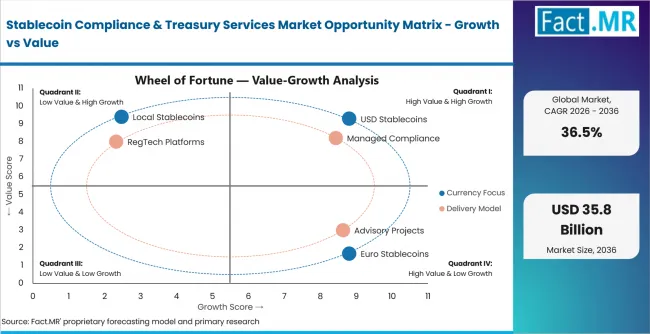
USD 1.6 billion in 2026 to USD 35.8 billion by 2036, at 36.5% CAGR.
- The stablecoin compliance & treasury services market crossed a valuation of USD 1.2 billion in 2025.
- Demand is expected to increase from USD 1.6 billion in 2026 to USD 35.8 billion by 2036.
- The market is forecast to record 36.5% CAGR during 2026 to 2036 as issuer licensing and reserve reporting become recurring operating work.
What are the defining numbers behind stablecoin compliance & treasury services growth?
USD 34.2 billion absolute opportunity by 2036, led by the United States and Singapore.
- Demand Drivers in the Market
- Payment companies need licensed stablecoin rails after the United States and European Union turned issuer obligations into formal rules.
- Banks need reserve monitoring before accepting stablecoin settlement inside treasury and digital transaction management workflows.
- Corporate treasurers need on-chain cash movement that still reconciles with bank accounts and internal controls.
- On-ramp providers need sanctions screening that works across wallets, bank accounts and payout partners.
- Key Segments Analyzed
- By Currency Focus: USD Stablecoins are expected to hold 78.0% share in 2026 because dollar reserves anchor most regulated payment use.
- By Delivery Model: Managed Compliance is projected to hold 38.0% share in 2026 because clients need a standing operating layer.
- By Service Type: Licensing Support is likely to account for 34.0% share in 2026 as rule changes create filing work.
- By Use Case: Cross-Border Payments are expected to hold 33.0% share in 2026 as stablecoins reduce settlement delays.
- By Customer Type: Stablecoin Issuers are likely to hold 31.0% share in 2026 because reserve and redemption duties sit with them.
- By Geography: The United States is projected to record 39.5% CAGR through 2036 as GENIUS Act implementation creates issuer service demand.
- Analyst Opinion at Fact.MR
- Shambhu Nath Jha of Fact.MR states, “Stablecoin services are becoming financial control work, not crypto setup work. I see banks asking who can evidence reserves, screen transactions and connect wallets to treasury systems. Providers that combine licensing skill with live payment operations should gain the first regulated enterprise contracts.”
- Strategic Implications
- Stablecoin issuers should build reserve reporting and redemption workflows before filing for licenses.
- Payment service providers need treasury partners that can reconcile fiat accounts with token balances.
- Banks should decide whether to issue stablecoins or supply custody and reserve services to issuers.
- Compliance providers need wallet screening depth and payment operations experience inside one service model.
Licensing support, reserve attestation and treasury operations form the core of this market. The GENIUS Act puts United States payment stablecoin issuers into a federal rule structure. The European Union Markets in Crypto-Assets Regulation creates authorization and supervision duties for asset-referenced tokens and e-money tokens.
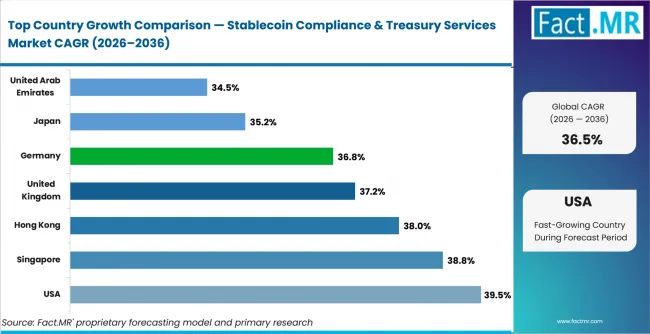
The United States is projected to record 39.5% CAGR through 2036 as federal rules pull issuers into bank-grade controls. Singapore is expected to expand at 38.8% CAGR as payment firms use regulated hubs for Asia corridors. Hong Kong is forecast to grow at 38.0% CAGR as licensing moves from pilot work to issuer supervision. The United Kingdom is expected to advance at 37.2% CAGR as sandbox testing prepares firms for the next rule phase. Germany is projected to rise at 36.8% CAGR as European Union compliance work moves through bank and payment channels.
How does the stablecoin compliance & treasury services market break down by segment?
USD stablecoins lead at 78.0%, and Managed Compliance leads at 38.0%.
Which currency focus dominates?
USD Stablecoins hold 78.0% share in 2026.
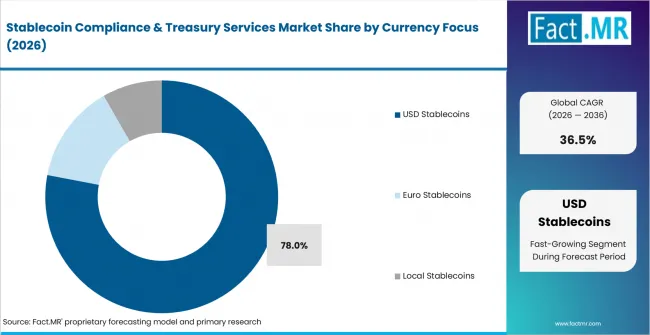
USD Stablecoins lead because most cross-border payment and treasury use is tied to dollar liquidity. Corporate buyers prefer dollar settlement because counterparties already price invoices and reserves in United States dollars. The segment is projected to hold 78.0% share in 2026. Euro and local-currency stablecoins can gain share when licensing and banking support become easier.
Which delivery model dominates?
Managed Compliance holds 38.0% share in 2026.
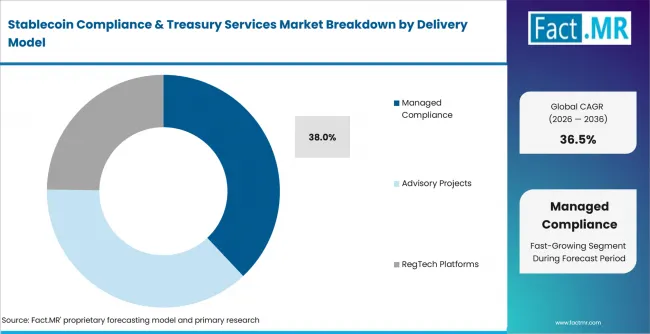
Managed Compliance leads because issuers and payment firms do not want to build every control internally. The delivery model is projected to hold 38.0% share in 2026 as clients outsource screening, reporting and policy maintenance. Buyers often start with consulting but shift toward managed operations once a product goes live.
Which service type dominates?
Licensing Support holds 34.0% share in 2026.
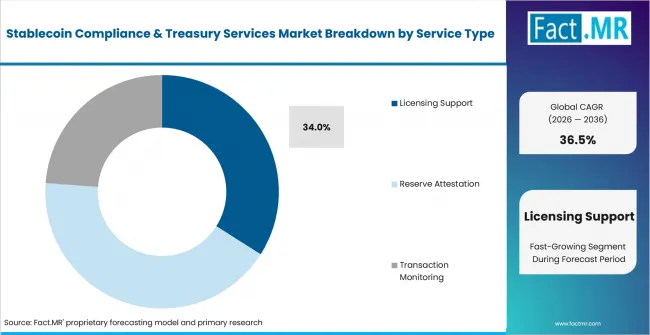
Licensing Support is expected to hold 34.0% share in 2026 because issuers and payment providers must define their legal status before launch. Filing work includes entity structure, permitted reserve design and operating policies. This segment stays large through 2036 because rule treatment differs by country. Providers with regulator-facing staff gain earlier access to issuer programs.
Which use case dominates?
Cross-Border Payments hold 33.0% share in 2026.
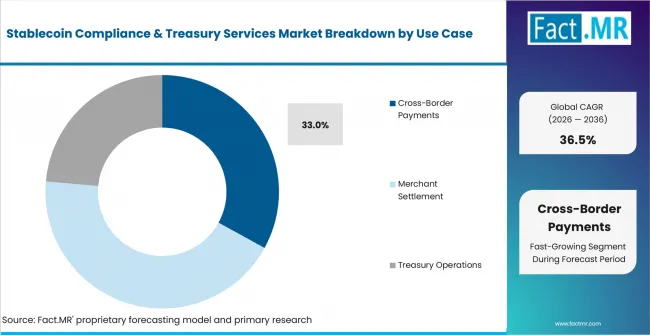
Cross-Border Payments lead because treasury teams want lower trapped cash and faster settlement. The segment is expected to hold 33.0% share in 2026 as payment service providers test stablecoins for payouts and merchant settlement. Demand is tied to corridors where pre-funded bank accounts create working capital pressure. Service providers need bank reconciliation tools before corporates approve wider use.
Which customer type dominates?
Stablecoin Issuers hold 31.0% share in 2026.
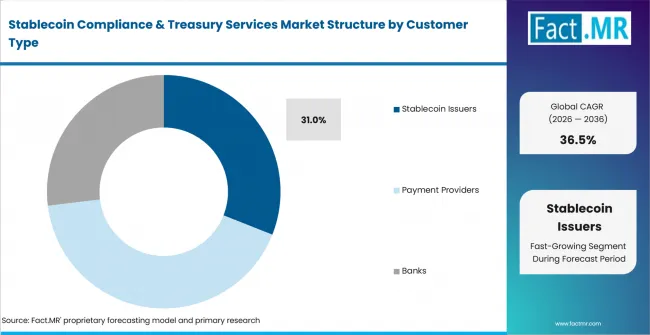
Stablecoin Issuers lead the customer group because reserve and redemption duties sit with them. The segment is likely to hold 31.0% share in 2026. Issuers need licensing, attestations, bank account setup and sanctions procedures before payment networks or merchants accept their tokens. Banks and payment service providers become larger buyers after issuer infrastructure is approved.
What is accelerating stablecoin compliance & treasury services demand, and what is holding it back?
GENIUS Act and MiCA rules drive it, while regulatory overlap restrains it.
The primary driver is the formal move from voluntary controls to legal issuer obligations. The GENIUS Act requires reserve backing and public disclosures for payment stablecoins. Treasury rulemaking also treats permitted payment stablecoin issuers as financial institutions for anti-money laundering duties. This turns licensing, sanctions programs and reserve reporting into recurring service needs.
Another considerable driver is enterprise payment integration. Circle launched CPN Managed Payments in April 2026 for banks, payment service providers and global platforms. Stripe made stablecoin-powered financial accounts available to businesses in 101 countries in May 2025. Buyers are now asking whether wallet screening, transaction monitoring and fiat reconciliation can work inside one operating model.
The main restraint is rule overlap across countries. Issuers may face separate banking and payment rules. Securities and sanctions interpretations also differ by market. Smaller providers can screen wallets but may not have reserve account access or local licensing partners. Faster adoption depends on service packages that map issuer rules, payment rules and treasury controls together.
Where do the biggest stablecoin compliance & treasury services opportunities sit?
Issuer licensing readiness, treasury reconciliation and bank settlement links.
- Issuer Licensing Readiness: Advisory firms can bundle entity setup, reserve policy and regulator filing support for new stablecoin issuers.
- Treasury Reconciliation: Providers can connect stablecoin balances with enterprise resource planning, cash ledgers and insurtech platforms where claim payments need auditable settlement.
- Bank Settlement Links: Banks can offer custody, cash account and redemption support to issuers that lack direct reserve infrastructure.
Which countries are scaling stablecoin compliance & treasury services fastest?
The United States leads at 39.5%. Singapore follows at 38.8%. Hong Kong records 38.0%. The United Kingdom records 37.2%. Germany records 36.8%. Japan records 35.2%. The United Arab Emirates records 34.5%.
Based on regional analysis, the Stablecoin Compliance & Treasury Services Market covers North America, Western Europe, East Asia, South Asia and Pacific, Latin America, and the Middle East and Africa.
.webp)
| Country | CAGR |
|---|---|
| United States | 39.5% |
| Singapore | 38.8% |
| Hong Kong | 38.0% |
| United Kingdom | 37.2% |
| Germany | 36.8% |
| Japan | 35.2% |
| United Arab Emirates | 34.5% |

What is powering the United States lead?
39.5% CAGR, supported by GENIUS Act implementation and issuer reserve obligations.
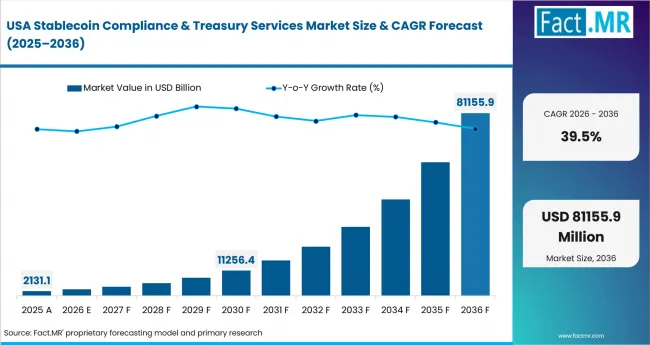
The United States has the largest stablecoin service pool because dollar-backed tokens sit closest to its banking and Treasury markets. The country is projected to record 39.5% CAGR through 2036 as federal rules create issuer licensing and monthly disclosure work. State and national trust charters also shape supplier selection. Service providers that connect reserve accounts with wallet screening and crypto ATM controls can serve broader digital asset entry points.
Why is Singapore an important stablecoin services hub?
38.8% CAGR, supported by payment hub status and Monetary Authority of Singapore oversight.
Singapore buyers compare stablecoin providers on licensing status and operational reach across Asia. The country is expected to expand at 38.8% CAGR through 2036 as payment firms use the city for treasury corridors and regional settlement tests. Paxos links USDG with Singapore supervision and global partners. Providers with bank relationships and live payout operations should gain stronger access to Asia-focused customers.
How is Hong Kong moving into licensed stablecoins?
38.0% CAGR, supported by the Stablecoins Ordinance and first issuer licensing activity.
Hong Kong is moving from sandbox learning into issuer supervision. The market is forecast to grow at 38.0% CAGR through 2036 as the Stablecoins Ordinance requires licences for fiat-referenced stablecoin issuance. The Hong Kong Monetary Authority granted stablecoin issuer licences to two entities in April 2026. This makes the city a test case for banks, telecom partners and digital asset firms that need supervised issuance in Asia.
What supports the United Kingdom outlook?
37.2% CAGR, supported by sandbox testing and the 2026 rule development path.
The United Kingdom is testing stablecoin products before final rules take effect. The country is expected to advance at 37.2% CAGR through 2036 as firms prepare for Financial Conduct Authority authorization and prudential rules. The FCA selected four firms from 20 applications for its stablecoin sandbox cohort. Providers with policy staff and live compliance tools should benefit as testing moves into commercial planning.
What underpins Germany’s growth?
36.8% CAGR, backed by European Union licensing and bank-grade compliance demand.
Germany matters because European stablecoin providers need access to a large banking and enterprise market inside the MiCA perimeter. Germany is projected to rise at 36.8% CAGR through 2036 as payment firms and banks build reserve governance and outsourced compliance controls. Frankfurt-based financial institutions are likely to require conservative due diligence before using token settlement. Supplier selection should favor providers that can document European Union entity status and bank account handling.
Why does Japan move more carefully?
35.2% CAGR, supported by electronic payment instrument rules and trust-bank structures.
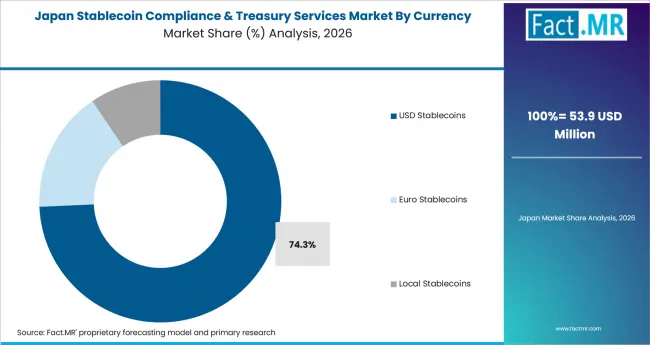
Japan approaches stablecoins through payment law and conservative financial supervision. Japan is forecast at 35.2% CAGR through 2036 as banks and trust structures test yen and dollar payment tokens. The Financial Services Agency continued reviewing electronic payment instrument rules in 2024 and 2025. Adoption should stay slower than the global average until foreign stablecoin entry and corporate use cases become easier to approve.
How is the United Arab Emirates scaling services?
34.5% CAGR, supported by payment token licensing and financial hub activity.
The United Arab Emirates links stablecoin services to remittances, business payments and financial hub activity. The country is expected to post 34.5% CAGR through 2036 as the Central Bank payment token regime creates licensing work for issuance, custody and conversion. Abu Dhabi and Dubai give providers separate regulated venues for digital asset activity. Service firms that connect blockchain telecom settlement with payment token controls can target remittance and enterprise corridors.
Who leads the stablecoin compliance & treasury services landscape?
Circle and Paxos lead through issuer infrastructure. Stripe Bridge and Fireblocks add payment and wallet infrastructure.
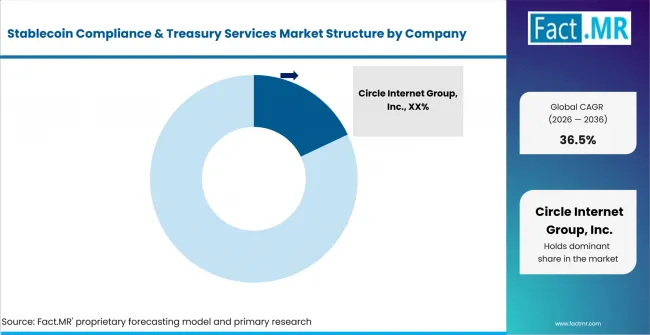
Stablecoin compliance and treasury services are used by issuers, banks and payment firms that need trusted controls before customer rollout. Circle provides USDC, EURC and Circle Payments Network services. Paxos supports regulated stablecoin issuance through United States, Singapore and European structures. Stripe owns Bridge and offers stablecoin-powered financial accounts for global businesses.
Infrastructure providers compete when buyers need wallet operations, settlement links and bank reconciliation in one workflow. Fireblocks supports wallet, treasury and settlement infrastructure. Anchorage Digital launched Stablecoin Solutions for Banks in February 2026. Zero Hash serves embedded digital asset and stablecoin use cases for financial platforms. These suppliers benefit when corporate digital transformation programs include token settlement inside finance operations.
Payment networks are also moving closer to the service layer. Mastercard agreed to acquire BVNK in March 2026 for up to USD 1.8 billion including contingent payments. The transaction shows that card networks want licensed stablecoin orchestration rather than only card-based settlement. Providers with licenses, bank partners and live treasury controls should be better placed through 2036.
Which companies are the key players?
Circle Internet Group, Paxos, Stripe Bridge, Fireblocks, Anchorage Digital, and BVNK are the key players. Zero Hash can be covered in the broader peer set.
- Circle Internet Group, Inc.
- Paxos Trust Company, N.A.
- Stripe, Inc. (Bridge)
- Fireblocks Inc.
- Zero Hash Holdings LLC
- Anchorage Digital Bank National Association
- BVNK Holdings Limited
Bibliography
- [1] Carapella, F., Lubis, A., & Vardoulakis, A. (2026, April 8). Stablecoins in 2025: Developments and financial stability implications. Board of Governors of the Federal Reserve System.
- [2] U.S. Department of the Treasury. (2026, April 8). Treasury proposes rule to implement the GENIUS Act’s requirements to counter illicit finance.
- [3] U.S. Department of the Treasury. (2026, April 1). Treasury seeks public comment on GENIUS Act notice of proposed rulemaking concerning state-level regulatory regimes.
- [4] The White House. (2025, July 18). Fact sheet: President Donald J. Trump signs GENIUS Act into law.
- [5] European Securities and Markets Authority. (2025, November 28). Statement to support the smooth implementation of MiCA standards and format.
- [6] Financial Stability Board. (2025, October 16). FSB finds significant gaps and inconsistencies in implementation of crypto and stablecoin recommendations.
- [7] Financial Conduct Authority. (2026, February 25). FCA selects 4 firms to test stablecoin innovation in its Regulatory Sandbox.
- [8] Hong Kong Monetary Authority. (2026, April 10). Robust development of the regulated stablecoin ecosystem in Hong Kong.
- [9] Financial Services Agency. (2025, March 21). FSA Weekly Review No. 628.
- [10] Central Bank of the United Arab Emirates. (2024, June 14). Payment Token Services Regulation.
- [11] Circle Internet Group, Inc. (2026, April 8). Circle launches CPN Managed Payments, a full-stack platform for seamless stablecoin settlement.
- [12] Circle Internet Group, Inc. (2025, May 30). Unlocking global money movement with Circle Payments Network.
- [13] Paxos. (2025, July 1). Global Dollar (USDG) launches in the EU.
- [14] Stripe, Inc. (2025, February 4). Stripe completes Bridge acquisition.
- [15] Stripe, Inc. (2025, May 7). Stripe accelerates the utility of AI and stablecoins with major launches.
- [16] Bridge. (2026, February 17). Bridge receives OCC conditional approval to organize a federally chartered national trust bank.
- [17] Anchorage Digital. (2026, February 19). Anchorage Digital launches Stablecoin Solutions for Banks to modernize cross-border USD settlement.
- [18] Mastercard. (2026, March 17). Mastercard to acquire BVNK to connect on-chain payments and fiat rails.
- [19] FIS. (2025, July 28). FIS partners with Circle to unlock stablecoin money movement functionality for financial institution customers.
- [20] Goldi, R. (2025, April 21). It’s all about the network—Welcome, Circle! Fireblocks.
This Report Addresses
- Strategic intelligence on stablecoin compliance and treasury services across service type, currency focus and customer type.
- Segment analysis covering USD Stablecoins, Managed Compliance, Licensing Support, Cross-Border Payments and Stablecoin Issuers.
- Regional outlook covering the United States, Singapore, Hong Kong, United Kingdom, Germany, Japan and United Arab Emirates.
- Competitive analysis covers Circle Internet Group and Paxos, with Stripe Bridge, Fireblocks, Anchorage Digital, and BVNK also profiled.
- Service assessment covering issuer licensing, reserve attestation, transaction monitoring, on-ramp compliance and treasury setup.
- Regulation assessment covering GENIUS Act, Markets in Crypto-Assets Regulation, Financial Conduct Authority sandbox and payment token rules.
- Primary interviews, official source review, provider checks and stablecoin payment validation support the forecast.
What does the stablecoin compliance & treasury services market cover?
Licensing, reserve-attestation, on-ramp, off-ramp and corporate-treasury services for stablecoin payments after the U.S. GENIUS Act and EU MiCA created formal issuer obligations.
The stablecoin compliance & treasury services market covers services that help issuers and banks use stablecoins under formal financial rules. Payment firms and corporates use the same support when payment flows reach customer money. It includes issuer licensing, reserve evidence and treasury reconciliation. The market differs from general cryptocurrency services because the service focus is regulated payment use and cash control.
What is included in the scope?
Licensing support with reserve reporting and wallet screening. Treasury setup is included.
The scope includes licensing and regulatory filing support for stablecoin issuers. It covers reserve attestation, audit readiness and redemption control design. It includes on-ramp and off-ramp compliance where blockchain technology connects with bank accounts. It also includes treasury setup for minting and burning. Settlement and reconciliation are included.
What is excluded from the scope?
Token circulation value, exchange trading fees and general blockchain consulting.
The scope excludes the face value of stablecoins in circulation because that is not service revenue. It excludes exchange trading fees unless the work is tied to compliance and treasury operations. It excludes general blockchain consulting when the engagement does not cover issuer duties, payment controls or reserve operations. It also excludes speculative yield products that are not part of regulated payment settlement.
How was the analysis built?
120+ sources, 50+ company portfolios, 30+ countries, 24+ interviews.
- Primary Research:
- Primary research includes interviews with payment compliance heads and stablecoin product teams. It includes input from bank treasury teams, reserve attestation specialists and payment infrastructure providers.
- Desk Research:
- Desk research reviews central bank rules and official stablecoin consultations. It covers issuer licenses, company product launches and payment gateway links that show where payment adoption enters enterprise systems.
- Market-Sizing and Forecasting:
- Forecasting uses stablecoin supply, license intensity and service pricing. Provider revenue signals and addressable financial institutions support the market assessment.
- Data Validation and Update Cycle:
- Forecasts are validated through provider checks and policy updates. Company launches and regulator actions help confirm the market direction.
What is the report’s scope and coverage?
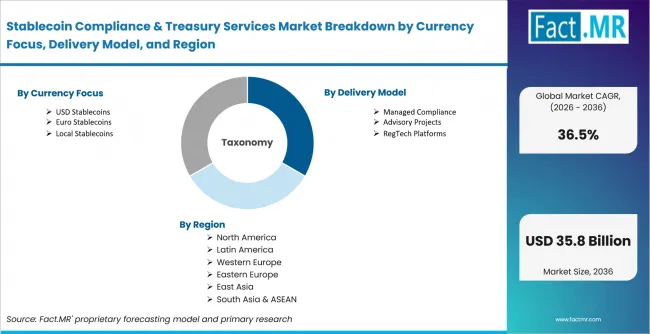
| Attribute | Details |
|---|---|
| Quantitative Units | USD billion |
| Market Definition | Licensing, reserve-attestation, on-ramp, off-ramp and treasury services for regulated stablecoin payments |
| Service Type | Licensing Support, Reserve Attestation, Transaction Monitoring, On-Ramp Compliance, Treasury Setup |
| Currency Focus | USD Stablecoins, Euro Stablecoins, Local Stablecoins, Multi-Currency Stablecoins, Tokenized Deposits |
| Delivery Model | Managed Compliance, Advisory Projects, RegTech Platforms, Bank-Led Services, Embedded APIs |
| Customer Type | Stablecoin Issuers, Payment Service Providers, Banks, Fintech Platforms, Global Corporates |
| Use Case | Cross-Border Payments, Merchant Settlement, Treasury Operations, Remittances, B2B Payouts |
| Regions Covered | North America, Western Europe, East Asia, South Asia and Pacific, Latin America, Middle East and Africa |
| Countries Covered | United States, Singapore, Hong Kong, United Kingdom, Germany, Japan, United Arab Emirates |
| Key Companies Profiled | Circle Internet Group, Paxos, Stripe Bridge, Fireblocks, Zero Hash, Anchorage Digital and BVNK |
| Forecast Period | 2026 to 2036 |
| Approach | Hybrid top-down and bottom-up approach using stablecoin supply, license intensity, provider service pricing, company disclosures and regulator validation |
How is the market segmented?
-
By Service Type:
- Licensing Support
- Reserve Attestation
- Transaction Monitoring
- On-Ramp Compliance
- Treasury Setup
-
By Currency Focus:
- USD Stablecoins
- Euro Stablecoins
- Local Stablecoins
- Multi-Currency Stablecoins
- Tokenized Deposits
-
By Delivery Model:
- Managed Compliance
- Advisory Projects
- RegTech Platforms
- Bank-Led Services
- Embedded APIs
-
By Customer Type:
- Stablecoin Issuers
- Payment Providers
- Banks
- Fintech Platforms
- Global Corporates
-
By Use Case:
- Cross-Border Payments
- Merchant Settlement
- Treasury Operations
- Remittances
- B2B Payouts
-
By Region:
- North America
- United States
- Canada
- Mexico
- Latin America
- Brazil
- Argentina
- Rest of Latin America
- Europe
- Germany
- United Kingdom
- France
- Italy
- Spain
- Rest of Europe
- Asia Pacific
- China
- India
- Japan
- Singapore
- Hong Kong
- Middle East & Africa
- GCC Countries
- United Arab Emirates
- South Africa
- Rest of Middle East & Africa
- North America
- Frequently Asked Questions -
How large is the Stablecoin Compliance & Treasury Services Market?
The market has reached a considerable scale as regulatory grade stablecoin operations continue to expand globally.
How is the Stablecoin Compliance & Treasury Services Market expected to evolve long term?
The market is anticipated to expand significantly as stablecoins become embedded in regulated payment systems.
What is the expected growth trajectory of the Stablecoin Compliance & Treasury Services Market?
The market is forecast to grow rapidly over the coming decade, driven by regulation led adoption.
Which stablecoin currency focus dominates the market?
Stablecoins linked to the US dollar dominate due to their liquidity depth and widespread payment acceptance.
Which delivery model is most widely used in the market?
Managed compliance services lead as issuers seek ongoing operational and regulatory support.
Which service category leads the Stablecoin Compliance & Treasury Services Market?
Licensing and regulatory onboarding services lead due to pre launch approval requirements.
Which country shows the fastest expansion in this market?
The United States is expanding fastest due to proactive stablecoin specific regulatory frameworks.
How is Singapore positioned in the Stablecoin Compliance & Treasury Services Market?
Singapore is emerging as a key hub for regulated stablecoin treasury and payment routing in Asia.
How is Hong Kong contributing to market growth?
Hong Kong is gaining momentum as stablecoin licensing moves into regulated commercial deployment.
How does the United Kingdom factor into the market landscape?
The UK’s regulatory sandbox approach is supporting the preparation of stablecoin specific rules.
What is the key factor driving this market?
Mandatory licensing and reserve verification requirements are driving demand for compliance and treasury services.
What is the main challenge affecting market growth?
Regulatory fragmentation across jurisdictions creates complexity for global stablecoin issuers.
Why are treasury services essential in this market?
Stablecoin operations require ongoing treasury functions such as issuance flows, reserves management, and ledger reconciliation.
Table of Content
- Executive Summary
- Demand to side Trends
- Supply to side Trends
- Technology Roadmap Analysis
- Analysis and Recommendations
- Market Overview
- Market Coverage / Taxonomy
- Market Definition / Scope / Limitations
- Analytical Lens and Working Hypotheses
- Market Structure, Signals, and Trend Drivers
- Benchmarking and Cross-market Comparability
- Market Sizing, Forecasting, and Opportunity Mapping
- Research Design and Evidence Framework
- Desk Research Programme (Secondary Evidence)
- Company Annual and Sustainability Reports
- Peer-reviewed Journals and Academic Literature
- Corporate Websites, Product Literature, and Technical Notes
- Earnings Decks and Investor Briefings
- Statutory Filings and Regulatory Disclosures
- Technical White Papers and Standards Notes
- Trade Journals, Industry Magazines, and Analyst Briefs
- Conference Proceedings, Webinars, and Seminar Materials
- Government Statistics Portals and Public Data Releases
- Press Releases and Reputable Media Coverage
- Specialist Newsletters and Curated Briefings
- Sector Databases and Reference Repositories
- Fact.MR Internal Proprietary Databases and Historical Market Datasets
- Subscription Datasets and Paid Sources
- Social Channels, Communities, and Digital Listening Inputs
- Why Primary Evidence is Used
- Field Techniques
- Interviews
- Surveys
- Focus Groups
- Observational and In-context Research
- Social and Community Interactions
- Stakeholder Universe Engaged
- C-suite Leaders
- Board Members
- Presidents and Vice Presidents
- R&D and Innovation Heads
- Technical Specialists
- Domain Subject-matter Experts
- Scientists
- Physicians and Other Healthcare Professionals
- Governance, Ethics, and Data Stewardship
- Research Ethics
- Data Integrity and Handling
- Tooling, Models, and Reference Databases
- Desk Research Programme (Secondary Evidence)
- Data Engineering and Model Build
- Data Acquisition and Ingestion
- Cleaning, Normalisation, and Verification
- Synthesis, Triangulation, and Analysis
- Quality Assurance and Audit Trail
- Market Background
- Market Dynamics
- Drivers
- Restraints
- Opportunity
- Trends
- Scenario Forecast
- Demand in Optimistic Scenario
- Global Market Analysis 2021 to 2025 and Forecast, 2026 to 2036
- Historical Market Size Value (USD Million) Analysis, 2021 to 2025
- Current and Future Market Size Value (USD Million) Projections, 2026 to 2036
- Y to o to Y Growth Trend Analysis
- Absolute $ Opportunity Analysis
- Global Market Pricing Analysis 2021 to 2025 and Forecast 2026 to 2036
- Global Market Analysis 2021 to 2025 and Forecast 2026 to 2036, By Currency Focus
- Introduction / Key Findings
- Historical Market Size Value (USD Million) Analysis By Currency Focus , 2021 to 2025
- Current and Future Market Size Value (USD Million) Analysis and Forecast By Currency Focus , 2026 to 2036
- USD Stablecoins
- Euro Stablecoins
- Local Stablecoins
- USD Stablecoins
- Y to o to Y Growth Trend Analysis By Currency Focus , 2021 to 2025
- Absolute $ Opportunity Analysis By Currency Focus , 2026 to 2036
- Global Market Analysis 2021 to 2025 and Forecast 2026 to 2036, By Delivery Model
- Introduction / Key Findings
- Historical Market Size Value (USD Million) Analysis By Delivery Model, 2021 to 2025
- Current and Future Market Size Value (USD Million) Analysis and Forecast By Delivery Model, 2026 to 2036
- Managed Compliance
- Advisory Projects
- RegTech Platforms
- Managed Compliance
- Y to o to Y Growth Trend Analysis By Delivery Model, 2021 to 2025
- Absolute $ Opportunity Analysis By Delivery Model, 2026 to 2036
- Global Market Analysis 2021 to 2025 and Forecast 2026 to 2036, By Service Type
- Introduction / Key Findings
- Historical Market Size Value (USD Million) Analysis By Service Type, 2021 to 2025
- Current and Future Market Size Value (USD Million) Analysis and Forecast By Service Type, 2026 to 2036
- Licensing Support
- Reserve Attestation
- Transaction Monitoring
- Licensing Support
- Y to o to Y Growth Trend Analysis By Service Type, 2021 to 2025
- Absolute $ Opportunity Analysis By Service Type, 2026 to 2036
- Global Market Analysis 2021 to 2025 and Forecast 2026 to 2036, By Use Case
- Introduction / Key Findings
- Historical Market Size Value (USD Million) Analysis By Use Case, 2021 to 2025
- Current and Future Market Size Value (USD Million) Analysis and Forecast By Use Case, 2026 to 2036
- Cross-Border Payments
- Merchant Settlement
- Treasury Operations
- Cross-Border Payments
- Y to o to Y Growth Trend Analysis By Use Case, 2021 to 2025
- Absolute $ Opportunity Analysis By Use Case, 2026 to 2036
- Global Market Analysis 2021 to 2025 and Forecast 2026 to 2036, By Customer Type
- Introduction / Key Findings
- Historical Market Size Value (USD Million) Analysis By Customer Type, 2021 to 2025
- Current and Future Market Size Value (USD Million) Analysis and Forecast By Customer Type, 2026 to 2036
- Stablecoin Issuers
- Payment Providers
- Banks
- Stablecoin Issuers
- Y to o to Y Growth Trend Analysis By Customer Type, 2021 to 2025
- Absolute $ Opportunity Analysis By Customer Type, 2026 to 2036
- Global Market Analysis 2021 to 2025 and Forecast 2026 to 2036, By Region
- Introduction
- Historical Market Size Value (USD Million) Analysis By Region, 2021 to 2025
- Current Market Size Value (USD Million) Analysis and Forecast By Region, 2026 to 2036
- North America
- Latin America
- Western Europe
- Eastern Europe
- East Asia
- South Asia and Pacific
- Middle East & Africa
- Market Attractiveness Analysis By Region
- North America Market Analysis 2021 to 2025 and Forecast 2026 to 2036, By Country
- Historical Market Size Value (USD Million) Trend Analysis By Market Taxonomy, 2021 to 2025
- Market Size Value (USD Million) Forecast By Market Taxonomy, 2026 to 2036
- By Country
- USA
- Canada
- Mexico
- By Currency Focus
- By Delivery Model
- By Service Type
- By Use Case
- By Customer Type
- By Country
- Market Attractiveness Analysis
- By Country
- By Currency Focus
- By Delivery Model
- By Service Type
- By Use Case
- By Customer Type
- Key Takeaways
- Latin America Market Analysis 2021 to 2025 and Forecast 2026 to 2036, By Country
- Historical Market Size Value (USD Million) Trend Analysis By Market Taxonomy, 2021 to 2025
- Market Size Value (USD Million) Forecast By Market Taxonomy, 2026 to 2036
- By Country
- Brazil
- Chile
- Rest of Latin America
- By Currency Focus
- By Delivery Model
- By Service Type
- By Use Case
- By Customer Type
- By Country
- Market Attractiveness Analysis
- By Country
- By Currency Focus
- By Delivery Model
- By Service Type
- By Use Case
- By Customer Type
- Key Takeaways
- Western Europe Market Analysis 2021 to 2025 and Forecast 2026 to 2036, By Country
- Historical Market Size Value (USD Million) Trend Analysis By Market Taxonomy, 2021 to 2025
- Market Size Value (USD Million) Forecast By Market Taxonomy, 2026 to 2036
- By Country
- Germany
- UK
- Italy
- Spain
- France
- Nordic
- BENELUX
- Rest of Western Europe
- By Currency Focus
- By Delivery Model
- By Service Type
- By Use Case
- By Customer Type
- By Country
- Market Attractiveness Analysis
- By Country
- By Currency Focus
- By Delivery Model
- By Service Type
- By Use Case
- By Customer Type
- Key Takeaways
- Eastern Europe Market Analysis 2021 to 2025 and Forecast 2026 to 2036, By Country
- Historical Market Size Value (USD Million) Trend Analysis By Market Taxonomy, 2021 to 2025
- Market Size Value (USD Million) Forecast By Market Taxonomy, 2026 to 2036
- By Country
- Russia
- Poland
- Hungary
- Balkan & Baltic
- Rest of Eastern Europe
- By Currency Focus
- By Delivery Model
- By Service Type
- By Use Case
- By Customer Type
- By Country
- Market Attractiveness Analysis
- By Country
- By Currency Focus
- By Delivery Model
- By Service Type
- By Use Case
- By Customer Type
- Key Takeaways
- East Asia Market Analysis 2021 to 2025 and Forecast 2026 to 2036, By Country
- Historical Market Size Value (USD Million) Trend Analysis By Market Taxonomy, 2021 to 2025
- Market Size Value (USD Million) Forecast By Market Taxonomy, 2026 to 2036
- By Country
- China
- Japan
- South Korea
- By Currency Focus
- By Delivery Model
- By Service Type
- By Use Case
- By Customer Type
- By Country
- Market Attractiveness Analysis
- By Country
- By Currency Focus
- By Delivery Model
- By Service Type
- By Use Case
- By Customer Type
- Key Takeaways
- South Asia and Pacific Market Analysis 2021 to 2025 and Forecast 2026 to 2036, By Country
- Historical Market Size Value (USD Million) Trend Analysis By Market Taxonomy, 2021 to 2025
- Market Size Value (USD Million) Forecast By Market Taxonomy, 2026 to 2036
- By Country
- India
- ASEAN
- Australia & New Zealand
- Rest of South Asia and Pacific
- By Currency Focus
- By Delivery Model
- By Service Type
- By Use Case
- By Customer Type
- By Country
- Market Attractiveness Analysis
- By Country
- By Currency Focus
- By Delivery Model
- By Service Type
- By Use Case
- By Customer Type
- Key Takeaways
- Middle East & Africa Market Analysis 2021 to 2025 and Forecast 2026 to 2036, By Country
- Historical Market Size Value (USD Million) Trend Analysis By Market Taxonomy, 2021 to 2025
- Market Size Value (USD Million) Forecast By Market Taxonomy, 2026 to 2036
- By Country
- Kingdom of Saudi Arabia
- Other GCC Countries
- Turkiye
- South Africa
- Other African Union
- Rest of Middle East & Africa
- By Currency Focus
- By Delivery Model
- By Service Type
- By Use Case
- By Customer Type
- By Country
- Market Attractiveness Analysis
- By Country
- By Currency Focus
- By Delivery Model
- By Service Type
- By Use Case
- By Customer Type
- Key Takeaways
- Key Countries Market Analysis
- USA
- Pricing Analysis
- Market Share Analysis, 2025
- By Currency Focus
- By Delivery Model
- By Service Type
- By Use Case
- By Customer Type
- Canada
- Pricing Analysis
- Market Share Analysis, 2025
- By Currency Focus
- By Delivery Model
- By Service Type
- By Use Case
- By Customer Type
- Mexico
- Pricing Analysis
- Market Share Analysis, 2025
- By Currency Focus
- By Delivery Model
- By Service Type
- By Use Case
- By Customer Type
- Brazil
- Pricing Analysis
- Market Share Analysis, 2025
- By Currency Focus
- By Delivery Model
- By Service Type
- By Use Case
- By Customer Type
- Chile
- Pricing Analysis
- Market Share Analysis, 2025
- By Currency Focus
- By Delivery Model
- By Service Type
- By Use Case
- By Customer Type
- Germany
- Pricing Analysis
- Market Share Analysis, 2025
- By Currency Focus
- By Delivery Model
- By Service Type
- By Use Case
- By Customer Type
- UK
- Pricing Analysis
- Market Share Analysis, 2025
- By Currency Focus
- By Delivery Model
- By Service Type
- By Use Case
- By Customer Type
- Italy
- Pricing Analysis
- Market Share Analysis, 2025
- By Currency Focus
- By Delivery Model
- By Service Type
- By Use Case
- By Customer Type
- Spain
- Pricing Analysis
- Market Share Analysis, 2025
- By Currency Focus
- By Delivery Model
- By Service Type
- By Use Case
- By Customer Type
- France
- Pricing Analysis
- Market Share Analysis, 2025
- By Currency Focus
- By Delivery Model
- By Service Type
- By Use Case
- By Customer Type
- India
- Pricing Analysis
- Market Share Analysis, 2025
- By Currency Focus
- By Delivery Model
- By Service Type
- By Use Case
- By Customer Type
- ASEAN
- Pricing Analysis
- Market Share Analysis, 2025
- By Currency Focus
- By Delivery Model
- By Service Type
- By Use Case
- By Customer Type
- Australia & New Zealand
- Pricing Analysis
- Market Share Analysis, 2025
- By Currency Focus
- By Delivery Model
- By Service Type
- By Use Case
- By Customer Type
- China
- Pricing Analysis
- Market Share Analysis, 2025
- By Currency Focus
- By Delivery Model
- By Service Type
- By Use Case
- By Customer Type
- Japan
- Pricing Analysis
- Market Share Analysis, 2025
- By Currency Focus
- By Delivery Model
- By Service Type
- By Use Case
- By Customer Type
- South Korea
- Pricing Analysis
- Market Share Analysis, 2025
- By Currency Focus
- By Delivery Model
- By Service Type
- By Use Case
- By Customer Type
- Russia
- Pricing Analysis
- Market Share Analysis, 2025
- By Currency Focus
- By Delivery Model
- By Service Type
- By Use Case
- By Customer Type
- Poland
- Pricing Analysis
- Market Share Analysis, 2025
- By Currency Focus
- By Delivery Model
- By Service Type
- By Use Case
- By Customer Type
- Hungary
- Pricing Analysis
- Market Share Analysis, 2025
- By Currency Focus
- By Delivery Model
- By Service Type
- By Use Case
- By Customer Type
- Kingdom of Saudi Arabia
- Pricing Analysis
- Market Share Analysis, 2025
- By Currency Focus
- By Delivery Model
- By Service Type
- By Use Case
- By Customer Type
- Turkiye
- Pricing Analysis
- Market Share Analysis, 2025
- By Currency Focus
- By Delivery Model
- By Service Type
- By Use Case
- By Customer Type
- South Africa
- Pricing Analysis
- Market Share Analysis, 2025
- By Currency Focus
- By Delivery Model
- By Service Type
- By Use Case
- By Customer Type
- USA
- Market Structure Analysis
- Competition Dashboard
- Competition Benchmarking
- Market Share Analysis of Top Players
- By Regional
- By Currency Focus
- By Delivery Model
- By Service Type
- By Use Case
- By Customer Type
- Competition Analysis
- Competition Deep Dive
- Circle Internet Group, Inc.
- Overview
- Product Portfolio
- Profitability by Market Segments (Product/Age /Sales Channel/Region)
- Sales Footprint
- Strategy Overview
- Marketing Strategy
- Product Strategy
- Channel Strategy
- Paxos Trust Company, N.A.
- Stripe, Inc. (Bridge)
- Fireblocks Inc.
- Zero Hash Holdings LLC
- Anchorage Digital Bank National Association
- Circle Internet Group, Inc.
- Competition Deep Dive
- Market Dynamics
- Assumptions & Acronyms Used
List Of Table
- Table 1: Global Market Value (USD Million) Forecast by Region, 2021 to 2036
- Table 2: Global Market Value (USD Million) Forecast by Currency Focus , 2021 to 2036
- Table 3: Global Market Value (USD Million) Forecast by Delivery Model, 2021 to 2036
- Table 4: Global Market Value (USD Million) Forecast by Service Type, 2021 to 2036
- Table 5: Global Market Value (USD Million) Forecast by Use Case, 2021 to 2036
- Table 6: Global Market Value (USD Million) Forecast by Customer Type, 2021 to 2036
- Table 7: North America Market Value (USD Million) Forecast by Country, 2021 to 2036
- Table 8: North America Market Value (USD Million) Forecast by Currency Focus , 2021 to 2036
- Table 9: North America Market Value (USD Million) Forecast by Delivery Model, 2021 to 2036
- Table 10: North America Market Value (USD Million) Forecast by Service Type, 2021 to 2036
- Table 11: North America Market Value (USD Million) Forecast by Use Case, 2021 to 2036
- Table 12: North America Market Value (USD Million) Forecast by Customer Type, 2021 to 2036
- Table 13: Latin America Market Value (USD Million) Forecast by Country, 2021 to 2036
- Table 14: Latin America Market Value (USD Million) Forecast by Currency Focus , 2021 to 2036
- Table 15: Latin America Market Value (USD Million) Forecast by Delivery Model, 2021 to 2036
- Table 16: Latin America Market Value (USD Million) Forecast by Service Type, 2021 to 2036
- Table 17: Latin America Market Value (USD Million) Forecast by Use Case, 2021 to 2036
- Table 18: Latin America Market Value (USD Million) Forecast by Customer Type, 2021 to 2036
- Table 19: Western Europe Market Value (USD Million) Forecast by Country, 2021 to 2036
- Table 20: Western Europe Market Value (USD Million) Forecast by Currency Focus , 2021 to 2036
- Table 21: Western Europe Market Value (USD Million) Forecast by Delivery Model, 2021 to 2036
- Table 22: Western Europe Market Value (USD Million) Forecast by Service Type, 2021 to 2036
- Table 23: Western Europe Market Value (USD Million) Forecast by Use Case, 2021 to 2036
- Table 24: Western Europe Market Value (USD Million) Forecast by Customer Type, 2021 to 2036
- Table 25: Eastern Europe Market Value (USD Million) Forecast by Country, 2021 to 2036
- Table 26: Eastern Europe Market Value (USD Million) Forecast by Currency Focus , 2021 to 2036
- Table 27: Eastern Europe Market Value (USD Million) Forecast by Delivery Model, 2021 to 2036
- Table 28: Eastern Europe Market Value (USD Million) Forecast by Service Type, 2021 to 2036
- Table 29: Eastern Europe Market Value (USD Million) Forecast by Use Case, 2021 to 2036
- Table 30: Eastern Europe Market Value (USD Million) Forecast by Customer Type, 2021 to 2036
- Table 31: East Asia Market Value (USD Million) Forecast by Country, 2021 to 2036
- Table 32: East Asia Market Value (USD Million) Forecast by Currency Focus , 2021 to 2036
- Table 33: East Asia Market Value (USD Million) Forecast by Delivery Model, 2021 to 2036
- Table 34: East Asia Market Value (USD Million) Forecast by Service Type, 2021 to 2036
- Table 35: East Asia Market Value (USD Million) Forecast by Use Case, 2021 to 2036
- Table 36: East Asia Market Value (USD Million) Forecast by Customer Type, 2021 to 2036
- Table 37: South Asia and Pacific Market Value (USD Million) Forecast by Country, 2021 to 2036
- Table 38: South Asia and Pacific Market Value (USD Million) Forecast by Currency Focus , 2021 to 2036
- Table 39: South Asia and Pacific Market Value (USD Million) Forecast by Delivery Model, 2021 to 2036
- Table 40: South Asia and Pacific Market Value (USD Million) Forecast by Service Type, 2021 to 2036
- Table 41: South Asia and Pacific Market Value (USD Million) Forecast by Use Case, 2021 to 2036
- Table 42: South Asia and Pacific Market Value (USD Million) Forecast by Customer Type, 2021 to 2036
- Table 43: Middle East & Africa Market Value (USD Million) Forecast by Country, 2021 to 2036
- Table 44: Middle East & Africa Market Value (USD Million) Forecast by Currency Focus , 2021 to 2036
- Table 45: Middle East & Africa Market Value (USD Million) Forecast by Delivery Model, 2021 to 2036
- Table 46: Middle East & Africa Market Value (USD Million) Forecast by Service Type, 2021 to 2036
- Table 47: Middle East & Africa Market Value (USD Million) Forecast by Use Case, 2021 to 2036
- Table 48: Middle East & Africa Market Value (USD Million) Forecast by Customer Type, 2021 to 2036
List Of Figures
- Figure 1: Global Market Pricing Analysis
- Figure 2: Global Market Value (USD Million) Forecast 2021-2036
- Figure 3: Global Market Value Share and BPS Analysis by Currency Focus , 2026 and 2036
- Figure 4: Global Market Y-o-Y Growth Comparison by Currency Focus , 2026-2036
- Figure 5: Global Market Attractiveness Analysis by Currency Focus
- Figure 6: Global Market Value Share and BPS Analysis by Delivery Model, 2026 and 2036
- Figure 7: Global Market Y-o-Y Growth Comparison by Delivery Model, 2026-2036
- Figure 8: Global Market Attractiveness Analysis by Delivery Model
- Figure 9: Global Market Value Share and BPS Analysis by Service Type, 2026 and 2036
- Figure 10: Global Market Y-o-Y Growth Comparison by Service Type, 2026-2036
- Figure 11: Global Market Attractiveness Analysis by Service Type
- Figure 12: Global Market Value Share and BPS Analysis by Use Case, 2026 and 2036
- Figure 13: Global Market Y-o-Y Growth Comparison by Use Case, 2026-2036
- Figure 14: Global Market Attractiveness Analysis by Use Case
- Figure 15: Global Market Value Share and BPS Analysis by Customer Type, 2026 and 2036
- Figure 16: Global Market Y-o-Y Growth Comparison by Customer Type, 2026-2036
- Figure 17: Global Market Attractiveness Analysis by Customer Type
- Figure 18: Global Market Value (USD Million) Share and BPS Analysis by Region, 2026 and 2036
- Figure 19: Global Market Y-o-Y Growth Comparison by Region, 2026-2036
- Figure 20: Global Market Attractiveness Analysis by Region
- Figure 21: North America Market Incremental Dollar Opportunity, 2026-2036
- Figure 22: Latin America Market Incremental Dollar Opportunity, 2026-2036
- Figure 23: Western Europe Market Incremental Dollar Opportunity, 2026-2036
- Figure 24: Eastern Europe Market Incremental Dollar Opportunity, 2026-2036
- Figure 25: East Asia Market Incremental Dollar Opportunity, 2026-2036
- Figure 26: South Asia and Pacific Market Incremental Dollar Opportunity, 2026-2036
- Figure 27: Middle East & Africa Market Incremental Dollar Opportunity, 2026-2036
- Figure 28: North America Market Value Share and BPS Analysis by Country, 2026 and 2036
- Figure 29: North America Market Value Share and BPS Analysis by Currency Focus , 2026 and 2036
- Figure 30: North America Market Y-o-Y Growth Comparison by Currency Focus , 2026-2036
- Figure 31: North America Market Attractiveness Analysis by Currency Focus
- Figure 32: North America Market Value Share and BPS Analysis by Delivery Model, 2026 and 2036
- Figure 33: North America Market Y-o-Y Growth Comparison by Delivery Model, 2026-2036
- Figure 34: North America Market Attractiveness Analysis by Delivery Model
- Figure 35: North America Market Value Share and BPS Analysis by Service Type, 2026 and 2036
- Figure 36: North America Market Y-o-Y Growth Comparison by Service Type, 2026-2036
- Figure 37: North America Market Attractiveness Analysis by Service Type
- Figure 38: North America Market Value Share and BPS Analysis by Use Case, 2026 and 2036
- Figure 39: North America Market Y-o-Y Growth Comparison by Use Case, 2026-2036
- Figure 40: North America Market Attractiveness Analysis by Use Case
- Figure 41: North America Market Value Share and BPS Analysis by Customer Type, 2026 and 2036
- Figure 42: North America Market Y-o-Y Growth Comparison by Customer Type, 2026-2036
- Figure 43: North America Market Attractiveness Analysis by Customer Type
- Figure 44: Latin America Market Value Share and BPS Analysis by Country, 2026 and 2036
- Figure 45: Latin America Market Value Share and BPS Analysis by Currency Focus , 2026 and 2036
- Figure 46: Latin America Market Y-o-Y Growth Comparison by Currency Focus , 2026-2036
- Figure 47: Latin America Market Attractiveness Analysis by Currency Focus
- Figure 48: Latin America Market Value Share and BPS Analysis by Delivery Model, 2026 and 2036
- Figure 49: Latin America Market Y-o-Y Growth Comparison by Delivery Model, 2026-2036
- Figure 50: Latin America Market Attractiveness Analysis by Delivery Model
- Figure 51: Latin America Market Value Share and BPS Analysis by Service Type, 2026 and 2036
- Figure 52: Latin America Market Y-o-Y Growth Comparison by Service Type, 2026-2036
- Figure 53: Latin America Market Attractiveness Analysis by Service Type
- Figure 54: Latin America Market Value Share and BPS Analysis by Use Case, 2026 and 2036
- Figure 55: Latin America Market Y-o-Y Growth Comparison by Use Case, 2026-2036
- Figure 56: Latin America Market Attractiveness Analysis by Use Case
- Figure 57: Latin America Market Value Share and BPS Analysis by Customer Type, 2026 and 2036
- Figure 58: Latin America Market Y-o-Y Growth Comparison by Customer Type, 2026-2036
- Figure 59: Latin America Market Attractiveness Analysis by Customer Type
- Figure 60: Western Europe Market Value Share and BPS Analysis by Country, 2026 and 2036
- Figure 61: Western Europe Market Value Share and BPS Analysis by Currency Focus , 2026 and 2036
- Figure 62: Western Europe Market Y-o-Y Growth Comparison by Currency Focus , 2026-2036
- Figure 63: Western Europe Market Attractiveness Analysis by Currency Focus
- Figure 64: Western Europe Market Value Share and BPS Analysis by Delivery Model, 2026 and 2036
- Figure 65: Western Europe Market Y-o-Y Growth Comparison by Delivery Model, 2026-2036
- Figure 66: Western Europe Market Attractiveness Analysis by Delivery Model
- Figure 67: Western Europe Market Value Share and BPS Analysis by Service Type, 2026 and 2036
- Figure 68: Western Europe Market Y-o-Y Growth Comparison by Service Type, 2026-2036
- Figure 69: Western Europe Market Attractiveness Analysis by Service Type
- Figure 70: Western Europe Market Value Share and BPS Analysis by Use Case, 2026 and 2036
- Figure 71: Western Europe Market Y-o-Y Growth Comparison by Use Case, 2026-2036
- Figure 72: Western Europe Market Attractiveness Analysis by Use Case
- Figure 73: Western Europe Market Value Share and BPS Analysis by Customer Type, 2026 and 2036
- Figure 74: Western Europe Market Y-o-Y Growth Comparison by Customer Type, 2026-2036
- Figure 75: Western Europe Market Attractiveness Analysis by Customer Type
- Figure 76: Eastern Europe Market Value Share and BPS Analysis by Country, 2026 and 2036
- Figure 77: Eastern Europe Market Value Share and BPS Analysis by Currency Focus , 2026 and 2036
- Figure 78: Eastern Europe Market Y-o-Y Growth Comparison by Currency Focus , 2026-2036
- Figure 79: Eastern Europe Market Attractiveness Analysis by Currency Focus
- Figure 80: Eastern Europe Market Value Share and BPS Analysis by Delivery Model, 2026 and 2036
- Figure 81: Eastern Europe Market Y-o-Y Growth Comparison by Delivery Model, 2026-2036
- Figure 82: Eastern Europe Market Attractiveness Analysis by Delivery Model
- Figure 83: Eastern Europe Market Value Share and BPS Analysis by Service Type, 2026 and 2036
- Figure 84: Eastern Europe Market Y-o-Y Growth Comparison by Service Type, 2026-2036
- Figure 85: Eastern Europe Market Attractiveness Analysis by Service Type
- Figure 86: Eastern Europe Market Value Share and BPS Analysis by Use Case, 2026 and 2036
- Figure 87: Eastern Europe Market Y-o-Y Growth Comparison by Use Case, 2026-2036
- Figure 88: Eastern Europe Market Attractiveness Analysis by Use Case
- Figure 89: Eastern Europe Market Value Share and BPS Analysis by Customer Type, 2026 and 2036
- Figure 90: Eastern Europe Market Y-o-Y Growth Comparison by Customer Type, 2026-2036
- Figure 91: Eastern Europe Market Attractiveness Analysis by Customer Type
- Figure 92: East Asia Market Value Share and BPS Analysis by Country, 2026 and 2036
- Figure 93: East Asia Market Value Share and BPS Analysis by Currency Focus , 2026 and 2036
- Figure 94: East Asia Market Y-o-Y Growth Comparison by Currency Focus , 2026-2036
- Figure 95: East Asia Market Attractiveness Analysis by Currency Focus
- Figure 96: East Asia Market Value Share and BPS Analysis by Delivery Model, 2026 and 2036
- Figure 97: East Asia Market Y-o-Y Growth Comparison by Delivery Model, 2026-2036
- Figure 98: East Asia Market Attractiveness Analysis by Delivery Model
- Figure 99: East Asia Market Value Share and BPS Analysis by Service Type, 2026 and 2036
- Figure 100: East Asia Market Y-o-Y Growth Comparison by Service Type, 2026-2036
- Figure 101: East Asia Market Attractiveness Analysis by Service Type
- Figure 102: East Asia Market Value Share and BPS Analysis by Use Case, 2026 and 2036
- Figure 103: East Asia Market Y-o-Y Growth Comparison by Use Case, 2026-2036
- Figure 104: East Asia Market Attractiveness Analysis by Use Case
- Figure 105: East Asia Market Value Share and BPS Analysis by Customer Type, 2026 and 2036
- Figure 106: East Asia Market Y-o-Y Growth Comparison by Customer Type, 2026-2036
- Figure 107: East Asia Market Attractiveness Analysis by Customer Type
- Figure 108: South Asia and Pacific Market Value Share and BPS Analysis by Country, 2026 and 2036
- Figure 109: South Asia and Pacific Market Value Share and BPS Analysis by Currency Focus , 2026 and 2036
- Figure 110: South Asia and Pacific Market Y-o-Y Growth Comparison by Currency Focus , 2026-2036
- Figure 111: South Asia and Pacific Market Attractiveness Analysis by Currency Focus
- Figure 112: South Asia and Pacific Market Value Share and BPS Analysis by Delivery Model, 2026 and 2036
- Figure 113: South Asia and Pacific Market Y-o-Y Growth Comparison by Delivery Model, 2026-2036
- Figure 114: South Asia and Pacific Market Attractiveness Analysis by Delivery Model
- Figure 115: South Asia and Pacific Market Value Share and BPS Analysis by Service Type, 2026 and 2036
- Figure 116: South Asia and Pacific Market Y-o-Y Growth Comparison by Service Type, 2026-2036
- Figure 117: South Asia and Pacific Market Attractiveness Analysis by Service Type
- Figure 118: South Asia and Pacific Market Value Share and BPS Analysis by Use Case, 2026 and 2036
- Figure 119: South Asia and Pacific Market Y-o-Y Growth Comparison by Use Case, 2026-2036
- Figure 120: South Asia and Pacific Market Attractiveness Analysis by Use Case
- Figure 121: South Asia and Pacific Market Value Share and BPS Analysis by Customer Type, 2026 and 2036
- Figure 122: South Asia and Pacific Market Y-o-Y Growth Comparison by Customer Type, 2026-2036
- Figure 123: South Asia and Pacific Market Attractiveness Analysis by Customer Type
- Figure 124: Middle East & Africa Market Value Share and BPS Analysis by Country, 2026 and 2036
- Figure 125: Middle East & Africa Market Value Share and BPS Analysis by Currency Focus , 2026 and 2036
- Figure 126: Middle East & Africa Market Y-o-Y Growth Comparison by Currency Focus , 2026-2036
- Figure 127: Middle East & Africa Market Attractiveness Analysis by Currency Focus
- Figure 128: Middle East & Africa Market Value Share and BPS Analysis by Delivery Model, 2026 and 2036
- Figure 129: Middle East & Africa Market Y-o-Y Growth Comparison by Delivery Model, 2026-2036
- Figure 130: Middle East & Africa Market Attractiveness Analysis by Delivery Model
- Figure 131: Middle East & Africa Market Value Share and BPS Analysis by Service Type, 2026 and 2036
- Figure 132: Middle East & Africa Market Y-o-Y Growth Comparison by Service Type, 2026-2036
- Figure 133: Middle East & Africa Market Attractiveness Analysis by Service Type
- Figure 134: Middle East & Africa Market Value Share and BPS Analysis by Use Case, 2026 and 2036
- Figure 135: Middle East & Africa Market Y-o-Y Growth Comparison by Use Case, 2026-2036
- Figure 136: Middle East & Africa Market Attractiveness Analysis by Use Case
- Figure 137: Middle East & Africa Market Value Share and BPS Analysis by Customer Type, 2026 and 2036
- Figure 138: Middle East & Africa Market Y-o-Y Growth Comparison by Customer Type, 2026-2036
- Figure 139: Middle East & Africa Market Attractiveness Analysis by Customer Type
- Figure 140: Global Market - Tier Structure Analysis
- Figure 141: Global Market - Company Share Analysis