OLED Display Market (2026 - 2036)

OLED Display Market is segmented by Technology (AMOLED, PMOLED, and Others), Display Size (Below 6 Inches, 6 to 20 Inches, 21 to 50 Inches, More than 50 Inches), Application (Smartphones and Tablets, PC Monitors and Laptops, Television Sets, Digital Signage/Large Format Displays, Smart Wearables, Automotive Display), and Region. Forecast for 2026 to 2036.

Core Findings

    OLED Display Market Forecast 2026 to 2036

    In 2025, the OLED Display market was valued at USD 54 billion. Based on Future Market Insights' analysis, demand for OLED displays is estimated to grow to USD 65 billion in 2026 and USD 400 billion by 2036. FMI projects a CAGR of 20.1% during the forecast period.

    The absolute dollar growth from 2026 to 2036 is USD 335 billion. This explosive growth is driven by the increasing adoption of OLED displays in a wide range of applications, including smartphones, televisions, automotive displays, and wearables. OLED technology offers superior picture quality, energy efficiency, and flexibility compared to traditional display technologies, fueling its widespread use in consumer electronics. However, challenges such as high production costs and competition from alternative display technologies may impact growth in certain regions.

    As Brian Millard, Chief Financial Officer and Treasurer of Universal Display Corporation, noted regarding opportunities in the expanding OLED industry, “We continue to be energized by the opportunities ahead for the OLED industry and the unfolding IT and automotive capex cycle. Third‑quarter results reflect timing shifts ... We are confident that our technology leadership, strong business model and deep customer partnerships continue to position us to capture growth across this expanding market.”

    China leads with a CAGR of 27.1%, driven by its dominance in electronics manufacturing and strong demand for OLED panels in smartphones and other consumer electronics. India follows with a 25.1% CAGR, fueled by rapid digitalization and increasing demand for high-quality display technology. Germany grows at 23.1%, supported by strong demand in automotive and premium electronics sectors. France shows growth at 21.1%, driven by consumer electronics and automotive industries adopting OLED technology. The UK grows at 19.1%, reflecting growing interest in OLED displays in both consumer and industrial markets. The USA shows growth at 17.1%, supported by high adoption rates in consumer electronics and entertainment sectors. Brazil shows slower growth at 15.1%, driven by the growing demand for high-definition displays in Latin America.
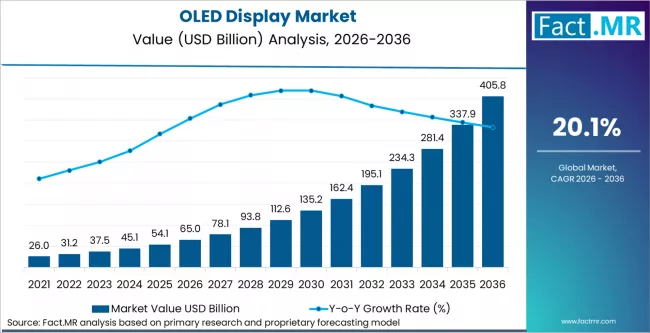
    Oled Display Market Market Value Analysis

    OLED Display Market

    Metric Value
    Estimated Value in (2026E) USD 65 billion
    Forecast Value in (2036F) USD 400 billion
    Forecast CAGR (2026 to 2036) 20.1%

    OLED Display Market Definition

    The OLED Display Market involves the development, manufacture, and sale of organic light‑emitting diode (OLED) display panels and related technologies that emit light through organic compounds to produce high‑contrast, thin, and flexible visual screens.

    Market Inclusions

    This report covers global and regional market sizes for OLED displays over a defined forecast period, including panel types (rigid, flexible, transparent), applications (smartphones, TVs, wearables, automotive displays), and sales channels.

    Market Exclusions

    The scope excludes LCD, LED, and micro‑LED displays not based on OLED technology, display drivers and complete devices where OLED is only one component, and unrelated peripheral hardware.

    Research Methodology

    • Primary Research: Interviews were conducted with display engineers, OEM manufacturers, and industry analysts.
    • Desk Research: Data was sourced from industry reports, technology publications, and trade association statistics.
    • Market‑Sizing and Forecasting: A hybrid model combining top‑down electronics market forecasts with bottom‑up production and shipment data was used.
    • Data Validation and Update Cycle: Findings were validated through expert review and aligned with recent production and market adoption data.

    Summary of the OLED Display Market

    • Market Definition
      • The OLED Display Market involves the development, manufacture, and sale of organic light-emitting diode (OLED) display panels, which produce high-contrast, thin, and flexible visual screens. OLED displays are used across various applications, including smartphones, televisions, wearables, automotive displays, and more.
    • Demand Drivers
      • Rising Consumer Electronics Adoption: Increasing demand for high-quality displays in smartphones, televisions, and other consumer electronics is fueling OLED display growth.
      • Technological Advancements: OLED technology offers superior display quality, energy efficiency, and flexibility compared to traditional LCD and LED technologies, driving its adoption.
      • Growing Automotive Applications: The use of OLED displays in automotive interiors for dashboards and entertainment systems is expanding.
      • Shift to Foldable and Flexible Devices: OLED’s inherent flexibility makes it an ideal choice for foldable smartphones, wearables, and other innovative consumer devices.
      • Government Support and Infrastructure Growth: Strong government backing for electronic and automotive innovation, particularly in East Asia and North America, supports the rapid growth of the OLED display market.
    • Key Segments Analyzed
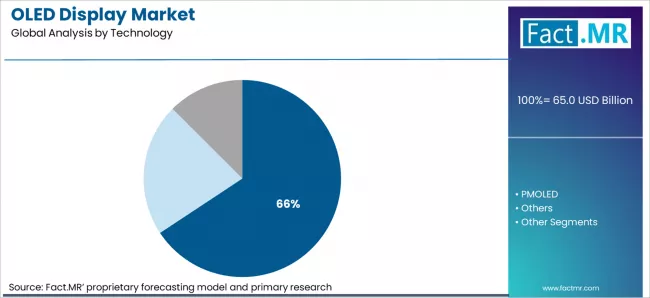
      • Technology: AMOLED (Active Matrix Organic Light Emitting Diode) is expected to dominate with 65.7% market share by 2026, due to its superior performance and energy efficiency in high-end consumer electronics.
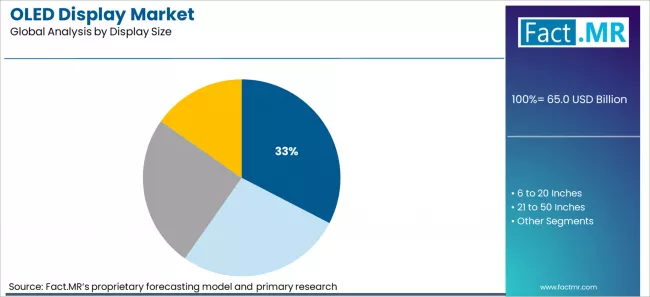
      • Display Size: Below 6 Inches is projected to lead with 32.6% market share, driven by the increasing demand for OLED displays in smartphones, smartwatches, and other compact devices.
      • Geography: China leads with the highest CAGR at 27.1%, followed by India (25.1%) and Germany (23.1%).
    • Analyst Opinion at FMR
      • Shambhu Nath Jha, Principal Consultant at Fact MR, comments, “The OLED display market is experiencing exponential growth, driven by the increasing demand for superior image quality, flexibility, and energy efficiency. OLED technology is poised to continue capturing market share across a wide range of applications, from smartphones to automotive displays. As technology continues to evolve, the market will see increased adoption, especially in emerging markets where consumer demand for high-quality displays is rising.”
    • Strategic Implications/Executive Takeaways
      • Focus on Innovation in Display Design: Manufacturers should prioritize innovation in flexible, foldable, and transparent OLED technologies to capture emerging consumer and industrial demand.
      • Strengthen Position in Emerging Markets: Focus on expanding OLED production and distribution channels in high-growth regions like China, India, and Brazil, where demand for premium displays is on the rise.
      • Partnerships for Automotive Displays: Strengthen strategic partnerships with automotive manufacturers to integrate OLED technology into next-gen vehicle displays and interior systems.
    • Methodology
      • Primary research through interviews with display engineers, OEM manufacturers, and industry analysts.
      • Data sourced from industry reports, technology publications, and trade association statistics.
      • Market sizing and forecasting using a hybrid model combining top-down market demand forecasts with bottom-up shipment and revenue data.

    Segmental Analysis

    OLED Display Market Analysis by Technology
    Oled Display Market Analysis By Technology

    • Market Overview: AMOLED (Active Matrix Organic Light Emitting Diode) is expected to capture 65.7% of the OLED display market by 2026. AMOLED displays are widely used in high-end smartphones, televisions, and wearable devices due to their superior display quality, energy efficiency, and thin form factor.
    • Demand Drivers:
      • Superior Display Quality: AMOLED technology offers vibrant colors, deeper blacks, and higher contrast ratios compared to PMOLED and other display types. This makes it ideal for premium consumer electronics, especially smartphones and televisions, where visual performance is a key selling point.
      • Energy Efficiency and Flexibility: AMOLED displays consume less power when displaying darker images, making them energy-efficient. Additionally, they offer more flexibility in terms of design, allowing for curved or foldable screens, which is appealing in the growing foldable smartphone market.
      • Market Dominance in Mobile Devices: The increasing demand for high-quality mobile displays in smartphones, tablets, and wearables is further accelerating the adoption of AMOLED technology, especially in flagship models of major brands.

    OLED Display Market Analysis by Display Size
    Oled Display Market Analysis By Display Size

    • Market Overview: Below 6 inches is projected to account for 32.6% of the OLED display market by 2026. This size category primarily includes smartphones, smartwatches, and other compact devices. OLED displays are widely used in this segment due to their high color accuracy, brightness, and ability to deliver premium visual quality in small form factors.
    • Demand Drivers:
      • Smartphone Growth: The increasing demand for premium smartphones with OLED displays is a major factor driving the growth of the below 6-inch display segment. Consumers are increasingly looking for devices with high-resolution, vibrant displays, and OLED technology meets these expectations.
      • Wearables and Compact Devices: As wearable technology, such as smartwatches and fitness trackers, continues to grow, the demand for high-quality, energy-efficient OLED displays for devices with screens under 6 inches is also rising.
      • Consumer Preference for Premium Displays in Smaller Devices: OLED displays offer superior visual performance and are considered a premium feature, making them increasingly popular in flagship smartphones and small electronic devices that require high-quality displays in compact sizes.

    OLED Display Market Drivers, Restraints, and Opportunities

    FMR analysts observe that the OLED (Organic Light‑Emitting Diode) display market is in a growth‑aligned transition phase driven by demand for higher contrast, wider color gamut, and thinner form factors in TVs, smartphones, wearables, and automotive displays. Historically, LCD technology dominated due to cost advantages and manufacturing scale; as consumers and OEMs prioritized premium visual performance and energy efficiency, structural demand shifted toward OLED and its advanced variants (AMOLED, flexible OLED). The 2026 valuation reflects expansion supported by increasing adoption in mainstream devices and premium offerings across consumer electronics and automotive segments.

    While LCD continues to hold volume share in cost‑sensitive product tiers, OLED adoption is accelerating because it delivers superior picture quality and design flexibility. These advanced displays carry higher average selling prices, contributing to net market value growth even as unit volumes grow in line with device refresh cycles and supply chain scaling. The market exists at its current size because device manufacturers balance performance, cost, and production yield, and OLED solutions increasingly meet mainstream expectations.

    • Premium Performance Demand: Manufacturers and consumers favor OLED for deeper blacks, wider contrast, and thinner designs compared with LCD alternatives.
    • Technology & Standards Push: Display standards emphasizing HDR performance and color accuracy drive adoption of certified OLED panels that meet defined visual criteria.
    • Regional Adoption Trends: In Asia‑Pacific and North America, strong consumer electronics markets and premium product demand accelerate OLED uptake, while cost‑sensitive segments in other regions remain LCD‑dominant.

    Regional Analysis

    The market analysis covers key global regions, including East Asia, South Asia, Western Europe, North America, and Latin America. It is segmented geographically, with specific market dynamics for each region. The full report provides a detailed market attractiveness analysis.
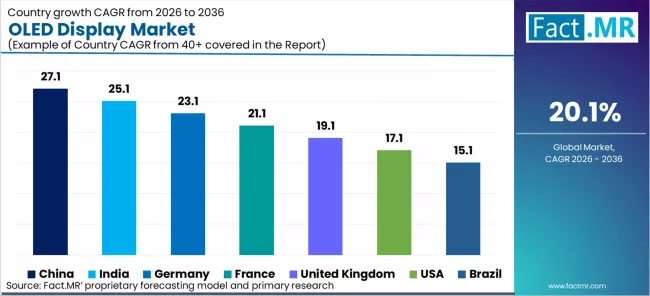
    Oled Display Market Cagr Analysis By Country

    Country CAGR (2026-2036)
    China 27.1%
    India 25.1%
    Germany 23.1%
    France 21.1%
    United Kingdom 19.1%
    USA 17.1%
    Brazil 15.1%

    Source: Fact MR (FMR) analysis, based on proprietary forecasting model and primary research.

    East Asia:

    In East Asia, China and India are leading the demand for OLED displays, driven by the growing electronics and consumer goods sectors, increasing smartphone and TV adoption, and advancements in display technology.

    • China: Demand for OLED displays in China is projected to rise at 27.1% CAGR through 2036. China’s expanding consumer electronics market, growing demand for OLED TVs and smartphones, and advancements in OLED technology continue to drive the market’s rapid growth.
    • India: Demand for OLED displays in India is projected to rise at 25.1% CAGR through 2036. India’s rising smartphone penetration, growing consumer interest in high-quality displays, and increased adoption of OLED TVs continue to contribute to market growth.

    Western Europe:

    In Western Europe, Germany and France are significant markets for OLED displays, supported by strong consumer demand for advanced electronics and increased adoption of OLED technologies in high-end televisions, smartphones, and automotive applications.

    • Germany: Demand for OLED displays in Germany is projected to rise at 23.1% CAGR through 2036. Germany’s strong electronics sector, demand for high-definition displays, and growing use of OLED in automotive applications continue to fuel market growth.
    • France: Demand for OLED displays in France is projected to rise at 21.1% CAGR through 2036. France’s growing demand for premium consumer electronics and increasing adoption of OLED technology in TV and smartphones continue to contribute to market expansion.
    • United Kingdom: Demand for OLED displays in the UK is projected to rise at 19.1% CAGR through 2036. The UK’s increasing demand for high-quality displays in consumer electronics and rising adoption of OLED technology continue to support steady market growth.

    North America:
    Oled Display Market Country Value Analysis

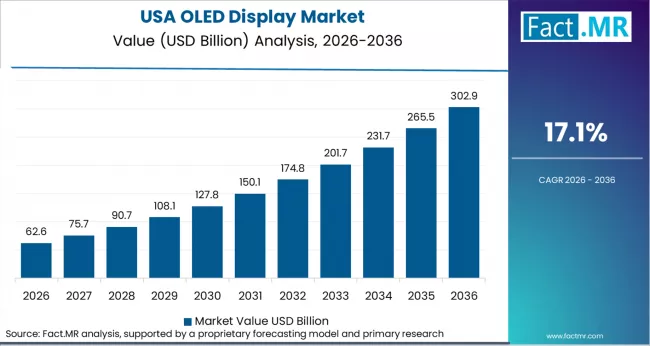
    In North America, the USA remains a key market for OLED displays, driven by strong consumer demand for smartphones, smart TVs, and other consumer electronics featuring OLED technology.

    • USA: Demand for OLED displays in the U.S. is projected to rise at 17.1% CAGR through 2036. The USA’s strong electronics and automotive sectors and high adoption rates for OLED displays in premium devices continue to drive the market for OLED displays.

    Latin America:

    In Latin America, Brazil is the dominant market for OLED displays, supported by increasing consumer demand for high-quality displays in smartphones, TVs, and other consumer electronics.

    • Brazil: Demand for OLED displays in Brazil is projected to rise at 15.1% CAGR through 2036. Brazil’s growing consumer electronics market and increased demand for premium OLED displays continue to contribute to steady market growth.

    Fact MR's analysis of the OLED Display Market in East Asia, South Asia, Western Europe, North America, and Latin America consists of country-wise assessments that include China, India, Germany, France, the United Kingdom, the USA, and Brazil. Readers can find detailed trends, regulatory updates, and company-specific investments shaping the market’s growth in these countries.

    How Are Key Players Competing in the OLED Display Market?
    Oled Display Market Analysis By Company

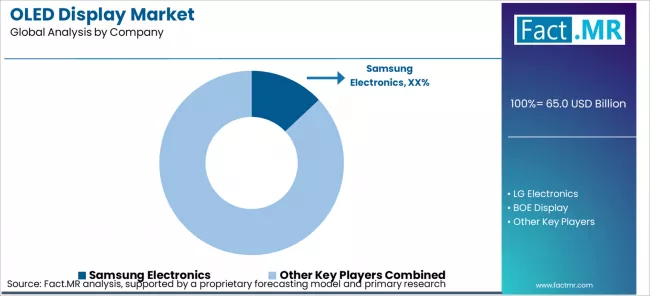
    The OLED Display Market is fiercely competitive, with Samsung Electronics and LG Electronics maintaining dominance with their high-quality, innovative displays for consumer electronics, including smartphones, TVs, and wearables. BOE Display and AUO Corporation are significant players in the market, focusing on expanding their production capabilities and increasing market share in the automotive and consumer electronics segments. Sony Corporation leverages its advanced OLED technology for high-end displays, particularly in TVs and professional monitors. Universal Display Corporation stands out for its expertise in OLED materials and organic light-emitting diode (OLED) technology, driving advancements across various sectors. Companies like Visionox, RitDisplay Co., Ltd., and eMagin Corporation focus on developing innovative and energy-efficient OLED solutions for consumer and industrial applications. IPG Automotive focuses on integrating OLED technology into the automotive sector, enhancing vehicle displays. These players are continuously improving display quality, driving technological advancements, and expanding into new industries such as automotive and healthcare.

    Recent Industry Developments

    • Samsung Display 8.6G OLED Mass Production: Samsung Display announced on January 15, 2026, the commencement of full-scale mass production for its 8.6-generation IT OLED panels, which are expected to be featured in the 2026 MacBook Pro models.
    • LG Display "Primary RGB Tandem 2.0" Launch: At CES 2026, LG Display unveiled its "Primary RGB Tandem 2.0" technology, achieving a record-breaking peak brightness of 4,500 nits and an ultra-low reflection rate of 0.3% for its latest OLED TV panels.
    • BOE 8.6-Generation OLED "First Product" Lighting: BOE successfully lit its first 8.6-generation AMOLED production line in Chengdu five months ahead of schedule on December 30, 2025, positioning the company to compete for high-end midsize OLED orders in 2026.

    Key Players of the OLED Display Market

    • Samsung Electronics
    • LG Electronics
    • BOE Display
    • AUO Corporation
    • Sony Corporation
    • Universal Display Corporation
    • Visionox
    • RitDisplay Co., Ltd.
    • eMagin Corporation
    • IPG Automotive

    Report Scope

    Metric Value
    Quantitative Units USD 65 billion (2026) to USD 400 billion (2036), at a CAGR of 20.1%
    Market Definition The OLED Display Market includes displays utilizing organic light-emitting diodes, offering better image quality, thinner designs, and lower energy consumption, applicable in smartphones, televisions, and other devices.
    By Technology AMOLED, PMOLED, Others
    By Display Size Below 6 Inches, 6 to 20 Inches, 21 to 50 Inches, More than 50 Inches
    By Application Smartphones and Tablets, PC Monitors and Laptops, Television Sets, Digital Signage/Large Format Displays, Smart Wearables, Automotive Display
    Regions Covered North America, Latin America, Europe, East Asia, South Asia, Oceania, Middle East and Africa
    Countries Covered United States, Canada, Mexico, Brazil, Argentina, Germany, France, United Kingdom, Italy, Spain, China, India, Japan, South Korea, Indonesia, Australia, and 40+ countries
    Key Companies Profiled Samsung Electronics, LG Electronics, BOE Display, AUO Corporation, Sony Corporation, Universal Display Corporation, Visionox, RitDisplay Co., Ltd., eMagin Corporation, IPG Automotive
    Forecast Period 2026 to 2036
    Approach Hybrid top-down and bottom-up market modeling validated through primary interviews with manufacturers and supported by trade data benchmarking and market research.

    OLED Display Market Key Segments

    • Technology :

      • AMOLED
      • PMOLED
      • Others
    • Display Size :

      • Below 6 Inches
      • 6 to 20 Inches
      • 21 to 50 Inches
      • More than 50 Inches
    • Application :

      • Smartphones and Tablets
      • PC Monitors and Laptops
      • Television Sets
      • Digital Signage/Large Format Displays
      • Smart Wearables
      • Automotive Display
    • Region :

      • North America
        • USA
        • Canada
        • Mexico
      • Europe
        • Germany
        • UK
        • France
        • Italy
        • Spain
        • Nordic Countries
        • BENELUX
        • Rest of Europe
      • Asia Pacific
        • China
        • Japan
        • South Korea
        • India
        • Australia
        • Rest of Asia Pacific
      • Latin America
        • Brazil
        • Argentina
        • Rest of Latin America
      • Middle East and Africa
        • Kingdom of Saudi Arabia
        • United Arab Emirates
        • South Africa
        • Rest of Middle East and Africa
      • Other Regions
        • Oceania
        • Central Asia
        • Other Markets

    Bibliographies

    • eMagin Corporation. (2025). OLED technology and its role in wearable devices and military applications. eMagin Corporation.
    • RitDisplay Co., Ltd. (2025). OLED developments in consumer and industrial applications. RitDisplay Co., Ltd.
    • IPG Automotive. (2025). Integrating OLED displays into automotive applications for enhanced user experience. IPG Automotive.
    • BOE News Center. (2025/2026, December 30). BOE powers up China’s first Gen 8.6 AMOLED production line ahead of schedule [Press release]. BOE News Center.
    • ChosunBiz. (2026, January 15). Samsung Display begins mass production of 8.6-gen OLED to reshape Korea IT market [Press release]. ChosunBiz.
    • LG Display Newsroom. (2026, January). LG Display unveils Primary RGB Tandem 2.0 technology with 4,500 nits peak brightness at CES 2026 [Press release]. LG Display Newsroom.

    This report addresses

    • Market Intelligence enabling comprehensive assessment of leading countries and service segments across the OLED Display Market globally.
    • Market Volume (Sales Units) estimates and 10-year revenue forecasts from 2026 to 2036, validated through manufacturer shipment data, channel partner surveys, and country-level demand modeling.
    • Growth Opportunity Mapping across technology types (AMOLED, PMOLED, and Others), display sizes (Below 6 Inches, 6 to 20 Inches, 21 to 50 Inches, More than 50 Inches), applications (Smartphones, Tablets, TVs, Wearables, Automotive, Digital Signage), and regions.
    • Segment and Regional Revenue Forecasts by technology, display size, application, and geography across 40+ countries.
    • Competition Strategy Analysis covering dealer network structure, recent developments, product portfolio, USPs, and market share analysis.
    • Product and Regulatory Compliance Tracking aligned with industry standards, display technologies, and regulatory frameworks.
    • Regulatory Impact Analysis addressing global market compliance, data security standards, and evolving OLED display technologies.
    • Report Delivery in PDF, Excel, PowerPoint, and interactive dashboard formats for executive, procurement, and operational planning use.

    OLED Display Market: Segmentation

    Segmentation based on the type:

    The OLED Display market is segmented based on type into active OLED display and passive OLED display.

    Segmentation based on the application:

    The OLED Display market is segmented based on application i.into wearable devices, handheld devices, sub display and others.

    Segmentation based on the display type:

    The OLED Display market is segmented based on display type i.into flexible, rigid, and others.

    Table of Content

    1. Executive Summary
      • Global Market Outlook
      • Demand to side Trends
      • Supply to side Trends
      • Technology Roadmap Analysis
      • Analysis and Recommendations
    2. Market Overview
      • Market Coverage / Taxonomy
      • Market Definition / Scope / Limitations
    3. Research Methodology
      • Chapter Orientation
      • Analytical Lens and Working Hypotheses
        • Market Structure, Signals, and Trend Drivers
        • Benchmarking and Cross-market Comparability
        • Market Sizing, Forecasting, and Opportunity Mapping
      • Research Design and Evidence Framework
        • Desk Research Programme (Secondary Evidence)
          • Company Annual and Sustainability Reports
          • Peer-reviewed Journals and Academic Literature
          • Corporate Websites, Product Literature, and Technical Notes
          • Earnings Decks and Investor Briefings
          • Statutory Filings and Regulatory Disclosures
          • Technical White Papers and Standards Notes
          • Trade Journals, Industry Magazines, and Analyst Briefs
          • Conference Proceedings, Webinars, and Seminar Materials
          • Government Statistics Portals and Public Data Releases
          • Press Releases and Reputable Media Coverage
          • Specialist Newsletters and Curated Briefings
          • Sector Databases and Reference Repositories
          • FMR Internal Proprietary Databases and Historical Market Datasets
          • Subscription Datasets and Paid Sources
          • Social Channels, Communities, and Digital Listening Inputs
          • Additional Desk Sources
        • Expert Input and Fieldwork (Primary Evidence)
          • Primary Modes
            • Qualitative Interviews and Expert Elicitation
            • Quantitative Surveys and Structured Data Capture
            • Blended Approach
          • Why Primary Evidence is Used
          • Field Techniques
            • Interviews
            • Surveys
            • Focus Groups
            • Observational and In-context Research
            • Social and Community Interactions
          • Stakeholder Universe Engaged
            • C-suite Leaders
            • Board Members
            • Presidents and Vice Presidents
            • R&D and Innovation Heads
            • Technical Specialists
            • Domain Subject-matter Experts
            • Scientists
            • Physicians and Other Healthcare Professionals
          • Governance, Ethics, and Data Stewardship
            • Research Ethics
            • Data Integrity and Handling
        • Tooling, Models, and Reference Databases
      • Data Engineering and Model Build
        • Data Acquisition and Ingestion
        • Cleaning, Normalisation, and Verification
        • Synthesis, Triangulation, and Analysis
      • Quality Assurance and Audit Trail
    4. Market Background
      • Market Dynamics
        • Drivers
        • Restraints
        • Opportunity
        • Trends
      • Scenario Forecast
        • Demand in Optimistic Scenario
        • Demand in Likely Scenario
        • Demand in Conservative Scenario
      • Opportunity Map Analysis
      • Product Life Cycle Analysis
      • Supply Chain Analysis
      • Investment Feasibility Matrix
      • Value Chain Analysis
      • PESTLE and Porter’s Analysis
      • Regulatory Landscape
      • Regional Parent Market Outlook
      • Production and Consumption Statistics
      • Import and Export Statistics
    5. Global Market Analysis 2021 to 2025 and Forecast, 2026 to 2036
      • Historical Market Size Value (USD Million) Analysis, 2021 to 2025
      • Current and Future Market Size Value (USD Million) Projections, 2026 to 2036
        • Y to o to Y Growth Trend Analysis
        • Absolute $ Opportunity Analysis
    6. Global Market Pricing Analysis 2021 to 2025 and Forecast 2026 to 2036
    7. Global Market Analysis 2021 to 2025 and Forecast 2026 to 2036, By Technology
      • Introduction / Key Findings
      • Historical Market Size Value (USD Million) Analysis By Technology , 2021 to 2025
      • Current and Future Market Size Value (USD Million) Analysis and Forecast By Technology , 2026 to 2036
        • AMOLED
        • PMOLED
        • Others
      • Y to o to Y Growth Trend Analysis By Technology , 2021 to 2025
      • Absolute $ Opportunity Analysis By Technology , 2026 to 2036
    8. Global Market Analysis 2021 to 2025 and Forecast 2026 to 2036, By Display Size
      • Introduction / Key Findings
      • Historical Market Size Value (USD Million) Analysis By Display Size, 2021 to 2025
      • Current and Future Market Size Value (USD Million) Analysis and Forecast By Display Size, 2026 to 2036
        • Below 6 Inches
        • 6 to 20 Inches
        • 21 to 50 Inches
        • More than 50 Inches
      • Y to o to Y Growth Trend Analysis By Display Size, 2021 to 2025
      • Absolute $ Opportunity Analysis By Display Size, 2026 to 2036
    9. Global Market Analysis 2021 to 2025 and Forecast 2026 to 2036, By Region
      • Introduction
      • Historical Market Size Value (USD Million) Analysis By Region, 2021 to 2025
      • Current Market Size Value (USD Million) Analysis and Forecast By Region, 2026 to 2036
        • North America
        • Latin America
        • Western Europe
        • Eastern Europe
        • East Asia
        • South Asia and Pacific
        • Middle East & Africa
      • Market Attractiveness Analysis By Region
    10. North America Market Analysis 2021 to 2025 and Forecast 2026 to 2036, By Country
      • Historical Market Size Value (USD Million) Trend Analysis By Market Taxonomy, 2021 to 2025
      • Market Size Value (USD Million) Forecast By Market Taxonomy, 2026 to 2036
        • By Country
          • USA
          • Canada
          • Mexico
        • By Technology
        • By Display Size
      • Market Attractiveness Analysis
        • By Country
        • By Technology
        • By Display Size
      • Key Takeaways
    11. Latin America Market Analysis 2021 to 2025 and Forecast 2026 to 2036, By Country
      • Historical Market Size Value (USD Million) Trend Analysis By Market Taxonomy, 2021 to 2025
      • Market Size Value (USD Million) Forecast By Market Taxonomy, 2026 to 2036
        • By Country
          • Brazil
          • Chile
          • Rest of Latin America
        • By Technology
        • By Display Size
      • Market Attractiveness Analysis
        • By Country
        • By Technology
        • By Display Size
      • Key Takeaways
    12. Western Europe Market Analysis 2021 to 2025 and Forecast 2026 to 2036, By Country
      • Historical Market Size Value (USD Million) Trend Analysis By Market Taxonomy, 2021 to 2025
      • Market Size Value (USD Million) Forecast By Market Taxonomy, 2026 to 2036
        • By Country
          • Germany
          • UK
          • Italy
          • Spain
          • France
          • Nordic
          • BENELUX
          • Rest of Western Europe
        • By Technology
        • By Display Size
      • Market Attractiveness Analysis
        • By Country
        • By Technology
        • By Display Size
      • Key Takeaways
    13. Eastern Europe Market Analysis 2021 to 2025 and Forecast 2026 to 2036, By Country
      • Historical Market Size Value (USD Million) Trend Analysis By Market Taxonomy, 2021 to 2025
      • Market Size Value (USD Million) Forecast By Market Taxonomy, 2026 to 2036
        • By Country
          • Russia
          • Poland
          • Hungary
          • Balkan & Baltic
          • Rest of Eastern Europe
        • By Technology
        • By Display Size
      • Market Attractiveness Analysis
        • By Country
        • By Technology
        • By Display Size
      • Key Takeaways
    14. East Asia Market Analysis 2021 to 2025 and Forecast 2026 to 2036, By Country
      • Historical Market Size Value (USD Million) Trend Analysis By Market Taxonomy, 2021 to 2025
      • Market Size Value (USD Million) Forecast By Market Taxonomy, 2026 to 2036
        • By Country
          • China
          • Japan
          • South Korea
        • By Technology
        • By Display Size
      • Market Attractiveness Analysis
        • By Country
        • By Technology
        • By Display Size
      • Key Takeaways
    15. South Asia and Pacific Market Analysis 2021 to 2025 and Forecast 2026 to 2036, By Country
      • Historical Market Size Value (USD Million) Trend Analysis By Market Taxonomy, 2021 to 2025
      • Market Size Value (USD Million) Forecast By Market Taxonomy, 2026 to 2036
        • By Country
          • India
          • ASEAN
          • Australia & New Zealand
          • Rest of South Asia and Pacific
        • By Technology
        • By Display Size
      • Market Attractiveness Analysis
        • By Country
        • By Technology
        • By Display Size
      • Key Takeaways
    16. Middle East & Africa Market Analysis 2021 to 2025 and Forecast 2026 to 2036, By Country
      • Historical Market Size Value (USD Million) Trend Analysis By Market Taxonomy, 2021 to 2025
      • Market Size Value (USD Million) Forecast By Market Taxonomy, 2026 to 2036
        • By Country
          • Kingdom of Saudi Arabia
          • Other GCC Countries
          • Turkiye
          • South Africa
          • Other African Union
          • Rest of Middle East & Africa
        • By Technology
        • By Display Size
      • Market Attractiveness Analysis
        • By Country
        • By Technology
        • By Display Size
      • Key Takeaways
    17. Key Countries Market Analysis
      • USA
        • Pricing Analysis
        • Market Share Analysis, 2025
          • By Technology
          • By Display Size
      • Canada
        • Pricing Analysis
        • Market Share Analysis, 2025
          • By Technology
          • By Display Size
      • Mexico
        • Pricing Analysis
        • Market Share Analysis, 2025
          • By Technology
          • By Display Size
      • Brazil
        • Pricing Analysis
        • Market Share Analysis, 2025
          • By Technology
          • By Display Size
      • Chile
        • Pricing Analysis
        • Market Share Analysis, 2025
          • By Technology
          • By Display Size
      • Germany
        • Pricing Analysis
        • Market Share Analysis, 2025
          • By Technology
          • By Display Size
      • UK
        • Pricing Analysis
        • Market Share Analysis, 2025
          • By Technology
          • By Display Size
      • Italy
        • Pricing Analysis
        • Market Share Analysis, 2025
          • By Technology
          • By Display Size
      • Spain
        • Pricing Analysis
        • Market Share Analysis, 2025
          • By Technology
          • By Display Size
      • France
        • Pricing Analysis
        • Market Share Analysis, 2025
          • By Technology
          • By Display Size
      • India
        • Pricing Analysis
        • Market Share Analysis, 2025
          • By Technology
          • By Display Size
      • ASEAN
        • Pricing Analysis
        • Market Share Analysis, 2025
          • By Technology
          • By Display Size
      • Australia & New Zealand
        • Pricing Analysis
        • Market Share Analysis, 2025
          • By Technology
          • By Display Size
      • China
        • Pricing Analysis
        • Market Share Analysis, 2025
          • By Technology
          • By Display Size
      • Japan
        • Pricing Analysis
        • Market Share Analysis, 2025
          • By Technology
          • By Display Size
      • South Korea
        • Pricing Analysis
        • Market Share Analysis, 2025
          • By Technology
          • By Display Size
      • Russia
        • Pricing Analysis
        • Market Share Analysis, 2025
          • By Technology
          • By Display Size
      • Poland
        • Pricing Analysis
        • Market Share Analysis, 2025
          • By Technology
          • By Display Size
      • Hungary
        • Pricing Analysis
        • Market Share Analysis, 2025
          • By Technology
          • By Display Size
      • Kingdom of Saudi Arabia
        • Pricing Analysis
        • Market Share Analysis, 2025
          • By Technology
          • By Display Size
      • Turkiye
        • Pricing Analysis
        • Market Share Analysis, 2025
          • By Technology
          • By Display Size
      • South Africa
        • Pricing Analysis
        • Market Share Analysis, 2025
          • By Technology
          • By Display Size
    18. Market Structure Analysis
      • Competition Dashboard
      • Competition Benchmarking
      • Market Share Analysis of Top Players
        • By Regional
        • By Technology
        • By Display Size
    19. Competition Analysis
      • Competition Deep Dive
        • Samsung Electronics
          • Overview
          • Product Portfolio
          • Profitability by Market Segments (Product/Age /Sales Channel/Region)
          • Sales Footprint
          • Strategy Overview
            • Marketing Strategy
            • Product Strategy
            • Channel Strategy
        • LG Electronics
        • BOE Display
        • AUO Corporation
        • Sony Corporation
        • Universal Display Corporation
        • Visionox
    20. Assumptions & Acronyms Used

    List Of Table

    • Table 1: Global Market Value (USD Million) Forecast by Region, 2021 to 2036
    • Table 2: Global Market Value (USD Million) Forecast by Technology, 2021 to 2036
    • Table 3: Global Market Value (USD Million) Forecast by Display Size, 2021 to 2036
    • Table 4: North America Market Value (USD Million) Forecast by Country, 2021 to 2036
    • Table 5: North America Market Value (USD Million) Forecast by Technology, 2021 to 2036
    • Table 6: North America Market Value (USD Million) Forecast by Display Size, 2021 to 2036
    • Table 7: Latin America Market Value (USD Million) Forecast by Country, 2021 to 2036
    • Table 8: Latin America Market Value (USD Million) Forecast by Technology, 2021 to 2036
    • Table 9: Latin America Market Value (USD Million) Forecast by Display Size, 2021 to 2036
    • Table 10: Western Europe Market Value (USD Million) Forecast by Country, 2021 to 2036
    • Table 11: Western Europe Market Value (USD Million) Forecast by Technology, 2021 to 2036
    • Table 12: Western Europe Market Value (USD Million) Forecast by Display Size, 2021 to 2036
    • Table 13: Eastern Europe Market Value (USD Million) Forecast by Country, 2021 to 2036
    • Table 14: Eastern Europe Market Value (USD Million) Forecast by Technology, 2021 to 2036
    • Table 15: Eastern Europe Market Value (USD Million) Forecast by Display Size, 2021 to 2036
    • Table 16: East Asia Market Value (USD Million) Forecast by Country, 2021 to 2036
    • Table 17: East Asia Market Value (USD Million) Forecast by Technology, 2021 to 2036
    • Table 18: East Asia Market Value (USD Million) Forecast by Display Size, 2021 to 2036
    • Table 19: South Asia and Pacific Market Value (USD Million) Forecast by Country, 2021 to 2036
    • Table 20: South Asia and Pacific Market Value (USD Million) Forecast by Technology, 2021 to 2036
    • Table 21: South Asia and Pacific Market Value (USD Million) Forecast by Display Size, 2021 to 2036
    • Table 22: Middle East & Africa Market Value (USD Million) Forecast by Country, 2021 to 2036
    • Table 23: Middle East & Africa Market Value (USD Million) Forecast by Technology, 2021 to 2036
    • Table 24: Middle East & Africa Market Value (USD Million) Forecast by Display Size, 2021 to 2036

    List Of Figures

    • Figure 1: Global Market Pricing Analysis
    • Figure 2: Global Market Value (USD Million) Forecast 2021 to 2036
    • Figure 3: Global Market Value Share and BPS Analysis by Technology, 2026 and 2036
    • Figure 4: Global Market Y to o to Y Growth Comparison by Technology, 2026 to 2036
    • Figure 5: Global Market Attractiveness Analysis by Technology
    • Figure 6: Global Market Value Share and BPS Analysis by Display Size, 2026 and 2036
    • Figure 7: Global Market Y to o to Y Growth Comparison by Display Size, 2026 to 2036
    • Figure 8: Global Market Attractiveness Analysis by Display Size
    • Figure 9: Global Market Value (USD Million) Share and BPS Analysis by Region, 2026 and 2036
    • Figure 10: Global Market Y to o to Y Growth Comparison by Region, 2026 to 2036
    • Figure 11: Global Market Attractiveness Analysis by Region
    • Figure 12: North America Market Incremental Dollar Opportunity, 2026 to 2036
    • Figure 13: Latin America Market Incremental Dollar Opportunity, 2026 to 2036
    • Figure 14: Western Europe Market Incremental Dollar Opportunity, 2026 to 2036
    • Figure 15: Eastern Europe Market Incremental Dollar Opportunity, 2026 to 2036
    • Figure 16: East Asia Market Incremental Dollar Opportunity, 2026 to 2036
    • Figure 17: South Asia and Pacific Market Incremental Dollar Opportunity, 2026 to 2036
    • Figure 18: Middle East & Africa Market Incremental Dollar Opportunity, 2026 to 2036
    • Figure 19: North America Market Value Share and BPS Analysis by Country, 2026 and 2036
    • Figure 20: North America Market Value Share and BPS Analysis by Technology, 2026 and 2036
    • Figure 21: North America Market Y to o to Y Growth Comparison by Technology, 2026 to 2036
    • Figure 22: North America Market Attractiveness Analysis by Technology
    • Figure 23: North America Market Value Share and BPS Analysis by Display Size, 2026 and 2036
    • Figure 24: North America Market Y to o to Y Growth Comparison by Display Size, 2026 to 2036
    • Figure 25: North America Market Attractiveness Analysis by Display Size
    • Figure 26: Latin America Market Value Share and BPS Analysis by Country, 2026 and 2036
    • Figure 27: Latin America Market Value Share and BPS Analysis by Technology, 2026 and 2036
    • Figure 28: Latin America Market Y to o to Y Growth Comparison by Technology, 2026 to 2036
    • Figure 29: Latin America Market Attractiveness Analysis by Technology
    • Figure 30: Latin America Market Value Share and BPS Analysis by Display Size, 2026 and 2036
    • Figure 31: Latin America Market Y to o to Y Growth Comparison by Display Size, 2026 to 2036
    • Figure 32: Latin America Market Attractiveness Analysis by Display Size
    • Figure 33: Western Europe Market Value Share and BPS Analysis by Country, 2026 and 2036
    • Figure 34: Western Europe Market Value Share and BPS Analysis by Technology, 2026 and 2036
    • Figure 35: Western Europe Market Y to o to Y Growth Comparison by Technology, 2026 to 2036
    • Figure 36: Western Europe Market Attractiveness Analysis by Technology
    • Figure 37: Western Europe Market Value Share and BPS Analysis by Display Size, 2026 and 2036
    • Figure 38: Western Europe Market Y to o to Y Growth Comparison by Display Size, 2026 to 2036
    • Figure 39: Western Europe Market Attractiveness Analysis by Display Size
    • Figure 40: Eastern Europe Market Value Share and BPS Analysis by Country, 2026 and 2036
    • Figure 41: Eastern Europe Market Value Share and BPS Analysis by Technology, 2026 and 2036
    • Figure 42: Eastern Europe Market Y to o to Y Growth Comparison by Technology, 2026 to 2036
    • Figure 43: Eastern Europe Market Attractiveness Analysis by Technology
    • Figure 44: Eastern Europe Market Value Share and BPS Analysis by Display Size, 2026 and 2036
    • Figure 45: Eastern Europe Market Y to o to Y Growth Comparison by Display Size, 2026 to 2036
    • Figure 46: Eastern Europe Market Attractiveness Analysis by Display Size
    • Figure 47: East Asia Market Value Share and BPS Analysis by Country, 2026 and 2036
    • Figure 48: East Asia Market Value Share and BPS Analysis by Technology, 2026 and 2036
    • Figure 49: East Asia Market Y to o to Y Growth Comparison by Technology, 2026 to 2036
    • Figure 50: East Asia Market Attractiveness Analysis by Technology
    • Figure 51: East Asia Market Value Share and BPS Analysis by Display Size, 2026 and 2036
    • Figure 52: East Asia Market Y to o to Y Growth Comparison by Display Size, 2026 to 2036
    • Figure 53: East Asia Market Attractiveness Analysis by Display Size
    • Figure 54: South Asia and Pacific Market Value Share and BPS Analysis by Country, 2026 and 2036
    • Figure 55: South Asia and Pacific Market Value Share and BPS Analysis by Technology, 2026 and 2036
    • Figure 56: South Asia and Pacific Market Y to o to Y Growth Comparison by Technology, 2026 to 2036
    • Figure 57: South Asia and Pacific Market Attractiveness Analysis by Technology
    • Figure 58: South Asia and Pacific Market Value Share and BPS Analysis by Display Size, 2026 and 2036
    • Figure 59: South Asia and Pacific Market Y to o to Y Growth Comparison by Display Size, 2026 to 2036
    • Figure 60: South Asia and Pacific Market Attractiveness Analysis by Display Size
    • Figure 61: Middle East & Africa Market Value Share and BPS Analysis by Country, 2026 and 2036
    • Figure 62: Middle East & Africa Market Value Share and BPS Analysis by Technology, 2026 and 2036
    • Figure 63: Middle East & Africa Market Y to o to Y Growth Comparison by Technology, 2026 to 2036
    • Figure 64: Middle East & Africa Market Attractiveness Analysis by Technology
    • Figure 65: Middle East & Africa Market Value Share and BPS Analysis by Display Size, 2026 and 2036
    • Figure 66: Middle East & Africa Market Y to o to Y Growth Comparison by Display Size, 2026 to 2036
    • Figure 67: Middle East & Africa Market Attractiveness Analysis by Display Size
    • Figure 68: Global Market - Tier Structure Analysis
    • Figure 69: Global Market - Company Share Analysis

    - FAQs -

    How large is the demand for OLED Displays in the global market in 2026?

    Demand for OLED Displays in the global market is estimated to be valued at USD 65 billion in 2026.

    What will be the market size of OLED Displays in the global market by 2036?

    The market size for OLED Displays is projected to reach USD 400 billion by 2036.

    What is the expected demand growth for OLED Displays in the global market between 2026 and 2036?

    Demand for OLED Displays in the global market is expected to grow at a CAGR of 20.1% between 2026 and 2036.

    Which technology is expected to dominate the market?

    AMOLED (Active Matrix Organic Light Emitting Diode) is expected to dominate the market, accounting for 65.7% of the market share in 2026, due to its superior performance, energy efficiency, and widespread use in smartphones, televisions, and other consumer electronics.

    Which region is expected to show the highest growth rate for OLED Displays?

    China is projected to show the highest regional CAGR at 27.1% during the forecast period, driven by the rapid adoption of OLED displays in smartphones, TVs, and emerging applications in consumer electronics and automotive sectors.

    How significant is the growth outlook for India in this market?

    India is expected to grow at a CAGR of 25.1%, reflecting rising demand for consumer electronics, including smartphones and televisions, as well as growing investment in OLED display technology and production.

    What is the growth outlook for Germany in the OLED Display market?

    Germany is expected to grow at a CAGR of 23.1%, driven by strong demand for OLED displays in automotive applications, high-end televisions, and consumer electronics in Europe.

    What is the growth forecast for France in the OLED Display market?

    France is expected to grow at a CAGR of 21.1%, supported by increasing adoption of OLED displays in various industries such as automotive, consumer electronics, and retail.

    What is the growth forecast for the United Kingdom in the OLED Display market?

    The United Kingdom is expected to grow at a CAGR of 19.1%, fueled by rising demand for OLED technology in smartphones, televisions, and portable consumer devices, along with an expanding interest in energy-efficient display solutions.

    What is the growth forecast for the United States in the OLED Display market?

    The United States is projected to grow at a CAGR of 17.1% from 2026 to 2036, supported by strong demand for OLED displays in consumer electronics, automotive displays, and high-performance televisions.

    What is the growth forecast for Brazil in the OLED Display market?

    Brazil is expected to grow at a CAGR of 15.1%, reflecting an increasing appetite for consumer electronics and OLED technology, supported by improved affordability and regional production capacity for displays.

    Which company is identified as a leading player in the OLED Display market?

    Samsung Electronics is recognized as a leading player in this market, being a key innovator and producer of AMOLED displays used across various products such as smartphones, televisions, wearables, and automotive applications.

    What are OLED Displays used for?

    OLED Displays are used in a wide range of consumer electronics, including smartphones, televisions, wearables, tablets, and automotive displays. Their high-quality color reproduction, flexibility, and energy efficiency make them ideal for modern display applications.

    What does the OLED Display market include in this report?

    The market scope includes various types of OLED displays, particularly AMOLED displays, which are used in smartphones, televisions, wearables, and emerging applications like automotive displays and flexible screens for a variety of industries.

    How is the market forecast developed in this report?

    The forecast is developed using historical data on the adoption of OLED technology, trends in consumer electronics and automotive industries, advancements in display technology, and insights from key industry players involved in the production and innovation of OLED displays.

    What is meant by the OLED Display market in this report?

    The market refers to the global production, trade, and consumption of OLED displays, focusing on AMOLED technology, which is predominantly used in high-end consumer electronics, automotive applications, and new display formats.

    OLED Display Market