- Base Value(2025): 1.9 Bn
- Estimated Value(2026): 2.0 Bn
- Forecast Value (2036): 3.3 Bn
- CAGR (2026 - 2036): 5.1%
Acromegaly Treatment Market Forecast and Outlook by Fact.Mr
- In 2025, the global Acromegaly Treatment market was estimated at USD 1.9 billion.
- Market is estimated at USD 2.0 billion in 2026 and is projected to reach USD 3.3 billion by 2036.
- Growth is forecast at a CAGR of 5.1% between 2026 and 2036.
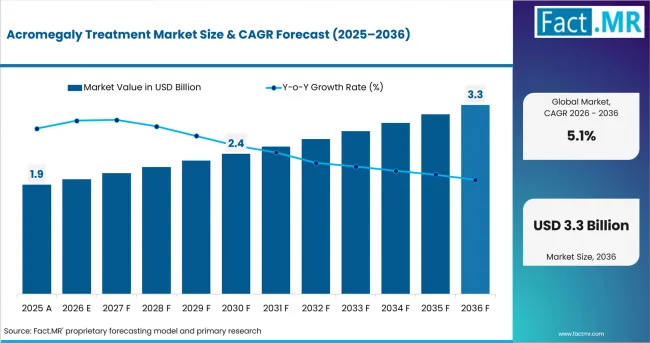
Acromegaly Treatment Market Value Analysis | Source: Fact.MR
| Metric | Value |
|---|---|
| Estimated Value in 2026 | USD 2.0 billion |
| Forecast Value in 2036 | USD 3.3 billion |
| Forecast CAGR (2026 to 2036) | 5.1% |
Source: Fact.MR analysis. Updated Jun 9, 2026
Summary of the Acromegaly Treatment Market
- Demand Drivers
- Diagnosis rates are increasing across endocrine treatment centers. Earlier detection supports therapy utilization.
- Long-term disease management requirements support recurring pharmaceutical demand. Treatment duration strengthens revenue visibility.
- Specialty healthcare access is improving across emerging markets. Expanded care networks support patient treatment rates.
- Key Segments Analyzed
- By Drug Class: Somatostatin Analogues hold 46.8% share due to established first-line treatment use.
- By Distribution Channel: Hospital Pharmacies account for 58.3% share supported by specialist prescribing requirements.
- By Indication: Acromegaly register 62.5% share in 2026 due to broader therapy availability.
- By Treatment Type: Drug Therapy captures 68.4% share in 2026 due to long-term disease control requirements.
- By End User: Hospitals account for 49.7% share supported by multidisciplinary endocrine care access.
- By Geography: India is projected to record CAGR at 6.8% through 2036 due to improving diagnosis capability.
- Analyst Opinion at Fact.MR
- Shambhu Nath Jha, Principal Consultant at Fact.MR, opines, ‘Endocrine treatment markets are shifting toward earlier diagnosis and sustained disease control. Companies with differentiated therapies and strong specialist engagement are positioned to strengthen market presence.’
- Strategic Implications
- Pharmaceutical companies should strengthen specialist physician engagement programs. Earlier diagnosis supports treatment uptake.
- Healthcare providers should expand endocrine disorder screening capability. Improved detection increases treatment access.
- Specialty clinics should improve long-term patient monitoring systems. Better disease control supports clinical outcomes.
The market is projected to create approximately USD 1.3 billion in additional revenue between 2026 and 2036. Growth reflects increasing diagnosis of rare endocrine disorders and broader access to specialty treatment services. Demand is supported by long-term pharmacological therapy requirements. Adoption is constrained by delayed diagnosis and high treatment costs across developing healthcare systems.
India is expected to record 6.8% CAGR supported by improving endocrine disease diagnosis and healthcare infrastructure expansion. China is forecast to grow at 6.5% CAGR driven by increasing rare disease management investment. South Korea is projected to expand at 5.9% CAGR due to advanced endocrine care access. Brazil is estimated to witness 5.6% CAGR supported by improving specialty healthcare services. The United States is likely to register 4.7% CAGR due to established treatment penetration. Germany is anticipated to grow at 4.3% CAGR supported by strong reimbursement access and specialist treatment availability.
Segmental Analysis
Acromegaly Treatment Market Analysis by Drug Class
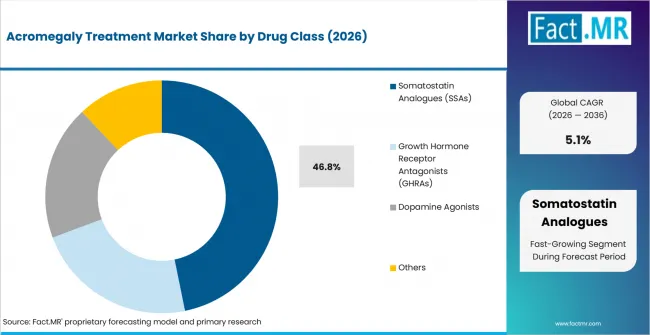
Acromegaly Treatment Market Analysis By Drug Class | Source: Fact.MR
Based on Fact.MR's Acromegaly Treatment market report, consumption of Somatostatin Analogues is estimated to hold 46.8% share in 2026. These therapies serve as the primary treatment option for a large proportion of acromegaly patients. Clinical familiarity and long-term efficacy support segment leadership. Crinetics Pharmaceuticals submitted a New Drug Application (NDA) to the FDA for paltusotine, a once-daily oral SST2 agonist for the treatment and long-term maintenance of acromegaly. The filing was supported by successful Phase 3 PATHFNDR studies. [1]
- First-Line Therapy: Somatostatin analogues are widely prescribed across endocrine treatment centers. Established treatment protocols support utilization.
- Disease Control: These therapies help regulate hormone secretion and symptom progression. Clinical effectiveness supports physician preference.
- Product Availability: Pharmaceutical companies maintain broad access to approved SSA products. Commercial availability strengthens prescription volume.
Acromegaly Treatment Market Analysis by Distribution Channel
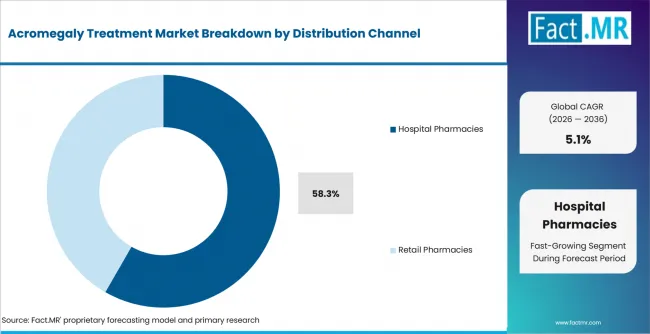
Acromegaly Treatment Market Analysis By Distribution Channel | Source: Fact.MR
Hospital pharmacies are estimated to capture 58.3% share in 2026. Most therapies require specialist supervision and treatment monitoring. Hospital dispensing supports patient management and therapy compliance. The U.S. FDA issued a Complete Response Letter (CRL) for Camurus' CAM2029 (octreotide SC depot) for acromegaly, citing deficiencies identified during an inspection of a third-party manufacturing facility. The agency did not raise concerns regarding the drug's efficacy or safety data. [2]
- Specialist Access: Endocrinologists commonly prescribe therapies through hospital settings. Clinical oversight supports segment demand.
- Treatment Monitoring: Regular patient evaluation is required for therapy adjustment. Hospital pharmacies support coordinated care delivery.
- Drug Availability: Specialty endocrine therapies are concentrated within hospital distribution networks. Access supports prescription fulfillment.
Acromegaly Treatment Market Analysis by Indication
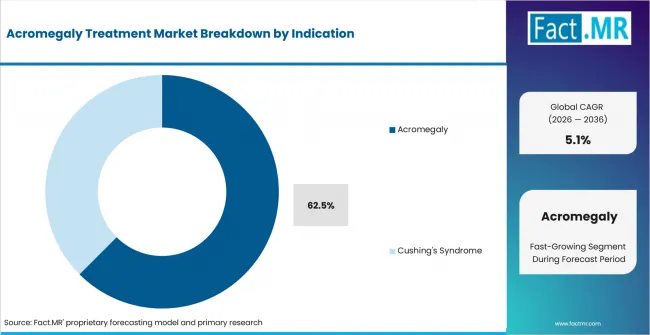
Acromegaly Treatment Market Analysis By Indication | Source: Fact.MR
Acromegaly is estimated to account for 62.5% share in 2026. The indication benefits from broader treatment availability and established clinical management pathways. Pharmaceutical development activity remains concentrated in this area. The U.S. FDA approved Palsonify (paltusotine) for adults with acromegaly who had an inadequate response to surgery or for whom surgery is not an option. Palsonify became the first once-daily oral treatment approved for acromegaly, providing an alternative to long-acting injectable therapies. [3]
- Therapy Availability: More approved treatment options exist for acromegaly management. Product access supports higher treatment utilization.
- Diagnosis Rates: Healthcare providers are improving recognition of acromegaly symptoms. Earlier diagnosis strengthens therapy demand.
- Clinical Focus: Research activity remains concentrated on growth hormone disorders. Development efforts support segment expansion.
Acromegaly Treatment Market Analysis by Treatment Type
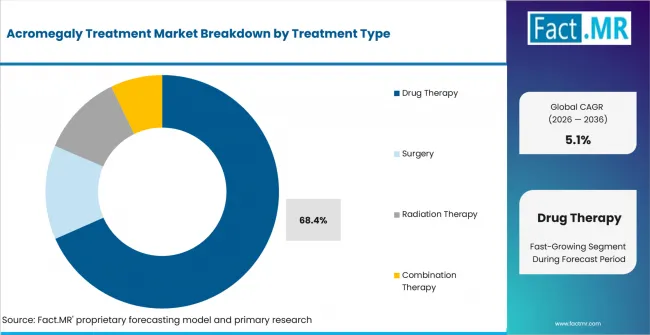
Acromegaly Treatment Market Analysis By Treatment Type | Source: Fact.MR
Drug therapy is estimated to register 68.4% share in 2026. Long-term disease management frequently requires continuous pharmaceutical intervention. Treatment effectiveness supports sustained utilization.
- Long-Term Care: Drug therapy supports ongoing disease control across patient populations. Treatment duration strengthens market demand.
- Non-Invasive Approach: Pharmaceutical treatment reduces dependence on surgical intervention. Patient preference supports utilization.
- Clinical Outcomes: Effective hormone regulation improves quality of life. Positive outcomes strengthen therapy adoption.
Acromegaly Treatment Market Analysis by End User
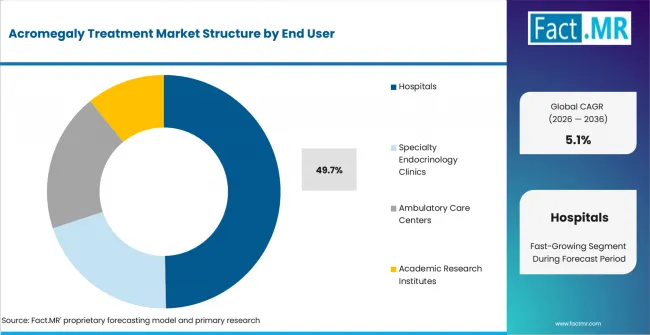
Acromegaly Treatment Market Analysis By End User | Source: Fact.MR
Hospitals are estimated to hold 49.7% share in 2026. Complex endocrine disorders require multidisciplinary treatment expertise. Access to specialists supports segment dominance.
- Integrated Care: Hospitals provide diagnosis and treatment within a single care setting. Coordinated services support patient management.
- Specialist Expertise: Endocrinologists and multidisciplinary teams operate primarily within hospital environments. Clinical capability supports demand.
- Advanced Diagnostics: Hospitals maintain access to hormone testing and imaging systems. Diagnostic infrastructure strengthens treatment delivery.
Drivers, Restraints, and Opportunities
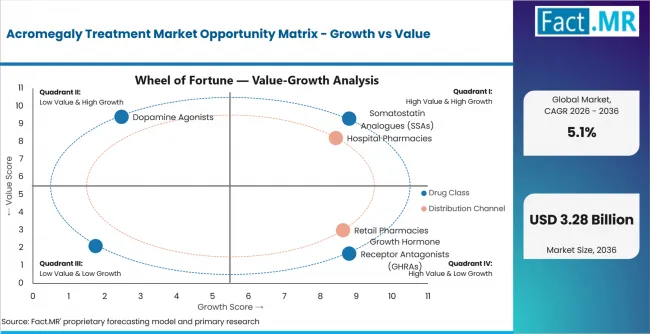
Acromegaly Treatment Market Opportunity Matrix Growth Vs Value | Source: Fact.MR
Fact.MR analysts observe that the market is supported by lifelong disease management requirements and improving access to endocrine care. Treatment demand is concentrated in specialty healthcare settings due to the complex nature of diagnosis and therapy selection. Market expansion reflects better disease awareness and broader treatment availability.
Healthcare systems are placing greater emphasis on early diagnosis and long-term disease control. Advanced pharmaceutical therapies are improving patient outcomes and reducing complications associated with hormone imbalance disorders. Camurus reported positive final topline results from the Phase 3 ACROINNOVA 2 trial evaluating once-monthly octreotide SC depot (CAM2029) in patients with acromegaly. The study demonstrated improved biochemical control, symptom reduction, quality-of-life improvements, and a safety profile consistent with current standard-of-care therapies. [5]
- Disease Awareness: Healthcare providers are increasing screening and diagnosis activity for endocrine disorders. Earlier identification supports treatment initiation.
- Therapy Innovation: New formulations and targeted therapies are improving patient convenience and treatment adherence. Product innovation supports commercial expansion.
- Diagnosis Delays: Limited awareness and specialist shortages constrain timely diagnosis. Delayed treatment reduces market penetration across underserved regions.
Regional Analysis
The Acromegaly Treatment market is assessed across North America, Europe, Asia Pacific, Latin America, and the Middle East & Africa. The study evaluates treatment access, specialty healthcare infrastructure, pharmaceutical availability, and endocrine disease management trends across major healthcare economies.
.webp "Top Country Growth Comparison Acromegaly Treatment Market Cagr (2026 2036)")
Top Country Growth Comparison Acromegaly Treatment Market Cagr (2026 2036) | Source: Fact.MR
| Country | CAGR (2026 to 2036) |
|---|---|
| India | 6.8% |
| China | 6.5% |
| South Korea | 5.9% |
| Brazil | 5.6% |
| United States | 4.7% |
| Germany | 4.3% |
Source: Fact.MR analysis. Updated Jun 9, 2026
Source: Fact.MR analysis based on proprietary forecasting methodology and primary research.
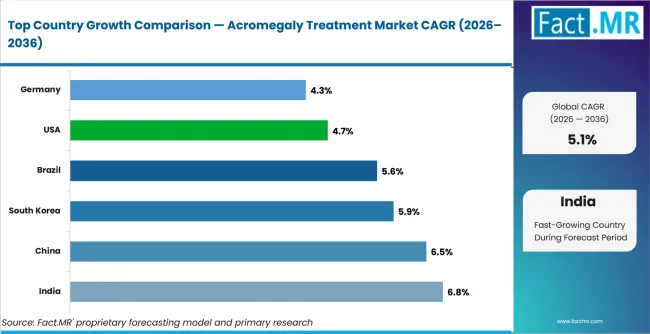
Acromegaly Treatment Market Cagr Analysis By Country | Source: Fact.MR
Asia Pacific Acromegaly Treatment Market Analysis
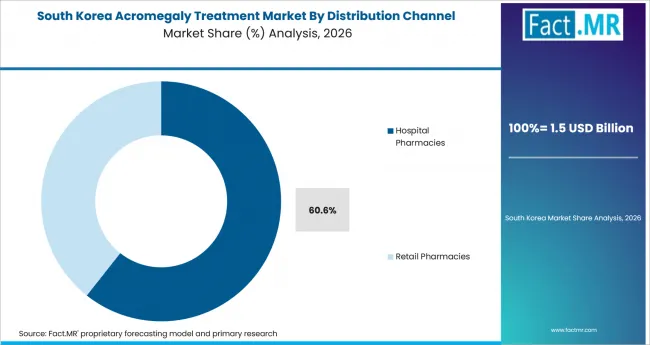
Acromegaly Treatment Market South Korea Market Share Analysis By Distribution Channel | Source: Fact.MR
Asia Pacific represents the leading growing region due to improving healthcare access and rising endocrine disease diagnosis rates. Healthcare investment is strengthening specialty treatment availability across regional markets.
- India: India is projected to expand at 6.8% CAGR as tertiary healthcare institutions strengthen endocrine disorder diagnosis and treatment capability. Greater access to specialist care is improving patient identification rates. Growth is attributable to healthcare infrastructure expansion and improving disease awareness.
- China: Expansion of rare disease treatment programs is expected to support China at 6.5% CAGR by 2036. Hospitals are increasing access to advanced endocrine therapies across major urban centers. Demand reflects broader healthcare investment and specialist care availability. Growth is supported by improving diagnosis capability.
- South Korea: South Korea is forecast to witness 5.9% CAGR driven by advanced endocrine treatment services and strong healthcare coverage. Clinical management standards support long-term therapy utilization. Demand reflects widespread access to specialty medical care. Growth is attributable to high treatment adherence rates.
North America Acromegaly Treatment Market Analysis
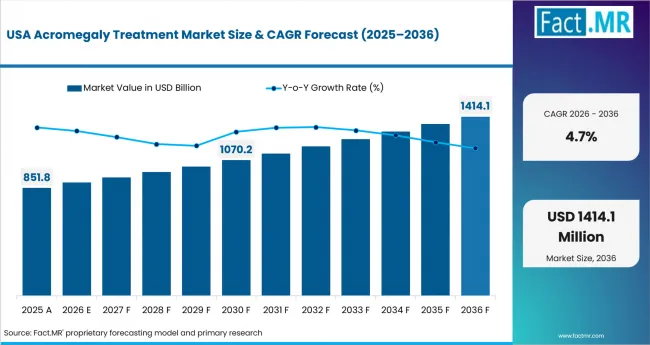
Acromegaly Treatment Market Country Value Analysis | Source: Fact.MR
North America remains a major revenue-generating region due to strong specialty healthcare infrastructure and established pharmaceutical access. Advanced treatment availability supports market development.
- United States: The United States is projected to expand at 4.7% CAGR by 2036 as specialty endocrine centers increase focus on long-term disease management. Pharmaceutical access remains high globally. Demand is driven by established treatment pathways and strong reimbursement coverage.
Latin America Acromegaly Treatment Market Analysis
Latin America is benefiting from improving access to specialty healthcare services and endocrine disease awareness programs. Healthcare modernization is strengthening treatment availability.
- Brazil: Brazil is anticipated to register 5.6% CAGR through 2036 supported by expanding endocrine treatment access and improving specialist healthcare networks. Public and private healthcare investment is strengthening patient management capability. Growth reflects improving diagnosis rates and broader treatment availability.
Europe Acromegaly Treatment Market Analysis
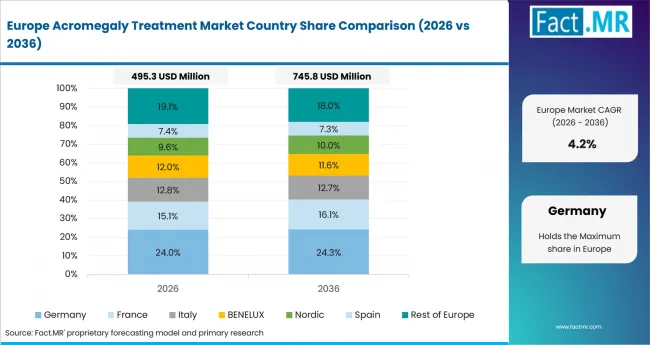
Acromegaly Treatment Market Europe Country Market Share Analysis, 2026 & 2036 | Source: Fact.MR
Europe benefits from established healthcare systems and comprehensive reimbursement frameworks. Specialty endocrine treatment services support long-term disease management. The European Medicines Agency (EMA) granted Orphan Medicinal Product Designation (EU/3/25/3035) to paltusotine for the treatment of acromegaly on February 26, 2025. The designation provides regulatory incentives and support to advance the development and commercialization of the therapy in the European Union. [4]
- Germany: Strong reimbursement support for endocrine therapies is expected to help Germany achieve 4.3% CAGR. Healthcare providers maintain broad access to specialist treatment services. Demand reflects structured disease management programs. Growth is attributable to established endocrine care infrastructure.
Competitive Aligners for Market Players
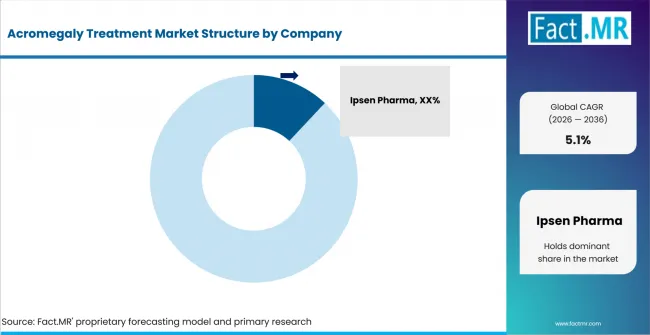
Acromegaly Treatment Market Analysis By Company | Source: Fact.MR
The competitive structure reflects a mix of specialty pharmaceutical companies, endocrine therapy developers, and rare disease treatment providers. Product efficacy influences treatment selection across endocrine disorder management pathways. Companies with established specialist physician networks hold stronger positions across treatment markets. Long-term therapy outcomes strengthen commercial adoption.
Organizations that combine innovative therapies with patient support programs benefit from stronger market participation. Treatment adherence improves long-term disease control. Clinical evidence supports competitive differentiation across specialty pharmaceutical providers. Product safety remains an important prescribing criterion. Endocrinologists evaluate therapies based on efficacy and hormone control performance. Hospitals prioritize treatment availability and reimbursement support. Specialty clinics focus on patient compliance and disease management outcomes. Established clinical experience creates barriers for new entrants.
Commercial success is increasingly linked to differentiated therapies and specialist engagement capability. Demand is shifting toward pharmaceutical providers that deliver comprehensive disease management solutions. Long-acting formulations are emerging as a major source of differentiation across endocrine treatment markets.
Key Players
- Ipsen Pharma
- Novartis AG
- Pfizer Inc.
- Recordati S.p.A.
- Crinetics Pharmaceuticals
- Camurus AB
Bibliography
- Crinetics Pharmaceuticals, Inc. (2024, September 25). Crinetics submits new drug application for paltusotine for the treatment of acromegaly.
- Reuters. (2024, October 22). U.S. FDA declines to approve Camurus' rare hormone disorder drug. Reuters.
- U.S. Food and Drug Administration. (2025, September 25). FDA approves new treatment for acromegaly, a rare endocrine disorder.
- European Medicines Agency. (2025, February 27). Paltusotine for the treatment of acromegaly (EU/3/25/3035).
- Camurus AB. (2024, June 18). Camurus announces positive Phase 3 results from the ACROINNOVA 2 study of octreotide SC depot (CAM2029) in acromegaly patients.
This Report Addresses
- Analysis of treatment demand across Cushing's syndrome and acromegaly patient populations.
- Market forecast from USD 2.0 billion in 2026 to USD 3.3 billion by 2036 at 5.1% CAGR.
- Opportunity assessment across endocrine therapies and disease management solutions.
- Segment forecasts covering drug class, distribution channel, indication, treatment type, and end user.
- Competitive assessment of specialty pharmaceutical companies and rare disease therapy providers.
- Evaluation of treatment innovation and endocrine care trends.
- Country-level analysis across India, China, South Korea, Brazil, the United States, and Germany.
- Report delivery through PDF and Excel formats supported by primary interviews and industry analysis.
Acromegaly Treatment Market Definition
The Acromegaly Treatment market covers pharmaceutical therapies and clinical management solutions used to treat endocrine disorders caused by abnormal hormone production. Acromegaly develops from excess growth hormone secretion while Cushing's syndrome results from prolonged cortisol excess. Treatment includes somatostatin analogues, growth hormone receptor antagonists, dopamine agonists, surgical intervention, radiation therapy, and long-term disease monitoring. Demand originates from hospitals, endocrinology clinics, and specialty treatment centers focused on hormonal disorder management.
Acromegaly Treatment Market Inclusions
The study covers global and regional forecasts from 2026 to 2036 by drug class, distribution channel, indication, treatment type, and end user. The report evaluates pharmaceutical demand, treatment utilization patterns, specialty care access, reimbursement trends, and disease management activity across major healthcare markets.
Acromegaly Treatment Market Exclusions
The study excludes general hormone replacement therapies and endocrine disorders unrelated to acromegaly. Broader metabolic disease treatments are excluded unless directly associated with disease management. Revenue from unrelated neurological and oncology therapies is not included within market estimates.
Acromegaly Treatment Market Research Methodology
- Primary Research
- Interviews were conducted with endocrinologists, hospital pharmacists, specialty clinic directors, healthcare administrators, and pharmaceutical industry executives.
- Desk Research
- Analysis included company disclosures, regulatory approvals, clinical trial updates, treatment guidelines, and healthcare publications released during 2024 and 2025.
- Market-Sizing and Forecasting
- Hybrid top-down and bottom-up model using treatment utilization, patient population trends, and pharmaceutical sales analysis.
- Data Validation and Update Cycle
- Forecast outputs were validated through physician interviews, distributor feedback, prescription trends, and healthcare expenditure reviews.
Segmentation
Scope of Analysis
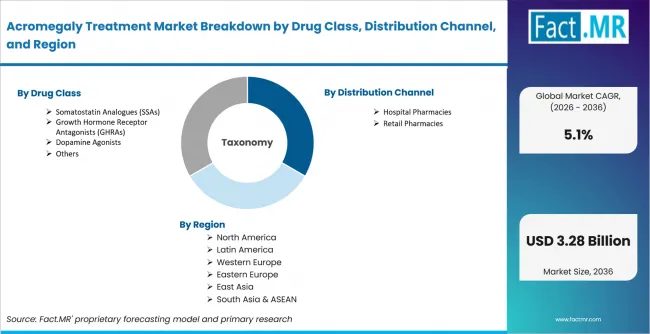
Acromegaly Treatment Market Breakdown By Drug Class, Distribution Channel, And Region | Source: Fact.MR
| Attribute | Details |
|---|---|
| Quantitative Units | USD 2.0 billion (2026) to USD 3.3 billion (2036) at a CAGR of 5.1% |
| Market Definition | Pharmaceutical therapies and clinical management solutions for acromegaly. |
| Drug Class Segmentation | Somatostatin Analogues, Growth Hormone Receptor Antagonists, Dopamine Agonists, Others |
| Distribution Channel Segmentation | Hospital Pharmacies, Retail Pharmacies, Others |
| Indication Segmentation | Acromegaly, Cushing's Syndrome |
| Treatment Type Segmentation | Drug Therapy, Surgery, Radiation Therapy, Combination Therapy |
| End User Segmentation | Hospitals, Specialty Endocrinology Clinics, Ambulatory Care Centers, Academic Research Institutes |
| Regions Covered | North America, Europe, Asia Pacific, Latin America, Middle East & Africa |
| Countries Covered | India, China, South Korea, Brazil, United States, Germany |
| Key Companies Profiled | Ipsen Pharma, Novartis AG, Pfizer Inc., Recordati S.p.A., Crinetics Pharmaceuticals, Camurus AB |
| Forecast Period | 2026 to 2036 |
| Approach | Hybrid top-down and bottom-up model using prescription and treatment utilization analysis. |
Source: Fact.MR analysis. Updated Jun 9, 2026
Acromegaly Treatment Market by Segment
-
By Drug Class
- Somatostatin Analogues (SSAs)
- Growth Hormone Receptor Antagonists (GHRAs)
- Dopamine Agonists
- Others
-
By Distribution Channel
- Hospital Pharmacies
- Retail Pharmacies
-
By Indication
- Acromegaly
- Cushing's Syndrome
-
By Treatment Type
- Drug Therapy
- Surgery
- Radiation Therapy
- Combination Therapy
-
By End User
- Hospitals
- Specialty Endocrinology Clinics
- Ambulatory Care Centers
- Academic Research Institutes
-
By Region
- North America
- United States
- Canada
- Mexico
- Latin America
- Brazil
- Argentina
- Rest of Latin America
- Europe
- Germany
- United Kingdom
- France
- Italy
- Rest of Europe
- Asia Pacific
- China
- India
- South Korea
- Japan
- ASEAN
- Middle East & Africa
- GCC Countries
- South Africa
- UAE
- Rest of Middle East & Africa
- North America
Frequently Asked Questions
How large is the global Acromegaly Treatment market in 2025?
What will the market size be in 2026?
What is the projected market size by 2036?
What is the expected CAGR from 2026 to 2036?
Which drug class is poised to lead market demand?
Which country records the leading growth?
Who worked on this report


Preview the report firsthand - request a free sample
Free SampleGet the brochure for pricing and purchase details
Download PDF