Freight Transport Market
Freight Transport Market Size and Share Forecast Outlook 2026 to 2036
Freight transport market is projected to grow from USD 127.3 billion in 2026 to USD 198.7 billion by 2036, at a CAGR of 4.6%. Commercial Trucks will dominate with a 42.7% market share, while logistics companies will lead the application sector segment with a 48.9% share.
Freight Transport Equipment Market Forecast and Outlook 2026 to 2036
The global freight transport equipment market is valued at USD 127.3 billion in 2026 and is projected to reach USD 198.7 billion by 2036, reflecting an absolute increase of USD 71.4 billion. This corresponds to total growth of 56.1%, with demand expanding at a CAGR of 4.6% between 2026 and 2036.
Overall market size is expected to grow by about 1.6X, supported by continued modernization of logistics infrastructure, rising adoption of fuel-efficient and low-emission vehicles, and growing freight volumes across domestic and cross-border trade routes.
Key Takeaways from Freight Transport Equipment Market
- Freight Transport Equipment Market Value (2026): USD 127.3 billion
- Freight Transport Equipment Market Forecast Value (2036): USD 198.7 billion
- Freight Transport Equipment Market Forecast CAGR: 4.6%
- Leading Equipment Type in Freight Transport Equipment Market: Commercial Trucks (42.7%)
- Key Growth Regions in Freight Transport Equipment Market: North America, Europe, Asia Pacific
- Key Players in Freight Transport Equipment Market: Daimler Truck AG, Volvo Group, PACCAR Inc., Scania AB, MAN Truck & Bus AG
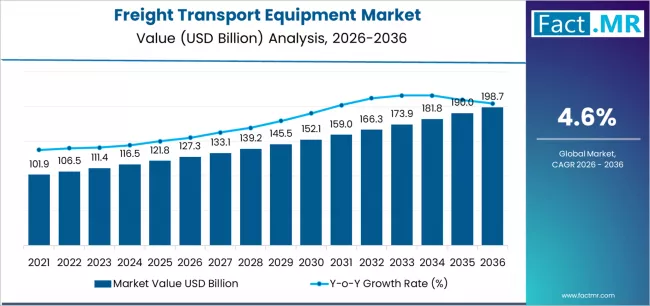
Commercial trucks represent the leading equipment category, accounting for 42.7% share in 2026. Their flexibility, payload capacity, and suitability for both short-haul and long-distance transport underpin sustained demand. By end use, logistics companies hold the largest share at 48.9%, reflecting high fleet utilization rates, replacement cycles, and ongoing investments in capacity expansion and operational reliability.
At a broader level, advances in telematics, fleet management systems, and connectivity solutions that improve route planning, asset utilization, and cargo visibility shape market development. Increasing focus on emission compliance, alternative powertrains, and automation is influencing equipment design and procurement strategies. Integration of digital platforms and data-driven logistics tools continues to support efficiency gains, positioning freight transport equipment as a central component of evolving global supply chains.
Freight Transport Equipment Market
| Metric | Value |
|---|---|
| Estimated Value in (2026E) | USD 127.3 billion |
| Forecast Value in (2036F) | USD 198.7 billion |
| Forecast CAGR (2026 to 2036) | 4.6% |
Category
| Category | Segments |
|---|---|
| Equipment Type | Commercial Trucks; Rail Freight Cars; Cargo Ships; Freight Aircraft; Other Transport Configurations |
| Application Sector | Logistics Companies; Manufacturing Facilities; Retail Distribution Centers; Port Operations; Others |
| Fuel Technology | Diesel Systems; Electric Vehicles; Hybrid Powertrains; Natural Gas Engines; Other Propulsion Platforms |
| End-User Category | Private Fleet Operators; Third-Party Logistics Providers; Government Agencies; Other Transportation Services |
| Region | North America; Europe; Asia Pacific; Latin America; Middle East & Africa |
Segmental Analysis
By Equipment Type, Which Segment Holds the Dominant Market Share?
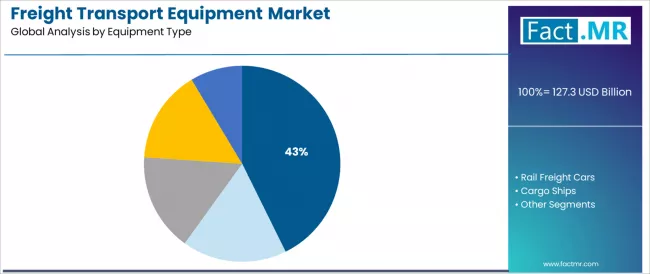
Commercial trucks are projected to account for 42.7% of the freight transport equipment market in 2026, retaining segment leadership. Their dominance reflects flexibility across long-haul and regional freight, established performance standards, and compatibility with existing logistics infrastructure. Proven reliability, route efficiency, and suitability for diverse cargo types continue to support widespread adoption among fleet operators.
By Application Sector, Which Segment Registers the Highest Share?
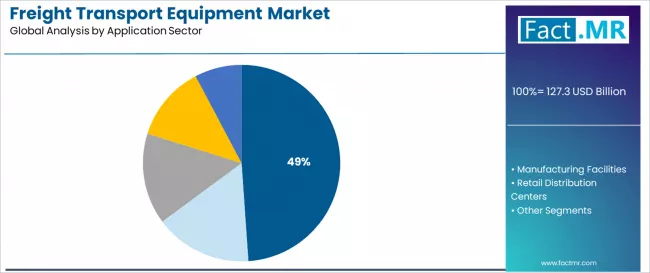
Logistics companies are projected to represent 48.9% of market demand in 2026, driven by centralized fleet operations and consistent freight movement requirements. Logistics providers rely on standardized transport equipment to ensure delivery reliability, cost control, and operational efficiency. Continued improvements in vehicle technology and fleet management systems are expected to sustain demand from logistics-focused operators.
What are the Drivers, Restraints, and Key Trends of the Freight Transport Equipment Market?
The freight transport equipment market is expanding due to logistics modernization, growth in e-commerce activity, and rising demand for efficient freight movement across commercial sectors. Fleet operators are investing in advanced equipment to improve delivery reliability, reduce operating costs, and manage higher freight volumes. However, market growth is constrained by high equipment acquisition costs, competition from conventional transport solutions, and regulatory compliance requirements related to safety, emissions, and cross-border operations.
A key trend shaping the market is the adoption of autonomous driving technologies and fleet optimization systems. These solutions support route efficiency, reduce driver dependency, and improve asset utilization across logistics networks. Another important trend is the integration of electric vehicle technologies and environmental management systems. Electric freight equipment enables lower emissions, improved energy efficiency, and compliance with tightening environmental regulations, while supporting automated charging, real-time energy monitoring, and long-term sustainability objectives across freight operations.
Analysis of the Freight Transport Equipment Market by Key Countries
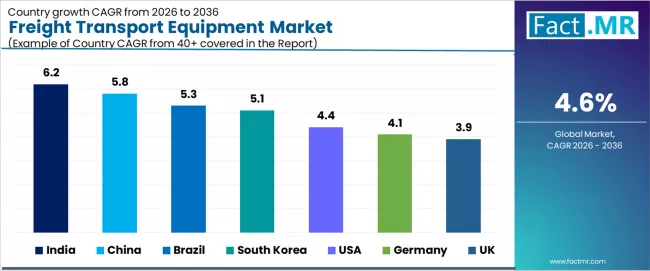
| Country | CAGR (2026-2036) |
|---|---|
| China | 5.8% |
| India | 6.2% |
| Germany | 4.1% |
| Brazil | 5.3% |
| USA | 4.4% |
| UK | 3.9% |
| South Korea | 5.1% |
How are Logistics Infrastructure Expansion and Manufacturing Growth Driving India’s Market Leadership?
India’s freight transport equipment market is projected to grow at a CAGR of 6.2% through 2036, supported by rapid logistics sector expansion, transport modernization policies, and increasing fleet technology adoption. India’s role as a manufacturing and distribution hub is strengthening demand for standardized, high-capacity freight equipment across domestic and export supply chains. Equipment suppliers are expanding installation and service capabilities to support large-scale logistics projects.
- Growth in logistics hubs and distribution networks is accelerating equipment adoption across commercial regions.
- Infrastructure modernization programs are supporting demand for advanced, reliable transport systems.
Why is Manufacturing Investment and Fleet Technology Adoption Strengthening China’s Market Potential?
China’s freight transport equipment market is expanding at a CAGR of 5.8%, driven by sustained manufacturing investment, logistics network expansion, and rising deployment of advanced fleet technologies. Ongoing upgrades in transportation infrastructure are supporting demand across traditional freight corridors and modern logistics parks. Suppliers are strengthening regional distribution and service networks to meet large-volume requirements.
- Expansion of freight corridors and logistics facilities is sustaining equipment demand.
- Advancement in fleet technologies supports adoption of high-performance transport systems.
How do Regulatory Stability and Logistics Technology Leadership Support Brazil’s Market Expansion?
Brazil’s freight transport equipment market is projected to grow at a CAGR of 5.3% through 2036, supported by regulatory clarity, logistics technology deployment, and steady infrastructure development. Demand is rising across freight operators seeking efficiency-focused transport solutions aligned with modernization objectives.
- Established logistics networks are driving demand for premium transport equipment.
- Focus on operational efficiency supports adoption of modern fleet systems.
Why is Logistics Modernization Accelerating Freight Equipment Demand in South Korea?
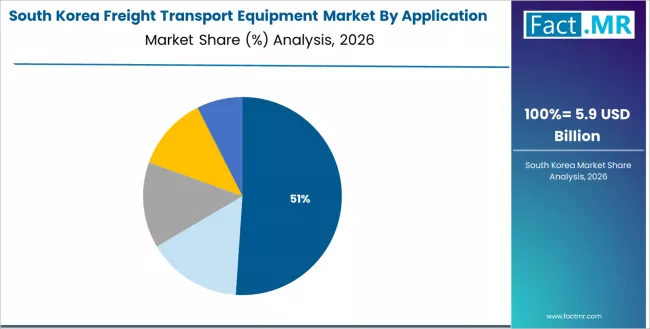
South Korea’s freight transport equipment market is expected to grow at a CAGR of 5.1%, driven by logistics modernization, infrastructure upgrades, and technology-led freight management. Operators prioritize efficiency, reliability, and system integration across urban and export-driven logistics networks.
- Modern logistics infrastructure is increasing demand for efficient transport equipment.
- Emphasis on operational performance supports adoption of advanced fleet solutions.
How do Technology Integration and Operational Optimization Underpin USA Market Growth?
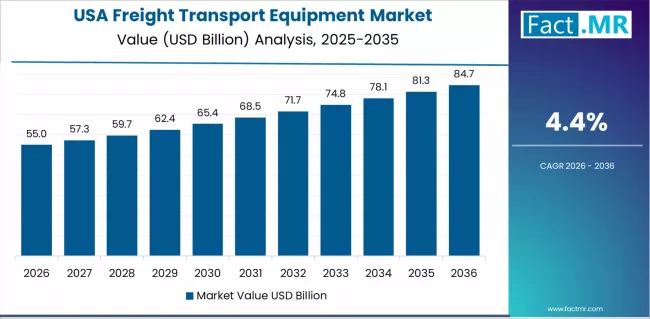
The USA freight transport equipment market is projected to expand at a CAGR of 4.4% through 2036, supported by logistics automation, system integration, and efficiency-driven fleet upgrades. Freight operators prioritize reliability, performance consistency, and compliance across complex distribution networks.
- Integration of logistics technologies is sustaining steady equipment demand.
- Focus on performance optimization supports adoption of advanced transport systems.
Why do Quality Standards and Efficiency Mandates Sustain Steady Growth in Germany?
Germany’s freight transport equipment market is forecast to grow at a CAGR of 4.1%, supported by established logistics standards, consistent replacement demand, and strong emphasis on operational efficiency. Transport operators prioritize durability, performance consistency, and compliance.
- Mature logistics infrastructure sustains stable equipment demand.
- Strong quality standards reinforce adoption of proven transport solutions.
How is Precision-Driven Logistics Management Supporting Freight Equipment Growth in the UK?
The UK freight transport equipment market is projected to grow at a CAGR of 3.9%, driven by precision logistics management, technology integration, and efficiency-focused freight operations. Demand remains steady across commercial distribution and specialized freight segments.
- Precision-led logistics operations are increasing demand for advanced transport systems.
- Emphasis on efficiency and compliance supports continued equipment adoption..
Competitive Landscape of the Freight Transport Equipment Market
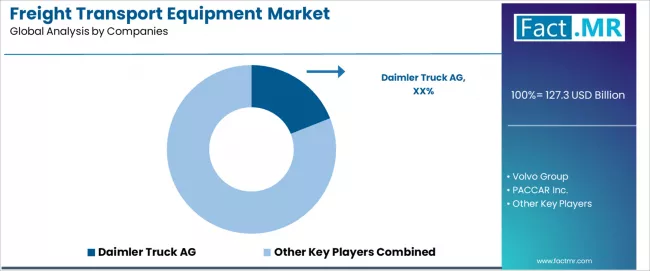
The freight transport equipment market is characterized by competition among established vehicle manufacturers, specialized transport companies, and integrated logistics solution providers. Companies are investing in advanced fleet technologies, specialized cargo platforms, product innovation capabilities, and comprehensive distribution networks to deliver consistent, high-quality, and reliable transport systems. Innovation in electric powertrains, autonomous driving capabilities, and logistics-focused product development is central to strengthening market position and customer satisfaction.
Daimler Truck offers a strong focus on commercial innovation and comprehensive freight solutions, offering fleet and operational systems with emphasis on performance excellence and logistics heritage. Volvo Group provides integrated vehicle automation with a focus on transportation market applications and precision fleet networks.
PACCAR Inc. delivers comprehensive truck technology solutions with a focus on operational positioning and fleet efficiency. Scania AB specializes in comprehensive transport technologies with an emphasis on freight applications. MAN Truck & Bus AG focuses on comprehensive commercial equipment with advanced design and premium positioning capabilities.
Key Players in the Freight Transport Equipment Market
- Daimler Truck AG
- Volvo Group
- PACCAR Inc.
- Scania AB
- MAN Truck & Bus AG
- Iveco Group N.V.
- Navistar International Corporation
- Isuzu Motors Limited
- Hino Motors Ltd.
- Dongfeng Motor Corporation
- FAW Group Corporation
- Sinotruk (Hong Kong) Limited
- Tata Motors Limited
- Ashok Leyland Limited
- Mahindra & Mahindra Limited
Scope of the Report
| Items | Values |
|---|---|
| Quantitative Units (2026) | USD 127.3 Billion |
| Equipment Type | Commercial Trucks, Rail Freight Cars, Cargo Ships, Freight Aircraft, Other Transport Configurations |
| Application Sector | Logistics Companies, Manufacturing Facilities, Retail Distribution Centers, Port Operations, Others |
| Fuel Technology | Diesel Systems, Electric Vehicles, Hybrid Powertrains, Natural Gas Engines, Other Propulsion Platforms |
| End-User Category | Private Fleet Operators, Third-Party Logistics Providers, Government Agencies, Other Transportation Services |
| Regions Covered | North America, Europe, Asia Pacific, Latin America, MEA, Other Regions |
| Countries Covered | China, India, Germany, Brazil, USA, UK, South Korea, and 40+ countries |
| Key Companies Profiled | Daimler Truck AG, Volvo Group, PACCAR Inc., Scania AB, MAN Truck & Bus AG, and other leading transport equipment companies |
| Additional Attributes | Dollar sales by equipment type, application sector, fuel technology, end-user category, and region; regional demand trends, competitive landscape, technological advancements in transport engineering, operational performance optimization initiatives, fleet enhancement programs, and premium product development strategies |
Freight Transport Equipment Market by Segments
-
Equipment Type :
- Commercial Trucks
- Rail Freight Cars
- Cargo Ships
- Freight Aircraft
- Other Transport Configurations
-
Application Sector :
- Logistics Companies
- Manufacturing Facilities
- Retail Distribution Centers
- Port Operations
- Others
-
Fuel Technology :
- Diesel Systems
- Electric Vehicles
- Hybrid Powertrains
- Natural Gas Engines
- Other Propulsion Platforms
-
End-User Category :
- Private Fleet Operators
- Third-Party Logistics Providers
- Government Agencies
- Other Transportation Services
-
Region :
-
North America
- USA
- Canada
- Mexico
-
Europe
- Germany
- UK
- France
- Italy
- Spain
- Nordic Countries
-
BENELUX
- Rest of Europe
-
Asia Pacific
- China
- India
- Japan
- South Korea
- Australia
- Rest of Asia Pacific
-
Latin America
- Brazil
- Argentina
- Rest of Latin America
-
MEA
- Saudi Arabia
- UAE
- South Africa
- Rest of MEA
-
Table of Content
- Executive Summary
- Global Market Outlook
- Demand to side Trends
- Supply to side Trends
- Technology Roadmap Analysis
- Analysis and Recommendations
- Market Overview
- Market Coverage / Taxonomy
- Market Definition / Scope / Limitations
- Market Background
- Market Dynamics
- Drivers
- Restraints
- Opportunity
- Trends
- Scenario Forecast
- Demand in Optimistic Scenario
- Demand in Likely Scenario
- Demand in Conservative Scenario
- Opportunity Map Analysis
- Product Life Cycle Analysis
- Supply Chain Analysis
- Investment Feasibility Matrix
- Value Chain Analysis
- PESTLE and Porter’s Analysis
- Regulatory Landscape
- Regional Parent Market Outlook
- Production and Consumption Statistics
- Import and Export Statistics
- Market Dynamics
- Global Market Analysis 2021 to 2025 and Forecast, 2026 to 2036
- Historical Market Size Value (USD Million) Analysis, 2021 to 2025
- Current and Future Market Size Value (USD Million) Projections, 2026 to 2036
- Y to o to Y Growth Trend Analysis
- Absolute $ Opportunity Analysis
- Global Market Pricing Analysis 2021 to 2025 and Forecast 2026 to 2036
- Global Market Analysis 2021 to 2025 and Forecast 2026 to 2036, By Equipment Type
- Introduction / Key Findings
- Historical Market Size Value (USD Million) Analysis By Equipment Type, 2021 to 2025
- Current and Future Market Size Value (USD Million) Analysis and Forecast By Equipment Type, 2026 to 2036
- Commercial Trucks
- Rail Freight Cars
- Cargo Ships
- Freight Aircraft
- Other Transport Configurations
- Y to o to Y Growth Trend Analysis By Equipment Type, 2021 to 2025
- Absolute $ Opportunity Analysis By Equipment Type, 2026 to 2036
- Global Market Analysis 2021 to 2025 and Forecast 2026 to 2036, By Application Sector
- Introduction / Key Findings
- Historical Market Size Value (USD Million) Analysis By Application Sector, 2021 to 2025
- Current and Future Market Size Value (USD Million) Analysis and Forecast By Application Sector, 2026 to 2036
- Logistics Companies
- Manufacturing Facilities
- Retail Distribution Centers
- Port Operations
- Others
- Y to o to Y Growth Trend Analysis By Application Sector, 2021 to 2025
- Absolute $ Opportunity Analysis By Application Sector, 2026 to 2036
- Global Market Analysis 2021 to 2025 and Forecast 2026 to 2036, By Region
- Introduction
- Historical Market Size Value (USD Million) Analysis By Region, 2021 to 2025
- Current Market Size Value (USD Million) Analysis and Forecast By Region, 2026 to 2036
- North America
- Latin America
- Western Europe
- Eastern Europe
- East Asia
- South Asia and Pacific
- Middle East & Africa
- Market Attractiveness Analysis By Region
- North America Market Analysis 2021 to 2025 and Forecast 2026 to 2036, By Country
- Historical Market Size Value (USD Million) Trend Analysis By Market Taxonomy, 2021 to 2025
- Market Size Value (USD Million) Forecast By Market Taxonomy, 2026 to 2036
- By Country
- USA
- Canada
- Mexico
- By Equipment Type
- By Application Sector
- By Country
- Market Attractiveness Analysis
- By Country
- By Equipment Type
- By Application Sector
- Key Takeaways
- Latin America Market Analysis 2021 to 2025 and Forecast 2026 to 2036, By Country
- Historical Market Size Value (USD Million) Trend Analysis By Market Taxonomy, 2021 to 2025
- Market Size Value (USD Million) Forecast By Market Taxonomy, 2026 to 2036
- By Country
- Brazil
- Chile
- Rest of Latin America
- By Equipment Type
- By Application Sector
- By Country
- Market Attractiveness Analysis
- By Country
- By Equipment Type
- By Application Sector
- Key Takeaways
- Western Europe Market Analysis 2021 to 2025 and Forecast 2026 to 2036, By Country
- Historical Market Size Value (USD Million) Trend Analysis By Market Taxonomy, 2021 to 2025
- Market Size Value (USD Million) Forecast By Market Taxonomy, 2026 to 2036
- By Country
- Germany
- UK
- Italy
- Spain
- France
- Nordic
- BENELUX
- Rest of Western Europe
- By Equipment Type
- By Application Sector
- By Country
- Market Attractiveness Analysis
- By Country
- By Equipment Type
- By Application Sector
- Key Takeaways
- Eastern Europe Market Analysis 2021 to 2025 and Forecast 2026 to 2036, By Country
- Historical Market Size Value (USD Million) Trend Analysis By Market Taxonomy, 2021 to 2025
- Market Size Value (USD Million) Forecast By Market Taxonomy, 2026 to 2036
- By Country
- Russia
- Poland
- Hungary
- Balkan & Baltic
- Rest of Eastern Europe
- By Equipment Type
- By Application Sector
- By Country
- Market Attractiveness Analysis
- By Country
- By Equipment Type
- By Application Sector
- Key Takeaways
- East Asia Market Analysis 2021 to 2025 and Forecast 2026 to 2036, By Country
- Historical Market Size Value (USD Million) Trend Analysis By Market Taxonomy, 2021 to 2025
- Market Size Value (USD Million) Forecast By Market Taxonomy, 2026 to 2036
- By Country
- China
- Japan
- South Korea
- By Equipment Type
- By Application Sector
- By Country
- Market Attractiveness Analysis
- By Country
- By Equipment Type
- By Application Sector
- Key Takeaways
- South Asia and Pacific Market Analysis 2021 to 2025 and Forecast 2026 to 2036, By Country
- Historical Market Size Value (USD Million) Trend Analysis By Market Taxonomy, 2021 to 2025
- Market Size Value (USD Million) Forecast By Market Taxonomy, 2026 to 2036
- By Country
- India
- ASEAN
- Australia & New Zealand
- Rest of South Asia and Pacific
- By Equipment Type
- By Application Sector
- By Country
- Market Attractiveness Analysis
- By Country
- By Equipment Type
- By Application Sector
- Key Takeaways
- Middle East & Africa Market Analysis 2021 to 2025 and Forecast 2026 to 2036, By Country
- Historical Market Size Value (USD Million) Trend Analysis By Market Taxonomy, 2021 to 2025
- Market Size Value (USD Million) Forecast By Market Taxonomy, 2026 to 2036
- By Country
- Kingdom of Saudi Arabia
- Other GCC Countries
- Turkiye
- South Africa
- Other African Union
- Rest of Middle East & Africa
- By Equipment Type
- By Application Sector
- By Country
- Market Attractiveness Analysis
- By Country
- By Equipment Type
- By Application Sector
- Key Takeaways
- Key Countries Market Analysis
- USA
- Pricing Analysis
- Market Share Analysis, 2025
- By Equipment Type
- By Application Sector
- Canada
- Pricing Analysis
- Market Share Analysis, 2025
- By Equipment Type
- By Application Sector
- Mexico
- Pricing Analysis
- Market Share Analysis, 2025
- By Equipment Type
- By Application Sector
- Brazil
- Pricing Analysis
- Market Share Analysis, 2025
- By Equipment Type
- By Application Sector
- Chile
- Pricing Analysis
- Market Share Analysis, 2025
- By Equipment Type
- By Application Sector
- Germany
- Pricing Analysis
- Market Share Analysis, 2025
- By Equipment Type
- By Application Sector
- UK
- Pricing Analysis
- Market Share Analysis, 2025
- By Equipment Type
- By Application Sector
- Italy
- Pricing Analysis
- Market Share Analysis, 2025
- By Equipment Type
- By Application Sector
- Spain
- Pricing Analysis
- Market Share Analysis, 2025
- By Equipment Type
- By Application Sector
- France
- Pricing Analysis
- Market Share Analysis, 2025
- By Equipment Type
- By Application Sector
- India
- Pricing Analysis
- Market Share Analysis, 2025
- By Equipment Type
- By Application Sector
- ASEAN
- Pricing Analysis
- Market Share Analysis, 2025
- By Equipment Type
- By Application Sector
- Australia & New Zealand
- Pricing Analysis
- Market Share Analysis, 2025
- By Equipment Type
- By Application Sector
- China
- Pricing Analysis
- Market Share Analysis, 2025
- By Equipment Type
- By Application Sector
- Japan
- Pricing Analysis
- Market Share Analysis, 2025
- By Equipment Type
- By Application Sector
- South Korea
- Pricing Analysis
- Market Share Analysis, 2025
- By Equipment Type
- By Application Sector
- Russia
- Pricing Analysis
- Market Share Analysis, 2025
- By Equipment Type
- By Application Sector
- Poland
- Pricing Analysis
- Market Share Analysis, 2025
- By Equipment Type
- By Application Sector
- Hungary
- Pricing Analysis
- Market Share Analysis, 2025
- By Equipment Type
- By Application Sector
- Kingdom of Saudi Arabia
- Pricing Analysis
- Market Share Analysis, 2025
- By Equipment Type
- By Application Sector
- Turkiye
- Pricing Analysis
- Market Share Analysis, 2025
- By Equipment Type
- By Application Sector
- South Africa
- Pricing Analysis
- Market Share Analysis, 2025
- By Equipment Type
- By Application Sector
- USA
- Market Structure Analysis
- Competition Dashboard
- Competition Benchmarking
- Market Share Analysis of Top Players
- By Regional
- By Equipment Type
- By Application Sector
- Competition Analysis
- Competition Deep Dive
- Daimler Truck AG
- Overview
- Product Portfolio
- Profitability by Market Segments (Product/Age /Sales Channel/Region)
- Sales Footprint
- Strategy Overview
- Marketing Strategy
- Product Strategy
- Channel Strategy
- Volvo Group
- PACCAR Inc.
- Scania AB
- MAN Truck & Bus AG
- Iveco Group N.V.
- Navistar International Corporation
- Isuzu Motors Limited
- Hino Motors Ltd.
- Dongfeng Motor Corporation
- FAW Group Corporation
- Sinotruk (Hong Kong) Limited
- Tata Motors Limited
- Ashok Leyland Limited
- Mahindra & Mahindra Limited
- Daimler Truck AG
- Competition Deep Dive
- Assumptions & Acronyms Used
- Research Methodology
List Of Table
- Table 1: Global Market Value (USD Million) Forecast by Region, 2021 to 2036
- Table 2: Global Market Value (USD Million) Forecast by Equipment Type, 2021 to 2036
- Table 3: Global Market Value (USD Million) Forecast by Application Sector, 2021 to 2036
- Table 4: North America Market Value (USD Million) Forecast by Country, 2021 to 2036
- Table 5: North America Market Value (USD Million) Forecast by Equipment Type, 2021 to 2036
- Table 6: North America Market Value (USD Million) Forecast by Application Sector, 2021 to 2036
- Table 7: Latin America Market Value (USD Million) Forecast by Country, 2021 to 2036
- Table 8: Latin America Market Value (USD Million) Forecast by Equipment Type, 2021 to 2036
- Table 9: Latin America Market Value (USD Million) Forecast by Application Sector, 2021 to 2036
- Table 10: Western Europe Market Value (USD Million) Forecast by Country, 2021 to 2036
- Table 11: Western Europe Market Value (USD Million) Forecast by Equipment Type, 2021 to 2036
- Table 12: Western Europe Market Value (USD Million) Forecast by Application Sector, 2021 to 2036
- Table 13: Eastern Europe Market Value (USD Million) Forecast by Country, 2021 to 2036
- Table 14: Eastern Europe Market Value (USD Million) Forecast by Equipment Type, 2021 to 2036
- Table 15: Eastern Europe Market Value (USD Million) Forecast by Application Sector, 2021 to 2036
- Table 16: East Asia Market Value (USD Million) Forecast by Country, 2021 to 2036
- Table 17: East Asia Market Value (USD Million) Forecast by Equipment Type, 2021 to 2036
- Table 18: East Asia Market Value (USD Million) Forecast by Application Sector, 2021 to 2036
- Table 19: South Asia and Pacific Market Value (USD Million) Forecast by Country, 2021 to 2036
- Table 20: South Asia and Pacific Market Value (USD Million) Forecast by Equipment Type, 2021 to 2036
- Table 21: South Asia and Pacific Market Value (USD Million) Forecast by Application Sector, 2021 to 2036
- Table 22: Middle East & Africa Market Value (USD Million) Forecast by Country, 2021 to 2036
- Table 23: Middle East & Africa Market Value (USD Million) Forecast by Equipment Type, 2021 to 2036
- Table 24: Middle East & Africa Market Value (USD Million) Forecast by Application Sector, 2021 to 2036
List Of Figures
- Figure 1: Global Market Pricing Analysis
- Figure 2: Global Market Value (USD Million) Forecast 2021 to 2036
- Figure 3: Global Market Value Share and BPS Analysis by Equipment Type, 2026 and 2036
- Figure 4: Global Market Y to o to Y Growth Comparison by Equipment Type, 2026 to 2036
- Figure 5: Global Market Attractiveness Analysis by Equipment Type
- Figure 6: Global Market Value Share and BPS Analysis by Application Sector, 2026 and 2036
- Figure 7: Global Market Y to o to Y Growth Comparison by Application Sector, 2026 to 2036
- Figure 8: Global Market Attractiveness Analysis by Application Sector
- Figure 9: Global Market Value (USD Million) Share and BPS Analysis by Region, 2026 and 2036
- Figure 10: Global Market Y to o to Y Growth Comparison by Region, 2026 to 2036
- Figure 11: Global Market Attractiveness Analysis by Region
- Figure 12: North America Market Incremental Dollar Opportunity, 2026 to 2036
- Figure 13: Latin America Market Incremental Dollar Opportunity, 2026 to 2036
- Figure 14: Western Europe Market Incremental Dollar Opportunity, 2026 to 2036
- Figure 15: Eastern Europe Market Incremental Dollar Opportunity, 2026 to 2036
- Figure 16: East Asia Market Incremental Dollar Opportunity, 2026 to 2036
- Figure 17: South Asia and Pacific Market Incremental Dollar Opportunity, 2026 to 2036
- Figure 18: Middle East & Africa Market Incremental Dollar Opportunity, 2026 to 2036
- Figure 19: North America Market Value Share and BPS Analysis by Country, 2026 and 2036
- Figure 20: North America Market Value Share and BPS Analysis by Equipment Type, 2026 and 2036
- Figure 21: North America Market Y to o to Y Growth Comparison by Equipment Type, 2026 to 2036
- Figure 22: North America Market Attractiveness Analysis by Equipment Type
- Figure 23: North America Market Value Share and BPS Analysis by Application Sector, 2026 and 2036
- Figure 24: North America Market Y to o to Y Growth Comparison by Application Sector, 2026 to 2036
- Figure 25: North America Market Attractiveness Analysis by Application Sector
- Figure 26: Latin America Market Value Share and BPS Analysis by Country, 2026 and 2036
- Figure 27: Latin America Market Value Share and BPS Analysis by Equipment Type, 2026 and 2036
- Figure 28: Latin America Market Y to o to Y Growth Comparison by Equipment Type, 2026 to 2036
- Figure 29: Latin America Market Attractiveness Analysis by Equipment Type
- Figure 30: Latin America Market Value Share and BPS Analysis by Application Sector, 2026 and 2036
- Figure 31: Latin America Market Y to o to Y Growth Comparison by Application Sector, 2026 to 2036
- Figure 32: Latin America Market Attractiveness Analysis by Application Sector
- Figure 33: Western Europe Market Value Share and BPS Analysis by Country, 2026 and 2036
- Figure 34: Western Europe Market Value Share and BPS Analysis by Equipment Type, 2026 and 2036
- Figure 35: Western Europe Market Y to o to Y Growth Comparison by Equipment Type, 2026 to 2036
- Figure 36: Western Europe Market Attractiveness Analysis by Equipment Type
- Figure 37: Western Europe Market Value Share and BPS Analysis by Application Sector, 2026 and 2036
- Figure 38: Western Europe Market Y to o to Y Growth Comparison by Application Sector, 2026 to 2036
- Figure 39: Western Europe Market Attractiveness Analysis by Application Sector
- Figure 40: Eastern Europe Market Value Share and BPS Analysis by Country, 2026 and 2036
- Figure 41: Eastern Europe Market Value Share and BPS Analysis by Equipment Type, 2026 and 2036
- Figure 42: Eastern Europe Market Y to o to Y Growth Comparison by Equipment Type, 2026 to 2036
- Figure 43: Eastern Europe Market Attractiveness Analysis by Equipment Type
- Figure 44: Eastern Europe Market Value Share and BPS Analysis by Application Sector, 2026 and 2036
- Figure 45: Eastern Europe Market Y to o to Y Growth Comparison by Application Sector, 2026 to 2036
- Figure 46: Eastern Europe Market Attractiveness Analysis by Application Sector
- Figure 47: East Asia Market Value Share and BPS Analysis by Country, 2026 and 2036
- Figure 48: East Asia Market Value Share and BPS Analysis by Equipment Type, 2026 and 2036
- Figure 49: East Asia Market Y to o to Y Growth Comparison by Equipment Type, 2026 to 2036
- Figure 50: East Asia Market Attractiveness Analysis by Equipment Type
- Figure 51: East Asia Market Value Share and BPS Analysis by Application Sector, 2026 and 2036
- Figure 52: East Asia Market Y to o to Y Growth Comparison by Application Sector, 2026 to 2036
- Figure 53: East Asia Market Attractiveness Analysis by Application Sector
- Figure 54: South Asia and Pacific Market Value Share and BPS Analysis by Country, 2026 and 2036
- Figure 55: South Asia and Pacific Market Value Share and BPS Analysis by Equipment Type, 2026 and 2036
- Figure 56: South Asia and Pacific Market Y to o to Y Growth Comparison by Equipment Type, 2026 to 2036
- Figure 57: South Asia and Pacific Market Attractiveness Analysis by Equipment Type
- Figure 58: South Asia and Pacific Market Value Share and BPS Analysis by Application Sector, 2026 and 2036
- Figure 59: South Asia and Pacific Market Y to o to Y Growth Comparison by Application Sector, 2026 to 2036
- Figure 60: South Asia and Pacific Market Attractiveness Analysis by Application Sector
- Figure 61: Middle East & Africa Market Value Share and BPS Analysis by Country, 2026 and 2036
- Figure 62: Middle East & Africa Market Value Share and BPS Analysis by Equipment Type, 2026 and 2036
- Figure 63: Middle East & Africa Market Y to o to Y Growth Comparison by Equipment Type, 2026 to 2036
- Figure 64: Middle East & Africa Market Attractiveness Analysis by Equipment Type
- Figure 65: Middle East & Africa Market Value Share and BPS Analysis by Application Sector, 2026 and 2036
- Figure 66: Middle East & Africa Market Y to o to Y Growth Comparison by Application Sector, 2026 to 2036
- Figure 67: Middle East & Africa Market Attractiveness Analysis by Application Sector
- Figure 68: Global Market - Tier Structure Analysis
- Figure 69: Global Market - Company Share Analysis
- FAQs -
How big is the freight transport market in 2026?
The global freight transport market is estimated to be valued at USD 127.3 billion in 2026.
What will be the size of freight transport market in 2036?
The market size for the freight transport market is projected to reach USD 198.7 billion by 2036.
How much will be the freight transport market growth between 2026 and 2036?
The freight transport market is expected to grow at a 4.6% CAGR between 2026 and 2036.
What are the key product types in the freight transport market?
The key product types in freight transport market are commercial trucks, rail freight cars, cargo ships, freight aircraft and other transport configurations.
Which application sector segment to contribute significant share in the freight transport market in 2026?
In terms of application sector, logistics companies segment to command 48.9% share in the freight transport market in 2026.