Infant Food Compliance Ready Fertility Input Market
Infant Food Compliance Ready Fertility Input Market Size and Share Forecast Outlook 2026 to 2036
Infant food compliance ready fertility input market is projected to grow from USD 177.4 million in 2026 to USD 393.8 million by 2036, at a CAGR of 8.3%. Dairy/Alt-Dairy will dominate with a 41.2% market share, while powder will lead the form segment with a 42.5% share.
Infant Food Compliance Ready Fertility Input Market Forecast and Outlook 2026 to 2036
The global market for infant food compliance ready fertility inputs is projected to grow from USD 177.40 million in 2026 to USD 393.77 million by 2036, advancing at a CAGR of 8.3%. This market represents the most stringent segment within agricultural input supply, dedicated to producing fertilizers and soil amendments that meet the exacting purity and safety standards required for crops destined for infant food formulation.
Key Takeaways from the Infant Food Compliance Ready Fertility Input Market
- Market Value for 2026: USD 177.40 Million
- Market Value for 2036: USD 393.77 Million
- Forecast CAGR (2026-2036): 8.3%
- Leading Application Segment (2026): Dairy/Alt-Dairy (41%)
- Leading Form Segment (2026): Powder (43%)
- Leading Channel Segment (2026): Direct-to-B2B (57%)
- Key Growth Countries: India (15.2% CAGR), China (14.8% CAGR), USA (14% CAGR), France (13.1% CAGR)
- Key Players in the Market: OCP, PhosAgro, ICL Group Ltd., EuroChem Group A.G., The Mosaic Company, Nutrien
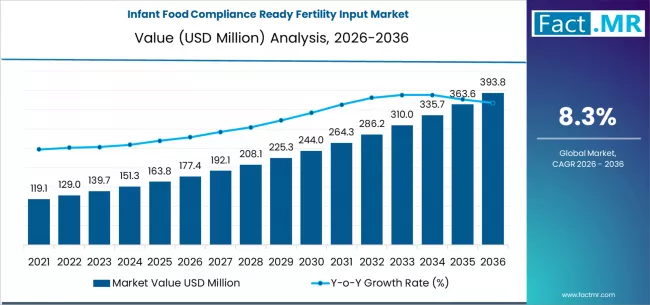
These inputs are engineered to minimize or eliminate contaminants, including nitrates, heavy metals like cadmium, lead, and arsenic, and pesticide residues that pose disproportionate risks to infant health, thereby ensuring the integrity of raw materials from the field. Growth is driven by the unparalleled regulatory scrutiny of the global infant food industry, stringent corporate sourcing policies of baby food manufacturers, and rising parental demand for absolute ingredient safety.
Compliance-ready inputs are a foundational risk mitigation strategy, transforming standard agronomic practice into a verifiable component of a food safety plan. Their use is non-negotiable for growers under contract to produce grains, legumes, fruits, and vegetables for infant purees, cereals, and formulas, where regulatory limits for contaminants are often an order of magnitude stricter than for general foodstuffs.
The market’s evolution is centered on verification, traceability, and preventative action. Success depends on input manufacturers controlling their own supply chains for raw materials, implementing rigorous batch testing, and providing extensive certification documentation. This enables farmers to produce crops that seamlessly integrate into the highly audited infant food supply chain, making compliance a tangible, input-based asset.
Metric
| Metric | Value |
|---|---|
| Market Value (2026) | USD 177.40 Million |
| Market Forecast Value (2036) | USD 393.77 Million |
| Forecast CAGR (2026-2036) | 8.3% |
Category
| Category | Segments |
|---|---|
| Application | Dairy/Alt-Dairy, Beverages, Bakery/Snacks, Meat/Alt-Meat |
| Form | Powder, Liquid, Encapsulated, Paste |
| Channel | Direct-to-B2B, Distributors, Online B2B, Contract Manufacturing |
| Region | North America, Latin America, Western Europe, Eastern Europe, East Asia, South Asia & Pacific, MEA |
Segmental Analysis
By Application, Which Sector Demands the Highest Ingredient Purity?
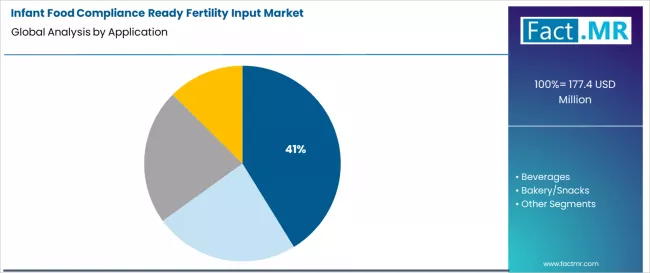
Dairy/alt-dairy leads with a 41% share, directly linked to infant formula production. Formula relies on dairy or plant-based proteins and carbohydrates from crops like oats and rice. The fertility inputs used to grow these base crops must guarantee the absence of contaminants that could concentrate during processing. This creates a zero-tolerance environment, making certified compliance-ready fertilizers a core component of the ingredient safety protocol for every major formula manufacturer.
By Form, Which Enables Precise Formulation and Testing?
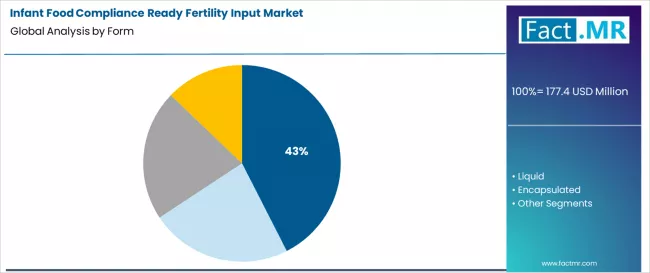
Powder form holds a 43% share, favored for its homogeneity and stability, which are critical for consistent batch testing and quality assurance. Powdered inputs allow for precise blending to create custom nutrient mixes that meet specific crop needs while maintaining contaminant thresholds. The physical form also facilitates easier sampling and laboratory analysis to verify compliance certificates before release to contracted growers.
By Channel, How are These Assured Inputs Procured?
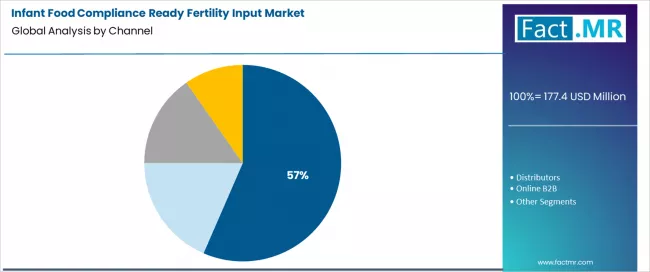
Direct-to-B2B sales are dominant at 57%. The procurement of compliance-ready inputs is a strategic, relationship-driven process between input manufacturers and infant food companies or their designated agricultural cooperatives.
This direct channel ensures strict chain-of-custody, allows for the negotiation of detailed technical specifications, and facilitates the integration of input documentation into the manufacturer’s overall safety audit trail, from farm to finished product.
What are the Drivers, Restraints, and Key Trends of the Infant Food Compliance Ready Fertility Input Market?
The paramount driver is the stringent and legally enforceable global regulatory framework for infant food, led by Codex Alimentarius, the US FDA, and the EFSA. High-profile product recalls due to contaminants have made proactive supply chain management a top corporate priority.
The premium pricing for certified clean raw materials provides the economic justification for growers to invest in higher-cost compliance-ready inputs, with costs often absorbed through tight contractual agreements.
A key restraint is the significantly higher production and verification cost of these inputs, which limits their use to dedicated, contracted supply chains. The complexity of monitoring and testing for a broad spectrum of potential contaminants requires sophisticated laboratory infrastructure and adds time to the supply chain.
The market is further limited to a relatively small acreage of contract production, preventing mass-scale adoption and keeping it a premium, niche segment. Key trends include the development of passport documentation for each input batch, using digital platforms and blockchain to provide immutable records of purity tests from mine or factory to field.
Integrated crop management protocols are being offered, bundling compliant fertilizers with approved crop protection and seed varieties. There is also a trend toward proactive soil remediation services funded by infant food companies to bring contracted farmland into compliance, creating a long-term market for safe inputs.
Analysis of the Infant Food Compliance Ready Fertility Input Market by Key Countries
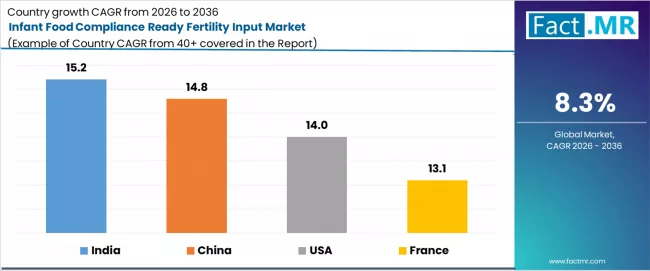
| Country | CAGR (2026-2036) |
|---|---|
| India | 15.2% |
| China | 14.8% |
| USA | 14.0% |
| France | 13.1% |
How is India's Position as a Leading Milk Producer Influencing the Market?
India’s leading CAGR of 15.2% is tied to its massive dairy sector and the growth of domestic infant formula manufacturing. As Indian dairy cooperatives and new private manufacturers aim to meet both national FSSAI standards and export potential, securing compliant supply chains for forage and feed grains becomes critical. This drives demand for specialized inputs to cultivate contamination-free maize, sorghum, and oats used in dairy-based ingredient production.
What is the Impact of China's Post-Melamine Scandal Regulatory Environment?
China’s 14.8% growth is fundamentally shaped by its intense, state-mandated focus on infant food safety following past scandals. Chinese regulations are among the world's strictest. Domestic infant formula giants, under government supervision, are vertically integrating and imposing rigorous standards on their agricultural suppliers. This creates a powerful, centralized demand for certified compliance-ready inputs to rebuild and maintain consumer trust in a highly sensitive market.
Why is the USA's Litigious and Brand-Conscious Market a Key Driver?
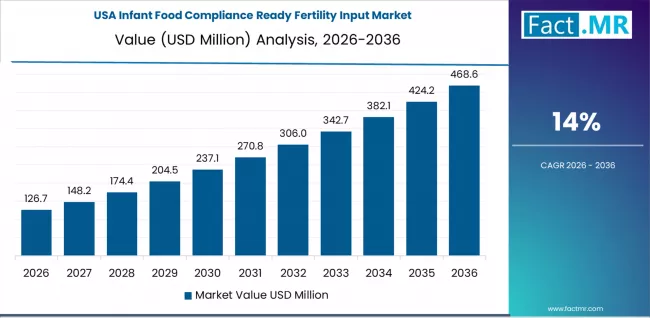
The USA’s 14% growth is fueled by a combination of FDA regulation, potential for litigation, and the brand equity of major infant food companies. These companies cannot afford a safety incident.
Their sourcing contracts with growers explicitly mandate the use of inputs that meet detailed compositional specifications. The well-established system of identity-preserved agriculture in the US provides an ideal framework for implementing and auditing these specialized input programs.
How is France's EU Leadership and Premium Dairy Sector Shaping Demand?
France’s 13.1% CAGR is linked to its leadership in the high-value EU dairy and infant nutrition market. French dairy cooperatives and infant food manufacturers supply premium products globally.
Adherence to EU regulations, which are often the global benchmark, is a baseline. To maintain their premium positioning and export licenses, these companies invest in securing the cleanest possible agricultural inputs, fostering a mature market for verified, compliance-ready fertility products.
Competitive Landscape of the Infant Food Compliance Ready Fertility Input Market
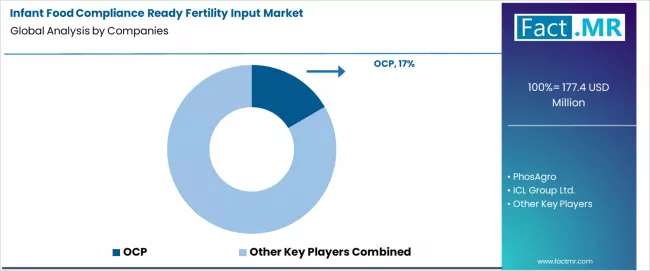
The competitive landscape is concentrated among large, integrated fertilizer companies that control mine-to-bag production and can implement rigorous quality control systems. Competition is based on the verifiable purity and consistency of products, the robustness of certification and traceability systems, and the ability to form long-term, strategic partnerships with multinational infant food corporations.
Success is less about price and more about demonstrable reliability and the capacity to provide auditable proof of compliance, making trust and a flawless safety record the ultimate competitive advantages.
Key Players in the Infant Food Compliance Ready Fertility Input Market
- OCP
- PhosAgro
- ICL Group Ltd.
- EuroChem Group A.G.
- The Mosaic Company
- Nutrien
Scope of Report
| Items | Values |
|---|---|
| Quantitative Units | USD Million |
| Application | Dairy/Alt-Dairy, Beverages, Bakery/Snacks, Meat/Alt-Meat |
| Form | Powder, Liquid, Encapsulated, Paste |
| Channel | Direct-to-B2B, Distributors, Online B2B, Contract Manufacturing |
| Key Countries | USA, China, India, France |
| Key Companies | OCP, PhosAgro, ICL Group Ltd., EuroChem Group A.G., The Mosaic Company, Nutrien |
| Additional Analysis | Review of global regulatory limits for contaminants in infant food; analysis of testing methodologies for input purity; economic model of contracting with premium pricing for compliant crops; supply chain audit and traceability system benchmarks; impact of soil baseline testing on input program design. |
Market by Segments
-
Application :
- Dairy/Alt-Dairy
- Beverages
- Bakery/Snacks
- Meat/Alt-Meat
-
Form :
- Powder
- Liquid
- Encapsulated
- Paste
-
Channel :
- Direct-to-B2B
- Distributors
- Online B2B
- Contract Manufacturing
-
Region :
-
North America
- USA
- Canada
-
Latin America
- Brazil
- Mexico
- Argentina
- Rest of Latin America
-
Western Europe
- Germany
- UK
- France
- Spain
- Italy
- BENELUX
- Rest of Western Europe
-
Eastern Europe
- Russia
- Poland
- Czech Republic
- Rest of Eastern Europe
-
East Asia
- China
- Japan
- South Korea
- Rest of East Asia
-
South Asia & Pacific
- India
- ASEAN
- Australia
- Rest of South Asia & Pacific
-
MEA
- Saudi Arabia
- UAE
- Turkiye
- Rest of MEA
-
Table of Content
- Executive Summary
- Global Market Outlook
- Demand to side Trends
- Supply to side Trends
- Technology Roadmap Analysis
- Analysis and Recommendations
- Market Overview
- Market Coverage / Taxonomy
- Market Definition / Scope / Limitations
- Market Background
- Market Dynamics
- Drivers
- Restraints
- Opportunity
- Trends
- Scenario Forecast
- Demand in Optimistic Scenario
- Demand in Likely Scenario
- Demand in Conservative Scenario
- Opportunity Map Analysis
- Product Life Cycle Analysis
- Supply Chain Analysis
- Investment Feasibility Matrix
- Value Chain Analysis
- PESTLE and Porter’s Analysis
- Regulatory Landscape
- Regional Parent Market Outlook
- Production and Consumption Statistics
- Import and Export Statistics
- Market Dynamics
- Global Market Analysis 2021 to 2025 and Forecast, 2026 to 2036
- Historical Market Size Value (USD Million) Analysis, 2021 to 2025
- Current and Future Market Size Value (USD Million) Projections, 2026 to 2036
- Y to o to Y Growth Trend Analysis
- Absolute $ Opportunity Analysis
- Global Market Pricing Analysis 2021 to 2025 and Forecast 2026 to 2036
- Global Market Analysis 2021 to 2025 and Forecast 2026 to 2036, By Application
- Introduction / Key Findings
- Historical Market Size Value (USD Million) Analysis By Application, 2021 to 2025
- Current and Future Market Size Value (USD Million) Analysis and Forecast By Application, 2026 to 2036
- Dairy/Alt-Dairy
- Beverages
- Bakery/Snacks
- Meat/Alt-Meat
- Dairy/Alt-Dairy
- Y to o to Y Growth Trend Analysis By Application, 2021 to 2025
- Absolute $ Opportunity Analysis By Application, 2026 to 2036
- Global Market Analysis 2021 to 2025 and Forecast 2026 to 2036, By Form
- Introduction / Key Findings
- Historical Market Size Value (USD Million) Analysis By Form, 2021 to 2025
- Current and Future Market Size Value (USD Million) Analysis and Forecast By Form, 2026 to 2036
- Powder
- Liquid
- Encapsulated
- Paste
- Powder
- Y to o to Y Growth Trend Analysis By Form, 2021 to 2025
- Absolute $ Opportunity Analysis By Form, 2026 to 2036
- Global Market Analysis 2021 to 2025 and Forecast 2026 to 2036, By Channel
- Introduction / Key Findings
- Historical Market Size Value (USD Million) Analysis By Channel, 2021 to 2025
- Current and Future Market Size Value (USD Million) Analysis and Forecast By Channel, 2026 to 2036
- Direct-to-B2B
- Distributors
- Online B2B
- Contract Manufacturing
- Direct-to-B2B
- Y to o to Y Growth Trend Analysis By Channel, 2021 to 2025
- Absolute $ Opportunity Analysis By Channel, 2026 to 2036
- Global Market Analysis 2021 to 2025 and Forecast 2026 to 2036, By Region
- Introduction
- Historical Market Size Value (USD Million) Analysis By Region, 2021 to 2025
- Current Market Size Value (USD Million) Analysis and Forecast By Region, 2026 to 2036
- North America
- Latin America
- Western Europe
- Eastern Europe
- East Asia
- South Asia and Pacific
- Middle East & Africa
- Market Attractiveness Analysis By Region
- North America Market Analysis 2021 to 2025 and Forecast 2026 to 2036, By Country
- Historical Market Size Value (USD Million) Trend Analysis By Market Taxonomy, 2021 to 2025
- Market Size Value (USD Million) Forecast By Market Taxonomy, 2026 to 2036
- By Country
- USA
- Canada
- Mexico
- By Application
- By Form
- By Channel
- By Country
- Market Attractiveness Analysis
- By Country
- By Application
- By Form
- By Channel
- Key Takeaways
- Latin America Market Analysis 2021 to 2025 and Forecast 2026 to 2036, By Country
- Historical Market Size Value (USD Million) Trend Analysis By Market Taxonomy, 2021 to 2025
- Market Size Value (USD Million) Forecast By Market Taxonomy, 2026 to 2036
- By Country
- Brazil
- Chile
- Rest of Latin America
- By Application
- By Form
- By Channel
- By Country
- Market Attractiveness Analysis
- By Country
- By Application
- By Form
- By Channel
- Key Takeaways
- Western Europe Market Analysis 2021 to 2025 and Forecast 2026 to 2036, By Country
- Historical Market Size Value (USD Million) Trend Analysis By Market Taxonomy, 2021 to 2025
- Market Size Value (USD Million) Forecast By Market Taxonomy, 2026 to 2036
- By Country
- Germany
- UK
- Italy
- Spain
- France
- Nordic
- BENELUX
- Rest of Western Europe
- By Application
- By Form
- By Channel
- By Country
- Market Attractiveness Analysis
- By Country
- By Application
- By Form
- By Channel
- Key Takeaways
- Eastern Europe Market Analysis 2021 to 2025 and Forecast 2026 to 2036, By Country
- Historical Market Size Value (USD Million) Trend Analysis By Market Taxonomy, 2021 to 2025
- Market Size Value (USD Million) Forecast By Market Taxonomy, 2026 to 2036
- By Country
- Russia
- Poland
- Hungary
- Balkan & Baltic
- Rest of Eastern Europe
- By Application
- By Form
- By Channel
- By Country
- Market Attractiveness Analysis
- By Country
- By Application
- By Form
- By Channel
- Key Takeaways
- East Asia Market Analysis 2021 to 2025 and Forecast 2026 to 2036, By Country
- Historical Market Size Value (USD Million) Trend Analysis By Market Taxonomy, 2021 to 2025
- Market Size Value (USD Million) Forecast By Market Taxonomy, 2026 to 2036
- By Country
- China
- Japan
- South Korea
- By Application
- By Form
- By Channel
- By Country
- Market Attractiveness Analysis
- By Country
- By Application
- By Form
- By Channel
- Key Takeaways
- South Asia and Pacific Market Analysis 2021 to 2025 and Forecast 2026 to 2036, By Country
- Historical Market Size Value (USD Million) Trend Analysis By Market Taxonomy, 2021 to 2025
- Market Size Value (USD Million) Forecast By Market Taxonomy, 2026 to 2036
- By Country
- India
- ASEAN
- Australia & New Zealand
- Rest of South Asia and Pacific
- By Application
- By Form
- By Channel
- By Country
- Market Attractiveness Analysis
- By Country
- By Application
- By Form
- By Channel
- Key Takeaways
- Middle East & Africa Market Analysis 2021 to 2025 and Forecast 2026 to 2036, By Country
- Historical Market Size Value (USD Million) Trend Analysis By Market Taxonomy, 2021 to 2025
- Market Size Value (USD Million) Forecast By Market Taxonomy, 2026 to 2036
- By Country
- Kingdom of Saudi Arabia
- Other GCC Countries
- Turkiye
- South Africa
- Other African Union
- Rest of Middle East & Africa
- By Application
- By Form
- By Channel
- By Country
- Market Attractiveness Analysis
- By Country
- By Application
- By Form
- By Channel
- Key Takeaways
- Key Countries Market Analysis
- USA
- Pricing Analysis
- Market Share Analysis, 2025
- By Application
- By Form
- By Channel
- Canada
- Pricing Analysis
- Market Share Analysis, 2025
- By Application
- By Form
- By Channel
- Mexico
- Pricing Analysis
- Market Share Analysis, 2025
- By Application
- By Form
- By Channel
- Brazil
- Pricing Analysis
- Market Share Analysis, 2025
- By Application
- By Form
- By Channel
- Chile
- Pricing Analysis
- Market Share Analysis, 2025
- By Application
- By Form
- By Channel
- Germany
- Pricing Analysis
- Market Share Analysis, 2025
- By Application
- By Form
- By Channel
- UK
- Pricing Analysis
- Market Share Analysis, 2025
- By Application
- By Form
- By Channel
- Italy
- Pricing Analysis
- Market Share Analysis, 2025
- By Application
- By Form
- By Channel
- Spain
- Pricing Analysis
- Market Share Analysis, 2025
- By Application
- By Form
- By Channel
- France
- Pricing Analysis
- Market Share Analysis, 2025
- By Application
- By Form
- By Channel
- India
- Pricing Analysis
- Market Share Analysis, 2025
- By Application
- By Form
- By Channel
- ASEAN
- Pricing Analysis
- Market Share Analysis, 2025
- By Application
- By Form
- By Channel
- Australia & New Zealand
- Pricing Analysis
- Market Share Analysis, 2025
- By Application
- By Form
- By Channel
- China
- Pricing Analysis
- Market Share Analysis, 2025
- By Application
- By Form
- By Channel
- Japan
- Pricing Analysis
- Market Share Analysis, 2025
- By Application
- By Form
- By Channel
- South Korea
- Pricing Analysis
- Market Share Analysis, 2025
- By Application
- By Form
- By Channel
- Russia
- Pricing Analysis
- Market Share Analysis, 2025
- By Application
- By Form
- By Channel
- Poland
- Pricing Analysis
- Market Share Analysis, 2025
- By Application
- By Form
- By Channel
- Hungary
- Pricing Analysis
- Market Share Analysis, 2025
- By Application
- By Form
- By Channel
- Kingdom of Saudi Arabia
- Pricing Analysis
- Market Share Analysis, 2025
- By Application
- By Form
- By Channel
- Turkiye
- Pricing Analysis
- Market Share Analysis, 2025
- By Application
- By Form
- By Channel
- South Africa
- Pricing Analysis
- Market Share Analysis, 2025
- By Application
- By Form
- By Channel
- USA
- Market Structure Analysis
- Competition Dashboard
- Competition Benchmarking
- Market Share Analysis of Top Players
- By Regional
- By Application
- By Form
- By Channel
- Competition Analysis
- Competition Deep Dive
- OCP
- Overview
- Product Portfolio
- Profitability by Market Segments (Product/Age /Sales Channel/Region)
- Sales Footprint
- Strategy Overview
- Marketing Strategy
- Product Strategy
- Channel Strategy
- PhosAgro
- ICL Group Ltd.
- EuroChem Group A.G.
- The Mosaic Company
- Nutrien
- OCP
- Competition Deep Dive
- Assumptions & Acronyms Used
- Research Methodology
List Of Table
- Table 1: Global Market Value (USD Million) Forecast by Region, 2021 to 2036
- Table 2: Global Market Value (USD Million) Forecast by Application, 2021 to 2036
- Table 3: Global Market Value (USD Million) Forecast by Form, 2021 to 2036
- Table 4: Global Market Value (USD Million) Forecast by Channel, 2021 to 2036
- Table 5: North America Market Value (USD Million) Forecast by Country, 2021 to 2036
- Table 6: North America Market Value (USD Million) Forecast by Application, 2021 to 2036
- Table 7: North America Market Value (USD Million) Forecast by Form, 2021 to 2036
- Table 8: North America Market Value (USD Million) Forecast by Channel, 2021 to 2036
- Table 9: Latin America Market Value (USD Million) Forecast by Country, 2021 to 2036
- Table 10: Latin America Market Value (USD Million) Forecast by Application, 2021 to 2036
- Table 11: Latin America Market Value (USD Million) Forecast by Form, 2021 to 2036
- Table 12: Latin America Market Value (USD Million) Forecast by Channel, 2021 to 2036
- Table 13: Western Europe Market Value (USD Million) Forecast by Country, 2021 to 2036
- Table 14: Western Europe Market Value (USD Million) Forecast by Application, 2021 to 2036
- Table 15: Western Europe Market Value (USD Million) Forecast by Form, 2021 to 2036
- Table 16: Western Europe Market Value (USD Million) Forecast by Channel, 2021 to 2036
- Table 17: Eastern Europe Market Value (USD Million) Forecast by Country, 2021 to 2036
- Table 18: Eastern Europe Market Value (USD Million) Forecast by Application, 2021 to 2036
- Table 19: Eastern Europe Market Value (USD Million) Forecast by Form, 2021 to 2036
- Table 20: Eastern Europe Market Value (USD Million) Forecast by Channel, 2021 to 2036
- Table 21: East Asia Market Value (USD Million) Forecast by Country, 2021 to 2036
- Table 22: East Asia Market Value (USD Million) Forecast by Application, 2021 to 2036
- Table 23: East Asia Market Value (USD Million) Forecast by Form, 2021 to 2036
- Table 24: East Asia Market Value (USD Million) Forecast by Channel, 2021 to 2036
- Table 25: South Asia and Pacific Market Value (USD Million) Forecast by Country, 2021 to 2036
- Table 26: South Asia and Pacific Market Value (USD Million) Forecast by Application, 2021 to 2036
- Table 27: South Asia and Pacific Market Value (USD Million) Forecast by Form, 2021 to 2036
- Table 28: South Asia and Pacific Market Value (USD Million) Forecast by Channel, 2021 to 2036
- Table 29: Middle East & Africa Market Value (USD Million) Forecast by Country, 2021 to 2036
- Table 30: Middle East & Africa Market Value (USD Million) Forecast by Application, 2021 to 2036
- Table 31: Middle East & Africa Market Value (USD Million) Forecast by Form, 2021 to 2036
- Table 32: Middle East & Africa Market Value (USD Million) Forecast by Channel, 2021 to 2036
List Of Figures
- Figure 1: Global Market Pricing Analysis
- Figure 2: Global Market Value (USD Million) Forecast 2021 to 2036
- Figure 3: Global Market Value Share and BPS Analysis by Application, 2026 and 2036
- Figure 4: Global Market Y to o to Y Growth Comparison by Application, 2026 to 2036
- Figure 5: Global Market Attractiveness Analysis by Application
- Figure 6: Global Market Value Share and BPS Analysis by Form, 2026 and 2036
- Figure 7: Global Market Y to o to Y Growth Comparison by Form, 2026 to 2036
- Figure 8: Global Market Attractiveness Analysis by Form
- Figure 9: Global Market Value Share and BPS Analysis by Channel, 2026 and 2036
- Figure 10: Global Market Y to o to Y Growth Comparison by Channel, 2026 to 2036
- Figure 11: Global Market Attractiveness Analysis by Channel
- Figure 12: Global Market Value (USD Million) Share and BPS Analysis by Region, 2026 and 2036
- Figure 13: Global Market Y to o to Y Growth Comparison by Region, 2026 to 2036
- Figure 14: Global Market Attractiveness Analysis by Region
- Figure 15: North America Market Incremental Dollar Opportunity, 2026 to 2036
- Figure 16: Latin America Market Incremental Dollar Opportunity, 2026 to 2036
- Figure 17: Western Europe Market Incremental Dollar Opportunity, 2026 to 2036
- Figure 18: Eastern Europe Market Incremental Dollar Opportunity, 2026 to 2036
- Figure 19: East Asia Market Incremental Dollar Opportunity, 2026 to 2036
- Figure 20: South Asia and Pacific Market Incremental Dollar Opportunity, 2026 to 2036
- Figure 21: Middle East & Africa Market Incremental Dollar Opportunity, 2026 to 2036
- Figure 22: North America Market Value Share and BPS Analysis by Country, 2026 and 2036
- Figure 23: North America Market Value Share and BPS Analysis by Application, 2026 and 2036
- Figure 24: North America Market Y to o to Y Growth Comparison by Application, 2026 to 2036
- Figure 25: North America Market Attractiveness Analysis by Application
- Figure 26: North America Market Value Share and BPS Analysis by Form, 2026 and 2036
- Figure 27: North America Market Y to o to Y Growth Comparison by Form, 2026 to 2036
- Figure 28: North America Market Attractiveness Analysis by Form
- Figure 29: North America Market Value Share and BPS Analysis by Channel, 2026 and 2036
- Figure 30: North America Market Y to o to Y Growth Comparison by Channel, 2026 to 2036
- Figure 31: North America Market Attractiveness Analysis by Channel
- Figure 32: Latin America Market Value Share and BPS Analysis by Country, 2026 and 2036
- Figure 33: Latin America Market Value Share and BPS Analysis by Application, 2026 and 2036
- Figure 34: Latin America Market Y to o to Y Growth Comparison by Application, 2026 to 2036
- Figure 35: Latin America Market Attractiveness Analysis by Application
- Figure 36: Latin America Market Value Share and BPS Analysis by Form, 2026 and 2036
- Figure 37: Latin America Market Y to o to Y Growth Comparison by Form, 2026 to 2036
- Figure 38: Latin America Market Attractiveness Analysis by Form
- Figure 39: Latin America Market Value Share and BPS Analysis by Channel, 2026 and 2036
- Figure 40: Latin America Market Y to o to Y Growth Comparison by Channel, 2026 to 2036
- Figure 41: Latin America Market Attractiveness Analysis by Channel
- Figure 42: Western Europe Market Value Share and BPS Analysis by Country, 2026 and 2036
- Figure 43: Western Europe Market Value Share and BPS Analysis by Application, 2026 and 2036
- Figure 44: Western Europe Market Y to o to Y Growth Comparison by Application, 2026 to 2036
- Figure 45: Western Europe Market Attractiveness Analysis by Application
- Figure 46: Western Europe Market Value Share and BPS Analysis by Form, 2026 and 2036
- Figure 47: Western Europe Market Y to o to Y Growth Comparison by Form, 2026 to 2036
- Figure 48: Western Europe Market Attractiveness Analysis by Form
- Figure 49: Western Europe Market Value Share and BPS Analysis by Channel, 2026 and 2036
- Figure 50: Western Europe Market Y to o to Y Growth Comparison by Channel, 2026 to 2036
- Figure 51: Western Europe Market Attractiveness Analysis by Channel
- Figure 52: Eastern Europe Market Value Share and BPS Analysis by Country, 2026 and 2036
- Figure 53: Eastern Europe Market Value Share and BPS Analysis by Application, 2026 and 2036
- Figure 54: Eastern Europe Market Y to o to Y Growth Comparison by Application, 2026 to 2036
- Figure 55: Eastern Europe Market Attractiveness Analysis by Application
- Figure 56: Eastern Europe Market Value Share and BPS Analysis by Form, 2026 and 2036
- Figure 57: Eastern Europe Market Y to o to Y Growth Comparison by Form, 2026 to 2036
- Figure 58: Eastern Europe Market Attractiveness Analysis by Form
- Figure 59: Eastern Europe Market Value Share and BPS Analysis by Channel, 2026 and 2036
- Figure 60: Eastern Europe Market Y to o to Y Growth Comparison by Channel, 2026 to 2036
- Figure 61: Eastern Europe Market Attractiveness Analysis by Channel
- Figure 62: East Asia Market Value Share and BPS Analysis by Country, 2026 and 2036
- Figure 63: East Asia Market Value Share and BPS Analysis by Application, 2026 and 2036
- Figure 64: East Asia Market Y to o to Y Growth Comparison by Application, 2026 to 2036
- Figure 65: East Asia Market Attractiveness Analysis by Application
- Figure 66: East Asia Market Value Share and BPS Analysis by Form, 2026 and 2036
- Figure 67: East Asia Market Y to o to Y Growth Comparison by Form, 2026 to 2036
- Figure 68: East Asia Market Attractiveness Analysis by Form
- Figure 69: East Asia Market Value Share and BPS Analysis by Channel, 2026 and 2036
- Figure 70: East Asia Market Y to o to Y Growth Comparison by Channel, 2026 to 2036
- Figure 71: East Asia Market Attractiveness Analysis by Channel
- Figure 72: South Asia and Pacific Market Value Share and BPS Analysis by Country, 2026 and 2036
- Figure 73: South Asia and Pacific Market Value Share and BPS Analysis by Application, 2026 and 2036
- Figure 74: South Asia and Pacific Market Y to o to Y Growth Comparison by Application, 2026 to 2036
- Figure 75: South Asia and Pacific Market Attractiveness Analysis by Application
- Figure 76: South Asia and Pacific Market Value Share and BPS Analysis by Form, 2026 and 2036
- Figure 77: South Asia and Pacific Market Y to o to Y Growth Comparison by Form, 2026 to 2036
- Figure 78: South Asia and Pacific Market Attractiveness Analysis by Form
- Figure 79: South Asia and Pacific Market Value Share and BPS Analysis by Channel, 2026 and 2036
- Figure 80: South Asia and Pacific Market Y to o to Y Growth Comparison by Channel, 2026 to 2036
- Figure 81: South Asia and Pacific Market Attractiveness Analysis by Channel
- Figure 82: Middle East & Africa Market Value Share and BPS Analysis by Country, 2026 and 2036
- Figure 83: Middle East & Africa Market Value Share and BPS Analysis by Application, 2026 and 2036
- Figure 84: Middle East & Africa Market Y to o to Y Growth Comparison by Application, 2026 to 2036
- Figure 85: Middle East & Africa Market Attractiveness Analysis by Application
- Figure 86: Middle East & Africa Market Value Share and BPS Analysis by Form, 2026 and 2036
- Figure 87: Middle East & Africa Market Y to o to Y Growth Comparison by Form, 2026 to 2036
- Figure 88: Middle East & Africa Market Attractiveness Analysis by Form
- Figure 89: Middle East & Africa Market Value Share and BPS Analysis by Channel, 2026 and 2036
- Figure 90: Middle East & Africa Market Y to o to Y Growth Comparison by Channel, 2026 to 2036
- Figure 91: Middle East & Africa Market Attractiveness Analysis by Channel
- Figure 92: Global Market - Tier Structure Analysis
- Figure 93: Global Market - Company Share Analysis
- FAQs -
How big is the infant food compliance ready fertility input market in 2026?
The global infant food compliance ready fertility input market is estimated to be valued at USD 177.4 million in 2026.
What will be the size of infant food compliance ready fertility input market in 2036?
The market size for the infant food compliance ready fertility input market is projected to reach USD 393.8 million by 2036.
How much will be the infant food compliance ready fertility input market growth between 2026 and 2036?
The infant food compliance ready fertility input market is expected to grow at a 8.3% CAGR between 2026 and 2036.
What are the key product types in the infant food compliance ready fertility input market?
The key product types in infant food compliance ready fertility input market are dairy/alt-dairy, beverages, bakery/snacks and meat/alt-meat.
Which form segment to contribute significant share in the infant food compliance ready fertility input market in 2026?
In terms of form, powder segment to command 42.5% share in the infant food compliance ready fertility input market in 2026.