Food-Grade PCR Resin Market (2026 - 2036)
Food-Grade PCR Resin Market Size and Share Forecast Outlook 2026 to 2036
Core Findings
Food-Grade PCR Resin Market Forecast and Outlook 2026 to 2036
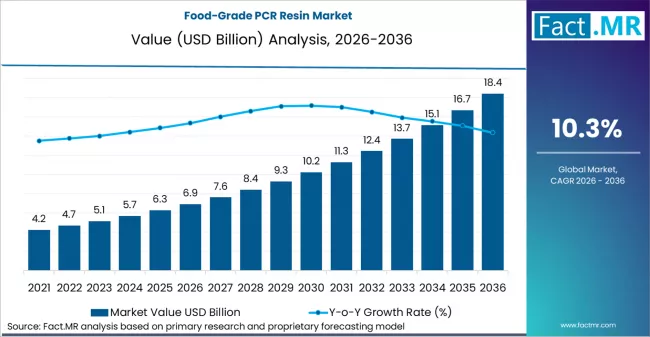
The food-grade PCR resin market stands at USD 6.9 billion in 2026 and moves toward USD 18.4 billion by 2036 at a 10.30% CAGR.
Food-Grade PCR Resin Market Key Takeaways
- Food-Grade PCR Resin Market Value (2026): USD 6.9 billion
- Food-Grade PCR Resin Market Forecast Value (2036): USD 18.4 billion
- Food-Grade PCR Resin Market Forecast CAGR 2026 to 2036: 10.3%
- Leading End-use in Food-Grade PCR Resin Market: Bottles and food containers
- Key Growth Regions in Food-Grade PCR Resin Market: Asia Pacific, North America, Europe, Latin America, Middle East & Africa
- Top Players in Food-Grade PCR Resin Market: Indorama Ventures Public Company Limited, Eastman Chemical Company, BASF SE, Borealis AG, Far Eastern New Century Corporation, JEPLAN, Inc., Teijin Limited
This segment operates under stricter controls than general recycled plastics since material must meet contact safety, odor, and appearance requirements set by regulators and brand owners. Buyers treat approved resin streams as long-term supply assets rather than spot purchases.
Changing a resin source requires new trials, validation work, and customer acceptance, which makes supplier lists narrow and stable. Purchasing decisions focus on color consistency, processing behavior, and year-round availability. Many converters reserve volumes in advance to protect filling schedules. Expansion comes from more packaging lines shifting to qualified recycled feedstock and from wider use across bottles, trays, and closures, not from frequent changes in resin grades or sourcing strategies.
Food-Grade PCR Resin Market
| Metric | Value |
|---|---|
| Market Value (2026) | USD 6.9 billion |
| Forecast Value (2036) | USD 18.4 billion |
| Forecast CAGR 2026 to 2036 | 10.3% |
Category
| Category | Segments |
|---|---|
| End-use | Bottles and food containers; Trays and closures; FMCG packaging; Premium food packs; Bottled beverages; Others |
| Resin Type | Pellet and flake resins; Food-grade compounds; Recycled pellets; High-purity resin; Others |
| Polymer | rPET or PCR-PE; PCR-PP or PCR-PE; rPET; Others |
| Food-Safety Technology | Super-clean recycling and FDA LNO; EFSA-approved decontamination; High-volume purification; Ultra-low contamination systems; Others |
| Region | North America; Europe; Asia Pacific; Latin America; Middle East & Africa |
Segmental Analysis
Why Do Bottles and Food Containers Absorb the Largest Share of Food-Grade PCR Resin Output?
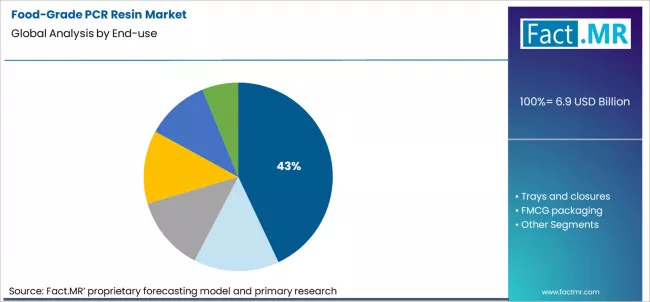
Bottles and food containers account for 43% of end-use demand in the food-grade PCR resin market. This category runs at high unit volumes across beverages, dairy, condiments, and ready foods. Filling lines require stable resin supply with consistent performance across long production runs. Pack sizes and shapes repeat across regions, which supports standardization of material specifications. Retail turnover creates continuous replenishment rather than project shipments. Quality teams also concentrate control efforts here, since direct food contact places strict limits on variability. Trays, closures, FMCG packs, and premium formats add meaningful volume. The constant flow of container production keeps this end-use group as the main anchor for PCR resin consumption.
What Resin Form Is Used Most Widely in Food-Grade PCR Packaging Programs?
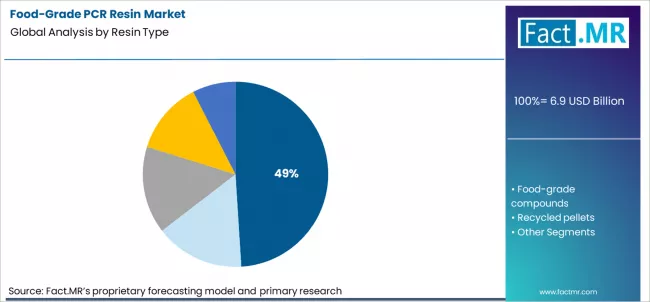
Pellet and flake resins represent 49% of resin type usage in this market. These forms fit directly into existing extrusion and injection systems without changing feeding or drying routines. Converters value predictable melt behavior and dosing control during long runs. Storage and transport remain efficient, with bulk handling systems already built around pellets and flakes. Compounding steps can be added when required, yet many programs start from base pellet streams. Food-grade compounds and high-purity resins serve specific product classes. Most large volume packaging operations still select pellet and flake formats as the standard input for food-contact PCR processing.
What are the Drivers, Restraints, and Key Trends of the Food-Grade PCR Resin Market?
- Drivers: Mandatory food safety and material traceability requirements, buyer mandates for recycled content in food packaging, and procurement policies rewarding circular material use are supporting demand for certified food-grade post-consumer recycled (PCR) resins across rigid and flexible packaging applications.
- Restraint: Challenges in securing consistent, compliant PCR feedstock that meets food contact standards and cost differentials versus virgin resins restrict reliable supply and broader use in sensitive product lines.
- Trend 1: Expansion of robust certification and testing protocols that validate PCR resin safety and performance for food contact applications.
- Trend 2: Growing availability of tailored PCR resin grades engineered for specific packaging formats, including bottles, trays, and durable films.
Analysis of the Food-Grade PCR Resin Market by Key Country
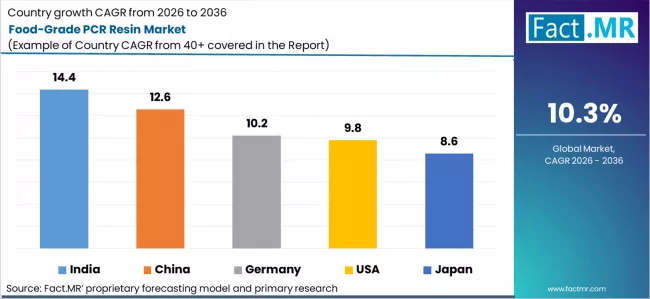
| Country | CAGR 2026 to 2036 |
|---|---|
| USA | 9.8% |
| Germany | 10.2% |
| China | 12.6% |
| Japan | 8.6% |
| India | 14.4% |
The report covers an in-depth analysis of 40+ countries; top-performing countries are highlighted below.
How Are Brand Commitments and Regulatory Reviews in USA Shaping Food-Grade PCR Resin Demand?
Growth in USA runs at about 9.8% per year through 2036. Demand is driven by beverage, dairy, and packaged food brands seeking to meet recycled content targets while maintaining food contact compliance. Buyers focus on decontamination performance, traceability, and supply consistency. Qualification cycles remain lengthy because validation testing and regulatory filings take time. Purchasing decisions emphasize long term contracts with certified recyclers and resin suppliers. Volume growth follows portfolio level packaging redesign programs rather than isolated launches. Distribution relies on a limited number of approved processors. Market development remains tied to regulatory clarity and brand commitments rather than short term price movements.
Why Are Compliance and Material Quality Standards in Germany Influencing Food-Grade PCR Resin Adoption?
Growth in Germany runs at about 10.2% per year through 2036. Demand follows strict food contact regulations and retailer packaging requirements. Buyers prioritize documentation, contaminant control, and consistent resin properties. Approval processes remain cautious, which slows rapid switching between suppliers. Purchasing decisions emphasize audited supply chains and stable sourcing arrangements. Volume increases track packaging conversions in beverages and fresh food categories. Distribution stays concentrated among certified recyclers and compounders. Market development remains tied to regulatory acceptance and retailer approval rather than marketing driven packaging changes or short cycle experimentation.
What Is Driving Faster Expansion of Food-Grade PCR Resin Use in China?
Growth in China runs at about 12.6% per year through 2036. Demand rises from bottled beverages, dairy packaging, and growing packaged food consumption. Operators prioritize scale, availability, and compliance alignment. Investment in advanced recycling and decontamination capacity influences supply growth. Purchasing aligns with multi-year material transition plans by large brand owners. Volume increases follow adoption by major beverage and food platforms. Distribution relies on vertically integrated recycling and resin production groups. Market development remains tied to industrial scale capacity buildout rather than niche brand initiatives or limited pilot projects.
How Are Structured Approval Processes in Japan Shaping Food-Grade PCR Resin Uptake?
Growth in Japan runs at about 8.6% per year through 2036. Demand follows corporate packaging standards and strict quality control systems. Buyers emphasize purity, consistency, and long term supplier reliability. Qualification and testing phases remain extensive, which limits rapid supplier changes. Purchasing decisions favor established partners with proven compliance records. Volume growth tracks scheduled portfolio updates rather than rapid conversions. Distribution remains concentrated among approved recyclers and resin producers. Market development stays tied to disciplined quality management and regulatory acceptance rather than aggressive recycled content targets alone.
What Is Accelerating Food-Grade PCR Resin Adoption in India?
Growth in India runs at about 14.4% per year through 2036. Demand rises from packaged beverages, edible oil, and dairy segments expanding in organized retail. Companies focus on securing compliant material at workable cost levels. Purchasing decisions emphasize supply continuity and regional processing capacity. Qualification processes are becoming more formal as enforcement increases. Volume growth follows entry of large brands into recycled content packaging. Distribution relies on a mix of local recyclers and polymer suppliers. Market development remains tied to system formalization and capacity building rather than voluntary brand positioning alone.
How Do Approval Pathways and Feedstock Security Shape Competition in the Food Grade PCR Resin Market?
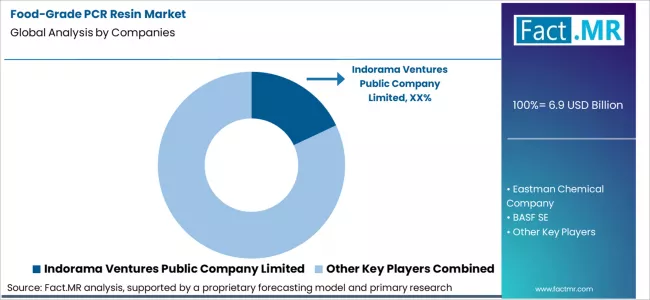
Entry into the food grade PCR resin market is governed by regulatory approval routes, decontamination validation, and access to consistent input streams rather than by spot resin pricing. Brand owners and converters first define contact compliance standards, target inclusion rates, and audit requirements before any supplier is qualified. Indorama, Eastman, BASF, Borealis, Far Eastern New Century, Teijin, and JEPLAN compete through control of recycling technologies, purification steps, and licensed approval frameworks. Procurement teams compare suppliers using letter of no objection coverage, lot to lot consistency, and continuity of certified volumes. Contract structures matter because capacity remains constrained in several regions. Once a grade is approved for a packaging family, volumes follow brand commitments and regulatory rollout schedules. Competitive movement usually appears after new capacity comes online or approval regimes are expanded.
Key Players in Food-Grade PCR Resin Market
- Indorama Ventures Public Company Limited
- Eastman Chemical Company
- BASF SE
- Borealis AG
- Far Eastern New Century Corporation
- JEPLAN, Inc.
- Teijin Limited
Scope of the Report
| Items | Values |
|---|---|
| Quantitative Units (2026) | USD billion |
| End-use | Bottles and food containers, trays and closures, FMCG packaging, premium food packs, bottled beverages, others |
| Resin Type | Pellet and flake resins, food-grade compounds, recycled pellets, high-purity resin |
| Polymer | rPET or PCR-PE, PCR-PP or PCR-PE, rPET, others |
| Food-Safety Technology | Super-clean recycling and FDA LNO, EFSA-approved decontamination, high-volume purification, ultra-low contamination systems |
| Regions Covered | Asia Pacific, Europe, North America, Latin America, Middle East & Africa |
| Countries Covered | United States, Canada, Mexico, Germany, United Kingdom, France, Italy, Spain, Nordics, BENELUX, China, Japan, South Korea, India, Australia & New Zealand, ASEAN, Brazil, Chile, Saudi Arabia, Turkey, South Africa, and other regional markets |
| Key Companies Profiled | Indorama Ventures, Eastman Chemical, BASF, Borealis, Far Eastern New Century, JEPLAN, Teijin |
| Additional Attributes | Dollar value by resin type and polymer; focus on food-contact approval, decontamination, and LNO coverage; demand shaped by brand mandates, regulatory acceptance, and certified feedstock availability |
Food-Grade PCR Resin Market Segmentation
-
End-use :
- Bottles & food containers
- Trays & closures
- FMCG packaging
- Premium food packs
- Bottled beverages
- Others
-
Resin Type :
- Pellet & flake resins
- Food-grade compounds
- Recycled pellets
- High-purity resin
- Others
-
Polymer :
- rPET or PCR-PE
- PCR-PP or PCR-PE
- rPET
- Others
-
Food-Safety Technology :
- Super-clean recycling & FDA LNO
- EFSA-approved decontamination
- High-volume purification
- Ultra-low contamination systems
- Others
-
Region :
- Asia Pacific
- China
- Japan
- South Korea
- India
- Australia & New Zealand
- ASEAN
- Rest of Asia Pacific
- Europe
- Germany
- United Kingdom
- France
- Italy
- Spain
- Nordic
- BENELUX
- Rest of Europe
- North America
- United States
- Canada
- Mexico
- Latin America
- Brazil
- Chile
- Rest of Latin America
- Middle East & Africa
- Kingdom of Saudi Arabia
- Other GCC Countries
- Turkey
- South Africa
- Other African Union
- Rest of Middle East & Africa
- Asia Pacific
References
- U.S. Food and Drug Administration. (2023). Recycled plastics in food packaging: Chemistry considerations and guidance for industry. U.S. Department of Health and Human Services.
- Codex Alimentarius Commission. (2023). General standard for food contact materials and articles (CXS 386-2023). FAO/WHO Codex Alimentarius.
- International Organization for Standardization. (2023). ISO 22000: Food safety management systems - Requirements for any organization in the food chain. ISO.
- International Organization for Standardization. (2023). ISO 59020: Circular economy - Measuring and assessing circularity performance. ISO.
- United Nations Environment Programme. (2023). Turning off the tap: How the world can end plastic pollution and create a circular economy. UNEP.
Table of Content
- Executive Summary
- Global Market Outlook
- Demand to side Trends
- Supply to side Trends
- Technology Roadmap Analysis
- Analysis and Recommendations
- Market Overview
- Market Coverage / Taxonomy
- Market Definition / Scope / Limitations
- Market Background
- Market Dynamics
- Drivers
- Restraints
- Opportunity
- Trends
- Scenario Forecast
- Demand in Optimistic Scenario
- Demand in Likely Scenario
- Demand in Conservative Scenario
- Opportunity Map Analysis
- Product Life Cycle Analysis
- Supply Chain Analysis
- Investment Feasibility Matrix
- Value Chain Analysis
- PESTLE and Porter’s Analysis
- Regulatory Landscape
- Regional Parent Market Outlook
- Production and Consumption Statistics
- Import and Export Statistics
- Market Dynamics
- Global Market Analysis 2021 to 2025 and Forecast, 2026 to 2036
- Historical Market Size Value (USD Million) Analysis, 2021 to 2025
- Current and Future Market Size Value (USD Million) Projections, 2026 to 2036
- Y to o to Y Growth Trend Analysis
- Absolute $ Opportunity Analysis
- Global Market Pricing Analysis 2021 to 2025 and Forecast 2026 to 2036
- Global Market Analysis 2021 to 2025 and Forecast 2026 to 2036, By End-use
- Introduction / Key Findings
- Historical Market Size Value (USD Million) Analysis By End-use, 2021 to 2025
- Current and Future Market Size Value (USD Million) Analysis and Forecast By End-use, 2026 to 2036
- Bottles and food containers
- Trays and closures
- FMCG packaging
- Premium food packs
- Bottled beverages
- Others
- Bottles and food containers
- Y to o to Y Growth Trend Analysis By End-use, 2021 to 2025
- Absolute $ Opportunity Analysis By End-use, 2026 to 2036
- Global Market Analysis 2021 to 2025 and Forecast 2026 to 2036, By Resin Type
- Introduction / Key Findings
- Historical Market Size Value (USD Million) Analysis By Resin Type, 2021 to 2025
- Current and Future Market Size Value (USD Million) Analysis and Forecast By Resin Type, 2026 to 2036
- Pellet and flake resins
- Food-grade compounds
- Recycled pellets
- High-purity resin
- Others
- Pellet and flake resins
- Y to o to Y Growth Trend Analysis By Resin Type, 2021 to 2025
- Absolute $ Opportunity Analysis By Resin Type, 2026 to 2036
- Global Market Analysis 2021 to 2025 and Forecast 2026 to 2036, By Polymer
- Introduction / Key Findings
- Historical Market Size Value (USD Million) Analysis By Polymer, 2021 to 2025
- Current and Future Market Size Value (USD Million) Analysis and Forecast By Polymer, 2026 to 2036
- rPET or PCR-PE
- PCR-PP or PCR-PE
- rPET
- rPET
- Others
- rPET or PCR-PE
- Y to o to Y Growth Trend Analysis By Polymer, 2021 to 2025
- Absolute $ Opportunity Analysis By Polymer, 2026 to 2036
- Global Market Analysis 2021 to 2025 and Forecast 2026 to 2036, By Food-Safety Technology
- Introduction / Key Findings
- Historical Market Size Value (USD Million) Analysis By Food-Safety Technology, 2021 to 2025
- Current and Future Market Size Value (USD Million) Analysis and Forecast By Food-Safety Technology, 2026 to 2036
- Super-clean recycling and FDA LNO
- EFSA-approved decontamination
- High-volume purification
- Ultra-low contamination systems
- Others
- Super-clean recycling and FDA LNO
- Y to o to Y Growth Trend Analysis By Food-Safety Technology, 2021 to 2025
- Absolute $ Opportunity Analysis By Food-Safety Technology, 2026 to 2036
- Global Market Analysis 2021 to 2025 and Forecast 2026 to 2036, By Region
- Introduction
- Historical Market Size Value (USD Million) Analysis By Region, 2021 to 2025
- Current Market Size Value (USD Million) Analysis and Forecast By Region, 2026 to 2036
- North America
- Latin America
- Western Europe
- Eastern Europe
- East Asia
- South Asia and Pacific
- Middle East & Africa
- Market Attractiveness Analysis By Region
- North America Market Analysis 2021 to 2025 and Forecast 2026 to 2036, By Country
- Historical Market Size Value (USD Million) Trend Analysis By Market Taxonomy, 2021 to 2025
- Market Size Value (USD Million) Forecast By Market Taxonomy, 2026 to 2036
- By Country
- USA
- Canada
- Mexico
- By End-use
- By Resin Type
- By Polymer
- By Food-Safety Technology
- By Country
- Market Attractiveness Analysis
- By Country
- By End-use
- By Resin Type
- By Polymer
- By Food-Safety Technology
- Key Takeaways
- Latin America Market Analysis 2021 to 2025 and Forecast 2026 to 2036, By Country
- Historical Market Size Value (USD Million) Trend Analysis By Market Taxonomy, 2021 to 2025
- Market Size Value (USD Million) Forecast By Market Taxonomy, 2026 to 2036
- By Country
- Brazil
- Chile
- Rest of Latin America
- By End-use
- By Resin Type
- By Polymer
- By Food-Safety Technology
- By Country
- Market Attractiveness Analysis
- By Country
- By End-use
- By Resin Type
- By Polymer
- By Food-Safety Technology
- Key Takeaways
- Western Europe Market Analysis 2021 to 2025 and Forecast 2026 to 2036, By Country
- Historical Market Size Value (USD Million) Trend Analysis By Market Taxonomy, 2021 to 2025
- Market Size Value (USD Million) Forecast By Market Taxonomy, 2026 to 2036
- By Country
- Germany
- UK
- Italy
- Spain
- France
- Nordic
- BENELUX
- Rest of Western Europe
- By End-use
- By Resin Type
- By Polymer
- By Food-Safety Technology
- By Country
- Market Attractiveness Analysis
- By Country
- By End-use
- By Resin Type
- By Polymer
- By Food-Safety Technology
- Key Takeaways
- Eastern Europe Market Analysis 2021 to 2025 and Forecast 2026 to 2036, By Country
- Historical Market Size Value (USD Million) Trend Analysis By Market Taxonomy, 2021 to 2025
- Market Size Value (USD Million) Forecast By Market Taxonomy, 2026 to 2036
- By Country
- Russia
- Poland
- Hungary
- Balkan & Baltic
- Rest of Eastern Europe
- By End-use
- By Resin Type
- By Polymer
- By Food-Safety Technology
- By Country
- Market Attractiveness Analysis
- By Country
- By End-use
- By Resin Type
- By Polymer
- By Food-Safety Technology
- Key Takeaways
- East Asia Market Analysis 2021 to 2025 and Forecast 2026 to 2036, By Country
- Historical Market Size Value (USD Million) Trend Analysis By Market Taxonomy, 2021 to 2025
- Market Size Value (USD Million) Forecast By Market Taxonomy, 2026 to 2036
- By Country
- China
- Japan
- South Korea
- By End-use
- By Resin Type
- By Polymer
- By Food-Safety Technology
- By Country
- Market Attractiveness Analysis
- By Country
- By End-use
- By Resin Type
- By Polymer
- By Food-Safety Technology
- Key Takeaways
- South Asia and Pacific Market Analysis 2021 to 2025 and Forecast 2026 to 2036, By Country
- Historical Market Size Value (USD Million) Trend Analysis By Market Taxonomy, 2021 to 2025
- Market Size Value (USD Million) Forecast By Market Taxonomy, 2026 to 2036
- By Country
- India
- ASEAN
- Australia & New Zealand
- Rest of South Asia and Pacific
- By End-use
- By Resin Type
- By Polymer
- By Food-Safety Technology
- By Country
- Market Attractiveness Analysis
- By Country
- By End-use
- By Resin Type
- By Polymer
- By Food-Safety Technology
- Key Takeaways
- Middle East & Africa Market Analysis 2021 to 2025 and Forecast 2026 to 2036, By Country
- Historical Market Size Value (USD Million) Trend Analysis By Market Taxonomy, 2021 to 2025
- Market Size Value (USD Million) Forecast By Market Taxonomy, 2026 to 2036
- By Country
- Kingdom of Saudi Arabia
- Other GCC Countries
- Turkiye
- South Africa
- Other African Union
- Rest of Middle East & Africa
- By End-use
- By Resin Type
- By Polymer
- By Food-Safety Technology
- By Country
- Market Attractiveness Analysis
- By Country
- By End-use
- By Resin Type
- By Polymer
- By Food-Safety Technology
- Key Takeaways
- Key Countries Market Analysis
- USA
- Pricing Analysis
- Market Share Analysis, 2025
- By End-use
- By Resin Type
- By Polymer
- By Food-Safety Technology
- Canada
- Pricing Analysis
- Market Share Analysis, 2025
- By End-use
- By Resin Type
- By Polymer
- By Food-Safety Technology
- Mexico
- Pricing Analysis
- Market Share Analysis, 2025
- By End-use
- By Resin Type
- By Polymer
- By Food-Safety Technology
- Brazil
- Pricing Analysis
- Market Share Analysis, 2025
- By End-use
- By Resin Type
- By Polymer
- By Food-Safety Technology
- Chile
- Pricing Analysis
- Market Share Analysis, 2025
- By End-use
- By Resin Type
- By Polymer
- By Food-Safety Technology
- Germany
- Pricing Analysis
- Market Share Analysis, 2025
- By End-use
- By Resin Type
- By Polymer
- By Food-Safety Technology
- UK
- Pricing Analysis
- Market Share Analysis, 2025
- By End-use
- By Resin Type
- By Polymer
- By Food-Safety Technology
- Italy
- Pricing Analysis
- Market Share Analysis, 2025
- By End-use
- By Resin Type
- By Polymer
- By Food-Safety Technology
- Spain
- Pricing Analysis
- Market Share Analysis, 2025
- By End-use
- By Resin Type
- By Polymer
- By Food-Safety Technology
- France
- Pricing Analysis
- Market Share Analysis, 2025
- By End-use
- By Resin Type
- By Polymer
- By Food-Safety Technology
- India
- Pricing Analysis
- Market Share Analysis, 2025
- By End-use
- By Resin Type
- By Polymer
- By Food-Safety Technology
- ASEAN
- Pricing Analysis
- Market Share Analysis, 2025
- By End-use
- By Resin Type
- By Polymer
- By Food-Safety Technology
- Australia & New Zealand
- Pricing Analysis
- Market Share Analysis, 2025
- By End-use
- By Resin Type
- By Polymer
- By Food-Safety Technology
- China
- Pricing Analysis
- Market Share Analysis, 2025
- By End-use
- By Resin Type
- By Polymer
- By Food-Safety Technology
- Japan
- Pricing Analysis
- Market Share Analysis, 2025
- By End-use
- By Resin Type
- By Polymer
- By Food-Safety Technology
- South Korea
- Pricing Analysis
- Market Share Analysis, 2025
- By End-use
- By Resin Type
- By Polymer
- By Food-Safety Technology
- Russia
- Pricing Analysis
- Market Share Analysis, 2025
- By End-use
- By Resin Type
- By Polymer
- By Food-Safety Technology
- Poland
- Pricing Analysis
- Market Share Analysis, 2025
- By End-use
- By Resin Type
- By Polymer
- By Food-Safety Technology
- Hungary
- Pricing Analysis
- Market Share Analysis, 2025
- By End-use
- By Resin Type
- By Polymer
- By Food-Safety Technology
- Kingdom of Saudi Arabia
- Pricing Analysis
- Market Share Analysis, 2025
- By End-use
- By Resin Type
- By Polymer
- By Food-Safety Technology
- Turkiye
- Pricing Analysis
- Market Share Analysis, 2025
- By End-use
- By Resin Type
- By Polymer
- By Food-Safety Technology
- South Africa
- Pricing Analysis
- Market Share Analysis, 2025
- By End-use
- By Resin Type
- By Polymer
- By Food-Safety Technology
- USA
- Market Structure Analysis
- Competition Dashboard
- Competition Benchmarking
- Market Share Analysis of Top Players
- By Regional
- By End-use
- By Resin Type
- By Polymer
- By Food-Safety Technology
- Competition Analysis
- Competition Deep Dive
- Indorama Ventures Public Company Limited
- Overview
- Product Portfolio
- Profitability by Market Segments (Product/Age /Sales Channel/Region)
- Sales Footprint
- Strategy Overview
- Marketing Strategy
- Product Strategy
- Channel Strategy
- Eastman Chemical Company
- BASF SE
- Borealis AG
- Far Eastern New Century Corporation
- JEPLAN, Inc.
- Teijin Limited
- Indorama Ventures Public Company Limited
- Competition Deep Dive
- Assumptions & Acronyms Used
- Research Methodology
List Of Table
- Table 1: Global Market Value (USD Million) Forecast by Region, 2021 to 2036
- Table 2: Global Market Value (USD Million) Forecast by End-use, 2021 to 2036
- Table 3: Global Market Value (USD Million) Forecast by Resin Type, 2021 to 2036
- Table 4: Global Market Value (USD Million) Forecast by Polymer, 2021 to 2036
- Table 5: Global Market Value (USD Million) Forecast by Food-Safety Technology, 2021 to 2036
- Table 6: North America Market Value (USD Million) Forecast by Country, 2021 to 2036
- Table 7: North America Market Value (USD Million) Forecast by End-use, 2021 to 2036
- Table 8: North America Market Value (USD Million) Forecast by Resin Type, 2021 to 2036
- Table 9: North America Market Value (USD Million) Forecast by Polymer, 2021 to 2036
- Table 10: North America Market Value (USD Million) Forecast by Food-Safety Technology, 2021 to 2036
- Table 11: Latin America Market Value (USD Million) Forecast by Country, 2021 to 2036
- Table 12: Latin America Market Value (USD Million) Forecast by End-use, 2021 to 2036
- Table 13: Latin America Market Value (USD Million) Forecast by Resin Type, 2021 to 2036
- Table 14: Latin America Market Value (USD Million) Forecast by Polymer, 2021 to 2036
- Table 15: Latin America Market Value (USD Million) Forecast by Food-Safety Technology, 2021 to 2036
- Table 16: Western Europe Market Value (USD Million) Forecast by Country, 2021 to 2036
- Table 17: Western Europe Market Value (USD Million) Forecast by End-use, 2021 to 2036
- Table 18: Western Europe Market Value (USD Million) Forecast by Resin Type, 2021 to 2036
- Table 19: Western Europe Market Value (USD Million) Forecast by Polymer, 2021 to 2036
- Table 20: Western Europe Market Value (USD Million) Forecast by Food-Safety Technology, 2021 to 2036
- Table 21: Eastern Europe Market Value (USD Million) Forecast by Country, 2021 to 2036
- Table 22: Eastern Europe Market Value (USD Million) Forecast by End-use, 2021 to 2036
- Table 23: Eastern Europe Market Value (USD Million) Forecast by Resin Type, 2021 to 2036
- Table 24: Eastern Europe Market Value (USD Million) Forecast by Polymer, 2021 to 2036
- Table 25: Eastern Europe Market Value (USD Million) Forecast by Food-Safety Technology, 2021 to 2036
- Table 26: East Asia Market Value (USD Million) Forecast by Country, 2021 to 2036
- Table 27: East Asia Market Value (USD Million) Forecast by End-use, 2021 to 2036
- Table 28: East Asia Market Value (USD Million) Forecast by Resin Type, 2021 to 2036
- Table 29: East Asia Market Value (USD Million) Forecast by Polymer, 2021 to 2036
- Table 30: East Asia Market Value (USD Million) Forecast by Food-Safety Technology, 2021 to 2036
- Table 31: South Asia and Pacific Market Value (USD Million) Forecast by Country, 2021 to 2036
- Table 32: South Asia and Pacific Market Value (USD Million) Forecast by End-use, 2021 to 2036
- Table 33: South Asia and Pacific Market Value (USD Million) Forecast by Resin Type, 2021 to 2036
- Table 34: South Asia and Pacific Market Value (USD Million) Forecast by Polymer, 2021 to 2036
- Table 35: South Asia and Pacific Market Value (USD Million) Forecast by Food-Safety Technology, 2021 to 2036
- Table 36: Middle East & Africa Market Value (USD Million) Forecast by Country, 2021 to 2036
- Table 37: Middle East & Africa Market Value (USD Million) Forecast by End-use, 2021 to 2036
- Table 38: Middle East & Africa Market Value (USD Million) Forecast by Resin Type, 2021 to 2036
- Table 39: Middle East & Africa Market Value (USD Million) Forecast by Polymer, 2021 to 2036
- Table 40: Middle East & Africa Market Value (USD Million) Forecast by Food-Safety Technology, 2021 to 2036
List Of Figures
- Figure 1: Global Market Pricing Analysis
- Figure 2: Global Market Value (USD Million) Forecast 2021 to 2036
- Figure 3: Global Market Value Share and BPS Analysis by End-use, 2026 and 2036
- Figure 4: Global Market Y to o to Y Growth Comparison by End-use, 2026 to 2036
- Figure 5: Global Market Attractiveness Analysis by End-use
- Figure 6: Global Market Value Share and BPS Analysis by Resin Type, 2026 and 2036
- Figure 7: Global Market Y to o to Y Growth Comparison by Resin Type, 2026 to 2036
- Figure 8: Global Market Attractiveness Analysis by Resin Type
- Figure 9: Global Market Value Share and BPS Analysis by Polymer, 2026 and 2036
- Figure 10: Global Market Y to o to Y Growth Comparison by Polymer, 2026 to 2036
- Figure 11: Global Market Attractiveness Analysis by Polymer
- Figure 12: Global Market Value Share and BPS Analysis by Food-Safety Technology, 2026 and 2036
- Figure 13: Global Market Y to o to Y Growth Comparison by Food-Safety Technology, 2026 to 2036
- Figure 14: Global Market Attractiveness Analysis by Food-Safety Technology
- Figure 15: Global Market Value (USD Million) Share and BPS Analysis by Region, 2026 and 2036
- Figure 16: Global Market Y to o to Y Growth Comparison by Region, 2026 to 2036
- Figure 17: Global Market Attractiveness Analysis by Region
- Figure 18: North America Market Incremental Dollar Opportunity, 2026 to 2036
- Figure 19: Latin America Market Incremental Dollar Opportunity, 2026 to 2036
- Figure 20: Western Europe Market Incremental Dollar Opportunity, 2026 to 2036
- Figure 21: Eastern Europe Market Incremental Dollar Opportunity, 2026 to 2036
- Figure 22: East Asia Market Incremental Dollar Opportunity, 2026 to 2036
- Figure 23: South Asia and Pacific Market Incremental Dollar Opportunity, 2026 to 2036
- Figure 24: Middle East & Africa Market Incremental Dollar Opportunity, 2026 to 2036
- Figure 25: North America Market Value Share and BPS Analysis by Country, 2026 and 2036
- Figure 26: North America Market Value Share and BPS Analysis by End-use, 2026 and 2036
- Figure 27: North America Market Y to o to Y Growth Comparison by End-use, 2026 to 2036
- Figure 28: North America Market Attractiveness Analysis by End-use
- Figure 29: North America Market Value Share and BPS Analysis by Resin Type, 2026 and 2036
- Figure 30: North America Market Y to o to Y Growth Comparison by Resin Type, 2026 to 2036
- Figure 31: North America Market Attractiveness Analysis by Resin Type
- Figure 32: North America Market Value Share and BPS Analysis by Polymer, 2026 and 2036
- Figure 33: North America Market Y to o to Y Growth Comparison by Polymer, 2026 to 2036
- Figure 34: North America Market Attractiveness Analysis by Polymer
- Figure 35: North America Market Value Share and BPS Analysis by Food-Safety Technology, 2026 and 2036
- Figure 36: North America Market Y to o to Y Growth Comparison by Food-Safety Technology, 2026 to 2036
- Figure 37: North America Market Attractiveness Analysis by Food-Safety Technology
- Figure 38: Latin America Market Value Share and BPS Analysis by Country, 2026 and 2036
- Figure 39: Latin America Market Value Share and BPS Analysis by End-use, 2026 and 2036
- Figure 40: Latin America Market Y to o to Y Growth Comparison by End-use, 2026 to 2036
- Figure 41: Latin America Market Attractiveness Analysis by End-use
- Figure 42: Latin America Market Value Share and BPS Analysis by Resin Type, 2026 and 2036
- Figure 43: Latin America Market Y to o to Y Growth Comparison by Resin Type, 2026 to 2036
- Figure 44: Latin America Market Attractiveness Analysis by Resin Type
- Figure 45: Latin America Market Value Share and BPS Analysis by Polymer, 2026 and 2036
- Figure 46: Latin America Market Y to o to Y Growth Comparison by Polymer, 2026 to 2036
- Figure 47: Latin America Market Attractiveness Analysis by Polymer
- Figure 48: Latin America Market Value Share and BPS Analysis by Food-Safety Technology, 2026 and 2036
- Figure 49: Latin America Market Y to o to Y Growth Comparison by Food-Safety Technology, 2026 to 2036
- Figure 50: Latin America Market Attractiveness Analysis by Food-Safety Technology
- Figure 51: Western Europe Market Value Share and BPS Analysis by Country, 2026 and 2036
- Figure 52: Western Europe Market Value Share and BPS Analysis by End-use, 2026 and 2036
- Figure 53: Western Europe Market Y to o to Y Growth Comparison by End-use, 2026 to 2036
- Figure 54: Western Europe Market Attractiveness Analysis by End-use
- Figure 55: Western Europe Market Value Share and BPS Analysis by Resin Type, 2026 and 2036
- Figure 56: Western Europe Market Y to o to Y Growth Comparison by Resin Type, 2026 to 2036
- Figure 57: Western Europe Market Attractiveness Analysis by Resin Type
- Figure 58: Western Europe Market Value Share and BPS Analysis by Polymer, 2026 and 2036
- Figure 59: Western Europe Market Y to o to Y Growth Comparison by Polymer, 2026 to 2036
- Figure 60: Western Europe Market Attractiveness Analysis by Polymer
- Figure 61: Western Europe Market Value Share and BPS Analysis by Food-Safety Technology, 2026 and 2036
- Figure 62: Western Europe Market Y to o to Y Growth Comparison by Food-Safety Technology, 2026 to 2036
- Figure 63: Western Europe Market Attractiveness Analysis by Food-Safety Technology
- Figure 64: Eastern Europe Market Value Share and BPS Analysis by Country, 2026 and 2036
- Figure 65: Eastern Europe Market Value Share and BPS Analysis by End-use, 2026 and 2036
- Figure 66: Eastern Europe Market Y to o to Y Growth Comparison by End-use, 2026 to 2036
- Figure 67: Eastern Europe Market Attractiveness Analysis by End-use
- Figure 68: Eastern Europe Market Value Share and BPS Analysis by Resin Type, 2026 and 2036
- Figure 69: Eastern Europe Market Y to o to Y Growth Comparison by Resin Type, 2026 to 2036
- Figure 70: Eastern Europe Market Attractiveness Analysis by Resin Type
- Figure 71: Eastern Europe Market Value Share and BPS Analysis by Polymer, 2026 and 2036
- Figure 72: Eastern Europe Market Y to o to Y Growth Comparison by Polymer, 2026 to 2036
- Figure 73: Eastern Europe Market Attractiveness Analysis by Polymer
- Figure 74: Eastern Europe Market Value Share and BPS Analysis by Food-Safety Technology, 2026 and 2036
- Figure 75: Eastern Europe Market Y to o to Y Growth Comparison by Food-Safety Technology, 2026 to 2036
- Figure 76: Eastern Europe Market Attractiveness Analysis by Food-Safety Technology
- Figure 77: East Asia Market Value Share and BPS Analysis by Country, 2026 and 2036
- Figure 78: East Asia Market Value Share and BPS Analysis by End-use, 2026 and 2036
- Figure 79: East Asia Market Y to o to Y Growth Comparison by End-use, 2026 to 2036
- Figure 80: East Asia Market Attractiveness Analysis by End-use
- Figure 81: East Asia Market Value Share and BPS Analysis by Resin Type, 2026 and 2036
- Figure 82: East Asia Market Y to o to Y Growth Comparison by Resin Type, 2026 to 2036
- Figure 83: East Asia Market Attractiveness Analysis by Resin Type
- Figure 84: East Asia Market Value Share and BPS Analysis by Polymer, 2026 and 2036
- Figure 85: East Asia Market Y to o to Y Growth Comparison by Polymer, 2026 to 2036
- Figure 86: East Asia Market Attractiveness Analysis by Polymer
- Figure 87: East Asia Market Value Share and BPS Analysis by Food-Safety Technology, 2026 and 2036
- Figure 88: East Asia Market Y to o to Y Growth Comparison by Food-Safety Technology, 2026 to 2036
- Figure 89: East Asia Market Attractiveness Analysis by Food-Safety Technology
- Figure 90: South Asia and Pacific Market Value Share and BPS Analysis by Country, 2026 and 2036
- Figure 91: South Asia and Pacific Market Value Share and BPS Analysis by End-use, 2026 and 2036
- Figure 92: South Asia and Pacific Market Y to o to Y Growth Comparison by End-use, 2026 to 2036
- Figure 93: South Asia and Pacific Market Attractiveness Analysis by End-use
- Figure 94: South Asia and Pacific Market Value Share and BPS Analysis by Resin Type, 2026 and 2036
- Figure 95: South Asia and Pacific Market Y to o to Y Growth Comparison by Resin Type, 2026 to 2036
- Figure 96: South Asia and Pacific Market Attractiveness Analysis by Resin Type
- Figure 97: South Asia and Pacific Market Value Share and BPS Analysis by Polymer, 2026 and 2036
- Figure 98: South Asia and Pacific Market Y to o to Y Growth Comparison by Polymer, 2026 to 2036
- Figure 99: South Asia and Pacific Market Attractiveness Analysis by Polymer
- Figure 100: South Asia and Pacific Market Value Share and BPS Analysis by Food-Safety Technology, 2026 and 2036
- Figure 101: South Asia and Pacific Market Y to o to Y Growth Comparison by Food-Safety Technology, 2026 to 2036
- Figure 102: South Asia and Pacific Market Attractiveness Analysis by Food-Safety Technology
- Figure 103: Middle East & Africa Market Value Share and BPS Analysis by Country, 2026 and 2036
- Figure 104: Middle East & Africa Market Value Share and BPS Analysis by End-use, 2026 and 2036
- Figure 105: Middle East & Africa Market Y to o to Y Growth Comparison by End-use, 2026 to 2036
- Figure 106: Middle East & Africa Market Attractiveness Analysis by End-use
- Figure 107: Middle East & Africa Market Value Share and BPS Analysis by Resin Type, 2026 and 2036
- Figure 108: Middle East & Africa Market Y to o to Y Growth Comparison by Resin Type, 2026 to 2036
- Figure 109: Middle East & Africa Market Attractiveness Analysis by Resin Type
- Figure 110: Middle East & Africa Market Value Share and BPS Analysis by Polymer, 2026 and 2036
- Figure 111: Middle East & Africa Market Y to o to Y Growth Comparison by Polymer, 2026 to 2036
- Figure 112: Middle East & Africa Market Attractiveness Analysis by Polymer
- Figure 113: Middle East & Africa Market Value Share and BPS Analysis by Food-Safety Technology, 2026 and 2036
- Figure 114: Middle East & Africa Market Y to o to Y Growth Comparison by Food-Safety Technology, 2026 to 2036
- Figure 115: Middle East & Africa Market Attractiveness Analysis by Food-Safety Technology
- Figure 116: Global Market - Tier Structure Analysis
- Figure 117: Global Market - Company Share Analysis
- FAQs -
How big is the food-grade pcr resin market in 2026?
The global food-grade pcr resin market is estimated to be valued at USD 6.9 billion in 2026.
What will be the size of food-grade pcr resin market in 2036?
The market size for the food-grade pcr resin market is projected to reach USD 18.4 billion by 2036.
How much will be the food-grade pcr resin market growth between 2026 and 2036?
The food-grade pcr resin market is expected to grow at a 10.3% CAGR between 2026 and 2036.
What are the key product types in the food-grade pcr resin market?
The key product types in food-grade pcr resin market are bottles and food containers, trays and closures, fmcg packaging, premium food packs, bottled beverages and others.
Which resin type segment to contribute significant share in the food-grade pcr resin market in 2026?
In terms of resin type, pellet and flake resins segment to command 49.0% share in the food-grade pcr resin market in 2026.