Ophthalmic Biologics Market
Ophthalmic Biologics Market Size and Share Forecast Outlook 2026 to 2036
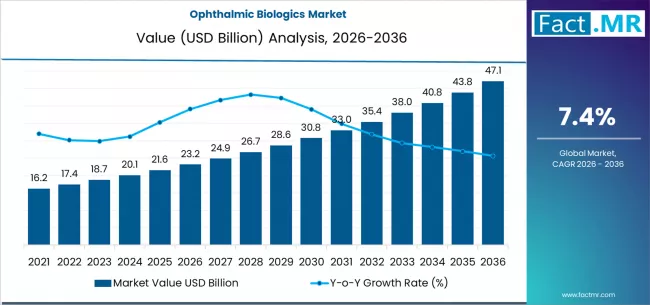
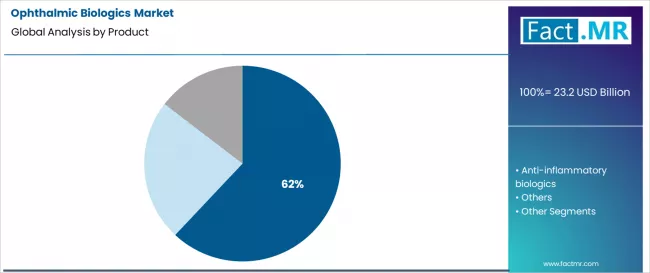
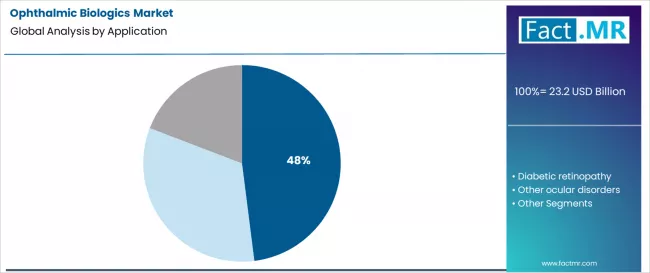
Ophthalmic biologics market is projected to grow from USD 23.2 billion in 2026 to USD 47.1 billion by 2036, at a CAGR of 7.4%. Anti-VEGF therapies will dominate with a 62.0% market share, while amd will lead the application segment with a 48.0% share.
Ophthalmic Biologics Market Forecast and Outlook 2026 to 2036
The global ophthalmic biologics market is forecasted to total USD 23.15 billion in 2026, and is expected to increase to USD 47.06 billion by 2036, adhering to a 7.4% CAGR. This market is a critical segment within ophthalmology, driven by the high and growing prevalence of chronic, vision-threatening retinal diseases.
Key Takeaways from the Ophthalmic Biologics Market
- Market Value for 2026: USD 23.15 Billion
- Market Value for 2036: USD 47.06 Billion
- Forecast CAGR 2026 to 2036: 7.4%
- Leading Product Segment (2026): Anti-VEGF Therapies (62.0%)
- Leading Application Segment (2026): Age-Related Macular Degeneration (48.0%)
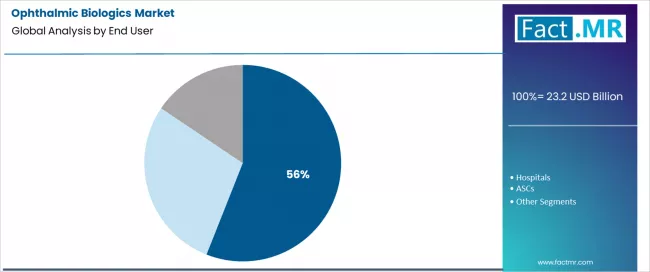
- Leading End-User Segment (2026): Ophthalmology Clinics (56.0%)
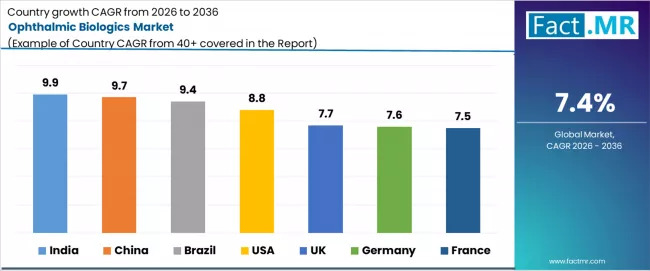
- Key Growth Countries: India (9.9% CAGR), China (9.7% CAGR), Brazil (9.4% CAGR), USA (8.8% CAGR), UK (7.7% CAGR), Germany (7.6% CAGR), France (7.5% CAGR)
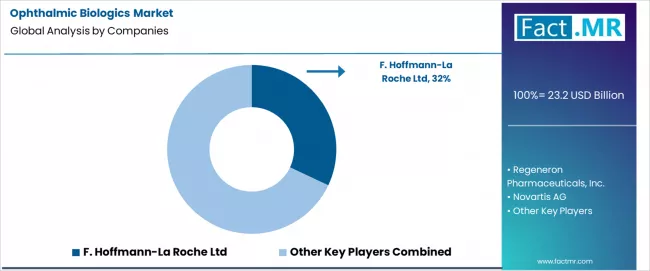
- Key Players in the Market: F. Hoffmann-La Roche Ltd, Regeneron Pharmaceuticals, Inc., Novartis AG, Bayer AG, Santen Pharmaceutical Co., Ltd.

Dominance of anti-VEGF therapies underscores their role as the standard of care for managing wet age-related macular degeneration and diabetic macular edema. An aging global population, rising diabetes incidence, sustains market expansion and the significant unmet need for effective treatments in progressive ocular conditions where biologics offer targeted intervention.
A pivotal trend is the ongoing innovation aimed at extending treatment durability and reducing the burden of frequent intravitreal injections. This includes the development of long-acting formulations, sustained-release implants, and novel biologic agents targeting alternative pathways.
The treatment landscape is broadening to include inflammatory and non-vascular retinal disorders, expanding the therapeutic scope beyond traditional anti-VEGF applications. The competitive environment is intensifying with the advent of biosimilars and new drug classes, driving advancements in both efficacy and patient access across diverse healthcare settings.
Metric
| Metric | Value |
|---|---|
| Market Value (2026) | USD 23.15 Billion |
| Market Forecast Value (2036) | USD 47.06 Billion |
| Forecast CAGR 2026 to 2036 | 7.4% |
Category
| Category | Segments |
|---|---|
| Product | Anti-VEGF Therapies, Anti-inflammatory Biologics, Others |
| Application | Age-Related Macular Degeneration, Diabetic Retinopathy, Other Ocular Disorders |
| End User | Ophthalmology Clinics, Hospitals, Ambulatory Surgical Centers (ASCs) |
| Region | North America, Latin America, Western Europe, Eastern Europe, East Asia, South Asia & Pacific, Middle East & Africa |
Segmental Analysis
By Product, Which Segment is defined by its Transformative Impact on Retinal Care?

Anti-VEGF therapies command a dominant 62.0% share, representing the cornerstone of modern retinal disease management. Their profound impact stems from their ability to inhibit vascular endothelial growth factor, a key driver of pathologic angiogenesis and vascular leakage in conditions like wet AMD and diabetic retinopathy.
A robust efficacy profile, continuous innovation in drug delivery, and their establishment as the first-line biologic intervention for preserving vision in millions of patients worldwide cement this segment’s leadership.
By Application, Which Age-Related Condition Drives the Highest Volume of Biologic Use?

Age-related macular degeneration constitutes the leading application segment at 48.0%. As a leading cause of irreversible vision loss in the elderly, wet AMD creates a substantial and growing patient pool requiring chronic, long-term biologic therapy.
The high prevalence in aging populations, coupled with the proven ability of anti-VEGF agents to halt disease progression and improve visual outcomes, ensures its position as the primary volume driver for the ophthalmic biologics market.
By End User, Which Setting is the Primary Hub for Intravitreal Treatment Administration?

Ophthalmology clinics form the dominant end-user segment at 56.0%. These specialized outpatient facilities are optimally designed for high-volume intravitreal injection procedures, offering the necessary surgical-grade sterile environments, specialized equipment, and trained medical staff. Their central role in routine monitoring, treatment administration, and follow-up care for chronic retinal diseases makes them the essential access point for biologic therapies.
Which Drivers, Restraints, Opportunities, and Trends Shape the Growth of Ophthalmic Biologics?
The principal driver is the demographic surge in the aging population, which directly increases the prevalence of age-related retinal diseases like AMD, creating a sustained and expanding patient base requiring long-term therapy.
A major constraint is the significant treatment burden and associated costs of frequent intravitreal injections, leading to patient compliance issues, clinical inertia, and substantial strain on healthcare delivery systems.
A significant opportunity lies in the development and commercialization of longer-acting biologic formulations and novel delivery systems, such as port delivery systems or gene therapies, which aim to dramatically reduce injection frequency and improve patient quality of life.
The dominant trend is the strategic expansion of biologic applications into new frontiers, including geographic atrophy, non-infectious uveitis, and other inflammatory ocular disorders, diversifying the market beyond its current anti-VEGF focus.
Analysis of the Ophthalmic Biologics Market by Key Countries

| Country | CAGR 2026 to 2036 |
|---|---|
| India | 9.9% |
| China | 9.7% |
| Brazil | 9.4% |
| USA | 8.8% |
| UK | 7.7% |
| Germany | 7.6% |
| France | 7.5% |
Is the USA's Market Growth Synonymous with High Treatment Rates and Premium Innovation Adoption?
The USA’s 8.8% CAGR is driven by high diagnosis and treatment rates for retinal diseases, favorable reimbursement for intravitreal procedures under Medicare Part B, and rapid uptake of new, premium-priced therapies. Growth is characterized by intense competition among branded anti-VEGF agents and the emerging influence of biosimilars, with treatment decisions concentrated in a vast network of specialized ophthalmology clinics and retina practices.
Can Brazil's Public Health System Manage the Logistical Demands of Chronic Intravitreal Therapy?Brazil’s 9.4% CAGR is challenged by the logistical and fiscal demands of delivering lifelong, high-frequency intravitreal treatments within the public Unified Health System (SUS). Growth is often constrained by capacity limitations in public clinics, leading to long wait times. Market expansion is increasingly driven by the growing private insurance sector and specialized private clinics in urban centers, creating a dual-tier access model.
Does China's Market Trajectory Reflect Its Massive Aging Population and Improving Eye Care Infrastructure?
A rapidly aging population and significant improvements in ophthalmology diagnostic and treatment infrastructure propel China’s 9.7% CAGR. The market is expanding as more biologics are included in the National Reimbursement Drug List (NRDL), improving access. Domestic pharmaceutical companies are actively developing biosimilars and novel agents, which will increase competition and fuel volume growth in the coming decade.
Will a Rising Diabetic Population and Expansion of Specialty Eye Care Chains fuel India’s Growth?
India’s leading 9.9% CAGR is fueled by a dual burden of a growing elderly population and a diabetes epidemic, both driving demand for retinal biologics. Growth is catalyzed by the rapid expansion of private multi-specialty eye hospital chains and standalone retina clinics in metropolitan and tier-2 cities, which are improving access to advanced treatments, though affordability remains a key challenge.
Is Germany's Mature Market Focused on Treatment Optimization and Guideline-Adherent Care?
Germany’s 7.6% CAGR reflects a mature market with established treatment protocols. Growth is focused on optimizing outcomes through treat-and-extend regimens and the adoption of new agents that offer efficacy or durability advantages, as assessed by the Institute for Quality and Efficiency in Health Care (IQWiG). The market is characterized by efficient care delivery within a dense network of ophthalmology clinics and hospital outpatient departments.
Does France's Hospital-Centric Model for Intravitreal Injections Influence Treatment Patterns?
France’s 7.5% CAGR is shaped by its hospital-centric model for administering intravitreal injections, which centralizes care and may influence treatment capacity and frequency. Growth is steady, guided by national health authority (HAS) assessments of new therapies' added value. The market is adapting to increasing patient volumes through the development of dedicated high-volume injection centers within public hospitals.
Is the UK's NHS Framework Successfully Balancing Access with Budgetary Constraints for High-Cost Biologics?
The UK’s 7.7% CAGR operates within the National Health Service (NHS) framework, where access to high-cost ophthalmic biologics is managed through NICE technology appraisals and local commissioning groups.
Growth is carefully controlled, with a strong emphasis on using the most cost-effective agents first, often leading to the preferential use of biosimilars and older anti-VEGF drugs before accessing newer, premium-priced options.
Competitive Landscape of the Ophthalmic Biologics Market

The competitive landscape is dominated by a few key players with established anti-VEGF blockbusters, engaged in a fierce battle for market share based on dosing intervals, efficacy data, and real-world evidence.
Companies like Roche and Regeneron compete through continuous life-cycle management, including new formulations and indications, while defending against biosimilar encroachment.
The competitive frontier is rapidly shifting towards next-generation therapies, including longer-acting agents, dual-mechanism molecules, and treatments for geographic atrophy, representing the next wave of innovation.
Success in this market increasingly depends on building strong partnerships with retinal specialists and integrated eye care networks. Companies are investing in comprehensive patient support programs, injection training for clinicians, and health economics outcomes research to demonstrate value to payers.
The ability to offer a portfolio that addresses multiple stages of retinal disease and to navigate complex reimbursement pathways across different countries is becoming a key strategic differentiator.
Key Players in the Ophthalmic Biologics Market
- F. Hoffmann-La Roche Ltd
- Regeneron Pharmaceuticals, Inc.
- Novartis AG
- Bayer AG
- Santen Pharmaceutical Co., Ltd.
- Others
Scope of Report
| Items | Metrics |
|---|---|
| Quantitative Units | USD Billion |
| Product | Anti-VEGF Therapies, Anti-inflammatory Biologics, Others |
| Application | Age-Related Macular Degeneration, Diabetic Retinopathy, Other Ocular Disorders |
| End User | Ophthalmology Clinics, Hospitals, Ambulatory Surgical Centers (ASCs) |
| Key Countries | India, China, Brazil, USA, Germany, France, UK |
| Key Companies | Roche, Regeneron, Novartis, Bayer, Santen, Others |
| Additional Analysis | Comparative analysis of treat-and-extend versus pro re nata (PRN) dosing regimens; impact of tele-ophthalmology on monitoring and access; cost burden analysis of frequent intravitreal injections; pipeline analysis of gene therapies and novel biologic targets for retinal diseases. |
Market by Segments
-
Product :
- Anti-VEGF Therapies
- Anti-inflammatory Biologics
- Others
-
Application :
- Age-Related Macular Degeneration
- Diabetic Retinopathy
- Other Ocular Disorders
-
End User :
- Ophthalmology Clinics
- Hospitals
- Ambulatory Surgical Centers (ASCs)
-
Region :
-
North America
- USA
- Canada
-
Latin America
- Brazil
- Mexico
- Argentina
- Rest of Latin America
-
Western Europe
- Germany
- France
- UK
- Italy
- Spain
- BENELUX
- Rest of Western Europe
-
Eastern Europe
- Russia
- Poland
- Czech Republic
- Rest of Eastern Europe
-
East Asia
- China
- Japan
- South Korea
- Rest of East Asia
-
South Asia & Pacific
- India
- ASEAN
- Australia
- Rest of South Asia & Pacific
-
MEA
- GCC Countries
- South Africa
- Turkiye
- Rest of MEA
-
Bibliography
- American Academy of Ophthalmology (AAO). (2025). Preferred Practice Pattern Guidelines for Age-Related Macular Degeneration and Diabetic Retinopathy.
- European Society of Retina Specialists (EURETINA). (2024). Guidelines for the Management of Retinal Diseases with Biologic Therapies.
- The Royal College of Ophthalmologists (RCOphth). (2025). Commissioning Guide for Intravitreal Injections.
- World Health Organization (WHO). (2024). World Report on Vision: The Impact of Ageing Populations.
Table of Content
- Executive Summary
- Global Market Outlook
- Demand to side Trends
- Supply to side Trends
- Technology Roadmap Analysis
- Analysis and Recommendations
- Market Overview
- Market Coverage / Taxonomy
- Market Definition / Scope / Limitations
- Market Background
- Market Dynamics
- Drivers
- Restraints
- Opportunity
- Trends
- Scenario Forecast
- Demand in Optimistic Scenario
- Demand in Likely Scenario
- Demand in Conservative Scenario
- Opportunity Map Analysis
- Product Life Cycle Analysis
- Supply Chain Analysis
- Investment Feasibility Matrix
- Value Chain Analysis
- PESTLE and Porter’s Analysis
- Regulatory Landscape
- Regional Parent Market Outlook
- Production and Consumption Statistics
- Import and Export Statistics
- Market Dynamics
- Global Market Analysis 2021 to 2025 and Forecast, 2026 to 2036
- Historical Market Size Value (USD Million) Analysis, 2021 to 2025
- Current and Future Market Size Value (USD Million) Projections, 2026 to 2036
- Y to o to Y Growth Trend Analysis
- Absolute $ Opportunity Analysis
- Global Market Pricing Analysis 2021 to 2025 and Forecast 2026 to 2036
- Global Market Analysis 2021 to 2025 and Forecast 2026 to 2036, By Product
- Introduction / Key Findings
- Historical Market Size Value (USD Million) Analysis By Product, 2021 to 2025
- Current and Future Market Size Value (USD Million) Analysis and Forecast By Product, 2026 to 2036
- Anti-VEGF therapies
- Anti-inflammatory biologics
- Others
- Anti-VEGF therapies
- Y to o to Y Growth Trend Analysis By Product, 2021 to 2025
- Absolute $ Opportunity Analysis By Product, 2026 to 2036
- Global Market Analysis 2021 to 2025 and Forecast 2026 to 2036, By Application
- Introduction / Key Findings
- Historical Market Size Value (USD Million) Analysis By Application, 2021 to 2025
- Current and Future Market Size Value (USD Million) Analysis and Forecast By Application, 2026 to 2036
- AMD
- Diabetic retinopathy
- Other ocular disorders
- AMD
- Y to o to Y Growth Trend Analysis By Application, 2021 to 2025
- Absolute $ Opportunity Analysis By Application, 2026 to 2036
- Global Market Analysis 2021 to 2025 and Forecast 2026 to 2036, By End User
- Introduction / Key Findings
- Historical Market Size Value (USD Million) Analysis By End User, 2021 to 2025
- Current and Future Market Size Value (USD Million) Analysis and Forecast By End User, 2026 to 2036
- Ophthalmology clinics
- Hospitals
- ASCs
- Ophthalmology clinics
- Y to o to Y Growth Trend Analysis By End User, 2021 to 2025
- Absolute $ Opportunity Analysis By End User, 2026 to 2036
- Global Market Analysis 2021 to 2025 and Forecast 2026 to 2036, By Region
- Introduction
- Historical Market Size Value (USD Million) Analysis By Region, 2021 to 2025
- Current Market Size Value (USD Million) Analysis and Forecast By Region, 2026 to 2036
- North America
- Latin America
- Western Europe
- Eastern Europe
- East Asia
- South Asia and Pacific
- Middle East & Africa
- Market Attractiveness Analysis By Region
- North America Market Analysis 2021 to 2025 and Forecast 2026 to 2036, By Country
- Historical Market Size Value (USD Million) Trend Analysis By Market Taxonomy, 2021 to 2025
- Market Size Value (USD Million) Forecast By Market Taxonomy, 2026 to 2036
- By Country
- USA
- Canada
- Mexico
- By Product
- By Application
- By End User
- By Country
- Market Attractiveness Analysis
- By Country
- By Product
- By Application
- By End User
- Key Takeaways
- Latin America Market Analysis 2021 to 2025 and Forecast 2026 to 2036, By Country
- Historical Market Size Value (USD Million) Trend Analysis By Market Taxonomy, 2021 to 2025
- Market Size Value (USD Million) Forecast By Market Taxonomy, 2026 to 2036
- By Country
- Brazil
- Chile
- Rest of Latin America
- By Product
- By Application
- By End User
- By Country
- Market Attractiveness Analysis
- By Country
- By Product
- By Application
- By End User
- Key Takeaways
- Western Europe Market Analysis 2021 to 2025 and Forecast 2026 to 2036, By Country
- Historical Market Size Value (USD Million) Trend Analysis By Market Taxonomy, 2021 to 2025
- Market Size Value (USD Million) Forecast By Market Taxonomy, 2026 to 2036
- By Country
- Germany
- UK
- Italy
- Spain
- France
- Nordic
- BENELUX
- Rest of Western Europe
- By Product
- By Application
- By End User
- By Country
- Market Attractiveness Analysis
- By Country
- By Product
- By Application
- By End User
- Key Takeaways
- Eastern Europe Market Analysis 2021 to 2025 and Forecast 2026 to 2036, By Country
- Historical Market Size Value (USD Million) Trend Analysis By Market Taxonomy, 2021 to 2025
- Market Size Value (USD Million) Forecast By Market Taxonomy, 2026 to 2036
- By Country
- Russia
- Poland
- Hungary
- Balkan & Baltic
- Rest of Eastern Europe
- By Product
- By Application
- By End User
- By Country
- Market Attractiveness Analysis
- By Country
- By Product
- By Application
- By End User
- Key Takeaways
- East Asia Market Analysis 2021 to 2025 and Forecast 2026 to 2036, By Country
- Historical Market Size Value (USD Million) Trend Analysis By Market Taxonomy, 2021 to 2025
- Market Size Value (USD Million) Forecast By Market Taxonomy, 2026 to 2036
- By Country
- China
- Japan
- South Korea
- By Product
- By Application
- By End User
- By Country
- Market Attractiveness Analysis
- By Country
- By Product
- By Application
- By End User
- Key Takeaways
- South Asia and Pacific Market Analysis 2021 to 2025 and Forecast 2026 to 2036, By Country
- Historical Market Size Value (USD Million) Trend Analysis By Market Taxonomy, 2021 to 2025
- Market Size Value (USD Million) Forecast By Market Taxonomy, 2026 to 2036
- By Country
- India
- ASEAN
- Australia & New Zealand
- Rest of South Asia and Pacific
- By Product
- By Application
- By End User
- By Country
- Market Attractiveness Analysis
- By Country
- By Product
- By Application
- By End User
- Key Takeaways
- Middle East & Africa Market Analysis 2021 to 2025 and Forecast 2026 to 2036, By Country
- Historical Market Size Value (USD Million) Trend Analysis By Market Taxonomy, 2021 to 2025
- Market Size Value (USD Million) Forecast By Market Taxonomy, 2026 to 2036
- By Country
- Kingdom of Saudi Arabia
- Other GCC Countries
- Turkiye
- South Africa
- Other African Union
- Rest of Middle East & Africa
- By Product
- By Application
- By End User
- By Country
- Market Attractiveness Analysis
- By Country
- By Product
- By Application
- By End User
- Key Takeaways
- Key Countries Market Analysis
- USA
- Pricing Analysis
- Market Share Analysis, 2025
- By Product
- By Application
- By End User
- Canada
- Pricing Analysis
- Market Share Analysis, 2025
- By Product
- By Application
- By End User
- Mexico
- Pricing Analysis
- Market Share Analysis, 2025
- By Product
- By Application
- By End User
- Brazil
- Pricing Analysis
- Market Share Analysis, 2025
- By Product
- By Application
- By End User
- Chile
- Pricing Analysis
- Market Share Analysis, 2025
- By Product
- By Application
- By End User
- Germany
- Pricing Analysis
- Market Share Analysis, 2025
- By Product
- By Application
- By End User
- UK
- Pricing Analysis
- Market Share Analysis, 2025
- By Product
- By Application
- By End User
- Italy
- Pricing Analysis
- Market Share Analysis, 2025
- By Product
- By Application
- By End User
- Spain
- Pricing Analysis
- Market Share Analysis, 2025
- By Product
- By Application
- By End User
- France
- Pricing Analysis
- Market Share Analysis, 2025
- By Product
- By Application
- By End User
- India
- Pricing Analysis
- Market Share Analysis, 2025
- By Product
- By Application
- By End User
- ASEAN
- Pricing Analysis
- Market Share Analysis, 2025
- By Product
- By Application
- By End User
- Australia & New Zealand
- Pricing Analysis
- Market Share Analysis, 2025
- By Product
- By Application
- By End User
- China
- Pricing Analysis
- Market Share Analysis, 2025
- By Product
- By Application
- By End User
- Japan
- Pricing Analysis
- Market Share Analysis, 2025
- By Product
- By Application
- By End User
- South Korea
- Pricing Analysis
- Market Share Analysis, 2025
- By Product
- By Application
- By End User
- Russia
- Pricing Analysis
- Market Share Analysis, 2025
- By Product
- By Application
- By End User
- Poland
- Pricing Analysis
- Market Share Analysis, 2025
- By Product
- By Application
- By End User
- Hungary
- Pricing Analysis
- Market Share Analysis, 2025
- By Product
- By Application
- By End User
- Kingdom of Saudi Arabia
- Pricing Analysis
- Market Share Analysis, 2025
- By Product
- By Application
- By End User
- Turkiye
- Pricing Analysis
- Market Share Analysis, 2025
- By Product
- By Application
- By End User
- South Africa
- Pricing Analysis
- Market Share Analysis, 2025
- By Product
- By Application
- By End User
- USA
- Market Structure Analysis
- Competition Dashboard
- Competition Benchmarking
- Market Share Analysis of Top Players
- By Regional
- By Product
- By Application
- By End User
- Competition Analysis
- Competition Deep Dive
- F. Hoffmann-La Roche Ltd
- Overview
- Product Portfolio
- Profitability by Market Segments (Product/Age /Sales Channel/Region)
- Sales Footprint
- Strategy Overview
- Marketing Strategy
- Product Strategy
- Channel Strategy
- Regeneron Pharmaceuticals, Inc.
- Novartis AG
- Bayer AG
- Santen Pharmaceutical Co., Ltd.
- Others
- F. Hoffmann-La Roche Ltd
- Competition Deep Dive
- Assumptions & Acronyms Used
- Research Methodology
List Of Table
- Table 1: Global Market Value (USD Million) Forecast by Region, 2021 to 2036
- Table 2: Global Market Value (USD Million) Forecast by Product, 2021 to 2036
- Table 3: Global Market Value (USD Million) Forecast by Application, 2021 to 2036
- Table 4: Global Market Value (USD Million) Forecast by End User, 2021 to 2036
- Table 5: North America Market Value (USD Million) Forecast by Country, 2021 to 2036
- Table 6: North America Market Value (USD Million) Forecast by Product, 2021 to 2036
- Table 7: North America Market Value (USD Million) Forecast by Application, 2021 to 2036
- Table 8: North America Market Value (USD Million) Forecast by End User, 2021 to 2036
- Table 9: Latin America Market Value (USD Million) Forecast by Country, 2021 to 2036
- Table 10: Latin America Market Value (USD Million) Forecast by Product, 2021 to 2036
- Table 11: Latin America Market Value (USD Million) Forecast by Application, 2021 to 2036
- Table 12: Latin America Market Value (USD Million) Forecast by End User, 2021 to 2036
- Table 13: Western Europe Market Value (USD Million) Forecast by Country, 2021 to 2036
- Table 14: Western Europe Market Value (USD Million) Forecast by Product, 2021 to 2036
- Table 15: Western Europe Market Value (USD Million) Forecast by Application, 2021 to 2036
- Table 16: Western Europe Market Value (USD Million) Forecast by End User, 2021 to 2036
- Table 17: Eastern Europe Market Value (USD Million) Forecast by Country, 2021 to 2036
- Table 18: Eastern Europe Market Value (USD Million) Forecast by Product, 2021 to 2036
- Table 19: Eastern Europe Market Value (USD Million) Forecast by Application, 2021 to 2036
- Table 20: Eastern Europe Market Value (USD Million) Forecast by End User, 2021 to 2036
- Table 21: East Asia Market Value (USD Million) Forecast by Country, 2021 to 2036
- Table 22: East Asia Market Value (USD Million) Forecast by Product, 2021 to 2036
- Table 23: East Asia Market Value (USD Million) Forecast by Application, 2021 to 2036
- Table 24: East Asia Market Value (USD Million) Forecast by End User, 2021 to 2036
- Table 25: South Asia and Pacific Market Value (USD Million) Forecast by Country, 2021 to 2036
- Table 26: South Asia and Pacific Market Value (USD Million) Forecast by Product, 2021 to 2036
- Table 27: South Asia and Pacific Market Value (USD Million) Forecast by Application, 2021 to 2036
- Table 28: South Asia and Pacific Market Value (USD Million) Forecast by End User, 2021 to 2036
- Table 29: Middle East & Africa Market Value (USD Million) Forecast by Country, 2021 to 2036
- Table 30: Middle East & Africa Market Value (USD Million) Forecast by Product, 2021 to 2036
- Table 31: Middle East & Africa Market Value (USD Million) Forecast by Application, 2021 to 2036
- Table 32: Middle East & Africa Market Value (USD Million) Forecast by End User, 2021 to 2036
List Of Figures
- Figure 1: Global Market Pricing Analysis
- Figure 2: Global Market Value (USD Million) Forecast 2021 to 2036
- Figure 3: Global Market Value Share and BPS Analysis by Product, 2026 and 2036
- Figure 4: Global Market Y to o to Y Growth Comparison by Product, 2026 to 2036
- Figure 5: Global Market Attractiveness Analysis by Product
- Figure 6: Global Market Value Share and BPS Analysis by Application, 2026 and 2036
- Figure 7: Global Market Y to o to Y Growth Comparison by Application, 2026 to 2036
- Figure 8: Global Market Attractiveness Analysis by Application
- Figure 9: Global Market Value Share and BPS Analysis by End User, 2026 and 2036
- Figure 10: Global Market Y to o to Y Growth Comparison by End User, 2026 to 2036
- Figure 11: Global Market Attractiveness Analysis by End User
- Figure 12: Global Market Value (USD Million) Share and BPS Analysis by Region, 2026 and 2036
- Figure 13: Global Market Y to o to Y Growth Comparison by Region, 2026 to 2036
- Figure 14: Global Market Attractiveness Analysis by Region
- Figure 15: North America Market Incremental Dollar Opportunity, 2026 to 2036
- Figure 16: Latin America Market Incremental Dollar Opportunity, 2026 to 2036
- Figure 17: Western Europe Market Incremental Dollar Opportunity, 2026 to 2036
- Figure 18: Eastern Europe Market Incremental Dollar Opportunity, 2026 to 2036
- Figure 19: East Asia Market Incremental Dollar Opportunity, 2026 to 2036
- Figure 20: South Asia and Pacific Market Incremental Dollar Opportunity, 2026 to 2036
- Figure 21: Middle East & Africa Market Incremental Dollar Opportunity, 2026 to 2036
- Figure 22: North America Market Value Share and BPS Analysis by Country, 2026 and 2036
- Figure 23: North America Market Value Share and BPS Analysis by Product, 2026 and 2036
- Figure 24: North America Market Y to o to Y Growth Comparison by Product, 2026 to 2036
- Figure 25: North America Market Attractiveness Analysis by Product
- Figure 26: North America Market Value Share and BPS Analysis by Application, 2026 and 2036
- Figure 27: North America Market Y to o to Y Growth Comparison by Application, 2026 to 2036
- Figure 28: North America Market Attractiveness Analysis by Application
- Figure 29: North America Market Value Share and BPS Analysis by End User, 2026 and 2036
- Figure 30: North America Market Y to o to Y Growth Comparison by End User, 2026 to 2036
- Figure 31: North America Market Attractiveness Analysis by End User
- Figure 32: Latin America Market Value Share and BPS Analysis by Country, 2026 and 2036
- Figure 33: Latin America Market Value Share and BPS Analysis by Product, 2026 and 2036
- Figure 34: Latin America Market Y to o to Y Growth Comparison by Product, 2026 to 2036
- Figure 35: Latin America Market Attractiveness Analysis by Product
- Figure 36: Latin America Market Value Share and BPS Analysis by Application, 2026 and 2036
- Figure 37: Latin America Market Y to o to Y Growth Comparison by Application, 2026 to 2036
- Figure 38: Latin America Market Attractiveness Analysis by Application
- Figure 39: Latin America Market Value Share and BPS Analysis by End User, 2026 and 2036
- Figure 40: Latin America Market Y to o to Y Growth Comparison by End User, 2026 to 2036
- Figure 41: Latin America Market Attractiveness Analysis by End User
- Figure 42: Western Europe Market Value Share and BPS Analysis by Country, 2026 and 2036
- Figure 43: Western Europe Market Value Share and BPS Analysis by Product, 2026 and 2036
- Figure 44: Western Europe Market Y to o to Y Growth Comparison by Product, 2026 to 2036
- Figure 45: Western Europe Market Attractiveness Analysis by Product
- Figure 46: Western Europe Market Value Share and BPS Analysis by Application, 2026 and 2036
- Figure 47: Western Europe Market Y to o to Y Growth Comparison by Application, 2026 to 2036
- Figure 48: Western Europe Market Attractiveness Analysis by Application
- Figure 49: Western Europe Market Value Share and BPS Analysis by End User, 2026 and 2036
- Figure 50: Western Europe Market Y to o to Y Growth Comparison by End User, 2026 to 2036
- Figure 51: Western Europe Market Attractiveness Analysis by End User
- Figure 52: Eastern Europe Market Value Share and BPS Analysis by Country, 2026 and 2036
- Figure 53: Eastern Europe Market Value Share and BPS Analysis by Product, 2026 and 2036
- Figure 54: Eastern Europe Market Y to o to Y Growth Comparison by Product, 2026 to 2036
- Figure 55: Eastern Europe Market Attractiveness Analysis by Product
- Figure 56: Eastern Europe Market Value Share and BPS Analysis by Application, 2026 and 2036
- Figure 57: Eastern Europe Market Y to o to Y Growth Comparison by Application, 2026 to 2036
- Figure 58: Eastern Europe Market Attractiveness Analysis by Application
- Figure 59: Eastern Europe Market Value Share and BPS Analysis by End User, 2026 and 2036
- Figure 60: Eastern Europe Market Y to o to Y Growth Comparison by End User, 2026 to 2036
- Figure 61: Eastern Europe Market Attractiveness Analysis by End User
- Figure 62: East Asia Market Value Share and BPS Analysis by Country, 2026 and 2036
- Figure 63: East Asia Market Value Share and BPS Analysis by Product, 2026 and 2036
- Figure 64: East Asia Market Y to o to Y Growth Comparison by Product, 2026 to 2036
- Figure 65: East Asia Market Attractiveness Analysis by Product
- Figure 66: East Asia Market Value Share and BPS Analysis by Application, 2026 and 2036
- Figure 67: East Asia Market Y to o to Y Growth Comparison by Application, 2026 to 2036
- Figure 68: East Asia Market Attractiveness Analysis by Application
- Figure 69: East Asia Market Value Share and BPS Analysis by End User, 2026 and 2036
- Figure 70: East Asia Market Y to o to Y Growth Comparison by End User, 2026 to 2036
- Figure 71: East Asia Market Attractiveness Analysis by End User
- Figure 72: South Asia and Pacific Market Value Share and BPS Analysis by Country, 2026 and 2036
- Figure 73: South Asia and Pacific Market Value Share and BPS Analysis by Product, 2026 and 2036
- Figure 74: South Asia and Pacific Market Y to o to Y Growth Comparison by Product, 2026 to 2036
- Figure 75: South Asia and Pacific Market Attractiveness Analysis by Product
- Figure 76: South Asia and Pacific Market Value Share and BPS Analysis by Application, 2026 and 2036
- Figure 77: South Asia and Pacific Market Y to o to Y Growth Comparison by Application, 2026 to 2036
- Figure 78: South Asia and Pacific Market Attractiveness Analysis by Application
- Figure 79: South Asia and Pacific Market Value Share and BPS Analysis by End User, 2026 and 2036
- Figure 80: South Asia and Pacific Market Y to o to Y Growth Comparison by End User, 2026 to 2036
- Figure 81: South Asia and Pacific Market Attractiveness Analysis by End User
- Figure 82: Middle East & Africa Market Value Share and BPS Analysis by Country, 2026 and 2036
- Figure 83: Middle East & Africa Market Value Share and BPS Analysis by Product, 2026 and 2036
- Figure 84: Middle East & Africa Market Y to o to Y Growth Comparison by Product, 2026 to 2036
- Figure 85: Middle East & Africa Market Attractiveness Analysis by Product
- Figure 86: Middle East & Africa Market Value Share and BPS Analysis by Application, 2026 and 2036
- Figure 87: Middle East & Africa Market Y to o to Y Growth Comparison by Application, 2026 to 2036
- Figure 88: Middle East & Africa Market Attractiveness Analysis by Application
- Figure 89: Middle East & Africa Market Value Share and BPS Analysis by End User, 2026 and 2036
- Figure 90: Middle East & Africa Market Y to o to Y Growth Comparison by End User, 2026 to 2036
- Figure 91: Middle East & Africa Market Attractiveness Analysis by End User
- Figure 92: Global Market - Tier Structure Analysis
- Figure 93: Global Market - Company Share Analysis
- FAQs -
How big is the ophthalmic biologics market in 2026?
The global ophthalmic biologics market is estimated to be valued at USD 23.2 billion in 2026.
What will be the size of ophthalmic biologics market in 2036?
The market size for the ophthalmic biologics market is projected to reach USD 47.1 billion by 2036.
How much will be the ophthalmic biologics market growth between 2026 and 2036?
The ophthalmic biologics market is expected to grow at a 7.4% CAGR between 2026 and 2036.
What are the key product types in the ophthalmic biologics market?
The key product types in ophthalmic biologics market are anti-vegf therapies, anti-inflammatory biologics and others.
Which application segment to contribute significant share in the ophthalmic biologics market in 2026?
In terms of application, amd segment to command 48.0% share in the ophthalmic biologics market in 2026.