Chaperone-based Therapeutics Market
Chaperone-based Therapeutics Market Size and Share Forecast Outlook 2026 to 2036
Chaperone-based therapeutics market is projected to grow from USD 1.6 billion in 2026 to USD 4.5 billion by 2036, at a CAGR of 11.1%. Pharmacological chaperones will dominate with a 74.1% market share, while lysosomal storage disorders will lead the application segment with a 51.3% share.
Chaperone-based Therapeutics Market Forecast and Outlook 2026 to 2036
The global chaperone-based therapeutics market is projected to reach USD 1.58 billion in 2026, and to USD 4.53 billion by 2036 at an 11.1% CAGR. This market represents a sophisticated approach to treating protein misfolding disorders by stabilizing defective enzymes and cellular proteins, allowing them to function correctly.
Key Takeaways from the Chaperone-based Therapeutics Market
- Market Value for 2026: USD 1.58 Billion
- Market Value for 2036: USD 4.53 Billion
- Forecast CAGR 2026 to 2036: 11.1%
- Leading Product Segment (2026): Pharmacological Chaperones (74.1%)
- Leading Application Segment (2026): Lysosomal Storage Disorders (51.3%)
- Leading End-User Segment (2026): Specialty Clinics (43.7%)
- Key Growth Countries: India (13.4% CAGR), China (13.2% CAGR), Brazil (12.9% CAGR), USA (12.4% CAGR), UK (11.3% CAGR), Germany (11.2% CAGR), France (11.1% CAGR)
- Key Players in the Market: Amicus Therapeutics, Inc., Pfizer Inc., Sanofi, Takeda Pharmaceutical Company Limited, Vertex Pharmaceuticals Incorporated

Growth is propelled by the validation of this mechanism in specific genetic diseases and its appealing profile as a small-molecule, often oral, therapy. The expansion of genetic screening and a deepening understanding of disease pathophysiology at the molecular level are creating precise patient populations for these targeted interventions.
The strategic evolution centers on broadening the application of chaperone technology beyond its established niche. While lysosomal storage disorders remain the primary focus, significant research efforts are directed toward neurodegenerative conditions where protein misfolding is a core pathological feature.
The high market concentration on pharmacological chaperones underscores a strong clinical preference for this modality over more invasive treatments. Future growth is intrinsically linked to successful clinical translation in these new, challenging disease areas and the ability to demonstrate clear disease-modifying potential.
Metric
| Metric | Value |
|---|---|
| Market Value (2026) | USD 1.58 Billion |
| Market Forecast Value (2036) | USD 4.53 Billion |
| Forecast CAGR 2026 to 2036 | 11.1% |
Category
| Category | Segments |
|---|---|
| Product | Pharmacological Chaperones, Combination Regimens |
| Application | Lysosomal Storage Disorders, Neurodegenerative Diseases, Others |
| End User | Specialty Clinics, Hospitals, Research Institutes |
| Region | North America, Latin America, Western Europe, Eastern Europe, East Asia, South Asia & Pacific, Middle East & Africa |
Segmental Analysis
By Product, Which Segment Epitomizes the Targeted, Small-Molecule Approach?
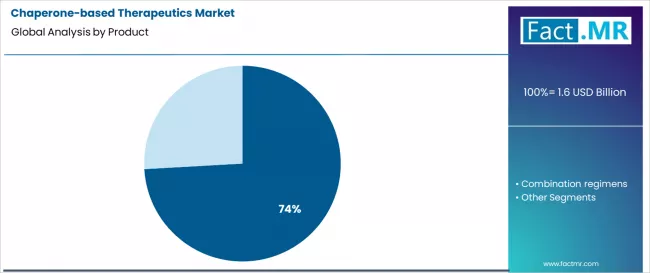
Pharmacological chaperones command a dominant 74.1% share. This segment embodies the core promise of chaperone-based therapeutics: orally administered small molecules designed to bind specifically to misfolded mutant enzymes, stabilizing their correct three-dimensional structure and restoring trafficking and function. Their non-invasive administration and targeted mechanism offer a significant advantage over intravenous enzyme replacement therapies, driving strong clinical adoption where applicable.
By Application, Which Disease Group Serves as the Proven Foundation for the Technology?
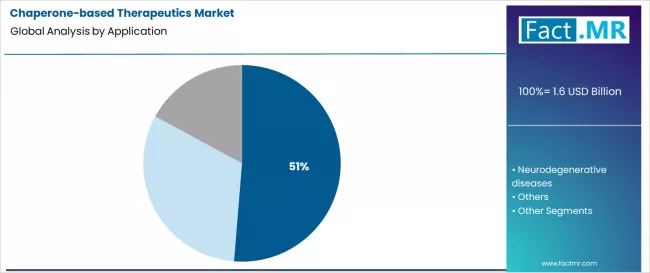
Lysosomal storage disorders constitute the primary application segment at 51.3%. Diseases like Fabry disease and Gaucher disease type 1 have served as the clinical proof-of-concept for chaperone therapy.
The well-defined genetic basis, the availability of biomarkers, and the presence of residual enzyme activity amenable to stabilization have made LSDs the ideal and most advanced arena for deploying this therapeutic strategy.
By End User, Which Setting is Central to Diagnosis and Long-Term Management?
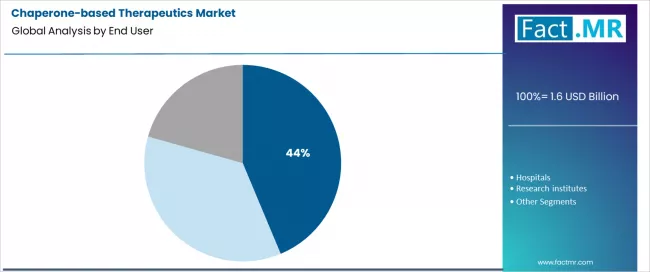
Specialty clinics form the leading end-user segment at 43.7%. The management of rare genetic disorders requires concentrated expertise in clinical genetics, metabolic disease, and neurology.
Specialty clinics, often affiliated with major academic centers, provide the necessary infrastructure for accurate genotyping, patient eligibility assessment, initiation of therapy, and long-term monitoring of treatment response and safety.
What are the Principal Drivers, Constraints, and Evolving Dynamics of this Market?
The principal driver is the compelling clinical and patient preference for oral, small-molecule chaperones over lifelong intravenous enzyme replacement for eligible patients, dramatically improving treatment convenience and quality of life.
A major constraint is the limitation to patients with specific genetic mutations that yield proteins responsive to stabilization, excluding those with null mutations and restricting the addressable patient population.
A significant opportunity lies in the application of chaperone technology to common neurodegenerative diseases like Parkinson's and Alzheimer's, where protein misfolding is central, representing a potential market expansion of immense scale.
The dominant trend is the strategic development of combination regimens, where pharmacological chaperones are paired with enzyme replacement therapy or substrate reduction therapy to create synergistic effects, enhance residual enzyme activity, and improve overall clinical outcomes.
Analysis of the Chaperone-based Therapeutics Market by Key Countries
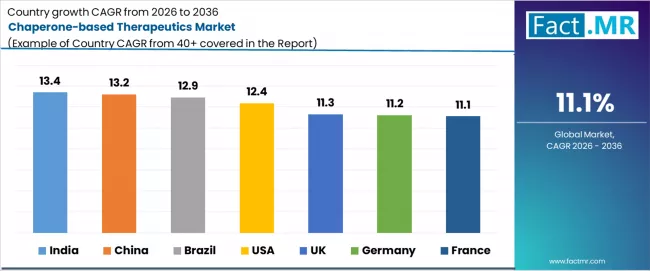
| Country | CAGR 2026 to 2036 |
|---|---|
| India | 13.4% |
| China | 13.2% |
| Brazil | 12.9% |
| USA | 12.4% |
| UK | 11.3% |
| Germany | 11.2% |
| France | 11.1% |
Is the USA's Market Growth Accelerated by Specialized Rare Disease Centers and Orphan Drug Incentives?
A dense network of expert rare disease clinics, robust orphan drug commercial infrastructure, and reimbursement frameworks that support high-cost, targeted therapies fuels the USA’s 12.4% CAGR. Growth is characterized by rapid adoption following FDA approval, supported by sophisticated genetic testing and patient identification services funded by manufacturers to locate eligible individuals with specific responsive mutations.
Can Brazil's Healthcare System Navigate the Complexity of Mutation-Specific Therapy Access?
Brazil’s 12.9% CAGR faces the dual challenge of funding ultra-orphan drugs and ensuring patients undergo precise genetic testing to confirm treatment eligibility. Market growth is often facilitated through judicial pathways and depends on the ability of the public health system to establish centralized genetic testing capabilities to identify the subset of patients who can benefit from these highly specific therapies.
Does China's Growth Strategy Combine Domestic R&D with Expanding Rare Disease Policies?
China’s 13.2% CAGR is propelled by its national rare disease action plan and growing investment in domestic biotech R&D for novel chaperone molecules. The market is expanding as diagnostic capabilities improve in tier-1 cities, and as domestic companies advance candidates through clinical trials, aiming to provide more affordable and accessible options within the national reimbursement framework.
Will India's Market Emergence be Catalyzed by Genetic Testing Expansion and International Partnerships?
A large undiagnosed population and the gradual penetration of advanced genetic diagnostics drive India’s leading 13.4% CAGR. Growth relies on innovative access models from global pharmaceutical companies, often involving partnerships with local specialty hospital chains for diagnosis and distribution, alongside advocacy to raise awareness of these mutation-specific treatment options among clinicians.
Is Germany's Structured Approach Ideal for Integrating Mutation-Specific Therapies into Care Pathways?
Germany’s 11.2% CAGR benefits from a highly organized healthcare system with clear pathways for genetic diagnosis and specialist referral. The market integrates new chaperone therapies efficiently into established treatment algorithms for LSDs. Growth is steady, supported by positive assessments from the Institute for Quality and Efficiency in Health Care (IQWiG) and reimbursement through the country’s statutory health insurance funds.
Does France's Early Access Program Facilitate Timely Availability for Niche Patient Groups?
France’s 11.1% CAGR is supported by mechanisms like the Temporary Authorization for Use (ATU) program, which can provide access to promising chaperone therapies for specific patient subgroups before formal marketing authorization. Final pricing and broad reimbursement are established through negotiations with the Economic Committee for Health Products (CEPS), balancing early access with cost containment.
Is the UK's Access Framework Equipped to Evaluate Ultra-Targeted, Mutation-Specific Therapies?
The UK’s 11.3% CAGR is challenged by the need for its health technology assessment bodies (NICE, SMC) to appraise therapies for very small, genetically defined sub-populations. Market growth often depends on managed access agreements or the Highly Specialised Technologies (HST) program, which evaluates treatments for very rare conditions, determining availability based on incremental cost-effectiveness for these niche groups.
Competitive Landscape of the Chaperone-based Therapeutics Market

The competitive landscape is a specialized arena dominated by companies with deep expertise in protein folding biology and rare genetic diseases. Competition centers on scientific leadership in identifying and validating new chaperonable targets, securing intellectual property around novel chemical entities, and demonstrating robust, long-term clinical data that confirms disease modification. First-mover advantage in a specific disease is significant, often creating a de facto monopoly for that indication.
Given the small, globally dispersed patient populations, competitive success is heavily reliant on excellence in targeted engagement. Leaders invest in building global registries, supporting diagnostic networks to identify eligible patients, and developing comprehensive support services. Strategic focus is on pipeline expansion through both internal discovery and in-licensing of promising chaperone candidates for new disease indications, particularly in the vast potential field of neurodegeneration.
Key Players in the Chaperone-based Therapeutics Market
- Amicus Therapeutics, Inc.
- Pfizer Inc.
- Sanofi S.A.
- Takeda Pharmaceutical Company Limited
- Vertex Pharmaceuticals Incorporated
- Others
Scope of Report
| Items | Metrics |
|---|---|
| Quantitative Units | USD Billion |
| Product | Pharmacological Chaperones, Combination Regimens |
| Application | Lysosomal Storage Disorders, Neurodegenerative Diseases, Others |
| End User | Specialty Clinics, Hospitals, Research Institutes |
| Key Countries | India, China, Brazil, USA, Germany, France, UK |
| Key Companies | Amicus Therapeutics, Pfizer, Sanofi, Takeda, Vertex, Others |
| Additional Analysis | Biomarker development for monitoring chaperone therapy efficacy; health economic models for mutation-specific ultra-orphan drugs; analysis of combination therapy synergies; challenges in clinical trial design for small, genetically defined populations. |
Market by Segments
-
Product :
- Pharmacological Chaperones
- Combination Regimens
-
Application :
- Lysosomal Storage Disorders
- Neurodegenerative Diseases
- Others
-
End User :
- Specialty Clinics
- Hospitals
- Research Institutes
-
Region :
-
North America
- USA
- Canada
-
Latin America
- Brazil
- Mexico
- Argentina
- Rest of Latin America
-
Western Europe
- Germany
- France
- UK
- Italy
- Spain
- BENELUX
- Rest of Western Europe
-
Eastern Europe
- Russia
- Poland
- Czech Republic
- Rest of Eastern Europe
-
East Asia
- China
- Japan
- South Korea
- Rest of East Asia
-
South Asia & Pacific
- India
- ASEAN
- Australia
- Rest of South Asia & Pacific
-
MEA
- GCC Countries
- South Africa
- Turkiye
- Rest of MEA
-
Bibliography
- European Medicines Agency (EMA). (2025). Reflection Paper on the Quality and Non-clinical Aspects of Pharmacological Chaperone Therapies.
- International Society for Cell & Gene Therapy (ISCGT). (2024). Advances in Protein Homeostasis Therapeutics. White Paper.
- National Institutes of Health (NIH) Genetic and Rare Diseases Information Center. (2025). Report on Therapeutic Strategies for Protein Misfolding Disorders.
- World Symposium for Lysosomal Storage Disorders. (2024). Consensus Guidelines on the Use of Chaperone Therapies in Clinical Management.
Table of Content
- Executive Summary
- Global Market Outlook
- Demand to side Trends
- Supply to side Trends
- Technology Roadmap Analysis
- Analysis and Recommendations
- Market Overview
- Market Coverage / Taxonomy
- Market Definition / Scope / Limitations
- Market Background
- Market Dynamics
- Drivers
- Restraints
- Opportunity
- Trends
- Scenario Forecast
- Demand in Optimistic Scenario
- Demand in Likely Scenario
- Demand in Conservative Scenario
- Opportunity Map Analysis
- Product Life Cycle Analysis
- Supply Chain Analysis
- Investment Feasibility Matrix
- Value Chain Analysis
- PESTLE and Porter’s Analysis
- Regulatory Landscape
- Regional Parent Market Outlook
- Production and Consumption Statistics
- Import and Export Statistics
- Market Dynamics
- Global Market Analysis 2021 to 2025 and Forecast, 2026 to 2036
- Historical Market Size Value (USD Million) Analysis, 2021 to 2025
- Current and Future Market Size Value (USD Million) Projections, 2026 to 2036
- Y to o to Y Growth Trend Analysis
- Absolute $ Opportunity Analysis
- Global Market Pricing Analysis 2021 to 2025 and Forecast 2026 to 2036
- Global Market Analysis 2021 to 2025 and Forecast 2026 to 2036, By Product
- Introduction / Key Findings
- Historical Market Size Value (USD Million) Analysis By Product, 2021 to 2025
- Current and Future Market Size Value (USD Million) Analysis and Forecast By Product, 2026 to 2036
- Pharmacological chaperones
- Combination regimens
- Pharmacological chaperones
- Y to o to Y Growth Trend Analysis By Product, 2021 to 2025
- Absolute $ Opportunity Analysis By Product, 2026 to 2036
- Global Market Analysis 2021 to 2025 and Forecast 2026 to 2036, By Application
- Introduction / Key Findings
- Historical Market Size Value (USD Million) Analysis By Application, 2021 to 2025
- Current and Future Market Size Value (USD Million) Analysis and Forecast By Application, 2026 to 2036
- Lysosomal storage disorders
- Neurodegenerative diseases
- Others
- Lysosomal storage disorders
- Y to o to Y Growth Trend Analysis By Application, 2021 to 2025
- Absolute $ Opportunity Analysis By Application, 2026 to 2036
- Global Market Analysis 2021 to 2025 and Forecast 2026 to 2036, By End User
- Introduction / Key Findings
- Historical Market Size Value (USD Million) Analysis By End User, 2021 to 2025
- Current and Future Market Size Value (USD Million) Analysis and Forecast By End User, 2026 to 2036
- Specialty clinics
- Hospitals
- Research institutes
- Specialty clinics
- Y to o to Y Growth Trend Analysis By End User, 2021 to 2025
- Absolute $ Opportunity Analysis By End User, 2026 to 2036
- Global Market Analysis 2021 to 2025 and Forecast 2026 to 2036, By Region
- Introduction
- Historical Market Size Value (USD Million) Analysis By Region, 2021 to 2025
- Current Market Size Value (USD Million) Analysis and Forecast By Region, 2026 to 2036
- North America
- Latin America
- Western Europe
- Eastern Europe
- East Asia
- South Asia and Pacific
- Middle East & Africa
- Market Attractiveness Analysis By Region
- North America Market Analysis 2021 to 2025 and Forecast 2026 to 2036, By Country
- Historical Market Size Value (USD Million) Trend Analysis By Market Taxonomy, 2021 to 2025
- Market Size Value (USD Million) Forecast By Market Taxonomy, 2026 to 2036
- By Country
- USA
- Canada
- Mexico
- By Product
- By Application
- By End User
- By Country
- Market Attractiveness Analysis
- By Country
- By Product
- By Application
- By End User
- Key Takeaways
- Latin America Market Analysis 2021 to 2025 and Forecast 2026 to 2036, By Country
- Historical Market Size Value (USD Million) Trend Analysis By Market Taxonomy, 2021 to 2025
- Market Size Value (USD Million) Forecast By Market Taxonomy, 2026 to 2036
- By Country
- Brazil
- Chile
- Rest of Latin America
- By Product
- By Application
- By End User
- By Country
- Market Attractiveness Analysis
- By Country
- By Product
- By Application
- By End User
- Key Takeaways
- Western Europe Market Analysis 2021 to 2025 and Forecast 2026 to 2036, By Country
- Historical Market Size Value (USD Million) Trend Analysis By Market Taxonomy, 2021 to 2025
- Market Size Value (USD Million) Forecast By Market Taxonomy, 2026 to 2036
- By Country
- Germany
- UK
- Italy
- Spain
- France
- Nordic
- BENELUX
- Rest of Western Europe
- By Product
- By Application
- By End User
- By Country
- Market Attractiveness Analysis
- By Country
- By Product
- By Application
- By End User
- Key Takeaways
- Eastern Europe Market Analysis 2021 to 2025 and Forecast 2026 to 2036, By Country
- Historical Market Size Value (USD Million) Trend Analysis By Market Taxonomy, 2021 to 2025
- Market Size Value (USD Million) Forecast By Market Taxonomy, 2026 to 2036
- By Country
- Russia
- Poland
- Hungary
- Balkan & Baltic
- Rest of Eastern Europe
- By Product
- By Application
- By End User
- By Country
- Market Attractiveness Analysis
- By Country
- By Product
- By Application
- By End User
- Key Takeaways
- East Asia Market Analysis 2021 to 2025 and Forecast 2026 to 2036, By Country
- Historical Market Size Value (USD Million) Trend Analysis By Market Taxonomy, 2021 to 2025
- Market Size Value (USD Million) Forecast By Market Taxonomy, 2026 to 2036
- By Country
- China
- Japan
- South Korea
- By Product
- By Application
- By End User
- By Country
- Market Attractiveness Analysis
- By Country
- By Product
- By Application
- By End User
- Key Takeaways
- South Asia and Pacific Market Analysis 2021 to 2025 and Forecast 2026 to 2036, By Country
- Historical Market Size Value (USD Million) Trend Analysis By Market Taxonomy, 2021 to 2025
- Market Size Value (USD Million) Forecast By Market Taxonomy, 2026 to 2036
- By Country
- India
- ASEAN
- Australia & New Zealand
- Rest of South Asia and Pacific
- By Product
- By Application
- By End User
- By Country
- Market Attractiveness Analysis
- By Country
- By Product
- By Application
- By End User
- Key Takeaways
- Middle East & Africa Market Analysis 2021 to 2025 and Forecast 2026 to 2036, By Country
- Historical Market Size Value (USD Million) Trend Analysis By Market Taxonomy, 2021 to 2025
- Market Size Value (USD Million) Forecast By Market Taxonomy, 2026 to 2036
- By Country
- Kingdom of Saudi Arabia
- Other GCC Countries
- Turkiye
- South Africa
- Other African Union
- Rest of Middle East & Africa
- By Product
- By Application
- By End User
- By Country
- Market Attractiveness Analysis
- By Country
- By Product
- By Application
- By End User
- Key Takeaways
- Key Countries Market Analysis
- USA
- Pricing Analysis
- Market Share Analysis, 2025
- By Product
- By Application
- By End User
- Canada
- Pricing Analysis
- Market Share Analysis, 2025
- By Product
- By Application
- By End User
- Mexico
- Pricing Analysis
- Market Share Analysis, 2025
- By Product
- By Application
- By End User
- Brazil
- Pricing Analysis
- Market Share Analysis, 2025
- By Product
- By Application
- By End User
- Chile
- Pricing Analysis
- Market Share Analysis, 2025
- By Product
- By Application
- By End User
- Germany
- Pricing Analysis
- Market Share Analysis, 2025
- By Product
- By Application
- By End User
- UK
- Pricing Analysis
- Market Share Analysis, 2025
- By Product
- By Application
- By End User
- Italy
- Pricing Analysis
- Market Share Analysis, 2025
- By Product
- By Application
- By End User
- Spain
- Pricing Analysis
- Market Share Analysis, 2025
- By Product
- By Application
- By End User
- France
- Pricing Analysis
- Market Share Analysis, 2025
- By Product
- By Application
- By End User
- India
- Pricing Analysis
- Market Share Analysis, 2025
- By Product
- By Application
- By End User
- ASEAN
- Pricing Analysis
- Market Share Analysis, 2025
- By Product
- By Application
- By End User
- Australia & New Zealand
- Pricing Analysis
- Market Share Analysis, 2025
- By Product
- By Application
- By End User
- China
- Pricing Analysis
- Market Share Analysis, 2025
- By Product
- By Application
- By End User
- Japan
- Pricing Analysis
- Market Share Analysis, 2025
- By Product
- By Application
- By End User
- South Korea
- Pricing Analysis
- Market Share Analysis, 2025
- By Product
- By Application
- By End User
- Russia
- Pricing Analysis
- Market Share Analysis, 2025
- By Product
- By Application
- By End User
- Poland
- Pricing Analysis
- Market Share Analysis, 2025
- By Product
- By Application
- By End User
- Hungary
- Pricing Analysis
- Market Share Analysis, 2025
- By Product
- By Application
- By End User
- Kingdom of Saudi Arabia
- Pricing Analysis
- Market Share Analysis, 2025
- By Product
- By Application
- By End User
- Turkiye
- Pricing Analysis
- Market Share Analysis, 2025
- By Product
- By Application
- By End User
- South Africa
- Pricing Analysis
- Market Share Analysis, 2025
- By Product
- By Application
- By End User
- USA
- Market Structure Analysis
- Competition Dashboard
- Competition Benchmarking
- Market Share Analysis of Top Players
- By Regional
- By Product
- By Application
- By End User
- Competition Analysis
- Competition Deep Dive
- Amicus Therapeutics, Inc.
- Overview
- Product Portfolio
- Profitability by Market Segments (Product/Age /Sales Channel/Region)
- Sales Footprint
- Strategy Overview
- Marketing Strategy
- Product Strategy
- Channel Strategy
- Pfizer Inc.
- Sanofi S.A.
- Takeda Pharmaceutical Company Limited
- Vertex Pharmaceuticals Incorporated
- Others
- Amicus Therapeutics, Inc.
- Competition Deep Dive
- Assumptions & Acronyms Used
- Research Methodology
List Of Table
- Table 1: Global Market Value (USD Million) Forecast by Region, 2021 to 2036
- Table 2: Global Market Value (USD Million) Forecast by Product, 2021 to 2036
- Table 3: Global Market Value (USD Million) Forecast by Application, 2021 to 2036
- Table 4: Global Market Value (USD Million) Forecast by End User, 2021 to 2036
- Table 5: North America Market Value (USD Million) Forecast by Country, 2021 to 2036
- Table 6: North America Market Value (USD Million) Forecast by Product, 2021 to 2036
- Table 7: North America Market Value (USD Million) Forecast by Application, 2021 to 2036
- Table 8: North America Market Value (USD Million) Forecast by End User, 2021 to 2036
- Table 9: Latin America Market Value (USD Million) Forecast by Country, 2021 to 2036
- Table 10: Latin America Market Value (USD Million) Forecast by Product, 2021 to 2036
- Table 11: Latin America Market Value (USD Million) Forecast by Application, 2021 to 2036
- Table 12: Latin America Market Value (USD Million) Forecast by End User, 2021 to 2036
- Table 13: Western Europe Market Value (USD Million) Forecast by Country, 2021 to 2036
- Table 14: Western Europe Market Value (USD Million) Forecast by Product, 2021 to 2036
- Table 15: Western Europe Market Value (USD Million) Forecast by Application, 2021 to 2036
- Table 16: Western Europe Market Value (USD Million) Forecast by End User, 2021 to 2036
- Table 17: Eastern Europe Market Value (USD Million) Forecast by Country, 2021 to 2036
- Table 18: Eastern Europe Market Value (USD Million) Forecast by Product, 2021 to 2036
- Table 19: Eastern Europe Market Value (USD Million) Forecast by Application, 2021 to 2036
- Table 20: Eastern Europe Market Value (USD Million) Forecast by End User, 2021 to 2036
- Table 21: East Asia Market Value (USD Million) Forecast by Country, 2021 to 2036
- Table 22: East Asia Market Value (USD Million) Forecast by Product, 2021 to 2036
- Table 23: East Asia Market Value (USD Million) Forecast by Application, 2021 to 2036
- Table 24: East Asia Market Value (USD Million) Forecast by End User, 2021 to 2036
- Table 25: South Asia and Pacific Market Value (USD Million) Forecast by Country, 2021 to 2036
- Table 26: South Asia and Pacific Market Value (USD Million) Forecast by Product, 2021 to 2036
- Table 27: South Asia and Pacific Market Value (USD Million) Forecast by Application, 2021 to 2036
- Table 28: South Asia and Pacific Market Value (USD Million) Forecast by End User, 2021 to 2036
- Table 29: Middle East & Africa Market Value (USD Million) Forecast by Country, 2021 to 2036
- Table 30: Middle East & Africa Market Value (USD Million) Forecast by Product, 2021 to 2036
- Table 31: Middle East & Africa Market Value (USD Million) Forecast by Application, 2021 to 2036
- Table 32: Middle East & Africa Market Value (USD Million) Forecast by End User, 2021 to 2036
List Of Figures
- Figure 1: Global Market Pricing Analysis
- Figure 2: Global Market Value (USD Million) Forecast 2021 to 2036
- Figure 3: Global Market Value Share and BPS Analysis by Product, 2026 and 2036
- Figure 4: Global Market Y to o to Y Growth Comparison by Product, 2026 to 2036
- Figure 5: Global Market Attractiveness Analysis by Product
- Figure 6: Global Market Value Share and BPS Analysis by Application, 2026 and 2036
- Figure 7: Global Market Y to o to Y Growth Comparison by Application, 2026 to 2036
- Figure 8: Global Market Attractiveness Analysis by Application
- Figure 9: Global Market Value Share and BPS Analysis by End User, 2026 and 2036
- Figure 10: Global Market Y to o to Y Growth Comparison by End User, 2026 to 2036
- Figure 11: Global Market Attractiveness Analysis by End User
- Figure 12: Global Market Value (USD Million) Share and BPS Analysis by Region, 2026 and 2036
- Figure 13: Global Market Y to o to Y Growth Comparison by Region, 2026 to 2036
- Figure 14: Global Market Attractiveness Analysis by Region
- Figure 15: North America Market Incremental Dollar Opportunity, 2026 to 2036
- Figure 16: Latin America Market Incremental Dollar Opportunity, 2026 to 2036
- Figure 17: Western Europe Market Incremental Dollar Opportunity, 2026 to 2036
- Figure 18: Eastern Europe Market Incremental Dollar Opportunity, 2026 to 2036
- Figure 19: East Asia Market Incremental Dollar Opportunity, 2026 to 2036
- Figure 20: South Asia and Pacific Market Incremental Dollar Opportunity, 2026 to 2036
- Figure 21: Middle East & Africa Market Incremental Dollar Opportunity, 2026 to 2036
- Figure 22: North America Market Value Share and BPS Analysis by Country, 2026 and 2036
- Figure 23: North America Market Value Share and BPS Analysis by Product, 2026 and 2036
- Figure 24: North America Market Y to o to Y Growth Comparison by Product, 2026 to 2036
- Figure 25: North America Market Attractiveness Analysis by Product
- Figure 26: North America Market Value Share and BPS Analysis by Application, 2026 and 2036
- Figure 27: North America Market Y to o to Y Growth Comparison by Application, 2026 to 2036
- Figure 28: North America Market Attractiveness Analysis by Application
- Figure 29: North America Market Value Share and BPS Analysis by End User, 2026 and 2036
- Figure 30: North America Market Y to o to Y Growth Comparison by End User, 2026 to 2036
- Figure 31: North America Market Attractiveness Analysis by End User
- Figure 32: Latin America Market Value Share and BPS Analysis by Country, 2026 and 2036
- Figure 33: Latin America Market Value Share and BPS Analysis by Product, 2026 and 2036
- Figure 34: Latin America Market Y to o to Y Growth Comparison by Product, 2026 to 2036
- Figure 35: Latin America Market Attractiveness Analysis by Product
- Figure 36: Latin America Market Value Share and BPS Analysis by Application, 2026 and 2036
- Figure 37: Latin America Market Y to o to Y Growth Comparison by Application, 2026 to 2036
- Figure 38: Latin America Market Attractiveness Analysis by Application
- Figure 39: Latin America Market Value Share and BPS Analysis by End User, 2026 and 2036
- Figure 40: Latin America Market Y to o to Y Growth Comparison by End User, 2026 to 2036
- Figure 41: Latin America Market Attractiveness Analysis by End User
- Figure 42: Western Europe Market Value Share and BPS Analysis by Country, 2026 and 2036
- Figure 43: Western Europe Market Value Share and BPS Analysis by Product, 2026 and 2036
- Figure 44: Western Europe Market Y to o to Y Growth Comparison by Product, 2026 to 2036
- Figure 45: Western Europe Market Attractiveness Analysis by Product
- Figure 46: Western Europe Market Value Share and BPS Analysis by Application, 2026 and 2036
- Figure 47: Western Europe Market Y to o to Y Growth Comparison by Application, 2026 to 2036
- Figure 48: Western Europe Market Attractiveness Analysis by Application
- Figure 49: Western Europe Market Value Share and BPS Analysis by End User, 2026 and 2036
- Figure 50: Western Europe Market Y to o to Y Growth Comparison by End User, 2026 to 2036
- Figure 51: Western Europe Market Attractiveness Analysis by End User
- Figure 52: Eastern Europe Market Value Share and BPS Analysis by Country, 2026 and 2036
- Figure 53: Eastern Europe Market Value Share and BPS Analysis by Product, 2026 and 2036
- Figure 54: Eastern Europe Market Y to o to Y Growth Comparison by Product, 2026 to 2036
- Figure 55: Eastern Europe Market Attractiveness Analysis by Product
- Figure 56: Eastern Europe Market Value Share and BPS Analysis by Application, 2026 and 2036
- Figure 57: Eastern Europe Market Y to o to Y Growth Comparison by Application, 2026 to 2036
- Figure 58: Eastern Europe Market Attractiveness Analysis by Application
- Figure 59: Eastern Europe Market Value Share and BPS Analysis by End User, 2026 and 2036
- Figure 60: Eastern Europe Market Y to o to Y Growth Comparison by End User, 2026 to 2036
- Figure 61: Eastern Europe Market Attractiveness Analysis by End User
- Figure 62: East Asia Market Value Share and BPS Analysis by Country, 2026 and 2036
- Figure 63: East Asia Market Value Share and BPS Analysis by Product, 2026 and 2036
- Figure 64: East Asia Market Y to o to Y Growth Comparison by Product, 2026 to 2036
- Figure 65: East Asia Market Attractiveness Analysis by Product
- Figure 66: East Asia Market Value Share and BPS Analysis by Application, 2026 and 2036
- Figure 67: East Asia Market Y to o to Y Growth Comparison by Application, 2026 to 2036
- Figure 68: East Asia Market Attractiveness Analysis by Application
- Figure 69: East Asia Market Value Share and BPS Analysis by End User, 2026 and 2036
- Figure 70: East Asia Market Y to o to Y Growth Comparison by End User, 2026 to 2036
- Figure 71: East Asia Market Attractiveness Analysis by End User
- Figure 72: South Asia and Pacific Market Value Share and BPS Analysis by Country, 2026 and 2036
- Figure 73: South Asia and Pacific Market Value Share and BPS Analysis by Product, 2026 and 2036
- Figure 74: South Asia and Pacific Market Y to o to Y Growth Comparison by Product, 2026 to 2036
- Figure 75: South Asia and Pacific Market Attractiveness Analysis by Product
- Figure 76: South Asia and Pacific Market Value Share and BPS Analysis by Application, 2026 and 2036
- Figure 77: South Asia and Pacific Market Y to o to Y Growth Comparison by Application, 2026 to 2036
- Figure 78: South Asia and Pacific Market Attractiveness Analysis by Application
- Figure 79: South Asia and Pacific Market Value Share and BPS Analysis by End User, 2026 and 2036
- Figure 80: South Asia and Pacific Market Y to o to Y Growth Comparison by End User, 2026 to 2036
- Figure 81: South Asia and Pacific Market Attractiveness Analysis by End User
- Figure 82: Middle East & Africa Market Value Share and BPS Analysis by Country, 2026 and 2036
- Figure 83: Middle East & Africa Market Value Share and BPS Analysis by Product, 2026 and 2036
- Figure 84: Middle East & Africa Market Y to o to Y Growth Comparison by Product, 2026 to 2036
- Figure 85: Middle East & Africa Market Attractiveness Analysis by Product
- Figure 86: Middle East & Africa Market Value Share and BPS Analysis by Application, 2026 and 2036
- Figure 87: Middle East & Africa Market Y to o to Y Growth Comparison by Application, 2026 to 2036
- Figure 88: Middle East & Africa Market Attractiveness Analysis by Application
- Figure 89: Middle East & Africa Market Value Share and BPS Analysis by End User, 2026 and 2036
- Figure 90: Middle East & Africa Market Y to o to Y Growth Comparison by End User, 2026 to 2036
- Figure 91: Middle East & Africa Market Attractiveness Analysis by End User
- Figure 92: Global Market - Tier Structure Analysis
- Figure 93: Global Market - Company Share Analysis
- FAQs -
How big is the chaperone-based therapeutics market in 2026?
The global chaperone-based therapeutics market is estimated to be valued at USD 1.6 billion in 2026.
What will be the size of chaperone-based therapeutics market in 2036?
The market size for the chaperone-based therapeutics market is projected to reach USD 4.5 billion by 2036.
How much will be the chaperone-based therapeutics market growth between 2026 and 2036?
The chaperone-based therapeutics market is expected to grow at a 11.1% CAGR between 2026 and 2036.
What are the key product types in the chaperone-based therapeutics market?
The key product types in chaperone-based therapeutics market are pharmacological chaperones and combination regimens.
Which application segment to contribute significant share in the chaperone-based therapeutics market in 2026?
In terms of application, lysosomal storage disorders segment to command 51.3% share in the chaperone-based therapeutics market in 2026.