- Base Value(2026): 3.4 Bn
- Estimated Value(2026): 3.4 Bn
- Forecast Value (2036): 6.2 Bn
- CAGR (2026 - 2036): 6.2%
Cattle Reproductive Hormones Market Forecast and Outlook 2026 to 2036
The global cattle reproductive hormones market is projected to grow to USD 3.40 billion in 2026, and further to USD 6.20 billion by 2036, progressing at a CAGR of 6.2%. This growth is fundamentally linked to the intensification of global dairy and beef production, where maximizing reproductive efficiency is a primary determinant of profitability.
Key Takeaways from the Cattle Reproductive Hormones Market
- Market Value for 2026: USD 3.40 Billion
- Market Value for 2036: USD 6.20 Billion
- Forecast CAGR 2026 to 2036: 6.2%
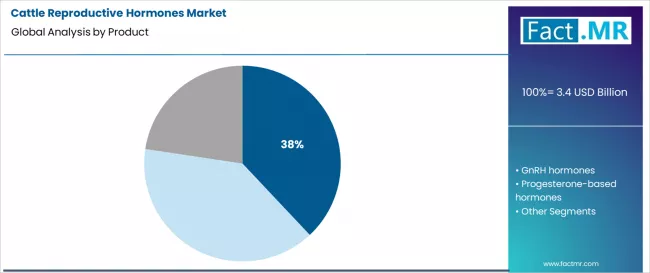
- Leading Product Segment (2026): Prostaglandins (38.0%)
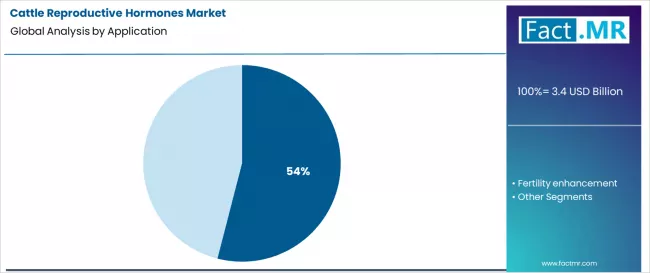
- Leading Application Segment (2026): Estrus Synchronization (54.0%)
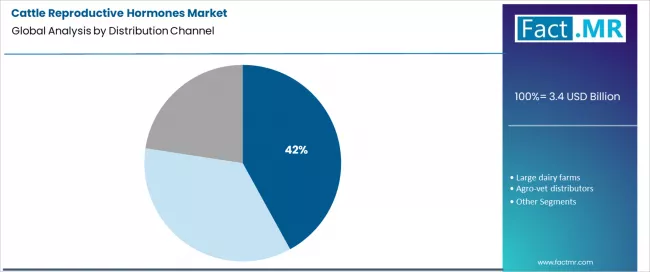
- Leading Distribution Channel Segment (2026): Veterinary Hospitals (42.0%)
- Key Growth Countries: India (8.6% CAGR), China (8.4% CAGR), Brazil (8.1% CAGR), USA (7.5% CAGR), UK (6.4% CAGR), France (6.2% CAGR)
- Key Players in the Market: Zoetis Inc., MSD Animal Health, Elanco Animal Health, Ceva Santé Animale, Boehringer Ingelheim Animal Health
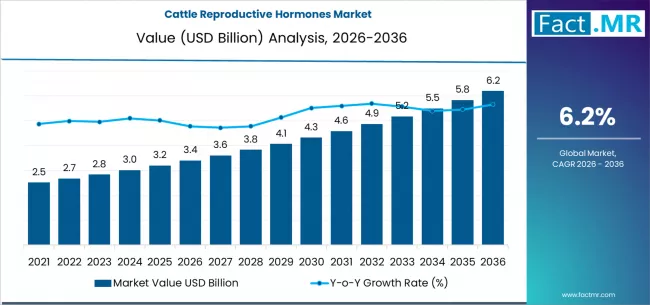
Cattle Reproductive Hormones Market Market Value Analysis | Source: Fact.MR
The widespread adoption of hormonal protocols for estrus synchronization allows for timed artificial insemination, streamlining breeding management and improving genetic advancement. Prostaglandins remain the therapeutic cornerstone for these programs. Increasing herd sizes and the economic pressure to reduce calving intervals are compelling producers to adopt more sophisticated reproductive management tools. This includes the use of hormone combinations to resolve infertility issues and enhance overall herd fertility rates.
Consumer and regulatory scrutiny regarding hormone use in food animals, driving demand for products with well-defined withdrawal periods and clear safety profiles, concurrently influence the market. Technological integration, such as electronic herd monitoring systems that trigger hormonal interventions based on biometric data, represents a significant trend shaping future product development and usage patterns.
Metric
| Metric | Value |
|---|---|
| Market Value (2026) | USD 3.40 Billion |
| Market Forecast Value (2036) | USD 6.20 Billion |
| Forecast CAGR 2026 to 2036 | 6.2% |
Source: Fact.MR analysis. Updated Jan 12, 2026
Category
| Category | Segments |
|---|---|
| Product | Prostaglandins, GnRH Hormones, Progesterone-based Hormones |
| Application | Estrus Synchronization, Fertility Enhancement |
| Distribution Channel | Veterinary Hospitals, Large Dairy Farms, Agro-Vet Distributors |
| Region | North America, Latin America, Western Europe, Eastern Europe, East Asia, South Asia & Pacific, Middle East & Africa |
Source: Fact.MR analysis. Updated Jan 12, 2026
Segmental Analysis
By Product, Which Segment is Essential for Controlled Breeding Programs?
Cattle Reproductive Hormones Market Analysis By Product | Source: Fact.MR
Prostaglandins command a leading 38.0% share due to their critical role in regulating the estrous cycle. They induce luteolysis, allowing for the precise scheduling of estrus and ovulation in cattle. This controllability is the foundation of modern fixed-time artificial insemination programs, making prostaglandins a high-volume, essential purchase for operations focused on genetic improvement and efficient herd management.
By Application, Which Practice is Central to Intensive Herd Management?
Cattle Reproductive Hormones Market Analysis By Application | Source: Fact.MR
Estrus synchronization constitutes the dominant application segment at 54.0%. This practice is a cornerstone of reproductive management in both dairy and beef systems. It condenses the breeding window, increases AI efficiency, and facilitates grouped calving. The direct economic benefits of tighter calving intervals and improved genetic merit drive consistent, large-scale demand for the hormones that enable these protocols.
By Distribution Channel, Which Channel Provides Expert Guidance and Prescription Access?
Cattle Reproductive Hormones Market Analysis By Distribution Channel | Source: Fact.MR
Veterinary hospitals form the primary distribution channel segment at 42.0%. Reproductive hormones are often prescription-only products requiring veterinary oversight for diagnosis and protocol design. Veterinarians provide essential technical support, ensuring correct usage and managing fertility cases, making this channel a trusted and authoritative source for these specialized products.
What are the Principal Drivers, Constraints, and Evolving Dynamics of the Cattle Reproductive Hormones Market?
The principal driver is the economic imperative within intensive livestock production to shorten calving intervals and improve reproductive efficiency, directly translating to higher milk yield and calf output per year. A major constraint is the growing public and regulatory sensitivity concerning exogenous hormone use in livestock, potentially leading to restrictions or labeling requirements that could dampen demand.
A significant opportunity lies in the integration of hormonal protocols with precision livestock farming technologies, where automated health monitoring data triggers tailored hormonal interventions for individual animals. The dominant trend is the development of longer-acting hormone formulations and simplified, single-administration synchronization protocols that reduce labor, improve compliance, and minimize animal handling stress.
Analysis of the Cattle Reproductive Hormones Market by Key Countries
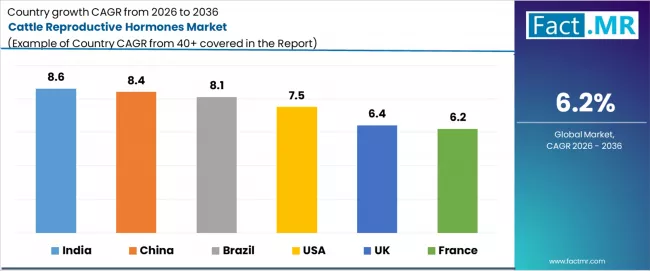
Cattle Reproductive Hormones Market Cagr Analysis By Country | Source: Fact.MR
| Country | CAGR 2026 to 2036 |
|---|---|
| India | 8.6% |
| China | 8.4% |
| Brazil | 8.1% |
| USA | 7.5% |
| UK | 6.4% |
| France | 6.2% |
Source: Fact.MR analysis. Updated Jan 12, 2026
Does the USA's Market Reflect Widespread Adoption of Advanced Reproductive Technologies?
The large scale of its dairy and beef sectors and their early adoption of advanced reproductive technologies drive the USA’s 7.5% CAGR. Growth is characterized by the use of complex, multi-hormone synchronization protocols in dairy herds and the increasing use of hormones in beef cattle systems to facilitate artificial insemination and managed breeding seasons.
Can Brazil's Expanding Beef Export Industry Drive Standardized Hormone Protocols?
Brazil’s 8.1% CAGR is closely tied to its beef export industry's need for predictable, year-round calf production. Hormonal estrus synchronization is a key tool for managing reproduction in large, pasture-based herds. Market growth is linked to the professionalization of beef herd management and the training of producers and technicians in effective protocol application.
Is China's Dairy Modernization a Primary Catalyst for Hormone Market Growth?
China’s 8.4% CAGR is propelled by the rapid modernization and consolidation of its dairy industry. As large-scale, intensive dairy farms become the norm, the adoption of standardized reproductive management, including hormonal synchronization, becomes essential for operational efficiency and meeting production targets, driving significant market expansion.
Will Dairy Intensification and Crossbred Herd Management fuel India’s Market Growth?
India’s leading 8.6% CAGR is fueled by the ongoing intensification of its dairy sector and the management challenges of high-yielding crossbred cattle. As farmers seek to improve the reproductive performance of these animals, demand for basic prostaglandin-based synchronization and fertility treatments is rising rapidly through both veterinary and agro-vet distributor channels.
Does France's Market Operate Within Stringent EU Regulations on Veterinary Medicines?
France’s 6.2% CAGR operates under the European Union’s strict regulatory framework for veterinary pharmaceuticals. Growth is steady but measured, focusing on products with clear demonstrable benefits within sustainable farming systems. Usage is often integrated with precise nutritional management and is subject to rigorous recording and monitoring.
Is the UK's Market Navigating Post-Brexit Regulations and Sustainability Pressures?
The UK’s 6.4% CAGR is influenced by its development of independent veterinary medicine regulations post-Brexit and strong consumer focus on sustainable farming. Hormone use is carefully managed, with growth potential tied to products that demonstrably improve animal welfare and resource efficiency by resolving infertility and reducing unproductive days.
Competitive Landscape of the Cattle Reproductive Hormones Market
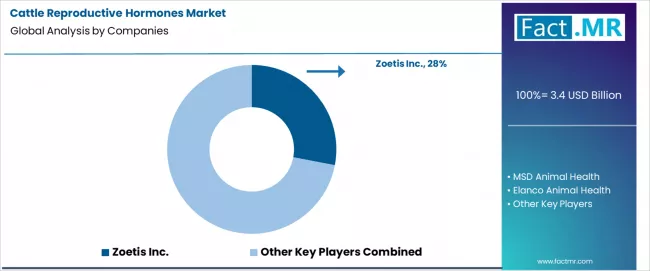
Cattle Reproductive Hormones Market Analysis By Company | Source: Fact.MR
The competitive landscape is consolidated among a few global animal health giants. These companies compete through comprehensive portfolios that offer a full suite of reproductive hormones for various synchronization and therapy protocols.
Success is determined by the strength of technical support and education provided to veterinarians and large producers, ensuring correct protocol implementation and optimal results. Companies also compete on product reliability, formulation convenience, and the development of combination kits that simplify treatment regimens.
Given the prescription-driven nature of the market, deep relationships with veterinary practitioners and consultants are paramount. Key strategies include funding fertility research, providing herd fertility analytics services, and offering integrated solutions that combine hormones with genetics and nutrition advice. Competition is also present in the generic segment for older hormone products, applying price pressure and expanding access in more cost-sensitive markets.
Key Players in the Cattle Reproductive Hormones Market
- Zoetis Inc.
- MSD Animal Health
- Elanco Animal Health
- Ceva Santé Animale
- Boehringer Ingelheim Animal Health
- Others
Bibliography
- American Association of Bovine Practitioners (AABP). (2025). Guidelines for the Use of Reproductive Hormones in Cattle.
- Food and Agriculture Organization of the United Nations (FAO). (2024). The Role of Reproductive Technologies in Sustainable Livestock Development.
- International Committee for Animal Recording (ICAR). (2025). Guidelines on Reproductive Management and Data Recording in Dairy Herds.
- Journal of Dairy Science. (2024). Special Issue on Advances in Bovine Reproductive Management.
Segmentation
Scope of Report
| Items | Metrics |
|---|---|
| Quantitative Units | USD Billion |
| Product | Prostaglandins, GnRH Hormones, Progesterone-based Hormones |
| Application | Estrus Synchronization, Fertility Enhancement |
| Distribution Channel | Veterinary Hospitals, Large Dairy Farms, Agro-Vet Distributors |
| Key Countries | India, China, Brazil, USA, France, UK |
| Key Companies | Zoetis, MSD Animal Health, Elanco, Ceva, Boehringer Ingelheim, Others |
| Additional Analysis | Economic analysis of improved reproductive efficiency on farm profitability; residue testing and withdrawal period compliance; impact of heat detection technologies on hormone protocol success rates; consumer perception studies on hormone use in animal production. |
Source: Fact.MR analysis. Updated Jan 12, 2026
Market by Segments
-
Product :
- Prostaglandins
- GnRH Hormones
- Progesterone-based Hormones
-
Application :
- Estrus Synchronization
- Fertility Enhancement
-
Distribution Channel :
- Veterinary Hospitals
- Large Dairy Farms
- Agro-Vet Distributors
-
Region :
-
North America
- USA
- Canada
-
Latin America
- Brazil
- Mexico
- Argentina
- Rest of Latin America
-
Western Europe
- France
- UK
- Germany
- Italy
- Spain
- BENELUX
- Rest of Western Europe
-
Eastern Europe
- Russia
- Poland
- Czech Republic
- Rest of Eastern Europe
-
East Asia
- China
- Japan
- South Korea
- Rest of East Asia
-
South Asia & Pacific
- India
- ASEAN
- Australia
- Rest of South Asia & Pacific
-
MEA
- GCC Countries
- South Africa
- Turkiye
- Rest of MEA
-
Frequently Asked Questions
How big is the cattle reproductive hormones market in 2026?
What will be the size of cattle reproductive hormones market in 2036?
How much will be the cattle reproductive hormones market growth between 2026 and 2036?
What are the key product types in the cattle reproductive hormones market?
Which application segment to contribute significant share in the cattle reproductive hormones market in 2026?
Who worked on this report


Preview the report firsthand - request a free sample
Free SampleGet the brochure for pricing and purchase details
Download PDF