Low-Modulus Sealants for High-Movement Facade Elements in Seismic Zones Market
Low-Modulus Sealants for High-Movement Facade Elements in Seismic Zones Market Size and Share Forecast Outlook 2026 to 2036
Low-modulus sealants for high-movement facade elements in seismic zones market is projected to grow from USD 260.0 million in 2026 to USD 680.5 million by 2036, at a CAGR of 10.1%. Low-Modulus Silicone Sealants will dominate with a 46.0% market share, while curtain wall & unitized façades will lead the façade element type segment with a 38.0% share.
Low-Modulus Sealants for High-Movement Façade Elements in Seismic Zones Market Forecast and Outlook 2026 to 2036
The global market for low-modulus sealants designed for high-movement façade elements in seismic zones is projected to reach USD 680.53 million by 2036. Starting from a value of USD 260.00 million in 2026, the market is expected to grow at a compound annual growth rate (CAGR) of 10.1% throughout the forecast period.
Key Takeaways from the Low-Modulus Sealants for High-Movement Façade Elements in Seismic Zones Market
- Market Value for 2026: USD 260.00 Million
- Market Value for 2036: USD 680.53 Million
- Forecast CAGR (2026-2036): 10.1%
- Leading Building Type Share (2026): Commercial Offices & Mixed-Use Towers (36%)
- Leading Application Share (2026): Curtain Wall & Unitized Façades (38%)
- Leading Chemistry Type Share (2026): Low-Modulus Silicone Sealants (46%)
- Key Players in the Market: Sika AG, Henkel AG & Co. KGaA, Dow Inc. (DOWSIL), Tremco CPG, Mapei S.p.A.
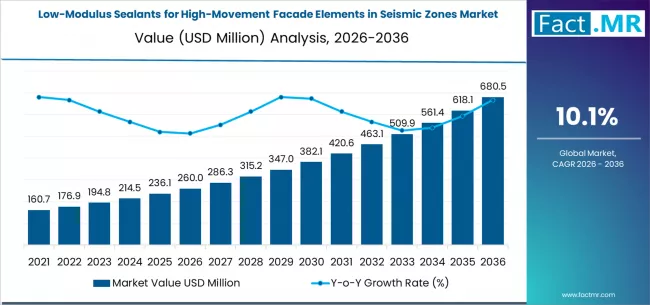
Commercial offices and mixed-use towers constitute the leading building type segment, holding a 36% share. Within applications, curtain wall and unitized façades dominate with a 38% share. This growth is fundamentally driven by the increasing construction of high-rise and complex buildings in seismically active regions, coupled with stringent building codes that mandate enhanced envelope performance. These structures require sealing solutions that can accommodate significant structural drift, thermal movement, and wind-induced sway without compromising air and water tightness.
Low-modulus sealants, characterized by their high elasticity and elongation capacity, are engineered to withstand the dynamic movements inherent in modern façades located in earthquake-prone areas. Their performance is critical not only for maintaining the building envelope’s integrity but also for ensuring long-term durability, occupant safety, and reduced maintenance costs in demanding environmental conditions.
Low-Modulus Sealants for High-Movement Façade Elements in Seismic Zones Market
| Metric | Value |
|---|---|
| Market Value (2026) | USD 260.00 Million |
| Market Forecast Value (2036) | USD 680.53 Million |
| Forecast CAGR (2026-2036) | 10.1% |
Category
| Category | Segments |
|---|---|
| Sealant Chemistry | Low-Modulus Silicone Sealants, Hybrid / Silane-Terminated Polymer Sealants, Polyurethane Low-Modulus Sealants, Other Elastomeric / Acrylic Systems |
| Façade Element Type | Curtain Wall & Unitized Façades, Point-Supported / Structural Glazing, Rainscreen & Cladding Systems, Window Wall & Storefront Systems, Other High-Movement Joints |
| Building Type | Commercial Offices & Mixed-Use Towers, Residential High-Rise & Mid-Rise, Institutional & Healthcare Buildings, Critical Infrastructure & Public Buildings, Industrial & Others |
| Region | North America, Latin America, Western Europe, Eastern Europe, East Asia, South Asia & Pacific, MEA |
Segmental Analysis
By Sealant Chemistry, Which Formulation Leads in Demand for Seismic Performance?
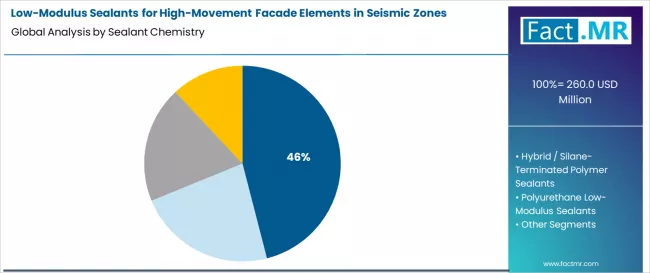
Low-modulus silicone sealants command a dominant 46% share of the market. Their leadership is attributed to a proven track record of exceptional weatherability, ultraviolet resistance, and sustained elasticity over a wide temperature range. In seismic zones, where façades must endure decades of cyclical movement, silicones offer the most reliable long-term performance, maintaining adhesion and cohesion under repeated stress. Their compatibility with a vast array of substrates including glass, metal, and concrete makes them a preferred, specification-grade solution for critical joints.
By Façade Element Type, Where is Sealing Performance Most Critical?
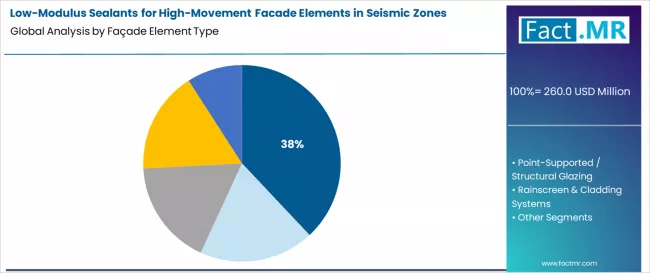
Curtain wall and unitized façade systems represent the largest application segment at 38%. These extensive, prefabricated glazing systems contain numerous linear joints that are primary points of vulnerability. They are subject to complex multi-directional movements from seismic events, thermal cycling, and wind pressure. The failure of a sealant in these joints can lead to significant water intrusion, air leakage, and costly repairs. This risk concentrates demand on high-performance, low-modulus sealants specifically validated for such large-scale, movement-intensive applications.
By Building Type, Which Sector Drives Specification of Advanced Sealants?
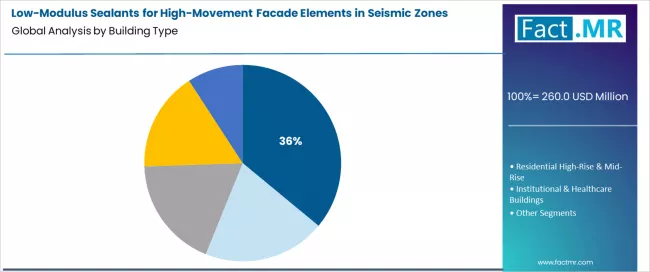
Commercial offices and mixed-use towers lead with a 36% share. The drive for iconic, high-rise architecture in urban centers, many located in seismic belts, creates a concentrated demand for advanced façade engineering. Developers and owners of these high-value assets prioritize materials that minimize lifecycle costs and protect the building’s function and aesthetics. The scale and visibility of these projects make them key adopters of the most performative sealing technologies, setting standards for the broader market.
What are the Drivers, Restrains and Key Trends of the Low-Modulus Sealants for High-Movement Façade Elements in Seismic Zones Market?
The primary market driver is the global proliferation of stringent seismic building codes and façade performance standards. Regulations in regions like East Asia and North America increasingly mandate rigorous testing for façade systems under simulated seismic movement, pushing specifiers toward certified low-modulus solutions. The trend toward taller, lighter, and more glazed buildings further amplifies the movement challenges that these sealants are designed to address.
A significant market restraint is the higher initial cost of premium low-modulus sealants, particularly silicones and advanced hybrids, compared to standard-grade products. While the total cost of ownership is lower, budget constraints in some projects can limit adoption. Furthermore, the requirement for precise application by skilled labor and potential compatibility issues with certain substrates or old sealants can pose technical barriers to retrofit and renovation markets.
Key trends shaping the market include the development of next-generation hybrid sealants (STPE/STPU) that aim to combine the movement capability of silicones with the paintability and adhesion strengths of other chemistries. There is growing innovation in transparent and colored low-modulus sealants to meet architectural design demands without sacrificing performance. The market is also moving toward digital integration and specification, with manufacturers providing BIM objects and detailed movement capability data to facilitate accurate selection and integration into digital design workflows for complex façades.
Analysis of the Low-Modulus Sealants for High-Movement Façade Elements in Seismic Zones Market by Key Countries
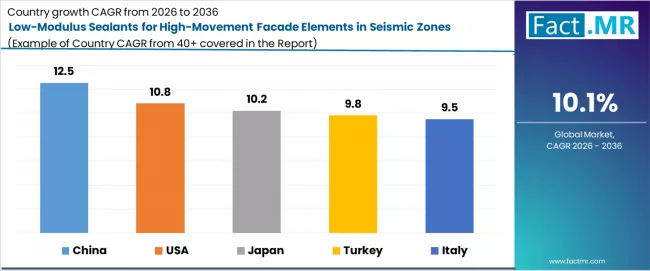
| Country | CAGR (2026-2036) |
|---|---|
| China | 12.50% |
| USA | 10.80% |
| Japan | 10.20% |
| Turkey | 9.80% |
| Italy | 9.50% |
How is China’s Rapid Urbanization and Seismic Preparedness Shaping Demand?
China’s leading CAGR of 12.50% is fueled by its unparalleled volume of high-rise construction in seismically active zones, combined with ambitious green and resilient city initiatives. The national enforcement of strict seismic design codes and a growing focus on building longevity and safety are compelling developers to invest in high-performance façade systems, thereby accelerating demand for certified low-modulus sealants.
What is the Impact of Evolving USA’s Building Codes on the Market?
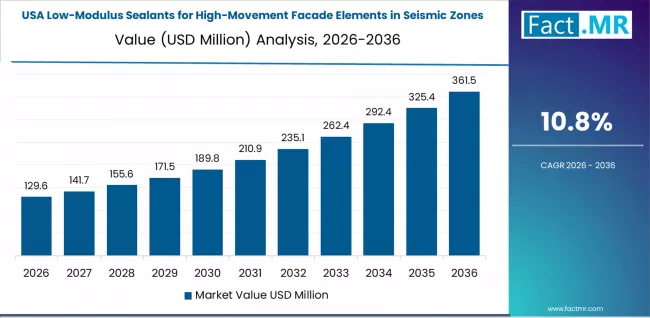
The USA’S market growth of 10.80% is underpinned by the widespread adoption of the latest International Building Code (IBC) provisions, which emphasize continuous load paths and façade integrity. The booming construction of commercial high-rises in coastal and seismic regions, alongside a strong culture of performance-based specification and liability awareness, makes the USA’S a high-volume market for advanced sealing technologies.
How does Japan’s Legacy of Seismic Engineering Influence Product Specification?
Japan’s 10.20% growth reflects its world-leading seismic engineering standards and dense urban high-rise environment. The Japanese market demands sealants with the highest proven credentials for long-term durability under extreme cyclical movement. This environment fosters innovation and sets a global benchmark for product performance and testing protocols.
Why is Turkey a Significant Growth Market for Low-Modulus Sealants?
Significant urban redevelopment and a high volume of new construction in a region of high seismic activity drive Turkey’s 9.80% CAGR. Recent updates to national seismic codes have raised performance requirements for building envelopes, creating a direct and growing need for specialized sealants that can meet these enhanced standards for movement accommodation.
What Role does Italy’s Focus on Architectural Heritage and Seismic Retrofitting Play?
Italy’s growth of 9.50% is supported by two key factors: the stringent seismic retrofitting requirements for the country’s vast historical building stock, and the construction of modern high-rises in cities like Milan. This dual demand—from both renovation of sensitive structures and new iconic builds creates a sophisticated market for specialized, high-performance sealing solutions.
Competitive Landscape of the Low-Modulus Sealants for High-Movement Façade Elements in Seismic Zones Market
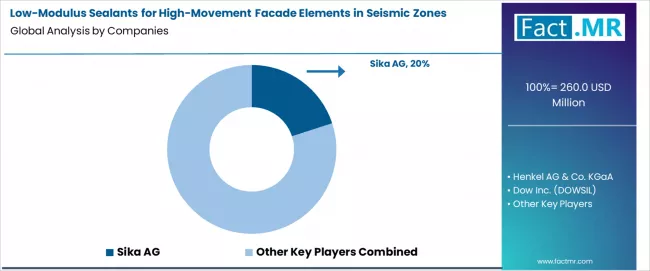
The competitive landscape is defined by global specialty chemical and construction material giants competing on the basis of technological innovation, product certification, and technical support. Leading players like Sika AG, Dow Inc., and Henkel leverage their deep material science expertise to formulate sealants that meet or exceed international standards for seismic movement.
Competition intensifies around providing comprehensive system solutions, including primers and accessories, backed by extensive third-party testing data and project-specific engineering support. A key differentiator is the ability to guide architects and contractors through the complexities of sealing dynamic joints in high-stakes projects.
Key Players in the Low-Modulus Sealants for High-Movement Façade Elements in Seismic Zones Market
- Sika AG
- Henkel AG & Co. KGaA
- Dow Inc. (DOWSIL)
- Tremco CPG
- Mapei S.p.A.
Scope of Report
| Items | Values |
|---|---|
| Quantitative Units | USD Million |
| Sealant Chemistry | Low-Modulus Silicone, Hybrid (STPE/STPU), Polyurethane, Other Elastomerics |
| Façade Element Type | Curtain Wall & Unitized, Structural Glazing, Rainscreen & Cladding, Window Wall, Others |
| Building Type | Commercial, Residential High-Rise, Institutional/Healthcare, Critical Infrastructure, Industrial |
| Key Countries | China, USA, Japan, Turkey, Italy |
| Key Companies | Sika AG, Henkel AG & Co. KGaA, Dow Inc. (DOWSIL), Tremco CPG, Mapei S.p.A. |
| Additional Analysis | Analysis of seismic movement testing standards (e.g., AAMA, ASTM); adhesion and compatibility testing on diverse substrates; lifecycle cost analysis versus standard sealants; regulatory landscape for façade performance in seismic zones; supply chain dynamics for key raw materials like silicones. |
Market by Segments
-
Sealant Chemistry :
- Low-Modulus Silicone Sealants
- Hybrid / Silane-Terminated Polymer (STPE/STPU) Sealants
- Polyurethane Low-Modulus Sealants
- Other Elastomeric / Acrylic Systems
-
Façade Element Type :
- Curtain Wall & Unitized Façades
- Point-Supported / Structural Glazing
- Rainscreen & Cladding Systems
- Window Wall & Storefront Systems
- Other High-Movement Joints
-
Building Type :
- Commercial Offices & Mixed-Use Towers
- Residential High-Rise & Mid-Rise
- Institutional & Healthcare Buildings
- Critical Infrastructure & Public Buildings
- Industrial & Others
-
Region :
-
North America
- USA
- Canada
-
Latin America
- Brazil
- Mexico
- Argentina
- Rest of Latin America
-
Western Europe
- Germany
- UK
- France
- Spain
- Italy
- BENELUX
- Rest of Western Europe
-
Eastern Europe
- Russia
- Poland
- Czech Republic
- Rest of Eastern Europe
-
East Asia
- China
- Japan
- South Korea
- Rest of East Asia
-
South Asia & Pacific
- India
- ASEAN
- Australia
- Rest of South Asia & Pacific
-
MEA
- Saudi Arabia
- UAE
- Turkiye
- Rest of MEA
-
Table of Content
- Executive Summary
- Global Market Outlook
- Demand to side Trends
- Supply to side Trends
- Technology Roadmap Analysis
- Analysis and Recommendations
- Market Overview
- Market Coverage / Taxonomy
- Market Definition / Scope / Limitations
- Market Background
- Market Dynamics
- Drivers
- Restraints
- Opportunity
- Trends
- Scenario Forecast
- Demand in Optimistic Scenario
- Demand in Likely Scenario
- Demand in Conservative Scenario
- Opportunity Map Analysis
- Product Life Cycle Analysis
- Supply Chain Analysis
- Investment Feasibility Matrix
- Value Chain Analysis
- PESTLE and Porter’s Analysis
- Regulatory Landscape
- Regional Parent Market Outlook
- Production and Consumption Statistics
- Import and Export Statistics
- Market Dynamics
- Global Market Analysis 2021 to 2025 and Forecast, 2026 to 2036
- Historical Market Size Value (USD Million) Analysis, 2021 to 2025
- Current and Future Market Size Value (USD Million) Projections, 2026 to 2036
- Y to o to Y Growth Trend Analysis
- Absolute $ Opportunity Analysis
- Global Market Pricing Analysis 2021 to 2025 and Forecast 2026 to 2036
- Global Market Analysis 2021 to 2025 and Forecast 2026 to 2036, By Sealant Chemistry
- Introduction / Key Findings
- Historical Market Size Value (USD Million) Analysis By Sealant Chemistry, 2021 to 2025
- Current and Future Market Size Value (USD Million) Analysis and Forecast By Sealant Chemistry, 2026 to 2036
- Low-Modulus Silicone Sealants
- Hybrid / Silane-Terminated Polymer Sealants
- Polyurethane Low-Modulus Sealants
- Other Elastomeric / Acrylic Systems
- Low-Modulus Silicone Sealants
- Y to o to Y Growth Trend Analysis By Sealant Chemistry, 2021 to 2025
- Absolute $ Opportunity Analysis By Sealant Chemistry, 2026 to 2036
- Global Market Analysis 2021 to 2025 and Forecast 2026 to 2036, By Façade Element Type
- Introduction / Key Findings
- Historical Market Size Value (USD Million) Analysis By Façade Element Type, 2021 to 2025
- Current and Future Market Size Value (USD Million) Analysis and Forecast By Façade Element Type, 2026 to 2036
- Curtain Wall & Value (USD Million)ized Façades
- Point-Supported / Structural Glazing
- Rainscreen & Cladding Systems
- Window Wall & Storefront Systems
- Other High-Movement Joints
- Curtain Wall & Value (USD Million)ized Façades
- Y to o to Y Growth Trend Analysis By Façade Element Type, 2021 to 2025
- Absolute $ Opportunity Analysis By Façade Element Type, 2026 to 2036
- Global Market Analysis 2021 to 2025 and Forecast 2026 to 2036, By Building Type
- Introduction / Key Findings
- Historical Market Size Value (USD Million) Analysis By Building Type, 2021 to 2025
- Current and Future Market Size Value (USD Million) Analysis and Forecast By Building Type, 2026 to 2036
- Commercial Offices & Mixed-Use Towers
- Residential High-Rise & Mid-Rise
- Institutional & Healthcare Buildings
- Critical Infrastructure & Public Buildings
- Industrial & Others
- Commercial Offices & Mixed-Use Towers
- Y to o to Y Growth Trend Analysis By Building Type, 2021 to 2025
- Absolute $ Opportunity Analysis By Building Type, 2026 to 2036
- Global Market Analysis 2021 to 2025 and Forecast 2026 to 2036, By Region
- Introduction
- Historical Market Size Value (USD Million) Analysis By Region, 2021 to 2025
- Current Market Size Value (USD Million) Analysis and Forecast By Region, 2026 to 2036
- North America
- Latin America
- Western Europe
- Eastern Europe
- East Asia
- South Asia and Pacific
- Middle East & Africa
- Market Attractiveness Analysis By Region
- North America Market Analysis 2021 to 2025 and Forecast 2026 to 2036, By Country
- Historical Market Size Value (USD Million) Trend Analysis By Market Taxonomy, 2021 to 2025
- Market Size Value (USD Million) Forecast By Market Taxonomy, 2026 to 2036
- By Country
- USA
- Canada
- Mexico
- By Sealant Chemistry
- By Façade Element Type
- By Building Type
- By Country
- Market Attractiveness Analysis
- By Country
- By Sealant Chemistry
- By Façade Element Type
- By Building Type
- Key Takeaways
- Latin America Market Analysis 2021 to 2025 and Forecast 2026 to 2036, By Country
- Historical Market Size Value (USD Million) Trend Analysis By Market Taxonomy, 2021 to 2025
- Market Size Value (USD Million) Forecast By Market Taxonomy, 2026 to 2036
- By Country
- Brazil
- Chile
- Rest of Latin America
- By Sealant Chemistry
- By Façade Element Type
- By Building Type
- By Country
- Market Attractiveness Analysis
- By Country
- By Sealant Chemistry
- By Façade Element Type
- By Building Type
- Key Takeaways
- Western Europe Market Analysis 2021 to 2025 and Forecast 2026 to 2036, By Country
- Historical Market Size Value (USD Million) Trend Analysis By Market Taxonomy, 2021 to 2025
- Market Size Value (USD Million) Forecast By Market Taxonomy, 2026 to 2036
- By Country
- Germany
- UK
- Italy
- Spain
- France
- Nordic
- BENELUX
- Rest of Western Europe
- By Sealant Chemistry
- By Façade Element Type
- By Building Type
- By Country
- Market Attractiveness Analysis
- By Country
- By Sealant Chemistry
- By Façade Element Type
- By Building Type
- Key Takeaways
- Eastern Europe Market Analysis 2021 to 2025 and Forecast 2026 to 2036, By Country
- Historical Market Size Value (USD Million) Trend Analysis By Market Taxonomy, 2021 to 2025
- Market Size Value (USD Million) Forecast By Market Taxonomy, 2026 to 2036
- By Country
- Russia
- Poland
- Hungary
- Balkan & Baltic
- Rest of Eastern Europe
- By Sealant Chemistry
- By Façade Element Type
- By Building Type
- By Country
- Market Attractiveness Analysis
- By Country
- By Sealant Chemistry
- By Façade Element Type
- By Building Type
- Key Takeaways
- East Asia Market Analysis 2021 to 2025 and Forecast 2026 to 2036, By Country
- Historical Market Size Value (USD Million) Trend Analysis By Market Taxonomy, 2021 to 2025
- Market Size Value (USD Million) Forecast By Market Taxonomy, 2026 to 2036
- By Country
- China
- Japan
- South Korea
- By Sealant Chemistry
- By Façade Element Type
- By Building Type
- By Country
- Market Attractiveness Analysis
- By Country
- By Sealant Chemistry
- By Façade Element Type
- By Building Type
- Key Takeaways
- South Asia and Pacific Market Analysis 2021 to 2025 and Forecast 2026 to 2036, By Country
- Historical Market Size Value (USD Million) Trend Analysis By Market Taxonomy, 2021 to 2025
- Market Size Value (USD Million) Forecast By Market Taxonomy, 2026 to 2036
- By Country
- India
- ASEAN
- Australia & New Zealand
- Rest of South Asia and Pacific
- By Sealant Chemistry
- By Façade Element Type
- By Building Type
- By Country
- Market Attractiveness Analysis
- By Country
- By Sealant Chemistry
- By Façade Element Type
- By Building Type
- Key Takeaways
- Middle East & Africa Market Analysis 2021 to 2025 and Forecast 2026 to 2036, By Country
- Historical Market Size Value (USD Million) Trend Analysis By Market Taxonomy, 2021 to 2025
- Market Size Value (USD Million) Forecast By Market Taxonomy, 2026 to 2036
- By Country
- Kingdom of Saudi Arabia
- Other GCC Countries
- Turkiye
- South Africa
- Other African Union
- Rest of Middle East & Africa
- By Sealant Chemistry
- By Façade Element Type
- By Building Type
- By Country
- Market Attractiveness Analysis
- By Country
- By Sealant Chemistry
- By Façade Element Type
- By Building Type
- Key Takeaways
- Key Countries Market Analysis
- USA
- Pricing Analysis
- Market Share Analysis, 2025
- By Sealant Chemistry
- By Façade Element Type
- By Building Type
- Canada
- Pricing Analysis
- Market Share Analysis, 2025
- By Sealant Chemistry
- By Façade Element Type
- By Building Type
- Mexico
- Pricing Analysis
- Market Share Analysis, 2025
- By Sealant Chemistry
- By Façade Element Type
- By Building Type
- Brazil
- Pricing Analysis
- Market Share Analysis, 2025
- By Sealant Chemistry
- By Façade Element Type
- By Building Type
- Chile
- Pricing Analysis
- Market Share Analysis, 2025
- By Sealant Chemistry
- By Façade Element Type
- By Building Type
- Germany
- Pricing Analysis
- Market Share Analysis, 2025
- By Sealant Chemistry
- By Façade Element Type
- By Building Type
- UK
- Pricing Analysis
- Market Share Analysis, 2025
- By Sealant Chemistry
- By Façade Element Type
- By Building Type
- Italy
- Pricing Analysis
- Market Share Analysis, 2025
- By Sealant Chemistry
- By Façade Element Type
- By Building Type
- Spain
- Pricing Analysis
- Market Share Analysis, 2025
- By Sealant Chemistry
- By Façade Element Type
- By Building Type
- France
- Pricing Analysis
- Market Share Analysis, 2025
- By Sealant Chemistry
- By Façade Element Type
- By Building Type
- India
- Pricing Analysis
- Market Share Analysis, 2025
- By Sealant Chemistry
- By Façade Element Type
- By Building Type
- ASEAN
- Pricing Analysis
- Market Share Analysis, 2025
- By Sealant Chemistry
- By Façade Element Type
- By Building Type
- Australia & New Zealand
- Pricing Analysis
- Market Share Analysis, 2025
- By Sealant Chemistry
- By Façade Element Type
- By Building Type
- China
- Pricing Analysis
- Market Share Analysis, 2025
- By Sealant Chemistry
- By Façade Element Type
- By Building Type
- Japan
- Pricing Analysis
- Market Share Analysis, 2025
- By Sealant Chemistry
- By Façade Element Type
- By Building Type
- South Korea
- Pricing Analysis
- Market Share Analysis, 2025
- By Sealant Chemistry
- By Façade Element Type
- By Building Type
- Russia
- Pricing Analysis
- Market Share Analysis, 2025
- By Sealant Chemistry
- By Façade Element Type
- By Building Type
- Poland
- Pricing Analysis
- Market Share Analysis, 2025
- By Sealant Chemistry
- By Façade Element Type
- By Building Type
- Hungary
- Pricing Analysis
- Market Share Analysis, 2025
- By Sealant Chemistry
- By Façade Element Type
- By Building Type
- Kingdom of Saudi Arabia
- Pricing Analysis
- Market Share Analysis, 2025
- By Sealant Chemistry
- By Façade Element Type
- By Building Type
- Turkiye
- Pricing Analysis
- Market Share Analysis, 2025
- By Sealant Chemistry
- By Façade Element Type
- By Building Type
- South Africa
- Pricing Analysis
- Market Share Analysis, 2025
- By Sealant Chemistry
- By Façade Element Type
- By Building Type
- USA
- Market Structure Analysis
- Competition Dashboard
- Competition Benchmarking
- Market Share Analysis of Top Players
- By Regional
- By Sealant Chemistry
- By Façade Element Type
- By Building Type
- Competition Analysis
- Competition Deep Dive
- Sika AG
- Overview
- Product Portfolio
- Profitability by Market Segments (Product/Age /Sales Channel/Region)
- Sales Footprint
- Strategy Overview
- Marketing Strategy
- Product Strategy
- Channel Strategy
- Henkel AG & Co. KGaA
- Dow Inc. (DOWSIL)
- Tremco CPG
- Mapei S.p.A.
- Sika AG
- Competition Deep Dive
- Assumptions & Acronyms Used
- Research Methodology
List Of Table
- Table 1: Global Market Value (USD Million) Forecast by Region, 2021 to 2036
- Table 2: Global Market Value (USD Million) Forecast by Sealant Chemistry, 2021 to 2036
- Table 3: Global Market Value (USD Million) Forecast by Façade Element Type, 2021 to 2036
- Table 4: Global Market Value (USD Million) Forecast by Building Type, 2021 to 2036
- Table 5: North America Market Value (USD Million) Forecast by Country, 2021 to 2036
- Table 6: North America Market Value (USD Million) Forecast by Sealant Chemistry, 2021 to 2036
- Table 7: North America Market Value (USD Million) Forecast by Façade Element Type, 2021 to 2036
- Table 8: North America Market Value (USD Million) Forecast by Building Type, 2021 to 2036
- Table 9: Latin America Market Value (USD Million) Forecast by Country, 2021 to 2036
- Table 10: Latin America Market Value (USD Million) Forecast by Sealant Chemistry, 2021 to 2036
- Table 11: Latin America Market Value (USD Million) Forecast by Façade Element Type, 2021 to 2036
- Table 12: Latin America Market Value (USD Million) Forecast by Building Type, 2021 to 2036
- Table 13: Western Europe Market Value (USD Million) Forecast by Country, 2021 to 2036
- Table 14: Western Europe Market Value (USD Million) Forecast by Sealant Chemistry, 2021 to 2036
- Table 15: Western Europe Market Value (USD Million) Forecast by Façade Element Type, 2021 to 2036
- Table 16: Western Europe Market Value (USD Million) Forecast by Building Type, 2021 to 2036
- Table 17: Eastern Europe Market Value (USD Million) Forecast by Country, 2021 to 2036
- Table 18: Eastern Europe Market Value (USD Million) Forecast by Sealant Chemistry, 2021 to 2036
- Table 19: Eastern Europe Market Value (USD Million) Forecast by Façade Element Type, 2021 to 2036
- Table 20: Eastern Europe Market Value (USD Million) Forecast by Building Type, 2021 to 2036
- Table 21: East Asia Market Value (USD Million) Forecast by Country, 2021 to 2036
- Table 22: East Asia Market Value (USD Million) Forecast by Sealant Chemistry, 2021 to 2036
- Table 23: East Asia Market Value (USD Million) Forecast by Façade Element Type, 2021 to 2036
- Table 24: East Asia Market Value (USD Million) Forecast by Building Type, 2021 to 2036
- Table 25: South Asia and Pacific Market Value (USD Million) Forecast by Country, 2021 to 2036
- Table 26: South Asia and Pacific Market Value (USD Million) Forecast by Sealant Chemistry, 2021 to 2036
- Table 27: South Asia and Pacific Market Value (USD Million) Forecast by Façade Element Type, 2021 to 2036
- Table 28: South Asia and Pacific Market Value (USD Million) Forecast by Building Type, 2021 to 2036
- Table 29: Middle East & Africa Market Value (USD Million) Forecast by Country, 2021 to 2036
- Table 30: Middle East & Africa Market Value (USD Million) Forecast by Sealant Chemistry, 2021 to 2036
- Table 31: Middle East & Africa Market Value (USD Million) Forecast by Façade Element Type, 2021 to 2036
- Table 32: Middle East & Africa Market Value (USD Million) Forecast by Building Type, 2021 to 2036
List Of Figures
- Figure 1: Global Market Pricing Analysis
- Figure 2: Global Market Value (USD Million) Forecast 2021 to 2036
- Figure 3: Global Market Value Share and BPS Analysis by Sealant Chemistry, 2026 and 2036
- Figure 4: Global Market Y to o to Y Growth Comparison by Sealant Chemistry, 2026 to 2036
- Figure 5: Global Market Attractiveness Analysis by Sealant Chemistry
- Figure 6: Global Market Value Share and BPS Analysis by Façade Element Type, 2026 and 2036
- Figure 7: Global Market Y to o to Y Growth Comparison by Façade Element Type, 2026 to 2036
- Figure 8: Global Market Attractiveness Analysis by Façade Element Type
- Figure 9: Global Market Value Share and BPS Analysis by Building Type, 2026 and 2036
- Figure 10: Global Market Y to o to Y Growth Comparison by Building Type, 2026 to 2036
- Figure 11: Global Market Attractiveness Analysis by Building Type
- Figure 12: Global Market Value (USD Million) Share and BPS Analysis by Region, 2026 and 2036
- Figure 13: Global Market Y to o to Y Growth Comparison by Region, 2026 to 2036
- Figure 14: Global Market Attractiveness Analysis by Region
- Figure 15: North America Market Incremental Dollar Opportunity, 2026 to 2036
- Figure 16: Latin America Market Incremental Dollar Opportunity, 2026 to 2036
- Figure 17: Western Europe Market Incremental Dollar Opportunity, 2026 to 2036
- Figure 18: Eastern Europe Market Incremental Dollar Opportunity, 2026 to 2036
- Figure 19: East Asia Market Incremental Dollar Opportunity, 2026 to 2036
- Figure 20: South Asia and Pacific Market Incremental Dollar Opportunity, 2026 to 2036
- Figure 21: Middle East & Africa Market Incremental Dollar Opportunity, 2026 to 2036
- Figure 22: North America Market Value Share and BPS Analysis by Country, 2026 and 2036
- Figure 23: North America Market Value Share and BPS Analysis by Sealant Chemistry, 2026 and 2036
- Figure 24: North America Market Y to o to Y Growth Comparison by Sealant Chemistry, 2026 to 2036
- Figure 25: North America Market Attractiveness Analysis by Sealant Chemistry
- Figure 26: North America Market Value Share and BPS Analysis by Façade Element Type, 2026 and 2036
- Figure 27: North America Market Y to o to Y Growth Comparison by Façade Element Type, 2026 to 2036
- Figure 28: North America Market Attractiveness Analysis by Façade Element Type
- Figure 29: North America Market Value Share and BPS Analysis by Building Type, 2026 and 2036
- Figure 30: North America Market Y to o to Y Growth Comparison by Building Type, 2026 to 2036
- Figure 31: North America Market Attractiveness Analysis by Building Type
- Figure 32: Latin America Market Value Share and BPS Analysis by Country, 2026 and 2036
- Figure 33: Latin America Market Value Share and BPS Analysis by Sealant Chemistry, 2026 and 2036
- Figure 34: Latin America Market Y to o to Y Growth Comparison by Sealant Chemistry, 2026 to 2036
- Figure 35: Latin America Market Attractiveness Analysis by Sealant Chemistry
- Figure 36: Latin America Market Value Share and BPS Analysis by Façade Element Type, 2026 and 2036
- Figure 37: Latin America Market Y to o to Y Growth Comparison by Façade Element Type, 2026 to 2036
- Figure 38: Latin America Market Attractiveness Analysis by Façade Element Type
- Figure 39: Latin America Market Value Share and BPS Analysis by Building Type, 2026 and 2036
- Figure 40: Latin America Market Y to o to Y Growth Comparison by Building Type, 2026 to 2036
- Figure 41: Latin America Market Attractiveness Analysis by Building Type
- Figure 42: Western Europe Market Value Share and BPS Analysis by Country, 2026 and 2036
- Figure 43: Western Europe Market Value Share and BPS Analysis by Sealant Chemistry, 2026 and 2036
- Figure 44: Western Europe Market Y to o to Y Growth Comparison by Sealant Chemistry, 2026 to 2036
- Figure 45: Western Europe Market Attractiveness Analysis by Sealant Chemistry
- Figure 46: Western Europe Market Value Share and BPS Analysis by Façade Element Type, 2026 and 2036
- Figure 47: Western Europe Market Y to o to Y Growth Comparison by Façade Element Type, 2026 to 2036
- Figure 48: Western Europe Market Attractiveness Analysis by Façade Element Type
- Figure 49: Western Europe Market Value Share and BPS Analysis by Building Type, 2026 and 2036
- Figure 50: Western Europe Market Y to o to Y Growth Comparison by Building Type, 2026 to 2036
- Figure 51: Western Europe Market Attractiveness Analysis by Building Type
- Figure 52: Eastern Europe Market Value Share and BPS Analysis by Country, 2026 and 2036
- Figure 53: Eastern Europe Market Value Share and BPS Analysis by Sealant Chemistry, 2026 and 2036
- Figure 54: Eastern Europe Market Y to o to Y Growth Comparison by Sealant Chemistry, 2026 to 2036
- Figure 55: Eastern Europe Market Attractiveness Analysis by Sealant Chemistry
- Figure 56: Eastern Europe Market Value Share and BPS Analysis by Façade Element Type, 2026 and 2036
- Figure 57: Eastern Europe Market Y to o to Y Growth Comparison by Façade Element Type, 2026 to 2036
- Figure 58: Eastern Europe Market Attractiveness Analysis by Façade Element Type
- Figure 59: Eastern Europe Market Value Share and BPS Analysis by Building Type, 2026 and 2036
- Figure 60: Eastern Europe Market Y to o to Y Growth Comparison by Building Type, 2026 to 2036
- Figure 61: Eastern Europe Market Attractiveness Analysis by Building Type
- Figure 62: East Asia Market Value Share and BPS Analysis by Country, 2026 and 2036
- Figure 63: East Asia Market Value Share and BPS Analysis by Sealant Chemistry, 2026 and 2036
- Figure 64: East Asia Market Y to o to Y Growth Comparison by Sealant Chemistry, 2026 to 2036
- Figure 65: East Asia Market Attractiveness Analysis by Sealant Chemistry
- Figure 66: East Asia Market Value Share and BPS Analysis by Façade Element Type, 2026 and 2036
- Figure 67: East Asia Market Y to o to Y Growth Comparison by Façade Element Type, 2026 to 2036
- Figure 68: East Asia Market Attractiveness Analysis by Façade Element Type
- Figure 69: East Asia Market Value Share and BPS Analysis by Building Type, 2026 and 2036
- Figure 70: East Asia Market Y to o to Y Growth Comparison by Building Type, 2026 to 2036
- Figure 71: East Asia Market Attractiveness Analysis by Building Type
- Figure 72: South Asia and Pacific Market Value Share and BPS Analysis by Country, 2026 and 2036
- Figure 73: South Asia and Pacific Market Value Share and BPS Analysis by Sealant Chemistry, 2026 and 2036
- Figure 74: South Asia and Pacific Market Y to o to Y Growth Comparison by Sealant Chemistry, 2026 to 2036
- Figure 75: South Asia and Pacific Market Attractiveness Analysis by Sealant Chemistry
- Figure 76: South Asia and Pacific Market Value Share and BPS Analysis by Façade Element Type, 2026 and 2036
- Figure 77: South Asia and Pacific Market Y to o to Y Growth Comparison by Façade Element Type, 2026 to 2036
- Figure 78: South Asia and Pacific Market Attractiveness Analysis by Façade Element Type
- Figure 79: South Asia and Pacific Market Value Share and BPS Analysis by Building Type, 2026 and 2036
- Figure 80: South Asia and Pacific Market Y to o to Y Growth Comparison by Building Type, 2026 to 2036
- Figure 81: South Asia and Pacific Market Attractiveness Analysis by Building Type
- Figure 82: Middle East & Africa Market Value Share and BPS Analysis by Country, 2026 and 2036
- Figure 83: Middle East & Africa Market Value Share and BPS Analysis by Sealant Chemistry, 2026 and 2036
- Figure 84: Middle East & Africa Market Y to o to Y Growth Comparison by Sealant Chemistry, 2026 to 2036
- Figure 85: Middle East & Africa Market Attractiveness Analysis by Sealant Chemistry
- Figure 86: Middle East & Africa Market Value Share and BPS Analysis by Façade Element Type, 2026 and 2036
- Figure 87: Middle East & Africa Market Y to o to Y Growth Comparison by Façade Element Type, 2026 to 2036
- Figure 88: Middle East & Africa Market Attractiveness Analysis by Façade Element Type
- Figure 89: Middle East & Africa Market Value Share and BPS Analysis by Building Type, 2026 and 2036
- Figure 90: Middle East & Africa Market Y to o to Y Growth Comparison by Building Type, 2026 to 2036
- Figure 91: Middle East & Africa Market Attractiveness Analysis by Building Type
- Figure 92: Global Market - Tier Structure Analysis
- Figure 93: Global Market - Company Share Analysis
- FAQs -
How big is the low-modulus sealants for high-movement facade elements in seismic zones market in 2026?
The global low-modulus sealants for high-movement facade elements in seismic zones market is estimated to be valued at USD 260.0 million in 2026.
What will be the size of low-modulus sealants for high-movement facade elements in seismic zones market in 2036?
The market size for the low-modulus sealants for high-movement facade elements in seismic zones market is projected to reach USD 680.5 million by 2036.
How much will be the low-modulus sealants for high-movement facade elements in seismic zones market growth between 2026 and 2036?
The low-modulus sealants for high-movement facade elements in seismic zones market is expected to grow at a 10.1% CAGR between 2026 and 2036.
What are the key product types in the low-modulus sealants for high-movement facade elements in seismic zones market?
The key product types in low-modulus sealants for high-movement facade elements in seismic zones market are low-modulus silicone sealants, hybrid / silane-terminated polymer sealants, polyurethane low-modulus sealants and other elastomeric / acrylic systems.
Which façade element type segment to contribute significant share in the low-modulus sealants for high-movement facade elements in seismic zones market in 2026?
In terms of façade element type, curtain wall & unitized façades segment to command 38.0% share in the low-modulus sealants for high-movement facade elements in seismic zones market in 2026.