- Market Value (2025): USD 6.5 Bn
- Estimated Value (2026): USD 7.3 Bn
- Forecast Value (2036): USD 16.0 Bn
- CAGR (2026-2036): 8.2%
What is the oxygen cannula cushions market forecast to be worth by 2036?
USD 7.3 billion in 2026 to USD 16.0 billion by 2036, at 8.2% CAGR.
- The oxygen cannula cushions market crossed a valuation of USD 6.5 billion in 2025.
- Demand is expected to increase from USD 7.3 billion in 2026 to USD 16.0 billion by 2036.
- The market is forecast to record 8.2% CAGR from 2026 to 2036 as oxygen users adopt comfort pads and cushioned cannulas for longer daily wear.
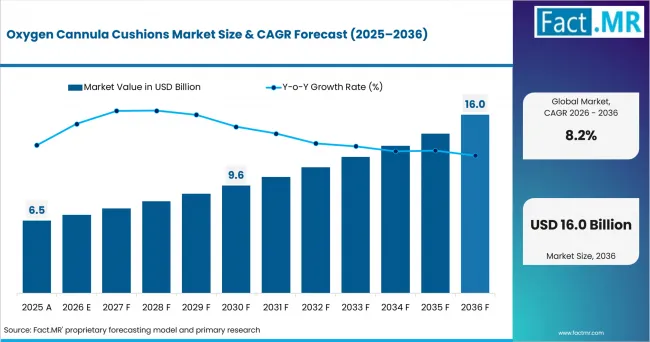
Oxygen Cannula Cushions Market Market Value Analysis | Source: Fact.MR
What are the defining numbers behind oxygen cannula cushion market growth?
USD 8.7 billion absolute opportunity by 2036, led by the United States and the United Kingdom.
- Demand Drivers in the Market
- Home oxygen users need softer tubing contact during extended wear.
- DME providers need low-cost accessories that reduce comfort complaints.
- Hospitals need comfort pads for patients using cannulas across long stays.
- Online retailers need compatible cushions for common oxygen tubing designs.
- Key Segments Analyzed
- By Cushion Type: Ear Cushions are expected to hold 46.0% share in 2026 because over-ear tubing pressure is the main comfort complaint.
- By Material Type: Soft Foam Cushions lead because they are inexpensive and easy to attach. The share is projected at 42.0% in 2026.
- By Cannula Compatibility: Adult Low-Flow Cannulas are likely to account for 57.0% share in 2026 because routine home oxygen use is the main application.
- By Patient Group: Long-Term Home Oxygen Users lead with 51.0% share in 2026 because daily wear creates repeated comfort needs.
- By Sales Channel: DME and Homecare Supply Programs are expected to hold 39.0% share in 2026 because oxygen accessories are often supplied with cannula replenishment.
- By Geography: The United States is projected to record 9.8% CAGR through 2036 as home oxygen supply programs expand.
- Analyst Opinion at Fact.MR
- Shambhu Nath Jha, Senior Analyst at Fact.MR, states, “Oxygen cannula cushions are small accessories with a clear role in therapy comfort. We see DME providers adding cushions to reduce pressure complaints and improve patient tolerance. Suppliers that combine soft materials with simple attachment and broad cannula fit will gain stronger access to homecare oxygen channels.”
- Strategic Implications
- Cushion suppliers should design pads that fit common oxygen tubing sizes.
- DME providers should bundle cushions with long-term oxygen supply kits.
- Hospitals should use integrated ear-guard cannulas for longer oxygen use.
- Online suppliers should mark compatibility clearly to reduce wrong-fit returns.
Oxygen cannula cushions are soft foam, fabric, silicone or gel accessories placed between cannula tubing and skin. The category connects with respiratory care devices because comfort can affect oxygen therapy tolerance. The strongest adoption case comes from users who wear nasal cannulas for several hours each day.
Sunset Healthcare Solutions lists cannula ear cushions as add-on accessories and also offers adult cannulas with ear cushions. Its catalog states that ear cushions can be added to existing cannulas and are supplied as 50 pairs per case. [1]
Intersurgical’s EarGuard option uses soft silicone foam cushions and is positioned to reduce trauma risk around the ears during nasal cannula use. [3] This supports demand for integrated comfort designs beyond separate add-on pads.
The United States is projected to record 9.8% CAGR through 2036 as DME resupply and home oxygen therapy support cushion demand. The United Kingdom is expected to post 8.9% CAGR through 2036 as hospital and homecare providers use comfort cannula options. Germany is likely to record 8.5% CAGR as respiratory care distributors expand accessory availability. Japan is forecast to advance at 8.1% CAGR as older oxygen users need soft interfaces. China is set to record 7.6% CAGR as local cannula and respiratory disposable suppliers scale low-cost comfort accessories.
How does the oxygen cannula cushions market break down by segment?
Ear Cushions lead at 46.0%; Long-Term Home Oxygen Users lead at 51.0%.
Which cushion type dominates?
Ear Cushions hold 46.0% share in 2026.
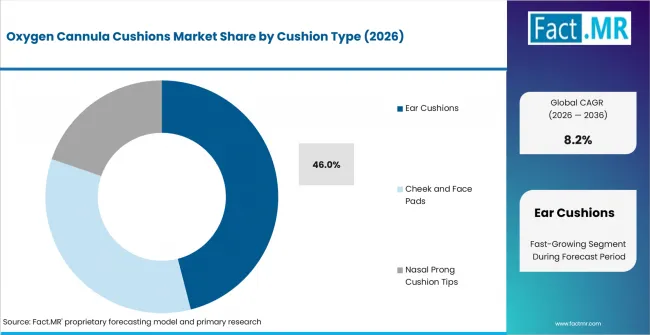
Oxygen Cannula Cushions Market Analysis By Cushion Type | Source: Fact.MR
Ear Cushions are expected to hold 46.0% share in 2026 because cannula tubing often rests behind the ears for long periods. Foam or silicone pads reduce direct pressure from tubing. This format is easy to add to existing cannulas. The segment is tied to medical disposables because many pads are low-cost consumables.
Which material type dominates?
Soft Foam Cushions account for 42.0% share in 2026.
Soft Foam Cushions lead because they are light and easy to manufacture. The material type is projected to capture 42.0% share in 2026. Sunset and Medline both support foam-based ear cushion formats. Silicone foam is gaining use where longer wear and better shape retention are needed. Fabric covers are also used by home oxygen users who prefer washable comfort accessories.
Which cannula compatibility dominates?
Adult Low-Flow Cannulas hold 57.0% share in 2026.
Adult Low-Flow Cannulas lead because standard home oxygen therapy uses simple nasal cannula systems. The compatibility group is likely to account for 57.0% share in 2026. Low-flow tubing is common in homecare and long-term oxygen therapy. Cushions can be added without changing the oxygen source or tubing setup. Oxygen therapy equipment demand is relevant because cushions are used around oxygen delivery accessories.
Which patient group dominates?
Long-Term Home Oxygen Users lead with 51.0% share in 2026.
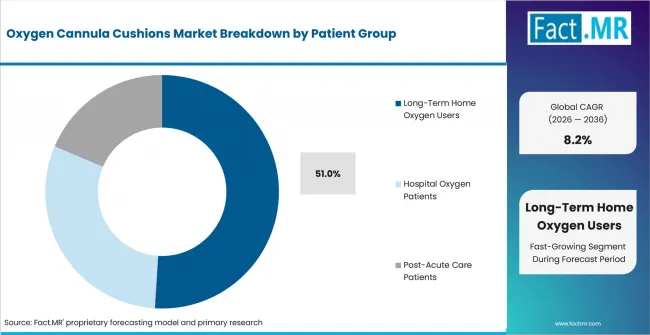
Oxygen Cannula Cushions Market Analysis By Patient Group | Source: Fact.MR
Long-Term Home Oxygen Users lead because frequent cannula wear creates repeated pressure and friction points. The patient group is expected to hold 51.0% share in 2026. Comfort cushions can help users continue oxygen therapy during daytime activities and sleep. Older patients often prefer soft accessories that are easy to attach. Home medical equipment channels support this pattern.
Which sales channel dominates?
DME and Homecare Supply Programs hold 39.0% share in 2026.
DME and homecare supply programs lead because oxygen users often receive cannulas and tubing through home respiratory providers. The channel is expected to hold 39.0% share in 2026. Cushions are easy to bundle with cannula replacement packs. Online supply is growing because users also buy comfort accessories between scheduled deliveries. Medical supply delivery services matter where recurring home oxygen supplies are shipped to patients.
What is accelerating oxygen cannula cushion demand, and what is holding it back?
Long-duration oxygen wear drives demand; low product awareness restrains adoption.
Long-duration oxygen wear is the main driver. Cannula tubing can rub behind the ears and along the cheeks. Cushion pads help reduce discomfort without changing the oxygen device.
AirLife / Salter Labs describes its comfort soft cannulas as using extremely soft tubing that supports patient comfort and helps minimize ear ulcerations. [4] This supports the broader shift toward comfort-centered cannula interfaces.
Dynarex offers cushion-tip oxygen cannulas with lightweight cushioned nasal prongs and crush-resistant tubing. [5] This supports demand for integrated cushion features at the nasal interface. Medline positions foam ear covers as soft accessories that relieve pressure around the ears. [2] This supports add-on cushion demand when users already have standard cannulas.
The main restraint is low product awareness. Many users tolerate tubing pressure or improvise with gauze before trying purpose-built cushions. DME providers can reduce this gap by introducing cushions during setup.
Where do the biggest oxygen cannula cushion opportunities sit?
Home oxygen kits, integrated ear-guard cannulas and online comfort packs.
- Home Oxygen Kits: DME providers can add cushions to new long-term oxygen starter packs.
- Integrated Ear-Guard Cannulas: Hospitals can choose cannulas with built-in comfort guards for longer stays.
- Online Comfort Packs: Retailers can sell multi-pair cushion packs for recurring home use.
Which countries are scaling oxygen cannula cushions fastest?
United States 9.8%, United Kingdom 8.9%, Germany 8.5%, Japan 8.1%, China 7.6%.
Based on regional analysis, the oxygen cannula cushions market covers North America, Western Europe, Asia Pacific, Latin America, and Middle East and Africa complete the regional scope.
| Country | CAGR |
|---|---|
| United States | 9.8% |
| United Kingdom | 8.9% |
| Germany | 8.5% |
| Japan | 8.1% |
| China | 7.6% |
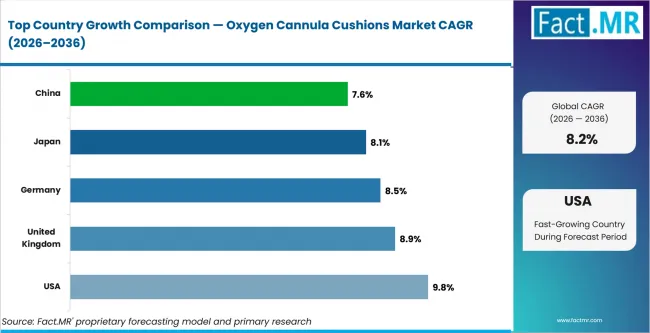
Oxygen Cannula Cushions Market Cagr Analysis By Country | Source: Fact.MR
What is powering the United States lead?
9.8% CAGR, driven by Sunset Healthcare Solutions and DME oxygen resupply.
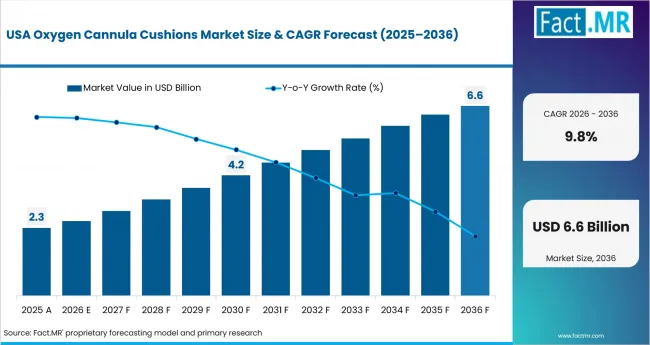
Oxygen Cannula Cushions Market Country Value Analysis | Source: Fact.MR
The United States is projected to record 9.8% CAGR from 2026 to 2036 as DME providers supply oxygen cannulas and comfort accessories to home users. Sunset Healthcare Solutions and Medline support ear cushion availability. Online oxygen accessory stores also expand access. Growth will favor multi-pair packs and cannulas with integrated cushions.
How is the United Kingdom scaling oxygen cannula cushion demand?
8.9% CAGR, supported by Intersurgical and hospital respiratory comfort programs.
The United Kingdom is expected to post 8.9% CAGR by 2036 as hospitals and homecare providers use comfort-focused cannula formats. Intersurgical supports EarGuard cannulas with soft silicone foam cushions. Long oxygen use in wards and homecare creates pressure-relief needs. Growth will favor integrated cushion designs that reduce setup steps.
What supports Germany’s outlook?
8.5% CAGR, driven by respiratory distributors and home oxygen accessory supply.
Germany is likely to record 8.5% CAGR through 2036 as respiratory care providers expand accessory options for home oxygen users. DME suppliers need reliable low-cost comfort components. Adult low-flow cannula cushions will account for most demand. Growth will favor latex-free and skin-friendly materials with clear product documentation.
How is Japan scaling oxygen cannula cushion adoption?
8.1% CAGR, backed by aging oxygen users and home respiratory care.
Japan is forecast to advance at 8.1% CAGR by 2036 as older patients use home oxygen systems for chronic respiratory conditions. Comfort accessories help users manage long wear times. Lightweight pads and soft tubing are important for elderly users. Growth will favor simple cushions that do not complicate cannula use.
What underpins China’s growth?
7.6% CAGR, driven by local disposable manufacturing and hospital oxygen use.
China is set to record 7.6% CAGR through 2036 as hospitals and online suppliers expand respiratory disposable access. Local manufacturers can supply low-cost tubing covers and foam cushion packs. Oxygen therapy use in hospitals creates volume for comfort cannulas. Growth will favor affordable accessories with broad cannula compatibility.
Who leads the oxygen cannula cushions market?
Sunset Healthcare Solutions and Medline lead through ear cushion and comfort cannula portfolios.
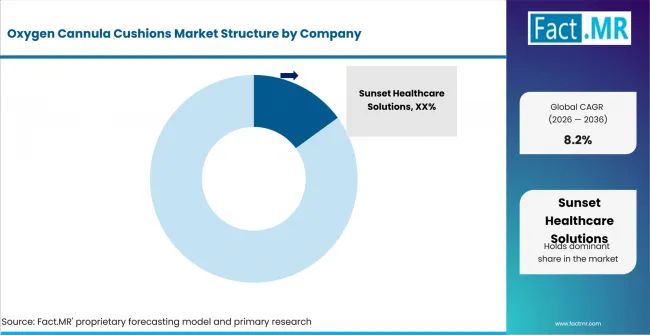
Oxygen Cannula Cushions Market Analysis By Company | Source: Fact.MR
Oxygen cannula cushions are supplied by respiratory disposable companies and medical supply brands. Sunset Healthcare Solutions leads through add-on cannula ear cushions and adult cannulas with integrated ear cushions. Medline supports Comfort Fit foam ear covers for oxygen cannulas.
AirLife / Salter Labs competes through soft cannula platforms designed to minimize ear discomfort. Dynarex supports cushion-tip cannulas and models with ear foam. Intersurgical supports soft silicone foam EarGuard cannulas.
Competition through 2036 will depend on comfort and compatibility. Suppliers need cushions that stay in place without blocking oxygen tubing. The medical polymers layer matters because foam, silicone and tubing materials affect skin contact. The wound care link is relevant because pressure prevention is part of skin protection in long-duration therapy.
Which companies are the key providers?
Sunset Healthcare Solutions and Medline are key providers. AirLife / Salter Labs and Dynarex are also profiled. Intersurgical complete the company set.
- Sunset Healthcare Solutions
- Medline
- AirLife / Salter Labs
- Dynarex
- Intersurgical
Bibliography
- Sunset Healthcare Solutions. (2025). Sunset Healthcare Solutions product catalog: Oxygen cannulas and ear cushions. Sunset Healthcare Solutions.
- Medline. (2026). Hudson RCI Comfort Fit ear cushions for oxygen cannulas. Medline.
- Intersurgical. (2026). Conventional nasal cannulae. Intersurgical.
- AirLife. (2026). Comfort Soft Plus® nasal cannulas. AirLife.
- Dynarex. (2026). Nasal oxygen cannula cushion tip with Advantage Ear Foam. Dynarex.
- Sunset Healthcare Solutions. (2026). RES020: Ear cushions for cannula. Sunset Healthcare Solutions.
This Report Addresses
- Strategic intelligence on oxygen cannula cushions across cushion type and material type.
- Segment analysis covering Ear Cushions and Soft Foam Cushions.
- Regional outlook covering the United States, the United Kingdom, Germany, Japan, and China.
- Competitive analysis of Sunset Healthcare Solutions, Medline, AirLife / Salter Labs, Dynarex, Intersurgical.
- Technology assessment covering foam pads, silicone foam guards, cushion-tip cannulas, and tubing covers.
- Use case assessment covering home oxygen kits, integrated ear-guard cannulas and online comfort packs.
- Primary interviews, supplier checks and official source review support the forecast.
What does the oxygen cannula cushions market cover?
Soft pads and cushioned interfaces used to reduce cannula pressure on skin.
The oxygen cannula cushions market covers disposable and reusable pads used with nasal oxygen cannulas. It includes ear cushions and securement cushion pads. The scope connects with home healthcare because many cushion users manage oxygen therapy at home.
The market differs from ordinary nasal cannulas because the cushion is the comfort interface. A standard cannula delivers oxygen. A cushion helps reduce pressure and friction where tubing rests on skin.
What is included in the scope?
Ear pads, tubing covers and cushioned cannula-tip formats.
The scope includes foam ear cushions and fabric tubing covers sold as separate accessories. It also includes integrated ear-foam cannulas and cushion-tip cannulas. The scope includes respiratory disposables because cushions are purchased as low-cost recurring accessories.
The scope includes adult, pediatric, low-flow, and high-flow-compatible cushion formats. It covers products sold through DME providers and homecare distributors. It also includes OEM-bundled cushioned cannulas when the comfort component is identifiable.
What is excluded from the scope?
Nasal cannulas without a cushion or comfort pad feature.
The scope excludes standard oxygen cannulas sold without cushions. It excludes oxygen concentrators, flowmeters, and humidifier bottles. It excludes CPAP mask cushions because those belong to sleep therapy interfaces. It also excludes wound dressings unless they are specifically sold for cannula pressure protection.
How was the analysis built?
100+ sources, 40+ company portfolios, 25+ countries, 20+ interviews.
- Primary Research:
- Primary research includes interviews with DME suppliers and home oxygen service coordinators. It includes input from respiratory therapists and medical consumable distributors.
- Desk Research:
- Desk research reviews official product catalogs and oxygen accessory references. It covers cannula ear cushions and hospital supplies used in respiratory care.
- Market-Sizing and Forecasting:
- Forecasting uses home oxygen user accessory demand and cannula replacement activity. DME resupply behavior and online oxygen accessory sales support the market assessment.
- Data Validation and Update Cycle:
- Forecasts are validated through supplier checks and distributor references. Product catalogs and comfort cannula specifications help confirm demand direction.
What is the report’s scope and coverage?
| Attribute | Details |
|---|---|
| Quantitative Units | USD Billion in 2026 to USD Billion by 2036 at CAGR |
| Market Definition | Soft pads and cushioned interfaces used to reduce cannula pressure on skin |
| Cushion Type | Ear Cushions; Cheek and Face Pads; Nasal Prong Cushion Tips; Under-Nose Pads; Securement Cushion Pads |
| Material Type | Soft Foam Cushions; Silicone Foam Cushions; Fabric and Nonwoven Covers; Gel Pads; Hypoallergenic Adhesive Pads |
| Cannula Compatibility | Adult Low-Flow Cannulas; Pediatric Cannulas; High-Flow Cannulas; Demand Cannulas; Integrated Cushioned Cannulas |
| Patient Group | Long-Term Home Oxygen Users; Hospital Oxygen Patients; Pediatric Oxygen Users; Palliative Care Patients; Post-Acute Care Patients |
| Sales Channel | DME and Homecare Supply Programs; Online Oxygen Accessory Stores; Hospital Procurement; Pharmacy and Homecare Retail; OEM Bundled Cannula Supply |
| Regions Covered | North America; Western Europe; Asia Pacific; Latin America; Middle East and Africa |
| Countries Covered | United States; United Kingdom; Germany; Japan; China |
| Key Companies Profiled | Sunset Healthcare Solutions; Medline; AirLife / Salter Labs; Dynarex; Intersurgical |
| Forecast Period | 2026 to 2036 |
| Approach | Hybrid top-down and bottom-up approach using home oxygen accessory demand, cannula replacement activity, DME supply patterns and supplier validation |
How is the market segmented?
-
By Cushion Type:
- Ear Cushions
- Cheek and Face Pads
- Nasal Prong Cushion Tips
- Under-Nose Pads
- Securement Cushion Pads
-
By Material Type:
- Soft Foam Cushions
- Silicone Foam Cushions
- Fabric and Nonwoven Covers
- Gel Pads
- Hypoallergenic Adhesive Pads
-
By Cannula Compatibility:
- Adult Low-Flow Cannulas
- Pediatric Cannulas
- High-Flow Cannulas
- Demand Cannulas
- Integrated Cushioned Cannulas
-
By Patient Group:
- Long-Term Home Oxygen Users
- Hospital Oxygen Patients
- Pediatric Oxygen Users
- Palliative Care Patients
- Post-Acute Care Patients
-
By Sales Channel:
- DME and Homecare Supply Programs
- Online Oxygen Accessory Stores
- Hospital Procurement
- Pharmacy and Homecare Retail
- OEM Bundled Cannula Supply
-
Region:
- North America
- United States
- Canada
- Europe
- United Kingdom
- Germany
- France
- Italy
- Netherlands
- Asia Pacific
- Japan
- China
- South Korea
- Australia
- India
- Latin America
- Brazil
- Mexico
- Argentina
- Middle East & Africa
- UAE
- Saudi Arabia
- South Africa
- Israel
- North America