Protective Packaging for Architectural Panels Market (2026 - 2036)
Protective Packaging for Architectural Panels Market Size and Share Forecast Outlook 2026 to 2036
Core Findings
Protective Packaging for Architectural Panels Market Forecast and Outlook 2026 to 2036
Global demand for protective packaging for architectural panels market is estimated at USD 2.3 billion in 2026 and is projected to reach USD 7.9 billion by 2036, reflecting a 13.10% CAGR.
Protective Packaging for Architectural Panels Market Key Takeaways
- Protective Packaging for Architectural Panels Market Value (2026): USD 2.3 billion
- Protective Packaging for Architectural Panels Forecast Value (2036): USD 7.9 billion
- Protective Packaging for Architectural Panels Forecast CAGR 2026 to 2036: 13.1%
- Protective Packaging for Architectural Panels Leading Panel Type: Glass Panels (49%)
- Protective Packaging for Architectural Panels Key Growth Regions: China, USA, Germany, Italy
- Protective Packaging for Architectural Panels Top Players: Nitto Denko, Smurfit Kappa, Sealed Air, Fedrigoni
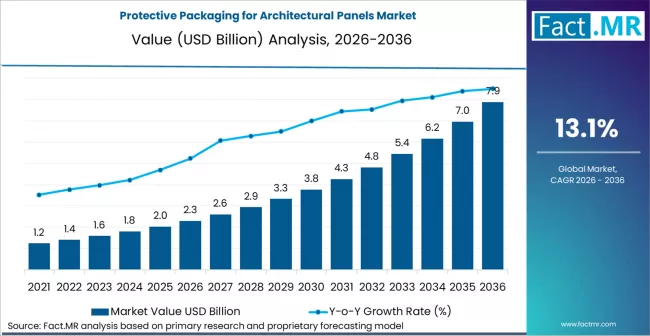
Growth is shaped by increasing requirements for consistent protection during transportation, storage, and on-site handling across construction, manufacturing, and architectural applications. Standardized high-strength packaging designs improve stackability, reduce breakage, and facilitate integration with automated handling systems in warehouses and distribution centers. Suppliers are assessed on material durability, dimensional precision, and capacity to meet large-volume orders across multiple regions.
Distribution and logistics teams optimize pallet utilization, streamline handling, and mitigate transit damage. Adoption accelerates as standardized protective solutions reduce labor requirements and operational risk for contractors and project managers. Market expansion reflects a long-term shift toward packaging strategies that combine operational efficiency, supply chain resilience, and consistent protection standards for architectural panels across global networks.
Protective Packaging for Architectural Panels Market
| Metric | Value |
|---|---|
| Market Value (2026) | USD 2.3 billion |
| Forecast Value (2036) | USD 7.9 billion |
| Forecast CAGR 2026 to 2036 | 13.1% |
Category
| Category | Segments |
|---|---|
| Panel Type | Glass panels; Metal composite panels; HPL / laminated boards; Natural stone panels |
| Protection Method | Surface protection films; Foam sheet interleaving; Corrugated sleeves; Crate-based protection |
| Material | LDPE films; PE foam; Corrugated board; Wood / plywood |
| Region | North America; Europe; Asia Pacific; Latin America; Middle East & Africa |
Segmental Analysis
By Panel Type, Why Do Glass Panels Lead the Protective Packaging for Architectural Panels Market?
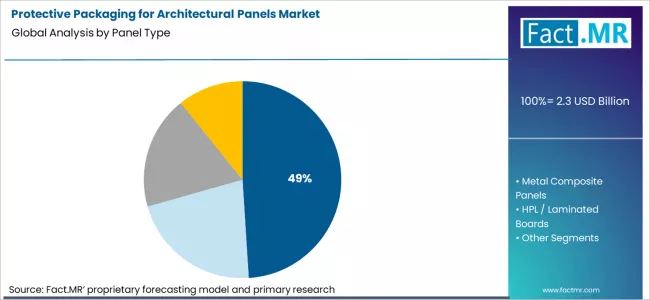
Data from Fact.MR shows that glass panels account for 49% share, reflecting high-volume demand across residential, commercial, and infrastructure construction projects. The market emphasizes reliable, repeatable packaging solutions that minimize transit damage, reduce replacement costs, and support large-scale distribution. Buyers prioritize formats that integrate seamlessly with supply chain operations, streamline inventory handling, and maintain project timelines. Suppliers benefit from predictable order volumes, standardized logistics, and scalable production. Segment dominance is determined by structural market factors such as volume concentration, operational efficiency, and recurring procurement cycles, rather than specific material characteristics of the panels themselves.
By Protection Method, Why Do Surface Protection Films Represent the Largest Segment in the Market?
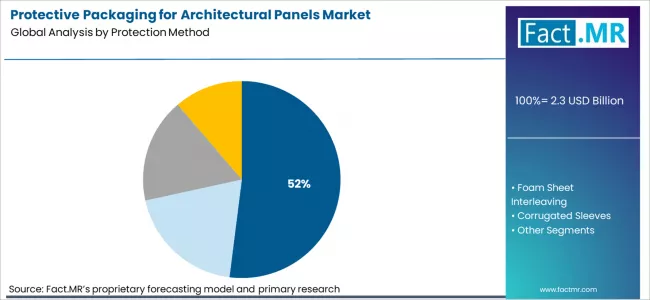
Fact.MR research indicates that surface protection films hold 52% share, reflecting the market’s focus on scalable, repeatable protection solutions that reduce damage risk during transport, storage, and on-site handling. Procurement patterns prioritize operational efficiency, consistency across shipments, and ease of integration into large-scale distribution workflows. Suppliers benefit from standardized application processes, predictable material requirements, and recurring order cycles. Segment prominence arises from structural market characteristics, including supply chain optimization, repeatable usage, and operational reliability. Surface protection films dominate because adoption is driven by market efficiency and repeatable logistics, not by the individual features of the architectural panels.
Country
| Country | Driver | Restraint | Trend |
|---|---|---|---|
| USA | Growth in modular and prefabricated construction increases demand for protective panel packaging | High material and compliance costs slow small suppliers | Adoption of reusable and impactabsorbing packaging systems |
| UK | Strong renovation and sustainable build initiatives boost demand for panel protection | Strict EPR/packaging waste rules raise cost | Shift to recyclable wraps and edge guards |
| Germany | Large industrial building and facade sector drives highperformance packaging | Stringent packaging conformity requirements increase costs | Engineered foam and corrugated hybrid solutions |
| China | Rapid urban construction and export volume fuels protective packaging uptake | Regional quality standard disparities limit consistent compliance | Automated packaging lines for panel sizes |
| India | Urbanization and commercial build growth expand panel use | Limited access to advanced packaging tech | Lowcost corrugated and reusable protection solutions |
Analysis of the Protective Packaging for Architectural Panels Market by Key Country
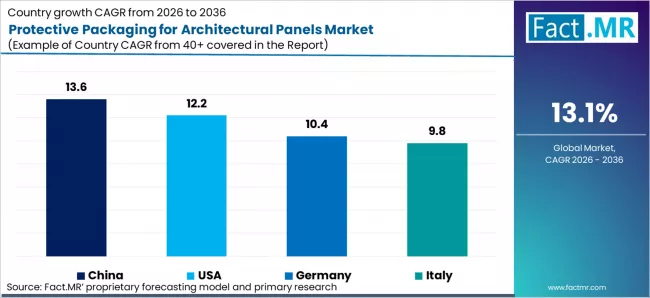
| Country | CAGR 2026 to 2036 |
|---|---|
| China | 13.6% |
| Germany | 10.4% |
| USA | 12.2% |
| Italy | 9.8% |
The report covers an in-depth analysis of 40+ countries; top-performing countries are highlighted below.
How Is Demand for Protective Packaging for Architectural Panels Scaling in China?
Demand for protective packaging for architectural panels in China grows at 13.6% CAGR through 2036. Standardized, pre-fitted modules are designed to protect glass, composite, and laminated panels during storage, handling, and transport. QR-coded labels and sensor-ready packages integrate with automated warehouse systems to track batch information and environmental conditions. Robotic handling and conveyor integration reduce reliance on manual labor while increasing throughput. Materials are optimized for durability, reusability, and impact resistance. Operational improvements focus on high-volume processing, consistency, and digital traceability, allowing manufacturers to meet domestic and export demand efficiently without expanding warehouse or workforce capacity.
What Is the Growth in Adoption of Protective Packaging for Architectural Panels in Germany?
Growth in adoption of protective packaging for architectural panels in Germany reaches 10.4% CAGR through 2036. Environmental regulations and void-space limits drive the shift to recyclable mono-material wraps, interleaving sheets, and foam-based protection. Packaging dimensions are engineered for pallet optimization and efficient storage. Automated filling, labeling, and verification systems ensure consistent quality and regulatory compliance. Reusable inserts and high-density stacking improve space utilization. Operational focus is on precision, regulatory alignment, and efficiency rather than expanding facilities. Standardized protective packaging ensures safe transport of architectural panels across urban and regional distribution networks while minimizing material consumption.
How Is Protective Packaging for Architectural Panels Evolving in the United States?
Protective packaging for architectural panels in the United States grows at 12.2% CAGR through 2036. Modular packaging systems integrate impact-resistant sleeves, foam interleaving, and surface films to protect panels during transit and storage. Smart labels and sensors track batch, shipment, and environmental conditions in real time. Automated handling systems reduce manual labor and improve throughput across warehouses and distribution centers. Packaging is optimized for various panel types including glass, laminated boards, and composite materials. Operational improvements focus on efficiency, accuracy, and damage reduction, enabling nationwide distribution while maintaining quality standards and minimizing product loss across high-volume shipments.
What Is the Outlook on Protective Packaging for Architectural Panels in Italy?
Outlook on protective packaging for architectural panels in Italy grows at 9.8% CAGR through 2036. Packaging is designed to safeguard delicate panels from impact, scratching, and environmental exposure during transport and storage. Foam sheets, corrugated sleeves, and crates are optimized for stacking and handling. Italian manufacturers integrate automated filling and labeling systems to improve consistency and reduce labor requirements. Standardization ensures panels are protected across domestic and regional deliveries. Operational focus is on precision, reliability, and minimizing product damage rather than expanding facilities. Protective packaging now functions as both a containment solution and a quality assurance mechanism in supply chains.
How Are Companies Advancing Functionalized Circularity and Systemic Integration in Protective Packaging for Architectural Panels?
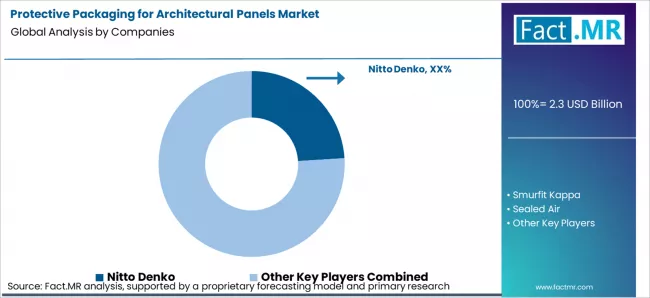
The architectural panel protective packaging market has evolved from a commodity film sector to a race for functionalized circularity, where packaging operates as an engineered, workflow-integrated asset. Nitto Denko leads technologically by leveraging SPV™ laminates to protect high-end decorative finishes under extreme conditions. Smurfit Westrock targets heavy-duty transit, using its 2026 WorldStar-winning Panelbuffer™ to replace plastic buffers with sustainable fiber alternatives, aligning with EU PPWR sustainability mandates. Sealed Air and Fedrigoni focus on plastic-to-paper migration and industrial automation, with Sealed Air delivering robotic-feed compatible foams through the CTO2Grow program, and Fedrigoni offering recyclable translucent papers via its Arjowiggins specialty assets. Competition now emphasizes systemic integration, where protective solutions reduce installation labor, ensure material purity, and support carbon-neutral logistics for 2026 fiscal requirements. Scale, process discipline, and workflow alignment provide more defensible advantages than incremental material or design innovations.
Key Players in Protective Packaging for Architectural Panels Market
- Nitto Denko
- Smurfit Kappa
- Sealed Air
- Fedrigoni
Scope of the Report
| Items | Values |
|---|---|
| Quantitative Units (2026) | USD billion |
| Panel Type | Glass panels, Metal composite panels, HPL / laminated boards, Natural stone panels |
| Protection Method | Surface protection films, Foam sheet interleaving, Corrugated sleeves, Crate-based protection |
| Material | LDPE films, PE foam, Corrugated board, Wood / plywood |
| Regions Covered | Asia Pacific, Europe, North America, Latin America, Middle East & Africa |
| Countries Covered | United States, Germany, China, Japan, Italy, South Korea, India, United Kingdom, France, Spain, Australia & New Zealand, ASEAN, Brazil, Chile, Saudi Arabia, Turkey, South Africa, Rest of Regional Markets |
| Key Companies Profiled | Nitto Denko, Smurfit Kappa, Sealed Air, Fedrigoni |
| Additional Attributes | Dollar by sales by panel type, protection method, and material; focus on automated handling, robotic integration, and pallet optimization; operational improvements in stackability, throughput, and labor reduction; sustainability via recyclable, fiber-based, or mono-material solutions; adoption driven by high-volume construction, industrial, and architectural projects rather than individual panel attributes; systemic integration including workflow alignment, digital traceability, and carbon-neutral logistics; scale and process discipline provide competitive advantage over incremental design or material innovations. |
Protective Packaging for Architectural Panels Market Segmentation
-
Panel Type:
- Glass Panels
- Metal Composite Panels
- HPL / Laminated Boards
- Natural Stone Panels
-
Protection Method:
- Surface Protection Films
- Foam Sheet Interleaving
- Corrugated Sleeves
- Crate-Based Protection
-
Material:
- LDPE Films
- PE Foam
- Corrugated Board
- Wood / Plywood
-
Region:
- Asia Pacific
- China
- Japan
- South Korea
- India
- Australia & New Zealand
- ASEAN
- Rest of Asia Pacific
- Europe
- Germany
- United Kingdom
- France
- Italy
- Spain
- Nordic
- BENELUX
- Rest of Europe
- North America
- United States
- Canada
- Mexico
- Latin America
- Brazil
- Chile
- Rest of Latin America
- Middle East & Africa
- Kingdom of Saudi Arabia
- Other GCC Countries
- Turkey
- South Africa
- Other African Union
- Rest of Middle East & Africa
- Asia Pacific
References
- U.S. Government Publishing Office. (2023). 49 Code of Federal Regulations Part 173-Shippers-General requirements for packaging hazardous materials.
- U.S. Government Publishing Office. (2023). 49 Code of Federal Regulations Part 171-General information, regulations, and definitions under the Hazardous Materials Regulations (HMR).
- European Commission. (accessed 2025). Labelling and packaging-EU product requirements.
- European Union. (2025). Regulation (EU) 2025/40 of the European Parliament and of the Council on packaging and packaging waste (Official Journal of the European Union).
Table of Content
- Executive Summary
- Global Market Outlook
- Demand to side Trends
- Supply to side Trends
- Technology Roadmap Analysis
- Analysis and Recommendations
- Market Overview
- Market Coverage / Taxonomy
- Market Definition / Scope / Limitations
- Research Methodology
- Chapter Orientation
- Analytical Lens and Working Hypotheses
- Market Structure, Signals, and Trend Drivers
- Benchmarking and Cross-market Comparability
- Market Sizing, Forecasting, and Opportunity Mapping
- Research Design and Evidence Framework
- Desk Research Programme (Secondary Evidence)
- Company Annual and Sustainability Reports
- Peer-reviewed Journals and Academic Literature
- Corporate Websites, Product Literature, and Technical Notes
- Earnings Decks and Investor Briefings
- Statutory Filings and Regulatory Disclosures
- Technical White Papers and Standards Notes
- Trade Journals, Industry Magazines, and Analyst Briefs
- Conference Proceedings, Webinars, and Seminar Materials
- Government Statistics Portals and Public Data Releases
- Press Releases and Reputable Media Coverage
- Specialist Newsletters and Curated Briefings
- Sector Databases and Reference Repositories
- FMR Internal Proprietary Databases and Historical Market Datasets
- Subscription Datasets and Paid Sources
- Social Channels, Communities, and Digital Listening Inputs
- Additional Desk Sources
- Expert Input and Fieldwork (Primary Evidence)
- Primary Modes
- Qualitative Interviews and Expert Elicitation
- Quantitative Surveys and Structured Data Capture
- Blended Approach
- Why Primary Evidence is Used
- Field Techniques
- Interviews
- Surveys
- Focus Groups
- Observational and In-context Research
- Social and Community Interactions
- Stakeholder Universe Engaged
- C-suite Leaders
- Board Members
- Presidents and Vice Presidents
- R&D and Innovation Heads
- Technical Specialists
- Domain Subject-matter Experts
- Scientists
- Physicians and Other Healthcare Professionals
- Governance, Ethics, and Data Stewardship
- Research Ethics
- Data Integrity and Handling
- Primary Modes
- Tooling, Models, and Reference Databases
- Desk Research Programme (Secondary Evidence)
- Data Engineering and Model Build
- Data Acquisition and Ingestion
- Cleaning, Normalisation, and Verification
- Synthesis, Triangulation, and Analysis
- Quality Assurance and Audit Trail
- Market Background
- Market Dynamics
- Drivers
- Restraints
- Opportunity
- Trends
- Scenario Forecast
- Demand in Optimistic Scenario
- Demand in Likely Scenario
- Demand in Conservative Scenario
- Opportunity Map Analysis
- Product Life Cycle Analysis
- Supply Chain Analysis
- Investment Feasibility Matrix
- Value Chain Analysis
- PESTLE and Porter’s Analysis
- Regulatory Landscape
- Regional Parent Market Outlook
- Production and Consumption Statistics
- Import and Export Statistics
- Market Dynamics
- Global Market Analysis 2021 to 2025 and Forecast, 2026 to 2036
- Historical Market Size Value (USD Million) Analysis, 2021 to 2025
- Current and Future Market Size Value (USD Million) Projections, 2026 to 2036
- Y to o to Y Growth Trend Analysis
- Absolute $ Opportunity Analysis
- Global Market Pricing Analysis 2021 to 2025 and Forecast 2026 to 2036
- Global Market Analysis 2021 to 2025 and Forecast 2026 to 2036, By Panel Type
- Introduction / Key Findings
- Historical Market Size Value (USD Million) Analysis By Panel Type, 2021 to 2025
- Current and Future Market Size Value (USD Million) Analysis and Forecast By Panel Type, 2026 to 2036
- Glass Panels
- Metal Composite Panels
- HPL / Laminated Boards
- Natural Stone Panels
- Glass Panels
- Y to o to Y Growth Trend Analysis By Panel Type, 2021 to 2025
- Absolute $ Opportunity Analysis By Panel Type, 2026 to 2036
- Global Market Analysis 2021 to 2025 and Forecast 2026 to 2036, By Protection Method
- Introduction / Key Findings
- Historical Market Size Value (USD Million) Analysis By Protection Method, 2021 to 2025
- Current and Future Market Size Value (USD Million) Analysis and Forecast By Protection Method, 2026 to 2036
- Surface Protection Films
- Foam Sheet Interleaving
- Corrugated Sleeves
- Crate-Based Protection
- Surface Protection Films
- Y to o to Y Growth Trend Analysis By Protection Method, 2021 to 2025
- Absolute $ Opportunity Analysis By Protection Method, 2026 to 2036
- Global Market Analysis 2021 to 2025 and Forecast 2026 to 2036, By Material
- Introduction / Key Findings
- Historical Market Size Value (USD Million) Analysis By Material, 2021 to 2025
- Current and Future Market Size Value (USD Million) Analysis and Forecast By Material, 2026 to 2036
- LDPE Films
- PE Foam
- Corrugated Board
- Wood / Plywood
- LDPE Films
- Y to o to Y Growth Trend Analysis By Material, 2021 to 2025
- Absolute $ Opportunity Analysis By Material, 2026 to 2036
- Global Market Analysis 2021 to 2025 and Forecast 2026 to 2036, By Region
- Introduction
- Historical Market Size Value (USD Million) Analysis By Region, 2021 to 2025
- Current Market Size Value (USD Million) Analysis and Forecast By Region, 2026 to 2036
- North America
- Latin America
- Western Europe
- Eastern Europe
- East Asia
- South Asia and Pacific
- Middle East & Africa
- Market Attractiveness Analysis By Region
- North America Market Analysis 2021 to 2025 and Forecast 2026 to 2036, By Country
- Historical Market Size Value (USD Million) Trend Analysis By Market Taxonomy, 2021 to 2025
- Market Size Value (USD Million) Forecast By Market Taxonomy, 2026 to 2036
- By Country
- USA
- Canada
- Mexico
- By Panel Type
- By Protection Method
- By Material
- By Country
- Market Attractiveness Analysis
- By Country
- By Panel Type
- By Protection Method
- By Material
- Key Takeaways
- Latin America Market Analysis 2021 to 2025 and Forecast 2026 to 2036, By Country
- Historical Market Size Value (USD Million) Trend Analysis By Market Taxonomy, 2021 to 2025
- Market Size Value (USD Million) Forecast By Market Taxonomy, 2026 to 2036
- By Country
- Brazil
- Chile
- Rest of Latin America
- By Panel Type
- By Protection Method
- By Material
- By Country
- Market Attractiveness Analysis
- By Country
- By Panel Type
- By Protection Method
- By Material
- Key Takeaways
- Western Europe Market Analysis 2021 to 2025 and Forecast 2026 to 2036, By Country
- Historical Market Size Value (USD Million) Trend Analysis By Market Taxonomy, 2021 to 2025
- Market Size Value (USD Million) Forecast By Market Taxonomy, 2026 to 2036
- By Country
- Germany
- UK
- Italy
- Spain
- France
- Nordic
- BENELUX
- Rest of Western Europe
- By Panel Type
- By Protection Method
- By Material
- By Country
- Market Attractiveness Analysis
- By Country
- By Panel Type
- By Protection Method
- By Material
- Key Takeaways
- Eastern Europe Market Analysis 2021 to 2025 and Forecast 2026 to 2036, By Country
- Historical Market Size Value (USD Million) Trend Analysis By Market Taxonomy, 2021 to 2025
- Market Size Value (USD Million) Forecast By Market Taxonomy, 2026 to 2036
- By Country
- Russia
- Poland
- Hungary
- Balkan & Baltic
- Rest of Eastern Europe
- By Panel Type
- By Protection Method
- By Material
- By Country
- Market Attractiveness Analysis
- By Country
- By Panel Type
- By Protection Method
- By Material
- Key Takeaways
- East Asia Market Analysis 2021 to 2025 and Forecast 2026 to 2036, By Country
- Historical Market Size Value (USD Million) Trend Analysis By Market Taxonomy, 2021 to 2025
- Market Size Value (USD Million) Forecast By Market Taxonomy, 2026 to 2036
- By Country
- China
- Japan
- South Korea
- By Panel Type
- By Protection Method
- By Material
- By Country
- Market Attractiveness Analysis
- By Country
- By Panel Type
- By Protection Method
- By Material
- Key Takeaways
- South Asia and Pacific Market Analysis 2021 to 2025 and Forecast 2026 to 2036, By Country
- Historical Market Size Value (USD Million) Trend Analysis By Market Taxonomy, 2021 to 2025
- Market Size Value (USD Million) Forecast By Market Taxonomy, 2026 to 2036
- By Country
- India
- ASEAN
- Australia & New Zealand
- Rest of South Asia and Pacific
- By Panel Type
- By Protection Method
- By Material
- By Country
- Market Attractiveness Analysis
- By Country
- By Panel Type
- By Protection Method
- By Material
- Key Takeaways
- Middle East & Africa Market Analysis 2021 to 2025 and Forecast 2026 to 2036, By Country
- Historical Market Size Value (USD Million) Trend Analysis By Market Taxonomy, 2021 to 2025
- Market Size Value (USD Million) Forecast By Market Taxonomy, 2026 to 2036
- By Country
- Kingdom of Saudi Arabia
- Other GCC Countries
- Turkiye
- South Africa
- Other African Union
- Rest of Middle East & Africa
- By Panel Type
- By Protection Method
- By Material
- By Country
- Market Attractiveness Analysis
- By Country
- By Panel Type
- By Protection Method
- By Material
- Key Takeaways
- Key Countries Market Analysis
- USA
- Pricing Analysis
- Market Share Analysis, 2025
- By Panel Type
- By Protection Method
- By Material
- Canada
- Pricing Analysis
- Market Share Analysis, 2025
- By Panel Type
- By Protection Method
- By Material
- Mexico
- Pricing Analysis
- Market Share Analysis, 2025
- By Panel Type
- By Protection Method
- By Material
- Brazil
- Pricing Analysis
- Market Share Analysis, 2025
- By Panel Type
- By Protection Method
- By Material
- Chile
- Pricing Analysis
- Market Share Analysis, 2025
- By Panel Type
- By Protection Method
- By Material
- Germany
- Pricing Analysis
- Market Share Analysis, 2025
- By Panel Type
- By Protection Method
- By Material
- UK
- Pricing Analysis
- Market Share Analysis, 2025
- By Panel Type
- By Protection Method
- By Material
- Italy
- Pricing Analysis
- Market Share Analysis, 2025
- By Panel Type
- By Protection Method
- By Material
- Spain
- Pricing Analysis
- Market Share Analysis, 2025
- By Panel Type
- By Protection Method
- By Material
- France
- Pricing Analysis
- Market Share Analysis, 2025
- By Panel Type
- By Protection Method
- By Material
- India
- Pricing Analysis
- Market Share Analysis, 2025
- By Panel Type
- By Protection Method
- By Material
- ASEAN
- Pricing Analysis
- Market Share Analysis, 2025
- By Panel Type
- By Protection Method
- By Material
- Australia & New Zealand
- Pricing Analysis
- Market Share Analysis, 2025
- By Panel Type
- By Protection Method
- By Material
- China
- Pricing Analysis
- Market Share Analysis, 2025
- By Panel Type
- By Protection Method
- By Material
- Japan
- Pricing Analysis
- Market Share Analysis, 2025
- By Panel Type
- By Protection Method
- By Material
- South Korea
- Pricing Analysis
- Market Share Analysis, 2025
- By Panel Type
- By Protection Method
- By Material
- Russia
- Pricing Analysis
- Market Share Analysis, 2025
- By Panel Type
- By Protection Method
- By Material
- Poland
- Pricing Analysis
- Market Share Analysis, 2025
- By Panel Type
- By Protection Method
- By Material
- Hungary
- Pricing Analysis
- Market Share Analysis, 2025
- By Panel Type
- By Protection Method
- By Material
- Kingdom of Saudi Arabia
- Pricing Analysis
- Market Share Analysis, 2025
- By Panel Type
- By Protection Method
- By Material
- Turkiye
- Pricing Analysis
- Market Share Analysis, 2025
- By Panel Type
- By Protection Method
- By Material
- South Africa
- Pricing Analysis
- Market Share Analysis, 2025
- By Panel Type
- By Protection Method
- By Material
- USA
- Market Structure Analysis
- Competition Dashboard
- Competition Benchmarking
- Market Share Analysis of Top Players
- By Regional
- By Panel Type
- By Protection Method
- By Material
- Competition Analysis
- Competition Deep Dive
- Nitto Denko
- Overview
- Product Portfolio
- Profitability by Market Segments (Product/Age /Sales Channel/Region)
- Sales Footprint
- Strategy Overview
- Marketing Strategy
- Product Strategy
- Channel Strategy
- Smurfit Kappa
- Sealed Air
- Fedrigoni
- Nitto Denko
- Competition Deep Dive
- Assumptions & Acronyms Used
List Of Table
- Table 1: Global Market Value (USD Million) Forecast by Region, 2021 to 2036
- Table 2: Global Market Value (USD Million) Forecast by Panel Type, 2021 to 2036
- Table 3: Global Market Value (USD Million) Forecast by Protection Method, 2021 to 2036
- Table 4: Global Market Value (USD Million) Forecast by Material, 2021 to 2036
- Table 5: North America Market Value (USD Million) Forecast by Country, 2021 to 2036
- Table 6: North America Market Value (USD Million) Forecast by Panel Type, 2021 to 2036
- Table 7: North America Market Value (USD Million) Forecast by Protection Method, 2021 to 2036
- Table 8: North America Market Value (USD Million) Forecast by Material, 2021 to 2036
- Table 9: Latin America Market Value (USD Million) Forecast by Country, 2021 to 2036
- Table 10: Latin America Market Value (USD Million) Forecast by Panel Type, 2021 to 2036
- Table 11: Latin America Market Value (USD Million) Forecast by Protection Method, 2021 to 2036
- Table 12: Latin America Market Value (USD Million) Forecast by Material, 2021 to 2036
- Table 13: Western Europe Market Value (USD Million) Forecast by Country, 2021 to 2036
- Table 14: Western Europe Market Value (USD Million) Forecast by Panel Type, 2021 to 2036
- Table 15: Western Europe Market Value (USD Million) Forecast by Protection Method, 2021 to 2036
- Table 16: Western Europe Market Value (USD Million) Forecast by Material, 2021 to 2036
- Table 17: Eastern Europe Market Value (USD Million) Forecast by Country, 2021 to 2036
- Table 18: Eastern Europe Market Value (USD Million) Forecast by Panel Type, 2021 to 2036
- Table 19: Eastern Europe Market Value (USD Million) Forecast by Protection Method, 2021 to 2036
- Table 20: Eastern Europe Market Value (USD Million) Forecast by Material, 2021 to 2036
- Table 21: East Asia Market Value (USD Million) Forecast by Country, 2021 to 2036
- Table 22: East Asia Market Value (USD Million) Forecast by Panel Type, 2021 to 2036
- Table 23: East Asia Market Value (USD Million) Forecast by Protection Method, 2021 to 2036
- Table 24: East Asia Market Value (USD Million) Forecast by Material, 2021 to 2036
- Table 25: South Asia and Pacific Market Value (USD Million) Forecast by Country, 2021 to 2036
- Table 26: South Asia and Pacific Market Value (USD Million) Forecast by Panel Type, 2021 to 2036
- Table 27: South Asia and Pacific Market Value (USD Million) Forecast by Protection Method, 2021 to 2036
- Table 28: South Asia and Pacific Market Value (USD Million) Forecast by Material, 2021 to 2036
- Table 29: Middle East & Africa Market Value (USD Million) Forecast by Country, 2021 to 2036
- Table 30: Middle East & Africa Market Value (USD Million) Forecast by Panel Type, 2021 to 2036
- Table 31: Middle East & Africa Market Value (USD Million) Forecast by Protection Method, 2021 to 2036
- Table 32: Middle East & Africa Market Value (USD Million) Forecast by Material, 2021 to 2036
List Of Figures
- Figure 1: Global Market Pricing Analysis
- Figure 2: Global Market Value (USD Million) Forecast 2021 to 2036
- Figure 3: Global Market Value Share and BPS Analysis by Panel Type, 2026 and 2036
- Figure 4: Global Market Y to o to Y Growth Comparison by Panel Type, 2026 to 2036
- Figure 5: Global Market Attractiveness Analysis by Panel Type
- Figure 6: Global Market Value Share and BPS Analysis by Protection Method, 2026 and 2036
- Figure 7: Global Market Y to o to Y Growth Comparison by Protection Method, 2026 to 2036
- Figure 8: Global Market Attractiveness Analysis by Protection Method
- Figure 9: Global Market Value Share and BPS Analysis by Material, 2026 and 2036
- Figure 10: Global Market Y to o to Y Growth Comparison by Material, 2026 to 2036
- Figure 11: Global Market Attractiveness Analysis by Material
- Figure 12: Global Market Value (USD Million) Share and BPS Analysis by Region, 2026 and 2036
- Figure 13: Global Market Y to o to Y Growth Comparison by Region, 2026 to 2036
- Figure 14: Global Market Attractiveness Analysis by Region
- Figure 15: North America Market Incremental Dollar Opportunity, 2026 to 2036
- Figure 16: Latin America Market Incremental Dollar Opportunity, 2026 to 2036
- Figure 17: Western Europe Market Incremental Dollar Opportunity, 2026 to 2036
- Figure 18: Eastern Europe Market Incremental Dollar Opportunity, 2026 to 2036
- Figure 19: East Asia Market Incremental Dollar Opportunity, 2026 to 2036
- Figure 20: South Asia and Pacific Market Incremental Dollar Opportunity, 2026 to 2036
- Figure 21: Middle East & Africa Market Incremental Dollar Opportunity, 2026 to 2036
- Figure 22: North America Market Value Share and BPS Analysis by Country, 2026 and 2036
- Figure 23: North America Market Value Share and BPS Analysis by Panel Type, 2026 and 2036
- Figure 24: North America Market Y to o to Y Growth Comparison by Panel Type, 2026 to 2036
- Figure 25: North America Market Attractiveness Analysis by Panel Type
- Figure 26: North America Market Value Share and BPS Analysis by Protection Method, 2026 and 2036
- Figure 27: North America Market Y to o to Y Growth Comparison by Protection Method, 2026 to 2036
- Figure 28: North America Market Attractiveness Analysis by Protection Method
- Figure 29: North America Market Value Share and BPS Analysis by Material, 2026 and 2036
- Figure 30: North America Market Y to o to Y Growth Comparison by Material, 2026 to 2036
- Figure 31: North America Market Attractiveness Analysis by Material
- Figure 32: Latin America Market Value Share and BPS Analysis by Country, 2026 and 2036
- Figure 33: Latin America Market Value Share and BPS Analysis by Panel Type, 2026 and 2036
- Figure 34: Latin America Market Y to o to Y Growth Comparison by Panel Type, 2026 to 2036
- Figure 35: Latin America Market Attractiveness Analysis by Panel Type
- Figure 36: Latin America Market Value Share and BPS Analysis by Protection Method, 2026 and 2036
- Figure 37: Latin America Market Y to o to Y Growth Comparison by Protection Method, 2026 to 2036
- Figure 38: Latin America Market Attractiveness Analysis by Protection Method
- Figure 39: Latin America Market Value Share and BPS Analysis by Material, 2026 and 2036
- Figure 40: Latin America Market Y to o to Y Growth Comparison by Material, 2026 to 2036
- Figure 41: Latin America Market Attractiveness Analysis by Material
- Figure 42: Western Europe Market Value Share and BPS Analysis by Country, 2026 and 2036
- Figure 43: Western Europe Market Value Share and BPS Analysis by Panel Type, 2026 and 2036
- Figure 44: Western Europe Market Y to o to Y Growth Comparison by Panel Type, 2026 to 2036
- Figure 45: Western Europe Market Attractiveness Analysis by Panel Type
- Figure 46: Western Europe Market Value Share and BPS Analysis by Protection Method, 2026 and 2036
- Figure 47: Western Europe Market Y to o to Y Growth Comparison by Protection Method, 2026 to 2036
- Figure 48: Western Europe Market Attractiveness Analysis by Protection Method
- Figure 49: Western Europe Market Value Share and BPS Analysis by Material, 2026 and 2036
- Figure 50: Western Europe Market Y to o to Y Growth Comparison by Material, 2026 to 2036
- Figure 51: Western Europe Market Attractiveness Analysis by Material
- Figure 52: Eastern Europe Market Value Share and BPS Analysis by Country, 2026 and 2036
- Figure 53: Eastern Europe Market Value Share and BPS Analysis by Panel Type, 2026 and 2036
- Figure 54: Eastern Europe Market Y to o to Y Growth Comparison by Panel Type, 2026 to 2036
- Figure 55: Eastern Europe Market Attractiveness Analysis by Panel Type
- Figure 56: Eastern Europe Market Value Share and BPS Analysis by Protection Method, 2026 and 2036
- Figure 57: Eastern Europe Market Y to o to Y Growth Comparison by Protection Method, 2026 to 2036
- Figure 58: Eastern Europe Market Attractiveness Analysis by Protection Method
- Figure 59: Eastern Europe Market Value Share and BPS Analysis by Material, 2026 and 2036
- Figure 60: Eastern Europe Market Y to o to Y Growth Comparison by Material, 2026 to 2036
- Figure 61: Eastern Europe Market Attractiveness Analysis by Material
- Figure 62: East Asia Market Value Share and BPS Analysis by Country, 2026 and 2036
- Figure 63: East Asia Market Value Share and BPS Analysis by Panel Type, 2026 and 2036
- Figure 64: East Asia Market Y to o to Y Growth Comparison by Panel Type, 2026 to 2036
- Figure 65: East Asia Market Attractiveness Analysis by Panel Type
- Figure 66: East Asia Market Value Share and BPS Analysis by Protection Method, 2026 and 2036
- Figure 67: East Asia Market Y to o to Y Growth Comparison by Protection Method, 2026 to 2036
- Figure 68: East Asia Market Attractiveness Analysis by Protection Method
- Figure 69: East Asia Market Value Share and BPS Analysis by Material, 2026 and 2036
- Figure 70: East Asia Market Y to o to Y Growth Comparison by Material, 2026 to 2036
- Figure 71: East Asia Market Attractiveness Analysis by Material
- Figure 72: South Asia and Pacific Market Value Share and BPS Analysis by Country, 2026 and 2036
- Figure 73: South Asia and Pacific Market Value Share and BPS Analysis by Panel Type, 2026 and 2036
- Figure 74: South Asia and Pacific Market Y to o to Y Growth Comparison by Panel Type, 2026 to 2036
- Figure 75: South Asia and Pacific Market Attractiveness Analysis by Panel Type
- Figure 76: South Asia and Pacific Market Value Share and BPS Analysis by Protection Method, 2026 and 2036
- Figure 77: South Asia and Pacific Market Y to o to Y Growth Comparison by Protection Method, 2026 to 2036
- Figure 78: South Asia and Pacific Market Attractiveness Analysis by Protection Method
- Figure 79: South Asia and Pacific Market Value Share and BPS Analysis by Material, 2026 and 2036
- Figure 80: South Asia and Pacific Market Y to o to Y Growth Comparison by Material, 2026 to 2036
- Figure 81: South Asia and Pacific Market Attractiveness Analysis by Material
- Figure 82: Middle East & Africa Market Value Share and BPS Analysis by Country, 2026 and 2036
- Figure 83: Middle East & Africa Market Value Share and BPS Analysis by Panel Type, 2026 and 2036
- Figure 84: Middle East & Africa Market Y to o to Y Growth Comparison by Panel Type, 2026 to 2036
- Figure 85: Middle East & Africa Market Attractiveness Analysis by Panel Type
- Figure 86: Middle East & Africa Market Value Share and BPS Analysis by Protection Method, 2026 and 2036
- Figure 87: Middle East & Africa Market Y to o to Y Growth Comparison by Protection Method, 2026 to 2036
- Figure 88: Middle East & Africa Market Attractiveness Analysis by Protection Method
- Figure 89: Middle East & Africa Market Value Share and BPS Analysis by Material, 2026 and 2036
- Figure 90: Middle East & Africa Market Y to o to Y Growth Comparison by Material, 2026 to 2036
- Figure 91: Middle East & Africa Market Attractiveness Analysis by Material
- Figure 92: Global Market - Tier Structure Analysis
- Figure 93: Global Market - Company Share Analysis
- FAQs -
How big is the protective packaging for architectural panels market in 2026?
The global protective packaging for architectural panels market is estimated to be valued at USD 2.3 billion in 2026.
What will be the size of protective packaging for architectural panels market in 2036?
The market size for the protective packaging for architectural panels market is projected to reach USD 7.9 billion by 2036.
How much will be the protective packaging for architectural panels market growth between 2026 and 2036?
The protective packaging for architectural panels market is expected to grow at a 13.1% CAGR between 2026 and 2036.
What are the key product types in the protective packaging for architectural panels market?
The key product types in protective packaging for architectural panels market are glass panels, metal composite panels, hpl / laminated boards and natural stone panels.
Which protection method segment to contribute significant share in the protective packaging for architectural panels market in 2026?
In terms of protection method, surface protection films segment to command 52.0% share in the protective packaging for architectural panels market in 2026.