- Market Value (2025):USD 364.9 Mn
- Estimated Value (2026):USD 382 Mn
- Forecast Value (2036): USD 765.6 Mn
- CAGR (2026-2036): 7.2%
What is the scalp barrier masks market forecast to be worth by 2036?
USD 382 million in 2026 to USD 765.6 million by 2036, at 7.2% CAGR.
- The scalp barrier masks market crossed a valuation of USD 364.9 million in 2025.
- Demand is expected to increase from USD 382 million in 2026 to USD 765.6 million by 2036.
- The market is forecast to record 7.2% CAGR from 2026 to 2036 as scalp-first routines move from cleansing into treatment-led barrier care.
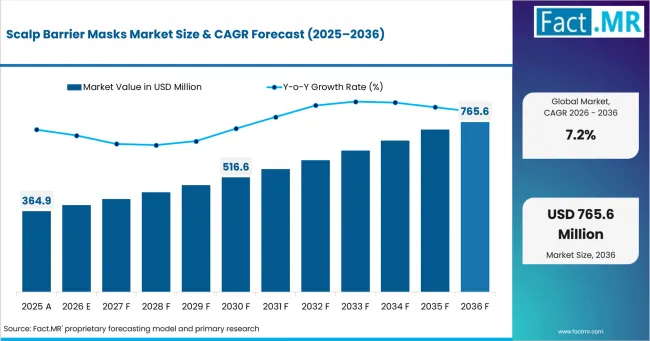
Scalp Barrier Masks Market Market Value Analysis | Source: Fact.MR
What are the defining numbers behind scalp barrier masks market growth?
USD 383.6 million absolute opportunity by 2036, led by scalp-first routines and barrier-support positioning.
- Demand Drivers in the Market
- Beauty consumers need scalp masks that calm dryness without leaving heavy residue.
- Salons need treatment products that extend scalp care beyond cleansing and styling.
- Dermocosmetic retailers need barrier-support formats for sensitive and dry scalp users.
- DTC brands need scalp masks that fit weekly routines and refill-led buying.
- Key Segments Analyzed
- By Treatment Type: Hydrating masks are expected to hold 36.0% share in 2026 because dryness is the clearest barrier-care entry point.
- By Active Base: Ceramides lead because barrier support is central to this category. The segment is projected to capture 34.0% share in 2026.
- By Hair Concern: Barrier repair is likely to account for 35.0% share in 2026 because the title is built around scalp comfort and resilience.
- By Channel: Prestige beauty leads because scalp masks are positioned as premium treatment products. The segment is expected to hold 32.0% share in 2026.
- By Positioning: Skinification of haircare is projected to record 42.0% share in 2026 because consumers are applying skincare logic to scalp care.
- Analyst Opinion at Fact.MR
- Shambhu Nath Jha, Senior Analyst at Fact.MR, states, “Scalp barrier masks are gaining attention because consumers now see the scalp as skin that needs periodic care. The category will grow where brands explain timing, texture and scalp concern fit clearly. Products that calm dryness without heavy residue will be better placed than ordinary hair masks.”
- Strategic Implications
- Scalp-care brands should explain mask timing and application method clearly.
- Salons should position barrier masks as post-service scalp comfort treatments.
- Dermocosmetic retailers should separate scalp barrier masks from ordinary hair masks.
- DTC brands should build weekly-use programs around dryness, sensitivity and scalp comfort.
Scalp barrier masks sit below the wider scalp health category because the title focuses on mask formats and barrier-support positioning. The category differs from ordinary hair masks because the product is applied to the scalp or scalp-adjacent skin to support comfort and sensitivity care.
CDC guidance in 2024 states that healthy scalp and hair care can help prevent and control certain scalp and hair discomfort. [1] This supports the market boundary because scalp barrier masks are positioned around cosmetic scalp comfort, not prescription treatment.
The United States is projected to record 8.0% CAGR through 2036 as DTC brands and prestige beauty retailers expand scalp-first routines. France is expected to post 7.6% CAGR through 2036 as salon-backed treatment products support scalp care premiumization. Japan is likely to record 7.2% CAGR as gentle scalp formulas fit daily beauty routines. China is forecast to advance at 6.9% CAGR as marketplaces scale premium scalp care. South Korea is set to record 6.6% CAGR as skinification of haircare supports barrier-led scalp products.
How does the scalp barrier masks market break down by segment?
Hydrating masks lead at 36.0%; ceramides lead at 34.0%.
Which treatment type dominates?
Hydrating masks hold 36.0% share in 2026.
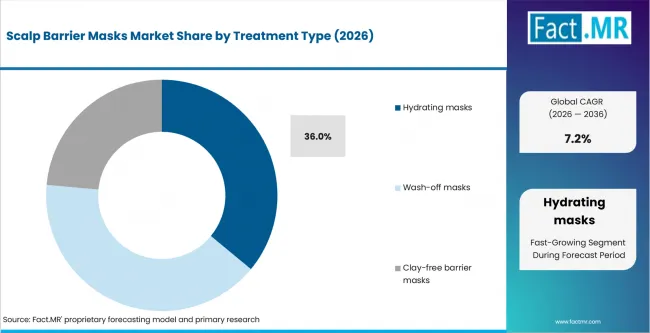
Scalp Barrier Masks Market Analysis By Treatment Type | Source: Fact.MR
Hydrating masks are expected to hold 36.0% share in 2026 because dryness is the most direct concern in scalp-barrier care. Wash-off masks suit weekly routines and salon treatment add-ons. Overnight masks support deeper comfort positioning where consumers want a longer treatment window. Clay-free barrier masks gain traction because sensitive-scalp users may avoid drying textures. Calming masks address itch-prone and irritation-prone routines. Briogeo positions its Scalp Revival Cooling Hydration Scalp Mask to detoxify, nourish and soothe itchy, irritated and flaky scalp. [3]
Which active base dominates?
Ceramides dominate scalp barrier mask formulation with 34.0% share in 2026.
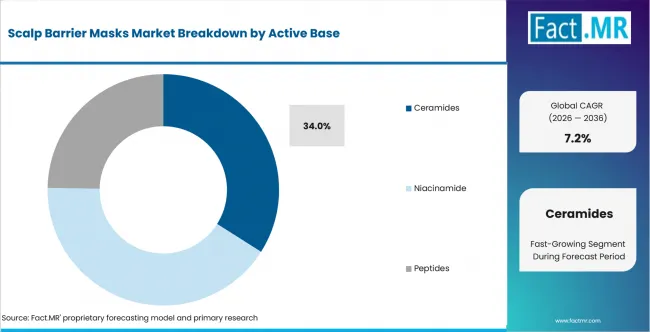
Scalp Barrier Masks Market Analysis By Active Base | Source: Fact.MR
Ceramides lead because barrier support is the core promise of this category. The segment is projected to capture 34.0% share in 2026 as brands use skincare-inspired barrier language to explain scalp comfort. Niacinamide supports scalp balance and sensitivity positioning. Peptides support density-led premiumization. Prebiotics help brands discuss scalp ecosystem balance. Sunscreens are smaller but relevant where UV exposure affects exposed scalp. Fermented ingredients support premium beauty storytelling.
Which hair concern dominates?
Barrier repair holds 35.0% share in 2026.
Barrier repair leads because consumers are linking scalp discomfort with dryness, over-cleansing and active overuse. The hair concern segment is likely to account for 35.0% share in 2026 as scalp masks are positioned around comfort, hydration and resilience. Dryness and flakes create steady dermocosmetic demand. Sebum control supports clay-free balancing masks. Density claims add peptide and scalp-first routines. Sensitivity supports fragrance-free and gentle formulas. Cleveland Clinic’s 2025 seborrheic dermatitis guidance describes a scalp condition marked by itchy, flaky and scaly skin. [4]
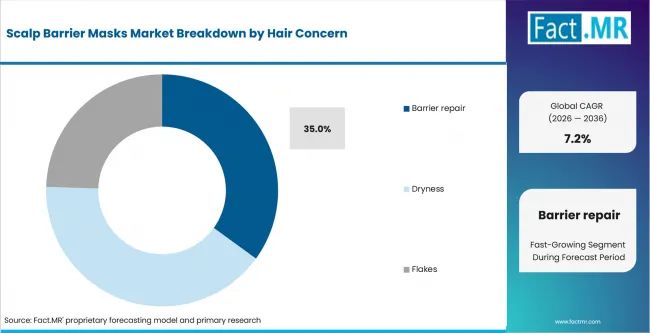
Scalp Barrier Masks Market Analysis By Hair Concern | Source: Fact.MR
Which channel dominates?
Prestige beauty dominates scalp barrier mask buying with 32.0% share in 2026.
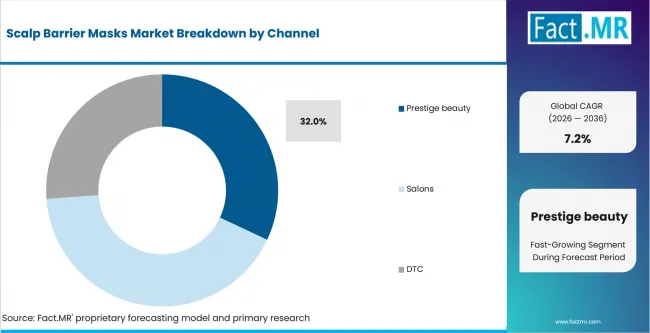
Scalp Barrier Masks Market Analysis By Channel | Source: Fact.MR
Prestige beauty leads because scalp barrier masks are often sold as premium treatments instead of ordinary wash-day products. The channel is expected to hold 32.0% share in 2026 as consumers discover scalp masks through haircare shelves, beauty advisors and routine-led bundles. Salons influence professional use and recommendation. Dermocosmetic retail supports sensitive-scalp credibility. DTC supports education and repeat use. Marketplaces help consumers compare reviews and price. The channel connects with concentrated scalp formats because consumers are buying more targeted scalp products.
Which positioning dominates?
Skinification of haircare holds 42.0% share in 2026.
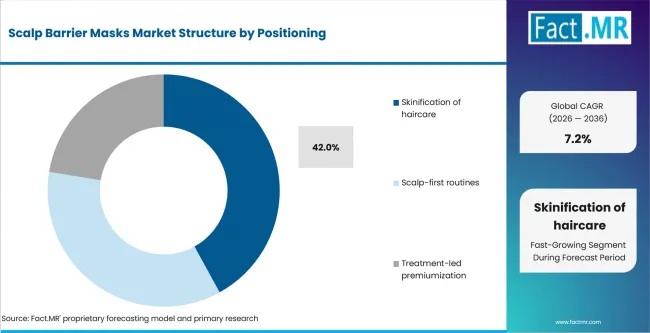
Scalp Barrier Masks Market Analysis By Positioning | Source: Fact.MR
Skinification of haircare leads because consumers now treat the scalp like facial skin. The positioning segment is projected to record 42.0% share in 2026 as ceramides, niacinamide, peptides and prebiotics move into scalp formulas. Scalp-first routines shift attention from hair strands alone to the skin beneath hair. Treatment-led premiumization supports higher prices and smaller formats. Act+Acre positions scalp care around “skincare for your scalp” and offers scalp-first systems for several scalp concerns. [5]
What is accelerating scalp barrier masks market adoption, and what is holding it back?
Skinification of haircare and dryness-led scalp treatment routines drive it, while confusion with ordinary hair masks and overlap with scalp serums restrain it.
Drivers Impact Analysis
| DRIVER | (~) % IMPACT ON CAGR | GEOGRAPHIC RELEVANCE | IMPACT TIMELINE |
|---|---|---|---|
| Skinification of haircare moving barrier language into scalp routines | +0.8% | North America, Europe, East Asia | Medium term (2–4 years) |
| Dryness and sensitivity driving hydrating mask use | +0.7% | United States, France, Japan, South Korea | Short term (≤ 2 years) |
| Salon and prestige channels premiumizing scalp treatments | +0.5% | France, United States, Japan | Medium term (2–4 years) |
| DTC education supporting weekly scalp mask routines | +0.4% | United States, United Kingdom, urban Asia | Medium term (2–4 years) |
| Clay-free formulas appealing to sensitive-scalp consumers | +0.3% | Europe, Japan, North America | Long term (≥ 4 years) |
Source: Fact.MR analysis. Updated Jul 2, 2026
- Skinification of haircare
- Skinification of haircare is the strongest driver because consumers are applying facial skincare habits to the scalp. Barrier language is already familiar through moisturizers and serums. Scalp barrier masks benefit from this shift because they offer a clear weekly treatment step. Brands can explain the product through comfort, hydration and scalp resilience.
- Dryness and sensitivity
- Dryness and sensitivity support demand because consumers can feel these concerns quickly. A hydrating or calming scalp mask gives the user a focused treatment moment. This driver favors lightweight textures and soothing active bases. It is strongest where consumers already use scalp serums and treatment haircare.
- Salon and prestige premiumization
- Salon and prestige channels help scalp masks move beyond basic wash-day care. Stylists can recommend masks after coloring, heat styling or scalp analysis. Prestige beauty retailers can place masks near scalp serums and targeted hair treatments. This helps brands charge more than ordinary conditioners.
- DTC education
- DTC education matters because many consumers still do not know how to use a scalp mask. Brands need to show whether the mask is applied before shampoo, after shampoo or overnight. Quizzes, videos and routine bundles reduce confusion. This makes DTC important for category creation.
- Clay-free sensitive formulas
- Clay-free formulas create demand among consumers who want scalp balancing without a tight or dry feeling. Sensitive-scalp shoppers often avoid harsh textures. Calming masks with ceramides, prebiotics or niacinamide can meet this need. The driver is strongest in dermocosmetic retail and premium beauty.
Opportunity Impact Analysis
| OPPORTUNITY | (~) % IMPACT ON CAGR | GEOGRAPHIC RELEVANCE | IMPACT TIMELINE |
|---|---|---|---|
| Ceramide and niacinamide masks for sensitive scalp care | +0.6% | Europe, Japan, North America | Medium term (2–4 years) |
| Overnight barrier masks for weekly scalp recovery routines | +0.5% | United States, France, South Korea | Medium term (2–4 years) |
| Salon scalp-analysis bundles linked with mask treatments | +0.4% | France, Japan, South Korea | Long term (≥ 4 years) |
| Marketplace trial sizes for premium scalp masks | +0.3% | United States, China, India | Short term (≤ 2 years) |
Source: Fact.MR analysis. Updated Jul 2, 2026
- Ceramide and niacinamide masks
- Ceramide and niacinamide scalp masks create opportunity because consumers already trust these actives for facial barrier support. A mask format can make the benefit feel richer and more treatment-led than a light tonic. This opportunity is strongest where sensitive scalp and dermocosmetic positioning overlap.
- Overnight barrier masks
- Overnight masks create opportunity because consumers understand sleep-time repair routines from skincare. A scalp mask that feels lightweight and non-greasy can fit this behavior. The product must avoid residue and pillow transfer. Brands that solve texture will have a stronger route to premium pricing.
- Salon scalp-analysis bundles
- Salon scalp-analysis bundles can make barrier masks easier to understand. A stylist can match the mask to dryness, sensitivity or flakes. This gives the product a role after cleansing, coloring and scalp examination. The opportunity connects with skin grooming because the scalp is being treated as part of a wider skin-care routine.
- Marketplace trial sizes
- Marketplace trial sizes can reduce the barrier for premium scalp masks. Consumers may hesitate to buy a full-size product before understanding texture and application. Small sizes can also support travel and weekly routines. The opportunity connects with biotech ingredients because premium masks often use advanced active stories.
Restraints Impact Analysis
| RESTRAINT | (~) % IMPACT ON CAGR | GEOGRAPHIC RELEVANCE | IMPACT TIMELINE |
|---|---|---|---|
| Consumer confusion between scalp masks and hair masks | -0.6% | Global | Short term (≤ 2 years) |
| Overlap with scalp serums, scrubs and anti-dandruff products | -0.5% | North America, Europe, Asia | Medium term (2–4 years) |
| Residue and washability concerns in dense hair types | -0.4% | Global, strongest in textured hair consumers | Medium term (2–4 years) |
| Premium pricing versus ordinary conditioners | -0.3% | Global, strongest in mass beauty channels | Long term (≥ 4 years) |
Source: Fact.MR analysis. Updated Jul 2, 2026
- Scalp-mask confusion
- Consumer confusion is a major restraint because many shoppers already use hair masks on lengths and ends. They may not understand why a scalp mask is different. Brands need to explain application area, timing and scalp-barrier benefit. Without clear education, consumers may treat the product as another conditioner.
- Category overlap
- Scalp barrier masks overlap with scalp serums and anti-dandruff shampoos. A consumer with flakes may choose a scrub or dandruff shampoo before a barrier mask. Mask brands need to define their role as comfort and recovery products. This helps avoid commodity comparison with cleansing products.
- Residue and washability concerns
- Residue risk can limit adoption because scalp products must work through hair. Dense, curly or textured hair can make application and rinsing more difficult. A mask that leaves buildup may reduce repeat use. Brands need light textures, nozzle formats and clear rinse instructions.
- Premium pricing
- Premium pricing can slow adoption because some consumers still see scalp care as shampoo-led. A barrier mask must justify added cost through comfort, hydration or routine value. Mass-channel shoppers may wait for trial sizes or bundles before buying. Living Proof positions dry scalp treatment around comfort needs such as dryness, flaking, itching and irritation. [6]
Which countries are scaling scalp barrier masks fastest?
United States 8.0%; France 7.6%; Japan 7.2%; China 6.9%; South Korea 6.6%.
Based on regional analysis, the scalp barrier masks market is segmented into North America, Western Europe, East Asia, South Asia, Latin America, and Middle East and Africa.
| Country | CAGR |
|---|---|
| United States | 8.0% |
| France | 7.6% |
| Japan | 7.2% |
| China | 6.9% |
| South Korea | 6.6% |
Source: Fact.MR analysis. Updated Jul 2, 2026
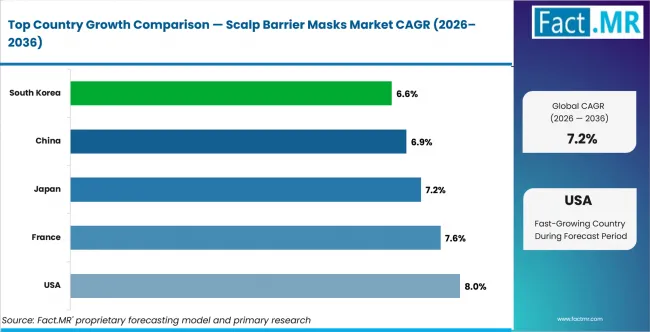
Scalp Barrier Masks Market Cagr Analysis By Country | Source: Fact.MR
What is powering the United States lead?
8.0% CAGR, driven by Briogeo and DTC scalp-care education.
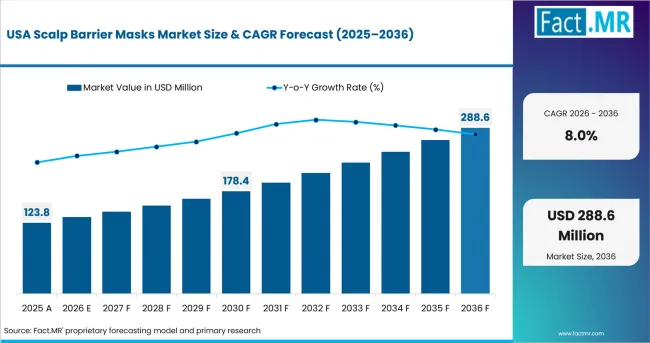
Scalp Barrier Masks Market Country Value Analysis | Source: Fact.MR
The United States is projected to record 8.0% CAGR from 2026 to 2036 as consumers adopt scalp masks through prestige beauty, DTC routines and marketplace trial sizes. Growth will favor brands that explain scalp application clearly and connect barrier care with dryness and sensitivity needs.
How is France scaling scalp barrier mask demand?
France is scaling through salon-backed treatment routines and premium haircare.
France is expected to post 7.6% CAGR through 2036 as salon channels position scalp masks as treatment add-ons. Kérastase and prestige haircare routines support premium scalp care adoption. Growth will favor hydrating and calming masks that fit professional scalp analysis.
What supports Japan’s outlook?
7.2% CAGR, driven by gentle formulas and daily beauty discipline.
Japan is likely to record 7.2% CAGR by 2036 as consumers adopt scalp masks that feel clean, mild and easy to rinse. Sensitive-scalp and dryness-focused products will gain traction where comfort and subtle application matter. Compact packaging and clear directions will support repeat use.
What underpins China’s growth?
China is scaling through marketplaces and premium scalp-care discovery.
China is forecast to advance at 6.9% CAGR through 2036 as online beauty platforms expand access to scalp-first treatments. Consumers will compare active claims, influencer routines and product textures. Growth will favor clay-free masks and hydrating formulas with clear routine benefits.
How is South Korea scaling scalp barrier mask adoption?
6.6% CAGR, driven by skinification of haircare and treatment-led beauty routines.
South Korea is set to record 6.6% CAGR by 2036 as consumers extend skincare habits into scalp care. Scalp barrier masks will benefit from familiarity with ceramides, prebiotics and fermented ingredients. Brands with lightweight textures and scalp-first storytelling will be better placed.
Who leads the scalp barrier masks market?
Briogeo and Kérastase lead through scalp-first and salon-backed treatment positioning.
Scalp barrier masks are supplied by scalp-care specialists, prestige haircare brands and skincare-led beauty companies. Briogeo is directly relevant through its scalp mask and Scalp Revival range. Kérastase supports the category through salon-backed scalp care. Act+Acre is relevant through scalp-first systems and moisture-barrier language. Living Proof supports comfort-led scalp treatment positioning.
Nécessaire adds dermocosmetic credibility through fragrance-free scalp serum formats. Competition also connects with waterless shampoo behavior because consumers trying to extend time between washes may also use scalp masks for comfort and refresh routines.
Competition through 2036 will be shaped by texture, rinseability, scalp comfort and routine education. Brands that sell ordinary hair masks with scalp language will face skepticism. Brands that connect mask format with barrier repair and sensitivity can defend stronger value.
Which companies are the key providers?
Briogeo and Kérastase are key providers. Act+Acre and Living Proof are also profiled. Nécessaire complete the company set.
- Act+Acre
- Briogeo
- Kérastase
- Living Proof
- Nécessaire
Bibliography
- Centers for Disease Control and Prevention. (2024, May 7). Healthy habits: Hair and scalp hygiene.
- Briogeo. (2026). Scalp Revival Charcoal + Tea Tree Cooling Hydration Scalp Mask.
- Cleveland Clinic. (2025, July 16). Seborrheic dermatitis.
- Act+Acre. (2026). Act+Acre: Skincare for your scalp.
- Living Proof. (2026). Scalp Care Dry Scalp Treatment.
This Report Addresses
- Strategic intelligence on scalp barrier masks across treatment type and active base.
- Segment analysis covering Hydrating Masks and Ceramides.
- Regional outlook covering the United States, France, Japan, China and South Korea.
- Competitive analysis of Act+Acre, Briogeo, Kérastase, Living Proof, and Nécessaire.
- Technology assessment covering ceramide support, niacinamide use, clay-free textures, prebiotics and scalp-mask rinseability.
- Use case assessment covering barrier repair, dryness, flakes, sensitivity, sebum control and scalp-first routines.
- Primary interviews, provider checks and official source review support the forecast.
What does the scalp barrier masks market cover?
Scalp masks and treatment masks positioned for barrier comfort and scalp-first care.
The scalp barrier masks market covers wash-off masks and calming masks. These products are used to support dryness relief and sensitivity care.
The market differs from broad personal care active ingredient coverage because it is limited to finished scalp mask products. It excludes bulk ingredients and prescription scalp products.
What is included in the scope?
Finished scalp barrier masks sold through beauty, salon, dermocosmetic and DTC channels.
The scope includes wash-off masks and calming masks. Active-base coverage includes ceramides and fermented ingredients when these are used in scalp barrier mask systems.
Hair concern coverage includes barrier repair and UV exposure. Channel coverage includes prestige beauty and marketplaces. The category also connects with premium beauty because many masks are positioned as treatment-led scalp care products.
What is excluded from the scope?
Prescription products and ordinary hair masks without scalp-barrier positioning are outside the scope.
The scope excludes prescription anti-dandruff drugs and hair masks that are only applied to lengths and ends. It also excludes facial barrier masks not marketed for scalp use. Broader hair grooming products are outside scope when they do not provide direct scalp treatment positioning.
How was the analysis built?
100+ sources, 40+ company portfolios, 25+ countries, 20+ interviews.
Primary Research: Primary research includes interviews with beauty category managers and salon retail teams. It includes input from dermocosmetic retail operators, DTC scalp-care brands and formulation consultants.
Desk Research: Desk research reviews official brand product pages, scalp-care portfolios, ingredient claims, retail channel listings and product-positioning language.
Market-Sizing and Forecasting: Forecasting uses scalp-care adoption, mask attachment rates, active-led positioning, channel mix and repeat-purchase behavior.
Data Validation and Update Cycle: Forecasts are validated through provider checks and channel feedback. SKU mapping and brand portfolio reviews help confirm market direction.
Segmentation
What is the report’s scope and coverage?
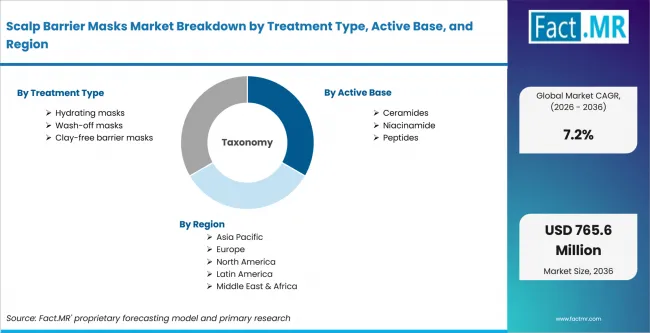
Scalp Barrier Masks Market Breakdown By Treatment Type, Active Base, And Region | Source: Fact.MR
| Attribute | Details |
|---|---|
| Quantitative Units | USD Million in 2026 to USD Million by 2036 at CAGR |
| Market Definition | Scalp masks and treatment masks positioned for barrier comfort and scalp-first care |
| Treatment Type | Wash-off masks; overnight masks; clay-free barrier masks; hydrating masks; calming masks |
| Active Base | Ceramides; niacinamide; peptides; prebiotics; sunscreens; fermented ingredients |
| Hair Concern | Barrier repair; dryness; flakes; sebum control; density; sensitivity; UV exposure |
| Channel | Prestige beauty; salons; dermocosmetic retail; DTC; marketplaces |
| Positioning | Skinification of haircare; scalp-first routines; treatment-led premiumization |
| Regions Covered | North America; Western Europe; East Asia; South Asia; Latin America; Middle East and Africa |
| Countries Covered | United States; France; Japan; China; South Korea |
| Key Companies Profiled | Act+Acre; Briogeo; Kérastase; Living Proof; Nécessaire |
| Forecast Period | 2026 to 2036 |
| Approach | Hybrid top-down and bottom-up approach using scalp-care adoption, mask-format mapping, active-base positioning and channel validation |
Source: Fact.MR analysis. Updated Jul 2, 2026
How is the market segmented?
-
By Treatment Type:
- Wash-off masks
- Overnight masks
- Clay-free barrier masks
- Hydrating masks
- Calming masks
-
By Active Base:
- Ceramides
- Niacinamide
- Peptides
- Prebiotics
- Sunscreens
- Fermented ingredients
-
By Hair Concern:
- Barrier repair
- Dryness
- Flakes
- Sebum control
- Density
- Sensitivity
- UV exposure
-
By Channel:
- Prestige beauty
- Salons
- Dermocosmetic retail
- DTC
- Marketplaces
-
By Positioning:
- Skinification of haircare
- Scalp-first routines
- Treatment-led premiumization
-
Region:
- North America
- United States
- Canada
- Western Europe
- France
- Germany
- United Kingdom
- Italy
- Spain
- East Asia
- Japan
- China
- South Korea
- South Asia
- India
- Thailand
- Singapore
- Latin America
- Brazil
- Mexico
- Chile
- Middle East & Africa
- UAE
- Saudi Arabia
- South Africa
- North America
Frequently Asked Questions
Which treatment type leads the Scalp Barrier Masks Market?
Which active base leads the Scalp Barrier Masks Market?
Which hair concern leads the Scalp Barrier Masks Market?
Which channel leads the Scalp Barrier Masks Market?
Which positioning leads the Scalp Barrier Masks Market?
Which country expands fastest in the Scalp Barrier Masks Market?
How does France perform in the Scalp Barrier Masks Market?
How does Japan perform in the Scalp Barrier Masks Market?
How does China perform in the Scalp Barrier Masks Market?
How does South Korea perform in the Scalp Barrier Masks Market?
What is the primary driver in the Scalp Barrier Masks Market?
What is the main restraint in the Scalp Barrier Masks Market?
Why are hydrating masks important?
Why does prestige beauty dominate demand?
Who worked on this report


Preview the report firsthand - request a free sample
Free SampleGet the brochure for pricing and purchase details
Download PDF