Ultra-High Molecular Weight Polyethylene Market Size, Share, Growth and Forecast (2026 - 2036)
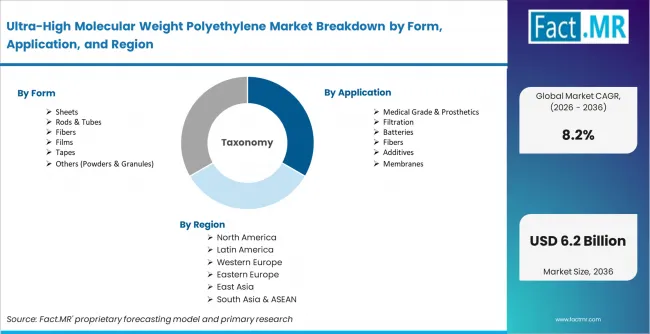
The Ultra-High Molecular Weight Polyethylene Market is segmented by Form (Sheets, Rods & Tubes, Fibers, Films, Tapes, and Others), Application (Medical Grade & Prosthetics, Filtration, Batteries, Fibers, Additives, Membranes, and Other Applications), End-use Industry, Processing Method, Grade Type and Region. Forecast for 2026 to 2036.
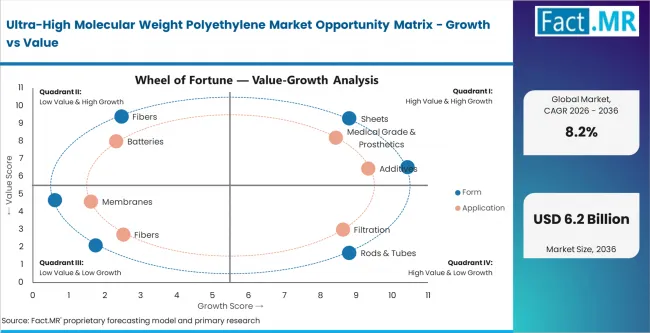
FACT.MR is of the opinion that the ultra-high molecular weight polyethylene market is entering a performance-grade transition phase. Commodity sheet and rod segments are showing slower growth. Demand is shifting toward high-value applications. Medical-grade materials, gel-spun fibers, and battery separators are gaining traction. These segments offer higher margins and stronger long-term demand. This shift is gradually reshaping the market structure through 2036.
Ultra-High Molecular Weight Polyethylene Market Forecast and Outlook By Fact.MR
- In 2025, the ultra-high molecular weight polyethylene market was valued at USD 2.4 billion.
- Based on Fact.MR analysis, demand for ultra-high molecular weight polyethylene is estimated to grow to USD 2.6 billion in 2026 and USD 5.7 billion by 2036.
- FACT.MR projects a CAGR of 8.2% during the forecast period.

| Metric | Value |
|---|---|
| Estimated Value in 2026 | USD 2.6 billion |
| Forecast Value in 2036 | USD 5.7 billion |
| Forecast CAGR (2026 to 2036) | 8.2% |
Summary of Ultra-High Molecular Weight Polyethylene Market
- Market Definition:
- Market covers ultra-high molecular weight polyethylene market resins and fabricated forms including sheets, rods, fibers, films, and tapes, serving medical implant, defense fiber, industrial, filtration, and battery separator applications globally.
- Demand Drivers
- Orthopedic implant volumes are increasing in the United States, Germany, and India. Aging populations are driving joint replacement procedures. This is raising demand for medical-grade ultra-high molecular weight polyethylene under ISO and ASTM standards.
- Defense procurement is expanding across the United States and allied nations. Gel-spun ultra-high molecular weight polyethylene fiber is widely used in armor and ballistic protection. Long-term military contracts are supporting steady demand.
- Battery separator demand is emerging in Asia. Lithium-ion manufacturers in China, Japan, and South Korea are adopting ultra-high molecular weight polyethylene membranes. These materials offer high thermal stability and longer cycle life.
- Key Segments Analyzed
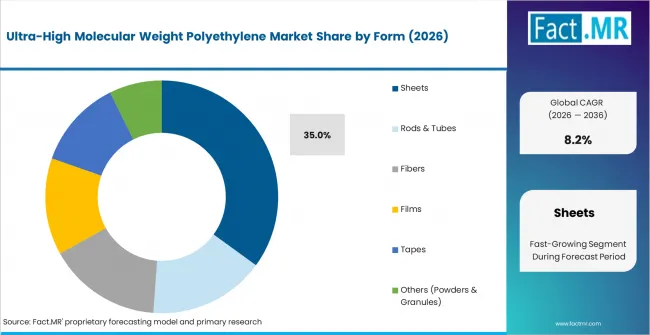
- By form, sheets account for 35% share in 2026. Demand is driven by liners, chutes, and wear surfaces in mining and material handling. Food processing also supports steady usage.
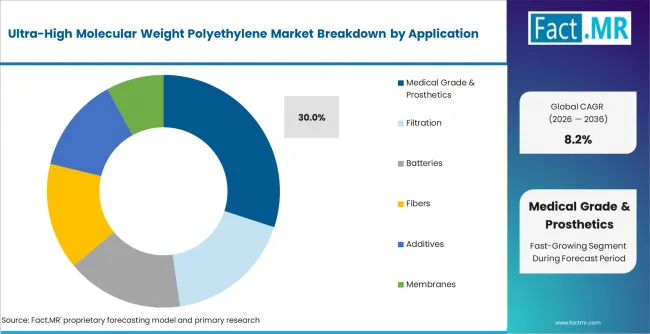
- By application, medical grade and prosthetics hold 30% share in 2026. Growth comes from rising orthopedic procedures and implant adoption across regions.
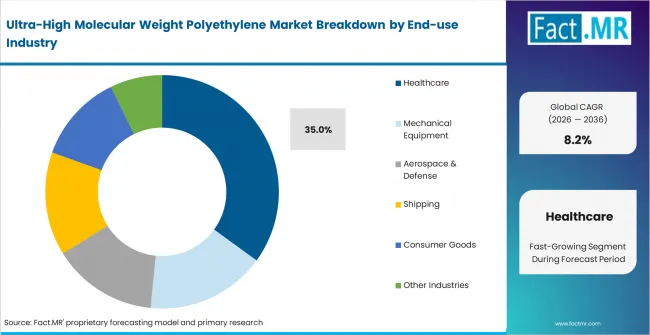
- By end-use industry, healthcare captures 35% share in 2026. Procurement is anchored in orthopedic and prosthetic applications. Aerospace, defense, and mechanical equipment show faster growth.
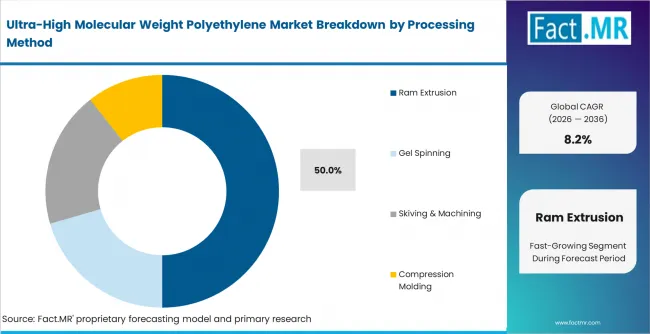
- By processing method, ram extrusion leads with 50% share in 2026. It is widely used for producing rods, tubes, and sheets at scale.
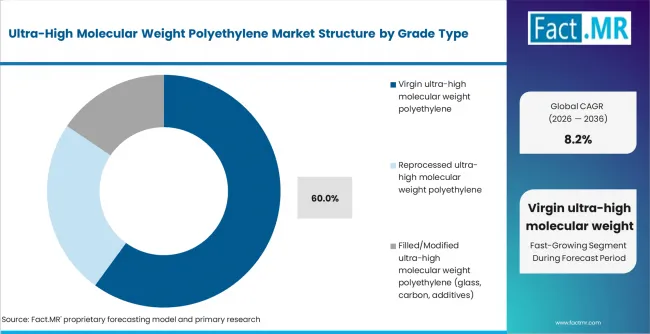
- By grade type, virgin ultra-high molecular weight polyethylene holds 60% share in 2026. It is required for medical, food-grade, and defense uses where purity and certification are critical.
- Analyst Opinion at FACT.MR:
- Shambhu Nath Jha, Principal Consultant at Fact.MR, opines, CXOs will observe a shift in value creation within ultra-high molecular weight polyethylene. Commodity sheet and rod segments are becoming less central. Growth is moving toward high-spec applications.
- Strategic Implications
- Invest in ISO 5834 and ASTM F648 certification to capture medical-grade demand. Strengthen traceability systems to support orthopedic procurement. Target North America, Europe, and Asia Pacific markets.
- Build gel spinning partnerships for defense fiber supply. Focus on U.S. and allied program contracts. Leverage long-term agreements for stable revenue.
- Qualify UHMWPE membranes for battery separators early. Target China, Japan, and South Korea. Align with upcoming supplier qualification cycles.
- Methodology
- Market sizing based on resin volumes, fabricated shipments, and application penetration. Benchmarked against Celanese Corporation, LyondellBasell Industries, and DSM-Firmenich disclosures.
- Includes regulatory standards, capacity expansion data, and government program inputs from recent filings.
- Forecasts incorporate gel spinning capacity, medical demand, battery timelines, and industry interviews.
The market is projected to create USD 3.1 billion in absolute opportunity between 2026 and 2036. Growth remains steady and structurally supported. Demand is being driven by rising medical implant volumes and defense fiber programs. Battery separator applications are emerging as a new growth area. Cost sensitivity of raw materials remains a key constraint. Acceptance of reprocessed grades is limited in regulated sectors. Gel spinning processes require high capital investment.
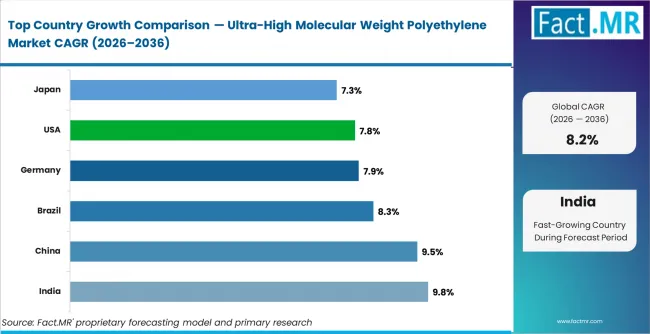
India leads with a CAGR of 9.8% through 2036. Growth is supported by industrial expansion and rising healthcare demand. China follows at 9.5%, driven by large-scale manufacturing and domestic production capacity. Brazil posts 8.3%, supported by petrochemical and industrial demand. Germany records 7.9%, driven by engineering and automotive applications. The United States grows at 7.8%, supported by medical and defense demand. Japan registers 7.3%, led by specialty fiber and electronics applications.
Segmental Analysis
Ultra-High Molecular Weight Polyethylene Market Analysis by Form

Based on FACT.MR's ultra-high molecular weight polyethylene market report, sheets hold ~35% share in 2026. They are widely used in liners, chutes, dock bumpers, and food-contact surfaces across mining, material handling, and processing industries.
- Celanese Investment: Celanese Corporation expanded sheet and rod capacity in 2024 to meet rising OEM demand in material handling and food processing sectors. [4]
- Fiber Technology Development: DSM-Firmenich advanced Dyneema fiber technology with improved strength-to-weight performance for industrial and defense use. [5]
- Film and Tape Adoption Trend: Asahi Kasei Corporation increased film and tape processing capacity aligned with battery and filtration demand growth. [6]
Ultra-High Molecular Weight Polyethylene Market Analysis by Application

Medical grade and prosthetics hold ~30% share in 2026. Demand is anchored in orthopedic implants requiring certified materials under ISO and ASTM standards, limiting supplier base.
- LyondellBasell Capacity: LyondellBasell Industries expanded medical-grade resin capacity in 2024 to support orthopedic device manufacturers. [7]
- Battery Separator Development: Asahi Kasei Corporation advanced separator membrane development for next-generation lithium-ion batteries. [8]
- Filtration and Membrane Trend: Entegris and Pall Corporation increased adoption of UHMWPE filtration media in high-purity environments. [9]
Ultra-High Molecular Weight Polyethylene Market Analysis by End-use Industry

Healthcare holds 35% share in 2026, driven by orthopedic and prosthetic demand. Industrial and defense segments are expanding with high-performance material requirements.
- Teijin Aerospace Investment: Teijin Limited expanded composite production for aerospace and ballistic protection applications.
- Shipping and Marine Technology: Mitsubishi Chemical Group developed advanced UHMWPE-based marine materials for offshore use.
- Consumer Goods Adoption Trend: Avient Corporation reported growth in consumer and performance applications using UHMWPE compounds.
Ultra-High Molecular Weight Polyethylene Market Analysis by Processing Method

Ram extrusion holds 50% share in 2026. It supports continuous production of rods, tubes, and profiles and remains the core processing method across industries.
- Compression Molding Capacity: Mitsui Chemicals expanded compression molding capacity for precision sheet applications in 2024.
- Gel Spinning Technology: Honeywell International Inc. enhanced gel spinning processes to improve fiber strength and performance.
- Skiving and Machining Trend: Braskem reported increased demand for precision-machined medical-grade components.
Ultra-High Molecular Weight Polyethylene Market Analysis by Grade Type

Virgin grade holds 60% share in 2026. It is required for regulated applications where purity, traceability, and certification are mandatory.
- DSM-Firmenich Virgin Grade: DSM-Firmenich expanded virgin-grade resin production for medical applications in 2024.
- Filled Grade Development: Avient Corporation developed filled grades for enhanced industrial performance.
- Reprocessed Grade Trend: LyondellBasell Industries introduced recycled-content UHMWPE for non-critical industrial uses.
Drivers, Restraints, and Opportunities

FACT.MR analysts observe that the ultra-high molecular weight polyethylene market is transitioning from a mature industrial polymer commodity into a multi-application specialty material category. Initial demand was anchored in industrial wear liners and marine engineering.
The core tension lies between commodity-priced industrial sheet and rod volumes and specification-locked high-value segments.
- Medical implant regulation and volume growth: FDA 510(k) approvals and EU MDR updates are strengthening certified UHMWPE demand. DSM-Firmenich expanded supply agreements with orthopedic OEMs. Demand for ISO 5834-grade material is rising across the United States and Europe.
- Defense fiber programme expansion: U.S. defense budgets are increasing procurement of UHMWPE fiber. Honeywell International Inc. and DSM-Firmenich are key suppliers. Long-term contracts are supporting steady volume growth.
- Battery separator qualification: China is advancing UHMWPE membrane use in lithium-ion batteries. Asahi Kasei Corporation is expanding production capacity. Demand is aligned with EV and energy storage requirements.
Regional Analysis
The ultra-high molecular weight polyethylene market is assessed across Asia Pacific, North America, Europe, Latin America, and Middle East and Africa, covering 40+ countries segmented by manufacturing capacity, healthcare infrastructure, and defense procurement depth. The full report offers market attractiveness analysis by region and country.
.webp)
| Country | CAGR (2026 to 2036) |
|---|---|
| India | 9.8% |
| China | 9.5% |
| Brazil | 8.3% |
| Germany | 7.9% |
| United States | 7.8% |
| Japan | 7.3% |
Source: Fact.MR (FACT.MR) analysis, based on proprietary forecasting model and primary research

Asia Pacific Ultra-High Molecular Weight Polyethylene Market Analysis
Asia Pacific is the manufacturing scale and domestic-demand growth epicentre for ultra-high molecular weight polyethylene. India and China drive the fastest CAGRs through healthcare sector expansion, battery industry qualification, and domestic polymer processing investment.
- India: Healthcare and defense programs are driving momentum in India, growing at 9.8% CAGR through 2036. The Production Linked Incentive scheme is supporting orthopedic implant manufacturing. This is increasing demand for certified ultra-high molecular weight polyethylene resin. DRDO is expanding ballistic material testing for defense applications. Domestic fiber and composite procurement is strengthening under local manufacturing initiatives.
- China: Battery-led demand is shaping growth in China, which expands at 9.5% CAGR through 2036. Lithium-ion cell producers such as CATL and BYD are qualifying ultra-high molecular weight polyethylene membrane substrates. Asahi Kasei Corporation is expanding Hipore separator production in 2025. Government policy is positioning the material as strategic for aerospace and defense. State-backed chemical firms are scaling domestic resin capacity.
- Japan: A specialty-driven adoption profile defines Japan, growing at 7.3% CAGR through 2036. Demand is concentrated in medical, battery, and precision fiber segments. Asahi Kasei Corporation is expanding membrane production aligned with domestic battery partnerships. Companies such as Toyota Industries and Kyocera Corporation are qualifying components for high-precision applications. Commodity industrial usage remains limited.
FACT.MR’s Asia Pacific analysis covers China, India, Japan, South Korea, ASEAN, and Australia & New Zealand. It includes battery qualification timelines, medical policy impacts, and defense procurement trends.
North America Ultra-High Molecular Weight Polyethylene Market Analysis

North America anchors high-value demand in ultra-high molecular weight polyethylene. Medical implants and defense fiber programs sustain premium-grade consumption. Regulatory pathways create strong entry barriers for new suppliers..
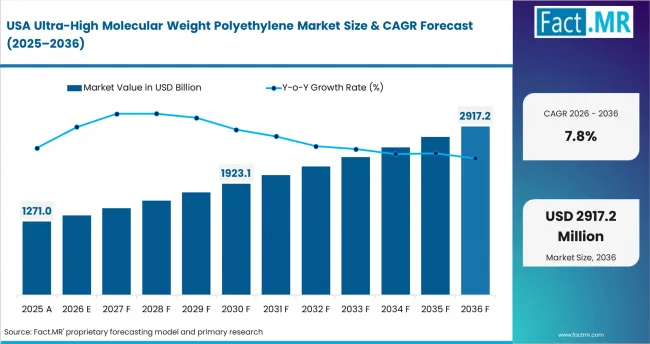
- United States: Procedure-driven demand supports growth in the United States at 7.8% CAGR through 2036. Orthopedic implant volumes are rising following post-pandemic backlog recovery. Companies such as Zimmer Biomet and Stryker Corporation are increasing procurement of certified resin. Defense programs are sustaining gel-spun fiber demand. Honeywell International Inc. continues to supply Spectra fiber under long-term military contracts.
FACT.MR’s North America analysis includes the United States, Canada, and Mexico. It covers FDA certification pathways, defense procurement frameworks, and industrial adoption.
Europe Ultra-High Molecular Weight Polyethylene Market Analysis

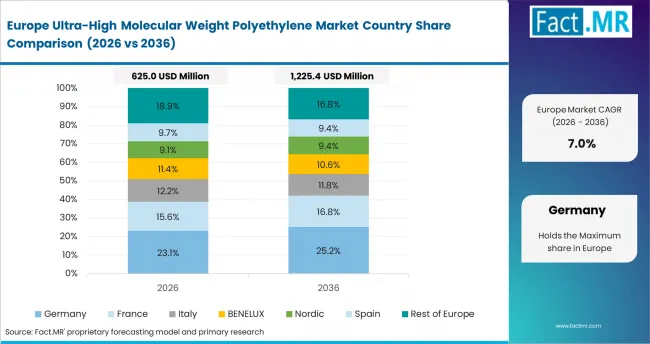
Europe is the regulatory compliance and advanced engineering application benchmark for ULTRA-HIGH MOLECULAR WEIGHT POLYETHYLENE . EU MDR implementation and REACH chemical compliance frameworks anchor certified medical-grade resin demand. DSM-Firmenich and LyondellBasell lead regional supply. German and Dutch industrial manufacturing and automotive sectors sustain wear-component and specialty fiber adoption alongside medical end-use growth.
- Germany: Engineering and medical demand support growth in Germany at 7.9% CAGR through 2036. Aesculap AG is expanding orthopedic implant production following regulatory compliance updates. DSM-Firmenich is supplying certified resin under long-term agreements. Industrial players such as KION Group are increasing adoption of ultra-high molecular weight polyethylene liners in automated systems.
FACT.MR’s Europe analysis includes Germany, France, the United Kingdom, Italy, Spain, and the rest of Europe. It highlights compliance frameworks, industrial applications, and healthcare demand trends.
Competitive Aligners for Market Players

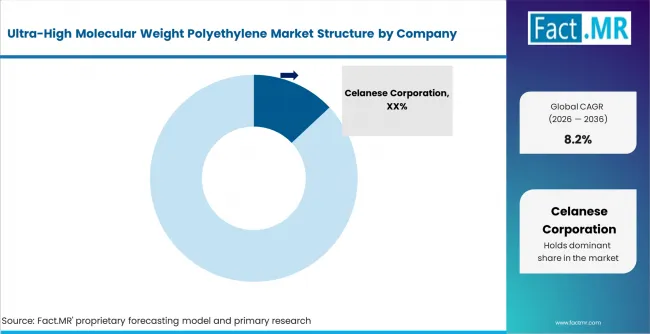
Market leaders are aligning portfolios toward high-performance and regulated-grade ultra-high molecular weight polyethylene. Companies such as Celanese Corporation, DSM-Firmenich, and LyondellBasell Industries are prioritising certified medical-grade resin and specialty applications. Investment is focused on ISO-compliant production, traceability systems, and long-term supply agreements with orthopedic OEMs. This strategy supports pricing stability and reduces exposure to commodity segment volatility.
Defense and high-performance fiber applications are emerging as a key alignment area. Honeywell International Inc. and DSM-Firmenich are expanding gel-spun fiber capabilities to meet military procurement programs. Long-cycle contracts with defense agencies provide predictable revenue streams. Suppliers are also strengthening partnerships with system integrators to secure position in multi-year programs.
Battery separator applications are becoming a strategic priority. Asahi Kasei Corporation and other material suppliers are accelerating membrane qualification with lithium-ion cell manufacturers. Early-stage collaboration with battery producers is critical to secure inclusion in approved supplier lists. This segment requires continuous investment in processing precision and performance validation. Companies are maintaining presence in industrial applications through cost optimisation and product diversification. Players such as Avient Corporation and Braskem are expanding filled and reprocessed grades for non-regulated uses. A dual strategy is emerging, balancing premium certified segments with volume-driven industrial demand.
Key Players
- Celanese Corporation
- LyondellBasell Industries
- DSM-Firmenich
- Asahi Kasei Corporation
- Mitsui Chemicals
- Braskem
- Avient Corporation
- Honeywell International Inc.
- Teijin Limited
- Mitsubishi Chemical Group
Bibliography
- [1] dsm-firmenich. (2024). Annual report 2024: medical polymer supply growth and iso 5834 certified ultra-high molecular weight polyethylene resin agreements with orthopedic implant manufacturers in the united states and europe. April 2024. Dsm-firmenich.com/investor-relations
- [2] honeywell international inc. (2024). Press release: spectra fiber defense supply agreement extension with u.s. Army and allied contractors for body armor and lightweight infantry protection system programmes. March 2024. Honeywell.com/news
- [3] asahi kasei corporation. (2025). Investor presentation q1 fy2025: battery separator division ultra-high molecular weight polyethylene membrane production expansion aligned with catl and byd cell qualification requirements for ev and grid storage applications. January 2025. Asahi-kasei.com/ir
- [4] celanese corporation. (2024). Annual report 2024: ticona engineered materials ultra-high molecular weight polyethylene capacity expansion for food processing and material handling oem customer demand growth. March 2024. Investors.celanese.com
- [5] dsm-firmenich. (2024). Product announcement: dyneema next-generation ultra-lightweight gel-spun ultra-high molecular weight polyethylene fiber grade for marine, cut-protection, and ballistic composite applications with enhanced tenacity-to-weight ratio. June 2024. Dsm-firmenich.com/press
- [6] asahi kasei corporation. (2025). Press release: expanded thin-film ultra-high molecular weight polyethylene processing line commissioning in japan for lithium-ion battery separator qualification supply chain programmes. February 2025. Asahi-kasei.com/news
- [7] lyondellbasell industries. (2024). Annual report 2024: medical-grade polyethylene resin production expansion at wesseling and houston facilities supporting orthopedic device manufacturer procurement growth. April 2024. Investors.lyondellbasell.com
- [8] asahi kasei corporation. (2025). Product release: hipore ultra-high molecular weight polyethylene battery separator membrane qualification with korean and chinese cell manufacturers for next-generation high-cycle lithium-ion formats. March 2025. Asahi-kasei.com/separator
- [9] entegris inc. (2024). Press release: ultra-high molecular weight polyethylene filter media qualification for critical pharmaceutical and semiconductor process applications in cleanroom fluid handling systems. September 2024. Entegris.com/news
This Report Addresses
- Strategic intelligence on ultra-high molecular weight polyethylene resin and fabricated form demand across medical implant, defense fiber, industrial wear, filtration, and battery separator applications globally.
- Market forecast from USD 2.6 billion in 2026 to USD 5.7 billion by 2036 at a CAGR of 8.2%.
- Growth opportunity mapping across India healthcare PLI and defense procurement, China battery separator qualification, U.S. medical implant and dod fiber programmes, Germany engineering adoption, and Brazil industrial expansion.
- Segment analysis by form (sheets, rods & tubes, fibers, films, tapes), application (medical, filtration, batteries, membranes), end-use industry, processing method, and grade type.
- Regional outlook covering Asia Pacific battery and healthcare growth, North America defense and medical certification demand, and Europe MDR compliance and automotive engineering adoption.
- Competitive analysis of Celanese, lyondellbasell, DSM-Firmenich, Asahi Kasei, Mitsui, Braskem, Avient, Honeywell, Teijin, and Mitsubishi covering resin capacity, certification depth, gel spinning capability, and OEM programme positions.
- Regulatory analysis covering FDA 510(k) and EU MDR medical resin certification, ISO 5834 and ASTM F648 implant material standards, EU battery regulation separator requirements, and defense procurement specification updates.
- Report delivered in PDF, Excel, and presentation formats supported by validated manufacturer capacity data, medical device procurement benchmarks, and defense programme adoption inputs.
Market Definition
The ultra-high molecular weight polyethylene market covers ultra-high molecular weight polyethylene resins and fabricated forms including sheets, rods, fibers, films, and tapes, processed via compression molding, ram extrusion, gel spinning, and skiving.
Ultra-High Molecular Weight Polyethylene Market Inclusions
Covers global and regional forecasts from 2026 to 2036 across form, application, end-use industry, processing method, and grade type. Includes virgin, reprocessed, and modified ultra-high molecular weight polyethylene market grades. Covers medical, industrial, defense, battery, and filtration uses. Also includes pricing benchmarks, trade flows, and adoption trends.
Ultra-High Molecular Weight Polyethylene Market Exclusions
Excludes standard HDPE and LDPE resins. Does not include finished medical devices or implants using ultra-high molecular weight polyethylene market. PPE is excluded unless UHMWPE fiber is tracked separately. Focus remains on ultra-high molecular weight polyethylene market resin and immediate fabricated forms.
Ultra-High Molecular Weight Polyethylene Market Research Methodology
- Primary Research
- Interviews with ultra-high molecular weight polyethylene procurement managers, orthopedic device engineers, defense fiber buyers, and industrial processing plant operators across healthcare, aerospace, and manufacturing sectors.
- Desk Research
- Uses Celanese, LyondellBasell, DSM-Firmenich, Asahi Kasei, and Mitsui Chemicals public filings. Includes polymer pricing data, trade databases, and specialty materials adoption benchmarks from 2024 to 2025.
- Market-Sizing and Forecasting
- Uses a hybrid top-down and bottom-up model based on resin production volumes, fabrication output by form, application penetration rates, and end-use industry procurement benchmarks across geographies.
- Data Validation and Update Cycle
- Validated using manufacturer capacity disclosures, trade shipment data, and medical device procurement benchmarks. Cross-checked with expert interviews and updated on an ongoing basis.
Scope of Report

| Attribute | Details |
|---|---|
| Quantitative Units | USD 2.6 billion (2026) to USD 5.7 billion (2036), at a CAGR of 8.2% |
| Market Definition | Market covers ultra-high molecular weight polyethylene resins and fabricated forms including sheets, rods, fibers, films, and tapes, used in medical implants, defense fiber, industrial wear, filtration, and battery separator applications globally. |
| Form Segmentation | Sheets, Rods & Tubes, Fibers, Films, Tapes, Others (Powders & Granules) |
| Application Segmentation | Medical Grade & Prosthetics, Filtration, Batteries, Fibers, Additives, Membranes, Other Applications |
| End-use Industry Segmentation | Healthcare, Mechanical Equipment, Aerospace & Defense, Shipping, Consumer Goods, Other Industries |
| Processing Method Segmentation | Compression Molding, Ram Extrusion, Gel Spinning, Skiving & Machining |
| Grade Type Segmentation | Virgin ultra-high molecular weight polyethylene , reprocessed ultra-high molecular weight polyethylene , filled/modified ultra-high molecular weight polyethylene |
| Application Coverage | Orthopedic implants, ballistic and cut-resistant fibers, industrial wear liners, filtration membranes, battery separators, marine mooring, and consumer protective goods. |
| Regions Covered | North America, Europe, Asia Pacific, Latin America, Middle East and Africa |
| Countries Covered | USA, Canada, Mexico, Germany, UK, France, Italy, Spain, Nordic, BENELUX, China, Japan, South Korea, India, ASEAN, Australia and New Zealand, Brazil, Argentina, Chile, Saudi Arabia, UAE, South Africa, Rest of MEA |
| Key Companies Profiled | Celanese Corporation, LyondellBasell Industries, DSM-Firmenich, Asahi Kasei Corporation, Mitsui Chemicals, Braskem, Avient Corporation, Honeywell International Inc., Teijin Limited, Mitsubishi Chemical Group |
| Forecast Period | 2026 to 2036 |
| Approach | Hybrid top-down and bottom-up model using resin production volumes, fabricated form shipments, application penetration rates, medical device procurement data, and primary interviews with polymer and device industry executives. |
Ultra-High Molecular Weight Polyethylene Market by Segments
-
By Form:
- Sheets
- Rods & Tubes
- Fibers
- Films
- Tapes
- Others (Powders & Granules)
-
By Application:
- Medical Grade & Prosthetics
- Filtration
- Batteries
- Fibers
- Additives
- Membranes
- Other Applications
-
By End-use Industry:
- Healthcare
- Mechanical Equipment
- Aerospace & Defense
- Shipping
- Consumer Goods
- Other Industries
-
By Processing Method:
- Compression Molding
- Ram Extrusion
- Gel Spinning
- Skiving & Machining
-
By Grade Type:
- Virgin ultra-high molecular weight polyethylene
- Reprocessed ultra-high molecular weight polyethylene
- Filled/Modified ultra-high molecular weight polyethylene (glass, carbon, additives)
-
By Region:
- North America
- United States
- Canada
- Mexico
- Latin America
- Brazil
- Argentina
- Chile
- Rest of Latin America
- Western Europe
- Germany
- United Kingdom
- France
- Italy
- Spain
- Nordic Countries
- BENELUX
- Rest of Western Europe
- Eastern Europe
- Russia
- Poland
- Hungary
- Balkan and Baltic
- Rest of Eastern Europe
- East Asia
- China
- Japan
- South Korea
- South Asia and Pacific
- India
- ASEAN
- Australia and New Zealand
- Rest of South Asia and Pacific
- Middle East and Africa
- Kingdom of Saudi Arabia
- UAE
- South Africa
- Rest of Middle East and Africa
- North America
- Frequently Asked Questions -
How large is the global ultra-high molecular weight polyethylene market in 2025?
The global ultra-high molecular weight polyethylene market was valued at USD 2.4 billion in 2025.
What will the market size be in 2026?
Based on Fact.MR analysis, demand is estimated to grow to USD 2.6 billion in 2026.
What is the projected market size by 2036?
The market is projected to reach USD 5.7 billion by 2036, generating USD 3.1 billion in absolute dollar opportunity over the forecast period.
What is the expected CAGR from 2026 to 2036?
FACT.MR projects a CAGR of 8.2% for the global ultra-high molecular weight polyethylene market during the 2026 to 2036 forecast period.
Which form segment leads the market?
Sheets lead with approximately 35% share in 2026, driven by broad industrial wear liner, chute, and food processing contact surface applications globally.
Which application holds the largest share?
Medical Grade & Prosthetics leads at approximately 30% share in 2026, anchored by certified orthopedic implant resin procurement under ISO 5834 and ASTM F648 specifications in North America and Europe.
Which end-use industry is the fastest growing?
Aerospace & defense is the fastest growing end-use segment, driven by expansion of gel-spun ultra-high molecular weight polyethylene fiber procurement for ballistic protection and lightweight composite programmes under U.S. and allied defense budgets through 2036.
Which country shows the fastest growth?
India leads at 9.8% CAGR through 2036, driven by PLI-linked medical device manufacturing incentives, DRDO defense material qualification programmes, and expanding domestic polymer processing capacity.
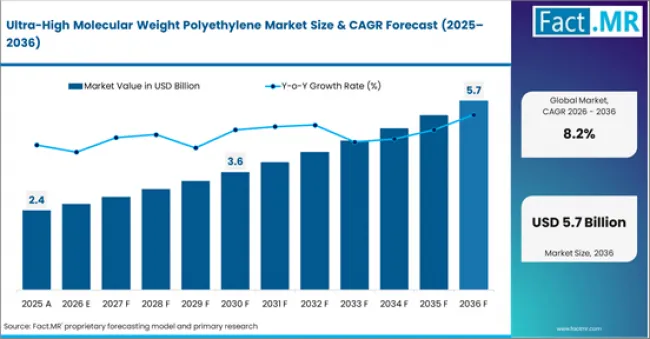
Table of Content
- Executive Summary
- Global Market Outlook
- Demand to side Trends
- Supply to side Trends
- Technology Roadmap Analysis
- Analysis and Recommendations
- Market Overview
- Market Coverage / Taxonomy
- Market Definition / Scope / Limitations
- Research Methodology
- Chapter Orientation
- Analytical Lens and Working Hypotheses
- Market Structure, Signals, and Trend Drivers
- Benchmarking and Cross-market Comparability
- Market Sizing, Forecasting, and Opportunity Mapping
- Research Design and Evidence Framework
- Desk Research Programme (Secondary Evidence)
- Company Annual and Sustainability Reports
- Peer-reviewed Journals and Academic Literature
- Corporate Websites, Product Literature, and Technical Notes
- Earnings Decks and Investor Briefings
- Statutory Filings and Regulatory Disclosures
- Technical White Papers and Standards Notes
- Trade Journals, Industry Magazines, and Analyst Briefs
- Conference Proceedings, Webinars, and Seminar Materials
- Government Statistics Portals and Public Data Releases
- Press Releases and Reputable Media Coverage
- Specialist Newsletters and Curated Briefings
- Sector Databases and Reference Repositories
- Fact.MR Internal Proprietary Databases and Historical Market Datasets
- Subscription Datasets and Paid Sources
- Social Channels, Communities, and Digital Listening Inputs
- Additional Desk Sources
- Expert Input and Fieldwork (Primary Evidence)
- Primary Modes
- Qualitative Interviews and Expert Elicitation
- Quantitative Surveys and Structured Data Capture
- Blended Approach
- Why Primary Evidence is Used
- Field Techniques
- Interviews
- Surveys
- Focus Groups
- Observational and In-context Research
- Social and Community Interactions
- Stakeholder Universe Engaged
- C-suite Leaders
- Board Members
- Presidents and Vice Presidents
- R&D and Innovation Heads
- Technical Specialists
- Domain Subject-matter Experts
- Scientists
- Physicians and Other Healthcare Professionals
- Governance, Ethics, and Data Stewardship
- Research Ethics
- Data Integrity and Handling
- Primary Modes
- Tooling, Models, and Reference Databases
- Desk Research Programme (Secondary Evidence)
- Data Engineering and Model Build
- Data Acquisition and Ingestion
- Cleaning, Normalisation, and Verification
- Synthesis, Triangulation, and Analysis
- Quality Assurance and Audit Trail
- Market Background
- Market Dynamics
- Drivers
- Restraints
- Opportunity
- Trends
- Scenario Forecast
- Demand in Optimistic Scenario
- Demand in Likely Scenario
- Demand in Conservative Scenario
- Opportunity Map Analysis
- Product Life Cycle Analysis
- Supply Chain Analysis
- Investment Feasibility Matrix
- Value Chain Analysis
- PESTLE and Porter’s Analysis
- Regulatory Landscape
- Regional Parent Market Outlook
- Production and Consumption Statistics
- Import and Export Statistics
- Market Dynamics
- Global Market Analysis 2021 to 2025 and Forecast, 2026 to 2036
- Historical Market Size Value (USD Million) Analysis, 2021 to 2025
- Current and Future Market Size Value (USD Million) Projections, 2026 to 2036
- Y to o to Y Growth Trend Analysis
- Absolute $ Opportunity Analysis
- Global Market Pricing Analysis 2021 to 2025 and Forecast 2026 to 2036
- Global Market Analysis 2021 to 2025 and Forecast 2026 to 2036, By Modality
- Introduction / Key Findings
- Historical Market Size Value (USD Million) Analysis By Modality , 2021 to 2025
- Current and Future Market Size Value (USD Million) Analysis and Forecast By Modality , 2026 to 2036
- Ultrasound Systems
- Magnetic Resonance Imaging Systems
- Computed Tomography Systems
- Ultrasound Systems
- Y to o to Y Growth Trend Analysis By Modality , 2021 to 2025
- Absolute $ Opportunity Analysis By Modality , 2026 to 2036
- Global Market Analysis 2021 to 2025 and Forecast 2026 to 2036, By Application
- Introduction / Key Findings
- Historical Market Size Value (USD Million) Analysis By Application, 2021 to 2025
- Current and Future Market Size Value (USD Million) Analysis and Forecast By Application, 2026 to 2036
- Cardiology
- Orthopedics
- Neurology
- Cardiology
- Y to o to Y Growth Trend Analysis By Application, 2021 to 2025
- Absolute $ Opportunity Analysis By Application, 2026 to 2036
- Global Market Analysis 2021 to 2025 and Forecast 2026 to 2036, By Patient Age Group
- Introduction / Key Findings
- Historical Market Size Value (USD Million) Analysis By Patient Age Group, 2021 to 2025
- Current and Future Market Size Value (USD Million) Analysis and Forecast By Patient Age Group, 2026 to 2036
- Children
- Adolescents
- Special Needs Pediatric Patients
- Children
- Y to o to Y Growth Trend Analysis By Patient Age Group, 2021 to 2025
- Absolute $ Opportunity Analysis By Patient Age Group, 2026 to 2036
- Global Market Analysis 2021 to 2025 and Forecast 2026 to 2036, By End User
- Introduction / Key Findings
- Historical Market Size Value (USD Million) Analysis By End User, 2021 to 2025
- Current and Future Market Size Value (USD Million) Analysis and Forecast By End User, 2026 to 2036
- Hospitals
- Pediatric Clinics
- Diagnostic Imaging Centers
- Hospitals
- Y to o to Y Growth Trend Analysis By End User, 2021 to 2025
- Absolute $ Opportunity Analysis By End User, 2026 to 2036
- Global Market Analysis 2021 to 2025 and Forecast 2026 to 2036, By Sales Channel
- Introduction / Key Findings
- Historical Market Size Value (USD Million) Analysis By Sales Channel, 2021 to 2025
- Current and Future Market Size Value (USD Million) Analysis and Forecast By Sales Channel, 2026 to 2036
- Direct Institutional Sales
- Distributor Sales
- Group Contract Sales
- Direct Institutional Sales
- Y to o to Y Growth Trend Analysis By Sales Channel, 2021 to 2025
- Absolute $ Opportunity Analysis By Sales Channel, 2026 to 2036
- Global Market Analysis 2021 to 2025 and Forecast 2026 to 2036, By Region
- Introduction
- Historical Market Size Value (USD Million) Analysis By Region, 2021 to 2025
- Current Market Size Value (USD Million) Analysis and Forecast By Region, 2026 to 2036
- North America
- Latin America
- Western Europe
- Eastern Europe
- East Asia
- South Asia and Pacific
- Middle East & Africa
- Market Attractiveness Analysis By Region
- North America Market Analysis 2021 to 2025 and Forecast 2026 to 2036, By Country
- Historical Market Size Value (USD Million) Trend Analysis By Market Taxonomy, 2021 to 2025
- Market Size Value (USD Million) Forecast By Market Taxonomy, 2026 to 2036
- By Country
- USA
- Canada
- Mexico
- By Modality
- By Application
- By Patient Age Group
- By End User
- By Sales Channel
- By Country
- Market Attractiveness Analysis
- By Country
- By Modality
- By Application
- By Patient Age Group
- By End User
- By Sales Channel
- Key Takeaways
- Latin America Market Analysis 2021 to 2025 and Forecast 2026 to 2036, By Country
- Historical Market Size Value (USD Million) Trend Analysis By Market Taxonomy, 2021 to 2025
- Market Size Value (USD Million) Forecast By Market Taxonomy, 2026 to 2036
- By Country
- Brazil
- Chile
- Rest of Latin America
- By Modality
- By Application
- By Patient Age Group
- By End User
- By Sales Channel
- By Country
- Market Attractiveness Analysis
- By Country
- By Modality
- By Application
- By Patient Age Group
- By End User
- By Sales Channel
- Key Takeaways
- Western Europe Market Analysis 2021 to 2025 and Forecast 2026 to 2036, By Country
- Historical Market Size Value (USD Million) Trend Analysis By Market Taxonomy, 2021 to 2025
- Market Size Value (USD Million) Forecast By Market Taxonomy, 2026 to 2036
- By Country
- Germany
- UK
- Italy
- Spain
- France
- Nordic
- BENELUX
- Rest of Western Europe
- By Modality
- By Application
- By Patient Age Group
- By End User
- By Sales Channel
- By Country
- Market Attractiveness Analysis
- By Country
- By Modality
- By Application
- By Patient Age Group
- By End User
- By Sales Channel
- Key Takeaways
- Eastern Europe Market Analysis 2021 to 2025 and Forecast 2026 to 2036, By Country
- Historical Market Size Value (USD Million) Trend Analysis By Market Taxonomy, 2021 to 2025
- Market Size Value (USD Million) Forecast By Market Taxonomy, 2026 to 2036
- By Country
- Russia
- Poland
- Hungary
- Balkan & Baltic
- Rest of Eastern Europe
- By Modality
- By Application
- By Patient Age Group
- By End User
- By Sales Channel
- By Country
- Market Attractiveness Analysis
- By Country
- By Modality
- By Application
- By Patient Age Group
- By End User
- By Sales Channel
- Key Takeaways
- East Asia Market Analysis 2021 to 2025 and Forecast 2026 to 2036, By Country
- Historical Market Size Value (USD Million) Trend Analysis By Market Taxonomy, 2021 to 2025
- Market Size Value (USD Million) Forecast By Market Taxonomy, 2026 to 2036
- By Country
- China
- Japan
- South Korea
- By Modality
- By Application
- By Patient Age Group
- By End User
- By Sales Channel
- By Country
- Market Attractiveness Analysis
- By Country
- By Modality
- By Application
- By Patient Age Group
- By End User
- By Sales Channel
- Key Takeaways
- South Asia and Pacific Market Analysis 2021 to 2025 and Forecast 2026 to 2036, By Country
- Historical Market Size Value (USD Million) Trend Analysis By Market Taxonomy, 2021 to 2025
- Market Size Value (USD Million) Forecast By Market Taxonomy, 2026 to 2036
- By Country
- India
- ASEAN
- Australia & New Zealand
- Rest of South Asia and Pacific
- By Modality
- By Application
- By Patient Age Group
- By End User
- By Sales Channel
- By Country
- Market Attractiveness Analysis
- By Country
- By Modality
- By Application
- By Patient Age Group
- By End User
- By Sales Channel
- Key Takeaways
- Middle East & Africa Market Analysis 2021 to 2025 and Forecast 2026 to 2036, By Country
- Historical Market Size Value (USD Million) Trend Analysis By Market Taxonomy, 2021 to 2025
- Market Size Value (USD Million) Forecast By Market Taxonomy, 2026 to 2036
- By Country
- Kingdom of Saudi Arabia
- Other GCC Countries
- Turkiye
- South Africa
- Other African Union
- Rest of Middle East & Africa
- By Modality
- By Application
- By Patient Age Group
- By End User
- By Sales Channel
- By Country
- Market Attractiveness Analysis
- By Country
- By Modality
- By Application
- By Patient Age Group
- By End User
- By Sales Channel
- Key Takeaways
- Key Countries Market Analysis
- USA
- Pricing Analysis
- Market Share Analysis, 2025
- By Modality
- By Application
- By Patient Age Group
- By End User
- By Sales Channel
- Canada
- Pricing Analysis
- Market Share Analysis, 2025
- By Modality
- By Application
- By Patient Age Group
- By End User
- By Sales Channel
- Mexico
- Pricing Analysis
- Market Share Analysis, 2025
- By Modality
- By Application
- By Patient Age Group
- By End User
- By Sales Channel
- Brazil
- Pricing Analysis
- Market Share Analysis, 2025
- By Modality
- By Application
- By Patient Age Group
- By End User
- By Sales Channel
- Chile
- Pricing Analysis
- Market Share Analysis, 2025
- By Modality
- By Application
- By Patient Age Group
- By End User
- By Sales Channel
- Germany
- Pricing Analysis
- Market Share Analysis, 2025
- By Modality
- By Application
- By Patient Age Group
- By End User
- By Sales Channel
- UK
- Pricing Analysis
- Market Share Analysis, 2025
- By Modality
- By Application
- By Patient Age Group
- By End User
- By Sales Channel
- Italy
- Pricing Analysis
- Market Share Analysis, 2025
- By Modality
- By Application
- By Patient Age Group
- By End User
- By Sales Channel
- Spain
- Pricing Analysis
- Market Share Analysis, 2025
- By Modality
- By Application
- By Patient Age Group
- By End User
- By Sales Channel
- France
- Pricing Analysis
- Market Share Analysis, 2025
- By Modality
- By Application
- By Patient Age Group
- By End User
- By Sales Channel
- India
- Pricing Analysis
- Market Share Analysis, 2025
- By Modality
- By Application
- By Patient Age Group
- By End User
- By Sales Channel
- ASEAN
- Pricing Analysis
- Market Share Analysis, 2025
- By Modality
- By Application
- By Patient Age Group
- By End User
- By Sales Channel
- Australia & New Zealand
- Pricing Analysis
- Market Share Analysis, 2025
- By Modality
- By Application
- By Patient Age Group
- By End User
- By Sales Channel
- China
- Pricing Analysis
- Market Share Analysis, 2025
- By Modality
- By Application
- By Patient Age Group
- By End User
- By Sales Channel
- Japan
- Pricing Analysis
- Market Share Analysis, 2025
- By Modality
- By Application
- By Patient Age Group
- By End User
- By Sales Channel
- South Korea
- Pricing Analysis
- Market Share Analysis, 2025
- By Modality
- By Application
- By Patient Age Group
- By End User
- By Sales Channel
- Russia
- Pricing Analysis
- Market Share Analysis, 2025
- By Modality
- By Application
- By Patient Age Group
- By End User
- By Sales Channel
- Poland
- Pricing Analysis
- Market Share Analysis, 2025
- By Modality
- By Application
- By Patient Age Group
- By End User
- By Sales Channel
- Hungary
- Pricing Analysis
- Market Share Analysis, 2025
- By Modality
- By Application
- By Patient Age Group
- By End User
- By Sales Channel
- Kingdom of Saudi Arabia
- Pricing Analysis
- Market Share Analysis, 2025
- By Modality
- By Application
- By Patient Age Group
- By End User
- By Sales Channel
- Turkiye
- Pricing Analysis
- Market Share Analysis, 2025
- By Modality
- By Application
- By Patient Age Group
- By End User
- By Sales Channel
- South Africa
- Pricing Analysis
- Market Share Analysis, 2025
- By Modality
- By Application
- By Patient Age Group
- By End User
- By Sales Channel
- USA
- Market Structure Analysis
- Competition Dashboard
- Competition Benchmarking
- Market Share Analysis of Top Players
- By Regional
- By Modality
- By Application
- By Patient Age Group
- By End User
- By Sales Channel
- Competition Analysis
- Competition Deep Dive
- Esaote SpA
- Overview
- Product Portfolio
- Profitability by Market Segments (Product/Age /Sales Channel/Region)
- Sales Footprint
- Strategy Overview
- Marketing Strategy
- Product Strategy
- Channel Strategy
- Siemens Healthineers AG
- Hitachi Ltd.
- Canon Medical Systems Corporation
- Koninklijke Philips N.V.
- GE HealthCare Technologies Inc.
- Fujifilm Holdings Corporation
- Esaote SpA
- Competition Deep Dive
- Assumptions & Acronyms Used
List Of Table
- Table 1: Global Market Value (USD Million) Forecast by Region, 2021 to 2036
- Table 2: Global Market Value (USD Million) Forecast by Modality, 2021 to 2036
- Table 3: Global Market Value (USD Million) Forecast by Application, 2021 to 2036
- Table 4: Global Market Value (USD Million) Forecast by Patient Age Group, 2021 to 2036
- Table 5: Global Market Value (USD Million) Forecast by End User, 2021 to 2036
- Table 6: Global Market Value (USD Million) Forecast by Sales Channel, 2021 to 2036
- Table 7: North America Market Value (USD Million) Forecast by Country, 2021 to 2036
- Table 8: North America Market Value (USD Million) Forecast by Modality, 2021 to 2036
- Table 9: North America Market Value (USD Million) Forecast by Application, 2021 to 2036
- Table 10: North America Market Value (USD Million) Forecast by Patient Age Group, 2021 to 2036
- Table 11: North America Market Value (USD Million) Forecast by End User, 2021 to 2036
- Table 12: North America Market Value (USD Million) Forecast by Sales Channel, 2021 to 2036
- Table 13: Latin America Market Value (USD Million) Forecast by Country, 2021 to 2036
- Table 14: Latin America Market Value (USD Million) Forecast by Modality, 2021 to 2036
- Table 15: Latin America Market Value (USD Million) Forecast by Application, 2021 to 2036
- Table 16: Latin America Market Value (USD Million) Forecast by Patient Age Group, 2021 to 2036
- Table 17: Latin America Market Value (USD Million) Forecast by End User, 2021 to 2036
- Table 18: Latin America Market Value (USD Million) Forecast by Sales Channel, 2021 to 2036
- Table 19: Western Europe Market Value (USD Million) Forecast by Country, 2021 to 2036
- Table 20: Western Europe Market Value (USD Million) Forecast by Modality, 2021 to 2036
- Table 21: Western Europe Market Value (USD Million) Forecast by Application, 2021 to 2036
- Table 22: Western Europe Market Value (USD Million) Forecast by Patient Age Group, 2021 to 2036
- Table 23: Western Europe Market Value (USD Million) Forecast by End User, 2021 to 2036
- Table 24: Western Europe Market Value (USD Million) Forecast by Sales Channel, 2021 to 2036
- Table 25: Eastern Europe Market Value (USD Million) Forecast by Country, 2021 to 2036
- Table 26: Eastern Europe Market Value (USD Million) Forecast by Modality, 2021 to 2036
- Table 27: Eastern Europe Market Value (USD Million) Forecast by Application, 2021 to 2036
- Table 28: Eastern Europe Market Value (USD Million) Forecast by Patient Age Group, 2021 to 2036
- Table 29: Eastern Europe Market Value (USD Million) Forecast by End User, 2021 to 2036
- Table 30: Eastern Europe Market Value (USD Million) Forecast by Sales Channel, 2021 to 2036
- Table 31: East Asia Market Value (USD Million) Forecast by Country, 2021 to 2036
- Table 32: East Asia Market Value (USD Million) Forecast by Modality, 2021 to 2036
- Table 33: East Asia Market Value (USD Million) Forecast by Application, 2021 to 2036
- Table 34: East Asia Market Value (USD Million) Forecast by Patient Age Group, 2021 to 2036
- Table 35: East Asia Market Value (USD Million) Forecast by End User, 2021 to 2036
- Table 36: East Asia Market Value (USD Million) Forecast by Sales Channel, 2021 to 2036
- Table 37: South Asia and Pacific Market Value (USD Million) Forecast by Country, 2021 to 2036
- Table 38: South Asia and Pacific Market Value (USD Million) Forecast by Modality, 2021 to 2036
- Table 39: South Asia and Pacific Market Value (USD Million) Forecast by Application, 2021 to 2036
- Table 40: South Asia and Pacific Market Value (USD Million) Forecast by Patient Age Group, 2021 to 2036
- Table 41: South Asia and Pacific Market Value (USD Million) Forecast by End User, 2021 to 2036
- Table 42: South Asia and Pacific Market Value (USD Million) Forecast by Sales Channel, 2021 to 2036
- Table 43: Middle East & Africa Market Value (USD Million) Forecast by Country, 2021 to 2036
- Table 44: Middle East & Africa Market Value (USD Million) Forecast by Modality, 2021 to 2036
- Table 45: Middle East & Africa Market Value (USD Million) Forecast by Application, 2021 to 2036
- Table 46: Middle East & Africa Market Value (USD Million) Forecast by Patient Age Group, 2021 to 2036
- Table 47: Middle East & Africa Market Value (USD Million) Forecast by End User, 2021 to 2036
- Table 48: Middle East & Africa Market Value (USD Million) Forecast by Sales Channel, 2021 to 2036
List Of Figures
- Figure 1: Global Market Pricing Analysis
- Figure 2: Global Market Value (USD Million) Forecast 2021-2036
- Figure 3: Global Market Value Share and BPS Analysis by Modality, 2026 and 2036
- Figure 4: Global Market Y-o-Y Growth Comparison by Modality, 2026 to 2036
- Figure 5: Global Market Attractiveness Analysis by Modality
- Figure 6: Global Market Value Share and BPS Analysis by Application, 2026 and 2036
- Figure 7: Global Market Y-o-Y Growth Comparison by Application, 2026 to 2036
- Figure 8: Global Market Attractiveness Analysis by Application
- Figure 9: Global Market Value Share and BPS Analysis by Patient Age Group, 2026 and 2036
- Figure 10: Global Market Y-o-Y Growth Comparison by Patient Age Group, 2026 to 2036
- Figure 11: Global Market Attractiveness Analysis by Patient Age Group
- Figure 12: Global Market Value Share and BPS Analysis by End User, 2026 and 2036
- Figure 13: Global Market Y-o-Y Growth Comparison by End User, 2026 to 2036
- Figure 14: Global Market Attractiveness Analysis by End User
- Figure 15: Global Market Value Share and BPS Analysis by Sales Channel, 2026 and 2036
- Figure 16: Global Market Y-o-Y Growth Comparison by Sales Channel, 2026 to 2036
- Figure 17: Global Market Attractiveness Analysis by Sales Channel
- Figure 18: Global Market Value (USD Million) Share and BPS Analysis by Region, 2026 and 2036
- Figure 19: Global Market Y-o-Y Growth Comparison by Region, 2026 to 2036
- Figure 20: Global Market Attractiveness Analysis by Region
- Figure 21: North America Market Incremental Dollar Opportunity, 2026 to 2036
- Figure 22: Latin America Market Incremental Dollar Opportunity, 2026 to 2036
- Figure 23: Western Europe Market Incremental Dollar Opportunity, 2026 to 2036
- Figure 24: Eastern Europe Market Incremental Dollar Opportunity, 2026 to 2036
- Figure 25: East Asia Market Incremental Dollar Opportunity, 2026 to 2036
- Figure 26: South Asia and Pacific Market Incremental Dollar Opportunity, 2026 to 2036
- Figure 27: Middle East & Africa Market Incremental Dollar Opportunity, 2026 to 2036
- Figure 28: North America Market Value Share and BPS Analysis by Country, 2026 and 2036
- Figure 29: North America Market Value Share and BPS Analysis by Modality, 2026 and 2036
- Figure 30: North America Market Y-o-Y Growth Comparison by Modality, 2026 to 2036
- Figure 31: North America Market Attractiveness Analysis by Modality
- Figure 32: North America Market Value Share and BPS Analysis by Application, 2026 and 2036
- Figure 33: North America Market Y-o-Y Growth Comparison by Application, 2026 to 2036
- Figure 34: North America Market Attractiveness Analysis by Application
- Figure 35: North America Market Value Share and BPS Analysis by Patient Age Group, 2026 and 2036
- Figure 36: North America Market Y-o-Y Growth Comparison by Patient Age Group, 2026 to 2036
- Figure 37: North America Market Attractiveness Analysis by Patient Age Group
- Figure 38: North America Market Value Share and BPS Analysis by End User, 2026 and 2036
- Figure 39: North America Market Y-o-Y Growth Comparison by End User, 2026 to 2036
- Figure 40: North America Market Attractiveness Analysis by End User
- Figure 41: North America Market Value Share and BPS Analysis by Sales Channel, 2026 and 2036
- Figure 42: North America Market Y-o-Y Growth Comparison by Sales Channel, 2026 to 2036
- Figure 43: North America Market Attractiveness Analysis by Sales Channel
- Figure 44: Latin America Market Value Share and BPS Analysis by Country, 2026 and 2036
- Figure 45: Latin America Market Value Share and BPS Analysis by Modality, 2026 and 2036
- Figure 46: Latin America Market Y-o-Y Growth Comparison by Modality, 2026 to 2036
- Figure 47: Latin America Market Attractiveness Analysis by Modality
- Figure 48: Latin America Market Value Share and BPS Analysis by Application, 2026 and 2036
- Figure 49: Latin America Market Y-o-Y Growth Comparison by Application, 2026 to 2036
- Figure 50: Latin America Market Attractiveness Analysis by Application
- Figure 51: Latin America Market Value Share and BPS Analysis by Patient Age Group, 2026 and 2036
- Figure 52: Latin America Market Y-o-Y Growth Comparison by Patient Age Group, 2026 to 2036
- Figure 53: Latin America Market Attractiveness Analysis by Patient Age Group
- Figure 54: Latin America Market Value Share and BPS Analysis by End User, 2026 and 2036
- Figure 55: Latin America Market Y-o-Y Growth Comparison by End User, 2026 to 2036
- Figure 56: Latin America Market Attractiveness Analysis by End User
- Figure 57: Latin America Market Value Share and BPS Analysis by Sales Channel, 2026 and 2036
- Figure 58: Latin America Market Y-o-Y Growth Comparison by Sales Channel, 2026 to 2036
- Figure 59: Latin America Market Attractiveness Analysis by Sales Channel
- Figure 60: Western Europe Market Value Share and BPS Analysis by Country, 2026 and 2036
- Figure 61: Western Europe Market Value Share and BPS Analysis by Modality, 2026 and 2036
- Figure 62: Western Europe Market Y-o-Y Growth Comparison by Modality, 2026 to 2036
- Figure 63: Western Europe Market Attractiveness Analysis by Modality
- Figure 64: Western Europe Market Value Share and BPS Analysis by Application, 2026 and 2036
- Figure 65: Western Europe Market Y-o-Y Growth Comparison by Application, 2026 to 2036
- Figure 66: Western Europe Market Attractiveness Analysis by Application
- Figure 67: Western Europe Market Value Share and BPS Analysis by Patient Age Group, 2026 and 2036
- Figure 68: Western Europe Market Y-o-Y Growth Comparison by Patient Age Group, 2026 to 2036
- Figure 69: Western Europe Market Attractiveness Analysis by Patient Age Group
- Figure 70: Western Europe Market Value Share and BPS Analysis by End User, 2026 and 2036
- Figure 71: Western Europe Market Y-o-Y Growth Comparison by End User, 2026 to 2036
- Figure 72: Western Europe Market Attractiveness Analysis by End User
- Figure 73: Western Europe Market Value Share and BPS Analysis by Sales Channel, 2026 and 2036
- Figure 74: Western Europe Market Y-o-Y Growth Comparison by Sales Channel, 2026 to 2036
- Figure 75: Western Europe Market Attractiveness Analysis by Sales Channel
- Figure 76: Eastern Europe Market Value Share and BPS Analysis by Country, 2026 and 2036
- Figure 77: Eastern Europe Market Value Share and BPS Analysis by Modality, 2026 and 2036
- Figure 78: Eastern Europe Market Y-o-Y Growth Comparison by Modality, 2026 to 2036
- Figure 79: Eastern Europe Market Attractiveness Analysis by Modality
- Figure 80: Eastern Europe Market Value Share and BPS Analysis by Application, 2026 and 2036
- Figure 81: Eastern Europe Market Y-o-Y Growth Comparison by Application, 2026 to 2036
- Figure 82: Eastern Europe Market Attractiveness Analysis by Application
- Figure 83: Eastern Europe Market Value Share and BPS Analysis by Patient Age Group, 2026 and 2036
- Figure 84: Eastern Europe Market Y-o-Y Growth Comparison by Patient Age Group, 2026 to 2036
- Figure 85: Eastern Europe Market Attractiveness Analysis by Patient Age Group
- Figure 86: Eastern Europe Market Value Share and BPS Analysis by End User, 2026 and 2036
- Figure 87: Eastern Europe Market Y-o-Y Growth Comparison by End User, 2026 to 2036
- Figure 88: Eastern Europe Market Attractiveness Analysis by End User
- Figure 89: Eastern Europe Market Value Share and BPS Analysis by Sales Channel, 2026 and 2036
- Figure 90: Eastern Europe Market Y-o-Y Growth Comparison by Sales Channel, 2026 to 2036
- Figure 91: Eastern Europe Market Attractiveness Analysis by Sales Channel
- Figure 92: East Asia Market Value Share and BPS Analysis by Country, 2026 and 2036
- Figure 93: East Asia Market Value Share and BPS Analysis by Modality, 2026 and 2036
- Figure 94: East Asia Market Y-o-Y Growth Comparison by Modality, 2026 to 2036
- Figure 95: East Asia Market Attractiveness Analysis by Modality
- Figure 96: East Asia Market Value Share and BPS Analysis by Application, 2026 and 2036
- Figure 97: East Asia Market Y-o-Y Growth Comparison by Application, 2026 to 2036
- Figure 98: East Asia Market Attractiveness Analysis by Application
- Figure 99: East Asia Market Value Share and BPS Analysis by Patient Age Group, 2026 and 2036
- Figure 100: East Asia Market Y-o-Y Growth Comparison by Patient Age Group, 2026 to 2036
- Figure 101: East Asia Market Attractiveness Analysis by Patient Age Group
- Figure 102: East Asia Market Value Share and BPS Analysis by End User, 2026 and 2036
- Figure 103: East Asia Market Y-o-Y Growth Comparison by End User, 2026 to 2036
- Figure 104: East Asia Market Attractiveness Analysis by End User
- Figure 105: East Asia Market Value Share and BPS Analysis by Sales Channel, 2026 and 2036
- Figure 106: East Asia Market Y-o-Y Growth Comparison by Sales Channel, 2026 to 2036
- Figure 107: East Asia Market Attractiveness Analysis by Sales Channel
- Figure 108: South Asia and Pacific Market Value Share and BPS Analysis by Country, 2026 and 2036
- Figure 109: South Asia and Pacific Market Value Share and BPS Analysis by Modality, 2026 and 2036
- Figure 110: South Asia and Pacific Market Y-o-Y Growth Comparison by Modality, 2026 to 2036
- Figure 111: South Asia and Pacific Market Attractiveness Analysis by Modality
- Figure 112: South Asia and Pacific Market Value Share and BPS Analysis by Application, 2026 and 2036
- Figure 113: South Asia and Pacific Market Y-o-Y Growth Comparison by Application, 2026 to 2036
- Figure 114: South Asia and Pacific Market Attractiveness Analysis by Application
- Figure 115: South Asia and Pacific Market Value Share and BPS Analysis by Patient Age Group, 2026 and 2036
- Figure 116: South Asia and Pacific Market Y-o-Y Growth Comparison by Patient Age Group, 2026 to 2036
- Figure 117: South Asia and Pacific Market Attractiveness Analysis by Patient Age Group
- Figure 118: South Asia and Pacific Market Value Share and BPS Analysis by End User, 2026 and 2036
- Figure 119: South Asia and Pacific Market Y-o-Y Growth Comparison by End User, 2026 to 2036
- Figure 120: South Asia and Pacific Market Attractiveness Analysis by End User
- Figure 121: South Asia and Pacific Market Value Share and BPS Analysis by Sales Channel, 2026 and 2036
- Figure 122: South Asia and Pacific Market Y-o-Y Growth Comparison by Sales Channel, 2026 to 2036
- Figure 123: South Asia and Pacific Market Attractiveness Analysis by Sales Channel
- Figure 124: Middle East & Africa Market Value Share and BPS Analysis by Country, 2026 and 2036
- Figure 125: Middle East & Africa Market Value Share and BPS Analysis by Modality, 2026 and 2036
- Figure 126: Middle East & Africa Market Y-o-Y Growth Comparison by Modality, 2026 to 2036
- Figure 127: Middle East & Africa Market Attractiveness Analysis by Modality
- Figure 128: Middle East & Africa Market Value Share and BPS Analysis by Application, 2026 and 2036
- Figure 129: Middle East & Africa Market Y-o-Y Growth Comparison by Application, 2026 to 2036
- Figure 130: Middle East & Africa Market Attractiveness Analysis by Application
- Figure 131: Middle East & Africa Market Value Share and BPS Analysis by Patient Age Group, 2026 and 2036
- Figure 132: Middle East & Africa Market Y-o-Y Growth Comparison by Patient Age Group, 2026 to 2036
- Figure 133: Middle East & Africa Market Attractiveness Analysis by Patient Age Group
- Figure 134: Middle East & Africa Market Value Share and BPS Analysis by End User, 2026 and 2036
- Figure 135: Middle East & Africa Market Y-o-Y Growth Comparison by End User, 2026 to 2036
- Figure 136: Middle East & Africa Market Attractiveness Analysis by End User
- Figure 137: Middle East & Africa Market Value Share and BPS Analysis by Sales Channel, 2026 and 2036
- Figure 138: Middle East & Africa Market Y-o-Y Growth Comparison by Sales Channel, 2026 to 2036
- Figure 139: Middle East & Africa Market Attractiveness Analysis by Sales Channel
- Figure 140: Global Market - Tier Structure Analysis
- Figure 141: Global Market - Company Share Analysis