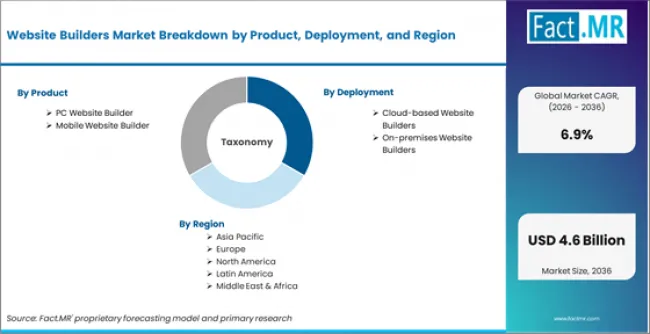
Website Builders Market Size, Share, Growth and Forecast (2026 - 2036)
Website Builders Market is segmented by Product (PC Website Builder, Mobile Website Builder), Deployment (Cloud-based Website Builders, On-premises Website Builders), End Use (Website Builders for Small and Medium Enterprises, Website Builders for Individuals, Website Builders for Large Enterprises), and Region, with forecasts covering the period from 2026 to 2036.
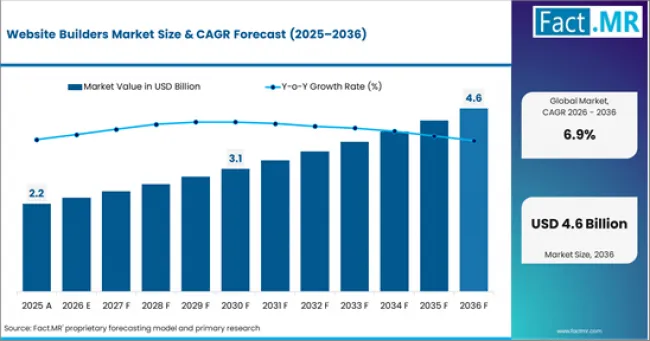
According to Fact.MR estimates, the global website builders Market was valued at USD 2.2 billion in 2025. The market is projected to reach USD 2.4 billion in 2026 and is expected to grow to USD 4.6 billion by 2036, expanding at a CAGR of 6.9%. PC Website Builder is anticipated to account for 58.4% of the product segment in 2026, while Cloud-based Website Builders is expected to remain the leading application with around 76.2% share.
Website Builders Market Analysis and Forecast by Fact.MR
- The global website builders market is estimated at US$ 2.2 billion in 2025 and has been forecast to expand at a CAGR of 6.9% to reach US$ 4.6 billion by 2036.
- Website builders are platforms that enable users to create, design, and manage websites without requiring coding expertise, delivered primarily through cloud-based SaaS models with drag-and-drop interfaces, pre-built templates, and integrated hosting.
- Demand is concentrated among small and medium enterprises seeking low-cost digital storefronts, with e-commerce integration, SEO tools, and payment gateway support acting as the primary feature differentiators.
- Subscription-based pricing remains the dominant revenue model, with annual plans driving higher lifetime value per user.
Summary of Website Builders Market
- Market Snapshot
- In 2025, the global Website Builders Market was valued at approximately USD 2.2 billion.
- The market is estimated to reach USD 2.4 billion in 2026 and is projected to attain USD 4.6 billion by 2036.
- The website builders market is likely to expand at a CAGR of 6.9% during the forecast period.
- The market is anticipated to create an absolute dollar opportunity of USD 2.2 billion between 2026 and 2036.
- PC Website Builder accounts for 58.4% of product share in 2026.
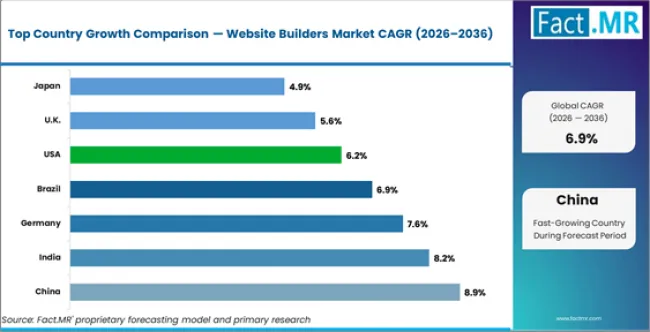
- China (8.9%) and India (8.2%) are the key growth markets during the forecast period.
- Demand and Growth Drivers
- Small business digitization, accelerated by post-pandemic commerce shifts, continues to generate first-time website creation demand across global markets.
- Integrated e-commerce features including payment gateways, shopping carts, and inventory management are expanding platform use beyond static web presence.
- Template ecosystem growth and AI-assisted design tools are lowering the technical barrier to professional-quality website creation.
- Direct online sales through vendor websites and application marketplaces are improving customer acquisition efficiency for leading platforms.
- Demand from freelancers, solopreneurs, and portfolio-based professionals is broadening the user base beyond traditional small business segments.
- Product and Segment View
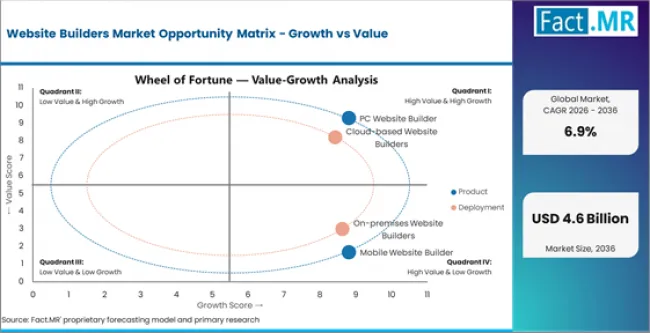
- PC Website Builder accounts for 58.4% of the product segment in 2026, supported by strong installed base and continued procurement across primary end use channels.
- Cloud-based Website Builders accounts for 76.2% of the deployment segment in 2026, reflecting concentrated demand across established application areas.
- Website Builders for Small and Medium Enterprises accounts for 46.8% of the end use segment in 2026, with adoption rising across both developed and emerging markets.
- Key segmentation includes:
- Product: PC Website Builder, Mobile Website Builder
- Deployment: Cloud-based Website Builders, On-premises Website Builders
- End Use: Website Builders for Small and Medium Enterprises, Website Builders for Individuals, Website Builders for Large Enterprises
- Pricing Model: Subscription Based Plans, One Time License, Free Plans
- These systems enable:
- Targeted procurement and specification alignment across buyer segments
- Performance benchmarking across product and application categories
- Regional demand mapping across 30 plus countries
- Geography and Competitive Outlook
- North America accounts for a large share of global demand, supported by established procurement channels and a mature buyer base in the United States (6.2%).
- Europe shows stable demand patterns, with Germany (7.6%) and the U.K. contributing through regulatory compliance and institutional procurement.
- Asia Pacific is the fastest expanding region, led by China (8.9%) and India (8.2%), where capacity expansion and rising commercial adoption are supporting growth.
- China (8.9%) and India (8.2%) are the fastest growing country markets during the forecast period.
- Leading companies in this market include Wix, Squarespace, GoDaddy, Mono Solutions, Web.com.
- Analyst Opinion
- Shambhu Nath Jha, Principal Consultant at Fact.MR, says 'The website builders market is maturing in developed economies where SME penetration is high, and incremental growth is increasingly coming from emerging markets, vertical specialization, and feature depth rather than first-time user acquisition. Platforms that combine AI-assisted design with integrated commerce, booking, and CRM functionality are positioning themselves as full business operating systems rather than simple web editors, and this is where long-term pricing power will reside.'
Key Growth Drivers, Constraints, and Opportunities
Key Factors Driving Growth
- Small business digitization, accelerated by post-pandemic commerce shifts, continues to generate first-time website creation demand across global markets.
- Integrated e-commerce features including payment gateways, shopping carts, and inventory management are expanding platform use beyond static web presence.
- Template ecosystem growth and AI-assisted design tools are lowering the technical barrier to professional-quality website creation.
Key Market Constraints
- Platform lock-in and limited customization depth create friction for users who outgrow entry-level builders and need custom development.
- Freemium model conversion rates remain low, with the majority of free-tier users never upgrading to paid subscriptions.
- Competition from open-source platforms like WordPress self-hosted and from social media storefronts compresses willingness to pay.
Key Opportunity Areas
- AI-powered website generation and design assistance are creating differentiation opportunities for platforms that integrate automated content and layout optimization.
- Expansion into vertical-specific templates for restaurants, healthcare, real estate, and professional services is improving conversion rates.
- Agency and partner reseller programs are opening B2B distribution channels beyond direct online acquisition.
Segment-wise Analysis of the Website Builders Market
- PC Website Builder holds 58.4% of the product segment in 2026, supported by established demand channels and continued procurement across primary end use applications.
- Cloud-based Website Builders holds 76.2% of the deployment segment in 2026, supported by established demand channels and continued procurement across primary end use applications.
- Website Builders for Small and Medium Enterprises holds 46.8% of the end use segment in 2026, supported by established demand channels and continued procurement across primary end use applications.
The website builders market is segmented by product, deployment, end use, pricing model, and region.
By product, the market covers PC Website Builder, Mobile Website Builder.
By deployment, coverage includes Cloud-based Website Builders, On-premises Website Builders.
Which Product Segment Dominates the Website Builders Market?
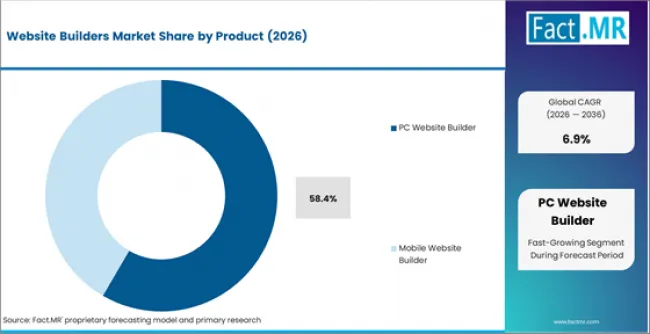
PC Website Builder is expected to account for 58.4% of the product segment in 2026. Within this category, Drag and Drop Builders, Code Based Builders, Template Based Builders represent the primary sub-segments generating procurement activity. The depth of the pc website builder installed base across product applications sustains replacement demand and limits share erosion from newer alternatives in the website builders market.
Mobile Website Builder is the second largest category in the product segment, with demand concentrated in App Based Builders and Responsive Site Builders. Growth in mobile website builder reflects shifting buyer requirements within the website builders market toward this category.
Which Deployment Segment Dominates the Website Builders Market?
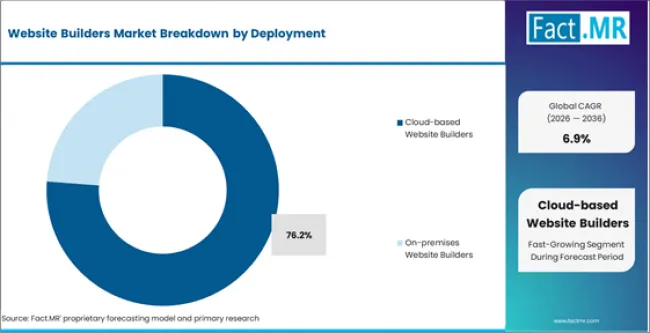
Cloud-based Website Builders is expected to account for 76.2% of the deployment segment in 2026. Within this category, Software as a Service Platforms, Subscription Based Platforms, Freemium Platforms represent the primary sub-segments generating procurement activity. The depth of the cloud-based website builders installed base across deployment applications sustains replacement demand and limits share erosion from newer alternatives in the website builders market.
On-premises Website Builders is the second largest category in the deployment segment, with demand concentrated in Licensed Software and Self Hosted Solutions. Growth in on-premises website builders reflects shifting buyer requirements within the website builders market toward this category.
Which End Use Segment Dominates the Website Builders Market?
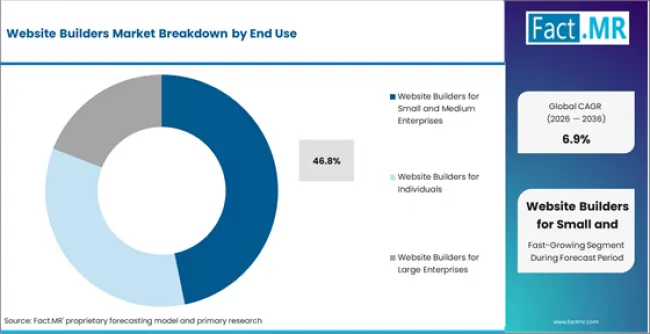
Website Builders for Small and Medium Enterprises is expected to account for 46.8% of the end use segment in 2026. Within this category, Business Websites, E-commerce Stores, Portfolio Websites represent the primary sub-segments generating procurement activity. The depth of the website builders for small and medium enterprises installed base across end use applications sustains replacement demand and limits share erosion from newer alternatives in the website builders market.
Website Builders for Individuals is the second largest category in the end use segment, with demand concentrated in Personal Blogs and Resume Websites. Growth in website builders for individuals reflects shifting buyer requirements within the website builders market toward this category.
Which Product Trend is Shaping the Next Phase of Growth in the Website Builders Market?
Mobile website builders are not yet the largest product segment, but they are gaining traction as mobile-first web design becomes the default expectation among SME buyers. The shift reflects changing user behavior where a growing share of website visitors arrive through mobile devices, and business owners want to preview and edit their sites from smartphones rather than desktop computers.
Platforms that offer native mobile editing apps with full design and publishing capability are attracting users who manage their web presence on the go. This is particularly relevant in emerging markets where smartphone is the primary computing device for many small business operators. Cloud-based builders with responsive preview and mobile-native editing tools are positioned to capture this shift.
Regional Outlook Across Key Markets
.webp)
- China is growing at 8.9%, supported by domestic platform alternatives, cross-border commerce demand, and SME digitization programs.
- India is growing at 8.2%, supported by rapid SME digitization, vernacular language support, and affordable SaaS pricing models.
- Germany is growing at 7.6%, supported by Mittelstand digital presence needs, GDPR compliance requirements, and multi-language site demand.
- Brazil is growing at 6.9%, supported by internet penetration growth, micro-enterprise formalization, and social commerce expansion.
CAGR Table
| Country | CAGR (%) |
|---|---|
| China | 8.9% |
| India | 8.2% |
| Germany | 7.6% |
| Brazil | 6.9% |
| USA | 6.2% |
| U.K. | 5.6% |
| Japan | 4.9% |
Source: Fact MR (FMR) analysis, based on proprietary forecasting model and primary research.
Market Outlook for Website Builders in China
The China Website Builders market is projected to grow at a CAGR of 8.9% through 2036. Domestic platform dominance and mobile commerce integration are shaping the website builders market in China.
- WeChat mini-programs and Alibaba storefronts serve as functional alternatives to standalone website builders.
- Rising cross-border e-commerce activity is generating demand for multilingual website creation tools.
- Government SME digitization programs are supporting technology adoption in manufacturing and services sectors.
Website Builders Demand Trends in India
The India Website Builders market is projected to grow at a CAGR of 8.2% through 2036. Rapid SME digitization and affordable SaaS pricing are expanding website builder adoption in India.
- Digital India programs and Unified Payments Interface integration are supporting online storefront creation.
- Vernacular language website support is improving adoption among businesses in tier-2 and tier-3 cities.
- Low-cost annual subscription plans priced for Indian purchasing power are improving conversion from free tiers.
Germany Website Builders Market Growth Outlook
The Germany Website Builders market is projected to grow at a CAGR of 7.6% through 2036. Strong Mittelstand digital presence requirements and e-commerce growth support website builder demand in Germany.
- GDPR compliance features including cookie consent and data handling integration are essential market requirements.
- Preference for multi-language sites reflecting export-oriented business models supports premium plan adoption.
- Integration with European payment systems and invoicing standards differentiates locally relevant platforms.
Brazil Website Builders Market Demand Analysis
The Brazil Website Builders market is projected to grow at a CAGR of 6.9% through 2036. Growing internet penetration and micro-enterprise formalization are creating new demand for website builders in Brazil.
- PIX payment integration is becoming a standard requirement for e-commerce-enabled website builders.
- Social commerce growth on Instagram and WhatsApp Business creates both competition and lead generation for website builders.
- Portuguese language platform localization and local template libraries improve user experience and conversion.
Website Builders Market Growth Assessment in USA
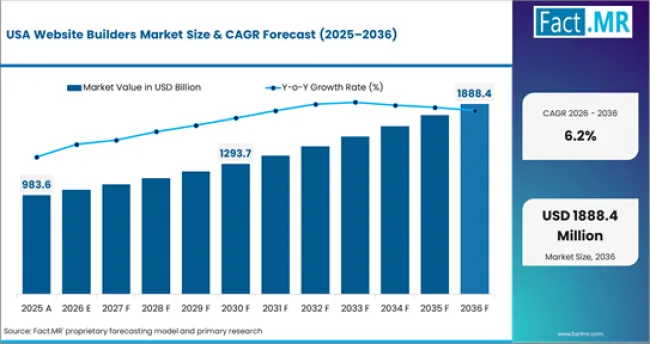
The USA Website Builders market is projected to grow at a CAGR of 6.2% through 2036. The United States is the largest market for website builders, with demand concentrated in micro-business, freelancer, and professional services segments.
- Platform competition among Wix, Squarespace, GoDaddy, and Shopify defines the U.S. competitive landscape.
- AI-powered design tools and automated SEO features are primary differentiation vectors in a mature market.
- Integration with U.S. payment processors, tax compliance tools, and shipping services supports e-commerce conversion.
Website Builders Market Opportunity Outlook in U.K.
The U.K. Website Builders market is projected to grow at a CAGR of 5.6% through 2036. High SME digital maturity and strong e-commerce penetration sustain stable website builder demand in the United Kingdom.
- Post-Brexit customs and VAT compliance features are becoming important for cross-border e-commerce builders.
- Integration with UK payment processors and accounting platforms like Xero improves platform stickiness.
- Agency and reseller channels contribute a meaningful share of new user acquisition.
Demand Landscape for Website Builders in Japan

The Japan Website Builders market is projected to grow at a CAGR of 4.9% through 2036. Japan is a growth market for website builders as SME digital presence lagged historically but is now accelerating.
- Japanese-language template quality and local design aesthetics are critical to platform adoption.
- E-commerce growth on Rakuten and domestic marketplaces creates parallel demand for branded standalone sites.
- Government digitization subsidies for SMEs are supporting investment in online presence tools.
Competitive Benchmarking and Company Positioning
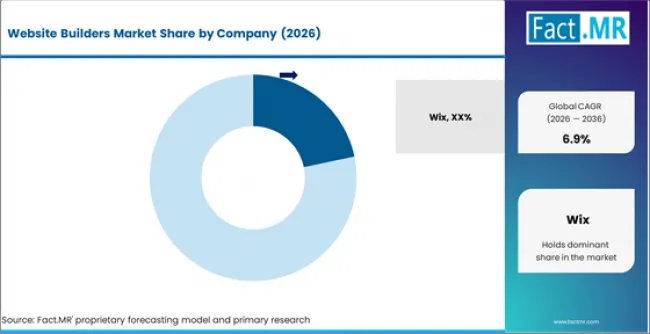
Website Builders Market Analysis By Company
- Wix, Squarespace, GoDaddy, Mono Solutions hold established positions in the global website builders market through broad product portfolios, geographic reach, and growing capabilities in higher specification categories.
- Web.com, Shopify, Ecwid, Wordpress.com participate across specific price tiers, end use segments, and regional channels, with competition shaped by product quality, service support, and distribution access.
- Template ecosystem depth, e-commerce integration, and AI-assisted design tools are the primary competitive differentiators, with platform stickiness driven by data lock-in, custom domain hosting, and recurring subscription revenue.
The competitive landscape is consolidated around a small number of global SaaS platforms. Wix leads by active user count, with Squarespace, GoDaddy, Shopify, and WordPress.com competing through distinct positioning across design quality, commerce capability, and price accessibility. Open-source WordPress self-hosted remains the largest web platform by total site count but operates outside the SaaS builder market.
Competition is divided between horizontal website builders targeting general SME needs and vertical-specialized platforms focused on e-commerce, restaurants, or professional services. Freemium acquisition models drive user volume, but conversion to paid plans remains the core revenue challenge. Platforms investing in AI content generation and automated SEO are gaining share among time-constrained small business operators.
Key Companies in the Website Builders Market
- Wix, Squarespace, GoDaddy, Mono Solutions are among the leading players in the website builders market globally, supported by strong brand visibility and broad product portfolios.
- Web.com, Shopify, Ecwid, Wordpress.com hold established positions across specific categories, supported by durable products and regional distribution.
Recent Industry Developments
- Wix - AI Design Assistant Launch (January 2026)
- Wix launched an AI-powered website design assistant that generates complete site layouts from text prompts, reducing time-to-publish for small business users.
- Squarespace - E-commerce Feature Expansion (2025)
- Squarespace introduced integrated inventory management and multi-channel selling features, enabling users to manage online storefronts, social commerce, and marketplace listings from a single dashboard.
- GoDaddy - Agency Partner Program (2025)
- GoDaddy expanded its agency partner program with white-label site building tools and client management features, improving B2B distribution and recurring revenue.
- Mono Solutions - Mobile Editor Upgrade (February 2026)
- Mono Solutions released a redesigned mobile editing app with full design, publishing, and analytics capabilities, targeting business owners who manage websites primarily from smartphones.
Leading Companies Shaping the Website Builders Market
- Wix
- Squarespace
- GoDaddy
- Mono Solutions
- Web.com
- Shopify
- Ecwid
- Wordpress.com
Sources and Research References
- Wix. Product portfolio and corporate announcements.
- Squarespace. Product portfolio and corporate announcements.
- GoDaddy. Product portfolio and corporate announcements.
- Industry association statistics, regulatory publications, trade databases, and company product catalogs.
- Primary interviews with manufacturers, distributors, buyers, and institutional users.
This bibliography is provided for reader reference and is not exhaustive. The full report contains the complete reference list and detailed citations.
Key Questions This Report Addresses
- What is the current and future size of the Website Builders Market?
- How fast is the Website Builders Market expected to grow between 2026 and 2036?
- Which product is likely to lead the market by 2026?
- Which deployment segment is expected to account for the highest demand by 2026?
- What factors are driving demand in this market globally?
- How is technology adoption influencing the market structure?
- Which countries are projected to show the fastest growth through 2036?
- What is driving market expansion in China and India?
- Who are the key companies active in the Website Builders Market?
- How does Fact.MR estimate and validate the market forecast?
Website Builders Market Definition
The website builders market covers products, technologies, and services associated with product, deployment, end use categories. The scope includes global and regional market size and forecasts for 2026 to 2036 across product, deployment, end use, pricing model, and region.
Website Builders Market Inclusions
- The scope covers global and regional market size and forecasts for 2026 to 2036 across product, deployment, end use, pricing model, and region.
- It includes regional demand analysis across major geographies, based on factors such as technology adoption, regulatory requirements, institutional spending, and commercial demand patterns.
- The report includes pricing and cost analysis across entry-level, mid-range, and premium categories, including hardware, software, and service components where applicable.
- It covers technology trends, market drivers and constraints, and the competitive landscape, including product portfolios, pricing strategy, geographic reach, and distribution expansion of leading players.
Website Builders Market Exclusions
- The scope excludes adjacent categories, general-purpose alternatives, and products not specifically classified under the website builders market taxonomy.
- It excludes custom-built in-house solutions, informal unbranded products with low market visibility, and rental or leasing services without direct product sales.
- The report excludes military or defense-grade variants, industrial systems outside the defined scope, and non-commercial applications without market transaction data.
- It also excludes software-only platforms sold independently from hardware, unless they are part of the defined product or service taxonomy.
Website Builders Market Research Methodology
- The methodology combines secondary research, primary interviews, and forecast modelling.
- It draws on 120 plus secondary sources and benchmarks 65 plus company product portfolios.
- Market sizing covers 30 plus countries through a demand-side model, supported by top-down validation.
- Key inputs include end use adoption rates, technology penetration, pricing benchmarks, and regional procurement patterns.
- The model cross-checks demand with shipments, pricing trends, channel mix, and product launches.
- Primary validation includes 25 plus interviews across manufacturers, distributors, buyers, and institutional users.
- Final estimates go through trade-flow checks, sales-pattern review, and sensitivity testing.
Scope of Analysis

| Parameter | Details |
|---|---|
| Quantitative Units | USD 2.4 billion to USD 4.6 billion, at a CAGR of 6.9% |
| Market Definition | The Website Builders Market covers products, technologies, and services across product, deployment, end use categories for commercial, institutional, and consumer applications. |
| Regions Covered | North America, Latin America, Europe, East Asia, South Asia and Pacific, Middle East and Africa |
| Countries Covered | USA, Canada, UK, Germany, China, India, 30 plus countries |
| Key Companies | Wix, Squarespace, GoDaddy, Mono Solutions, Web.com, Shopify, Ecwid, Wordpress.com |
| Forecast Period | 2026 to 2036 |
| Approach | Hybrid demand-side and top-down methodology built on country-level application demand, product benchmarking, pricing analysis, shipment validation, and primary interviews across manufacturers, distributors, and end users |
Website Builders Market Segmentation
-
Website Builders Market Segmented by Product:
- PC Website Builder
- Drag and Drop Builders
- Code Based Builders
- Template Based Builders
- Mobile Website Builder
- App Based Builders
- Responsive Site Builders
- PC Website Builder
-
Website Builders Market Segmented by Deployment:
- Cloud-based Website Builders
- Software as a Service Platforms
- Subscription Based Platforms
- Freemium Platforms
- On-premises Website Builders
- Licensed Software
- Self Hosted Solutions
- Cloud-based Website Builders
-
Website Builders Market Segmented by End Use:
- Website Builders for Small and Medium Enterprises
- Business Websites
- E-commerce Stores
- Portfolio Websites
- Website Builders for Individuals
- Personal Blogs
- Resume Websites
- Website Builders for Large Enterprises
- Corporate Websites
- Multi-site Management
- Website Builders for Small and Medium Enterprises
-
Website Builders Market Segmented by Pricing Model:
- Subscription Based Plans
- Monthly Plans
- Annual Plans
- One Time License
- Perpetual License
- Free Plans
- Ad Supported Plans
- Subscription Based Plans
-
Website Builders Market Segmented by Distribution Channel:
- Direct Online Sales
- Vendor Websites
- Application Marketplaces
- Partner Sales
- Agency Partnerships
- Technology Resellers
- Direct Online Sales
-
Website Builders Market Segmented by Features:
- E-commerce Integration
- Payment Gateway Integration
- Shopping Cart Management
- Inventory Management
- Search Engine Optimization Tools
- Keyword Optimization
- Analytics Dashboard
- Design and Customization Tools
- Template Customization
- Custom Domain Support
- E-commerce Integration
-
Website Builders Market by Region:
- North America
- USA
- Canada
- Mexico
- Latin America
- Brazil
- Chile
- Rest of Latin America
- Western Europe
- Germany
- UK
- Italy
- Spain
- France
- Nordic
- BENELUX
- Rest of Western Europe
- Eastern Europe
- Russia
- Poland
- Hungary
- Balkan & Baltic
- Rest of Eastern Europe
- East Asia
- China
- Japan
- South Korea
- South Asia and Pacific
- India
- ASEAN
- Australia & New Zealand
- Rest of South Asia and Pacific
- Middle East & Africa
- Kingdom of Saudi Arabia
- Other GCC Countries
- Turkiye
- South Africa
- Other African Union
- Rest of Middle East & Africa
- North America
- Frequently Asked Questions -
How big is the website builders market in 2026?
The global website builders market is estimated to be valued at USD 2.4 billion in 2026.
What will be the size of website builders market in 2036?
The market size for the website builders market is projected to reach USD 4.6 billion by 2036.
How much will be the website builders market growth between 2026 and 2036?
The website builders market is expected to grow at a 6.9% CAGR between 2026 and 2036.
What are the key product types in the website builders market?
The key product types in website builders market are pc website builder and mobile website builder.
Which deployment segment is expected to contribute significant share in the website builders market in 2026?
In terms of deployment, cloud-based website builders segment is expected to command 76.2% share in the website builders market in 2026.
Table of Content
- Executive Summary
- Global Market Outlook
- Demand to side Trends
- Supply to side Trends
- Technology Roadmap Analysis
- Analysis and Recommendations
- Market Coverage / Taxonomy
- Market Definition / Scope / Limitations
- Research Methodology
- Chapter Orientation
- Analytical Lens and Working Hypotheses
- Market Structure, Signals, and Trend Drivers
- Benchmarking and Cross-market Comparability
- Market Sizing, Forecasting, and Opportunity Mapping
- Research Design and Evidence Framework
- Desk Research Programme (Secondary Evidence)
- Company Annual and Sustainability Reports
- Peer-reviewed Journals and Academic Literature
- Corporate Websites, Product Literature, and Technical Notes
- Statutory Filings and Regulatory Disclosures
- Technical White Papers and Standards Notes
- Trade Journals, Industry Magazines, and Analyst Briefs
- Conference Proceedings, Webinars, and Seminar Materials
- Government Statistics Portals and Public Data Releases
- Press Releases and Reputable Media Coverage
- Specialist Newsletters and Curated Briefings
- Sector Databases and Reference Repositories
- Fact.MR Internal Proprietary Databases and Historical Market Datasets
- Subscription Datasets and Paid Sources
- Social Channels, Communities, and Digital Listening Inputs
- Additional Desk Sources
- Expert Input and Fieldwork (Primary Evidence)
- Primary Modes
- Qualitative Interviews and Expert Elicitation
- Quantitative Surveys and Structured Data Capture
- Blended Approach
- Why Primary Evidence is Used
- Field Techniques
- Interviews
- Surveys
- Focus Groups
- Observational and In-context Research
- Social and Community Interactions
- Stakeholder Universe Engaged
- C-suite Leaders
- Board Members
- Presidents and Vice Presidents
- R&D and Innovation Heads
- Technical Specialists
- Domain Subject-matter Experts
- Scientists
- Physicians and Other Healthcare Professionals
- Governance, Ethics, and Data Stewardship
- Research Ethics
- Data Integrity and Handling
- Primary Modes
- Tooling, Models, and Reference Databases
- Desk Research Programme (Secondary Evidence)
- Data Engineering and Model Build
- Data Acquisition and Ingestion
- Cleaning, Normalisation, and Verification
- Synthesis, Triangulation, and Analysis
- Quality Assurance and Audit Trail
- Market Background
- Market Dynamics
- Drivers
- Restraints
- Opportunity
- Trends
- Scenario Forecast
- Demand in Optimistic Scenario
- Demand in Likely Scenario
- Demand in Conservative Scenario
- Opportunity Map Analysis
- Product Life Cycle Analysis
- Supply Chain Analysis
- Investment Feasibility Matrix
- Value Chain Analysis
- PESTLE and Porter’s Analysis
- Regulatory Landscape
- Regional Parent Market Outlook
- Production and Consumption Statistics
- Import and Export Statistics
- Market Dynamics
- Global Market Analysis 2021 to 2025 and Forecast, 2026 to 2036
- Historical Market Size Value (USD Million) Analysis, 2021 to 2025
- Current and Future Market Size Value (USD Million) Projections, 2026 to 2036
- Y to o to Y Growth Trend Analysis
- Absolute $ Opportunity Analysis
- Global Market Pricing Analysis 2021 to 2025 and Forecast 2026 to 2036
- Global Market Analysis 2021 to 2025 and Forecast 2026 to 2036, By Product
- Introduction / Key Findings
- Historical Market Size Value (USD Million) Analysis By Product, 2021 to 2025
- Current and Future Market Size Value (USD Million) Analysis and Forecast By Product, 2026 to 2036
- PC Website Builder
- Drag and Drop Builders
- Code Based Builders
- Template Based Builders
- Mobile Website Builder
- App Based Builders
- Responsive Site Builders
- PC Website Builder
- Y to o to Y Growth Trend Analysis By Product, 2021 to 2025
- Absolute $ Opportunity Analysis By Product, 2026 to 2036
- Global Market Analysis 2021 to 2025 and Forecast 2026 to 2036, By Deployment
- Introduction / Key Findings
- Historical Market Size Value (USD Million) Analysis By Deployment, 2021 to 2025
- Current and Future Market Size Value (USD Million) Analysis and Forecast By Deployment, 2026 to 2036
- Cloud-based Website Builders
- Software as a Service Platforms
- Subscription Based Platforms
- Freemium Platforms
- On-premises Website Builders
- Licensed Software
- Self Hosted Solutions
- Cloud-based Website Builders
- Y to o to Y Growth Trend Analysis By Deployment, 2021 to 2025
- Absolute $ Opportunity Analysis By Deployment, 2026 to 2036
- Global Market Analysis 2021 to 2025 and Forecast 2026 to 2036, By End Use
- Introduction / Key Findings
- Historical Market Size Value (USD Million) Analysis By End Use, 2021 to 2025
- Current and Future Market Size Value (USD Million) Analysis and Forecast By End Use, 2026 to 2036
- Website Builders for Small and Medium Enterprises
- Business Websites
- E-commerce Stores
- Portfolio Websites
- Website Builders for Individuals
- Personal Blogs
- Resume Websites
- Website Builders for Large Enterprises
- Corporate Websites
- Multi-site Management
- Website Builders for Small and Medium Enterprises
- Y to o to Y Growth Trend Analysis By End Use, 2021 to 2025
- Absolute $ Opportunity Analysis By End Use, 2026 to 2036
- Global Market Analysis 2021 to 2025 and Forecast 2026 to 2036, By Pricing Model
- Introduction / Key Findings
- Historical Market Size Value (USD Million) Analysis By Pricing Model, 2021 to 2025
- Current and Future Market Size Value (USD Million) Analysis and Forecast By Pricing Model, 2026 to 2036
- Subscription Based Plans
- Monthly Plans
- Annual Plans
- One Time License
- Perpetual License
- Free Plans
- Ad Supported Plans
- Subscription Based Plans
- Y to o to Y Growth Trend Analysis By Pricing Model, 2021 to 2025
- Absolute $ Opportunity Analysis By Pricing Model, 2026 to 2036
- Global Market Analysis 2021 to 2025 and Forecast 2026 to 2036, By Distribution Channel
- Introduction / Key Findings
- Historical Market Size Value (USD Million) Analysis By Distribution Channel, 2021 to 2025
- Current and Future Market Size Value (USD Million) Analysis and Forecast By Distribution Channel, 2026 to 2036
- Direct Online Sales
- Vendor Websites
- Application Marketplaces
- Partner Sales
- Agency Partnerships
- Technology Resellers
- Direct Online Sales
- Y to o to Y Growth Trend Analysis By Distribution Channel, 2021 to 2025
- Absolute $ Opportunity Analysis By Distribution Channel, 2026 to 2036
- Global Market Analysis 2021 to 2025 and Forecast 2026 to 2036, By Features
- Introduction / Key Findings
- Historical Market Size Value (USD Million) Analysis By Features, 2021 to 2025
- Current and Future Market Size Value (USD Million) Analysis and Forecast By Features, 2026 to 2036
- E-commerce Integration
- Payment Gateway Integration
- Shopping Cart Management
- Inventory Management
- Search Engine Optimization Tools
- Keyword Optimization
- Analytics Dashboard
- Design and Customization Tools
- Template Customization
- Custom Domain Support
- E-commerce Integration
- Y to o to Y Growth Trend Analysis By Features, 2021 to 2025
- Absolute $ Opportunity Analysis By Features, 2026 to 2036
- Global Market Analysis 2021 to 2025 and Forecast 2026 to 2036, By Region
- Introduction
- Historical Market Size Value (USD Million) Analysis By Region, 2021 to 2025
- Current Market Size Value (USD Million) Analysis and Forecast By Region, 2026 to 2036
- North America
- Latin America
- Western Europe
- Eastern Europe
- East Asia
- South Asia and Pacific
- Middle East & Africa
- Market Attractiveness Analysis By Region
- North America Market Analysis 2021 to 2025 and Forecast 2026 to 2036, By Country
- Historical Market Size Value (USD Million) Trend Analysis By Market Taxonomy, 2021 to 2025
- Market Size Value (USD Million) Forecast By Market Taxonomy, 2026 to 2036
- By Country
- USA
- Canada
- Mexico
- By Product
- By Deployment
- By End Use
- By Pricing Model
- By Distribution Channel
- By Features
- By Country
- Market Attractiveness Analysis
- By Country
- By Product
- By Deployment
- By End Use
- By Pricing Model
- By Distribution Channel
- By Features
- Key Takeaways
- Latin America Market Analysis 2021 to 2025 and Forecast 2026 to 2036, By Country
- Historical Market Size Value (USD Million) Trend Analysis By Market Taxonomy, 2021 to 2025
- Market Size Value (USD Million) Forecast By Market Taxonomy, 2026 to 2036
- By Country
- Brazil
- Chile
- Rest of Latin America
- By Product
- By Deployment
- By End Use
- By Pricing Model
- By Distribution Channel
- By Features
- By Country
- Market Attractiveness Analysis
- By Country
- By Product
- By Deployment
- By End Use
- By Pricing Model
- By Distribution Channel
- By Features
- Key Takeaways
- Western Europe Market Analysis 2021 to 2025 and Forecast 2026 to 2036, By Country
- Historical Market Size Value (USD Million) Trend Analysis By Market Taxonomy, 2021 to 2025
- Market Size Value (USD Million) Forecast By Market Taxonomy, 2026 to 2036
- By Country
- Germany
- UK
- Italy
- Spain
- France
- Nordic
- BENELUX
- Rest of Western Europe
- By Product
- By Deployment
- By End Use
- By Pricing Model
- By Distribution Channel
- By Features
- By Country
- Market Attractiveness Analysis
- By Country
- By Product
- By Deployment
- By End Use
- By Pricing Model
- By Distribution Channel
- By Features
- Key Takeaways
- Eastern Europe Market Analysis 2021 to 2025 and Forecast 2026 to 2036, By Country
- Historical Market Size Value (USD Million) Trend Analysis By Market Taxonomy, 2021 to 2025
- Market Size Value (USD Million) Forecast By Market Taxonomy, 2026 to 2036
- By Country
- Russia
- Poland
- Hungary
- Balkan & Baltic
- Rest of Eastern Europe
- By Product
- By Deployment
- By End Use
- By Pricing Model
- By Distribution Channel
- By Features
- By Country
- Market Attractiveness Analysis
- By Country
- By Product
- By Deployment
- By End Use
- By Pricing Model
- By Distribution Channel
- By Features
- Key Takeaways
- East Asia Market Analysis 2021 to 2025 and Forecast 2026 to 2036, By Country
- Historical Market Size Value (USD Million) Trend Analysis By Market Taxonomy, 2021 to 2025
- Market Size Value (USD Million) Forecast By Market Taxonomy, 2026 to 2036
- By Country
- China
- Japan
- South Korea
- By Product
- By Deployment
- By End Use
- By Pricing Model
- By Distribution Channel
- By Features
- By Country
- Market Attractiveness Analysis
- By Country
- By Product
- By Deployment
- By End Use
- By Pricing Model
- By Distribution Channel
- By Features
- Key Takeaways
- South Asia and Pacific Market Analysis 2021 to 2025 and Forecast 2026 to 2036, By Country
- Historical Market Size Value (USD Million) Trend Analysis By Market Taxonomy, 2021 to 2025
- Market Size Value (USD Million) Forecast By Market Taxonomy, 2026 to 2036
- By Country
- India
- ASEAN
- Australia & New Zealand
- Rest of South Asia and Pacific
- By Product
- By Deployment
- By End Use
- By Pricing Model
- By Distribution Channel
- By Features
- By Country
- Market Attractiveness Analysis
- By Country
- By Product
- By Deployment
- By End Use
- By Pricing Model
- By Distribution Channel
- By Features
- Key Takeaways
- Middle East & Africa Market Analysis 2021 to 2025 and Forecast 2026 to 2036, By Country
- Historical Market Size Value (USD Million) Trend Analysis By Market Taxonomy, 2021 to 2025
- Market Size Value (USD Million) Forecast By Market Taxonomy, 2026 to 2036
- By Country
- Kingdom of Saudi Arabia
- Other GCC Countries
- Turkiye
- South Africa
- Other African Union
- Rest of Middle East & Africa
- By Product
- By Deployment
- By End Use
- By Pricing Model
- By Distribution Channel
- By Features
- By Country
- Market Attractiveness Analysis
- By Country
- By Product
- By Deployment
- By End Use
- By Pricing Model
- By Distribution Channel
- By Features
- Key Takeaways
- Key Countries Market Analysis
- USA
- Pricing Analysis
- Market Share Analysis, 2025
- By Product
- By Deployment
- By End Use
- By Pricing Model
- By Distribution Channel
- By Features
- Canada
- Pricing Analysis
- Market Share Analysis, 2025
- By Product
- By Deployment
- By End Use
- By Pricing Model
- By Distribution Channel
- By Features
- Mexico
- Pricing Analysis
- Market Share Analysis, 2025
- By Product
- By Deployment
- By End Use
- By Pricing Model
- By Distribution Channel
- By Features
- Brazil
- Pricing Analysis
- Market Share Analysis, 2025
- By Product
- By Deployment
- By End Use
- By Pricing Model
- By Distribution Channel
- By Features
- Chile
- Pricing Analysis
- Market Share Analysis, 2025
- By Product
- By Deployment
- By End Use
- By Pricing Model
- By Distribution Channel
- By Features
- Germany
- Pricing Analysis
- Market Share Analysis, 2025
- By Product
- By Deployment
- By End Use
- By Pricing Model
- By Distribution Channel
- By Features
- UK
- Pricing Analysis
- Market Share Analysis, 2025
- By Product
- By Deployment
- By End Use
- By Pricing Model
- By Distribution Channel
- By Features
- Italy
- Pricing Analysis
- Market Share Analysis, 2025
- By Product
- By Deployment
- By End Use
- By Pricing Model
- By Distribution Channel
- By Features
- Spain
- Pricing Analysis
- Market Share Analysis, 2025
- By Product
- By Deployment
- By End Use
- By Pricing Model
- By Distribution Channel
- By Features
- France
- Pricing Analysis
- Market Share Analysis, 2025
- By Product
- By Deployment
- By End Use
- By Pricing Model
- By Distribution Channel
- By Features
- India
- Pricing Analysis
- Market Share Analysis, 2025
- By Product
- By Deployment
- By End Use
- By Pricing Model
- By Distribution Channel
- By Features
- ASEAN
- Pricing Analysis
- Market Share Analysis, 2025
- By Product
- By Deployment
- By End Use
- By Pricing Model
- By Distribution Channel
- By Features
- Australia & New Zealand
- Pricing Analysis
- Market Share Analysis, 2025
- By Product
- By Deployment
- By End Use
- By Pricing Model
- By Distribution Channel
- By Features
- China
- Pricing Analysis
- Market Share Analysis, 2025
- By Product
- By Deployment
- By End Use
- By Pricing Model
- By Distribution Channel
- By Features
- Japan
- Pricing Analysis
- Market Share Analysis, 2025
- By Product
- By Deployment
- By End Use
- By Pricing Model
- By Distribution Channel
- By Features
- South Korea
- Pricing Analysis
- Market Share Analysis, 2025
- By Product
- By Deployment
- By End Use
- By Pricing Model
- By Distribution Channel
- By Features
- Russia
- Pricing Analysis
- Market Share Analysis, 2025
- By Product
- By Deployment
- By End Use
- By Pricing Model
- By Distribution Channel
- By Features
- Poland
- Pricing Analysis
- Market Share Analysis, 2025
- By Product
- By Deployment
- By End Use
- By Pricing Model
- By Distribution Channel
- By Features
- Hungary
- Pricing Analysis
- Market Share Analysis, 2025
- By Product
- By Deployment
- By End Use
- By Pricing Model
- By Distribution Channel
- By Features
- Kingdom of Saudi Arabia
- Pricing Analysis
- Market Share Analysis, 2025
- By Product
- By Deployment
- By End Use
- By Pricing Model
- By Distribution Channel
- By Features
- Turkiye
- Pricing Analysis
- Market Share Analysis, 2025
- By Product
- By Deployment
- By End Use
- By Pricing Model
- By Distribution Channel
- By Features
- South Africa
- Pricing Analysis
- Market Share Analysis, 2025
- By Product
- By Deployment
- By End Use
- By Pricing Model
- By Distribution Channel
- By Features
- USA
- Market Structure Analysis
- Competition Dashboard
- Competition Benchmarking
- Market Share Analysis of Top Players
- By Regional
- By Product
- By Deployment
- By End Use
- By Pricing Model
- By Distribution Channel
- By Features
- Competition Analysis
- Competition Deep Dive
- Wix
- Overview
- Product Portfolio
- Profitability by Market Segments (Product/Age /Sales Channel/Region)
- Sales Footprint
- Strategy Overview
- Marketing Strategy
- Product Strategy
- Channel Strategy
- Squarespace
- GoDaddy
- Mono Solutions
- Web.com
- Shopify
- Ecwid
- Wordpress.com
- Wix
- Competition Deep Dive
- Assumptions & Acronyms Used
List Of Table
- Table 1: Global Market Value (USD Million) Forecast by Region, 2021 to 2036
- Table 2: Global Market Value (USD Million) Forecast by Product, 2021 to 2036
- Table 3: Global Market Value (USD Million) Forecast by Deployment, 2021 to 2036
- Table 4: Global Market Value (USD Million) Forecast by End Use, 2021 to 2036
- Table 5: Global Market Value (USD Million) Forecast by Pricing Model, 2021 to 2036
- Table 6: Global Market Value (USD Million) Forecast by Distribution Channel, 2021 to 2036
- Table 7: Global Market Value (USD Million) Forecast by Features, 2021 to 2036
- Table 8: North America Market Value (USD Million) Forecast by Country, 2021 to 2036
- Table 9: North America Market Value (USD Million) Forecast by Product, 2021 to 2036
- Table 10: North America Market Value (USD Million) Forecast by Deployment, 2021 to 2036
- Table 11: North America Market Value (USD Million) Forecast by End Use, 2021 to 2036
- Table 12: North America Market Value (USD Million) Forecast by Pricing Model, 2021 to 2036
- Table 13: North America Market Value (USD Million) Forecast by Distribution Channel, 2021 to 2036
- Table 14: North America Market Value (USD Million) Forecast by Features, 2021 to 2036
- Table 15: Latin America Market Value (USD Million) Forecast by Country, 2021 to 2036
- Table 16: Latin America Market Value (USD Million) Forecast by Product, 2021 to 2036
- Table 17: Latin America Market Value (USD Million) Forecast by Deployment, 2021 to 2036
- Table 18: Latin America Market Value (USD Million) Forecast by End Use, 2021 to 2036
- Table 19: Latin America Market Value (USD Million) Forecast by Pricing Model, 2021 to 2036
- Table 20: Latin America Market Value (USD Million) Forecast by Distribution Channel, 2021 to 2036
- Table 21: Latin America Market Value (USD Million) Forecast by Features, 2021 to 2036
- Table 22: Western Europe Market Value (USD Million) Forecast by Country, 2021 to 2036
- Table 23: Western Europe Market Value (USD Million) Forecast by Product, 2021 to 2036
- Table 24: Western Europe Market Value (USD Million) Forecast by Deployment, 2021 to 2036
- Table 25: Western Europe Market Value (USD Million) Forecast by End Use, 2021 to 2036
- Table 26: Western Europe Market Value (USD Million) Forecast by Pricing Model, 2021 to 2036
- Table 27: Western Europe Market Value (USD Million) Forecast by Distribution Channel, 2021 to 2036
- Table 28: Western Europe Market Value (USD Million) Forecast by Features, 2021 to 2036
- Table 29: Eastern Europe Market Value (USD Million) Forecast by Country, 2021 to 2036
- Table 30: Eastern Europe Market Value (USD Million) Forecast by Product, 2021 to 2036
- Table 31: Eastern Europe Market Value (USD Million) Forecast by Deployment, 2021 to 2036
- Table 32: Eastern Europe Market Value (USD Million) Forecast by End Use, 2021 to 2036
- Table 33: Eastern Europe Market Value (USD Million) Forecast by Pricing Model, 2021 to 2036
- Table 34: Eastern Europe Market Value (USD Million) Forecast by Distribution Channel, 2021 to 2036
- Table 35: Eastern Europe Market Value (USD Million) Forecast by Features, 2021 to 2036
- Table 36: East Asia Market Value (USD Million) Forecast by Country, 2021 to 2036
- Table 37: East Asia Market Value (USD Million) Forecast by Product, 2021 to 2036
- Table 38: East Asia Market Value (USD Million) Forecast by Deployment, 2021 to 2036
- Table 39: East Asia Market Value (USD Million) Forecast by End Use, 2021 to 2036
- Table 40: East Asia Market Value (USD Million) Forecast by Pricing Model, 2021 to 2036
- Table 41: East Asia Market Value (USD Million) Forecast by Distribution Channel, 2021 to 2036
- Table 42: East Asia Market Value (USD Million) Forecast by Features, 2021 to 2036
- Table 43: South Asia and Pacific Market Value (USD Million) Forecast by Country, 2021 to 2036
- Table 44: South Asia and Pacific Market Value (USD Million) Forecast by Product, 2021 to 2036
- Table 45: South Asia and Pacific Market Value (USD Million) Forecast by Deployment, 2021 to 2036
- Table 46: South Asia and Pacific Market Value (USD Million) Forecast by End Use, 2021 to 2036
- Table 47: South Asia and Pacific Market Value (USD Million) Forecast by Pricing Model, 2021 to 2036
- Table 48: South Asia and Pacific Market Value (USD Million) Forecast by Distribution Channel, 2021 to 2036
- Table 49: South Asia and Pacific Market Value (USD Million) Forecast by Features, 2021 to 2036
- Table 50: Middle East & Africa Market Value (USD Million) Forecast by Country, 2021 to 2036
- Table 51: Middle East & Africa Market Value (USD Million) Forecast by Product, 2021 to 2036
- Table 52: Middle East & Africa Market Value (USD Million) Forecast by Deployment, 2021 to 2036
- Table 53: Middle East & Africa Market Value (USD Million) Forecast by End Use, 2021 to 2036
- Table 54: Middle East & Africa Market Value (USD Million) Forecast by Pricing Model, 2021 to 2036
- Table 55: Middle East & Africa Market Value (USD Million) Forecast by Distribution Channel, 2021 to 2036
- Table 56: Middle East & Africa Market Value (USD Million) Forecast by Features, 2021 to 2036
List Of Figures
- Figure 1: Global Market Pricing Analysis
- Figure 2: Global Market Value (USD Million) Forecast 2021 to 2036
- Figure 3: Global Market Value Share and BPS Analysis by Product, 2026 and 2036
- Figure 4: Global Market Y-o-Y Growth Comparison by Product, 2026 to 2036
- Figure 5: Global Market Attractiveness Analysis by Product
- Figure 6: Global Market Value Share and BPS Analysis by Deployment, 2026 and 2036
- Figure 7: Global Market Y-o-Y Growth Comparison by Deployment, 2026 to 2036
- Figure 8: Global Market Attractiveness Analysis by Deployment
- Figure 9: Global Market Value Share and BPS Analysis by End Use, 2026 and 2036
- Figure 10: Global Market Y-o-Y Growth Comparison by End Use, 2026 to 2036
- Figure 11: Global Market Attractiveness Analysis by End Use
- Figure 12: Global Market Value Share and BPS Analysis by Pricing Model, 2026 and 2036
- Figure 13: Global Market Y-o-Y Growth Comparison by Pricing Model, 2026 to 2036
- Figure 14: Global Market Attractiveness Analysis by Pricing Model
- Figure 15: Global Market Value Share and BPS Analysis by Distribution Channel, 2026 and 2036
- Figure 16: Global Market Y-o-Y Growth Comparison by Distribution Channel, 2026 to 2036
- Figure 17: Global Market Attractiveness Analysis by Distribution Channel
- Figure 18: Global Market Value Share and BPS Analysis by Features, 2026 and 2036
- Figure 19: Global Market Y-o-Y Growth Comparison by Features, 2026 to 2036
- Figure 20: Global Market Attractiveness Analysis by Features
- Figure 21: Global Market Value (USD Million) Share and BPS Analysis by Region, 2026 and 2036
- Figure 22: Global Market Y-o-Y Growth Comparison by Region, 2026 to 2036
- Figure 23: Global Market Attractiveness Analysis by Region
- Figure 24: North America Market Incremental Dollar Opportunity, 2026 to 2036
- Figure 25: Latin America Market Incremental Dollar Opportunity, 2026 to 2036
- Figure 26: Western Europe Market Incremental Dollar Opportunity, 2026 to 2036
- Figure 27: Eastern Europe Market Incremental Dollar Opportunity, 2026 to 2036
- Figure 28: East Asia Market Incremental Dollar Opportunity, 2026 to 2036
- Figure 29: South Asia and Pacific Market Incremental Dollar Opportunity, 2026 to 2036
- Figure 30: Middle East & Africa Market Incremental Dollar Opportunity, 2026 to 2036
- Figure 31: North America Market Value Share and BPS Analysis by Country, 2026 and 2036
- Figure 32: North America Market Value Share and BPS Analysis by Product, 2026 and 2036
- Figure 33: North America Market Y-o-Y Growth Comparison by Product, 2026 to 2036
- Figure 34: North America Market Attractiveness Analysis by Product
- Figure 35: North America Market Value Share and BPS Analysis by Deployment, 2026 and 2036
- Figure 36: North America Market Y-o-Y Growth Comparison by Deployment, 2026 to 2036
- Figure 37: North America Market Attractiveness Analysis by Deployment
- Figure 38: North America Market Value Share and BPS Analysis by End Use, 2026 and 2036
- Figure 39: North America Market Y-o-Y Growth Comparison by End Use, 2026 to 2036
- Figure 40: North America Market Attractiveness Analysis by End Use
- Figure 41: North America Market Value Share and BPS Analysis by Pricing Model, 2026 and 2036
- Figure 42: North America Market Y-o-Y Growth Comparison by Pricing Model, 2026 to 2036
- Figure 43: North America Market Attractiveness Analysis by Pricing Model
- Figure 44: North America Market Value Share and BPS Analysis by Distribution Channel, 2026 and 2036
- Figure 45: North America Market Y-o-Y Growth Comparison by Distribution Channel, 2026 to 2036
- Figure 46: North America Market Attractiveness Analysis by Distribution Channel
- Figure 47: North America Market Value Share and BPS Analysis by Features, 2026 and 2036
- Figure 48: North America Market Y-o-Y Growth Comparison by Features, 2026 to 2036
- Figure 49: North America Market Attractiveness Analysis by Features
- Figure 50: Latin America Market Value Share and BPS Analysis by Country, 2026 and 2036
- Figure 51: Latin America Market Value Share and BPS Analysis by Product, 2026 and 2036
- Figure 52: Latin America Market Y-o-Y Growth Comparison by Product, 2026 to 2036
- Figure 53: Latin America Market Attractiveness Analysis by Product
- Figure 54: Latin America Market Value Share and BPS Analysis by Deployment, 2026 and 2036
- Figure 55: Latin America Market Y-o-Y Growth Comparison by Deployment, 2026 to 2036
- Figure 56: Latin America Market Attractiveness Analysis by Deployment
- Figure 57: Latin America Market Value Share and BPS Analysis by End Use, 2026 and 2036
- Figure 58: Latin America Market Y-o-Y Growth Comparison by End Use, 2026 to 2036
- Figure 59: Latin America Market Attractiveness Analysis by End Use
- Figure 60: Latin America Market Value Share and BPS Analysis by Pricing Model, 2026 and 2036
- Figure 61: Latin America Market Y-o-Y Growth Comparison by Pricing Model, 2026 to 2036
- Figure 62: Latin America Market Attractiveness Analysis by Pricing Model
- Figure 63: Latin America Market Value Share and BPS Analysis by Distribution Channel, 2026 and 2036
- Figure 64: Latin America Market Y-o-Y Growth Comparison by Distribution Channel, 2026 to 2036
- Figure 65: Latin America Market Attractiveness Analysis by Distribution Channel
- Figure 66: Latin America Market Value Share and BPS Analysis by Features, 2026 and 2036
- Figure 67: Latin America Market Y-o-Y Growth Comparison by Features, 2026 to 2036
- Figure 68: Latin America Market Attractiveness Analysis by Features
- Figure 69: Western Europe Market Value Share and BPS Analysis by Country, 2026 and 2036
- Figure 70: Western Europe Market Value Share and BPS Analysis by Product, 2026 and 2036
- Figure 71: Western Europe Market Y-o-Y Growth Comparison by Product, 2026 to 2036
- Figure 72: Western Europe Market Attractiveness Analysis by Product
- Figure 73: Western Europe Market Value Share and BPS Analysis by Deployment, 2026 and 2036
- Figure 74: Western Europe Market Y-o-Y Growth Comparison by Deployment, 2026 to 2036
- Figure 75: Western Europe Market Attractiveness Analysis by Deployment
- Figure 76: Western Europe Market Value Share and BPS Analysis by End Use, 2026 and 2036
- Figure 77: Western Europe Market Y-o-Y Growth Comparison by End Use, 2026 to 2036
- Figure 78: Western Europe Market Attractiveness Analysis by End Use
- Figure 79: Western Europe Market Value Share and BPS Analysis by Pricing Model, 2026 and 2036
- Figure 80: Western Europe Market Y-o-Y Growth Comparison by Pricing Model, 2026 to 2036
- Figure 81: Western Europe Market Attractiveness Analysis by Pricing Model
- Figure 82: Western Europe Market Value Share and BPS Analysis by Distribution Channel, 2026 and 2036
- Figure 83: Western Europe Market Y-o-Y Growth Comparison by Distribution Channel, 2026 to 2036
- Figure 84: Western Europe Market Attractiveness Analysis by Distribution Channel
- Figure 85: Western Europe Market Value Share and BPS Analysis by Features, 2026 and 2036
- Figure 86: Western Europe Market Y-o-Y Growth Comparison by Features, 2026 to 2036
- Figure 87: Western Europe Market Attractiveness Analysis by Features
- Figure 88: Eastern Europe Market Value Share and BPS Analysis by Country, 2026 and 2036
- Figure 89: Eastern Europe Market Value Share and BPS Analysis by Product, 2026 and 2036
- Figure 90: Eastern Europe Market Y-o-Y Growth Comparison by Product, 2026 to 2036
- Figure 91: Eastern Europe Market Attractiveness Analysis by Product
- Figure 92: Eastern Europe Market Value Share and BPS Analysis by Deployment, 2026 and 2036
- Figure 93: Eastern Europe Market Y-o-Y Growth Comparison by Deployment, 2026 to 2036
- Figure 94: Eastern Europe Market Attractiveness Analysis by Deployment
- Figure 95: Eastern Europe Market Value Share and BPS Analysis by End Use, 2026 and 2036
- Figure 96: Eastern Europe Market Y-o-Y Growth Comparison by End Use, 2026 to 2036
- Figure 97: Eastern Europe Market Attractiveness Analysis by End Use
- Figure 98: Eastern Europe Market Value Share and BPS Analysis by Pricing Model, 2026 and 2036
- Figure 99: Eastern Europe Market Y-o-Y Growth Comparison by Pricing Model, 2026 to 2036
- Figure 100: Eastern Europe Market Attractiveness Analysis by Pricing Model
- Figure 101: Eastern Europe Market Value Share and BPS Analysis by Distribution Channel, 2026 and 2036
- Figure 102: Eastern Europe Market Y-o-Y Growth Comparison by Distribution Channel, 2026 to 2036
- Figure 103: Eastern Europe Market Attractiveness Analysis by Distribution Channel
- Figure 104: Eastern Europe Market Value Share and BPS Analysis by Features, 2026 and 2036
- Figure 105: Eastern Europe Market Y-o-Y Growth Comparison by Features, 2026 to 2036
- Figure 106: Eastern Europe Market Attractiveness Analysis by Features
- Figure 107: East Asia Market Value Share and BPS Analysis by Country, 2026 and 2036
- Figure 108: East Asia Market Value Share and BPS Analysis by Product, 2026 and 2036
- Figure 109: East Asia Market Y-o-Y Growth Comparison by Product, 2026 to 2036
- Figure 110: East Asia Market Attractiveness Analysis by Product
- Figure 111: East Asia Market Value Share and BPS Analysis by Deployment, 2026 and 2036
- Figure 112: East Asia Market Y-o-Y Growth Comparison by Deployment, 2026 to 2036
- Figure 113: East Asia Market Attractiveness Analysis by Deployment
- Figure 114: East Asia Market Value Share and BPS Analysis by End Use, 2026 and 2036
- Figure 115: East Asia Market Y-o-Y Growth Comparison by End Use, 2026 to 2036
- Figure 116: East Asia Market Attractiveness Analysis by End Use
- Figure 117: East Asia Market Value Share and BPS Analysis by Pricing Model, 2026 and 2036
- Figure 118: East Asia Market Y-o-Y Growth Comparison by Pricing Model, 2026 to 2036
- Figure 119: East Asia Market Attractiveness Analysis by Pricing Model
- Figure 120: East Asia Market Value Share and BPS Analysis by Distribution Channel, 2026 and 2036
- Figure 121: East Asia Market Y-o-Y Growth Comparison by Distribution Channel, 2026 to 2036
- Figure 122: East Asia Market Attractiveness Analysis by Distribution Channel
- Figure 123: East Asia Market Value Share and BPS Analysis by Features, 2026 and 2036
- Figure 124: East Asia Market Y-o-Y Growth Comparison by Features, 2026 to 2036
- Figure 125: East Asia Market Attractiveness Analysis by Features
- Figure 126: South Asia and Pacific Market Value Share and BPS Analysis by Country, 2026 and 2036
- Figure 127: South Asia and Pacific Market Value Share and BPS Analysis by Product, 2026 and 2036
- Figure 128: South Asia and Pacific Market Y-o-Y Growth Comparison by Product, 2026 to 2036
- Figure 129: South Asia and Pacific Market Attractiveness Analysis by Product
- Figure 130: South Asia and Pacific Market Value Share and BPS Analysis by Deployment, 2026 and 2036
- Figure 131: South Asia and Pacific Market Y-o-Y Growth Comparison by Deployment, 2026 to 2036
- Figure 132: South Asia and Pacific Market Attractiveness Analysis by Deployment
- Figure 133: South Asia and Pacific Market Value Share and BPS Analysis by End Use, 2026 and 2036
- Figure 134: South Asia and Pacific Market Y-o-Y Growth Comparison by End Use, 2026 to 2036
- Figure 135: South Asia and Pacific Market Attractiveness Analysis by End Use
- Figure 136: South Asia and Pacific Market Value Share and BPS Analysis by Pricing Model, 2026 and 2036
- Figure 137: South Asia and Pacific Market Y-o-Y Growth Comparison by Pricing Model, 2026 to 2036
- Figure 138: South Asia and Pacific Market Attractiveness Analysis by Pricing Model
- Figure 139: South Asia and Pacific Market Value Share and BPS Analysis by Distribution Channel, 2026 and 2036
- Figure 140: South Asia and Pacific Market Y-o-Y Growth Comparison by Distribution Channel, 2026 to 2036
- Figure 141: South Asia and Pacific Market Attractiveness Analysis by Distribution Channel
- Figure 142: South Asia and Pacific Market Value Share and BPS Analysis by Features, 2026 and 2036
- Figure 143: South Asia and Pacific Market Y-o-Y Growth Comparison by Features, 2026 to 2036
- Figure 144: South Asia and Pacific Market Attractiveness Analysis by Features
- Figure 145: Middle East & Africa Market Value Share and BPS Analysis by Country, 2026 and 2036
- Figure 146: Middle East & Africa Market Value Share and BPS Analysis by Product, 2026 and 2036
- Figure 147: Middle East & Africa Market Y-o-Y Growth Comparison by Product, 2026 to 2036
- Figure 148: Middle East & Africa Market Attractiveness Analysis by Product
- Figure 149: Middle East & Africa Market Value Share and BPS Analysis by Deployment, 2026 and 2036
- Figure 150: Middle East & Africa Market Y-o-Y Growth Comparison by Deployment, 2026 to 2036
- Figure 151: Middle East & Africa Market Attractiveness Analysis by Deployment
- Figure 152: Middle East & Africa Market Value Share and BPS Analysis by End Use, 2026 and 2036
- Figure 153: Middle East & Africa Market Y-o-Y Growth Comparison by End Use, 2026 to 2036
- Figure 154: Middle East & Africa Market Attractiveness Analysis by End Use
- Figure 155: Middle East & Africa Market Value Share and BPS Analysis by Pricing Model, 2026 and 2036
- Figure 156: Middle East & Africa Market Y-o-Y Growth Comparison by Pricing Model, 2026 to 2036
- Figure 157: Middle East & Africa Market Attractiveness Analysis by Pricing Model
- Figure 158: Middle East & Africa Market Value Share and BPS Analysis by Distribution Channel, 2026 and 2036
- Figure 159: Middle East & Africa Market Y-o-Y Growth Comparison by Distribution Channel, 2026 to 2036
- Figure 160: Middle East & Africa Market Attractiveness Analysis by Distribution Channel
- Figure 161: Middle East & Africa Market Value Share and BPS Analysis by Features, 2026 and 2036
- Figure 162: Middle East & Africa Market Y-o-Y Growth Comparison by Features, 2026 to 2036
- Figure 163: Middle East & Africa Market Attractiveness Analysis by Features
- Figure 164: Global Market - Tier Structure Analysis
- Figure 165: Global Market - Company Share Analysis