- Market Value (2025): USD 159.2 Mn
- Estimated Value (2026): USD 171.6 Mn
- Forecast Value (2036): USD 363.7 Mn
- CAGR (2026-2036): 7.8%
What is the Yak Milk Market forecast to be worth by 2036?
USD 171.6 million in 2026 to USD 363.7 million by 2036 at 7.8% CAGR.
- The yak milk market was valued at USD 159.2 million in 2025.
- Demand is projected to increase from USD 171.6 million in 2026 to USD 363.7 million by 2036.
- The market is forecast to record 7.8% CAGR from 2026 to 2036.
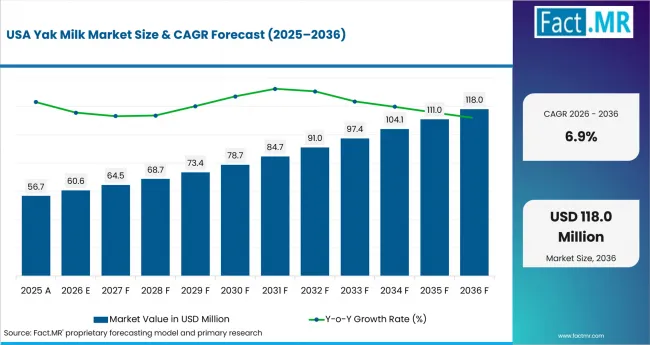
Yak Milk Market Country Value Analysis | Source: Fact.MR
What are the defining numbers behind Yak Milk Market growth?
The market adds USD 192.1 million between 2026 and 2036.
- Demand Drivers in the Market
- Fresh and Liquid Yak Milk is expected to support first-time buying because the format is easiest to understand.
- Dairy and Beverages applications are anticipated to lead where yak milk is used for drinking milk and traditional beverages.
- Household and Retail end use is projected to remain central since families and health-focused consumers create recurring purchase occasions.
- Key Segments Analyzed
- By Product Type: Fresh and Liquid Yak Milk is expected to hold 37.0% share in 2026 because it remains the most direct format for everyday dairy use.
- By Application: Dairy and Beverages is projected to lead with 42.0% share in 2026 due to drinking milk and traditional beverage use.
- By End Use: Household and Retail is anticipated to capture 46.0% share in 2026 as highland households and urban health consumers remain central buyers.
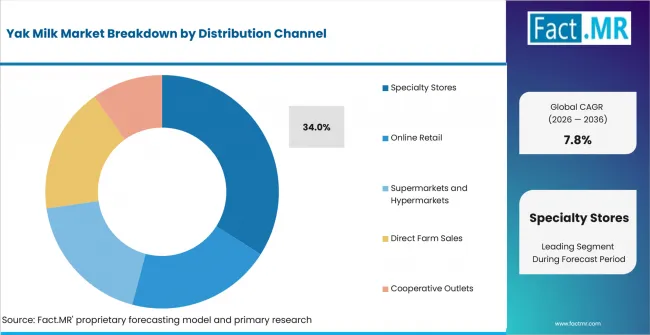
- By Distribution Channel: Specialty Stores is estimated to account for 34.0% share in 2026 because health food stores and high-altitude local stores explain the category clearly.
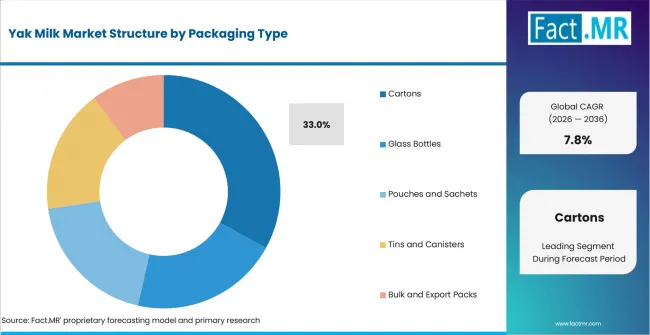
- By Packaging Type: Cartons are forecast to lead with 33.0% share in 2026 as UHT cartons and fresh milk cartons support practical handling.
- Analyst Opinion at Fact.MR
- Shambhu Nath Jha, Principal Consultant at Fact.MR, states, “Yak milk suppliers need to make origin and daily use clear before buyers compare the category with familiar dairy choices. Growth is expected to depend on consistent quality and practical packaging instead of novelty alone.”
- Strategic Implications
- Processors should establish strict quality controls for fresh and liquid yak milk before expanding production or retail supply.
- Brand owners can strengthen buyer confidence by showing how packaging and storage protect taste, freshness and product consistency.
- Investors should distinguish direct yak milk processing exposure from broader specialty dairy and premium nutrition activity.
Nepal follows at 8.2% through highland dairy use. Mongolia records 8.0% through pastoral milk culture. India reaches 7.7% through Himalayan sourcing potential. Bhutan posts 7.4%, and the USA reaches 6.9% through specialty retail demand.
How does the Yak Milk Market break down by segment?
Fresh and Liquid Yak Milk leads Product Type with 37.0% share in 2026. Dairy and Beverages leads Application with 42.0% share.
Which product type dominates?
With 37.0% share in 2026, Fresh and Liquid Yak Milk is anticipated to lead Product Type.
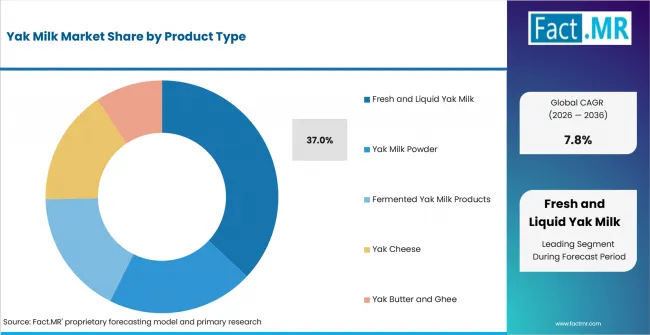
Yak Milk Market Analysis By Product Type | Source: Fact.MR
Fresh and Liquid Yak Milk benefits from direct use as drinking milk and whole yak milk. Yak Milk Powder supports longer storage and infant-grade formats. Fermented Yak Milk Products extend the range through yak yogurt and probiotic drinks. Yak Cheese and Yak Butter and Ghee serve traditional and premium dairy occasions.
What leads the Application segment?
By Application, Dairy and Beverages is expected to dominate with 42.0% share in 2026.
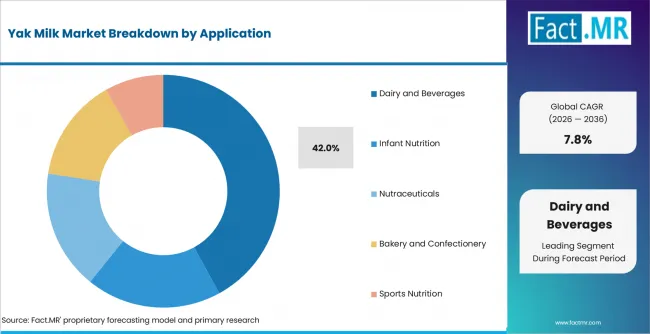
Yak Milk Market Analysis By Application | Source: Fact.MR
Dairy and Beverages leads because the format matches familiar consumption habits. Infant Nutrition requires tighter trust and clearer suitability cues. Nutraceuticals rely on protein and CLA supplement positioning. Bakery and Confectionery use is more specialized. Sports Nutrition remains a smaller use case because performance claims need careful handling.
How does End Use shape demand?
Household and Retail accounts for 46.0% share in 2026.
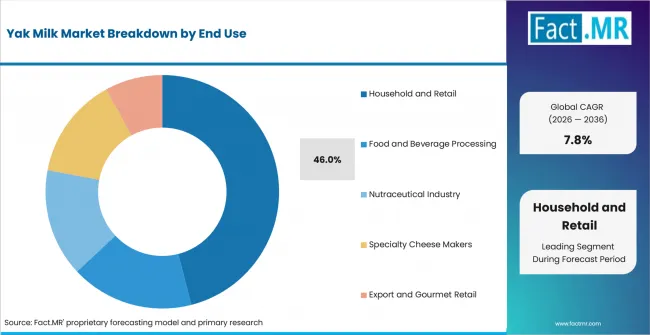
Yak Milk Market Analysis By End Use | Source: Fact.MR
Household and Retail demand is supported by daily consumption and small-pack trial. Food and Beverage Processing depends on dairy processors and beverage manufacturers that need consistent inputs. The Nutraceutical Industry uses yak milk where supplement makers can explain protein value. Specialty Cheese Makers and Export and Gourmet Retail create selective demand.
What supports Specialty Stores within Distribution Channel?
Specialty Stores are projected to hold 34.0% share in 2026.
Yak Milk Market Analysis By Distribution Channel | Source: Fact.MR
Specialty Stores lead when shoppers need help understanding taste and sourcing before use. Online Retail supports wider reach through e-commerce marketplaces and cross-border e-commerce. Supermarkets and Hypermarkets require stronger velocity proof. Direct Farm Sales and Cooperative Outlets remain important near production areas.
Which packaging type leads?
Cartons are estimated to represent 33.0% share in 2026.
Yak Milk Market Analysis By Packaging Type | Source: Fact.MR
Cartons lead because they fit drinking milk and wider retail movement. Glass Bottles work better in premium and returnable settings. Pouches and Sachets support powder portions. Tins and Canisters serve shelf-stable products. Bulk and Export Packs remain tied to processors and gourmet retail buyers.
What is accelerating Yak Milk Market adoption, and what is holding it back?
Demand is expected to rise where buyers understand the use case before they compare yak milk with familiar dairy formats. Growth is likely to remain measured because fresh supply and handling raise cost.
Drivers Impact Analysis
| DRIVER | IMPACT ON CAGR | GEOGRAPHIC RELEVANCE | IMPACT TIMELINE |
|---|---|---|---|
| Fresh-format familiarity | Positive | China, Nepal, Mongolia | Short term (<= 2 years) |
| Dairy and beverage use | Positive | China, India, Bhutan | Short term (<= 2 years) |
| Household and retail demand | Positive | China, Nepal, India | Medium term (2-4 years) |
| Specialty-store education | Positive | USA and urban import markets | Medium term (2-4 years) |
| Carton-based handling | Positive | Export and organized retail channels | Long term (>= 4 years) |
Source: Fact.MR analysis. Updated Aug 7, 2026
- Fresh-format familiarity: Fresh and Liquid Yak Milk is expected to ease trial because buyers can use it like regular milk.
- Dairy and beverage use: Drinking milk and butter tea applications are anticipated to create repeat occasions in local and traditional settings.
- Household and retail demand: Highland households and urban health consumers are projected to keep the largest end-use base active.
Opportunity Impact Analysis
| OPPORTUNITY | IMPACT ON CAGR | GEOGRAPHIC RELEVANCE | IMPACT TIMELINE |
|---|---|---|---|
| Yak Milk Powder formats | Positive | India, China, USA | Short term (<= 2 years) |
| Fermented yak milk products | Positive | China, Mongolia, Nepal | Medium term (2-4 years) |
| Specialty and online retail | Positive | USA and urban Asian markets | Medium term (2-4 years) |
| Premium packaging choices | Positive | Export and gourmet channels | Long term (>= 4 years) |
Source: Fact.MR analysis. Updated Aug 7, 2026
- Yak Milk Powder formats: Powder products can reduce shelf-life pressure and support comparison with milk protein concentrate where buyers value longer storage.
- Fermented yak milk products: Yak yogurt and probiotic drinks are expected to create a clearer bridge toward dairy-based beverages.
- Specialty and online retail: Health food stores and e-commerce marketplaces can introduce yak milk near camel milk and other niche dairy products.
Restraints Impact Analysis
| RESTRAINT | IMPACT ON CAGR | GEOGRAPHIC RELEVANCE | IMPACT TIMELINE |
|---|---|---|---|
| Limited collection scale | Negative | Highland producing areas | Short term (<= 2 years) |
| Fresh milk logistics | Negative | Export and distant retail markets | Short term (<= 2 years) |
| Consumer education burden | Negative | USA and urban import channels | Medium term (2-4 years) |
| Packaging and claim control | Negative | Regulated retail markets | Long term (>= 4 years) |
Source: Fact.MR analysis. Updated Aug 7, 2026
- Limited collection scale: Highland sourcing is expected to limit rapid expansion when processors cannot collect consistent milk volumes.
- Fresh milk logistics: Fresh formats face cost pressure because cold-chain handling is harder than shelf-stable dairy concentrates.
- Consumer education burden: Retailers need simple explanations because many shoppers do not know how yak milk tastes or how it is used.
Which countries are scaling Yak Milk Market fastest?
- The country comparison spans 1.5 percentage points across the forecast period.
- China remains 0.2 percentage point above Nepal through stronger processing proximity and wider category familiarity.
- Nepal remains 0.2 percentage point above Mongolia as highland dairy use supports local trial.
- Mongolia remains 0.3 percentage point above India through pastoral milk culture and traditional dairy acceptance.
- India remains 0.3 percentage point above Bhutan through larger Himalayan sourcing and urban retail potential.
- Bhutan remains 0.5 percentage point above the USA due to closer cultural fit with yak dairy.
Comparable CAGRs do not create identical entry conditions. Each country needs a different demand route because production access and retail depth vary. Consumer familiarity also differs. Full coverage includes North America and Latin America. It covers Europe and East Asia. South Asia and Oceania, Middle East and Africa complete the regional view.
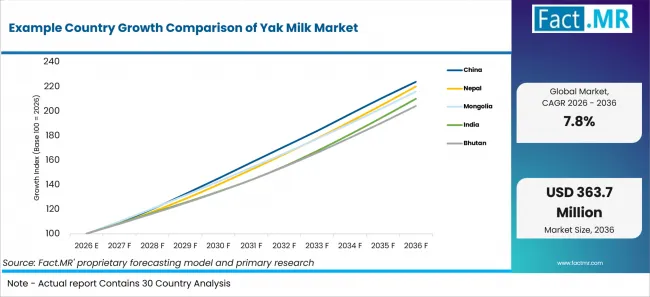
Example Country Growth Comparison Of Yak Milk Market | Source: Fact.MR
| Country | CAGR (2026-2036) |
|---|---|
| Nepal | 8.2% |
| Mongolia | 8.0% |
| India | 7.7% |
| Bhutan | 7.4% |
| USA | 6.9% |
Source: Fact.MR analysis. Updated Aug 7, 2026
What supports Nepal adoption?
8.2% CAGR, driven by highland dairy culture and traditional beverage use.
Nepal benefits from strong local familiarity with yak milk and butter tea. Household demand remains active where sourcing is visible, and cooperative outlets improve access near production areas. Broader retail development may remain slower because processing capacity is limited and fresh milk must travel across difficult rural routes.
How is Mongolia developing demand?
8.0% CAGR, backed by pastoral milk traditions and fermented dairy use.
Mongolia’s market reflects established acceptance of yak milk within household and traditional food practices. Fermented products, cheese and butter support both daily consumption and premium occasions. Direct farm sales keep small-batch distribution active, but seasonal supply and limited processing investment may restrict packaged retail and export growth.
What is driving India from 2026 to 2036?
7.7% CAGR, supported by Himalayan sourcing and specialty dairy interest.
India’s outlook is shaped by production potential in mountain regions and growing urban demand for niche dairy products. Yak milk powder offers longer storage and easier transport than fresh milk. Online retail can widen discovery, although remote collection, low consumer familiarity and regulated nutrition claims may slow wider adoption.
How does Bhutan perform through 2036?
7.4% CAGR, led by cultural familiarity and cooperative distribution.
Bhutan gains from local understanding of highland dairy products and trusted cooperative outlets. Specialty cheese makers add value through premium processing, while glass packaging supports gifting and gourmet positioning. Small production volumes, cold-chain gaps and limited export preparation are likely to keep national expansion selective.
What supports USA growth?
6.9% CAGR, backed by specialty grocery and e-commerce access.
The USA market develops through health food stores, online platforms and premium dairy discovery. Shelf-stable formats reduce distribution risk for small import volumes, while origin and nutrition cues help attract urban buyers. High prices and unfamiliar taste remain barriers, making sampling and simple product education important for repeat purchasing.
Who leads the Yak Milk Market?
The supplier set is led by companies with yak dairy processing access. Competition is expected to depend on milk collection reliability and product consistency. Pack formats must fit retail handling.
Companies with fresh milk and powder capability can serve local use and longer-distance retail. Fermented products and cheese support value when brands explain taste and storage clearly. F and growing-up milk categories show why careful claims and trusted packaging matter.
Which companies are the key providers?
Key companies include Hongyuan Yak Dairy Co., Ltd.; Qinghai Plateau Treasure Yak Dairy Co., Ltd.; YAAAK – Tibet Yak Dairy; Gansu Hualing Dairy Co., Ltd.; Shangri-La Shengda Yak Dairy Co., Ltd.; Shangri-La Kangmei Dairy Development Co., Ltd.; Jasil Alhap Cooperative – Guyemkhen; Dagala Yak Cooperative.
- Hongyuan Yak Dairy Co., Ltd.
- Qinghai Plateau Treasure Yak Dairy Co., Ltd.
- YAAAK – Tibet Yak Dairy
- Gansu Hualing Dairy Co., Ltd.
- Shangri-La Shengda Yak Dairy Co., Ltd.
- Shangri-La Kangmei Dairy Development Co., Ltd.
- Jasil Alhap Cooperative – Guyemkhen
- Dagala Yak Cooperative
Bibliography
- U.S. Food and Drug Administration. (2025, January). Guidance for industry: Questions and answers regarding food allergen labeling—Edition 5.
- U.S. Department of Agriculture, Economic Research Service. (2025, December 15). Livestock, dairy, and poultry outlook: December 2025 (Report No. LDP-M-378).
- U.S. Department of Agriculture, Economic Research Service. (2025, June 18). Livestock, dairy, and poultry outlook: June 2025 (Report No. LDP-M-372).
This Report Answers
- The report provides strategic intelligence on the Yak Milk Market across Product Type and Application choices that shape specialty dairy purchasing.
- Segment analysis covers Fresh and Liquid Yak Milk and Dairy and Beverages as the share leaders within the 2026 market.
- End-use analysis evaluates Household and Retail alongside Food and Beverage Processing. Nutraceutical Industry and Specialty Cheese Makers complete the commercial view.
- Channel analysis reviews Specialty Stores and Online Retail. Supermarkets and Hypermarkets complete the route-to-market view with Direct Farm Sales and Cooperative Outlets.
- Country outlook evaluates China and Nepal alongside Mongolia and India. Bhutan and the USA complete the growth comparison across the profiled markets.
- Competitive analysis covers the listed yak dairy companies without company shares.
What does the Yak Milk Market cover?
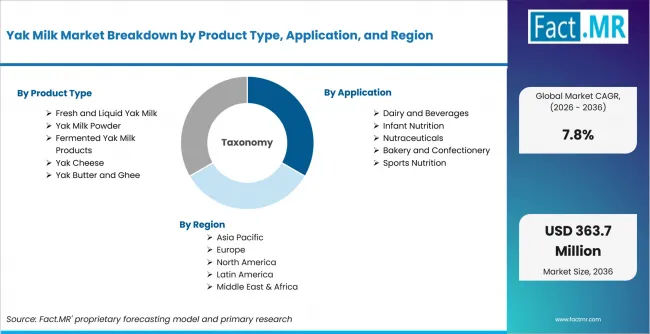
Yak milk products are assessed across the defined Product Type and Application categories. End Use and Distribution Channel complete part of the scope. Packaging Type and Region complete the rest.
The Yak Milk Market covers Fresh and Liquid Yak Milk and Yak Milk Powder. Fermented Yak Milk Products are included with Yak Cheese. Yak Butter and Ghee complete the product scope. Application coverage spans Dairy and Beverages; Infant Nutrition; Nutraceuticals; Bakery and Confectionery; and Sports Nutrition.
What is included in the scope?
The scope includes yak milk products used across nutrition-oriented and household applications. Beverage processing and specialty dairy applications are included.
The scope includes Product Type and Application. End Use and Distribution Channel are included. Packaging Type and Region are included. Product coverage spans fresh milk; powder; fermented products; cheese; butter; and ghee. Country coverage focuses on China; Nepal; Mongolia; India; Bhutan; and the USA.
What is excluded from the scope?
Products without a direct yak milk base remain outside the scope of this market.
The scope excludes general dairy products that do not use yak milk. Cow milk; goat milk; buffalo milk; plant-based dairy alternatives; pet chews; unrelated dairy ingredients; and broad functional nutrition products are excluded unless they are used only for buyer comparison.
How Was the Analysis Built?
The analysis draws on 120+ sources, 35+ company portfolios, 25+ countries, and more than 20 industry interviews.
- Primary Research: Primary research includes discussions with manufacturers, service providers, technology developers, distributors, end users, procurement teams, and subject-matter experts. These conversations examine purchasing priorities, product adoption, operational challenges, approval requirements, competitive positioning, and the factors that influence wider market acceptance.
- Desk Research: Desk research covers government statistics, regulatory publications, company filings, trade data, technical studies, industry associations, standards, public policy, and other authoritative sources. Every source used in the analysis is documented in the bibliography.
- Market Sizing and Forecasting: Market estimates combine historical performance, demand indicators, pricing and volume trends, segment shares, company participation, country-level growth, adoption patterns, investment activity, and barriers to market expansion.
- Data Validation and Update Cycle: Findings are validated by comparing primary interviews with public data, company activity, regulatory changes, trade patterns, and industry developments. Regular updates review new product launches, capacity changes, partnerships, approvals, procurement trends, and shifts in commercial adoption.
Segmentation
What is the report's scope and coverage?
Yak Milk Market Breakdown By Product Type, Application, And Region | Source: Fact.MR
| Attribute | Details |
|---|---|
| Quantitative Units | USD million |
| Market Definition | Yak milk products across fresh liquid, powder, fermented, cheese, butter, and ghee formats |
| Product Type | Fresh and Liquid Yak Milk; Yak Milk Powder; Fermented Yak Milk Products; Yak Cheese; Yak Butter and Ghee |
| Application | Dairy and Beverages; Infant Nutrition; Nutraceuticals; Bakery and Confectionery; Sports Nutrition |
| End Use | Household and Retail; Food and Beverage Processing; Nutraceutical Industry; Specialty Cheese Makers; Export and Gourmet Retail |
| Distribution Channel | Specialty Stores; Online Retail; Supermarkets and Hypermarkets; Direct Farm Sales; Cooperative Outlets |
| Packaging Type | Cartons; Glass Bottles; Pouches and Sachets; Tins and Canisters; Bulk and Export Packs |
| Regions Covered | North America; Latin America; Europe; East Asia; South Asia and Oceania; Middle East and Africa |
| Countries Covered | Nepal; Mongolia; India; Bhutan; USA |
| Key Companies Profiled | Hongyuan Yak Dairy Co., Ltd.; Qinghai Plateau Treasure Yak Dairy Co., Ltd.; YAAAK – Tibet Yak Dairy; Gansu Hualing Dairy Co., Ltd.; Shangri-La Shengda Yak Dairy Co., Ltd.; Shangri-La Kangmei Dairy Development Co., Ltd.; and others |
| Forecast Period | 2026 to 2036 |
| Approach | Hybrid top-down and bottom-up approach using specialty dairy demand; yak milk product mapping; application-level use cases; end-use review; distribution channel assessment; packaging format analysis; country growth comparison; supplier participation; processing constraints; and retail channel review |
Source: Fact.MR analysis. Updated Aug 7, 2026
How is the market segmented?
-
By Product Type
- Fresh and Liquid Yak Milk
- Whole Yak Milk
- Yak Milk Powder
- Whole Milk Powder
- Infant-Grade Milk Powder
- Fermented Yak Milk Products
- Yak Yogurt
- Probiotic Yak Drinks
- Yak Cheese
- Yak Butter and Ghee
- Fresh and Liquid Yak Milk
-
By Application
- Dairy and Beverages
- Drinking Milk
- Butter Tea and Traditional Beverages
- Infant Nutrition
- Infant Formula Bases
- Follow-On Formula
- Nutraceuticals
- Protein and CLA Supplements
- Bakery and Confectionery
- Sports Nutrition
- Dairy and Beverages
-
By End Use
- Dairy and Beverages
- Drinking Milk
- Butter Tea and Traditional Beverages
- Infant Nutrition
- Infant Formula Bases
- Follow-On Formula
- Nutraceuticals
- Protein and CLA Supplements
- Bakery and Confectionery
- Sports Nutrition
- Dairy and Beverages
-
By Distribution Channel
- Household and Retail
- Highland Households
- Urban Health Consumers
- Food and Beverage Processing
- Dairy Processors
- Beverage Manufacturers
- Nutraceutical Industry
- Supplement Producers
- Specialty Cheese Makers
- Export and Gourmet Retail
- Household and Retail
-
By Packaging Type
- Specialty Stores
- Health Food Stores
- High-Altitude Local Stores
- Online Retail
- E-commerce Marketplaces
- Cross-Border E-commerce
- Supermarkets and Hypermarkets
- Urban Supermarket Chains
- Direct Farm Sales
- Cooperative
- Specialty Stores
-
By Region
- North America
- Latin America
- Europe
- East Asia
- South Asia and Oceania
- Middle East and Africa
Frequently Asked Questions
How big is the yak milk market in 2026?
What is the CAGR of the yak milk market from 2026 to 2036?
Which product type leads the yak milk market?
Which application segment leads the yak milk market?
Who are the leading companies in the yak milk market?
Who worked on this report


Preview the report firsthand - request a free sample
Free SampleGet the brochure for pricing and purchase details
Download PDF