Advanced Gas Generators Market Size, Share, Growth and Forecast (2026 - 2036)

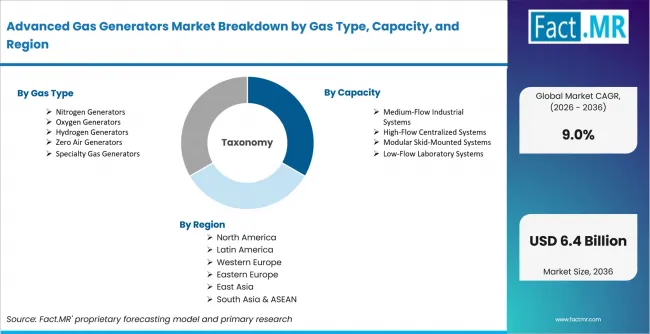
The Advanced Gas Generators Market is segmented by Gas Type (Nitrogen Generators, Oxygen Generators, Hydrogen Generators, Zero Air Generators, Specialty Gas Generators), by Technology, by Capacity, by Application, and by End Use and Region. Forecast for 2026 to 2036.

Advanced Gas Generators Market Size, Market Forecast and Outlook by Fact.MR

  • The advanced gas generators market was valued at USD 2.5 billion in 2025.
  • Demand is expected to increase from USD 2.7 billion in 2026 to USD 6.4 billion by 2036.
  • The market is forecast to record 9.0% CAGR from 2026 to 2036 as plants and hydrogen projects shift toward on-site gas production.
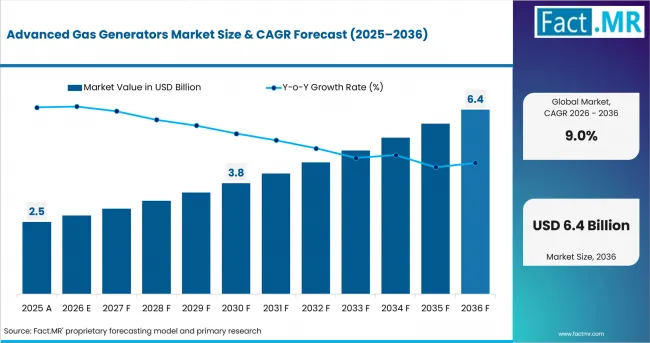
Advanced Gas Generators Market Value Analysis

Metric Details
Industry Size 2026 USD 2.7 billion
Industry Value 2036 USD 6.4 billion
CAGR 2026 to 2036 9.0%

Summary of Advanced Gas Generators Market

  • Demand Drivers in the Market
    • Plant engineers need on-site nitrogen generation to reduce supply interruption from cylinder logistics.
    • Laboratory managers use gas generators to support LC-MS and GC applications with safer gas access.
    • Hydrogen project developers require electrolysis systems that can produce hydrogen near demand points.
  • Key Segments Analyzed
    • By Gas Type: Nitrogen generators are expected to hold 46.0% share in 2026 because manufacturing and laboratories use nitrogen across repeat applications.
    • By Technology: Pressure swing adsorption is likely to account for 41.0% share in 2026 as industrial users need higher purity and steady flow.
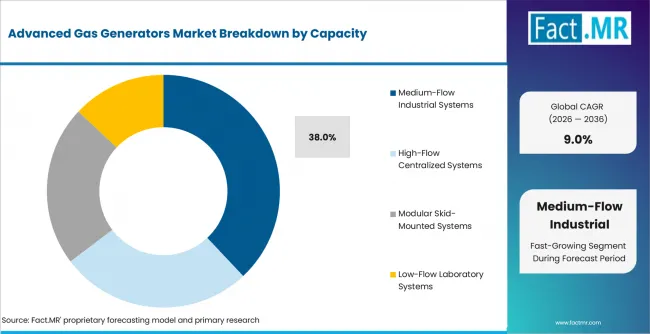
    • By Capacity: Medium-flow industrial systems are projected to capture 38.0% share in 2026 because factories need plant-level supply without central gas infrastructure.
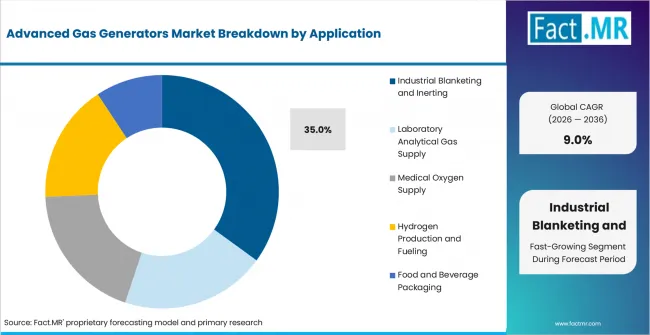
    • By Application: Industrial blanketing and inerting are anticipated to hold 35.0% share in 2026 since process plants use nitrogen for safety and product protection.
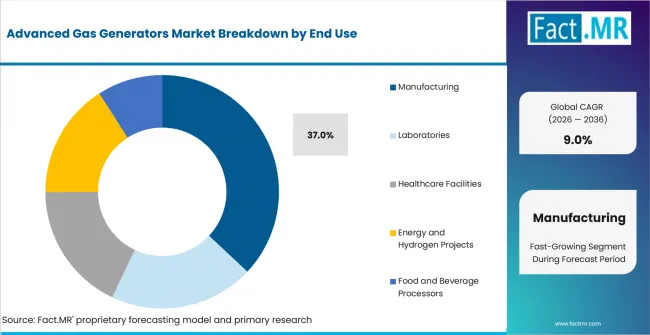
    • By End Use: Manufacturing is expected to account for 37.0% share in 2026 as factories adopt on-site systems for process gas control.
    • By Geography: China is projected to record 11.3% CAGR through 2036 as electronics manufacturing and hydrogen deployment expand.
  • Analyst Opinion at Fact.MR
    • Shambhu Nath Jha, Principal Consultant at Fact.MR, notes, “Advanced gas generators are gaining attention as gas supply becomes an operating control issue. Plant managers need purity and uptime without delivery delays. Suppliers that support proper generator sizing with service access and gas quality proof can improve customer acceptance.”
  • Strategic Implications
    • Plant engineers need right-sized generators that match pressure and purity requirements.
    • Laboratory managers should assess generator uptime before replacing cylinder supply.
    • Hydrogen project developers need electrolysis systems with local service and clear maintenance plans.

Advanced gas generator demand is becoming more reliability-led. Manufacturing plants need nitrogen systems that reduce dependence on delivered cylinders and bulk tanks. Laboratories need high-purity gas generators that support analytical instruments.

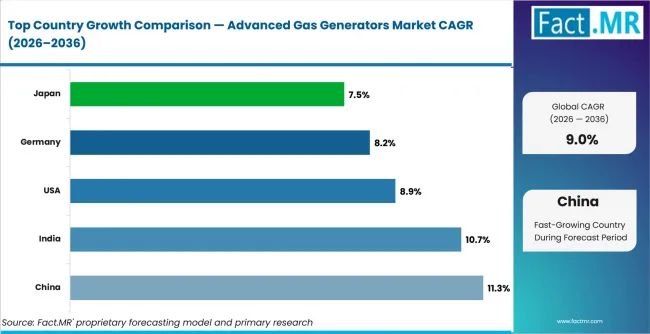
China is projected to record 11.3% CAGR by 2036 as electronics production and hydrogen equipment deployment increase gas generation needs. India is likely to post 10.7% CAGR because manufacturing expansion and healthcare oxygen infrastructure support on-site systems. The United States is expected to register 8.9% CAGR as laboratories and hydrogen hubs use distributed gas equipment. Germany is forecast to advance at 8.2% CAGR by 2036 as industrial decarbonization supports hydrogen generation. Japan is set to record 7.5% CAGR because high-purity industrial and laboratory applications are established.

Segmental Analysis

Advanced Gas Generators Market Analysis by Gas Type
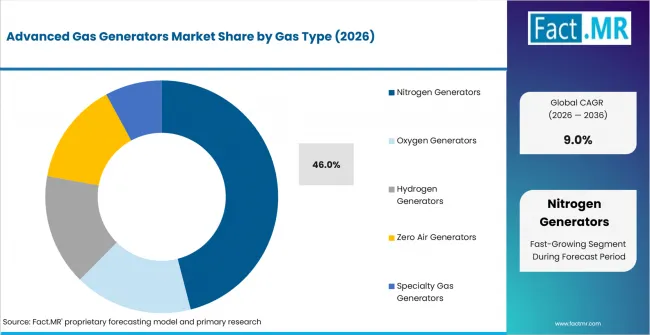
Advanced Gas Generators Market Analysis By Gas Type

Nitrogen generators lead gas type demand with 46.0% share in 2026 because manufacturing plants and laboratories use nitrogen across repeated operations. Oxygen generators serve healthcare and wastewater treatment applications. Hydrogen generators support laboratory fuel gas and distributed hydrogen production. Zero-air generators serve analytical instruments that need clean carrier or support gas.

  • Nitrogen Supply: Nitrogen generators support blanketing and analytical instruments with stable gas availability.
  • Oxygen Need: Oxygen generators support healthcare facilities and selected industrial treatment processes.
  • Hydrogen Use: Hydrogen generators serve laboratory fuel gas and distributed clean hydrogen production.

Advanced Gas Generators Market Analysis by Technology
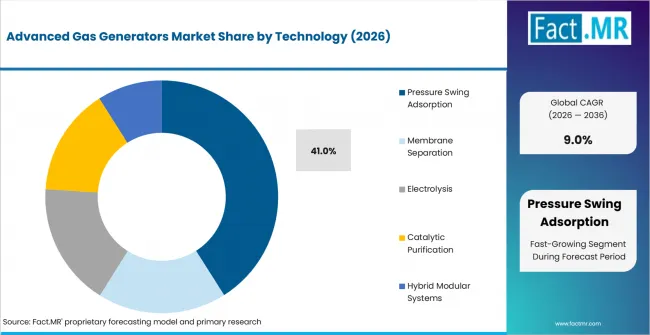
Pressure swing adsorption leads with 41% share in 2026 because industrial users need stable purity and higher flow for plant operations. Atlas Copco notes that on-site nitrogen generation gives users application-level control over gas purity and pressure. [6] Membrane systems serve moderate purity needs. Electrolysis supports hydrogen generation from water and electricity.

  • PSA Performance: PSA systems support high-purity nitrogen supply for electronics and chemical plants.
  • Membrane Format: Membrane systems serve compact industrial applications with lower maintenance needs.
  • Electrolysis Route: Electrolysis generates hydrogen from water for distributed clean fuel applications.

Advanced Gas Generators Market Analysis by Capacity
Advanced Gas Generators Market Analysis By Capacity

Medium-flow industrial systems lead because factories need enough gas for process lines without central gas plants. Low-flow systems serve laboratories and analytical instruments. Medium-flow industrial systems are projected to capture 38.0% share in 2026 because users need reliable on-site gas for routine operations. High-flow centralized systems serve larger production facilities.

  • Plant Supply: Medium-flow systems serve packaging and electronics processes.
  • Lab Scale: Low-flow generators support LC-MS and GC instruments with safer gas access.
  • Central Output: High-flow systems serve large industrial sites with continuous gas requirements.

Advanced Gas Generators Market Analysis by Application
Advanced Gas Generators Market Analysis By Application

Industrial blanketing and inerting are anticipated to hold 35.0% share in 2026 because process plants use nitrogen to reduce oxygen exposure and protect materials. Laboratory analytical gas supply is important for LC-MS and GC workflows. Medical oxygen supply supports healthcare facilities that require dependable oxygen availability. Hydrogen production and fueling create a fast-developing application base.

  • Inerting Use: Nitrogen blanketing protects materials that are sensitive to oxygen exposure.
  • Analytical Gas: Laboratory gas generators support instruments that need stable purity and flow.
  • Medical Supply: Oxygen generation improves local supply resilience in healthcare facilities.

Advanced Gas Generators Market Analysis by End Use
Advanced Gas Generators Market Analysis By End Use

Manufacturing leads because factories use gas generators for packaging and metal processing. Laboratories need compact systems that reduce cylinder handling. Manufacturing is expected to account for 37.0% share in 2026 as process control and supply reliability drive adoption. Energy and hydrogen projects use electrolysis systems for distributed hydrogen production.

  • Factory Control: Manufacturing plants use gas generators to reduce reliance on delivered gas supply.
  • Laboratory Safety: Laboratories use generators to reduce cylinder storage and handling risk.
  • Hydrogen Projects: Energy developers use electrolysis systems to produce hydrogen close to demand.

Advanced Gas Generators Market Drivers, Restraints, and Opportunities
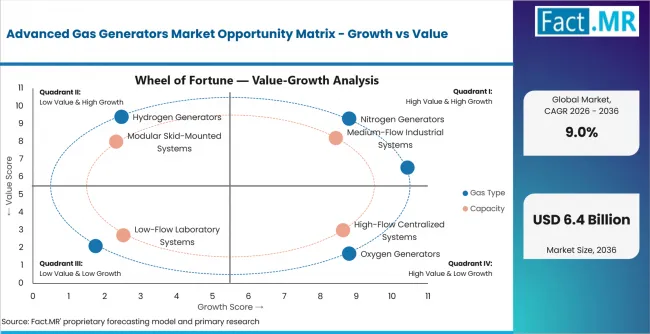
Advanced Gas Generators Market Opportunity Matrix Growth Vs Value

Supply reliability is the main driver for advanced gas generators. Users need gas purity and pressure without cylinder deliveries or bulk liquid scheduling. Parker states that hydrogen generators can produce continuous high-purity hydrogen from de-ionized water and electricity.

Capital cost and maintenance skill can slow adoption. Gas generators require proper sizing and service support. Poorly maintained systems can lose purity and create downtime. Smaller facilities may delay purchase if cylinder use is low or service coverage is weak.

Opportunities in the Advanced Gas Generators Market

  • Hydrogen Electrolysis: Electrolyzers can serve distributed hydrogen production for energy and industry projects.
  • Laboratory Gas: LC-MS and GC laboratories can replace cylinders with compact gas generators.
  • Healthcare Oxygen: Hospitals can use oxygen generation to improve supply resilience in remote areas.

Regional Analysis

Based on regional analysis, the advanced gas generators market is segmented into North America, Latin America, Europe, East Asia, South Asia and Pacific, and Middle East and Africa.

Top Country Growth Comparison Advanced Gas Generators Market Cagr (2026 2036)

Country CAGR 2026 to 2036
China 11.3%
India 10.7%
United States 8.9%
Germany 8.2%
Japan 7.5%

Advanced Gas Generators Market Cagr Analysis By Country

East Asia Advanced Gas Generators Market Analysis

East Asia demand comes from electronics production and hydrogen equipment activity. China leads regional adoption because electronics plants need nitrogen for process control and hydrogen projects need electrolysis systems. Japan supports premium demand through laboratory instruments and hydrogen technology programs.

  • China: China is projected to record 11.3% CAGR from 2026 to 2036 because electronics production and electrolyzer manufacturing support gas generator demand. IEA states that China accounted for 65.0% of global installed electrolysis capacity and capacity that had reached final investment decision in 2024. The country is also home to nearly 60.0% of global electrolyzer manufacturing capacity. [1] This gives local suppliers a scale base for hydrogen generators and related balance-of-plant equipment.
  • Japan: Japan is set to record 7.5% CAGR by 2036 as high-purity manufacturing and laboratory applications sustain demand. METI notes that Japan enacted the Hydrogen Society Promotion Act in 2024 to support low-carbon hydrogen and derivatives. [2] Suppliers that combine compact design with service reliability can protect premium accounts.

South Asia and Pacific Advanced Gas Generators Market Analysis

South Asia demand is tied to manufacturing expansion and local hydrogen programs. India shows fast uptake because factories need nitrogen systems and hospitals need dependable oxygen supply. Domestic electrolyzer incentives create another equipment demand stream for gas generator suppliers.

  • India: India is likely to post 10.7% CAGR through 2036 as manufacturing growth and healthcare oxygen needs support on-site systems. MNRE states that India targets 5.0 million metric tonnes of green hydrogen production capacity per year by 2030. Under the electrolyzer manufacturing incentive scheme, 15 companies were awarded 3,000 MW per year of manufacturing capacity. [3] This creates demand for electrolyzer support systems and local service networks.

North America Advanced Gas Generators Market Analysis
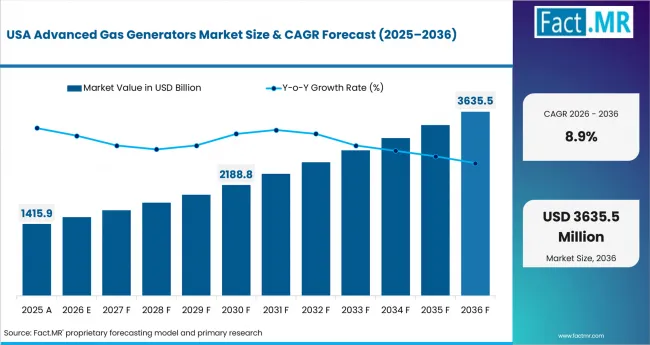
Advanced Gas Generators Market Country Value Analysis

North America demand is led by the United States through laboratories and clean hydrogen projects. Research sites use gas generators to reduce cylinder handling. Hydrogen hubs are increasing attention on distributed hydrogen production and end-use links.

  • United States: The United States is forecast to register 8.9% CAGR from 2026 to 2036 as laboratories and hydrogen projects use distributed gas systems. The U.S. Department of Energy stated in December 2024 that the Pacific Northwest Hydrogen Hub would support design, construction, operation and maintenance of clean hydrogen production projects [4]. Suppliers with field service and project commissioning support can gain stronger acceptance in laboratory and hydrogen hub accounts.

Europe Advanced Gas Generators Market Analysis
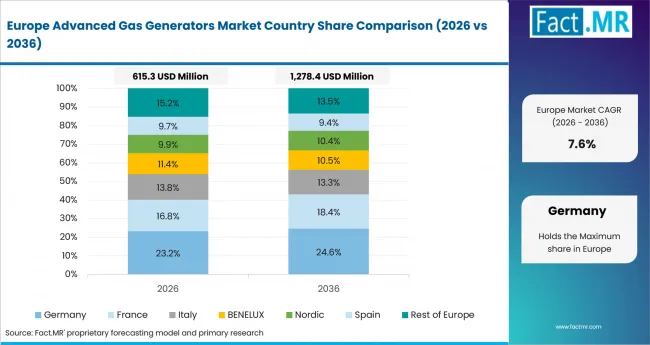
Advanced Gas Generators Market Europe Country Market Share Analysis, 2026 & 2036

Europe demand is guided by industrial gas efficiency and factory automation. Germany leads regional demand because chemical sites and clean hydrogen projects need reliable gas systems. Equipment suppliers must support safety documentation and uptime expectations.

  • Germany: Germany is forecast to advance at 8.2% CAGR by 2036 as industrial decarbonization and hydrogen production scale-up support gas generator adoption. Bosch stated on March 26, 2025 that hydrogen has decarbonization potential across chemicals, transportation, steel and energy, and that its Hybrion PEM electrolysis stacks are suitable for modular hydrogen production and large industrial plants [5]. Bosch also noted that water treatment systems remove salts and metals to produce ultrapure water for electrolysis for purification equipment.

Competitive Aligners for Market Suppliers
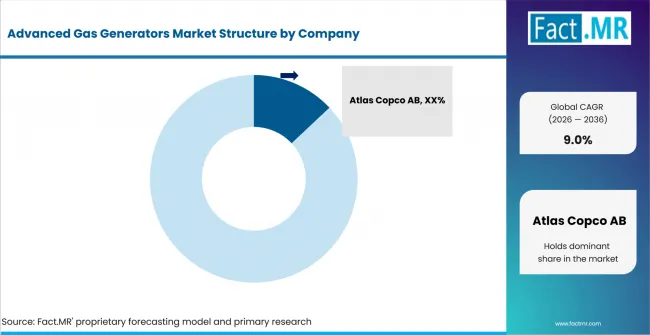
Advanced Gas Generators Market Analysis By Company

The advanced gas generators market is served by equipment suppliers that support laboratories and industrial users with on-site gas supply. Atlas Copco AB serves industrial gas generation needs through compressed air and nitrogen generation systems. Parker Hannifin Corporation supports laboratory and industrial users through gas generation technologies. PEAK Scientific Instruments Ltd. focuses on laboratory nitrogen systems used with analytical instruments.

LNI Swissgas and Claind S.r.l. compete through laboratory gas generators for nitrogen and hydrogen supply. Users compare generator uptime and purity performance before equipment selection. Laboratories need systems that match instrument requirements and reduce cylinder handling. Industrial users focus on stable gas quality and easier maintenance.

Competition will depend on lifecycle support and service reliability over the forecast period. Gas generators need correct sizing and proper installation. Suppliers with clear gas quality documentation and responsive service networks will gain stronger repeat orders.

Key Companies in Advanced Gas Generators Market

  • Atlas Copco AB
  • Parker Hannifin Corporation
  • PEAK Scientific Instruments Ltd.
  • LNI Swissgas
  • Claind S.r.l.

Bibliography

  • [1] International Energy Agency. (2025, September 12). Global Hydrogen Review 2025: Executive summary. International Energy Agency.
  • [2] Ministry of Economy, Trade and Industry. (2025, September 26). A closer look at the 7th Strategic Energy Plan: Shifting from technological development to public implementation toward the realization of a hydrogen-based society. Agency for Natural Resources and Energy, Ministry of Economy, Trade and Industry.
  • [3] Ministry of New and Renewable Energy. (2025, December 16). Government highlights progress under National Green Hydrogen Mission to reduce green hydrogen costs. Press Information Bureau, Government of India.
  • [4] U.S. Department of Energy. (2024, December 13). DOE/EIS-0571: Pacific Northwest Hydrogen Hub. U.S. Department of Energy.
  • [5] Bosch. (2025, March 26). Hannover Messe 2025: Bosch embraces hydrogen production. Bosch Media Service.
  • [6] Atlas Copco. (2025, September 8). How a nitrogen generator works. Atlas Copco.

This Report Addresses

  • Strategic intelligence on advanced gas generator demand across gas type and technology.
  • Forecast mapping from USD 2.7 billion in 2026 to USD 6.4 billion by 2036.
  • Segment analysis covering nitrogen generators, pressure swing adsorption, medium-flow industrial systems, industrial blanketing and manufacturing.
  • Regional outlook covering China, India, the United States, Germany, Japan, Brazil, Mexico, GCC Countries and South Africa.
  • Competitive analysis of Atlas Copco AB, Parker Hannifin Corporation, PEAK Scientific Instruments Ltd., LNI Swissgas, Claind S.r.l.
  • Product assessment covering purity control, flow stability, uptime, service access and application sizing.
  • Primary interviews, supplier checks, official source review and hydrogen technology validation support the forecast.

Advanced Gas Generators Market Definition

The advanced gas generators market covers equipment that produces industrial or medical gases at the point of use. It includes nitrogen and zero-air generator systems. The market differs from gas cylinders and bulk liquid supply because the equipment creates gas on-site using air separation or purification technology.

Advanced Gas Generators Market Inclusions

The scope includes PSA nitrogen generators and membrane nitrogen systems. It covers hydrogen generators for laboratory fuel gas and electrolysis-based systems for distributed hydrogen production. It includes oxygen generation systems used in healthcare and industrial applications.

Advanced Gas Generators Market Exclusions

The scope excludes gas-fired power generators because those machines generate electricity, not process gas. It excludes standard compressed gas cylinders and bulk storage tanks sold without generation equipment. It excludes industrial gas distribution contracts that do not include on-site generation assets. It excludes air compressors unless sold as part of an integrated gas generator package.

Advanced Gas Generators Market Research Methodology

  • Primary Research
    • Primary research includes interviews with plant engineers and laboratory managers. It includes input from medical gas facility managers and hydrogen project developers. Equipment distributors are reviewed to assess replacement and retrofit demand.
  • Desk Research
    • Desk research reviews company product pages and annual reports. It covers hydrogen production guidance and gas generation equipment specifications. Laboratory gas generator portfolios are reviewed to assess purity and capacity needs.
  • Market-Sizing and Forecasting
    • Forecasting uses installed gas generator demand and replacement cycles as the baseline. It reviews demand by gas type and technology. Country-level manufacturing activity and hydrogen project development support the forecast direction.
  • Data Validation and Update Cycle
    • Forecasts are validated through supplier checks and channel feedback. Capacity class demand is reviewed by application. Official company disclosures and energy agency data help confirm the final forecast path.

Scope of the Report

Advanced Gas Generators Market Breakdown By Gas Type, Capacity, And Region

Attribute Details
Quantitative Units USD 2.7 billion in 2026 to USD 6.4 billion by 2036 at 9.0% CAGR
Market Definition Equipment that produces nitrogen, oxygen, hydrogen, zero air or specialty gases at the point of use
Gas Type Nitrogen Generators, Oxygen Generators, Hydrogen Generators, Zero Air Generators, Specialty Gas Generators
Technology Pressure Swing Adsorption, Membrane Separation, Electrolysis, Catalytic Purification, Hybrid Modular Systems
Capacity Low-Flow Laboratory Systems, Medium-Flow Industrial Systems, High-Flow Centralized Systems, Modular Skid-Mounted Systems
Application Industrial Blanketing and Inerting, Laboratory Analytical Gas Supply, Medical Oxygen Supply, Hydrogen Production and Fueling, Food and Beverage Packaging
End Use Manufacturing, Laboratories, Healthcare Facilities, Energy and Hydrogen Projects, Food and Beverage Processors
Regions Covered North America, Latin America, Europe, East Asia, South Asia and Pacific, Middle East and Africa
Countries Covered China, India, United States, Germany, Japan, Brazil, Mexico, GCC Countries, South Africa
Key Companies Profiled Atlas Copco AB, Parker Hannifin Corporation, PEAK Scientific Instruments Ltd., LNI Swissgas, Claind S.r.l.
Forecast Period 2026 to 2036
Approach Hybrid top-down and bottom-up approach using gas type demand, technology adoption, capacity class, application use and regional validation

Advanced Gas Generators Market Analysis by Segments

  • By Gas Type:

    • Nitrogen Generators
    • Oxygen Generators
    • Hydrogen Generators
    • Zero Air Generators
    • Specialty Gas Generators
  • By Technology:

    • Pressure Swing Adsorption
    • Membrane Separation
    • Electrolysis
    • Catalytic Purification
    • Hybrid Modular Systems
  • By Capacity:

    • Low-Flow Laboratory Systems
    • Medium-Flow Industrial Systems
    • High-Flow Centralized Systems
    • Modular Skid-Mounted Systems
  • By Application:

    • Industrial Blanketing and Inerting
    • Laboratory Analytical Gas Supply
    • Medical Oxygen Supply
    • Hydrogen Production and Fueling
    • Food and Beverage Packaging
  • By End Use:

    • Manufacturing
    • Laboratories
    • Healthcare Facilities
    • Energy and Hydrogen Projects
    • Food and Beverage Processors
  • By Region:

    • North America
      • United States
      • Canada
    • Europe
      • Germany
      • United Kingdom
      • France
      • Italy
      • Spain
    • East Asia
      • China
      • Japan
      • South Korea
    • South Asia and Pacific
      • India
      • ASEAN
      • Australia and New Zealand
    • Latin America
      • Brazil
      • Mexico
    • Middle East and Africa
      • GCC Countries
      • South Africa

- Frequently Asked Questions -

What is the Advanced Gas Generators Market size in 2026?

The advanced gas generators market is estimated to reach USD 2.7 billion in 2026 as on-site gas production expands.

What will the Advanced Gas Generators Market be worth by 2036?

The advanced gas generators market is projected to reach USD 6.4 billion by 2036.

What CAGR is projected for the Advanced Gas Generators Market?

The advanced gas generators market is forecast to record 9.0% CAGR from 2026 to 2036 through distributed gas supply adoption.

Which gas type leads the Advanced Gas Generators Market?

Nitrogen generators lead with 46.0% share in 2026 because manufacturing and laboratories use nitrogen across repeat applications.

Which country expands fastest in the Advanced Gas Generators Market?

China is projected to record 11.3% CAGR through 2036 as electronics manufacturing and hydrogen deployment expand.

How does Germany perform in the Advanced Gas Generators Market?

Germany is forecast to advance at 8.2% CAGR by 2036 as hydrogen programs and factory automation support on-site gas systems.

How does Japan perform in the Advanced Gas Generators Market?

Japan is set to record 7.5% CAGR by 2036 as high-purity industrial and laboratory applications sustain equipment demand.

What is the main driver in the Advanced Gas Generators Market?

The main driver is supply reliability because users need gas purity and pressure without delivery delays.

What is the main restraint in the Advanced Gas Generators Market?

The main restraint is capital cost because generators require proper sizing, installation and maintenance support.

Why do nitrogen generators lead demand?

Nitrogen generators lead because factories and laboratories use nitrogen for blanketing, purging and analytical instruments.

Why does PSA technology lead the market?

PSA technology leads because it can provide high-purity nitrogen for industrial processes.

Why are medium-flow industrial systems important?

Medium-flow industrial systems are important because factories need reliable gas output without central gas plant investment.

Why are laboratories important for gas generator suppliers?

Laboratories are important because analytical instruments need stable gas supply and safer alternatives to cylinders.

Why are hydrogen generators gaining attention?

Hydrogen generators are gaining attention because electrolysis can support distributed clean hydrogen production.

Table of Content

  1. Executive Summary
    • Global Market Outlook
    • Demand to side Trends
    • Supply to side Trends
    • Technology Roadmap Analysis
    • Analysis and Recommendations
  2. Market Overview
    • Market Coverage / Taxonomy
    • Market Definition / Scope / Limitations
  3. Research Methodology
    • Chapter Orientation
    • Analytical Lens and Working Hypotheses
      • Market Structure, Signals, and Trend Drivers
      • Benchmarking and Cross-market Comparability
      • Market Sizing, Forecasting, and Opportunity Mapping
    • Desk Research Programme (Secondary Evidence)
      • Company Annual and Sustainability Reports
      • Peer-reviewed Journals and Academic Literature
      • Corporate Websites, Product Literature, and Technical Notes
      • Earnings Decks and Investor Briefings
      • Statutory Filings and Regulatory Disclosures
      • Technical White Papers and Standards Notes
      • Trade Journals, Industry Magazines, and Analyst Briefs
      • Conference Proceedings, Webinars, and Seminar Materials
      • Government Statistics Portals and Public Data Releases
      • Press Releases and Reputable Media Coverage
      • Specialist Newsletters and Curated Briefings
      • Sector Databases and Reference Repositories
      • Fact.MR Internal Proprietary Databases and Historical Market Datasets
      • Subscription Datasets and Paid Sources
      • Social Channels, Communities, and Digital Listening Inputs
      • Additional Desk Sources
    • Expert Input and Fieldwork (Primary Evidence)
      • Primary Modes
        • Qualitative Interviews and Expert Elicitation
        • Quantitative Surveys and Structured Data Capture
        • Blended Approach
      • Why Primary Evidence is Used
      • Field Techniques
        • Interviews
        • Surveys
        • Physicians and Other Healthcare Professionals
      • Governance, Ethics, and Data Stewardship
        • Research Ethics
        • Data Integrity and Handling
    • Tooling, Models, and Reference Databases
  4. Data Engineering and Model Build
    • Data Acquisition and Ingestion
    • Cleaning, Normalisation, and Verification
    • Synthesis, Triangulation, and Analysis
  5. Quality Assurance and Audit Trail
  6. Market Background
    • Market Dynamics
      • Drivers
      • Restraints
      • Opportunity
      • Trends
    • Scenario Forecast
      • Demand in Optimistic Scenario
      • Demand in Likely Scenario
      • Demand in Conservative Scenario
    • Opportunity Map Analysis
    • Product Life Cycle Analysis
    • Supply Chain Analysis
    • Investment Feasibility Matrix
    • Value Chain Analysis
    • PESTLE and Porter’s Analysis
    • Regulatory Landscape
    • Regional Parent Market Outlook
    • Production and Consumption Statistics
    • Import and Export Statistics
  7. Global Market Analysis 2021 to 2025 and Forecast, 2026 to 2036
    • Historical Market Size Value (USD Million) Analysis, 2021 to 2025
    • Current and Future Market Size Value (USD Million) Projections, 2026 to 2036
      • Y to o to Y Growth Trend Analysis
      • Absolute $ Opportunity Analysis
  8. Global Market Pricing Analysis 2021 to 2025 and Forecast 2026 to 2036
  9. Global Market Analysis 2021 to 2025 and Forecast 2026 to 2036, By Gas Type
    • Introduction / Key Findings
    • Historical Market Size Value (USD Million) Analysis By Gas Type , 2021 to 2025
    • Current and Future Market Size Value (USD Million) Analysis and Forecast By Gas Type , 2026 to 2036
      • Nitrogen Generators
      • Oxygen Generators
      • Hydrogen Generators
      • Zero Air Generators
      • Specialty Gas Generators
    • Y to o to Y Growth Trend Analysis By Gas Type , 2021 to 2025
    • Absolute $ Opportunity Analysis By Gas Type , 2026 to 2036
  10. Global Market Analysis 2021 to 2025 and Forecast 2026 to 2036, By Capacity
    • Introduction / Key Findings
    • Historical Market Size Value (USD Million) Analysis By Capacity, 2021 to 2025
    • Current and Future Market Size Value (USD Million) Analysis and Forecast By Capacity, 2026 to 2036
      • Medium-Flow Industrial Systems
      • High-Flow Centralized Systems
      • Modular Skid-Mounted Systems
      • Low-Flow Laboratory Systems
    • Y to o to Y Growth Trend Analysis By Capacity, 2021 to 2025
    • Absolute $ Opportunity Analysis By Capacity, 2026 to 2036
  11. Global Market Analysis 2021 to 2025 and Forecast 2026 to 2036, By Application
    • Introduction / Key Findings
    • Historical Market Size Value (USD Million) Analysis By Application, 2021 to 2025
    • Current and Future Market Size Value (USD Million) Analysis and Forecast By Application, 2026 to 2036
      • Industrial Blanketing and Inerting
      • Laboratory Analytical Gas Supply
      • Medical Oxygen Supply
      • Hydrogen Production and Fueling
      • Food and Beverage Packaging
    • Y to o to Y Growth Trend Analysis By Application, 2021 to 2025
    • Absolute $ Opportunity Analysis By Application, 2026 to 2036
  12. Global Market Analysis 2021 to 2025 and Forecast 2026 to 2036, By End Use
    • Introduction / Key Findings
    • Historical Market Size Value (USD Million) Analysis By End Use, 2021 to 2025
    • Current and Future Market Size Value (USD Million) Analysis and Forecast By End Use, 2026 to 2036
      • Manufacturing
      • Laboratories
      • Healthcare Facilities
      • Energy and Hydrogen Projects
      • Food and Beverage Processors
    • Y to o to Y Growth Trend Analysis By End Use, 2021 to 2025
    • Absolute $ Opportunity Analysis By End Use, 2026 to 2036
  13. Global Market Analysis 2021 to 2025 and Forecast 2026 to 2036, By Region
    • Introduction
    • Historical Market Size Value (USD Million) Analysis By Region, 2021 to 2025
    • Current Market Size Value (USD Million) Analysis and Forecast By Region, 2026 to 2036
      • North America
      • Latin America
      • Western Europe
      • Eastern Europe
      • East Asia
      • South Asia and Pacific
      • Middle East & Africa
    • Market Attractiveness Analysis By Region
  14. North America Market Analysis 2021 to 2025 and Forecast 2026 to 2036, By Country
    • Historical Market Size Value (USD Million) Trend Analysis By Market Taxonomy, 2021 to 2025
    • Market Size Value (USD Million) Forecast By Market Taxonomy, 2026 to 2036
      • By Country
        • USA
        • Canada
        • Mexico
      • By Gas Type
      • By Capacity
      • By Application
      • By End Use
    • Market Attractiveness Analysis
      • By Country
      • By Gas Type
      • By Capacity
      • By Application
      • By End Use
    • Key Takeaways
  15. Latin America Market Analysis 2021 to 2025 and Forecast 2026 to 2036, By Country
    • Historical Market Size Value (USD Million) Trend Analysis By Market Taxonomy, 2021 to 2025
    • Market Size Value (USD Million) Forecast By Market Taxonomy, 2026 to 2036
      • By Country
        • Brazil
        • Chile
        • Rest of Latin America
      • By Gas Type
      • By Capacity
      • By Application
      • By End Use
    • Market Attractiveness Analysis
      • By Country
      • By Gas Type
      • By Capacity
      • By Application
      • By End Use
    • Key Takeaways
  16. Western Europe Market Analysis 2021 to 2025 and Forecast 2026 to 2036, By Country
    • Historical Market Size Value (USD Million) Trend Analysis By Market Taxonomy, 2021 to 2025
    • Market Size Value (USD Million) Forecast By Market Taxonomy, 2026 to 2036
      • By Country
        • Germany
        • UK
        • Italy
        • Spain
        • France
        • Nordic
        • BENELUX
        • Rest of Western Europe
      • By Gas Type
      • By Capacity
      • By Application
      • By End Use
    • Market Attractiveness Analysis
      • By Country
      • By Gas Type
      • By Capacity
      • By Application
      • By End Use
    • Key Takeaways
  17. Eastern Europe Market Analysis 2021 to 2025 and Forecast 2026 to 2036, By Country
    • Historical Market Size Value (USD Million) Trend Analysis By Market Taxonomy, 2021 to 2025
    • Market Size Value (USD Million) Forecast By Market Taxonomy, 2026 to 2036
      • By Country
        • Russia
        • Poland
        • Hungary
        • Balkan & Baltic
        • Rest of Eastern Europe
      • By Gas Type
      • By Capacity
      • By Application
      • By End Use
    • Market Attractiveness Analysis
      • By Country
      • By Gas Type
      • By Capacity
      • By Application
      • By End Use
    • Key Takeaways
  18. East Asia Market Analysis 2021 to 2025 and Forecast 2026 to 2036, By Country
    • Historical Market Size Value (USD Million) Trend Analysis By Market Taxonomy, 2021 to 2025
    • Market Size Value (USD Million) Forecast By Market Taxonomy, 2026 to 2036
      • By Country
        • China
        • Japan
        • South Korea
      • By Gas Type
      • By Capacity
      • By Application
      • By End Use
    • Market Attractiveness Analysis
      • By Country
      • By Gas Type
      • By Capacity
      • By Application
      • By End Use
    • Key Takeaways
  19. South Asia and Pacific Market Analysis 2021 to 2025 and Forecast 2026 to 2036, By Country
    • Historical Market Size Value (USD Million) Trend Analysis By Market Taxonomy, 2021 to 2025
    • Market Size Value (USD Million) Forecast By Market Taxonomy, 2026 to 2036
      • By Country
        • India
        • ASEAN
        • Australia & New Zealand
        • Rest of South Asia and Pacific
      • By Gas Type
      • By Capacity
      • By Application
      • By End Use
    • Market Attractiveness Analysis
      • By Country
      • By Gas Type
      • By Capacity
      • By Application
      • By End Use
    • Key Takeaways
  20. Middle East & Africa Market Analysis 2021 to 2025 and Forecast 2026 to 2036, By Country
    • Historical Market Size Value (USD Million) Trend Analysis By Market Taxonomy, 2021 to 2025
    • Market Size Value (USD Million) Forecast By Market Taxonomy, 2026 to 2036
      • By Country
        • Kingdom of Saudi Arabia
        • Other GCC Countries
        • Turkiye
        • South Africa
        • Other African Union
        • Rest of Middle East & Africa
      • By Gas Type
      • By Capacity
      • By Application
      • By End Use
    • Market Attractiveness Analysis
      • By Country
      • By Gas Type
      • By Capacity
      • By Application
      • By End Use
    • Key Takeaways
  21. Key Countries Market Analysis
    • USA
      • Pricing Analysis
      • Market Share Analysis, 2025
        • By Gas Type
        • By Capacity
        • By Application
        • By End Use
    • Canada
      • Pricing Analysis
      • Market Share Analysis, 2025
        • By Gas Type
        • By Capacity
        • By Application
        • By End Use
    • Mexico
      • Pricing Analysis
      • Market Share Analysis, 2025
        • By Gas Type
        • By Capacity
        • By Application
        • By End Use
    • Brazil
      • Pricing Analysis
      • Market Share Analysis, 2025
        • By Gas Type
        • By Capacity
        • By Application
        • By End Use
    • Chile
      • Pricing Analysis
      • Market Share Analysis, 2025
        • By Gas Type
        • By Capacity
        • By Application
        • By End Use
    • Germany
      • Pricing Analysis
      • Market Share Analysis, 2025
        • By Gas Type
        • By Capacity
        • By Application
        • By End Use
    • UK
      • Pricing Analysis
      • Market Share Analysis, 2025
        • By Gas Type
        • By Capacity
        • By Application
        • By End Use
    • Italy
      • Pricing Analysis
      • Market Share Analysis, 2025
        • By Gas Type
        • By Capacity
        • By Application
        • By End Use
    • Spain
      • Pricing Analysis
      • Market Share Analysis, 2025
        • By Gas Type
        • By Capacity
        • By Application
        • By End Use
    • France
      • Pricing Analysis
      • Market Share Analysis, 2025
        • By Gas Type
        • By Capacity
        • By Application
        • By End Use
    • India
      • Pricing Analysis
      • Market Share Analysis, 2025
        • By Gas Type
        • By Capacity
        • By Application
        • By End Use
    • ASEAN
      • Pricing Analysis
      • Market Share Analysis, 2025
        • By Gas Type
        • By Capacity
        • By Application
        • By End Use
    • Australia & New Zealand
      • Pricing Analysis
      • Market Share Analysis, 2025
        • By Gas Type
        • By Capacity
        • By Application
        • By End Use
    • China
      • Pricing Analysis
      • Market Share Analysis, 2025
        • By Gas Type
        • By Capacity
        • By Application
        • By End Use
    • Japan
      • Pricing Analysis
      • Market Share Analysis, 2025
        • By Gas Type
        • By Capacity
        • By Application
        • By End Use
    • South Korea
      • Pricing Analysis
      • Market Share Analysis, 2025
        • By Gas Type
        • By Capacity
        • By Application
        • By End Use
    • Russia
      • Pricing Analysis
      • Market Share Analysis, 2025
        • By Gas Type
        • By Capacity
        • By Application
        • By End Use
    • Poland
      • Pricing Analysis
      • Market Share Analysis, 2025
        • By Gas Type
        • By Capacity
        • By Application
        • By End Use
    • Hungary
      • Pricing Analysis
      • Market Share Analysis, 2025
        • By Gas Type
        • By Capacity
        • By Application
        • By End Use
    • Kingdom of Saudi Arabia
      • Pricing Analysis
      • Market Share Analysis, 2025
        • By Gas Type
        • By Capacity
        • By Application
        • By End Use
    • Turkiye
      • Pricing Analysis
      • Market Share Analysis, 2025
        • By Gas Type
        • By Capacity
        • By Application
        • By End Use
    • South Africa
      • Pricing Analysis
      • Market Share Analysis, 2025
        • By Gas Type
        • By Capacity
        • By Application
        • By End Use
  22. Market Structure Analysis
    • Competition Dashboard
    • Competition Benchmarking
    • Market Share Analysis of Top Players
      • By Regional
      • By Gas Type
      • By Capacity
      • By Application
      • By End Use
  23. Competition Analysis
    • Competition Deep Dive
      • Atlas Copco AB
        • Overview
        • Product Portfolio
        • Profitability by Market Segments (Product/Age /Sales Channel/Region)
        • Sales Footprint
        • Strategy Overview
          • Marketing Strategy
          • Product Strategy
          • Channel Strategy
      • Parker Hannifin Corporation
      • PEAK Scientific Instruments Ltd.
      • LNI Swissgas
      • Claind S.r.l.
  24. Assumptions & Acronyms Used

List Of Table

  • Table 1: Global Market Value (USD Million) Forecast by Region, 2021 to 2036
  • Table 2: Global Market Value (USD Million) Forecast by Gas Type, 2021 to 2036
  • Table 3: Global Market Value (USD Million) Forecast by Capacity, 2021 to 2036
  • Table 4: Global Market Value (USD Million) Forecast by Application, 2021 to 2036
  • Table 5: Global Market Value (USD Million) Forecast by End Use, 2021 to 2036
  • Table 6: North America Market Value (USD Million) Forecast by Country, 2021 to 2036
  • Table 7: North America Market Value (USD Million) Forecast by Gas Type, 2021 to 2036
  • Table 8: North America Market Value (USD Million) Forecast by Capacity, 2021 to 2036
  • Table 9: North America Market Value (USD Million) Forecast by Application, 2021 to 2036
  • Table 10: North America Market Value (USD Million) Forecast by End Use, 2021 to 2036
  • Table 11: Latin America Market Value (USD Million) Forecast by Country, 2021 to 2036
  • Table 12: Latin America Market Value (USD Million) Forecast by Gas Type, 2021 to 2036
  • Table 13: Latin America Market Value (USD Million) Forecast by Capacity, 2021 to 2036
  • Table 14: Latin America Market Value (USD Million) Forecast by Application, 2021 to 2036
  • Table 15: Latin America Market Value (USD Million) Forecast by End Use, 2021 to 2036
  • Table 16: Western Europe Market Value (USD Million) Forecast by Country, 2021 to 2036
  • Table 17: Western Europe Market Value (USD Million) Forecast by Gas Type, 2021 to 2036
  • Table 18: Western Europe Market Value (USD Million) Forecast by Capacity, 2021 to 2036
  • Table 19: Western Europe Market Value (USD Million) Forecast by Application, 2021 to 2036
  • Table 20: Western Europe Market Value (USD Million) Forecast by End Use, 2021 to 2036
  • Table 21: Eastern Europe Market Value (USD Million) Forecast by Country, 2021 to 2036
  • Table 22: Eastern Europe Market Value (USD Million) Forecast by Gas Type, 2021 to 2036
  • Table 23: Eastern Europe Market Value (USD Million) Forecast by Capacity, 2021 to 2036
  • Table 24: Eastern Europe Market Value (USD Million) Forecast by Application, 2021 to 2036
  • Table 25: Eastern Europe Market Value (USD Million) Forecast by End Use, 2021 to 2036
  • Table 26: East Asia Market Value (USD Million) Forecast by Country, 2021 to 2036
  • Table 27: East Asia Market Value (USD Million) Forecast by Gas Type, 2021 to 2036
  • Table 28: East Asia Market Value (USD Million) Forecast by Capacity, 2021 to 2036
  • Table 29: East Asia Market Value (USD Million) Forecast by Application, 2021 to 2036
  • Table 30: East Asia Market Value (USD Million) Forecast by End Use, 2021 to 2036
  • Table 31: South Asia and Pacific Market Value (USD Million) Forecast by Country, 2021 to 2036
  • Table 32: South Asia and Pacific Market Value (USD Million) Forecast by Gas Type, 2021 to 2036
  • Table 33: South Asia and Pacific Market Value (USD Million) Forecast by Capacity, 2021 to 2036
  • Table 34: South Asia and Pacific Market Value (USD Million) Forecast by Application, 2021 to 2036
  • Table 35: South Asia and Pacific Market Value (USD Million) Forecast by End Use, 2021 to 2036
  • Table 36: Middle East & Africa Market Value (USD Million) Forecast by Country, 2021 to 2036
  • Table 37: Middle East & Africa Market Value (USD Million) Forecast by Gas Type, 2021 to 2036
  • Table 38: Middle East & Africa Market Value (USD Million) Forecast by Capacity, 2021 to 2036
  • Table 39: Middle East & Africa Market Value (USD Million) Forecast by Application, 2021 to 2036
  • Table 40: Middle East & Africa Market Value (USD Million) Forecast by End Use, 2021 to 2036

List Of Figures

  • Figure 1: Global Market Pricing Analysis
  • Figure 2: Global Market Value (USD Million) Forecast 2021-2036
  • Figure 3: Global Market Value Share and BPS Analysis by Gas Type, 2026 and 2036
  • Figure 4: Global Market Y-o-Y Growth Comparison by Gas Type, 2026 to 2036
  • Figure 5: Global Market Attractiveness Analysis by Gas Type
  • Figure 6: Global Market Value Share and BPS Analysis by Capacity, 2026 and 2036
  • Figure 7: Global Market Y-o-Y Growth Comparison by Capacity, 2026 to 2036
  • Figure 8: Global Market Attractiveness Analysis by Capacity
  • Figure 9: Global Market Value Share and BPS Analysis by Application, 2026 and 2036
  • Figure 10: Global Market Y-o-Y Growth Comparison by Application, 2026 to 2036
  • Figure 11: Global Market Attractiveness Analysis by Application
  • Figure 12: Global Market Value Share and BPS Analysis by End Use, 2026 and 2036
  • Figure 13: Global Market Y-o-Y Growth Comparison by End Use, 2026 to 2036
  • Figure 14: Global Market Attractiveness Analysis by End Use
  • Figure 15: Global Market Value (USD Million) Share and BPS Analysis by Region, 2026 and 2036
  • Figure 16: Global Market Y-o-Y Growth Comparison by Region, 2026 to 2036
  • Figure 17: Global Market Attractiveness Analysis by Region
  • Figure 18: North America Market Incremental Dollar Opportunity, 2026 to 2036
  • Figure 19: Latin America Market Incremental Dollar Opportunity, 2026 to 2036
  • Figure 20: Western Europe Market Incremental Dollar Opportunity, 2026 to 2036
  • Figure 21: Eastern Europe Market Incremental Dollar Opportunity, 2026 to 2036
  • Figure 22: East Asia Market Incremental Dollar Opportunity, 2026 to 2036
  • Figure 23: South Asia and Pacific Market Incremental Dollar Opportunity, 2026 to 2036
  • Figure 24: Middle East & Africa Market Incremental Dollar Opportunity, 2026 to 2036
  • Figure 25: North America Market Value Share and BPS Analysis by Country, 2026 and 2036
  • Figure 26: North America Market Value Share and BPS Analysis by Gas Type, 2026 and 2036
  • Figure 27: North America Market Y-o-Y Growth Comparison by Gas Type, 2026 to 2036
  • Figure 28: North America Market Attractiveness Analysis by Gas Type
  • Figure 29: North America Market Value Share and BPS Analysis by Capacity, 2026 and 2036
  • Figure 30: North America Market Y-o-Y Growth Comparison by Capacity, 2026 to 2036
  • Figure 31: North America Market Attractiveness Analysis by Capacity
  • Figure 32: North America Market Value Share and BPS Analysis by Application, 2026 and 2036
  • Figure 33: North America Market Y-o-Y Growth Comparison by Application, 2026 to 2036
  • Figure 34: North America Market Attractiveness Analysis by Application
  • Figure 35: North America Market Value Share and BPS Analysis by End Use, 2026 and 2036
  • Figure 36: North America Market Y-o-Y Growth Comparison by End Use, 2026 to 2036
  • Figure 37: North America Market Attractiveness Analysis by End Use
  • Figure 38: Latin America Market Value Share and BPS Analysis by Country, 2026 and 2036
  • Figure 39: Latin America Market Value Share and BPS Analysis by Gas Type, 2026 and 2036
  • Figure 40: Latin America Market Y-o-Y Growth Comparison by Gas Type, 2026 to 2036
  • Figure 41: Latin America Market Attractiveness Analysis by Gas Type
  • Figure 42: Latin America Market Value Share and BPS Analysis by Capacity, 2026 and 2036
  • Figure 43: Latin America Market Y-o-Y Growth Comparison by Capacity, 2026 to 2036
  • Figure 44: Latin America Market Attractiveness Analysis by Capacity
  • Figure 45: Latin America Market Value Share and BPS Analysis by Application, 2026 and 2036
  • Figure 46: Latin America Market Y-o-Y Growth Comparison by Application, 2026 to 2036
  • Figure 47: Latin America Market Attractiveness Analysis by Application
  • Figure 48: Latin America Market Value Share and BPS Analysis by End Use, 2026 and 2036
  • Figure 49: Latin America Market Y-o-Y Growth Comparison by End Use, 2026 to 2036
  • Figure 50: Latin America Market Attractiveness Analysis by End Use
  • Figure 51: Western Europe Market Value Share and BPS Analysis by Country, 2026 and 2036
  • Figure 52: Western Europe Market Value Share and BPS Analysis by Gas Type, 2026 and 2036
  • Figure 53: Western Europe Market Y-o-Y Growth Comparison by Gas Type, 2026 to 2036
  • Figure 54: Western Europe Market Attractiveness Analysis by Gas Type
  • Figure 55: Western Europe Market Value Share and BPS Analysis by Capacity, 2026 and 2036
  • Figure 56: Western Europe Market Y-o-Y Growth Comparison by Capacity, 2026 to 2036
  • Figure 57: Western Europe Market Attractiveness Analysis by Capacity
  • Figure 58: Western Europe Market Value Share and BPS Analysis by Application, 2026 and 2036
  • Figure 59: Western Europe Market Y-o-Y Growth Comparison by Application, 2026 to 2036
  • Figure 60: Western Europe Market Attractiveness Analysis by Application
  • Figure 61: Western Europe Market Value Share and BPS Analysis by End Use, 2026 and 2036
  • Figure 62: Western Europe Market Y-o-Y Growth Comparison by End Use, 2026 to 2036
  • Figure 63: Western Europe Market Attractiveness Analysis by End Use
  • Figure 64: Eastern Europe Market Value Share and BPS Analysis by Country, 2026 and 2036
  • Figure 65: Eastern Europe Market Value Share and BPS Analysis by Gas Type, 2026 and 2036
  • Figure 66: Eastern Europe Market Y-o-Y Growth Comparison by Gas Type, 2026 to 2036
  • Figure 67: Eastern Europe Market Attractiveness Analysis by Gas Type
  • Figure 68: Eastern Europe Market Value Share and BPS Analysis by Capacity, 2026 and 2036
  • Figure 69: Eastern Europe Market Y-o-Y Growth Comparison by Capacity, 2026 to 2036
  • Figure 70: Eastern Europe Market Attractiveness Analysis by Capacity
  • Figure 71: Eastern Europe Market Value Share and BPS Analysis by Application, 2026 and 2036
  • Figure 72: Eastern Europe Market Y-o-Y Growth Comparison by Application, 2026 to 2036
  • Figure 73: Eastern Europe Market Attractiveness Analysis by Application
  • Figure 74: Eastern Europe Market Value Share and BPS Analysis by End Use, 2026 and 2036
  • Figure 75: Eastern Europe Market Y-o-Y Growth Comparison by End Use, 2026 to 2036
  • Figure 76: Eastern Europe Market Attractiveness Analysis by End Use
  • Figure 77: East Asia Market Value Share and BPS Analysis by Country, 2026 and 2036
  • Figure 78: East Asia Market Value Share and BPS Analysis by Gas Type, 2026 and 2036
  • Figure 79: East Asia Market Y-o-Y Growth Comparison by Gas Type, 2026 to 2036
  • Figure 80: East Asia Market Attractiveness Analysis by Gas Type
  • Figure 81: East Asia Market Value Share and BPS Analysis by Capacity, 2026 and 2036
  • Figure 82: East Asia Market Y-o-Y Growth Comparison by Capacity, 2026 to 2036
  • Figure 83: East Asia Market Attractiveness Analysis by Capacity
  • Figure 84: East Asia Market Value Share and BPS Analysis by Application, 2026 and 2036
  • Figure 85: East Asia Market Y-o-Y Growth Comparison by Application, 2026 to 2036
  • Figure 86: East Asia Market Attractiveness Analysis by Application
  • Figure 87: East Asia Market Value Share and BPS Analysis by End Use, 2026 and 2036
  • Figure 88: East Asia Market Y-o-Y Growth Comparison by End Use, 2026 to 2036
  • Figure 89: East Asia Market Attractiveness Analysis by End Use
  • Figure 90: South Asia and Pacific Market Value Share and BPS Analysis by Country, 2026 and 2036
  • Figure 91: South Asia and Pacific Market Value Share and BPS Analysis by Gas Type, 2026 and 2036
  • Figure 92: South Asia and Pacific Market Y-o-Y Growth Comparison by Gas Type, 2026 to 2036
  • Figure 93: South Asia and Pacific Market Attractiveness Analysis by Gas Type
  • Figure 94: South Asia and Pacific Market Value Share and BPS Analysis by Capacity, 2026 and 2036
  • Figure 95: South Asia and Pacific Market Y-o-Y Growth Comparison by Capacity, 2026 to 2036
  • Figure 96: South Asia and Pacific Market Attractiveness Analysis by Capacity
  • Figure 97: South Asia and Pacific Market Value Share and BPS Analysis by Application, 2026 and 2036
  • Figure 98: South Asia and Pacific Market Y-o-Y Growth Comparison by Application, 2026 to 2036
  • Figure 99: South Asia and Pacific Market Attractiveness Analysis by Application
  • Figure 100: South Asia and Pacific Market Value Share and BPS Analysis by End Use, 2026 and 2036
  • Figure 101: South Asia and Pacific Market Y-o-Y Growth Comparison by End Use, 2026 to 2036
  • Figure 102: South Asia and Pacific Market Attractiveness Analysis by End Use
  • Figure 103: Middle East & Africa Market Value Share and BPS Analysis by Country, 2026 and 2036
  • Figure 104: Middle East & Africa Market Value Share and BPS Analysis by Gas Type, 2026 and 2036
  • Figure 105: Middle East & Africa Market Y-o-Y Growth Comparison by Gas Type, 2026 to 2036
  • Figure 106: Middle East & Africa Market Attractiveness Analysis by Gas Type
  • Figure 107: Middle East & Africa Market Value Share and BPS Analysis by Capacity, 2026 and 2036
  • Figure 108: Middle East & Africa Market Y-o-Y Growth Comparison by Capacity, 2026 to 2036
  • Figure 109: Middle East & Africa Market Attractiveness Analysis by Capacity
  • Figure 110: Middle East & Africa Market Value Share and BPS Analysis by Application, 2026 and 2036
  • Figure 111: Middle East & Africa Market Y-o-Y Growth Comparison by Application, 2026 to 2036
  • Figure 112: Middle East & Africa Market Attractiveness Analysis by Application
  • Figure 113: Middle East & Africa Market Value Share and BPS Analysis by End Use, 2026 and 2036
  • Figure 114: Middle East & Africa Market Y-o-Y Growth Comparison by End Use, 2026 to 2036
  • Figure 115: Middle East & Africa Market Attractiveness Analysis by End Use
  • Figure 116: Global Market - Tier Structure Analysis
  • Figure 117: Global Market - Company Share Analysis

Advanced Gas Generators Market

Buy Report Now