- Base Value(2025): 348.0 Mn
- Estimated Value(2026): 379.3 Mn
- Forecast Value (2036): 898.0 Mn
- CAGR (2026 - 2036): 9.0%
Bio-Mimetic Gel Market Overview, Growth Outlook, and Forecast by Fact.MR
- In 2025, the bio-mimetic gel market was valued at USD 348.0 million.
- Demand for bio-mimetic gel products is projected to grow to USD 379.3 million in 2026 and reach USD 898.0 million by 2036.
- The market is expected to expand at a CAGR of 9.0% during the forecast period.
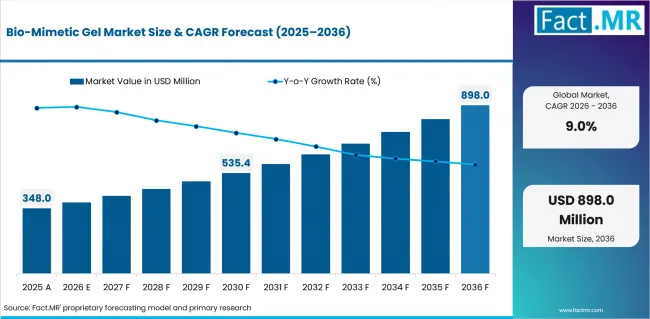
Bio Mimetic Gel Market Value Analysis | Source: Fact.MR
Summary of the Bio-Mimetic Gel Market
- Market Snapshot
- Global bio-mimetic gel market revenue stood at USD 379.3 million in 2026 and is forecast to reach USD 898.0 million by 2036.
- At a 9.0% CAGR from 2026 to 2036, the market is expected to expand ~2.4x in value, creating an absolute dollar opportunity of USD 518.7 million.
- The growth of the market is driven by increasing adoption of regenerative medicine therapies, rising demand for advanced wound healing solutions, and expanding applications of bio-mimetic gels in tissue engineering and drug delivery systems.
- Increasing attention on biomaterials development, minimally invasive procedures, and bioactive hydrogel systems is driving the demand in healthcare and research applications.
- Regenerative medicine research development, tissue engineering investment, and 3D bioprinting technology progress are further contributing to global expansion.
- Demand and Growth Drivers
- Growing incidence of chronic wounds, orthopedics diseases and tissue injuries that need regeneration-based therapy products
- Demand for biomimetic and bioactive materials that simulate natural extracellular matrix (ECM) environments is increasing
- Increasing usage of injectable hydrogels and regenerative biomaterials for minimally invasive surgeries
- Increasing application of bio-mimetic gels in tissue engineering, cell culture and three-dimensional (3D) bioprinting
- Surge in funding for research in regenerative medicine and advanced biomaterials.
- Need for solutions providing:
- Enhanced tissue regeneration and repair
- Advanced wound healing support
- Controlled drug delivery functionality
- Improved biocompatibility and bioactivity
- Minimally invasive therapeutic administration
- Product and Segment View
- Injectable Bio-Mimetic Gels account for 35.6% of product type share in 2026, emerging as the leading segment due to increasing usage in regenerative medicine, orthopedic therapies, and minimally invasive procedures.
- Natural Material-Based Gels hold 46.8% of material type share in 2026, supported by strong demand for collagen, gelatin, hyaluronic acid, and other ECM-mimicking biomaterials.
- Injectable administration represents 57.8% of route of administration share in 2026, driven by increasing preference for targeted and minimally invasive therapeutic delivery methods.
- Geography and Competitive Outlook
- Increasing regenerative medicine adoption, rising biomaterial research activities, and expanding healthcare innovation ecosystems are driving strong market growth across East Asia, North America, and Europe.
- Major growth markets in the Bio-Mimetic Gel Market include Japan (10.8% CAGR), China (10.5% CAGR), United States (8.1% CAGR), United Kingdom (7.9% CAGR), Germany (7.4% CAGR), South Korea (7.3% CAGR), and France (7.0% CAGR) during the forecast period.
- Market growth is supported by:
- Increasing investment in regenerative medicine research
- Growing commercialization of biomimetic hydrogel technologies
- Rising demand for advanced wound healing and tissue repair solutions
- Expansion of tissue engineering and 3D bioprinting applications
- Increasing collaboration between biotechnology firms and academic institutes
- Growing adoption of minimally invasive biomaterial-based therapies
- Prominent players in the market include CELLINK (BICO Group), Advanced BioMatrix, Gelomics, CollPlant, PepGel, BioLamina, and Jellagen.
- Analyst Opinion
- Shambhu Nath Jha, Principal Consultant at Fact.MR, opines, “CXO leaders should anticipate that future competitive advantage in the bio-mimetic gel market would rely on the ability to establish advanced biomimetic hydrogel technology, broaden regenerative medicine and tissue engineering applications, enrich bioactive and ECM-mimicking material portfolios, and explore collaborations with biotechnology companies, research institutions and medical providers to meet expanding global needs for advanced wound healing, drug delivery and minimal invasive regenerative therapies."
Bio-Mimetic Gel — At a Glance
| Attribute | Details |
|---|---|
| Market Value 2025 | USD 348.0 Million |
| Market Value 2026 | USD 379.3 Million |
| Market Value 2036 | USD 898.0 Million |
| Absolute Dollar Opportunity | USD 518.7 Million |
| Total Growth | 136.70% |
| CAGR | 9.00% |
| Growth Multiple | 2.4x |
| Key Demand Theme | Increasing adoption of regenerative medicine, rising demand for advanced wound healing solutions, growing utilization of bio-mimetic gels in tissue engineering and drug delivery, expansion of biomaterials research, and increasing preference for minimally invasive therapeutic technologies |
| Leading Product Type | Injectable Bio-Mimetic Gels |
| Product Type Share | 35.60% |
| Leading Material Type | Natural Material-Based Gels |
| Material Type Share | 46.8% |
| Leading Route of Administration | Injectable |
| Route of Administration Share | 57.8% |
| Leading Application | Regenerative Medicine |
| Application Share | 38.2% |
| Leading End User | Hospitals |
| End User Share | 33.8% |
| Key Growth Regions | East Asia, North America, Europe |
| Key Companies | CELLINK (BICO Group), Advanced BioMatrix, Gelomics, CollPlant, PepGel, BioLamina, Jellagen |
| Segmentation by Product Type | Injectable Bio-Mimetic Gels, Hydrogel Bio-Mimetic Gels, Topical Bio-Mimetic Gels, Scaffold Bio-Mimetic Gels, Smart/Stimuli-Responsive Bio-Mimetic Gels |
| Segmentation by Material Type | Natural Material-Based Gels, Synthetic Material-Based Gels, Hybrid Material-Based Gels |
| Segmentation by Route of Administration | Injectable, Topical, Implantable |
| Segmentation by Application | Regenerative Medicine, Wound Healing, Drug Delivery, Cosmetic & Aesthetic Applications, Other Medical Applications |
| Segmentation by End User | Hospitals, Research & Academic Institutes, Specialty Clinics, Biotechnology Companies, Pharmaceutical Companies, Cosmetic & Dermatology Centers |
| Segmentation by Region | North America, Latin America, East Asia, South Asia & Pacific, Western Europe, Eastern Europe, Middle East & Africa |
Source: Fact.MR analysis. Updated Jun 15, 2026
The market is projected to create an absolute dollar opportunity of USD 518.7 million between 2026 and 2036. Market growth is driven by increasing adoption of regenerative medicine therapies, rising demand for advanced wound healing solutions, and growing utilization of bio-mimetic gels in tissue engineering and drug delivery applications. Expanding research activities in biomaterials and 3D bioprinting, along with increasing preference for minimally invasive and bioactive therapeutic solutions, is further supporting global market expansion.
Key Growth Drivers, Constraints, and Opportunities
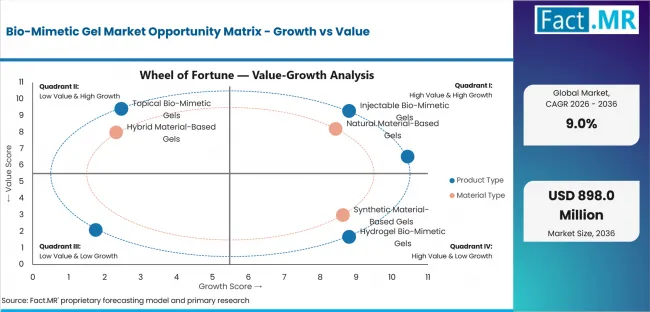
Bio Mimetic Gel Market Opportunity Matrix Growth Vs Value | Source: Fact.MR
Key Factors Driving Growth
- The growing usage of regenerative medicine and tissue engineering techniques is positively impacting the demand for bio-mimetic gels in healthcare and biomedical research applications.
- Rising trend toward biomaterials that can replicate natural extracellular matrix (ECM) structure is driving the use of bio-mimetic gels in wound healing, drug delivery, and tissue regeneration.
- Growing demand for minimally invasive therapeutic procedure and injectable regenerative biomaterials is underpinning the commercial potential of innovative hydrogel and bioactive gel technology on a global scale.
| Growth Driver | Demand Impact | Time Horizon | Key Impact Area | Fact.MR Insight |
|---|---|---|---|---|
| Increasing adoption of regenerative medicine and tissue engineering technologies | High | Short–Mid Term | Demand for regenerative biomaterials & bio-mimetic gel systems | Growing utilization of regenerative therapies, tissue engineering platforms, and stem cell-based treatment approaches is significantly accelerating demand for bio-mimetic gels across healthcare and biomedical research applications globally. |
| Rising preference for extracellular matrix (ECM)-mimicking biomaterials | High | Short–Mid Term | Advanced wound healing & tissue regeneration applications | Healthcare providers and biomaterials researchers are increasingly adopting ECM-like bioactive materials capable of supporting cellular regeneration, tissue repair, and improved biocompatibility in regenerative medicine applications. |
| Expanding commercialization of injectable hydrogels and minimally invasive therapies | Medium-High | Mid–Long Term | Injectable regenerative therapies & localized biomaterial delivery | Increasing demand for minimally invasive procedures, targeted therapeutic delivery systems, and controlled-release regenerative treatments is driving commercialization of injectable bio-mimetic gel technologies globally. |
| Growing investment in 3D bioprinting and advanced biomaterials research | Medium-High | Mid–Long Term | Tissue engineering & biofabrication innovation | Expansion of 3D bioprinting technologies, hydrogel research, and biofabrication platforms is accelerating innovation and adoption of bio-mimetic gels in tissue engineering and regenerative healthcare applications. |
Source: Fact.MR analysis. Updated Jun 15, 2026
Key Market Constraints
- Complex regulatory pathways for regenerative biomaterials, combination products, and advanced hydrogel technologies may limit commercialization speed in several healthcare markets.
- High development costs associated with biomaterial engineering, clinical validation, and scalable manufacturing remain major barriers for emerging companies and startups.
- Variability in raw material sourcing, biomaterial consistency, and long-term biocompatibility performance may create production and quality-control challenges for manufacturers.
Key Opportunity Areas
- Rising funding in regenerative medicine, advanced wound care and tissue engineering is likely to provide robust opportunities for long-term growth of the bio-mimetic gel manufacturers.
- The increasing availability of injectable hydrogels, ECM-mimicking compounds, and smart/stimuli-responsive gel technologies, is opening up opportunities for premium therapeutic products.
- Development of 3D bioprinting, stem cell therapies and personalized regenerative medicine platforms are expected to drive demand in the coming years for bioactive biomaterial systems.
Segment-wise Analysis of the Bio-Mimetic Gel Market
- Injectable Bio-Mimetic Gels account for 35.6% share of the product type segment in 2026, driven by increasing adoption in regenerative medicine, minimally invasive therapeutic procedures, orthopedic treatments, and advanced tissue repair applications requiring targeted biomaterial delivery.
- Regenerative Medicine captures 38.2% share of the application segment in 2026, driven by expanding tissue engineering research, increasing clinical adoption of regenerative therapies, and rising investment in biomaterial-based treatment technologies globally.
- Hospitals account for 33.8% share of the end user segment in 2026, supported by increasing utilization of advanced wound healing products, regenerative biomaterials, and bio-mimetic gel-based therapeutic procedures across clinical settings.
The Bio-Mimetic Gel market is segmented by product type, material type, route of administration, application, end user, and region.
Which Product Type Segment Topped the Bio-Mimetic Gel Market?
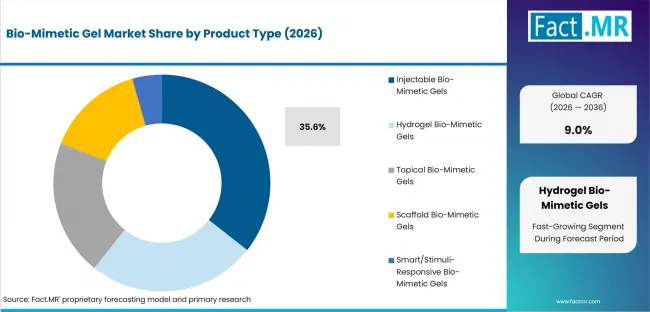
Bio Mimetic Gel Market Analysis By Product Type | Source: Fact.MR
The largest share 35.6% of the Injectable Bio-Mimetic Gels is contributed to the market by 2026. This dominance is due to increasing penetration of minimally invasive regenerative therapies, growing application in orthopedic and tissue engineering, and increasing need for localized delivery systems of biomaterials.
Which Material Type Segment Accounts for the Highest Share in the Market?
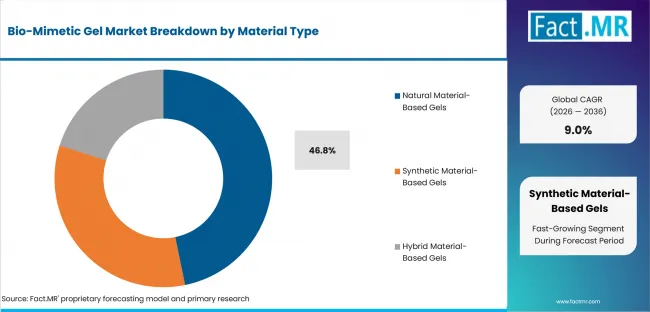
Bio Mimetic Gel Market Analysis By Material Type | Source: Fact.MR
Natural Material-Based Gels are expected to hold the largest share of 46.8% in the material type segment in 2026. This growth is driven by increasing preference for collagen, gelatin, hyaluronic acid, and other naturally derived biomaterials offering enhanced biocompatibility, biodegradability, and regenerative performance. Their widespread usage in tissue engineering, wound healing, and regenerative medicine applications further supports segment growth globally.
Which Route of Administration Segment Leads the Market?
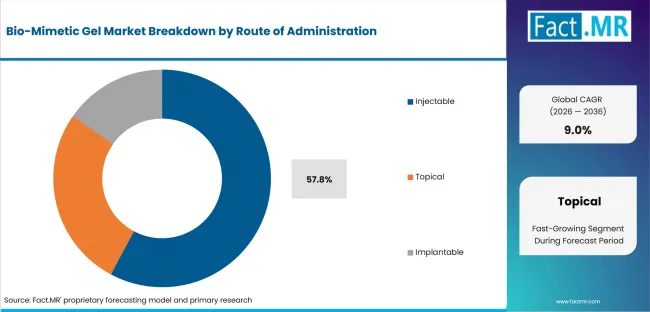
Bio Mimetic Gel Market Analysis By Route Of Administration | Source: Fact.MR
The injectable route of administration is expected to dominate the market with a share of 57.8% in 2026, due to increasing demand for targeted delivery of therapeutics, minimally invasive treatment methodologies, and controlled-release regenerative therapies. Injectable bio-mimetic gels are becoming more common in orthopaedic, wound healing and regenerative tissue treatments due to enhanced clinical efficacy and improved patient outcomes.
Which Application Segment Holds the Largest Share in the Market?
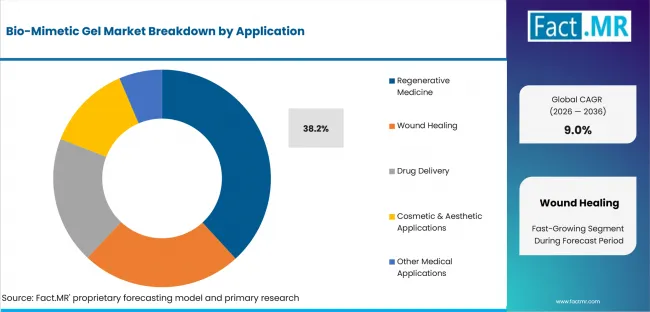
Bio Mimetic Gel Market Analysis By Application | Source: Fact.MR
Regenerative Medicine is projected to dominate the application segment, capturing 38.2% share in 2026. This leadership is driven by increasing investment in tissue engineering, rising adoption of regenerative therapies, growing utilization of extracellular matrix (ECM)-mimicking biomaterials, and expanding research activities in stem cell therapy and 3D bioprinting technologies globally.
Which End User Segment Holds the Largest Share in the Market?
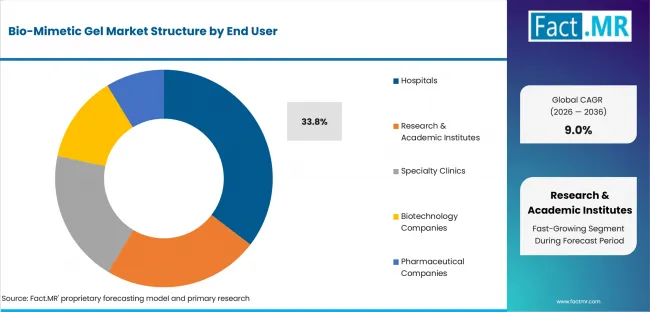
Bio Mimetic Gel Market Analysis By End User | Source: Fact.MR
Hospitals are expected to dominate the end user segment, accounting for 33.8% share in 2026. This dominance is supported by increasing clinical utilization of advanced wound healing products, regenerative biomaterials, and bio-mimetic gel-based therapies in surgical, orthopedic, and tissue regeneration procedures across healthcare institutions globally.
Regional Outlook Across Key Markets
North America, Latin America, Western Europe, Eastern Europe, East Asia, South Asia & Pacific, and Middle East & Africa are the geographies covered in this report. It comprises detailed analysis of regenerative medicine adoption, biomaterial innovation trends, tissue engineering development, healthcare infrastructure expansion, commercialization of hydrogel technologies, growth in 3D bioprinting activities, and increasing demand for advanced wound healing and minimally invasive therapeutic solutions across global healthcare and biotechnology industries.
.webp "Top Country Growth Comparison Bio Mimetic Gel Market Cagr (2026 2036)")
Top Country Growth Comparison Bio Mimetic Gel Market Cagr (2026 2036) | Source: Fact.MR
CAGR Table
| Country | CAGR (%) |
|---|---|
| United States | 8.1% |
| Germany | 7.4% |
| Japan | 10.8% |
| China | 10.5% |
| United Kingdom | 7.9% |
| South Korea | 7.3% |
| France | 7.0% |
Source: Fact.MR analysis. Updated Jun 15, 2026
Source: Fact.MR analysis, based on proprietary forecasting model and primary research.
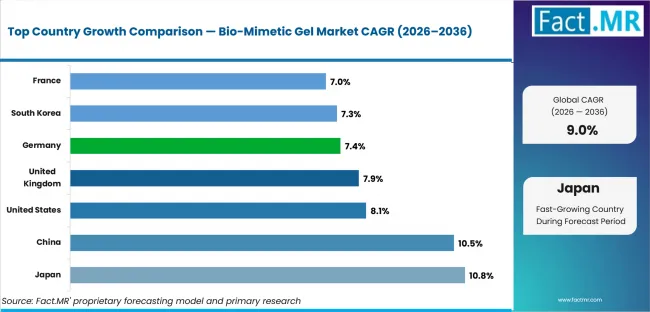
Bio Mimetic Gel Market Cagr Analysis By Country | Source: Fact.MR
North America Bio-Mimetic Gel Market
North America is considered to be one of the highly commercialized regions in the market owing to the presence of strong in regenerative medicine research, growing investment in biomaterial development, rapidly developing healthcare system, and high adoption of tissue engineering techniques. Growth of biotechnology firms, academic collaborations, and clinical applications of regenerative biomaterials are additionally bolstering the regional market. Leading players including CELLINK (BICO Group), and Advanced BioMatrix are expanding market presence through innovation in hydrogels and collaborations in regenerative medicine.
- United States: Demand for Bio-Mimetic Gels in the United States is projected to rise at 8.1% CAGR through 2036. Growth is driven by increasing adoption of regenerative medicine, rising utilization of advanced wound healing products, expanding biomaterials research, and growing demand for minimally invasive therapeutic technologies.
Europe Bio-Mimetic Gel Market
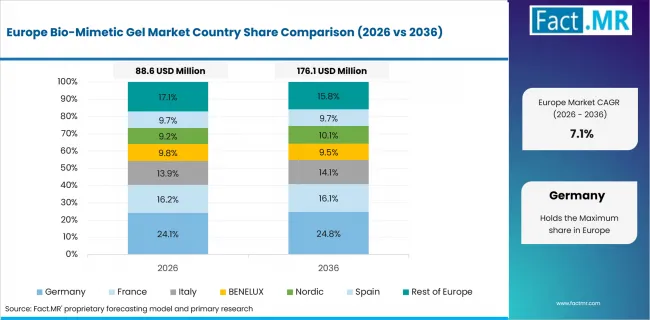
Bio Mimetic Gel Market Europe Country Market Share Analysis, 2026 & 2036 | Source: Fact.MR
Europe holds a considerable portion of the market globally because of the growing tissue engineering research, increasing healthcare expenditure, and developing commercialization of regenerative biomaterials. The introduction of injectable hydrogels, ECM-mimicking biomaterials and other advanced wound healing solutions is increasing in the region. Local corporations and universities are aggressively pursuing technologies for bioactive hydrogels and related regenerative medicine applications.
- Germany: Demand for Bio-Mimetic Gels in Germany is projected to rise at 7.4% CAGR through 2036, supported by increasing regenerative medicine research, strong biomaterials manufacturing capabilities, and rising adoption of tissue engineering technologies.
- United Kingdom: Demand for Bio-Mimetic Gels in the United Kingdom is projected to grow at 7.9% CAGR through 2036, driven by increasing biotechnology innovation, rising clinical research activity, and growing investment in regenerative healthcare solutions.
- France: Demand for Bio-Mimetic Gels in France is supported by expanding biomaterials research, increasing wound healing applications, and rising utilization of regenerative therapeutic technologies across healthcare institutions.
East Asia Bio-Mimetic Gel Market
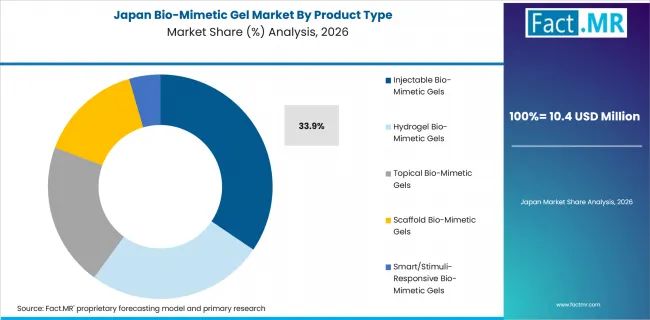
Bio Mimetic Gel Market Japan Market Share Analysis By Product Type | Source: Fact.MR
East Asia is predicted to become one of the fastest growing market regions, owing to the rapid growth of the biotechnology industry, increasing investment in regenerative medicine and the strong government support in healthcare innovation. Regional companies are specializing in hydrogel technology, tissue engineering, and the commercialization of innovative biomaterials.
- China: Demand for Bio-Mimetic Gels in China is projected to rise at 10.5% CAGR through 2036, driven by expanding regenerative medicine infrastructure, rising biomaterial manufacturing capabilities, increasing healthcare expenditure, and growing demand for advanced wound healing technologies.
- Japan: Demand for Bio-Mimetic Gels in Japan is expected to grow at 10.8% CAGR through 2036 due to increasing aging population healthcare needs, rising regenerative medicine adoption, strong tissue engineering research activities, and favorable regulatory support for regenerative biomaterials.
- South Korea: Demand for Bio-Mimetic Gels in South Korea is projected to rise at 7.3% CAGR through 2036, supported by growing biotechnology innovation, increasing investment in hydrogel research, and expanding utilization of regenerative medical technologies.
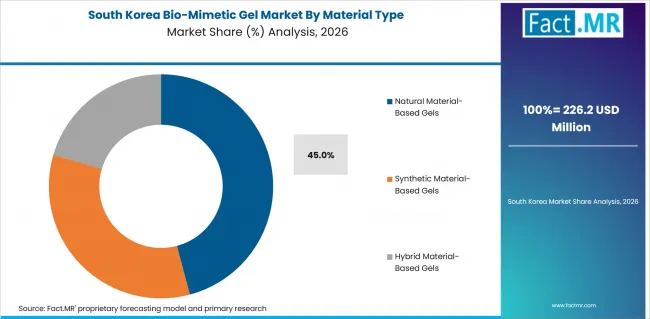
Bio Mimetic Gel Market South Korea Market Share Analysis By Material Type | Source: Fact.MR
South Asia & Pacific Bio-Mimetic Gel Market
South Asia & Pacific is anticipated to witness strong market growth due to expanding healthcare infrastructure, rising biotechnology investments, increasing academic research activities, and growing awareness regarding regenerative medicine technologies. Regional healthcare providers are increasingly adopting advanced wound healing and biomaterial-based therapeutic solutions.
Latin America Bio-Mimetic Gel Market
The Bio-Mimetic Gel market in Latin America is supported by increasing healthcare modernization, rising adoption of advanced wound care technologies, and growing investment in regenerative medicine research. Expanding healthcare access and increasing demand for minimally invasive therapeutic procedures are also contributing to regional market development.
The market is analyzed and market size information is provided by material, product, application and region. It a is a necessary read for a broad spectrum of industry participants including those engaged in regenerative medicine scale-up and expansion, tissue engineering development, extracellular matrix (ECM) based biomaterial adoption, injectable hydrogel technology development, 3D bioprinting, production and sales of advanced bio-mimetic gel solutions in both developed and emerging global healthcare regions.
Competitive Benchmarking and Company Positioning
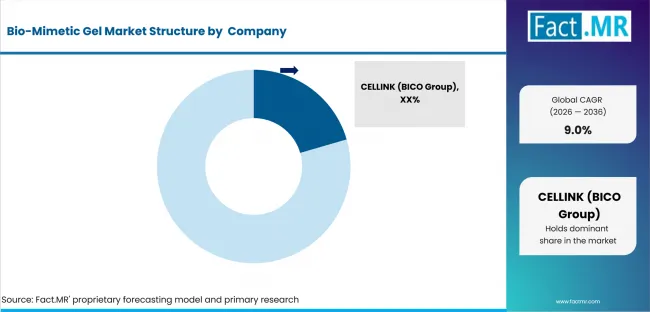
Bio Mimetic Gel Market Analysis By Company | Source: Fact.MR
Leading Companies Shaping the Bio-Mimetic Gel Market
The Bio-Mimetic Gel industry is moderately consolidated with players like CELLINK (BICO Group), Advanced BioMatrix, Gelomics, CollPlant, PepGel, BioLamina, and Jellagen. The impact of bio-based innovation, hydrogel characterization, biocompatibility, regenerative active components, scalability of production and regulatory breakthroughs on market competition is considered in competitive analysis. Key players are developing active extracellular matrix (ECM)-mimicking materials, injectable regenerative hydrogels, tissue engineering scaffolds, and advanced wound healing technologies, in order to consolidate their market dominance.
With their focus increasing on clinical outcomes and therapeutic efficiency, many companies are expanding into bioactive hydrogel systems for use in regenerative medicine, drug delivery, tissue engineering, and 3D bioprinting. At the same time, key companies from specialized and emerging segments of the market such as peptides based biomaterials, collagen-based hydrogels, smart/stimuli-responsive gel technology, tailor‐made biomaterials solutions are competing through strategic collaborations with biotechnology companies, healthcare providers and academic research organizations to accelerate commercialization and worldwide market growth.
Recent Industry Developments
- In March 2025, DKSH and CELLINK announced a strategic partnership to expand access to CELLINK’s 3D bioprinting solutions in China. The agreement supports distribution, sales, logistics, and after-sales services for bioprinting technologies used by research and academic institutions working in tissue engineering and regenerative medicine.
- In February 2026, CollPlant launched BioFlex, a ready-to-print rhCollagen-based bioink kit for DLP 3D bioprinting applications. The portfolio supports advanced tissue models, engineered tissues, and regenerative medicine research using tissue-mimetic recombinant human collagen bioink technology.
Leading Companies Shaping the Bio-Mimetic Gel Market
- CELLINK (BICO Group)
- Advanced BioMatrix
- Merck KGaA (MilliporeSigma)
- Lifecore Biomedical
- Gelomics
- CollPlant
- PepGel
- BioLamina
- Jellagen
Sources and Research References
- CollPlant Biotechnologies Ltd. (2026, February 23). CollPlant elevates rhCollagen 3D bioprinting portfolio with launch of Ready-to-Print BioFlex.
- DKSH. (2025, March 24). DKSH and CELLINK announce strategic partnership to advance 3D bioprinting solutions in China.
- NEXGEL, Inc. (2025, July 14). NEXGEL and STADA AG announce expansion of partnership for North America.
- Cirulli, A., Borgheti-Cardoso, L. N., Torras, N., & Martínez, E. (2024). Mimicking human skin constructs using norbornene-pullulan-based hydrogels. International Journal of Bioprinting, 10(4), 3395. DOI: 10.36922/ijb.3395.
Bio-Mimetic Gel Market Definition
The market for bio-mimetic gel is a derivative of the biomaterials market and covers gel-based materials that are developed to replicate the structure, biological attributes, and performance of native tissues and ECM for regenerating and treating tissues. Such gels are often formed by natural, synthetic or composite biomaterials like collagen, gelatin, hyaluronic acid, alginate, chitosan and PEG, and come in shapes of injectable, topical, implantable, hydrogel, scaffold and intelligent/stimuli-responsive products. Bio-mimetic gels find application in regenerative medicine, tissue engineering, wound healing, drug delivery, cosmetic and aesthetic treatments along with many other futuristic medical applications.
Bio-Mimetic Gel Market Inclusions
The study on bio-mimetic gel market anticipates the global and regional market for the forecast period of 2026 to 2036. It studies all the sections, including product type, material type, route of administration, application, end-user, and region, along with analyzing the regional adoption, market competition, technology advances, market potential, barriers, enablers, and macro environment. Also, the report introduces emerging trends in biomimetic hydrogel technologies, ECM-mimicking biomaterials, injectable regenerative gels, smart/stimuli-responsive gels, tissue engineering scaffolds, bioactive wound healing materials, drug delivery hydrogels, regenerative medicine innovations, and new applications of bio-mimetic gels involving 3D bioprinting as well as minimally invasive therapeutic procedures.
Bio-Mimetic Gel MarketExclusions
This review is focused on bio-mimetic gels intended for use in regenerative medicine, tissue engineering, wound healing, drug delivery, cosmetic and aesthetic interventions and allied biomedical applications. But the traditional hydrogel, and the general medical gel which is not biomimetic or mimics extracellular matrix (ECM) was not pretended to be in this study. Medical devices, bioprinting hardware systems, non gel-based scaffold materials, pharmaceuticals lacking gel-based biomaterial functionality and traditional cosmetic gels without regenerative or bioactive properties are also out of scope within the report.
Bio-Mimetic Gel Market Research Methodology
- Primary Research
- In order to calculate market size of bio-mimetic gel, top-down and bottom-up market size estimation approaches were used and the results were verified by secondary research and primary research. Primary interviews were conducted with biomaterial providers, hydrogel producers, regenerative medicine organizations, tissue engineering investigators, biotech companies, healthcare providers, distributors, and industry consultants. The analysis substantiated important market trends, business opportunities, pricing information, technology development strategies, pattern of clinical adoption, production/operation status, future demand projections in market segments such as regenerative medicine, wound healing and drug delivery.
- Desk Research
- The report is based on information derived from company annual reports, investor presentations, publications of the biomaterials industry, journals of regenerative medicine, scientific literature on biomimetic hydrogels and extracellular matrix technologies, trade databases, government healthcare statistics, IP databases and regulatory documents. Other cited sources are tissue engineering research papers, reports on hydrogel technology, biotechnology market reports, wound healing research papers, news on 3D bioprinting, injectable biomaterials, and sophisticated regenerative therapies in the healthcare and research industry globally.
- Market-Sizing and Forecasting
- The market estimation approach is based on analysis of revenues generated by manufacturers of biomimetic gels, hydrogel scaffolds, regenerative biomaterials, and injectable bioactive gel products using a bottom-up methodology. The estimates were further validated through top-down assessment of the broader regenerative medicine, biomaterials, tissue engineering, and hydrogel ecosystems across key regional markets and applications.
- Data Validation and Update Cycle
- Market projections were validated through triangulation of primary interviews, company financial analysis, production trends, biomaterial demand assessment, healthcare adoption patterns, regional research activities, and historical growth in regenerative medicine applications. Forecasts are periodically revised based on changes in regulatory frameworks, biomaterial innovations, commercialization of advanced hydrogel technologies, investment in tissue engineering, expansion of 3D bioprinting applications, and evolving demand for minimally invasive regenerative therapies and advanced wound healing solutions globally.
Segmentation
Scope of Analysis
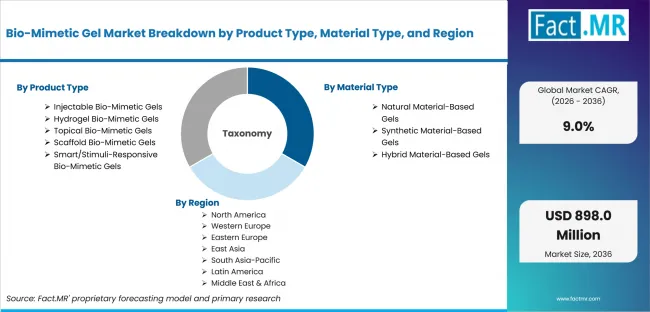
Bio Mimetic Gel Market Breakdown By Product Type, Material Type, And Region | Source: Fact.MR
| Parameter | Details |
|---|---|
| Quantitative Units | USD million (2025) to USD million (2036), at a CAGR |
| Market Definition | The Bio-Mimetic Gel market covers advanced biomaterial-based gels, hydrogels, scaffold gels, and extracellular matrix (ECM)-mimicking formulations designed to support regenerative medicine, tissue engineering, wound healing, drug delivery, cartilage repair, ophthalmology, and other therapeutic applications. These products include injectable gels, hydrogel systems, scaffold-based gels, topical regenerative gels, and smart/stimuli-responsive biomaterials developed using collagen, gelatin, hyaluronic acid, alginate, chitosan, PEG, peptides, and other natural or synthetic biomaterials utilized across regenerative medicine, biotechnology, biomaterials, and advanced healthcare industries. |
| Product |
Source: Fact.MR analysis. Updated Jun 15, 2026 Injectable Bio-Mimetic Gels, Topical Bio-Mimetic Gels, Hydrogel Bio-Mimetic Gels, Scaffold Bio-Mimetic Gels, Smart/Stimuli-Responsive Bio-Mimetic Gels |
| Material Type |
Source: Fact.MR analysis. Updated Jun 15, 2026 Natural Material-Based Gels, Synthetic Material-Based Gels, Hybrid Material-Based Gels |
| Route of Admistration | Injectable, Topical, Implantable |
| Application | Regenerative Medicine, Wound Healing, Drug Delivery, Cosmetic & Aesthetic Applications, Other Medical Applications |
| End use | Hospitals, Specialty Clinics, Research & Academic Institutes, Biotechnology Companies, Pharmaceutical Companies, Cosmetic & Dermatology Centers |
| Regions Covered | North America, Eastern Europe, Western Europe, East Asia, South Asia & Pacific, Latin America, Middle East & Africa |
| Countries Covered | USA, Germany, United Kingdom, France, China, Japan, South Korea, India, Canada, Brazil, Australia, UAE, South Africa, and 20+ countries |
| Key Companies | CELLINK (BICO Group), Advanced BioMatrix, Gelomics, CollPlant, PepGel, BioLamina, Jellagen |
| Forecast Period | 2026 to 2036 |
| Approach | Hybrid demand-side and bottom-up methodology based on regenerative medicine adoption trends, biomaterial commercialization rates, hydrogel technology utilization, tissue engineering demand, advanced wound healing adoption, 3D bioprinting expansion, biotechnology investment trends, and increasing utilization of ECM-mimicking biomaterials, validated through primary interviews with biomaterial manufacturers, regenerative medicine companies, biotechnology firms, healthcare providers, distributors, academic researchers, and industry experts across key global regions. |
Source: Fact.MR analysis. Updated Jun 15, 2026
Analysis by Product Type, Material Type, Route of Administration, Application, End User, and Region
-
Bio-Mimetic Gel Market by Product Type
- Injectable Bio-Mimetic Gels
- Topical Bio-Mimetic Gels
- Hydrogel Bio-Mimetic Gels
- Scaffold Bio-Mimetic Gels
- Smart/Stimuli-Responsive Bio-Mimetic Gels
-
Bio-Mimetic Gel Market by Material Type
- Natural Material-Based Gels
- Collagen-Based Gels
- Gelatin-Based Gels
- Alginate-Based Gels
- Chitosan-Based Gels
- Fibrin-Based Gels
- Synthetic Material-Based Gels
- PEG-Based Gels
- PVA-Based Gels
- Synthetic Polymer Composite Gels
- Hybrid Material-Based Gels
- Natural-Synthetic Composite Gels
- Nanocomposite Bio-Mimetic Gels
- Natural Material-Based Gels
-
Bio-Mimetic Gel Market by Route of Administration
- Injectable
- Topical
- Implantable
-
Bio-Mimetic Gel Market by Application
- Regenerative Medicine
- Tissue Engineering
- Cartilage Repair
- Bone Regeneration
- Soft Tissue Repair
- Wound Healing
- Chronic Wound Care
- Burn Treatment
- Regenerative Medicine
-
Surgical Wound Management
- Drug Delivery
- Controlled Release Systems
- Injectable Drug Delivery
- Localized Therapeutic Delivery
- Cosmetic & Aesthetic Applications
- Dermal Fillers
- Skin Rejuvenation
- Anti-Aging Treatments
- Other Medical Applications
- Ophthalmology
- Dental Regeneration
- Cardiovascular Repair
- Neurological Applications
- Drug Delivery
-
Bio-Mimetic Gel Market by End User
- Hospitals
- Specialty Clinics
- Research & Academic Institutes
- Biotechnology Companies
- Pharmaceutical Companies
- Cosmetic & Dermatology Centers
-
Bio-Mimetic Gel Market by Region
- North America
- USA
- Canada
- Latin America
- Brazil
- Chile
- Mexico
- Rest of LATAM
- East Asia
- China
- Japan
- South Korea
- Taiwan
- South Asia & Pacific
- India
- Singapore
- Australia
- ASEAN
- Western Europe
- Germany
- France
- U.K.
- Italy
- Spain
- BENELUX
- Nordic
- Rest of Western Europe
- Eastern Europe
- Poland
- Hungary
- Czech Republic
- Balkan & Baltics
- Rest of Eastern Europe
- Middle East and Africa
- Kingdom of Saudi Arabia
- United Arab Emirates
- South Africa
- Rest of Middle East and Africa
- North America
Frequently Asked Questions
What is the expected demand growth for the Bio-Mimetic Gel Market between 2026 and 2036?
How significant is the growth outlook for Japan in this market?
Which company is identified as a leading player in the Bio-Mimetic Gel Market?
Which product type holds the largest share of the Bio-Mimetic Gel Market?
What is driving demand for injectable bio-mimetic gels?
Who worked on this report


Preview the report firsthand - request a free sample
Free SampleGet the brochure for pricing and purchase details
Download PDF