Edible Offal Market

Edible Offal Market Size and Share Forecast Outlook 2025 to 2035

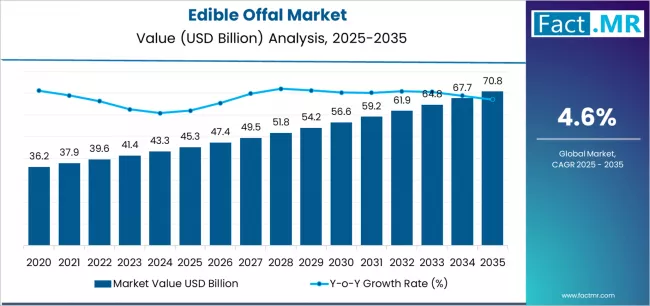
Edible offal market is projected to grow from USD 45.3 billion in 2025 to USD 70.8 billion by 2035, at a CAGR of 4.6%. Processed will dominate with a 68.0% market share, while pig will lead the source segment with a 43.1% share.

Edible Offal Market Forecast and Outlook 2025 to 2035

The global edible offal market is projected to grow from USD 45.3 billion in 2025 to approximately USD 70.8 billion by 2035, recording an extraordinary absolute increase of USD 25.5 billion over the forecast period. This translates into a total growth of 56.3%, with the market forecast to expand at a compound annual growth rate (CAGR) of 4.6% between 2025 and 2035.

Edible offal consumption is expected to grow by over 1.6X during this period, supported by exponential demand for protein diversification, rising adoption of nose-to-tail consumption protocols, and growing emphasis on food sustainability and traditional culinary heritage preservation across global food service operations.

Quick Stats on Edible Offal Market

  • Edible Offal Market Value (2025): USD 45.3 billion
  • Edible Offal Market Forecast Value (2035): USD 70.8 billion
  • Edible Offal Market Forecast CAGR (2025 to 2035): 4.6%
  • Leading Application in Edible Offal Market: Processed (68.0%)
  • Leading Source in Edible Offal Market: Pig (43.1%)
  • Leading Distribution Channel in Edible Offal Market: Food Service (68.1%)
  • Key Growth Regions in Edible Offal Market: Asia Pacific, Europe, and North America
  • Key Players in Edible Offal Market: JBS Food, Offal Good, Offal Delight, Offal Cuisine, Alpha Field Products Co, Yoma International, Cenfood International Inc., Organic Meat Company, Sure Good Foods Ltd., Offal Good Canada

Edible Offal Market Market Value Analysis

The edible offal market is positioned for substantial expansion, driven by increasing recognition of organ meat nutritional value, growing cultural cuisine appreciation with enhanced culinary standards, and rising adoption of advanced processing and preservation technologies across meat production facilities globally.

The market demonstrates robust fundamentals supported by expanding food service establishment networks, culinary professionals' focus on whole-animal utilization protocols, and rising recognition of edible offal as critical protein sources in achieving enhanced nutritional outcomes, sustainable meat production capabilities, and cost-effective protein supply effectiveness within modern food systems across diverse cultural applications.

Increasing edible offal demand is underpinned by processing innovations in edible offal preparation, particularly advanced preservation techniques and value-added product formulations, which offer enhanced food safety, improved shelf-life outcomes, and superior compatibility with comprehensive food service menu protocols prevalent in contemporary culinary practices.

Food service operators increasingly prioritize offal products that deliver optimal balance between nutritional density, culinary versatility, and cost-effectiveness while adhering to increasingly stringent food safety standards and sustainability requirements across global meat markets. The convergence of processed offal consumption expansion in urban regions, traditional cuisine preservation growth in cultural markets, and specialized food service capability development in emerging economies creates multifaceted growth opportunities for meat processors and food distribution operators.

The culinary landscape is experiencing transformative changes as chefs adopt sophisticated preparation techniques including advanced charcuterie methods, innovative frozen preservation approaches, and creative culinary applications that enable enhanced flavor development and nutritional delivery.

These culinary advancements are complemented by evolving processing capabilities encompassing modern sanitation protocols, advanced packaging technologies, and innovative distribution systems that significantly improve product accessibility and consumer acceptance outcomes.

The integration of traceability platforms and quality assurance systems further enhances food safety confidence, particularly benefiting premium food service establishments and ethnic cuisine restaurants where authentic offal preparation remains culturally significant.

Between 2025 and 2030, the edible offal market is projected to expand from USD 45.3 billion to USD 56.7 billion, demonstrating strong foundational growth driven by global protein diversification trends, increasing awareness of sustainable meat consumption, and initial deployment of advanced processing and value-added product technologies across food service and retail distribution platforms. This growth phase establishes market infrastructure, validates specialized culinary preparation protocols, and creates comprehensive supply chain networks supporting global food operations.

From 2030 to 2035, the market is forecast to reach USD 70.8 billion, driven by mature processed offal penetration, next-generation preservation procedures requiring sophisticated food safety expertise, and comprehensive integration of advanced traceability systems demanding enhanced quality assurance capabilities. The growing adoption of nose-to-tail consumption programs, specialized culinary training initiatives, and sustainable protein sourcing expansion will drive demand for comprehensive edible offal products with enhanced food safety outcomes and seamless food service integration functionality.

Edible Offal Market Key Takeaways

Metric Value
Estimated Value (2025E) USD 45.3 billion
Forecast Value (2035F) USD 70.8 billion
Forecast CAGR (2025 to 2035) 4.6%

Why is the Edible Offal Market Growing?

Market expansion is being supported by the exponential increase in protein demand diversification and the corresponding need for sustainable meat utilization solutions in food service applications across global culinary operations. Food service operators are increasingly focused on advanced offal products that can improve menu diversity, enhance sustainability credentials, and optimize protein sourcing costs while meeting stringent food safety requirements.

The proven nutritional density of organ meats in various culinary applications makes them an essential component of comprehensive sustainable food strategies and traditional cuisine preservation programs. The growing emphasis on nose-to-tail consumption and sustainable meat production integration is driving demand for advanced offal processing that meets stringent quality specifications and operational requirements for food service applications.

Food operators' preference for reliable, high-quality offal products that can ensure consistent culinary outcomes is creating opportunities for innovative processing techniques and customized product solutions. The rising influence of sustainable food movements and traditional culinary heritage appreciation is also contributing to increased adoption of premium-grade edible offal products across different cultural categories and food service systems requiring authentic protein ingredients.

Opportunity Pathways - Edible Offal Market

The edible offal market represents a transformative growth opportunity, expanding from USD 45.3 billion in 2025 to USD 70.8 billion by 2035 at a 4.6% CAGR. As food service operators prioritize sustainability optimization, specialized protein diversification, and culinary excellence in complex menu environments, edible offal products have evolved from traditional by-products to essential protein sources enabling precise nutritional delivery, comprehensive waste reduction strategies, and multi-cultural culinary operations across food service platforms and ethnic cuisine applications.

The convergence of sustainable food movement acceleration, increasing traditional cuisine appreciation, advanced processing technology integration, and stringent food safety mandates creates momentum in demand. High-quality processed offal offerings delivering superior food safety outcomes, cost-effective protein solutions balancing nutrition with economics, and specialized products for food service applications will capture market premiums, while geographic expansion into high-growth Asian culinary markets and emerging sustainable food ecosystems will drive volume leadership. Food operator emphasis on culinary innovation and sustainability provides structural support.

  • Pathway A - Processed Application Dominance: Leading with 68.0% market share, processed offal applications drive primary demand through established food service workflows requiring comprehensive value-added products for menu integration. Advanced processing protocols including sausage formulations (28.0%), frozen products (21.5%), and canned preparations (13.0%) enabling improved shelf-life, enhanced food safety, and convenient culinary utilization command premium positioning from food service operators requiring stringent quality specifications and consistency compliance. Expected revenue pool: USD 30.8-48.1 billion.
  • Pathway B - Pig Source Leadership: Dominating with 43.1% market share through optimal balance of availability and cultural acceptance, pig offal applications serve most edible offal requirements while meeting diverse culinary demands. This source category addresses both Asian cuisine traditions and Western charcuterie expectations, making it the preferred segment for meat processors and food service operations seeking comprehensive offal capabilities. Opportunity: USD 19.5-30.5 billion.
  • Pathway C - Asian Market Acceleration: China (5.6% CAGR), India (5.3% CAGR), and Australia & New Zealand (5.0% CAGR) lead global growth through cultural cuisine preservation, protein consumption expansion, and sustainability policy advancement. Strategic partnerships with traditional food service providers, product localization expertise, and distribution network optimization enable the expansion of edible offal products in major culinary hubs. Geographic expansion upside: USD 3.2-5.1 billion.
  • Pathway D - Food Service Distribution Channel Segment: Food service with 68.1% market share serves critical restaurant and institutional catering applications requiring consistent offal supply for menu offerings. Optimized distribution protocols supporting diverse establishment types, quality assurance requirements, and proven culinary integration maintain significant volumes from restaurant operators and catering facilities. Revenue potential: USD 30.8-48.2 billion.
  • Pathway E - Advanced Processing Technologies & Value-Added Innovation: Companies investing in sophisticated preservation techniques, charcuterie innovations, and advanced food safety systems gain competitive advantages through consistent quality delivery and shelf-life extension. Advanced capabilities enabling customized product specifications and rapid food service menu development capture premium culinary partnerships. Technology premium: USD 2.7-4.2 billion.
  • Pathway F - Supply Chain Optimization & Food Safety Excellence: Specialized meat processing facilities, strategic cold chain integration, and reliable traceability systems create competitive differentiation in food markets requiring consistent offal product availability. Companies offering guaranteed quality standards, comprehensive safety certification, and culinary application support gain preferred supplier status with quality-focused food service operators. Supply chain value: USD 2.3-3.5 billion.
  • Pathway G - Emerging Applications & Market Development: Beyond traditional culinary applications, edible offal in pet food formulations, nutraceutical extracts, and specialized gourmet products represent growth opportunities. Companies developing new product innovations, supporting sustainable sourcing initiatives, and expanding into adjacent protein markets capture incremental demand while diversifying revenue streams. Emerging opportunity: USD 1.8-2.8 billion.

Segmental Analysis

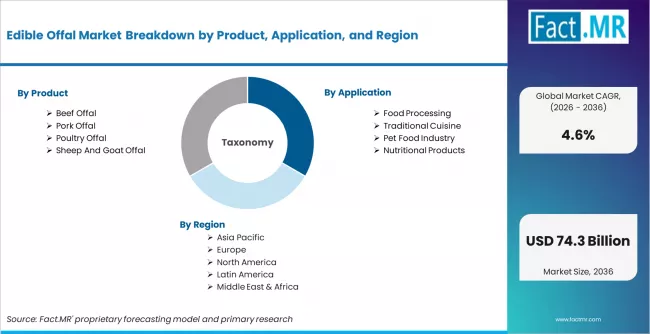
The market is segmented by application, source, distribution channel, and region. By application, the market is divided into processed (sausage/bagged, frozen, canned/brine, others) and fresh. Based on source, the market is categorized into pig, cattle, poultry, goat, sheep, horse, and others.

By distribution channel, the market is segmented into food service, retail, online sales, hypermarkets/supermarkets, wholesale stores, and others. Regionally, the market is divided into Asia Pacific, North America, Europe, Latin America, and Middle East & Africa.

Why do ProcessedApplications account for the Majority Share?

Edible Offal Market Analysis By Application

The processed application segment is projected to account for 68.0% of the edible offal market in 2025, reaffirming its position as the category's dominant preparation specification. Food service operators increasingly recognize the optimal balance of convenience and food safety offered by processed offal products for culinary applications, particularly in restaurant operations and institutional catering environments. This application category addresses both shelf-life extension requirements and consistent quality demands while providing reliable product performance across diverse food service operations.

This segment forms the foundation of most modern offal consumption protocols for food service management and retail distribution, as it represents the most commercially viable and food safety-compliant application category in the edible offal industry. Processing validation standards and extensive quality control deployment continue to strengthen confidence in processed offal products among food service professionals and meat buyers. With increasing recognition of convenience benefits and food safety advantages, processed offal applications align with both current food service practices and sustainable protein utilization goals, making them the central growth driver of comprehensive offal market strategies across multiple distribution platforms.

Sausage/bagged products represent 28.0% of processed applications, reflecting traditional charcuterie preparation and convenient product formats. Frozen offal accounts for 21.5% of the processed segment, driven by extended shelf-life requirements and international trade facilitation. Canned/brine preparations represent 13.0% of processed products, addressing preservation needs and ethnic cuisine applications, while other processing methods account for 5.5%, encompassing specialized preparation techniques and value-added formulations.

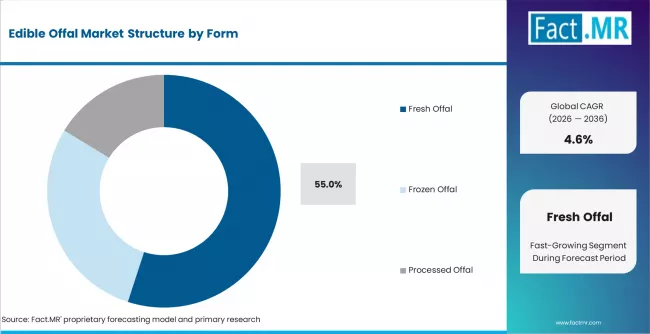
Fresh application represents 32.0% of the market, serving traditional wet market distribution, direct consumer purchases, and specialized culinary establishments requiring unprocessed organ meats for authentic recipe preparation.

What Drives Pig Source Segment Prominence?

Edible Offal Market Analysis By Source

Pig source type is projected to represent 43.1% of edible offal demand in 2025, underscoring its role as the primary animal category driving market adoption and product supply. Meat processors recognize that pig offal availability, including diverse organ types, established supply chains, and cultural acceptance protocols, provides the largest addressable market that other livestock sources cannot match in production volume and culinary versatility. Pig offal utilized in food service offers established preparation traditions and broad cultural compatibility essential for serving Asian cuisine requirements and European charcuterie applications.

The segment is supported by the extensive nature of global pork production, requiring organ utilization capable of addressing liver consumption, intestine casing applications, and diverse offal product manufacturing, and the increasing recognition that pig organs provide optimal balance of availability and palatability. Additionally, food service operators are increasingly maintaining pig offal sourcing relationships that provide consistent supply for traditional menu offerings and specialty preparations. As whole-animal utilization advances and sustainable meat production becomes more emphasized, pig offal products will continue to play a crucial role in comprehensive livestock utilization strategies.

Cattle represents 22.3% of source types, driven by beef production scale, liver market demand, and tripe consumption in diverse cultural cuisines. Poultry accounts for 13.4% of sources, reflecting gizzard utilization and liver applications in various culinary traditions. Goat represents 6.8% of sources, addressing ethnic cuisine requirements and regional preferences. Sheep accounts for 5.2% of offal supply, serving Middle Eastern and Mediterranean culinary applications. Horse represents 5.8% of sources in regions with cultural acceptance, while other sources account for 3.4%, encompassing specialized livestock and game animal organs.

How Does Food Service Distribution Channel Maintain Market Dominance?

Edible Offal Market Analysis By Distribution Channel

The food service distribution channel segment is projected to account for 68.1% of the edible offal market in 2025, establishing its position as the leading distribution method. Food industry operators increasingly recognize that food service channels, encompassing restaurant supply networks and institutional catering distribution, represent the most significant and professionally managed category for offal distribution due to volume requirements and quality standards.

This distribution channel addresses both traditional cuisine restaurant demands and modern culinary innovation expectations while delivering consistent product availability across professional food operations. The segment is supported by the professional nature of offal preparation requirements, driven by specialized culinary expertise needs, food safety protocol compliance, and established chef-supplier relationships supporting consistent product quality and menu reliability.

Food service establishments are increasingly prioritizing direct supplier relationships that provide product traceability and application support while maintaining cost-effectiveness. As culinary sophistication advances and sustainable menu development grows, food service distribution channels will continue to serve the crucial role of ensuring quality offal availability within the global culinary market.

Retail accounts for 19.9% of distribution channels, serving direct consumer purchases through butcher shops and specialty meat markets. Online sales represent 4.1% of channels, addressing growing e-commerce meat distribution and direct-to-consumer delivery models. Hypermarkets/supermarkets account for 4.8% of distribution, providing mainstream retail access for processed offal products. Wholesale stores represent 2.1% of channels, serving bulk purchasing requirements, while other distribution methods account for 1.0%, encompassing specialized channels and direct farm sales.

What are the Drivers, Restraints, and Key Trends of the Edible Offal Market?

The edible offal market is advancing rapidly due to increasing recognition of sustainable protein importance and growing demand for traditional culinary preservation across the food service sector.

However, the market faces challenges, including consumer perception barriers in Western markets, food safety concerns in developing regions, and cultural acceptance limitations in certain demographic segments. Innovation in processing technologies and advanced food safety protocols continues to influence product development and market expansion patterns.

Proliferation of Advanced Processing Technologies and Food Safety Systems

The accelerating adoption of sophisticated processing platforms is enabling the development of safer offal product applications and preparation protocols that can meet stringent hygiene and quality requirements.

Food service operators demand comprehensive safety integration for offal products, including high-standard sanitation capabilities and advanced preservation formulations that are particularly important for achieving regulatory compliance requirements in commercial food applications.

Advanced processing technologies provide access to extended shelf-life that can optimize distribution efficiency and reduce waste while maintaining cost-effectiveness for diverse food service environments.

Integration of Sustainable Sourcing and Nose-to-Tail Consumption

Modern food service organizations are incorporating advanced philosophies such as whole-animal utilization principles, sustainable meat sourcing initiatives, and waste reduction programs to enhance offal market legitimacy and environmental credentials.

These movements improve culinary acceptance opportunities, enable seamless traditional cuisine preservation, and provide better recognition of offal nutritional value throughout the food system experience.

Advanced sustainability capabilities also enable premium menu positioning and enhanced consumer education about organ meat benefits, supporting cultural acceptance enhancement and improved market perception outcomes.

Analysis of the Edible Offal Market by Key Countries

Edible Offal Market Cagr Analysis By Country

Country CAGR (2025 to 2035)
China 5.6%
India 5.3%
Australia & New Zealand 5.0%
Brazil 4.7%
Spain 4.4%
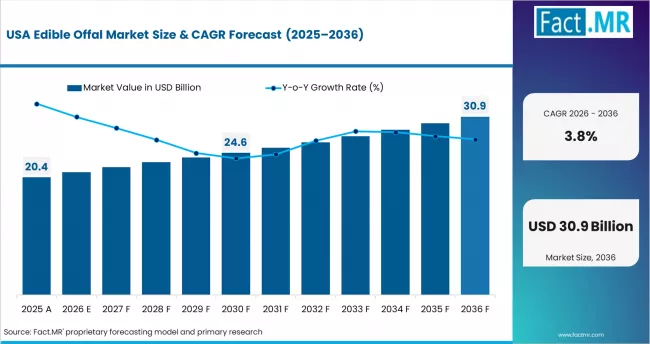
USA 3.8%
Germany 3.5%

The edible offal market is experiencing exceptional growth globally, with China leading at a 5.6% CAGR through 2035, driven by strong cultural demand for organ meats, expanding meat processing capacity, and comprehensive traditional cuisine preservation across major urban centers. India follows at 5.3%, supported by rising protein consumption, cost-driven shift toward affordable offal products, and increasing food service infrastructure. Australia & New Zealand records 5.0% growth, benefiting from government policies favoring nose-to-tail consumption and sustainability directives.

Brazil demonstrates 4.7% growth, emphasizing increasing livestock industry output and export utilization of offal products. Spain shows 4.4% growth with traditional culinary heritage and organ-based cuisine excellence. USA records 3.8% growth, representing gourmet food service expansion and high-end dining adoption, while Germany shows 3.5% growth, representing consumer shift toward sustainable whole-animal product consumption.

How Does China Demonstrate Market Leadership with Cultural Cuisine Heritage?

Revenue from edible offal in China is projected to exhibit exceptional growth with a CAGR of 5.6% through 2035, driven by deeply rooted cultural traditions valuing organ meat consumption and strategic positioning as the world's largest offal market through comprehensive food service infrastructure and processing capability advancement.

The country's extensive culinary heritage and massive food service industry are creating significant opportunities for offal product deployment across both traditional restaurant operations and modern food processing applications.

Major domestic meat processors and traditional food service operators are maintaining comprehensive supply networks to serve the enormous population consuming organ meats across street food vendors, traditional restaurants, and modern dining establishments throughout China's diverse culinary regions.

The Chinese government's strategic emphasis on food security and sustainable meat utilization is supporting investments in processing infrastructure and food safety standards. This policy environment, combined with the country's cultural acceptance of offal and massive livestock production, creates a favorable environment for edible offal market development. Chinese consumers demonstrate strong preferences for diverse organ meat preparations, with offal consumption representing a key component in traditional dietary patterns.

  • Cultural traditions supporting organ meat consumption and comprehensive culinary applications are maintaining demand for edible offal across food service and household segments
  • Processing capacity expansion and food safety standard advancement are supporting appropriate quality enhancement among processors and distribution facilities nationwide
  • Food service operators and consumers are sustaining recognition of nutritional value and culinary versatility in offal products, maintaining established consumption patterns
  • Livestock production scale and traditional cuisine preservation are supporting offal market stability across culinary sectors

What Makes India Demonstrate Protein Diversification Leadership?

Revenue from edible offal in India is expanding at a CAGR of 5.3%, supported by massive population protein requirements, advancing food service infrastructure, and cost-driven protein source diversification across the country's developed urban and rural food markets.

The country's growing protein consumption needs and economic considerations are driving demand for affordable offal products in both street food applications and emerging restaurant operations. Domestic meat processors and traditional food vendors are establishing supply capacity to serve the growing acceptance of organ meat consumption while addressing the country's protein accessibility challenges.

India's offal market continues to benefit from livestock production expansion, growing food service sector development, and increasing protein consumption awareness. The country's diverse culinary traditions incorporate various organ meat preparations, creating established consumption patterns across regional cuisines. This development is particularly important for edible offal applications, as food operators seek cost-effective protein sources that address nutritional requirements while meeting cultural culinary preferences in diverse food service environments.

  • Rising protein consumption requirements and cost-effectiveness considerations are creating sustained demand for affordable offal products
  • Growing food service infrastructure and traditional cuisine preservation are supporting increased availability of organ meat preparations across market segments
  • Livestock production expansion and processing capability development are enabling improved product accessibility and quality standards
  • Economic protein sourcing priorities are maintaining offal consumption patterns across demographic segments

Why Does Australia & New Zealand Maintain Sustainability Policy Leadership?

Revenue from edible offal in Australia & New Zealand is projected to exhibit strong growth with a CAGR of 5.0% through 2035, driven by government sustainability initiatives and strategic nose-to-tail consumption promotion as essential components for environmental responsibility and livestock industry optimization.

The region's progressive food policies and quality-focused meat industry are creating significant opportunities for offal product integration across both domestic food service and export market applications. Regional meat processors are leveraging sustainability credentials to serve growing demand for whole-animal utilization while supporting the region's position as a responsible livestock production economy.

The Australia & New Zealand market benefits from comprehensive food safety standards supporting quality meat production, enabling optimized offal processing and traceability integration. This development is particularly important for edible offal applications, as processors seek premium market positioning that maximizes sustainability credentials while ensuring product quality in competitive domestic and export food markets.

Strategic Market Considerations:

  • Food service and export segments leading growth with focus on sustainability credentials and whole-animal utilization applications
  • Government policy support and quality standards are driving offal product portfolios from conventional processing to premium nose-to-tail offerings
  • Livestock industry expertise and sustainability leadership supporting competitive positioning in global meat markets
  • Environmental responsibility programs and waste reduction initiatives influencing processing specifications and market development timelines

How Does Brazil Maintain Livestock Production Excellence?

Brazil's expanding edible offal market demonstrates steady growth with a CAGR of 4.7% through 2035, driven by massive livestock production scale and strategic offal export utilization as components for meat industry efficiency and international trade. The country's position as a leading meat exporter and extensive cattle operations are creating opportunities for offal product development across both domestic consumption and export applications. Brazilian meat processors are leveraging production capacity to serve offal markets while optimizing livestock utilization in global meat trade.

The Brazilian market benefits from large-scale livestock operations supporting comprehensive meat production, enabling integrated offal processing and export market development. This development is particularly important for edible offal applications, as processors seek value extraction from organ meat production that enhances overall meat industry economics in competitive international markets.

Strategic Market Considerations:

  • Export and domestic food service segments demonstrating growth with focus on livestock utilization optimization and international trade applications
  • Meat industry economics and production scale are supporting offal product development from basic processing to export-grade offerings
  • Livestock production leadership and processing expertise enabling competitive positioning in global offal markets
  • Industry efficiency requirements and export opportunities influencing processing capacity and product development

What Drives Spain’s Market Growth with Culinary Heritage Excellence?

Spain's established edible offal market demonstrates sustained growth with a 4.4% CAGR through 2035, driven by traditional culinary heritage and comprehensive organ-based cuisine preservation across major gastronomic regions. The country's rich culinary traditions and sophisticated food culture are maintaining demand for offal products across both traditional restaurants and modern dining establishments. Spanish chefs and food service operators continue prioritizing authentic offal preparations that incorporate regional culinary expertise.

Market dynamics focus on traditional offal products that balance culinary authenticity with food safety considerations important to Spanish gastronomic standards and cultural heritage preservation. Strong culinary tradition creates sustained demand for diverse organ meat preparations and traditional recipe maintenance.

Strategic Market Considerations:

  • Traditional cuisine and restaurant segments demonstrating steady growth with focus on culinary heritage and authentic preparation applications
  • Cultural acceptance and culinary sophistication supporting premium offal offerings from conventional products to gourmet preparations
  • Gastronomic excellence and regional cuisine traditions maintaining competitive positioning in European culinary markets
  • Culinary heritage preservation and food culture emphasis ensuring consistent offal consumption and traditional recipe continuation

How does USA Demonstrate Gourmet Food Service Development?

The USA's evolving edible offal market demonstrates moderate growth with a 3.8% CAGR through 2035, driven by gourmet restaurant expansion and high-end dining adoption of organ meat preparations across major metropolitan culinary markets. The country's adventurous dining trends and chef-driven cuisine innovation are creating emerging opportunities for offal products in upscale food service applications. American chefs and specialty restaurants are increasingly featuring organ meat preparations that appeal to sophisticated diners seeking culinary experiences.

Market dynamics focus on premium offal products that balance gourmet presentation with sourcing quality considerations important to American fine dining standards and culinary innovation requirements. Growing chef interest creates opportunities for specialized offal applications and sustainable menu development.

Strategic Market Considerations:

  • Gourmet dining and specialty restaurant segments demonstrating growth with focus on culinary innovation and sustainable sourcing applications
  • High-end food service preferences driving premium offal specifications with quality characteristics and ethical sourcing verification
  • Culinary innovation and nose-to-tail philosophy supporting positioning in sustainable dining markets
  • Chef preferences emphasizing quality sourcing and culinary creativity in organ meat applications

What Drives Germany’s Market Growth with Sustainable Consumption Shifts?

Germany's developing edible offal market demonstrates steady growth with a 3.5% CAGR through 2035, driven by consumer shift toward sustainable whole-animal product consumption and environmental responsibility consciousness across major urban food markets. The country's growing awareness of food sustainability and waste reduction are creating emerging opportunities for offal products in environmentally conscious consumer segments. German consumers and food service operators are gradually increasing acceptance of organ meat consumption aligned with sustainability principles.

Market dynamics focus on sustainably sourced offal products that balance environmental credentials with quality considerations important to German consumer standards and ethical consumption preferences. Growing sustainability awareness creates developing opportunities for whole-animal utilization programs and traditional preparation revival.

Strategic Market Considerations:

  • Sustainable consumption and environmentally conscious segments demonstrating growth with focus on waste reduction and ethical sourcing applications
  • Environmental awareness priorities driving offal acceptance from traditional resistance to emerging sustainability-driven consumption
  • Quality standards and ethical sourcing supporting positioning in conscious consumer markets
  • Consumer preferences emphasizing environmental responsibility and whole-animal utilization in food purchasing decisions

Europe Market Split by Country

Edible Offal Market Europe Country Market Share Analysis, 2025 & 2035

The edible offal market in Europe is projected to grow from USD 12.4 billion in 2025 to USD 17.8 billion by 2035, registering a CAGR of 3.7% over the forecast period. Spain is expected to maintain its leadership position with a 26.8% market share in 2025, rising to 28.2% by 2035, supported by its dominant culinary heritage, comprehensive traditional cuisine preservation, and established organ-based gastronomy throughout major regional culinary centers and traditional restaurant networks.

France follows with a 22.4% share in 2025, projected to reach 22.8% by 2035, driven by haute cuisine traditions, charcuterie excellence, and sophisticated culinary applications serving both domestic and international gastronomy. Germany holds a 16.2% share in 2025, expected to increase to 17.4% by 2035, supported by emerging sustainable consumption trends and traditional preparation revival.

UK commands a 14.8% share in 2025, projected to reach 13.6% by 2035, while Italy accounts for 12.4% in 2025, expected to reach 11.8% by 2035. The Rest of Europe region, including Nordic countries with emerging nose-to-tail movements, Eastern European traditional consumption markets, and smaller Western European culinary centers, is anticipated to hold 7.4% in 2025, increasing slightly to 6.2% by 2035, reflecting regional culinary heritage variations and sustainable consumption development in diverse European food markets.

Competitive Landscape of the Edible Offal Market

Edible Offal Market Analysis By Company

The edible offal market is characterized by intense competition among established meat processors, specialized offal suppliers, and comprehensive food distribution organizations focused on delivering safe, consistent, and culturally appropriate organ meat products. Companies are investing in processing technology advancement, food safety system enhancement, strategic food service partnerships, and comprehensive traceability initiatives to deliver reliable, compliant, and quality edible offal products that meet stringent regulatory standards and culinary requirements. Product consistency, food safety assurance, and supply chain reliability strategies are central to strengthening market portfolios and industry presence.

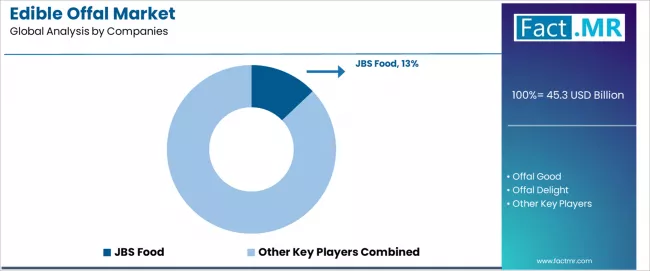
JBS Food leads the market with a 12.9% market share, offering comprehensive edible offal solutions with a focus on global meat processing expertise and advanced food safety capabilities for diverse culinary applications.

Offal Good provides specialized organ meat platforms with emphasis on quality assurance and food service distribution across regional markets. Offal Delight focuses on value-added offal products and comprehensive culinary applications serving international food service communities. Offal Cuisine delivers specialized preparation expertise with culinary application support and recipe development integration.

Alpha Field Products Co operates with a focus on Asian market specialization and traditional cuisine applications across diverse cultural food markets. Yoma International provides regional distribution expertise emphasizing Southeast Asian markets and ethnic cuisine support. Cenfood International Inc. specializes in processed offal products and international trade capabilities with emphasis on export market development.

Organic Meat Company delivers premium quality positioning to enhance sustainable sourcing and provide ethical production options. Sure Good Foods Ltd. and Offal Good Canada focus on regional market leadership and specialized distribution networks, emphasizing consistent quality and comprehensive food service support through dedicated supply chain strategies.

Key Players in the Edible Offal Market

  • JBS Food
  • Offal Good
  • Offal Delight
  • Offal Cuisine
  • Alpha Field Products Co
  • Yoma International
  • Cenfood International Inc.
  • Organic Meat Company
  • Sure Good Foods Ltd.
  • Offal Good Canada

Scope of the Report

Items Values
Quantitative Units (2025) USD 45.3 Billion
Application Processed (Sausage/Bagged, Frozen, Canned/Brine, Others), Fresh
Source Pig, Cattle, Poultry, Goat, Sheep, Horse, Others
Distribution Channel Food Service, Retail, Online Sales, Hypermarkets/Supermarkets, Wholesale Stores, Others
Regions Covered Asia Pacific, North America, Europe, Latin America, Middle East & Africa
Countries Covered China, India, USA, Spain, Brazil, Germany, Australia & New Zealand and 40+ countries
Key Companies Profiled JBS Food, Offal Good, Offal Delight, Offal Cuisine, Alpha Field Products Co, Yoma International, Cenfood International Inc., Organic Meat Company, Sure Good Foods Ltd., Offal Good Canada
Additional Attributes Dollar sales by application, source, distribution channel, regional demand trends, competitive landscape, food service operator preferences for specific offal products, integration with comprehensive culinary systems, innovations in processing technology development, food safety advancement, and sustainable meat utilization capabilities

Edible Offal Market by Segments

  • Application :

    • Processed
      • Sausage/Bagged
      • Frozen
      • Canned/Brine
      • Others
    • Fresh
  • Source :

    • Pig
    • Cattle
    • Poultry
    • Goat
    • Sheep
    • Horse
    • Others
  • Distribution Channel :

    • Food Service
    • Retail
    • Online Sales
    • Hypermarkets/Supermarkets
    • Wholesale Stores
    • Others
  • Region :

    • Asia Pacific
      • China
      • India
      • Japan
      • South Korea
      • ASEAN
      • Australia & New Zealand
      • Rest of Asia Pacific
    • North America
      • United States
      • Canada
      • Mexico
    • Europe
      • Germany
      • France
      • UK
      • Italy
      • Spain
      • Nordic
      • BENELUX
      • Rest of Europe
    • Latin America
      • Brazil
      • Argentina
      • Chile
      • Rest of Latin America
    • Middle East & Africa
      • Kingdom of Saudi Arabia
      • Other GCC Countries
      • Turkey
      • South Africa
      • Other African Countries
      • Rest of Middle East & Africa

Table of Content

  1. Executive Summary
    • Global Market Outlook
    • Demand to side Trends
    • Supply to side Trends
    • Technology Roadmap Analysis
    • Analysis and Recommendations
  2. Market Overview
    • Market Coverage / Taxonomy
    • Market Definition / Scope / Limitations
  3. Market Background
    • Market Dynamics
      • Drivers
      • Restraints
      • Opportunity
      • Trends
    • Scenario Forecast
      • Demand in Optimistic Scenario
      • Demand in Likely Scenario
      • Demand in Conservative Scenario
    • Opportunity Map Analysis
    • Product Life Cycle Analysis
    • Supply Chain Analysis
    • Investment Feasibility Matrix
    • Value Chain Analysis
    • PESTLE and Porter’s Analysis
    • Regulatory Landscape
    • Regional Parent Market Outlook
    • Production and Consumption Statistics
    • Import and Export Statistics
  4. Global Market Analysis 2020 to 2024 and Forecast, 2025 to 2035
    • Historical Market Size Value (USD Million) Analysis, 2020 to 2024
    • Current and Future Market Size Value (USD Million) Projections, 2025 to 2035
      • Y to o to Y Growth Trend Analysis
      • Absolute $ Opportunity Analysis
  5. Global Market Pricing Analysis 2020 to 2024 and Forecast 2025 to 2035
  6. Global Market Analysis 2020 to 2024 and Forecast 2025 to 2035, By Application
    • Introduction / Key Findings
    • Historical Market Size Value (USD Million) Analysis By Application, 2020 to 2024
    • Current and Future Market Size Value (USD Million) Analysis and Forecast By Application, 2025 to 2035
      • Processed
      • Fresh
    • Y to o to Y Growth Trend Analysis By Application, 2020 to 2024
    • Absolute $ Opportunity Analysis By Application, 2025 to 2035
  7. Global Market Analysis 2020 to 2024 and Forecast 2025 to 2035, By Source
    • Introduction / Key Findings
    • Historical Market Size Value (USD Million) Analysis By Source, 2020 to 2024
    • Current and Future Market Size Value (USD Million) Analysis and Forecast By Source, 2025 to 2035
      • Pig
      • Cattle
      • Poultry
      • Goat
      • Sheep
      • Horse
      • Others
    • Y to o to Y Growth Trend Analysis By Source, 2020 to 2024
    • Absolute $ Opportunity Analysis By Source, 2025 to 2035
  8. Global Market Analysis 2020 to 2024 and Forecast 2025 to 2035, By Distribution Channel
    • Introduction / Key Findings
    • Historical Market Size Value (USD Million) Analysis By Distribution Channel, 2020 to 2024
    • Current and Future Market Size Value (USD Million) Analysis and Forecast By Distribution Channel, 2025 to 2035
      • Food Service
      • Retail
      • Online Sales
      • Hypermarkets/Supermarkets
      • Wholesale Stores
      • Others
    • Y to o to Y Growth Trend Analysis By Distribution Channel, 2020 to 2024
    • Absolute $ Opportunity Analysis By Distribution Channel, 2025 to 2035
  9. Global Market Analysis 2020 to 2024 and Forecast 2025 to 2035, By Region
    • Introduction
    • Historical Market Size Value (USD Million) Analysis By Region, 2020 to 2024
    • Current Market Size Value (USD Million) Analysis and Forecast By Region, 2025 to 2035
      • North America
      • Latin America
      • Western Europe
      • Eastern Europe
      • East Asia
      • South Asia and Pacific
      • Middle East & Africa
    • Market Attractiveness Analysis By Region
  10. North America Market Analysis 2020 to 2024 and Forecast 2025 to 2035, By Country
    • Historical Market Size Value (USD Million) Trend Analysis By Market Taxonomy, 2020 to 2024
    • Market Size Value (USD Million) Forecast By Market Taxonomy, 2025 to 2035
      • By Country
        • USA
        • Canada
        • Mexico
      • By Application
      • By Source
      • By Distribution Channel
    • Market Attractiveness Analysis
      • By Country
      • By Application
      • By Source
      • By Distribution Channel
    • Key Takeaways
  11. Latin America Market Analysis 2020 to 2024 and Forecast 2025 to 2035, By Country
    • Historical Market Size Value (USD Million) Trend Analysis By Market Taxonomy, 2020 to 2024
    • Market Size Value (USD Million) Forecast By Market Taxonomy, 2025 to 2035
      • By Country
        • Brazil
        • Chile
        • Rest of Latin America
      • By Application
      • By Source
      • By Distribution Channel
    • Market Attractiveness Analysis
      • By Country
      • By Application
      • By Source
      • By Distribution Channel
    • Key Takeaways
  12. Western Europe Market Analysis 2020 to 2024 and Forecast 2025 to 2035, By Country
    • Historical Market Size Value (USD Million) Trend Analysis By Market Taxonomy, 2020 to 2024
    • Market Size Value (USD Million) Forecast By Market Taxonomy, 2025 to 2035
      • By Country
        • Germany
        • UK
        • Italy
        • Spain
        • France
        • Nordic
        • BENELUX
        • Rest of Western Europe
      • By Application
      • By Source
      • By Distribution Channel
    • Market Attractiveness Analysis
      • By Country
      • By Application
      • By Source
      • By Distribution Channel
    • Key Takeaways
  13. Eastern Europe Market Analysis 2020 to 2024 and Forecast 2025 to 2035, By Country
    • Historical Market Size Value (USD Million) Trend Analysis By Market Taxonomy, 2020 to 2024
    • Market Size Value (USD Million) Forecast By Market Taxonomy, 2025 to 2035
      • By Country
        • Russia
        • Poland
        • Hungary
        • Balkan & Baltic
        • Rest of Eastern Europe
      • By Application
      • By Source
      • By Distribution Channel
    • Market Attractiveness Analysis
      • By Country
      • By Application
      • By Source
      • By Distribution Channel
    • Key Takeaways
  14. East Asia Market Analysis 2020 to 2024 and Forecast 2025 to 2035, By Country
    • Historical Market Size Value (USD Million) Trend Analysis By Market Taxonomy, 2020 to 2024
    • Market Size Value (USD Million) Forecast By Market Taxonomy, 2025 to 2035
      • By Country
        • China
        • Japan
        • South Korea
      • By Application
      • By Source
      • By Distribution Channel
    • Market Attractiveness Analysis
      • By Country
      • By Application
      • By Source
      • By Distribution Channel
    • Key Takeaways
  15. South Asia and Pacific Market Analysis 2020 to 2024 and Forecast 2025 to 2035, By Country
    • Historical Market Size Value (USD Million) Trend Analysis By Market Taxonomy, 2020 to 2024
    • Market Size Value (USD Million) Forecast By Market Taxonomy, 2025 to 2035
      • By Country
        • India
        • ASEAN
        • Australia & New Zealand
        • Rest of South Asia and Pacific
      • By Application
      • By Source
      • By Distribution Channel
    • Market Attractiveness Analysis
      • By Country
      • By Application
      • By Source
      • By Distribution Channel
    • Key Takeaways
  16. Middle East & Africa Market Analysis 2020 to 2024 and Forecast 2025 to 2035, By Country
    • Historical Market Size Value (USD Million) Trend Analysis By Market Taxonomy, 2020 to 2024
    • Market Size Value (USD Million) Forecast By Market Taxonomy, 2025 to 2035
      • By Country
        • Kingdom of Saudi Arabia
        • Other GCC Countries
        • Turkiye
        • South Africa
        • Other African Union
        • Rest of Middle East & Africa
      • By Application
      • By Source
      • By Distribution Channel
    • Market Attractiveness Analysis
      • By Country
      • By Application
      • By Source
      • By Distribution Channel
    • Key Takeaways
  17. Key Countries Market Analysis
    • USA
      • Pricing Analysis
      • Market Share Analysis, 2024
        • By Application
        • By Source
        • By Distribution Channel
    • Canada
      • Pricing Analysis
      • Market Share Analysis, 2024
        • By Application
        • By Source
        • By Distribution Channel
    • Mexico
      • Pricing Analysis
      • Market Share Analysis, 2024
        • By Application
        • By Source
        • By Distribution Channel
    • Brazil
      • Pricing Analysis
      • Market Share Analysis, 2024
        • By Application
        • By Source
        • By Distribution Channel
    • Chile
      • Pricing Analysis
      • Market Share Analysis, 2024
        • By Application
        • By Source
        • By Distribution Channel
    • Germany
      • Pricing Analysis
      • Market Share Analysis, 2024
        • By Application
        • By Source
        • By Distribution Channel
    • UK
      • Pricing Analysis
      • Market Share Analysis, 2024
        • By Application
        • By Source
        • By Distribution Channel
    • Italy
      • Pricing Analysis
      • Market Share Analysis, 2024
        • By Application
        • By Source
        • By Distribution Channel
    • Spain
      • Pricing Analysis
      • Market Share Analysis, 2024
        • By Application
        • By Source
        • By Distribution Channel
    • France
      • Pricing Analysis
      • Market Share Analysis, 2024
        • By Application
        • By Source
        • By Distribution Channel
    • India
      • Pricing Analysis
      • Market Share Analysis, 2024
        • By Application
        • By Source
        • By Distribution Channel
    • ASEAN
      • Pricing Analysis
      • Market Share Analysis, 2024
        • By Application
        • By Source
        • By Distribution Channel
    • Australia & New Zealand
      • Pricing Analysis
      • Market Share Analysis, 2024
        • By Application
        • By Source
        • By Distribution Channel
    • China
      • Pricing Analysis
      • Market Share Analysis, 2024
        • By Application
        • By Source
        • By Distribution Channel
    • Japan
      • Pricing Analysis
      • Market Share Analysis, 2024
        • By Application
        • By Source
        • By Distribution Channel
    • South Korea
      • Pricing Analysis
      • Market Share Analysis, 2024
        • By Application
        • By Source
        • By Distribution Channel
    • Russia
      • Pricing Analysis
      • Market Share Analysis, 2024
        • By Application
        • By Source
        • By Distribution Channel
    • Poland
      • Pricing Analysis
      • Market Share Analysis, 2024
        • By Application
        • By Source
        • By Distribution Channel
    • Hungary
      • Pricing Analysis
      • Market Share Analysis, 2024
        • By Application
        • By Source
        • By Distribution Channel
    • Kingdom of Saudi Arabia
      • Pricing Analysis
      • Market Share Analysis, 2024
        • By Application
        • By Source
        • By Distribution Channel
    • Turkiye
      • Pricing Analysis
      • Market Share Analysis, 2024
        • By Application
        • By Source
        • By Distribution Channel
    • South Africa
      • Pricing Analysis
      • Market Share Analysis, 2024
        • By Application
        • By Source
        • By Distribution Channel
  18. Market Structure Analysis
    • Competition Dashboard
    • Competition Benchmarking
    • Market Share Analysis of Top Players
      • By Regional
      • By Application
      • By Source
      • By Distribution Channel
  19. Competition Analysis
    • Competition Deep Dive
      • JBS Food
        • Overview
        • Product Portfolio
        • Profitability by Market Segments (Product/Age /Sales Channel/Region)
        • Sales Footprint
        • Strategy Overview
          • Marketing Strategy
          • Product Strategy
          • Channel Strategy
      • Offal Good
      • Offal Delight
      • Offal Cuisine
      • Alpha Field Products Co
      • Yoma International
      • Cenfood International Inc.
      • Organic Meat Company
      • Sure Good Foods Ltd.
      • Offal Good Canada
  20. Assumptions & Acronyms Used
  21. Research Methodology

List Of Table

  • Table 1: Global Market Value (USD Million) Forecast by Region, 2020 to 2035
  • Table 2: Global Market Value (USD Million) Forecast by Application, 2020 to 2035
  • Table 3: Global Market Value (USD Million) Forecast by Source, 2020 to 2035
  • Table 4: Global Market Value (USD Million) Forecast by Distribution Channel, 2020 to 2035
  • Table 5: North America Market Value (USD Million) Forecast by Country, 2020 to 2035
  • Table 6: North America Market Value (USD Million) Forecast by Application, 2020 to 2035
  • Table 7: North America Market Value (USD Million) Forecast by Source, 2020 to 2035
  • Table 8: North America Market Value (USD Million) Forecast by Distribution Channel, 2020 to 2035
  • Table 9: Latin America Market Value (USD Million) Forecast by Country, 2020 to 2035
  • Table 10: Latin America Market Value (USD Million) Forecast by Application, 2020 to 2035
  • Table 11: Latin America Market Value (USD Million) Forecast by Source, 2020 to 2035
  • Table 12: Latin America Market Value (USD Million) Forecast by Distribution Channel, 2020 to 2035
  • Table 13: Western Europe Market Value (USD Million) Forecast by Country, 2020 to 2035
  • Table 14: Western Europe Market Value (USD Million) Forecast by Application, 2020 to 2035
  • Table 15: Western Europe Market Value (USD Million) Forecast by Source, 2020 to 2035
  • Table 16: Western Europe Market Value (USD Million) Forecast by Distribution Channel, 2020 to 2035
  • Table 17: Eastern Europe Market Value (USD Million) Forecast by Country, 2020 to 2035
  • Table 18: Eastern Europe Market Value (USD Million) Forecast by Application, 2020 to 2035
  • Table 19: Eastern Europe Market Value (USD Million) Forecast by Source, 2020 to 2035
  • Table 20: Eastern Europe Market Value (USD Million) Forecast by Distribution Channel, 2020 to 2035
  • Table 21: East Asia Market Value (USD Million) Forecast by Country, 2020 to 2035
  • Table 22: East Asia Market Value (USD Million) Forecast by Application, 2020 to 2035
  • Table 23: East Asia Market Value (USD Million) Forecast by Source, 2020 to 2035
  • Table 24: East Asia Market Value (USD Million) Forecast by Distribution Channel, 2020 to 2035
  • Table 25: South Asia and Pacific Market Value (USD Million) Forecast by Country, 2020 to 2035
  • Table 26: South Asia and Pacific Market Value (USD Million) Forecast by Application, 2020 to 2035
  • Table 27: South Asia and Pacific Market Value (USD Million) Forecast by Source, 2020 to 2035
  • Table 28: South Asia and Pacific Market Value (USD Million) Forecast by Distribution Channel, 2020 to 2035
  • Table 29: Middle East & Africa Market Value (USD Million) Forecast by Country, 2020 to 2035
  • Table 30: Middle East & Africa Market Value (USD Million) Forecast by Application, 2020 to 2035
  • Table 31: Middle East & Africa Market Value (USD Million) Forecast by Source, 2020 to 2035
  • Table 32: Middle East & Africa Market Value (USD Million) Forecast by Distribution Channel, 2020 to 2035

List Of Figures

  • Figure 1: Global Market Pricing Analysis
  • Figure 2: Global Market Value (USD Million) Forecast 2020 to 2035
  • Figure 3: Global Market Value Share and BPS Analysis by Application, 2025 and 2035
  • Figure 4: Global Market Y to o to Y Growth Comparison by Application, 2025 to 2035
  • Figure 5: Global Market Attractiveness Analysis by Application
  • Figure 6: Global Market Value Share and BPS Analysis by Source, 2025 and 2035
  • Figure 7: Global Market Y to o to Y Growth Comparison by Source, 2025 to 2035
  • Figure 8: Global Market Attractiveness Analysis by Source
  • Figure 9: Global Market Value Share and BPS Analysis by Distribution Channel, 2025 and 2035
  • Figure 10: Global Market Y to o to Y Growth Comparison by Distribution Channel, 2025 to 2035
  • Figure 11: Global Market Attractiveness Analysis by Distribution Channel
  • Figure 12: Global Market Value (USD Million) Share and BPS Analysis by Region, 2025 and 2035
  • Figure 13: Global Market Y to o to Y Growth Comparison by Region, 2025 to 2035
  • Figure 14: Global Market Attractiveness Analysis by Region
  • Figure 15: North America Market Incremental Dollar Opportunity, 2025 to 2035
  • Figure 16: Latin America Market Incremental Dollar Opportunity, 2025 to 2035
  • Figure 17: Western Europe Market Incremental Dollar Opportunity, 2025 to 2035
  • Figure 18: Eastern Europe Market Incremental Dollar Opportunity, 2025 to 2035
  • Figure 19: East Asia Market Incremental Dollar Opportunity, 2025 to 2035
  • Figure 20: South Asia and Pacific Market Incremental Dollar Opportunity, 2025 to 2035
  • Figure 21: Middle East & Africa Market Incremental Dollar Opportunity, 2025 to 2035
  • Figure 22: North America Market Value Share and BPS Analysis by Country, 2025 and 2035
  • Figure 23: North America Market Value Share and BPS Analysis by Application, 2025 and 2035
  • Figure 24: North America Market Y to o to Y Growth Comparison by Application, 2025 to 2035
  • Figure 25: North America Market Attractiveness Analysis by Application
  • Figure 26: North America Market Value Share and BPS Analysis by Source, 2025 and 2035
  • Figure 27: North America Market Y to o to Y Growth Comparison by Source, 2025 to 2035
  • Figure 28: North America Market Attractiveness Analysis by Source
  • Figure 29: North America Market Value Share and BPS Analysis by Distribution Channel, 2025 and 2035
  • Figure 30: North America Market Y to o to Y Growth Comparison by Distribution Channel, 2025 to 2035
  • Figure 31: North America Market Attractiveness Analysis by Distribution Channel
  • Figure 32: Latin America Market Value Share and BPS Analysis by Country, 2025 and 2035
  • Figure 33: Latin America Market Value Share and BPS Analysis by Application, 2025 and 2035
  • Figure 34: Latin America Market Y to o to Y Growth Comparison by Application, 2025 to 2035
  • Figure 35: Latin America Market Attractiveness Analysis by Application
  • Figure 36: Latin America Market Value Share and BPS Analysis by Source, 2025 and 2035
  • Figure 37: Latin America Market Y to o to Y Growth Comparison by Source, 2025 to 2035
  • Figure 38: Latin America Market Attractiveness Analysis by Source
  • Figure 39: Latin America Market Value Share and BPS Analysis by Distribution Channel, 2025 and 2035
  • Figure 40: Latin America Market Y to o to Y Growth Comparison by Distribution Channel, 2025 to 2035
  • Figure 41: Latin America Market Attractiveness Analysis by Distribution Channel
  • Figure 42: Western Europe Market Value Share and BPS Analysis by Country, 2025 and 2035
  • Figure 43: Western Europe Market Value Share and BPS Analysis by Application, 2025 and 2035
  • Figure 44: Western Europe Market Y to o to Y Growth Comparison by Application, 2025 to 2035
  • Figure 45: Western Europe Market Attractiveness Analysis by Application
  • Figure 46: Western Europe Market Value Share and BPS Analysis by Source, 2025 and 2035
  • Figure 47: Western Europe Market Y to o to Y Growth Comparison by Source, 2025 to 2035
  • Figure 48: Western Europe Market Attractiveness Analysis by Source
  • Figure 49: Western Europe Market Value Share and BPS Analysis by Distribution Channel, 2025 and 2035
  • Figure 50: Western Europe Market Y to o to Y Growth Comparison by Distribution Channel, 2025 to 2035
  • Figure 51: Western Europe Market Attractiveness Analysis by Distribution Channel
  • Figure 52: Eastern Europe Market Value Share and BPS Analysis by Country, 2025 and 2035
  • Figure 53: Eastern Europe Market Value Share and BPS Analysis by Application, 2025 and 2035
  • Figure 54: Eastern Europe Market Y to o to Y Growth Comparison by Application, 2025 to 2035
  • Figure 55: Eastern Europe Market Attractiveness Analysis by Application
  • Figure 56: Eastern Europe Market Value Share and BPS Analysis by Source, 2025 and 2035
  • Figure 57: Eastern Europe Market Y to o to Y Growth Comparison by Source, 2025 to 2035
  • Figure 58: Eastern Europe Market Attractiveness Analysis by Source
  • Figure 59: Eastern Europe Market Value Share and BPS Analysis by Distribution Channel, 2025 and 2035
  • Figure 60: Eastern Europe Market Y to o to Y Growth Comparison by Distribution Channel, 2025 to 2035
  • Figure 61: Eastern Europe Market Attractiveness Analysis by Distribution Channel
  • Figure 62: East Asia Market Value Share and BPS Analysis by Country, 2025 and 2035
  • Figure 63: East Asia Market Value Share and BPS Analysis by Application, 2025 and 2035
  • Figure 64: East Asia Market Y to o to Y Growth Comparison by Application, 2025 to 2035
  • Figure 65: East Asia Market Attractiveness Analysis by Application
  • Figure 66: East Asia Market Value Share and BPS Analysis by Source, 2025 and 2035
  • Figure 67: East Asia Market Y to o to Y Growth Comparison by Source, 2025 to 2035
  • Figure 68: East Asia Market Attractiveness Analysis by Source
  • Figure 69: East Asia Market Value Share and BPS Analysis by Distribution Channel, 2025 and 2035
  • Figure 70: East Asia Market Y to o to Y Growth Comparison by Distribution Channel, 2025 to 2035
  • Figure 71: East Asia Market Attractiveness Analysis by Distribution Channel
  • Figure 72: South Asia and Pacific Market Value Share and BPS Analysis by Country, 2025 and 2035
  • Figure 73: South Asia and Pacific Market Value Share and BPS Analysis by Application, 2025 and 2035
  • Figure 74: South Asia and Pacific Market Y to o to Y Growth Comparison by Application, 2025 to 2035
  • Figure 75: South Asia and Pacific Market Attractiveness Analysis by Application
  • Figure 76: South Asia and Pacific Market Value Share and BPS Analysis by Source, 2025 and 2035
  • Figure 77: South Asia and Pacific Market Y to o to Y Growth Comparison by Source, 2025 to 2035
  • Figure 78: South Asia and Pacific Market Attractiveness Analysis by Source
  • Figure 79: South Asia and Pacific Market Value Share and BPS Analysis by Distribution Channel, 2025 and 2035
  • Figure 80: South Asia and Pacific Market Y to o to Y Growth Comparison by Distribution Channel, 2025 to 2035
  • Figure 81: South Asia and Pacific Market Attractiveness Analysis by Distribution Channel
  • Figure 82: Middle East & Africa Market Value Share and BPS Analysis by Country, 2025 and 2035
  • Figure 83: Middle East & Africa Market Value Share and BPS Analysis by Application, 2025 and 2035
  • Figure 84: Middle East & Africa Market Y to o to Y Growth Comparison by Application, 2025 to 2035
  • Figure 85: Middle East & Africa Market Attractiveness Analysis by Application
  • Figure 86: Middle East & Africa Market Value Share and BPS Analysis by Source, 2025 and 2035
  • Figure 87: Middle East & Africa Market Y to o to Y Growth Comparison by Source, 2025 to 2035
  • Figure 88: Middle East & Africa Market Attractiveness Analysis by Source
  • Figure 89: Middle East & Africa Market Value Share and BPS Analysis by Distribution Channel, 2025 and 2035
  • Figure 90: Middle East & Africa Market Y to o to Y Growth Comparison by Distribution Channel, 2025 to 2035
  • Figure 91: Middle East & Africa Market Attractiveness Analysis by Distribution Channel
  • Figure 92: Global Market - Tier Structure Analysis
  • Figure 93: Global Market - Company Share Analysis

- FAQs -

How big is the edible offal market in 2025?

The global edible offal market is estimated to be valued at USD 45.3 billion in 2025.

What will be the size of edible offal market in 2035?

The market size for the edible offal market is projected to reach USD 70.8 billion by 2035.

How much will be the edible offal market growth between 2025 and 2035?

The edible offal market is expected to grow at a 4.6% CAGR between 2025 and 2035.

What are the key product types in the edible offal market?

The key product types in edible offal market are processed and fresh.

Which source segment to contribute significant share in the edible offal market in 2025?

In terms of source, pig segment to command 43.1% share in the edible offal market in 2025.

Edible Offal Market