Shrimp Market

Shrimp Market Size and Share Forecast Outlook 2026 to 2036

Shrimp market is projected to grow from USD 79.2 billion in 2026 to USD 137.9 billion by 2036, at a CAGR of 5.7%. L. vannamei will dominate with a 44.6% market share, while aquaculture will lead the source segment with a 61.2% share.

Shrimp Market Forecast and Outlook 2026 to 2036

The global shrimp market is projected to grow from USD 79.2 billion in 2026 to USD 137.9 billion by 2036. This translates into a total growth of 74.1%, with the market forecast to expand at a CAGR of 5.7% between 2026 and 2036.

Key Takeaways from the Shrimp Market

  • Shrimp Market Value (2026): USD 79.2 billion
  • Shrimp Market Forecast Value (2036): USD 137.9 billion
  • Shrimp Market Forecast CAGR (2026 to 2036): 5.7%
  • Leading Species in Shrimp Market: L. vannamei (44.6%)
  • Leading Source in Shrimp Market: Aquaculture (61.2%)
  • Leading Form in Shrimp Market: Green/Head-on (25.0%)
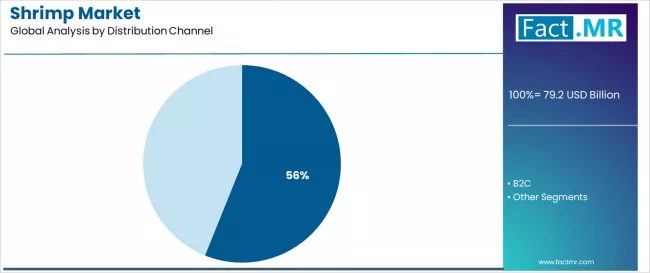
  • Leading Distribution Channel in Shrimp Market: B2B (56.1%)
  • Key Growth Regions in Shrimp Market: Asia Pacific, North America, and Europe
  • Key Players in Shrimp Market: Thai Union Group PCL, Clearwater Seafoods, Avanti Feeds Limited, High Liner Foods, Surapon Foods Public Company Limited, Mazzetta Company LLC, Aqua Star, Nordic Seafood A/S, The Waterbase Limited, Wild Ocean Direct
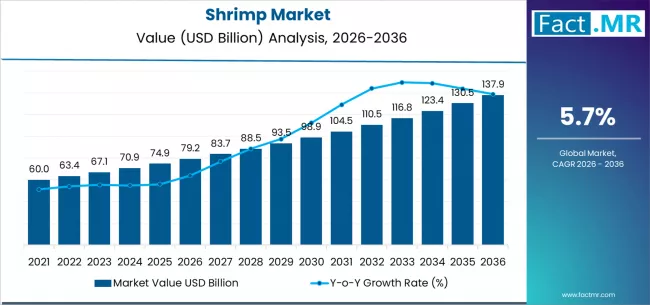
Shrimp Market Market Value Analysis

The market is expected to grow by over 1.7X during this period, supported by exponential demand for sustainable seafood protein, rising aquaculture production capabilities, and growing emphasis on food security innovation and marine resource optimization across global seafood consumption operations.

The shrimp market is positioned for substantial expansion, driven by increasing recognition of shrimp as a premium protein source, growing consumer demand for healthy and sustainable seafood options, and rising adoption of advanced aquaculture technologies across shrimp farming operations globally.

The market demonstrates robust fundamentals supported by expanding coastal aquaculture infrastructure, seafood industry professionals' focus on sustainable harvesting protocols, and rising recognition of shrimp products as critical food components in achieving enhanced nutritional outcomes, culinary versatility capabilities, and supply chain effectiveness within modern seafood distribution architectures across diverse consumption applications.

Market growth is underpinned by technological innovations in aquaculture procedures, particularly advanced farming techniques and cold chain logistics system integration, which offer enhanced production efficiency, improved product quality, and superior compatibility with comprehensive food safety protocols prevalent in contemporary seafood operations.

Seafood distributors and retailers increasingly prioritize shrimp products that deliver optimal balance between taste quality, nutritional value, and cost-effectiveness while adhering to increasingly stringent sustainability standards and food safety requirements across global seafood markets.

Shrimp Market

Metric Value
Estimated Value (2026E) USD 79.2 billion
Forecast Value (2036F) USD 137.9 billion
Forecast CAGR (2026 to 2036) 5.7%

Category

Category Segments
Species Litopenaeus vannamei; Trachypenaeus curvirostris; Pleoticus muelleri; Penaeus monodon; Acetes japonicus; Pandalus borealis; Penaeus chinensis; Others
Source Aquaculture (Intensive Farming; Semi-intensive; Extensive; Recirculating Systems); Wild
Form Green/Head-on; Green/Head-off; Peeled; Cooked; Breaded; Others
Distribution Channel B2B (Foodservice; HoReCa; Institutional Buyers); B2C (Hypermarkets and Supermarkets; Convenience Stores; Specialty Stores; Online; Others)
Region Asia Pacific; North America; Europe; Latin America; Middle East & Africa

Segmental Analysis

Which Species of Shrimp is the Most Widely Consumed?
Shrimp Market Analysis By Species

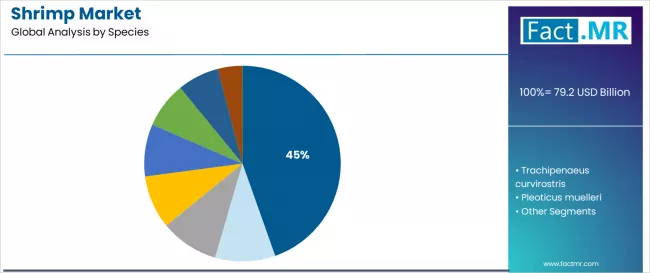
The L. vannamei species is projected to account for 44.6% of the shrimp market in 2026, reaffirming its position as the category's dominant species specification. Aquaculture producers increasingly recognize the optimal balance of farming efficiency and commercial viability offered by L. vannamei (Pacific white shrimp) for intensive production applications, particularly in coastal farming operations and inland aquaculture environments. This species category addresses both production scalability requirements and market acceptance demands while providing reliable growth outcomes across diverse farming operations.

What Impels Demand for Aquaculture-sourced Shrimp?
Shrimp Market Analysis By Source

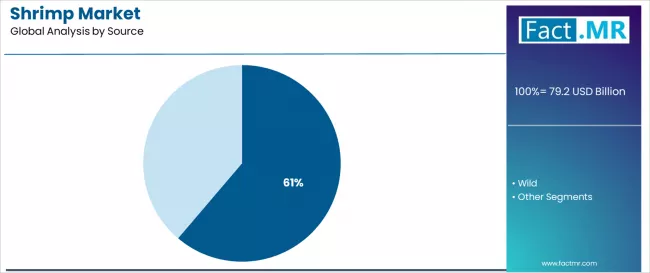
Aquaculture source is projected to represent 61.2% of shrimp market supply in 2026, underscoring its role as the primary production method driving market growth and supply consistency.

Seafood distributors recognize that aquaculture production, including diverse farming intensities, varied production systems, and comprehensive quality management protocols, provides the largest addressable supply that wild harvest cannot match in volume scalability and year-round availability. Aquaculture-sourced shrimp utilized in global markets offers enhanced supply reliability and consistent product specifications essential for serving commercial distribution and retail requirements.

Which Shrimp Form is expected to be Highly Demanded?
Shrimp Market Analysis By Form

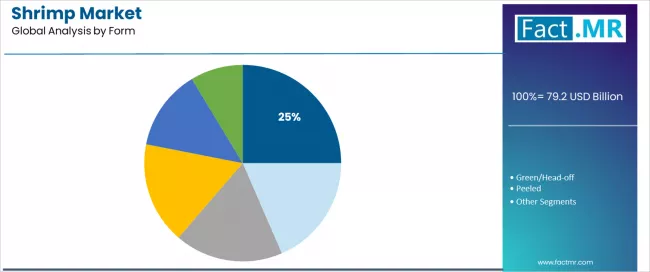
Green/head-on shrimp is projected to account for 25.0% of the shrimp market in 2026, establishing its position as the leading product format segment. Seafood distributors increasingly recognize that green/head-on products, encompassing whole fresh shrimp with minimal processing, represent the most commercially significant and quality-preserving format requiring specialized cold chain handling due to freshness perception and culinary versatility. This form type addresses both premium restaurant requirements and traditional market demands while delivering critical freshness outcomes across varied distribution channels.

Why does B2B Distribution Channel Command Majority Market Share?
Shrimp Market Analysis By Distribution Channel

B2B distribution channel is projected to represent 56.1% of shrimp market demand in 2026, underscoring its role as the primary distribution category driving market volume and commercial transactions. Seafood distributors recognize that B2B requirements, including diverse foodservice operations, varied institutional buyers, and comprehensive HoReCa channels, provide the largest addressable market that retail consumer channels cannot match in transaction volume and business scale. B2B distribution utilized in shrimp markets offers enhanced operational efficiency and bulk procurement compatibility essential for serving restaurant operations and institutional food requirements.

What are the Drivers, Restraints, and Key Trends of the Shrimp Market?

The shrimp market is driven by rising consumer awareness of seafood’s nutritional benefits and increasing demand for sustainable, high-quality protein sources. Growth in global seafood consumption and expanding middle-class populations are supporting higher shrimp demand across retail and foodservice channels. Technological progress in aquaculture is also improving productivity and supply reliability.

Market restraints include disease management challenges in intensive aquaculture systems, which can affect survival rates and production stability. Environmental concerns related to coastal farming practices and regulatory scrutiny are increasing compliance requirements. Volatility in wild-caught shrimp availability further adds to supply uncertainty and pricing fluctuations.

Key trends include growing adoption of advanced aquaculture technologies, such as real-time water quality monitoring, automated feeding systems, and strengthened biosecurity protocols to improve yields and reduce disease risk. Integration of sustainability certifications and digital traceability platforms is also accelerating, enabling farm-to-table transparency, enhancing consumer trust, and supporting responsible sourcing across global shrimp supply chains.

Analysis of the Shrimp Market by Key Countries
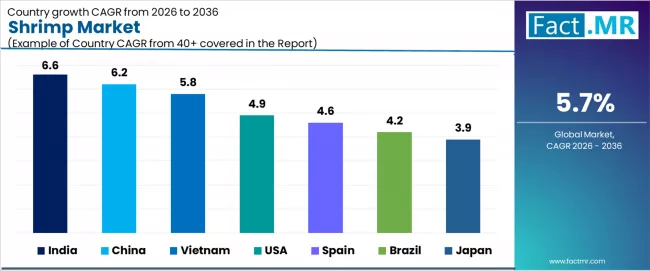
Shrimp Market Cagr Analysis By Country

Country CAGR (2026-2036)
India 6.6%
China 6.2%
Vietnam 5.8%
USA 4.9%
Spain 4.6%
Brazil 4.2%
Japan 3.9%

How Does India Demonstrate Exceptional Market Potential with Expanding Aquaculture Production?

India’s shrimp market is expanding at a CAGR of 6.6% through 2036, reflecting how deeply aquaculture has become embedded in the country’s export economy and coastal livelihoods. Shrimp farming has evolved from small-scale coastal activity into a structured production system supported by hatcheries, feed suppliers, processors, and exporters. India’s long coastline, combined with improving access to aeration systems, biosecure ponds, and disease management practices, continues to support expansion across both intensive and semi-intensive farming models.

Policy support has played a central role in this growth. Government-led aquaculture development programs and export promotion initiatives have encouraged investments in farm infrastructure, processing capacity, and cold chain logistics. As international buyers increasingly prioritise sustainability and traceability, Indian producers are adopting certified farming practices to secure long-term market access. Competitive labour costs and improving technical skills are reinforcing India’s position as a reliable supplier to global shrimp markets.

What Makes China Demonstrate Market Leadership with a Massive Coastal Farming Ecosystem?

China’s shrimp market is growing at a CAGR of 6.2% through 2036, supported by unmatched aquaculture scale and a rapidly expanding domestic consumer base. While export volumes remain important, growth is increasingly driven by internal demand, as rising incomes and health awareness are reshaping seafood consumption patterns. Large coastal farming zones, complemented by inland aquaculture systems, enable year-round production and consistent supply.

Significant investment in cold chain infrastructure and food safety systems is improving quality consistency across retail and foodservice channels. Traceability platforms, advanced storage facilities, and modern processing plants are strengthening consumer confidence in domestic shrimp products. These developments allow Chinese producers to move beyond volume-driven strategies toward higher-value, premium positioning in both domestic and export markets.

Why Does Vietnam Maintain Export Production Leadership?

Vietnam’s shrimp market is projected to grow at a CAGR of 5.8% through 2036, anchored firmly in its export-oriented production model. Shrimp farming in Vietnam is closely aligned with international buyer requirements, with strong emphasis on certification, traceability, and processing efficiency. Cooperative farming structures and centralized processing hubs enable consistent quality control across export consignments.

Government backing for sustainable aquaculture has further strengthened Vietnam’s competitiveness. Certified farming practices, environmental compliance, and buyer-aligned production standards are becoming central to technology adoption decisions. As global retailers tighten sourcing requirements, Vietnam’s experience in meeting international benchmarks continues to support its role as a key shrimp exporter.

How does the USA Maintain Premium Consumption Leadership?
Shrimp Market Country Value Analysis

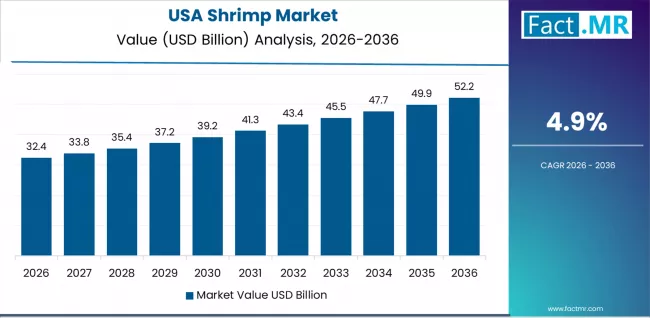
The USA’s shrimp market is expanding at a CAGR of 4.9% through 2036, driven not by production but by sophisticated consumption patterns. Shrimp remains one of the most consumed seafood products in the country, with demand concentrated in frozen, ready-to-cook, and value-added formats. Strong retail penetration and foodservice integration ensure consistent availability across regions.

Consumers prioritise convenience, food safety, and sustainability credentials, supporting demand for premium products that offer predictable quality. Well-established cold chain systems and a willingness to pay for branded and responsibly sourced seafood underpin steady growth, particularly in urban and suburban markets.

What drives Spain’s Shrimp Market Growth through Culinary Demand?

Spain’s shrimp market is growing at a CAGR of 4.6% through 2036, shaped by the country’s strong seafood culture and tourism-driven foodservice demand. Shrimp is deeply embedded in Mediterranean cuisine, supporting consistent consumption across restaurants, hospitality venues, and household cooking.

Demand favours quality and authenticity, with buyers seeking products that align with traditional preparation methods. This culinary emphasis sustains demand for both fresh and frozen shrimp formats, while tourism growth reinforces year-round consumption across coastal and urban centres.

How Does Brazil Demonstrate Aquaculture Modernisation Leadership?

Brazil’s shrimp market is expanding at a CAGR of 4.2% through 2036, reflecting gradual but steady modernisation of coastal aquaculture systems. Production growth is concentrated in northeastern regions, where favourable climatic conditions support intensive farming expansion.

Rising domestic consumption, supported by a growing middle class, is encouraging producers to invest in efficiency and scale. While exports remain secondary, improvements in farming practices and infrastructure are strengthening Brazil’s ability to serve both domestic and international markets over time.

What Drives Japan’s Shrimp Market Growth under Premium Quality Standards?
Shrimp Market Japan Market Share Analysis By Species

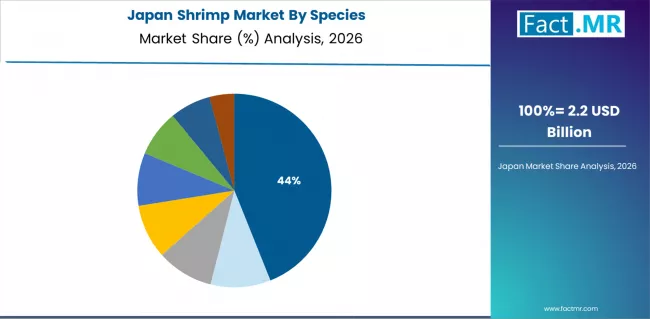
Japan’s shrimp market is projected to grow at a CAGR of 3.9% through 2036, shaped by its long-standing seafood consumption culture and strict quality expectations. Shrimp demand remains stable across retail and foodservice channels, supported by aging demographics and consistent protein consumption patterns.

Japanese buyers prioritise freshness, handling precision, and reliability over price-driven expansion. This preference sustains demand for premium products supported by rigorous quality assurance and cold chain discipline, reinforcing steady, quality-led market growth rather than rapid volume expansion.

Competitive Landscape of the Shrimp Market
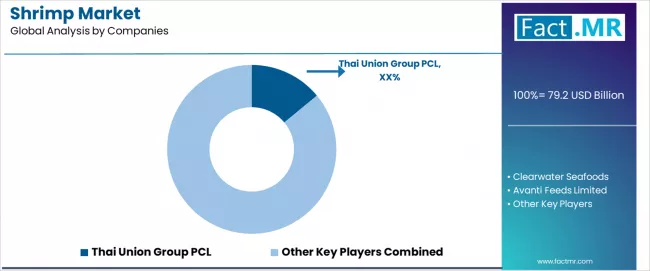
Shrimp Market Analysis By Company

The shrimp market is highly competitive, with participation from integrated aquaculture producers, seafood processors, and global distribution companies. Competition is driven by product quality, supply reliability, traceability, and sustainability certification rather than price alone. Investments in farming technology, cold chain infrastructure, and compliance with international food safety standards shape competitive positioning.

Thai Union Group PCL holds a leading position, supported by vertically integrated operations spanning farming, processing, and global distribution. Clearwater Seafoods competes through premium positioning and certified sustainable harvesting practices, while Avanti Feeds Limited strengthens its role through aquaculture feed production and integrated shrimp farming solutions. High Liner Foods maintains a strong presence through value-added shrimp products and established retail distribution.

Other participants such as Surapon Foods, Mazzetta Company, Aqua Star, and Nordic Seafood A/S compete through processed product specialization, foodservice partnerships, and regional distribution strength. The Waterbase Limited and Wild Ocean Direct focus on traceable and sustainability-led sourcing models. Overall competitiveness favors companies combining integrated supply chains, strong quality assurance systems, and sustainability-aligned sourcing to meet evolving global seafood demand.

Key Players in the Shrimp Market

  • Thai Union Group PCL
  • Clearwater Seafoods
  • Avanti Feeds Limited
  • High Liner Foods
  • Surapon Foods Public Company Limited
  • Mazzetta Company LLC
  • Aqua Star
  • Nordic Seafood A/S
  • The Waterbase Limited
  • Wild Ocean Direct

Scope of the Report

Items Values
Quantitative Units (2026) USD 79.2 Billion
Species L. vannamei, Trachipenaeus curvirostris, Pleoticus muelleri, P. monodon, Acetes japonicus, Pandalus borealis, P. chinensis, Others
Source Aquaculture (Intensive farming, Semi-intensive, Extensive, Recirculating systems), Wild
Form Green/Head-on, Green/Head-off, Peeled, Cooked, Breaded, Others
Distribution Channel B2B (Foodservice, HoReCa, Institutional buyers), B2C (Hypermarkets and Supermarkets, Convenience Stores, Specialty Stores, Online, Others)
Regions Covered Asia Pacific, North America, Europe, Latin America, MEA
Countries Covered USA, Spain, Japan, India, China, Vietnam, Brazil and 40+ countries
Key Companies Profiled Thai Union Group PCL, Clearwater Seafoods, Avanti Feeds Limited, High Liner Foods, Surapon Foods Public Company Limited, Mazzetta Company LLC, Aqua Star, Nordic Seafood A/S, The Waterbase Limited, Wild Ocean Direct
Additional Attributes Dollar sales by species, source, form, distribution channel, regional demand trends, competitive landscape, consumer preferences for specific shrimp products, integration with comprehensive cold chain systems, innovations in aquaculture technology development, sustainability certification advancement, and supply chain traceability optimization capabilities

Shrimp Market by Segments

  • Species :

    • L. vannamei
    • Trachipenaeus curvirostris
    • Pleoticus muelleri
    • P. monodon
    • Acetes japonicus
    • Pandalus borealis
    • P. chinensis
    • Others
  • Source :

    • Aquaculture
      • Intensive farming
      • Semi-intensive
      • Extensive
      • Recirculating systems
    • Wild
  • Form :

    • Green/Head-on
    • Green/Head-off
    • Peeled
    • Cooked
    • Breaded
    • Others
  • Distribution Channel :

    • B2B
      • Foodservice
      • HoReCa
      • Institutional buyers
    • B2C
      • Hypermarkets and Supermarkets
      • Convenience Stores
      • Specialty Stores
      • Online
      • Others
  • Region :

    • Asia Pacific

      • China
      • India
      • Japan
      • South Korea
      • ASEAN
      • Australia & New Zealand
      • Rest of Asia Pacific
    • North America

      • United States
      • Canada
      • Mexico
    • Europe

      • Germany
      • France
      • United Kingdom
      • Italy
      • Spain
      • Nordic
      • BENELUX
      • Rest of Europe
    • Latin America

      • Brazil
      • Argentina
      • Chile
      • Rest of Latin America
    • MEA

      • Saudi Arabia
      • Other GCC Countries
      • Turkey
      • South Africa
      • Other African Countries
      • Rest of MEA

Table of Content

  1. Executive Summary
    • Global Market Outlook
    • Demand to side Trends
    • Supply to side Trends
    • Technology Roadmap Analysis
    • Analysis and Recommendations
  2. Market Overview
    • Market Coverage / Taxonomy
    • Market Definition / Scope / Limitations
  3. Market Background
    • Market Dynamics
      • Drivers
      • Restraints
      • Opportunity
      • Trends
    • Scenario Forecast
      • Demand in Optimistic Scenario
      • Demand in Likely Scenario
      • Demand in Conservative Scenario
    • Opportunity Map Analysis
    • Product Life Cycle Analysis
    • Supply Chain Analysis
    • Investment Feasibility Matrix
    • Value Chain Analysis
    • PESTLE and Porter’s Analysis
    • Regulatory Landscape
    • Regional Parent Market Outlook
    • Production and Consumption Statistics
    • Import and Export Statistics
  4. Global Market Analysis 2021 to 2025 and Forecast, 2026 to 2036
    • Historical Market Size Value (USD Million) Analysis, 2021 to 2025
    • Current and Future Market Size Value (USD Million) Projections, 2026 to 2036
      • Y to o to Y Growth Trend Analysis
      • Absolute $ Opportunity Analysis
  5. Global Market Pricing Analysis 2021 to 2025 and Forecast 2026 to 2036
  6. Global Market Analysis 2021 to 2025 and Forecast 2026 to 2036, By Species
    • Introduction / Key Findings
    • Historical Market Size Value (USD Million) Analysis By Species, 2021 to 2025
    • Current and Future Market Size Value (USD Million) Analysis and Forecast By Species, 2026 to 2036
      • L. vannamei
      • Trachipenaeus curvirostris
      • Pleoticus muelleri
      • P. monodon
      • Acetes japonicus
      • Pandalus borealis
      • P. chinensis
      • Others
    • Y to o to Y Growth Trend Analysis By Species, 2021 to 2025
    • Absolute $ Opportunity Analysis By Species, 2026 to 2036
  7. Global Market Analysis 2021 to 2025 and Forecast 2026 to 2036, By Source
    • Introduction / Key Findings
    • Historical Market Size Value (USD Million) Analysis By Source, 2021 to 2025
    • Current and Future Market Size Value (USD Million) Analysis and Forecast By Source, 2026 to 2036
      • Aquaculture
      • Wild
    • Y to o to Y Growth Trend Analysis By Source, 2021 to 2025
    • Absolute $ Opportunity Analysis By Source, 2026 to 2036
  8. Global Market Analysis 2021 to 2025 and Forecast 2026 to 2036, By Form
    • Introduction / Key Findings
    • Historical Market Size Value (USD Million) Analysis By Form, 2021 to 2025
    • Current and Future Market Size Value (USD Million) Analysis and Forecast By Form, 2026 to 2036
      • Green/Head-on
      • Green/Head-off
      • Peeled
      • Cooked
      • Breaded
      • Others
    • Y to o to Y Growth Trend Analysis By Form, 2021 to 2025
    • Absolute $ Opportunity Analysis By Form, 2026 to 2036
  9. Global Market Analysis 2021 to 2025 and Forecast 2026 to 2036, By Distribution Channel
    • Introduction / Key Findings
    • Historical Market Size Value (USD Million) Analysis By Distribution Channel, 2021 to 2025
    • Current and Future Market Size Value (USD Million) Analysis and Forecast By Distribution Channel, 2026 to 2036
      • B2B
      • B2C
    • Y to o to Y Growth Trend Analysis By Distribution Channel, 2021 to 2025
    • Absolute $ Opportunity Analysis By Distribution Channel, 2026 to 2036
  10. Global Market Analysis 2021 to 2025 and Forecast 2026 to 2036, By Region
    • Introduction
    • Historical Market Size Value (USD Million) Analysis By Region, 2021 to 2025
    • Current Market Size Value (USD Million) Analysis and Forecast By Region, 2026 to 2036
      • North America
      • Latin America
      • Western Europe
      • Eastern Europe
      • East Asia
      • South Asia and Pacific
      • Middle East & Africa
    • Market Attractiveness Analysis By Region
  11. North America Market Analysis 2021 to 2025 and Forecast 2026 to 2036, By Country
    • Historical Market Size Value (USD Million) Trend Analysis By Market Taxonomy, 2021 to 2025
    • Market Size Value (USD Million) Forecast By Market Taxonomy, 2026 to 2036
      • By Country
        • USA
        • Canada
        • Mexico
      • By Species
      • By Source
      • By Form
      • By Distribution Channel
    • Market Attractiveness Analysis
      • By Country
      • By Species
      • By Source
      • By Form
      • By Distribution Channel
    • Key Takeaways
  12. Latin America Market Analysis 2021 to 2025 and Forecast 2026 to 2036, By Country
    • Historical Market Size Value (USD Million) Trend Analysis By Market Taxonomy, 2021 to 2025
    • Market Size Value (USD Million) Forecast By Market Taxonomy, 2026 to 2036
      • By Country
        • Brazil
        • Chile
        • Rest of Latin America
      • By Species
      • By Source
      • By Form
      • By Distribution Channel
    • Market Attractiveness Analysis
      • By Country
      • By Species
      • By Source
      • By Form
      • By Distribution Channel
    • Key Takeaways
  13. Western Europe Market Analysis 2021 to 2025 and Forecast 2026 to 2036, By Country
    • Historical Market Size Value (USD Million) Trend Analysis By Market Taxonomy, 2021 to 2025
    • Market Size Value (USD Million) Forecast By Market Taxonomy, 2026 to 2036
      • By Country
        • Germany
        • UK
        • Italy
        • Spain
        • France
        • Nordic
        • BENELUX
        • Rest of Western Europe
      • By Species
      • By Source
      • By Form
      • By Distribution Channel
    • Market Attractiveness Analysis
      • By Country
      • By Species
      • By Source
      • By Form
      • By Distribution Channel
    • Key Takeaways
  14. Eastern Europe Market Analysis 2021 to 2025 and Forecast 2026 to 2036, By Country
    • Historical Market Size Value (USD Million) Trend Analysis By Market Taxonomy, 2021 to 2025
    • Market Size Value (USD Million) Forecast By Market Taxonomy, 2026 to 2036
      • By Country
        • Russia
        • Poland
        • Hungary
        • Balkan & Baltic
        • Rest of Eastern Europe
      • By Species
      • By Source
      • By Form
      • By Distribution Channel
    • Market Attractiveness Analysis
      • By Country
      • By Species
      • By Source
      • By Form
      • By Distribution Channel
    • Key Takeaways
  15. East Asia Market Analysis 2021 to 2025 and Forecast 2026 to 2036, By Country
    • Historical Market Size Value (USD Million) Trend Analysis By Market Taxonomy, 2021 to 2025
    • Market Size Value (USD Million) Forecast By Market Taxonomy, 2026 to 2036
      • By Country
        • China
        • Japan
        • South Korea
      • By Species
      • By Source
      • By Form
      • By Distribution Channel
    • Market Attractiveness Analysis
      • By Country
      • By Species
      • By Source
      • By Form
      • By Distribution Channel
    • Key Takeaways
  16. South Asia and Pacific Market Analysis 2021 to 2025 and Forecast 2026 to 2036, By Country
    • Historical Market Size Value (USD Million) Trend Analysis By Market Taxonomy, 2021 to 2025
    • Market Size Value (USD Million) Forecast By Market Taxonomy, 2026 to 2036
      • By Country
        • India
        • ASEAN
        • Australia & New Zealand
        • Rest of South Asia and Pacific
      • By Species
      • By Source
      • By Form
      • By Distribution Channel
    • Market Attractiveness Analysis
      • By Country
      • By Species
      • By Source
      • By Form
      • By Distribution Channel
    • Key Takeaways
  17. Middle East & Africa Market Analysis 2021 to 2025 and Forecast 2026 to 2036, By Country
    • Historical Market Size Value (USD Million) Trend Analysis By Market Taxonomy, 2021 to 2025
    • Market Size Value (USD Million) Forecast By Market Taxonomy, 2026 to 2036
      • By Country
        • Kingdom of Saudi Arabia
        • Other GCC Countries
        • Turkiye
        • South Africa
        • Other African Union
        • Rest of Middle East & Africa
      • By Species
      • By Source
      • By Form
      • By Distribution Channel
    • Market Attractiveness Analysis
      • By Country
      • By Species
      • By Source
      • By Form
      • By Distribution Channel
    • Key Takeaways
  18. Key Countries Market Analysis
    • USA
      • Pricing Analysis
      • Market Share Analysis, 2025
        • By Species
        • By Source
        • By Form
        • By Distribution Channel
    • Canada
      • Pricing Analysis
      • Market Share Analysis, 2025
        • By Species
        • By Source
        • By Form
        • By Distribution Channel
    • Mexico
      • Pricing Analysis
      • Market Share Analysis, 2025
        • By Species
        • By Source
        • By Form
        • By Distribution Channel
    • Brazil
      • Pricing Analysis
      • Market Share Analysis, 2025
        • By Species
        • By Source
        • By Form
        • By Distribution Channel
    • Chile
      • Pricing Analysis
      • Market Share Analysis, 2025
        • By Species
        • By Source
        • By Form
        • By Distribution Channel
    • Germany
      • Pricing Analysis
      • Market Share Analysis, 2025
        • By Species
        • By Source
        • By Form
        • By Distribution Channel
    • UK
      • Pricing Analysis
      • Market Share Analysis, 2025
        • By Species
        • By Source
        • By Form
        • By Distribution Channel
    • Italy
      • Pricing Analysis
      • Market Share Analysis, 2025
        • By Species
        • By Source
        • By Form
        • By Distribution Channel
    • Spain
      • Pricing Analysis
      • Market Share Analysis, 2025
        • By Species
        • By Source
        • By Form
        • By Distribution Channel
    • France
      • Pricing Analysis
      • Market Share Analysis, 2025
        • By Species
        • By Source
        • By Form
        • By Distribution Channel
    • India
      • Pricing Analysis
      • Market Share Analysis, 2025
        • By Species
        • By Source
        • By Form
        • By Distribution Channel
    • ASEAN
      • Pricing Analysis
      • Market Share Analysis, 2025
        • By Species
        • By Source
        • By Form
        • By Distribution Channel
    • Australia & New Zealand
      • Pricing Analysis
      • Market Share Analysis, 2025
        • By Species
        • By Source
        • By Form
        • By Distribution Channel
    • China
      • Pricing Analysis
      • Market Share Analysis, 2025
        • By Species
        • By Source
        • By Form
        • By Distribution Channel
    • Japan
      • Pricing Analysis
      • Market Share Analysis, 2025
        • By Species
        • By Source
        • By Form
        • By Distribution Channel
    • South Korea
      • Pricing Analysis
      • Market Share Analysis, 2025
        • By Species
        • By Source
        • By Form
        • By Distribution Channel
    • Russia
      • Pricing Analysis
      • Market Share Analysis, 2025
        • By Species
        • By Source
        • By Form
        • By Distribution Channel
    • Poland
      • Pricing Analysis
      • Market Share Analysis, 2025
        • By Species
        • By Source
        • By Form
        • By Distribution Channel
    • Hungary
      • Pricing Analysis
      • Market Share Analysis, 2025
        • By Species
        • By Source
        • By Form
        • By Distribution Channel
    • Kingdom of Saudi Arabia
      • Pricing Analysis
      • Market Share Analysis, 2025
        • By Species
        • By Source
        • By Form
        • By Distribution Channel
    • Turkiye
      • Pricing Analysis
      • Market Share Analysis, 2025
        • By Species
        • By Source
        • By Form
        • By Distribution Channel
    • South Africa
      • Pricing Analysis
      • Market Share Analysis, 2025
        • By Species
        • By Source
        • By Form
        • By Distribution Channel
  19. Market Structure Analysis
    • Competition Dashboard
    • Competition Benchmarking
    • Market Share Analysis of Top Players
      • By Regional
      • By Species
      • By Source
      • By Form
      • By Distribution Channel
  20. Competition Analysis
    • Competition Deep Dive
      • Thai Union Group PCL
        • Overview
        • Product Portfolio
        • Profitability by Market Segments (Product/Age /Sales Channel/Region)
        • Sales Footprint
        • Strategy Overview
          • Marketing Strategy
          • Product Strategy
          • Channel Strategy
      • Clearwater Seafoods
      • Avanti Feeds Limited
      • High Liner Foods
      • Surapon Foods Public Company Limited
      • Mazzetta Company LLC
      • Aqua Star
      • Nordic Seafood A/S
      • The Waterbase Limited
      • Wild Ocean Direct
  21. Assumptions & Acronyms Used
  22. Research Methodology

List Of Table

  • Table 1: Global Market Value (USD Million) Forecast by Region, 2021 to 2036
  • Table 2: Global Market Value (USD Million) Forecast by Species, 2021 to 2036
  • Table 3: Global Market Value (USD Million) Forecast by Source, 2021 to 2036
  • Table 4: Global Market Value (USD Million) Forecast by Form, 2021 to 2036
  • Table 5: Global Market Value (USD Million) Forecast by Distribution Channel, 2021 to 2036
  • Table 6: North America Market Value (USD Million) Forecast by Country, 2021 to 2036
  • Table 7: North America Market Value (USD Million) Forecast by Species, 2021 to 2036
  • Table 8: North America Market Value (USD Million) Forecast by Source, 2021 to 2036
  • Table 9: North America Market Value (USD Million) Forecast by Form, 2021 to 2036
  • Table 10: North America Market Value (USD Million) Forecast by Distribution Channel, 2021 to 2036
  • Table 11: Latin America Market Value (USD Million) Forecast by Country, 2021 to 2036
  • Table 12: Latin America Market Value (USD Million) Forecast by Species, 2021 to 2036
  • Table 13: Latin America Market Value (USD Million) Forecast by Source, 2021 to 2036
  • Table 14: Latin America Market Value (USD Million) Forecast by Form, 2021 to 2036
  • Table 15: Latin America Market Value (USD Million) Forecast by Distribution Channel, 2021 to 2036
  • Table 16: Western Europe Market Value (USD Million) Forecast by Country, 2021 to 2036
  • Table 17: Western Europe Market Value (USD Million) Forecast by Species, 2021 to 2036
  • Table 18: Western Europe Market Value (USD Million) Forecast by Source, 2021 to 2036
  • Table 19: Western Europe Market Value (USD Million) Forecast by Form, 2021 to 2036
  • Table 20: Western Europe Market Value (USD Million) Forecast by Distribution Channel, 2021 to 2036
  • Table 21: Eastern Europe Market Value (USD Million) Forecast by Country, 2021 to 2036
  • Table 22: Eastern Europe Market Value (USD Million) Forecast by Species, 2021 to 2036
  • Table 23: Eastern Europe Market Value (USD Million) Forecast by Source, 2021 to 2036
  • Table 24: Eastern Europe Market Value (USD Million) Forecast by Form, 2021 to 2036
  • Table 25: Eastern Europe Market Value (USD Million) Forecast by Distribution Channel, 2021 to 2036
  • Table 26: East Asia Market Value (USD Million) Forecast by Country, 2021 to 2036
  • Table 27: East Asia Market Value (USD Million) Forecast by Species, 2021 to 2036
  • Table 28: East Asia Market Value (USD Million) Forecast by Source, 2021 to 2036
  • Table 29: East Asia Market Value (USD Million) Forecast by Form, 2021 to 2036
  • Table 30: East Asia Market Value (USD Million) Forecast by Distribution Channel, 2021 to 2036
  • Table 31: South Asia and Pacific Market Value (USD Million) Forecast by Country, 2021 to 2036
  • Table 32: South Asia and Pacific Market Value (USD Million) Forecast by Species, 2021 to 2036
  • Table 33: South Asia and Pacific Market Value (USD Million) Forecast by Source, 2021 to 2036
  • Table 34: South Asia and Pacific Market Value (USD Million) Forecast by Form, 2021 to 2036
  • Table 35: South Asia and Pacific Market Value (USD Million) Forecast by Distribution Channel, 2021 to 2036
  • Table 36: Middle East & Africa Market Value (USD Million) Forecast by Country, 2021 to 2036
  • Table 37: Middle East & Africa Market Value (USD Million) Forecast by Species, 2021 to 2036
  • Table 38: Middle East & Africa Market Value (USD Million) Forecast by Source, 2021 to 2036
  • Table 39: Middle East & Africa Market Value (USD Million) Forecast by Form, 2021 to 2036
  • Table 40: Middle East & Africa Market Value (USD Million) Forecast by Distribution Channel, 2021 to 2036

List Of Figures

  • Figure 1: Global Market Pricing Analysis
  • Figure 2: Global Market Value (USD Million) Forecast 2021 to 2036
  • Figure 3: Global Market Value Share and BPS Analysis by Species, 2026 and 2036
  • Figure 4: Global Market Y to o to Y Growth Comparison by Species, 2026 to 2036
  • Figure 5: Global Market Attractiveness Analysis by Species
  • Figure 6: Global Market Value Share and BPS Analysis by Source, 2026 and 2036
  • Figure 7: Global Market Y to o to Y Growth Comparison by Source, 2026 to 2036
  • Figure 8: Global Market Attractiveness Analysis by Source
  • Figure 9: Global Market Value Share and BPS Analysis by Form, 2026 and 2036
  • Figure 10: Global Market Y to o to Y Growth Comparison by Form, 2026 to 2036
  • Figure 11: Global Market Attractiveness Analysis by Form
  • Figure 12: Global Market Value Share and BPS Analysis by Distribution Channel, 2026 and 2036
  • Figure 13: Global Market Y to o to Y Growth Comparison by Distribution Channel, 2026 to 2036
  • Figure 14: Global Market Attractiveness Analysis by Distribution Channel
  • Figure 15: Global Market Value (USD Million) Share and BPS Analysis by Region, 2026 and 2036
  • Figure 16: Global Market Y to o to Y Growth Comparison by Region, 2026 to 2036
  • Figure 17: Global Market Attractiveness Analysis by Region
  • Figure 18: North America Market Incremental Dollar Opportunity, 2026 to 2036
  • Figure 19: Latin America Market Incremental Dollar Opportunity, 2026 to 2036
  • Figure 20: Western Europe Market Incremental Dollar Opportunity, 2026 to 2036
  • Figure 21: Eastern Europe Market Incremental Dollar Opportunity, 2026 to 2036
  • Figure 22: East Asia Market Incremental Dollar Opportunity, 2026 to 2036
  • Figure 23: South Asia and Pacific Market Incremental Dollar Opportunity, 2026 to 2036
  • Figure 24: Middle East & Africa Market Incremental Dollar Opportunity, 2026 to 2036
  • Figure 25: North America Market Value Share and BPS Analysis by Country, 2026 and 2036
  • Figure 26: North America Market Value Share and BPS Analysis by Species, 2026 and 2036
  • Figure 27: North America Market Y to o to Y Growth Comparison by Species, 2026 to 2036
  • Figure 28: North America Market Attractiveness Analysis by Species
  • Figure 29: North America Market Value Share and BPS Analysis by Source, 2026 and 2036
  • Figure 30: North America Market Y to o to Y Growth Comparison by Source, 2026 to 2036
  • Figure 31: North America Market Attractiveness Analysis by Source
  • Figure 32: North America Market Value Share and BPS Analysis by Form, 2026 and 2036
  • Figure 33: North America Market Y to o to Y Growth Comparison by Form, 2026 to 2036
  • Figure 34: North America Market Attractiveness Analysis by Form
  • Figure 35: North America Market Value Share and BPS Analysis by Distribution Channel, 2026 and 2036
  • Figure 36: North America Market Y to o to Y Growth Comparison by Distribution Channel, 2026 to 2036
  • Figure 37: North America Market Attractiveness Analysis by Distribution Channel
  • Figure 38: Latin America Market Value Share and BPS Analysis by Country, 2026 and 2036
  • Figure 39: Latin America Market Value Share and BPS Analysis by Species, 2026 and 2036
  • Figure 40: Latin America Market Y to o to Y Growth Comparison by Species, 2026 to 2036
  • Figure 41: Latin America Market Attractiveness Analysis by Species
  • Figure 42: Latin America Market Value Share and BPS Analysis by Source, 2026 and 2036
  • Figure 43: Latin America Market Y to o to Y Growth Comparison by Source, 2026 to 2036
  • Figure 44: Latin America Market Attractiveness Analysis by Source
  • Figure 45: Latin America Market Value Share and BPS Analysis by Form, 2026 and 2036
  • Figure 46: Latin America Market Y to o to Y Growth Comparison by Form, 2026 to 2036
  • Figure 47: Latin America Market Attractiveness Analysis by Form
  • Figure 48: Latin America Market Value Share and BPS Analysis by Distribution Channel, 2026 and 2036
  • Figure 49: Latin America Market Y to o to Y Growth Comparison by Distribution Channel, 2026 to 2036
  • Figure 50: Latin America Market Attractiveness Analysis by Distribution Channel
  • Figure 51: Western Europe Market Value Share and BPS Analysis by Country, 2026 and 2036
  • Figure 52: Western Europe Market Value Share and BPS Analysis by Species, 2026 and 2036
  • Figure 53: Western Europe Market Y to o to Y Growth Comparison by Species, 2026 to 2036
  • Figure 54: Western Europe Market Attractiveness Analysis by Species
  • Figure 55: Western Europe Market Value Share and BPS Analysis by Source, 2026 and 2036
  • Figure 56: Western Europe Market Y to o to Y Growth Comparison by Source, 2026 to 2036
  • Figure 57: Western Europe Market Attractiveness Analysis by Source
  • Figure 58: Western Europe Market Value Share and BPS Analysis by Form, 2026 and 2036
  • Figure 59: Western Europe Market Y to o to Y Growth Comparison by Form, 2026 to 2036
  • Figure 60: Western Europe Market Attractiveness Analysis by Form
  • Figure 61: Western Europe Market Value Share and BPS Analysis by Distribution Channel, 2026 and 2036
  • Figure 62: Western Europe Market Y to o to Y Growth Comparison by Distribution Channel, 2026 to 2036
  • Figure 63: Western Europe Market Attractiveness Analysis by Distribution Channel
  • Figure 64: Eastern Europe Market Value Share and BPS Analysis by Country, 2026 and 2036
  • Figure 65: Eastern Europe Market Value Share and BPS Analysis by Species, 2026 and 2036
  • Figure 66: Eastern Europe Market Y to o to Y Growth Comparison by Species, 2026 to 2036
  • Figure 67: Eastern Europe Market Attractiveness Analysis by Species
  • Figure 68: Eastern Europe Market Value Share and BPS Analysis by Source, 2026 and 2036
  • Figure 69: Eastern Europe Market Y to o to Y Growth Comparison by Source, 2026 to 2036
  • Figure 70: Eastern Europe Market Attractiveness Analysis by Source
  • Figure 71: Eastern Europe Market Value Share and BPS Analysis by Form, 2026 and 2036
  • Figure 72: Eastern Europe Market Y to o to Y Growth Comparison by Form, 2026 to 2036
  • Figure 73: Eastern Europe Market Attractiveness Analysis by Form
  • Figure 74: Eastern Europe Market Value Share and BPS Analysis by Distribution Channel, 2026 and 2036
  • Figure 75: Eastern Europe Market Y to o to Y Growth Comparison by Distribution Channel, 2026 to 2036
  • Figure 76: Eastern Europe Market Attractiveness Analysis by Distribution Channel
  • Figure 77: East Asia Market Value Share and BPS Analysis by Country, 2026 and 2036
  • Figure 78: East Asia Market Value Share and BPS Analysis by Species, 2026 and 2036
  • Figure 79: East Asia Market Y to o to Y Growth Comparison by Species, 2026 to 2036
  • Figure 80: East Asia Market Attractiveness Analysis by Species
  • Figure 81: East Asia Market Value Share and BPS Analysis by Source, 2026 and 2036
  • Figure 82: East Asia Market Y to o to Y Growth Comparison by Source, 2026 to 2036
  • Figure 83: East Asia Market Attractiveness Analysis by Source
  • Figure 84: East Asia Market Value Share and BPS Analysis by Form, 2026 and 2036
  • Figure 85: East Asia Market Y to o to Y Growth Comparison by Form, 2026 to 2036
  • Figure 86: East Asia Market Attractiveness Analysis by Form
  • Figure 87: East Asia Market Value Share and BPS Analysis by Distribution Channel, 2026 and 2036
  • Figure 88: East Asia Market Y to o to Y Growth Comparison by Distribution Channel, 2026 to 2036
  • Figure 89: East Asia Market Attractiveness Analysis by Distribution Channel
  • Figure 90: South Asia and Pacific Market Value Share and BPS Analysis by Country, 2026 and 2036
  • Figure 91: South Asia and Pacific Market Value Share and BPS Analysis by Species, 2026 and 2036
  • Figure 92: South Asia and Pacific Market Y to o to Y Growth Comparison by Species, 2026 to 2036
  • Figure 93: South Asia and Pacific Market Attractiveness Analysis by Species
  • Figure 94: South Asia and Pacific Market Value Share and BPS Analysis by Source, 2026 and 2036
  • Figure 95: South Asia and Pacific Market Y to o to Y Growth Comparison by Source, 2026 to 2036
  • Figure 96: South Asia and Pacific Market Attractiveness Analysis by Source
  • Figure 97: South Asia and Pacific Market Value Share and BPS Analysis by Form, 2026 and 2036
  • Figure 98: South Asia and Pacific Market Y to o to Y Growth Comparison by Form, 2026 to 2036
  • Figure 99: South Asia and Pacific Market Attractiveness Analysis by Form
  • Figure 100: South Asia and Pacific Market Value Share and BPS Analysis by Distribution Channel, 2026 and 2036
  • Figure 101: South Asia and Pacific Market Y to o to Y Growth Comparison by Distribution Channel, 2026 to 2036
  • Figure 102: South Asia and Pacific Market Attractiveness Analysis by Distribution Channel
  • Figure 103: Middle East & Africa Market Value Share and BPS Analysis by Country, 2026 and 2036
  • Figure 104: Middle East & Africa Market Value Share and BPS Analysis by Species, 2026 and 2036
  • Figure 105: Middle East & Africa Market Y to o to Y Growth Comparison by Species, 2026 to 2036
  • Figure 106: Middle East & Africa Market Attractiveness Analysis by Species
  • Figure 107: Middle East & Africa Market Value Share and BPS Analysis by Source, 2026 and 2036
  • Figure 108: Middle East & Africa Market Y to o to Y Growth Comparison by Source, 2026 to 2036
  • Figure 109: Middle East & Africa Market Attractiveness Analysis by Source
  • Figure 110: Middle East & Africa Market Value Share and BPS Analysis by Form, 2026 and 2036
  • Figure 111: Middle East & Africa Market Y to o to Y Growth Comparison by Form, 2026 to 2036
  • Figure 112: Middle East & Africa Market Attractiveness Analysis by Form
  • Figure 113: Middle East & Africa Market Value Share and BPS Analysis by Distribution Channel, 2026 and 2036
  • Figure 114: Middle East & Africa Market Y to o to Y Growth Comparison by Distribution Channel, 2026 to 2036
  • Figure 115: Middle East & Africa Market Attractiveness Analysis by Distribution Channel
  • Figure 116: Global Market - Tier Structure Analysis
  • Figure 117: Global Market - Company Share Analysis

- FAQs -

How big is the shrimp market in 2026?

The global shrimp market is estimated to be valued at USD 79.2 billion in 2026.

What will be the size of shrimp market in 2036?

The market size for the shrimp market is projected to reach USD 137.9 billion by 2036.

How much will be the shrimp market growth between 2026 and 2036?

The shrimp market is expected to grow at a 5.7% CAGR between 2026 and 2036.

What are the key product types in the shrimp market?

The key product types in shrimp market are l. vannamei, trachipenaeus curvirostris, pleoticus muelleri, p. monodon, acetes japonicus, pandalus borealis, p. chinensis and others.

Which source segment to contribute significant share in the shrimp market in 2026?

In terms of source, aquaculture segment to command 61.2% share in the shrimp market in 2026.

Shrimp Market