Gas-Phase Activated Carbon Impregnations Market
Gas-Phase Activated Carbon Impregnations Market Size and Share Forecast Outlook 2026 to 2036
Gas-phase activated carbon impregnations market is projected to grow from USD 385.0 million in 2026 to USD 702.6 million by 2036, at a CAGR of 6.2%. Potassium hydroxide impregnation will dominate with a 22.0% market share, while acidic gases (so₂, hcl, hf) will lead the gas contaminant type treated segment with a 25.0% share.
Gas-Phase Activated Carbon Impregnations Market Forecast and Outlook 2026 to 2036
The global gas-phase activated carbon impregnations market is projected to reach USD 702.60 million by 2036. The market is valued at USD 385.00 million in 2026 and is set to rise at a CAGR of 6.2% during the assessment period.
By impregnation type, potassium hydroxide (KOH) holds a leading 22% share. Acidic gases (SO₂, HCl, HF) represent the dominant contaminant type treated at 25%, while coal-based activated carbon is the primary base material at 45.0%. Industrial air purification is the leading end-use application, accounting for 30.0% market share.
Key Takeaways from the Gas-Phase Activated Carbon Impregnations Market
- Market Value for 2026: USD 385.00 Million
- Market Value for 2036: USD 702.60 Million
- Forecast CAGR (2026-2036): 6.2%
- Leading Impregnation Type Share (2026): Potassium Hydroxide Impregnation (22%)
- Leading Contaminant Type Share (2026): Acidic Gases (SO₂, HCl, HF) (25%)
- Leading Base Material Share (2026): Coal-Based Activated Carbon (45.0%)
- Leading Application Share (2026): Industrial Air Purification (30.0%)
- Key Players in the Market: Calgon Carbon (Kuraray Group), Cabot Norit Activated Carbon, Haycarb PLC, Jacobi Carbons (Osaka Gas Chemicals), Eurocarb, Desotec
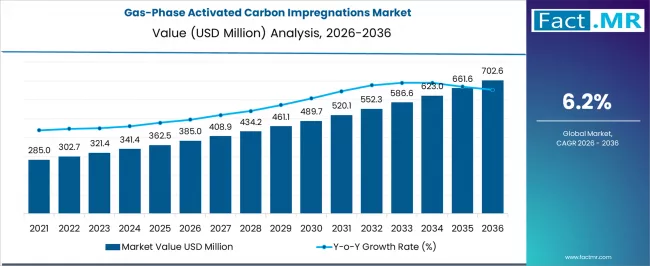
Defining trends involve the development of proprietary multi-functional blends designed to treat complex gas streams containing mixed contaminants. Innovation is focused on enhancing the catalytic activity and longevity of impregnated carbons, particularly for challenging applications like biogas purification and industrial odor abatement. Integration of these advanced materials into modular, service-based filtration systems is becoming a key competitive strategy.
Regulatory frameworks enforcing stricter air quality standards (EPA, EU Industrial Emissions Directive) and occupational exposure limits are the primary market drivers. Policies targeting the control of volatile organic compounds (VOCs), hydrogen sulfide, and acidic emissions from industrial processes act as significant catalysts, creating sustained demand for high-performance, application-specific impregnated carbon solutions.
Gas-Phase Activated Carbon Impregnations Market
| Metric | Value |
|---|---|
| Market Value (2026) | USD 385.00 Million |
| Market Forecast Value (2036) | USD 702.60 Million |
| Forecast CAGR (2026-2036) | 6.2% |
Category
| Category | Segments |
|---|---|
| Impregnation Type | Potassium Hydroxide Impregnation, Potassium Iodide & Iodine-Based, Phosphoric & Phosphates, Metal Salt Impregnation, Sulfur-Impregnated, Amine-Functionalized, Proprietary Multi-Functional Blends |
| Gas Contaminant Type Treated | Acidic Gases (SO₂, HCl, HF), VOCs & Hydrocarbons, Ammonia & Amines, Hydrogen Sulfide (H₂S) & Mercaptans, Ozone & Oxidizers, Odor Control |
| Activated Carbon Base Material | Coal-Based Activated Carbon, Coconut-Shell Activated Carbon, Wood-Based Activated Carbon, Composite Carbons, Synthetic and Polymer-Derived Carbons |
| End-Use Application | Industrial Air Purification, Wastewater & Sewage Odor Control, Gas-Phase Filtration in HVAC & Cleanrooms, Biogas & Landfill Gas Purification, Food Processing & Packaging Odor Control, Pharmaceutical & Specialty Manufacturing |
| Region | North America, Latin America, Western Europe, Eastern Europe, East Asia, South Asia & Pacific, MEA |
Segmental Analysis
By Impregnation Type, Which Chemistry is Fundamental for Acid Gas Abatement?
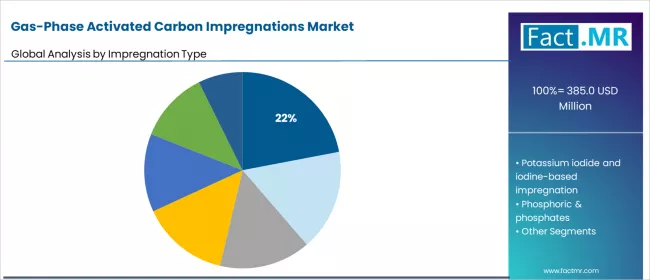
Potassium hydroxide (KOH) impregnation leads the segment with a 22% share. This dominance is due to its critical role in neutralizing and chemically binding acidic gases like sulfur dioxide (SO₂), hydrochloric acid (HCl), and hydrogen fluoride (HF) in industrial flue gases and chemical process streams. KOH transforms the carbon from a mere adsorbent into a chemical reactor, providing high capacity and efficiency for a pervasive class of regulated pollutants, making it an industry workhorse.
By Contaminant Type, Which Class Drives Compliance in Heavy Industry?

Acidic gases command the largest contaminant share at 25%. Emissions of SO₂, HCl, and HF are tightly regulated across power generation, waste incineration, metal processing, and chemical manufacturing due to their environmental and health impacts. Impregnated carbons are often the technology of choice for tail-end, polishing treatment to achieve strict emission limits, creating consistent, compliance-driven demand in these capital-intensive sectors.
By Base Material, Which Source Offers the Optimal Balance of Performance and Economics for Impregnation?
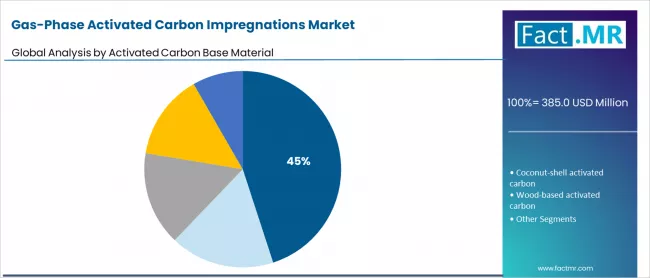
Coal-based activated carbon is the leading base material at 45.0%. Its dominance is attributed to its highly developed pore structure, which is particularly well-suited for impregnation with liquid chemicals like KOH or metal salts. It offers a favorable cost-to-performance ratio, high mechanical strength for deep-bed filters, and widespread availability, making it the standard carrier for many industrial-grade impregnated products.
By Application, Which Sector Demands the Highest Volume for Process and Emission Control?Industrial air purification represents the leading application at 30.0%. This encompasses a vast range of uses in chemical plants, refineries, and manufacturing facilities where process off-gases and ventilation air must be treated. The scale of these applications—from large scrubber systems to smaller point-source collectors—and the diversity of contaminants drive significant, recurring demand for tailored impregnated carbon solutions.
What are the Drivers, Restraints, and Key Trends of the Gas-Phase Activated Carbon Impregnations Market?
The global tightening of industrial air emission standards and workplace safety regulations drives market growth. The expansion of wastewater treatment infrastructure and biogas production creates new demand for odor and sulfide control. Increasing pharmaceutical and electronics manufacturing with strict air quality requirements also propels the need for high-purity, specialty impregnated carbons.
A significant restraint is the competitive pressure from alternative emission control technologies like scrubbers and thermal oxidizers for certain high-concentration streams. The volatility in raw material (coal, coconut shell) prices impacts base carbon cost. Disposal of spent impregnated carbon, which may be classified as hazardous waste, adds operational complexity and cost for end-users, influencing lifecycle decisions.
Key trends include the development of "drop-in" replacement carbons with enhanced activity to extend service life and reduce change-out frequency. There is a growing focus on impregnations for renewable energy applications, such as purifying biogas to pipeline quality. The market is also seeing a shift towards offering filtration-as-a-service models, where suppliers retain ownership of the carbon and handle its reactivation or disposal.
Analysis of the Gas-Phase Activated Carbon Impregnations Market by Key Countries
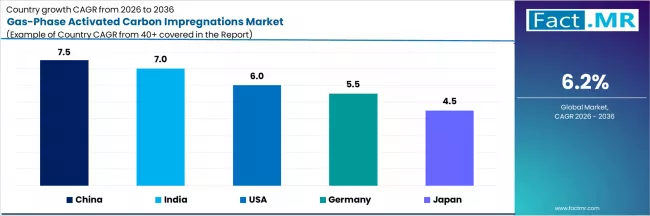
| Country | CAGR (2026-2036) |
|---|---|
| China | 7.50% |
| India | 7.00% |
| USA | 6.00% |
| Germany | 5.50% |
| Japan | 4.50% |
How does China's Industrial Expansion and Pollution Control Mandates Drive Market Leadership?
China leads with a 7.50% CAGR, driven by its massive industrial base and increasingly stringent enforcement of its "Blue Sky" and air pollution prevention laws. The power sector, chemical manufacturing, and waste incineration are under pressure to install advanced air pollution control systems. Domestic production of both base carbon and impregnated products supports widespread adoption to meet regulatory deadlines, making it the largest volume market.
Why is India's Rapid Infrastructure Development and Stricter Compliance a Key Driver?
India's 7.00% growth is fueled by new emissions standards for industries and a major push to build wastewater treatment plants and manage municipal solid waste. The control of odorous emissions from sewage treatment and composting facilities, along with compliance needs in expanding chemical and pharmaceutical sectors, drives demand for impregnated carbons tailored for H₂S, ammonia, and VOC abatement.
What Role does the USA's Mature Industrial and Environmental Regulatory Framework Play?
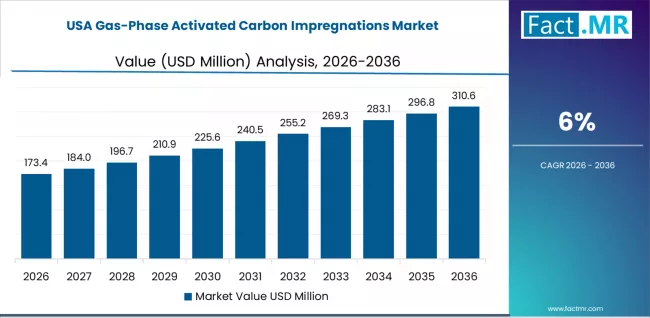
A mature but consistently tightening regulatory environment such as EPA MACT, NESHAP standards) and a strong focus on VOC abatement underpin the USA’s 6.00% growth. Demand is driven by retrofits and upgrades in existing chemical, refining, and aerospace facilities, as well as in landfill gas-to-energy projects. The market demands high-performance, reliably consistent products from established suppliers.
How does Germany's Advanced Engineering and Renewable Energy Focus Influence the Market?
Germany's 5.50% growth reflects its leadership in high-end engineering and the biogas sector. Stringent EU and German TA Luft regulations govern industrial emissions. The extensive network of biogas plants, requiring precise purification to remove trace siloxanes, H₂S, and VOCs before injection into the grid, creates a sophisticated market for specialized metal salt and multi-functional impregnated carbons.
What Factors Underpin Japan's High-Tech Manufacturing and Stringent Odor Control Needs?
Japan's 4.50% growth is driven by its world-leading electronics and pharmaceutical industries, which require ultra-pure process air and effective abatement of specialty solvents and acids. Furthermore, Japan's dense urban centers enforce strict odor nuisance regulations, driving advanced odor control solutions in wastewater treatment and food processing using amine-functionalized and other tailored impregnations.
Competitive Landscape of the Gas-Phase Activated Carbon Impregnations Market
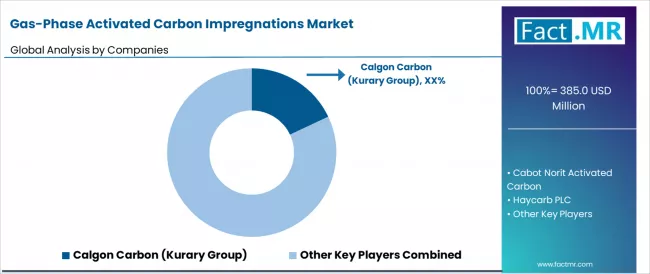
The competitive landscape is consolidated among global activated carbon specialists with deep impregnation technology expertise. Major players like Calgon Carbon (Kuraray Group) and Cabot Norit compete on the strength of their extensive R&D, broad product portfolios, and global supply chains, serving large-scale industrial clients across multiple sectors.
Regional specialists like Haycarb PLC (coconut-shell based) and Jacobi Carbons leverage specific raw material advantages or application expertise. Companies like Eurocarb and Desotec often compete through integrated service models, offering mobile filtration units and reactivation services. Competition revolves around technical service capability, the ability to develop custom formulations for unique gas streams, and providing guaranteed performance data to meet compliance thresholds.
Key Players in the Gas-Phase Activated Carbon Impregnations Market
- Calgon Carbon (Kuraray Group)
- Cabot Norit Activated Carbon
- Haycarb PLC
- Jacobi Carbons (Osaka Gas Chemicals)
- Eurocarb
- Desotec
Scope of Report
| Items | Values |
|---|---|
| Quantitative Units | USD Million |
| Impregnation Type | Potassium Hydroxide, Potassium Iodide & Iodine, Phosphoric & Phosphates, Metal Salt, Sulfur, Amine-Functionalized, Proprietary Blends |
| Gas Contaminant Type Treated | Acidic Gases, VOCs & Hydrocarbons, Ammonia & Amines, H₂S & Mercaptans, Ozone & Oxidizers, Odor |
| Activated Carbon Base Material | Coal-Based Activated Carbon, Coconut-Shell Activated Carbon, Wood-Based Activated Carbon, Composite Carbons, Synthetic and Polymer |
| End-Use Application | Industrial Air Purification, Wastewater Odor Control, HVAC/Cleanroom Filtration, Biogas Purification, Food Processing, Pharma Manufacturing |
| Key Countries | China, India, USA, Germany, Japan |
| Key Companies | Calgon Carbon, Cabot Norit, Haycarb PLC, Jacobi Carbons, Eurocarb, Desotec |
| Additional Analysis | Analysis of impregnation loading efficiency, breakthrough capacity testing, reactivation potential of spent carbons, competitive assessment vs. alternative technologies (scrubbers, oxidizers), and total cost of ownership models. |
Gas-Phase Activated Carbon Impregnations Market by Segments
-
Impregnation Type :
- Potassium Hydroxide Impregnation
- Potassium Iodide & Iodine-Based
- Phosphoric & Phosphates
- Metal Salt Impregnation
- Sulfur-Impregnated
- Amine-Functionalized
- Proprietary Multi-Functional Blends
-
Gas Contaminant Type Treated :
- Acidic Gases (SO₂, HCl, HF)
- VOCs & Hydrocarbons
- Ammonia & Amines
- Hydrogen Sulfide (H₂S) & Mercaptans
- Ozone, Oxidizers & Specialty Gases
- Odor Control
-
Activated Carbon Base Material :
- Coal-Based Activated Carbon
- Coconut-Shell Activated Carbon
- Wood-Based Activated Carbon
- Composite Carbons
- Synthetic and Polymer-Derived Carbons
-
End-Use Application :
- Industrial Air Purification (Chemical Plants, Refineries)
- Wastewater & Sewage Odor Control
- Gas-Phase Filtration in HVAC & Cleanrooms
- Biogas & Landfill Gas Purification
- Food Processing & Packaging Odor Control
- Pharmaceutical & Specialty Manufacturing
-
Region :
-
North America
- USA
- Canada
-
Latin America
- Brazil
- Mexico
- Rest of Latin America
-
Western Europe
- Germany
- France
- UK
- Italy
- Spain
- BENELUX
- Rest of Western Europe
-
Eastern Europe
- Russia
- Poland
- Rest of Eastern Europe
-
East Asia
- China
- Japan
- South Korea
- Rest of East Asia
-
South Asia & Pacific
- India
- ASEAN
- Australia
- Rest of South Asia & Pacific
-
MEA
- GCC Countries
- South Africa
- Rest of MEA
-
Table of Content
- Executive Summary
- Global Market Outlook
- Demand to side Trends
- Supply to side Trends
- Technology Roadmap Analysis
- Analysis and Recommendations
- Market Overview
- Market Coverage / Taxonomy
- Market Definition / Scope / Limitations
- Market Background
- Market Dynamics
- Drivers
- Restraints
- Opportunity
- Trends
- Scenario Forecast
- Demand in Optimistic Scenario
- Demand in Likely Scenario
- Demand in Conservative Scenario
- Opportunity Map Analysis
- Product Life Cycle Analysis
- Supply Chain Analysis
- Investment Feasibility Matrix
- Value Chain Analysis
- PESTLE and Porter’s Analysis
- Regulatory Landscape
- Regional Parent Market Outlook
- Production and Consumption Statistics
- Import and Export Statistics
- Market Dynamics
- Global Market Analysis 2021 to 2025 and Forecast, 2026 to 2036
- Historical Market Size Value (USD Million) Analysis, 2021 to 2025
- Current and Future Market Size Value (USD Million) Projections, 2026 to 2036
- Y to o to Y Growth Trend Analysis
- Absolute $ Opportunity Analysis
- Global Market Pricing Analysis 2021 to 2025 and Forecast 2026 to 2036
- Global Market Analysis 2021 to 2025 and Forecast 2026 to 2036, By Impregnation Type
- Introduction / Key Findings
- Historical Market Size Value (USD Million) Analysis By Impregnation Type, 2021 to 2025
- Current and Future Market Size Value (USD Million) Analysis and Forecast By Impregnation Type, 2026 to 2036
- Potassium hydroxide impregnation
- Potassium iodide and iodine-based impregnation
- Phosphoric & phosphates
- Metal salt impregnation
- Sulfur-impregnated activated carbon
- Amine-functionalized impregnations
- Proprietary multi-functional blends
- Potassium hydroxide impregnation
- Y to o to Y Growth Trend Analysis By Impregnation Type, 2021 to 2025
- Absolute $ Opportunity Analysis By Impregnation Type, 2026 to 2036
- Global Market Analysis 2021 to 2025 and Forecast 2026 to 2036, By Gas Contaminant Type Treated
- Introduction / Key Findings
- Historical Market Size Value (USD Million) Analysis By Gas Contaminant Type Treated, 2021 to 2025
- Current and Future Market Size Value (USD Million) Analysis and Forecast By Gas Contaminant Type Treated, 2026 to 2036
- Acidic gases (SO₂, HCl, HF)
- VOCs & hydrocarbons
- Ammonia & amines
- Hydrogen sulfide (H₂S) & mercaptans
- Ozone, oxidizers & specialty industrial gases
- Odor control (wastewater, food, municipal)
- Acidic gases (SO₂, HCl, HF)
- Y to o to Y Growth Trend Analysis By Gas Contaminant Type Treated, 2021 to 2025
- Absolute $ Opportunity Analysis By Gas Contaminant Type Treated, 2026 to 2036
- Global Market Analysis 2021 to 2025 and Forecast 2026 to 2036, By Activated Carbon Base Material
- Introduction / Key Findings
- Historical Market Size Value (USD Million) Analysis By Activated Carbon Base Material, 2021 to 2025
- Current and Future Market Size Value (USD Million) Analysis and Forecast By Activated Carbon Base Material, 2026 to 2036
- Coal-based activated carbon
- Coconut-shell activated carbon
- Wood-based activated carbon
- Composite carbons
- Synthetic and polymer-derived carbons
- Coal-based activated carbon
- Y to o to Y Growth Trend Analysis By Activated Carbon Base Material, 2021 to 2025
- Absolute $ Opportunity Analysis By Activated Carbon Base Material, 2026 to 2036
- Global Market Analysis 2021 to 2025 and Forecast 2026 to 2036, By End-Use Application
- Introduction / Key Findings
- Historical Market Size Value (USD Million) Analysis By End-Use Application, 2021 to 2025
- Current and Future Market Size Value (USD Million) Analysis and Forecast By End-Use Application, 2026 to 2036
- Industrial air purification (chemical plants, refineries)
- Wastewater & sewage odor control
- Gas-phase filtration in HVAC cleanrooms
- Biogas & landfill gas purification
- Food processing & packaging odor control
- Pharmaceutical & specialty manufacturing
- Industrial air purification (chemical plants, refineries)
- Y to o to Y Growth Trend Analysis By End-Use Application, 2021 to 2025
- Absolute $ Opportunity Analysis By End-Use Application, 2026 to 2036
- Global Market Analysis 2021 to 2025 and Forecast 2026 to 2036, By Region
- Introduction
- Historical Market Size Value (USD Million) Analysis By Region, 2021 to 2025
- Current Market Size Value (USD Million) Analysis and Forecast By Region, 2026 to 2036
- North America
- Latin America
- Western Europe
- Eastern Europe
- East Asia
- South Asia and Pacific
- Middle East & Africa
- Market Attractiveness Analysis By Region
- North America Market Analysis 2021 to 2025 and Forecast 2026 to 2036, By Country
- Historical Market Size Value (USD Million) Trend Analysis By Market Taxonomy, 2021 to 2025
- Market Size Value (USD Million) Forecast By Market Taxonomy, 2026 to 2036
- By Country
- USA
- Canada
- Mexico
- By Impregnation Type
- By Gas Contaminant Type Treated
- By Activated Carbon Base Material
- By End-Use Application
- By Country
- Market Attractiveness Analysis
- By Country
- By Impregnation Type
- By Gas Contaminant Type Treated
- By Activated Carbon Base Material
- By End-Use Application
- Key Takeaways
- Latin America Market Analysis 2021 to 2025 and Forecast 2026 to 2036, By Country
- Historical Market Size Value (USD Million) Trend Analysis By Market Taxonomy, 2021 to 2025
- Market Size Value (USD Million) Forecast By Market Taxonomy, 2026 to 2036
- By Country
- Brazil
- Chile
- Rest of Latin America
- By Impregnation Type
- By Gas Contaminant Type Treated
- By Activated Carbon Base Material
- By End-Use Application
- By Country
- Market Attractiveness Analysis
- By Country
- By Impregnation Type
- By Gas Contaminant Type Treated
- By Activated Carbon Base Material
- By End-Use Application
- Key Takeaways
- Western Europe Market Analysis 2021 to 2025 and Forecast 2026 to 2036, By Country
- Historical Market Size Value (USD Million) Trend Analysis By Market Taxonomy, 2021 to 2025
- Market Size Value (USD Million) Forecast By Market Taxonomy, 2026 to 2036
- By Country
- Germany
- UK
- Italy
- Spain
- France
- Nordic
- BENELUX
- Rest of Western Europe
- By Impregnation Type
- By Gas Contaminant Type Treated
- By Activated Carbon Base Material
- By End-Use Application
- By Country
- Market Attractiveness Analysis
- By Country
- By Impregnation Type
- By Gas Contaminant Type Treated
- By Activated Carbon Base Material
- By End-Use Application
- Key Takeaways
- Eastern Europe Market Analysis 2021 to 2025 and Forecast 2026 to 2036, By Country
- Historical Market Size Value (USD Million) Trend Analysis By Market Taxonomy, 2021 to 2025
- Market Size Value (USD Million) Forecast By Market Taxonomy, 2026 to 2036
- By Country
- Russia
- Poland
- Hungary
- Balkan & Baltic
- Rest of Eastern Europe
- By Impregnation Type
- By Gas Contaminant Type Treated
- By Activated Carbon Base Material
- By End-Use Application
- By Country
- Market Attractiveness Analysis
- By Country
- By Impregnation Type
- By Gas Contaminant Type Treated
- By Activated Carbon Base Material
- By End-Use Application
- Key Takeaways
- East Asia Market Analysis 2021 to 2025 and Forecast 2026 to 2036, By Country
- Historical Market Size Value (USD Million) Trend Analysis By Market Taxonomy, 2021 to 2025
- Market Size Value (USD Million) Forecast By Market Taxonomy, 2026 to 2036
- By Country
- China
- Japan
- South Korea
- By Impregnation Type
- By Gas Contaminant Type Treated
- By Activated Carbon Base Material
- By End-Use Application
- By Country
- Market Attractiveness Analysis
- By Country
- By Impregnation Type
- By Gas Contaminant Type Treated
- By Activated Carbon Base Material
- By End-Use Application
- Key Takeaways
- South Asia and Pacific Market Analysis 2021 to 2025 and Forecast 2026 to 2036, By Country
- Historical Market Size Value (USD Million) Trend Analysis By Market Taxonomy, 2021 to 2025
- Market Size Value (USD Million) Forecast By Market Taxonomy, 2026 to 2036
- By Country
- India
- ASEAN
- Australia & New Zealand
- Rest of South Asia and Pacific
- By Impregnation Type
- By Gas Contaminant Type Treated
- By Activated Carbon Base Material
- By End-Use Application
- By Country
- Market Attractiveness Analysis
- By Country
- By Impregnation Type
- By Gas Contaminant Type Treated
- By Activated Carbon Base Material
- By End-Use Application
- Key Takeaways
- Middle East & Africa Market Analysis 2021 to 2025 and Forecast 2026 to 2036, By Country
- Historical Market Size Value (USD Million) Trend Analysis By Market Taxonomy, 2021 to 2025
- Market Size Value (USD Million) Forecast By Market Taxonomy, 2026 to 2036
- By Country
- Kingdom of Saudi Arabia
- Other GCC Countries
- Turkiye
- South Africa
- Other African Union
- Rest of Middle East & Africa
- By Impregnation Type
- By Gas Contaminant Type Treated
- By Activated Carbon Base Material
- By End-Use Application
- By Country
- Market Attractiveness Analysis
- By Country
- By Impregnation Type
- By Gas Contaminant Type Treated
- By Activated Carbon Base Material
- By End-Use Application
- Key Takeaways
- Key Countries Market Analysis
- USA
- Pricing Analysis
- Market Share Analysis, 2025
- By Impregnation Type
- By Gas Contaminant Type Treated
- By Activated Carbon Base Material
- By End-Use Application
- Canada
- Pricing Analysis
- Market Share Analysis, 2025
- By Impregnation Type
- By Gas Contaminant Type Treated
- By Activated Carbon Base Material
- By End-Use Application
- Mexico
- Pricing Analysis
- Market Share Analysis, 2025
- By Impregnation Type
- By Gas Contaminant Type Treated
- By Activated Carbon Base Material
- By End-Use Application
- Brazil
- Pricing Analysis
- Market Share Analysis, 2025
- By Impregnation Type
- By Gas Contaminant Type Treated
- By Activated Carbon Base Material
- By End-Use Application
- Chile
- Pricing Analysis
- Market Share Analysis, 2025
- By Impregnation Type
- By Gas Contaminant Type Treated
- By Activated Carbon Base Material
- By End-Use Application
- Germany
- Pricing Analysis
- Market Share Analysis, 2025
- By Impregnation Type
- By Gas Contaminant Type Treated
- By Activated Carbon Base Material
- By End-Use Application
- UK
- Pricing Analysis
- Market Share Analysis, 2025
- By Impregnation Type
- By Gas Contaminant Type Treated
- By Activated Carbon Base Material
- By End-Use Application
- Italy
- Pricing Analysis
- Market Share Analysis, 2025
- By Impregnation Type
- By Gas Contaminant Type Treated
- By Activated Carbon Base Material
- By End-Use Application
- Spain
- Pricing Analysis
- Market Share Analysis, 2025
- By Impregnation Type
- By Gas Contaminant Type Treated
- By Activated Carbon Base Material
- By End-Use Application
- France
- Pricing Analysis
- Market Share Analysis, 2025
- By Impregnation Type
- By Gas Contaminant Type Treated
- By Activated Carbon Base Material
- By End-Use Application
- India
- Pricing Analysis
- Market Share Analysis, 2025
- By Impregnation Type
- By Gas Contaminant Type Treated
- By Activated Carbon Base Material
- By End-Use Application
- ASEAN
- Pricing Analysis
- Market Share Analysis, 2025
- By Impregnation Type
- By Gas Contaminant Type Treated
- By Activated Carbon Base Material
- By End-Use Application
- Australia & New Zealand
- Pricing Analysis
- Market Share Analysis, 2025
- By Impregnation Type
- By Gas Contaminant Type Treated
- By Activated Carbon Base Material
- By End-Use Application
- China
- Pricing Analysis
- Market Share Analysis, 2025
- By Impregnation Type
- By Gas Contaminant Type Treated
- By Activated Carbon Base Material
- By End-Use Application
- Japan
- Pricing Analysis
- Market Share Analysis, 2025
- By Impregnation Type
- By Gas Contaminant Type Treated
- By Activated Carbon Base Material
- By End-Use Application
- South Korea
- Pricing Analysis
- Market Share Analysis, 2025
- By Impregnation Type
- By Gas Contaminant Type Treated
- By Activated Carbon Base Material
- By End-Use Application
- Russia
- Pricing Analysis
- Market Share Analysis, 2025
- By Impregnation Type
- By Gas Contaminant Type Treated
- By Activated Carbon Base Material
- By End-Use Application
- Poland
- Pricing Analysis
- Market Share Analysis, 2025
- By Impregnation Type
- By Gas Contaminant Type Treated
- By Activated Carbon Base Material
- By End-Use Application
- Hungary
- Pricing Analysis
- Market Share Analysis, 2025
- By Impregnation Type
- By Gas Contaminant Type Treated
- By Activated Carbon Base Material
- By End-Use Application
- Kingdom of Saudi Arabia
- Pricing Analysis
- Market Share Analysis, 2025
- By Impregnation Type
- By Gas Contaminant Type Treated
- By Activated Carbon Base Material
- By End-Use Application
- Turkiye
- Pricing Analysis
- Market Share Analysis, 2025
- By Impregnation Type
- By Gas Contaminant Type Treated
- By Activated Carbon Base Material
- By End-Use Application
- South Africa
- Pricing Analysis
- Market Share Analysis, 2025
- By Impregnation Type
- By Gas Contaminant Type Treated
- By Activated Carbon Base Material
- By End-Use Application
- USA
- Market Structure Analysis
- Competition Dashboard
- Competition Benchmarking
- Market Share Analysis of Top Players
- By Regional
- By Impregnation Type
- By Gas Contaminant Type Treated
- By Activated Carbon Base Material
- By End-Use Application
- Competition Analysis
- Competition Deep Dive
- Calgon Carbon (Kurary Group)
- Overview
- Product Portfolio
- Profitability by Market Segments (Product/Age /Sales Channel/Region)
- Sales Footprint
- Strategy Overview
- Marketing Strategy
- Product Strategy
- Channel Strategy
- Cabot Norit Activated Carbon
- Haycarb PLC
- Jacobi Carbons (Osaka Gas Chemicals)
- Eurocarb
- Desotec
- Calgon Carbon (Kurary Group)
- Competition Deep Dive
- Assumptions & Acronyms Used
- Research Methodology
List Of Table
- Table 1: Global Market Value (USD Million) Forecast by Region, 2021 to 2036
- Table 2: Global Market Value (USD Million) Forecast by Impregnation Type, 2021 to 2036
- Table 3: Global Market Value (USD Million) Forecast by Gas Contaminant Type Treated, 2021 to 2036
- Table 4: Global Market Value (USD Million) Forecast by Activated Carbon Base Material, 2021 to 2036
- Table 5: Global Market Value (USD Million) Forecast by End-Use Application, 2021 to 2036
- Table 6: North America Market Value (USD Million) Forecast by Country, 2021 to 2036
- Table 7: North America Market Value (USD Million) Forecast by Impregnation Type, 2021 to 2036
- Table 8: North America Market Value (USD Million) Forecast by Gas Contaminant Type Treated, 2021 to 2036
- Table 9: North America Market Value (USD Million) Forecast by Activated Carbon Base Material, 2021 to 2036
- Table 10: North America Market Value (USD Million) Forecast by End-Use Application, 2021 to 2036
- Table 11: Latin America Market Value (USD Million) Forecast by Country, 2021 to 2036
- Table 12: Latin America Market Value (USD Million) Forecast by Impregnation Type, 2021 to 2036
- Table 13: Latin America Market Value (USD Million) Forecast by Gas Contaminant Type Treated, 2021 to 2036
- Table 14: Latin America Market Value (USD Million) Forecast by Activated Carbon Base Material, 2021 to 2036
- Table 15: Latin America Market Value (USD Million) Forecast by End-Use Application, 2021 to 2036
- Table 16: Western Europe Market Value (USD Million) Forecast by Country, 2021 to 2036
- Table 17: Western Europe Market Value (USD Million) Forecast by Impregnation Type, 2021 to 2036
- Table 18: Western Europe Market Value (USD Million) Forecast by Gas Contaminant Type Treated, 2021 to 2036
- Table 19: Western Europe Market Value (USD Million) Forecast by Activated Carbon Base Material, 2021 to 2036
- Table 20: Western Europe Market Value (USD Million) Forecast by End-Use Application, 2021 to 2036
- Table 21: Eastern Europe Market Value (USD Million) Forecast by Country, 2021 to 2036
- Table 22: Eastern Europe Market Value (USD Million) Forecast by Impregnation Type, 2021 to 2036
- Table 23: Eastern Europe Market Value (USD Million) Forecast by Gas Contaminant Type Treated, 2021 to 2036
- Table 24: Eastern Europe Market Value (USD Million) Forecast by Activated Carbon Base Material, 2021 to 2036
- Table 25: Eastern Europe Market Value (USD Million) Forecast by End-Use Application, 2021 to 2036
- Table 26: East Asia Market Value (USD Million) Forecast by Country, 2021 to 2036
- Table 27: East Asia Market Value (USD Million) Forecast by Impregnation Type, 2021 to 2036
- Table 28: East Asia Market Value (USD Million) Forecast by Gas Contaminant Type Treated, 2021 to 2036
- Table 29: East Asia Market Value (USD Million) Forecast by Activated Carbon Base Material, 2021 to 2036
- Table 30: East Asia Market Value (USD Million) Forecast by End-Use Application, 2021 to 2036
- Table 31: South Asia and Pacific Market Value (USD Million) Forecast by Country, 2021 to 2036
- Table 32: South Asia and Pacific Market Value (USD Million) Forecast by Impregnation Type, 2021 to 2036
- Table 33: South Asia and Pacific Market Value (USD Million) Forecast by Gas Contaminant Type Treated, 2021 to 2036
- Table 34: South Asia and Pacific Market Value (USD Million) Forecast by Activated Carbon Base Material, 2021 to 2036
- Table 35: South Asia and Pacific Market Value (USD Million) Forecast by End-Use Application, 2021 to 2036
- Table 36: Middle East & Africa Market Value (USD Million) Forecast by Country, 2021 to 2036
- Table 37: Middle East & Africa Market Value (USD Million) Forecast by Impregnation Type, 2021 to 2036
- Table 38: Middle East & Africa Market Value (USD Million) Forecast by Gas Contaminant Type Treated, 2021 to 2036
- Table 39: Middle East & Africa Market Value (USD Million) Forecast by Activated Carbon Base Material, 2021 to 2036
- Table 40: Middle East & Africa Market Value (USD Million) Forecast by End-Use Application, 2021 to 2036
List Of Figures
- Figure 1: Global Market Pricing Analysis
- Figure 2: Global Market Value (USD Million) Forecast 2021 to 2036
- Figure 3: Global Market Value Share and BPS Analysis by Impregnation Type, 2026 and 2036
- Figure 4: Global Market Y to o to Y Growth Comparison by Impregnation Type, 2026 to 2036
- Figure 5: Global Market Attractiveness Analysis by Impregnation Type
- Figure 6: Global Market Value Share and BPS Analysis by Gas Contaminant Type Treated, 2026 and 2036
- Figure 7: Global Market Y to o to Y Growth Comparison by Gas Contaminant Type Treated, 2026 to 2036
- Figure 8: Global Market Attractiveness Analysis by Gas Contaminant Type Treated
- Figure 9: Global Market Value Share and BPS Analysis by Activated Carbon Base Material, 2026 and 2036
- Figure 10: Global Market Y to o to Y Growth Comparison by Activated Carbon Base Material, 2026 to 2036
- Figure 11: Global Market Attractiveness Analysis by Activated Carbon Base Material
- Figure 12: Global Market Value Share and BPS Analysis by End-Use Application, 2026 and 2036
- Figure 13: Global Market Y to o to Y Growth Comparison by End-Use Application, 2026 to 2036
- Figure 14: Global Market Attractiveness Analysis by End-Use Application
- Figure 15: Global Market Value (USD Million) Share and BPS Analysis by Region, 2026 and 2036
- Figure 16: Global Market Y to o to Y Growth Comparison by Region, 2026 to 2036
- Figure 17: Global Market Attractiveness Analysis by Region
- Figure 18: North America Market Incremental Dollar Opportunity, 2026 to 2036
- Figure 19: Latin America Market Incremental Dollar Opportunity, 2026 to 2036
- Figure 20: Western Europe Market Incremental Dollar Opportunity, 2026 to 2036
- Figure 21: Eastern Europe Market Incremental Dollar Opportunity, 2026 to 2036
- Figure 22: East Asia Market Incremental Dollar Opportunity, 2026 to 2036
- Figure 23: South Asia and Pacific Market Incremental Dollar Opportunity, 2026 to 2036
- Figure 24: Middle East & Africa Market Incremental Dollar Opportunity, 2026 to 2036
- Figure 25: North America Market Value Share and BPS Analysis by Country, 2026 and 2036
- Figure 26: North America Market Value Share and BPS Analysis by Impregnation Type, 2026 and 2036
- Figure 27: North America Market Y to o to Y Growth Comparison by Impregnation Type, 2026 to 2036
- Figure 28: North America Market Attractiveness Analysis by Impregnation Type
- Figure 29: North America Market Value Share and BPS Analysis by Gas Contaminant Type Treated, 2026 and 2036
- Figure 30: North America Market Y to o to Y Growth Comparison by Gas Contaminant Type Treated, 2026 to 2036
- Figure 31: North America Market Attractiveness Analysis by Gas Contaminant Type Treated
- Figure 32: North America Market Value Share and BPS Analysis by Activated Carbon Base Material, 2026 and 2036
- Figure 33: North America Market Y to o to Y Growth Comparison by Activated Carbon Base Material, 2026 to 2036
- Figure 34: North America Market Attractiveness Analysis by Activated Carbon Base Material
- Figure 35: North America Market Value Share and BPS Analysis by End-Use Application, 2026 and 2036
- Figure 36: North America Market Y to o to Y Growth Comparison by End-Use Application, 2026 to 2036
- Figure 37: North America Market Attractiveness Analysis by End-Use Application
- Figure 38: Latin America Market Value Share and BPS Analysis by Country, 2026 and 2036
- Figure 39: Latin America Market Value Share and BPS Analysis by Impregnation Type, 2026 and 2036
- Figure 40: Latin America Market Y to o to Y Growth Comparison by Impregnation Type, 2026 to 2036
- Figure 41: Latin America Market Attractiveness Analysis by Impregnation Type
- Figure 42: Latin America Market Value Share and BPS Analysis by Gas Contaminant Type Treated, 2026 and 2036
- Figure 43: Latin America Market Y to o to Y Growth Comparison by Gas Contaminant Type Treated, 2026 to 2036
- Figure 44: Latin America Market Attractiveness Analysis by Gas Contaminant Type Treated
- Figure 45: Latin America Market Value Share and BPS Analysis by Activated Carbon Base Material, 2026 and 2036
- Figure 46: Latin America Market Y to o to Y Growth Comparison by Activated Carbon Base Material, 2026 to 2036
- Figure 47: Latin America Market Attractiveness Analysis by Activated Carbon Base Material
- Figure 48: Latin America Market Value Share and BPS Analysis by End-Use Application, 2026 and 2036
- Figure 49: Latin America Market Y to o to Y Growth Comparison by End-Use Application, 2026 to 2036
- Figure 50: Latin America Market Attractiveness Analysis by End-Use Application
- Figure 51: Western Europe Market Value Share and BPS Analysis by Country, 2026 and 2036
- Figure 52: Western Europe Market Value Share and BPS Analysis by Impregnation Type, 2026 and 2036
- Figure 53: Western Europe Market Y to o to Y Growth Comparison by Impregnation Type, 2026 to 2036
- Figure 54: Western Europe Market Attractiveness Analysis by Impregnation Type
- Figure 55: Western Europe Market Value Share and BPS Analysis by Gas Contaminant Type Treated, 2026 and 2036
- Figure 56: Western Europe Market Y to o to Y Growth Comparison by Gas Contaminant Type Treated, 2026 to 2036
- Figure 57: Western Europe Market Attractiveness Analysis by Gas Contaminant Type Treated
- Figure 58: Western Europe Market Value Share and BPS Analysis by Activated Carbon Base Material, 2026 and 2036
- Figure 59: Western Europe Market Y to o to Y Growth Comparison by Activated Carbon Base Material, 2026 to 2036
- Figure 60: Western Europe Market Attractiveness Analysis by Activated Carbon Base Material
- Figure 61: Western Europe Market Value Share and BPS Analysis by End-Use Application, 2026 and 2036
- Figure 62: Western Europe Market Y to o to Y Growth Comparison by End-Use Application, 2026 to 2036
- Figure 63: Western Europe Market Attractiveness Analysis by End-Use Application
- Figure 64: Eastern Europe Market Value Share and BPS Analysis by Country, 2026 and 2036
- Figure 65: Eastern Europe Market Value Share and BPS Analysis by Impregnation Type, 2026 and 2036
- Figure 66: Eastern Europe Market Y to o to Y Growth Comparison by Impregnation Type, 2026 to 2036
- Figure 67: Eastern Europe Market Attractiveness Analysis by Impregnation Type
- Figure 68: Eastern Europe Market Value Share and BPS Analysis by Gas Contaminant Type Treated, 2026 and 2036
- Figure 69: Eastern Europe Market Y to o to Y Growth Comparison by Gas Contaminant Type Treated, 2026 to 2036
- Figure 70: Eastern Europe Market Attractiveness Analysis by Gas Contaminant Type Treated
- Figure 71: Eastern Europe Market Value Share and BPS Analysis by Activated Carbon Base Material, 2026 and 2036
- Figure 72: Eastern Europe Market Y to o to Y Growth Comparison by Activated Carbon Base Material, 2026 to 2036
- Figure 73: Eastern Europe Market Attractiveness Analysis by Activated Carbon Base Material
- Figure 74: Eastern Europe Market Value Share and BPS Analysis by End-Use Application, 2026 and 2036
- Figure 75: Eastern Europe Market Y to o to Y Growth Comparison by End-Use Application, 2026 to 2036
- Figure 76: Eastern Europe Market Attractiveness Analysis by End-Use Application
- Figure 77: East Asia Market Value Share and BPS Analysis by Country, 2026 and 2036
- Figure 78: East Asia Market Value Share and BPS Analysis by Impregnation Type, 2026 and 2036
- Figure 79: East Asia Market Y to o to Y Growth Comparison by Impregnation Type, 2026 to 2036
- Figure 80: East Asia Market Attractiveness Analysis by Impregnation Type
- Figure 81: East Asia Market Value Share and BPS Analysis by Gas Contaminant Type Treated, 2026 and 2036
- Figure 82: East Asia Market Y to o to Y Growth Comparison by Gas Contaminant Type Treated, 2026 to 2036
- Figure 83: East Asia Market Attractiveness Analysis by Gas Contaminant Type Treated
- Figure 84: East Asia Market Value Share and BPS Analysis by Activated Carbon Base Material, 2026 and 2036
- Figure 85: East Asia Market Y to o to Y Growth Comparison by Activated Carbon Base Material, 2026 to 2036
- Figure 86: East Asia Market Attractiveness Analysis by Activated Carbon Base Material
- Figure 87: East Asia Market Value Share and BPS Analysis by End-Use Application, 2026 and 2036
- Figure 88: East Asia Market Y to o to Y Growth Comparison by End-Use Application, 2026 to 2036
- Figure 89: East Asia Market Attractiveness Analysis by End-Use Application
- Figure 90: South Asia and Pacific Market Value Share and BPS Analysis by Country, 2026 and 2036
- Figure 91: South Asia and Pacific Market Value Share and BPS Analysis by Impregnation Type, 2026 and 2036
- Figure 92: South Asia and Pacific Market Y to o to Y Growth Comparison by Impregnation Type, 2026 to 2036
- Figure 93: South Asia and Pacific Market Attractiveness Analysis by Impregnation Type
- Figure 94: South Asia and Pacific Market Value Share and BPS Analysis by Gas Contaminant Type Treated, 2026 and 2036
- Figure 95: South Asia and Pacific Market Y to o to Y Growth Comparison by Gas Contaminant Type Treated, 2026 to 2036
- Figure 96: South Asia and Pacific Market Attractiveness Analysis by Gas Contaminant Type Treated
- Figure 97: South Asia and Pacific Market Value Share and BPS Analysis by Activated Carbon Base Material, 2026 and 2036
- Figure 98: South Asia and Pacific Market Y to o to Y Growth Comparison by Activated Carbon Base Material, 2026 to 2036
- Figure 99: South Asia and Pacific Market Attractiveness Analysis by Activated Carbon Base Material
- Figure 100: South Asia and Pacific Market Value Share and BPS Analysis by End-Use Application, 2026 and 2036
- Figure 101: South Asia and Pacific Market Y to o to Y Growth Comparison by End-Use Application, 2026 to 2036
- Figure 102: South Asia and Pacific Market Attractiveness Analysis by End-Use Application
- Figure 103: Middle East & Africa Market Value Share and BPS Analysis by Country, 2026 and 2036
- Figure 104: Middle East & Africa Market Value Share and BPS Analysis by Impregnation Type, 2026 and 2036
- Figure 105: Middle East & Africa Market Y to o to Y Growth Comparison by Impregnation Type, 2026 to 2036
- Figure 106: Middle East & Africa Market Attractiveness Analysis by Impregnation Type
- Figure 107: Middle East & Africa Market Value Share and BPS Analysis by Gas Contaminant Type Treated, 2026 and 2036
- Figure 108: Middle East & Africa Market Y to o to Y Growth Comparison by Gas Contaminant Type Treated, 2026 to 2036
- Figure 109: Middle East & Africa Market Attractiveness Analysis by Gas Contaminant Type Treated
- Figure 110: Middle East & Africa Market Value Share and BPS Analysis by Activated Carbon Base Material, 2026 and 2036
- Figure 111: Middle East & Africa Market Y to o to Y Growth Comparison by Activated Carbon Base Material, 2026 to 2036
- Figure 112: Middle East & Africa Market Attractiveness Analysis by Activated Carbon Base Material
- Figure 113: Middle East & Africa Market Value Share and BPS Analysis by End-Use Application, 2026 and 2036
- Figure 114: Middle East & Africa Market Y to o to Y Growth Comparison by End-Use Application, 2026 to 2036
- Figure 115: Middle East & Africa Market Attractiveness Analysis by End-Use Application
- Figure 116: Global Market - Tier Structure Analysis
- Figure 117: Global Market - Company Share Analysis
- FAQs -
How big is the gas-phase activated carbon impregnations market in 2026?
The global gas-phase activated carbon impregnations market is estimated to be valued at USD 385.0 million in 2026.
What will be the size of gas-phase activated carbon impregnations market in 2036?
The market size for the gas-phase activated carbon impregnations market is projected to reach USD 702.6 million by 2036.
How much will be the gas-phase activated carbon impregnations market growth between 2026 and 2036?
The gas-phase activated carbon impregnations market is expected to grow at a 6.2% CAGR between 2026 and 2036.
What are the key product types in the gas-phase activated carbon impregnations market?
The key product types in gas-phase activated carbon impregnations market are potassium hydroxide impregnation, potassium iodide and iodine-based impregnation, phosphoric & phosphates, metal salt impregnation, sulfur-impregnated activated carbon, amine-functionalized impregnations and proprietary multi-functional blends.
Which gas contaminant type treated segment to contribute significant share in the gas-phase activated carbon impregnations market in 2026?
In terms of gas contaminant type treated, acidic gases (so₂, hcl, hf) segment to command 25.0% share in the gas-phase activated carbon impregnations market in 2026.