Hydroxynitrile Lyase Market Size, Share, Growth and Forecast (2026 - 2036)
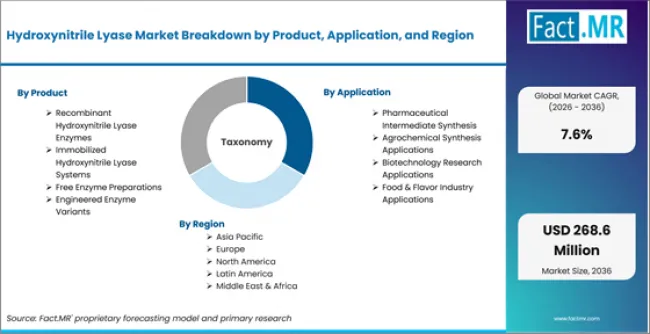
Hydroxynitrile Lyase Market is segmented by Product (Recombinant Hydroxynitrile Lyase Enzymes, Immobilized Hydroxynitrile Lyase Systems, Free Enzyme Preparations, Engineered Enzyme Variants), Application (Pharmaceutical Intermediate Synthesis, Agrochemical Synthesis Applications, Biotechnology Research Applications, Food & Flavor Industry Applications), End Use (Pharmaceutical Companies, Chemical Manufacturing Companies, Biotechnology Companies, Academic & Research Institutes), and Region, with forecasts covering the period from 2026 to 2036.
Hydroxynitrile Lyase Market Analysis and Forecast by Fact.MR
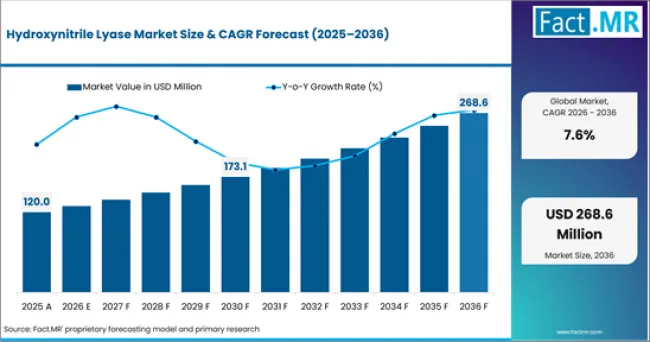
- The Hydroxynitrile Lyase Market is expected to grow from USD 129.1 million in 2026 to USD 268.6 million by 2036, at a 7.6% CAGR.
- driven by expanding pharmaceutical adoption of biocatalytic synthesis for chiral intermediates, growing preference for enzymatic processes over chemical catalysis in green chemistry manufacturing, and advancing recombinant enzyme engineering improving activity, stability, and substrate scope, with recombinant enzymes accounting .
- 44.8% share and pharmaceutical companies contributing 63.2% share as manufacturers prioritize enantioselective synthesis efficiency, regulatory compliance, and process sustainability.
Summary of Hydroxynitrile Lyase Market
- Market Snapshot
- In 2025, the global Hydroxynitrile Lyase Market was valued at approximately USD 120.0 million.
- The market is estimated to reach USD 129.1 million in 2026 and is projected to attain USD 268.6 million by 2036.
- The hydroxynitrile lyase market is likely to expand at a CAGR of 7.6% during the forecast period.
- The market is anticipated to create an absolute dollar opportunity of USD 139.5 million between 2026 and 2036.
- Recombinant hydroxynitrile lyase enzymes account for 44.8% of product segment share in 2026.
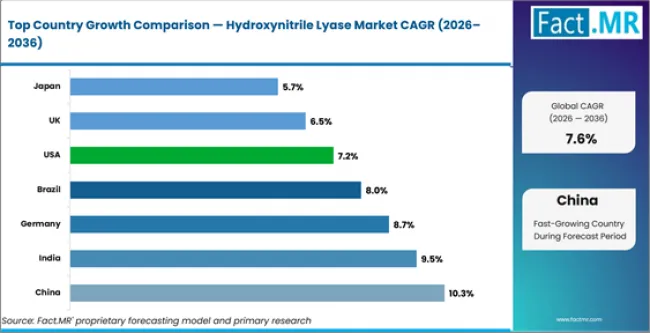
- China (10.2%) and India (9.5%) are the key growth markets during the forecast period.
- Demand and Growth Drivers
- Pharmaceutical industry adoption of biocatalytic synthesis routes for chiral intermediate production is the primary driver, as hydroxynitrile lyases enable enantioselective cyanohydrin formation with higher stereoselectivity and milder reaction conditions than traditional chemical catalysis.
- Green chemistry regulatory and corporate sustainability mandates are encouraging pharmaceutical manufacturers to replace stoichiometric metal catalysts and hazardous solvents with enzymatic processes that generate less waste and operate under ambient conditions.
- Advancing recombinant enzyme engineering using directed evolution and computational protein design is expanding the substrate scope, thermostability, and volumetric productivity of hydroxynitrile lyases, making biocatalytic routes commercially viable for a broader range of pharmaceutical and fine chemical intermediates.
- Growing contract development and manufacturing organization (CDMO) adoption of biocatalytic capabilities is expanding access to hydroxynitrile lyase technology for pharmaceutical companies that lack in-house enzyme screening and process development infrastructure.
- Product and Segment View
- Recombinant hydroxynitrile lyase enzymes account for 44.8% of the product segment in 2026, supported by their superior activity, consistency, and scalability compared to plant-extracted enzyme preparations that suffer from batch variability and limited substrate flexibility.
- Pharmaceutical companies represent 63.2% of end-use demand in 2026, reflecting the concentration of hydroxynitrile lyase procurement among drug manufacturers producing chiral intermediates for cardiovascular, antiviral, and central nervous system therapeutic programs.
- Liquid enzyme formulations lead the formulation segment with 68.4% share in 2026, as liquid preparations offer easier handling, dosing, and integration into existing reactor systems at pharmaceutical manufacturing scale.
- Key segmentation includes:
- Product Type: Recombinant Hydroxynitrile Lyase Enzymes, Plant-Extracted Enzyme Preparations, Immobilized Enzyme Systems, Engineered Variant Libraries
- End Use: Pharmaceutical Companies, Fine Chemical Manufacturers, Agrochemical Producers, Contract Research Organizations
- Formulation: Liquid Enzyme Formulations, Lyophilized Powder Preparations, Immobilized Solid Formulations
- These systems enable:
- Enantioselective cyanohydrin synthesis from aldehydes and ketones with enantiomeric excess typically exceeding 95%, enabling production of chiral building blocks for pharmaceutical intermediate synthesis.
- Ambient temperature and aqueous reaction conditions that eliminate the need for cryogenic cooling, anhydrous solvents, and hazardous metal catalysts required by traditional chemical cyanohydrin synthesis.
- Scalable biocatalytic process from milligram screening through kilogram manufacturing with consistent stereoselectivity, supporting pharmaceutical development from early discovery through commercial production.
- Geography and Competitive Outlook
- Europe leads the market, supported by established pharmaceutical biocatalysis infrastructure in Germany (8.8%), Switzerland, and the Netherlands, enzyme producer concentration, and EU green chemistry regulatory support.
- Asia Pacific is the fastest-growing region, with China (10.2%) and India (9.5%) expanding through pharmaceutical manufacturing growth, CDMO biocatalysis capability investment, and increasing fine chemical production for global pharmaceutical supply chains.
- North America maintains a significant share, with US pharmaceutical companies and CDMOs adopting biocatalytic routes for chiral intermediate production, supported by Codexis and other enzyme engineering platform companies.
- Novozymes (DSM-Firmenich), c-LEcta, Codexis, Enzymaster, Evonik Industries, BASF, Johnson Matthey, and Almac Group are among the key companies.
- Analyst Opinion
- Shambhu Nath Jha, Principal Consultant at Fact.MR, says 'The hydroxynitrile lyase market sits at the intersection of two powerful trends: pharmaceutical green chemistry adoption and enzyme engineering technology maturation. Ten years ago, enzymatic cyanohydrin synthesis was a laboratory curiosity. Today, recombinant enzyme engineering has produced variants with sufficient activity and stability for commercial pharmaceutical manufacturing. The market is still in early commercial scaling, with the most significant growth opportunity coming from CDMO adoption that makes biocatalytic capability accessible to smaller pharmaceutical companies without in-house enzyme development resources.'
Key Growth Drivers, Constraints, and Opportunities
Key Factors Driving Growth
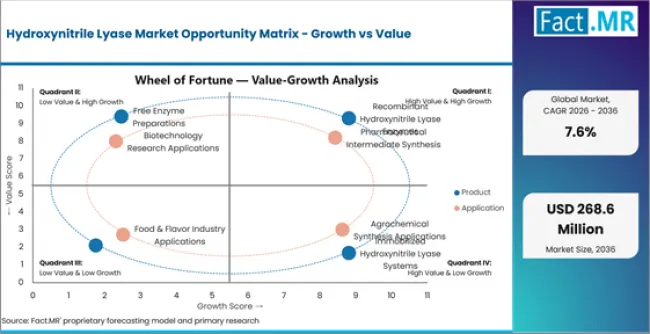
- Pharmaceutical industry green chemistry commitments are creating procurement preference for enzymatic synthesis routes that replace hazardous metal catalysts and organic solvents with biocatalytic processes operating under mild aqueous conditions, reducing environmental waste and improving worker safety.
- Recombinant enzyme engineering breakthroughs using directed evolution and computational protein design have expanded the practical substrate scope and thermal stability of hydroxynitrile lyases, making biocatalytic cyanohydrin synthesis commercially viable for pharmaceutical manufacturing scale.
- CDMO investment in biocatalysis capabilities is democratizing access to enzymatic synthesis, enabling small and mid-size pharmaceutical companies to adopt hydroxynitrile lyase processes through outsourced manufacturing without building in-house enzyme development infrastructure.
Key Market Constraints
- Enzyme development timelines of 6 to 18 months for new substrate optimization limit adoption speed for pharmaceutical programs with compressed development schedules, as chemical catalysis routes can often be implemented faster from known literature precedents.
- Production cost of engineered recombinant enzymes remains higher than commodity chemical catalysts on a per-reaction basis, creating a cost barrier for high-volume fine chemical applications where stereoselectivity requirements do not justify the enzymatic premium.
- Intellectual property complexity around engineered enzyme variants and their associated production organisms creates licensing and freedom-to-operate considerations that can complicate manufacturing scale-up and supplier diversification for pharmaceutical customers.
Key Opportunity Areas
- Expanding the biocatalytic toolbox through multi-enzyme cascade reactions that combine hydroxynitrile lyases with downstream enzymatic transformations is enabling more complex chiral intermediate synthesis in fewer steps, reducing manufacturing cost and waste.
- AI-driven enzyme engineering that uses machine learning to predict beneficial mutations is accelerating the development of improved hydroxynitrile lyase variants, reducing the time and cost of enzyme optimization for new pharmaceutical substrate targets.
- Growing pharmaceutical outsourcing to CDMOs in India and China is creating demand for biocatalytic capability investment at contract manufacturing facilities serving global pharmaceutical supply chains.
Segment-wise Analysis of the Hydroxynitrile Lyase Market
- Recombinant hydroxynitrile lyase enzymes hold 44.8% of the product segment in 2026, supported by superior consistency, scalability, and substrate flexibility compared to plant-extracted preparations.
- Pharmaceutical companies account for 63.2% of end-use demand in 2026, driven by chiral intermediate production requirements for cardiovascular, antiviral, and CNS therapeutic programs.
- Immobilized enzyme systems are the fastest-growing formulation type, as immobilization enables enzyme reuse across multiple reaction cycles, improving process economics for high-volume pharmaceutical manufacturing applications.
The hydroxynitrile lyase market is segmented by product type, end use, formulation, and region. By product type, the market covers recombinant enzymes, plant-extracted preparations, immobilized systems, and engineered variant libraries. By end use, coverage includes pharmaceutical companies, fine chemical manufacturers, agrochemical producers, and CROs. Recombinant enzymes lead by value due to their performance advantages, while immobilized formulations represent the highest growth format.
Which Product Segment Dominates the Hydroxynitrile Lyase Market?
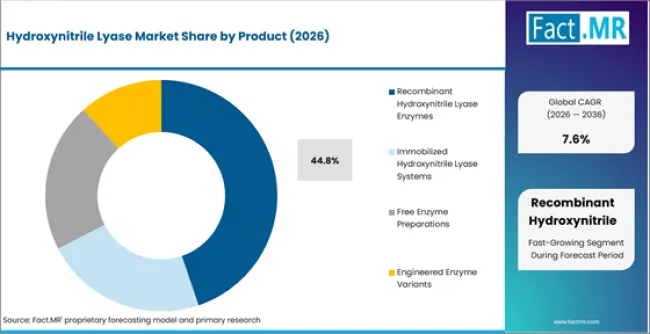
Recombinant hydroxynitrile lyase enzymes account for 44.8% of the product segment in 2026. Their leadership reflects the advantages of recombinant production in delivering consistent enzyme quality, higher specific activity, and broader substrate scope compared to plant-extracted preparations. Recombinant enzymes produced in bacterial or yeast expression systems can be engineered for specific substrate preferences and operational conditions, making them the preferred choice for pharmaceutical manufacturing applications.
Plant-extracted preparations hold a supporting position, primarily serving academic research and early-stage screening applications where cost and enzyme availability are prioritized over the optimization and consistency that recombinant systems provide for manufacturing scale.
Which End-Use Segment Dominates the Hydroxynitrile Lyase Market?
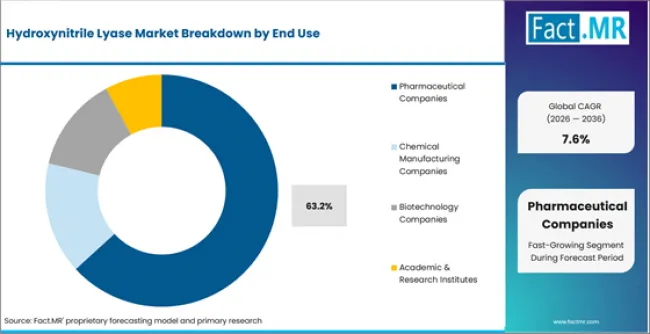
Pharmaceutical companies are expected to lead the end-use segment with a 63.2% share in 2026. This dominance reflects the concentration of chiral intermediate demand in pharmaceutical manufacturing, where hydroxynitrile lyase-catalyzed cyanohydrin synthesis provides enantioselective access to chiral building blocks used in the production of cardiovascular drugs, antiviral agents, and central nervous system therapeutics.
Fine chemical manufacturers and CDMOs hold growing positions, serving pharmaceutical customers through outsourced biocatalytic manufacturing services. The CDMO channel is expanding rapidly as smaller pharmaceutical companies adopt enzymatic synthesis through contract manufacturing rather than building in-house biocatalysis capability.
Which Technology Trend is Shaping the Next Phase of Growth in the Hydroxynitrile Lyase Market?
AI-driven enzyme engineering is the most significant technology trend shaping the hydroxynitrile lyase market. Machine learning models trained on protein structure and function data can predict beneficial mutations that improve enzyme activity, thermostability, and substrate acceptance with significantly fewer experimental iterations than traditional directed evolution approaches. This reduces enzyme development timelines from 12 to 18 months to 3 to 6 months for new substrate optimization, accelerating the adoption of biocatalytic routes in pharmaceutical programs with compressed development schedules.
The convergence of AI-driven enzyme engineering with automated high-throughput screening platforms is creating a step change in the speed and cost of developing new hydroxynitrile lyase variants for specific pharmaceutical targets. Companies including Codexis and Enzymaster that combine computational prediction with experimental validation infrastructure are positioned to capture the value created by faster enzyme optimization cycles.
Regional Outlook Across Key Markets
- China leads growth at 10.2%, driven by pharmaceutical manufacturing expansion, CDMO biocatalysis investment, and growing fine chemical production for global pharmaceutical supply chains.
- India follows at 9.5%, supported by pharmaceutical manufacturing growth under PLI incentives, CDMO capability development, and increasing adoption of biocatalytic processes at domestic API production facilities.
- Germany leads European growth at 8.8%, supported by established pharmaceutical biocatalysis infrastructure, c-LEcta and Evonik enzyme production capabilities, and EU green chemistry regulatory support.
- North America maintains a significant share, with Codexis enzyme engineering platform and US pharmaceutical company biocatalysis adoption driving demand.
.webp)
CAGR Table
| Country | CAGR (%) |
|---|---|
| China | 10.2% |
| India | 9.5% |
| Germany | 8.8% |
| UK | 7.5% |
| USA | 6.2% |
Source: Fact MR (FMR) analysis, based on proprietary forecasting model and primary research.
Hydroxynitrile Lyase Demand Trends in the United States
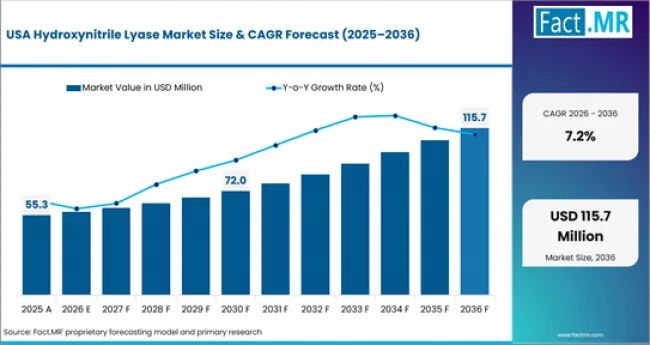
The US hydroxynitrile lyase market is projected to grow at a CAGR of 6.2% through 2036. Pharmaceutical company adoption of biocatalytic synthesis routes and Codexis enzyme engineering platform capability are the primary demand drivers. FDA green chemistry guidance supporting enzymatic process adoption in pharmaceutical manufacturing provides regulatory alignment, while CDMO biocatalysis investment at US contract manufacturing facilities expands enzyme process accessibility for smaller pharmaceutical programs.
- Codexis enzyme engineering platform provides US pharmaceutical companies with optimized hydroxynitrile lyase variants for specific chiral intermediate production targets.
- FDA green chemistry guidance supports pharmaceutical manufacturer adoption of enzymatic synthesis routes that reduce hazardous waste and improve process safety profiles.
China Hydroxynitrile Lyase Growth Assessment
Pharmaceutical manufacturing expansion and CDMO biocatalysis capability investment are creating growing demand for hydroxynitrile lyase enzymes in China. Enzymaster and other domestic enzyme engineering companies are developing local production and optimization capability, reducing import dependency for pharmaceutical biocatalyst supply. Growing fine chemical production for global pharmaceutical supply chains creates additional demand for enantioselective biocatalytic processes at Chinese manufacturing facilities.
- Domestic enzyme engineering companies including Enzymaster are building local hydroxynitrile lyase optimization and production capability for pharmaceutical customers.
- CDMO biocatalysis investment at Chinese contract manufacturing facilities creates demand for enzymatic synthesis capability serving global pharmaceutical supply chains.
India Hydroxynitrile Lyase Market Opportunity Outlook
PLI-backed pharmaceutical manufacturing expansion and India growing position as a global API production hub are creating demand for biocatalytic process capabilities at domestic manufacturing facilities. The adoption of enzymatic synthesis routes by Indian pharmaceutical companies and CDMOs is increasing as green chemistry requirements from Western pharmaceutical customers flow through contract manufacturing supply chain specifications.
- PLI-backed pharmaceutical manufacturing creates demand for advanced biocatalytic capabilities including hydroxynitrile lyase processes at Indian API production facilities.
- Western pharmaceutical customer green chemistry requirements are driving biocatalysis adoption at Indian CDMO facilities serving global drug development programs.
Germany Hydroxynitrile Lyase Demand Analysis
Established pharmaceutical biocatalysis infrastructure and enzyme production capabilities at c-LEcta and Evonik position Germany as a primary supply center for hydroxynitrile lyase enzymes serving European pharmaceutical manufacturing. EU green chemistry regulatory support and established academic-industry collaboration in enzyme engineering at German research institutions provide the innovation foundation for continued market leadership in pharmaceutical biocatalysis technology.
- c-LEcta and Evonik enzyme production capabilities position Germany as a European supply hub for pharmaceutical-grade hydroxynitrile lyase enzymes.
- EU green chemistry regulations and German academic-industry enzyme engineering collaboration support continued biocatalysis technology leadership.
Competitive Benchmarking and Company Positioning
Hydroxynitrile Lyase Market Analysis By Company
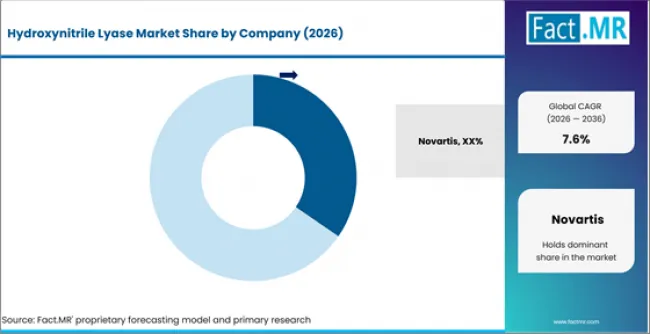
- Novozymes (DSM-Firmenich) and Codexis hold leading positions through comprehensive enzyme engineering platforms, established pharmaceutical customer relationships, and broad biocatalyst portfolios that include hydroxynitrile lyase variants alongside complementary enzyme classes for multi-step synthesis.
- c-LEcta and Evonik Industries compete through focused pharmaceutical enzyme production, European manufacturing capability, and application development expertise for chiral intermediate synthesis programs.
- Enzyme engineering platform capability and pharmaceutical regulatory documentation are the primary competitive differentiators, as pharmaceutical manufacturers require enzyme suppliers with demonstrated cGMP production, stability documentation, and process development support.
The competitive landscape is concentrated among a small number of specialized enzyme producers and engineering platform companies. Novozymes (DSM-Firmenich) and Codexis compete through broad biocatalysis platforms, AI-driven enzyme engineering, and established pharmaceutical customer bases. These companies provide complete solutions from enzyme screening through process development and manufacturing-scale supply.
c-LEcta, Evonik Industries, and Enzymaster compete through focused enzyme development and production capabilities serving pharmaceutical and fine chemical customers. Almac Group, Johnson Matthey, and BASF provide biocatalytic services and enzyme supply as components of broader pharmaceutical chemistry platforms.
Strategic priorities include accelerating AI-driven enzyme engineering to reduce development timelines, expanding cGMP enzyme production capacity, building pharmaceutical regulatory documentation, and supporting CDMO adoption of biocatalytic processes through licensing and technical transfer programs.
Key Companies in the Hydroxynitrile Lyase Market
- Novozymes (DSM-Firmenich) and Codexis Inc. are among the leading participants in the hydroxynitrile lyase market, supported by comprehensive enzyme engineering platforms and established pharmaceutical industry relationships.
- c-LEcta GmbH, Evonik Industries AG, and Enzymaster (Ningbo) hold focused positions through pharmaceutical enzyme production and application development expertise.
- BASF SE, Johnson Matthey, Almac Group, and Enzymicals AG compete through broader pharmaceutical chemistry platforms that include biocatalytic services alongside chemical catalysis and process development offerings.
Recent Industry Developments
- Codexis, Engineered Enzyme Platform Expansion for Pharmaceutical Biocatalysis (2025)
- Codexis expanded its engineered enzyme platform including hydroxynitrile lyase variants with improved activity and stability for pharmaceutical intermediate production, supporting growing demand from manufacturers adopting biocatalytic synthesis at commercial scale.
- c-LEcta, Recombinant Enzyme Production Scale-up in Leipzig, Germany (2025)
- c-LEcta advanced recombinant enzyme production scale-up at its Leipzig facility, supporting growing pharmaceutical and fine chemical demand for hydroxynitrile lyase and other biocatalytic enzymes for enantioselective synthesis programs.
- Novozymes and DSM-Firmenich, Biocatalysis Portfolio Integration (2025 to 2026)
- The integration of Novozymes and DSM-Firmenich enzyme and biocatalysis portfolios consolidated capabilities in industrial enzyme production and pharmaceutical application support, strengthening market positioning in specialty enzyme supply for chiral intermediate manufacturing.
Leading Companies Shaping the Hydroxynitrile Lyase Market
- Novozymes A/S (DSM-Firmenich)
- c-LEcta GmbH
- Codexis Inc.
- Enzymaster (Ningbo)
- Evonik Industries AG
- BASF SE
- Johnson Matthey
- Almac Group
- Enzymicals AG
- DSM-Firmenich
Sources and Research References
- Codexis Inc. Enzyme engineering platform documentation and pharmaceutical biocatalysis applications.
- c-LEcta GmbH. Recombinant enzyme production and pharmaceutical enzyme supply documentation.
- Novozymes (DSM-Firmenich). Industrial enzyme portfolio and biocatalysis capability integration updates.
- FDA. Green chemistry guidance for pharmaceutical manufacturing process development.
- Primary interviews with enzyme producers, pharmaceutical manufacturers, CDMOs, and process development organizations.
This bibliography is provided for reader reference and is not exhaustive. The full report contains the complete reference list and detailed citations.
Key Questions This Report Addresses
- What is the current and future size of the Hydroxynitrile Lyase Market?
- How fast is the market expected to grow between 2026 and 2036?
- Which product type leads by 2026?
- Which end-use segment accounts for the highest demand?
- What factors drive pharmaceutical adoption of hydroxynitrile lyases?
- How is AI-driven enzyme engineering influencing the market?
- Why are China and India the fastest-growing markets?
- How are CDMOs supporting biocatalysis adoption?
- Which countries show the fastest growth through 2036?
- Who are the key companies?
- How does Fact.MR validate the forecast?
Hydroxynitrile Lyase Market Definition
The Hydroxynitrile Lyase Market covers enzymes that catalyze the enantioselective addition of hydrogen cyanide to aldehydes and ketones to form chiral cyanohydrins, used as biocatalysts in pharmaceutical intermediate, fine chemical, and agrochemical production.
Hydroxynitrile Lyase Market Inclusions
- The scope covers global and regional market size and forecasts for 2026 to 2036 across product type, end use, formulation type, and region.
- It includes recombinant, plant-extracted, immobilized, and engineered variant hydroxynitrile lyase products for pharmaceutical, fine chemical, and agrochemical applications.
- The report covers enzyme engineering trends, biocatalysis technology developments, and the competitive landscape of leading enzyme producers.
Hydroxynitrile Lyase Market Exclusions
- The scope excludes general-purpose industrial enzymes not classified as hydroxynitrile lyases, including lipases, proteases, and transaminases used in other biocatalytic applications.
- It excludes chemical catalysts, chiral resolution reagents, and non-enzymatic asymmetric synthesis technologies.
- The report excludes downstream finished pharmaceutical products and completed fine chemical intermediates.
Hydroxynitrile Lyase Market Research Methodology
- The methodology combines secondary research, primary interviews, and forecast modelling.
- It draws on 75+ secondary sources and benchmarks 35+ company product portfolios.
- Market sizing covers 30+ countries through a demand-side model, supported by top-down validation.
- Key inputs include pharmaceutical intermediate production data, biocatalysis adoption rates, enzyme engineering technology progress, and CDMO capability investment tracking.
- Primary validation includes 20+ interviews across enzyme producers, pharmaceutical manufacturers, CDMOs, and process development organizations.
Scope of Analysis

| Parameter | Details |
|---|---|
| Quantitative Units | USD 129.1 million to USD 268.6 million, at a CAGR of 7.6% |
| Market Definition | The Hydroxynitrile Lyase Market covers enzymes catalyzing enantioselective cyanohydrin formation for pharmaceutical intermediate, fine chemical, and agrochemical production. |
| Regions Covered | North America, Latin America, Europe, East Asia, South Asia and Pacific, Middle East and Africa |
| Countries Covered | USA, Canada, UK, Germany, China, India, 30 plus countries |
| Key Companies | Novozymes (DSM-Firmenich), c-LEcta, Codexis, Enzymaster, Evonik, BASF, Johnson Matthey, Almac Group, Enzymicals |
| Forecast Period | 2026 to 2036 |
| Approach | Hybrid demand-side methodology built on pharmaceutical intermediate production data, biocatalysis adoption rates, enzyme engineering technology assessment, and interviews across enzyme producers and pharmaceutical manufacturers. |
Hydroxynitrile Lyase Market Segmentation
-
Hydroxynitrile Lyase Market Segmented by Product:
- Recombinant Hydroxynitrile Lyase Enzymes
- Microbial Derived HNL Enzymes
- Bacterial Expression Systems
- Yeast Based Expression Systems
- Plant Derived HNL Enzymes
- Cassava Based Enzymes
- Almond Derived Enzymes
- Microbial Derived HNL Enzymes
- Immobilized Hydroxynitrile Lyase Systems
- Carrier Bound Enzymes
- Polymer Immobilized Enzymes
- Silica Immobilized Enzymes
- Magnetic Immobilized Enzymes
- Nano Particle Supported Enzymes
- Reusable Enzyme Beads
- Carrier Bound Enzymes
- Free Enzyme Preparations
- Liquid Enzyme Formulations
- Buffered Enzyme Solutions
- Stabilized Enzyme Liquids
- Lyophilized Enzyme Powders
- Freeze Dried Enzyme Kits
- Long Shelf Life Enzyme Powders
- Liquid Enzyme Formulations
- Engineered Enzyme Variants
- Directed Evolution Enzymes
- High Selectivity Variants
- Thermostable Enzyme Variants
- Protein Modified Enzymes
- Site Directed Mutated Enzymes
- Enhanced Catalytic Enzymes
- Directed Evolution Enzymes
- Recombinant Hydroxynitrile Lyase Enzymes
-
Hydroxynitrile Lyase Market Segmented by Application:
- Pharmaceutical Intermediate Synthesis
- Chiral Drug Production
- Enantiomer Specific Synthesis
- Active Pharmaceutical Ingredient Synthesis
- Fine Chemical Manufacturing
- Chiral Alcohol Production
- Chiral Cyanohydrin Production
- Chiral Drug Production
- Agrochemical Synthesis Applications
- Pesticide Intermediate Production
- Herbicide Intermediate Synthesis
- Fungicide Intermediate Production
- Crop Protection Chemical Synthesis
- Stereoselective Agrochemical Pathways
- Bio Based Agrochemical Manufacturing
- Pesticide Intermediate Production
- Biotechnology Research Applications
- Enzyme Engineering Research
- Protein Engineering Studies
- Metabolic Pathway Research
- Biocatalysis Research
- Laboratory Scale Biotransformation
- Industrial Process Optimization Studies
- Enzyme Engineering Research
- Food & Flavor Industry Applications
- Flavor Compound Synthesis
- Natural Aroma Compound Production
- Fragrance Intermediate Production
- Food Ingredient Processing
- Bio Based Flavor Development
- Enzymatic Food Processing Systems
- Flavor Compound Synthesis
- Pharmaceutical Intermediate Synthesis
-
Hydroxynitrile Lyase Market Segmented by End Use:
- Pharmaceutical Companies
- Large Scale Pharma Manufacturers
- Global Drug Production Firms
- Generic Drug Manufacturers
- Specialty Pharma Companies
- Chiral Drug Developers
- Precision Medicine Firms
- Large Scale Pharma Manufacturers
- Chemical Manufacturing Companies
- Fine Chemical Producers
- Specialty Chemical Synthesizers
- Industrial Intermediate Manufacturers
- Agrochemical Manufacturers
- Crop Protection Companies
- Pesticide Production Firms
- Fine Chemical Producers
- Biotechnology Companies
- Industrial Biotech Firms
- Enzyme Manufacturing Companies
- Biocatalysis Solution Providers
- Research Biotech Firms
- Academic Spin Off Companies
- Enzyme Innovation Labs
- Industrial Biotech Firms
- Academic & Research Institutes
- University Research Labs
- Biochemistry Departments
- Molecular Biology Labs
- Government Research Institutes
- Chemical Research Centers
- Biotech Innovation Institutes
- University Research Labs
- Pharmaceutical Companies
-
Hydroxynitrile Lyase Market Segmented by Technology:
- Enzyme Immobilization Technology
- Polymer Based Immobilization
- Cross Linked Polymer Systems
- Hydrogel Based Supports
- Inorganic Support Systems
- Silica Based Immobilization
- Magnetic Particle Supports
- Polymer Based Immobilization
- Protein Engineering Technology
- Directed Evolution Platforms
- High Throughput Mutation Systems
- Adaptive Selection Platforms
- Rational Design Engineering
- Active Site Modification Systems
- Stability Enhancement Engineering
- Directed Evolution Platforms
- Biocatalysis Process Technology
- Continuous Flow Biocatalysis
- Microreactor Based Systems
- Packed Bed Reactor Systems
- Batch Biocatalysis Systems
- Industrial Scale Batch Reactors
- Controlled Reaction Systems
- Continuous Flow Biocatalysis
- Fermentation & Expression Technology
- Microbial Fermentation Systems
- Bacterial Expression Platforms
- Yeast Expression Platforms
- Cell Free Expression Systems
- In Vitro Protein Synthesis
- Synthetic Biology Platforms
- Microbial Fermentation Systems
- Enzyme Immobilization Technology
-
Hydroxynitrile Lyase Market Segmented by Formulation:
- Liquid Enzyme Formulations
- Buffered Enzyme Solutions
- pH Stabilized Enzyme Liquids
- Temperature Controlled Solutions
- Stabilized Aqueous Formulations
- Preservative Enhanced Solutions
- Shelf Stable Liquid Enzymes
- Buffered Enzyme Solutions
- Solid Enzyme Formulations
- Lyophilized Powder Systems
- Freeze Dried Enzyme Powders
- High Stability Dry Enzyme Kits
- Granular Enzyme Formulations
- Controlled Release Granules
- Coated Enzyme Particles
- Lyophilized Powder Systems
- Immobilized Enzyme Systems
- Carrier Bound Systems
- Polymer Entrapped Enzymes
- Gel Matrix Immobilized Systems
- Reusable Catalytic Systems
- Multi Cycle Reaction Enzymes
- Industrial Reuse Biocatalysts
- Carrier Bound Systems
- Engineered Enzyme Formulations
- Liquid Enzyme Formulations
-
Hydroxynitrile Lyase Market Segmented by Distribution Channel:
- Direct Manufacturer Sales
- Pharma Direct Supply Contracts
- API Manufacturing Agreements
- Biotech Supply Partnerships
- Chemical Industry Contracts
- Bulk Enzyme Supply Agreements
- Industrial Biocatalyst Contracts
- Pharma Direct Supply Contracts
- Specialty Chemical Distributors
- Regional Life Science Distributors
- Laboratory Chemical Suppliers
- Enzyme Solution Distributors
- Global Chemical Traders
- Cross Border Biochemical Supply Chains
- International Enzyme Trading Firms
- Regional Life Science Distributors
- Online Scientific Platforms
- B2B Research Portals
- Laboratory Procurement Platforms
- Digital Chemical Marketplaces
- Manufacturer E Commerce Portals
- Direct Order Enzyme Platforms
- Subscription Based Supply Systems
- B2B Research Portals
- Research Supply Networks
- Academic Supply Chains
- University Procurement Systems
- Research Lab Distribution Networks
- Government Supply Channels
- Public Research Procurement Programs
- National Lab Supply Contracts
- Academic Supply Chains
- Direct Manufacturer Sales
-
Hydroxynitrile Lyase Market by Region:
- North America
- USA
- Canada
- Mexico
- Latin America
- Brazil
- Chile
- Rest of Latin America
- Western Europe
- Germany
- UK
- Italy
- Spain
- France
- Nordic
- BENELUX
- Rest of Western Europe
- Eastern Europe
- Russia
- Poland
- Hungary
- Balkan & Baltic
- Rest of Eastern Europe
- East Asia
- China
- Japan
- South Korea
- South Asia and Pacific
- India
- ASEAN
- Australia & New Zealand
- Rest of South Asia and Pacific
- Middle East & Africa
- Kingdom of Saudi Arabia
- Other GCC Countries
- Turkiye
- South Africa
- Other African Union
- Rest of Middle East & Africa
- North America
- Frequently Asked Questions -
How big is the hydroxynitrile lyase market in 2026?
The global hydroxynitrile lyase market is estimated to be valued at USD 129.1 million in 2026.
What will be the size of hydroxynitrile lyase market in 2036?
The market size for the hydroxynitrile lyase market is projected to reach USD 268.6 million by 2036.
How much will be the hydroxynitrile lyase market growth between 2026 and 2036?
The hydroxynitrile lyase market is expected to grow at a 7.6% CAGR between 2026 and 2036.
What are the key products in the hydroxynitrile lyase market?
The key products in the hydroxynitrile lyase market are Recombinant Hydroxynitrile Lyase Enzymes, Immobilized Hydroxynitrile Lyase Systems, Free Enzyme Preparations and Engineered Enzyme Variants.
Which application segment is expected to contribute significant share in the hydroxynitrile lyase market in 2026?
In terms of application, pharmaceutical intermediate synthesis segment is expected to command 71.9% share in the hydroxynitrile lyase market in 2026.
Table of Content
- Key Takeaways
- Market Size and CAGR
- Top Growth Driver
- Fastest Growing Segment
- Leading Region
- Key Companies
- Emerging Opportunities
- Executive Summary
- Global Market Outlook
- Demand-side Trends
- Supply-side Trends
- Technology Roadmap Analysis
- Analysis and Recommendations
- Analyst Perspective (What is happening? Why now? What should investors know?)
- Key Questions Answered
- How large is the market?
- What is the CAGR?
- What are key trends?
- Which region dominates?
- Who are the leaders?
- Market Overview
- Market Coverage / Taxonomy
- Market Definition / Scope / Limitations
- Research Methodology
- Chapter Orientation
- Analytical Lens and Working Hypotheses
- Market Structure, Signals, and Trend Drivers
- Benchmarking and Cross-market Comparability
- Market Sizing, Forecasting, and Opportunity Mapping
- Research Design and Evidence Framework
- Desk Research Programme (Secondary Evidence)
- Expert Input and Fieldwork (Primary Evidence)
- Tooling, Models, and Reference Databases
- Data Engineering and Model Build
- Quality Assurance and Audit Trail
- Market Background
- Market Dynamics (Drivers, Restraints, Opportunity, Trends)
- Scenario Forecast (Optimistic, Likely, Conservative)
- Impact Analysis
- AI Impact
- Sustainability Impact
- Regulatory Impact
- Technology Impact
- Consumer / Buyer Analysis
- Purchase Drivers
- Adoption Barriers
- Buyer Journey
- Opportunity Map Analysis
- Product Life Cycle Analysis
- Supply Chain Analysis
- Investment Feasibility Matrix
- Value Chain Analysis
- PESTLE and Porter's Analysis
- Regulatory Landscape
- Regional Parent Market Outlook
- Production and Consumption Statistics
- Import and Export Statistics
- Global Market Analysis and Forecast, 2021 to 2036
- Historical Market Size Value (USD Million) Analysis, 2021 to 2025
- Current and Future Market Size Value (USD Million) Projections, 2026 to 2036
- Y-o-Y Growth Trend Analysis
- Absolute $ Opportunity Analysis
- Global Market Pricing Analysis, 2021 to 2036
- Global Market Analysis and Forecast, By Product, 2021 to 2036
- Introduction / Key Findings
- Historical Market Size Value (USD Million) Analysis By Product, 2021 to 2025
- Current and Future Market Size Value (USD Million) Analysis and Forecast By Product, 2026 to 2036
- Recombinant Hydroxynitrile Lyase Enzymes
- Microbial Derived HNL Enzymes
- Plant Derived HNL Enzymes
- Immobilized Hydroxynitrile Lyase Systems
- Carrier Bound Enzymes
- Magnetic Immobilized Enzymes
- Free Enzyme Preparations
- Liquid Enzyme Formulations
- Lyophilized Enzyme Powders
- Engineered Enzyme Variants
- Directed Evolution Enzymes
- Protein Modified Enzymes
- Recombinant Hydroxynitrile Lyase Enzymes
- Y-o-Y Growth Trend Analysis By Product, 2021 to 2025
- Absolute $ Opportunity Analysis By Product, 2026 to 2036
- Global Market Analysis and Forecast, By Application, 2021 to 2036
- Introduction / Key Findings
- Historical Market Size Value (USD Million) Analysis By Application, 2021 to 2025
- Current and Future Market Size Value (USD Million) Analysis and Forecast By Application, 2026 to 2036
- Pharmaceutical Intermediate Synthesis
- Chiral Drug Production
- Fine Chemical Manufacturing
- Agrochemical Synthesis Applications
- Pesticide Intermediate Production
- Crop Protection Chemical Synthesis
- Biotechnology Research Applications
- Enzyme Engineering Research
- Biocatalysis Research
- Food & Flavor Industry Applications
- Flavor Compound Synthesis
- Food Ingredient Processing
- Pharmaceutical Intermediate Synthesis
- Y-o-Y Growth Trend Analysis By Application, 2021 to 2025
- Absolute $ Opportunity Analysis By Application, 2026 to 2036
- Global Market Analysis and Forecast, By End Use, 2021 to 2036
- Introduction / Key Findings
- Historical Market Size Value (USD Million) Analysis By End Use, 2021 to 2025
- Current and Future Market Size Value (USD Million) Analysis and Forecast By End Use, 2026 to 2036
- Pharmaceutical Companies
- Large Scale Pharma Manufacturers
- Specialty Pharma Companies
- Chemical Manufacturing Companies
- Fine Chemical Producers
- Agrochemical Manufacturers
- Biotechnology Companies
- Industrial Biotech Firms
- Research Biotech Firms
- Academic & Research Institutes
- University Research Labs
- Government Research Institutes
- Pharmaceutical Companies
- Y-o-Y Growth Trend Analysis By End Use, 2021 to 2025
- Absolute $ Opportunity Analysis By End Use, 2026 to 2036
- Global Market Analysis and Forecast, By Technology, 2021 to 2036
- Introduction / Key Findings
- Historical Market Size Value (USD Million) Analysis By Technology, 2021 to 2025
- Current and Future Market Size Value (USD Million) Analysis and Forecast By Technology, 2026 to 2036
- Enzyme Immobilization Technology
- Polymer Based Immobilization
- Inorganic Support Systems
- Protein Engineering Technology
- Directed Evolution Platforms
- Rational Design Engineering
- Biocatalysis Process Technology
- Continuous Flow Biocatalysis
- Batch Biocatalysis Systems
- Fermentation & Expression Technology
- Microbial Fermentation Systems
- Cell Free Expression Systems
- Enzyme Immobilization Technology
- Y-o-Y Growth Trend Analysis By Technology, 2021 to 2025
- Absolute $ Opportunity Analysis By Technology, 2026 to 2036
- Global Market Analysis and Forecast, By Formulation, 2021 to 2036
- Introduction / Key Findings
- Historical Market Size Value (USD Million) Analysis By Formulation, 2021 to 2025
- Current and Future Market Size Value (USD Million) Analysis and Forecast By Formulation, 2026 to 2036
- Liquid Enzyme Formulations
- Buffered Enzyme Solutions
- Stabilized Aqueous Formulations
- Solid Enzyme Formulations
- Lyophilized Powder Systems
- Granular Enzyme Formulations
- Immobilized Enzyme Systems
- Carrier Bound Systems
- Reusable Catalytic Systems
- Engineered Enzyme Formulations
- Liquid Enzyme Formulations
- Y-o-Y Growth Trend Analysis By Formulation, 2021 to 2025
- Absolute $ Opportunity Analysis By Formulation, 2026 to 2036
- Global Market Analysis and Forecast, By Distribution Channel
- Introduction / Key Findings
- Historical Market Size Value (USD Million) Analysis By Distribution Channel, 2021 to 2025
- Current and Future Market Size Value (USD Million) Analysis and Forecast By Distribution Channel, 2026 to 2036
- Direct Manufacturer Sales
- Pharma Direct Supply Contracts
- Chemical Industry Contracts
- Specialty Chemical Distributors
- Regional Life Science Distributors
- Global Chemical Traders
- Online Scientific Platforms
- B2B Research Portals
- Manufacturer E Commerce Portals
- Research Supply Networks
- Academic Supply Chains
- Government Supply Channels
- Direct Manufacturer Sales
- Y-o-Y Growth Trend Analysis By Distribution Channel, 2021 to 2025
- Absolute $ Opportunity Analysis By Distribution Channel, 2026 to 2036
- Global Market Analysis and Forecast, By Region, 2021 to 2036
- Introduction
- Historical Market Size Value (USD Million) Analysis By Region, 2021 to 2025
- Current Market Size Value (USD Million) Analysis and Forecast By Region, 2026 to 2036
- North America
- Latin America
- Western Europe
- Eastern Europe
- East Asia
- South Asia and Pacific
- Middle East & Africa
- Market Attractiveness Analysis By Region
- North America Market Analysis and Forecast, By Country, 2021 to 2036
- Historical Market Size Value (USD Million) Trend Analysis By Market Taxonomy, 2021 to 2025
- Market Size Value (USD Million) Forecast By Market Taxonomy, 2026 to 2036
- By Country
- USA
- Canada
- Mexico
- By Product
- By Application
- By End Use
- By Technology
- By Formulation
- By Distribution Channel
- By Country
- Market Attractiveness Analysis
- By Country
- By Product
- By Application
- By End Use
- By Technology
- By Formulation
- By Distribution Channel
- Key Takeaways
- Latin America Market Analysis and Forecast, By Country
- Historical Market Size Value (USD Million) Trend Analysis By Market Taxonomy, 2021 to 2025
- Market Size Value (USD Million) Forecast By Market Taxonomy, 2026 to 2036
- By Country
- Brazil
- Chile
- Rest of Latin America
- By Product
- By Application
- By End Use
- By Technology
- By Formulation
- By Distribution Channel
- By Country
- Market Attractiveness Analysis
- By Country
- By Product
- By Application
- By End Use
- By Technology
- By Formulation
- By Distribution Channel
- Key Takeaways
- Western Europe Market Analysis and Forecast, By Country
- Historical Market Size Value (USD Million) Trend Analysis By Market Taxonomy, 2021 to 2025
- Market Size Value (USD Million) Forecast By Market Taxonomy, 2026 to 2036
- By Country
- Germany
- UK
- Italy
- Spain
- France
- Nordic
- BENELUX
- Rest of Western Europe
- By Product
- By Application
- By End Use
- By Technology
- By Formulation
- By Distribution Channel
- By Country
- Market Attractiveness Analysis
- By Country
- By Product
- By Application
- By End Use
- By Technology
- By Formulation
- By Distribution Channel
- Key Takeaways
- Eastern Europe Market Analysis and Forecast, By Country
- Historical Market Size Value (USD Million) Trend Analysis By Market Taxonomy, 2021 to 2025
- Market Size Value (USD Million) Forecast By Market Taxonomy, 2026 to 2036
- By Country
- Russia
- Poland
- Hungary
- Balkan & Baltic
- Rest of Eastern Europe
- By Product
- By Application
- By End Use
- By Technology
- By Formulation
- By Distribution Channel
- By Country
- Market Attractiveness Analysis
- By Country
- By Product
- By Application
- By End Use
- By Technology
- By Formulation
- By Distribution Channel
- Key Takeaways
- East Asia Market Analysis and Forecast, By Country
- Historical Market Size Value (USD Million) Trend Analysis By Market Taxonomy, 2021 to 2025
- Market Size Value (USD Million) Forecast By Market Taxonomy, 2026 to 2036
- By Country
- China
- Japan
- South Korea
- By Product
- By Application
- By End Use
- By Technology
- By Formulation
- By Distribution Channel
- By Country
- Market Attractiveness Analysis
- By Country
- By Product
- By Application
- By End Use
- By Technology
- By Formulation
- By Distribution Channel
- Key Takeaways
- South Asia and Pacific Market Analysis and Forecast, By Country
- Historical Market Size Value (USD Million) Trend Analysis By Market Taxonomy, 2021 to 2025
- Market Size Value (USD Million) Forecast By Market Taxonomy, 2026 to 2036
- By Country
- India
- ASEAN
- Australia & New Zealand
- Rest of South Asia and Pacific
- By Product
- By Application
- By End Use
- By Technology
- By Formulation
- By Distribution Channel
- By Country
- Market Attractiveness Analysis
- By Country
- By Product
- By Application
- By End Use
- By Technology
- By Formulation
- By Distribution Channel
- Key Takeaways
- Middle East & Africa Market Analysis and Forecast, By Country
- Historical Market Size Value (USD Million) Trend Analysis By Market Taxonomy, 2021 to 2025
- Market Size Value (USD Million) Forecast By Market Taxonomy, 2026 to 2036
- By Country
- Kingdom of Saudi Arabia
- Other GCC Countries
- Turkiye
- South Africa
- Other African Union
- Rest of Middle East & Africa
- By Product
- By Application
- By End Use
- By Technology
- By Formulation
- By Distribution Channel
- By Country
- Market Attractiveness Analysis
- By Country
- By Product
- By Application
- By End Use
- By Technology
- By Formulation
- By Distribution Channel
- Key Takeaways
- Key Countries Market Analysis
- USA
- Pricing Analysis
- Market Share Analysis, 2025
- By Product
- By Application
- By End Use
- By Technology
- By Formulation
- By Distribution Channel
- Canada
- Pricing Analysis
- Market Share Analysis, 2025
- By Product
- By Application
- By End Use
- By Technology
- By Formulation
- By Distribution Channel
- Mexico
- Pricing Analysis
- Market Share Analysis, 2025
- By Product
- By Application
- By End Use
- By Technology
- By Formulation
- By Distribution Channel
- Brazil
- Pricing Analysis
- Market Share Analysis, 2025
- By Product
- By Application
- By End Use
- By Technology
- By Formulation
- By Distribution Channel
- Chile
- Pricing Analysis
- Market Share Analysis, 2025
- By Product
- By Application
- By End Use
- By Technology
- By Formulation
- By Distribution Channel
- Germany
- Pricing Analysis
- Market Share Analysis, 2025
- By Product
- By Application
- By End Use
- By Technology
- By Formulation
- By Distribution Channel
- UK
- Pricing Analysis
- Market Share Analysis, 2025
- By Product
- By Application
- By End Use
- By Technology
- By Formulation
- By Distribution Channel
- Italy
- Pricing Analysis
- Market Share Analysis, 2025
- By Product
- By Application
- By End Use
- By Technology
- By Formulation
- By Distribution Channel
- Spain
- Pricing Analysis
- Market Share Analysis, 2025
- By Product
- By Application
- By End Use
- By Technology
- By Formulation
- By Distribution Channel
- France
- Pricing Analysis
- Market Share Analysis, 2025
- By Product
- By Application
- By End Use
- By Technology
- By Formulation
- By Distribution Channel
- India
- Pricing Analysis
- Market Share Analysis, 2025
- By Product
- By Application
- By End Use
- By Technology
- By Formulation
- By Distribution Channel
- ASEAN
- Pricing Analysis
- Market Share Analysis, 2025
- By Product
- By Application
- By End Use
- By Technology
- By Formulation
- By Distribution Channel
- Australia & New Zealand
- Pricing Analysis
- Market Share Analysis, 2025
- By Product
- By Application
- By End Use
- By Technology
- By Formulation
- By Distribution Channel
- China
- Pricing Analysis
- Market Share Analysis, 2025
- By Product
- By Application
- By End Use
- By Technology
- By Formulation
- By Distribution Channel
- Japan
- Pricing Analysis
- Market Share Analysis, 2025
- By Product
- By Application
- By End Use
- By Technology
- By Formulation
- By Distribution Channel
- South Korea
- Pricing Analysis
- Market Share Analysis, 2025
- By Product
- By Application
- By End Use
- By Technology
- By Formulation
- By Distribution Channel
- Russia
- Pricing Analysis
- Market Share Analysis, 2025
- By Product
- By Application
- By End Use
- By Technology
- By Formulation
- By Distribution Channel
- Poland
- Pricing Analysis
- Market Share Analysis, 2025
- By Product
- By Application
- By End Use
- By Technology
- By Formulation
- By Distribution Channel
- Hungary
- Pricing Analysis
- Market Share Analysis, 2025
- By Product
- By Application
- By End Use
- By Technology
- By Formulation
- By Distribution Channel
- Kingdom of Saudi Arabia
- Pricing Analysis
- Market Share Analysis, 2025
- By Product
- By Application
- By End Use
- By Technology
- By Formulation
- By Distribution Channel
- Turkiye
- Pricing Analysis
- Market Share Analysis, 2025
- By Product
- By Application
- By End Use
- By Technology
- By Formulation
- By Distribution Channel
- South Africa
- Pricing Analysis
- Market Share Analysis, 2025
- By Product
- By Application
- By End Use
- By Technology
- By Formulation
- By Distribution Channel
- USA
- Market Structure Analysis
- Competition Dashboard
- Competition Benchmarking
- Market Share Analysis of Top Players
- By Regional
- By Product
- By Application
- By End Use
- By Technology
- By Formulation
- By Distribution Channel
- Emerging Startups
- Innovation Benchmarking
- Competition Analysis
- Competition Deep Dive
- Novartis
- Overview
- Product Portfolio
- Profitability by Market Segments (Product/Age /Sales Channel/Region)
- Sales Footprint
- Strategy Overview
- Marketing Strategy
- Product Strategy
- Channel Strategy
- AstraZeneca
- Bristol-Myers Squibb
- Pfizer
- Sanofi
- Johnson & Johnson
- Roche
- Merck & Co. Pharmaceutical
- Bayer Crop Science
- Syngenta
- BASF
- Corteva
- FMC
- Novartis
- Competition Deep Dive
- Case Studies
- Success Stories
- Recent Developments
- Assumptions & Acronyms Used
List Of Table
- Table 1: Global Market Value (USD Million) Forecast by Region, 2021 to 2036
- Table 2: Global Market Value (USD Million) Forecast by Product, 2021 to 2036
- Table 3: Global Market Value (USD Million) Forecast by Application, 2021 to 2036
- Table 4: Global Market Value (USD Million) Forecast by End Use, 2021 to 2036
- Table 5: Global Market Value (USD Million) Forecast by Technology, 2021 to 2036
- Table 6: Global Market Value (USD Million) Forecast by Formulation, 2021 to 2036
- Table 7: Global Market Value (USD Million) Forecast by Distribution Channel, 2021 to 2036
- Table 8: Global Market rma_anu Forecast by rma_anu, 2021 to 2036
- Table 9: North America Market Value (USD Million) Forecast by Country, 2021 to 2036
- Table 10: North America Market Value (USD Million) Forecast by Product, 2021 to 2036
- Table 11: North America Market Value (USD Million) Forecast by Application, 2021 to 2036
- Table 12: North America Market Value (USD Million) Forecast by End Use, 2021 to 2036
- Table 13: North America Market Value (USD Million) Forecast by Technology, 2021 to 2036
- Table 14: North America Market Value (USD Million) Forecast by Formulation, 2021 to 2036
- Table 15: North America Market Value (USD Million) Forecast by Distribution Channel, 2021 to 2036
- Table 16: Latin America Market Value (USD Million) Forecast by Country, 2021 to 2036
- Table 17: Latin America Market Value (USD Million) Forecast by Product, 2021 to 2036
- Table 18: Latin America Market Value (USD Million) Forecast by Application, 2021 to 2036
- Table 19: Latin America Market Value (USD Million) Forecast by End Use, 2021 to 2036
- Table 20: Latin America Market Value (USD Million) Forecast by Technology, 2021 to 2036
- Table 21: Latin America Market Value (USD Million) Forecast by Formulation, 2021 to 2036
- Table 22: Latin America Market Value (USD Million) Forecast by Distribution Channel, 2021 to 2036
- Table 23: Western Europe Market Value (USD Million) Forecast by Country, 2021 to 2036
- Table 24: Western Europe Market Value (USD Million) Forecast by Product, 2021 to 2036
- Table 25: Western Europe Market Value (USD Million) Forecast by Application, 2021 to 2036
- Table 26: Western Europe Market Value (USD Million) Forecast by End Use, 2021 to 2036
- Table 27: Western Europe Market Value (USD Million) Forecast by Technology, 2021 to 2036
- Table 28: Western Europe Market Value (USD Million) Forecast by Formulation, 2021 to 2036
- Table 29: Western Europe Market Value (USD Million) Forecast by Distribution Channel, 2021 to 2036
- Table 30: Eastern Europe Market Value (USD Million) Forecast by Country, 2021 to 2036
- Table 31: Eastern Europe Market Value (USD Million) Forecast by Product, 2021 to 2036
- Table 32: Eastern Europe Market Value (USD Million) Forecast by Application, 2021 to 2036
- Table 33: Eastern Europe Market Value (USD Million) Forecast by End Use, 2021 to 2036
- Table 34: Eastern Europe Market Value (USD Million) Forecast by Technology, 2021 to 2036
- Table 35: Eastern Europe Market Value (USD Million) Forecast by Formulation, 2021 to 2036
- Table 36: Eastern Europe Market Value (USD Million) Forecast by Distribution Channel, 2021 to 2036
- Table 37: East Asia Market Value (USD Million) Forecast by Country, 2021 to 2036
- Table 38: East Asia Market Value (USD Million) Forecast by Product, 2021 to 2036
- Table 39: East Asia Market Value (USD Million) Forecast by Application, 2021 to 2036
- Table 40: East Asia Market Value (USD Million) Forecast by End Use, 2021 to 2036
- Table 41: East Asia Market Value (USD Million) Forecast by Technology, 2021 to 2036
- Table 42: East Asia Market Value (USD Million) Forecast by Formulation, 2021 to 2036
- Table 43: East Asia Market Value (USD Million) Forecast by Distribution Channel, 2021 to 2036
- Table 44: South Asia and Pacific Market Value (USD Million) Forecast by Country, 2021 to 2036
- Table 45: South Asia and Pacific Market Value (USD Million) Forecast by Product, 2021 to 2036
- Table 46: South Asia and Pacific Market Value (USD Million) Forecast by Application, 2021 to 2036
- Table 47: South Asia and Pacific Market Value (USD Million) Forecast by End Use, 2021 to 2036
- Table 48: South Asia and Pacific Market Value (USD Million) Forecast by Technology, 2021 to 2036
- Table 49: South Asia and Pacific Market Value (USD Million) Forecast by Formulation, 2021 to 2036
- Table 50: South Asia and Pacific Market Value (USD Million) Forecast by Distribution Channel, 2021 to 2036
- Table 51: Middle East & Africa Market Value (USD Million) Forecast by Country, 2021 to 2036
- Table 52: Middle East & Africa Market Value (USD Million) Forecast by Product, 2021 to 2036
- Table 53: Middle East & Africa Market Value (USD Million) Forecast by Application, 2021 to 2036
- Table 54: Middle East & Africa Market Value (USD Million) Forecast by End Use, 2021 to 2036
- Table 55: Middle East & Africa Market Value (USD Million) Forecast by Technology, 2021 to 2036
- Table 56: Middle East & Africa Market Value (USD Million) Forecast by Formulation, 2021 to 2036
- Table 57: Middle East & Africa Market Value (USD Million) Forecast by Distribution Channel, 2021 to 2036
List Of Figures
- Figure 1: Global Market Pricing Analysis
- Figure 2: Global Market Value (USD Million) Forecast 2021 to 2036
- Figure 3: Global Market Value Share and BPS Analysis by Product, 2026 and 2036
- Figure 4: Global Market Y-o-Y Growth Comparison by Product, 2026 to 2036
- Figure 5: Global Market Attractiveness Analysis by Product
- Figure 6: Global Market Value Share and BPS Analysis by Application, 2026 and 2036
- Figure 7: Global Market Y-o-Y Growth Comparison by Application, 2026 to 2036
- Figure 8: Global Market Attractiveness Analysis by Application
- Figure 9: Global Market Value Share and BPS Analysis by End Use, 2026 and 2036
- Figure 10: Global Market Y-o-Y Growth Comparison by End Use, 2026 to 2036
- Figure 11: Global Market Attractiveness Analysis by End Use
- Figure 12: Global Market Value Share and BPS Analysis by Technology, 2026 and 2036
- Figure 13: Global Market Y-o-Y Growth Comparison by Technology, 2026 to 2036
- Figure 14: Global Market Attractiveness Analysis by Technology
- Figure 15: Global Market Value Share and BPS Analysis by Formulation, 2026 and 2036
- Figure 16: Global Market Y-o-Y Growth Comparison by Formulation, 2026 to 2036
- Figure 17: Global Market Attractiveness Analysis by Formulation
- Figure 18: Global Market Value Share and BPS Analysis by Distribution Channel, 2026 and 2036
- Figure 19: Global Market Y-o-Y Growth Comparison by Distribution Channel, 2026 to 2036
- Figure 20: Global Market Attractiveness Analysis by Distribution Channel
- Figure 21: Global Market Value (USD Million) Share and BPS Analysis by Region, 2026 and 2036
- Figure 22: Global Market Y-o-Y Growth Comparison by Region, 2026 to 2036
- Figure 23: Global Market Attractiveness Analysis by Region
- Figure 24: North America Market Incremental Dollar Opportunity, 2026 to 2036
- Figure 25: Latin America Market Incremental Dollar Opportunity, 2026 to 2036
- Figure 26: Western Europe Market Incremental Dollar Opportunity, 2026 to 2036
- Figure 27: Eastern Europe Market Incremental Dollar Opportunity, 2026 to 2036
- Figure 28: East Asia Market Incremental Dollar Opportunity, 2026 to 2036
- Figure 29: South Asia and Pacific Market Incremental Dollar Opportunity, 2026 to 2036
- Figure 30: Middle East & Africa Market Incremental Dollar Opportunity, 2026 to 2036
- Figure 31: North America Market Value Share and BPS Analysis by Country, 2026 and 2036
- Figure 32: North America Market Value Share and BPS Analysis by Product, 2026 and 2036
- Figure 33: North America Market Y-o-Y Growth Comparison by Product, 2026 to 2036
- Figure 34: North America Market Attractiveness Analysis by Product
- Figure 35: North America Market Value Share and BPS Analysis by Application, 2026 and 2036
- Figure 36: North America Market Y-o-Y Growth Comparison by Application, 2026 to 2036
- Figure 37: North America Market Attractiveness Analysis by Application
- Figure 38: North America Market Value Share and BPS Analysis by End Use, 2026 and 2036
- Figure 39: North America Market Y-o-Y Growth Comparison by End Use, 2026 to 2036
- Figure 40: North America Market Attractiveness Analysis by End Use
- Figure 41: North America Market Value Share and BPS Analysis by Technology, 2026 and 2036
- Figure 42: North America Market Y-o-Y Growth Comparison by Technology, 2026 to 2036
- Figure 43: North America Market Attractiveness Analysis by Technology
- Figure 44: North America Market Value Share and BPS Analysis by Formulation, 2026 and 2036
- Figure 45: North America Market Y-o-Y Growth Comparison by Formulation, 2026 to 2036
- Figure 46: North America Market Attractiveness Analysis by Formulation
- Figure 47: North America Market Value Share and BPS Analysis by Distribution Channel, 2026 and 2036
- Figure 48: North America Market Y-o-Y Growth Comparison by Distribution Channel, 2026 to 2036
- Figure 49: North America Market Attractiveness Analysis by Distribution Channel
- Figure 50: Latin America Market Value Share and BPS Analysis by Country, 2026 and 2036
- Figure 51: Latin America Market Value Share and BPS Analysis by Product, 2026 and 2036
- Figure 52: Latin America Market Y-o-Y Growth Comparison by Product, 2026 to 2036
- Figure 53: Latin America Market Attractiveness Analysis by Product
- Figure 54: Latin America Market Value Share and BPS Analysis by Application, 2026 and 2036
- Figure 55: Latin America Market Y-o-Y Growth Comparison by Application, 2026 to 2036
- Figure 56: Latin America Market Attractiveness Analysis by Application
- Figure 57: Latin America Market Value Share and BPS Analysis by End Use, 2026 and 2036
- Figure 58: Latin America Market Y-o-Y Growth Comparison by End Use, 2026 to 2036
- Figure 59: Latin America Market Attractiveness Analysis by End Use
- Figure 60: Latin America Market Value Share and BPS Analysis by Technology, 2026 and 2036
- Figure 61: Latin America Market Y-o-Y Growth Comparison by Technology, 2026 to 2036
- Figure 62: Latin America Market Attractiveness Analysis by Technology
- Figure 63: Latin America Market Value Share and BPS Analysis by Formulation, 2026 and 2036
- Figure 64: Latin America Market Y-o-Y Growth Comparison by Formulation, 2026 to 2036
- Figure 65: Latin America Market Attractiveness Analysis by Formulation
- Figure 66: Latin America Market Value Share and BPS Analysis by Distribution Channel, 2026 and 2036
- Figure 67: Latin America Market Y-o-Y Growth Comparison by Distribution Channel, 2026 to 2036
- Figure 68: Latin America Market Attractiveness Analysis by Distribution Channel
- Figure 69: Western Europe Market Value Share and BPS Analysis by Country, 2026 and 2036
- Figure 70: Western Europe Market Value Share and BPS Analysis by Product, 2026 and 2036
- Figure 71: Western Europe Market Y-o-Y Growth Comparison by Product, 2026 to 2036
- Figure 72: Western Europe Market Attractiveness Analysis by Product
- Figure 73: Western Europe Market Value Share and BPS Analysis by Application, 2026 and 2036
- Figure 74: Western Europe Market Y-o-Y Growth Comparison by Application, 2026 to 2036
- Figure 75: Western Europe Market Attractiveness Analysis by Application
- Figure 76: Western Europe Market Value Share and BPS Analysis by End Use, 2026 and 2036
- Figure 77: Western Europe Market Y-o-Y Growth Comparison by End Use, 2026 to 2036
- Figure 78: Western Europe Market Attractiveness Analysis by End Use
- Figure 79: Western Europe Market Value Share and BPS Analysis by Technology, 2026 and 2036
- Figure 80: Western Europe Market Y-o-Y Growth Comparison by Technology, 2026 to 2036
- Figure 81: Western Europe Market Attractiveness Analysis by Technology
- Figure 82: Western Europe Market Value Share and BPS Analysis by Formulation, 2026 and 2036
- Figure 83: Western Europe Market Y-o-Y Growth Comparison by Formulation, 2026 to 2036
- Figure 84: Western Europe Market Attractiveness Analysis by Formulation
- Figure 85: Western Europe Market Value Share and BPS Analysis by Distribution Channel, 2026 and 2036
- Figure 86: Western Europe Market Y-o-Y Growth Comparison by Distribution Channel, 2026 to 2036
- Figure 87: Western Europe Market Attractiveness Analysis by Distribution Channel
- Figure 88: Eastern Europe Market Value Share and BPS Analysis by Country, 2026 and 2036
- Figure 89: Eastern Europe Market Value Share and BPS Analysis by Product, 2026 and 2036
- Figure 90: Eastern Europe Market Y-o-Y Growth Comparison by Product, 2026 to 2036
- Figure 91: Eastern Europe Market Attractiveness Analysis by Product
- Figure 92: Eastern Europe Market Value Share and BPS Analysis by Application, 2026 and 2036
- Figure 93: Eastern Europe Market Y-o-Y Growth Comparison by Application, 2026 to 2036
- Figure 94: Eastern Europe Market Attractiveness Analysis by Application
- Figure 95: Eastern Europe Market Value Share and BPS Analysis by End Use, 2026 and 2036
- Figure 96: Eastern Europe Market Y-o-Y Growth Comparison by End Use, 2026 to 2036
- Figure 97: Eastern Europe Market Attractiveness Analysis by End Use
- Figure 98: Eastern Europe Market Value Share and BPS Analysis by Technology, 2026 and 2036
- Figure 99: Eastern Europe Market Y-o-Y Growth Comparison by Technology, 2026 to 2036
- Figure 100: Eastern Europe Market Attractiveness Analysis by Technology
- Figure 101: Eastern Europe Market Value Share and BPS Analysis by Formulation, 2026 and 2036
- Figure 102: Eastern Europe Market Y-o-Y Growth Comparison by Formulation, 2026 to 2036
- Figure 103: Eastern Europe Market Attractiveness Analysis by Formulation
- Figure 104: Eastern Europe Market Value Share and BPS Analysis by Distribution Channel, 2026 and 2036
- Figure 105: Eastern Europe Market Y-o-Y Growth Comparison by Distribution Channel, 2026 to 2036
- Figure 106: Eastern Europe Market Attractiveness Analysis by Distribution Channel
- Figure 107: East Asia Market Value Share and BPS Analysis by Country, 2026 and 2036
- Figure 108: East Asia Market Value Share and BPS Analysis by Product, 2026 and 2036
- Figure 109: East Asia Market Y-o-Y Growth Comparison by Product, 2026 to 2036
- Figure 110: East Asia Market Attractiveness Analysis by Product
- Figure 111: East Asia Market Value Share and BPS Analysis by Application, 2026 and 2036
- Figure 112: East Asia Market Y-o-Y Growth Comparison by Application, 2026 to 2036
- Figure 113: East Asia Market Attractiveness Analysis by Application
- Figure 114: East Asia Market Value Share and BPS Analysis by End Use, 2026 and 2036
- Figure 115: East Asia Market Y-o-Y Growth Comparison by End Use, 2026 to 2036
- Figure 116: East Asia Market Attractiveness Analysis by End Use
- Figure 117: East Asia Market Value Share and BPS Analysis by Technology, 2026 and 2036
- Figure 118: East Asia Market Y-o-Y Growth Comparison by Technology, 2026 to 2036
- Figure 119: East Asia Market Attractiveness Analysis by Technology
- Figure 120: East Asia Market Value Share and BPS Analysis by Formulation, 2026 and 2036
- Figure 121: East Asia Market Y-o-Y Growth Comparison by Formulation, 2026 to 2036
- Figure 122: East Asia Market Attractiveness Analysis by Formulation
- Figure 123: East Asia Market Value Share and BPS Analysis by Distribution Channel, 2026 and 2036
- Figure 124: East Asia Market Y-o-Y Growth Comparison by Distribution Channel, 2026 to 2036
- Figure 125: East Asia Market Attractiveness Analysis by Distribution Channel
- Figure 126: South Asia and Pacific Market Value Share and BPS Analysis by Country, 2026 and 2036
- Figure 127: South Asia and Pacific Market Value Share and BPS Analysis by Product, 2026 and 2036
- Figure 128: South Asia and Pacific Market Y-o-Y Growth Comparison by Product, 2026 to 2036
- Figure 129: South Asia and Pacific Market Attractiveness Analysis by Product
- Figure 130: South Asia and Pacific Market Value Share and BPS Analysis by Application, 2026 and 2036
- Figure 131: South Asia and Pacific Market Y-o-Y Growth Comparison by Application, 2026 to 2036
- Figure 132: South Asia and Pacific Market Attractiveness Analysis by Application
- Figure 133: South Asia and Pacific Market Value Share and BPS Analysis by End Use, 2026 and 2036
- Figure 134: South Asia and Pacific Market Y-o-Y Growth Comparison by End Use, 2026 to 2036
- Figure 135: South Asia and Pacific Market Attractiveness Analysis by End Use
- Figure 136: South Asia and Pacific Market Value Share and BPS Analysis by Technology, 2026 and 2036
- Figure 137: South Asia and Pacific Market Y-o-Y Growth Comparison by Technology, 2026 to 2036
- Figure 138: South Asia and Pacific Market Attractiveness Analysis by Technology
- Figure 139: South Asia and Pacific Market Value Share and BPS Analysis by Formulation, 2026 and 2036
- Figure 140: South Asia and Pacific Market Y-o-Y Growth Comparison by Formulation, 2026 to 2036
- Figure 141: South Asia and Pacific Market Attractiveness Analysis by Formulation
- Figure 142: South Asia and Pacific Market Value Share and BPS Analysis by Distribution Channel, 2026 and 2036
- Figure 143: South Asia and Pacific Market Y-o-Y Growth Comparison by Distribution Channel, 2026 to 2036
- Figure 144: South Asia and Pacific Market Attractiveness Analysis by Distribution Channel
- Figure 145: Middle East & Africa Market Value Share and BPS Analysis by Country, 2026 and 2036
- Figure 146: Middle East & Africa Market Value Share and BPS Analysis by Product, 2026 and 2036
- Figure 147: Middle East & Africa Market Y-o-Y Growth Comparison by Product, 2026 to 2036
- Figure 148: Middle East & Africa Market Attractiveness Analysis by Product
- Figure 149: Middle East & Africa Market Value Share and BPS Analysis by Application, 2026 and 2036
- Figure 150: Middle East & Africa Market Y-o-Y Growth Comparison by Application, 2026 to 2036
- Figure 151: Middle East & Africa Market Attractiveness Analysis by Application
- Figure 152: Middle East & Africa Market Value Share and BPS Analysis by End Use, 2026 and 2036
- Figure 153: Middle East & Africa Market Y-o-Y Growth Comparison by End Use, 2026 to 2036
- Figure 154: Middle East & Africa Market Attractiveness Analysis by End Use
- Figure 155: Middle East & Africa Market Value Share and BPS Analysis by Technology, 2026 and 2036
- Figure 156: Middle East & Africa Market Y-o-Y Growth Comparison by Technology, 2026 to 2036
- Figure 157: Middle East & Africa Market Attractiveness Analysis by Technology
- Figure 158: Middle East & Africa Market Value Share and BPS Analysis by Formulation, 2026 and 2036
- Figure 159: Middle East & Africa Market Y-o-Y Growth Comparison by Formulation, 2026 to 2036
- Figure 160: Middle East & Africa Market Attractiveness Analysis by Formulation
- Figure 161: Middle East & Africa Market Value Share and BPS Analysis by Distribution Channel, 2026 and 2036
- Figure 162: Middle East & Africa Market Y-o-Y Growth Comparison by Distribution Channel, 2026 to 2036
- Figure 163: Middle East & Africa Market Attractiveness Analysis by Distribution Channel
- Figure 164: Global Market - Tier Structure Analysis
- Figure 165: Global Market - Company Share Analysis