QR-Linked Traceable Agrochemical Program Market

QR-Linked Traceable Agrochemical Program Market Size and Share Forecast Outlook 2026 to 2036

Qr-linked traceable agrochemical program market is projected to grow from USD 0.5 billion in 2026 to USD 2.4 billion by 2036, at a CAGR of 16.2%. Product Authentication & Anti-Counterfeiting will dominate with a 34.0% market share, while crop protection chemicals will lead the agrochemical category segment with a 41.0% share.

QR-Linked Traceable Agrochemical Program Market Forecast and Outlook 2026 to 2036

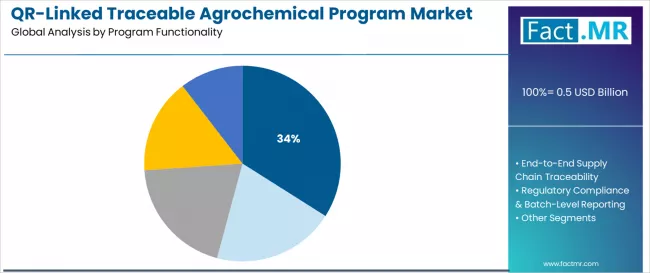
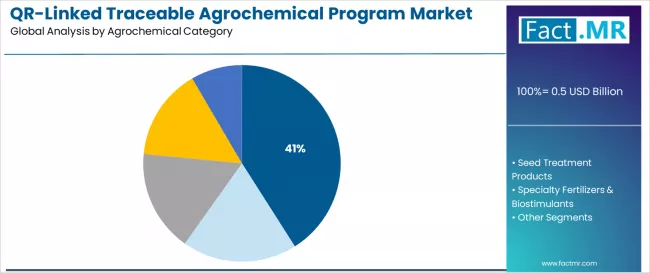
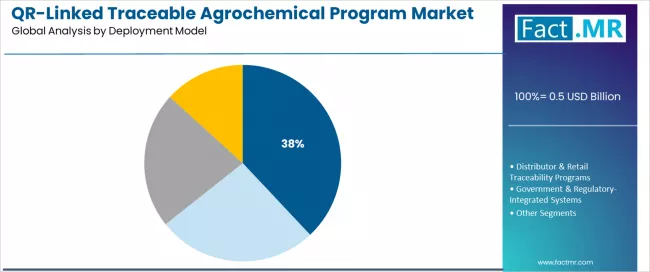
The global QR-linked traceable agrochemical program market is projected to reach USD 2.37 billion by 2036. The market is valued at USD 0.53 billion in 2026 and is set to rise at a CAGR of 16.2% during the assessment period. By program functionality, product authentication & anti-counterfeiting holds a leading 34% share. The crop protection chemicals category represents a dominant 41% segment, while manufacturer-led QR traceability platforms account for 38% market share.

Key Takeaways from the QR-Linked Traceable Agrochemical Program Market

  • Market Value for 2026: USD 0.53 Billion
  • Market Value for 2036: USD 2.37 Billion
  • Forecast CAGR (2026-2036): 16.2%
  • Leading Program Functionality Share (2026): Product Authentication & Anti-Counterfeiting (34%)
  • Leading Agrochemical Category Share (2026): Crop Protection Chemicals (41%)
  • Leading Deployment Model Share (2026): Manufacturer-Led QR Traceability Platforms (38%)
  • Key Players in the Market: Antares Vision Group, Systech (Markem-Imaje), Kezzler AS, Digimarc Corporation, TraceGains Network
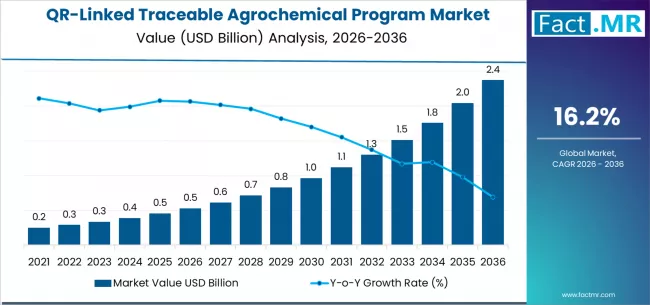
Qr Linked Traceable Agrochemical Program Market Market Value Analysis

A central trend is the evolution from simple batch tracking to intelligent, data-rich digital passports for each product unit. Programs are integrating blockchain and IoT sensors with QR codes to create immutable, real-time records of location, temperature, and chain of custody. This data is increasingly used for predictive analytics, such as monitoring shelf-life and preventing the sale of expired or substandard products.

Stringent regulatory mandates for supply chain transparency and product liability are primary market catalysts. Policies requiring full ingredient disclosure, proof of origin, and detailed usage documentation drive compulsory adoption. Furthermore, export regulations and certification schemes (e.g., EU Green Deal, organic standards) increasingly mandate digital traceability as a condition for market access, creating a compliance-driven market.

QR-Linked Traceable Agrochemical Program Market

Metric Value
Market Value (2026) USD 0.53 Billion
Market Forecast Value (2036) USD 2.37 Billion
Forecast CAGR (2026-2036) 16.2%

Category

Category Segments
Program Functionality Product Authentication & Anti-Counterfeiting, End-to-End Supply Chain Traceability, Regulatory Compliance & Batch-Level Reporting, Farmer Usage Guidance & Stewardship Tracking, Others
Agrochemical Category Crop Protection Chemicals, Seed Treatment Products, Specialty Fertilizers & Biostimulants, Adjuvants & Tank-Mix Programs, Others
Deployment Model Manufacturer-Led QR Traceability Platforms, Distributor & Retail Traceability Programs, Government & Regulatory-Integrated Systems, Export & Certification-Linked Platforms, Others
Region North America, Latin America, Western Europe, Eastern Europe, East Asia, South Asia & Pacific, MEA

Segmental Analysis

By Program Functionality, What is the Primary Driver for Manufacturer Adoption?
Qr Linked Traceable Agrochemical Program Market Analysis By Program Functionality

Product authentication and anti-counterfeiting leads the segment with a 34% share. This addresses a critical, direct financial threat to brand owners and a safety risk for farmers. Counterfeit agrochemicals cause crop loss, erode brand value, and pose significant legal liabilities. QR codes linked to secure databases allow farmers, distributors, and regulators to instantly verify product legitimacy, protecting revenue and reputation in high-value markets.

By Agrochemical Category, Which Sector Faces the Greatest Counterfeit and Regulatory Pressure?
Qr Linked Traceable Agrochemical Program Market Analysis By Agrochemical Category

Crop protection chemicals command the largest category share at 41%. The high cost and regulatory complexity of these products make them prime targets for counterfeiters. Simultaneously, stringent global regulations on maximum residue limits and illegal actives necessitate flawless traceability from factory to field. This dual pressure makes digital traceability programs an essential investment for legitimate manufacturers of herbicides, fungicides, and insecticides.

By Deployment Model, Who is Investing to Secure the Brand and Supply Chain?
Qr Linked Traceable Agrochemical Program Market Analysis By Deployment Model

Manufacturer-led QR traceability platforms hold the largest deployment share at 38%. Brand owners are the primary stakeholders with the most to lose from counterfeiting and supply chain diversion. By implementing their own platforms, they maintain control over data, directly engage with end-users, and build brand trust. This model allows them to tailor the system to their specific product lines and global distribution networks.

What are the Drivers, Restraints, and Key Trends of the QR-Linked Traceable Agrochemical Program Market?

Market expansion is overwhelmingly driven by regulatory compliance requirements and the escalating economic toll of counterfeit products. The demand for supply chain transparency from food manufacturers and retailers transmits pressure upstream. The proliferation of smartphones in rural areas enables low-cost, widespread scanning. Sustainability and responsible sourcing initiatives also rely on verifiable digital trails.

A significant restraint is the cost and complexity of integrating traceability systems across fragmented, multi-tiered global supply chains involving numerous distributors and retailers. Achieving interoperability between different platforms used by various stakeholders remains a challenge. Data privacy concerns and the risk of sensitive supply chain information being exposed also need careful management.

Key trends include the convergence of physical QR codes with digital threads on blockchain for enhanced security. Platforms are adding agronomic value by linking to application rate calculators and weather data. There is a move towards "smart packaging" with built-in NFC or RFID, though QR remains dominant due to cost-effectiveness. Integration with farm management software is creating complete digital histories for crops.

Analysis of the QR-Linked Traceable Agrochemical Program Market by Key Countries
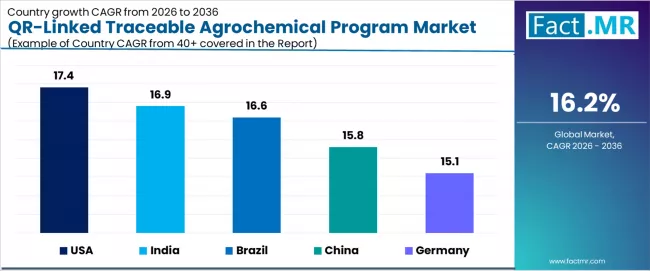
Qr Linked Traceable Agrochemical Program Market Cagr Analysis By Country

Country CAGR (2026-2036)
USA 17.40%
India 16.90%
Brazil 16.60%
China 15.80%
Germany 15.10%

How do USA's Stringent Liability and Brand Protection Laws Drive Adoption?
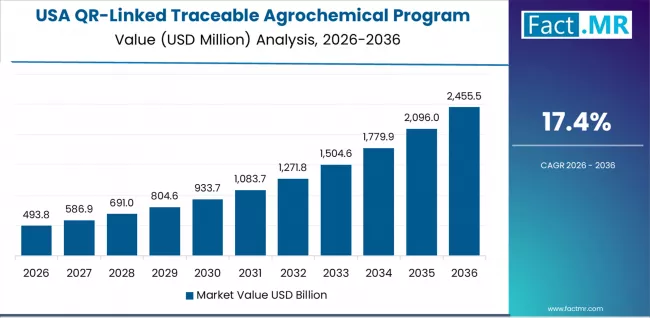
Qr Linked Traceable Agrochemical Program Market Country Value Analysis

The USA leads with a 17.40% CAGR, driven by a litigious environment and powerful brand protection needs. American agrochemical manufacturers implement traceability to mitigate liability risks and combat sophisticated counterfeiting networks. Furthermore, major US food retailers and processors mandate traceable inputs, creating a powerful downstream pull that compels the entire supply chain to adopt digital tracking solutions.

Why does India's Battle against Counterfeit Agrochemicals Fuel High Growth?

India's 16.90% growth is a direct response to its severe counterfeit pesticide problem, which estimates suggest accounts for a significant portion of the market. Government initiatives and industry consortiums are aggressively promoting digital traceability (e.g., through the DIPP mandate) to curb this illicit trade. The rapid digitization of rural India via smartphones makes QR-based solutions a practical and scalable tool for this massive market.

What Role does Brazil's Export Dependence and Regulatory Scrutiny Play?

Brazil's 16.60% growth is tied to its status as a leading agricultural exporter. To maintain access to markets with strict MRL and certification requirements, Brazilian exporters must provide verifiable proof of input origin and application. Traceability programs are essential for documenting compliance with EU, Chinese, and other import regulations, making them a critical tool for safeguarding billions in export revenue.

How is China's Dual Focus on Food Safety and Export Compliance Shaping the Market?

China's 15.80% growth is propelled by domestic "green food" and food safety campaigns demanding transparent supply chains, alongside the need for its own agrochemical exporters to meet international standards. The government's promotion of digital agriculture and anti-counterfeiting technologies supports widespread adoption. Domestic tech companies are also actively developing traceability solutions tailored for the Chinese market.

What Factors Underpin Germany's Precision and Compliance-Focused Adoption?

Germany's 15.10% growth reflects the EU's leading role in regulatory traceability and its high-value, export-oriented chemical industry. German manufacturers of crop protection and seed treatment products adopt sophisticated platforms to comply with complex EU regulations, provide stewardship guidance, and offer value-added digital services to farmers. The focus is on precision, data integrity, and integration with broader digital farming ecosystems.

Competitive Landscape of the QR-Linked Traceable Agrochemical Program Market
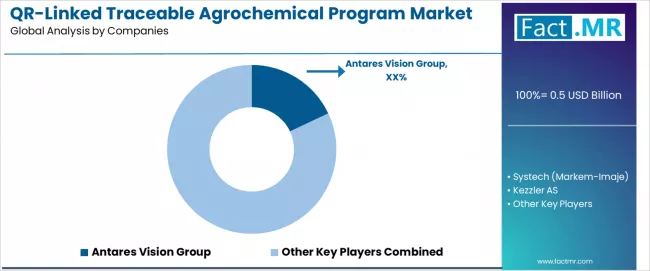
Qr Linked Traceable Agrochemical Program Market Analysis By Company

The market is specialized, dominated by technology companies providing track-and-trace and supply chain visibility solutions. Leaders like Antares Vision Group and Kezzler AS offer end-to-end platforms combining serialization, aggregation, and cloud-based traceability, often with blockchain options. Their expertise lies in serving regulated industries like pharmaceuticals, now extended to agrochemicals.

Companies like Systech and Digimarc Corporation compete with core technologies focused on product authentication and digital watermarking, integrating these into packaging lines. Firms such as TraceGains Network focus on the compliance and data network aspects. Competition centers on platform scalability, security, ease of integration with existing manufacturing execution systems, and the ability to provide actionable insights from the collected traceability data.

Key Players in the QR-Linked Traceable Agrochemical Program Market

  • Antares Vision Group
  • Systech (Markem-Imaje)
  • Kezzler AS
  • Digimarc Corporation
  • TraceGains Network

Scope of Report

Items Values
Quantitative Units USD Billion
Program Functionality Product Authentication & Anti-Counterfeiting, End-to-End Supply Chain Traceability, Regulatory Compliance & Batch-Level Reporting, Farmer Usage Guidance & Stewardship Tracking, Others
Agrochemical Category Crop Protection Chemicals, Seed Treatment Products, Specialty Fertilizers & Biostimulants, Adjuvants & Tank-Mix Programs, Others
Deployment Model Manufacturer-Led QR Traceability Platforms, Distributor & Retail Traceability Programs, Government & Regulatory-Integrated Systems, Export & Certification-Linked Platforms, Others
Key Countries USA, India, Brazil, China, Germany
Key Companies Antares Vision Group, Systech (Markem-Imaje), Kezzler AS, Digimarc Corporation, TraceGains Network
Additional Analysis Analysis of serialization standards, blockchain integration models, cost-benefit analysis for anti-counterfeiting ROI, and interoperability frameworks for multi-stakeholder supply chains.

QR-Linked Traceable Agrochemical Program Market by Segments

  • Program Functionality :

    • Product Authentication & Anti-Counterfeiting
    • End-to-End Supply Chain Traceability
    • Regulatory Compliance & Batch-Level Reporting
    • Farmer Usage Guidance & Stewardship Tracking
    • Others
  • Agrochemical Category :

    • Crop Protection Chemicals
    • Seed Treatment Products
    • Specialty Fertilizers & Biostimulants
    • Adjuvants & Tank-Mix Programs
    • Others
  • Deployment Model :

    • Manufacturer-Led QR Traceability Platforms
    • Distributor & Retail Traceability Programs
    • Government & Regulatory-Integrated Systems
    • Export & Certification-Linked Platforms
    • Others
  • Region :

    • North America

      • USA
      • Canada
    • Latin America

      • Brazil
      • Mexico
      • Argentina
      • Rest of Latin America
    • Western Europe

      • Germany
      • UK
      • France
      • Spain
      • Italy
      • BENELUX
      • Rest of Western Europe
    • Eastern Europe

      • Czech Republic
      • Poland
      • Russia
      • Rest of Eastern Europe
    • East Asia

      • China
      • Japan
      • South Korea
      • Rest of East Asia
    • South Asia & Pacific

      • India
      • Indonesia
      • Australia
      • Rest of South Asia & Pacific
    • MEA

      • GCC Countries
      • Turkiye
      • Saudi Arabia
      • Rest of MEA

Table of Content

  1. Executive Summary
    • Global Market Outlook
    • Demand to side Trends
    • Supply to side Trends
    • Technology Roadmap Analysis
    • Analysis and Recommendations
  2. Market Overview
    • Market Coverage / Taxonomy
    • Market Definition / Scope / Limitations
  3. Market Background
    • Market Dynamics
      • Drivers
      • Restraints
      • Opportunity
      • Trends
    • Scenario Forecast
      • Demand in Optimistic Scenario
      • Demand in Likely Scenario
      • Demand in Conservative Scenario
    • Opportunity Map Analysis
    • Product Life Cycle Analysis
    • Supply Chain Analysis
    • Investment Feasibility Matrix
    • Value Chain Analysis
    • PESTLE and Porter’s Analysis
    • Regulatory Landscape
    • Regional Parent Market Outlook
    • Production and Consumption Statistics
    • Import and Export Statistics
  4. Global Market Analysis 2021 to 2025 and Forecast, 2026 to 2036
    • Historical Market Size Value (USD Million) Analysis, 2021 to 2025
    • Current and Future Market Size Value (USD Million) Projections, 2026 to 2036
      • Y to o to Y Growth Trend Analysis
      • Absolute $ Opportunity Analysis
  5. Global Market Pricing Analysis 2021 to 2025 and Forecast 2026 to 2036
  6. Global Market Analysis 2021 to 2025 and Forecast 2026 to 2036, By Program Functionality
    • Introduction / Key Findings
    • Historical Market Size Value (USD Million) Analysis By Program Functionality, 2021 to 2025
    • Current and Future Market Size Value (USD Million) Analysis and Forecast By Program Functionality, 2026 to 2036
      • Product Authentication & Anti-Counterfeiting
      • End-to-End Supply Chain Traceability
      • Regulatory Compliance & Batch-Level Reporting
      • Farmer Usage Guidance & Stewardship Tracking
      • Others
    • Y to o to Y Growth Trend Analysis By Program Functionality, 2021 to 2025
    • Absolute $ Opportunity Analysis By Program Functionality, 2026 to 2036
  7. Global Market Analysis 2021 to 2025 and Forecast 2026 to 2036, By Agrochemical Category
    • Introduction / Key Findings
    • Historical Market Size Value (USD Million) Analysis By Agrochemical Category, 2021 to 2025
    • Current and Future Market Size Value (USD Million) Analysis and Forecast By Agrochemical Category, 2026 to 2036
      • Crop Protection Chemicals
      • Seed Treatment Products
      • Specialty Fertilizers & Biostimulants
      • Adjuvants & Tank-Mix Programs
      • Others
    • Y to o to Y Growth Trend Analysis By Agrochemical Category, 2021 to 2025
    • Absolute $ Opportunity Analysis By Agrochemical Category, 2026 to 2036
  8. Global Market Analysis 2021 to 2025 and Forecast 2026 to 2036, By Deployment Model
    • Introduction / Key Findings
    • Historical Market Size Value (USD Million) Analysis By Deployment Model, 2021 to 2025
    • Current and Future Market Size Value (USD Million) Analysis and Forecast By Deployment Model, 2026 to 2036
      • Manufacturer-Led QR Traceability Platforms
      • Distributor & Retail Traceability Programs
      • Government & Regulatory-Integrated Systems
      • Export & Certification-Linked Platforms
    • Y to o to Y Growth Trend Analysis By Deployment Model, 2021 to 2025
    • Absolute $ Opportunity Analysis By Deployment Model, 2026 to 2036
  9. Global Market Analysis 2021 to 2025 and Forecast 2026 to 2036, By Region
    • Introduction
    • Historical Market Size Value (USD Million) Analysis By Region, 2021 to 2025
    • Current Market Size Value (USD Million) Analysis and Forecast By Region, 2026 to 2036
      • North America
      • Latin America
      • Western Europe
      • Eastern Europe
      • East Asia
      • South Asia and Pacific
      • Middle East & Africa
    • Market Attractiveness Analysis By Region
  10. North America Market Analysis 2021 to 2025 and Forecast 2026 to 2036, By Country
    • Historical Market Size Value (USD Million) Trend Analysis By Market Taxonomy, 2021 to 2025
    • Market Size Value (USD Million) Forecast By Market Taxonomy, 2026 to 2036
      • By Country
        • USA
        • Canada
        • Mexico
      • By Program Functionality
      • By Agrochemical Category
      • By Deployment Model
    • Market Attractiveness Analysis
      • By Country
      • By Program Functionality
      • By Agrochemical Category
      • By Deployment Model
    • Key Takeaways
  11. Latin America Market Analysis 2021 to 2025 and Forecast 2026 to 2036, By Country
    • Historical Market Size Value (USD Million) Trend Analysis By Market Taxonomy, 2021 to 2025
    • Market Size Value (USD Million) Forecast By Market Taxonomy, 2026 to 2036
      • By Country
        • Brazil
        • Chile
        • Rest of Latin America
      • By Program Functionality
      • By Agrochemical Category
      • By Deployment Model
    • Market Attractiveness Analysis
      • By Country
      • By Program Functionality
      • By Agrochemical Category
      • By Deployment Model
    • Key Takeaways
  12. Western Europe Market Analysis 2021 to 2025 and Forecast 2026 to 2036, By Country
    • Historical Market Size Value (USD Million) Trend Analysis By Market Taxonomy, 2021 to 2025
    • Market Size Value (USD Million) Forecast By Market Taxonomy, 2026 to 2036
      • By Country
        • Germany
        • UK
        • Italy
        • Spain
        • France
        • Nordic
        • BENELUX
        • Rest of Western Europe
      • By Program Functionality
      • By Agrochemical Category
      • By Deployment Model
    • Market Attractiveness Analysis
      • By Country
      • By Program Functionality
      • By Agrochemical Category
      • By Deployment Model
    • Key Takeaways
  13. Eastern Europe Market Analysis 2021 to 2025 and Forecast 2026 to 2036, By Country
    • Historical Market Size Value (USD Million) Trend Analysis By Market Taxonomy, 2021 to 2025
    • Market Size Value (USD Million) Forecast By Market Taxonomy, 2026 to 2036
      • By Country
        • Russia
        • Poland
        • Hungary
        • Balkan & Baltic
        • Rest of Eastern Europe
      • By Program Functionality
      • By Agrochemical Category
      • By Deployment Model
    • Market Attractiveness Analysis
      • By Country
      • By Program Functionality
      • By Agrochemical Category
      • By Deployment Model
    • Key Takeaways
  14. East Asia Market Analysis 2021 to 2025 and Forecast 2026 to 2036, By Country
    • Historical Market Size Value (USD Million) Trend Analysis By Market Taxonomy, 2021 to 2025
    • Market Size Value (USD Million) Forecast By Market Taxonomy, 2026 to 2036
      • By Country
        • China
        • Japan
        • South Korea
      • By Program Functionality
      • By Agrochemical Category
      • By Deployment Model
    • Market Attractiveness Analysis
      • By Country
      • By Program Functionality
      • By Agrochemical Category
      • By Deployment Model
    • Key Takeaways
  15. South Asia and Pacific Market Analysis 2021 to 2025 and Forecast 2026 to 2036, By Country
    • Historical Market Size Value (USD Million) Trend Analysis By Market Taxonomy, 2021 to 2025
    • Market Size Value (USD Million) Forecast By Market Taxonomy, 2026 to 2036
      • By Country
        • India
        • ASEAN
        • Australia & New Zealand
        • Rest of South Asia and Pacific
      • By Program Functionality
      • By Agrochemical Category
      • By Deployment Model
    • Market Attractiveness Analysis
      • By Country
      • By Program Functionality
      • By Agrochemical Category
      • By Deployment Model
    • Key Takeaways
  16. Middle East & Africa Market Analysis 2021 to 2025 and Forecast 2026 to 2036, By Country
    • Historical Market Size Value (USD Million) Trend Analysis By Market Taxonomy, 2021 to 2025
    • Market Size Value (USD Million) Forecast By Market Taxonomy, 2026 to 2036
      • By Country
        • Kingdom of Saudi Arabia
        • Other GCC Countries
        • Turkiye
        • South Africa
        • Other African Union
        • Rest of Middle East & Africa
      • By Program Functionality
      • By Agrochemical Category
      • By Deployment Model
    • Market Attractiveness Analysis
      • By Country
      • By Program Functionality
      • By Agrochemical Category
      • By Deployment Model
    • Key Takeaways
  17. Key Countries Market Analysis
    • USA
      • Pricing Analysis
      • Market Share Analysis, 2025
        • By Program Functionality
        • By Agrochemical Category
        • By Deployment Model
    • Canada
      • Pricing Analysis
      • Market Share Analysis, 2025
        • By Program Functionality
        • By Agrochemical Category
        • By Deployment Model
    • Mexico
      • Pricing Analysis
      • Market Share Analysis, 2025
        • By Program Functionality
        • By Agrochemical Category
        • By Deployment Model
    • Brazil
      • Pricing Analysis
      • Market Share Analysis, 2025
        • By Program Functionality
        • By Agrochemical Category
        • By Deployment Model
    • Chile
      • Pricing Analysis
      • Market Share Analysis, 2025
        • By Program Functionality
        • By Agrochemical Category
        • By Deployment Model
    • Germany
      • Pricing Analysis
      • Market Share Analysis, 2025
        • By Program Functionality
        • By Agrochemical Category
        • By Deployment Model
    • UK
      • Pricing Analysis
      • Market Share Analysis, 2025
        • By Program Functionality
        • By Agrochemical Category
        • By Deployment Model
    • Italy
      • Pricing Analysis
      • Market Share Analysis, 2025
        • By Program Functionality
        • By Agrochemical Category
        • By Deployment Model
    • Spain
      • Pricing Analysis
      • Market Share Analysis, 2025
        • By Program Functionality
        • By Agrochemical Category
        • By Deployment Model
    • France
      • Pricing Analysis
      • Market Share Analysis, 2025
        • By Program Functionality
        • By Agrochemical Category
        • By Deployment Model
    • India
      • Pricing Analysis
      • Market Share Analysis, 2025
        • By Program Functionality
        • By Agrochemical Category
        • By Deployment Model
    • ASEAN
      • Pricing Analysis
      • Market Share Analysis, 2025
        • By Program Functionality
        • By Agrochemical Category
        • By Deployment Model
    • Australia & New Zealand
      • Pricing Analysis
      • Market Share Analysis, 2025
        • By Program Functionality
        • By Agrochemical Category
        • By Deployment Model
    • China
      • Pricing Analysis
      • Market Share Analysis, 2025
        • By Program Functionality
        • By Agrochemical Category
        • By Deployment Model
    • Japan
      • Pricing Analysis
      • Market Share Analysis, 2025
        • By Program Functionality
        • By Agrochemical Category
        • By Deployment Model
    • South Korea
      • Pricing Analysis
      • Market Share Analysis, 2025
        • By Program Functionality
        • By Agrochemical Category
        • By Deployment Model
    • Russia
      • Pricing Analysis
      • Market Share Analysis, 2025
        • By Program Functionality
        • By Agrochemical Category
        • By Deployment Model
    • Poland
      • Pricing Analysis
      • Market Share Analysis, 2025
        • By Program Functionality
        • By Agrochemical Category
        • By Deployment Model
    • Hungary
      • Pricing Analysis
      • Market Share Analysis, 2025
        • By Program Functionality
        • By Agrochemical Category
        • By Deployment Model
    • Kingdom of Saudi Arabia
      • Pricing Analysis
      • Market Share Analysis, 2025
        • By Program Functionality
        • By Agrochemical Category
        • By Deployment Model
    • Turkiye
      • Pricing Analysis
      • Market Share Analysis, 2025
        • By Program Functionality
        • By Agrochemical Category
        • By Deployment Model
    • South Africa
      • Pricing Analysis
      • Market Share Analysis, 2025
        • By Program Functionality
        • By Agrochemical Category
        • By Deployment Model
  18. Market Structure Analysis
    • Competition Dashboard
    • Competition Benchmarking
    • Market Share Analysis of Top Players
      • By Regional
      • By Program Functionality
      • By Agrochemical Category
      • By Deployment Model
  19. Competition Analysis
    • Competition Deep Dive
      • Antares Vision Group
        • Overview
        • Product Portfolio
        • Profitability by Market Segments (Product/Age /Sales Channel/Region)
        • Sales Footprint
        • Strategy Overview
          • Marketing Strategy
          • Product Strategy
          • Channel Strategy
      • Systech (Markem-Imaje)
      • Kezzler AS
      • Digimarc Corporation
      • TraceGains Network
      • Others
  20. Assumptions & Acronyms Used
  21. Research Methodology

List Of Table

  • Table 1: Global Market Value (USD Million) Forecast by Region, 2021 to 2036
  • Table 2: Global Market Value (USD Million) Forecast by Program Functionality, 2021 to 2036
  • Table 3: Global Market Value (USD Million) Forecast by Agrochemical Category, 2021 to 2036
  • Table 4: Global Market Value (USD Million) Forecast by Deployment Model, 2021 to 2036
  • Table 5: North America Market Value (USD Million) Forecast by Country, 2021 to 2036
  • Table 6: North America Market Value (USD Million) Forecast by Program Functionality, 2021 to 2036
  • Table 7: North America Market Value (USD Million) Forecast by Agrochemical Category, 2021 to 2036
  • Table 8: North America Market Value (USD Million) Forecast by Deployment Model, 2021 to 2036
  • Table 9: Latin America Market Value (USD Million) Forecast by Country, 2021 to 2036
  • Table 10: Latin America Market Value (USD Million) Forecast by Program Functionality, 2021 to 2036
  • Table 11: Latin America Market Value (USD Million) Forecast by Agrochemical Category, 2021 to 2036
  • Table 12: Latin America Market Value (USD Million) Forecast by Deployment Model, 2021 to 2036
  • Table 13: Western Europe Market Value (USD Million) Forecast by Country, 2021 to 2036
  • Table 14: Western Europe Market Value (USD Million) Forecast by Program Functionality, 2021 to 2036
  • Table 15: Western Europe Market Value (USD Million) Forecast by Agrochemical Category, 2021 to 2036
  • Table 16: Western Europe Market Value (USD Million) Forecast by Deployment Model, 2021 to 2036
  • Table 17: Eastern Europe Market Value (USD Million) Forecast by Country, 2021 to 2036
  • Table 18: Eastern Europe Market Value (USD Million) Forecast by Program Functionality, 2021 to 2036
  • Table 19: Eastern Europe Market Value (USD Million) Forecast by Agrochemical Category, 2021 to 2036
  • Table 20: Eastern Europe Market Value (USD Million) Forecast by Deployment Model, 2021 to 2036
  • Table 21: East Asia Market Value (USD Million) Forecast by Country, 2021 to 2036
  • Table 22: East Asia Market Value (USD Million) Forecast by Program Functionality, 2021 to 2036
  • Table 23: East Asia Market Value (USD Million) Forecast by Agrochemical Category, 2021 to 2036
  • Table 24: East Asia Market Value (USD Million) Forecast by Deployment Model, 2021 to 2036
  • Table 25: South Asia and Pacific Market Value (USD Million) Forecast by Country, 2021 to 2036
  • Table 26: South Asia and Pacific Market Value (USD Million) Forecast by Program Functionality, 2021 to 2036
  • Table 27: South Asia and Pacific Market Value (USD Million) Forecast by Agrochemical Category, 2021 to 2036
  • Table 28: South Asia and Pacific Market Value (USD Million) Forecast by Deployment Model, 2021 to 2036
  • Table 29: Middle East & Africa Market Value (USD Million) Forecast by Country, 2021 to 2036
  • Table 30: Middle East & Africa Market Value (USD Million) Forecast by Program Functionality, 2021 to 2036
  • Table 31: Middle East & Africa Market Value (USD Million) Forecast by Agrochemical Category, 2021 to 2036
  • Table 32: Middle East & Africa Market Value (USD Million) Forecast by Deployment Model, 2021 to 2036

List Of Figures

  • Figure 1: Global Market Pricing Analysis
  • Figure 2: Global Market Value (USD Million) Forecast 2021 to 2036
  • Figure 3: Global Market Value Share and BPS Analysis by Program Functionality, 2026 and 2036
  • Figure 4: Global Market Y to o to Y Growth Comparison by Program Functionality, 2026 to 2036
  • Figure 5: Global Market Attractiveness Analysis by Program Functionality
  • Figure 6: Global Market Value Share and BPS Analysis by Agrochemical Category, 2026 and 2036
  • Figure 7: Global Market Y to o to Y Growth Comparison by Agrochemical Category, 2026 to 2036
  • Figure 8: Global Market Attractiveness Analysis by Agrochemical Category
  • Figure 9: Global Market Value Share and BPS Analysis by Deployment Model, 2026 and 2036
  • Figure 10: Global Market Y to o to Y Growth Comparison by Deployment Model, 2026 to 2036
  • Figure 11: Global Market Attractiveness Analysis by Deployment Model
  • Figure 12: Global Market Value (USD Million) Share and BPS Analysis by Region, 2026 and 2036
  • Figure 13: Global Market Y to o to Y Growth Comparison by Region, 2026 to 2036
  • Figure 14: Global Market Attractiveness Analysis by Region
  • Figure 15: North America Market Incremental Dollar Opportunity, 2026 to 2036
  • Figure 16: Latin America Market Incremental Dollar Opportunity, 2026 to 2036
  • Figure 17: Western Europe Market Incremental Dollar Opportunity, 2026 to 2036
  • Figure 18: Eastern Europe Market Incremental Dollar Opportunity, 2026 to 2036
  • Figure 19: East Asia Market Incremental Dollar Opportunity, 2026 to 2036
  • Figure 20: South Asia and Pacific Market Incremental Dollar Opportunity, 2026 to 2036
  • Figure 21: Middle East & Africa Market Incremental Dollar Opportunity, 2026 to 2036
  • Figure 22: North America Market Value Share and BPS Analysis by Country, 2026 and 2036
  • Figure 23: North America Market Value Share and BPS Analysis by Program Functionality, 2026 and 2036
  • Figure 24: North America Market Y to o to Y Growth Comparison by Program Functionality, 2026 to 2036
  • Figure 25: North America Market Attractiveness Analysis by Program Functionality
  • Figure 26: North America Market Value Share and BPS Analysis by Agrochemical Category, 2026 and 2036
  • Figure 27: North America Market Y to o to Y Growth Comparison by Agrochemical Category, 2026 to 2036
  • Figure 28: North America Market Attractiveness Analysis by Agrochemical Category
  • Figure 29: North America Market Value Share and BPS Analysis by Deployment Model, 2026 and 2036
  • Figure 30: North America Market Y to o to Y Growth Comparison by Deployment Model, 2026 to 2036
  • Figure 31: North America Market Attractiveness Analysis by Deployment Model
  • Figure 32: Latin America Market Value Share and BPS Analysis by Country, 2026 and 2036
  • Figure 33: Latin America Market Value Share and BPS Analysis by Program Functionality, 2026 and 2036
  • Figure 34: Latin America Market Y to o to Y Growth Comparison by Program Functionality, 2026 to 2036
  • Figure 35: Latin America Market Attractiveness Analysis by Program Functionality
  • Figure 36: Latin America Market Value Share and BPS Analysis by Agrochemical Category, 2026 and 2036
  • Figure 37: Latin America Market Y to o to Y Growth Comparison by Agrochemical Category, 2026 to 2036
  • Figure 38: Latin America Market Attractiveness Analysis by Agrochemical Category
  • Figure 39: Latin America Market Value Share and BPS Analysis by Deployment Model, 2026 and 2036
  • Figure 40: Latin America Market Y to o to Y Growth Comparison by Deployment Model, 2026 to 2036
  • Figure 41: Latin America Market Attractiveness Analysis by Deployment Model
  • Figure 42: Western Europe Market Value Share and BPS Analysis by Country, 2026 and 2036
  • Figure 43: Western Europe Market Value Share and BPS Analysis by Program Functionality, 2026 and 2036
  • Figure 44: Western Europe Market Y to o to Y Growth Comparison by Program Functionality, 2026 to 2036
  • Figure 45: Western Europe Market Attractiveness Analysis by Program Functionality
  • Figure 46: Western Europe Market Value Share and BPS Analysis by Agrochemical Category, 2026 and 2036
  • Figure 47: Western Europe Market Y to o to Y Growth Comparison by Agrochemical Category, 2026 to 2036
  • Figure 48: Western Europe Market Attractiveness Analysis by Agrochemical Category
  • Figure 49: Western Europe Market Value Share and BPS Analysis by Deployment Model, 2026 and 2036
  • Figure 50: Western Europe Market Y to o to Y Growth Comparison by Deployment Model, 2026 to 2036
  • Figure 51: Western Europe Market Attractiveness Analysis by Deployment Model
  • Figure 52: Eastern Europe Market Value Share and BPS Analysis by Country, 2026 and 2036
  • Figure 53: Eastern Europe Market Value Share and BPS Analysis by Program Functionality, 2026 and 2036
  • Figure 54: Eastern Europe Market Y to o to Y Growth Comparison by Program Functionality, 2026 to 2036
  • Figure 55: Eastern Europe Market Attractiveness Analysis by Program Functionality
  • Figure 56: Eastern Europe Market Value Share and BPS Analysis by Agrochemical Category, 2026 and 2036
  • Figure 57: Eastern Europe Market Y to o to Y Growth Comparison by Agrochemical Category, 2026 to 2036
  • Figure 58: Eastern Europe Market Attractiveness Analysis by Agrochemical Category
  • Figure 59: Eastern Europe Market Value Share and BPS Analysis by Deployment Model, 2026 and 2036
  • Figure 60: Eastern Europe Market Y to o to Y Growth Comparison by Deployment Model, 2026 to 2036
  • Figure 61: Eastern Europe Market Attractiveness Analysis by Deployment Model
  • Figure 62: East Asia Market Value Share and BPS Analysis by Country, 2026 and 2036
  • Figure 63: East Asia Market Value Share and BPS Analysis by Program Functionality, 2026 and 2036
  • Figure 64: East Asia Market Y to o to Y Growth Comparison by Program Functionality, 2026 to 2036
  • Figure 65: East Asia Market Attractiveness Analysis by Program Functionality
  • Figure 66: East Asia Market Value Share and BPS Analysis by Agrochemical Category, 2026 and 2036
  • Figure 67: East Asia Market Y to o to Y Growth Comparison by Agrochemical Category, 2026 to 2036
  • Figure 68: East Asia Market Attractiveness Analysis by Agrochemical Category
  • Figure 69: East Asia Market Value Share and BPS Analysis by Deployment Model, 2026 and 2036
  • Figure 70: East Asia Market Y to o to Y Growth Comparison by Deployment Model, 2026 to 2036
  • Figure 71: East Asia Market Attractiveness Analysis by Deployment Model
  • Figure 72: South Asia and Pacific Market Value Share and BPS Analysis by Country, 2026 and 2036
  • Figure 73: South Asia and Pacific Market Value Share and BPS Analysis by Program Functionality, 2026 and 2036
  • Figure 74: South Asia and Pacific Market Y to o to Y Growth Comparison by Program Functionality, 2026 to 2036
  • Figure 75: South Asia and Pacific Market Attractiveness Analysis by Program Functionality
  • Figure 76: South Asia and Pacific Market Value Share and BPS Analysis by Agrochemical Category, 2026 and 2036
  • Figure 77: South Asia and Pacific Market Y to o to Y Growth Comparison by Agrochemical Category, 2026 to 2036
  • Figure 78: South Asia and Pacific Market Attractiveness Analysis by Agrochemical Category
  • Figure 79: South Asia and Pacific Market Value Share and BPS Analysis by Deployment Model, 2026 and 2036
  • Figure 80: South Asia and Pacific Market Y to o to Y Growth Comparison by Deployment Model, 2026 to 2036
  • Figure 81: South Asia and Pacific Market Attractiveness Analysis by Deployment Model
  • Figure 82: Middle East & Africa Market Value Share and BPS Analysis by Country, 2026 and 2036
  • Figure 83: Middle East & Africa Market Value Share and BPS Analysis by Program Functionality, 2026 and 2036
  • Figure 84: Middle East & Africa Market Y to o to Y Growth Comparison by Program Functionality, 2026 to 2036
  • Figure 85: Middle East & Africa Market Attractiveness Analysis by Program Functionality
  • Figure 86: Middle East & Africa Market Value Share and BPS Analysis by Agrochemical Category, 2026 and 2036
  • Figure 87: Middle East & Africa Market Y to o to Y Growth Comparison by Agrochemical Category, 2026 to 2036
  • Figure 88: Middle East & Africa Market Attractiveness Analysis by Agrochemical Category
  • Figure 89: Middle East & Africa Market Value Share and BPS Analysis by Deployment Model, 2026 and 2036
  • Figure 90: Middle East & Africa Market Y to o to Y Growth Comparison by Deployment Model, 2026 to 2036
  • Figure 91: Middle East & Africa Market Attractiveness Analysis by Deployment Model
  • Figure 92: Global Market - Tier Structure Analysis
  • Figure 93: Global Market - Company Share Analysis

- FAQs -

How big is the qr-linked traceable agrochemical program market in 2026?

The global qr-linked traceable agrochemical program market is estimated to be valued at USD 0.5 billion in 2026.

What will be the size of qr-linked traceable agrochemical program market in 2036?

The market size for the qr-linked traceable agrochemical program market is projected to reach USD 2.4 billion by 2036.

How much will be the qr-linked traceable agrochemical program market growth between 2026 and 2036?

The qr-linked traceable agrochemical program market is expected to grow at a 16.2% CAGR between 2026 and 2036.

What are the key product types in the qr-linked traceable agrochemical program market?

The key product types in qr-linked traceable agrochemical program market are product authentication & anti-counterfeiting, end-to-end supply chain traceability, regulatory compliance & batch-level reporting, farmer usage guidance & stewardship tracking and others.

Which agrochemical category segment to contribute significant share in the qr-linked traceable agrochemical program market in 2026?

In terms of agrochemical category, crop protection chemicals segment to command 41.0% share in the qr-linked traceable agrochemical program market in 2026.

QR-Linked Traceable Agrochemical Program Market