Renewable Methanol Market
Renewable Methanol Market Size and Share Forecast Outlook 2026 to 2036
Renewable methanol market is projected to grow from USD 2.5 billion in 2026 to USD 7.4 billion by 2036, at a CAGR of 11.5%. Biomass will dominate with a 48.0% market share, while chemical feedstock will lead the application sector segment with a 36.0% share.
Renewable Methanol Market Forecast and Outlook 2026 to 2036
The global renewable methanol market is valued at USD 2.5 billion in 2026 and is set to reach USD 7.4 billion by 2036, recording a compound annual growth rate (CAGR) of 11.5% between 2026 and 2036. In 2026, the biomass feedstock segment is projected to hold a 48.0% share, while chemical feedstock applications account for 36.0% of the total demand.
Key Takeaways from the Renewable Methanol Market
- Renewable Methanol Market Value (2026): USD 2.5 billion
- Renewable Methanol Market Forecast Value (2036): USD 7.4 billion
- Renewable Methanol Market Forecast CAGR: 11.5%
- Leading Feedstock Type in Renewable Methanol Market: Biomass (48.0%)
- Key Growth Regions in Renewable Methanol Market: Asia Pacific, North America, Europe
- Key Players in Renewable Methanol Market: Methanex Corporation, Carbon Recycling International Inc., Proman, Enerkem Inc., INEOS Group Holdings S.A.
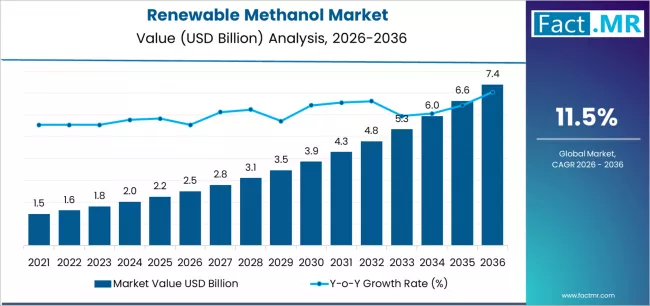
Market expansion is driven by the urgent global push for deep decarbonization across hard-to-abate sectors. Stringent emissions regulations, corporate net-zero commitments, and supportive government policies are creating powerful demand for low-carbon liquid fuels and feedstocks. Renewable methanol, produced from biomass, captured CO2, or renewable hydrogen, serves as a versatile drop-in solution for reducing the carbon footprint of maritime transport, chemical production, and power generation.
Technological innovation and scale-up of production will define growth over the forecast period. Advances in production pathways such as the commercialization of e-methanol captured from green hydrogen and captured CO2 and improved biomass gasification are improving economic viability and scalability. Development of dedicated supply chains, including bunkering infrastructure for shipping, is critical to converting demand into sustained market growth.
Renewable Methanol Market Key Takeaways
| Metric | Value |
|---|---|
| Estimated Value in (2026E) | USD 2.5 billion |
| Forecast Value in (2036F) | USD 7.4 billion |
| Forecast CAGR (2026 to 2036) | 11.5% |
Category
| Category | Segments |
|---|---|
| Feedstock Type | Biomass, Carbon Dioxide, Municipal Waste, Renewable Energy |
| Application Sector | Chemical Feedstock, Transportation Fuel, Energy Storage, Others |
| Production Technology | Gasification, Catalytic Hydrogenation, Electrochemical Reduction |
| Region | North America, Europe, Asia Pacific, Latin America, Middle East & Africa |
Segmental Analysis
By Feedstock Type, Which Segment of the Renewable Methanol Market Commands the Leading Share?
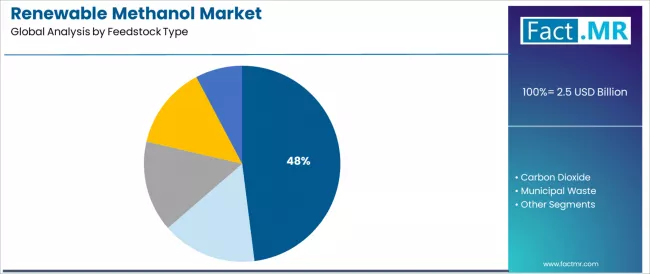
The biomass segment will command a 48.0% market share in 2026, as it represents the most commercially mature and widely available pathway. Utilizing agricultural residues, forestry waste, and dedicated energy crops, biomass gasification offers a viable route to produce renewable methanol with a significantly lower carbon footprint than its fossil counterpart. Its current dominance is reinforced by established conversion technologies and existing waste management infrastructure that can be leveraged for feedstock supply.
- The growing focus on circular economy principles and waste valorization is driving investment in advanced gasification technologies that can process diverse and lower-quality biomass feedstocks more efficiently.
- Supportive regulations and incentives for biofuels in many regions are providing a stable demand platform for biomass-based methanol, particularly in the chemical and transport sectors.
Which Application Segment Generates Maximum Demand for Renewable Methanol?
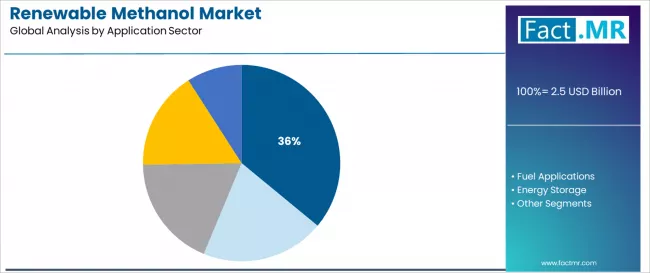
Chemical feedstock applications are projected to hold a significant 36.0% share in 2026. Methanol is a fundamental building block in chemical manufacturing, used to produce formaldehyde, acetic acid, and various olefins. The chemical industry's pursuit of "green" intermediates to reduce the carbon intensity of downstream products (like plastics, paints, and adhesives) creates a substantial, early-adopter market for renewable methanol. This demand is less sensitive to fuel price fluctuations and is driven by corporate sustainability targets and customer preferences for low-carbon products.
- Major chemical companies are entering long-term offtake agreements with renewable methanol producers to secure supply and decarbonize their value chains, providing crucial demand certainty for new projects.
- The segment benefits from the ability to use existing chemical infrastructure, allowing for a relatively seamless transition from fossil-based to renewable methanol without major capital expenditure for end-users.
What are the Drivers, Restraints, and Key Trends of the Renewable Methanol Market?
The market is primarily driven by stringent global and regional decarbonization mandates, particularly the International Maritime Organization's (IMO) regulations targeting greenhouse gas reductions in shipping. Secondary drivers include corporate net-zero commitments across industries, government subsidies and carbon pricing mechanisms, and the versatility of methanol as a liquid fuel and chemical feedstock. Key restraints include the currently higher production cost compared to fossil methanol, limited large-scale production capacity, and complexities in building new, capital-intensive production plants and supporting infrastructure.
The market is trending decisively towards the rapid scale-up of e-methanol production, leveraging plummeting costs of renewable electricity and advancements in electrolyzer and carbon capture technology. Another key trend is the formation of strategic partnerships across the value chain, linking renewable energy providers, carbon emitters, technology firms, and off-takers in the shipping and chemical industries to de-risk projects. Furthermore, there is a growing focus on standardization and certification of renewable methanol to ensure credibility and enable green premium pricing.
Analysis of the Renewable Methanol Market by Key Countries
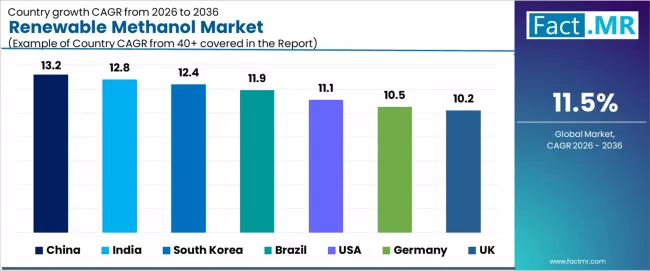
| Country | CAGR (2026-2036) |
|---|---|
| China | 13.2% |
| India | 12.8% |
| Germany | 10.5% |
| Brazil | 11.9% |
| USA | 11.1% |
| UK | 10.2% |
| South Korea | 12.4% |
What is Propelling China's Leadership in Market Growth?
The market in China is projected to grow at a leading CAGR of 13.2% through 2036. As the world's largest producer and consumer of methanol, China's dual goals of energy security and peaking carbon emissions are driving massive investment. The government's strong support for green hydrogen and carbon capture, utilization, and storage (CCUS) projects, coupled with its dominant position in renewable equipment manufacturing, positions it to lead in cost-competitive e-methanol and biomass-methanol production for both domestic use and export.
How is India's Clean Energy Ambition Driving Adoption?
The market in India is forecast to grow at a CAGR of 12.8%. India's National Green Hydrogen Mission and its vast biomass resources create a strong foundation. Growth will be driven by the need to decarbonize its growing chemical industry, provide cleaner cooking and transportation fuels, and potentially establish itself as a green fuel supplier for international shipping, leveraging its strategic coastline.
How does Germany's Industrial and Policy Leadership Shape its Market?
The market in Germany is forecast to grow at a CAGR of 10.5%. Germany's advanced chemical industry, ambitious climate targets, and leadership in electrolyzer technology make it a pioneer in e-methanol. Demand is driven by the chemical sector's need for green feedstocks and potential use in heavy-duty transport, supported by a robust policy framework including carbon contracts for difference (CCfD).
Why is Brazil a Key Growth Market in Latin America?
The market in Brazil is set to grow at a CAGR of 11.9%. Brazil's unparalleled biomass resources from sugarcane and forestry, combined with a large existing biofuels industry, provide a low-cost pathway to bio-methanol. The country is poised to become a major exporter of renewable fuels, with methanol serving as a valuable energy-dense liquid for the maritime sector.
What Underpins the USA's Strategic Market Growth?
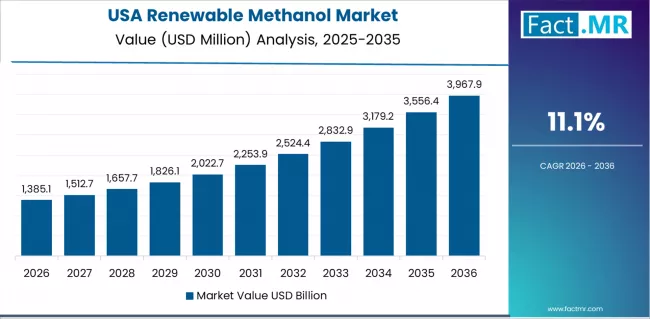
The market in the USA is expected to grow at a CAGR of 11.1%. Growth is fueled by the Inflation Reduction Act's powerful incentives for clean hydrogen and carbon capture, creating a favorable economic environment for e-methanol. Abundant low-cost renewable energy, existing CO2 point sources, and ambitions to produce clean fuels for shipping and aviation are key drivers.
What Supports the UK's Focus on Marine Decarbonization?
The market in the UK is projected to grow at a CAGR of 10.2%. The UK's focus is heavily aligned with decarbonizing its strategic shipping and offshore industries. Government support for clean maritime clusters, partnerships with major ports, and the development of offshore wind-to-fuel projects position renewable methanol as a key candidate for future marine fuel.
How does South Korea's Shipbuilding Dominance Influence the Market?
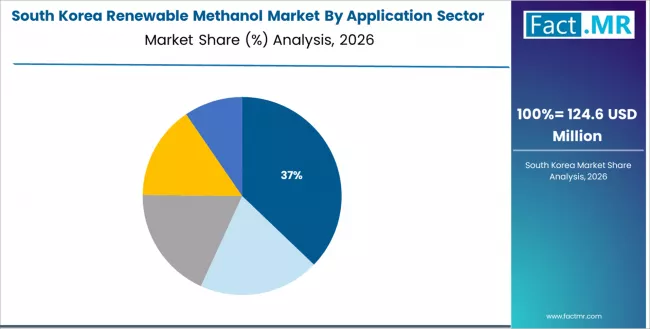
The market in South Korea is projected to grow at a CAGR of 12.4%. As the world's leading shipbuilder, South Korean conglomerates are investing heavily in methanol-fueled vessel technology and securing upstream renewable methanol supply chains. This creates a powerful, integrated demand pull from both the shipbuilding and shipping operations sides of its economy.
Competitive Landscape of the Renewable Methanol Market
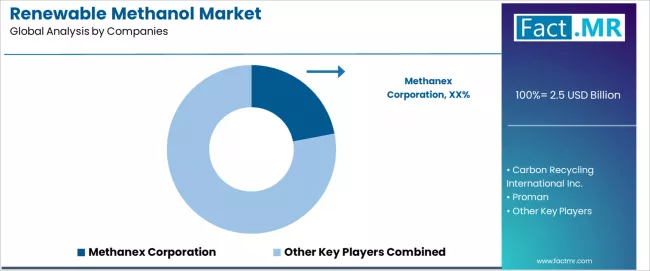
The competitive landscape is dynamic, featuring established methanol producers diversifying into green production, specialized technology developers, energy majors, and new project development consortia. Competition centers on access to low-cost renewable energy or biomass, technological efficiency in conversion processes, securing strategic partnerships with off-takers, and navigating complex regulatory and financing environments for first-of-a-kind projects.
Success is increasingly dependent on vertical integration or strong alliances across the value chain, from power generation and carbon capture to fuel distribution. Early movers who can demonstrate proven, at-scale production and secure long-term contracts will establish significant competitive advantages in this emerging market.
Key Players in the Renewable Methanol Market
- Methanex Corporation
- Carbon Recycling International Inc.
- Proman
- Enerkem Inc.
- INEOS Group Holdings S.A.
- OCI N.V.
- Södra
- BASF SE
- Haldor Topsoe A/S
- Mitsubishi Gas Chemical Company Inc.
- Thyssenkrupp Uhde GmbH
- Veolia
- WASTEFUEL
- BioMCN
- SunGas Renewables Inc.
Scope of the Report
| Items | Values |
|---|---|
| Quantitative Units (2026) | USD 2.5 Billion |
| Feedstock Type | Biomass, Carbon Dioxide, Municipal Waste, Renewable Energy, Other Feedstock Configurations |
| Application Sector | Chemical Feedstock, Fuel Applications, Energy Storage, Solvent Applications, Others |
| Production Technology | Gasification, Catalytic Hydrogenation, Electrochemical Reduction, Biochemical Conversion, Other Technology Platforms |
| End-User Category | Chemical Manufacturers, Transportation Operators, Power Generation Facilities, Other Industrial Services |
| Regions Covered | North America, Europe, Asia Pacific, Latin America, MEA, Other Regions |
| Countries Covered | China, India, Germany, Brazil, USA, UK, South Korea, and 40+ countries |
| Key Companies Profiled | Methanex Corporation, Carbon Recycling International Inc., Proman, Enerkem Inc., INEOS Group Holdings S.A., and other leading production companies |
| Additional Attributes | Dollar sales by feedstock type, application sector, production technology, end-user category, and region; regional demand trends, competitive landscape, technological advancements in production engineering, operational performance optimization initiatives, environmental enhancement programs, and premium product development strategies |
Renewable Methanol Market by Segments
-
Feedstock Type :
- Biomass
- Carbon Dioxide
- Municipal Waste
- Renewable Energy
- Other Feedstock Configurations
-
Application Sector :
- Chemical Feedstock
- Fuel Applications
- Energy Storage
- Solvent Applications
- Others
-
Production Technology :
- Gasification
- Catalytic Hydrogenation
- Electrochemical Reduction
- Biochemical Conversion
- Other Technology Platforms
-
End-User Category :
- Chemical Manufacturers
- Transportation Operators
- Power Generation Facilities
- Other Industrial Services
-
Region :
-
North America
- USA
- Canada
- Mexico
-
Europe
- Germany
- UK
- France
- Italy
- Spain
- Nordic Countries
- BENELUX
- Rest of Europe
-
Asia Pacific
- China
- India
- Japan
- South Korea
- Australia
- Rest of Asia Pacific
-
Latin America
- Brazil
- Argentina
- Rest of Latin America
-
MEA
- Saudi Arabia
- UAE
- South Africa
- Rest of MEA
-
Table of Content
- Executive Summary
- Global Market Outlook
- Demand to side Trends
- Supply to side Trends
- Technology Roadmap Analysis
- Analysis and Recommendations
- Market Overview
- Market Coverage / Taxonomy
- Market Definition / Scope / Limitations
- Market Background
- Market Dynamics
- Drivers
- Restraints
- Opportunity
- Trends
- Scenario Forecast
- Demand in Optimistic Scenario
- Demand in Likely Scenario
- Demand in Conservative Scenario
- Opportunity Map Analysis
- Product Life Cycle Analysis
- Supply Chain Analysis
- Investment Feasibility Matrix
- Value Chain Analysis
- PESTLE and Porter’s Analysis
- Regulatory Landscape
- Regional Parent Market Outlook
- Production and Consumption Statistics
- Import and Export Statistics
- Market Dynamics
- Global Market Analysis 2021 to 2025 and Forecast, 2026 to 2036
- Historical Market Size Value (USD Million) Analysis, 2021 to 2025
- Current and Future Market Size Value (USD Million) Projections, 2026 to 2036
- Y to o to Y Growth Trend Analysis
- Absolute $ Opportunity Analysis
- Global Market Pricing Analysis 2021 to 2025 and Forecast 2026 to 2036
- Global Market Analysis 2021 to 2025 and Forecast 2026 to 2036, By Feedstock Type
- Introduction / Key Findings
- Historical Market Size Value (USD Million) Analysis By Feedstock Type, 2021 to 2025
- Current and Future Market Size Value (USD Million) Analysis and Forecast By Feedstock Type, 2026 to 2036
- Biomass
- Carbon Dioxide
- Municipal Waste
- Renewable Energy
- Other Feedstock Configurations
- Y to o to Y Growth Trend Analysis By Feedstock Type, 2021 to 2025
- Absolute $ Opportunity Analysis By Feedstock Type, 2026 to 2036
- Global Market Analysis 2021 to 2025 and Forecast 2026 to 2036, By Application Sector
- Introduction / Key Findings
- Historical Market Size Value (USD Million) Analysis By Application Sector, 2021 to 2025
- Current and Future Market Size Value (USD Million) Analysis and Forecast By Application Sector, 2026 to 2036
- Chemical Feedstock
- Fuel Applications
- Energy Storage
- Solvent Applications
- Others
- Y to o to Y Growth Trend Analysis By Application Sector, 2021 to 2025
- Absolute $ Opportunity Analysis By Application Sector, 2026 to 2036
- Global Market Analysis 2021 to 2025 and Forecast 2026 to 2036, By Region
- Introduction
- Historical Market Size Value (USD Million) Analysis By Region, 2021 to 2025
- Current Market Size Value (USD Million) Analysis and Forecast By Region, 2026 to 2036
- North America
- Latin America
- Western Europe
- Eastern Europe
- East Asia
- South Asia and Pacific
- Middle East & Africa
- Market Attractiveness Analysis By Region
- North America Market Analysis 2021 to 2025 and Forecast 2026 to 2036, By Country
- Historical Market Size Value (USD Million) Trend Analysis By Market Taxonomy, 2021 to 2025
- Market Size Value (USD Million) Forecast By Market Taxonomy, 2026 to 2036
- By Country
- USA
- Canada
- Mexico
- By Feedstock Type
- By Application Sector
- By Country
- Market Attractiveness Analysis
- By Country
- By Feedstock Type
- By Application Sector
- Key Takeaways
- Latin America Market Analysis 2021 to 2025 and Forecast 2026 to 2036, By Country
- Historical Market Size Value (USD Million) Trend Analysis By Market Taxonomy, 2021 to 2025
- Market Size Value (USD Million) Forecast By Market Taxonomy, 2026 to 2036
- By Country
- Brazil
- Chile
- Rest of Latin America
- By Feedstock Type
- By Application Sector
- By Country
- Market Attractiveness Analysis
- By Country
- By Feedstock Type
- By Application Sector
- Key Takeaways
- Western Europe Market Analysis 2021 to 2025 and Forecast 2026 to 2036, By Country
- Historical Market Size Value (USD Million) Trend Analysis By Market Taxonomy, 2021 to 2025
- Market Size Value (USD Million) Forecast By Market Taxonomy, 2026 to 2036
- By Country
- Germany
- UK
- Italy
- Spain
- France
- Nordic
- BENELUX
- Rest of Western Europe
- By Feedstock Type
- By Application Sector
- By Country
- Market Attractiveness Analysis
- By Country
- By Feedstock Type
- By Application Sector
- Key Takeaways
- Eastern Europe Market Analysis 2021 to 2025 and Forecast 2026 to 2036, By Country
- Historical Market Size Value (USD Million) Trend Analysis By Market Taxonomy, 2021 to 2025
- Market Size Value (USD Million) Forecast By Market Taxonomy, 2026 to 2036
- By Country
- Russia
- Poland
- Hungary
- Balkan & Baltic
- Rest of Eastern Europe
- By Feedstock Type
- By Application Sector
- By Country
- Market Attractiveness Analysis
- By Country
- By Feedstock Type
- By Application Sector
- Key Takeaways
- East Asia Market Analysis 2021 to 2025 and Forecast 2026 to 2036, By Country
- Historical Market Size Value (USD Million) Trend Analysis By Market Taxonomy, 2021 to 2025
- Market Size Value (USD Million) Forecast By Market Taxonomy, 2026 to 2036
- By Country
- China
- Japan
- South Korea
- By Feedstock Type
- By Application Sector
- By Country
- Market Attractiveness Analysis
- By Country
- By Feedstock Type
- By Application Sector
- Key Takeaways
- South Asia and Pacific Market Analysis 2021 to 2025 and Forecast 2026 to 2036, By Country
- Historical Market Size Value (USD Million) Trend Analysis By Market Taxonomy, 2021 to 2025
- Market Size Value (USD Million) Forecast By Market Taxonomy, 2026 to 2036
- By Country
- India
- ASEAN
- Australia & New Zealand
- Rest of South Asia and Pacific
- By Feedstock Type
- By Application Sector
- By Country
- Market Attractiveness Analysis
- By Country
- By Feedstock Type
- By Application Sector
- Key Takeaways
- Middle East & Africa Market Analysis 2021 to 2025 and Forecast 2026 to 2036, By Country
- Historical Market Size Value (USD Million) Trend Analysis By Market Taxonomy, 2021 to 2025
- Market Size Value (USD Million) Forecast By Market Taxonomy, 2026 to 2036
- By Country
- Kingdom of Saudi Arabia
- Other GCC Countries
- Turkiye
- South Africa
- Other African Union
- Rest of Middle East & Africa
- By Feedstock Type
- By Application Sector
- By Country
- Market Attractiveness Analysis
- By Country
- By Feedstock Type
- By Application Sector
- Key Takeaways
- Key Countries Market Analysis
- USA
- Pricing Analysis
- Market Share Analysis, 2025
- By Feedstock Type
- By Application Sector
- Canada
- Pricing Analysis
- Market Share Analysis, 2025
- By Feedstock Type
- By Application Sector
- Mexico
- Pricing Analysis
- Market Share Analysis, 2025
- By Feedstock Type
- By Application Sector
- Brazil
- Pricing Analysis
- Market Share Analysis, 2025
- By Feedstock Type
- By Application Sector
- Chile
- Pricing Analysis
- Market Share Analysis, 2025
- By Feedstock Type
- By Application Sector
- Germany
- Pricing Analysis
- Market Share Analysis, 2025
- By Feedstock Type
- By Application Sector
- UK
- Pricing Analysis
- Market Share Analysis, 2025
- By Feedstock Type
- By Application Sector
- Italy
- Pricing Analysis
- Market Share Analysis, 2025
- By Feedstock Type
- By Application Sector
- Spain
- Pricing Analysis
- Market Share Analysis, 2025
- By Feedstock Type
- By Application Sector
- France
- Pricing Analysis
- Market Share Analysis, 2025
- By Feedstock Type
- By Application Sector
- India
- Pricing Analysis
- Market Share Analysis, 2025
- By Feedstock Type
- By Application Sector
- ASEAN
- Pricing Analysis
- Market Share Analysis, 2025
- By Feedstock Type
- By Application Sector
- Australia & New Zealand
- Pricing Analysis
- Market Share Analysis, 2025
- By Feedstock Type
- By Application Sector
- China
- Pricing Analysis
- Market Share Analysis, 2025
- By Feedstock Type
- By Application Sector
- Japan
- Pricing Analysis
- Market Share Analysis, 2025
- By Feedstock Type
- By Application Sector
- South Korea
- Pricing Analysis
- Market Share Analysis, 2025
- By Feedstock Type
- By Application Sector
- Russia
- Pricing Analysis
- Market Share Analysis, 2025
- By Feedstock Type
- By Application Sector
- Poland
- Pricing Analysis
- Market Share Analysis, 2025
- By Feedstock Type
- By Application Sector
- Hungary
- Pricing Analysis
- Market Share Analysis, 2025
- By Feedstock Type
- By Application Sector
- Kingdom of Saudi Arabia
- Pricing Analysis
- Market Share Analysis, 2025
- By Feedstock Type
- By Application Sector
- Turkiye
- Pricing Analysis
- Market Share Analysis, 2025
- By Feedstock Type
- By Application Sector
- South Africa
- Pricing Analysis
- Market Share Analysis, 2025
- By Feedstock Type
- By Application Sector
- USA
- Market Structure Analysis
- Competition Dashboard
- Competition Benchmarking
- Market Share Analysis of Top Players
- By Regional
- By Feedstock Type
- By Application Sector
- Competition Analysis
- Competition Deep Dive
- Methanex Corporation
- Overview
- Product Portfolio
- Profitability by Market Segments (Product/Age /Sales Channel/Region)
- Sales Footprint
- Strategy Overview
- Marketing Strategy
- Product Strategy
- Channel Strategy
- Carbon Recycling International Inc.
- Proman
- Enerkem Inc.
- INEOS Group Holdings S.A.
- OCI N.V.
- Södra
- BASF SE
- Haldor Topsoe A/S
- Mitsubishi Gas Chemical Company Inc.
- Thyssenkrupp Uhde GmbH
- Veolia
- WASTEFUEL
- BioMCN
- SunGas Renewables Inc.
- Methanex Corporation
- Competition Deep Dive
- Assumptions & Acronyms Used
- Research Methodology
List Of Table
- Table 1: Global Market Value (USD Million) Forecast by Region, 2021 to 2036
- Table 2: Global Market Value (USD Million) Forecast by Feedstock Type, 2021 to 2036
- Table 3: Global Market Value (USD Million) Forecast by Application Sector, 2021 to 2036
- Table 4: North America Market Value (USD Million) Forecast by Country, 2021 to 2036
- Table 5: North America Market Value (USD Million) Forecast by Feedstock Type, 2021 to 2036
- Table 6: North America Market Value (USD Million) Forecast by Application Sector, 2021 to 2036
- Table 7: Latin America Market Value (USD Million) Forecast by Country, 2021 to 2036
- Table 8: Latin America Market Value (USD Million) Forecast by Feedstock Type, 2021 to 2036
- Table 9: Latin America Market Value (USD Million) Forecast by Application Sector, 2021 to 2036
- Table 10: Western Europe Market Value (USD Million) Forecast by Country, 2021 to 2036
- Table 11: Western Europe Market Value (USD Million) Forecast by Feedstock Type, 2021 to 2036
- Table 12: Western Europe Market Value (USD Million) Forecast by Application Sector, 2021 to 2036
- Table 13: Eastern Europe Market Value (USD Million) Forecast by Country, 2021 to 2036
- Table 14: Eastern Europe Market Value (USD Million) Forecast by Feedstock Type, 2021 to 2036
- Table 15: Eastern Europe Market Value (USD Million) Forecast by Application Sector, 2021 to 2036
- Table 16: East Asia Market Value (USD Million) Forecast by Country, 2021 to 2036
- Table 17: East Asia Market Value (USD Million) Forecast by Feedstock Type, 2021 to 2036
- Table 18: East Asia Market Value (USD Million) Forecast by Application Sector, 2021 to 2036
- Table 19: South Asia and Pacific Market Value (USD Million) Forecast by Country, 2021 to 2036
- Table 20: South Asia and Pacific Market Value (USD Million) Forecast by Feedstock Type, 2021 to 2036
- Table 21: South Asia and Pacific Market Value (USD Million) Forecast by Application Sector, 2021 to 2036
- Table 22: Middle East & Africa Market Value (USD Million) Forecast by Country, 2021 to 2036
- Table 23: Middle East & Africa Market Value (USD Million) Forecast by Feedstock Type, 2021 to 2036
- Table 24: Middle East & Africa Market Value (USD Million) Forecast by Application Sector, 2021 to 2036
List Of Figures
- Figure 1: Global Market Pricing Analysis
- Figure 2: Global Market Value (USD Million) Forecast 2021 to 2036
- Figure 3: Global Market Value Share and BPS Analysis by Feedstock Type, 2026 and 2036
- Figure 4: Global Market Y to o to Y Growth Comparison by Feedstock Type, 2026 to 2036
- Figure 5: Global Market Attractiveness Analysis by Feedstock Type
- Figure 6: Global Market Value Share and BPS Analysis by Application Sector, 2026 and 2036
- Figure 7: Global Market Y to o to Y Growth Comparison by Application Sector, 2026 to 2036
- Figure 8: Global Market Attractiveness Analysis by Application Sector
- Figure 9: Global Market Value (USD Million) Share and BPS Analysis by Region, 2026 and 2036
- Figure 10: Global Market Y to o to Y Growth Comparison by Region, 2026 to 2036
- Figure 11: Global Market Attractiveness Analysis by Region
- Figure 12: North America Market Incremental Dollar Opportunity, 2026 to 2036
- Figure 13: Latin America Market Incremental Dollar Opportunity, 2026 to 2036
- Figure 14: Western Europe Market Incremental Dollar Opportunity, 2026 to 2036
- Figure 15: Eastern Europe Market Incremental Dollar Opportunity, 2026 to 2036
- Figure 16: East Asia Market Incremental Dollar Opportunity, 2026 to 2036
- Figure 17: South Asia and Pacific Market Incremental Dollar Opportunity, 2026 to 2036
- Figure 18: Middle East & Africa Market Incremental Dollar Opportunity, 2026 to 2036
- Figure 19: North America Market Value Share and BPS Analysis by Country, 2026 and 2036
- Figure 20: North America Market Value Share and BPS Analysis by Feedstock Type, 2026 and 2036
- Figure 21: North America Market Y to o to Y Growth Comparison by Feedstock Type, 2026 to 2036
- Figure 22: North America Market Attractiveness Analysis by Feedstock Type
- Figure 23: North America Market Value Share and BPS Analysis by Application Sector, 2026 and 2036
- Figure 24: North America Market Y to o to Y Growth Comparison by Application Sector, 2026 to 2036
- Figure 25: North America Market Attractiveness Analysis by Application Sector
- Figure 26: Latin America Market Value Share and BPS Analysis by Country, 2026 and 2036
- Figure 27: Latin America Market Value Share and BPS Analysis by Feedstock Type, 2026 and 2036
- Figure 28: Latin America Market Y to o to Y Growth Comparison by Feedstock Type, 2026 to 2036
- Figure 29: Latin America Market Attractiveness Analysis by Feedstock Type
- Figure 30: Latin America Market Value Share and BPS Analysis by Application Sector, 2026 and 2036
- Figure 31: Latin America Market Y to o to Y Growth Comparison by Application Sector, 2026 to 2036
- Figure 32: Latin America Market Attractiveness Analysis by Application Sector
- Figure 33: Western Europe Market Value Share and BPS Analysis by Country, 2026 and 2036
- Figure 34: Western Europe Market Value Share and BPS Analysis by Feedstock Type, 2026 and 2036
- Figure 35: Western Europe Market Y to o to Y Growth Comparison by Feedstock Type, 2026 to 2036
- Figure 36: Western Europe Market Attractiveness Analysis by Feedstock Type
- Figure 37: Western Europe Market Value Share and BPS Analysis by Application Sector, 2026 and 2036
- Figure 38: Western Europe Market Y to o to Y Growth Comparison by Application Sector, 2026 to 2036
- Figure 39: Western Europe Market Attractiveness Analysis by Application Sector
- Figure 40: Eastern Europe Market Value Share and BPS Analysis by Country, 2026 and 2036
- Figure 41: Eastern Europe Market Value Share and BPS Analysis by Feedstock Type, 2026 and 2036
- Figure 42: Eastern Europe Market Y to o to Y Growth Comparison by Feedstock Type, 2026 to 2036
- Figure 43: Eastern Europe Market Attractiveness Analysis by Feedstock Type
- Figure 44: Eastern Europe Market Value Share and BPS Analysis by Application Sector, 2026 and 2036
- Figure 45: Eastern Europe Market Y to o to Y Growth Comparison by Application Sector, 2026 to 2036
- Figure 46: Eastern Europe Market Attractiveness Analysis by Application Sector
- Figure 47: East Asia Market Value Share and BPS Analysis by Country, 2026 and 2036
- Figure 48: East Asia Market Value Share and BPS Analysis by Feedstock Type, 2026 and 2036
- Figure 49: East Asia Market Y to o to Y Growth Comparison by Feedstock Type, 2026 to 2036
- Figure 50: East Asia Market Attractiveness Analysis by Feedstock Type
- Figure 51: East Asia Market Value Share and BPS Analysis by Application Sector, 2026 and 2036
- Figure 52: East Asia Market Y to o to Y Growth Comparison by Application Sector, 2026 to 2036
- Figure 53: East Asia Market Attractiveness Analysis by Application Sector
- Figure 54: South Asia and Pacific Market Value Share and BPS Analysis by Country, 2026 and 2036
- Figure 55: South Asia and Pacific Market Value Share and BPS Analysis by Feedstock Type, 2026 and 2036
- Figure 56: South Asia and Pacific Market Y to o to Y Growth Comparison by Feedstock Type, 2026 to 2036
- Figure 57: South Asia and Pacific Market Attractiveness Analysis by Feedstock Type
- Figure 58: South Asia and Pacific Market Value Share and BPS Analysis by Application Sector, 2026 and 2036
- Figure 59: South Asia and Pacific Market Y to o to Y Growth Comparison by Application Sector, 2026 to 2036
- Figure 60: South Asia and Pacific Market Attractiveness Analysis by Application Sector
- Figure 61: Middle East & Africa Market Value Share and BPS Analysis by Country, 2026 and 2036
- Figure 62: Middle East & Africa Market Value Share and BPS Analysis by Feedstock Type, 2026 and 2036
- Figure 63: Middle East & Africa Market Y to o to Y Growth Comparison by Feedstock Type, 2026 to 2036
- Figure 64: Middle East & Africa Market Attractiveness Analysis by Feedstock Type
- Figure 65: Middle East & Africa Market Value Share and BPS Analysis by Application Sector, 2026 and 2036
- Figure 66: Middle East & Africa Market Y to o to Y Growth Comparison by Application Sector, 2026 to 2036
- Figure 67: Middle East & Africa Market Attractiveness Analysis by Application Sector
- Figure 68: Global Market - Tier Structure Analysis
- Figure 69: Global Market - Company Share Analysis
- FAQs -
How big is the renewable methanol market in 2026?
The global renewable methanol market is estimated to be valued at USD 2.5 billion in 2026.
What will be the size of renewable methanol market in 2036?
The market size for the renewable methanol market is projected to reach USD 7.4 billion by 2036.
How much will be the renewable methanol market growth between 2026 and 2036?
The renewable methanol market is expected to grow at a 11.5% CAGR between 2026 and 2036.
What are the key product types in the renewable methanol market?
The key product types in renewable methanol market are biomass, carbon dioxide, municipal waste, renewable energy and other feedstock configurations.
Which application sector segment to contribute significant share in the renewable methanol market in 2026?
In terms of application sector, chemical feedstock segment to command 36.0% share in the renewable methanol market in 2026.