Smart Education and Learning Market (2026 - 2036)

Smart Education and Learning Market is segmented by Component (Hardware (Interactive Display, Interactive Projector, Interactive Board), Software (Learning Management System, Learning Content Management System, Adaptive Learning Platform, Assessment System, and Others), Service (Managed Service and Professional Services), and Education Content), Learning (Social Learning, Collaborative Learning, Simulation-based Learning, and Others), End User (Corporate, Academic, and Others) and Region. Forecast for 2026 to 2036.

Core Findings

    Smart Education and Learning Market Forecast and Outlook By Fact.MR

    In 2025, the smart education and learning market was valued at USD 30.0 billion. Based on Fact.MR analysis, demand for smart education and learning solutions is estimated to grow to USD 32.7 billion in 2026 and USD 76.5 billion by 2036. FACT.MR projects a CAGR of 9.1% during the forecast period.

    Between 2026 and 2036, the market is projected to generate an absolute dollar opportunity of USD 43.8 billion, a transformational expansion driven by government digital education mandates, AI-powered adaptive learning platform adoption, and enterprise workforce upskilling investment. Structural constraints include uneven broadband infrastructure in rural emerging markets, data privacy compliance costs for LMS operators under GDPR and FERPA frameworks, and institutional procurement inertia in public education systems.

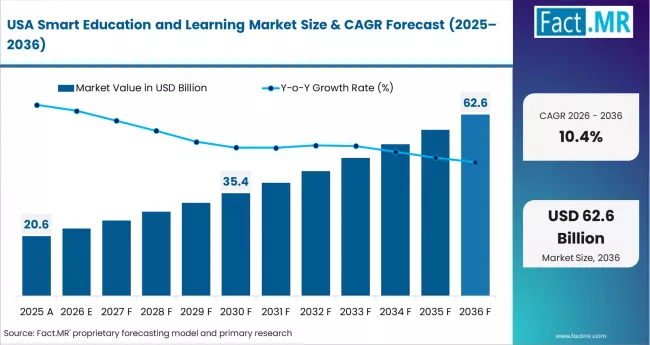
    Country growth reflects digital education investment, institutional adoption, and workforce training demand. South Korea leads at 10.6% CAGR driven by the Ministry of Education's AI Digital Textbook national programme. Japan follows at 10.2% supported by GIGA School device refresh cycles and Ministry of Education digital curriculum reforms. The United States records 10.4% through federal E-Rate programme expansion and corporate upskilling mandates. Germany posts 10.0% through DigitalPakt Schule II infrastructure investment. The United Kingdom grows at 9.1% through EdTech partnership programmes and ESFA-funded skills bootcamp adoption. Mature market growth in Japan and Germany is partly constrained by legacy institutional procurement processes and teacher digital competency gaps that extend platform deployment timelines.
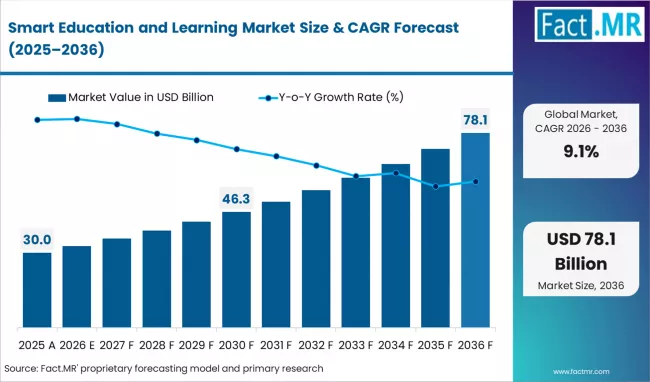
    Smart Education And Learning Market Market Value Analysis

    Metric Value
    Estimated Value in 2026 USD 32.7 billion
    Forecast Value in 2036 USD 76.5 billion
    Forecast CAGR (2026 to 2036) 9.1%

    Smart Education and Learning Market Definition

    The smart education and learning market includes digital teaching technologies such as interactive hardware, AI-based software platforms, and educational content used in schools, universities, corporate training, and government skills programmes.

    Market Inclusions

    Includes global and regional market forecasts from 2026 to 2036 by component, learning mode, and end user. Covers interactive displays, LMS and LCMS software, adaptive learning platforms, assessment systems, education content, and related services.

    Market Exclusions

    Excludes traditional classroom equipment, consumer tablets without education software, standalone video conferencing tools, printed learning materials, and individual tutoring apps.

    Research Methodology

    • Primary Research: Interviews with education technology procurement officers, LMS platform managers, corporate training leaders, university IT administrators, and EdTech distributors.
    • Desk Research: Analysis of UNESCO digital education reports, US E-Rate programme data, EU DigitalPakt Schule funding records, OECD education statistics, and EdTech company reports.
    • Market Sizing and Forecasting: Hybrid model using EdTech platform subscription revenue, interactive hardware shipment data, and government digital education spending.
    • Data Validation and Update Cycle: Forecasts validated using EdTech company disclosures, government education budgets, UNESCO and OECD benchmarks, and expert interviews.

    Summary of Smart Education and Learning Market

    • Market Definition
      • The smart education market includes AI learning platforms, interactive hardware, and digital education content used in academic, corporate, and government training environments.
    • Demand Drivers
      • Government digital education programmes are funding interactive classroom hardware and LMS adoption in schools.
      • Corporate reskilling programmes are increasing demand for LMS platforms and simulation training tools.
      • AI-based adaptive learning is improving personalisation and reducing student dropout rates.
    • Key Segments Analysed
      • By Component: Software leads, with LMS platforms holding about 36% of the software segment in 2026.
      • By Learning: Collaborative learning leads with around 38% share in 2026 due to group learning tools in hybrid education.
      • By End User: Academic institutions generate the largest revenue share due to school digitalization programmes.
    • Analyst Opinion at FACT.MR
      • Shambhu Nath Jha notes that AI adaptive learning platforms, digital textbook programmes, and enterprise training subscriptions will shape future EdTech growth.
    • Strategic Implications
      • EdTech vendors should integrate AI analytics and adaptive learning features into LMS platforms.
      • Hardware companies should align interactive device products with government education technology standards.
      • Corporate learning providers should develop AI-based coaching and skills analytics tools.
    • Methodology
      • Market sizing used EdTech subscription revenues and hardware shipment values validated with company financial disclosures.
      • Education investment data from UNESCO, OECD, and government programmes supported regional analysis.
      • Forecasts incorporated digital education adoption trends, AI learning platform growth, and enterprise training demand.

    Segmental Analaysis

    Smart Education and Learning Market Analysis by Component
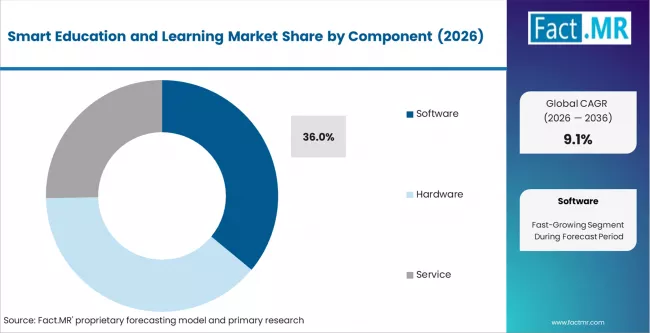
    Smart Education And Learning Market Analysis By Component

    According to FACT.MR analysis, software is expected to lead the component segment in 2026, with Learning Management Systems holding about 36% share of the software category. LMS platforms serve as the core infrastructure for digital learning delivery and analytics.

    • Blackboard Anthology Acquisition: Anthology completed the acquisition of Campus Management in 2025, expanding its LMS platform to more than 3,000 higher education institutions globally. [5]
    • Microsoft Copilot LMS Integration: Microsoft introduced Copilot AI integrations for education within Teams and SharePoint LMS systems in October 2024. [6]
    • Corporate LMS Adoption Trend: LinkedIn Learning reported that 89% of L&D professionals plan to increase investment in LMS and digital learning platforms in 2025. [7]

    Smart Education and Learning Market Analysis by Learning
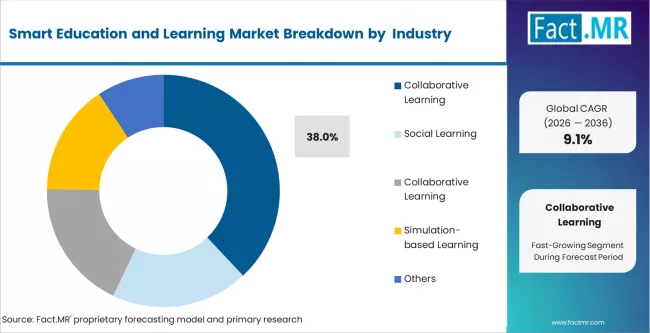
    Smart Education And Learning Market Analysis By Learning

    Collaborative learning is projected to hold about 38% share in 2026 due to the growing use of group-based learning tools in hybrid education environments.

    • Coursera Enterprise Collaboration Investment: Coursera reported a 21% increase in enterprise collaborative learning subscriptions in 2024. [8]
    • Simulation-based Learning Development: Pearson launched AI-based simulation learning modules for medical and nursing education integrated with its Mastering LMS platform. [9]
    • Social Learning Platform Trend: Udemy Business reported that social learning features increased enterprise course completion rates by 34% compared with standalone learning content. [10]

    Drivers, Restraints, and Opportunities

    FACT.MR analysts observe that the smart education and learning market has evolved from basic digital classroom tools and LMS systems into a broader ecosystem of AI-driven learning platforms and simulation-based training solutions. Growth has been supported by government digital education investments and corporate training adoption, accelerated by remote learning during the pandemic.

    The market is shifting toward AI-powered learning systems. Traditional LMS platforms without adaptive capabilities are facing competition from advanced platforms offering personalised learning, simulation tools, and learning analytics. These advanced systems command 40-60% higher prices while enterprise training budgets continue moving from instructor-led programmes to scalable digital learning platforms.

    • South Korea AI Digital Textbook Mandate: South Korea launched its AI Digital Textbook programme in 2025, deploying AI-based learning tools across public schools and creating demand for adaptive learning platforms and interactive classroom hardware. [2]
    • US E-Rate Programme Expansion: The FCC increased the E-Rate funding cap to USD 3.85 billion in 2025 and expanded eligibility to include cloud LMS subscriptions and AI tutoring platforms. [3]
    • EU DigitalPakt Schule II Investment: Germany announced EUR 2.5 billion in DigitalPakt Schule II funding in 2025 to support interactive hardware, LMS deployment, and digital teacher training in public schools. [4]

    Regional Analysis

    The smart education and learning market is analysed across Asia Pacific, Europe, North America, Latin America, and Middle East and Africa, covering over 40+ countries with distinct demand profiles shaped by government digital education investment, institutional LMS adoption maturity, corporate upskilling programme scale, and EdTech regulatory frameworks. The full report offers market attractiveness analysis based on government programme funding timelines, device penetration benchmarks, and AI platform adoption rates.

    Top Country Growth Comparison Smart Education And Learning Market Cagr (2026 2036)

    Country CAGR (2026 to 2036)
    South Korea 10.6%
    United States 10.4%
    Japan 10.2%
    Germany 10.0%
    United Kingdom 9.1%

    Source: Fact.MR (FACT.MR) analysis, based on proprietary forecasting model and primary research
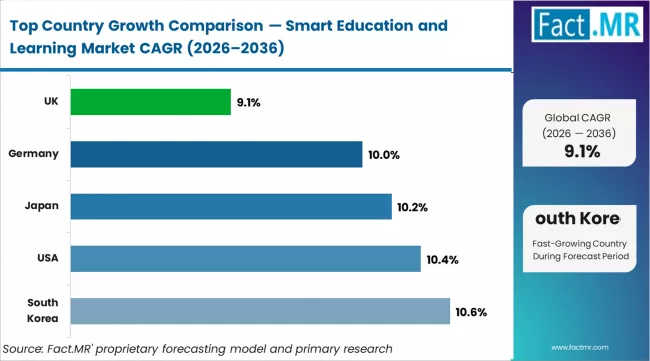
    Smart Education And Learning Market Cagr Analysis By Country

    Asia Pacific Smart Education and Learning Market Analysis

    Asia Pacific is the fastest-growing region for smart education due to large student populations, expanding digital infrastructure programmes, and government investment in AI-based learning tools.

    • South Korea: South Korea’s smart education market is projected to grow at a CAGR of 10.6% through 2036. The government launched the AI Digital Textbook programme in 2025 to deploy adaptive learning content in public schools. The programme triggered large-scale procurement of interactive displays and tablets, generating KRW 450 billion in EdTech spending in early 2025. KT Corporation and NAVER Education secured contracts to provide AI learning infrastructure and tutoring platforms for public school deployments.
    • Japan: Japan’s smart education market is expected to grow at a CAGR of 10.2% through 2036. The government announced the second phase of the GIGA School programme in 2024 to replace earlier digital devices with AI-enabled tablets and displays. Updated curriculum standards now include mandatory digital literacy and AI learning outcomes. Companies such as NTT Communications and Fujitsu Education reported increased LMS hosting and adaptive learning contracts with school boards.

    FACT.MR's analysis of the smart education and learning market in Asia Pacific includes country-level assessment for South Korea, Japan, China, India, ASEAN, and Australia and New Zealand. The study covers government digital education funding, AI curriculum initiatives, and market growth forecasts.

    North America Smart Education and Learning Market Analysis
    Smart Education And Learning Market Country Value Analysis

    North America remains the largest revenue-generating region due to strong LMS adoption in universities, large corporate training budgets, and federal digital education funding programmes.

    • United States: The United States smart education market is projected to grow at a CAGR of 10.4% through 2036. The FCC expanded the E-Rate programme funding cap in 2025 and added cloud LMS subscriptions and AI tutoring platforms as eligible expenses. This expansion increased procurement capacity for around 15,000 school districts. The National Science Foundation also introduced AI education grants supporting university research and digital curriculum development.

    FACT.MR's analysis of the smart education and learning market in North America includes country-level evaluation for the United States, Canada, and Mexico. The report highlights LMS adoption trends, government funding programmes, and enterprise training platform growth.

    Europe Smart Education and Learning Market Analysis
    Smart Education And Learning Market Europe Country Market Share Analysis, 2026 & 2036

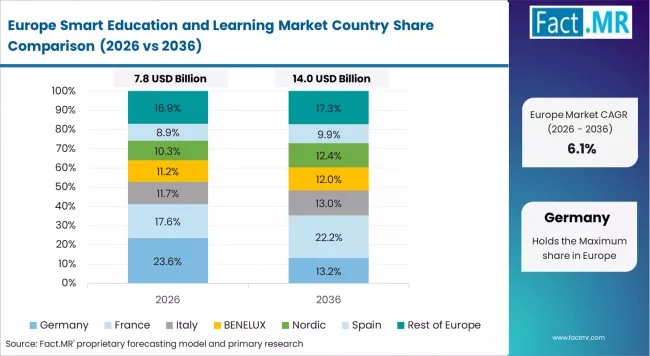
    Europe is a policy-driven EdTech market where digital education programmes and strict data governance regulations shape platform adoption and procurement.

    • Germany: Germany’s smart education market is forecast to grow at a CAGR of 10.0% through 2036. The government launched DigitalPakt Schule II with EUR 2.5 billion funding for interactive hardware, cloud LMS platforms, and teacher digital training. State education authorities also introduced GDPR-compliant LMS procurement rules requiring EU-based data storage. SMART Technologies and Promethean secured major display supply contracts for German schools.
    • United Kingdom: The United Kingdom smart education market is expected to grow at a CAGR of 9.1% through 2036. The Skills Bootcamp programme expanded funding for digital skills training in 2025, allocating GBP 150 million for employer-supported learning initiatives. The Department for Education also issued guidance on responsible AI use in education, encouraging adoption of compliant LMS and tutoring platforms across UK schools.

    FACT.MR's analysis of the smart education and learning market in Europe includes country-level assessment for Germany, France, the United Kingdom, Italy, Spain, and the rest of Western Europe. The research covers government digital education programmes, LMS adoption trends, and regulatory compliance requirements.

    Competitive Aligners for Market Players
    Smart Education And Learning Market Analysis By Company

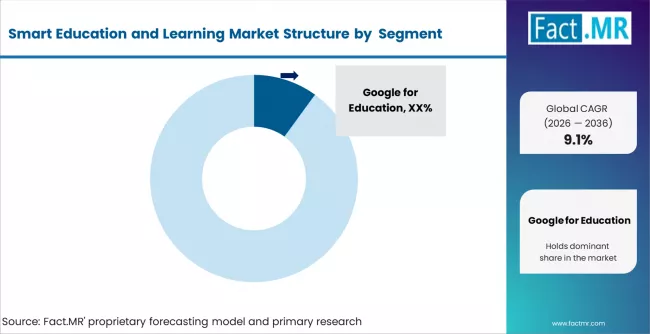
    The global smart education and learning market is moderately concentrated, especially at the enterprise LMS and AI learning platform level. Major providers such as Google for Education, Microsoft Education, Blackboard (Anthology), and Pearson together account for a significant share of institutional software revenue. Their strong positions are supported by long-term contracts with universities, schools, and government education systems, as well as deep integration with national digital education initiatives. Today, competition is less about basic content delivery and more about advanced capabilities such as AI-driven adaptive learning, data analytics, and integration with existing LMS environments.

    Google and Microsoft hold important structural advantages because their platforms are already embedded in school productivity ecosystems. Google benefits from its Chromebook and Workspace for Education integration, which creates strong switching costs for institutions once deployed. Microsoft uses its large Microsoft 365 Education user base to introduce new AI learning tools such as Copilot tutoring and collaborative learning features through Teams. Coursera also maintains a competitive edge through partnerships with universities that provide exclusive professional certification and online course content.

    Institutional buyers usually sign multi-year contracts but regularly review platforms at renewal. Corporate training buyers increasingly evaluate platforms based on measurable learning outcomes and workforce skill development rather than simply the size of course libraries.

    Key Players

    • Google for Education
    • Microsoft Education
    • Coursera
    • Blackboard Inc.
    • Pearson
    • Udemy
    • Khan Academy
    • Byju's
    • Duolingo
    • EdX (2U Inc.)

    Scope of Report

    Attribute Details
    Quantitative Units USD 32.7 billion (2026) to USD 76.5 billion (2036), at a CAGR of 9.1%
    Market Definition AI-enabled software platforms, interactive hardware, and digital content services for personalised learning across academic, corporate, and government training environments.
    Component Segmentation Hardware (Interactive Display, Projector, Board), Software (LMS), LCMS, Adaptive Platform, Assessment), Service (Managed, Professional), Education Content
    Learning Segmentation Social Learning, Collaborative Learning, Simulation-based Learning, Others
    End User Segmentation Corporate, Academic, Others
    Application Coverage K-12 digital classrooms, higher education LMS, corporate workforce reskilling, government skills programmes, simulation-based professional training.
    Regions Covered Asia Pacific, Europe, North America, Latin America, Middle East and Africa
    Countries Covered South Korea, Japan, China, India, ASEAN, Australia and New Zealand, Germany, UK, France, Italy, Spain, Nordic, BENELUX, USA, Canada, Mexico, Brazil, Chile, Saudi Arabia, GCC, Turkey, South Africa
    Key Companies Profiled Google for Education, Microsoft Education, Coursera, Blackboard Inc., Pearson, Udemy, Khan Academy, Byju's, Duolingo, EdX (2U Inc.)
    Forecast Period 2026 to 2036
    Approach Hybrid top-down and bottom-up model using EdTech platform subscription revenues, interactive hardware shipments, government programme expenditure data, and primary interviews with institutional procurement and L&D managers.

    Smart Education and Learning Market by Segments

    • By Component:

      • Hardware
        • Interactive Display
        • Interactive Projector
        • Interactive Board
      • Software
        • Learning Management System (LMS)
        • Learning Content Management System
        • Adaptive Learning Platform
        • Assessment System
        • Others
      • Service
        • Managed Service
        • Professional Services
      • Education Content
    • By Learning:

      • Social Learning
      • Collaborative Learning
      • Simulation-based Learning
      • Others
    • By End User:

      • Corporate
      • Academic
      • Others
    • By Region:

      • North America
        • United States
        • Canada
        • Mexico
      • Latin America
        • Brazil
        • Chile
        • Ecuador
        • Rest of Latin America
      • Western Europe
        • Germany
        • United Kingdom
        • France
        • Italy
        • Spain
        • Nordic Countries
        • BENELUX
        • Rest of Western Europe
      • Eastern Europe
        • Russia
        • Poland
        • Hungary
        • Balkan and Baltic
        • Rest of Eastern Europe
      • East Asia
        • China
        • Japan
        • South Korea
      • South Asia and Pacific
        • India
        • ASEAN
        • Australia and New Zealand
        • Rest of South Asia and Pacific
      • Middle East and Africa
        • Kingdom of Saudi Arabia
        • Other GCC Countries
        • Turkey
        • South Africa
        • Other African Union
        • Rest of Middle East and Africa

    Bibliography

    • [1] Ministry of Education, Republic of Korea. (2025). AI Digital Textbook National Programme Launch: AI-Powered Adaptive Textbook Deployment Across Mathematics, English, and IT Subjects in All Public Primary and Middle Schools, KRW 450 Billion Procurement and KT Corporation and NAVER Education Content Contracts. March 2025. moe.go.kr
    • [2] Federal Communications Commission. (2025). E-Rate Programme Modernisation Order: Annual Funding Cap Increase to USD 3.85 Billion, Cloud-Based LMS Subscriptions and AI Tutoring Platforms Added as Eligible Expenditure Categories for K-12 School Districts. January 2025. fcc.gov/consumers/guides/e-rate-schools-and-libraries-universal-service-programme
    • [3] Federal Ministry of Education and Research, Germany. (2025). DigitalPakt Schule II Funding Announcement: EUR 2.5 Billion for Interactive Hardware Upgrades, Cloud LMS Deployment, and Teacher Digital Training Across All Federal States Through 2027, SMART Technologies and Promethean Named as Approved Interactive Display Suppliers. February 2025.
    • [4] Anthology Inc. (2025). Press Release: Completion of Campus Management Acquisition, Integrated Student Success and LMS Platform Expanded to Over 3,000 Higher Education Institutions Globally. January 2025. anthology.com/news
    • [5] Microsoft Corporation. (2024). Product Launch Press Release: Copilot for Education Integration in Microsoft Teams for Education and SharePoint LMS Environments, AI-Powered Lesson Planning, Adaptive Quiz Generation, and Student Feedback Automation for K-12 and Higher Education.
    • [6] LinkedIn. (2025). 2025 Workplace Learning Report: 89% of L&D Professionals Planned to Increase LMS and Digital Learning Platform Investment in 2025, AI-Personalised Learning Path Recommendations Top Platform Selection Feature. January 2025.
    • [7] Coursera Inc. (2024). Q3 2024 Earnings Release: Coursera for Enterprise Collaborative Learning Subscription Base 21% Year-on-Year Growth, Fortune 500 Team-Based Upskilling Programme Deployment Data and Cohort Completion Tracking Adoption.
    • [8] Pearson plc. (2024). Product Launch Press Release: Pearson+ AI-Powered Simulation Learning Modules for Nursing and Medical Education, Virtual Patient Scenario-Based Training Integrated with Mastering LMS for US and UK Higher Education Medical Programmes.
    • [9] Udemy Inc. (2025). 2025 Global Learning and Skills Trends Report: Social Learning Features Increased Enterprise Course Completion Rates 34% Versus Standalone Self-Paced Content, Collaborative Learning Platform Investment Data.

    This Report Addresses

    • Strategic intelligence on South Korea AI Digital Textbook mandate, Japan GIGA School Second Phase, US FCC E-Rate expansion, Germany DigitalPakt Schule II, and UK ESFA Skills Bootcamp programme shaping global smart education procurement through 2036.
    • Market forecast from USD 32.7 billion in 2026 to USD 76.5 billion by 2036 at 9.1% CAGR, segmented by component, learning mode, and end user.
    • Growth opportunity mapping across South Korea's KRW 450 billion AI classroom procurement, US E-Rate cloud LMS expansion, Germany's EUR 2.5 billion DigitalPakt Schule II, UK Skills Bootcamp digital upskilling funds, and Japan GIGA School device refresh.
    • Country CAGR outlook for South Korea 10.6%, United States 10.4%, Japan 10.2%, Germany 10.0%, and United Kingdom 9.1%, with government programme timelines, institutional procurement drivers, and corporate L&D adoption data per country.
    • Competitive analysis of Google for Education, Microsoft Education, Coursera, Blackboard, Pearson, Udemy, Khan Academy, Byju's, Duolingo, and EdX covering AI adaptive learning investment, LMS ecosystem integration strategies, and institutional procurement positioning.
    • Technology tracking covering AI adaptive learning personalisation, LMS-LTI interoperability standards, immersive simulation-based training tools, generative AI tutoring integrations, and cloud LMS data sovereignty compliance frameworks.
    • Regulatory analysis covering US E-Rate eligible expenditure updates, EU GDPR LMS data handling requirements, Germany DSGVO cloud residency mandates, South Korea Ministry of Education AI curriculum standards, and UK DfE AI in education guidance.
    • Report delivered in PDF, Excel datasets, PowerPoint summary, and dashboard formats supported by government programme expenditure data, EdTech company earnings disclosures, UNESCO digitalization benchmarks, and primary research interviews.

    Table of Content

    1. Executive Summary
      • Global Market Outlook
      • Demand to side Trends
      • Supply to side Trends
      • Technology Roadmap Analysis
      • Analysis and Recommendations
    2. Market Overview
      • Market Coverage / Taxonomy
      • Market Definition / Scope / Limitations
    3. Research Methodology
      • Chapter Orientation
      • Analytical Lens and Working Hypotheses
        • Market Structure, Signals, and Trend Drivers
        • Benchmarking and Cross-market Comparability
        • Market Sizing, Forecasting, and Opportunity Mapping
      • Research Design and Evidence Framework
        • Desk Research Programme (Secondary Evidence)
          • Company Annual and Sustainability Reports
          • Peer-reviewed Journals and Academic Literature
          • Corporate Websites, Product Literature, and Technical Notes
          • Earnings Decks and Investor Briefings
          • Statutory Filings and Regulatory Disclosures
          • Technical White Papers and Standards Notes
          • Trade Journals, Industry Magazines, and Analyst Briefs
          • Conference Proceedings, Webinars, and Seminar Materials
          • Government Statistics Portals and Public Data Releases
          • Press Releases and Reputable Media Coverage
          • Specialist Newsletters and Curated Briefings
          • Sector Databases and Reference Repositories
          • Fact.MR Internal Proprietary Databases and Historical Market Datasets
          • Subscription Datasets and Paid Sources
          • Social Channels, Communities, and Digital Listening Inputs
          • Additional Desk Sources
        • Expert Input and Fieldwork (Primary Evidence)
          • Primary Modes
            • Qualitative Interviews and Expert Elicitation
            • Quantitative Surveys and Structured Data Capture
            • Blended Approach
          • Why Primary Evidence is Used
          • Field Techniques
            • Interviews
            • Surveys
            • Focus Groups
            • Observational and In-context Research
            • Social and Community Interactions
          • Stakeholder Universe Engaged
            • C-suite Leaders
            • Board Members
            • Presidents and Vice Presidents
            • R&D and Innovation Heads
            • Technical Specialists
            • Domain Subject-matter Experts
            • Scientists
            • Physicians and Other Healthcare Professionals
          • Governance, Ethics, and Data Stewardship
            • Research Ethics
            • Data Integrity and Handling
        • Tooling, Models, and Reference Databases
      • Data Engineering and Model Build
        • Data Acquisition and Ingestion
        • Cleaning, Normalisation, and Verification
        • Synthesis, Triangulation, and Analysis
      • Quality Assurance and Audit Trail
    4. Market Background
      • Market Dynamics
        • Drivers
        • Restraints
        • Opportunity
        • Trends
      • Scenario Forecast
        • Demand in Optimistic Scenario
        • Demand in Likely Scenario
        • Demand in Conservative Scenario
      • Opportunity Map Analysis
      • Product Life Cycle Analysis
      • Supply Chain Analysis
      • Investment Feasibility Matrix
      • Value Chain Analysis
      • PESTLE and Porter’s Analysis
      • Regulatory Landscape
      • Regional Parent Market Outlook
      • Production and Consumption Statistics
      • Import and Export Statistics
    5. Global Market Analysis 2021 to 2025 and Forecast, 2026 to 2036
      • Historical Market Size Value (USD Million) Analysis, 2021 to 2025
      • Current and Future Market Size Value (USD Million) Projections, 2026 to 2036
        • Y to o to Y Growth Trend Analysis
        • Absolute $ Opportunity Analysis
    6. Global Market Pricing Analysis 2021 to 2025 and Forecast 2026 to 2036
    7. Global Market Analysis 2021 to 2025 and Forecast 2026 to 2036, By Component
      • Introduction / Key Findings
      • Historical Market Size Value (USD Million) Analysis By Component, 2021 to 2025
      • Current and Future Market Size Value (USD Million) Analysis and Forecast By Component, 2026 to 2036
        • Software
        • Hardware
        • Service
      • Y to o to Y Growth Trend Analysis By Component, 2021 to 2025
      • Absolute $ Opportunity Analysis By Component, 2026 to 2036
    8. Global Market Analysis 2021 to 2025 and Forecast 2026 to 2036, By Learning
      • Introduction / Key Findings
      • Historical Market Size Value (USD Million) Analysis By Learning, 2021 to 2025
      • Current and Future Market Size Value (USD Million) Analysis and Forecast By Learning, 2026 to 2036
        • Collaborative Learning
        • Social Learning
        • Collaborative Learning
        • Simulation-based Learning
        • Others
      • Y to o to Y Growth Trend Analysis By Learning, 2021 to 2025
      • Absolute $ Opportunity Analysis By Learning, 2026 to 2036
    9. Global Market Analysis 2021 to 2025 and Forecast 2026 to 2036, By Region
      • Introduction
      • Historical Market Size Value (USD Million) Analysis By Region, 2021 to 2025
      • Current Market Size Value (USD Million) Analysis and Forecast By Region, 2026 to 2036
        • North America
        • Latin America
        • Western Europe
        • Eastern Europe
        • East Asia
        • South Asia and Pacific
        • Middle East & Africa
      • Market Attractiveness Analysis By Region
    10. North America Market Analysis 2021 to 2025 and Forecast 2026 to 2036, By Country
      • Historical Market Size Value (USD Million) Trend Analysis By Market Taxonomy, 2021 to 2025
      • Market Size Value (USD Million) Forecast By Market Taxonomy, 2026 to 2036
        • By Country
          • USA
          • Canada
          • Mexico
        • By Component
        • By Learning
      • Market Attractiveness Analysis
        • By Country
        • By Component
        • By Learning
      • Key Takeaways
    11. Latin America Market Analysis 2021 to 2025 and Forecast 2026 to 2036, By Country
      • Historical Market Size Value (USD Million) Trend Analysis By Market Taxonomy, 2021 to 2025
      • Market Size Value (USD Million) Forecast By Market Taxonomy, 2026 to 2036
        • By Country
          • Brazil
          • Chile
          • Rest of Latin America
        • By Component
        • By Learning
      • Market Attractiveness Analysis
        • By Country
        • By Component
        • By Learning
      • Key Takeaways
    12. Western Europe Market Analysis 2021 to 2025 and Forecast 2026 to 2036, By Country
      • Historical Market Size Value (USD Million) Trend Analysis By Market Taxonomy, 2021 to 2025
      • Market Size Value (USD Million) Forecast By Market Taxonomy, 2026 to 2036
        • By Country
          • Germany
          • UK
          • Italy
          • Spain
          • France
          • Nordic
          • BENELUX
          • Rest of Western Europe
        • By Component
        • By Learning
      • Market Attractiveness Analysis
        • By Country
        • By Component
        • By Learning
      • Key Takeaways
    13. Eastern Europe Market Analysis 2021 to 2025 and Forecast 2026 to 2036, By Country
      • Historical Market Size Value (USD Million) Trend Analysis By Market Taxonomy, 2021 to 2025
      • Market Size Value (USD Million) Forecast By Market Taxonomy, 2026 to 2036
        • By Country
          • Russia
          • Poland
          • Hungary
          • Balkan & Baltic
          • Rest of Eastern Europe
        • By Component
        • By Learning
      • Market Attractiveness Analysis
        • By Country
        • By Component
        • By Learning
      • Key Takeaways
    14. East Asia Market Analysis 2021 to 2025 and Forecast 2026 to 2036, By Country
      • Historical Market Size Value (USD Million) Trend Analysis By Market Taxonomy, 2021 to 2025
      • Market Size Value (USD Million) Forecast By Market Taxonomy, 2026 to 2036
        • By Country
          • China
          • Japan
          • South Korea
        • By Component
        • By Learning
      • Market Attractiveness Analysis
        • By Country
        • By Component
        • By Learning
      • Key Takeaways
    15. South Asia and Pacific Market Analysis 2021 to 2025 and Forecast 2026 to 2036, By Country
      • Historical Market Size Value (USD Million) Trend Analysis By Market Taxonomy, 2021 to 2025
      • Market Size Value (USD Million) Forecast By Market Taxonomy, 2026 to 2036
        • By Country
          • India
          • ASEAN
          • Australia & New Zealand
          • Rest of South Asia and Pacific
        • By Component
        • By Learning
      • Market Attractiveness Analysis
        • By Country
        • By Component
        • By Learning
      • Key Takeaways
    16. Middle East & Africa Market Analysis 2021 to 2025 and Forecast 2026 to 2036, By Country
      • Historical Market Size Value (USD Million) Trend Analysis By Market Taxonomy, 2021 to 2025
      • Market Size Value (USD Million) Forecast By Market Taxonomy, 2026 to 2036
        • By Country
          • Kingdom of Saudi Arabia
          • Other GCC Countries
          • Turkiye
          • South Africa
          • Other African Union
          • Rest of Middle East & Africa
        • By Component
        • By Learning
      • Market Attractiveness Analysis
        • By Country
        • By Component
        • By Learning
      • Key Takeaways
    17. Key Countries Market Analysis
      • USA
        • Pricing Analysis
        • Market Share Analysis, 2025
          • By Component
          • By Learning
      • Canada
        • Pricing Analysis
        • Market Share Analysis, 2025
          • By Component
          • By Learning
      • Mexico
        • Pricing Analysis
        • Market Share Analysis, 2025
          • By Component
          • By Learning
      • Brazil
        • Pricing Analysis
        • Market Share Analysis, 2025
          • By Component
          • By Learning
      • Chile
        • Pricing Analysis
        • Market Share Analysis, 2025
          • By Component
          • By Learning
      • Germany
        • Pricing Analysis
        • Market Share Analysis, 2025
          • By Component
          • By Learning
      • UK
        • Pricing Analysis
        • Market Share Analysis, 2025
          • By Component
          • By Learning
      • Italy
        • Pricing Analysis
        • Market Share Analysis, 2025
          • By Component
          • By Learning
      • Spain
        • Pricing Analysis
        • Market Share Analysis, 2025
          • By Component
          • By Learning
      • France
        • Pricing Analysis
        • Market Share Analysis, 2025
          • By Component
          • By Learning
      • India
        • Pricing Analysis
        • Market Share Analysis, 2025
          • By Component
          • By Learning
      • ASEAN
        • Pricing Analysis
        • Market Share Analysis, 2025
          • By Component
          • By Learning
      • Australia & New Zealand
        • Pricing Analysis
        • Market Share Analysis, 2025
          • By Component
          • By Learning
      • China
        • Pricing Analysis
        • Market Share Analysis, 2025
          • By Component
          • By Learning
      • Japan
        • Pricing Analysis
        • Market Share Analysis, 2025
          • By Component
          • By Learning
      • South Korea
        • Pricing Analysis
        • Market Share Analysis, 2025
          • By Component
          • By Learning
      • Russia
        • Pricing Analysis
        • Market Share Analysis, 2025
          • By Component
          • By Learning
      • Poland
        • Pricing Analysis
        • Market Share Analysis, 2025
          • By Component
          • By Learning
      • Hungary
        • Pricing Analysis
        • Market Share Analysis, 2025
          • By Component
          • By Learning
      • Kingdom of Saudi Arabia
        • Pricing Analysis
        • Market Share Analysis, 2025
          • By Component
          • By Learning
      • Turkiye
        • Pricing Analysis
        • Market Share Analysis, 2025
          • By Component
          • By Learning
      • South Africa
        • Pricing Analysis
        • Market Share Analysis, 2025
          • By Component
          • By Learning
    18. Market Structure Analysis
      • Competition Dashboard
      • Competition Benchmarking
      • Market Share Analysis of Top Players
        • By Regional
        • By Component
        • By Learning
    19. Competition Analysis
      • Competition Deep Dive
        • Google for Education
          • Overview
          • Product Portfolio
          • Profitability by Market Segments (Product/Age /Sales Channel/Region)
          • Sales Footprint
          • Strategy Overview
            • Marketing Strategy
            • Product Strategy
            • Channel Strategy
        • Microsoft Education
        • Coursera
        • Blackboard Inc.
        • Pearson
        • Udemy
        • Khan Academy
        • Byju's
        • Duolingo
        • EdX (2U Inc.)
    20. Assumptions & Acronyms Used

    List Of Table

    • Table 1: Global Market Value (USD Million) Forecast by Region, 2021 to 2036
    • Table 2: Global Market Value (USD Million) Forecast by Component, 2021 to 2036
    • Table 3: Global Market Value (USD Million) Forecast by Learning, 2021 to 2036
    • Table 4: North America Market Value (USD Million) Forecast by Country, 2021 to 2036
    • Table 5: North America Market Value (USD Million) Forecast by Component, 2021 to 2036
    • Table 6: North America Market Value (USD Million) Forecast by Learning, 2021 to 2036
    • Table 7: Latin America Market Value (USD Million) Forecast by Country, 2021 to 2036
    • Table 8: Latin America Market Value (USD Million) Forecast by Component, 2021 to 2036
    • Table 9: Latin America Market Value (USD Million) Forecast by Learning, 2021 to 2036
    • Table 10: Western Europe Market Value (USD Million) Forecast by Country, 2021 to 2036
    • Table 11: Western Europe Market Value (USD Million) Forecast by Component, 2021 to 2036
    • Table 12: Western Europe Market Value (USD Million) Forecast by Learning, 2021 to 2036
    • Table 13: Eastern Europe Market Value (USD Million) Forecast by Country, 2021 to 2036
    • Table 14: Eastern Europe Market Value (USD Million) Forecast by Component, 2021 to 2036
    • Table 15: Eastern Europe Market Value (USD Million) Forecast by Learning, 2021 to 2036
    • Table 16: East Asia Market Value (USD Million) Forecast by Country, 2021 to 2036
    • Table 17: East Asia Market Value (USD Million) Forecast by Component, 2021 to 2036
    • Table 18: East Asia Market Value (USD Million) Forecast by Learning, 2021 to 2036
    • Table 19: South Asia and Pacific Market Value (USD Million) Forecast by Country, 2021 to 2036
    • Table 20: South Asia and Pacific Market Value (USD Million) Forecast by Component, 2021 to 2036
    • Table 21: South Asia and Pacific Market Value (USD Million) Forecast by Learning, 2021 to 2036
    • Table 22: Middle East & Africa Market Value (USD Million) Forecast by Country, 2021 to 2036
    • Table 23: Middle East & Africa Market Value (USD Million) Forecast by Component, 2021 to 2036
    • Table 24: Middle East & Africa Market Value (USD Million) Forecast by Learning, 2021 to 2036

    List Of Figures

    • Figure 1: Global Market Pricing Analysis
    • Figure 2: Global Market Value (USD Million) Forecast 2021 to 2036
    • Figure 3: Global Market Value Share and BPS Analysis by Component, 2026 and 2036
    • Figure 4: Global Market Y-o-Y Growth Comparison by Component, 2026 to 2036
    • Figure 5: Global Market Attractiveness Analysis by Component
    • Figure 6: Global Market Value Share and BPS Analysis by Learning, 2026 and 2036
    • Figure 7: Global Market Y-o-Y Growth Comparison by Learning, 2026 to 2036
    • Figure 8: Global Market Attractiveness Analysis by Learning
    • Figure 9: Global Market Value (USD Million) Share and BPS Analysis by Region, 2026 and 2036
    • Figure 10: Global Market Y-o-Y Growth Comparison by Region, 2026 to 2036
    • Figure 11: Global Market Attractiveness Analysis by Region
    • Figure 12: North America Market Incremental Dollar Opportunity, 2026 to 2036
    • Figure 13: Latin America Market Incremental Dollar Opportunity, 2026 to 2036
    • Figure 14: Western Europe Market Incremental Dollar Opportunity, 2026 to 2036
    • Figure 15: Eastern Europe Market Incremental Dollar Opportunity, 2026 to 2036
    • Figure 16: East Asia Market Incremental Dollar Opportunity, 2026 to 2036
    • Figure 17: South Asia and Pacific Market Incremental Dollar Opportunity, 2026 to 2036
    • Figure 18: Middle East & Africa Market Incremental Dollar Opportunity, 2026 to 2036
    • Figure 19: North America Market Value Share and BPS Analysis by Country, 2026 and 2036
    • Figure 20: North America Market Value Share and BPS Analysis by Component, 2026 and 2036
    • Figure 21: North America Market Y-o-Y Growth Comparison by Component, 2026 to 2036
    • Figure 22: North America Market Attractiveness Analysis by Component
    • Figure 23: North America Market Value Share and BPS Analysis by Learning, 2026 and 2036
    • Figure 24: North America Market Y-o-Y Growth Comparison by Learning, 2026 to 2036
    • Figure 25: North America Market Attractiveness Analysis by Learning
    • Figure 26: Latin America Market Value Share and BPS Analysis by Country, 2026 and 2036
    • Figure 27: Latin America Market Value Share and BPS Analysis by Component, 2026 and 2036
    • Figure 28: Latin America Market Y-o-Y Growth Comparison by Component, 2026 to 2036
    • Figure 29: Latin America Market Attractiveness Analysis by Component
    • Figure 30: Latin America Market Value Share and BPS Analysis by Learning, 2026 and 2036
    • Figure 31: Latin America Market Y-o-Y Growth Comparison by Learning, 2026 to 2036
    • Figure 32: Latin America Market Attractiveness Analysis by Learning
    • Figure 33: Western Europe Market Value Share and BPS Analysis by Country, 2026 and 2036
    • Figure 34: Western Europe Market Value Share and BPS Analysis by Component, 2026 and 2036
    • Figure 35: Western Europe Market Y-o-Y Growth Comparison by Component, 2026 to 2036
    • Figure 36: Western Europe Market Attractiveness Analysis by Component
    • Figure 37: Western Europe Market Value Share and BPS Analysis by Learning, 2026 and 2036
    • Figure 38: Western Europe Market Y-o-Y Growth Comparison by Learning, 2026 to 2036
    • Figure 39: Western Europe Market Attractiveness Analysis by Learning
    • Figure 40: Eastern Europe Market Value Share and BPS Analysis by Country, 2026 and 2036
    • Figure 41: Eastern Europe Market Value Share and BPS Analysis by Component, 2026 and 2036
    • Figure 42: Eastern Europe Market Y-o-Y Growth Comparison by Component, 2026 to 2036
    • Figure 43: Eastern Europe Market Attractiveness Analysis by Component
    • Figure 44: Eastern Europe Market Value Share and BPS Analysis by Learning, 2026 and 2036
    • Figure 45: Eastern Europe Market Y-o-Y Growth Comparison by Learning, 2026 to 2036
    • Figure 46: Eastern Europe Market Attractiveness Analysis by Learning
    • Figure 47: East Asia Market Value Share and BPS Analysis by Country, 2026 and 2036
    • Figure 48: East Asia Market Value Share and BPS Analysis by Component, 2026 and 2036
    • Figure 49: East Asia Market Y-o-Y Growth Comparison by Component, 2026 to 2036
    • Figure 50: East Asia Market Attractiveness Analysis by Component
    • Figure 51: East Asia Market Value Share and BPS Analysis by Learning, 2026 and 2036
    • Figure 52: East Asia Market Y-o-Y Growth Comparison by Learning, 2026 to 2036
    • Figure 53: East Asia Market Attractiveness Analysis by Learning
    • Figure 54: South Asia and Pacific Market Value Share and BPS Analysis by Country, 2026 and 2036
    • Figure 55: South Asia and Pacific Market Value Share and BPS Analysis by Component, 2026 and 2036
    • Figure 56: South Asia and Pacific Market Y-o-Y Growth Comparison by Component, 2026 to 2036
    • Figure 57: South Asia and Pacific Market Attractiveness Analysis by Component
    • Figure 58: South Asia and Pacific Market Value Share and BPS Analysis by Learning, 2026 and 2036
    • Figure 59: South Asia and Pacific Market Y-o-Y Growth Comparison by Learning, 2026 to 2036
    • Figure 60: South Asia and Pacific Market Attractiveness Analysis by Learning
    • Figure 61: Middle East & Africa Market Value Share and BPS Analysis by Country, 2026 and 2036
    • Figure 62: Middle East & Africa Market Value Share and BPS Analysis by Component, 2026 and 2036
    • Figure 63: Middle East & Africa Market Y-o-Y Growth Comparison by Component, 2026 to 2036
    • Figure 64: Middle East & Africa Market Attractiveness Analysis by Component
    • Figure 65: Middle East & Africa Market Value Share and BPS Analysis by Learning, 2026 and 2036
    • Figure 66: Middle East & Africa Market Y-o-Y Growth Comparison by Learning, 2026 to 2036
    • Figure 67: Middle East & Africa Market Attractiveness Analysis by Learning
    • Figure 68: Global Market - Tier Structure Analysis
    • Figure 69: Global Market - Company Share Analysis

    - FAQs -

    How large is the smart education and learning market in 2025?

    The market was valued at USD 30.0 billion in 2025.

    What will the market size be in 2026?

    The market is estimated to reach USD 32.7 billion in 2026.

    What is the projected market size by 2036?

    The market is projected to reach USD 76.5 billion by 2036, generating USD 43.8 billion in absolute revenue opportunity over the forecast period.

    What is the expected CAGR?

    The forecast CAGR from 2026 to 2036 is 9.1%.

    Which software segment leads the market?

    Learning Management Systems hold approximately 36% of the software sub-segment in 2026, driven by institutional LMS procurement mandates and enterprise subscription growth.

    Which learning mode holds the largest share?

    Collaborative learning holds approximately 38% share in 2026, reflecting the dominance of synchronous group learning tools in corporate training and hybrid higher education delivery.

    Which country shows the fastest growth?

    South Korea leads at 10.6% CAGR through 2036, driven by the Ministry of Education's national AI Digital Textbook programme and mandatory AI literacy curriculum requirements across all public schools.

    What is the main purpose of smart education technologies?

    Smart education technologies aim to improve learning outcomes through digital platforms, AI-driven personalisation, and interactive teaching tools.

    Why are schools adopting smart learning platforms?

    Schools are adopting smart learning platforms to enable personalised learning, remote access to education, and better performance tracking.

    How does AI improve smart education systems?

    AI enhances smart education by adapting lessons to individual learning speeds and providing real-time feedback.

    Which component generates the highest revenue in the market?

    Software platforms, particularly learning management systems, generate the largest share of revenue in the smart education market.

    Why are governments investing in digital education infrastructure?

    Governments invest in digital education to improve access to learning, support digital skills development, and modernise education systems.

    Smart Education and Learning Market