- Base Value(2025): 47.4 Bn
- Estimated Value(2026): 53.7 Bn
- Forecast Value (2036): 186.0 Bn
- CAGR (2026 - 2036): 13.2%
Video Intercom Device Market Forecast and Outlook By Fact.MR
In 2025, the video intercom device market was valued at USD 47.4 billion. Based on Fact MR analysis, demand for video intercom devices is estimated to grow to USD 53.7 billion in 2026 and USD 186.0 billion by 2036. FMR projects a CAGR of 13.2% during the forecast period.
The absolute dollar growth from 2026 to 2036 is USD 132.3 billion. This expansion reflects a structural shift in residential and commercial security infrastructure rather than incremental upgrades to traditional intercom systems. Video intercom devices integrate camera modules, wireless connectivity, and mobile access capabilities that allow remote monitoring and entry management. Demand continues to increase as property owners deploy connected access control systems across residential complexes, office buildings, and gated communities. Growth is supported by integration with smart home platforms and building automation systems. Market expansion remains influenced by installation costs, cybersecurity requirements for connected devices, and compatibility challenges across different smart security ecosystems.
South Korea leads with a projected CAGR of 11.0%, supported by widespread adoption of smart home technologies and connected residential security systems. The United States follows with a CAGR of 10.9%, driven by strong demand for integrated home security devices and connected building access systems. The United Kingdom records a CAGR of 10.6%, reflecting steady adoption of smart entry systems in residential and commercial buildings. Japan shows the slowest growth at 10.5%, reflecting a mature building security equipment market where demand is increasingly tied to replacement cycles. Mature security technology markets generate a significant share of upgrade demand as older intercom systems are replaced with network connected video devices.
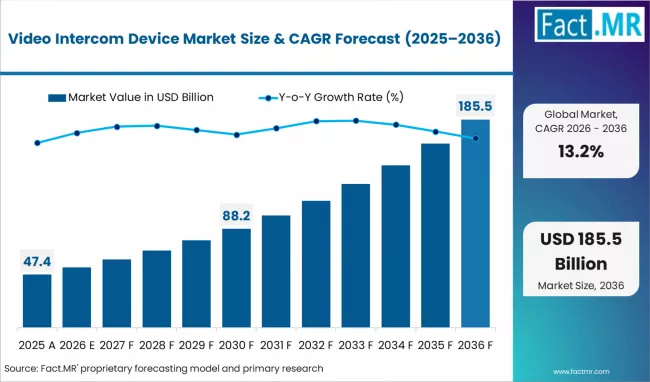
Video Intercom Device Market Market Value Analysis | Source: Fact.MR
Video Intercom Device Market
| Metric | Details |
|---|---|
| Industry Size (2026E) | USD 53.7 billion |
| Industry Value (2036F) | USD 186 billion |
| CAGR (2026 to 2036) | 13.2% |
Video Intercom Device Market Definition
The Video Intercom Device Market includes communication systems that allow users to see and speak with visitors before granting access to a building or secured area. These devices combine video cameras, microphones, speakers, and display units to enable two way audio and visual communication between entry points and indoor control units. Video intercom systems are installed in residential buildings, commercial offices, and institutional facilities to support controlled entry and security monitoring. Their primary function is to verify visitor identity and manage access through visual communication at building entrances.
Market Inclusions
This report covers global and regional market sizes for video intercom devices with forecast analysis for the study period. The market is segmented by product type including wired video intercom systems, wireless video intercom systems, and IP based intercom devices. Application segments include residential buildings, commercial offices, and institutional facilities. End users include homeowners, property management companies, and commercial building operators. The report also evaluates pricing structures, production patterns, and selected trade flow analysis across major security equipment markets.
Market Exclusions
The report excludes standalone audio intercom systems that do not support video communication. Closed circuit television surveillance cameras used for security monitoring are not included. The scope also excludes biometric access control systems such as fingerprint or facial recognition devices. Smart door locks and alarm systems are outside the defined scope, as the analysis focuses strictly on intercom devices that provide two way video communication for entry management.
Research Methodology
- Primary Research: Interviews were conducted with security equipment manufacturers, system integrators, distributors, and facility management professionals.
- Desk Research: Public information was collected from security technology publications, company reports, regulatory documents, and international trade statistics.
- Market-Sizing and Forecasting: A hybrid model combining bottom up shipment analysis with top down demand assessment across residential and commercial security markets was applied.
- Data Validation and Update Cycle: Findings were cross verified using multiple industry data sources and expert inputs, with periodic updates conducted as new market information becomes available.
Summary of the Video Intercom Device Market
- Market Definition
- The market comprises communication systems that enable users to visually identify and communicate with visitors before granting access to a building or secured area. Video intercom devices combine cameras, microphones, speakers, and display units to provide two way audio and video communication between entry points and interior control units. These systems are installed across residential buildings, commercial facilities, and institutional infrastructure to support controlled entry and building security management.
- Demand Drivers
- Increasing deployment of connected access control systems across residential complexes and commercial buildings.
- Rising adoption of smart home technologies integrating video intercom devices with mobile applications and building automation systems.
- Expansion of urban residential housing developments requiring controlled entry communication systems.
- Growing demand for remote visitor verification and monitoring through network connected security devices.
- Key Segments Analyzed
- Technology: IP based video intercom systems account for about 65% share supported by network connectivity and integration with building security platforms.
- Product: Door or entrance systems represent roughly 50% share due to their role in building entry management and visitor verification.
- Vertical: Residential buildings represent the dominant end use segment due to large scale deployment in apartments, gated communities, and housing complexes.
- Geography: South Korea records the fastest expansion supported by widespread adoption of smart home security systems.
- Analyst Opinion at Fact MR
- Shambhu Nath Jha, Principal Consultant, Fact MR, opines, "In this updated edition of the Video Intercom Device Market report, industry participants will observe that connected communication systems are increasingly deployed as part of integrated building security infrastructure. Video intercom devices enable visual verification of visitors and support controlled access management in residential and commercial buildings. Companies offering reliable network connected systems compatible with smart building platforms will maintain stronger positions in the building security technology market."
- Strategic Implications or Executive Takeaways
- Expand development of IP based video intercom systems integrated with mobile connectivity and building management platforms.
- Strengthen product compatibility with smart home ecosystems and building automation systems.
- Invest in cybersecurity protection and secure communication protocols for network connected security devices.
- Develop scalable intercom solutions suitable for residential complexes, commercial buildings, and institutional facilities.
- Methodology
- Primary interviews conducted with security equipment manufacturers, system integrators, distributors, and facility management professionals.
- Desk research based on security technology publications, company reports, regulatory documentation, and international trade statistics.
- Market sizing developed through a hybrid approach combining bottom up shipment analysis and top down demand assessment across residential and commercial security sectors.
- Findings validated through multiple industry sources and expert consultations following Fact MR internal modeling standards.
Segmental Analysis
Video Intercom Device Market Analysis by Technology
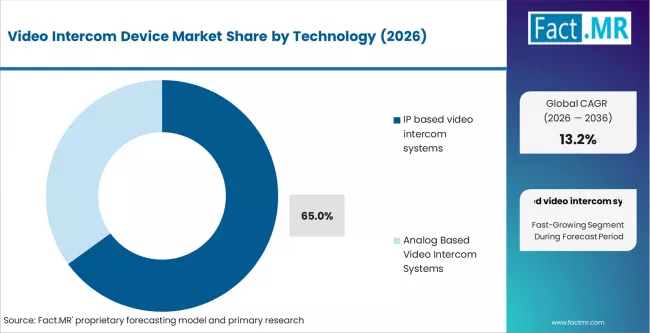
Video Intercom Device Market Analysis By Technology | Source: Fact.MR
- Market Overview: IP based video intercom systems are projected to account for around 65% share of the video intercom device market by 2026. These systems use internet protocol networks to transmit video, audio, and access control signals across connected devices within residential, commercial, and institutional buildings. IP based systems allow integration with building security platforms, mobile applications, and centralized monitoring systems. Property developers and building managers deploy these systems to support remote visitor verification, building access management, and communication between occupants and entry points. The ability to connect with existing network infrastructure continues to support the widespread adoption of IP based video intercom technology.
- Demand Drivers:
- Network Based Communication: IP video intercom systems transmit audio and video through internet protocol networks, enabling real time communication across connected devices.
- Integration with Security Systems: These systems can be connected with access control systems, surveillance cameras, and building management platforms.
- Remote Access Capabilities: Users can manage building entry and communicate with visitors through mobile applications connected to IP based intercom systems.
Video Intercom Device Market Analysis by Product
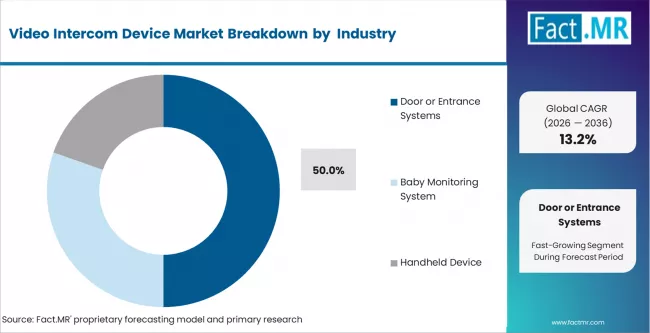
Video Intercom Device Market Analysis By Product | Source: Fact.MR
- Market Overview: Door and entrance systems are expected to represent approximately 50% share of the video intercom device market in 2026. These systems are installed at building entry points to enable visual identification and communication with visitors before granting access. Door and entrance video intercom devices are widely used in residential apartments, office buildings, commercial complexes, and institutional facilities. The systems allow occupants to view visitors through integrated cameras and communicate through audio channels before unlocking entry points. The role of entrance systems in access control and building security continues to support their strong adoption across building infrastructure projects.
- Demand Drivers:
- Building Access Management: Door and entrance intercom systems allow occupants to verify visitor identity before granting building entry.
- Residential Security Systems: Apartment complexes and residential buildings deploy video intercom devices to enhance occupant safety and visitor monitoring.
- Commercial Facility Installations: Office buildings and commercial facilities use entrance video intercom systems to manage controlled access to building premises.
Key Dynamics
Video Intercom Device Market Drivers, Restraints, and Opportunities
Fact MR analysis indicates that the video intercom device market developed from traditional audio intercom systems used in residential buildings and commercial facilities for controlled visitor access. Early intercom systems relied on simple voice communication between building entrances and internal units to verify visitors before granting entry. The current market valuation reflects the integration of digital cameras, display panels, and network connectivity within intercom systems used across residential complexes, office buildings, and gated communities. Demand persists because video verification improves security monitoring while enabling controlled entry management within modern building infrastructure.
A structural shift is occurring as conventional wired intercom systems gradually transition toward connected video intercom platforms integrated with smart building technologies. Basic intercom devices remain widely installed in older residential buildings where infrastructure upgrades occur gradually due to installation costs. Advanced video intercom systems incorporate mobile connectivity, cloud-based access management, and remote monitoring capabilities that allow residents or security personnel to verify visitors through smartphone applications. These connected systems command higher equipment and installation costs even when deployment volumes remain limited to new building projects or renovation cycles. Higher system pricing contributes to steady market value growth.
- Smart Building Integration: Residential and commercial developments increasingly install video intercom systems connected with digital access control and building security management platforms.
- Security Equipment Standards: Regulatory frameworks such as UL 294 access control system standards and European EN 50131 security system standards influence safety certification and product design requirements.
- Urban Housing Development: China, South Korea, and several European countries maintain high-density residential construction markets where video intercom systems support controlled building access and security management.
Regional Analysis
The market analysis covers key global regions, including North America, Western Europe, and East Asia. It is segmented geographically, with specific market dynamics for each region. The full report provides a detailed market attractiveness analysis.
.webp "Top Country Growth Comparison Video Intercom Device Market Cagr (2026 2036)")
Top Country Growth Comparison Video Intercom Device Market Cagr (2026 2036) | Source: Fact.MR
| Country | CAGR (2026-2036) |
|---|---|
| USA | 10.9% |
| United Kingdom | 10.6% |
| Japan | 10.5% |
| South Korea | 11.0% |
Source: Fact MR (FMR) analysis, based on proprietary forecasting model and primary research
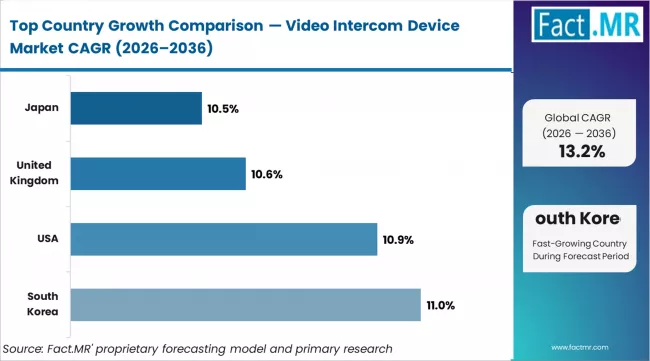
Video Intercom Device Market Cagr Analysis By Country | Source: Fact.MR
North America
The USA represents a major market supported by demand for residential security systems, smart home devices, and building access control technologies. Key companies include Honeywell International Inc., Motorola Solutions, and Aiphone Corporation.
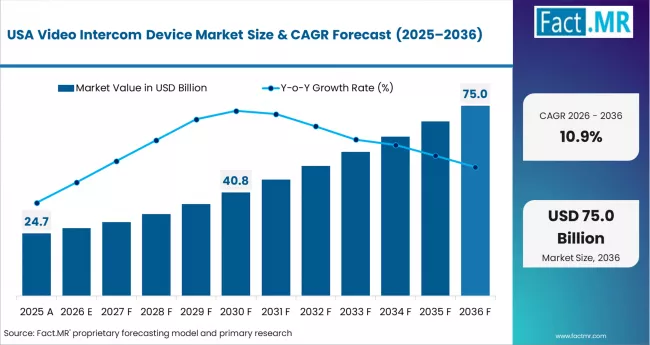
Video Intercom Device Market Country Value Analysis | Source: Fact.MR
- USA: Demand for video intercom devices in the U.S. is projected to rise at 10.9% CAGR through 2036. Growth is supported by smart home security initiatives promoted by the Department of Homeland Security (04-2025) and expansion of residential access control systems by Honeywell International Inc. (08-2025).
Western Europe
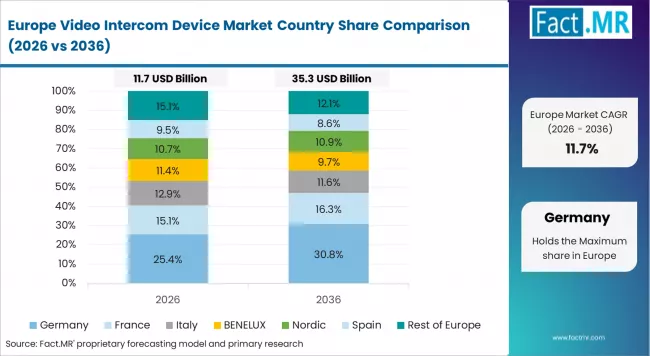
Video Intercom Device Market Europe Country Market Share Analysis, 2026 & 2036 | Source: Fact.MR
The United Kingdom represents a key market supported by residential security adoption, apartment building communication systems, and smart building technologies.
- United Kingdom: Demand for video intercom devices in the UK is projected to rise at 10.6% CAGR through 2036. Growth is supported by smart building infrastructure programs promoted by the Department for Science, Innovation and Technology (03-2025) and deployment of building communication systems by Motorola Solutions (07-2025).
East Asia
Japan and South Korea represent important markets supported by smart home adoption, residential building security systems, and urban housing development.
- Japan: Demand for video intercom devices in Japan is projected to rise at 10.5% CAGR through 2036. Growth is supported by smart housing technology initiatives promoted by the Ministry of Land, Infrastructure, Transport and Tourism (04-2025) and product development by Aiphone Corporation (08-2025).
- South Korea: Demand for video intercom devices in South Korea is projected to rise at 11.0% CAGR through 2036. Growth is supported by smart apartment infrastructure programs promoted by the Ministry of Land, Infrastructure and Transport (02-2025) and expansion of residential communication systems by Samsung Electronics (06-2025).
Fact MR's analysis of the video intercom device market in North America, Western Europe, and East Asia consists of country-wise assessments that include the USA, the United Kingdom, Japan, and South Korea. Readers can find detailed trends, regulatory updates, and company-specific investments shaping market growth in these countries.
Competitive Landscape
Competitive Structure and Buyer Dynamics in the Video Intercom Device Market
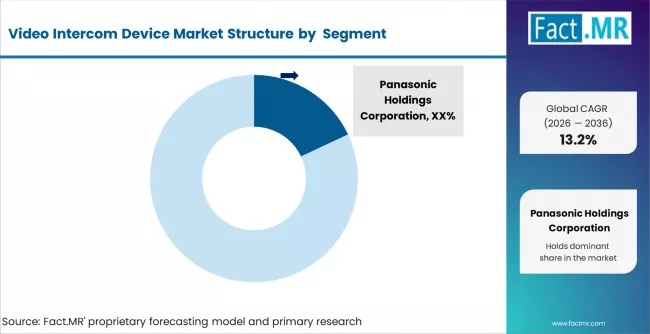
Video Intercom Device Market Analysis By Company | Source: Fact.MR
The competitive structure of the Video Intercom Device Market is moderately fragmented, with global electronics manufacturers and specialized security equipment providers participating in supply. Companies such as Panasonic Holdings Corporation, Honeywell International Inc., Legrand SA, Zhejiang Dahua Technology Co., Ltd., and Hangzhou Hikvision Digital Technology Co., Ltd. maintain strong market positions through extensive security product portfolios and global distribution networks. These firms supply integrated video intercom systems used across residential buildings, commercial facilities, and institutional infrastructure. Additional participants including Aiphone Co., Ltd., Comelit Group S.p.A., Zenitel Group, Godrej Industries Limited, and Zicom Electronic Security Systems Ltd. contribute through specialized communication and building access control solutions. Competition in the market is primarily shaped by video quality, system reliability, network connectivity features, and compatibility with building security infrastructure. Integration with smart home platforms and centralized building management systems also influences supplier selection among property developers and security system integrators.
Several companies maintain structural advantages through established security technology expertise and integrated building automation solutions. Firms such as Honeywell International Inc., Panasonic Holdings Corporation, and Legrand SA benefit from broad building security portfolios that combine surveillance, access control, and communication systems. Manufacturers such as Zhejiang Dahua Technology Co., Ltd. and Hangzhou Hikvision Digital Technology Co., Ltd. maintain strong advantages through large scale electronics manufacturing capacity and advanced video surveillance technologies. Large property developers and security contractors often adopt multi supplier procurement strategies to reduce dependence on a single equipment provider. Procurement decisions typically evaluate system reliability, installation compatibility, and long term maintenance support. This purchasing behavior moderates supplier pricing leverage across the market. Vendors offering integrated security platforms and reliable long term product support retain moderate negotiating influence within commercial security system deployments.
Key Players of the Video Intercom Device Market
- Panasonic Holdings Corporation
- Honeywell International Inc.
- Legrand SA
- Godrej Industries Limited
- Zicom Electronic Security Systems Ltd.
- Zenitel Group
- Aiphone Co., Ltd.
- Comelit Group S.p.A.
- Zhejiang Dahua Technology Co., Ltd.
- Hangzhou Hikvision Digital Technology Co., Ltd.
Report Scope
| Metric | Value |
|---|---|
| Quantitative Units | USD 53.7 billion (2026) to USD 186 billion (2036), at a CAGR of 13.2% |
| Market Definition | The video intercom device market includes production and deployment of communication and surveillance devices that combine audio and video transmission to enable remote access control, monitoring, and visitor management across residential and commercial environments. |
| Product Segmentation | Baby Monitoring System, Handheld Device, Door/Entrance System |
| Technology | IP-based Video Intercom Systems, Analog-based Video Intercom Systems |
| Vertical Coverage | Government, Residential, Commercial, Manufacturing/Industrial Sectors |
| Key Companies Profiled | Panasonic Holdings Corporation, Honeywell International Inc., Legrand SA, Godrej Industries Limited, Zicom Electronic Security Systems Ltd., Zenitel Group, Aiphone Co., Ltd., Comelit Group S.p.A., Zhejiang Dahua Technology Co., Ltd., Hangzhou Hikvision Digital Technology Co., Ltd. |
| Forecast Period | 2026 to 2036 |
| Approach | Hybrid top-down and bottom-up market modeling validated through interviews with security device manufacturers and distributors, supported by shipment benchmarking, smart home adoption analysis, and building security infrastructure demand assessment. |
Bibliographies
- [1] Department of Homeland Security, USA. (2025). Smart home security initiatives.
- [2] Department for Science, Innovation and Technology, UK. (2025). Smart building infrastructure programs.
- [3] Ministry of Land, Infrastructure, Transport and Tourism, Japan. (2025). Smart housing technology initiatives.
- [4] Ministry of Land, Infrastructure and Transport, South Korea. (2025). Smart apartment infrastructure programs.
- [5] Honeywell International Inc. (2025). Residential access control expansion.
- [6] Motorola Solutions. (2025). Building communication systems deployment.
- [7] Aiphone Corporation. (2025). Product development initiatives.
- [8] Samsung Electronics. (2025). Residential communication systems expansion.
- [9] Underwriters Laboratories. (2025). UL 294 access control standards.
This Report Addresses
- Market size estimation and revenue forecasts for the Video Intercom Device Market from 2026 to 2036, supported by building security equipment shipment benchmarks and smart access control deployment indicators.
- Growth opportunity mapping across baby monitoring systems, handheld communication devices, and door or entrance video intercom systems used in residential and commercial security environments.
- Segment and regional revenue forecasts covering IP based and analog based video intercom technologies deployed across government facilities, residential complexes, commercial buildings, and industrial premises.
- Competition strategy assessment including video communication system integration capability, building security platform compatibility, and electronic access control solution benchmarking among global security equipment manufacturers.
- Regulatory and building security compliance analysis covering frameworks such as UL 294 access control standards and European EN 50131 security system regulations governing electronic entry management systems.
- Market report delivery in PDF, Excel, PPT, and interactive dashboard formats designed for building security procurement planning, property infrastructure investment evaluation, and smart building system integration analysis.
- Supply chain vulnerability assessments identifying camera module production concentration, semiconductor component dependencies, and regional security equipment manufacturing risks affecting video intercom device production.
Video Intercom Device Market Key Segments
-
Product :
- Baby Monitoring System
- Handheld Device
- Door or Entrance System
-
Technology :
- IP Based Video Intercom Systems
- Analog Based Video Intercom Systems
-
Vertical :
- Government
- Residential
- Commercial
- Manufacturing or Industrial Sectors
-
Region :
- North America
- USA
- Canada
- Mexico
- Europe
- Germany
- UK
- France
- Italy
- Spain
- Nordic Countries
- BENELUX
- Rest of Europe
- Asia Pacific
- China
- Japan
- South Korea
- India
- Australia
- Rest of Asia Pacific
- Latin America
- Brazil
- Argentina
- Rest of Latin America
- Middle East and Africa
- Kingdom of Saudi Arabia
- United Arab Emirates
- South Africa
- Rest of Middle East and Africa
- Other Regions
- Oceania
- Central Asia
- Other Markets
- North America