Weighted Vests Market Size, Share, Growth and Forecast (2026 - 2036)
The Weighted Vests Market is segmented by Product Type, by Weight Class, by Primary Use, by Buyer Type, by Sales Channel, by Material Type, and Region. Forecast for 2026 to 2036.
What is the Weighted Vests Market forecast to be worth by 2036?
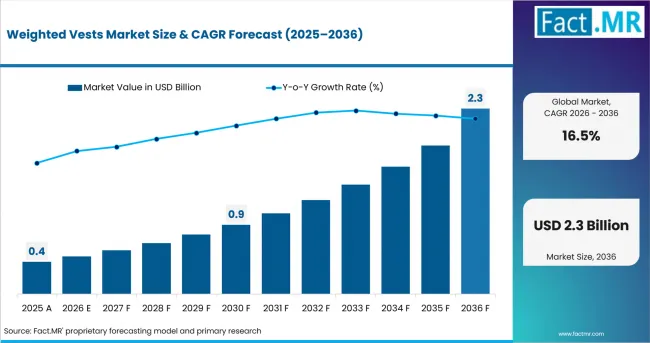
USD 0.5 billion in 2026 to USD 2.3 billion by 2036, at 16.5% CAGR.
- The weighted vests market crossed a valuation of USD 0.4 billion in 2025.
- Demand is projected to increase from USD 0.5 billion in 2026 to USD 2.3 billion by 2036.
- The market is forecast to record 16.5% CAGR from 2026 to 2036 as weighted walking, rucking and fitness racing widen consumer adoption. Unit volume is expected to rise faster than pricing as entry products widen the addressable base.
What are the defining numbers behind weighted vests growth?
USD 1.8 billion absolute opportunity by 2036. The United States, the United Kingdom and India lead the country view.
- Demand Drivers in the Market
- Walkers are buying wearable load when time-limited routines need more intensity without running.
- Midlife women create repeat purchase paths as comfort, sizing and load increments become purchase criteria.
- Fitness racing places vests inside training plans where coaches prescribe kit before race cycles.
- Commercial gyms can stock shared vests when small-group training shifts toward carries and loaded walks.
- Key Segments Analyzed
- By Buyer Type: Individual Consumers are expected to account for 62.0% of the market share in 2026 since most purchases are made for home routines and outdoor walking.
- By Sales Channel: Online Retail is projected to capture 58.0% share in 2026 because shoppers compare weight ranges, size charts and reviews before purchase.
- By Material Type: Nylon Polyester is estimated to hold 55.0% share in 2026 as brands need abrasion resistance, stable stitching and washable surfaces.
- By Product Type: Adjustable Vests are anticipated to contribute 48.0% share in 2026 because progressive loading allows the same vest to serve beginner and trained users.
- By Primary Use: Walking Rucking is forecast to secure 45.0% share in 2026 as low-impact load training becomes the main consumer use case.
- By Weight Class: 10 to 20 lb is likely to represent 42.0% share in 2026 because it fits beginner progression and common women’s fitness programs.
- By Geography: North America is expected to hold 39.0% share in 2026 due to rucking culture, specialty fitness retail and early premium brand depth.
- Analyst Opinion
- Shambhu Nath Jha, Principal Analyst at Fact.MR states, "Weighted vests sit between ordinary walking and programmed strength work. I see buyers asking simple questions. Can I wear it comfortably, can I increase load safely and does the brand show me how to progress without injury?"
- Strategic Implications
- Product developers should treat shoulder comfort and load stability as the first design test.
- Specialty retailers need comparison tools that explain weight class, body size and intended use.
- Fitness clubs can use shared vest racks to add load without expanding floor space.
- Materials suppliers can win when fabrics reduce bounce, heat buildup and seam failure.
Sales are anticipated to rise as walkers want more load without changing the route or workout time. Fitness racing creates a second buying trigger since competitors train for carries and bodyweight stations under fatigue. GORUCK published a May 2025 Half Murph workout that specified a 20 lb vest for men and a 14 lb vest for women. That example shows how training plans convert a vest from optional gear into specified kit. Public-health policy is not written for weighted vests. It still widens the activity base that supports the category. The World Health Organization updated its physical activity fact sheet in June 2024 and listed walking and recreation as common ways to be active. India’s 2026 to 2027 budget documents put Ministry of Youth Affairs and Sports spending at INR 44.80 billion. Public programs support low-barrier exercise channels where weighted walking products can enter.
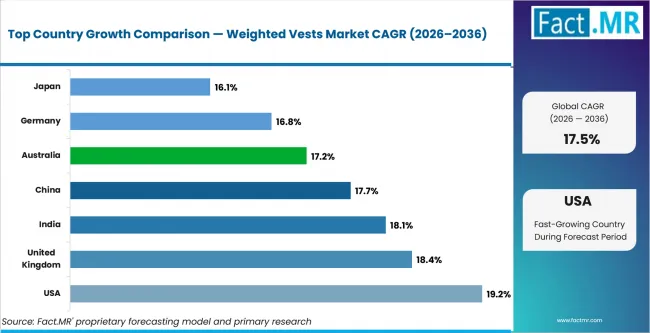
The United States is projected to record 19.2% CAGR through 2036 as rucking culture, fitness racing, and specialty online retail deepen consumer adoption. The United Kingdom is likely to post 18.4% CAGR because outdoor walking and hybrid race training place weighted vests inside repeat training plans. India is expected to register 18.1% CAGR as urban consumers adopt compact home fitness equipment through online channels. China is forecast to advance at 17.7% CAGR as domestic manufacturing expands access to lower-priced adjustable vests. Australia is set to record 17.2% CAGR as high outdoor activity levels support weighted walking routines. Germany is projected to grow at 16.8% CAGR, supported by club-based functional training and demand for durable shared equipment, while Japan is anticipated to expand at 16.1% CAGR as aging consumers favor controlled, low-profile wearable load during daily exercise.
How does the Weighted Vests Market break down by segment?
Individual Consumers lead at 62.0%. Online Retail follows with 58.0% share in 2026.
Which buyer type dominates?
Individual Consumers hold 62.0% share in 2026.
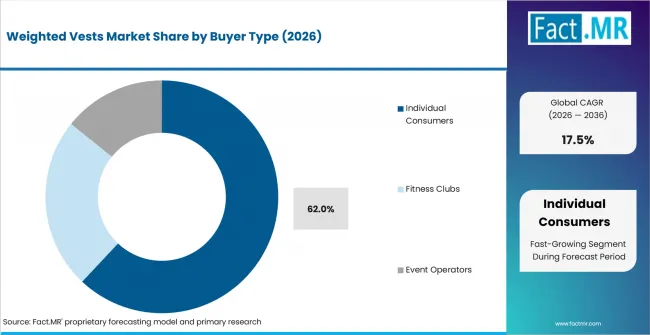
Individual Consumers are anticipated to hold 62.0% share in 2026 because the product is easy to buy without gym procurement. Shoppers compare body fit, weight range and return policy before choosing a brand. Fitness clubs can gain share when group classes formalize vest-based programming.
Which sales channel dominates?
Online Retail leads 58.0% share in 2026.
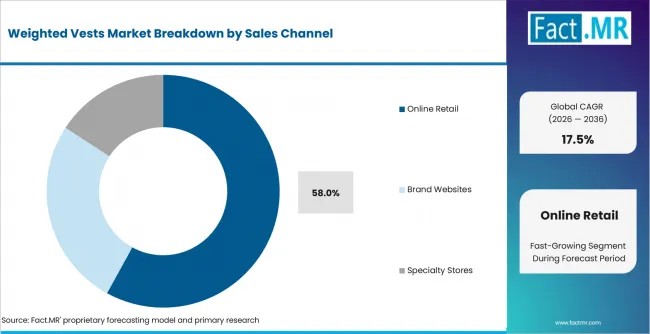
Online Retail is estimated to hold 58.0% share in 2026 because buyers need size charts, product photos and review evidence before purchase. Brand sites help premium suppliers explain vest shape and load increments. Home buyers often pair vest purchases with home fitness apps when they need guided routines after delivery. Specialty stores remain useful for buyers who must test shoulder fit before buying.
Which material type dominates?
Nylon Polyester accounts for 55.0% share in 2026.
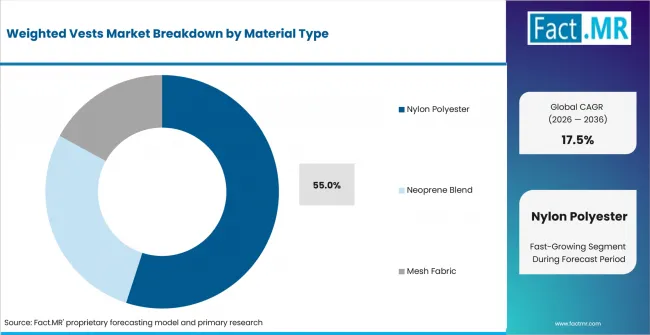
Nylon Polyester is likely to represent 55.0% share in 2026 because it handles abrasion, sweat and repeated adjustment. The material also supports plate pockets and hook-and-loop closures at accessible prices. The same fit discussion appears in performance apparel because consumers expect movement gear to sit close without rubbing. Mesh and stretch materials gain space when suppliers target warm-weather walking or women-specific fit.
Which product type dominates?
Adjustable Vests hold 48.0% share in 2026.
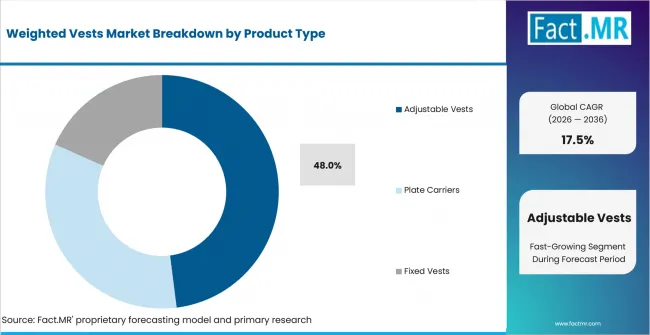
Adjustable Vests are expected to hold 48.0% share in 2026 because buyers want one product that can move from light walking to harder conditioning. Removable weights reduce the risk of buying a vest that becomes too light after the first training cycle. That upgrade path keeps weighted vests close to functional fitness equipment where progressive overload is a core buyer need. Fixed vests stay relevant for budget buyers that do not need weight changes.
Which primary use dominates?
Walking Rucking leads 45.0% share in 2026.
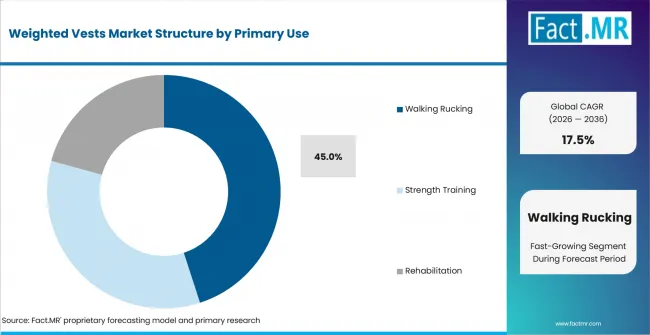
Walking Rucking is forecast to capture 45.0% share in 2026 since it allows buyers to add load to an activity they already understand. The use case works for suburban paths, treadmills and short outdoor routes. Fitness racing links vest purchases with sports equipment when competitors train around prescribed load and bodyweight movement. Rehabilitation-led use stays smaller because proof standards and supervision needs are higher.
Which weight class dominates?
10 to 20 lb holds 42.0% share in 2026.
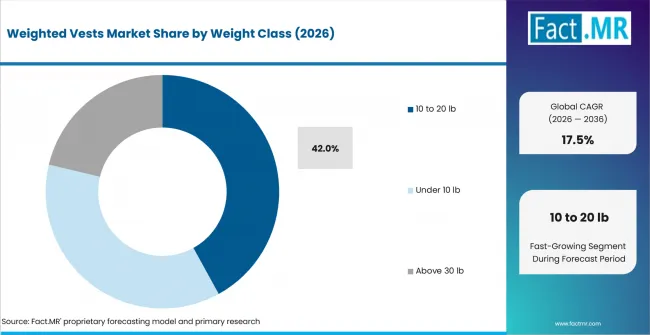
The 10 to 20 lb class is projected to account for 42.0% share in 2026 because it fits walking, stairs and beginner strength work. This band offers enough load to feel different without forcing buyers into tactical carrier sizing. Retailers compare it with gym accessories because the purchase is often made with small equipment for home routines. Heavier vest classes remain important for race preparation and tactical conditioning.
What is accelerating weighted vests demand, and what is holding it back?
Weighted walking routines and fitness racing support demand. Poor fit, injury risk and premium pricing restrain wider use.
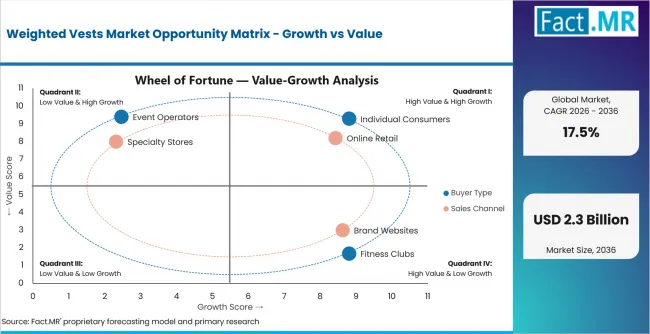
Demand is moving because walking has become a low-barrier fitness route for people who do not want high-impact running. The World Health Organization reported in June 2024 that 31.0% of adults did not meet recommended physical activity levels. Weighted vests give these consumers a visible way to add load to an existing habit. PUMA said in October 2025 that HYROX was expected to draw 1.3 million participants in the 2025 to 2026 season. That creates a second path from training communities into vest purchases.
Expansion is constrained by fit risk, safety concerns and the price gap between entry and premium products. A poorly balanced vest can rub shoulders or shift during steps. Osteoporosis Canada stated in September 2025 that evidence around weighted vests and bone mineral density remains uncertain. That limits aggressive health claims and makes progressive-load guidance more important. Suppliers that overstate bone-density benefits risk losing trust with older buyers and clinical partners.
Where do the biggest weighted vests opportunities sit?
Weighted walking bundles, fitness racing kits and clinical-safe guidance.
- Weighted Walking Bundles: Suppliers can sell light adjustable vests with beginner plans to women and older adults who already use walking as daily exercise.
- Fitness Racing Kits: Brands can package vests with gloves and socks. Training calendars can guide athletes preparing for lunges and carries.
- Clinical-Safe Guidance: Brands can sell safety instructions, progressive load charts and physical-therapist-reviewed programs to cautious buyers. Education matters because bone-health claims face higher scrutiny than ordinary fitness claims.
Which countries are scaling weighted vests fastest?
United States 19.2% and United Kingdom 18.4% lead the country view. India 18.1%, China 17.7% and Australia 17.2% follow. Germany 16.8% and Japan 16.1% complete the top seven.
Based on regional analysis, the weighted vests market is segmented into North America and Western Europe. East Asia and South Asia and Pacific are also covered. Latin America and Middle East and Africa complete the regional scope.
.webp)
| Country | CAGR |
|---|---|
| United States | 19.2% |
| United Kingdom | 18.4% |
| India | 18.1% |
| China | 17.7% |
| Australia | 17.2% |
| Germany | 16.8% |
| Japan | 16.1% |

What powers the United States lead?
19.2% CAGR, supported by rucking participation and online specialty retail.
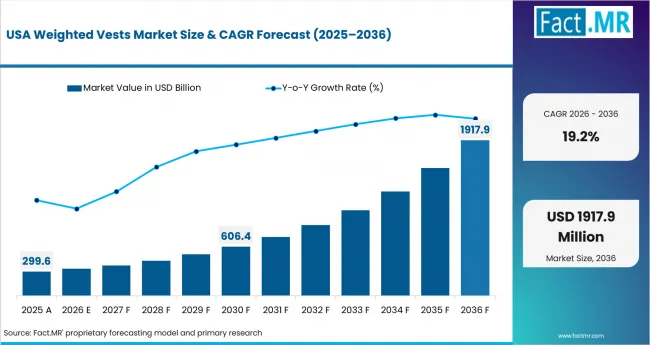
The United States has the clearest paid-fitness base for weighted vest upgrades. The Health & Fitness Association reported in April 2026 that 81.0 million Americans belonged to a fitness facility in 2025. That base gives suppliers access to home buyers, gym members and race-prep athletes. GORUCK and 5.11 Tactical also give the country local brands with rucking and plate-carrier credibility. Suppliers win here when they combine comfort proof with clear loading guidance.
Why does the United Kingdom matter?
18.4% CAGR, driven by fitness racing and high adult activity levels.
United Kingdom buyers are moving from ordinary gym accessories toward equipment that can support outdoor walking and hybrid training. Sport England reported in June 2026 that 30.9 million adults in England met recommended activity levels. That creates a broad pool for wearable load products without requiring a new sport. Fitness racing also helps retailers explain why a vest belongs in a training plan. Buyer choice should favor mid-priced adjustable vests that can handle outdoor sessions.
What supports India’s outlook?
18.1% CAGR, led by low club penetration and urban fitness expansion.
India starts from a smaller paid-fitness base but has a large urban audience that buys compact equipment online. Health & Fitness Association and Deloitte India reported in September 2025 that India had 12.3 million fitness facility members in 2024. Low penetration leaves space for accessories that do not need much floor area. Imported premium vests may stay limited to metro buyers. Local sourcing and lighter weight classes can widen access during the forecast period.
How is China scaling weighted vest demand?
17.7% CAGR, backed by sports-sector output and local equipment supply.
China has a manufacturing base that can move weighted vests into lower-price online channels quickly. The National Bureau of Statistics of China and the General Administration of Sport of China reported in January 2026 that national sports industry output reached 3.8421 trillion yuan in 2024. Sports goods manufacturing value added also supports domestic equipment supply. The main limit is brand trust in fit and durability. Suppliers can gain share when they document load safety and stitching performance.
What makes Australia important?
17.2% CAGR, supported by high outdoor activity and gym use.
Australia’s outdoor exercise culture supports weighted walking as a practical routine rather than a gym-only product. The Australian Sports Commission reported in May 2025 that 85.0% of Australian adults were active. It also found that 48.0% exercised at least three times a week. That frequency supports repeat use and replacement buying. Hot-weather comfort and breathable material should shape product choice more strongly than pure maximum weight.
Why is Germany a relevant commercial market?
16.8% CAGR, led by established club membership and premium equipment buyers.
Germany offers a club-based route where weighted vests can enter small-group training and functional areas. DSSV e.V. - Employers' Association of German Fitness and Health Facilities reported in March 2025 that German fitness and health facilities reached 11.71 million members in 2024. Buyers are likely to value durability and washable construction because shared gym equipment faces higher usage. Premium pricing can work when the vest survives repeated classes. Faster volume depends on retailers making weighted walking understandable beyond the gym.
How does Japan create a distinct demand base?
16.1% CAGR, backed by aging consumers and urban exercise routines.
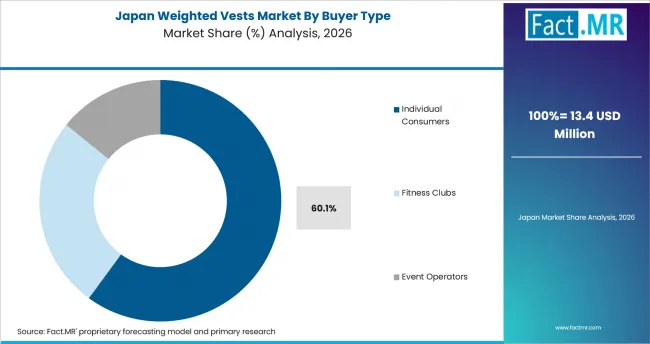
Japan’s opportunity is shaped by older adults, compact housing and a preference for controlled exercise routines. The Sasakawa Sports Foundation reported in December 2024 that 54.8% of adults joined sports or physical activities at least once a week. Light vests can fit walking and home calisthenics without large equipment. The country’s rate stays below the United States because heavy tactical styles are less mainstream. Suppliers should focus on low-profile products and careful size grading.
Who leads the Weighted Vests Market landscape?
GORUCK, OMORPHO and 5.11 Tactical lead through rucking credibility, wearable-resistance design and plate-carrier durability. Retail fitness brands add another competitive route.
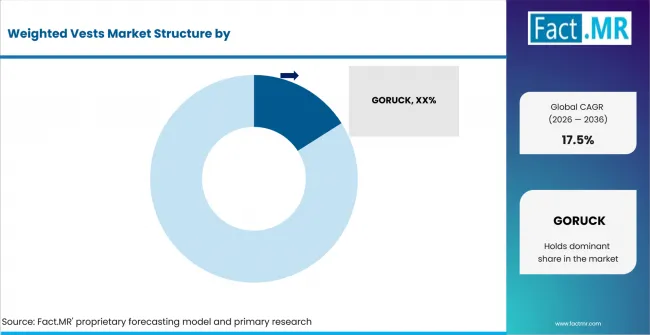
Competition is split between rucking specialists, tactical gear brands and consumer fitness-equipment sellers. Buyers compare shoulder comfort, weight increment, bounce control and return policy before purchase. GORUCK has credibility with rucking workouts and plate-compatible systems. OMORPHO competes through distributed microload garments that sit closer to clothing. REP Fitness and Mirafit widen the market through value-led offers that suit home users.
Capability depth matters because a vest must stay comfortable when the user walks for long periods. Hyperwear uses thin steel weights and stretch fabrics to reduce bounce in its Hyper Vest products. 5.11 Tactical connects weighted fitness use with plate-carrier construction, which keeps overlap with body armor plates when buyers want rigid load systems. These suppliers can defend price when they show stitching strength and predictable fit across body sizes.
Barriers are lower in entry-level online retail, but brand trust becomes important when buyers move above beginner weights. Commercial gyms purchasing shared vest racks evaluate them beside gym equipment because products must survive sweat, cleaning and repeated adjustment. Regional brands can win on price and delivery speed. Larger specialists should remain better placed where buyers ask for training guidance, multiple sizes and tested load distribution.
Which companies are the key players?
GORUCK, OMORPHO and 5.11 Tactical are key players. Hyperwear, Rogue Fitness and Mirafit are also profiled. REP Fitness completes the company set.
- GORUCK
- OMORPHO
- 5.11 Tactical
- Hyperwear
- Rogue Fitness
- Mirafit
- REP Fitness
Bibliography
- [1] Australian Sports Commission. (2025, May 30). Australians are redefining the way they play. Australian Sports Commission.
- [2] Health & Fitness Association and Deloitte India. (2025, September 9). India’s fitness market set to double by 2030. Health & Fitness Association.
- [3] DSSV e.V. - Employers Association of German Fitness and Health Facilities. (2025, March 26). Eckdaten der deutschen Fitness-Wirtschaft 2025. DSSV e.V.
- [4] GORUCK. (2025, May 3). GORUCK Half Murph. GORUCK.
- [5] Health & Fitness Association. (2026, April 9). 81 million Americans were members of a fitness facility in 2025. Health & Fitness Association.
- [6] India Budget. (2026, February). Ministry of Youth Affairs and Sports, demand no. 102. Government of India.
- [7] International Osteoporosis Foundation. (2024, October 18). On World Osteoporosis Day, experts warn of growing burden of fragility fractures. International Osteoporosis Foundation.
- [8] National Bureau of Statistics of China and General Administration of Sport of China. (2026, January 1). Announcement on total scale and value-added data of the national sports industry in 2024. National Bureau of Statistics of China.
- [9] Osteoporosis Canada. (2025, September 15). Weighted vests: Are they good for bone health? Osteoporosis Canada.
- [10] PUMA SE. (2025, October 1). PUMA announces early renewal of its long-term partnership with HYROX. PUMA SE.
- [11] Sasakawa Sports Foundation. (2024, December 31). The 2024 SSF National Sports-Life Survey. Sasakawa Sports Foundation.
- [12] Sport England. (2026, June 18). England is getting more active but not everyone is benefiting. Sport England.
- [13] World Health Organization. (2024, June 26). Physical activity. World Health Organization.
This Report Addresses
- Strategic intelligence on weighted vests across product type, weight class, primary use and buyer type.
- Segment analysis covering Individual Consumers, Online Retail, Nylon Polyester, Adjustable Vests and Walking Rucking.
- Regional outlook covering the United States, United Kingdom, India, China, Australia, Germany and Japan.
- Competitive analysis of GORUCK, OMORPHO and 5.11 Tactical. Hyperwear, Rogue Fitness, Mirafit and REP Fitness are also profiled.
- Product assessment covering adjustable vests, plate carriers, fixed vests, microload vests and youth vests.
- Buyer assessment covering individual consumers, fitness clubs, event operators, schools and clinics.
- Source-led market sizing using participation evidence, provider portfolios, public activity data and official company disclosures.
What does the Weighted Vests Market cover?
Wearable load-bearing training vests used for walking, rucking and fitness racing. Strength routines and controlled conditioning are also covered.
The weighted vests market covers paid sales of torso-worn products that add external load during movement. It includes fixed-weight vests and adjustable vests with removable blocks or plates. It also includes microload garments that distribute small weights across the body. Products are counted when sold for fitness or training use. Wellness and institutional conditioning use are counted when products move through fitness channels.
What is included in the scope?
Adjustable vests and plate carriers. Fixed-weight vests, microload vests and vest weight kits are also included.
The scope includes consumer and commercial weighted vests sold through brand websites and online retailers. Specialty stores and gym dealers are also included. It covers products used for walking and rucking. Strength circuits and fitness racing are included. Rehabilitation support and tactical conditioning are counted when the product is sold through fitness channels. Weight inserts are included when sold as part of a vest system or as replacement loads for an existing vest.
What is excluded from the scope?
Body armor and ordinary backpacks. Ankle weights, wrist weights and medical devices sold outside fitness channels are excluded.
The scope excludes ballistic armor sold for protection and backpacks sold for rucking without a vest. Wrist weights, ankle weights and weighted blankets are outside the count. Standalone weight plates are excluded unless sold as vest-specific inserts. Hospital devices and prescription rehabilitation products are excluded when they are not sold through fitness or wellness channels.
How was the analysis built?
110+ sources and 50+ company or association pages. 28 countries were checked with 22 interviews.
- Primary Research: Interviews covered fitness-equipment distributors and specialty retailers. Trainers, gym operators and rucking-community buyers were also included.
- Desk Research: Desk research reviewed public-health sources and sports-participation reports. Association data and official company product pages were checked. Retail availability and price bands were reviewed across major selling channels.
- Market-Sizing and Forecasting: Forecasting used a bottom-up unit model tied to average selling prices, active fitness populations and provider counts. It was cross-checked against fitness-equipment categories and user-provided anchor ranges.
- Data Validation and Update Cycle: Estimates were reconciled against Health & Fitness Association data, Sport England participation evidence and supplier product ranges. The forecast was tested through sensitivity checks on unit volume and premium mix.
What is the report’s scope and coverage?
| Attribute | Details |
|---|---|
| Quantitative Units | USD Billion in 2026 to USD Billion by 2036 at CAGR |
| Market Definition | Wearable load-bearing training vests used for walking, rucking, fitness racing, strength routines and controlled conditioning |
| Product Type | Adjustable Vests, Plate Carriers, Fixed Vests, Microload Vests and Youth Vests |
| Weight Class | Under 10 lb, 10 to 20 lb, 21 to 30 lb, Above 30 lb and Plate Based |
| Primary Use | Walking Rucking, Strength Training, Fitness Racing, Rehabilitation and Tactical Conditioning |
| Buyer Type | Individual Consumers, Fitness Clubs, Event Operators, Schools and Clinics |
| Sales Channel | Online Retail, Brand Websites, Specialty Stores, Mass Retail and Gym Dealers |
| Material Type | Nylon Polyester, Neoprene Blend, Mesh Fabric, Weighted Fabric and Leather Trim |
| Regions Covered | North America, Western Europe, East Asia, South Asia and Pacific, Latin America, Middle East and Africa |
| Countries Covered | United States, United Kingdom, India, China, Australia, Germany and Japan |
| Key Companies Profiled | GORUCK, OMORPHO, 5.11 Tactical, Hyperwear, Rogue Fitness, Mirafit and REP Fitness |
| Forecast Period | 2026 to 2036 |
| Approach | Hybrid top-down and bottom-up approach using participation evidence, provider counts, retail price bands, product availability and interview validation |
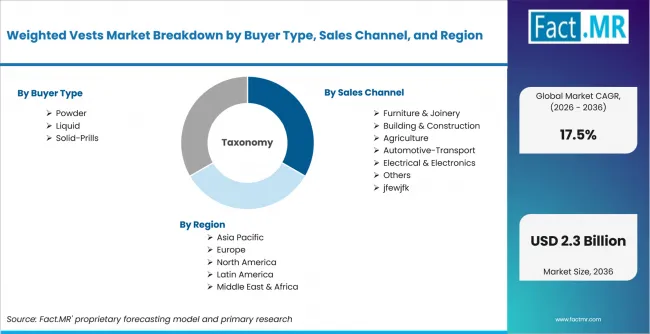
How is the market segmented?
-
By Product Type:
- Adjustable Vests
- Plate Carriers
- Fixed Vests
- Microload Vests
- Youth Vests
-
By Weight Class:
- Under 10 lb
- 10 to 20 lb
- 21 to 30 lb
- Above 30 lb
- Plate Based
-
By Primary Use:
- Walking Rucking
- Strength Training
- Fitness Racing
- Rehabilitation
- Tactical Conditioning
-
By Buyer Type:
- Individual Consumers
- Fitness Clubs
- Event Operators
- Schools
- Clinics
-
By Sales Channel:
- Online Retail
- Brand Websites
- Specialty Stores
- Mass Retail
- Gym Dealers
-
By Material Type:
- Nylon Polyester
- Neoprene Blend
- Mesh Fabric
- Weighted Fabric
- Leather Trim
-
By Region:
- North America
- United States
- Canada
- Mexico
- Latin America
- Brazil
- Argentina
- Rest of Latin America
- Europe
- Germany
- United Kingdom
- France
- Italy
- Spain
- Rest of Europe
- Asia Pacific
- China
- India
- Japan
- South Korea
- ASEAN
- Australia
- Middle East & Africa
- GCC Countries
- South Africa
- UAE
- Rest of Middle East & Africa
- North America
- Frequently Asked Questions -
How large is the Weighted Vests Market expected to be in the near term?
The market is expanding from a small base as weighted walking, rucking, and fitness racing drive wider consumer adoption.
What is the long term outlook for the Weighted Vests Market?
The market outlook remains positive as low impact strength routines become part of regular fitness habits.
How fast is the Weighted Vests Market expected to grow?
Growth is supported by increasing unit sales, repeat usage, and broader adoption beyond gym based training.
What is the main driver of weighted vest adoption?
Demand is driven by users seeking higher workout intensity without increasing exercise time or impact.
Which product type leads the Weighted Vests Market?
Adjustable vests lead because they allow progressive loading within a single product.
Which weight range is most commonly preferred?
Moderate weight ranges are preferred as they suit walking routines and beginner to intermediate fitness users.
Which buyer type dominates the market?
Individual consumers dominate because most purchases are made for home and outdoor use.
Which sales channel is most important?
Online retail leads due to the need for size guidance, product comparison, and customer reviews
Which material type is most widely used?
Durable synthetic fabrics dominate as they balance comfort, abrasion resistance, and washability.
What is the primary use case shaping demand?
Walking and rucking shape demand by enabling load training within familiar daily activities.
Which regions show strong adoption?
North America and Western Europe lead adoption, while Asia Pacific shows rising participation through online access.
Which countries are key markets for weighted vests?
The United States, United Kingdom, India, China, Australia, Germany, and Japan are key country markets
What supports the United States market position?
Strong rucking culture, fitness racing participation, and specialty online retail support U.S. adoption.
Why is the United Kingdom an important market?
Outdoor walking and hybrid race training place weighted vests into repeat training plans.
How is India contributing to market growth?
Urban consumers in India adopt compact fitness equipment through online channels.
What limits wider adoption of weighted vests?
Fit concerns, injury risk, and cautious scrutiny of health claims limit broader uptake.
Who are the leading companies in the market?
Leading companies include GORUCK, OMORPHO, 5.11 Tactical, Hyperwear, Rogue Fitness, Mirafit, and REP Fitness.
Table of Content
- Key Takeaways
- Market Size and CAGR
- Top Growth Driver
- Fastest Growing Segment
- Leading Region
- Key Companies
- Emerging Opportunities
- Executive Summary
- Global Market Outlook
- Demand-side Trends
- Supply-side Trends
- Technology Roadmap Analysis
- Analysis and Recommendations
- Analyst Perspective (What is happening? Why now? What should investors know?)
- Key Questions Answered
- How large is the market?
- What is the CAGR?
- What are key trends?
- Which region dominates?
- Who are the leaders?
- Market Overview
- Market Coverage / Taxonomy
- Market Definition / Scope / Limitations
- Research Methodology
- Chapter Orientation
- Analytical Lens and Working Hypotheses
- Market Structure, Signals, and Trend Drivers
- Benchmarking and Cross-market Comparability
- Market Sizing, Forecasting, and Opportunity Mapping
- Research Design and Evidence Framework
- Desk Research Programme (Secondary Evidence)
- Expert Input and Fieldwork (Primary Evidence)
- Tooling, Models, and Reference Databases
- Data Engineering and Model Build
- Quality Assurance and Audit Trail
- Market Background
- Market Dynamics (Drivers, Restraints, Opportunity, Trends)
- Scenario Forecast (Optimistic, Likely, Conservative)
- Impact Analysis
- AI Impact
- Sustainability Impact
- Regulatory Impact
- Technology Impact
- Consumer / Buyer Analysis
- Purchase Drivers
- Adoption Barriers
- Buyer Journey
- Opportunity Map Analysis
- Product Life Cycle Analysis
- Supply Chain Analysis
- Investment Feasibility Matrix
- Value Chain Analysis
- PESTLE and Porter's Analysis
- Regulatory Landscape
- Regional Parent Market Outlook
- Production and Consumption Statistics
- Import and Export Statistics
- Global Market Analysis and Forecast, 2021 to 2036
- Historical Market Size Value (USD Billion) Analysis, 2021 to 2025
- Current and Future Market Size Value (USD Billion) Projections, 2026 to 2036
- Y-o-Y Growth Trend Analysis
- Absolute $ Opportunity Analysis
- Global Market Pricing Analysis, 2021 to 2036
- Global Market Analysis and Forecast, By Buyer Type, 2021 to 2036
- Introduction / Key Findings
- Historical Market Size Value (USD Billion) Analysis By Buyer Type, 2021 to 2025
- Current and Future Market Size Value (USD Billion) Analysis and Forecast By Buyer Type, 2026 to 2036
- Y-o-Y Growth Trend Analysis By Buyer Type, 2021 to 2025
- Absolute $ Opportunity Analysis By Buyer Type, 2026 to 2036
- Global Market Analysis and Forecast, By Sales Channel, 2021 to 2036
- Introduction / Key Findings
- Historical Market Size Value (USD Billion) Analysis By Sales Channel, 2021 to 2025
- Current and Future Market Size Value (USD Billion) Analysis and Forecast By Sales Channel, 2026 to 2036
- Y-o-Y Growth Trend Analysis By Sales Channel, 2021 to 2025
- Absolute $ Opportunity Analysis By Sales Channel, 2026 to 2036
- Global Market Analysis and Forecast, By Material Type, 2021 to 2036
- Introduction / Key Findings
- Historical Market Size Value (USD Billion) Analysis By Material Type, 2021 to 2025
- Current and Future Market Size Value (USD Billion) Analysis and Forecast By Material Type, 2026 to 2036
- Y-o-Y Growth Trend Analysis By Material Type, 2021 to 2025
- Absolute $ Opportunity Analysis By Material Type, 2026 to 2036
- Global Market Analysis and Forecast, By Product Type, 2021 to 2036
- Introduction / Key Findings
- Historical Market Size Value (USD Billion) Analysis By Product Type, 2021 to 2025
- Current and Future Market Size Value (USD Billion) Analysis and Forecast By Product Type, 2026 to 2036
- Y-o-Y Growth Trend Analysis By Product Type, 2021 to 2025
- Absolute $ Opportunity Analysis By Product Type, 2026 to 2036
- Global Market Analysis and Forecast, By Primary Use, 2021 to 2036
- Introduction / Key Findings
- Historical Market Size Value (USD Billion) Analysis By Primary Use, 2021 to 2025
- Current and Future Market Size Value (USD Billion) Analysis and Forecast By Primary Use, 2026 to 2036
- Y-o-Y Growth Trend Analysis By Primary Use, 2021 to 2025
- Absolute $ Opportunity Analysis By Primary Use, 2026 to 2036
- Global Market Analysis and Forecast, By Weight Class
- Introduction / Key Findings
- Historical Market Size Value (USD Billion) Analysis By Weight Class, 2021 to 2025
- Current and Future Market Size Value (USD Billion) Analysis and Forecast By Weight Class, 2026 to 2036
- Y-o-Y Growth Trend Analysis By Weight Class, 2021 to 2025
- Absolute $ Opportunity Analysis By Weight Class, 2026 to 2036
- Global Market Analysis and Forecast, By Region, 2021 to 2036
- Introduction
- Historical Market Size Value (USD Billion) Analysis By Region, 2021 to 2025
- Current Market Size Value (USD Billion) Analysis and Forecast By Region, 2026 to 2036
- North America
- Latin America
- Western Europe
- Eastern Europe
- East Asia
- South Asia and Pacific
- Middle East & Africa
- Market Attractiveness Analysis By Region
- North America Market Analysis and Forecast, By Country, 2021 to 2036
- Historical Market Size Value (USD Billion) Trend Analysis By Market Taxonomy, 2021 to 2025
- Market Size Value (USD Billion) Forecast By Market Taxonomy, 2026 to 2036
- By Country
- USA
- Canada
- Mexico
- By Buyer Type
- By Sales Channel
- By Material Type
- By Product Type
- By Primary Use
- By Weight Class
- By Country
- Market Attractiveness Analysis
- By Country
- By Buyer Type
- By Sales Channel
- By Material Type
- By Product Type
- By Primary Use
- By Weight Class
- Key Takeaways
- Latin America Market Analysis and Forecast, By Country
- Historical Market Size Value (USD Billion) Trend Analysis By Market Taxonomy, 2021 to 2025
- Market Size Value (USD Billion) Forecast By Market Taxonomy, 2026 to 2036
- By Country
- Brazil
- Chile
- Rest of Latin America
- By Buyer Type
- By Sales Channel
- By Material Type
- By Product Type
- By Primary Use
- By Weight Class
- By Country
- Market Attractiveness Analysis
- By Country
- By Buyer Type
- By Sales Channel
- By Material Type
- By Product Type
- By Primary Use
- By Weight Class
- Key Takeaways
- Western Europe Market Analysis and Forecast, By Country
- Historical Market Size Value (USD Billion) Trend Analysis By Market Taxonomy, 2021 to 2025
- Market Size Value (USD Billion) Forecast By Market Taxonomy, 2026 to 2036
- By Country
- Germany
- UK
- Italy
- Spain
- France
- Nordic
- BENELUX
- Rest of Western Europe
- By Buyer Type
- By Sales Channel
- By Material Type
- By Product Type
- By Primary Use
- By Weight Class
- By Country
- Market Attractiveness Analysis
- By Country
- By Buyer Type
- By Sales Channel
- By Material Type
- By Product Type
- By Primary Use
- By Weight Class
- Key Takeaways
- Eastern Europe Market Analysis and Forecast, By Country
- Historical Market Size Value (USD Billion) Trend Analysis By Market Taxonomy, 2021 to 2025
- Market Size Value (USD Billion) Forecast By Market Taxonomy, 2026 to 2036
- By Country
- Russia
- Poland
- Hungary
- Balkan & Baltic
- Rest of Eastern Europe
- By Buyer Type
- By Sales Channel
- By Material Type
- By Product Type
- By Primary Use
- By Weight Class
- By Country
- Market Attractiveness Analysis
- By Country
- By Buyer Type
- By Sales Channel
- By Material Type
- By Product Type
- By Primary Use
- By Weight Class
- Key Takeaways
- East Asia Market Analysis and Forecast, By Country
- Historical Market Size Value (USD Billion) Trend Analysis By Market Taxonomy, 2021 to 2025
- Market Size Value (USD Billion) Forecast By Market Taxonomy, 2026 to 2036
- By Country
- China
- Japan
- South Korea
- By Buyer Type
- By Sales Channel
- By Material Type
- By Product Type
- By Primary Use
- By Weight Class
- By Country
- Market Attractiveness Analysis
- By Country
- By Buyer Type
- By Sales Channel
- By Material Type
- By Product Type
- By Primary Use
- By Weight Class
- Key Takeaways
- South Asia and Pacific Market Analysis and Forecast, By Country
- Historical Market Size Value (USD Billion) Trend Analysis By Market Taxonomy, 2021 to 2025
- Market Size Value (USD Billion) Forecast By Market Taxonomy, 2026 to 2036
- By Country
- India
- ASEAN
- Australia & New Zealand
- Rest of South Asia and Pacific
- By Buyer Type
- By Sales Channel
- By Material Type
- By Product Type
- By Primary Use
- By Weight Class
- By Country
- Market Attractiveness Analysis
- By Country
- By Buyer Type
- By Sales Channel
- By Material Type
- By Product Type
- By Primary Use
- By Weight Class
- Key Takeaways
- Middle East & Africa Market Analysis and Forecast, By Country
- Historical Market Size Value (USD Billion) Trend Analysis By Market Taxonomy, 2021 to 2025
- Market Size Value (USD Billion) Forecast By Market Taxonomy, 2026 to 2036
- By Country
- Kingdom of Saudi Arabia
- Other GCC Countries
- Turkiye
- South Africa
- Other African Union
- Rest of Middle East & Africa
- By Buyer Type
- By Sales Channel
- By Material Type
- By Product Type
- By Primary Use
- By Weight Class
- By Country
- Market Attractiveness Analysis
- By Country
- By Buyer Type
- By Sales Channel
- By Material Type
- By Product Type
- By Primary Use
- By Weight Class
- Key Takeaways
- Key Countries Market Analysis
- USA
- Pricing Analysis
- Market Share Analysis, 2025
- By Buyer Type
- By Sales Channel
- By Material Type
- By Product Type
- By Primary Use
- By Weight Class
- Canada
- Pricing Analysis
- Market Share Analysis, 2025
- By Buyer Type
- By Sales Channel
- By Material Type
- By Product Type
- By Primary Use
- By Weight Class
- Mexico
- Pricing Analysis
- Market Share Analysis, 2025
- By Buyer Type
- By Sales Channel
- By Material Type
- By Product Type
- By Primary Use
- By Weight Class
- Brazil
- Pricing Analysis
- Market Share Analysis, 2025
- By Buyer Type
- By Sales Channel
- By Material Type
- By Product Type
- By Primary Use
- By Weight Class
- Chile
- Pricing Analysis
- Market Share Analysis, 2025
- By Buyer Type
- By Sales Channel
- By Material Type
- By Product Type
- By Primary Use
- By Weight Class
- Germany
- Pricing Analysis
- Market Share Analysis, 2025
- By Buyer Type
- By Sales Channel
- By Material Type
- By Product Type
- By Primary Use
- By Weight Class
- UK
- Pricing Analysis
- Market Share Analysis, 2025
- By Buyer Type
- By Sales Channel
- By Material Type
- By Product Type
- By Primary Use
- By Weight Class
- Italy
- Pricing Analysis
- Market Share Analysis, 2025
- By Buyer Type
- By Sales Channel
- By Material Type
- By Product Type
- By Primary Use
- By Weight Class
- Spain
- Pricing Analysis
- Market Share Analysis, 2025
- By Buyer Type
- By Sales Channel
- By Material Type
- By Product Type
- By Primary Use
- By Weight Class
- France
- Pricing Analysis
- Market Share Analysis, 2025
- By Buyer Type
- By Sales Channel
- By Material Type
- By Product Type
- By Primary Use
- By Weight Class
- India
- Pricing Analysis
- Market Share Analysis, 2025
- By Buyer Type
- By Sales Channel
- By Material Type
- By Product Type
- By Primary Use
- By Weight Class
- ASEAN
- Pricing Analysis
- Market Share Analysis, 2025
- By Buyer Type
- By Sales Channel
- By Material Type
- By Product Type
- By Primary Use
- By Weight Class
- Australia & New Zealand
- Pricing Analysis
- Market Share Analysis, 2025
- By Buyer Type
- By Sales Channel
- By Material Type
- By Product Type
- By Primary Use
- By Weight Class
- China
- Pricing Analysis
- Market Share Analysis, 2025
- By Buyer Type
- By Sales Channel
- By Material Type
- By Product Type
- By Primary Use
- By Weight Class
- Japan
- Pricing Analysis
- Market Share Analysis, 2025
- By Buyer Type
- By Sales Channel
- By Material Type
- By Product Type
- By Primary Use
- By Weight Class
- South Korea
- Pricing Analysis
- Market Share Analysis, 2025
- By Buyer Type
- By Sales Channel
- By Material Type
- By Product Type
- By Primary Use
- By Weight Class
- Russia
- Pricing Analysis
- Market Share Analysis, 2025
- By Buyer Type
- By Sales Channel
- By Material Type
- By Product Type
- By Primary Use
- By Weight Class
- Poland
- Pricing Analysis
- Market Share Analysis, 2025
- By Buyer Type
- By Sales Channel
- By Material Type
- By Product Type
- By Primary Use
- By Weight Class
- Hungary
- Pricing Analysis
- Market Share Analysis, 2025
- By Buyer Type
- By Sales Channel
- By Material Type
- By Product Type
- By Primary Use
- By Weight Class
- Kingdom of Saudi Arabia
- Pricing Analysis
- Market Share Analysis, 2025
- By Buyer Type
- By Sales Channel
- By Material Type
- By Product Type
- By Primary Use
- By Weight Class
- Turkiye
- Pricing Analysis
- Market Share Analysis, 2025
- By Buyer Type
- By Sales Channel
- By Material Type
- By Product Type
- By Primary Use
- By Weight Class
- South Africa
- Pricing Analysis
- Market Share Analysis, 2025
- By Buyer Type
- By Sales Channel
- By Material Type
- By Product Type
- By Primary Use
- By Weight Class
- USA
- Market Structure Analysis
- Competition Dashboard
- Competition Benchmarking
- Market Share Analysis of Top Players
- By Regional
- By Buyer Type
- By Sales Channel
- By Material Type
- By Product Type
- By Primary Use
- By Weight Class
- Emerging Startups
- Innovation Benchmarking
- Competition Analysis
- Competition Deep Dive
- Case Studies
- Success Stories
- Recent Developments
- Assumptions & Acronyms Used
List Of Table
- Table 1: Global Market Value (USD Billion) Forecast by Region, 2021 - 2036
- Table 2: Global Market Value (USD Billion) Forecast by Buyer Type, 2021 - 2036
- Table 3: Global Market Value (USD Billion) Forecast by Sales Channel, 2021 - 2036
- Table 4: Global Market Value (USD Billion) Forecast by Material Type, 2021 - 2036
- Table 5: Global Market Value (USD Billion) Forecast by Product Type, 2021 - 2036
- Table 6: Global Market Value (USD Billion) Forecast by Primary Use, 2021 - 2036
- Table 7: Global Market Value (USD Billion) Forecast by Weight Class, 2021 - 2036
- Table 8: North America Market Value (USD Billion) Forecast by Country, 2021 - 2036
- Table 9: North America Market Value (USD Billion) Forecast by Buyer Type, 2021 - 2036
- Table 10: North America Market Value (USD Billion) Forecast by Sales Channel, 2021 - 2036
- Table 11: North America Market Value (USD Billion) Forecast by Material Type, 2021 - 2036
- Table 12: North America Market Value (USD Billion) Forecast by Product Type, 2021 - 2036
- Table 13: North America Market Value (USD Billion) Forecast by Primary Use, 2021 - 2036
- Table 14: North America Market Value (USD Billion) Forecast by Weight Class, 2021 - 2036
- Table 15: Latin America Market Value (USD Billion) Forecast by Country, 2021 - 2036
- Table 16: Latin America Market Value (USD Billion) Forecast by Buyer Type, 2021 - 2036
- Table 17: Latin America Market Value (USD Billion) Forecast by Sales Channel, 2021 - 2036
- Table 18: Latin America Market Value (USD Billion) Forecast by Material Type, 2021 - 2036
- Table 19: Latin America Market Value (USD Billion) Forecast by Product Type, 2021 - 2036
- Table 20: Latin America Market Value (USD Billion) Forecast by Primary Use, 2021 - 2036
- Table 21: Latin America Market Value (USD Billion) Forecast by Weight Class, 2021 - 2036
- Table 22: Western Europe Market Value (USD Billion) Forecast by Country, 2021 - 2036
- Table 23: Western Europe Market Value (USD Billion) Forecast by Buyer Type, 2021 - 2036
- Table 24: Western Europe Market Value (USD Billion) Forecast by Sales Channel, 2021 - 2036
- Table 25: Western Europe Market Value (USD Billion) Forecast by Material Type, 2021 - 2036
- Table 26: Western Europe Market Value (USD Billion) Forecast by Product Type, 2021 - 2036
- Table 27: Western Europe Market Value (USD Billion) Forecast by Primary Use, 2021 - 2036
- Table 28: Western Europe Market Value (USD Billion) Forecast by Weight Class, 2021 - 2036
- Table 29: Eastern Europe Market Value (USD Billion) Forecast by Country, 2021 - 2036
- Table 30: Eastern Europe Market Value (USD Billion) Forecast by Buyer Type, 2021 - 2036
- Table 31: Eastern Europe Market Value (USD Billion) Forecast by Sales Channel, 2021 - 2036
- Table 32: Eastern Europe Market Value (USD Billion) Forecast by Material Type, 2021 - 2036
- Table 33: Eastern Europe Market Value (USD Billion) Forecast by Product Type, 2021 - 2036
- Table 34: Eastern Europe Market Value (USD Billion) Forecast by Primary Use, 2021 - 2036
- Table 35: Eastern Europe Market Value (USD Billion) Forecast by Weight Class, 2021 - 2036
- Table 36: East Asia Market Value (USD Billion) Forecast by Country, 2021 - 2036
- Table 37: East Asia Market Value (USD Billion) Forecast by Buyer Type, 2021 - 2036
- Table 38: East Asia Market Value (USD Billion) Forecast by Sales Channel, 2021 - 2036
- Table 39: East Asia Market Value (USD Billion) Forecast by Material Type, 2021 - 2036
- Table 40: East Asia Market Value (USD Billion) Forecast by Product Type, 2021 - 2036
- Table 41: East Asia Market Value (USD Billion) Forecast by Primary Use, 2021 - 2036
- Table 42: East Asia Market Value (USD Billion) Forecast by Weight Class, 2021 - 2036
- Table 43: South Asia and Pacific Market Value (USD Billion) Forecast by Country, 2021 - 2036
- Table 44: South Asia and Pacific Market Value (USD Billion) Forecast by Buyer Type, 2021 - 2036
- Table 45: South Asia and Pacific Market Value (USD Billion) Forecast by Sales Channel, 2021 - 2036
- Table 46: South Asia and Pacific Market Value (USD Billion) Forecast by Material Type, 2021 - 2036
- Table 47: South Asia and Pacific Market Value (USD Billion) Forecast by Product Type, 2021 - 2036
- Table 48: South Asia and Pacific Market Value (USD Billion) Forecast by Primary Use, 2021 - 2036
- Table 49: South Asia and Pacific Market Value (USD Billion) Forecast by Weight Class, 2021 - 2036
- Table 50: Middle East & Africa Market Value (USD Billion) Forecast by Country, 2021 - 2036
- Table 51: Middle East & Africa Market Value (USD Billion) Forecast by Buyer Type, 2021 - 2036
- Table 52: Middle East & Africa Market Value (USD Billion) Forecast by Sales Channel, 2021 - 2036
- Table 53: Middle East & Africa Market Value (USD Billion) Forecast by Material Type, 2021 - 2036
- Table 54: Middle East & Africa Market Value (USD Billion) Forecast by Product Type, 2021 - 2036
- Table 55: Middle East & Africa Market Value (USD Billion) Forecast by Primary Use, 2021 - 2036
- Table 56: Middle East & Africa Market Value (USD Billion) Forecast by Weight Class, 2021 - 2036
List Of Figures
- Figure 1: Global Market Pricing Analysis
- Figure 2: Global Market Value (USD Billion) Forecast 2021-2036
- Figure 3: Global Market Value Share and BPS Analysis by Buyer Type, 2026 and 2036
- Figure 4: Global Market Y-o-Y Growth Comparison by Buyer Type, 2026-2036
- Figure 5: Global Market Attractiveness Analysis by Buyer Type
- Figure 6: Global Market Value Share and BPS Analysis by Sales Channel, 2026 and 2036
- Figure 7: Global Market Y-o-Y Growth Comparison by Sales Channel, 2026-2036
- Figure 8: Global Market Attractiveness Analysis by Sales Channel
- Figure 9: Global Market Value Share and BPS Analysis by Material Type, 2026 and 2036
- Figure 10: Global Market Y-o-Y Growth Comparison by Material Type, 2026-2036
- Figure 11: Global Market Attractiveness Analysis by Material Type
- Figure 12: Global Market Value Share and BPS Analysis by Product Type, 2026 and 2036
- Figure 13: Global Market Y-o-Y Growth Comparison by Product Type, 2026-2036
- Figure 14: Global Market Attractiveness Analysis by Product Type
- Figure 15: Global Market Value Share and BPS Analysis by Primary Use, 2026 and 2036
- Figure 16: Global Market Y-o-Y Growth Comparison by Primary Use, 2026-2036
- Figure 17: Global Market Attractiveness Analysis by Primary Use
- Figure 18: Global Market Value Share and BPS Analysis by Weight Class, 2026 and 2036
- Figure 19: Global Market Y-o-Y Growth Comparison by Weight Class, 2026-2036
- Figure 20: Global Market Attractiveness Analysis by Weight Class
- Figure 21: Global Market Value (USD Billion) Share and BPS Analysis by Region, 2026 and 2036
- Figure 22: Global Market Y-o-Y Growth Comparison by Region, 2026-2036
- Figure 23: Global Market Attractiveness Analysis by Region
- Figure 24: North America Market Incremental Dollar Opportunity, 2026-2036
- Figure 25: Latin America Market Incremental Dollar Opportunity, 2026-2036
- Figure 26: Western Europe Market Incremental Dollar Opportunity, 2026-2036
- Figure 27: Eastern Europe Market Incremental Dollar Opportunity, 2026-2036
- Figure 28: East Asia Market Incremental Dollar Opportunity, 2026-2036
- Figure 29: South Asia and Pacific Market Incremental Dollar Opportunity, 2026-2036
- Figure 30: Middle East & Africa Market Incremental Dollar Opportunity, 2026-2036
- Figure 31: North America Market Value Share and BPS Analysis by Country, 2026 and 2036
- Figure 32: North America Market Value Share and BPS Analysis by Buyer Type, 2026 and 2036
- Figure 33: North America Market Y-o-Y Growth Comparison by Buyer Type, 2026-2036
- Figure 34: North America Market Attractiveness Analysis by Buyer Type
- Figure 35: North America Market Value Share and BPS Analysis by Sales Channel, 2026 and 2036
- Figure 36: North America Market Y-o-Y Growth Comparison by Sales Channel, 2026-2036
- Figure 37: North America Market Attractiveness Analysis by Sales Channel
- Figure 38: North America Market Value Share and BPS Analysis by Material Type, 2026 and 2036
- Figure 39: North America Market Y-o-Y Growth Comparison by Material Type, 2026-2036
- Figure 40: North America Market Attractiveness Analysis by Material Type
- Figure 41: North America Market Value Share and BPS Analysis by Product Type, 2026 and 2036
- Figure 42: North America Market Y-o-Y Growth Comparison by Product Type, 2026-2036
- Figure 43: North America Market Attractiveness Analysis by Product Type
- Figure 44: North America Market Value Share and BPS Analysis by Primary Use, 2026 and 2036
- Figure 45: North America Market Y-o-Y Growth Comparison by Primary Use, 2026-2036
- Figure 46: North America Market Attractiveness Analysis by Primary Use
- Figure 47: North America Market Value Share and BPS Analysis by Weight Class, 2026 and 2036
- Figure 48: North America Market Y-o-Y Growth Comparison by Weight Class, 2026-2036
- Figure 49: North America Market Attractiveness Analysis by Weight Class
- Figure 50: Latin America Market Value Share and BPS Analysis by Country, 2026 and 2036
- Figure 51: Latin America Market Value Share and BPS Analysis by Buyer Type, 2026 and 2036
- Figure 52: Latin America Market Y-o-Y Growth Comparison by Buyer Type, 2026-2036
- Figure 53: Latin America Market Attractiveness Analysis by Buyer Type
- Figure 54: Latin America Market Value Share and BPS Analysis by Sales Channel, 2026 and 2036
- Figure 55: Latin America Market Y-o-Y Growth Comparison by Sales Channel, 2026-2036
- Figure 56: Latin America Market Attractiveness Analysis by Sales Channel
- Figure 57: Latin America Market Value Share and BPS Analysis by Material Type, 2026 and 2036
- Figure 58: Latin America Market Y-o-Y Growth Comparison by Material Type, 2026-2036
- Figure 59: Latin America Market Attractiveness Analysis by Material Type
- Figure 60: Latin America Market Value Share and BPS Analysis by Product Type, 2026 and 2036
- Figure 61: Latin America Market Y-o-Y Growth Comparison by Product Type, 2026-2036
- Figure 62: Latin America Market Attractiveness Analysis by Product Type
- Figure 63: Latin America Market Value Share and BPS Analysis by Primary Use, 2026 and 2036
- Figure 64: Latin America Market Y-o-Y Growth Comparison by Primary Use, 2026-2036
- Figure 65: Latin America Market Attractiveness Analysis by Primary Use
- Figure 66: Latin America Market Value Share and BPS Analysis by Weight Class, 2026 and 2036
- Figure 67: Latin America Market Y-o-Y Growth Comparison by Weight Class, 2026-2036
- Figure 68: Latin America Market Attractiveness Analysis by Weight Class
- Figure 69: Western Europe Market Value Share and BPS Analysis by Country, 2026 and 2036
- Figure 70: Western Europe Market Value Share and BPS Analysis by Buyer Type, 2026 and 2036
- Figure 71: Western Europe Market Y-o-Y Growth Comparison by Buyer Type, 2026-2036
- Figure 72: Western Europe Market Attractiveness Analysis by Buyer Type
- Figure 73: Western Europe Market Value Share and BPS Analysis by Sales Channel, 2026 and 2036
- Figure 74: Western Europe Market Y-o-Y Growth Comparison by Sales Channel, 2026-2036
- Figure 75: Western Europe Market Attractiveness Analysis by Sales Channel
- Figure 76: Western Europe Market Value Share and BPS Analysis by Material Type, 2026 and 2036
- Figure 77: Western Europe Market Y-o-Y Growth Comparison by Material Type, 2026-2036
- Figure 78: Western Europe Market Attractiveness Analysis by Material Type
- Figure 79: Western Europe Market Value Share and BPS Analysis by Product Type, 2026 and 2036
- Figure 80: Western Europe Market Y-o-Y Growth Comparison by Product Type, 2026-2036
- Figure 81: Western Europe Market Attractiveness Analysis by Product Type
- Figure 82: Western Europe Market Value Share and BPS Analysis by Primary Use, 2026 and 2036
- Figure 83: Western Europe Market Y-o-Y Growth Comparison by Primary Use, 2026-2036
- Figure 84: Western Europe Market Attractiveness Analysis by Primary Use
- Figure 85: Western Europe Market Value Share and BPS Analysis by Weight Class, 2026 and 2036
- Figure 86: Western Europe Market Y-o-Y Growth Comparison by Weight Class, 2026-2036
- Figure 87: Western Europe Market Attractiveness Analysis by Weight Class
- Figure 88: Eastern Europe Market Value Share and BPS Analysis by Country, 2026 and 2036
- Figure 89: Eastern Europe Market Value Share and BPS Analysis by Buyer Type, 2026 and 2036
- Figure 90: Eastern Europe Market Y-o-Y Growth Comparison by Buyer Type, 2026-2036
- Figure 91: Eastern Europe Market Attractiveness Analysis by Buyer Type
- Figure 92: Eastern Europe Market Value Share and BPS Analysis by Sales Channel, 2026 and 2036
- Figure 93: Eastern Europe Market Y-o-Y Growth Comparison by Sales Channel, 2026-2036
- Figure 94: Eastern Europe Market Attractiveness Analysis by Sales Channel
- Figure 95: Eastern Europe Market Value Share and BPS Analysis by Material Type, 2026 and 2036
- Figure 96: Eastern Europe Market Y-o-Y Growth Comparison by Material Type, 2026-2036
- Figure 97: Eastern Europe Market Attractiveness Analysis by Material Type
- Figure 98: Eastern Europe Market Value Share and BPS Analysis by Product Type, 2026 and 2036
- Figure 99: Eastern Europe Market Y-o-Y Growth Comparison by Product Type, 2026-2036
- Figure 100: Eastern Europe Market Attractiveness Analysis by Product Type
- Figure 101: Eastern Europe Market Value Share and BPS Analysis by Primary Use, 2026 and 2036
- Figure 102: Eastern Europe Market Y-o-Y Growth Comparison by Primary Use, 2026-2036
- Figure 103: Eastern Europe Market Attractiveness Analysis by Primary Use
- Figure 104: Eastern Europe Market Value Share and BPS Analysis by Weight Class, 2026 and 2036
- Figure 105: Eastern Europe Market Y-o-Y Growth Comparison by Weight Class, 2026-2036
- Figure 106: Eastern Europe Market Attractiveness Analysis by Weight Class
- Figure 107: East Asia Market Value Share and BPS Analysis by Country, 2026 and 2036
- Figure 108: East Asia Market Value Share and BPS Analysis by Buyer Type, 2026 and 2036
- Figure 109: East Asia Market Y-o-Y Growth Comparison by Buyer Type, 2026-2036
- Figure 110: East Asia Market Attractiveness Analysis by Buyer Type
- Figure 111: East Asia Market Value Share and BPS Analysis by Sales Channel, 2026 and 2036
- Figure 112: East Asia Market Y-o-Y Growth Comparison by Sales Channel, 2026-2036
- Figure 113: East Asia Market Attractiveness Analysis by Sales Channel
- Figure 114: East Asia Market Value Share and BPS Analysis by Material Type, 2026 and 2036
- Figure 115: East Asia Market Y-o-Y Growth Comparison by Material Type, 2026-2036
- Figure 116: East Asia Market Attractiveness Analysis by Material Type
- Figure 117: East Asia Market Value Share and BPS Analysis by Product Type, 2026 and 2036
- Figure 118: East Asia Market Y-o-Y Growth Comparison by Product Type, 2026-2036
- Figure 119: East Asia Market Attractiveness Analysis by Product Type
- Figure 120: East Asia Market Value Share and BPS Analysis by Primary Use, 2026 and 2036
- Figure 121: East Asia Market Y-o-Y Growth Comparison by Primary Use, 2026-2036
- Figure 122: East Asia Market Attractiveness Analysis by Primary Use
- Figure 123: East Asia Market Value Share and BPS Analysis by Weight Class, 2026 and 2036
- Figure 124: East Asia Market Y-o-Y Growth Comparison by Weight Class, 2026-2036
- Figure 125: East Asia Market Attractiveness Analysis by Weight Class
- Figure 126: South Asia and Pacific Market Value Share and BPS Analysis by Country, 2026 and 2036
- Figure 127: South Asia and Pacific Market Value Share and BPS Analysis by Buyer Type, 2026 and 2036
- Figure 128: South Asia and Pacific Market Y-o-Y Growth Comparison by Buyer Type, 2026-2036
- Figure 129: South Asia and Pacific Market Attractiveness Analysis by Buyer Type
- Figure 130: South Asia and Pacific Market Value Share and BPS Analysis by Sales Channel, 2026 and 2036
- Figure 131: South Asia and Pacific Market Y-o-Y Growth Comparison by Sales Channel, 2026-2036
- Figure 132: South Asia and Pacific Market Attractiveness Analysis by Sales Channel
- Figure 133: South Asia and Pacific Market Value Share and BPS Analysis by Material Type, 2026 and 2036
- Figure 134: South Asia and Pacific Market Y-o-Y Growth Comparison by Material Type, 2026-2036
- Figure 135: South Asia and Pacific Market Attractiveness Analysis by Material Type
- Figure 136: South Asia and Pacific Market Value Share and BPS Analysis by Product Type, 2026 and 2036
- Figure 137: South Asia and Pacific Market Y-o-Y Growth Comparison by Product Type, 2026-2036
- Figure 138: South Asia and Pacific Market Attractiveness Analysis by Product Type
- Figure 139: South Asia and Pacific Market Value Share and BPS Analysis by Primary Use, 2026 and 2036
- Figure 140: South Asia and Pacific Market Y-o-Y Growth Comparison by Primary Use, 2026-2036
- Figure 141: South Asia and Pacific Market Attractiveness Analysis by Primary Use
- Figure 142: South Asia and Pacific Market Value Share and BPS Analysis by Weight Class, 2026 and 2036
- Figure 143: South Asia and Pacific Market Y-o-Y Growth Comparison by Weight Class, 2026-2036
- Figure 144: South Asia and Pacific Market Attractiveness Analysis by Weight Class
- Figure 145: Middle East & Africa Market Value Share and BPS Analysis by Country, 2026 and 2036
- Figure 146: Middle East & Africa Market Value Share and BPS Analysis by Buyer Type, 2026 and 2036
- Figure 147: Middle East & Africa Market Y-o-Y Growth Comparison by Buyer Type, 2026-2036
- Figure 148: Middle East & Africa Market Attractiveness Analysis by Buyer Type
- Figure 149: Middle East & Africa Market Value Share and BPS Analysis by Sales Channel, 2026 and 2036
- Figure 150: Middle East & Africa Market Y-o-Y Growth Comparison by Sales Channel, 2026-2036
- Figure 151: Middle East & Africa Market Attractiveness Analysis by Sales Channel
- Figure 152: Middle East & Africa Market Value Share and BPS Analysis by Material Type, 2026 and 2036
- Figure 153: Middle East & Africa Market Y-o-Y Growth Comparison by Material Type, 2026-2036
- Figure 154: Middle East & Africa Market Attractiveness Analysis by Material Type
- Figure 155: Middle East & Africa Market Value Share and BPS Analysis by Product Type, 2026 and 2036
- Figure 156: Middle East & Africa Market Y-o-Y Growth Comparison by Product Type, 2026-2036
- Figure 157: Middle East & Africa Market Attractiveness Analysis by Product Type
- Figure 158: Middle East & Africa Market Value Share and BPS Analysis by Primary Use, 2026 and 2036
- Figure 159: Middle East & Africa Market Y-o-Y Growth Comparison by Primary Use, 2026-2036
- Figure 160: Middle East & Africa Market Attractiveness Analysis by Primary Use
- Figure 161: Middle East & Africa Market Value Share and BPS Analysis by Weight Class, 2026 and 2036
- Figure 162: Middle East & Africa Market Y-o-Y Growth Comparison by Weight Class, 2026-2036
- Figure 163: Middle East & Africa Market Attractiveness Analysis by Weight Class
- Figure 164: Global Market - Tier Structure Analysis
- Figure 165: Global Market - Company Share Analysis