- Market Value (2025):USD 0.3 Bn
- Estimated Value (2026):USD 0.4 Bn
- Forecast Value (2036):USD 1.2 Bn
- CAGR (2026-2036):11.6%
What is the CGM underpatch market forecast to be worth by 2036?
USD 0.4 billion in 2026 to USD 1.2 billion by 2036, at 11.6% CAGR.
- The CGM underpatch market crossed a valuation of USD 0.3 billion in 2025.
- Demand is expected to increase from USD 0.4 billion in 2026 to USD 1.2 billion by 2036.
- The market is forecast to record 11.6% CAGR from 2026 to 2036 as CGM users seek better skin comfort, adhesive protection and sensor-wear reliability.
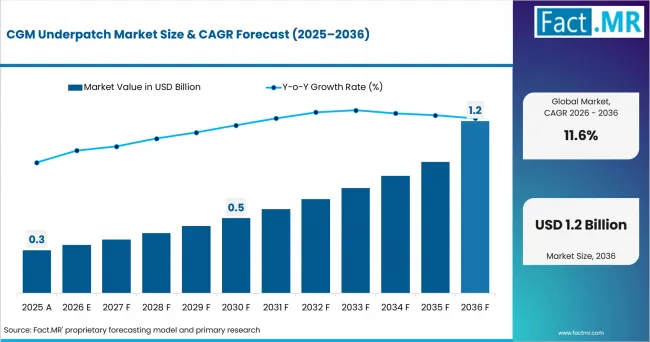
Cgm Underpatch Market Market Value Analysis | Source: Fact.MR
What are the defining numbers behind CGM underpatch market growth?
USD 0.8 billion absolute opportunity by 2036, led by CGM sensor wear and skin-comfort accessory demand.
- Demand Drivers in the Market
- CGM users need underpatches that reduce adhesive irritation during repeated sensor wear.
- Diabetes educators need skin-safe accessory options for users with lifting or rash concerns.
- DTC patch brands need device-specific designs that fit Dexcom and Libre sensor shapes.
- Online channels need refill formats that support monthly CGM accessory purchasing.
- Key Segments Analyzed
- By Adhesive Material: Hypoallergenic tapes are expected to hold 35.0% share in 2026 because sensitive-skin positioning is central to underpatch use.
- By Device Compatibility: Dexcom-compatible underpatches lead because the ecosystem has strong DTC patch demand. The segment is projected to capture 38.0% share in 2026.
- By Wear Need: Irritation-barrier support is likely to account for 41.0% share in 2026 because underpatches are often used to reduce skin reactions.
- By Channel: DTC brand sites lead because device-specific designs and refill packs are easier to sell directly. The segment is expected to hold 36.0% share in 2026.
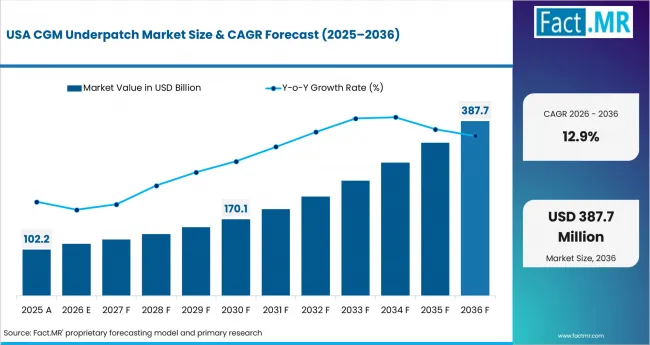
- By Geography: The United States is projected to record 12.9% CAGR through 2036 as CGM accessory purchasing shifts toward DTC and Amazon channels.
- Analyst Opinion at Fact.MR
- Shambhu Nath Jha, Senior Analyst at Fact.MR, states, “CGM underpatches look like simple adhesive accessories, but users treat them as wearability products. If a sensor irritates skin or lifts early, the device experience suffers. Suppliers that solve comfort, compatibility and removal will be better positioned than brands selling generic tape.”
- Strategic Implications
- Underpatch brands should design by device shape instead of selling one generic adhesive format.
- Diabetes clinics should guide users toward skin-safe options when irritation affects sensor wear.
- DTC brands should build refill programs around sensor replacement cycles and activity needs.
- Pharmacies should separate CGM underpatches from ordinary bandages and athletic tapes.
CGM underpatches sit below the wider diabetes management ecosystem because they support continuous glucose monitoring use but are not software or the sensor itself. The category differs from overpatch tapes because an underpatch is used as a skin-facing barrier or support layer under the device adhesive.
The American Diabetes Association’s 2026 Standards release recommends continuous glucose monitoring at diabetes onset and anytime thereafter for people who can benefit from its use in diabetes management. [1] This supports the market boundary because CGM underpatches are accessory products tied to continuous sensor wear, not standalone glucose monitoring devices.
The United States is projected to record 12.9% CAGR through 2036 as CGM adoption and DTC patch brands create recurring underpatch purchases. Germany is expected to post 12.2% CAGR through 2036 as diabetes device users seek skin-safe wearable accessories. Japan is likely to record 11.8% CAGR as compact CGM use supports discreet adhesive formats. China is forecast to advance at 11.4% CAGR as wearable glucose monitoring moves into urban wellness and diabetes care channels. India is set to record 10.8% CAGR as CGM access expands through private clinics and online channels.
How does the CGM underpatch market break down by segment?
Hypoallergenic tapes lead at 35.0%; Dexcom-compatible underpatches lead at 38.0%.
Which adhesive material dominates?
Hypoallergenic tapes hold 35.0% share in 2026.
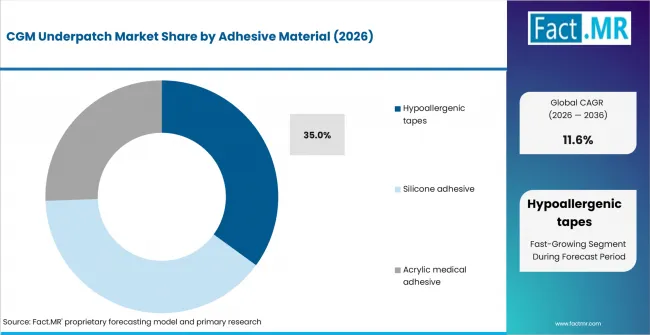
Cgm Underpatch Market Analysis By Adhesive Material | Source: Fact.MR
Hypoallergenic tapes are expected to hold 35.0% share in 2026 because sensitive skin is a core reason users look for an underpatch. These formats help users reduce discomfort from repeated sensor adhesive contact. Hydrocolloid underpatches are important where users want stronger barrier behavior. Silicone adhesive supports gentler removal. Acrylic medical adhesive supports longer hold. Transparent PU film is useful where users want a thin and discreet layer. The segment connects with wearable adhesives because CGM wear needs skin-safe bonding over several days.
Which device compatibility dominates?
Dexcom-compatible underpatches account for 38% share in 2026.
Dexcom-compatible underpatches lead because device-specific adhesive products are heavily sold through DTC and Amazon channels. The segment is projected to capture 38.0% share in 2026 as Dexcom G6, G7 and Stelo users look for better retention and skin protection. Abbott FreeStyle Libre-compatible formats follow because Libre has strong global sensor use. Medtronic Guardian formats serve insulin-dependent users. Universal CGM cutouts suit consumers who want one patch family for several devices. The FDA cleared Dexcom Stelo as the first over-the-counter continuous glucose monitor in 2024, widening the consumer-facing CGM pathway. [2]
Which wear need dominates?
Irritation-barrier support holds 41.0% share in 2026.
Irritation-barrier support leads because users often search for underpatches after experiencing redness, itching or adhesive discomfort. The wear-need segment is likely to account for 41.0% share in 2026 as repeated CGM wear makes skin tolerance a recurring issue. Sweat and water protection adds demand among active users. Sensor retention matters when premature lifting causes device loss. Overpatch layering is used when users combine an underpatch with a top patch. ExpressionMed states that its Dexcom G7 and Stelo UnderPatch is designed to protect skin from reactions to harsh adhesives by serving as a barrier between skin and the device. [3]
Which channel dominates?
DTC brand sites lead with 36% share in 2026.
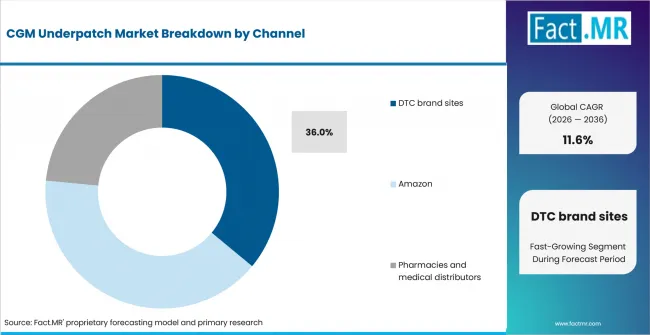
Cgm Underpatch Market Analysis By Channel | Source: Fact.MR
DTC brand sites lead because users search by device, color, material and skin need. The channel is expected to hold 36.0% share in 2026 as brands sell refill packs, bundles and device-specific shapes directly. Amazon supports fast discovery and reviews. Pharmacies and medical distributors support clinical trust. Diabetes educators and clinics influence first-time product choice. Subscription refills grow where users align patch delivery with sensor replacement cycles. Dexcom’s 2025 adhesion guidance notes that clean, dry skin and moisture control help sensors stay secure during wear. [4]
What is accelerating CGM underpatch adoption, and what is holding it back?
Rising CGM wear and skin irritation control are driving adoption, while incorrect application risk and skin reaction variability restrain it.
Drivers Impact Analysis
| DRIVER | (~) % IMPACT ON CAGR | GEOGRAPHIC RELEVANCE | IMPACT TIMELINE |
|---|---|---|---|
| Rising CGM wear creating recurring adhesive accessory demand | +1.1% | North America, Europe, East Asia | Medium term (2–4 years) |
| Skin irritation from repeated sensor adhesive contact | +1.0% | Global, strongest in frequent CGM users | Short term (≤ 2 years) |
| DTC and Amazon channels supporting device-specific patch discovery | +0.8% | United States, United Kingdom, urban Asia | Short term (≤ 2 years) |
| Active users needing sweat and water-resistant sensor support | +0.6% | North America, Europe, Japan | Medium term (2–4 years) |
| Pediatric and teen CGM users needing comfort-focused designs | +0.4% | United States, Europe, Australia, Japan | Long term (≥ 4 years) |
Source: Fact.MR analysis. Updated Jul 1, 2026
- CGM wear growth
- CGM wear is the strongest demand base because every sensor cycle creates an adhesive-use moment. Users who face lifting, sweating or skin irritation often add an underpatch or barrier layer. This makes the category recurring. It is tied to the sensor installed base but stays commercially separate from the CGM device.
- Skin irritation control
- Skin irritation control is central because underpatches are often bought after a poor sensor-wear experience. Users need materials that create a barrier without interfering with device insertion or sensor function. This driver favors hydrocolloid, silicone and hypoallergenic tape formats. It also supports brands that explain application steps clearly.
- DTC and Amazon discovery
- DTC and Amazon channels are important because users search by device name and skin issue. A Dexcom G7 user may want a different cutout than a Libre user. Reviews help shoppers compare adhesive strength and removal comfort. This channel structure favors brands with strong device-specific assortments.
- Sweat and water resistance
- Sweat and water resistance matter because CGMs are worn during exercise, showering and daily movement. Patches that lift early can create sensor-loss anxiety. Users want products that hold without feeling harsh on skin. Skin Grip’s 2025 adhesive guidance describes sweat, showers, workouts and swimming as common reasons diabetes-device adhesives can peel early. [5]
- Pediatric and teen use
- Pediatric and teen CGM users create demand for comfortable and expressive patches. Parents often look for designs that reduce device anxiety and help sensors stay on during school, sports and sleep. This creates opportunity for patterns, gentle materials and smaller sizes. The driver will grow as younger users adopt CGM more widely.
Opportunity Impact Analysis
| OPPORTUNITY | (~) % IMPACT ON CAGR | GEOGRAPHIC RELEVANCE | IMPACT TIMELINE |
|---|---|---|---|
| Hydrocolloid and silicone underlayers for sensitive skin | +0.8% | United States, Europe, Japan | Medium term (2–4 years) |
| Device-specific bundles for Dexcom, Libre and Stelo users | +0.7% | North America, Europe, East Asia | Short term (≤ 2 years) |
| Subscription refills aligned with sensor replacement cycles | +0.6% | United States, Germany, India | Medium term (2–4 years) |
| Clinic-guided underpatch recommendations for new CGM users | +0.5% | United States, Japan, China | Long term (≥ 4 years) |
Source: Fact.MR analysis. Updated Jul 1, 2026
- Sensitive-skin underlayers
- Sensitive-skin underlayers create opportunity because repeated CGM use can make even small irritation a reason for product switching. Hydrocolloid and silicone materials can support users who cannot tolerate ordinary sensor adhesive. Brands that explain insertion-through-patch use and removal steps can improve trust. The opportunity is strongest in DTC and diabetes educator channels.
- Device-specific bundles
- Device-specific bundles reduce confusion for users. A bundle can include an underpatch, an overpatch and skin-prep instructions for a defined CGM model. This helps users avoid wrong-size purchases. Underpatch suppliers can create clearer starter packs for Dexcom, Libre, Stelo and Lingo users.
- Subscription refills
- Subscription refills can align patch delivery with sensor replacement cycles. Users who wear CGMs continuously need predictable stock. Refill models also allow brands to offer seasonal materials, color packs and activity-specific adhesive strength. This opportunity connects with implantable glucose monitors because continuous monitoring behavior creates recurring accessory use.
- Clinic-guided recommendations
- Clinic-guided recommendations can reduce trial-and-error for new CGM users. Diabetes educators can suggest underpatch options when skin sensitivity or adhesion failure appears early. This creates trust and can reduce sensor discontinuation caused by comfort issues. The opportunity connects with insulin pumps because pump and CGM users often buy adhesive accessories across device types.
Restraints Impact Analysis
| RESTRAINT | (~) % IMPACT ON CAGR | GEOGRAPHIC RELEVANCE | IMPACT TIMELINE |
|---|---|---|---|
| Risk of incorrect application affecting sensor wear | -0.7% | Global | Short term (≤ 2 years) |
| Skin reaction variability across adhesive materials | -0.6% | Global, strongest in sensitive-skin users | Medium term (2–4 years) |
| Compatibility confusion across CGM models | -0.5% | North America, Europe, Asia | Medium term (2–4 years) |
| Price pressure from generic tapes and low-cost patches | -0.4% | Amazon and marketplace channels globally | Long term (≥ 4 years) |
Source: Fact.MR analysis. Updated Jul 1, 2026
- Incorrect application risk
- Incorrect application is the main restraint because the patch must not block the sensor pathway or interfere with insertion. Users may apply the product too late, cover the wrong area or choose the wrong cutout. This can reduce confidence in the product. Clear instructions and device-specific designs are needed to protect adoption.
- Skin reaction variability
- Skin reaction varies by person, adhesive chemistry and wear time. A material that works for one user may irritate another. This creates returns and negative reviews. Underpatch brands need material choices and skin-prep guidance. The restraint is strongest among users who already have adhesive sensitivity.
- Compatibility confusion
- Compatibility confusion can slow purchase because CGM models differ in size and shape. Users may buy a Dexcom G6 patch for a G7 sensor or confuse Libre versions. This issue is common on marketplaces with many listings. Strong product naming and clear diagrams can reduce confusion.
- Generic tape price pressure
- Generic tapes and low-cost patches create price pressure. Some users prefer cheaper athletic tape or medical tape if they only need extra hold. Dedicated underpatch brands must prove better comfort, shape fit and sensor-specific design. ExpressionMed’s 2025 wear-time guidance says CGM or pump tape performance is shaped by material quality, skin quality and external environment. [6]
Which countries are scaling CGM underpatches fastest?
United States 12.9%; Germany 12.2%; Japan 11.8%; China 11.4%; India 10.8%.
Based on regional analysis, the CGM underpatch market is segmented into North America, Europe, East Asia, South Asia, Latin America, and Middle East and Africa.
| Country | CAGR |
|---|---|
| United States | 12.9% |
| Germany | 12.2% |
| Japan | 11.8% |
| China | 11.4% |
| India | 10.8% |
Source: Fact.MR analysis. Updated Jul 1, 2026
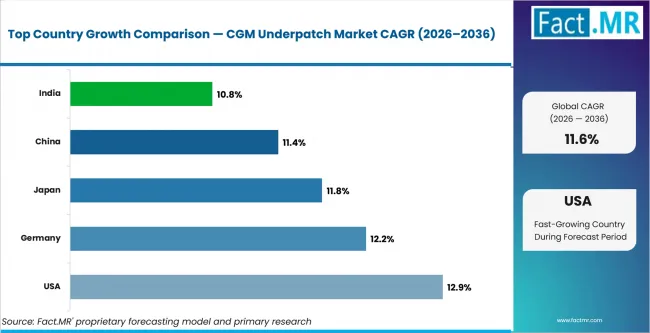
Cgm Underpatch Market Cagr Analysis By Country | Source: Fact.MR
What is powering the United States lead?
12.9% CAGR, driven by Skin Grip and strong CGM accessory DTC purchasing.
Cgm Underpatch Market Country Value Analysis | Source: Fact.MR
The United States is projected to record 12.9% CAGR from 2026 to 2036 as Dexcom and Abbott CGM ecosystems support recurring adhesive accessory demand. DTC brands and Amazon listings make device-specific underpatches easier to find. Growth will favor products that reduce irritation and stay compatible with sensor wear instructions.
How is Germany scaling CGM underpatch demand?
Germany is scaling through structured diabetes care and skin-safe wearable accessory use.
CGM users need patches that support sensor retention without adding skin burden. Germany is expected to post 12.2% CAGR through 2036 as pharmacy and diabetes educator channels improve accessory awareness. Growth will favor hypoallergenic formats and clear device compatibility.
What supports Japan’s outlook?
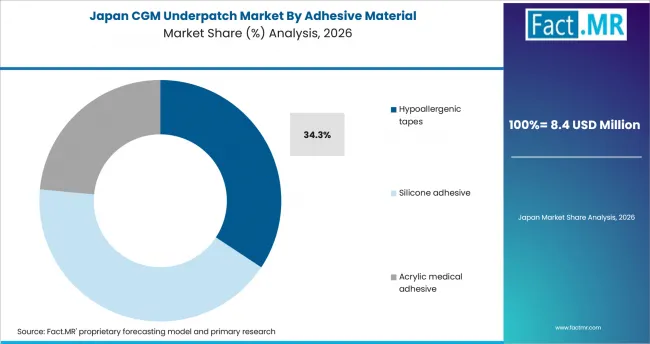
11.8% CAGR, driven by compact wearable use and comfort-focused sensor support.
Cgm Underpatch Market Japan Market Share Analysis By Adhesive Material | Source: Fact.MR
Japan is likely to record 11.8% CAGR by 2036 as CGM users seek discreet patch formats that support daily wear. Smaller cutouts, transparent films and gentle adhesives will gain traction. Brands with thin profiles and clean removal behavior will be better placed.
What underpins China’s growth?
China is scaling through urban CGM adoption and e-commerce accessory discovery.
China is forecast to advance at 11.4% CAGR through 2036 as online channels expand access to diabetes wearable accessories. Users will seek underpatches for comfort, sweat protection and sensor hold. Localized sizing and device-specific marketplace listings will shape adoption.
How is India scaling CGM underpatch adoption?
10.8% CAGR, driven by private diabetes clinics and online CGM accessory access.
India is set to record 10.8% CAGR by 2036 as private clinics and urban consumers adopt CGM for diabetes and metabolic monitoring. Underpatch demand will grow where heat, sweat and skin sensitivity affect sensor wear. Affordable multipacks and Amazon availability will matter for repeat purchase.
Who leads the CGM underpatch market?
Skin Grip and ExpressionMed lead through device-specific adhesive patch portfolios.
CGM underpatches are supplied by DTC diabetes accessory brands, adhesive patch specialists and device ecosystem participants. Skin Grip competes through CGM and diabetes-device adhesive products. ExpressionMed is highly relevant through UnderPatch positioning for skin protection. Glucomart competes through adhesive patches for CGMs, insulin pumps and infusion sets.
Dexcom shape accessory demand because patch sizing and application behavior follow sensor design. Their role is indirect, but device adoption creates accessory pull. Competition also connects with pressure sensitive adhesives because comfort, hold and removal depend on adhesive chemistry.
Competition through 2036 will be shaped by device compatibility, skin comfort, adhesive durability and user education. Brands that sell generic cutouts will face price pressure. Brands that solve irritation and sensor-loss anxiety can defend stronger value. The category also connects with adhesive tapes because low-cost alternatives stay available when users only need extra hold.
Which companies are the key providers?
Skin Grip and ExpressionMed are key providers. Glucomart are also profiled. Diacécomplete the company set.
- Skin Grip
- ExpressionMed
- Glucomart
- Diacé
Bibliography
- American Diabetes Association. (2025, December 8). The American Diabetes Association releases Standards of Care in Diabetes—2026. American Diabetes Association.
- U.S. Food and Drug Administration. (2024, March 5). FDA clears first over-the-counter continuous glucose monitor. U.S. Department of Health and Human Services.
- ExpressionMed. (2026). White Dexcom G7 and Stelo UnderPatch. ExpressionMed.
- Dexcom. (2025, July 29). No slips, just sticks: Tips for Dexcom G7 adhesion. Dexcom.
- Skin Grip. (2025, October 2). Diabetes device adhesive 101: How to make your patches last longer. Skin Grip.
- ExpressionMed. (2025, September 12). How to ensure the perfect CGM or pump wear time. ExpressionMed.
This Report Addresses
- Strategic intelligence on CGM underpatches across adhesive material and device compatibility.
- Segment analysis covering Hypoallergenic Tapes and Dexcom-compatible Underpatches.
- Regional outlook covering the United States, Germany, Japan, China and India.
- Competitive analysis of Skin Grip, ExpressionMed, Glucomart, Diacé.
- Technology assessment covering hydrocolloid barriers, silicone adhesive, PU film, skin comfort and sensor cutout design.
- Use case assessment covering irritation barrier, sweat protection, sensor retention and sensitive-skin support.
- Primary interviews, provider checks and official source review support the forecast.
What does the CGM underpatch market cover?
Skin-facing adhesive barrier patches used under or around CGM sensors.
The CGM underpatch market covers hydrocolloid and hypoallergenic tape formats used with continuous glucose monitors. These products are designed to protect skin and support sensor wear during daily activity.
The market differs from broad blood glucose monitoring devices because it excludes sensors and apps. It focuses only on underpatches and compatible adhesive supports used with CGM devices.
What is included in the scope?
CGM underpatches, skin-shield layers and compatible barrier tapes.
The scope includes hydrocolloid underpatches and hypoallergenic tapes. It includes products designed for Dexcom and universal CGM cutout formats.
The scope includes irritation-barrier use and active-lifestyle wear. The category connects with skin-adhesive materials because material choice affects comfort and removal behavior.
What is excluded from the scope?
CGM sensors and clinical glucose monitoring tools are outside the scope.
The scope excludes CGM sensors and prescription diabetes therapies. It also excludes generic athletic tapes unless they are sold for CGM or diabetes-device wear. Broader wireless portable devices are outside scope when they are not adhesive accessory products.
How was the analysis built?
100+ sources, 40+ company portfolios, 25+ countries, 20+ interviews.
- Primary Research:
- Primary research includes interviews with CGM users, diabetes educators and pharmacy category managers. It includes input from DTC adhesive patch brands, endocrinology clinics and online channel teams.
- Desk Research:
- Desk research reviews official CGM guidance, underpatch product pages, adhesive patch portfolios and device-compatibility listings.
- Market-Sizing and Forecasting:
- Forecasting uses CGM installed base growth, replacement frequency, patch wear cycles, DTC refill behavior and device-specific compatibility mapping.
- Data Validation and Update Cycle:
- Forecasts are validated through provider checks and channel feedback. SKU mapping and product portfolio reviews help confirm market direction.
Segmentation
What is the report’s scope and coverage?
| Attribute | Details |
|---|---|
| Quantitative Units | USD Billion in 2026 to USD Billion by 2036 at CAGR |
| Market Definition | Skin-facing adhesive barrier patches used under or around CGM sensors |
| Adhesive Material | Hydrocolloid; silicone adhesive; acrylic medical adhesive; transparent PU film; hypoallergenic tapes |
| Device Compatibility | Dexcom-compatible; Abbott FreeStyle Libre-compatible; Medtronic Guardian-compatible; Stelo/Lingo-compatible; universal CGM cutouts |
| Wear Need | Irritation barrier; sweat and water protection; sensor retention; overpatch layering; sensitive-skin support |
| Channel | DTC brand sites; Amazon; pharmacies and medical distributors; diabetes educators and clinics; subscription refills |
| Regions Covered | North America; Europe; East Asia; South Asia; Latin America; Middle East and Africa |
| Countries Covered | United States; Germany; Japan; China; India |
| Key Companies Profiled | Skin Grip; ExpressionMed; Glucomart; Diacé |
| Forecast Period | 2026 to 2036 |
| Approach | Hybrid top-down and bottom-up approach using CGM installed base, sensor replacement cycles, underpatch attachment rates and provider validation |
Source: Fact.MR analysis. Updated Jul 1, 2026
How is the market segmented?
-
By Adhesive Material:
- Hydrocolloid
- Silicone adhesive
- Acrylic medical adhesive
- Transparent PU film
- Hypoallergenic tapes
-
By Device Compatibility:
- Dexcom-compatible
- Abbott FreeStyle Libre-compatible
- Medtronic Guardian-compatible
- Stelo/Lingo-compatible
- Universal CGM cutouts
-
By Wear Need:
- Irritation barrier
- Sweat and water protection
- Sensor retention
- Overpatch layering
- Sensitive-skin support
-
By Channel:
- DTC brand sites
- Amazon
- Pharmacies and medical distributors
- Diabetes educators and clinics
- Subscription refills
-
Region:
- North America
- United States
- Canada
- Europe
- Germany
- United Kingdom
- France
- Italy
- Netherlands
- East Asia
- Japan
- China
- South Korea
- South Asia
- India
- Thailand
- Singapore
- Latin America
- Brazil
- Mexico
- Chile
- Middle East & Africa
- UAE
- Saudi Arabia
- South Africa
- North America
Frequently Asked Questions
Which adhesive material leads the CGM Underpatch Market?
Which device compatibility leads the CGM Underpatch Market?
Which wear need leads the CGM Underpatch Market?
Which channel leads the CGM Underpatch Market?
Which region leads the CGM Underpatch Market?
Which country expands fastest in the CGM Underpatch Market?
How does Germany perform in the CGM Underpatch Market?
How does Japan perform in the CGM Underpatch Market?
How does China perform in the CGM Underpatch Market?
How does India perform in the CGM Underpatch Market?
What is the primary driver in the CGM Underpatch Market?
What is the main restraint in the CGM Underpatch Market?
Why are hypoallergenic tapes important?
Why do DTC brand sites dominate demand?
Who worked on this report


Preview the report firsthand - request a free sample
Free SampleGet the brochure for pricing and purchase details
Download PDF