DCT Mechatronic Control Unit Market (2026 - 2036)
DCT Mechatronic Control Unit Market Size and Share Forecast Outlook 2026 to 2036
Core Findings
DCT Mechatronic Control Unit Market Forecast Outlook 2026 to 2036
The DCT mechatronic control unit market is anticipated to reach USD 7.4 billion in 2026, growing to USD 14.1 billion by 2036, with a CAGR of 6.7%.
Key Takeaways from DCT Mechatronic Control Unit Market
- DCT Mechatronic Control Unit Market Value (2026): USD 7.4 billion
- DCT Mechatronic Control Unit Market Forecast Value (2036): USD 14.1 billion
- DCT Mechatronic Control Unit Market Forecast CAGR (2026 to 2036): 6.7%
- Leading Segment in DCT Mechatronic Control Unit Market: First Fit (OEM) Sales Channel (87%)
- Key Growth Region in DCT Mechatronic Control Unit Market: Asia Pacific
- Key Players in DCT Mechatronic Control Unit Market: ZF Friedrichshafen AG (ZF), Bosch, Continental AG, BorgWarner Inc., Schaeffler AG, Hitachi Astemo Ltd., Denso Corporation, Aisin Corporation (Aisin-AW/Toyota Group), Magna International Inc. (Magna), Nidec Corporation
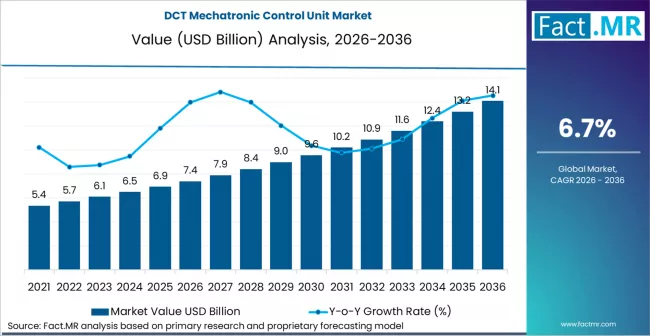
While the market shows strong growth potential, execution risks remain significant, especially in delivering the advanced technology required to meet evolving automotive performance standards. Adoption friction could arise as manufacturers face challenges in integrating new mechatronic control systems into existing vehicle architectures, particularly in regions with less established demand for advanced transmission technologies.
Economic sensitivity also plays a critical role, as shifts in global economic conditions or fluctuating consumer demand for vehicles can impact production volumes, directly affecting market growth. Companies that can mitigate these risks by ensuring cost-effective, scalable solutions will be well-positioned to capture value. The market's overall trajectory will depend on the ability to navigate these challenges while capitalizing on the sustained demand for more efficient and reliable automotive systems.
DCT Mechatronic Control Unit Market
| Metric | Value |
|---|---|
| Estimated Value in (2026E) | USD 7.4 billion |
| Forecast Value in (2036F) | USD 14.1 billion |
| Forecast CAGR (2026 to 2036) | 6.7% |
Category
| Category | Segments |
|---|---|
| Sales Channel | First Fit (OEM); Aftermarket |
| DCT Type | Wet DCT; Dry DCT; Other |
| Vehicle Type | Passenger Cars; LCV |
| Integration | TCU + Hydraulic Module; TCU Only |
| Powertrain | ICE or HEV; PHEV; BEV (e-DCT use cases) |
| Region | North America; Europe; Asia Pacific; Latin America; Middle East & Africa |
Strategic Intelligence Brief
What is the Analysis of the Leading Sales Channel Segment in the DCT Mechatronic Control Unit Market?
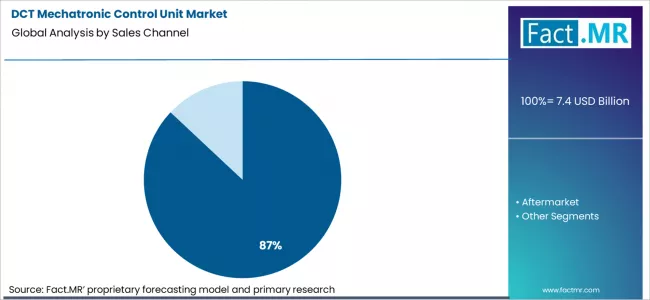
The First Fit (OEM) segment dominates the DCT mechatronic control unit market, holding 87% of the market share in 2026. This market leadership is attributed to the high level of technical integration required between the mechatronic unit and the engine's management system during vehicle assembly. Modern mechatronic units have become increasingly proprietary, designed as single "plug-and-play" modules to ensure seamless performance, such as achieving shift speeds as low as 8 milliseconds. BorgWarner is a key player in this segment, securing multiple high-volume DCT programs with major Chinese and German OEMs in 2025, with mass production set for 2026. OEMs like Hyundai and Tata Motors have adopted wet-clutch DCT mechatronics in their 2026 SUV models, ensuring the ability to handle higher torque loads and improve thermal durability, especially in urban environments where congestion and heat are more prevalent.
What is the Analysis of the Leading Vehicle Type Segment in the DCT Mechatronic Control Unit Market?
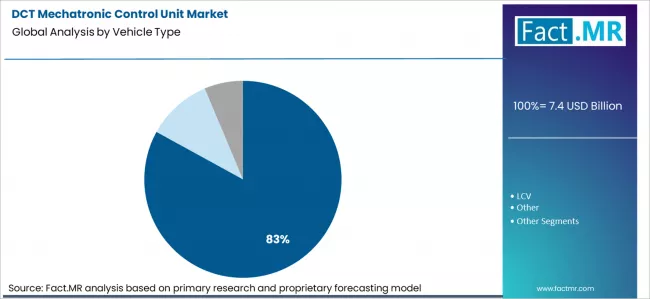
Passenger cars remain the primary application for DCT mechatronic control units, commanding 83% of the market share in 2026. This dominance is driven by the widespread use of "Wet DCT" architectures, which account for approximately 55% of the passenger car sub-segment. Wet DCTs offer superior heat dissipation, making them ideal for high-torque turbocharged engines. In 2025, Germany alone saw 4.15 million vehicles produced, with one in four vehicles utilizing advanced DCT mechatronics for enhanced performance-oriented gear shifts. Vitesco Technologies (now merging into Schaeffler) has introduced overmolded control units that integrate silicon carbide (SiC) chips with mechatronic hardware, targeting the 2026 hybrid passenger vehicle market. These innovations aim to reduce the unit's weight and cost, further solidifying DCT's position in the passenger car segment.
Country
| Country | Drivers | Restraints | Trends |
|---|---|---|---|
| USA | High demand for performance and fuel efficiency in passenger and light commercial vehicles drives adoption of dual clutch transmissions with advanced mechatronics. | Strong shift toward EVs reduces long term demand for traditional transmissions. | Integration of adaptive control units with vehicle analytics and connectivity. |
| China | Largest vehicle market globally, with rising adoption of automated transmissions in mid and premium segments boosting mechatronic control unit volumes. | Cost sensitivity in mass market segments limits adoption of advanced DCT systems. | Localization of production and technology partnerships to improve cost and performance. |
| India | Rapid growth in passenger vehicle sales and demand for smoother automatic transmissions drives uptake of DCT systems. | Price sensitive market and limited local manufacturing of high precision mechatronics can constrain penetration. | Increasing use of DCTs in mid tier vehicles and growing aftermarket support. |
| Germany | Strong presence of premium automakers and performance vehicle demand support advanced mechatronic control unit integration. | Electrification of vehicle portfolios reduces future volumes for traditional transmissions. | Focus on high precision, robust control units optimized for performance and emissions. |
| Japan | Automotive OEMs emphasize fuel economy and refined shifting, sustaining demand for DCT mechatronics in select models. | Slow growth in certain segments and strong hybrid preference limits broad DCT growth. | Continued refinement of control algorithms and integration with hybrid systems. |
| South Korea | Growing local production of vehicles with automated transmissions supports steady mechatronic control unit demand. | EV transition and competition from continuously variable transmissions can limit DCT share. | Enhanced control logic and thermal management for higher reliability. |
| Brazil | Expanding automotive production and rising consumer preference for automatic transmissions boost DCT adoption. | Economic volatility and cost constraints slow uptake of premium control units. | Growth in retrofit and calibration services to support existing DCT vehicle fleets. |
Analysis of the DCT Mechatronic Control Unit Market by Key Country
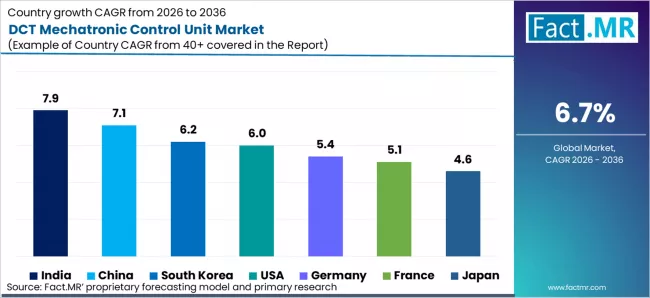
| Country | CAGR (Forecast Period) |
|---|---|
| USA | 6.0% |
| China | 7.1% |
| India | 7.9% |
| Germany | 5.4% |
| Japan | 4.6% |
| South Korea | 6.2% |
| France | 5.1% |
The report covers an in-depth analysis of 40+ countries; top-performing countries are highlighted below.
What Drives Growth in the USA DCT Mechatronic Control Unit Market?
The 6.0% growth in the USA is largely driven by the EPA’s Multi-Pollutant Emissions Standards for 2027 and beyond. These regulations prioritize high-efficiency transmissions, making Dual-Clutch Transmissions (DCTs) a preferred solution to meet tightening CO₂ targets. DCTs provide up to a 6% improvement in fuel economy over traditional automatics. Additionally, the National Highway Traffic Safety Administration (NHTSA) encourages the integration of advanced transmission controls for smoother coordination with Level 2+ driver-assistance systems. This shift stimulates demand for mechatronic units capable of handling complex shifting algorithms for regenerative braking and "sailing" modes in hybrid trucks and passenger vehicles.
What Influences Growth in the China DCT Mechatronic Control Unit Market?
China’s 7.1% expansion is driven by the Ministry of Industry and Information Technology (MIIT) and its Automotive Industry Growth Stabilization Work Plan. The plan targets 32.3 million vehicle sales in 2025 and focuses on Intelligent Connected Vehicles (ICVs), with DCTs being the dominant choice for Plug-in Hybrid Electric Vehicles (PHEVs). These vehicles require specialized mechatronic units that synchronize internal combustion engines with electric motors. Furthermore, MIIT’s push for breakthroughs in automotive chips is supporting the local production of semiconductors for DCT systems, reducing reliance on global supply chains and lowering costs for domestic OEMs like BYD and Geely.
How Does India Achieve Growth in the DCT Mechatronic Control Unit Market?
India’s 7.9% growth rate is the highest globally, driven by the Production Linked Incentive (PLI) Scheme for automobile and auto components. This scheme incentivizes the production of Advanced Automotive Technology (AAT) products, including DCT mechatronic units. As part of the BS6 Phase 2 (RDE) norms, the demand for precise transmission systems is rising to meet low-emission standards. The PLI Scheme is also driving the local manufacturing of next-generation actuators, further reducing costs while boosting the Indian market's shift towards premium SUVs and turbocharged petrol engines. This trend is significantly growing demand for high-tech mechatronic units.
What Drives Growth in the Germany DCT Mechatronic Control Unit Market?
Germany’s 5.4% growth is characterized by the preparation for Euro 7 regulations, which focus on reducing ultra-fine particulate matter and cold-start pollutants. German manufacturers are integrating smart mechatronics that can detect transmission wear and adjust shifting logic to ensure emissions compliance. The Plattform Industrie 4.0 initiative supports the development of digital twins for DCT units, allowing for predictive maintenance and remote software updates. These advancements ensure German-made mechatronic units remain a global benchmark, particularly in the high-performance and luxury hybrid segments, supporting Germany's leadership in premium automotive engineering.
How Does Japan Achieve Growth in the DCT Mechatronic Control Unit Market?
Japan’s 4.6% growth is influenced by the Ministry of Economy, Trade and Industry (METI) and its Green Transformation (GX) roadmap. The policy focuses on energy efficiency and the development of carbon-neutral vehicle technologies, including ultra-compact mechatronic units for K-cars and compact hybrids. As part of the GX-ETS (Emissions Trading Scheme), Japan is encouraging the adoption of DCTs to reduce fleet-wide CO₂ emissions. Japanese suppliers also benefit from the country’s leadership in sensor technology, leading to the development of mechatronic units with high-precision sensors for superior shift quality in both hybrid and traditional powertrains.
Why Does South Korea Exhibit Growth in the DCT Mechatronic Control Unit Market?
South Korea’s 6.2% growth is supported by a record 35.3 trillion won R&D budget for 2026, with a focus on cutting-edge industries like robotics and self-driving technologies. A significant portion of this funding is dedicated to developing AI-based mechatronic control units capable of learning driver behavior to optimize shifting for comfort and fuel efficiency. The Ministry of Science and ICT’s focus on the Materials, Parts, and Equipment (MPE) industry has allowed South Korean suppliers to develop indigenous high-performance components, such as PCBs and solenoids, crucial for high-tech DCT systems.
What Drives Growth in the France DCT Mechatronic Control Unit Market?
France’s 5.1% growth is driven by the Ministry of the Economy and the extension of the "Ecological Bonus" into 2026, which now includes stricter environmental scores for vehicles. These scores factor in the manufacturing carbon footprint, promoting local production of efficient components. As France targets a reduction in transport-related emissions, the demand for hybrid-compatible DCTs is rising. French manufacturers are specializing in "Dry-DCT" mechatronic units, which are lighter and more energy-efficient, catering to the small and mid-sized vehicles that dominate the French market. These low-carbon industrial development initiatives ensure that France remains a key hub for the next generation of mechatronic-intensive powertrains.
How Are Participants Competing in the DCT Mechatronic Control Market?
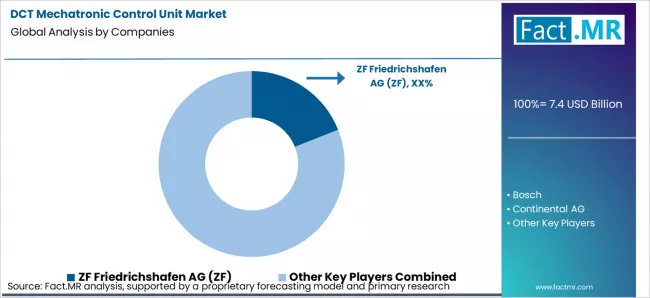
In the DCT mechatronic control market, competition centers on high-performance computing and software-defined vehicle (SDV) architectures. Companies like ZF and BorgWarner focus on structural agility and cost-effective transitions to electric and hybrid platforms. Bosch and Continental, on the other hand, emphasize software-hardware decoupling, enabling mechatronic control units (MCUs) to function as modular nodes within centralized zonal controllers. As the market evolves, Hitachi Astemo’s acquisition by Honda positions the company as a leader in electrification and mechatronic intelligence. By 2026, Bosch’s roadmap envisions middleware stacks that allow DCT software to operate independently of physical components, while Hitachi Astemo integrates DC-DC converters into mechatronic control architectures. The shift towards zonal intelligence means that DCT mechatronics will become integral components of the vehicle’s central nervous system, enabling real-time power management and predictive gear selection based on road topology. The future of the market lies in the integration of software to optimize hardware, where firms controlling the middleware will dominate.
Key Players of the DCT Mechatronic Control Unit Market
- ZF Friedrichshafen AG (ZF)
- Bosch
- Continental AG
- BorgWarner Inc.
- Schaeffler AG
- Hitachi Astemo Ltd.
- Denso Corporation
- Aisin Corporation (Aisin-AW/Toyota Group)
- Magna International Inc. (Magna)
- Nidec Corporation
Scope of the Report
| Items | Values |
|---|---|
| Quantitative Units (2026) | USD Billion |
| Sales Channel | First Fit (OEM), Aftermarket |
| DCT Type | Wet DCT, Dry DCT, Other |
| Vehicle Type | Passenger Cars, LCV, Other |
| Integration | TCU + Hydraulic Module, TCU Only |
| Powertrain | ICE or HEV, PHEV, BEV (eDCT use cases) |
| Regions Covered | North America, Europe, Asia Pacific, Latin America, Middle East & Africa |
| Countries Covered | United States, Canada, Mexico, Germany, United Kingdom, France, Japan, South Korea, China, India, Brazil, and other countries |
| Key Companies Profiled | ZF Friedrichshafen AG (ZF), Bosch, Continental AG, BorgWarner Inc., Schaeffler AG, Hitachi Astemo Ltd., Denso Corporation, Aisin Corporation (AisinAW/Toyota Group), Magna International Inc. (Magna), Nidec Corporation |
| Additional Attributes | Dollar revenue by sales channel, DCT type, vehicle type, integration, powertrain, and region; regional demand trends, competitive landscape, technological advancements in DCT mechatronic control units, operational performance optimization initiatives, and product development strategies |
DCT Mechatronic Control Unit Market Key Segments
-
Sales Channel :
- First Fit (OEM)
- Aftermarket
-
DCT Type :
- Wet DCT
- Dry DCT
- Other
-
Vehicle Type :
- Passenger Cars
- LCV (Light Commercial Vehicle)
-
Integration :
- TCU + Hydraulic Module
- TCU Only
-
Powertrain :
- ICE or HEV
- PHEV
- BEV (e-DCT use cases)
-
Region :
- North America
- USA
- Canada
- Mexico
- Europe
- Germany
- UK
- France
- Italy
- Spain
- Nordic Countries
- BENELUX
- Rest of Europe
- Asia Pacific
- China
- Japan
- South Korea
- India
- Australia
- Rest of Asia Pacific
- Latin America
- Brazil
- Argentina
- Rest of Latin America
- Middle East and Africa
- Kingdom of Saudi Arabia
- United Arab Emirates
- South Africa
- Rest of Middle East and Africa
- Other Regions
- Oceania
- Central Asia
- Other Markets
- North America
Bibliographies
- International Organization for Standardization. (2023). Road vehicles-Electronic control units and mechatronic modules: Functional safety, durability, and environmental requirements. ISO.
- Journal of Automobile Engineering. (2024). Control architecture and calibration of mechatronic units in dual-clutch transmissions for fuel efficiency and drivability. Proceedings of the Institution of Mechanical Engineers, Part D, 238(7), 1821-1835.
- SAE International. (2024). Design and validation of mechatronic control units for dual-clutch transmission systems. SAE International.
- Transportation Research Part D: Transport and Environment. (2023). Impact of transmission control strategies on vehicle energy consumption and tailpipe emissions. Transportation Research Part D, 116, 103602.
- U.S. Environmental Protection Agency. (2024). Multi-pollutant emissions standards for light- and medium-duty vehicles: Implications for transmission and powertrain control units. U.S. EPA.
Table of Content
- Executive Summary
- Global Market Outlook
- Demand to side Trends
- Supply to side Trends
- Technology Roadmap Analysis
- Analysis and Recommendations
- Market Overview
- Market Coverage / Taxonomy
- Market Definition / Scope / Limitations
- Research Methodology
- Chapter Orientation
- Analytical Lens and Working Hypotheses
- Market Structure, Signals, and Trend Drivers
- Benchmarking and Cross-market Comparability
- Market Sizing, Forecasting, and Opportunity Mapping
- Research Design and Evidence Framework
- Desk Research Programme (Secondary Evidence)
- Company Annual and Sustainability Reports
- Peer-reviewed Journals and Academic Literature
- Corporate Websites, Product Literature, and Technical Notes
- Earnings Decks and Investor Briefings
- Statutory Filings and Regulatory Disclosures
- Technical White Papers and Standards Notes
- Trade Journals, Industry Magazines, and Analyst Briefs
- Conference Proceedings, Webinars, and Seminar Materials
- Government Statistics Portals and Public Data Releases
- Press Releases and Reputable Media Coverage
- Specialist Newsletters and Curated Briefings
- Sector Databases and Reference Repositories
- FMR Internal Proprietary Databases and Historical Market Datasets
- Subscription Datasets and Paid Sources
- Social Channels, Communities, and Digital Listening Inputs
- Additional Desk Sources
- Expert Input and Fieldwork (Primary Evidence)
- Primary Modes
- Qualitative Interviews and Expert Elicitation
- Quantitative Surveys and Structured Data Capture
- Blended Approach
- Why Primary Evidence is Used
- Field Techniques
- Interviews
- Surveys
- Focus Groups
- Observational and In-context Research
- Social and Community Interactions
- Stakeholder Universe Engaged
- C-suite Leaders
- Board Members
- Presidents and Vice Presidents
- R&D and Innovation Heads
- Technical Specialists
- Domain Subject-matter Experts
- Scientists
- Physicians and Other Healthcare Professionals
- Governance, Ethics, and Data Stewardship
- Research Ethics
- Data Integrity and Handling
- Primary Modes
- Tooling, Models, and Reference Databases
- Desk Research Programme (Secondary Evidence)
- Data Engineering and Model Build
- Data Acquisition and Ingestion
- Cleaning, Normalisation, and Verification
- Synthesis, Triangulation, and Analysis
- Quality Assurance and Audit Trail
- Market Background
- Market Dynamics
- Drivers
- Restraints
- Opportunity
- Trends
- Scenario Forecast
- Demand in Optimistic Scenario
- Demand in Likely Scenario
- Demand in Conservative Scenario
- Opportunity Map Analysis
- Product Life Cycle Analysis
- Supply Chain Analysis
- Investment Feasibility Matrix
- Value Chain Analysis
- PESTLE and Porter’s Analysis
- Regulatory Landscape
- Regional Parent Market Outlook
- Production and Consumption Statistics
- Import and Export Statistics
- Market Dynamics
- Global Market Analysis 2021 to 2025 and Forecast, 2026 to 2036
- Historical Market Size Value (USD Million) Analysis, 2021 to 2025
- Current and Future Market Size Value (USD Million) Projections, 2026 to 2036
- Y to o to Y Growth Trend Analysis
- Absolute $ Opportunity Analysis
- Global Market Pricing Analysis 2021 to 2025 and Forecast 2026 to 2036
- Global Market Analysis 2021 to 2025 and Forecast 2026 to 2036, By Sales Channel
- Introduction / Key Findings
- Historical Market Size Value (USD Million) Analysis By Sales Channel, 2021 to 2025
- Current and Future Market Size Value (USD Million) Analysis and Forecast By Sales Channel, 2026 to 2036
- First Fit (OEM)
- Aftermarket
- First Fit (OEM)
- Y to o to Y Growth Trend Analysis By Sales Channel, 2021 to 2025
- Absolute $ Opportunity Analysis By Sales Channel, 2026 to 2036
- Global Market Analysis 2021 to 2025 and Forecast 2026 to 2036, By DCT Type
- Introduction / Key Findings
- Historical Market Size Value (USD Million) Analysis By DCT Type, 2021 to 2025
- Current and Future Market Size Value (USD Million) Analysis and Forecast By DCT Type, 2026 to 2036
- Wet DCT
- Dry DCT
- Wet DCT
- Y to o to Y Growth Trend Analysis By DCT Type, 2021 to 2025
- Absolute $ Opportunity Analysis By DCT Type, 2026 to 2036
- Global Market Analysis 2021 to 2025 and Forecast 2026 to 2036, By Vehicle Type
- Introduction / Key Findings
- Historical Market Size Value (USD Million) Analysis By Vehicle Type, 2021 to 2025
- Current and Future Market Size Value (USD Million) Analysis and Forecast By Vehicle Type, 2026 to 2036
- Passenger Cars
- LCV
- Other
- Passenger Cars
- Y to o to Y Growth Trend Analysis By Vehicle Type, 2021 to 2025
- Absolute $ Opportunity Analysis By Vehicle Type, 2026 to 2036
- Global Market Analysis 2021 to 2025 and Forecast 2026 to 2036, By Integration
- Introduction / Key Findings
- Historical Market Size Value (USD Million) Analysis By Integration, 2021 to 2025
- Current and Future Market Size Value (USD Million) Analysis and Forecast By Integration, 2026 to 2036
- TCU + Hydraulic Module
- TCU Only
- TCU + Hydraulic Module
- Y to o to Y Growth Trend Analysis By Integration, 2021 to 2025
- Absolute $ Opportunity Analysis By Integration, 2026 to 2036
- Global Market Analysis 2021 to 2025 and Forecast 2026 to 2036, By Powertrain
- Introduction / Key Findings
- Historical Market Size Value (USD Million) Analysis By Powertrain, 2021 to 2025
- Current and Future Market Size Value (USD Million) Analysis and Forecast By Powertrain, 2026 to 2036
- ICE or HEV
- PHEV
- BEV (e-DCT use cases)
- ICE or HEV
- Y to o to Y Growth Trend Analysis By Powertrain, 2021 to 2025
- Absolute $ Opportunity Analysis By Powertrain, 2026 to 2036
- Global Market Analysis 2021 to 2025 and Forecast 2026 to 2036, By Region
- Introduction
- Historical Market Size Value (USD Million) Analysis By Region, 2021 to 2025
- Current Market Size Value (USD Million) Analysis and Forecast By Region, 2026 to 2036
- North America
- Latin America
- Western Europe
- Eastern Europe
- East Asia
- South Asia and Pacific
- Middle East & Africa
- Market Attractiveness Analysis By Region
- North America Market Analysis 2021 to 2025 and Forecast 2026 to 2036, By Country
- Historical Market Size Value (USD Million) Trend Analysis By Market Taxonomy, 2021 to 2025
- Market Size Value (USD Million) Forecast By Market Taxonomy, 2026 to 2036
- By Country
- USA
- Canada
- Mexico
- By Sales Channel
- By DCT Type
- By Vehicle Type
- By Integration
- By Powertrain
- By Country
- Market Attractiveness Analysis
- By Country
- By Sales Channel
- By DCT Type
- By Vehicle Type
- By Integration
- By Powertrain
- Key Takeaways
- Latin America Market Analysis 2021 to 2025 and Forecast 2026 to 2036, By Country
- Historical Market Size Value (USD Million) Trend Analysis By Market Taxonomy, 2021 to 2025
- Market Size Value (USD Million) Forecast By Market Taxonomy, 2026 to 2036
- By Country
- Brazil
- Chile
- Rest of Latin America
- By Sales Channel
- By DCT Type
- By Vehicle Type
- By Integration
- By Powertrain
- By Country
- Market Attractiveness Analysis
- By Country
- By Sales Channel
- By DCT Type
- By Vehicle Type
- By Integration
- By Powertrain
- Key Takeaways
- Western Europe Market Analysis 2021 to 2025 and Forecast 2026 to 2036, By Country
- Historical Market Size Value (USD Million) Trend Analysis By Market Taxonomy, 2021 to 2025
- Market Size Value (USD Million) Forecast By Market Taxonomy, 2026 to 2036
- By Country
- Germany
- UK
- Italy
- Spain
- France
- Nordic
- BENELUX
- Rest of Western Europe
- By Sales Channel
- By DCT Type
- By Vehicle Type
- By Integration
- By Powertrain
- By Country
- Market Attractiveness Analysis
- By Country
- By Sales Channel
- By DCT Type
- By Vehicle Type
- By Integration
- By Powertrain
- Key Takeaways
- Eastern Europe Market Analysis 2021 to 2025 and Forecast 2026 to 2036, By Country
- Historical Market Size Value (USD Million) Trend Analysis By Market Taxonomy, 2021 to 2025
- Market Size Value (USD Million) Forecast By Market Taxonomy, 2026 to 2036
- By Country
- Russia
- Poland
- Hungary
- Balkan & Baltic
- Rest of Eastern Europe
- By Sales Channel
- By DCT Type
- By Vehicle Type
- By Integration
- By Powertrain
- By Country
- Market Attractiveness Analysis
- By Country
- By Sales Channel
- By DCT Type
- By Vehicle Type
- By Integration
- By Powertrain
- Key Takeaways
- East Asia Market Analysis 2021 to 2025 and Forecast 2026 to 2036, By Country
- Historical Market Size Value (USD Million) Trend Analysis By Market Taxonomy, 2021 to 2025
- Market Size Value (USD Million) Forecast By Market Taxonomy, 2026 to 2036
- By Country
- China
- Japan
- South Korea
- By Sales Channel
- By DCT Type
- By Vehicle Type
- By Integration
- By Powertrain
- By Country
- Market Attractiveness Analysis
- By Country
- By Sales Channel
- By DCT Type
- By Vehicle Type
- By Integration
- By Powertrain
- Key Takeaways
- South Asia and Pacific Market Analysis 2021 to 2025 and Forecast 2026 to 2036, By Country
- Historical Market Size Value (USD Million) Trend Analysis By Market Taxonomy, 2021 to 2025
- Market Size Value (USD Million) Forecast By Market Taxonomy, 2026 to 2036
- By Country
- India
- ASEAN
- Australia & New Zealand
- Rest of South Asia and Pacific
- By Sales Channel
- By DCT Type
- By Vehicle Type
- By Integration
- By Powertrain
- By Country
- Market Attractiveness Analysis
- By Country
- By Sales Channel
- By DCT Type
- By Vehicle Type
- By Integration
- By Powertrain
- Key Takeaways
- Middle East & Africa Market Analysis 2021 to 2025 and Forecast 2026 to 2036, By Country
- Historical Market Size Value (USD Million) Trend Analysis By Market Taxonomy, 2021 to 2025
- Market Size Value (USD Million) Forecast By Market Taxonomy, 2026 to 2036
- By Country
- Kingdom of Saudi Arabia
- Other GCC Countries
- Turkiye
- South Africa
- Other African Union
- Rest of Middle East & Africa
- By Sales Channel
- By DCT Type
- By Vehicle Type
- By Integration
- By Powertrain
- By Country
- Market Attractiveness Analysis
- By Country
- By Sales Channel
- By DCT Type
- By Vehicle Type
- By Integration
- By Powertrain
- Key Takeaways
- Key Countries Market Analysis
- USA
- Pricing Analysis
- Market Share Analysis, 2025
- By Sales Channel
- By DCT Type
- By Vehicle Type
- By Integration
- By Powertrain
- Canada
- Pricing Analysis
- Market Share Analysis, 2025
- By Sales Channel
- By DCT Type
- By Vehicle Type
- By Integration
- By Powertrain
- Mexico
- Pricing Analysis
- Market Share Analysis, 2025
- By Sales Channel
- By DCT Type
- By Vehicle Type
- By Integration
- By Powertrain
- Brazil
- Pricing Analysis
- Market Share Analysis, 2025
- By Sales Channel
- By DCT Type
- By Vehicle Type
- By Integration
- By Powertrain
- Chile
- Pricing Analysis
- Market Share Analysis, 2025
- By Sales Channel
- By DCT Type
- By Vehicle Type
- By Integration
- By Powertrain
- Germany
- Pricing Analysis
- Market Share Analysis, 2025
- By Sales Channel
- By DCT Type
- By Vehicle Type
- By Integration
- By Powertrain
- UK
- Pricing Analysis
- Market Share Analysis, 2025
- By Sales Channel
- By DCT Type
- By Vehicle Type
- By Integration
- By Powertrain
- Italy
- Pricing Analysis
- Market Share Analysis, 2025
- By Sales Channel
- By DCT Type
- By Vehicle Type
- By Integration
- By Powertrain
- Spain
- Pricing Analysis
- Market Share Analysis, 2025
- By Sales Channel
- By DCT Type
- By Vehicle Type
- By Integration
- By Powertrain
- France
- Pricing Analysis
- Market Share Analysis, 2025
- By Sales Channel
- By DCT Type
- By Vehicle Type
- By Integration
- By Powertrain
- India
- Pricing Analysis
- Market Share Analysis, 2025
- By Sales Channel
- By DCT Type
- By Vehicle Type
- By Integration
- By Powertrain
- ASEAN
- Pricing Analysis
- Market Share Analysis, 2025
- By Sales Channel
- By DCT Type
- By Vehicle Type
- By Integration
- By Powertrain
- Australia & New Zealand
- Pricing Analysis
- Market Share Analysis, 2025
- By Sales Channel
- By DCT Type
- By Vehicle Type
- By Integration
- By Powertrain
- China
- Pricing Analysis
- Market Share Analysis, 2025
- By Sales Channel
- By DCT Type
- By Vehicle Type
- By Integration
- By Powertrain
- Japan
- Pricing Analysis
- Market Share Analysis, 2025
- By Sales Channel
- By DCT Type
- By Vehicle Type
- By Integration
- By Powertrain
- South Korea
- Pricing Analysis
- Market Share Analysis, 2025
- By Sales Channel
- By DCT Type
- By Vehicle Type
- By Integration
- By Powertrain
- Russia
- Pricing Analysis
- Market Share Analysis, 2025
- By Sales Channel
- By DCT Type
- By Vehicle Type
- By Integration
- By Powertrain
- Poland
- Pricing Analysis
- Market Share Analysis, 2025
- By Sales Channel
- By DCT Type
- By Vehicle Type
- By Integration
- By Powertrain
- Hungary
- Pricing Analysis
- Market Share Analysis, 2025
- By Sales Channel
- By DCT Type
- By Vehicle Type
- By Integration
- By Powertrain
- Kingdom of Saudi Arabia
- Pricing Analysis
- Market Share Analysis, 2025
- By Sales Channel
- By DCT Type
- By Vehicle Type
- By Integration
- By Powertrain
- Turkiye
- Pricing Analysis
- Market Share Analysis, 2025
- By Sales Channel
- By DCT Type
- By Vehicle Type
- By Integration
- By Powertrain
- South Africa
- Pricing Analysis
- Market Share Analysis, 2025
- By Sales Channel
- By DCT Type
- By Vehicle Type
- By Integration
- By Powertrain
- USA
- Market Structure Analysis
- Competition Dashboard
- Competition Benchmarking
- Market Share Analysis of Top Players
- By Regional
- By Sales Channel
- By DCT Type
- By Vehicle Type
- By Integration
- By Powertrain
- Competition Analysis
- Competition Deep Dive
- ZF Friedrichshafen AG (ZF)
- Overview
- Product Portfolio
- Profitability by Market Segments (Product/Age /Sales Channel/Region)
- Sales Footprint
- Strategy Overview
- Marketing Strategy
- Product Strategy
- Channel Strategy
- Bosch
- Continental AG
- BorgWarner Inc.
- Schaeffler AG
- Hitachi Astemo Ltd.
- Denso Corporation
- Aisin Corporation (Aisin-AW/Toyota Group)
- Magna International Inc. (Magna)
- Nidec Corporation
- ZF Friedrichshafen AG (ZF)
- Competition Deep Dive
- Assumptions & Acronyms Used
List Of Table
- Table 1: Global Market Value (USD Million) Forecast by Region, 2021 to 2036
- Table 2: Global Market Value (USD Million) Forecast by Sales Channel, 2021 to 2036
- Table 3: Global Market Value (USD Million) Forecast by DCT Type, 2021 to 2036
- Table 4: Global Market Value (USD Million) Forecast by Vehicle Type, 2021 to 2036
- Table 5: Global Market Value (USD Million) Forecast by Integration, 2021 to 2036
- Table 6: Global Market Value (USD Million) Forecast by Powertrain, 2021 to 2036
- Table 7: North America Market Value (USD Million) Forecast by Country, 2021 to 2036
- Table 8: North America Market Value (USD Million) Forecast by Sales Channel, 2021 to 2036
- Table 9: North America Market Value (USD Million) Forecast by DCT Type, 2021 to 2036
- Table 10: North America Market Value (USD Million) Forecast by Vehicle Type, 2021 to 2036
- Table 11: North America Market Value (USD Million) Forecast by Integration, 2021 to 2036
- Table 12: North America Market Value (USD Million) Forecast by Powertrain, 2021 to 2036
- Table 13: Latin America Market Value (USD Million) Forecast by Country, 2021 to 2036
- Table 14: Latin America Market Value (USD Million) Forecast by Sales Channel, 2021 to 2036
- Table 15: Latin America Market Value (USD Million) Forecast by DCT Type, 2021 to 2036
- Table 16: Latin America Market Value (USD Million) Forecast by Vehicle Type, 2021 to 2036
- Table 17: Latin America Market Value (USD Million) Forecast by Integration, 2021 to 2036
- Table 18: Latin America Market Value (USD Million) Forecast by Powertrain, 2021 to 2036
- Table 19: Western Europe Market Value (USD Million) Forecast by Country, 2021 to 2036
- Table 20: Western Europe Market Value (USD Million) Forecast by Sales Channel, 2021 to 2036
- Table 21: Western Europe Market Value (USD Million) Forecast by DCT Type, 2021 to 2036
- Table 22: Western Europe Market Value (USD Million) Forecast by Vehicle Type, 2021 to 2036
- Table 23: Western Europe Market Value (USD Million) Forecast by Integration, 2021 to 2036
- Table 24: Western Europe Market Value (USD Million) Forecast by Powertrain, 2021 to 2036
- Table 25: Eastern Europe Market Value (USD Million) Forecast by Country, 2021 to 2036
- Table 26: Eastern Europe Market Value (USD Million) Forecast by Sales Channel, 2021 to 2036
- Table 27: Eastern Europe Market Value (USD Million) Forecast by DCT Type, 2021 to 2036
- Table 28: Eastern Europe Market Value (USD Million) Forecast by Vehicle Type, 2021 to 2036
- Table 29: Eastern Europe Market Value (USD Million) Forecast by Integration, 2021 to 2036
- Table 30: Eastern Europe Market Value (USD Million) Forecast by Powertrain, 2021 to 2036
- Table 31: East Asia Market Value (USD Million) Forecast by Country, 2021 to 2036
- Table 32: East Asia Market Value (USD Million) Forecast by Sales Channel, 2021 to 2036
- Table 33: East Asia Market Value (USD Million) Forecast by DCT Type, 2021 to 2036
- Table 34: East Asia Market Value (USD Million) Forecast by Vehicle Type, 2021 to 2036
- Table 35: East Asia Market Value (USD Million) Forecast by Integration, 2021 to 2036
- Table 36: East Asia Market Value (USD Million) Forecast by Powertrain, 2021 to 2036
- Table 37: South Asia and Pacific Market Value (USD Million) Forecast by Country, 2021 to 2036
- Table 38: South Asia and Pacific Market Value (USD Million) Forecast by Sales Channel, 2021 to 2036
- Table 39: South Asia and Pacific Market Value (USD Million) Forecast by DCT Type, 2021 to 2036
- Table 40: South Asia and Pacific Market Value (USD Million) Forecast by Vehicle Type, 2021 to 2036
- Table 41: South Asia and Pacific Market Value (USD Million) Forecast by Integration, 2021 to 2036
- Table 42: South Asia and Pacific Market Value (USD Million) Forecast by Powertrain, 2021 to 2036
- Table 43: Middle East & Africa Market Value (USD Million) Forecast by Country, 2021 to 2036
- Table 44: Middle East & Africa Market Value (USD Million) Forecast by Sales Channel, 2021 to 2036
- Table 45: Middle East & Africa Market Value (USD Million) Forecast by DCT Type, 2021 to 2036
- Table 46: Middle East & Africa Market Value (USD Million) Forecast by Vehicle Type, 2021 to 2036
- Table 47: Middle East & Africa Market Value (USD Million) Forecast by Integration, 2021 to 2036
- Table 48: Middle East & Africa Market Value (USD Million) Forecast by Powertrain, 2021 to 2036
List Of Figures
- Figure 1: Global Market Pricing Analysis
- Figure 2: Global Market Value (USD Million) Forecast 2021 to 2036
- Figure 3: Global Market Value Share and BPS Analysis by Sales Channel, 2026 and 2036
- Figure 4: Global Market Y to o to Y Growth Comparison by Sales Channel, 2026 to 2036
- Figure 5: Global Market Attractiveness Analysis by Sales Channel
- Figure 6: Global Market Value Share and BPS Analysis by DCT Type, 2026 and 2036
- Figure 7: Global Market Y to o to Y Growth Comparison by DCT Type, 2026 to 2036
- Figure 8: Global Market Attractiveness Analysis by DCT Type
- Figure 9: Global Market Value Share and BPS Analysis by Vehicle Type, 2026 and 2036
- Figure 10: Global Market Y to o to Y Growth Comparison by Vehicle Type, 2026 to 2036
- Figure 11: Global Market Attractiveness Analysis by Vehicle Type
- Figure 12: Global Market Value Share and BPS Analysis by Integration, 2026 and 2036
- Figure 13: Global Market Y to o to Y Growth Comparison by Integration, 2026 to 2036
- Figure 14: Global Market Attractiveness Analysis by Integration
- Figure 15: Global Market Value Share and BPS Analysis by Powertrain, 2026 and 2036
- Figure 16: Global Market Y to o to Y Growth Comparison by Powertrain, 2026 to 2036
- Figure 17: Global Market Attractiveness Analysis by Powertrain
- Figure 18: Global Market Value (USD Million) Share and BPS Analysis by Region, 2026 and 2036
- Figure 19: Global Market Y to o to Y Growth Comparison by Region, 2026 to 2036
- Figure 20: Global Market Attractiveness Analysis by Region
- Figure 21: North America Market Incremental Dollar Opportunity, 2026 to 2036
- Figure 22: Latin America Market Incremental Dollar Opportunity, 2026 to 2036
- Figure 23: Western Europe Market Incremental Dollar Opportunity, 2026 to 2036
- Figure 24: Eastern Europe Market Incremental Dollar Opportunity, 2026 to 2036
- Figure 25: East Asia Market Incremental Dollar Opportunity, 2026 to 2036
- Figure 26: South Asia and Pacific Market Incremental Dollar Opportunity, 2026 to 2036
- Figure 27: Middle East & Africa Market Incremental Dollar Opportunity, 2026 to 2036
- Figure 28: North America Market Value Share and BPS Analysis by Country, 2026 and 2036
- Figure 29: North America Market Value Share and BPS Analysis by Sales Channel, 2026 and 2036
- Figure 30: North America Market Y to o to Y Growth Comparison by Sales Channel, 2026 to 2036
- Figure 31: North America Market Attractiveness Analysis by Sales Channel
- Figure 32: North America Market Value Share and BPS Analysis by DCT Type, 2026 and 2036
- Figure 33: North America Market Y to o to Y Growth Comparison by DCT Type, 2026 to 2036
- Figure 34: North America Market Attractiveness Analysis by DCT Type
- Figure 35: North America Market Value Share and BPS Analysis by Vehicle Type, 2026 and 2036
- Figure 36: North America Market Y to o to Y Growth Comparison by Vehicle Type, 2026 to 2036
- Figure 37: North America Market Attractiveness Analysis by Vehicle Type
- Figure 38: North America Market Value Share and BPS Analysis by Integration, 2026 and 2036
- Figure 39: North America Market Y to o to Y Growth Comparison by Integration, 2026 to 2036
- Figure 40: North America Market Attractiveness Analysis by Integration
- Figure 41: North America Market Value Share and BPS Analysis by Powertrain, 2026 and 2036
- Figure 42: North America Market Y to o to Y Growth Comparison by Powertrain, 2026 to 2036
- Figure 43: North America Market Attractiveness Analysis by Powertrain
- Figure 44: Latin America Market Value Share and BPS Analysis by Country, 2026 and 2036
- Figure 45: Latin America Market Value Share and BPS Analysis by Sales Channel, 2026 and 2036
- Figure 46: Latin America Market Y to o to Y Growth Comparison by Sales Channel, 2026 to 2036
- Figure 47: Latin America Market Attractiveness Analysis by Sales Channel
- Figure 48: Latin America Market Value Share and BPS Analysis by DCT Type, 2026 and 2036
- Figure 49: Latin America Market Y to o to Y Growth Comparison by DCT Type, 2026 to 2036
- Figure 50: Latin America Market Attractiveness Analysis by DCT Type
- Figure 51: Latin America Market Value Share and BPS Analysis by Vehicle Type, 2026 and 2036
- Figure 52: Latin America Market Y to o to Y Growth Comparison by Vehicle Type, 2026 to 2036
- Figure 53: Latin America Market Attractiveness Analysis by Vehicle Type
- Figure 54: Latin America Market Value Share and BPS Analysis by Integration, 2026 and 2036
- Figure 55: Latin America Market Y to o to Y Growth Comparison by Integration, 2026 to 2036
- Figure 56: Latin America Market Attractiveness Analysis by Integration
- Figure 57: Latin America Market Value Share and BPS Analysis by Powertrain, 2026 and 2036
- Figure 58: Latin America Market Y to o to Y Growth Comparison by Powertrain, 2026 to 2036
- Figure 59: Latin America Market Attractiveness Analysis by Powertrain
- Figure 60: Western Europe Market Value Share and BPS Analysis by Country, 2026 and 2036
- Figure 61: Western Europe Market Value Share and BPS Analysis by Sales Channel, 2026 and 2036
- Figure 62: Western Europe Market Y to o to Y Growth Comparison by Sales Channel, 2026 to 2036
- Figure 63: Western Europe Market Attractiveness Analysis by Sales Channel
- Figure 64: Western Europe Market Value Share and BPS Analysis by DCT Type, 2026 and 2036
- Figure 65: Western Europe Market Y to o to Y Growth Comparison by DCT Type, 2026 to 2036
- Figure 66: Western Europe Market Attractiveness Analysis by DCT Type
- Figure 67: Western Europe Market Value Share and BPS Analysis by Vehicle Type, 2026 and 2036
- Figure 68: Western Europe Market Y to o to Y Growth Comparison by Vehicle Type, 2026 to 2036
- Figure 69: Western Europe Market Attractiveness Analysis by Vehicle Type
- Figure 70: Western Europe Market Value Share and BPS Analysis by Integration, 2026 and 2036
- Figure 71: Western Europe Market Y to o to Y Growth Comparison by Integration, 2026 to 2036
- Figure 72: Western Europe Market Attractiveness Analysis by Integration
- Figure 73: Western Europe Market Value Share and BPS Analysis by Powertrain, 2026 and 2036
- Figure 74: Western Europe Market Y to o to Y Growth Comparison by Powertrain, 2026 to 2036
- Figure 75: Western Europe Market Attractiveness Analysis by Powertrain
- Figure 76: Eastern Europe Market Value Share and BPS Analysis by Country, 2026 and 2036
- Figure 77: Eastern Europe Market Value Share and BPS Analysis by Sales Channel, 2026 and 2036
- Figure 78: Eastern Europe Market Y to o to Y Growth Comparison by Sales Channel, 2026 to 2036
- Figure 79: Eastern Europe Market Attractiveness Analysis by Sales Channel
- Figure 80: Eastern Europe Market Value Share and BPS Analysis by DCT Type, 2026 and 2036
- Figure 81: Eastern Europe Market Y to o to Y Growth Comparison by DCT Type, 2026 to 2036
- Figure 82: Eastern Europe Market Attractiveness Analysis by DCT Type
- Figure 83: Eastern Europe Market Value Share and BPS Analysis by Vehicle Type, 2026 and 2036
- Figure 84: Eastern Europe Market Y to o to Y Growth Comparison by Vehicle Type, 2026 to 2036
- Figure 85: Eastern Europe Market Attractiveness Analysis by Vehicle Type
- Figure 86: Eastern Europe Market Value Share and BPS Analysis by Integration, 2026 and 2036
- Figure 87: Eastern Europe Market Y to o to Y Growth Comparison by Integration, 2026 to 2036
- Figure 88: Eastern Europe Market Attractiveness Analysis by Integration
- Figure 89: Eastern Europe Market Value Share and BPS Analysis by Powertrain, 2026 and 2036
- Figure 90: Eastern Europe Market Y to o to Y Growth Comparison by Powertrain, 2026 to 2036
- Figure 91: Eastern Europe Market Attractiveness Analysis by Powertrain
- Figure 92: East Asia Market Value Share and BPS Analysis by Country, 2026 and 2036
- Figure 93: East Asia Market Value Share and BPS Analysis by Sales Channel, 2026 and 2036
- Figure 94: East Asia Market Y to o to Y Growth Comparison by Sales Channel, 2026 to 2036
- Figure 95: East Asia Market Attractiveness Analysis by Sales Channel
- Figure 96: East Asia Market Value Share and BPS Analysis by DCT Type, 2026 and 2036
- Figure 97: East Asia Market Y to o to Y Growth Comparison by DCT Type, 2026 to 2036
- Figure 98: East Asia Market Attractiveness Analysis by DCT Type
- Figure 99: East Asia Market Value Share and BPS Analysis by Vehicle Type, 2026 and 2036
- Figure 100: East Asia Market Y to o to Y Growth Comparison by Vehicle Type, 2026 to 2036
- Figure 101: East Asia Market Attractiveness Analysis by Vehicle Type
- Figure 102: East Asia Market Value Share and BPS Analysis by Integration, 2026 and 2036
- Figure 103: East Asia Market Y to o to Y Growth Comparison by Integration, 2026 to 2036
- Figure 104: East Asia Market Attractiveness Analysis by Integration
- Figure 105: East Asia Market Value Share and BPS Analysis by Powertrain, 2026 and 2036
- Figure 106: East Asia Market Y to o to Y Growth Comparison by Powertrain, 2026 to 2036
- Figure 107: East Asia Market Attractiveness Analysis by Powertrain
- Figure 108: South Asia and Pacific Market Value Share and BPS Analysis by Country, 2026 and 2036
- Figure 109: South Asia and Pacific Market Value Share and BPS Analysis by Sales Channel, 2026 and 2036
- Figure 110: South Asia and Pacific Market Y to o to Y Growth Comparison by Sales Channel, 2026 to 2036
- Figure 111: South Asia and Pacific Market Attractiveness Analysis by Sales Channel
- Figure 112: South Asia and Pacific Market Value Share and BPS Analysis by DCT Type, 2026 and 2036
- Figure 113: South Asia and Pacific Market Y to o to Y Growth Comparison by DCT Type, 2026 to 2036
- Figure 114: South Asia and Pacific Market Attractiveness Analysis by DCT Type
- Figure 115: South Asia and Pacific Market Value Share and BPS Analysis by Vehicle Type, 2026 and 2036
- Figure 116: South Asia and Pacific Market Y to o to Y Growth Comparison by Vehicle Type, 2026 to 2036
- Figure 117: South Asia and Pacific Market Attractiveness Analysis by Vehicle Type
- Figure 118: South Asia and Pacific Market Value Share and BPS Analysis by Integration, 2026 and 2036
- Figure 119: South Asia and Pacific Market Y to o to Y Growth Comparison by Integration, 2026 to 2036
- Figure 120: South Asia and Pacific Market Attractiveness Analysis by Integration
- Figure 121: South Asia and Pacific Market Value Share and BPS Analysis by Powertrain, 2026 and 2036
- Figure 122: South Asia and Pacific Market Y to o to Y Growth Comparison by Powertrain, 2026 to 2036
- Figure 123: South Asia and Pacific Market Attractiveness Analysis by Powertrain
- Figure 124: Middle East & Africa Market Value Share and BPS Analysis by Country, 2026 and 2036
- Figure 125: Middle East & Africa Market Value Share and BPS Analysis by Sales Channel, 2026 and 2036
- Figure 126: Middle East & Africa Market Y to o to Y Growth Comparison by Sales Channel, 2026 to 2036
- Figure 127: Middle East & Africa Market Attractiveness Analysis by Sales Channel
- Figure 128: Middle East & Africa Market Value Share and BPS Analysis by DCT Type, 2026 and 2036
- Figure 129: Middle East & Africa Market Y to o to Y Growth Comparison by DCT Type, 2026 to 2036
- Figure 130: Middle East & Africa Market Attractiveness Analysis by DCT Type
- Figure 131: Middle East & Africa Market Value Share and BPS Analysis by Vehicle Type, 2026 and 2036
- Figure 132: Middle East & Africa Market Y to o to Y Growth Comparison by Vehicle Type, 2026 to 2036
- Figure 133: Middle East & Africa Market Attractiveness Analysis by Vehicle Type
- Figure 134: Middle East & Africa Market Value Share and BPS Analysis by Integration, 2026 and 2036
- Figure 135: Middle East & Africa Market Y to o to Y Growth Comparison by Integration, 2026 to 2036
- Figure 136: Middle East & Africa Market Attractiveness Analysis by Integration
- Figure 137: Middle East & Africa Market Value Share and BPS Analysis by Powertrain, 2026 and 2036
- Figure 138: Middle East & Africa Market Y to o to Y Growth Comparison by Powertrain, 2026 to 2036
- Figure 139: Middle East & Africa Market Attractiveness Analysis by Powertrain
- Figure 140: Global Market - Tier Structure Analysis
- Figure 141: Global Market - Company Share Analysis
- FAQs -
How big is the dct mechatronic control unit market in 2026?
The global dct mechatronic control unit market is estimated to be valued at USD 7.4 billion in 2026.
What will be the size of dct mechatronic control unit market in 2036?
The market size for the dct mechatronic control unit market is projected to reach USD 14.1 billion by 2036.
How much will be the dct mechatronic control unit market growth between 2026 and 2036?
The dct mechatronic control unit market is expected to grow at a 6.7% CAGR between 2026 and 2036.
What are the key product types in the dct mechatronic control unit market?
The key product types in dct mechatronic control unit market are first fit (oem) and aftermarket.
Which dct type segment to contribute significant share in the dct mechatronic control unit market in 2026?
In terms of dct type, wet dct segment to command 59.0% share in the dct mechatronic control unit market in 2026.