Drought Season Adaptive Fertility Strategy Package Market
Drought Season Adaptive Fertility Strategy Package Market Size and Share Forecast Outlook 2026 to 2036
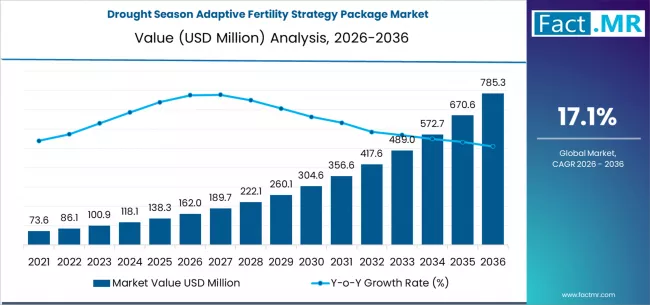
Drought season adaptive fertility strategy package market is projected to grow from USD 162.0 million in 2026 to USD 785.3 million by 2036, at a CAGR of 17.1%. Standard will dominate with a 49.6% market share, while liquid will lead the form segment with a 41.4% share.
Drought Season Adaptive Fertility Strategy Package Market Forecast and Outlook 2026 to 2036
The global market for drought season adaptive fertility strategy packages is projected for substantial expansion, rising from USD 161.97 million in 2026 to USD 785.26 million by 2036, advancing at a robust CAGR of 17.1%. This market addresses the critical agricultural challenge of maintaining crop nutrition and productivity under increasingly frequent and severe water-limited conditions.
Key Takeaways from the Drought Season Adaptive Fertility Strategy Package Market
- Market Value for 2026: USD 161.97 Million
- Market Value for 2036: USD 785.26 Million
- Forecast CAGR (2026-2036): 17.1%
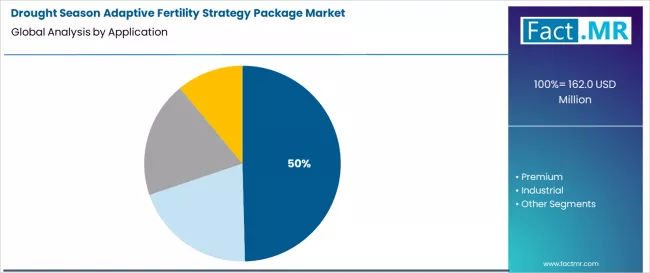
- Leading Application Segment (2026): Standard (50%)
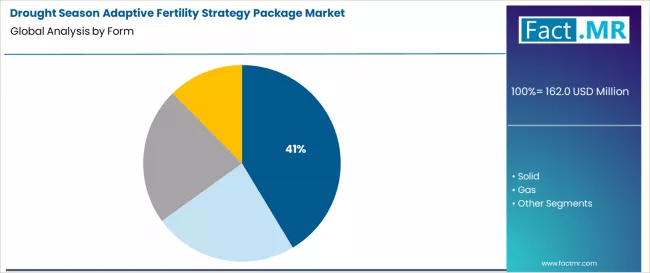
- Leading Form Segment (2026): Liquid (41%)
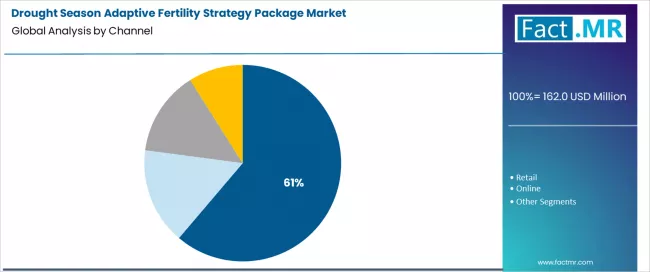
- Leading Channel Segment (2026): Direct (61%)
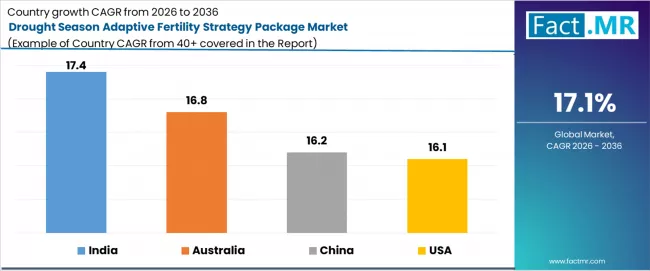
- Key Growth Countries: India (17.4% CAGR), Australia (16.8% CAGR), USA (16.1% CAGR), China (16.2% CAGR)
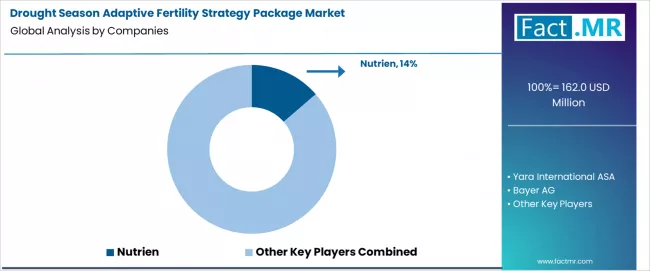
- Key Players in the Market: Nutrien, Yara International ASA, Bayer AG, Corteva Inc., Syngenta AG, BASF SE

These packages move beyond standard fertilizer products to offer integrated, science-backed programs that combine specialized nutrient formulations, soil amendments, and management protocols designed to optimize plant uptake and health during periods of water stress.
Growth is driven by the accelerating impact of climate change on precipitation patterns, leading to more frequent and intense drought cycles across major cropping regions. This environmental pressure coincides with the urgent need to safeguard global food production and farmer livelihoods.
Adaptive fertility packages provide a proactive strategy, helping crops better withstand drought by enhancing root development, improving soil water retention, and maintaining essential physiological functions even when irrigation is limited or unavailable. The economic imperative to protect significant fertilizer investments from being lost or ineffective under drought conditions adds a powerful financial driver for adoption.
The market’s evolution centers on developing synergistic combinations of technologies that address both the physical and biological constraints of dry soils. Success depends on demonstrating clear yield preservation and improved water use efficiency, translating scientific principles into practical, field-ready solutions that farmers can implement to build resilience into their production systems against an unpredictable climate.
Metric
| Metric | Value |
|---|---|
| Market Value (2026) | USD 161.97 Million |
| Market Forecast Value (2036) | USD 785.26 Million |
| Forecast CAGR (2026-2036) | 17.1% |
Category
| Category | Segments |
|---|---|
| Application | Standard, Premium, Industrial, Other |
| Form | Liquid, Solid, Gas, Gel |
| Channel | Direct, Retail, Online, Distributor |
| Region | North America, Latin America, Western Europe, Eastern Europe, East Asia, South Asia & Pacific, MEA |
Segmental Analysis
By Application, Which Package Serves as the Foundational Approach?

The standard application segment commands a 50% market share. These packages provide core, widely applicable strategies such as the use of potassium-enriched formulations to regulate plant water balance, combined with basic soil organic amendments to improve moisture retention.
Their leadership stems from broad relevance across diverse geographies and crop types, offering a reliable and economically accessible starting point for most farmers seeking to introduce drought resilience into their fertility programs without excessive complexity or cost.
By Form, Which Offers the Greatest Flexibility for Stressed Crops?

Liquid form holds a leading 41% share. Liquids are favored for their ability to be applied through irrigation systems during limited watering windows, ensuring efficient delivery directly to the root zone.
They also allow for easy combination of nutrients with drought-mitigating components like seaweed extracts, humic acids, and stress-reducing biostimulants in a single tank mix, providing a multifaceted response to water scarcity in a readily absorbable format for plants.
By Channel, How are Drought Season Adaptive Fertility Strategies Best Delivered?

Direct sales form the dominant channel, comprising 61% of the market. Developing and implementing an effective adaptive fertility strategy requires deep agronomic consultation and customization to local soil, crop, and climate patterns.
A direct relationship between package providers and large farming enterprises or cooperatives facilitates this necessary technical dialogue, ensures correct product use, and allows for the integration of these strategies into broader farm-wide water and risk management plans.
What are the Drivers, Restraints, and Key Trends of the Drought Season Adaptive Fertility Strategy Package Market?
The principal market driver is the empirically observed increase in the frequency, intensity, and duration of drought events across global agricultural heartlands, directly threatening yield stability. Regulatory and social pressures to reduce agricultural water extraction are also pushing farmers toward practices that enhance crop productivity per unit of water used. The rising cost of irrigation and the high value of fertilizer inputs create a strong economic incentive to adopt strategies that protect these investments during dry spells.
A key restraint is the higher upfront cost of specialized package components compared to conventional fertilizers, which can deter adoption without guaranteed short-term return. The success of these strategies can also be highly dependent on accurate seasonal weather forecasting to guide timing and investment. Demonstrating consistent and measurable yield benefits under moderate, rather than only severe, drought conditions is necessary to prove value and drive widespread adoption.
Key trends include the integration of soil moisture sensors and predictive analytics to trigger the deployment of specific package components at precise soil dryness thresholds. There is significant innovation in next-generation biostimulants and osmo-protectants that prime plant defenses against moisture stress. The market is also seeing a trend toward blended financial products, where insurance providers offer reduced premiums to farmers employing verified adaptive fertility strategies, recognizing their risk-mitigating value.
Analysis of the Drought Season Adaptive Fertility Strategy Package Market by Key Countries

| Country | CAGR (2026-2036) |
|---|---|
| India | 17.4% |
| Australia | 16.8% |
| China | 16.2% |
| USA | 16.1% |
How is India's Rainfed Agriculture and Groundwater Crisis Driving Demand?
India’s leading CAGR of 17.4% is propelled by the vulnerability of its vast rainfed agricultural sector and the severe over-exploitation of groundwater resources. Millions of farmers with limited or no irrigation access are acutely affected by monsoon variability.
Government programs promoting climate-resilient farming and soil health cards are creating awareness and driving demand for affordable, adaptive fertility strategies that can help stabilize yields in drought-prone regions, making this a massive and necessity-driven market.
What Role does Australia's Inherent Climate Variability Play?
Australia’s 16.8% growth is deeply rooted in its experience with one of the world’s most variable climates and recurring multi-year droughts. Australian farmers are pioneers in adopting no-till and moisture-conservation practices.
Adaptive fertility packages are a natural and advanced extension of this mindset, focusing on precise nutrient placement and products that enhance soil structure and water-holding capacity. This mature approach to dryland farming creates a sophisticated and receptive market for advanced drought-resilience technologies.
Why is China's Water Scarcity and Food Security Focus Influential?
China’s 16.2% CAGR is linked to significant water scarcity in its northern agricultural regions, which produce a large portion of the nation's grain. National policies emphasizing green development and ecological conservation mandate improvements in agricultural water use efficiency.
State-backed promotion of water-saving technologies and stress-tolerant crop varieties includes support for compatible fertility management strategies, driving adoption within large-scale farming operations and government-supported projects.
How is the USA's Diverse Agriculture and Risk Management Shaping Adoption?

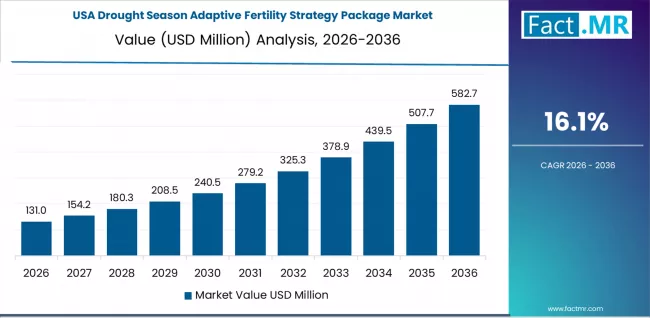
The USA’s 16.1% growth is evident across its diverse agricultural landscape, from the drought-prone West and Great Plains to the increasingly variable Midwest. The high capitalization of US farms makes yield protection a top priority.
Adaptive fertility packages are increasingly viewed as a core risk management tool, integrated with crop insurance and precision irrigation systems. The presence of strong agricultural extension services and input suppliers facilitates the rapid diffusion of these strategies.
Competitive Landscape of the Drought Season Adaptive Fertility Strategy Package Market

The competitive landscape features global agriscience leaders, specialty nutrition companies, and biotechnology firms focused on plant stress. Competition is based on proprietary formulations for nutrient use efficiency under stress, robust field trial data demonstrating yield preservation, and the ability to offer comprehensive, tailored advisory services.
Success depends on forming strong collaborations with agricultural research institutions to validate technologies and with distributors who have trusted relationships in drought-affected regions. The capability to provide digital tools for monitoring soil moisture and plant stress adds a significant competitive edge.
Key Players in the Drought Season Adaptive Fertility Strategy Package Market
- Nutrien
- Yara International ASA
- Bayer AG
- Corteva Inc.
- Syngenta AG
- BASF SE
Scope of Report
| Items | Values |
|---|---|
| Quantitative Units | USD Million |
| Application | Standard, Premium, Industrial, Other |
| Form | Liquid, Solid, Gas, Gel |
| Channel | Direct, Retail, Online, Distributor |
| Key Countries | USA, India, Australia, China |
| Key Companies | Nutrien, Yara International ASA, Bayer AG, Corteva Inc., Syngenta AG, BASF SE |
| Additional Analysis | Agronomic efficacy trials measuring yield stability under induced drought; analysis of soil hydraulic properties improvement from package components; economic modeling of return on investment during dry vs. normal years; review of drought prediction tools and their integration with fertility planning; water use efficiency (WUE) impact assessment. |
Market by Segments
-
Application :
- Standard
- Premium
- Industrial
- Other
-
Form :
- Liquid
- Solid
- Gas
- Gel
-
Channel :
- Direct
- Retail
- Online
- Distributor
-
Region :
-
North America
- USA
- Canada
-
Latin America
- Brazil
- Mexico
- Argentina
- Rest of Latin America
-
Western Europe
- Germany
- UK
- France
- Spain
- Italy
- BENELUX
- Rest of Western Europe
-
Eastern Europe
- Russia
- Poland
- Czech Republic
- Rest of Eastern Europe
-
East Asia
- China
- Japan
- South Korea
- Rest of East Asia
-
South Asia & Pacific
- India
- ASEAN
- Australia
- Rest of South Asia & Pacific
-
MEA
- Saudi Arabia
- UAE
- Turkiye
- Rest of MEA
-
Table of Content
- Executive Summary
- Global Market Outlook
- Demand to side Trends
- Supply to side Trends
- Technology Roadmap Analysis
- Analysis and Recommendations
- Market Overview
- Market Coverage / Taxonomy
- Market Definition / Scope / Limitations
- Market Background
- Market Dynamics
- Drivers
- Restraints
- Opportunity
- Trends
- Scenario Forecast
- Demand in Optimistic Scenario
- Demand in Likely Scenario
- Demand in Conservative Scenario
- Opportunity Map Analysis
- Product Life Cycle Analysis
- Supply Chain Analysis
- Investment Feasibility Matrix
- Value Chain Analysis
- PESTLE and Porter’s Analysis
- Regulatory Landscape
- Regional Parent Market Outlook
- Production and Consumption Statistics
- Import and Export Statistics
- Market Dynamics
- Global Market Analysis 2021 to 2025 and Forecast, 2026 to 2036
- Historical Market Size Value (USD Million) Analysis, 2021 to 2025
- Current and Future Market Size Value (USD Million) Projections, 2026 to 2036
- Y to o to Y Growth Trend Analysis
- Absolute $ Opportunity Analysis
- Global Market Pricing Analysis 2021 to 2025 and Forecast 2026 to 2036
- Global Market Analysis 2021 to 2025 and Forecast 2026 to 2036, By Application
- Introduction / Key Findings
- Historical Market Size Value (USD Million) Analysis By Application, 2021 to 2025
- Current and Future Market Size Value (USD Million) Analysis and Forecast By Application, 2026 to 2036
- Standard
- Premium
- Industrial
- Other
- Standard
- Y to o to Y Growth Trend Analysis By Application, 2021 to 2025
- Absolute $ Opportunity Analysis By Application, 2026 to 2036
- Global Market Analysis 2021 to 2025 and Forecast 2026 to 2036, By Form
- Introduction / Key Findings
- Historical Market Size Value (USD Million) Analysis By Form, 2021 to 2025
- Current and Future Market Size Value (USD Million) Analysis and Forecast By Form, 2026 to 2036
- Liquid
- Solid
- Gas
- Gel
- Liquid
- Y to o to Y Growth Trend Analysis By Form, 2021 to 2025
- Absolute $ Opportunity Analysis By Form, 2026 to 2036
- Global Market Analysis 2021 to 2025 and Forecast 2026 to 2036, By Channel
- Introduction / Key Findings
- Historical Market Size Value (USD Million) Analysis By Channel, 2021 to 2025
- Current and Future Market Size Value (USD Million) Analysis and Forecast By Channel, 2026 to 2036
- Direct
- Retail
- Online
- Distributor
- Direct
- Y to o to Y Growth Trend Analysis By Channel, 2021 to 2025
- Absolute $ Opportunity Analysis By Channel, 2026 to 2036
- Global Market Analysis 2021 to 2025 and Forecast 2026 to 2036, By Region
- Introduction
- Historical Market Size Value (USD Million) Analysis By Region, 2021 to 2025
- Current Market Size Value (USD Million) Analysis and Forecast By Region, 2026 to 2036
- North America
- Latin America
- Western Europe
- Eastern Europe
- East Asia
- South Asia and Pacific
- Middle East & Africa
- Market Attractiveness Analysis By Region
- North America Market Analysis 2021 to 2025 and Forecast 2026 to 2036, By Country
- Historical Market Size Value (USD Million) Trend Analysis By Market Taxonomy, 2021 to 2025
- Market Size Value (USD Million) Forecast By Market Taxonomy, 2026 to 2036
- By Country
- USA
- Canada
- Mexico
- By Application
- By Form
- By Channel
- By Country
- Market Attractiveness Analysis
- By Country
- By Application
- By Form
- By Channel
- Key Takeaways
- Latin America Market Analysis 2021 to 2025 and Forecast 2026 to 2036, By Country
- Historical Market Size Value (USD Million) Trend Analysis By Market Taxonomy, 2021 to 2025
- Market Size Value (USD Million) Forecast By Market Taxonomy, 2026 to 2036
- By Country
- Brazil
- Chile
- Rest of Latin America
- By Application
- By Form
- By Channel
- By Country
- Market Attractiveness Analysis
- By Country
- By Application
- By Form
- By Channel
- Key Takeaways
- Western Europe Market Analysis 2021 to 2025 and Forecast 2026 to 2036, By Country
- Historical Market Size Value (USD Million) Trend Analysis By Market Taxonomy, 2021 to 2025
- Market Size Value (USD Million) Forecast By Market Taxonomy, 2026 to 2036
- By Country
- Germany
- UK
- Italy
- Spain
- France
- Nordic
- BENELUX
- Rest of Western Europe
- By Application
- By Form
- By Channel
- By Country
- Market Attractiveness Analysis
- By Country
- By Application
- By Form
- By Channel
- Key Takeaways
- Eastern Europe Market Analysis 2021 to 2025 and Forecast 2026 to 2036, By Country
- Historical Market Size Value (USD Million) Trend Analysis By Market Taxonomy, 2021 to 2025
- Market Size Value (USD Million) Forecast By Market Taxonomy, 2026 to 2036
- By Country
- Russia
- Poland
- Hungary
- Balkan & Baltic
- Rest of Eastern Europe
- By Application
- By Form
- By Channel
- By Country
- Market Attractiveness Analysis
- By Country
- By Application
- By Form
- By Channel
- Key Takeaways
- East Asia Market Analysis 2021 to 2025 and Forecast 2026 to 2036, By Country
- Historical Market Size Value (USD Million) Trend Analysis By Market Taxonomy, 2021 to 2025
- Market Size Value (USD Million) Forecast By Market Taxonomy, 2026 to 2036
- By Country
- China
- Japan
- South Korea
- By Application
- By Form
- By Channel
- By Country
- Market Attractiveness Analysis
- By Country
- By Application
- By Form
- By Channel
- Key Takeaways
- South Asia and Pacific Market Analysis 2021 to 2025 and Forecast 2026 to 2036, By Country
- Historical Market Size Value (USD Million) Trend Analysis By Market Taxonomy, 2021 to 2025
- Market Size Value (USD Million) Forecast By Market Taxonomy, 2026 to 2036
- By Country
- India
- ASEAN
- Australia & New Zealand
- Rest of South Asia and Pacific
- By Application
- By Form
- By Channel
- By Country
- Market Attractiveness Analysis
- By Country
- By Application
- By Form
- By Channel
- Key Takeaways
- Middle East & Africa Market Analysis 2021 to 2025 and Forecast 2026 to 2036, By Country
- Historical Market Size Value (USD Million) Trend Analysis By Market Taxonomy, 2021 to 2025
- Market Size Value (USD Million) Forecast By Market Taxonomy, 2026 to 2036
- By Country
- Kingdom of Saudi Arabia
- Other GCC Countries
- Turkiye
- South Africa
- Other African Union
- Rest of Middle East & Africa
- By Application
- By Form
- By Channel
- By Country
- Market Attractiveness Analysis
- By Country
- By Application
- By Form
- By Channel
- Key Takeaways
- Key Countries Market Analysis
- USA
- Pricing Analysis
- Market Share Analysis, 2025
- By Application
- By Form
- By Channel
- Canada
- Pricing Analysis
- Market Share Analysis, 2025
- By Application
- By Form
- By Channel
- Mexico
- Pricing Analysis
- Market Share Analysis, 2025
- By Application
- By Form
- By Channel
- Brazil
- Pricing Analysis
- Market Share Analysis, 2025
- By Application
- By Form
- By Channel
- Chile
- Pricing Analysis
- Market Share Analysis, 2025
- By Application
- By Form
- By Channel
- Germany
- Pricing Analysis
- Market Share Analysis, 2025
- By Application
- By Form
- By Channel
- UK
- Pricing Analysis
- Market Share Analysis, 2025
- By Application
- By Form
- By Channel
- Italy
- Pricing Analysis
- Market Share Analysis, 2025
- By Application
- By Form
- By Channel
- Spain
- Pricing Analysis
- Market Share Analysis, 2025
- By Application
- By Form
- By Channel
- France
- Pricing Analysis
- Market Share Analysis, 2025
- By Application
- By Form
- By Channel
- India
- Pricing Analysis
- Market Share Analysis, 2025
- By Application
- By Form
- By Channel
- ASEAN
- Pricing Analysis
- Market Share Analysis, 2025
- By Application
- By Form
- By Channel
- Australia & New Zealand
- Pricing Analysis
- Market Share Analysis, 2025
- By Application
- By Form
- By Channel
- China
- Pricing Analysis
- Market Share Analysis, 2025
- By Application
- By Form
- By Channel
- Japan
- Pricing Analysis
- Market Share Analysis, 2025
- By Application
- By Form
- By Channel
- South Korea
- Pricing Analysis
- Market Share Analysis, 2025
- By Application
- By Form
- By Channel
- Russia
- Pricing Analysis
- Market Share Analysis, 2025
- By Application
- By Form
- By Channel
- Poland
- Pricing Analysis
- Market Share Analysis, 2025
- By Application
- By Form
- By Channel
- Hungary
- Pricing Analysis
- Market Share Analysis, 2025
- By Application
- By Form
- By Channel
- Kingdom of Saudi Arabia
- Pricing Analysis
- Market Share Analysis, 2025
- By Application
- By Form
- By Channel
- Turkiye
- Pricing Analysis
- Market Share Analysis, 2025
- By Application
- By Form
- By Channel
- South Africa
- Pricing Analysis
- Market Share Analysis, 2025
- By Application
- By Form
- By Channel
- USA
- Market Structure Analysis
- Competition Dashboard
- Competition Benchmarking
- Market Share Analysis of Top Players
- By Regional
- By Application
- By Form
- By Channel
- Competition Analysis
- Competition Deep Dive
- Nutrien
- Overview
- Product Portfolio
- Profitability by Market Segments (Product/Age /Sales Channel/Region)
- Sales Footprint
- Strategy Overview
- Marketing Strategy
- Product Strategy
- Channel Strategy
- Yara International ASA
- Bayer AG
- Corteva Inc.
- Syngenta AG
- BASF SE
- Nutrien
- Competition Deep Dive
- Assumptions & Acronyms Used
- Research Methodology
List Of Table
- Table 1: Global Market Value (USD Million) Forecast by Region, 2021 to 2036
- Table 2: Global Market Value (USD Million) Forecast by Application, 2021 to 2036
- Table 3: Global Market Value (USD Million) Forecast by Form, 2021 to 2036
- Table 4: Global Market Value (USD Million) Forecast by Channel, 2021 to 2036
- Table 5: North America Market Value (USD Million) Forecast by Country, 2021 to 2036
- Table 6: North America Market Value (USD Million) Forecast by Application, 2021 to 2036
- Table 7: North America Market Value (USD Million) Forecast by Form, 2021 to 2036
- Table 8: North America Market Value (USD Million) Forecast by Channel, 2021 to 2036
- Table 9: Latin America Market Value (USD Million) Forecast by Country, 2021 to 2036
- Table 10: Latin America Market Value (USD Million) Forecast by Application, 2021 to 2036
- Table 11: Latin America Market Value (USD Million) Forecast by Form, 2021 to 2036
- Table 12: Latin America Market Value (USD Million) Forecast by Channel, 2021 to 2036
- Table 13: Western Europe Market Value (USD Million) Forecast by Country, 2021 to 2036
- Table 14: Western Europe Market Value (USD Million) Forecast by Application, 2021 to 2036
- Table 15: Western Europe Market Value (USD Million) Forecast by Form, 2021 to 2036
- Table 16: Western Europe Market Value (USD Million) Forecast by Channel, 2021 to 2036
- Table 17: Eastern Europe Market Value (USD Million) Forecast by Country, 2021 to 2036
- Table 18: Eastern Europe Market Value (USD Million) Forecast by Application, 2021 to 2036
- Table 19: Eastern Europe Market Value (USD Million) Forecast by Form, 2021 to 2036
- Table 20: Eastern Europe Market Value (USD Million) Forecast by Channel, 2021 to 2036
- Table 21: East Asia Market Value (USD Million) Forecast by Country, 2021 to 2036
- Table 22: East Asia Market Value (USD Million) Forecast by Application, 2021 to 2036
- Table 23: East Asia Market Value (USD Million) Forecast by Form, 2021 to 2036
- Table 24: East Asia Market Value (USD Million) Forecast by Channel, 2021 to 2036
- Table 25: South Asia and Pacific Market Value (USD Million) Forecast by Country, 2021 to 2036
- Table 26: South Asia and Pacific Market Value (USD Million) Forecast by Application, 2021 to 2036
- Table 27: South Asia and Pacific Market Value (USD Million) Forecast by Form, 2021 to 2036
- Table 28: South Asia and Pacific Market Value (USD Million) Forecast by Channel, 2021 to 2036
- Table 29: Middle East & Africa Market Value (USD Million) Forecast by Country, 2021 to 2036
- Table 30: Middle East & Africa Market Value (USD Million) Forecast by Application, 2021 to 2036
- Table 31: Middle East & Africa Market Value (USD Million) Forecast by Form, 2021 to 2036
- Table 32: Middle East & Africa Market Value (USD Million) Forecast by Channel, 2021 to 2036
List Of Figures
- Figure 1: Global Market Pricing Analysis
- Figure 2: Global Market Value (USD Million) Forecast 2021 to 2036
- Figure 3: Global Market Value Share and BPS Analysis by Application, 2026 and 2036
- Figure 4: Global Market Y to o to Y Growth Comparison by Application, 2026 to 2036
- Figure 5: Global Market Attractiveness Analysis by Application
- Figure 6: Global Market Value Share and BPS Analysis by Form, 2026 and 2036
- Figure 7: Global Market Y to o to Y Growth Comparison by Form, 2026 to 2036
- Figure 8: Global Market Attractiveness Analysis by Form
- Figure 9: Global Market Value Share and BPS Analysis by Channel, 2026 and 2036
- Figure 10: Global Market Y to o to Y Growth Comparison by Channel, 2026 to 2036
- Figure 11: Global Market Attractiveness Analysis by Channel
- Figure 12: Global Market Value (USD Million) Share and BPS Analysis by Region, 2026 and 2036
- Figure 13: Global Market Y to o to Y Growth Comparison by Region, 2026 to 2036
- Figure 14: Global Market Attractiveness Analysis by Region
- Figure 15: North America Market Incremental Dollar Opportunity, 2026 to 2036
- Figure 16: Latin America Market Incremental Dollar Opportunity, 2026 to 2036
- Figure 17: Western Europe Market Incremental Dollar Opportunity, 2026 to 2036
- Figure 18: Eastern Europe Market Incremental Dollar Opportunity, 2026 to 2036
- Figure 19: East Asia Market Incremental Dollar Opportunity, 2026 to 2036
- Figure 20: South Asia and Pacific Market Incremental Dollar Opportunity, 2026 to 2036
- Figure 21: Middle East & Africa Market Incremental Dollar Opportunity, 2026 to 2036
- Figure 22: North America Market Value Share and BPS Analysis by Country, 2026 and 2036
- Figure 23: North America Market Value Share and BPS Analysis by Application, 2026 and 2036
- Figure 24: North America Market Y to o to Y Growth Comparison by Application, 2026 to 2036
- Figure 25: North America Market Attractiveness Analysis by Application
- Figure 26: North America Market Value Share and BPS Analysis by Form, 2026 and 2036
- Figure 27: North America Market Y to o to Y Growth Comparison by Form, 2026 to 2036
- Figure 28: North America Market Attractiveness Analysis by Form
- Figure 29: North America Market Value Share and BPS Analysis by Channel, 2026 and 2036
- Figure 30: North America Market Y to o to Y Growth Comparison by Channel, 2026 to 2036
- Figure 31: North America Market Attractiveness Analysis by Channel
- Figure 32: Latin America Market Value Share and BPS Analysis by Country, 2026 and 2036
- Figure 33: Latin America Market Value Share and BPS Analysis by Application, 2026 and 2036
- Figure 34: Latin America Market Y to o to Y Growth Comparison by Application, 2026 to 2036
- Figure 35: Latin America Market Attractiveness Analysis by Application
- Figure 36: Latin America Market Value Share and BPS Analysis by Form, 2026 and 2036
- Figure 37: Latin America Market Y to o to Y Growth Comparison by Form, 2026 to 2036
- Figure 38: Latin America Market Attractiveness Analysis by Form
- Figure 39: Latin America Market Value Share and BPS Analysis by Channel, 2026 and 2036
- Figure 40: Latin America Market Y to o to Y Growth Comparison by Channel, 2026 to 2036
- Figure 41: Latin America Market Attractiveness Analysis by Channel
- Figure 42: Western Europe Market Value Share and BPS Analysis by Country, 2026 and 2036
- Figure 43: Western Europe Market Value Share and BPS Analysis by Application, 2026 and 2036
- Figure 44: Western Europe Market Y to o to Y Growth Comparison by Application, 2026 to 2036
- Figure 45: Western Europe Market Attractiveness Analysis by Application
- Figure 46: Western Europe Market Value Share and BPS Analysis by Form, 2026 and 2036
- Figure 47: Western Europe Market Y to o to Y Growth Comparison by Form, 2026 to 2036
- Figure 48: Western Europe Market Attractiveness Analysis by Form
- Figure 49: Western Europe Market Value Share and BPS Analysis by Channel, 2026 and 2036
- Figure 50: Western Europe Market Y to o to Y Growth Comparison by Channel, 2026 to 2036
- Figure 51: Western Europe Market Attractiveness Analysis by Channel
- Figure 52: Eastern Europe Market Value Share and BPS Analysis by Country, 2026 and 2036
- Figure 53: Eastern Europe Market Value Share and BPS Analysis by Application, 2026 and 2036
- Figure 54: Eastern Europe Market Y to o to Y Growth Comparison by Application, 2026 to 2036
- Figure 55: Eastern Europe Market Attractiveness Analysis by Application
- Figure 56: Eastern Europe Market Value Share and BPS Analysis by Form, 2026 and 2036
- Figure 57: Eastern Europe Market Y to o to Y Growth Comparison by Form, 2026 to 2036
- Figure 58: Eastern Europe Market Attractiveness Analysis by Form
- Figure 59: Eastern Europe Market Value Share and BPS Analysis by Channel, 2026 and 2036
- Figure 60: Eastern Europe Market Y to o to Y Growth Comparison by Channel, 2026 to 2036
- Figure 61: Eastern Europe Market Attractiveness Analysis by Channel
- Figure 62: East Asia Market Value Share and BPS Analysis by Country, 2026 and 2036
- Figure 63: East Asia Market Value Share and BPS Analysis by Application, 2026 and 2036
- Figure 64: East Asia Market Y to o to Y Growth Comparison by Application, 2026 to 2036
- Figure 65: East Asia Market Attractiveness Analysis by Application
- Figure 66: East Asia Market Value Share and BPS Analysis by Form, 2026 and 2036
- Figure 67: East Asia Market Y to o to Y Growth Comparison by Form, 2026 to 2036
- Figure 68: East Asia Market Attractiveness Analysis by Form
- Figure 69: East Asia Market Value Share and BPS Analysis by Channel, 2026 and 2036
- Figure 70: East Asia Market Y to o to Y Growth Comparison by Channel, 2026 to 2036
- Figure 71: East Asia Market Attractiveness Analysis by Channel
- Figure 72: South Asia and Pacific Market Value Share and BPS Analysis by Country, 2026 and 2036
- Figure 73: South Asia and Pacific Market Value Share and BPS Analysis by Application, 2026 and 2036
- Figure 74: South Asia and Pacific Market Y to o to Y Growth Comparison by Application, 2026 to 2036
- Figure 75: South Asia and Pacific Market Attractiveness Analysis by Application
- Figure 76: South Asia and Pacific Market Value Share and BPS Analysis by Form, 2026 and 2036
- Figure 77: South Asia and Pacific Market Y to o to Y Growth Comparison by Form, 2026 to 2036
- Figure 78: South Asia and Pacific Market Attractiveness Analysis by Form
- Figure 79: South Asia and Pacific Market Value Share and BPS Analysis by Channel, 2026 and 2036
- Figure 80: South Asia and Pacific Market Y to o to Y Growth Comparison by Channel, 2026 to 2036
- Figure 81: South Asia and Pacific Market Attractiveness Analysis by Channel
- Figure 82: Middle East & Africa Market Value Share and BPS Analysis by Country, 2026 and 2036
- Figure 83: Middle East & Africa Market Value Share and BPS Analysis by Application, 2026 and 2036
- Figure 84: Middle East & Africa Market Y to o to Y Growth Comparison by Application, 2026 to 2036
- Figure 85: Middle East & Africa Market Attractiveness Analysis by Application
- Figure 86: Middle East & Africa Market Value Share and BPS Analysis by Form, 2026 and 2036
- Figure 87: Middle East & Africa Market Y to o to Y Growth Comparison by Form, 2026 to 2036
- Figure 88: Middle East & Africa Market Attractiveness Analysis by Form
- Figure 89: Middle East & Africa Market Value Share and BPS Analysis by Channel, 2026 and 2036
- Figure 90: Middle East & Africa Market Y to o to Y Growth Comparison by Channel, 2026 to 2036
- Figure 91: Middle East & Africa Market Attractiveness Analysis by Channel
- Figure 92: Global Market - Tier Structure Analysis
- Figure 93: Global Market - Company Share Analysis
- FAQs -
How big is the drought season adaptive fertility strategy package market in 2026?
The global drought season adaptive fertility strategy package market is estimated to be valued at USD 162.0 million in 2026.
What will be the size of drought season adaptive fertility strategy package market in 2036?
The market size for the drought season adaptive fertility strategy package market is projected to reach USD 785.3 million by 2036.
How much will be the drought season adaptive fertility strategy package market growth between 2026 and 2036?
The drought season adaptive fertility strategy package market is expected to grow at a 17.1% CAGR between 2026 and 2036.
What are the key product types in the drought season adaptive fertility strategy package market?
The key product types in drought season adaptive fertility strategy package market are standard, premium, industrial and other.
Which form segment to contribute significant share in the drought season adaptive fertility strategy package market in 2026?
In terms of form, liquid segment to command 41.4% share in the drought season adaptive fertility strategy package market in 2026.