Protein Content Optimizing Cereal Fertility Program Market

Protein Content Optimizing Cereal Fertility Program Market Size and Share Forecast Outlook 2026 to 2036

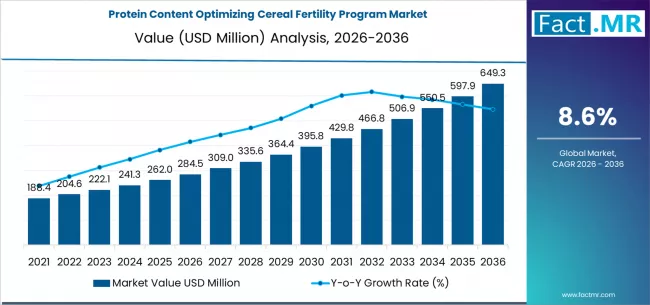
Protein content optimizing cereal fertility program market is projected to grow from USD 284.5 million in 2026 to USD 649.3 million by 2036, at a CAGR of 8.6%. Dairy/Alt-Dairy will dominate with a 41.5% market share, while pea will lead the source segment with a 39.6% share.

Protein Content Optimizing Cereal Fertility Program Market Forecast and Outlook 2026 to 2036

The global protein content optimizing cereal fertility program market is projected to grow from USD 284.53 million in 2026 to USD 649.27 million by 2036, advancing at a CAGR of 8.6%. This market represents a strategic pivot in crop nutrition, moving beyond yield maximization to the precise management of grain quality attributes, specifically the protein concentration and composition in cereals like wheat, corn, barley, and oats.

Key Takeaways from the Protein Content Optimizing Cereal Fertility Program Market

  • Market Value for 2026: USD 284.53 Million
  • Market Value for 2036: USD 649.27 Million
  • Forecast CAGR (2026-2036): 8.6%
  • Leading Application Segment (2026): Dairy/Alt-Dairy (41%)
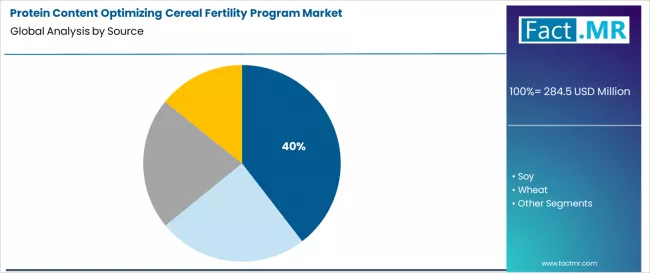
  • Leading Source Segment (2026): Pea (40%)
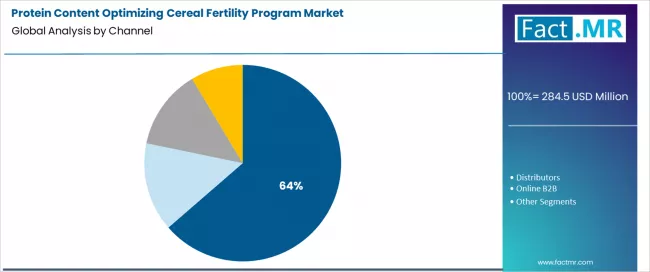
  • Leading Channel Segment (2026): Direct-to-B2B (64%)
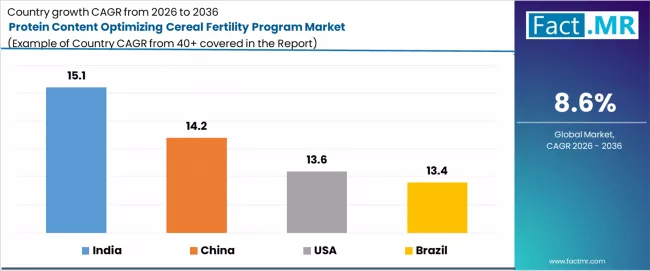
  • Key Growth Countries: India (15.1% CAGR), China (14.2% CAGR), USA (13.6% CAGR), Brazil (13.4% CAGR)
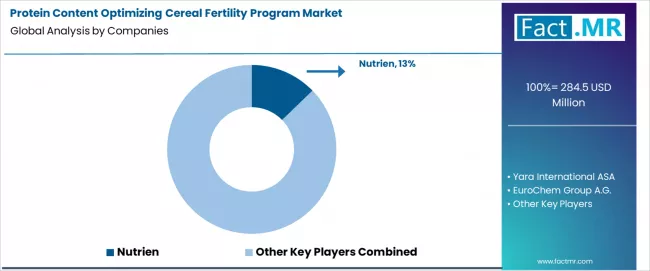
  • Key Players in the Market: Nutrien, Yara International ASA, EuroChem Group A.G., BASF SE, Corteva Inc., Syngenta AG

Protein Content Optimizing Cereal Fertility Program Market Market Value Analysis

These targeted programs are engineered to meet the exacting specifications of end-users in the food and feed industries, where protein content is a primary determinant of value, functionality, and nutritional labeling.

Growth is driven by the powerful convergence of dietary trends emphasizing plant-based protein and the rigorous quality standards of global grain supply chains. Millers, bakers, animal nutritionists, and manufacturers of alternative proteins require grains with consistent, guaranteed protein levels.

Standard nitrogen management often prioritizes yield, which can dilute protein. These specialized programs synchronize nitrogen timing, form, and placement with sulfur and micronutrient supply to optimize the plant’s physiological processes for protein synthesis, ensuring a reliable supply of high-protein grain that commands premium prices.

The market’s evolution reflects the commoditization of grain quality. Success depends on deep agronomic research linking specific fertility practices to predictable protein outcomes, and on the ability to deliver these programs as a verifiable service to growers, creating a direct financial link between precision nutrition and the superior economic value of the harvested crop.

Metric

Metric Value
Market Value (2026) USD 284.53 Million
Market Forecast Value (2036) USD 649.27 Million
Forecast CAGR (2026-2036) 8.6%

Category

Category Segments
Application Dairy/Alt-Dairy, Beverages, Bakery/Snacks, Meat/Alt-Meat
Source Pea, Soy, Wheat, Fava/Chickpea
Channel Direct-to-B2B, Distributors, Online B2B, Contract Manufacturing
Region North America, Latin America, Western Europe, Eastern Europe, East Asia, South Asia & Pacific, MEA

Segmental Analysis

By Application, Which Industry Drives Specific Protein Demands?

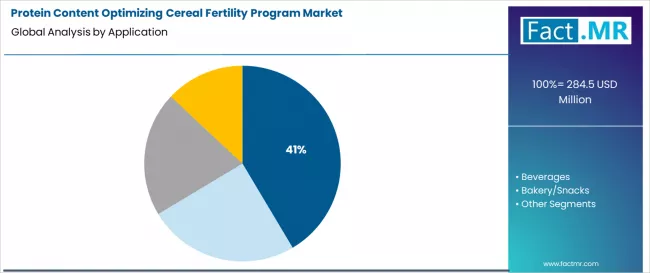
Protein Content Optimizing Cereal Fertility Program Market Analysis By Application

The dairy/alt-dairy segment leads with a 41% share. This includes the use of high-protein wheat and oats as functional ingredients in dairy alternatives and nutritional beverages. Protein content is critical for achieving desired texture, nutritional equivalence, and clean-label positioning.

Fertility programs are tailored to produce cereals with not just higher total protein, but specific protein profiles that enhance functionality in these processed food applications, creating a direct agricultural link to consumer product formulation.

By Source, Which Grain is a Primary Focus for Optimization?

Protein Content Optimizing Cereal Fertility Program Market Analysis By Source

Pea, as a source crop, holds a 40% share. Field peas are a premier plant-based protein source, and their cultivation is expanding rapidly. Protein concentration in peas is highly responsive to nutrient management, particularly sulfur, which is essential for the synthesis of sulfur-containing amino acids.

Programs for peas focus on precise sulfur and nitrogen co-application to maximize both protein percentage and quality, making this a key segment for specialized fertility innovation.

By Channel, How are Programs Integrated into Value Chains?

Protein Content Optimizing Cereal Fertility Program Market Analysis By Channel

Direct-to-B2B sales dominate at 64%. The implementation of these quality-focused programs requires close collaboration along the supply chain. Input providers and program developers work directly with large grain merchants, food processors, and integrated farming enterprises.

This direct model ensures the fertility protocol is designed to meet the specific protein specifications of the end-buyer, with guaranteed offtake agreements often underpinning the grower’s adoption.

What are the Drivers, Restraints, and Key Trends of the Protein Content Optimizing Cereal Fertility Program Market?

The foremost driver is the structural growth in demand for plant-based proteins, which places a premium on agriculturally sourced ingredients with reliable and superior protein content. Premium pricing contracts from millers and food companies for high-protein grain provide a clear economic incentive for growers. Advancements in precision agriculture and sensor technology allow for the real-time monitoring of crop nitrogen status, enabling more accurate in-season adjustments to hit precise protein targets.

A significant restraint is the natural trade-off between grain yield and protein concentration; pushing for higher protein can sometimes suppress overall tonnage, requiring careful economic balancing. The success of these programs is also more sensitive to environmental conditions like terminal drought or heat stress, which can disrupt protein deposition. The higher cost of the intensified management and specific fertilizers required can be a barrier without a locked-in price premium.

Key trends include the development of digital protein prediction models that use satellite and drone data to forecast grain protein content weeks before harvest, allowing for last-minute nutrient interventions. Blockchain-enabled traceability is being integrated to verify the fertility program and certify the resulting protein quality from field to processor. There is also a trend toward integrated crop-livestock systems where programs are designed to produce both high-protein grain and high-quality straw for fodder, maximizing whole-plant value.

Analysis of the Protein Content Optimizing Cereal Fertility Program Market by Key Countries

Protein Content Optimizing Cereal Fertility Program Market Cagr Analysis By Country

Country CAGR (2026-2036)
India 15.1%
China 14.2%
USA 13.6%
Brazil 13.4%

How is India's Dual Focus on Food Security and Nutritional Enhancement Catalyzing Growth?

India’s leading CAGR of 15.1% is driven by national missions to improve nutritional outcomes and achieve self-sufficiency in pulses. Programs targeting protein enhancement in staple crops like wheat and chickpeas align with both public health goals and farmer income improvement.

Government support for soil health and micronutrient management facilitates the adoption of advanced fertility strategies designed to boost the nutritional density of the national food grain basket.

What is the Impact of China's Shift toward Quality in Grain Self-Sufficiency?

China’s 14.2% growth is linked to its evolving food security strategy, which now emphasizes quality and safety alongside quantity. The domestic demand for higher-quality wheat for specialized noodles and baked goods, and for soybeans with better protein content for animal feed and processing, drives investment in precision nutrition. Large-scale farming operations are incentivized to adopt these programs to meet the stringent standards of state procurement and a more discerning consumer market.

Why is the USA's Commodity System with Premium Channels a Key Market?

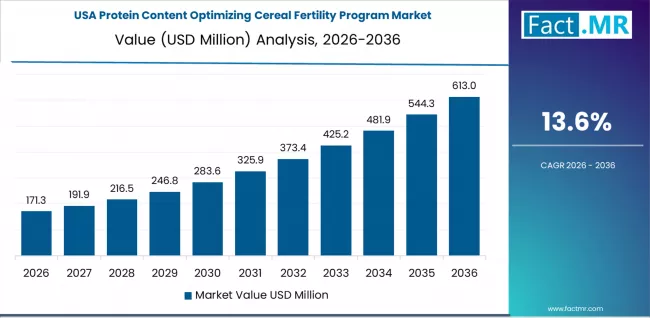
Protein Content Optimizing Cereal Fertility Program Market Country Value Analysis

The USA’s 13.6% growth is structured around its dual commodity and identity-preserved grain systems. While bulk production continues, a growing segment of growers contract directly with millers, maltsters, and food companies to produce grain with specific protein guarantees.

The well-developed infrastructure for precision agriculture and variable-rate technology makes the US a prime environment for implementing and scaling sophisticated protein-optimizing fertility programs across millions of acres.

How is Brazil's Role as an Agricultural Export Powerhouse Influencing Adoption?

Brazil’s 13.4% CAGR is fueled by its competitive position as a major exporter of soybeans and corn. International buyers increasingly demand consistent quality specifications. Brazilian agribusinesses are investing in fertility management as a tool to differentiate their product and secure premium markets, particularly for non-GMO, high-protein soybeans for the human food sector, making advanced nutritional programming a key component of export competitiveness.

Competitive Landscape of the Protein Content Optimizing Cereal Fertility Program Market

Protein Content Optimizing Cereal Fertility Program Market Analysis By Company

The competitive landscape features global fertilizer companies, agriscience firms, and specialized digital agriculture providers. Competition centers on proprietary nitrogen management technologies, the scientific validation of program outcomes through extensive field data, and the ability to form integrated partnerships with grain handlers and food corporations.

Success requires providing a complete solution that includes input products, digital decision-support tools, and a clear pathway to market for the resulting high-protein grain, thereby de-risking the investment for the farmer.

Key Players in the Protein Content Optimizing Cereal Fertility Program Market

  • Nutrien
  • Yara International ASA
  • EuroChem Group A.G.
  • BASF SE
  • Corteva Inc.
  • Syngenta AG

Scope of Report

Items Values
Quantitative Units USD Million
Application Dairy/Alt-Dairy, Beverages, Bakery/Snacks, Meat/Alt-Meat
Source Pea, Soy, Wheat, Fava/Chickpea
Channel Direct-to-B2B, Distributors, Online B2B, Contract Manufacturing
Key Countries USA, China, India, Brazil
Key Companies Nutrien, Yara International ASA, EuroChem Group A.G., BASF SE, Corteva Inc., Syngenta AG
Additional Analysis Agronomic research on nitrogen-sulfur synergy for protein synthesis; economic analysis of premium contracts for high-protein grain; impact of program on amino acid profile and functional properties; review of grain grading systems and protein premiums; integration of soil microbiome management to enhance nitrogen use efficiency for protein.

Market by Segments

  • Application :

    • Dairy/Alt-Dairy
    • Beverages
    • Bakery/Snacks
    • Meat/Alt-Meat
  • Source :

    • Pea
    • Soy
    • Wheat
    • Fava/Chickpea
  • Channel :

    • Direct-to-B2B
    • Distributors
    • Online B2B
    • Contract Manufacturing
  • Region :

    • North America
      • USA
      • Canada
    • Latin America
      • Brazil
      • Mexico
      • Argentina
      • Rest of Latin America
    • Western Europe
      • Germany
      • UK
      • France
      • Spain
      • Italy
      • BENELUX
      • Rest of Western Europe
    • Eastern Europe
      • Russia
      • Poland
      • Czech Republic
      • Rest of Eastern Europe
    • East Asia
      • China
      • Japan
      • South Korea
      • Rest of East Asia
    • South Asia & Pacific
      • India
      • ASEAN
      • Australia
      • Rest of South Asia & Pacific
    • MEA
      • Saudi Arabia
      • UAE
      • Turkiye
      • Rest of MEA

Table of Content

  1. Executive Summary
    • Global Market Outlook
    • Demand to side Trends
    • Supply to side Trends
    • Technology Roadmap Analysis
    • Analysis and Recommendations
  2. Market Overview
    • Market Coverage / Taxonomy
    • Market Definition / Scope / Limitations
  3. Market Background
    • Market Dynamics
      • Drivers
      • Restraints
      • Opportunity
      • Trends
    • Scenario Forecast
      • Demand in Optimistic Scenario
      • Demand in Likely Scenario
      • Demand in Conservative Scenario
    • Opportunity Map Analysis
    • Product Life Cycle Analysis
    • Supply Chain Analysis
    • Investment Feasibility Matrix
    • Value Chain Analysis
    • PESTLE and Porter’s Analysis
    • Regulatory Landscape
    • Regional Parent Market Outlook
    • Production and Consumption Statistics
    • Import and Export Statistics
  4. Global Market Analysis 2021 to 2025 and Forecast, 2026 to 2036
    • Historical Market Size Value (USD Million) Analysis, 2021 to 2025
    • Current and Future Market Size Value (USD Million) Projections, 2026 to 2036
      • Y to o to Y Growth Trend Analysis
      • Absolute $ Opportunity Analysis
  5. Global Market Pricing Analysis 2021 to 2025 and Forecast 2026 to 2036
  6. Global Market Analysis 2021 to 2025 and Forecast 2026 to 2036, By Application
    • Introduction / Key Findings
    • Historical Market Size Value (USD Million) Analysis By Application, 2021 to 2025
    • Current and Future Market Size Value (USD Million) Analysis and Forecast By Application, 2026 to 2036
      • Dairy/Alt-Dairy
      • Beverages
      • Bakery/Snacks
      • Meat/Alt-Meat
    • Y to o to Y Growth Trend Analysis By Application, 2021 to 2025
    • Absolute $ Opportunity Analysis By Application, 2026 to 2036
  7. Global Market Analysis 2021 to 2025 and Forecast 2026 to 2036, By Source
    • Introduction / Key Findings
    • Historical Market Size Value (USD Million) Analysis By Source, 2021 to 2025
    • Current and Future Market Size Value (USD Million) Analysis and Forecast By Source, 2026 to 2036
      • Pea
      • Soy
      • Wheat
      • Fava/Chickpea
    • Y to o to Y Growth Trend Analysis By Source, 2021 to 2025
    • Absolute $ Opportunity Analysis By Source, 2026 to 2036
  8. Global Market Analysis 2021 to 2025 and Forecast 2026 to 2036, By Channel
    • Introduction / Key Findings
    • Historical Market Size Value (USD Million) Analysis By Channel, 2021 to 2025
    • Current and Future Market Size Value (USD Million) Analysis and Forecast By Channel, 2026 to 2036
      • Direct-to-B2B
      • Distributors
      • Online B2B
      • Contract Manufacturing
    • Y to o to Y Growth Trend Analysis By Channel, 2021 to 2025
    • Absolute $ Opportunity Analysis By Channel, 2026 to 2036
  9. Global Market Analysis 2021 to 2025 and Forecast 2026 to 2036, By Region
    • Introduction
    • Historical Market Size Value (USD Million) Analysis By Region, 2021 to 2025
    • Current Market Size Value (USD Million) Analysis and Forecast By Region, 2026 to 2036
      • North America
      • Latin America
      • Western Europe
      • Eastern Europe
      • East Asia
      • South Asia and Pacific
      • Middle East & Africa
    • Market Attractiveness Analysis By Region
  10. North America Market Analysis 2021 to 2025 and Forecast 2026 to 2036, By Country
    • Historical Market Size Value (USD Million) Trend Analysis By Market Taxonomy, 2021 to 2025
    • Market Size Value (USD Million) Forecast By Market Taxonomy, 2026 to 2036
      • By Country
        • USA
        • Canada
        • Mexico
      • By Application
      • By Source
      • By Channel
    • Market Attractiveness Analysis
      • By Country
      • By Application
      • By Source
      • By Channel
    • Key Takeaways
  11. Latin America Market Analysis 2021 to 2025 and Forecast 2026 to 2036, By Country
    • Historical Market Size Value (USD Million) Trend Analysis By Market Taxonomy, 2021 to 2025
    • Market Size Value (USD Million) Forecast By Market Taxonomy, 2026 to 2036
      • By Country
        • Brazil
        • Chile
        • Rest of Latin America
      • By Application
      • By Source
      • By Channel
    • Market Attractiveness Analysis
      • By Country
      • By Application
      • By Source
      • By Channel
    • Key Takeaways
  12. Western Europe Market Analysis 2021 to 2025 and Forecast 2026 to 2036, By Country
    • Historical Market Size Value (USD Million) Trend Analysis By Market Taxonomy, 2021 to 2025
    • Market Size Value (USD Million) Forecast By Market Taxonomy, 2026 to 2036
      • By Country
        • Germany
        • UK
        • Italy
        • Spain
        • France
        • Nordic
        • BENELUX
        • Rest of Western Europe
      • By Application
      • By Source
      • By Channel
    • Market Attractiveness Analysis
      • By Country
      • By Application
      • By Source
      • By Channel
    • Key Takeaways
  13. Eastern Europe Market Analysis 2021 to 2025 and Forecast 2026 to 2036, By Country
    • Historical Market Size Value (USD Million) Trend Analysis By Market Taxonomy, 2021 to 2025
    • Market Size Value (USD Million) Forecast By Market Taxonomy, 2026 to 2036
      • By Country
        • Russia
        • Poland
        • Hungary
        • Balkan & Baltic
        • Rest of Eastern Europe
      • By Application
      • By Source
      • By Channel
    • Market Attractiveness Analysis
      • By Country
      • By Application
      • By Source
      • By Channel
    • Key Takeaways
  14. East Asia Market Analysis 2021 to 2025 and Forecast 2026 to 2036, By Country
    • Historical Market Size Value (USD Million) Trend Analysis By Market Taxonomy, 2021 to 2025
    • Market Size Value (USD Million) Forecast By Market Taxonomy, 2026 to 2036
      • By Country
        • China
        • Japan
        • South Korea
      • By Application
      • By Source
      • By Channel
    • Market Attractiveness Analysis
      • By Country
      • By Application
      • By Source
      • By Channel
    • Key Takeaways
  15. South Asia and Pacific Market Analysis 2021 to 2025 and Forecast 2026 to 2036, By Country
    • Historical Market Size Value (USD Million) Trend Analysis By Market Taxonomy, 2021 to 2025
    • Market Size Value (USD Million) Forecast By Market Taxonomy, 2026 to 2036
      • By Country
        • India
        • ASEAN
        • Australia & New Zealand
        • Rest of South Asia and Pacific
      • By Application
      • By Source
      • By Channel
    • Market Attractiveness Analysis
      • By Country
      • By Application
      • By Source
      • By Channel
    • Key Takeaways
  16. Middle East & Africa Market Analysis 2021 to 2025 and Forecast 2026 to 2036, By Country
    • Historical Market Size Value (USD Million) Trend Analysis By Market Taxonomy, 2021 to 2025
    • Market Size Value (USD Million) Forecast By Market Taxonomy, 2026 to 2036
      • By Country
        • Kingdom of Saudi Arabia
        • Other GCC Countries
        • Turkiye
        • South Africa
        • Other African Union
        • Rest of Middle East & Africa
      • By Application
      • By Source
      • By Channel
    • Market Attractiveness Analysis
      • By Country
      • By Application
      • By Source
      • By Channel
    • Key Takeaways
  17. Key Countries Market Analysis
    • USA
      • Pricing Analysis
      • Market Share Analysis, 2025
        • By Application
        • By Source
        • By Channel
    • Canada
      • Pricing Analysis
      • Market Share Analysis, 2025
        • By Application
        • By Source
        • By Channel
    • Mexico
      • Pricing Analysis
      • Market Share Analysis, 2025
        • By Application
        • By Source
        • By Channel
    • Brazil
      • Pricing Analysis
      • Market Share Analysis, 2025
        • By Application
        • By Source
        • By Channel
    • Chile
      • Pricing Analysis
      • Market Share Analysis, 2025
        • By Application
        • By Source
        • By Channel
    • Germany
      • Pricing Analysis
      • Market Share Analysis, 2025
        • By Application
        • By Source
        • By Channel
    • UK
      • Pricing Analysis
      • Market Share Analysis, 2025
        • By Application
        • By Source
        • By Channel
    • Italy
      • Pricing Analysis
      • Market Share Analysis, 2025
        • By Application
        • By Source
        • By Channel
    • Spain
      • Pricing Analysis
      • Market Share Analysis, 2025
        • By Application
        • By Source
        • By Channel
    • France
      • Pricing Analysis
      • Market Share Analysis, 2025
        • By Application
        • By Source
        • By Channel
    • India
      • Pricing Analysis
      • Market Share Analysis, 2025
        • By Application
        • By Source
        • By Channel
    • ASEAN
      • Pricing Analysis
      • Market Share Analysis, 2025
        • By Application
        • By Source
        • By Channel
    • Australia & New Zealand
      • Pricing Analysis
      • Market Share Analysis, 2025
        • By Application
        • By Source
        • By Channel
    • China
      • Pricing Analysis
      • Market Share Analysis, 2025
        • By Application
        • By Source
        • By Channel
    • Japan
      • Pricing Analysis
      • Market Share Analysis, 2025
        • By Application
        • By Source
        • By Channel
    • South Korea
      • Pricing Analysis
      • Market Share Analysis, 2025
        • By Application
        • By Source
        • By Channel
    • Russia
      • Pricing Analysis
      • Market Share Analysis, 2025
        • By Application
        • By Source
        • By Channel
    • Poland
      • Pricing Analysis
      • Market Share Analysis, 2025
        • By Application
        • By Source
        • By Channel
    • Hungary
      • Pricing Analysis
      • Market Share Analysis, 2025
        • By Application
        • By Source
        • By Channel
    • Kingdom of Saudi Arabia
      • Pricing Analysis
      • Market Share Analysis, 2025
        • By Application
        • By Source
        • By Channel
    • Turkiye
      • Pricing Analysis
      • Market Share Analysis, 2025
        • By Application
        • By Source
        • By Channel
    • South Africa
      • Pricing Analysis
      • Market Share Analysis, 2025
        • By Application
        • By Source
        • By Channel
  18. Market Structure Analysis
    • Competition Dashboard
    • Competition Benchmarking
    • Market Share Analysis of Top Players
      • By Regional
      • By Application
      • By Source
      • By Channel
  19. Competition Analysis
    • Competition Deep Dive
      • Nutrien
        • Overview
        • Product Portfolio
        • Profitability by Market Segments (Product/Age /Sales Channel/Region)
        • Sales Footprint
        • Strategy Overview
          • Marketing Strategy
          • Product Strategy
          • Channel Strategy
      • Yara International ASA
      • EuroChem Group A.G.
      • BASF SE
      • Corteva Inc.
      • Syngenta AG
  20. Assumptions & Acronyms Used
  21. Research Methodology

List Of Table

  • Table 1: Global Market Value (USD Million) Forecast by Region, 2021 to 2036
  • Table 2: Global Market Value (USD Million) Forecast by Application, 2021 to 2036
  • Table 3: Global Market Value (USD Million) Forecast by Source, 2021 to 2036
  • Table 4: Global Market Value (USD Million) Forecast by Channel, 2021 to 2036
  • Table 5: North America Market Value (USD Million) Forecast by Country, 2021 to 2036
  • Table 6: North America Market Value (USD Million) Forecast by Application, 2021 to 2036
  • Table 7: North America Market Value (USD Million) Forecast by Source, 2021 to 2036
  • Table 8: North America Market Value (USD Million) Forecast by Channel, 2021 to 2036
  • Table 9: Latin America Market Value (USD Million) Forecast by Country, 2021 to 2036
  • Table 10: Latin America Market Value (USD Million) Forecast by Application, 2021 to 2036
  • Table 11: Latin America Market Value (USD Million) Forecast by Source, 2021 to 2036
  • Table 12: Latin America Market Value (USD Million) Forecast by Channel, 2021 to 2036
  • Table 13: Western Europe Market Value (USD Million) Forecast by Country, 2021 to 2036
  • Table 14: Western Europe Market Value (USD Million) Forecast by Application, 2021 to 2036
  • Table 15: Western Europe Market Value (USD Million) Forecast by Source, 2021 to 2036
  • Table 16: Western Europe Market Value (USD Million) Forecast by Channel, 2021 to 2036
  • Table 17: Eastern Europe Market Value (USD Million) Forecast by Country, 2021 to 2036
  • Table 18: Eastern Europe Market Value (USD Million) Forecast by Application, 2021 to 2036
  • Table 19: Eastern Europe Market Value (USD Million) Forecast by Source, 2021 to 2036
  • Table 20: Eastern Europe Market Value (USD Million) Forecast by Channel, 2021 to 2036
  • Table 21: East Asia Market Value (USD Million) Forecast by Country, 2021 to 2036
  • Table 22: East Asia Market Value (USD Million) Forecast by Application, 2021 to 2036
  • Table 23: East Asia Market Value (USD Million) Forecast by Source, 2021 to 2036
  • Table 24: East Asia Market Value (USD Million) Forecast by Channel, 2021 to 2036
  • Table 25: South Asia and Pacific Market Value (USD Million) Forecast by Country, 2021 to 2036
  • Table 26: South Asia and Pacific Market Value (USD Million) Forecast by Application, 2021 to 2036
  • Table 27: South Asia and Pacific Market Value (USD Million) Forecast by Source, 2021 to 2036
  • Table 28: South Asia and Pacific Market Value (USD Million) Forecast by Channel, 2021 to 2036
  • Table 29: Middle East & Africa Market Value (USD Million) Forecast by Country, 2021 to 2036
  • Table 30: Middle East & Africa Market Value (USD Million) Forecast by Application, 2021 to 2036
  • Table 31: Middle East & Africa Market Value (USD Million) Forecast by Source, 2021 to 2036
  • Table 32: Middle East & Africa Market Value (USD Million) Forecast by Channel, 2021 to 2036

List Of Figures

  • Figure 1: Global Market Pricing Analysis
  • Figure 2: Global Market Value (USD Million) Forecast 2021 to 2036
  • Figure 3: Global Market Value Share and BPS Analysis by Application, 2026 and 2036
  • Figure 4: Global Market Y to o to Y Growth Comparison by Application, 2026 to 2036
  • Figure 5: Global Market Attractiveness Analysis by Application
  • Figure 6: Global Market Value Share and BPS Analysis by Source, 2026 and 2036
  • Figure 7: Global Market Y to o to Y Growth Comparison by Source, 2026 to 2036
  • Figure 8: Global Market Attractiveness Analysis by Source
  • Figure 9: Global Market Value Share and BPS Analysis by Channel, 2026 and 2036
  • Figure 10: Global Market Y to o to Y Growth Comparison by Channel, 2026 to 2036
  • Figure 11: Global Market Attractiveness Analysis by Channel
  • Figure 12: Global Market Value (USD Million) Share and BPS Analysis by Region, 2026 and 2036
  • Figure 13: Global Market Y to o to Y Growth Comparison by Region, 2026 to 2036
  • Figure 14: Global Market Attractiveness Analysis by Region
  • Figure 15: North America Market Incremental Dollar Opportunity, 2026 to 2036
  • Figure 16: Latin America Market Incremental Dollar Opportunity, 2026 to 2036
  • Figure 17: Western Europe Market Incremental Dollar Opportunity, 2026 to 2036
  • Figure 18: Eastern Europe Market Incremental Dollar Opportunity, 2026 to 2036
  • Figure 19: East Asia Market Incremental Dollar Opportunity, 2026 to 2036
  • Figure 20: South Asia and Pacific Market Incremental Dollar Opportunity, 2026 to 2036
  • Figure 21: Middle East & Africa Market Incremental Dollar Opportunity, 2026 to 2036
  • Figure 22: North America Market Value Share and BPS Analysis by Country, 2026 and 2036
  • Figure 23: North America Market Value Share and BPS Analysis by Application, 2026 and 2036
  • Figure 24: North America Market Y to o to Y Growth Comparison by Application, 2026 to 2036
  • Figure 25: North America Market Attractiveness Analysis by Application
  • Figure 26: North America Market Value Share and BPS Analysis by Source, 2026 and 2036
  • Figure 27: North America Market Y to o to Y Growth Comparison by Source, 2026 to 2036
  • Figure 28: North America Market Attractiveness Analysis by Source
  • Figure 29: North America Market Value Share and BPS Analysis by Channel, 2026 and 2036
  • Figure 30: North America Market Y to o to Y Growth Comparison by Channel, 2026 to 2036
  • Figure 31: North America Market Attractiveness Analysis by Channel
  • Figure 32: Latin America Market Value Share and BPS Analysis by Country, 2026 and 2036
  • Figure 33: Latin America Market Value Share and BPS Analysis by Application, 2026 and 2036
  • Figure 34: Latin America Market Y to o to Y Growth Comparison by Application, 2026 to 2036
  • Figure 35: Latin America Market Attractiveness Analysis by Application
  • Figure 36: Latin America Market Value Share and BPS Analysis by Source, 2026 and 2036
  • Figure 37: Latin America Market Y to o to Y Growth Comparison by Source, 2026 to 2036
  • Figure 38: Latin America Market Attractiveness Analysis by Source
  • Figure 39: Latin America Market Value Share and BPS Analysis by Channel, 2026 and 2036
  • Figure 40: Latin America Market Y to o to Y Growth Comparison by Channel, 2026 to 2036
  • Figure 41: Latin America Market Attractiveness Analysis by Channel
  • Figure 42: Western Europe Market Value Share and BPS Analysis by Country, 2026 and 2036
  • Figure 43: Western Europe Market Value Share and BPS Analysis by Application, 2026 and 2036
  • Figure 44: Western Europe Market Y to o to Y Growth Comparison by Application, 2026 to 2036
  • Figure 45: Western Europe Market Attractiveness Analysis by Application
  • Figure 46: Western Europe Market Value Share and BPS Analysis by Source, 2026 and 2036
  • Figure 47: Western Europe Market Y to o to Y Growth Comparison by Source, 2026 to 2036
  • Figure 48: Western Europe Market Attractiveness Analysis by Source
  • Figure 49: Western Europe Market Value Share and BPS Analysis by Channel, 2026 and 2036
  • Figure 50: Western Europe Market Y to o to Y Growth Comparison by Channel, 2026 to 2036
  • Figure 51: Western Europe Market Attractiveness Analysis by Channel
  • Figure 52: Eastern Europe Market Value Share and BPS Analysis by Country, 2026 and 2036
  • Figure 53: Eastern Europe Market Value Share and BPS Analysis by Application, 2026 and 2036
  • Figure 54: Eastern Europe Market Y to o to Y Growth Comparison by Application, 2026 to 2036
  • Figure 55: Eastern Europe Market Attractiveness Analysis by Application
  • Figure 56: Eastern Europe Market Value Share and BPS Analysis by Source, 2026 and 2036
  • Figure 57: Eastern Europe Market Y to o to Y Growth Comparison by Source, 2026 to 2036
  • Figure 58: Eastern Europe Market Attractiveness Analysis by Source
  • Figure 59: Eastern Europe Market Value Share and BPS Analysis by Channel, 2026 and 2036
  • Figure 60: Eastern Europe Market Y to o to Y Growth Comparison by Channel, 2026 to 2036
  • Figure 61: Eastern Europe Market Attractiveness Analysis by Channel
  • Figure 62: East Asia Market Value Share and BPS Analysis by Country, 2026 and 2036
  • Figure 63: East Asia Market Value Share and BPS Analysis by Application, 2026 and 2036
  • Figure 64: East Asia Market Y to o to Y Growth Comparison by Application, 2026 to 2036
  • Figure 65: East Asia Market Attractiveness Analysis by Application
  • Figure 66: East Asia Market Value Share and BPS Analysis by Source, 2026 and 2036
  • Figure 67: East Asia Market Y to o to Y Growth Comparison by Source, 2026 to 2036
  • Figure 68: East Asia Market Attractiveness Analysis by Source
  • Figure 69: East Asia Market Value Share and BPS Analysis by Channel, 2026 and 2036
  • Figure 70: East Asia Market Y to o to Y Growth Comparison by Channel, 2026 to 2036
  • Figure 71: East Asia Market Attractiveness Analysis by Channel
  • Figure 72: South Asia and Pacific Market Value Share and BPS Analysis by Country, 2026 and 2036
  • Figure 73: South Asia and Pacific Market Value Share and BPS Analysis by Application, 2026 and 2036
  • Figure 74: South Asia and Pacific Market Y to o to Y Growth Comparison by Application, 2026 to 2036
  • Figure 75: South Asia and Pacific Market Attractiveness Analysis by Application
  • Figure 76: South Asia and Pacific Market Value Share and BPS Analysis by Source, 2026 and 2036
  • Figure 77: South Asia and Pacific Market Y to o to Y Growth Comparison by Source, 2026 to 2036
  • Figure 78: South Asia and Pacific Market Attractiveness Analysis by Source
  • Figure 79: South Asia and Pacific Market Value Share and BPS Analysis by Channel, 2026 and 2036
  • Figure 80: South Asia and Pacific Market Y to o to Y Growth Comparison by Channel, 2026 to 2036
  • Figure 81: South Asia and Pacific Market Attractiveness Analysis by Channel
  • Figure 82: Middle East & Africa Market Value Share and BPS Analysis by Country, 2026 and 2036
  • Figure 83: Middle East & Africa Market Value Share and BPS Analysis by Application, 2026 and 2036
  • Figure 84: Middle East & Africa Market Y to o to Y Growth Comparison by Application, 2026 to 2036
  • Figure 85: Middle East & Africa Market Attractiveness Analysis by Application
  • Figure 86: Middle East & Africa Market Value Share and BPS Analysis by Source, 2026 and 2036
  • Figure 87: Middle East & Africa Market Y to o to Y Growth Comparison by Source, 2026 to 2036
  • Figure 88: Middle East & Africa Market Attractiveness Analysis by Source
  • Figure 89: Middle East & Africa Market Value Share and BPS Analysis by Channel, 2026 and 2036
  • Figure 90: Middle East & Africa Market Y to o to Y Growth Comparison by Channel, 2026 to 2036
  • Figure 91: Middle East & Africa Market Attractiveness Analysis by Channel
  • Figure 92: Global Market - Tier Structure Analysis
  • Figure 93: Global Market - Company Share Analysis

- FAQs -

How big is the protein content optimizing cereal fertility program market in 2026?

The global protein content optimizing cereal fertility program market is estimated to be valued at USD 284.5 million in 2026.

What will be the size of protein content optimizing cereal fertility program market in 2036?

The market size for the protein content optimizing cereal fertility program market is projected to reach USD 649.3 million by 2036.

How much will be the protein content optimizing cereal fertility program market growth between 2026 and 2036?

The protein content optimizing cereal fertility program market is expected to grow at a 8.6% CAGR between 2026 and 2036.

What are the key product types in the protein content optimizing cereal fertility program market?

The key product types in protein content optimizing cereal fertility program market are dairy/alt-dairy, beverages, bakery/snacks and meat/alt-meat.

Which source segment to contribute significant share in the protein content optimizing cereal fertility program market in 2026?

In terms of source, pea segment to command 39.6% share in the protein content optimizing cereal fertility program market in 2026.
Protein Content Optimizing Cereal Fertility Program Market