Multi-Layer Barrier Bottles Market Size, Share, Growth and Forecast (2026 - 2036)
The Multi-Layer Barrier Bottles Market is segmented by Product Type, by Barrier Technology, by End Use, by Bottle Size, by Manufacturing Process and Region. Forecast for 2026 to 2036.
What is the multi-layer barrier bottles market forecast to be worth by 2036?
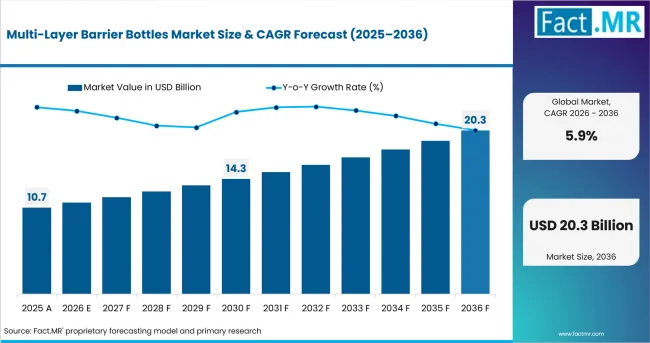
USD 11.4 billion in 2026 to USD 20.3 billion by 2036, at 5.9% CAGR.
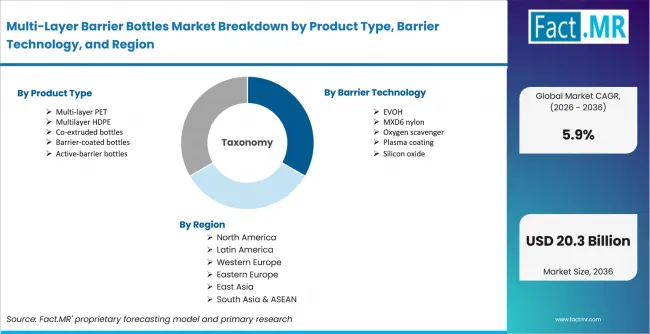
- The multi-layer barrier bottles market crossed a valuation of USD 10.72 billion in 2025. Demand is expected to increase from USD 11.4 billion in 2026 to USD 20.3 billion by 2036.
- The market is forecast to record 5.9% CAGR during 2026 to 2036 as food, beverage, pharma and personal care brands ask for lighter rigid packs with better oxygen control.
- Barrier bottles sit between standard monolayer containers and metal or glass packaging. They use EVOH, MXD6 nylon, oxygen scavenger systems or barrier coatings to slow oxygen and aroma transfer.
What are the defining numbers behind multi-layer barrier bottles growth?
USD 8.9 billion absolute opportunity by 2036, led by India, China and South Korea.
- Demand Drivers in the Market
- Dairy and juice brands need oxygen and aroma control before moving sensitive drinks into PET or HDPE bottles.
- Converters need thin barrier layers because brand owners compare shelf-life benefit against resin use and recycling fit.
- Pharma and nutraceutical liquid products need packaging that protects potency and keeps container qualification simple.
- Recycled-content rules are pushing bottle designs toward clear PET and documented barrier compatibility.
- Key Segments Analyzed
- By Product Type: Multi-layer PET is expected to hold 46.2% share in 2026 because clear beverage bottles need shelf-life protection and line compatibility.
- By Barrier Technology: EVOH is projected to capture 37.5% share in 2026 as thin layers provide oxygen protection in food and beverage packs.
- By End Use: Dairy is likely to account for 25.4% share in 2026 as chilled and ambient milk-based drinks need taste protection.
- By Bottle Size: 250-500 ml bottles are forecast to hold 34.2% share in 2026 because single-serve beverage formats fit retail coolers and convenience channels.
- By Manufacturing Process: Co-extrusion blow molding is expected to hold 39.6% share in 2026 because it forms functional layers during bottle production.
- By Geography: East Asia is projected to account for 31.4% share in 2026 as China, Japan and South Korea combine beverage scale with packaging rule pressure.
- Analyst Opinion at Fact.MR
- Shambhu Nath Jha, Senior Analyst at Fact.MR, states, "Multi-layer barrier bottles are not a simple resin-volume story. The buyer is asking whether the same bottle can protect taste, pass filling-line tests and avoid recycling penalties. Converters that can keep barrier layers thin and provide design evidence are likely to gain earlier approval from dairy, juice and pharma customers."
- Strategic Implications
- Brand owners should lock shelf-life targets before choosing PET, HDPE or coated bottle structures.
- Converters need co-extrusion control so barrier layers stay thin and repeatable at commercial speed.
- Resin suppliers should support APR, RecyClass and food-contact testing to reduce buyer concern around multilayer recycling.
- Equipment makers can gain from retrofit demand as fillers shift from monolayer bottles to barrier formats.
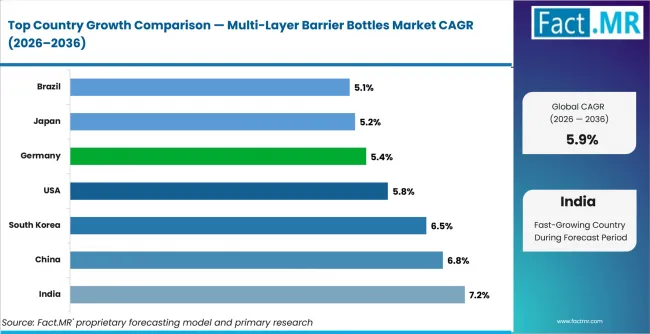
India is forecast to expand at 7.2% CAGR through 2036 as dairy growth and local packaging conversion add scale. China is expected to record 6.8% CAGR while South Korea is forecast at 6.5% CAGR due to beverage capacity, recycled PET rules and converter upgrades. The United States is projected at 5.8% CAGR, Germany at 5.4%, Japan at 5.2% and Brazil at 5.1%.
How does the multi-layer barrier bottles market break down by segment?
Multi-layer PET leads at 46.2%; EVOH leads at 37.5%.
Which product type dominates?
Multi-layer PET holds 46.2% share in 2026.
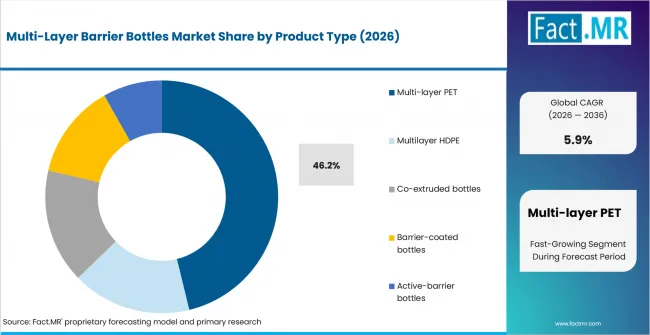
Multi-layer PET is expected to hold 46.2% share in 2026 because it gives brand owners clarity, light weight and beverage-line fit. The format works well where a thin barrier layer protects product quality while the main bottle body remains familiar to fillers and retailers. Segment demand is strongest in dairy, juice, beer alternatives, nutraceutical drinks and selected personal care packs.
Which barrier technology dominates?
EVOH holds 37.5% share in 2026.
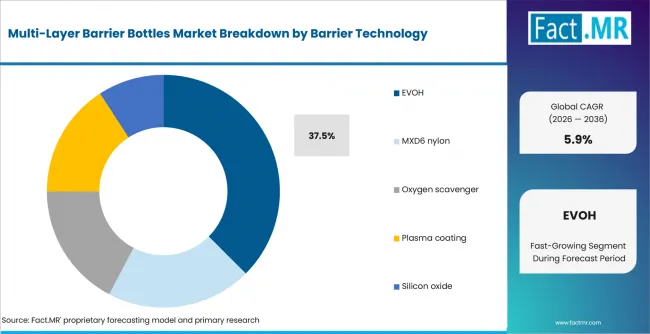
EVOH is projected to hold 37.5% share in 2026 because a very thin layer can slow oxygen transfer without changing the full bottle structure. Kuraray America said in February 2026 that EVAL EVOH barrier resin provides an oxygen barrier up to 10,000 times greater than polyethylene under stated conditions and passed APR testing within established limits. [9] Material choice is also tied to recyclability evidence. The ethylene vinyl alcohol grade supports high-barrier structures, but buyers still ask whether layer thickness, tie layers and colorants fit recovery systems. This is why resin suppliers now compete through testing files as much as gas-barrier claims.
Which end use dominates?
Dairy holds 25.4% share in 2026.
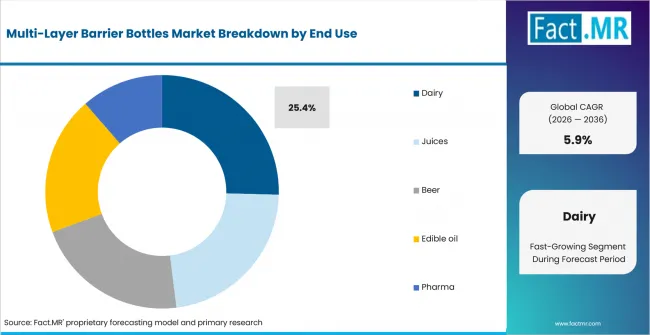
Dairy is likely to account for 25.4% share in 2026 because flavored milk, protein drinks and drinkable yogurt can lose taste faster when oxygen exposure is not controlled. Barrier bottles help brands move selected products from cartons or glass into lighter rigid bottles without giving up shelf-life targets.
Which bottle size dominates?
250-500 ml bottles hold 34.2% share in 2026.
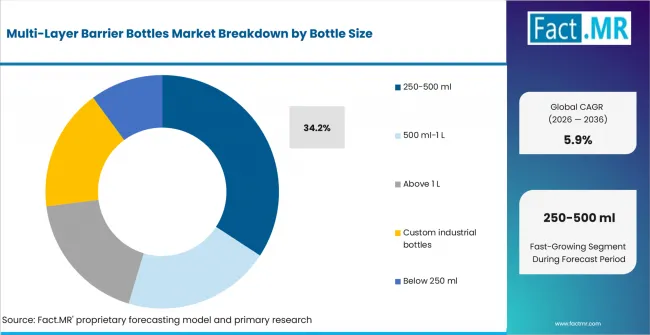
The 250-500 ml size band is expected to hold 34.2% share in 2026 because single-serve dairy drinks, juices, nutraceutical beverages and personal care liquids fit this pack range. Retailers prefer sizes that move quickly through coolers and shelves. Fillers prefer them when line speed, cap compatibility and label area can be kept stable across product families.
Which manufacturing process dominates?
Co-extrusion blow molding holds 39.6% share in 2026.
Co-extrusion blow molding is projected to hold 39.6% share in 2026 because it forms the barrier layer during bottle production. This reduces the need for a separate coating step and helps converters control wall structure in HDPE and selected PET applications. Oxygen scavengers are also used where active protection is needed, but converters compare them against EVOH and MXD6 on cost, food-contact status and recycling evidence.
What is accelerating multi-layer barrier bottle demand, and what is holding it back?
Shelf-life specifications and packaging regulation drive it; recyclability uncertainty restrains it.
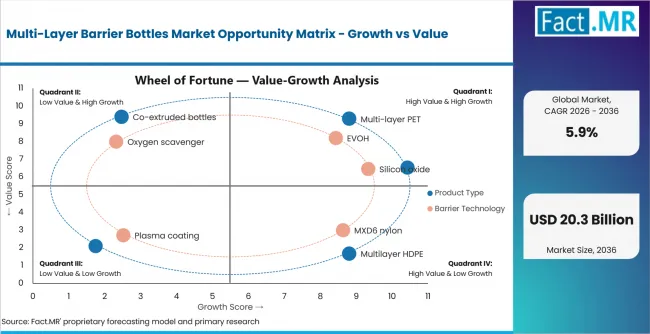
The main driver is shelf-life pressure in oxygen-sensitive liquids. Beverage and dairy brands want lower pack weight, but they cannot accept taste loss, color change or potency risk. Sidel reported in May 2025 that its aseptic system has more than 300 systems installed worldwide, including more than 30 FDA-approved solutions, which shows how sensitive beverage filling and barrier bottle design often move together. [7]
The main restraint is recycling compatibility. Multi-layer bottles can be harder to approve when barrier layers, tie resins, coatings or colorants interfere with the base resin stream. The European Commission said the Packaging and Packaging Waste Regulation entered into force on 11 February 2025 and generally applies from 12 August 2026. [1] This timing means brand owners need barrier performance and recyclability evidence before they approve new bottle structures for European sales.
Where do the biggest multi-layer barrier bottle opportunities sit?
Recyclable EVOH structures, aseptic dairy bottles and pharma liquids.
- Recyclable EVOH Structures: Resin suppliers can win by proving layer limits, recycling compatibility and food-contact suitability before scale-up.
- Aseptic Dairy Bottles: Converters can serve milk, protein drinks and chilled beverages that need shelf-life protection with lower pack weight.
- Pharma Liquids: Bottle makers can target selected medicines, nutraceuticals and supplements where oxygen and moisture control shape the specification.
Which countries are scaling multi-layer barrier bottles fastest?
India 7.2%, China 6.8%, South Korea 6.5%, United States 5.8%, Germany 5.4%, Japan 5.2%, Brazil 5.1%.
Based on regional analysis, the multi-layer barrier bottles market is segmented into North America, Latin America, Western Europe, Eastern Europe, East Asia, South Asia and Pacific, and Middle East and Africa.
.webp)
| Country | CAGR |
|---|---|
| India | 7.2% |
| China | 6.8% |
| South Korea | 6.5% |
| United States | 5.8% |
| Germany | 5.4% |
| Japan | 5.2% |
| Brazil | 5.1% |

What is powering India's lead?
7.2% CAGR, driven by dairy packaging scale and rigid plastic export growth.
India is forecast to expand at 7.2% CAGR through 2036 as packaged dairy, nutraceutical liquids and personal care bottles shift toward higher-barrier formats. India Brand Equity Foundation reported that India plastic exports stood at USD 5.4 billion in FY26 through August 2025, and packaging items in flexible and rigid formats grew 10.2% over the same period last year. [11] That export base gives converters more reason to add barrier capability for food and pharma customers.
How is China shaping barrier bottle demand?
6.8% CAGR, driven by beverage scale and plastic governance pressure.
China is expected to record 6.8% CAGR through 2036 because large beverage, edible oil and household chemical fillers need shelf-life control at high production scale. Demand is concentrated around major coastal packaging clusters where resin access, bottle conversion and filling lines sit close to brand owners. Supplier gains are expected where converters can keep barrier layers thin and provide clear recycling documentation to multinational customers.
Why is South Korea moving quickly?
6.5% CAGR, driven by recycled PET rules and high beverage filler discipline.
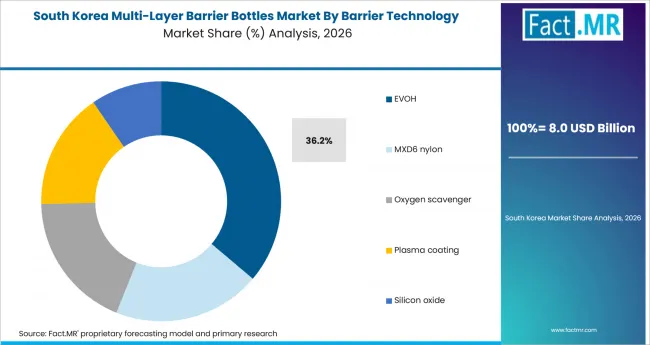
South Korea is forecast to grow at 6.5% CAGR through 2036 as recycled-content rules move from resin producers toward beverage and bottled water users. The Ministry of Environment said in February 2025 that bottled water and other non-alcoholic beverage manufacturers using more than 5,000 tons of PET annually are included in the amended obligation, with recycled raw material targets rising to 10% and then 30% by 2030. [2] This makes barrier-layer compatibility a buyer issue before full-scale conversion.
What supports the United States outlook?
5.8% CAGR, driven by converter scale and PET recycling performance checks.
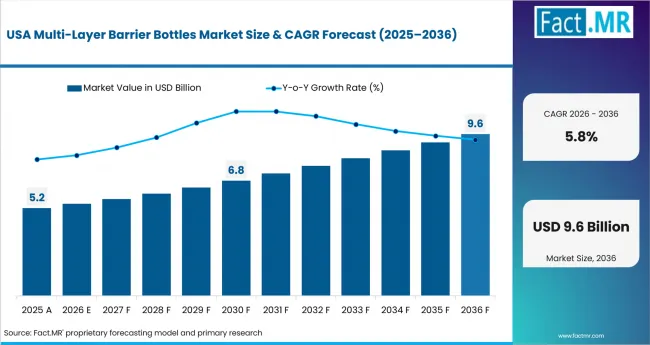
United States buyers specify barrier bottles through shelf-life tests, retail acceptance and recycling fit. The country is projected to record 5.8% CAGR through 2036 as dairy, juice and pharma brands keep PET and HDPE in active use while asking for better product protection. Plastics Industry Association reported in September 2025 that plastics-related United States jobs reached 1.71 million and total shipments reached USD 754.5 billion in 2024 when suppliers were included. [3] That large base creates room for specialty bottle upgrades, although growth is lower than India and China because converter penetration is already higher.
What underpins Germany's steady performance?
5.4% CAGR, driven by European packaging rules and high recycling pressure.
Germany is expected to advance at 5.4% CAGR through 2036 because recyclability evidence can decide whether a barrier bottle gains retail acceptance. Eurostat reported in October 2025 that Germany generated 215.2 kg of packaging waste per inhabitant in 2023 and recycled 149.3 kg per inhabitant. [4] That recycling intensity makes multilayer compatibility important for dairy, household chemical and personal care bottle programs.
How does Japan support premium barrier bottles?
5.2% CAGR, driven by PET design certification and careful quality control.
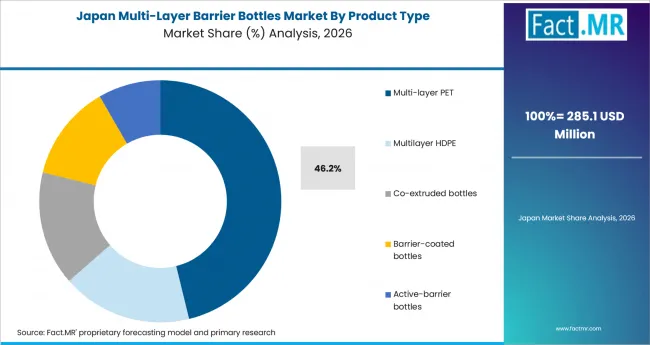
Japan is forecast at 5.2% CAGR through 2036 as beverage, household and cosmetics brands evaluate bottles under tighter recycled-resource expectations. The United States International Trade Administration reported in August 2025 that Japan approved amendments to the Resource Circulation Act in February 2025, including provisions requiring covered companies to submit plans and reports on recycled resource use. [12] Japanese customers are expected to favor barrier structures that arrive with clear product safety, sorting and recyclability evidence.
Where does Brazil fit in the market?
5.1% CAGR, driven by reverse logistics rules and packaging investment in São Paulo.
Brazil is expected to post 5.1% CAGR through 2036 as rigid packaging suppliers upgrade lines for food, personal care and household products. The United States International Trade Administration reported in January 2026 that Brazil plastic policy sets a 32% recovery rate target for 2026, reaching 50% by 2040, and starts recycled-content levels at 22% for 2026. [5] In food channels, foodservice packaging comparisons show how pack design increasingly needs to balance convenience, cost and recovery expectations.
Who leads the multi-layer barrier bottles landscape?
Amcor, ALPLA and Plastipak lead through converter scale, while Kuraray and Mitsubishi Gas Chemical shape barrier materials.
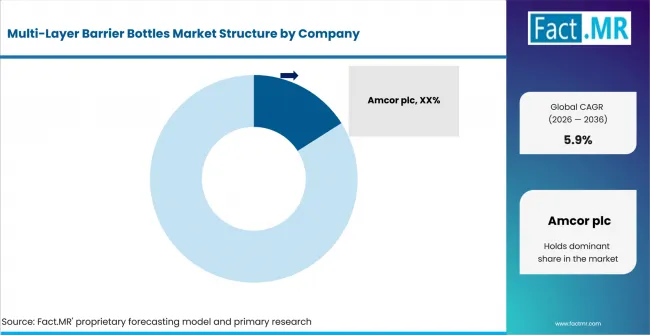
Multi-layer barrier bottle competition is centered on converters that can combine design, resin selection, shelf-life testing and customer qualification. Amcor completed its combination with Berry Global in April 2025, so Berry Global has been removed as a separate key player and treated within Amcor. [6] ALPLA, Plastipak, Graham Packaging and Silgan compete through bottle conversion, account access and regional plant networks.
Equipment providers influence adoption when barrier bottles must run at commercial speed. Sidel supports aseptic PET filling for sensitive beverages, while Krones and Husky Technologies influence line integration, preform control and bottle qualification. KHS and Husky presented the 5.89 gram Faktor 101 PET bottle for a 591 ml still beverage format in May 2025, with 30% less material than a comparable lightweight bottle. [8]
Which companies are the key players?
Amcor, ALPLA, Plastipak, Graham Packaging, Silgan, Krones, Sidel, Husky Technologies, Mitsubishi Gas Chemical and Kuraray.
- Amcor plc
- ALPLA Group
- Plastipak Holdings
- Graham Packaging Company
- Silgan Holdings Inc.
- Krones AG
- Sidel Group
- Husky Technologies
- Mitsubishi Gas Chemical Company, Inc.
- Kuraray Co., Ltd.
Bibliography
- [1] European Commission. (2026). Packaging waste.
- [2] Ministry of Environment. (2025, February 20). Full-scale use of recycled materials in bottled water and beverages. Republic of Korea.
- [3] Plastics Industry Association. (2025, August 8). 2025 Size & Impact report: Executive summary.
- [4] Eurostat. (2025, October 10). Packaging waste statistics. European Commission.
- [5] U.S. Department of Commerce, International Trade Administration. (2026, January 5). Brazil plastics regulatory framework.
- [6] Amcor plc. (2025, April 30). Amcor completes combination with Berry Global; positioned to significantly enhance value for customers and shareholders.
- [7] Sidel Group. (2025, May 6). Leading with aseptic innovation: Sidel at ProPak Asia 2025.
- [8] KHS Group. (2025, May 13). KHS unveils ultralight 5.89 g PET bottle “Faktor 101”.
- [9] Kuraray America, Inc. (2026, February 25). Kuraray America, Inc. earns APR Design® Recognition for EVAL™ EVOH barrier resin.
- [10] ALPLA Group. (2025, December 4). ALPLA secures grant and set up new recycling company pioneering food-grade HDPE recycling process.
- [11] India Brand Equity Foundation. (n.d.). Indian plastics industry: Export trends, growth & insights.
- [12] U.S. Department of Commerce, International Trade Administration. (2025, August 20). Japan recycled plastic materials.
This Report Address
- Strategic intelligence on multi-layer barrier bottles across product type, barrier technology, end use, bottle size and manufacturing process.
- Segment analysis covering Multi-layer PET, EVOH, Dairy, 250-500 ml bottles and Co-extrusion Blow Molding.
- Regional outlook covering India, China, South Korea, United States, Germany, Japan and Brazil.
- Competitive analysis of Amcor, ALPLA, Plastipak, Graham Packaging, Silgan, Krones, Sidel, Husky Technologies, Mitsubishi Gas Chemical and Kuraray.
- Technology assessment covering EVOH, MXD6 nylon, oxygen scavengers, plasma coating, silicon oxide and nanocomposite barrier systems.
- Regulation assessment covering European packaging rules, South Korea recycled-content obligations, Japan recycled resource planning and Brazil reverse logistics.
- Primary interviews, company portfolio checks, official source review and CAGR math validation support the forecast.
What does the multi-layer barrier bottles market cover?
Rigid barrier bottles with multilayer, coated or active structures for oxygen-sensitive products.
The multi-layer barrier bottles market covers rigid PET and HDPE bottles that use more than one material layer, coating or active barrier system to slow oxygen, aroma, moisture or carbon dioxide transfer. It differs from general rigid plastic packaging because the paid feature is barrier performance, not just container shape or capacity.
What is included in the scope?
Multi-layer PET, multilayer HDPE, co-extruded bottles, coated bottles and active-barrier bottles.
The scope includes bottles made with EVOH, MXD6 nylon, oxygen scavengers, plasma coatings, silicon oxide coatings and nanocomposite barrier systems. It covers use in dairy, juices, beer, edible oil, pharma, nutraceuticals, personal care and household chemicals. It also includes bottles below 250 ml, 250-500 ml, 500 ml-1 L, above 1 L and custom industrial formats.
What is excluded from the scope?
Standard monolayer bottles, glass bottles, cans, pouches and packaging machinery sold separately.
The scope excludes standard monolayer PET water bottles unless a separate barrier function is present. It excludes glass bottles, metal cans, cartons and flexible pouches. Closures, labels and secondary packaging are excluded unless sold as part of a barrier bottle system. General blow-molding or filling machinery revenue is excluded unless directly tied to multi-layer barrier bottle production.
How was the analysis built?
100+ sources, 40+ company portfolios, 25+ countries, 20+ interviews.
- Primary Research:
- Primary research includes interviews with rigid packaging converters, barrier resin suppliers and beverage packaging managers. It includes input from dairy, juice, pharma and nutraceutical packaging teams.
- Desk Research:
- Desk research reviews packaging waste rules, recycled-content obligations and bottle recyclability guidance. It covers EVOH, MXD6 nylon, oxygen scavenger systems, coating technologies and converter service portfolios.
- Market-Sizing and Forecasting:
- Forecasting uses rigid bottle demand, barrier bottle use cases and end-use packaging shifts. Dairy, juice, pharma, nutraceutical, personal care and household chemical demand support the market assessment.
- Data Validation and Update Cycle:
- Forecasts are validated through company portfolio checks, regulation timing and converter activity. Barrier resin testing updates, recycling compatibility evidence and packaging line developments help confirm market direction.
What is the report's scope and coverage?
| Attribute | Details |
|---|---|
| Quantitative Units | USD Billion in 2026 to USD Billion by 2036 at CAGR |
| Market Definition | Rigid bottles with multilayer, coated or active barrier systems that slow oxygen, aroma, moisture or carbon dioxide transfer |
| Product Type | Multi-layer PET, Multilayer HDPE, Co-extruded Bottles, Barrier-coated Bottles, Active-barrier Bottles |
| Barrier Technology | EVOH, MXD6 Nylon, Oxygen Scavenger, Plasma Coating, Silicon Oxide, Nanocomposite Barrier |
| End Use | Dairy, Juices, Beer, Edible Oil, Pharma, Nutraceuticals, Personal Care, Household Chemicals |
| Bottle Size | Below 250 ml, 250-500 ml, 500 ml-1 L, Above 1 L, Custom Industrial Bottles |
| Manufacturing Process | Co-extrusion Blow Molding, Injection Stretch Blow Molding, Extrusion Blow Molding, Injection Blow Molding, Barrier Coating Line |
| Regions Covered | North America, Latin America, Western Europe, Eastern Europe, East Asia, South Asia and Pacific, Middle East and Africa |
| Countries Covered | India, China, South Korea, United States, Germany, Japan, Brazil |
| Key Companies Profiled | Amcor, ALPLA, Plastipak, Graham Packaging, Silgan, Krones, Sidel, Husky Technologies, Mitsubishi Gas Chemical and Kuraray |
| Forecast Period | 2026 to 2036 |
| Approach | Hybrid top-down and bottom-up approach using user-provided values, rigid bottle demand, end-use use cases, barrier resin activity, regulation timing and company validation |
How is the market segmented?
-
By Product Type:
- Multi-layer PET
- Multilayer HDPE
- Co-extruded bottles
- Barrier-coated bottles
- Active-barrier bottles
-
By Barrier Technology:
- EVOH
- MXD6 nylon
- Oxygen scavenger
- Plasma coating
- Silicon oxide
- Nanocomposite barrier
-
By End Use:
- Dairy
- Juices
- Beer
- Edible oil
- Pharma
- Nutraceuticals
- Personal care
- Household chemicals
-
By Bottle Size:
- Below 250 ml
- 250-500 ml
- 500 ml-1 L
- Above 1 L
- Custom industrial bottles
-
By Manufacturing Process:
- Co-extrusion blow molding
- Injection stretch blow molding
- Extrusion blow molding
- Injection blow molding
- Barrier coating line
-
By Region:
- North America
- United States
- Canada
- Mexico
- Latin America
- Brazil
- Argentina
- Rest of Latin America
- Western Europe
- Germany
- United Kingdom
- France
- Italy
- Spain
- BENELUX
- Nordic
- Rest of Western Europe
- Eastern Europe
- Russia
- Poland
- Hungary
- Balkan and Baltic
- Rest of Eastern Europe
- East Asia
- China
- Japan
- South Korea
- South Asia and Pacific
- India
- ASEAN
- Australia and New Zealand
- Rest of South Asia and Pacific
- Middle East and Africa
- GCC Countries
- South Africa
- Turkiye
- Rest of Middle East and Africa
- North America
- Frequently Asked Questions -
Which product type leads the Multi-Layer Barrier Bottles Market?
Multi-layer PET leads with 46.2% share in 2026 because clear beverage and dairy bottles need shelf-life protection with line compatibility.
Which barrier technology leads the Multi-Layer Barrier Bottles Market?
EVOH leads with 37.5% share in 2026 because thin layers can provide oxygen protection for sensitive food and beverage products.
Which country expands faster in the Multi-Layer Barrier Bottles Market?
India is forecast to expand at 7.2% CAGR through 2036 as dairy drinks, nutraceutical liquids and rigid plastic export activity support conversion.
How does China perform in the Multi-Layer Barrier Bottles Market?
China is expected to record 6.8% CAGR through 2036 as beverage scale and plastic governance pressure support barrier bottle use.
How does South Korea perform in the Multi-Layer Barrier Bottles Market?
South Korea is forecast at 6.5% CAGR through 2036 as recycled PET rules push beverage fillers toward documented bottle structures.
How does the United States perform in the Multi-Layer Barrier Bottles Market?
The United States is projected to record 5.8% CAGR through 2036 as converter scale and PET recovery checks shape buyer approval.
How does Germany perform in the Multi-Layer Barrier Bottles Market?
Germany is expected to advance at 5.4% CAGR through 2036 because packaging rules and high recycling pressure raise demand for verified barrier designs.
What is the primary driver in the Multi-Layer Barrier Bottles Market?
The primary driver is the need to protect oxygen-sensitive dairy, juice, pharma and personal care products in lighter rigid bottles.
What is the main restraint in the Multi-Layer Barrier Bottles Market?
The main restraint is recycling compatibility because barrier layers, coatings and tie resins can complicate approval in PET and HDPE recovery systems.
Why is EVOH important in multi-layer barrier bottles?
EVOH is important because a thin layer can slow oxygen transfer while allowing converters to keep the main bottle structure familiar to fillers.
Why are 250-500 ml bottles important?
The 250-500 ml size band is important because single-serve dairy, juice, nutraceutical and personal care products fit retail coolers and convenience channels.
Which companies are key players in the Multi-Layer Barrier Bottles Market?
Key companies include Amcor, ALPLA, Plastipak, Graham Packaging, Silgan, Krones, Sidel, Husky Technologies, Mitsubishi Gas Chemical and Kuraray.
Table of Content
- Executive Summary
- Global Market Outlook
- Demand to side Trends
- Supply to side Trends
- Technology Roadmap Analysis
- Analysis and Recommendations
- Market Overview
- Market Coverage / Taxonomy
- Market Definition / Scope / Limitations
- Research Methodology
- Chapter Orientation
- Analytical Lens and Working Hypotheses
- Market Structure, Signals, and Trend Drivers
- Benchmarking and Cross-market Comparability
- Desk Research Programme (Secondary Evidence)
- Company Annual and Sustainability Reports
- Peer-reviewed Journals and Academic Literature
- Corporate Websites, Product Literature, and Technical Notes
- Earnings Decks and Investor Briefings
- Statutory Filings and Regulatory Disclosures
- Technical White Papers and Standards Notes
- Trade Journals, Industry Magazines, and Analyst Briefs
- Conference Proceedings, Webinars, and Seminar Materials
- Government Statistics Portals and Public Data Releases
- Press Releases and Reputable Media Coverage
- Specialist Newsletters and Curated Briefings
- Sector Databases and Reference Repositories
- Fact.MR Internal Proprietary Databases and Historical Market Datasets
- Subscription Datasets and Paid Sources
- Social Channels, Communities, and Digital Listening Inputs
- Additional Desk Sources
- Expert Input and Fieldwork (Primary Evidence)
- Primary Modes
- Qualitative Interviews and Expert Elicitation
- Quantitative Surveys and Structured Data Capture
- Blended Approach
- Why Primary Evidence is Used
- Field Techniques
- Interviews
- Board Members
- Presidents and Vice Presidents
- R&D and Innovation Heads
- Technical Specialists
- Domain Subject-matter Experts
- Scientists
- Physicians and Other Healthcare Professionals
- Governance, Ethics, and Data Stewardship
- Research Ethics
- Data Integrity and Handling
- Primary Modes
- Tooling, Models, and Reference Databases
- Data Engineering and Model Build
- Data Acquisition and Ingestion
- Cleaning, Normalisation, and Verification
- Synthesis, Triangulation, and Analysis
- Quality Assurance and Audit Trail
- Market Background
- Market Dynamics
- Drivers
- Restraints
- Opportunity
- Trends
- Scenario Forecast
- Demand in Optimistic Scenario
- Demand in Likely Scenario
- Demand in Conservative Scenario
- Opportunity Map Analysis
- Product Life Cycle Analysis
- Supply Chain Analysis
- Investment Feasibility Matrix
- Value Chain Analysis
- PESTLE and Porter’s Analysis
- Regulatory Landscape
- Regional Parent Market Outlook
- Production and Consumption Statistics
- Import and Export Statistics
- Market Dynamics
- Global Market Analysis 2021 to 2025 and Forecast, 2026 to 2036
- Historical Market Size Value (USD Million) Analysis, 2021 to 2025
- Current and Future Market Size Value (USD Million) Projections, 2026 to 2036
- Y to o to Y Growth Trend Analysis
- Absolute $ Opportunity Analysis
- Global Market Pricing Analysis 2021 to 2025 and Forecast 2026 to 2036
- Global Market Analysis 2021 to 2025 and Forecast 2026 to 2036, By Product Type
- Introduction / Key Findings
- Historical Market Size Value (USD Million) Analysis By Product Type , 2021 to 2025
- Current and Future Market Size Value (USD Million) Analysis and Forecast By Product Type , 2026 to 2036
- Multi-layer PET
- Multilayer HDPE
- Co-extruded bottles
- Barrier-coated bottles
- Active-barrier bottles
- Multi-layer PET
- Y to o to Y Growth Trend Analysis By Product Type , 2021 to 2025
- Absolute $ Opportunity Analysis By Product Type , 2026 to 2036
- Global Market Analysis 2021 to 2025 and Forecast 2026 to 2036, By Barrier Technology
- Introduction / Key Findings
- Historical Market Size Value (USD Million) Analysis By Barrier Technology, 2021 to 2025
- Current and Future Market Size Value (USD Million) Analysis and Forecast By Barrier Technology, 2026 to 2036
- EVOH
- MXD6 nylon
- Oxygen scavenger
- Plasma coating
- Silicon oxide
- Nanocomposite barrier
- EVOH
- Y to o to Y Growth Trend Analysis By Barrier Technology, 2021 to 2025
- Absolute $ Opportunity Analysis By Barrier Technology, 2026 to 2036
- Global Market Analysis 2021 to 2025 and Forecast 2026 to 2036, By End Use
- Introduction / Key Findings
- Historical Market Size Value (USD Million) Analysis By End Use, 2021 to 2025
- Current and Future Market Size Value (USD Million) Analysis and Forecast By End Use, 2026 to 2036
- Dairy
- Juices
- Beer
- Edible oil
- Pharma
- Nutraceuticals
- Personal care
- Household chemicals
- Dairy
- Y to o to Y Growth Trend Analysis By End Use, 2021 to 2025
- Absolute $ Opportunity Analysis By End Use, 2026 to 2036
- Global Market Analysis 2021 to 2025 and Forecast 2026 to 2036, By Bottle Size
- Introduction / Key Findings
- Historical Market Size Value (USD Million) Analysis By Bottle Size, 2021 to 2025
- Current and Future Market Size Value (USD Million) Analysis and Forecast By Bottle Size, 2026 to 2036
- 250-500 ml
- 500 ml-1 L
- Above 1 L
- Custom industrial bottles
- Below 250 ml
- 250-500 ml
- Y to o to Y Growth Trend Analysis By Bottle Size, 2021 to 2025
- Absolute $ Opportunity Analysis By Bottle Size, 2026 to 2036
- Global Market Analysis 2021 to 2025 and Forecast 2026 to 2036, By Region
- Introduction
- Historical Market Size Value (USD Million) Analysis By Region, 2021 to 2025
- Current Market Size Value (USD Million) Analysis and Forecast By Region, 2026 to 2036
- North America
- Latin America
- Western Europe
- Eastern Europe
- East Asia
- South Asia and Pacific
- Middle East & Africa
- Market Attractiveness Analysis By Region
- North America Market Analysis 2021 to 2025 and Forecast 2026 to 2036, By Country
- Historical Market Size Value (USD Million) Trend Analysis By Market Taxonomy, 2021 to 2025
- Market Size Value (USD Million) Forecast By Market Taxonomy, 2026 to 2036
- By Country
- USA
- Canada
- Mexico
- By Product Type
- By Barrier Technology
- By End Use
- By Bottle Size
- By Country
- Market Attractiveness Analysis
- By Country
- By Product Type
- By Barrier Technology
- By End Use
- By Bottle Size
- Key Takeaways
- Latin America Market Analysis 2021 to 2025 and Forecast 2026 to 2036, By Country
- Historical Market Size Value (USD Million) Trend Analysis By Market Taxonomy, 2021 to 2025
- Market Size Value (USD Million) Forecast By Market Taxonomy, 2026 to 2036
- By Country
- Brazil
- Chile
- Rest of Latin America
- By Product Type
- By Barrier Technology
- By End Use
- By Bottle Size
- By Country
- Market Attractiveness Analysis
- By Country
- By Product Type
- By Barrier Technology
- By End Use
- By Bottle Size
- Key Takeaways
- Western Europe Market Analysis 2021 to 2025 and Forecast 2026 to 2036, By Country
- Historical Market Size Value (USD Million) Trend Analysis By Market Taxonomy, 2021 to 2025
- Market Size Value (USD Million) Forecast By Market Taxonomy, 2026 to 2036
- By Country
- Germany
- UK
- Italy
- Spain
- France
- Nordic
- BENELUX
- Rest of Western Europe
- By Product Type
- By Barrier Technology
- By End Use
- By Bottle Size
- By Country
- Market Attractiveness Analysis
- By Country
- By Product Type
- By Barrier Technology
- By End Use
- By Bottle Size
- Key Takeaways
- Eastern Europe Market Analysis 2021 to 2025 and Forecast 2026 to 2036, By Country
- Historical Market Size Value (USD Million) Trend Analysis By Market Taxonomy, 2021 to 2025
- Market Size Value (USD Million) Forecast By Market Taxonomy, 2026 to 2036
- By Country
- Russia
- Poland
- Hungary
- Balkan & Baltic
- Rest of Eastern Europe
- By Product Type
- By Barrier Technology
- By End Use
- By Bottle Size
- By Country
- Market Attractiveness Analysis
- By Country
- By Product Type
- By Barrier Technology
- By End Use
- By Bottle Size
- Key Takeaways
- East Asia Market Analysis 2021 to 2025 and Forecast 2026 to 2036, By Country
- Historical Market Size Value (USD Million) Trend Analysis By Market Taxonomy, 2021 to 2025
- Market Size Value (USD Million) Forecast By Market Taxonomy, 2026 to 2036
- By Country
- China
- Japan
- South Korea
- By Product Type
- By Barrier Technology
- By End Use
- By Bottle Size
- By Country
- Market Attractiveness Analysis
- By Country
- By Product Type
- By Barrier Technology
- By End Use
- By Bottle Size
- Key Takeaways
- South Asia and Pacific Market Analysis 2021 to 2025 and Forecast 2026 to 2036, By Country
- Historical Market Size Value (USD Million) Trend Analysis By Market Taxonomy, 2021 to 2025
- Market Size Value (USD Million) Forecast By Market Taxonomy, 2026 to 2036
- By Country
- India
- ASEAN
- Australia & New Zealand
- Rest of South Asia and Pacific
- By Product Type
- By Barrier Technology
- By End Use
- By Bottle Size
- By Country
- Market Attractiveness Analysis
- By Country
- By Product Type
- By Barrier Technology
- By End Use
- By Bottle Size
- Key Takeaways
- Middle East & Africa Market Analysis 2021 to 2025 and Forecast 2026 to 2036, By Country
- Historical Market Size Value (USD Million) Trend Analysis By Market Taxonomy, 2021 to 2025
- Market Size Value (USD Million) Forecast By Market Taxonomy, 2026 to 2036
- By Country
- Kingdom of Saudi Arabia
- Other GCC Countries
- Turkiye
- South Africa
- Other African Union
- Rest of Middle East & Africa
- By Product Type
- By Barrier Technology
- By End Use
- By Bottle Size
- By Country
- Market Attractiveness Analysis
- By Country
- By Product Type
- By Barrier Technology
- By End Use
- By Bottle Size
- Key Takeaways
- Key Countries Market Analysis
- USA
- Pricing Analysis
- Market Share Analysis, 2025
- By Product Type
- By Barrier Technology
- By End Use
- By Bottle Size
- Canada
- Pricing Analysis
- Market Share Analysis, 2025
- By Product Type
- By Barrier Technology
- By End Use
- By Bottle Size
- Mexico
- Pricing Analysis
- Market Share Analysis, 2025
- By Product Type
- By Barrier Technology
- By End Use
- By Bottle Size
- Brazil
- Pricing Analysis
- Market Share Analysis, 2025
- By Product Type
- By Barrier Technology
- By End Use
- By Bottle Size
- Chile
- Pricing Analysis
- Market Share Analysis, 2025
- By Product Type
- By Barrier Technology
- By End Use
- By Bottle Size
- Germany
- Pricing Analysis
- Market Share Analysis, 2025
- By Product Type
- By Barrier Technology
- By End Use
- By Bottle Size
- UK
- Pricing Analysis
- Market Share Analysis, 2025
- By Product Type
- By Barrier Technology
- By End Use
- By Bottle Size
- Italy
- Pricing Analysis
- Market Share Analysis, 2025
- By Product Type
- By Barrier Technology
- By End Use
- By Bottle Size
- Spain
- Pricing Analysis
- Market Share Analysis, 2025
- By Product Type
- By Barrier Technology
- By End Use
- By Bottle Size
- France
- Pricing Analysis
- Market Share Analysis, 2025
- By Product Type
- By Barrier Technology
- By End Use
- By Bottle Size
- India
- Pricing Analysis
- Market Share Analysis, 2025
- By Product Type
- By Barrier Technology
- By End Use
- By Bottle Size
- ASEAN
- Pricing Analysis
- Market Share Analysis, 2025
- By Product Type
- By Barrier Technology
- By End Use
- By Bottle Size
- Australia & New Zealand
- Pricing Analysis
- Market Share Analysis, 2025
- By Product Type
- By Barrier Technology
- By End Use
- By Bottle Size
- China
- Pricing Analysis
- Market Share Analysis, 2025
- By Product Type
- By Barrier Technology
- By End Use
- By Bottle Size
- Japan
- Pricing Analysis
- Market Share Analysis, 2025
- By Product Type
- By Barrier Technology
- By End Use
- By Bottle Size
- South Korea
- Pricing Analysis
- Market Share Analysis, 2025
- By Product Type
- By Barrier Technology
- By End Use
- By Bottle Size
- Russia
- Pricing Analysis
- Market Share Analysis, 2025
- By Product Type
- By Barrier Technology
- By End Use
- By Bottle Size
- Poland
- Pricing Analysis
- Market Share Analysis, 2025
- By Product Type
- By Barrier Technology
- By End Use
- By Bottle Size
- Hungary
- Pricing Analysis
- Market Share Analysis, 2025
- By Product Type
- By Barrier Technology
- By End Use
- By Bottle Size
- Kingdom of Saudi Arabia
- Pricing Analysis
- Market Share Analysis, 2025
- By Product Type
- By Barrier Technology
- By End Use
- By Bottle Size
- Turkiye
- Pricing Analysis
- Market Share Analysis, 2025
- By Product Type
- By Barrier Technology
- By End Use
- By Bottle Size
- South Africa
- Pricing Analysis
- Market Share Analysis, 2025
- By Product Type
- By Barrier Technology
- By End Use
- By Bottle Size
- USA
- Market Structure Analysis
- Competition Dashboard
- Competition Benchmarking
- Market Share Analysis of Top Players
- By Regional
- By Product Type
- By Barrier Technology
- By End Use
- By Bottle Size
- Competition Analysis
- Competition Deep Dive
- Amcor plc
- Overview
- Product Portfolio
- Profitability by Market Segments (Product/Age /Sales Channel/Region)
- Sales Footprint
- Strategy Overview
- Marketing Strategy
- Product Strategy
- Channel Strategy
- ALPLA Group
- Plastipak Holdings
- Graham Packaging Company
- Silgan Holdings Inc.
- Krones AG
- Sidel Group
- Husky Technologies
- Mitsubishi Gas Chemical Company, Inc.
- Kuraray Co., Ltd.
- Amcor plc
- Competition Deep Dive
- Assumptions & Acronyms Used
List Of Table
- Table 1: Global Market Value (USD Million) Forecast by Region, 2021 to 2036
- Table 2: Global Market Value (USD Million) Forecast by Product Type , 2021 to 2036
- Table 3: Global Market Value (USD Million) Forecast by Barrier Technology, 2021 to 2036
- Table 4: Global Market Value (USD Million) Forecast by End Use, 2021 to 2036
- Table 5: Global Market Value (USD Million) Forecast by Bottle Size, 2021 to 2036
- Table 6: North America Market Value (USD Million) Forecast by Country, 2021 to 2036
- Table 7: North America Market Value (USD Million) Forecast by Product Type , 2021 to 2036
- Table 8: North America Market Value (USD Million) Forecast by Barrier Technology, 2021 to 2036
- Table 9: North America Market Value (USD Million) Forecast by End Use, 2021 to 2036
- Table 10: North America Market Value (USD Million) Forecast by Bottle Size, 2021 to 2036
- Table 11: Latin America Market Value (USD Million) Forecast by Country, 2021 to 2036
- Table 12: Latin America Market Value (USD Million) Forecast by Product Type , 2021 to 2036
- Table 13: Latin America Market Value (USD Million) Forecast by Barrier Technology, 2021 to 2036
- Table 14: Latin America Market Value (USD Million) Forecast by End Use, 2021 to 2036
- Table 15: Latin America Market Value (USD Million) Forecast by Bottle Size, 2021 to 2036
- Table 16: Western Europe Market Value (USD Million) Forecast by Country, 2021 to 2036
- Table 17: Western Europe Market Value (USD Million) Forecast by Product Type , 2021 to 2036
- Table 18: Western Europe Market Value (USD Million) Forecast by Barrier Technology, 2021 to 2036
- Table 19: Western Europe Market Value (USD Million) Forecast by End Use, 2021 to 2036
- Table 20: Western Europe Market Value (USD Million) Forecast by Bottle Size, 2021 to 2036
- Table 21: Eastern Europe Market Value (USD Million) Forecast by Country, 2021 to 2036
- Table 22: Eastern Europe Market Value (USD Million) Forecast by Product Type , 2021 to 2036
- Table 23: Eastern Europe Market Value (USD Million) Forecast by Barrier Technology, 2021 to 2036
- Table 24: Eastern Europe Market Value (USD Million) Forecast by End Use, 2021 to 2036
- Table 25: Eastern Europe Market Value (USD Million) Forecast by Bottle Size, 2021 to 2036
- Table 26: East Asia Market Value (USD Million) Forecast by Country, 2021 to 2036
- Table 27: East Asia Market Value (USD Million) Forecast by Product Type , 2021 to 2036
- Table 28: East Asia Market Value (USD Million) Forecast by Barrier Technology, 2021 to 2036
- Table 29: East Asia Market Value (USD Million) Forecast by End Use, 2021 to 2036
- Table 30: East Asia Market Value (USD Million) Forecast by Bottle Size, 2021 to 2036
- Table 31: South Asia and Pacific Market Value (USD Million) Forecast by Country, 2021 to 2036
- Table 32: South Asia and Pacific Market Value (USD Million) Forecast by Product Type , 2021 to 2036
- Table 33: South Asia and Pacific Market Value (USD Million) Forecast by Barrier Technology, 2021 to 2036
- Table 34: South Asia and Pacific Market Value (USD Million) Forecast by End Use, 2021 to 2036
- Table 35: South Asia and Pacific Market Value (USD Million) Forecast by Bottle Size, 2021 to 2036
- Table 36: Middle East & Africa Market Value (USD Million) Forecast by Country, 2021 to 2036
- Table 37: Middle East & Africa Market Value (USD Million) Forecast by Product Type , 2021 to 2036
- Table 38: Middle East & Africa Market Value (USD Million) Forecast by Barrier Technology, 2021 to 2036
- Table 39: Middle East & Africa Market Value (USD Million) Forecast by End Use, 2021 to 2036
- Table 40: Middle East & Africa Market Value (USD Million) Forecast by Bottle Size, 2021 to 2036
List Of Figures
- Figure 1: Global Market Pricing Analysis
- Figure 2: Global Market Value (USD Million) Forecast 2021-2036
- Figure 3: Global Market Value Share and BPS Analysis by Product Type, 2026 and 2036
- Figure 4: Global Market Y-o-Y Growth Comparison by Product Type,2026 to 2036
- Figure 5: Global Market Attractiveness Analysis by Product Type
- Figure 6: Global Market Value Share and BPS Analysis by Barrier Technology, 2026 and 2036
- Figure 7: Global Market Y-o-Y Growth Comparison by Barrier Technology,2026 to 2036
- Figure 8: Global Market Attractiveness Analysis by Barrier Technology
- Figure 9: Global Market Value Share and BPS Analysis by End Use, 2026 and 2036
- Figure 10: Global Market Y-o-Y Growth Comparison by End Use,2026 to 2036
- Figure 11: Global Market Attractiveness Analysis by End Use
- Figure 12: Global Market Value Share and BPS Analysis by Bottle Size, 2026 and 2036
- Figure 13: Global Market Y-o-Y Growth Comparison by Bottle Size,2026 to 2036
- Figure 14: Global Market Attractiveness Analysis by Bottle Size
- Figure 15: Global Market Value (USD Million) Share and BPS Analysis by Region, 2026 and 2036
- Figure 16: Global Market Y-o-Y Growth Comparison by Region,2026 to 2036
- Figure 17: Global Market Attractiveness Analysis by Region
- Figure 18: North America Market Incremental Dollar Opportunity,2026 to 2036
- Figure 19: Latin America Market Incremental Dollar Opportunity,2026 to 2036
- Figure 20: Western Europe Market Incremental Dollar Opportunity,2026 to 2036
- Figure 21: Eastern Europe Market Incremental Dollar Opportunity,2026 to 2036
- Figure 22: East Asia Market Incremental Dollar Opportunity,2026 to 2036
- Figure 23: South Asia and Pacific Market Incremental Dollar Opportunity,2026 to 2036
- Figure 24: Middle East & Africa Market Incremental Dollar Opportunity,2026 to 2036
- Figure 25: North America Market Value Share and BPS Analysis by Country, 2026 and 2036
- Figure 26: North America Market Value Share and BPS Analysis by Product Type, 2026 and 2036
- Figure 27: North America Market Y-o-Y Growth Comparison by Product Type,2026 to 2036
- Figure 28: North America Market Attractiveness Analysis by Product Type
- Figure 29: North America Market Value Share and BPS Analysis by Barrier Technology, 2026 and 2036
- Figure 30: North America Market Y-o-Y Growth Comparison by Barrier Technology,2026 to 2036
- Figure 31: North America Market Attractiveness Analysis by Barrier Technology
- Figure 32: North America Market Value Share and BPS Analysis by End Use, 2026 and 2036
- Figure 33: North America Market Y-o-Y Growth Comparison by End Use,2026 to 2036
- Figure 34: North America Market Attractiveness Analysis by End Use
- Figure 35: North America Market Value Share and BPS Analysis by Bottle Size, 2026 and 2036
- Figure 36: North America Market Y-o-Y Growth Comparison by Bottle Size,2026 to 2036
- Figure 37: North America Market Attractiveness Analysis by Bottle Size
- Figure 38: Latin America Market Value Share and BPS Analysis by Country, 2026 and 2036
- Figure 39: Latin America Market Value Share and BPS Analysis by Product Type, 2026 and 2036
- Figure 40: Latin America Market Y-o-Y Growth Comparison by Product Type,2026 to 2036
- Figure 41: Latin America Market Attractiveness Analysis by Product Type
- Figure 42: Latin America Market Value Share and BPS Analysis by Barrier Technology, 2026 and 2036
- Figure 43: Latin America Market Y-o-Y Growth Comparison by Barrier Technology,2026 to 2036
- Figure 44: Latin America Market Attractiveness Analysis by Barrier Technology
- Figure 45: Latin America Market Value Share and BPS Analysis by End Use, 2026 and 2036
- Figure 46: Latin America Market Y-o-Y Growth Comparison by End Use,2026 to 2036
- Figure 47: Latin America Market Attractiveness Analysis by End Use
- Figure 48: Latin America Market Value Share and BPS Analysis by Bottle Size, 2026 and 2036
- Figure 49: Latin America Market Y-o-Y Growth Comparison by Bottle Size,2026 to 2036
- Figure 50: Latin America Market Attractiveness Analysis by Bottle Size
- Figure 51: Western Europe Market Value Share and BPS Analysis by Country, 2026 and 2036
- Figure 52: Western Europe Market Value Share and BPS Analysis by Product Type, 2026 and 2036
- Figure 53: Western Europe Market Y-o-Y Growth Comparison by Product Type,2026 to 2036
- Figure 54: Western Europe Market Attractiveness Analysis by Product Type
- Figure 55: Western Europe Market Value Share and BPS Analysis by Barrier Technology, 2026 and 2036
- Figure 56: Western Europe Market Y-o-Y Growth Comparison by Barrier Technology,2026 to 2036
- Figure 57: Western Europe Market Attractiveness Analysis by Barrier Technology
- Figure 58: Western Europe Market Value Share and BPS Analysis by End Use, 2026 and 2036
- Figure 59: Western Europe Market Y-o-Y Growth Comparison by End Use,2026 to 2036
- Figure 60: Western Europe Market Attractiveness Analysis by End Use
- Figure 61: Western Europe Market Value Share and BPS Analysis by Bottle Size, 2026 and 2036
- Figure 62: Western Europe Market Y-o-Y Growth Comparison by Bottle Size,2026 to 2036
- Figure 63: Western Europe Market Attractiveness Analysis by Bottle Size
- Figure 64: Eastern Europe Market Value Share and BPS Analysis by Country, 2026 and 2036
- Figure 65: Eastern Europe Market Value Share and BPS Analysis by Product Type, 2026 and 2036
- Figure 66: Eastern Europe Market Y-o-Y Growth Comparison by Product Type,2026 to 2036
- Figure 67: Eastern Europe Market Attractiveness Analysis by Product Type
- Figure 68: Eastern Europe Market Value Share and BPS Analysis by Barrier Technology, 2026 and 2036
- Figure 69: Eastern Europe Market Y-o-Y Growth Comparison by Barrier Technology,2026 to 2036
- Figure 70: Eastern Europe Market Attractiveness Analysis by Barrier Technology
- Figure 71: Eastern Europe Market Value Share and BPS Analysis by End Use, 2026 and 2036
- Figure 72: Eastern Europe Market Y-o-Y Growth Comparison by End Use,2026 to 2036
- Figure 73: Eastern Europe Market Attractiveness Analysis by End Use
- Figure 74: Eastern Europe Market Value Share and BPS Analysis by Bottle Size, 2026 and 2036
- Figure 75: Eastern Europe Market Y-o-Y Growth Comparison by Bottle Size,2026 to 2036
- Figure 76: Eastern Europe Market Attractiveness Analysis by Bottle Size
- Figure 77: East Asia Market Value Share and BPS Analysis by Country, 2026 and 2036
- Figure 78: East Asia Market Value Share and BPS Analysis by Product Type, 2026 and 2036
- Figure 79: East Asia Market Y-o-Y Growth Comparison by Product Type,2026 to 2036
- Figure 80: East Asia Market Attractiveness Analysis by Product Type
- Figure 81: East Asia Market Value Share and BPS Analysis by Barrier Technology, 2026 and 2036
- Figure 82: East Asia Market Y-o-Y Growth Comparison by Barrier Technology,2026 to 2036
- Figure 83: East Asia Market Attractiveness Analysis by Barrier Technology
- Figure 84: East Asia Market Value Share and BPS Analysis by End Use, 2026 and 2036
- Figure 85: East Asia Market Y-o-Y Growth Comparison by End Use,2026 to 2036
- Figure 86: East Asia Market Attractiveness Analysis by End Use
- Figure 87: East Asia Market Value Share and BPS Analysis by Bottle Size, 2026 and 2036
- Figure 88: East Asia Market Y-o-Y Growth Comparison by Bottle Size,2026 to 2036
- Figure 89: East Asia Market Attractiveness Analysis by Bottle Size
- Figure 90: South Asia and Pacific Market Value Share and BPS Analysis by Country, 2026 and 2036
- Figure 91: South Asia and Pacific Market Value Share and BPS Analysis by Product Type, 2026 and 2036
- Figure 92: South Asia and Pacific Market Y-o-Y Growth Comparison by Product Type,2026 to 2036
- Figure 93: South Asia and Pacific Market Attractiveness Analysis by Product Type
- Figure 94: South Asia and Pacific Market Value Share and BPS Analysis by Barrier Technology, 2026 and 2036
- Figure 95: South Asia and Pacific Market Y-o-Y Growth Comparison by Barrier Technology,2026 to 2036
- Figure 96: South Asia and Pacific Market Attractiveness Analysis by Barrier Technology
- Figure 97: South Asia and Pacific Market Value Share and BPS Analysis by End Use, 2026 and 2036
- Figure 98: South Asia and Pacific Market Y-o-Y Growth Comparison by End Use,2026 to 2036
- Figure 99: South Asia and Pacific Market Attractiveness Analysis by End Use
- Figure 100: South Asia and Pacific Market Value Share and BPS Analysis by Bottle Size, 2026 and 2036
- Figure 101: South Asia and Pacific Market Y-o-Y Growth Comparison by Bottle Size,2026 to 2036
- Figure 102: South Asia and Pacific Market Attractiveness Analysis by Bottle Size
- Figure 103: Middle East & Africa Market Value Share and BPS Analysis by Country, 2026 and 2036
- Figure 104: Middle East & Africa Market Value Share and BPS Analysis by Product Type, 2026 and 2036
- Figure 105: Middle East & Africa Market Y-o-Y Growth Comparison by Product Type,2026 to 2036
- Figure 106: Middle East & Africa Market Attractiveness Analysis by Product Type
- Figure 107: Middle East & Africa Market Value Share and BPS Analysis by Barrier Technology, 2026 and 2036
- Figure 108: Middle East & Africa Market Y-o-Y Growth Comparison by Barrier Technology,2026 to 2036
- Figure 109: Middle East & Africa Market Attractiveness Analysis by Barrier Technology
- Figure 110: Middle East & Africa Market Value Share and BPS Analysis by End Use, 2026 and 2036
- Figure 111: Middle East & Africa Market Y-o-Y Growth Comparison by End Use,2026 to 2036
- Figure 112: Middle East & Africa Market Attractiveness Analysis by End Use
- Figure 113: Middle East & Africa Market Value Share and BPS Analysis by Bottle Size, 2026 and 2036
- Figure 114: Middle East & Africa Market Y-o-Y Growth Comparison by Bottle Size,2026 to 2036
- Figure 115: Middle East & Africa Market Attractiveness Analysis by Bottle Size
- Figure 116: Global Market - Tier Structure Analysis
- Figure 117: Global Market - Company Share Analysis