Space Debris Reusable Orbital Vehicles Market

Space Debris Reusable Orbital Vehicles Market Size and Share Forecast Outlook 2026 to 2036

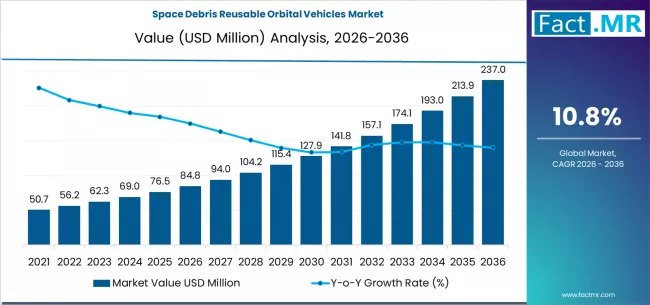
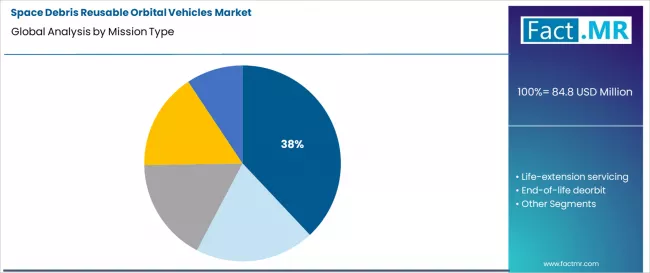
Space debris reusable orbital vehicles market is projected to grow from USD 84.8 million in 2026 to USD 237.0 million by 2036, at a CAGR of 10.8%. Active debris removal will dominate with a 38.0% market share, while leo will lead the orbit segment with a 68.0% share.

Space Debris Reusable Orbital Vehicles Market Forecast and Outlook 2026 to 2036

The global market for space debris reusable orbital vehicles is poised for transformative growth, projected to expand from USD 84.80 million in 2026 to USD 237.03 million by 2036, reflecting a robust CAGR of 10.8%.

Key Takeaways from the Space Debris Reusable Orbital Vehicles Market

  • Market Value for 2026: USD 84.80 Million
  • Market Value for 2036: USD 237.03 Million
  • Forecast CAGR (2026-2036): 10.8%
  • Leading Mission Type Segment (2026): Active Debris Removal (38%)
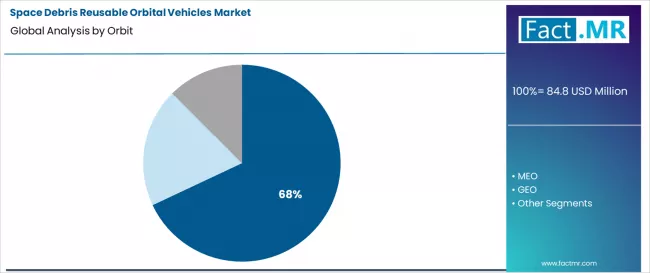
  • Leading Orbit Segment (2026): Low Earth Orbit (LEO) (68%)
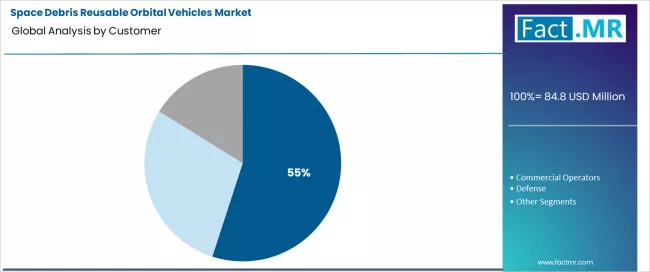
  • Leading Customer Segment (2026): Government Agencies (55%)
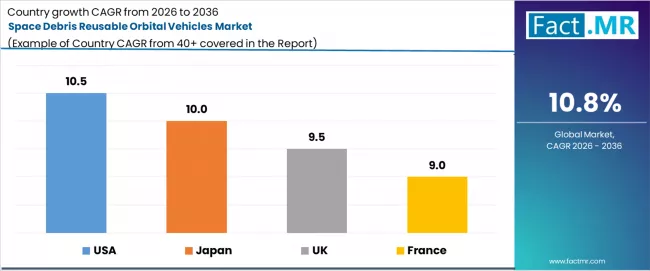
  • Key Growth Countries: USA (10.50% CAGR), Japan (10.00% CAGR), UK (9.50% CAGR), France (9.00% CAGR)
  • Key Players in the Market: Astroscale, ClearSpace, Northrop Grumman, Airbus Defence & Space, Lockheed Martin, Thales Alenia Space

Space Debris Reusable Orbital Vehicles Market Market Value Analysis

This accelerated trajectory is driven by the critical and urgent need to ensure the long-term sustainability and safety of the orbital environment. The proliferation of satellite constellations, increasing launch frequency, and growing militarization of space have exponentially elevated the risk of catastrophic collisions, making active debris management a strategic imperative.

Reusable orbital service vehicles represent a foundational technology for this new domain, moving beyond one-time removal missions to creating a sustainable, economically viable ecosystem for in-orbit servicing, life-extension, and end-of-life disposal. This market's evolution is intrinsically linked to the development of supportive international regulations, the maturation of RPO technologies, and the economic case for preserving high-value orbital real estate, positioning it as a cornerstone of the new space economy.

Metric

Metric Value
Market Value (2026) USD 84.80 Million
Market Forecast Value (2036) USD 237.03 Million
Forecast CAGR (2026-2036) 10.8%

Category

Category Segments
Mission Type Active Debris Removal, Life-Extension Servicing, End-of-Life Deorbit, Collision Avoidance, Inspection & Diagnosis
Orbit LEO, MEO, GEO
Customer Government Agencies, Commercial Operators, Defense
Region North America, Latin America, Western Europe, Eastern Europe, East Asia, South Asia & Pacific, MEA

Segmental Analysis

By Mission Type, Which Service Addresses the Most Pressing Need?

Space Debris Reusable Orbital Vehicles Market Analysis By Mission Type

Active debris removal leads the mission segment with a 38% share. Its dominance is a direct reflection of the acute, growing crisis of defunct rocket bodies, dead satellites, and fragmentation debris cluttering key orbits. ADR represents the most direct and proactive solution to mitigate the Kessler Syndrome risk, a cascade of collisions.

While technologically complex, missions focused on removing large, high-risk objects are seen as essential proof-of-concept endeavors that are heavily funded by government agencies to establish technical feasibility, set precedents for international policy, and catalyze the broader in-orbit servicing market.

By Orbit, Which Region is the Primary Battleground for Sustainability?

Space Debris Reusable Orbital Vehicles Market Analysis By Orbit

Low Earth Orbit (LEO) is the overwhelmingly dominant orbit segment, accounting for 68% of the market. This concentration is due to LEO's extreme congestion from mega-constellations like Starlink and OneWeb, its critical importance for Earth observation, communications, and scientific missions, and the heightened collision risk caused by high orbital velocities.

The economic value of LEO for commercial operators and its strategic value for national security create a powerful imperative to develop reusable vehicles capable of conducting frequent and cost-effective debris removal and satellite servicing operations in this densely populated orbital band.

By Customer, Who is the Principal Funder and Early Adopter?

Space Debris Reusable Orbital Vehicles Market Analysis By Customer

Government agencies are the leading customer segment, holding 55% of the market. National space agencies like NASA, ESA, JAXA and related government bodies are the primary source of funding for technology demonstration missions, which are high-risk and not yet commercially profitable.

Governments drive demand due to their responsibility for long-term space sustainability, the protection of national space assets, and the need to shape international norms and regulatory frameworks. Their contracts are essential for de-risking the technology and proving operational concepts that commercial operators can later adopt at scale.

What are the Market’s Drivers, Restraints, Opportunities, and Trends?

A key driver is the escalating threat to trillion-dollar space-based infrastructure from uncontrolled debris, compounded by a lack of binding international removal regulations that places the onus on proactive mitigation.

A key restraint is the exceptionally high technological and financial barrier to entry, involving complex autonomous guidance, sophisticated robotics, and mission profiles that currently offer uncertain return-on-investment for purely commercial ventures.

A significant opportunity lies in leveraging reusable orbital vehicle platforms designed for debris removal to offer adjacent, revenue-generating services such as in-orbit inspection, refueling, and assembly, creating a multi-service business model that improves economic viability.

The dominant trend is the shift from conceptual studies and one-off demonstration missions towards the operationalization of reusable systems, marked by public-private partnerships, the development of standardized docking interfaces, and the integration of artificial intelligence for autonomous decision-making in complex, cluttered orbital environments.

Analysis of the Space Debris Reusable Orbital Vehicles Market by Key Countries

Space Debris Reusable Orbital Vehicles Market Cagr Analysis By Country

Country CAGR (2026-2036)
USA 10.50%
Japan 10.00%
UK 9.50%
France 9.00%

How does the USA's Public-Private Ecosystem and Strategic Concerns Fuel Growth?

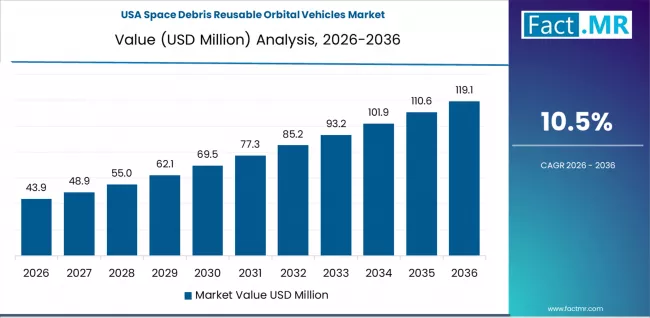
Space Debris Reusable Orbital Vehicles Market Country Value Analysis

The USA's leading 10.50% CAGR is driven by its unparalleled mix of commercial space innovation, deep defense interest in space domain awareness, and proactive government initiatives like NASA's Orbital Debris Program and the U.S. Space Force's focus on space sustainability.

Growth is fueled by contracts from DARPA, NASA, and the U.S. Space Force to American companies, fostering a competitive ecosystem where startups and primes collaborate and compete to develop the most viable reusable vehicle technologies for both government and future commercial needs.

What drives Japan's Pioneering Role in Debris Removal Technology?

Japan's 10.00% growth is anchored in its longstanding commitment to space sustainability, exemplified by JAXA's pioneering partnerships with domestic companies like Astroscale. Japan has positioned itself as a technology leader in rendezvous and capture mechanisms, with a clear national policy supporting ADR development.

This focus, combined with strong government funding for demonstration missions, establishes Japan as a critical player in setting technical standards and operational protocols for the global market.

Why does the UK's Focus on Commercial Space Sustainability Underpin Its Market Position?

The UK's 9.50% CAGR reflects its strategic ambition to be a leader in the commercial in-orbit servicing and debris removal sector. Through the UK Space Agency and initiatives like the National Space Strategy, the UK is actively funding British companies, fostering a regulatory environment conducive to new services, and positioning itself as a hub for insurance and finance related to space sustainability. This market-led approach, targeting future service revenues, drives growth distinct from purely government-led programs.

How does France's Leadership in European Space Collaboration Shape Demand?

France's 9.00% growth is deeply tied to its central role within the European Space Agency (ESA) and the capabilities of its industrial champions, Airbus and Thales Alenia Space. France is a key advocate and contributor to ESA's flagship ADR program, ClearSpace-1, and related initiatives.

European collaborative funding, a desire for strategic autonomy in space logistics, and the technical expertise of its aerospace industry in developing complex orbital systems for both governmental and commercial customers drive growth.

Competitive Landscape of the Space Debris Reusable Orbital Vehicles Market

Space Debris Reusable Orbital Vehicles Market Analysis By Company

The competitive landscape is bifurcated between agile, mission-focused NewSpace startups, established aerospace, and defense primes. Startups like Astroscale and ClearSpace compete on specialized, innovative capture technologies, modular vehicle design, and speed of development, aiming to establish first-mover advantage in commercial services.

The primes, such as Northrop Grumman, Lockheed Martin, and Airbus, leverage decades of systems integration expertise, robust spacecraft buses, and deep relationships with national defense and space agencies to compete for large, complex government-led missions.

Competition revolves around proving reliability and safety in orbit, securing anchor government contracts for technology demonstration, and developing the business models and partnerships that will define the operational phase of the market. Success hinges on demonstrating not just technical capability but also cost-effectiveness and mission repeatability.

Key Players in the Space Debris Reusable Orbital Vehicles Market

  • Astroscale
  • ClearSpace
  • Northrop Grumman
  • Airbus Defence & Space
  • Lockheed Martin
  • Thales Alenia Space

Scope of Report

Items Values
Quantitative Units USD Million
Mission Type Active Debris Removal, Life-Extension Servicing, End-of-Life Deorbit, Collision Avoidance, Inspection & Diagnosis
Orbit Low Earth Orbit (LEO), Medium Earth Orbit (MEO), Geostationary Orbit (GEO)
Customer Government Agencies, Commercial Operators, Defense
Key Countries USA, Japan, UK, France
Key Companies Astroscale, ClearSpace, Northrop Grumman, Airbus Defence & Space, Lockheed Martin, Thales Alenia Space
Additional Analysis Legal and regulatory analysis of ownership, liability, and authorization for ADR; comparative technology assessment of capture methods (robotic arm, net, harpoon, etc.); business model analysis for servitization in orbit (e.g., removal-as-a-service); examination of propulsion options (chemical, electric) for reusable orbital transfer vehicles; assessment of dual-use technology risks and export control implications.

Market by Segments

  • Mission Type :

    • Active Debris Removal
    • Life-Extension Servicing
    • End-of-Life Deorbit
    • Collision Avoidance
    • Inspection & Diagnosis
  • Orbit :

    • LEO
    • MEO
    • GEO
  • Customer :

    • Government Agencies
    • Commercial Operators
    • Defense
  • Region :

    • North America

      • USA
      • Canada
    • Latin America

      • Brazil
      • Mexico
      • Argentina
      • Rest of Latin America
    • Western Europe

      • Germany
      • France
      • Italy
      • Spain
      • UK
      • BENELUX
      • Rest of Western Europe
    • Eastern Europe

      • Russia
      • Poland
      • Czech Republic
      • Rest of Eastern Europe
    • East Asia

      • China
      • Japan
      • South Korea
      • Rest of East Asia
    • South Asia & Pacific

      • India
      • ASEAN
      • Australia
      • Rest of South Asia & Pacific
    • MEA

      • GCC Countries
      • South Africa
      • Turkiye
      • Rest of MEA

References

  • Committee on the Peaceful Uses of Outer Space (COPUOS). (2024). Guidelines for the long-term sustainability of outer space activities. United Nations Office for Outer Space Affairs (UNOOSA).
  • European Space Agency (ESA). (2024). Space Debris Mitigation and Removal Technology Roadmap. ESA Publications.
  • Klinkrad, H. (2023). Space Debris: Models and Risk Analysis (2nd ed.). Springer-Praxis.
  • National Aeronautics and Space Administration (NASA). (2024). Orbital Debris Quarterly News and Standard Practices Handbook. NASA Johnson Space Center.
  • Perek, L. (2023). Legal aspects of active debris removal and on-orbit servicing. Journal of Space Law, 47(1).
  • U.S. Government Accountability Office (GAO). (2024). Space Sustainability: Agencies Should Assess and Mitigate Risks from Orbital Debris. GAO Reports.

Table of Content

  1. Executive Summary
    • Global Market Outlook
    • Demand to side Trends
    • Supply to side Trends
    • Technology Roadmap Analysis
    • Analysis and Recommendations
  2. Market Overview
    • Market Coverage / Taxonomy
    • Market Definition / Scope / Limitations
  3. Market Background
    • Market Dynamics
      • Drivers
      • Restraints
      • Opportunity
      • Trends
    • Scenario Forecast
      • Demand in Optimistic Scenario
      • Demand in Likely Scenario
      • Demand in Conservative Scenario
    • Opportunity Map Analysis
    • Product Life Cycle Analysis
    • Supply Chain Analysis
    • Investment Feasibility Matrix
    • Value Chain Analysis
    • PESTLE and Porter’s Analysis
    • Regulatory Landscape
    • Regional Parent Market Outlook
    • Production and Consumption Statistics
    • Import and Export Statistics
  4. Global Market Analysis 2021 to 2025 and Forecast, 2026 to 2036
    • Historical Market Size Value (USD Million) Analysis, 2021 to 2025
    • Current and Future Market Size Value (USD Million) Projections, 2026 to 2036
      • Y to o to Y Growth Trend Analysis
      • Absolute $ Opportunity Analysis
  5. Global Market Pricing Analysis 2021 to 2025 and Forecast 2026 to 2036
  6. Global Market Analysis 2021 to 2025 and Forecast 2026 to 2036, By Mission Type
    • Introduction / Key Findings
    • Historical Market Size Value (USD Million) Analysis By Mission Type, 2021 to 2025
    • Current and Future Market Size Value (USD Million) Analysis and Forecast By Mission Type, 2026 to 2036
      • Active debris removal
      • Life-extension servicing
      • End-of-life deorbit
      • Collision avoidance
      • Inspection & diagnosis
    • Y to o to Y Growth Trend Analysis By Mission Type, 2021 to 2025
    • Absolute $ Opportunity Analysis By Mission Type, 2026 to 2036
  7. Global Market Analysis 2021 to 2025 and Forecast 2026 to 2036, By Orbit
    • Introduction / Key Findings
    • Historical Market Size Value (USD Million) Analysis By Orbit, 2021 to 2025
    • Current and Future Market Size Value (USD Million) Analysis and Forecast By Orbit, 2026 to 2036
      • LEO
      • MEO
      • GEO
    • Y to o to Y Growth Trend Analysis By Orbit, 2021 to 2025
    • Absolute $ Opportunity Analysis By Orbit, 2026 to 2036
  8. Global Market Analysis 2021 to 2025 and Forecast 2026 to 2036, By Customer
    • Introduction / Key Findings
    • Historical Market Size Value (USD Million) Analysis By Customer, 2021 to 2025
    • Current and Future Market Size Value (USD Million) Analysis and Forecast By Customer, 2026 to 2036
      • Government Agencies
      • Commercial Operators
      • Defense
    • Y to o to Y Growth Trend Analysis By Customer, 2021 to 2025
    • Absolute $ Opportunity Analysis By Customer, 2026 to 2036
  9. Global Market Analysis 2021 to 2025 and Forecast 2026 to 2036, By Region
    • Introduction
    • Historical Market Size Value (USD Million) Analysis By Region, 2021 to 2025
    • Current Market Size Value (USD Million) Analysis and Forecast By Region, 2026 to 2036
      • North America
      • Latin America
      • Western Europe
      • Eastern Europe
      • East Asia
      • South Asia and Pacific
      • Middle East & Africa
    • Market Attractiveness Analysis By Region
  10. North America Market Analysis 2021 to 2025 and Forecast 2026 to 2036, By Country
    • Historical Market Size Value (USD Million) Trend Analysis By Market Taxonomy, 2021 to 2025
    • Market Size Value (USD Million) Forecast By Market Taxonomy, 2026 to 2036
      • By Country
        • USA
        • Canada
        • Mexico
      • By Mission Type
      • By Orbit
      • By Customer
    • Market Attractiveness Analysis
      • By Country
      • By Mission Type
      • By Orbit
      • By Customer
    • Key Takeaways
  11. Latin America Market Analysis 2021 to 2025 and Forecast 2026 to 2036, By Country
    • Historical Market Size Value (USD Million) Trend Analysis By Market Taxonomy, 2021 to 2025
    • Market Size Value (USD Million) Forecast By Market Taxonomy, 2026 to 2036
      • By Country
        • Brazil
        • Chile
        • Rest of Latin America
      • By Mission Type
      • By Orbit
      • By Customer
    • Market Attractiveness Analysis
      • By Country
      • By Mission Type
      • By Orbit
      • By Customer
    • Key Takeaways
  12. Western Europe Market Analysis 2021 to 2025 and Forecast 2026 to 2036, By Country
    • Historical Market Size Value (USD Million) Trend Analysis By Market Taxonomy, 2021 to 2025
    • Market Size Value (USD Million) Forecast By Market Taxonomy, 2026 to 2036
      • By Country
        • Germany
        • UK
        • Italy
        • Spain
        • France
        • Nordic
        • BENELUX
        • Rest of Western Europe
      • By Mission Type
      • By Orbit
      • By Customer
    • Market Attractiveness Analysis
      • By Country
      • By Mission Type
      • By Orbit
      • By Customer
    • Key Takeaways
  13. Eastern Europe Market Analysis 2021 to 2025 and Forecast 2026 to 2036, By Country
    • Historical Market Size Value (USD Million) Trend Analysis By Market Taxonomy, 2021 to 2025
    • Market Size Value (USD Million) Forecast By Market Taxonomy, 2026 to 2036
      • By Country
        • Russia
        • Poland
        • Hungary
        • Balkan & Baltic
        • Rest of Eastern Europe
      • By Mission Type
      • By Orbit
      • By Customer
    • Market Attractiveness Analysis
      • By Country
      • By Mission Type
      • By Orbit
      • By Customer
    • Key Takeaways
  14. East Asia Market Analysis 2021 to 2025 and Forecast 2026 to 2036, By Country
    • Historical Market Size Value (USD Million) Trend Analysis By Market Taxonomy, 2021 to 2025
    • Market Size Value (USD Million) Forecast By Market Taxonomy, 2026 to 2036
      • By Country
        • China
        • Japan
        • South Korea
      • By Mission Type
      • By Orbit
      • By Customer
    • Market Attractiveness Analysis
      • By Country
      • By Mission Type
      • By Orbit
      • By Customer
    • Key Takeaways
  15. South Asia and Pacific Market Analysis 2021 to 2025 and Forecast 2026 to 2036, By Country
    • Historical Market Size Value (USD Million) Trend Analysis By Market Taxonomy, 2021 to 2025
    • Market Size Value (USD Million) Forecast By Market Taxonomy, 2026 to 2036
      • By Country
        • India
        • ASEAN
        • Australia & New Zealand
        • Rest of South Asia and Pacific
      • By Mission Type
      • By Orbit
      • By Customer
    • Market Attractiveness Analysis
      • By Country
      • By Mission Type
      • By Orbit
      • By Customer
    • Key Takeaways
  16. Middle East & Africa Market Analysis 2021 to 2025 and Forecast 2026 to 2036, By Country
    • Historical Market Size Value (USD Million) Trend Analysis By Market Taxonomy, 2021 to 2025
    • Market Size Value (USD Million) Forecast By Market Taxonomy, 2026 to 2036
      • By Country
        • Kingdom of Saudi Arabia
        • Other GCC Countries
        • Turkiye
        • South Africa
        • Other African Union
        • Rest of Middle East & Africa
      • By Mission Type
      • By Orbit
      • By Customer
    • Market Attractiveness Analysis
      • By Country
      • By Mission Type
      • By Orbit
      • By Customer
    • Key Takeaways
  17. Key Countries Market Analysis
    • USA
      • Pricing Analysis
      • Market Share Analysis, 2025
        • By Mission Type
        • By Orbit
        • By Customer
    • Canada
      • Pricing Analysis
      • Market Share Analysis, 2025
        • By Mission Type
        • By Orbit
        • By Customer
    • Mexico
      • Pricing Analysis
      • Market Share Analysis, 2025
        • By Mission Type
        • By Orbit
        • By Customer
    • Brazil
      • Pricing Analysis
      • Market Share Analysis, 2025
        • By Mission Type
        • By Orbit
        • By Customer
    • Chile
      • Pricing Analysis
      • Market Share Analysis, 2025
        • By Mission Type
        • By Orbit
        • By Customer
    • Germany
      • Pricing Analysis
      • Market Share Analysis, 2025
        • By Mission Type
        • By Orbit
        • By Customer
    • UK
      • Pricing Analysis
      • Market Share Analysis, 2025
        • By Mission Type
        • By Orbit
        • By Customer
    • Italy
      • Pricing Analysis
      • Market Share Analysis, 2025
        • By Mission Type
        • By Orbit
        • By Customer
    • Spain
      • Pricing Analysis
      • Market Share Analysis, 2025
        • By Mission Type
        • By Orbit
        • By Customer
    • France
      • Pricing Analysis
      • Market Share Analysis, 2025
        • By Mission Type
        • By Orbit
        • By Customer
    • India
      • Pricing Analysis
      • Market Share Analysis, 2025
        • By Mission Type
        • By Orbit
        • By Customer
    • ASEAN
      • Pricing Analysis
      • Market Share Analysis, 2025
        • By Mission Type
        • By Orbit
        • By Customer
    • Australia & New Zealand
      • Pricing Analysis
      • Market Share Analysis, 2025
        • By Mission Type
        • By Orbit
        • By Customer
    • China
      • Pricing Analysis
      • Market Share Analysis, 2025
        • By Mission Type
        • By Orbit
        • By Customer
    • Japan
      • Pricing Analysis
      • Market Share Analysis, 2025
        • By Mission Type
        • By Orbit
        • By Customer
    • South Korea
      • Pricing Analysis
      • Market Share Analysis, 2025
        • By Mission Type
        • By Orbit
        • By Customer
    • Russia
      • Pricing Analysis
      • Market Share Analysis, 2025
        • By Mission Type
        • By Orbit
        • By Customer
    • Poland
      • Pricing Analysis
      • Market Share Analysis, 2025
        • By Mission Type
        • By Orbit
        • By Customer
    • Hungary
      • Pricing Analysis
      • Market Share Analysis, 2025
        • By Mission Type
        • By Orbit
        • By Customer
    • Kingdom of Saudi Arabia
      • Pricing Analysis
      • Market Share Analysis, 2025
        • By Mission Type
        • By Orbit
        • By Customer
    • Turkiye
      • Pricing Analysis
      • Market Share Analysis, 2025
        • By Mission Type
        • By Orbit
        • By Customer
    • South Africa
      • Pricing Analysis
      • Market Share Analysis, 2025
        • By Mission Type
        • By Orbit
        • By Customer
  18. Market Structure Analysis
    • Competition Dashboard
    • Competition Benchmarking
    • Market Share Analysis of Top Players
      • By Regional
      • By Mission Type
      • By Orbit
      • By Customer
  19. Competition Analysis
    • Competition Deep Dive
      • Astroscale
        • Overview
        • Product Portfolio
        • Profitability by Market Segments (Product/Age /Sales Channel/Region)
        • Sales Footprint
        • Strategy Overview
          • Marketing Strategy
          • Product Strategy
          • Channel Strategy
      • ClearSpace
      • Northrop Grumman
      • Airbus Defence & Space
      • Lockheed Martin
      • Thales Alenia Space
  20. Assumptions & Acronyms Used
  21. Research Methodology

List Of Table

  • Table 1: Global Market Value (USD Million) Forecast by Region, 2021 to 2036
  • Table 2: Global Market Value (USD Million) Forecast by Mission Type, 2021 to 2036
  • Table 3: Global Market Value (USD Million) Forecast by Orbit, 2021 to 2036
  • Table 4: Global Market Value (USD Million) Forecast by Customer, 2021 to 2036
  • Table 5: North America Market Value (USD Million) Forecast by Country, 2021 to 2036
  • Table 6: North America Market Value (USD Million) Forecast by Mission Type, 2021 to 2036
  • Table 7: North America Market Value (USD Million) Forecast by Orbit, 2021 to 2036
  • Table 8: North America Market Value (USD Million) Forecast by Customer, 2021 to 2036
  • Table 9: Latin America Market Value (USD Million) Forecast by Country, 2021 to 2036
  • Table 10: Latin America Market Value (USD Million) Forecast by Mission Type, 2021 to 2036
  • Table 11: Latin America Market Value (USD Million) Forecast by Orbit, 2021 to 2036
  • Table 12: Latin America Market Value (USD Million) Forecast by Customer, 2021 to 2036
  • Table 13: Western Europe Market Value (USD Million) Forecast by Country, 2021 to 2036
  • Table 14: Western Europe Market Value (USD Million) Forecast by Mission Type, 2021 to 2036
  • Table 15: Western Europe Market Value (USD Million) Forecast by Orbit, 2021 to 2036
  • Table 16: Western Europe Market Value (USD Million) Forecast by Customer, 2021 to 2036
  • Table 17: Eastern Europe Market Value (USD Million) Forecast by Country, 2021 to 2036
  • Table 18: Eastern Europe Market Value (USD Million) Forecast by Mission Type, 2021 to 2036
  • Table 19: Eastern Europe Market Value (USD Million) Forecast by Orbit, 2021 to 2036
  • Table 20: Eastern Europe Market Value (USD Million) Forecast by Customer, 2021 to 2036
  • Table 21: East Asia Market Value (USD Million) Forecast by Country, 2021 to 2036
  • Table 22: East Asia Market Value (USD Million) Forecast by Mission Type, 2021 to 2036
  • Table 23: East Asia Market Value (USD Million) Forecast by Orbit, 2021 to 2036
  • Table 24: East Asia Market Value (USD Million) Forecast by Customer, 2021 to 2036
  • Table 25: South Asia and Pacific Market Value (USD Million) Forecast by Country, 2021 to 2036
  • Table 26: South Asia and Pacific Market Value (USD Million) Forecast by Mission Type, 2021 to 2036
  • Table 27: South Asia and Pacific Market Value (USD Million) Forecast by Orbit, 2021 to 2036
  • Table 28: South Asia and Pacific Market Value (USD Million) Forecast by Customer, 2021 to 2036
  • Table 29: Middle East & Africa Market Value (USD Million) Forecast by Country, 2021 to 2036
  • Table 30: Middle East & Africa Market Value (USD Million) Forecast by Mission Type, 2021 to 2036
  • Table 31: Middle East & Africa Market Value (USD Million) Forecast by Orbit, 2021 to 2036
  • Table 32: Middle East & Africa Market Value (USD Million) Forecast by Customer, 2021 to 2036

List Of Figures

  • Figure 1: Global Market Pricing Analysis
  • Figure 2: Global Market Value (USD Million) Forecast 2021 to 2036
  • Figure 3: Global Market Value Share and BPS Analysis by Mission Type, 2026 and 2036
  • Figure 4: Global Market Y to o to Y Growth Comparison by Mission Type, 2026 to 2036
  • Figure 5: Global Market Attractiveness Analysis by Mission Type
  • Figure 6: Global Market Value Share and BPS Analysis by Orbit, 2026 and 2036
  • Figure 7: Global Market Y to o to Y Growth Comparison by Orbit, 2026 to 2036
  • Figure 8: Global Market Attractiveness Analysis by Orbit
  • Figure 9: Global Market Value Share and BPS Analysis by Customer, 2026 and 2036
  • Figure 10: Global Market Y to o to Y Growth Comparison by Customer, 2026 to 2036
  • Figure 11: Global Market Attractiveness Analysis by Customer
  • Figure 12: Global Market Value (USD Million) Share and BPS Analysis by Region, 2026 and 2036
  • Figure 13: Global Market Y to o to Y Growth Comparison by Region, 2026 to 2036
  • Figure 14: Global Market Attractiveness Analysis by Region
  • Figure 15: North America Market Incremental Dollar Opportunity, 2026 to 2036
  • Figure 16: Latin America Market Incremental Dollar Opportunity, 2026 to 2036
  • Figure 17: Western Europe Market Incremental Dollar Opportunity, 2026 to 2036
  • Figure 18: Eastern Europe Market Incremental Dollar Opportunity, 2026 to 2036
  • Figure 19: East Asia Market Incremental Dollar Opportunity, 2026 to 2036
  • Figure 20: South Asia and Pacific Market Incremental Dollar Opportunity, 2026 to 2036
  • Figure 21: Middle East & Africa Market Incremental Dollar Opportunity, 2026 to 2036
  • Figure 22: North America Market Value Share and BPS Analysis by Country, 2026 and 2036
  • Figure 23: North America Market Value Share and BPS Analysis by Mission Type, 2026 and 2036
  • Figure 24: North America Market Y to o to Y Growth Comparison by Mission Type, 2026 to 2036
  • Figure 25: North America Market Attractiveness Analysis by Mission Type
  • Figure 26: North America Market Value Share and BPS Analysis by Orbit, 2026 and 2036
  • Figure 27: North America Market Y to o to Y Growth Comparison by Orbit, 2026 to 2036
  • Figure 28: North America Market Attractiveness Analysis by Orbit
  • Figure 29: North America Market Value Share and BPS Analysis by Customer, 2026 and 2036
  • Figure 30: North America Market Y to o to Y Growth Comparison by Customer, 2026 to 2036
  • Figure 31: North America Market Attractiveness Analysis by Customer
  • Figure 32: Latin America Market Value Share and BPS Analysis by Country, 2026 and 2036
  • Figure 33: Latin America Market Value Share and BPS Analysis by Mission Type, 2026 and 2036
  • Figure 34: Latin America Market Y to o to Y Growth Comparison by Mission Type, 2026 to 2036
  • Figure 35: Latin America Market Attractiveness Analysis by Mission Type
  • Figure 36: Latin America Market Value Share and BPS Analysis by Orbit, 2026 and 2036
  • Figure 37: Latin America Market Y to o to Y Growth Comparison by Orbit, 2026 to 2036
  • Figure 38: Latin America Market Attractiveness Analysis by Orbit
  • Figure 39: Latin America Market Value Share and BPS Analysis by Customer, 2026 and 2036
  • Figure 40: Latin America Market Y to o to Y Growth Comparison by Customer, 2026 to 2036
  • Figure 41: Latin America Market Attractiveness Analysis by Customer
  • Figure 42: Western Europe Market Value Share and BPS Analysis by Country, 2026 and 2036
  • Figure 43: Western Europe Market Value Share and BPS Analysis by Mission Type, 2026 and 2036
  • Figure 44: Western Europe Market Y to o to Y Growth Comparison by Mission Type, 2026 to 2036
  • Figure 45: Western Europe Market Attractiveness Analysis by Mission Type
  • Figure 46: Western Europe Market Value Share and BPS Analysis by Orbit, 2026 and 2036
  • Figure 47: Western Europe Market Y to o to Y Growth Comparison by Orbit, 2026 to 2036
  • Figure 48: Western Europe Market Attractiveness Analysis by Orbit
  • Figure 49: Western Europe Market Value Share and BPS Analysis by Customer, 2026 and 2036
  • Figure 50: Western Europe Market Y to o to Y Growth Comparison by Customer, 2026 to 2036
  • Figure 51: Western Europe Market Attractiveness Analysis by Customer
  • Figure 52: Eastern Europe Market Value Share and BPS Analysis by Country, 2026 and 2036
  • Figure 53: Eastern Europe Market Value Share and BPS Analysis by Mission Type, 2026 and 2036
  • Figure 54: Eastern Europe Market Y to o to Y Growth Comparison by Mission Type, 2026 to 2036
  • Figure 55: Eastern Europe Market Attractiveness Analysis by Mission Type
  • Figure 56: Eastern Europe Market Value Share and BPS Analysis by Orbit, 2026 and 2036
  • Figure 57: Eastern Europe Market Y to o to Y Growth Comparison by Orbit, 2026 to 2036
  • Figure 58: Eastern Europe Market Attractiveness Analysis by Orbit
  • Figure 59: Eastern Europe Market Value Share and BPS Analysis by Customer, 2026 and 2036
  • Figure 60: Eastern Europe Market Y to o to Y Growth Comparison by Customer, 2026 to 2036
  • Figure 61: Eastern Europe Market Attractiveness Analysis by Customer
  • Figure 62: East Asia Market Value Share and BPS Analysis by Country, 2026 and 2036
  • Figure 63: East Asia Market Value Share and BPS Analysis by Mission Type, 2026 and 2036
  • Figure 64: East Asia Market Y to o to Y Growth Comparison by Mission Type, 2026 to 2036
  • Figure 65: East Asia Market Attractiveness Analysis by Mission Type
  • Figure 66: East Asia Market Value Share and BPS Analysis by Orbit, 2026 and 2036
  • Figure 67: East Asia Market Y to o to Y Growth Comparison by Orbit, 2026 to 2036
  • Figure 68: East Asia Market Attractiveness Analysis by Orbit
  • Figure 69: East Asia Market Value Share and BPS Analysis by Customer, 2026 and 2036
  • Figure 70: East Asia Market Y to o to Y Growth Comparison by Customer, 2026 to 2036
  • Figure 71: East Asia Market Attractiveness Analysis by Customer
  • Figure 72: South Asia and Pacific Market Value Share and BPS Analysis by Country, 2026 and 2036
  • Figure 73: South Asia and Pacific Market Value Share and BPS Analysis by Mission Type, 2026 and 2036
  • Figure 74: South Asia and Pacific Market Y to o to Y Growth Comparison by Mission Type, 2026 to 2036
  • Figure 75: South Asia and Pacific Market Attractiveness Analysis by Mission Type
  • Figure 76: South Asia and Pacific Market Value Share and BPS Analysis by Orbit, 2026 and 2036
  • Figure 77: South Asia and Pacific Market Y to o to Y Growth Comparison by Orbit, 2026 to 2036
  • Figure 78: South Asia and Pacific Market Attractiveness Analysis by Orbit
  • Figure 79: South Asia and Pacific Market Value Share and BPS Analysis by Customer, 2026 and 2036
  • Figure 80: South Asia and Pacific Market Y to o to Y Growth Comparison by Customer, 2026 to 2036
  • Figure 81: South Asia and Pacific Market Attractiveness Analysis by Customer
  • Figure 82: Middle East & Africa Market Value Share and BPS Analysis by Country, 2026 and 2036
  • Figure 83: Middle East & Africa Market Value Share and BPS Analysis by Mission Type, 2026 and 2036
  • Figure 84: Middle East & Africa Market Y to o to Y Growth Comparison by Mission Type, 2026 to 2036
  • Figure 85: Middle East & Africa Market Attractiveness Analysis by Mission Type
  • Figure 86: Middle East & Africa Market Value Share and BPS Analysis by Orbit, 2026 and 2036
  • Figure 87: Middle East & Africa Market Y to o to Y Growth Comparison by Orbit, 2026 to 2036
  • Figure 88: Middle East & Africa Market Attractiveness Analysis by Orbit
  • Figure 89: Middle East & Africa Market Value Share and BPS Analysis by Customer, 2026 and 2036
  • Figure 90: Middle East & Africa Market Y to o to Y Growth Comparison by Customer, 2026 to 2036
  • Figure 91: Middle East & Africa Market Attractiveness Analysis by Customer
  • Figure 92: Global Market - Tier Structure Analysis
  • Figure 93: Global Market - Company Share Analysis

- FAQs -

How big is the space debris reusable orbital vehicles market in 2026?

The global space debris reusable orbital vehicles market is estimated to be valued at USD 84.8 million in 2026.

What will be the size of space debris reusable orbital vehicles market in 2036?

The market size for the space debris reusable orbital vehicles market is projected to reach USD 237.0 million by 2036.

How much will be the space debris reusable orbital vehicles market growth between 2026 and 2036?

The space debris reusable orbital vehicles market is expected to grow at a 10.8% CAGR between 2026 and 2036.

What are the key product types in the space debris reusable orbital vehicles market?

The key product types in space debris reusable orbital vehicles market are active debris removal, life-extension servicing, end-of-life deorbit, collision avoidance and inspection & diagnosis.

Which orbit segment to contribute significant share in the space debris reusable orbital vehicles market in 2026?

In terms of orbit, leo segment to command 68.0% share in the space debris reusable orbital vehicles market in 2026.
Space Debris Reusable Orbital Vehicles Market