- Base Value(2025): 50.6 Mn
- Forecast Value (2035): 99.5 Mn
- CAGR (2035): 7.0%
Sofrito Market Outlook 2025 to 2035
The global sofrito market is forecast to reach USD 99.5 million by 2035, up from USD 50.6 million in 2025. During the forecast period, the industry is projected to rise at a CAGR of 7.0%.
Quick Stats on Sofrito Market
- Sofrito Market Size (2025): USD 50.6 million
- Projected Sofrito Market Size (2035): USD 99.5 million
- Forecast CAGR of Sofrito Market (2025 to 2035): 7.0%
- Leading Product Type Segment of Sofrito Market: Ready-to-Use
- Leading End User Segment of Sofrito Market: Household
- Key Growth Regions of Sofrito Market: United States, Spain, Brazil
- Prominent Players in the Sofrito Market: Goya Foods, Herdez Del Fuerte, La Morena, McCormick & Company, La Costeña, and Iberia Foods.
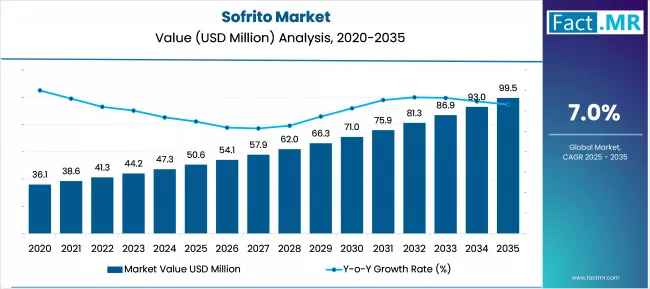
Sofrito Market Market Value Analysis | Source: Fact.MR
| Metric | Value |
|---|---|
| Industry Size (2025E) | USD 50.6 million |
| Industry Size (2035F) | USD 99.5 million |
| CAGR (2025-2035) | 7.0% |
Source: Fact.MR analysis. Updated Sep 17, 2025
The global sofrito market is poised for robust growth over the next decade, with the industry estimated at USD 50.6 million in 2025 and projected to reach USD 99.5 million by 2035, reflecting a CAGR of 7.0%.
This growth trajectory underscores the increasing adoption of sofrito as a versatile cooking base in households worldwide. Rising urbanization, changing lifestyles, and an expanding preference for ready-to-use and convenient food products are major drivers of this trend.
The market’s expansion is strongly supported by evolving consumer tastes. Increasing interest in ethnic and international cuisines, particularly Latin American and Mediterranean flavors, has accelerated demand for sofrito. Households are increasingly adopting ready-to-use formats to save preparation time while maintaining authentic taste.
Health-conscious consumers are also fueling the premium segment by seeking preservative-free, organic, and clean-label options, reflecting the growing importance of wellness-oriented food choices.
Geographically, growth is being driven by key markets such as the U.S., Spain, and Brazil, where urban lifestyles and cultural culinary trends are encouraging sofrito consumption. The expansion of modern retail outlets, specialty stores, and online grocery platforms is making sofrito products more widely accessible.
Additionally, product innovation, including flavor variations, improved shelf life, and convenient packaging formats, is helping manufacturers capture new customer segments and strengthen brand loyalty.
Advances in packaging, such as vacuum-sealed and shelf-stable formats, are extending product usability, reducing waste, and enabling broader distribution. This allows manufacturers to cater not only to households but also to occasional bulk buyers seeking convenience.
The global sofrito market is set for steady growth over the next decade. Success for manufacturers will hinge on delivering convenient, high-quality products with authentic flavors, appealing to the health-conscious and time-sensitive consumer. Rising culinary experimentation and the adoption of international cuisines are transforming sofrito from a niche ingredient into a mainstream kitchen staple.
Analyzing Key Dynamics of the Global Sofrito Market
Rapidly Growing Consumer Interest in Ethnic and Global Cuisines Driving Sofrito Demand
The increasing consumer curiosity toward ethnic and international cuisines has been a major factor boosting the sofrito market. As consumers explore Latin American, Caribbean, and Mediterranean cooking, the demand for ready-to-use flavor bases such as sofrito has surged.
Many households are looking for authentic taste experiences without the hassle of preparing traditional spice blends from scratch. This trend has particularly been observed among millennials and young working professionals, who prioritize convenience but do not want to compromise on flavor authenticity.
Moreover, the rise of global food influencers, social media cooking tutorials, and televised culinary shows has further fueled the popularity of ethnic cooking at home. Sofrito products, which form the foundation of many traditional recipes, have become a convenient solution to recreate these flavors quickly.
Retailers and brands are capitalizing on this trend by introducing varied sofrito variants tailored to different ethnic tastes, further strengthening market penetration.
Expansion of Modern Retail and E-commerce Channels Enhancing Sofrito Accessibility
The expansion of modern retail outlets and e-commerce platforms has played a critical role in driving the sofrito market. Supermarkets, hypermarkets, and specialty grocery stores are increasingly stocking a wide variety of prepackaged sofrito options, making them easily accessible to urban consumers. The convenience of finding multiple brands and flavors under one roof encourages trial purchases and repeat consumption, thereby boosting overall market demand.
In addition, online grocery platforms have enabled brands to reach a broader audience beyond urban centers, including semi-urban and rural consumers who are gradually becoming more experimental with their cooking habits.
Digital marketing strategies and home delivery services have made it easier for consumers to access premium and specialty sofrito products, increasing brand visibility and fostering loyalty among first-time buyers.
Increasing Preference for Convenient, Ready-to-Use Cooking Ingredients
Modern lifestyles, characterized by fast-paced schedules and limited cooking time, have resulted in higher demand for convenient cooking solutions. Sofrito, as a pre-blended cooking base, perfectly addresses this need by significantly reducing preparation time while maintaining authentic flavor profiles. Consumers who may not have the culinary skills or time to prepare fresh aromatic bases prefer ready-to-use sofrito as an easy alternative for home cooking.
Additionally, the convenience factor is especially appealing to working professionals, students, and urban families who seek efficiency in meal preparation. Sofrito’s long shelf life and versatility in various recipes, from rice dishes and stews to sauces and soups, further contribute to its adoption as a staple pantry item. This combination of time-saving convenience and culinary versatility continues to stimulate market growth.
High Competition and Intense Market Saturation Limiting Sofrito Profit Margins
The sofrito market faces significant challenges due to high competition among both global and regional players. Numerous brands are vying for shelf space and consumer attention, often engaging in aggressive pricing strategies to attract customers. This level of competition puts pressure on profit margins, especially for small and medium-sized manufacturers who lack the economies of scale enjoyed by larger firms.
Market saturation in key regions such as North America and parts of Europe makes it difficult for new entrants to establish a strong foothold. Retailers may prioritize well-established brands, limiting opportunities for innovative sofrito variants. Consequently, brands must invest heavily in marketing and promotions to differentiate their offerings, which can strain budgets and reduce overall profitability.
Fluctuating Raw Material Prices and Supply Chain Vulnerabilities Impacting Market Stability
The sofrito market heavily depends on fresh vegetables, herbs, and spices, which are subject to seasonal variations, climate change, and price volatility. Fluctuations in the cost of ingredients such as tomatoes, peppers, onions, and garlic directly affect production costs and retail prices, making it challenging for manufacturers to maintain consistent pricing.
Supply chain disruptions, including transportation delays and geopolitical trade restrictions, can further exacerbate this issue. For instance, reliance on imported spices and specialty vegetables may expose brands to international market risks. These factors can lead to temporary shortages or inconsistent product quality, potentially discouraging consumers and impacting brand loyalty over time.
Stringent Regulatory Standards and Labeling Requirements Posing Operational Challenges
Compliance with food safety regulations and labeling standards remains a critical challenge for sofrito producers. Different countries and regions enforce varying guidelines regarding preservatives, additives, nutrition labeling, and packaging materials. Meeting these requirements involves rigorous quality control processes, periodic inspections, and sometimes expensive certifications, which can increase operational costs.
Non-compliance, even unintentionally, can result in product recalls, fines, or bans, thereby damaging brand reputation. Additionally, the increasing consumer awareness of clean-label and natural products adds pressure on manufacturers to reformulate their offerings while maintaining taste, stability, and shelf life. Navigating these regulatory landscapes requires continuous investment in research, testing, and documentation, making regulatory adherence a persistent market challenge.
Regional Trends of Sofrito Market
North America is a big growth area because there are more Hispanics living there and more people are interested in Latin American flavors. Supermarkets and online stores are adding more ethnic foods, making sofrito easier to find.
The population of Europe is growing due to Mediterranean food is growing more popular as well as city life calls for quick and easy meals. Countries like Spain, France, as well as Germany have high acceptance rates since they are aware of food trends from around the world.
As people in Japan, China, and Australia try out different types of food from around the world and premium grocery stores grow, the Asia-Pacific region is becoming an important market. The demand is also helped by the fact that more imported and locally made sofrito products are becoming available.
Latin America is still a stable market because people there are used to the culture and households spend a lot of money. New ideas in packaging and ready-to-use products are driving demand in cities.
Country-wise Analysis
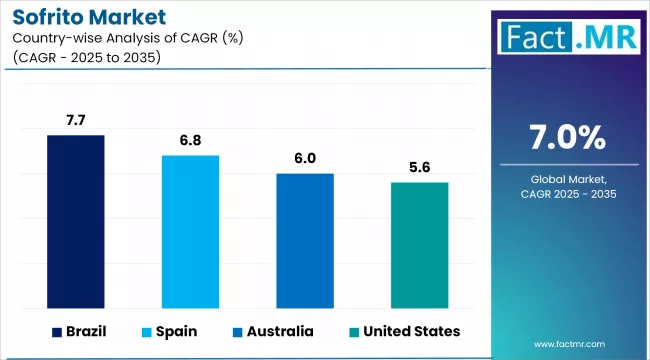
Sofrito Market Cagr Analysis By Country | Source: Fact.MR
| Countries | CAGR (2025-2035) |
|---|---|
| United States | 5.6% |
| Spain | 6.8% |
| Brazil | 7.7% |
Source: Fact.MR analysis. Updated Sep 17, 2025
U.S. Sofrito Market Growth Driven by Ethnic Food Trends and Expanding Retail Presence
The U.S. sofrito market is witnessing strong growth due to rising interest in Latin American cuisines, fueled by an increasing Hispanic population and mainstream adoption of ethnic flavors. Retailers and e-commerce platforms are expanding their ethnic food offerings, making sofrito products more widely accessible.
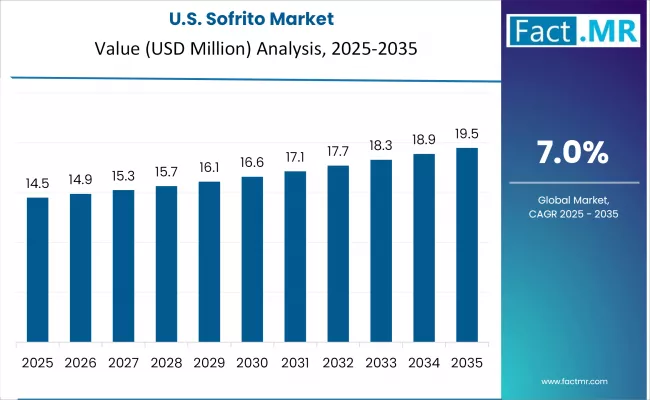
Sofrito Market Country Value Analysis | Source: Fact.MR
Ready-to-use formats are particularly favored in urban markets, where convenience is a priority. Health-conscious consumers are driving demand for clean-label and preservative-free products, opening opportunities for premium and specialty offerings.
In the foodservice sector, restaurants, catering services, and meal kit providers are increasingly incorporating sofrito to ensure consistent flavor profiles and streamline preparation times, presenting opportunities for bulk and institutional sales. Advances in packaging technology, including vacuum-sealed and shelf-stable formats, allow manufacturers to extend product reach and shelf life, enhancing market penetration across both retail and commercial channels.
- Rising urban demand for ready-to-use, convenient sofrito creates opportunities for premium and clean-label product offerings
- Foodservice channels represent a high-volume market for bulk and institutional-ready sofrito solutions
- Advanced packaging and storage technology enable broader distribution and longer shelf life
Spain Sofrito Market Expands as Mediterranean Cuisine Gains Popularity
Spain’s sofrito market benefits from its central role in Mediterranean cuisine, with both households and restaurants driving consistent demand. Urban consumers increasingly prefer pre-made sofrito to save preparation time without compromising authentic flavors. Retailers and online platforms are actively promoting ready-to-use and organic variants, targeting busy families and professionals seeking convenience and healthier options.
Restaurants leverage sofrito to standardize taste and reduce kitchen labor, which creates strong B2B opportunities for commercial-grade products. Modern trade expansion and strategic placement in both urban and smaller-town retail outlets facilitate wider market access, while premium packaging, diverse flavors, and organic labeling help manufacturers differentiate in a competitive landscape.
- Household demand emphasizes convenience, health, and authenticity, supporting ready-to-use and organic offerings
- Foodservice adoption drives institutional and bulk product sales
- Differentiation through flavor innovation, premium packaging, and organic labeling strengthens market positioning
Brazil Sofrito Market Benefits from Culinary Traditions and Urbanization
In Brazil, sofrito remains a staple ingredient for dishes like stews, rice, beans, and meat preparations. Urban migration and busy lifestyles are increasing the demand for pre-packaged and ready-to-use sofrito, allowing households to maintain traditional cooking practices while saving time. Supermarkets and e-commerce platforms offer both imported and local products, meeting varied consumer preferences and expanding market coverage.
Foodservice and catering sectors further enhance demand as consistent flavor and efficient preparation are crucial for operational efficiency. Product innovation, including new flavors and packaging formats, supports market differentiation, helps manufacturers build brand trust, and allows them to reach diverse consumer segments across retail and commercial channels.
- Ready-to-use and shelf-stable formats address urban household needs for convenience and traditional cooking
- Restaurants and catering services provide significant bulk and commercial sales opportunities
- Product innovation in flavors and packaging strengthens competitive advantage and expands distribution reach
Competitive Analysis
The Sofrito market is moderately competitive, with companies focusing on product differentiation, flavor innovation, and packaging enhancements. Leading players aim to capture both household and commercial segments through varied product portfolios.
Goya Foods Inc. has emerged as the most reputable company in the business. As sofrito in various forms like ready-to-use, frozen, as well as paste. The organization enjoys popularity in North America and Latin America since it emphasizes real flavors, clean-label ingredients, as well as a wide distribution.
Herdez Del Fuerte is available in both domestic and international versions. It has a long history of making Latin American cooking bases. New products, like organic ones that don't have preservatives, affect what people want.
La Morena focuses on strong flavors and high-quality packaging to appeal to homes in the city and food service channels. Working with online and brick-and-mortar stores makes products more visible and increases sales.
McCormick & Company Inc. does sell sofrito goods under well-known global culinary brands. This is all about quality, consistency, and ease of use. Because it is linked to modern retail and online shopping, it is easier to reach more people.
Iberia Foods, La Costeña, and Figueroa Produce are also important players. They compete on how reliable the flavor is, how new the packaging is, and how far they can reach. More businesses are spending money on marketing campaigns that talk about the health benefits of their products.
Recent Developments
- In October 2024, Goya Foods started selling an organic, preservative-free sofrito line to appeal to health-conscious customers in the US and Europe.
- In July 2024, Herdez Del Fuerte came out with frozen sofrito versions for restaurants, which made it easier to store and run the business.
- In January 2025, La Morena added new Mediterranean flavor blends to its line of ready-to-use sofrito in Spain.
Segmentation
Analyzing the Global Sofrito Market by Key Segments
The global sofrito market is witnessing steady growth as consumers increasingly seek convenient, flavorful, and versatile cooking bases for a variety of cuisines. Rising urbanization, busy lifestyles, and a growing inclination toward ready-made culinary solutions are driving the demand for sofrito across households and commercial kitchens alike. Innovations in packaging and product formats further contribute to the market’s expansion.
Among the key segments, ready-to-use sofrito products dominate due to their convenience, while household consumers currently represent the largest end-user base, driven by home cooking trends and an increasing interest in ethnic and international cuisines.
Ready-to-Use Sofrito Remains the Dominant Product Type
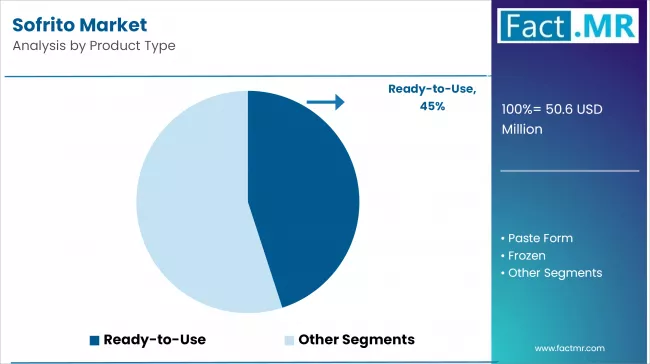
Sofrito Market Analysis By Product Type | Source: Fact.MR
Ready-to-use sofrito products are the leading segment in the global market, primarily due to their convenience and time-saving appeal. Unlike paste or frozen alternatives, ready-to-use sofrito requires minimal preparation, making it highly attractive for busy consumers who want to enhance the flavor of their dishes without the labor-intensive process of chopping, blending, or cooking raw ingredients. Manufacturers are focusing on improving shelf life, taste consistency, and natural ingredient inclusion, which further strengthens the preference for this segment.
The ready-to-use segment also benefits from widespread availability across modern trade outlets, online platforms, and specialty stores, allowing consumers to access premium and standard-quality options easily. Its versatility across different cuisines further drives adoption both at home and in professional kitchens.
- Convenience and minimal preparation make ready-to-use sofrito the preferred choice among consumers
- Manufacturers emphasize natural ingredients, preservative-free formulations, and taste consistency to enhance market appeal
- Strong distribution across modern retail and online channels ensures easy accessibility for end-users
Household Consumers Lead the End-User Segment
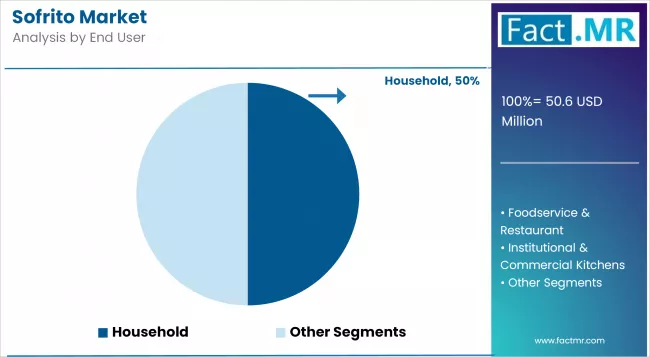
Sofrito Market Analysis By End User | Source: Fact.MR
Among end-users, household consumers dominate the sofrito market. The growing trend of home cooking, driven by a desire for healthier meals, ethnic culinary exploration, and convenient meal solutions, has significantly contributed to this dominance. Households increasingly prefer ready-to-use sofrito for its ability to deliver authentic flavors without extensive preparation, which suits busy professionals, young families, and cooking enthusiasts alike.
While foodservice and institutional kitchens also represent a substantial market, the frequency and volume of use in households—combined with a preference for retail-packaged options like jars and pouches—ensure that this end-user segment remains the largest. Additionally, the adoption of online grocery platforms allows households to experiment with international cuisines by easily sourcing varied sofrito flavors.
- Household demand is driven by convenience, flavor variety, and increasing home cooking trends
- Retail-packaged sofrito formats like jars and pouches are most preferred among households
- Online grocery and modern trade channels play a key role in expanding product reach to residential consumers
Segmentation of Sofrito Market
-
By Product Type :
- Ready-to-Use
- Paste Form
- Frozen
-
By Packaging :
- Jar
- Pouch
- Vacuum-Sealed
-
By End User :
- Household
- Foodservice & Restaurant
- Institutional & Commercial Kitchens
-
By Distribution Channel :
- Modern Trade
- Online Retail
- Specialty Stores
-
By Region :
- North America
- Latin America
- Western Europe
- Eastern Europe
- East Asia
- South Asia & Pacific
- Middle East & Africa
Frequently Asked Questions
What is the Global Sofrito Market size in 2025?
Who are the Major Players Operating in the Sofrito Market?
What is the Estimated Valuation of the Sofrito Market by 2035?
What Value CAGR did the Sofrito Market Exhibit over the Last Five Years?
Who worked on this report


Preview the report firsthand - request a free sample
Free SampleGet the brochure for pricing and purchase details
Download PDF