- Base Value(2025): 221.0 Mn
- Estimated Value(2026): 237.0 Mn
- Forecast Value (2036): 474.8 Mn
- CAGR (2026 - 2036): 7.2%
Bioidentical Proteins Market Overview, Growth Outlook, and Forecast by Fact.MR
- In 2025, the bioidentical proteins market was valued at USD 221.0 million.
- Demand for bioidentical protein products is projected to grow to USD 237.0 million in 2026 and reach USD 474.8 million by 2036.
- The market is expected to expand at a CAGR of 7.2% during the forecast period.
- The bioidentical proteins market is projected to create an absolute dollar opportunity of USD 238.0 Million between 2026 and 2036.
- Market growth is driven by increasing demand for recombinant therapeutic proteins, rising prevalence of chronic diseases such as diabetes and cancer, and expanding adoption of biologics and biosimilars across global healthcare systems.
- Growing investment in recombinant DNA technologies, monoclonal antibody development, precision medicine, and cell & gene therapy research is further supporting market expansion.
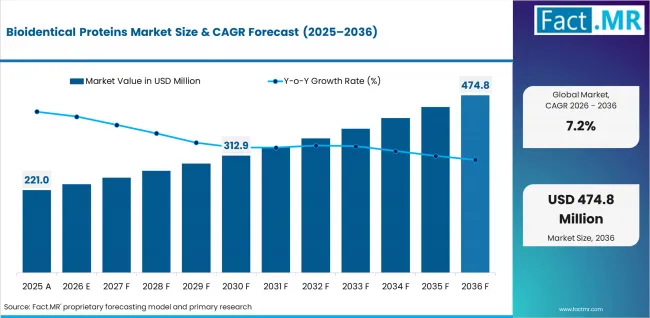
Bioidentical Proteins Market Value Analysis | Source: Fact.MR
Summary of the Bioidentical Proteins Market
- Market Snapshot
- Global bioidentical proteins market revenue stood at USD 237.0 million in 2026 and is forecast to reach USD 474.8 million by 2036.
- At a CAGR of 7.2% from 2026 to 2036, the market is projected to expand nearly 2.0x, creating an absolute dollar opportunity of USD 238.0 Million.
- The growth of the market size is due to the rise in demand for recombinant therapeutic protein, increasing prevalence of chronic disease, and the expanding application of biologics and biosimilars in healthcare systems globally.
- The commercialization of recombinant human insulin, monoclonal antibodies, cytokines and therapeutic enzymes is growing in pharmaceutical, biotechnology and regenerative medicine area which is propelling market growth.
- The advancements in the rDNA technology, Mammalian Expression Systems, Microbial Protein Engineering and Biologics-manufacturing Capabilities are relentlessly driving the growth of the market globally.
- Demand and Growth Drivers
- Increasing incidence of diabetes, cancer, autoimmune diseases, and rare genetic disorders worldwide.
- Growing demand for biologics and bioidentical therapeutic proteins rather than traditional small-molecule drugs.
- Rising use of recombinant human insulin, monoclonal antibodies, interferons, cytokines, and growth hormones in therapeutic areas.
- Advancements in precision medicine, cell & gene therapy R&D, biologics drug development pipelines.
- Increasing demand for:
- High-purity recombinant proteins
- GMP-grade biologics manufacturing
- Cell & gene therapy-compatible proteins
- Precision biologics and targeted therapeutics
- Endotoxin-free recombinant proteins
- Advanced protein engineering technologies
- Product and Segment View
- Recombinant Human Insulin accounts for 23.4% of product type share in 2026, driven by rising diabetes prevalence and increasing global adoption of recombinant insulin therapies.
- Therapeutics hold 33.1% of application share in 2026, supported by expanding biologics commercialization and increasing use of recombinant proteins in chronic disease treatment.
- Mammalian Expression Systems represent 56.3% of source/expression system share in 2026, reflecting strong demand for complex therapeutic protein production and monoclonal antibody manufacturing.
- Pharmaceutical & Biotechnology Companies capture 50.6% of end-user share in 2026, supported by increasing biologics R&D investment and expansion of recombinant protein manufacturing capacities.
- Geography and Competitive Outlook
- Rising biologics demand, increasing investment in recombinant therapeutics, and expansion of biotechnology manufacturing capabilities are driving strong market growth across East Asia, South Asia & Pacific, and North America.
- Key growth markets in the Bioidentical Proteins Market include India (10.8% CAGR), Japan (9.9% CAGR), China (9.6% CAGR), United States (6.2% CAGR), United Kingdom (5.8% CAGR), France (5.7% CAGR), and Germany (5.3% CAGR) during the forecast period.
- Market growth is supported by:
- Increasing biologics and biosimilars commercialization
- Rising investment in recombinant protein manufacturing
- Expansion of precision medicine and cell therapy research
- Growth in monoclonal antibody and cytokine therapeutics
- Increasing adoption of mammalian and microbial expression systems
- Growing pharmaceutical outsourcing and CDMO activities
- Prominent players operating in the market include Thermo Fisher Scientific, Bio-Techne, GenScript Biotech, Bio-Rad Laboratories, Sino Biological, Abcam, Miltenyi Biotec, Proteintech Group, RayBiotech, and BPS Bioscience.
- Analyst Opinion
- Shambhu Nath Jha, Principal Consultant at Fact.MR, opines, “The productivity of these Bioidentical Proteins Market developments in the future would also be predicted in the context of the current trends in the industrial technology development, R&D intents, and evolving regulation in the market related to recombinant protein engineering, scalable biologics manufacturing, production of high purity GMP grade and growing focus on precision biologics, monoclonal antibodies and cell & gene therapy friendly protein platforms.
Bioidentical Proteins Market — At a Glance
| Attribute | Details |
|---|---|
| Market Value 2025 | USD 221.0 Million |
| Market Value 2026 | USD 237.0 Million |
| Market Value 2036 | USD 474.8 Million |
| Absolute Dollar Opportunity | USD 238.0 Million |
| Total Growth | 100.40% |
| CAGR | 7.20% |
| Growth Multiple | 2.0x |
| Key Demand Theme | Rising demand for recombinant therapeutic proteins and biologics |
| Leading Product Segment | Recombinant Human Insulin |
| Product Segment Share | 23.4% |
| Leading Source / Expression System | Mammalian Expression Systems |
| Source Segment Share | 56.3% |
| Leading Therapeutic Area | Oncology |
| Therapeutic Area Share | 29.2% |
| Leading Application | Therapeutics |
| Application Share | 33.1% |
| Leading End User | Pharmaceutical & Biotechnology Companies |
| End User Share | 50.6% |
| Key Growth Regions | East Asia, South Asia & Pacific, North America |
| Key Companies | Thermo Fisher Scientific, Bio-Techne, GenScript Biotech, Bio-Rad Laboratories, Sino Biological, Abcam, Miltenyi Biotec |
| Segmentation by Product Type | Recombinant Human Insulin, Human Growth Hormones, Erythropoietin (EPO), Interferons, Monoclonal Antibodies, Cytokines, Recombinant Enzymes, Fusion Proteins, Coagulation Factors, Others |
| Segmentation by Source / Expression System | Mammalian Expression Systems, Microbial Expression Systems, Other Expression Systems |
| Segmentation by Therapeutic Area | Oncology, Diabetes, Autoimmune Diseases, Hematological Disorders, Infectious Diseases, Cardiovascular Diseases, Neurological Disorders, Rare Genetic Disorders |
| Segmentation by Application | Therapeutics, Drug Discovery & Development, Cell & Gene Therapy Research, Regenerative Medicine, Diagnostics, Vaccine Development, Tissue Engineering, Academic & Research Applications |
| Segmentation by End User | Pharmaceutical & Biotechnology Companies, Academic & Research Institutes, Hospitals & Diagnostic Laboratories, Cell Therapy Centers |
| Segmentation by Region | North America, Latin America, East Asia, South Asia & Pacific, Western Europe, Eastern Europe, Middle East & Africa |
Key Growth Drivers, Constraints, and Opportunities
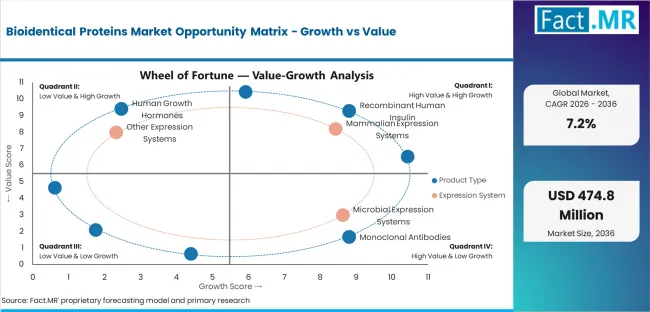
Bioidentical Proteins Market Opportunity Matrix Growth Vs Value | Source: Fact.MR
Key Factors Driving Growth
- Growth in the bioidentical proteins market across the globe is being driven by the growing use of recombinant therapeutic proteins, biologics, and biosimilars in applications such as oncology, diabetes, autoimmune diseases, and rare disease treatment.
- Growing funding in recombinant DNA based technologies, mammalian expression system, microbial protein engineering, and biologics manufacturing facility enables commercialization of high-purity bioidentical proteins.
- The growth may be attributed to the burgeoning precision medicine, monoclonal antibody therapeutics, cell & gene therapy research, and regenerative medicine applications.
| Growth Driver | Demand Impact | Time Horizon | Key Impact Area | Fact.MR Insight |
|---|---|---|---|---|
| Rising adoption of biologics and biosimilars | High | Short–Mid Term | Recombinant therapeutic protein demand | Increasing commercialization of biosimilars and biologics is accelerating global demand for recombinant insulin, monoclonal antibodies, and cytokine therapeutics. |
| Growing prevalence of chronic diseases | High | Short–Mid Term | Therapeutic protein utilization | Rising incidence of diabetes, cancer, autoimmune disorders, and rare diseases is driving adoption of bioidentical therapeutic proteins globally. |
| Expansion of precision medicine and targeted biologics | Medium–High | Mid–Long Term | Precision therapeutics & oncology | Increasing focus on targeted therapies, monoclonal antibodies, and personalized biologics is strengthening demand for advanced recombinant proteins. |
| Increasing investment in mammalian expression systems | Medium–High | Mid–Long Term | Biologics manufacturing infrastructure | Expansion of CHO cell, HEK cell, and advanced mammalian protein production platforms is supporting commercialization of high-purity therapeutic proteins. |
| Growth in cell & gene therapy research | Medium–High | Mid–Long Term | Advanced biologics & regenerative medicine | Rising investment in cell therapy-compatible proteins, cytokines, and regenerative medicine applications is creating long-term opportunities for recombinant protein manufacturers. |
Key Market Constraints
- The complexity of the regulatory approval process, the requirements of biologics manufacturing regulations and high standards of GMP can contribute to lengthening the time and the cost of bringing a product to market.
- A significant operational challenge remains the high cost of production, due to the purification of recombinant proteins, use of mammalian cell culture systems, and the infrastructure required for production of biologics.
- Patent protection, the specter of biosimilar litigation and potential intellectual property barriers can all serve to limit access to the market for developing biotechnology and recombinant protein companies.
Key Opportunity Areas
- The demand for biologics manufacturers will increase on account of rising needs for biosimilar, recombinant insulin, cytokines, monoclonal antibodies, and therapeutic enzymes which are anticipated to provide substantial growth opportunities in the long run.
- The growing use of AI-based protein engineering, precision biologics, and cell & gene therapy-suitable recombinant proteins is creating new avenues for the development of next-generation therapeutics.
- Investments in activities such as biologics outsourcing, CDMO services, protein production free from endotoxin, and development of novel microbial and mammalian expression systems are to drive growth of the global market.
Segment-wise Analysis of the Bioidentical Proteins Market
- Recombinant Human Insulin accounts for 23.4% share of the product type segment in 2026, driven by increasing global diabetes prevalence, rising adoption of recombinant insulin therapies, and growing demand for bioidentical therapeutic proteins across healthcare systems globally.
- Mammalian Expression Systems represent 56.3% share of the source/expression system segment in 2026, supported by strong demand for complex therapeutic protein production, monoclonal antibody manufacturing, and high-purity biologics commercialization.
- Oncology accounts for 29.2% share of the therapeutic area segment in 2026, driven by increasing biologics adoption, rising monoclonal antibody usage, and growing investment in targeted cancer therapies and precision medicine applications globally.
The Bioidentical Proteins Market is segmented by product type, source/expression system, therapeutic area, application, end user, and region.
Which Product Type Segment Topped the Bioidentical Proteins Market?
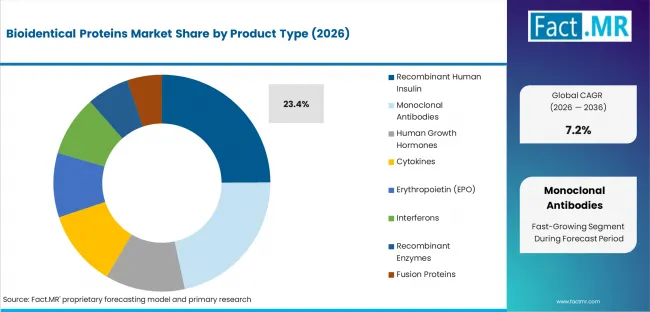
Bioidentical Proteins Market Analysis By Product Type | Source: Fact.MR
The share of Recombinant Human Insulin is expected to dominate with 23.4% of the total revenue in the Bioidentical Proteins Market by 2026. This can be attributed to increasing incidence of diabetes worldwide, rising utilization of recombinant insulin-based therapies, augmenting availability of biosimilar insulin products and increasing application of bioidentical insulin formulations in hospitals, specialty clinics and diabetes care programs globally.
Which Source / Expression System Segment Accounts for the Highest Share in the Market?
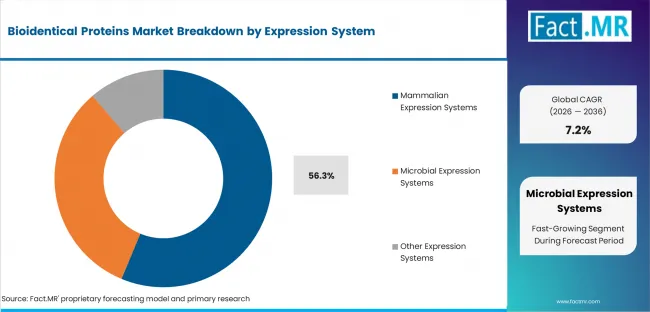
Bioidentical Proteins Market Analysis By Expression System | Source: Fact.MR
Mammalian Expression Systems is expected to contribute the largest share of the source/expression system segment, by holding a share of 56.3% in 2026. This superior position owes to growing demand for high purity therapeutic proteins, monoclonal antibodies, cytokines and complicated biologics that necessitate advanced mammalian cell culture systems for example CHO and HEK cells for commercial-scale biologics manufacturing.
Which Therapeutic Area Segment Leads the Market?
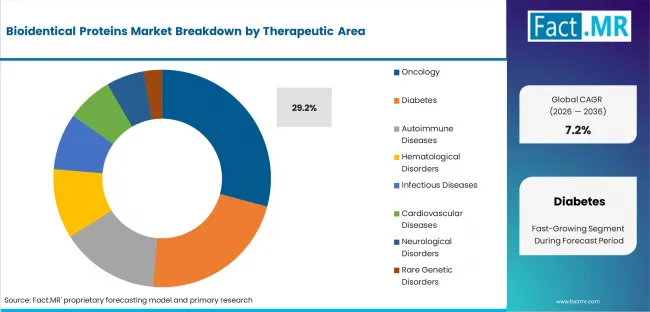
Bioidentical Proteins Market Analysis By Therapeutic Area | Source: Fact.MR
The oncology segment is projected to dominate the market with a 29.2% share in 2026, attributed to the growing adoption of biologics in cancer treatment, increasing usage of monoclonal antibodies, development of targeted therapies, and growing investment in precision oncology and immunotherapy-based biologics worldwide.
Which End User Segment Holds the Largest Share in the Market?
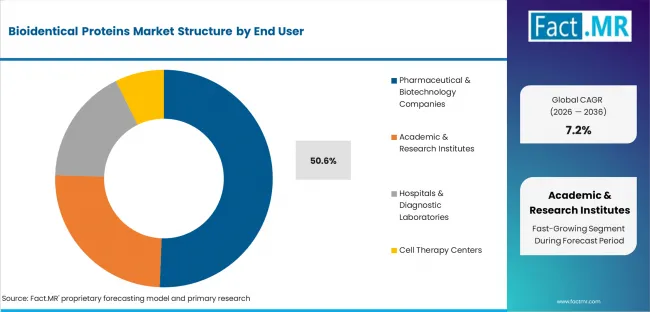
Bioidentical Proteins Market Analysis By End User | Source: Fact.MR
Pharmaceutical & Biotechnology Companies are projected to account for the largest 50.6% share of the market in 2026. This dominance is supported by increasing biologics R&D investment, expansion of recombinant protein manufacturing capabilities, rising biosimilars development activities, and growing commercialization of monoclonal antibodies, cytokines, and therapeutic recombinant proteins globally.
Regional Outlook Across Key Markets
North America, Latin America, Western Europe, Eastern Europe, East Asia, South Asia & Pacific, and Middle East & Africa are the regional segmentation of this report. It includes detailed analysis of the demand for biologics, expansion of the recombinant protein manufacturing capacity, growth in usage of monoclonal antibodies and recombinant therapeutics, commercialization of biosimilars, advances in mammalian and microbial expression systems, increasing funding in bio-technology, regulatory modifications in biologics and biosimilars, and application of bioidentical proteins in therapeutics, diagnostics, regenerative medicines, and research in cell and gene therapy around the world.
.webp "Top Country Growth Comparison Bioidentical Proteins Market Cagr (2026 2036)")
Top Country Growth Comparison Bioidentical Proteins Market Cagr (2026 2036) | Source: Fact.MR
CAGR Table
| Country | CAGR (%) |
|---|---|
| India | 10.8% |
| Japan | 9.9% |
| China | 9.6% |
| United Kingdom | 5.8% |
| United States | 6.2% |
| Germany | 5.3% |
| France | 5.7% |
Source: Fact.MR (FMR) analysis, based on proprietary forecasting model and primary research.
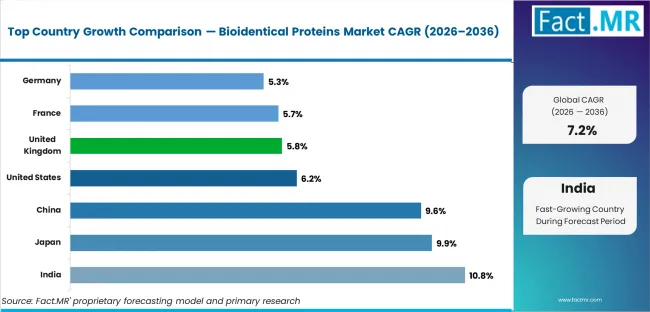
Bioidentical Proteins Market Cagr Analysis By Country | Source: Fact.MR
North America Bioidentical Proteins Market
North America’s market for Bioidentical Proteins is experiencing rapid growth at the global level owing to various factors such as increasing demand for biologics, rising applications of recombinant therapeutic proteins, growing commercialization of biosimilars, and well-developed biotechnology manufacturing infrastructure. Regional demand is also bolstered by increased production of monoclonal antibodies, recombinant insulin therapies, cell and gene therapy research and biologics outsourcing.
- United States: Demand for bioidentical proteins in the U.S. is projected to rise at 6.2% CAGR through 2036. Growth is driven by increasing biologics adoption, expansion of recombinant protein manufacturing, rising investment in precision medicine, and growing commercialization of monoclonal antibodies and biosimilars.
- Canada: Demand for bioidentical proteins in Canada is projected to grow steadily through 2036, supported by increasing biotechnology investments, growing biologics research activities, and rising adoption of recombinant therapeutic proteins.
Europe Bioidentical Proteins Market
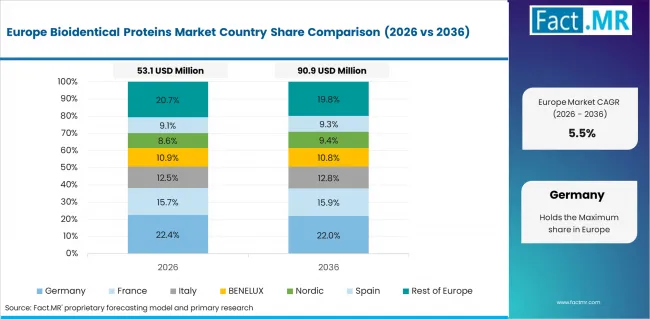
Bioidentical Proteins Market Europe Country Market Share Analysis, 2026 & 2036 | Source: Fact.MR
Europe has a competitive edge in the production of biologics and recombinant therapeutics due to factors such as increasing adoption of biosimilars, developed biologics manufacturing, and focus on precision medicine and next-generation biologics. The region is observing growth in the commercialization of recombinant proteins, monoclonal antibodies, and cell therapy compatible biologics. Top Players such as Bio-Techne, Abcam and a multitude of regional biotech companies are becoming more and more forced in the market.
- Germany: Demand for bioidentical proteins in Germany is projected to rise steadily through 2036, supported by increasing biologics R&D investment, strong biosimilars adoption, and growth in recombinant therapeutic manufacturing.
- United Kingdom: Demand for bioidentical proteins in the United Kingdom is projected to rise at 5.8% CAGR through 2036, driven by increasing investment in biotechnology research, monoclonal antibody development, and precision biologics commercialization.
East Asia Bioidentical Proteins Market
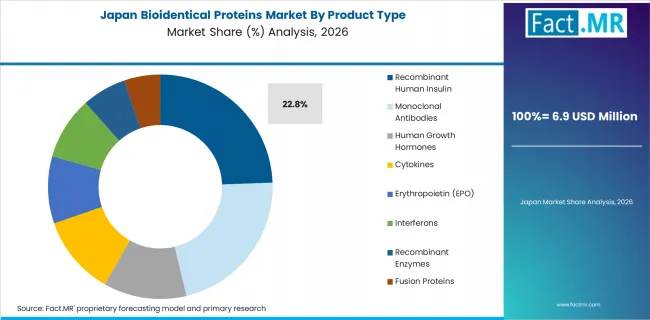
Bioidentical Proteins Market Japan Market Share Analysis By Product Type | Source: Fact.MR
Strong biotechnology manufacturing infrastructure, increasing demand for biologics, growing healthcare expenditure and increasing recombinant therapeutic production are the factors which are driving East Asia to hold a notable market share over the forecast period. The companies in the region are also tending to biotechnological products such as biosimilars, monoclonal antibodies, recombinant insulin products and the most sophisticated biologics manufacturing technology.
- China: Demand for bioidentical proteins in China is projected to rise at 9.6% CAGR through 2036, driven by increasing biosimilars commercialization, expansion of biotechnology manufacturing infrastructure, and rising demand for recombinant therapeutics.
- Japan: Demand for bioidentical proteins in Japan is expected to grow at 9.9% CAGR through 2036 due to increasing biologics adoption, expansion of precision medicine, and rising demand for advanced recombinant protein therapies.
- South Korea: Demand for bioidentical proteins in South Korea is projected to rise steadily through 2036, supported by increasing biotechnology investments, biologics exports, and expansion of recombinant therapeutic manufacturing.
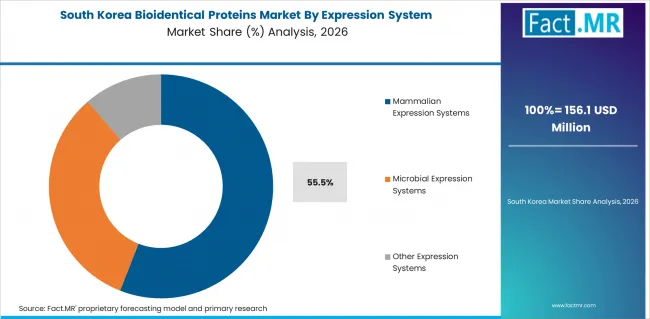
Bioidentical Proteins Market South Korea Market Share Analysis By Expression System | Source: Fact.MR
South Asia & Pacific Bioidentical Proteins Market
It is also anticipated that South Asia and the Pacific will witness the highest CAGR during the forecast period due to the increasing biosimilars production, rising investments in biologics, expanding healthcare infrastructure, and growing application of recombinant therapeutics. Regional companies are aggressively diversifying their portfolios in recombinant protein production and biologics commercialization.
- India: Demand for bioidentical proteins in India is projected to rise at 10.8% CAGR through 2036, driven by rapid biosimilars expansion, increasing recombinant protein manufacturing capacity, growing biotechnology investments, and rising demand for affordable biologics therapies.
Latin America Bioidentical Proteins Market
Growth of recombinant therapeutics and biologics in Latin America is supported by increasing healthcare modernization, expansion of biosimilars adoption, and growing demand for advanced therapeutic proteins. Urban healthcare systems are increasingly adopting recombinant insulin, monoclonal antibodies, and biologics-based therapies.
- Brazil: Demand for bioidentical proteins in Brazil is projected to rise steadily through 2036, supported by increasing biosimilars demand, growing biologics imports, and rising investment in biotechnology and pharmaceutical manufacturing.
The Fact.MR report provides an in-depth analysis of the recombinant protein manufacturing trends, biologics commercialization, application potential, regulatory framework, competitive landscape, protein engineering, growth of biosimilars (antecedents), and future outlook in North America, Latin America, Europe, East Asia, South Asia and Pacific, and Middle East & Africa. The report points out growth in monoclonal antibodies, recombinant insulin therapies, mammalian and microbial expression systems, cell & gene therapy research, biologics contract manufacturing, precision medicine, and bioidentical proteins.
Competitive Benchmarking and Company Positioning
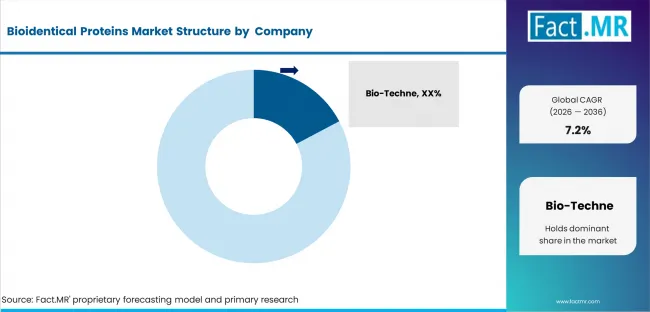
Bioidentical Proteins Market Analysis By Company | Source: Fact.MR
Leading Companies Shaping the Bioidentical Proteins Market
The bioidentical proteins market is moderately consolidated, with leading companies including Thermo Fisher Scientific, Bio-Techne, GenScript Biotech, Bio-Rad Laboratories, Sino Biological, Abcam, Miltenyi Biotec, Proteintech Group, RayBiotech, and BPS Bioscience. Competitive differentiation is primarily based on recombinant protein purity, biologics manufacturing expertise, protein engineering capabilities, GMP-grade production, and scalability of therapeutic protein manufacturing.
Major players are expanding their market presence through advanced recombinant protein portfolios, monoclonal antibody development, cytokine commercialization, AI-enabled protein engineering, and expansion of biologics manufacturing infrastructure. Companies are increasingly investing in mammalian expression systems, microbial production technologies, endotoxin-free protein manufacturing, and cell & gene therapy-compatible biologics to strengthen their competitive positioning across therapeutic, diagnostic, and research applications globally.
Recent Industry Developments
- BASF – Launch of Bio-Identical Collagen III Platform (March 2025)
- BASF introduced a new collagen science platform featuring precision peptides and bio-identical Collagen III designed for advanced skincare, regenerative beauty, and biomaterial applications. The initiative strengthened BASF’s position in bioengineered peptide technologies and bio-identical protein innovation while supporting increasing demand for biomimetic proteins and next-generation biological formulations across cosmetic and wellness industries.
- Bio-Techne – Licensing of AI-Designed NovoBody™ Duo Molecules from Monod Bio (November 2025)
- Bio-Techne announced a licensing agreement with Monod Bio to obtain exclusive commercial rights for NovoBody™ Duo molecules, a novel class of AI-designed bispecific binding proteins. The partnership strengthened Bio-Techne’s recombinant protein and biologics portfolio while expanding capabilities in protein engineering, therapeutic discovery, and next-generation biologics development for precision medicine applications.
- Sino Biological – Launch of ProPure™ Endotoxin-Free Recombinant Proteins Made in USA (July 2025)
- Sino Biological launched its ProPure™ endotoxin-free recombinant protein portfolio manufactured in the United States to support therapeutic research, immunology studies, cell therapy development, and advanced biologics applications. The launch strengthened the company’s position in high-purity recombinant protein manufacturing and addressed increasing demand for GMP-compatible bioactive proteins across biopharmaceutical and life sciences industries.
- Abcam – Participation in the Innovative Health Initiative (IHI) LIGAND-AI Project (January 2026)
- Abcam joined the Innovative Health Initiative (IHI) LIGAND-AI consortium to support AI-driven drug discovery and recombinant protein research through development of high-quality biological datasets and protein interaction technologies. The initiative strengthened Abcam’s position in biologics research, recombinant protein engineering, and AI-enabled therapeutic development targeting next-generation precision medicine applications.
- Leinco Technologies – Acquisition of BioClin Inc.’s Essential IVD Raw Material Antibody Clones (July 2025)
- Leinco Technologies acquired BioClin Inc.’s essential IVD raw material antibody clone portfolio to strengthen its recombinant antibody and diagnostic biologics capabilities. The acquisition expanded Leinco’s in-vitro diagnostics raw material catalog while enhancing its position in recombinant antibody development, biologics research, and diagnostic protein commercialization across life sciences and biotechnology industries.
Leading Companies Shaping the Bioidentical Proteins Market
- Thermo Fisher Scientific
- Bio-Techne
- GenScript Biotech
- Bio-Rad Laboratories
- Sino Biological
- Abcam
- Miltenyi Biotec
- Proteintech Group
- RayBiotech
- BPS Bioscience
Sources and Research References
- [1] BASF, “BASF Ushers in a New Era of Collagen Science with Precision Peptide and Bio-Identical Collagen III”, March 2025
- [2] Bio-Techne, “Bio-Techne Licenses AI-Designed NovoBody™ Duo Molecules from Monod Bio to Expand Recombinant Protein Portfolio”, November 2025
- [3] Sino Biological, “ProPure™ Endotoxin-Free Proteins Made in USA”, July 2025
- [4] Abcam, “Abcam Joins the Innovative Health Initiative (IHI) LIGAND-AI Project”, January 2026
- [5] Leinco Technologies, “Leinco Technologies Acquires BioClin Inc.’s Essential IVD Raw Material Antibody Clones, Bolstering Leinco’s IVD Raw Material Catalog Business”, July 2025
Bioidentical Proteins Market Definition
Bioidentical proteins constitute a sub-industry within the larger industry of recombinant proteins and biologics and refer to proteins that have identical structure and functionality as those found naturally in humans. These proteins are synthesized using recombinant DNA technology within several expression systems such as mammalian and microbial expression systems. The bioidentical proteins industry comprises several products such as recombinant human insulin, monoclonal antibodies, cytokines, growth hormones, interferons, and therapeutic enzymes used in therapeutic applications, diagnostics, regenerative medicine, biologics production, as well as cell and gene therapy research applications.
Bioidentical Proteins Market Inclusions
This report on global and regional bioidentical proteins market provides an analysis of the market size and a forecast from 2026 to 2036, with 2025 as the base year. The report covers detailed analysis of biologics adoption trends, recombinant protein production, competitive landscape, protein engineering, and also provides an analysis of the key segments including product, source/expression system, therapeutic area, application, end user, and region. It further highlights new developments including monoclonal antibodies, precision biologics, mammalian expression systems, cell and gene-therapy-compatible proteins, AI-driven protein engineering, biosimilar globalization and a global rise in recombinantly produced therapeutic proteins.
Bioidentical Proteins Market Exclusions
This assessment is concerned with the recombinant and bioidentical protein products utilized in therapeutics, diagnostics, biologics manufacturing, regenerative medicine, and research. The scope of the report does not cover regular dietary supplements, industrial enzymes used for non-therapeutic purposes, classical vaccines without recombinant protein ingredients, and routine laboratory reagents unless they are associated with recombinant bioidentical proteins, therapeutic biologics, protein engineering, or advanced biologics research and manufacturing applications.
Bioidentical Proteins Market Research Methodology
- Primary Research
- In order to estimate the size of the bioidentical proteins market considering both top-down and bottom-up methodologies were used from a global perspective. The multiple rounds of primary interviews were conducted with recombinant protein manufacturers, biologics company, biotech company, distributors, research institutes, healthcare professionals and industry consultants to verify the market trends, pricing models, therapeutic demand, production technology, competitive positioning and regional acceptability trends associated with recombinant therapeutic proteins and biologics applications.
- Desk Research
- The report is based on data derived from company annual reports, investor presentations, biotechnologist journals, naturally sourced industry documents, recombinant proteins research papers, regulatory databases, trade statistics, healthcare reports, and scientific reports around rDNA technologies, biologics production, protein engineering, monoclonal antibodies, biosimilars, and cell & gene therapy studies. Other references analyzed included biosimilars commercialization research, protein expression technology analysis and adoption of therapeutic proteins on a global stage.
- Market-Sizing and Forecasting
- The market sizing calculation applies a bottom-up approach to estimate the sales of recombinant and bioidentical protein for biologic manufacturers and recombinant protein providers, validated by a top-down approach through analysis of the recombinant proteins and therapeutic biologics market. Predictions were based on regional demand for biologics, therapeutic adoption trends, penetration of protein expression systems, expansion of manufacturing capacity, biologics R&D investment, and commercialization of recombinant therapeutic proteins worldwide.
- Data Validation and Update Cycle
- Market projections were validated via primary interviews, financial analysis of companies, demand for biologics, trends of recombinant protein production, analysis of healthcare expenditure, regional investment in biotechnology, and historical performance of recombinant proteins market. Based on changing regulations in biologics, new technologies in recombinant protein, market penetration of biosimilars, developments in protein engineering, progress in manufacturing technologies, advancements in the pipeline of therapeutic solutions, and global trends in healthcare and precision medicine.
Segmentation
Scope of Analysis
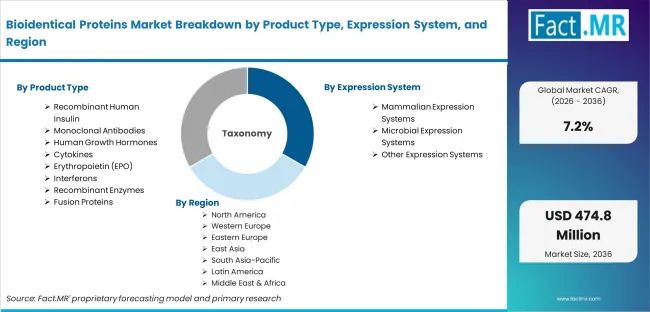
Bioidentical Proteins Market Breakdown By Product Type, Expression System, And Region | Source: Fact.MR
Parameter |
Details |
|---|---|
| Quantitative Units | USD 221.0 million (2025) to USD 474.8 million (2036) |
| Market Definition | The Bioidentical Proteins Market comprises recombinant proteins structurally and functionally identical to naturally occurring human proteins used across therapeutics, biologics manufacturing, diagnostics, regenerative medicine, drug discovery, and cell & gene therapy research applications. |
| Regions Covered | North America, Latin America, East Asia, South Asia & Pacific, Western Europe, Eastern Europe, Middle East & Africa |
| Countries Covered | USA, Canada, Germany, United Kingdom, China, Japan, India, France, South Korea |
| Key Companies | Thermo Fisher Scientific, Bio-Techne, GenScript Biotech, Bio-Rad Laboratories, Sino Biological, Abcam, Miltenyi Biotec, Proteintech Group, RayBiotech, BPS Bioscience |
| Forecast Period | 2026 to 2036 |
| Approach | Hybrid demand-side and top-down market estimation methodology supported by primary interviews, recombinant protein production analysis, biologics commercialization trends, therapeutic protein adoption analysis, biotechnology investment assessment, and competitive benchmarking analysis |
Analysis by Product Type, Source / Expression System, Therapeutic Area, Application, End User, and Region
-
Bioidentical Proteins Market by Product Type:
- Recombinant Human Insulin
- Human Growth Hormones
- Erythropoietin (EPO)
- Interferons
- Monoclonal Antibodies
- Cytokines
- Recombinant Enzymes
- Fusion Proteins
- Coagulation Factors
- Others
-
Bioidentical Proteins Market by Source / Expression System:
- Mammalian Expression Systems
- CHO Cells
- HEK Cells
- Hybridoma Systems
- Microbial Expression Systems
- E. coli
- Yeast Systems
- Fungal Systems
- Other Expression Systems
- Insect Cells
- Plant-Based Systems
- Cell-Free Systems
- Mammalian Expression Systems
-
Bioidentical Proteins Market by Therapeutic Area:
- Oncology
- Diabetes
- Autoimmune Diseases
- Hematological Disorders
- Infectious Diseases
- Cardiovascular Diseases
- Neurological Disorders
- Rare Genetic Disorders
-
Bioidentical Proteins Market by Application:
- Therapeutics
- Drug Discovery & Development
- Cell & Gene Therapy Research
- Regenerative Medicine
- Diagnostics
- Vaccine Development
- Tissue Engineering
- Academic & Research Applications
-
Bioidentical Proteins Market by End User:
- Pharmaceutical & Biotechnology Companies
- Academic & Research Institutes
- Hospitals & Diagnostic Laboratories
- Cell Therapy Centers
-
Bioidentical Proteins Market by Region:
- North America
- USA
- Canada
- Mexico
- Latin America
- Brazil
- Chile
- Rest of LATAM
- East Asia
- China
- Japan
- South Korea
- Taiwan
- South Asia & Pacific
- India
- Singapore
- Australia
- ASEAN
- Western Europe
- Germany
- France
- U.K.
- Italy
- Spain
- BENELUX
- Nordic
- Rest of Western Europe
- Eastern Europe
- Poland
- Hungary
- Czech Republic
- Balkan & Baltics
- Rest of Eastern Europe
- Middle East and Africa
- Kingdom of Saudi Arabia
- United Arab Emirates
- South Africa
- Rest of Middle East and Africa
- North America
Frequently Asked Questions
How large is the demand for Bioidentical Proteins in the global market in 2025?
What will be the market size of the Bioidentical Proteins Market by 2036?
What is the expected demand growth for the Bioidentical Proteins Market between 2026 and 2036?
How significant is the growth outlook for India in this market?
Which company is identified as a leading player in the Bioidentical Proteins Market?
Who worked on this report


Preview the report firsthand - request a free sample
Free SampleGet the brochure for pricing and purchase details
Download PDF