Creatine Gummies Market Size, Share, Growth and Forecast (2026 - 2036)
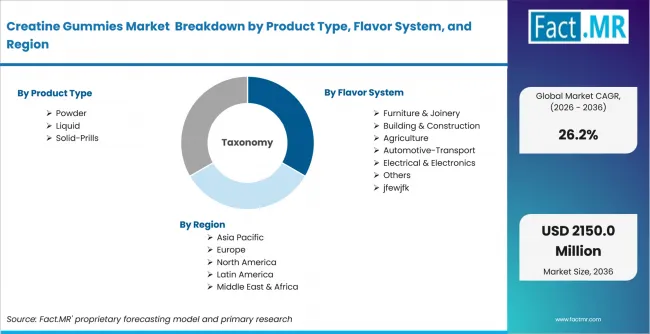
The Creatine Gummies Market is segmented by Product Type, by Flavor System, by Serving Size, by Sales Channel, by Certification, by Buyer Group, by Use Case, and by Region. Forecast for 2026 to 2036.
What is the creatine gummies market forecast to be worth by 2036?
USD 210 million in 2026 to USD 2,150 million by 2036, at 26.2% CAGR.
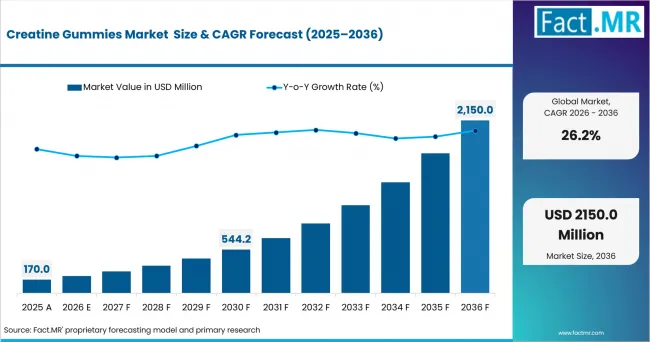
- The creatine gummies market crossed a valuation of USD 170 million in 2025.
- Demand is expected to increase from USD 210 million in 2026 to USD 2,150 million by 2036.
- The market is forecast to record 26.2% CAGR during 2026 to 2036 as daily-dose gummies gain retail space, subscription use and wider acceptance among wellness beginners.
What are the defining numbers behind creatine gummies growth?
USD 1,940 million absolute opportunity by 2036. The United States, India and China lead the country view.
- Demand Drivers in the Market
- Habit friction is lower because gummies replace scoops, shakers and aftertaste with a fixed daily chewable serving.
- Women and active aging buyers are entering creatine after research widened the discussion beyond gym-only performance.
- Retailers are building creatine shelves around powders and sticks. Gummies gain more comparison visibility from that shelf placement.
- Third-party testing is now a purchase filter because consumers want proof that a full creatine dose survives the gummy process.
- Key Segments Analyzed
- By Product Type: Creatine Monohydrate Gummies are expected to account for 72.0% of the market share in 2026 because monohydrate is the studied form and the easiest label claim for mainstream buyers.
- By Flavor System: Fruit Flavors are projected to capture 68.0% of the market in 2026. Sour cherry, watermelon and pineapple formats make daily use feel closer to a snack habit.
- By Serving Size: Full-Dose Servings are estimated to hold 46.0% share in 2026, reflecting buyer preference for three to five grams per serving rather than low-dose novelty gummies.
- By Sales Channel: Direct-to-Consumer is likely to represent 44.0% of the market in 2026 because early brands rely on subscriptions, education and repeat replenishment before broad retail expansion.
- By Certification: Third-Party Tested products are forecast to secure 41.0% share in 2026 as label accuracy and banned-substance checks become more important for sports and wellness buyers.
- By Buyer Group: Wellness Beginners are anticipated to contribute 38.0% of revenue in 2026 because the format lowers the entry barrier for users new to creatine.
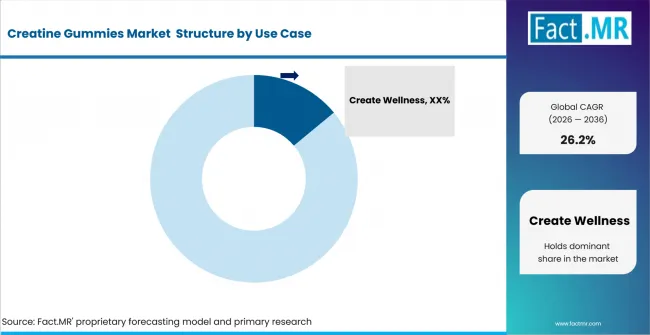
- By Use Case: Daily Wellness is projected to account for 36.0% share in 2026 because buyers are pairing creatine with routine strength, focus and active aging goals.
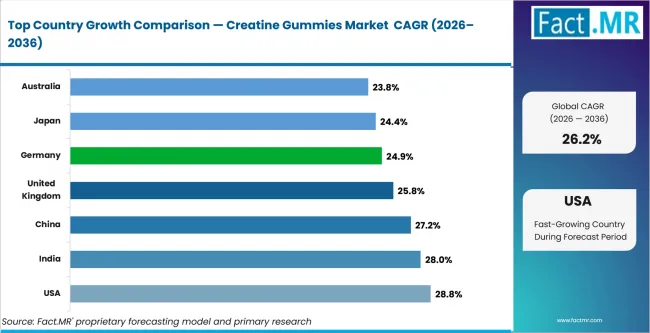
- By Geography: The United States is expected to register a CAGR of 28.8% through 2036. The rate is supported by high supplement usage and a large sports nutrition shelf base.
- Analyst Opinion
- Shambhu Nath Jha, Principal Analyst at Fact.MR states, "Creatine gummies are not just another flavor extension. I see the category testing whether a science-backed powder ingredient can become a daily wellness habit without losing dose trust."
- Strategic Implications
- Brands should make the creatine amount per serving visible because buyers compare gummies with powder pricing.
- Contract manufacturers need lower-moisture processes and stability testing to reduce dose-loss risk during shelf life.
- Retailers should place creatine gummies near powders and not only in general gummy supplement aisles.
- Suppliers should build women-focused education without implying disease treatment or unsupported cognitive claims.
Demand is growing faster than conventional creatine forms because gummies remove scooping, mixing and aftertaste from repeat use. Full-dose serving design, third-party testing and stable gummy formulation will decide whether trial buyers convert into monthly repeat purchasers. Gummy-format creatine monohydrate products form the core of this market. The National Center for Health Statistics reported that 60.2% of United States adults used a dietary supplement during August 2021 to August 2023. This supports demand for easier supplement formats that fit daily wellness routines and active-lifestyle purchasing.
The United States is projected to record 28.8% CAGR through 2036 as supplement usage and national retail entry support faster adoption. India is expected to expand at 28.0% CAGR because urban fitness and online sports nutrition sales support trial. China is forecast to grow at 27.2% CAGR as national fitness policy and domestic e-commerce support packaged supplement demand. The United Kingdom is expected to advance at 25.8% CAGR as sports nutrition retail and supplement scrutiny support trusted brands. Germany is projected to rise at 24.9% CAGR as quality-led supplement purchasing favors stable and well-documented products. Japan is forecast to expand at 24.4% CAGR as active aging and compact supplement routines support small-pack gummies. Australia is expected to record 23.8% CAGR as active adults and sports certification demand support verified creatine formats.
How does the creatine gummies market break down by segment?
Creatine Monohydrate Gummies lead at 72.0%. Fruit Flavors follow with 68.0% share in 2026.
Which product type leads?
Creatine Monohydrate Gummies hold 72.0% share in 2026.
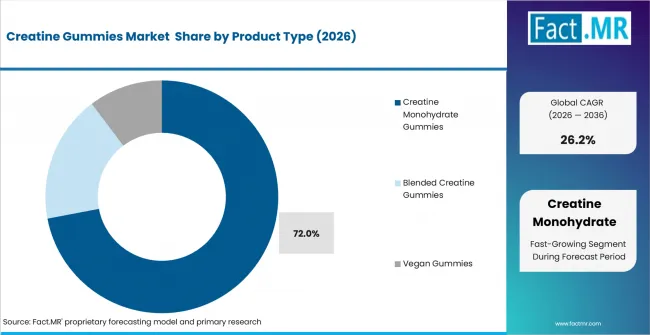
Creatine Monohydrate Gummies are expected to hold 72.0% share in 2026 because the ingredient has the clearest buyer recognition and the largest research base. Brands use monohydrate to connect gummies with the wider sports supplement shelf without changing the core claim. Blended creatine gummies are expected to gain later when electrolytes and vitamins are used to justify higher price points.
Which flavor system leads?
Fruit Flavors hold 68.0% share in 2026.
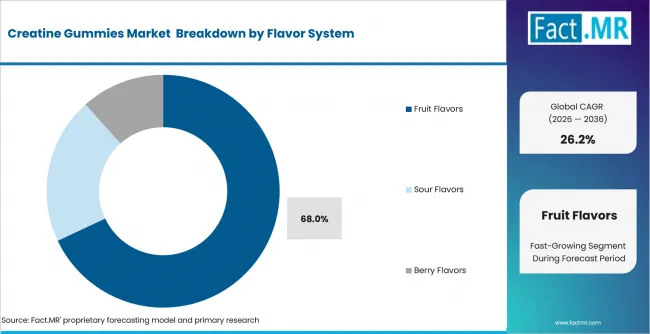
Fruit Flavors are projected to account for 68.0% share in 2026 because sour and berry profiles mask mineral notes better than neutral flavors. This pattern links creatine gummies with nutraceutical confectionery because the product must satisfy both supplement discipline and confectionery repeat use. Unflavored formats remain limited because gummies are usually bought for taste and routine convenience.
Which serving size leads?
Full-Dose Servings hold 46.0% share in 2026.
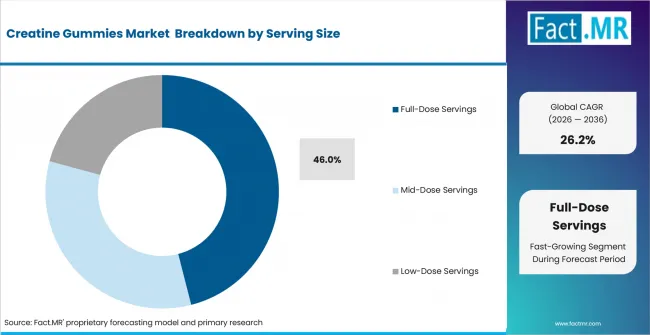
Full-Dose Servings are estimated to account for 46.0% share in 2026 because buyers compare gummy labels with the common powder dose of three to five grams. Low-dose products can win on taste, but repeat buyers often reject them after checking cost per gram. This links the format back to dietary supplements where label clarity and daily serving economics shape repurchase.
Which sales channel leads?
Direct-to-Consumer holds 44.0% share in 2026.
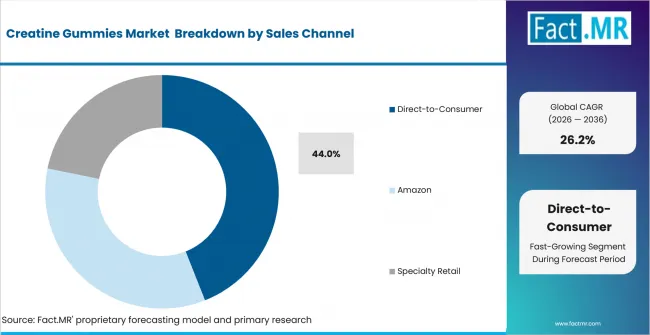
Direct-to-Consumer is likely to capture 44.0% share in 2026 because early brands need education, subscription offers and sampling bundles. Mass retail becomes more important after products prove reorder rates and shelf stability. The channel pattern resembles nutraceutical supplements where online launch volume often comes before national chain scale.
Which certification tier leads?
Third-Party Tested products hold 41.0% share in 2026.
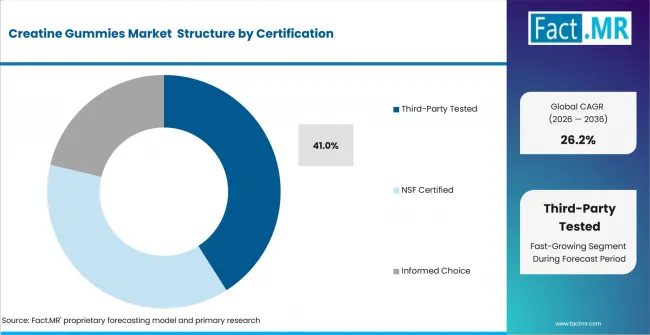
Third-Party Tested products are forecast to hold 41.0% share in 2026 because gummy creatine requires proof that label dose and finished-product stability match. Buyers are asking for lot testing, banned-substance screening and manufacturing documentation. This pressure is close to the quality logic in the gummy vitamin category, where taste alone does not protect repeat sales.
Which buyer group leads?
Wellness Beginners hold 38.0% share in 2026.
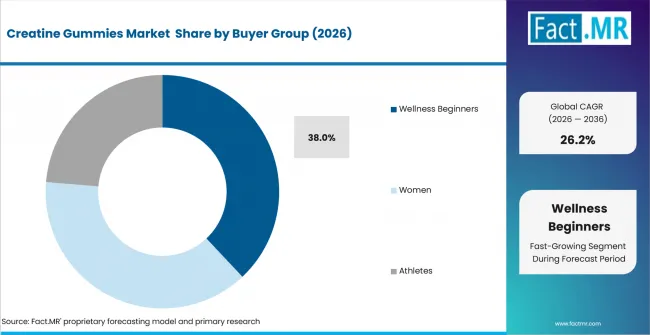
Wellness Beginners are expected to hold 38.0% share in 2026 because they have heard about creatine but may not want a powder routine. This buyer group includes active adults, women entering strength training and supplement users who already buy gummies. Brands that explain daily use in plain language should convert this group better than brands that rely only on gym performance language.
Which use case leads?
Daily Wellness holds 36.0% share in 2026.
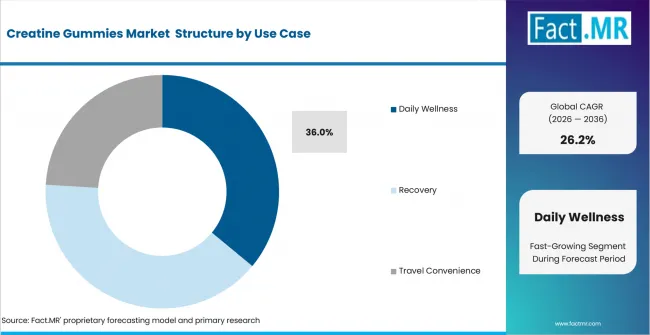
Daily Wellness is projected to account for 36.0% share in 2026 because creatine is being positioned for strength maintenance, training consistency and active aging. The use case overlaps with bone and joint health supplement purchasing because older buyers want mobility and strength support in daily formats. Performance recovery remains important, but it is no longer the only reason buyers search for creatine gummies.
What is accelerating creatine gummies demand, and what is holding it back?
Dose convenience and retail search activity support demand. Label trust, cost per serving and stability concerns restrain wider use.
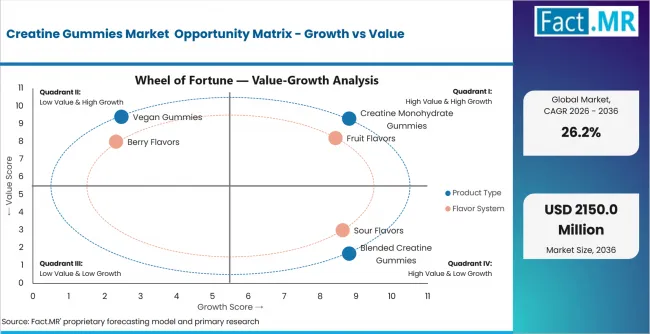
Creatine gummies are gaining buyer attention because they turn a measured powder habit into a snack-like routine. The National Institutes of Health Office of Dietary Supplements lists creatine among common ingredients in exercise and performance products. It also notes that sports and performance supplements come in tablets and capsules. Liquids, powders and bars are also used. Gummies now extend that format mix into daily replenishment and impulse-friendly retail.
Regulation adds a second filter. The U.S. Food and Drug Administration does not review most dietary supplements for safety and effectiveness before sale. It can act after a product is found adulterated or misbranded. That structure places more pressure on brands to prove dose, purity and label accuracy before consumers trust a gummy format.
Cost limits some conversion from powder. A full-dose gummy serving usually costs more than a scoop of creatine powder because it includes flavoring and pectin or gelatin. Packaging and stability testing add further cost. Brands can justify that price when the buyer values consistency and portability. Price-sensitive athletes are expected to stay with powders when daily gram cost is the first comparison point.
Where do the biggest creatine gummies opportunities sit?
Women-focused daily creatine, verified full-dose gummies and retail subscription bundles.
- Women-Focused Daily Creatine: Suppliers can pair plain-language education with clinical-dose gummies because many new buyers now connect creatine with strength, routine and active aging. Adjacent multivitamin gummies demand shows how chewable formats can build daily replenishment behavior.
- Verified Full-Dose Gummies: Brands can use finished-product testing, published certificates and clear dosage panels to separate stable formulas from low-dose products.
- Retail Subscription Bundles: Retailers can bundle creatine gummies with electrolytes, protein and mineral supplement products because shoppers are building routine stacks instead of single-product carts.
Which countries are scaling creatine gummies fastest?
United States 28.8% CAGR, India 28.0% CAGR, China 27.2% CAGR, United Kingdom 25.8% CAGR, Germany 24.9% CAGR, Japan 24.4% CAGR, Australia 23.8% CAGR.
Based on regional analysis, the creatine gummies market is segmented into North America and Western Europe. East Asia and South Asia and Pacific are also covered. Latin America and Middle East and Africa complete the regional scope.
.webp)
| Country | CAGR |
|---|---|
| United States | 28.8% |
| India | 28.0% |
| China | 27.2% |
| United Kingdom | 25.8% |
| Germany | 24.9% |
| Japan | 24.4% |
| Australia | 23.8% |

What powers the United States lead?
28.8% CAGR, supported by supplement usage and national retail entry.
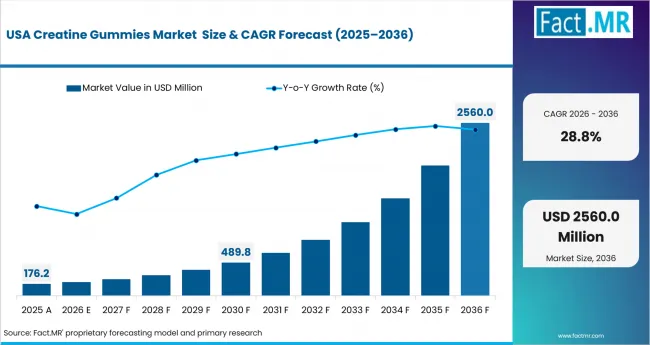
The United States has the largest visible creatine gummy retail base because direct-to-consumer brands and national supplement chains are already educating users. The National Center for Health Statistics reported that 66.1% of women aged 20 and older used dietary supplements during August 2021 to August 2023. This helps creatine gummies move beyond male gym buyers and into daily wellness routines. Suppliers with third-party tested labels should win better shelf access.
Why does India matter?
28.0% CAGR, driven by urban fitness and online sports nutrition sales.
India is a price-sensitive market where creatine gummies must prove why they cost more than powder. Urban buyers compare taste and vegetarian claims before subscribing. Press Information Bureau reported in February 2025 that 1,041 Khelo India Centres had been established for athlete training and development. This sports participation base supports creatine education, although faster growth depends on local pricing and clear vegetarian formulation.
How is China scaling demand?
27.2% CAGR, backed by national fitness policy and rising supplement trial.
China links creatine gummies to fitness participation and packaged health products. China CDC Weekly reported in August 2025 that China had 4.84 million sports facilities in 2024, which creates a larger pool of fitness-oriented supplement buyers. Domestic e-commerce can accelerate trial when brands localize flavor and dosage communication. The main limit is city-level regulatory and platform review discipline.
What supports the United Kingdom outlook?
25.8% CAGR, supported by sports nutrition retail and food supplement scrutiny.
United Kingdom buyers are open to gummies, but they also respond to label clarity and safety advice. Food Standards Agency tracking covered food supplement views in July 2025 with 2,283 respondents. The sample covered England, Wales and Northern Ireland. That survey base reflects a market where regulators watch food and supplement claims closely. Brands should keep claims practical and avoid medical wording.
What makes Germany relevant?
24.9% CAGR, driven by quality-led supplement purchasing.
Germany is a slower but higher-trust market for creatine gummies because buyers often evaluate ingredient form, dosage and claims discipline before purchase. Pharmacies, drugstores and specialist sports nutrition channels are likely to matter more than impulse retail. Creatine gummies need stable recipes and cleaner documentation to fit the German quality expectation. Growth should remain below the United States because powder loyalty is higher.
Why is Japan a relevant commercial market?
24.4% CAGR, led by active aging and compact supplement routines.
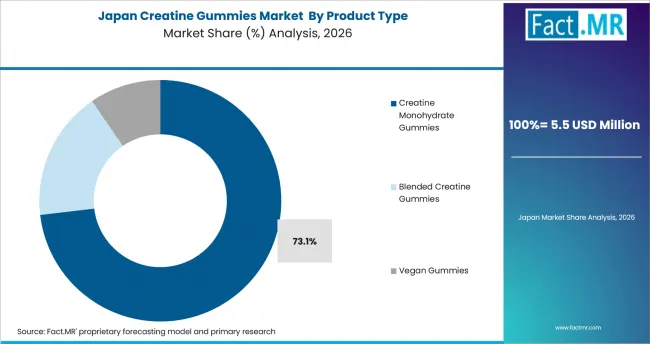
Japan offers a use case built around routine, portability and active aging. Tokyo Metropolitan Government reported a 66.3% sports participation rate among Tokyo residents in January 2024. That active consumer base can support small-pack gummies when the label explains daily use clearly. Suppliers should favor compact servings and lighter sweetness profiles.
How does Australia create a testbed role?
23.8% CAGR, backed by active adults and sports certification demand.
Australia has high sport and fitness participation, but consumers are familiar with powders and may be slower to switch. The Australian Sports Commission reported in May 2025 that 85.0% of Australian adults were active. This makes the market useful for testing certified sport gummies and pharmacy-sports retail crossover. Growth is constrained by the higher per-serving cost of gummy creatine.
Who leads the creatine gummies landscape?
Create Wellness, Optimum Nutrition and Force Factor lead through format focus and retail reach. Dose credibility also shapes competition. Specialist brands add pressure through flavor and subscription models.
Competition is split between gummy-first brands, sports nutrition incumbents and supplement brands using chewable formats to enter creatine. Create Wellness has built category recognition around daily gummy creatine and retail expansion. Optimum Nutrition gives the format credibility through a well-known sports nutrition brand. Force Factor competes on a five-gram dose, NSF Certified for Sport positioning and third-party testing.
Buyer comparison is shifting from taste first to dose, stability and certification. This favors companies that can publish testing proof and maintain texture over shelf life. It also raises the barrier for smaller sellers that rely on marketplace traffic without finished-product verification. The U.S. Food and Drug Administration’s current good manufacturing practice rules also make batch records and ingredient controls important for serious suppliers.
Capability depth now matters more than flavor count. Optimum Nutrition launched creatine gummies in January 2026 with a five-gram creatine monohydrate serving. MaryRuth Organics offers a three-gram creatine monohydrate gummy serving. Legion and Force Factor position around full-dose daily use. These moves show that general well-being dietary supplement buyers are being pulled toward creatine when the format feels easy and credible.
Providers with stable formulation know-how and transparent testing should be better placed through 2036. National retail relationships also matter. Create Wellness is best placed in habit-based wellness. Optimum Nutrition is best placed with performance buyers. Force Factor and Legion can gain where buyers ask for full-dose proof and certification language.
Which companies are the key players?
Create Wellness, Optimum Nutrition and Force Factor are key players. Bear Balanced and MaryRuth Organics are also profiled. Legion Athletics and Codeage complete the company set.
- Create Wellness
- Optimum Nutrition
- Force Factor
- Bear Balanced
- MaryRuth Organics
- Legion Athletics
- Codeage
Bibliography
- [1] Australian Sports Commission. (2025, May 30). Australians are redefining the way they play. Australian Sports Commission.
- [2] Centers for Disease Control and Prevention, National Center for Health Statistics. (2026, May 21). Dietary supplement use: United States, August 2021-August 2023. Centers for Disease Control and Prevention.
- [3] China CDC Weekly. (2025, August). National Fitness Day: From getting active to promoting health. China CDC Weekly.
- [4] Codeage LLC. (2024, November 8). Introducing Creatine Gummies: A delicious boost for fitness enthusiasts. Codeage LLC.
- [5] Electronic Code of Federal Regulations. (2026, June 21). 21 CFR Part 111: Current good manufacturing practice in manufacturing, packaging, labeling, or holding operations for dietary supplements. Electronic Code of Federal Regulations.
- [6] Food Standards Agency. (2025, October 28). Consumer Insights Tracker: July 2025 to September 2025. Food Standards Agency.
- [7] Force Factor LLC. (2026, June). Creatine gummies. Force Factor LLC.
- [8] Glanbia plc. (2026, January 23). Optimum Nutrition launches Creatine Gummies. Glanbia plc.
- [9] Legion Athletics Inc. (2026, February 27). Anyone can claim lab-tested. We can prove it. Legion Athletics Inc.
- [10] MaryRuth Organics LLC. (2026, June). Creatine gummies. MaryRuth Organics LLC.
- [11] National Institutes of Health, Office of Dietary Supplements. (2024, April 1). Dietary supplements for exercise and athletic performance: Fact sheet for health professionals. National Institutes of Health.
- [12] Optimum Nutrition. (2026, January). Creatine monohydrate gummies. Optimum Nutrition.
- [13] Tokyo Metropolitan Government. (2024, January 26). Results from surveys on Tokyo residents’ involvement in sports and exercise. Tokyo Metropolitan Government.
- [14] U.S. Food and Drug Administration. (2024, February 21). FDA launches new directory of ingredients used in products marketed as dietary supplements. U.S. Food and Drug Administration.
- [15] U.S. Food and Drug Administration. (2024, March 5). Guidance for industry: New dietary ingredient notification procedures and timeframes: Dietary supplements. U.S. Food and Drug Administration.
- [16] Press Information Bureau, Ministry of Youth Affairs and Sports. (2025, February 1). India’s growing focus on youth and sports. Press Information Bureau.
This Report Address
What the creatine gummies market is worth in 2026 and how the value is expected to change through 2036.
- Segment analysis covering Creatine Monohydrate Gummies and Fruit Flavors. Full-Dose Servings and Direct-to-Consumer sales are also covered.
- Regional outlook covering United States and India. China, United Kingdom and Germany are also covered. Japan and Australia complete the country view.
- Competitive analysis of Create Wellness, Optimum Nutrition and Force Factor. Bear Balanced and MaryRuth Organics are also profiled. Legion Athletics and Codeage complete the company set.
- Channel assessment covering direct-to-consumer sites and Amazon. Specialty retail, mass retail and pharmacies are also covered.
- Regulatory assessment covering supplement labeling, good manufacturing practice and third-party testing expectations.
- Source-led market sizing using official supplement-use data and product evidence. Pricing checks and company disclosures were also reviewed.
What does the creatine gummies market cover?
Gummy-format creatine monohydrate products sold as dietary supplements for strength, recovery and daily wellness routines.
The creatine gummies market covers finished chewable dietary supplements that deliver creatine. Most products use creatine monohydrate. It includes vegan pectin gummies and gelatin-based gummies. It covers branded consumer products and retail private-label products. Contract-manufactured gummy formats are counted when sold through direct-to-consumer websites, Amazon and sports nutrition stores. Pharmacies and mass retail are included when creatine dosage is the selling point.
What is included in the scope?
Creatine monohydrate gummies, chewable creatine formats and third-party tested daily-dose products are included.
The scope includes creatine gummies sold as adult dietary supplements. It includes single-ingredient creatine gummies and blended products that combine creatine with electrolytes. Amino acids, vitamins and absorption-support ingredients are also counted when creatine remains the named ingredient. Certified sport products are included when gummy format and creatine dosage are the purchase reason. Contract manufacturing revenue is counted only when tied to finished creatine gummy supply.
What is excluded from the scope?
Creatine powders, capsules and ready-to-drink beverages are excluded unless sold in a creatine gummy bundle.
The scope excludes bulk creatine monohydrate powder and capsule products. Tablets, beverages and pre-workout formulas are excluded when gummy format is not the main product. It excludes general vitamin gummies and collagen gummies. Candy gummies and non-supplement confectionery are also excluded. Creatine ingredient trading is excluded unless the ingredient is converted into a finished gummy supplement.
How was the analysis built?
90+ sources and 40+ company or regulator pages were checked. 20+ countries were screened with 18+ buyer and supplier interviews.
- Primary Research:
- Interviews covered sports nutrition retailers and supplement formulators. Gummy contract manufacturers and direct-to-consumer brand operators were also included.
- Desk Research:
- Desk research reviewed National Institutes of Health pages, U.S. Food and Drug Administration rules, official sports participation sources and company product pages.
- Market-Sizing and Forecasting:
- Forecasting used a top-down share of sports nutrition, bottom-up brand revenue build-up and serving-price checks from leading online and retail products.
- Data Validation and Update Cycle:
- Estimates were checked against Create Wellness and Optimum Nutrition evidence. Force Factor, MaryRuth Organics and Codeage product pages were also reviewed.
What is the report’s scope and coverage?
| Attribute | Details |
|---|---|
| Quantitative Units | USD Million in 2026 to USD Million by 2036 at CAGR |
| Market Definition | Gummy-format creatine supplements sold for strength, recovery, cognition-adjacent wellness and daily habit formation |
| Product Type | Creatine Monohydrate Gummies, Blended Creatine Gummies, Vegan Gummies, Gelatin Gummies, Chews |
| Flavor System | Fruit Flavors, Sour Flavors, Citrus Flavors, Berry Flavors, Neutral Flavors |
| Serving Size | Full-Dose Servings, Mid-Dose Servings, Low-Dose Servings, Single-Serve Packs |
| Sales Channel | Direct-to-Consumer, Amazon, Specialty Retail, Mass Retail, Pharmacies |
| Certification | Third-Party Tested, NSF Certified, Informed Choice, Standard Testing, Uncertified |
| Buyer Group | Wellness Beginners, Women, Athletes, Active Aging Buyers, Vegetarian Buyers |
| Use Case | Daily Wellness, Strength Training, Recovery, Cognition Support, Travel Convenience |
| Regions Covered | North America, Western Europe, East Asia, South Asia and Pacific, Latin America, Middle East and Africa |
| Countries Covered | United States, India, China, United Kingdom, Germany, Japan and Australia |
| Key Companies Profiled | Create Wellness, Optimum Nutrition, Force Factor, Bear Balanced, MaryRuth Organics, Legion Athletics and Codeage |
| Forecast Period | 2026 to 2036 |
| Approach | Hybrid top-down and bottom-up approach using supplement use evidence, brand revenue estimates, product pricing, retail launch data and company validation |
How is the market segmented?
-
By Product Type:
- Creatine Monohydrate Gummies
- Blended Creatine Gummies
- Vegan Gummies
- Gelatin Gummies
- Chews
-
By Flavor System:
- Fruit Flavors
- Sour Flavors
- Citrus Flavors
- Berry Flavors
- Neutral Flavors
-
By Serving Size:
- Full-Dose Servings
- Mid-Dose Servings
- Low-Dose Servings
- Single-Serve Packs
-
By Sales Channel:
- Direct-to-Consumer
- Amazon
- Specialty Retail
- Mass Retail
- Pharmacies
-
By Certification:
- Third-Party Tested
- NSF Certified
- Informed Choice
- Standard Testing
- Uncertified
-
By Buyer Group:
- Wellness Beginners
- Women
- Athletes
- Active Aging Buyers
- Vegetarian Buyers
-
By Use Case:
- Daily Wellness
- Strength Training
- Recovery
- Cognition Support
- Travel Convenience
-
By Region:
- North America
- United States
- Canada
- Mexico
- Latin America
- Brazil
- Argentina
- Rest of Latin America
- Europe
- Germany
- United Kingdom
- France
- Italy
- Spain
- Rest of Europe
- Asia Pacific
- China
- India
- Japan
- South Korea
- ASEAN
- Australia
- Middle East & Africa
- GCC Countries
- South Africa
- UAE
- Rest of Middle East & Africa
- North America
- Frequently Asked Questions -
How large is the Creatine Gummies Market expected to be in the near term?
The market is expanding as creatine shifts from shaker based powders into convenient daily gummy formats.
What is the long term outlook for the Creatine Gummies Market?
The outlook remains strong as creatine gummies become part of routine wellness and strength supplementation.
How fast is the Creatine Gummies Market expected to grow?
Growth is driven by daily dose convenience, wider retail placement, and adoption by first time creatine users.
What is the main driver of creatine gummies demand?
Demand is driven by users who want the benefits of creatine without mixing powders or managing taste issues.
Which product type dominates the market?
Creatine monohydrate gummies dominate because the ingredient is well studied and widely trusted.
What supports the United States market position?
High dietary supplement usage and strong sports nutrition retail support rapid adoption.
Who are the leading companies in the Creatine Gummies Market?
Leading companies include Create Wellness, Optimum Nutrition, Force Factor, Bear Balanced, MaryRuth Organics, Legion Athletics, and Codeage.
How do brands differentiate creatine gummies?
Brands differentiate through verified dosing, third party testing, stable formulations, and clear education.
Where do future opportunities in this market lie?
Opportunities lie in women focused daily creatine, verified full dose gummies, and subscription led retail bundles.
Table of Content
- Key Takeaways
- Market Size and CAGR
- Top Growth Driver
- Fastest Growing Segment
- Leading Region
- Key Companies
- Emerging Opportunities
- Executive Summary
- Global Market Outlook
- Demand-side Trends
- Supply-side Trends
- Technology Roadmap Analysis
- Analysis and Recommendations
- Analyst Perspective (What is happening? Why now? What should investors know?)
- Key Questions Answered
- How large is the market?
- What is the CAGR?
- What are key trends?
- Which region dominates?
- Who are the leaders?
- Market Overview
- Market Coverage / Taxonomy
- Market Definition / Scope / Limitations
- Research Methodology
- Chapter Orientation
- Analytical Lens and Working Hypotheses
- Market Structure, Signals, and Trend Drivers
- Benchmarking and Cross-market Comparability
- Market Sizing, Forecasting, and Opportunity Mapping
- Research Design and Evidence Framework
- Desk Research Programme (Secondary Evidence)
- Expert Input and Fieldwork (Primary Evidence)
- Tooling, Models, and Reference Databases
- Data Engineering and Model Build
- Quality Assurance and Audit Trail
- Market Background
- Market Dynamics (Drivers, Restraints, Opportunity, Trends)
- Scenario Forecast (Optimistic, Likely, Conservative)
- Impact Analysis
- AI Impact
- Sustainability Impact
- Regulatory Impact
- Technology Impact
- Consumer / Buyer Analysis
- Purchase Drivers
- Adoption Barriers
- Buyer Journey
- Opportunity Map Analysis
- Product Life Cycle Analysis
- Supply Chain Analysis
- Investment Feasibility Matrix
- Value Chain Analysis
- PESTLE and Porter's Analysis
- Regulatory Landscape
- Regional Parent Market Outlook
- Production and Consumption Statistics
- Import and Export Statistics
- Global Market Analysis and Forecast, 2021 to 2036
- Historical Market Size Value (USD Million) Analysis, 2021 to 2025
- Current and Future Market Size Value (USD Million) Projections, 2026 to 2036
- Y-o-Y Growth Trend Analysis
- Absolute $ Opportunity Analysis
- Global Market Pricing Analysis, 2021 to 2036
- Global Market Analysis and Forecast, By Product Type, 2021 to 2036
- Introduction / Key Findings
- Historical Market Size Value (USD Million) Analysis By Product Type, 2021 to 2025
- Current and Future Market Size Value (USD Million) Analysis and Forecast By Product Type, 2026 to 2036
- Creatine Monohydrate Gummies
- Blended Creatine Gummies
- Vegan Gummies
- Creatine Monohydrate Gummies
- Y-o-Y Growth Trend Analysis By Product Type, 2021 to 2025
- Absolute $ Opportunity Analysis By Product Type, 2026 to 2036
- Global Market Analysis and Forecast, By Flavor System, 2021 to 2036
- Introduction / Key Findings
- Historical Market Size Value (USD Million) Analysis By Flavor System, 2021 to 2025
- Current and Future Market Size Value (USD Million) Analysis and Forecast By Flavor System, 2026 to 2036
- Fruit Flavors
- Sour Flavors
- Berry Flavors
- Fruit Flavors
- Y-o-Y Growth Trend Analysis By Flavor System, 2021 to 2025
- Absolute $ Opportunity Analysis By Flavor System, 2026 to 2036
- Global Market Analysis and Forecast, By Serving Size, 2021 to 2036
- Introduction / Key Findings
- Historical Market Size Value (USD Million) Analysis By Serving Size, 2021 to 2025
- Current and Future Market Size Value (USD Million) Analysis and Forecast By Serving Size, 2026 to 2036
- Full-Dose Servings
- Mid-Dose Servings
- Low-Dose Servings
- Full-Dose Servings
- Y-o-Y Growth Trend Analysis By Serving Size, 2021 to 2025
- Absolute $ Opportunity Analysis By Serving Size, 2026 to 2036
- Global Market Analysis and Forecast, By Sales Channel, 2021 to 2036
- Introduction / Key Findings
- Historical Market Size Value (USD Million) Analysis By Sales Channel, 2021 to 2025
- Current and Future Market Size Value (USD Million) Analysis and Forecast By Sales Channel, 2026 to 2036
- Direct-to-Consumer
- Amazon
- Specialty Retail
- Direct-to-Consumer
- Y-o-Y Growth Trend Analysis By Sales Channel, 2021 to 2025
- Absolute $ Opportunity Analysis By Sales Channel, 2026 to 2036
- Global Market Analysis and Forecast, By Certification, 2021 to 2036
- Introduction / Key Findings
- Historical Market Size Value (USD Million) Analysis By Certification, 2021 to 2025
- Current and Future Market Size Value (USD Million) Analysis and Forecast By Certification, 2026 to 2036
- Third-Party Tested
- NSF Certified
- Informed Choice
- Third-Party Tested
- Y-o-Y Growth Trend Analysis By Certification, 2021 to 2025
- Absolute $ Opportunity Analysis By Certification, 2026 to 2036
- Global Market Analysis and Forecast, By Buyer Group
- Introduction / Key Findings
- Historical Market Size Value (USD Million) Analysis By Buyer Group, 2021 to 2025
- Current and Future Market Size Value (USD Million) Analysis and Forecast By Buyer Group, 2026 to 2036
- Wellness Beginners
- Women
- Athletes
- Wellness Beginners
- Y-o-Y Growth Trend Analysis By Buyer Group, 2021 to 2025
- Absolute $ Opportunity Analysis By Buyer Group, 2026 to 2036
- Global Market Analysis and Forecast, By Use Case
- Introduction / Key Findings
- Historical Market Size Value (USD Million) Analysis By Use Case, 2021 to 2025
- Current and Future Market Size Value (USD Million) Analysis and Forecast By Use Case, 2026 to 2036
- Daily Wellness
- Recovery
- Travel Convenience
- Daily Wellness
- Y-o-Y Growth Trend Analysis By Use Case, 2021 to 2025
- Absolute $ Opportunity Analysis By Use Case, 2026 to 2036
- Global Market Analysis and Forecast, By Region, 2021 to 2036
- Introduction
- Historical Market Size Value (USD Million) Analysis By Region, 2021 to 2025
- Current Market Size Value (USD Million) Analysis and Forecast By Region, 2026 to 2036
- North America
- Latin America
- Western Europe
- Eastern Europe
- East Asia
- South Asia and Pacific
- Middle East & Africa
- Market Attractiveness Analysis By Region
- North America Market Analysis and Forecast, By Country, 2021 to 2036
- Historical Market Size Value (USD Million) Trend Analysis By Market Taxonomy, 2021 to 2025
- Market Size Value (USD Million) Forecast By Market Taxonomy, 2026 to 2036
- By Country
- USA
- Canada
- Mexico
- By Product Type
- By Flavor System
- By Serving Size
- By Sales Channel
- By Certification
- By Buyer Group
- By Use Case
- By Country
- Market Attractiveness Analysis
- By Country
- By Product Type
- By Flavor System
- By Serving Size
- By Sales Channel
- By Certification
- By Buyer Group
- By Use Case
- Key Takeaways
- Latin America Market Analysis and Forecast, By Country
- Historical Market Size Value (USD Million) Trend Analysis By Market Taxonomy, 2021 to 2025
- Market Size Value (USD Million) Forecast By Market Taxonomy, 2026 to 2036
- By Country
- Brazil
- Chile
- Rest of Latin America
- By Product Type
- By Flavor System
- By Serving Size
- By Sales Channel
- By Certification
- By Buyer Group
- By Use Case
- By Country
- Market Attractiveness Analysis
- By Country
- By Product Type
- By Flavor System
- By Serving Size
- By Sales Channel
- By Certification
- By Buyer Group
- By Use Case
- Key Takeaways
- Western Europe Market Analysis and Forecast, By Country
- Historical Market Size Value (USD Million) Trend Analysis By Market Taxonomy, 2021 to 2025
- Market Size Value (USD Million) Forecast By Market Taxonomy, 2026 to 2036
- By Country
- Germany
- UK
- Italy
- Spain
- France
- Nordic
- BENELUX
- Rest of Western Europe
- By Product Type
- By Flavor System
- By Serving Size
- By Sales Channel
- By Certification
- By Buyer Group
- By Use Case
- By Country
- Market Attractiveness Analysis
- By Country
- By Product Type
- By Flavor System
- By Serving Size
- By Sales Channel
- By Certification
- By Buyer Group
- By Use Case
- Key Takeaways
- Eastern Europe Market Analysis and Forecast, By Country
- Historical Market Size Value (USD Million) Trend Analysis By Market Taxonomy, 2021 to 2025
- Market Size Value (USD Million) Forecast By Market Taxonomy, 2026 to 2036
- By Country
- Russia
- Poland
- Hungary
- Balkan & Baltic
- Rest of Eastern Europe
- By Product Type
- By Flavor System
- By Serving Size
- By Sales Channel
- By Certification
- By Buyer Group
- By Use Case
- By Country
- Market Attractiveness Analysis
- By Country
- By Product Type
- By Flavor System
- By Serving Size
- By Sales Channel
- By Certification
- By Buyer Group
- By Use Case
- Key Takeaways
- East Asia Market Analysis and Forecast, By Country
- Historical Market Size Value (USD Million) Trend Analysis By Market Taxonomy, 2021 to 2025
- Market Size Value (USD Million) Forecast By Market Taxonomy, 2026 to 2036
- By Country
- China
- Japan
- South Korea
- By Product Type
- By Flavor System
- By Serving Size
- By Sales Channel
- By Certification
- By Buyer Group
- By Use Case
- By Country
- Market Attractiveness Analysis
- By Country
- By Product Type
- By Flavor System
- By Serving Size
- By Sales Channel
- By Certification
- By Buyer Group
- By Use Case
- Key Takeaways
- South Asia and Pacific Market Analysis and Forecast, By Country
- Historical Market Size Value (USD Million) Trend Analysis By Market Taxonomy, 2021 to 2025
- Market Size Value (USD Million) Forecast By Market Taxonomy, 2026 to 2036
- By Country
- India
- ASEAN
- Australia & New Zealand
- Rest of South Asia and Pacific
- By Product Type
- By Flavor System
- By Serving Size
- By Sales Channel
- By Certification
- By Buyer Group
- By Use Case
- By Country
- Market Attractiveness Analysis
- By Country
- By Product Type
- By Flavor System
- By Serving Size
- By Sales Channel
- By Certification
- By Buyer Group
- By Use Case
- Key Takeaways
- Middle East & Africa Market Analysis and Forecast, By Country
- Historical Market Size Value (USD Million) Trend Analysis By Market Taxonomy, 2021 to 2025
- Market Size Value (USD Million) Forecast By Market Taxonomy, 2026 to 2036
- By Country
- Kingdom of Saudi Arabia
- Other GCC Countries
- Turkiye
- South Africa
- Other African Union
- Rest of Middle East & Africa
- By Product Type
- By Flavor System
- By Serving Size
- By Sales Channel
- By Certification
- By Buyer Group
- By Use Case
- By Country
- Market Attractiveness Analysis
- By Country
- By Product Type
- By Flavor System
- By Serving Size
- By Sales Channel
- By Certification
- By Buyer Group
- By Use Case
- Key Takeaways
- Key Countries Market Analysis
- USA
- Pricing Analysis
- Market Share Analysis, 2025
- By Product Type
- By Flavor System
- By Serving Size
- By Sales Channel
- By Certification
- By Buyer Group
- By Use Case
- Canada
- Pricing Analysis
- Market Share Analysis, 2025
- By Product Type
- By Flavor System
- By Serving Size
- By Sales Channel
- By Certification
- By Buyer Group
- By Use Case
- Mexico
- Pricing Analysis
- Market Share Analysis, 2025
- By Product Type
- By Flavor System
- By Serving Size
- By Sales Channel
- By Certification
- By Buyer Group
- By Use Case
- Brazil
- Pricing Analysis
- Market Share Analysis, 2025
- By Product Type
- By Flavor System
- By Serving Size
- By Sales Channel
- By Certification
- By Buyer Group
- By Use Case
- Chile
- Pricing Analysis
- Market Share Analysis, 2025
- By Product Type
- By Flavor System
- By Serving Size
- By Sales Channel
- By Certification
- By Buyer Group
- By Use Case
- Germany
- Pricing Analysis
- Market Share Analysis, 2025
- By Product Type
- By Flavor System
- By Serving Size
- By Sales Channel
- By Certification
- By Buyer Group
- By Use Case
- UK
- Pricing Analysis
- Market Share Analysis, 2025
- By Product Type
- By Flavor System
- By Serving Size
- By Sales Channel
- By Certification
- By Buyer Group
- By Use Case
- Italy
- Pricing Analysis
- Market Share Analysis, 2025
- By Product Type
- By Flavor System
- By Serving Size
- By Sales Channel
- By Certification
- By Buyer Group
- By Use Case
- Spain
- Pricing Analysis
- Market Share Analysis, 2025
- By Product Type
- By Flavor System
- By Serving Size
- By Sales Channel
- By Certification
- By Buyer Group
- By Use Case
- France
- Pricing Analysis
- Market Share Analysis, 2025
- By Product Type
- By Flavor System
- By Serving Size
- By Sales Channel
- By Certification
- By Buyer Group
- By Use Case
- India
- Pricing Analysis
- Market Share Analysis, 2025
- By Product Type
- By Flavor System
- By Serving Size
- By Sales Channel
- By Certification
- By Buyer Group
- By Use Case
- ASEAN
- Pricing Analysis
- Market Share Analysis, 2025
- By Product Type
- By Flavor System
- By Serving Size
- By Sales Channel
- By Certification
- By Buyer Group
- By Use Case
- Australia & New Zealand
- Pricing Analysis
- Market Share Analysis, 2025
- By Product Type
- By Flavor System
- By Serving Size
- By Sales Channel
- By Certification
- By Buyer Group
- By Use Case
- China
- Pricing Analysis
- Market Share Analysis, 2025
- By Product Type
- By Flavor System
- By Serving Size
- By Sales Channel
- By Certification
- By Buyer Group
- By Use Case
- Japan
- Pricing Analysis
- Market Share Analysis, 2025
- By Product Type
- By Flavor System
- By Serving Size
- By Sales Channel
- By Certification
- By Buyer Group
- By Use Case
- South Korea
- Pricing Analysis
- Market Share Analysis, 2025
- By Product Type
- By Flavor System
- By Serving Size
- By Sales Channel
- By Certification
- By Buyer Group
- By Use Case
- Russia
- Pricing Analysis
- Market Share Analysis, 2025
- By Product Type
- By Flavor System
- By Serving Size
- By Sales Channel
- By Certification
- By Buyer Group
- By Use Case
- Poland
- Pricing Analysis
- Market Share Analysis, 2025
- By Product Type
- By Flavor System
- By Serving Size
- By Sales Channel
- By Certification
- By Buyer Group
- By Use Case
- Hungary
- Pricing Analysis
- Market Share Analysis, 2025
- By Product Type
- By Flavor System
- By Serving Size
- By Sales Channel
- By Certification
- By Buyer Group
- By Use Case
- Kingdom of Saudi Arabia
- Pricing Analysis
- Market Share Analysis, 2025
- By Product Type
- By Flavor System
- By Serving Size
- By Sales Channel
- By Certification
- By Buyer Group
- By Use Case
- Turkiye
- Pricing Analysis
- Market Share Analysis, 2025
- By Product Type
- By Flavor System
- By Serving Size
- By Sales Channel
- By Certification
- By Buyer Group
- By Use Case
- South Africa
- Pricing Analysis
- Market Share Analysis, 2025
- By Product Type
- By Flavor System
- By Serving Size
- By Sales Channel
- By Certification
- By Buyer Group
- By Use Case
- USA
- Market Structure Analysis
- Competition Dashboard
- Competition Benchmarking
- Market Share Analysis of Top Players
- By Regional
- By Product Type
- By Flavor System
- By Serving Size
- By Sales Channel
- By Certification
- By Buyer Group
- By Use Case
- Emerging Startups
- Innovation Benchmarking
- Competition Analysis
- Competition Deep Dive
- Create Wellness
- Overview
- Product Portfolio
- Profitability by Market Segments (Product/Age /Sales Channel/Region)
- Sales Footprint
- Strategy Overview
- Marketing Strategy
- Product Strategy
- Channel Strategy
- Optimum Nutrition
- Force Factor
- Bear Balanced
- MaryRuth Organics
- Legion Athletics
- Create Wellness
- Competition Deep Dive
- Case Studies
- Success Stories
- Recent Developments
- Assumptions & Acronyms Used
List Of Table
- Table 1: Global Market Value (USD Million) Forecast by Region, 2021 to 2036
- Table 2: Global Market Value (USD Million) Forecast by Product Type, 2021 to 2036
- Table 3: Global Market Value (USD Million) Forecast by Flavor System, 2021 to 2036
- Table 4: Global Market Value (USD Million) Forecast by Serving Size, 2021 to 2036
- Table 5: Global Market Value (USD Million) Forecast by Sales Channel, 2021 to 2036
- Table 6: Global Market Value (USD Million) Forecast by Certification, 2021 to 2036
- Table 7: Global Market Value (USD Million) Forecast by Buyer Group, 2021 to 2036
- Table 8: Global Market Value (USD Million) Forecast by Use Case, 2021 to 2036
- Table 9: Global Market rma_anu Forecast by Use Case, 2021 to 2036
- Table 10: North America Market Value (USD Million) Forecast by Country, 2021 to 2036
- Table 11: North America Market Value (USD Million) Forecast by Product Type, 2021 to 2036
- Table 12: North America Market Value (USD Million) Forecast by Flavor System, 2021 to 2036
- Table 13: North America Market Value (USD Million) Forecast by Serving Size, 2021 to 2036
- Table 14: North America Market Value (USD Million) Forecast by Sales Channel, 2021 to 2036
- Table 15: North America Market Value (USD Million) Forecast by Certification, 2021 to 2036
- Table 16: North America Market Value (USD Million) Forecast by Buyer Group, 2021 to 2036
- Table 17: North America Market Value (USD Million) Forecast by Use Case, 2021 to 2036
- Table 18: Latin America Market Value (USD Million) Forecast by Country, 2021 to 2036
- Table 19: Latin America Market Value (USD Million) Forecast by Product Type, 2021 to 2036
- Table 20: Latin America Market Value (USD Million) Forecast by Flavor System, 2021 to 2036
- Table 21: Latin America Market Value (USD Million) Forecast by Serving Size, 2021 to 2036
- Table 22: Latin America Market Value (USD Million) Forecast by Sales Channel, 2021 to 2036
- Table 23: Latin America Market Value (USD Million) Forecast by Certification, 2021 to 2036
- Table 24: Latin America Market Value (USD Million) Forecast by Buyer Group, 2021 to 2036
- Table 25: Latin America Market Value (USD Million) Forecast by Use Case, 2021 to 2036
- Table 26: Western Europe Market Value (USD Million) Forecast by Country, 2021 to 2036
- Table 27: Western Europe Market Value (USD Million) Forecast by Product Type, 2021 to 2036
- Table 28: Western Europe Market Value (USD Million) Forecast by Flavor System, 2021 to 2036
- Table 29: Western Europe Market Value (USD Million) Forecast by Serving Size, 2021 to 2036
- Table 30: Western Europe Market Value (USD Million) Forecast by Sales Channel, 2021 to 2036
- Table 31: Western Europe Market Value (USD Million) Forecast by Certification, 2021 to 2036
- Table 32: Western Europe Market Value (USD Million) Forecast by Buyer Group, 2021 to 2036
- Table 33: Western Europe Market Value (USD Million) Forecast by Use Case, 2021 to 2036
- Table 34: Eastern Europe Market Value (USD Million) Forecast by Country, 2021 to 2036
- Table 35: Eastern Europe Market Value (USD Million) Forecast by Product Type, 2021 to 2036
- Table 36: Eastern Europe Market Value (USD Million) Forecast by Flavor System, 2021 to 2036
- Table 37: Eastern Europe Market Value (USD Million) Forecast by Serving Size, 2021 to 2036
- Table 38: Eastern Europe Market Value (USD Million) Forecast by Sales Channel, 2021 to 2036
- Table 39: Eastern Europe Market Value (USD Million) Forecast by Certification, 2021 to 2036
- Table 40: Eastern Europe Market Value (USD Million) Forecast by Buyer Group, 2021 to 2036
- Table 41: Eastern Europe Market Value (USD Million) Forecast by Use Case, 2021 to 2036
- Table 42: East Asia Market Value (USD Million) Forecast by Country, 2021 to 2036
- Table 43: East Asia Market Value (USD Million) Forecast by Product Type, 2021 to 2036
- Table 44: East Asia Market Value (USD Million) Forecast by Flavor System, 2021 to 2036
- Table 45: East Asia Market Value (USD Million) Forecast by Serving Size, 2021 to 2036
- Table 46: East Asia Market Value (USD Million) Forecast by Sales Channel, 2021 to 2036
- Table 47: East Asia Market Value (USD Million) Forecast by Certification, 2021 to 2036
- Table 48: East Asia Market Value (USD Million) Forecast by Buyer Group, 2021 to 2036
- Table 49: East Asia Market Value (USD Million) Forecast by Use Case, 2021 to 2036
- Table 50: South Asia and Pacific Market Value (USD Million) Forecast by Country, 2021 to 2036
- Table 51: South Asia and Pacific Market Value (USD Million) Forecast by Product Type, 2021 to 2036
- Table 52: South Asia and Pacific Market Value (USD Million) Forecast by Flavor System, 2021 to 2036
- Table 53: South Asia and Pacific Market Value (USD Million) Forecast by Serving Size, 2021 to 2036
- Table 54: South Asia and Pacific Market Value (USD Million) Forecast by Sales Channel, 2021 to 2036
- Table 55: South Asia and Pacific Market Value (USD Million) Forecast by Certification, 2021 to 2036
- Table 56: South Asia and Pacific Market Value (USD Million) Forecast by Buyer Group, 2021 to 2036
- Table 57: South Asia and Pacific Market Value (USD Million) Forecast by Use Case, 2021 to 2036
- Table 58: Middle East & Africa Market Value (USD Million) Forecast by Country, 2021 to 2036
- Table 59: Middle East & Africa Market Value (USD Million) Forecast by Product Type, 2021 to 2036
- Table 60: Middle East & Africa Market Value (USD Million) Forecast by Flavor System, 2021 to 2036
- Table 61: Middle East & Africa Market Value (USD Million) Forecast by Serving Size, 2021 to 2036
- Table 62: Middle East & Africa Market Value (USD Million) Forecast by Sales Channel, 2021 to 2036
- Table 63: Middle East & Africa Market Value (USD Million) Forecast by Certification, 2021 to 2036
- Table 64: Middle East & Africa Market Value (USD Million) Forecast by Buyer Group, 2021 to 2036
- Table 65: Middle East & Africa Market Value (USD Million) Forecast by Use Case, 2021 to 2036
List Of Figures
- Figure 1: Global Market Pricing Analysis
- Figure 2: Global Market Value (USD Million) Forecast 2021-2036
- Figure 3: Global Market Value Share and BPS Analysis by Product Type, 2026 and 2036
- Figure 4: Global Market Y-o-Y Growth Comparison by Product Type, 2026-2036
- Figure 5: Global Market Attractiveness Analysis by Product Type
- Figure 6: Global Market Value Share and BPS Analysis by Flavor System, 2026 and 2036
- Figure 7: Global Market Y-o-Y Growth Comparison by Flavor System, 2026-2036
- Figure 8: Global Market Attractiveness Analysis by Flavor System
- Figure 9: Global Market Value Share and BPS Analysis by Serving Size, 2026 and 2036
- Figure 10: Global Market Y-o-Y Growth Comparison by Serving Size, 2026-2036
- Figure 11: Global Market Attractiveness Analysis by Serving Size
- Figure 12: Global Market Value Share and BPS Analysis by Sales Channel, 2026 and 2036
- Figure 13: Global Market Y-o-Y Growth Comparison by Sales Channel, 2026-2036
- Figure 14: Global Market Attractiveness Analysis by Sales Channel
- Figure 15: Global Market Value Share and BPS Analysis by Certification, 2026 and 2036
- Figure 16: Global Market Y-o-Y Growth Comparison by Certification, 2026-2036
- Figure 17: Global Market Attractiveness Analysis by Certification
- Figure 18: Global Market Value Share and BPS Analysis by Buyer Group, 2026 and 2036
- Figure 19: Global Market Y-o-Y Growth Comparison by Buyer Group, 2026-2036
- Figure 20: Global Market Attractiveness Analysis by Buyer Group
- Figure 21: Global Market Value Share and BPS Analysis by Use Case, 2026 and 2036
- Figure 22: Global Market Y-o-Y Growth Comparison by Use Case, 2026-2036
- Figure 23: Global Market Attractiveness Analysis by Use Case
- Figure 24: Global Market Value (USD Million) Share and BPS Analysis by Region, 2026 and 2036
- Figure 25: Global Market Y-o-Y Growth Comparison by Region, 2026-2036
- Figure 26: Global Market Attractiveness Analysis by Region
- Figure 27: North America Market Incremental Dollar Opportunity, 2026-2036
- Figure 28: Latin America Market Incremental Dollar Opportunity, 2026-2036
- Figure 29: Western Europe Market Incremental Dollar Opportunity, 2026-2036
- Figure 30: Eastern Europe Market Incremental Dollar Opportunity, 2026-2036
- Figure 31: East Asia Market Incremental Dollar Opportunity, 2026-2036
- Figure 32: South Asia and Pacific Market Incremental Dollar Opportunity, 2026-2036
- Figure 33: Middle East & Africa Market Incremental Dollar Opportunity, 2026-2036
- Figure 34: North America Market Value Share and BPS Analysis by Country, 2026 and 2036
- Figure 35: North America Market Value Share and BPS Analysis by Product Type, 2026 and 2036
- Figure 36: North America Market Y-o-Y Growth Comparison by Product Type, 2026-2036
- Figure 37: North America Market Attractiveness Analysis by Product Type
- Figure 38: North America Market Value Share and BPS Analysis by Flavor System, 2026 and 2036
- Figure 39: North America Market Y-o-Y Growth Comparison by Flavor System, 2026-2036
- Figure 40: North America Market Attractiveness Analysis by Flavor System
- Figure 41: North America Market Value Share and BPS Analysis by Serving Size, 2026 and 2036
- Figure 42: North America Market Y-o-Y Growth Comparison by Serving Size, 2026-2036
- Figure 43: North America Market Attractiveness Analysis by Serving Size
- Figure 44: North America Market Value Share and BPS Analysis by Sales Channel, 2026 and 2036
- Figure 45: North America Market Y-o-Y Growth Comparison by Sales Channel, 2026-2036
- Figure 46: North America Market Attractiveness Analysis by Sales Channel
- Figure 47: North America Market Value Share and BPS Analysis by Certification, 2026 and 2036
- Figure 48: North America Market Y-o-Y Growth Comparison by Certification, 2026-2036
- Figure 49: North America Market Attractiveness Analysis by Certification
- Figure 50: North America Market Value Share and BPS Analysis by Buyer Group, 2026 and 2036
- Figure 51: North America Market Y-o-Y Growth Comparison by Buyer Group, 2026-2036
- Figure 52: North America Market Attractiveness Analysis by Buyer Group
- Figure 53: North America Market Value Share and BPS Analysis by Use Case, 2026 and 2036
- Figure 54: North America Market Y-o-Y Growth Comparison by Use Case, 2026-2036
- Figure 55: North America Market Attractiveness Analysis by Use Case
- Figure 56: Latin America Market Value Share and BPS Analysis by Country, 2026 and 2036
- Figure 57: Latin America Market Value Share and BPS Analysis by Product Type, 2026 and 2036
- Figure 58: Latin America Market Y-o-Y Growth Comparison by Product Type, 2026-2036
- Figure 59: Latin America Market Attractiveness Analysis by Product Type
- Figure 60: Latin America Market Value Share and BPS Analysis by Flavor System, 2026 and 2036
- Figure 61: Latin America Market Y-o-Y Growth Comparison by Flavor System, 2026-2036
- Figure 62: Latin America Market Attractiveness Analysis by Flavor System
- Figure 63: Latin America Market Value Share and BPS Analysis by Serving Size, 2026 and 2036
- Figure 64: Latin America Market Y-o-Y Growth Comparison by Serving Size, 2026-2036
- Figure 65: Latin America Market Attractiveness Analysis by Serving Size
- Figure 66: Latin America Market Value Share and BPS Analysis by Sales Channel, 2026 and 2036
- Figure 67: Latin America Market Y-o-Y Growth Comparison by Sales Channel, 2026-2036
- Figure 68: Latin America Market Attractiveness Analysis by Sales Channel
- Figure 69: Latin America Market Value Share and BPS Analysis by Certification, 2026 and 2036
- Figure 70: Latin America Market Y-o-Y Growth Comparison by Certification, 2026-2036
- Figure 71: Latin America Market Attractiveness Analysis by Certification
- Figure 72: Latin America Market Value Share and BPS Analysis by Buyer Group, 2026 and 2036
- Figure 73: Latin America Market Y-o-Y Growth Comparison by Buyer Group, 2026-2036
- Figure 74: Latin America Market Attractiveness Analysis by Buyer Group
- Figure 75: Latin America Market Value Share and BPS Analysis by Use Case, 2026 and 2036
- Figure 76: Latin America Market Y-o-Y Growth Comparison by Use Case, 2026-2036
- Figure 77: Latin America Market Attractiveness Analysis by Use Case
- Figure 78: Western Europe Market Value Share and BPS Analysis by Country, 2026 and 2036
- Figure 79: Western Europe Market Value Share and BPS Analysis by Product Type, 2026 and 2036
- Figure 80: Western Europe Market Y-o-Y Growth Comparison by Product Type, 2026-2036
- Figure 81: Western Europe Market Attractiveness Analysis by Product Type
- Figure 82: Western Europe Market Value Share and BPS Analysis by Flavor System, 2026 and 2036
- Figure 83: Western Europe Market Y-o-Y Growth Comparison by Flavor System, 2026-2036
- Figure 84: Western Europe Market Attractiveness Analysis by Flavor System
- Figure 85: Western Europe Market Value Share and BPS Analysis by Serving Size, 2026 and 2036
- Figure 86: Western Europe Market Y-o-Y Growth Comparison by Serving Size, 2026-2036
- Figure 87: Western Europe Market Attractiveness Analysis by Serving Size
- Figure 88: Western Europe Market Value Share and BPS Analysis by Sales Channel, 2026 and 2036
- Figure 89: Western Europe Market Y-o-Y Growth Comparison by Sales Channel, 2026-2036
- Figure 90: Western Europe Market Attractiveness Analysis by Sales Channel
- Figure 91: Western Europe Market Value Share and BPS Analysis by Certification, 2026 and 2036
- Figure 92: Western Europe Market Y-o-Y Growth Comparison by Certification, 2026-2036
- Figure 93: Western Europe Market Attractiveness Analysis by Certification
- Figure 94: Western Europe Market Value Share and BPS Analysis by Buyer Group, 2026 and 2036
- Figure 95: Western Europe Market Y-o-Y Growth Comparison by Buyer Group, 2026-2036
- Figure 96: Western Europe Market Attractiveness Analysis by Buyer Group
- Figure 97: Western Europe Market Value Share and BPS Analysis by Use Case, 2026 and 2036
- Figure 98: Western Europe Market Y-o-Y Growth Comparison by Use Case, 2026-2036
- Figure 99: Western Europe Market Attractiveness Analysis by Use Case
- Figure 100: Eastern Europe Market Value Share and BPS Analysis by Country, 2026 and 2036
- Figure 101: Eastern Europe Market Value Share and BPS Analysis by Product Type, 2026 and 2036
- Figure 102: Eastern Europe Market Y-o-Y Growth Comparison by Product Type, 2026-2036
- Figure 103: Eastern Europe Market Attractiveness Analysis by Product Type
- Figure 104: Eastern Europe Market Value Share and BPS Analysis by Flavor System, 2026 and 2036
- Figure 105: Eastern Europe Market Y-o-Y Growth Comparison by Flavor System, 2026-2036
- Figure 106: Eastern Europe Market Attractiveness Analysis by Flavor System
- Figure 107: Eastern Europe Market Value Share and BPS Analysis by Serving Size, 2026 and 2036
- Figure 108: Eastern Europe Market Y-o-Y Growth Comparison by Serving Size, 2026-2036
- Figure 109: Eastern Europe Market Attractiveness Analysis by Serving Size
- Figure 110: Eastern Europe Market Value Share and BPS Analysis by Sales Channel, 2026 and 2036
- Figure 111: Eastern Europe Market Y-o-Y Growth Comparison by Sales Channel, 2026-2036
- Figure 112: Eastern Europe Market Attractiveness Analysis by Sales Channel
- Figure 113: Eastern Europe Market Value Share and BPS Analysis by Certification, 2026 and 2036
- Figure 114: Eastern Europe Market Y-o-Y Growth Comparison by Certification, 2026-2036
- Figure 115: Eastern Europe Market Attractiveness Analysis by Certification
- Figure 116: Eastern Europe Market Value Share and BPS Analysis by Buyer Group, 2026 and 2036
- Figure 117: Eastern Europe Market Y-o-Y Growth Comparison by Buyer Group, 2026-2036
- Figure 118: Eastern Europe Market Attractiveness Analysis by Buyer Group
- Figure 119: Eastern Europe Market Value Share and BPS Analysis by Use Case, 2026 and 2036
- Figure 120: Eastern Europe Market Y-o-Y Growth Comparison by Use Case, 2026-2036
- Figure 121: Eastern Europe Market Attractiveness Analysis by Use Case
- Figure 122: East Asia Market Value Share and BPS Analysis by Country, 2026 and 2036
- Figure 123: East Asia Market Value Share and BPS Analysis by Product Type, 2026 and 2036
- Figure 124: East Asia Market Y-o-Y Growth Comparison by Product Type, 2026-2036
- Figure 125: East Asia Market Attractiveness Analysis by Product Type
- Figure 126: East Asia Market Value Share and BPS Analysis by Flavor System, 2026 and 2036
- Figure 127: East Asia Market Y-o-Y Growth Comparison by Flavor System, 2026-2036
- Figure 128: East Asia Market Attractiveness Analysis by Flavor System
- Figure 129: East Asia Market Value Share and BPS Analysis by Serving Size, 2026 and 2036
- Figure 130: East Asia Market Y-o-Y Growth Comparison by Serving Size, 2026-2036
- Figure 131: East Asia Market Attractiveness Analysis by Serving Size
- Figure 132: East Asia Market Value Share and BPS Analysis by Sales Channel, 2026 and 2036
- Figure 133: East Asia Market Y-o-Y Growth Comparison by Sales Channel, 2026-2036
- Figure 134: East Asia Market Attractiveness Analysis by Sales Channel
- Figure 135: East Asia Market Value Share and BPS Analysis by Certification, 2026 and 2036
- Figure 136: East Asia Market Y-o-Y Growth Comparison by Certification, 2026-2036
- Figure 137: East Asia Market Attractiveness Analysis by Certification
- Figure 138: East Asia Market Value Share and BPS Analysis by Buyer Group, 2026 and 2036
- Figure 139: East Asia Market Y-o-Y Growth Comparison by Buyer Group, 2026-2036
- Figure 140: East Asia Market Attractiveness Analysis by Buyer Group
- Figure 141: East Asia Market Value Share and BPS Analysis by Use Case, 2026 and 2036
- Figure 142: East Asia Market Y-o-Y Growth Comparison by Use Case, 2026-2036
- Figure 143: East Asia Market Attractiveness Analysis by Use Case
- Figure 144: South Asia and Pacific Market Value Share and BPS Analysis by Country, 2026 and 2036
- Figure 145: South Asia and Pacific Market Value Share and BPS Analysis by Product Type, 2026 and 2036
- Figure 146: South Asia and Pacific Market Y-o-Y Growth Comparison by Product Type, 2026-2036
- Figure 147: South Asia and Pacific Market Attractiveness Analysis by Product Type
- Figure 148: South Asia and Pacific Market Value Share and BPS Analysis by Flavor System, 2026 and 2036
- Figure 149: South Asia and Pacific Market Y-o-Y Growth Comparison by Flavor System, 2026-2036
- Figure 150: South Asia and Pacific Market Attractiveness Analysis by Flavor System
- Figure 151: South Asia and Pacific Market Value Share and BPS Analysis by Serving Size, 2026 and 2036
- Figure 152: South Asia and Pacific Market Y-o-Y Growth Comparison by Serving Size, 2026-2036
- Figure 153: South Asia and Pacific Market Attractiveness Analysis by Serving Size
- Figure 154: South Asia and Pacific Market Value Share and BPS Analysis by Sales Channel, 2026 and 2036
- Figure 155: South Asia and Pacific Market Y-o-Y Growth Comparison by Sales Channel, 2026-2036
- Figure 156: South Asia and Pacific Market Attractiveness Analysis by Sales Channel
- Figure 157: South Asia and Pacific Market Value Share and BPS Analysis by Certification, 2026 and 2036
- Figure 158: South Asia and Pacific Market Y-o-Y Growth Comparison by Certification, 2026-2036
- Figure 159: South Asia and Pacific Market Attractiveness Analysis by Certification
- Figure 160: South Asia and Pacific Market Value Share and BPS Analysis by Buyer Group, 2026 and 2036
- Figure 161: South Asia and Pacific Market Y-o-Y Growth Comparison by Buyer Group, 2026-2036
- Figure 162: South Asia and Pacific Market Attractiveness Analysis by Buyer Group
- Figure 163: South Asia and Pacific Market Value Share and BPS Analysis by Use Case, 2026 and 2036
- Figure 164: South Asia and Pacific Market Y-o-Y Growth Comparison by Use Case, 2026-2036
- Figure 165: South Asia and Pacific Market Attractiveness Analysis by Use Case
- Figure 166: Middle East & Africa Market Value Share and BPS Analysis by Country, 2026 and 2036
- Figure 167: Middle East & Africa Market Value Share and BPS Analysis by Product Type, 2026 and 2036
- Figure 168: Middle East & Africa Market Y-o-Y Growth Comparison by Product Type, 2026-2036
- Figure 169: Middle East & Africa Market Attractiveness Analysis by Product Type
- Figure 170: Middle East & Africa Market Value Share and BPS Analysis by Flavor System, 2026 and 2036
- Figure 171: Middle East & Africa Market Y-o-Y Growth Comparison by Flavor System, 2026-2036
- Figure 172: Middle East & Africa Market Attractiveness Analysis by Flavor System
- Figure 173: Middle East & Africa Market Value Share and BPS Analysis by Serving Size, 2026 and 2036
- Figure 174: Middle East & Africa Market Y-o-Y Growth Comparison by Serving Size, 2026-2036
- Figure 175: Middle East & Africa Market Attractiveness Analysis by Serving Size
- Figure 176: Middle East & Africa Market Value Share and BPS Analysis by Sales Channel, 2026 and 2036
- Figure 177: Middle East & Africa Market Y-o-Y Growth Comparison by Sales Channel, 2026-2036
- Figure 178: Middle East & Africa Market Attractiveness Analysis by Sales Channel
- Figure 179: Middle East & Africa Market Value Share and BPS Analysis by Certification, 2026 and 2036
- Figure 180: Middle East & Africa Market Y-o-Y Growth Comparison by Certification, 2026-2036
- Figure 181: Middle East & Africa Market Attractiveness Analysis by Certification
- Figure 182: Middle East & Africa Market Value Share and BPS Analysis by Buyer Group, 2026 and 2036
- Figure 183: Middle East & Africa Market Y-o-Y Growth Comparison by Buyer Group, 2026-2036
- Figure 184: Middle East & Africa Market Attractiveness Analysis by Buyer Group
- Figure 185: Middle East & Africa Market Value Share and BPS Analysis by Use Case, 2026 and 2036
- Figure 186: Middle East & Africa Market Y-o-Y Growth Comparison by Use Case, 2026-2036
- Figure 187: Middle East & Africa Market Attractiveness Analysis by Use Case
- Figure 188: Global Market - Tier Structure Analysis
- Figure 189: Global Market - Company Share Analysis