- Base Value(2025): 5.5 Bn
- Estimated Value(2026): 6.03 Bn
- Forecast Value (2036): 15.3 Bn
- CAGR (2026 - 2036): 9.7%
Hydroponic System-Safe Root Disease Control Market Forecast and Outlook By FACT.MR
In 2025, the hydroponic system-safe root disease control market was valued at USD 5.5 billion. Based on Fact.MR analysis, demand for hydroponic-safe root disease control products is estimated to grow to USD 6.03 billion in 2026 and USD 15.3 billion by 2036. FACT.MR projects a CAGR of 9.7% during the forecast period.
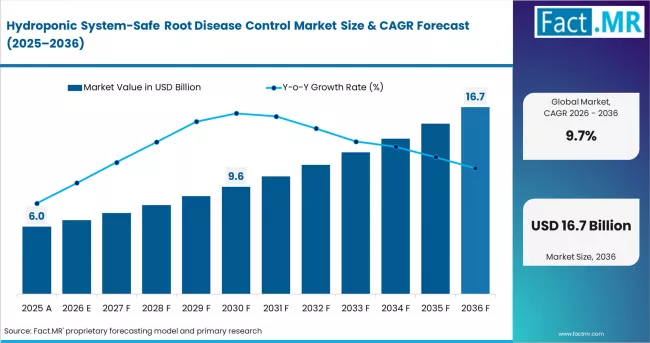
Hydroponic System Safe Root Disease Control Market Value Analysis | Source: Fact.MR
Summary of Hydroponic System-Safe Root Disease Control Market
- Market Definition
- Market includes biofungicides, hydrogen peroxide-based oxidising agents, and low-residue synthetic fungicides used in NFT, DWC, and drip hydroponic systems for recirculating nutrient solution root disease control.
- Demand Drivers
- Pythium and Fusarium outbreaks in recirculating NFT systems are compelling commercial hydroponic operators to adopt biofungicide protocols as systemic root disease management.
- Retail zero-residue mandates from EU and UK supermarket chains are structurally prohibiting conventional synthetic fungicide use inside hydroponic produce supply chains.
- Accelerating hydroponic facility investment across Asia Pacific and North America is directly expanding addressable demand for system-safe root disease control products at commercial scale.
- Key Segments Analyzed
- By Product Type: Bio fungicides lead with 47% share in 2026, driven by zero-residue requirements and compatibility with recirculating nutrient solution environments.
- By Crop Type: Leafy greens hold 55% share in 2026, reflecting dominance as the primary hydroponic crop category with highest root disease exposure sensitivity.
- By System Type: NFT systems account for 50% share in 2026 due to high susceptibility to root disease spread in recirculating flow systems.
- Analyst Opinion at FACT.MR
- Shambhu Nath Jha, Principal Consultant at Fact.MR, opines, 'CXOs will find this market bifurcating between biofungicide-first operators with retailer-qualified chemistry programs. Conventional growers are facing compliance retrofit costs as root disease control standards tighten across hydroponic produce supply chains.'
- Strategic Implications
- Invest in biofungicide indoor-system compatibility testing and registration to qualify products on hydroponic operator preferred chemistry lists ahead of competitive displacement.
- Build supply partnerships with leading commercial vertical farm and greenhouse hydroponic operators in Japan, India, and Netherlands to secure formulary inclusion.
- Develop bundled root disease control programs combining biofungicide and oxidising agent inputs for operators seeking cost-effective, residue-compliant solutions.
- Methodology
- Market sizing uses hydroponic facility area data and root disease control spend-per-square-metre benchmarks by crop category and system type.
- Data validated using 2024–2025 biofungicide registrations, facility investment disclosures, and food retail residue audit documentation.
- Forecasts incorporate hydroponic scaling trajectories, biofungicide cost premium trends, and regulatory root disease control standard timelines.
| Metric | Value |
|---|---|
| Estimated Value in 2026 | USD 6.03 billion |
| Forecast Value in 2036 | USD 15.3 billion |
| Forecast CAGR (2026 to 2036) | 9.7% |
Source: Fact.MR analysis. Updated Apr 24, 2026
An additional USD 9.27 billion in market value is anticipated to be created over the 2026–2036 timeframe. Growth is strong and structurally driven. Expansion of hydroponic facilities is accelerating across key regions. Zero-residue retail requirements are reinforcing demand. However, adoption remains moderated in price-sensitive markets. Higher costs for biofungicide validation and formulation testing create entry barriers.
Hydroponic operators are integrating biofungicide and oxidising treatments into standard protocols. These programs are aligned with retailer-driven residue compliance requirements. Supply agreements between manufacturers and vertical farm operators are increasing. This is strengthening product stickiness and reducing supplier switching across established systems.
Japan leads with a CAGR of 10.8% through 2036. Growth is driven by plant factory expansion and precision farming adoption. India follows at 11.2%, supported by rapid infrastructure build-out and startup activity. China records 10.5% CAGR, driven by state-backed controlled environment agriculture. The United States grows at 9.4%, supported by vertical farming investment and compliance frameworks. The Netherlands records 9.0% CAGR, driven by greenhouse innovation and integrated hydroponic crop protection systems.
Segmental Analysis
Hydroponic System-Safe Root Disease Control Market Analysis by Product Type
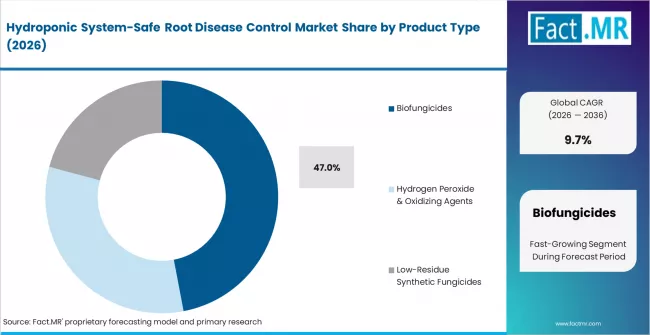
Hydroponic System Safe Root Disease Control Market Analysis By Product Type | Source: Fact.MR
Based on FACT.MR's report, biofungicides hold 47% share in 2026. This segment leads due to zero-residue compatibility. They are safe for recirculating nutrient systems. They also meet worker safety requirements. Biofungicides control Pythium and Fusarium effectively. They do not disrupt beneficial microbes.
- Koppert Expansion: Koppert Biological Systems expanded its portfolio in Q2 2024. Trichoderma-based solutions were added. These target NFT lettuce operators in North America. Focus is on Pythium control in recirculating systems. [4]
- BASF Development: BASF advanced Velondis trials in 2025. Testing covered DWC and NFT systems. Focus is on lettuce and herb crops. The product supports EU and UK compliance requirements. [5]
- Oxidising Agent Trend: Biobest Group reported higher adoption in 2024. Hydrogen peroxide protocols are increasing. Netherlands growers are key adopters. Retail audits require residue-free root disease control systems. [6]
Hydroponic System-Safe Root Disease Control Market Analysis by Crop Type
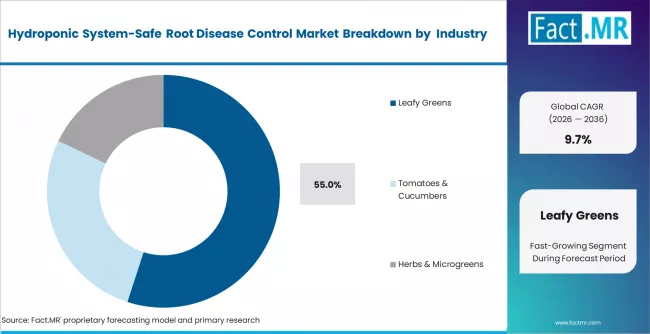
Hydroponic System Safe Root Disease Control Market Analysis By Crop Type | Source: Fact.MR
Based on FACT.MR's report, leafy greens hold 55% share in 2026. This segment dominates global hydroponics. These crops are consumed raw. Residue tolerance is minimal. Root disease spreads rapidly in NFT systems. This increases treatment demand.
- Syngenta Program: Syngenta updated indoor disease programs in Q1 2024. Focus is on lettuce and spinach. Protocols target Pythium and Fusarium. Programs align with EU retailer standards. [7]
- Valent Innovation: Valent BioSciences launched a Bacillus-based fungicide in 2025. The product is EPA-approved. It targets tomato and cucumber systems. Compatible with DWC and NFT environments. [8]
- Herbs Trend: Corteva reported rising demand in 2024. Growth is strong in herbs and microgreens. Adoption is increasing in North America and Japan. Expansion of specialty crops is driving demand. [9]
Drivers, Restraints, and Opportunities
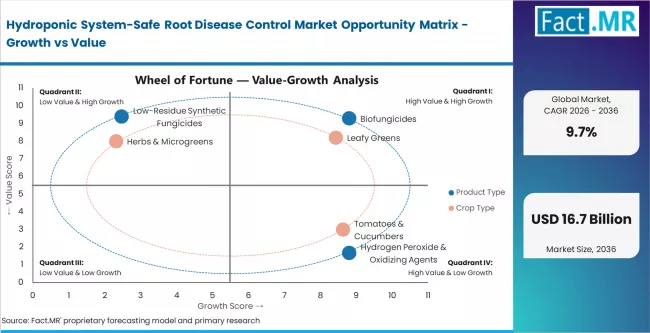
Hydroponic System Safe Root Disease Control Market Opportunity Matrix Growth Vs Value | Source: Fact.MR
FACT.MR analysis indicates that the market is in an early-growth phase. It is shifting from a niche supply segment to a core procurement category. The market was valued at USD 5.5 billion in 2025. Growth is driven by rising root disease risks in recirculating systems. Zero-residue retail requirements are reinforcing adoption. Biofungicides have reached operational viability across major facilities.
Conventional fungicides are declining in hydroponic use. Residue restrictions and system compatibility issues are increasing. Biofungicides and oxidising agents are gaining share. They control pathogens without leaving residues. They also protect nutrient solution integrity. These products carry higher costs. However, reduced crop loss and compliance benefits offset this gap.
- Retail Zero-Residue Standards: Tesco and REWE implemented strict residue protocols in 2024. Synthetic fungicides are excluded from hydroponic supply chains. This is accelerating biofungicide adoption across Europe. Product qualification timelines are also shortening. [1]
- EU Regulation Push: The European Commission updated Sustainable Use Regulation guidance in 2025. Controlled-environment agriculture is prioritised for biopesticide use. This is accelerating biofungicide registration across EU markets. Compliance retrofitting is increasing across supply chains. [2]
- Asia Facility Expansion: Japan’s MAFF expanded plant factory funding in FY2024. India introduced agri-tech grants in 2025. These programs support hydroponic facility growth. Demand for system-safe root disease solutions is rising across Asia Pacific. [3]
Regional Analysis
The hydroponic system-safe root disease control market is assessed across Asia Pacific, North America, Europe, Latin America, and Middle East and Africa, covering 40+ countries with demand shaped by hydroponic facility expansion rates, retailer residue compliance standards, biofungicide regulatory approval frameworks, and controlled-environment agriculture policy support. The full report offers market attractiveness analysis by region and country.
.webp "Top Country Growth Comparison Hydroponic System Safe Root Disease Control Market Cagr (2026 2036)")
Top Country Growth Comparison Hydroponic System Safe Root Disease Control Market Cagr (2026 2036) | Source: Fact.MR
| Country | CAGR (2026 to 2036) |
|---|---|
| India | 11.2% |
| Japan | 10.8% |
| China | 10.5% |
| United States | 9.4% |
| Netherlands | 9.0% |
Source: Fact.MR analysis. Updated Apr 24, 2026
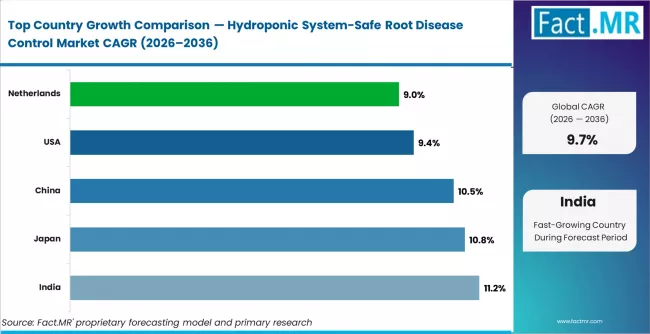
Hydroponic System Safe Root Disease Control Market Cagr Analysis By Country | Source: Fact.MR
Source: Fact.MR (FACT.MR) analysis, based on proprietary forecasting model and primary research
Asia Pacific Hydroponic System-Safe Root Disease Control Market Analysis
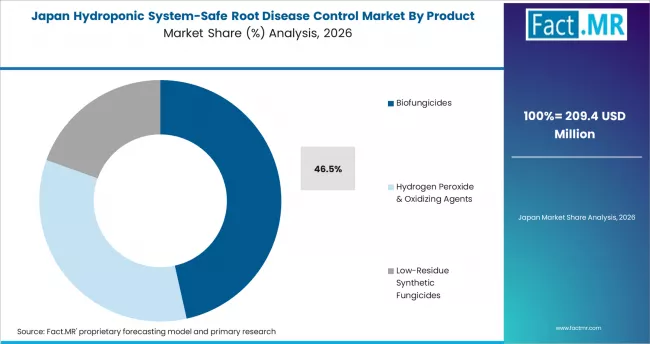
Hydroponic System Safe Root Disease Control Market Japan Market Share Analysis By Product Type | Source: Fact.MR
Asia Pacific is the fastest-growing region for hydroponic root disease control. Growth is driven by Japan’s plant factory ecosystem and India’s startup expansion. Koppert Biological Systems and Syngenta lead through biofungicide program depth. The region is shifting from pilot projects to commercial-scale facilities. Structured disease management programs are becoming standard.
- India: Startup-led expansion drives biofungicide adoption. Demand is projected at 11.2% CAGR through 2036. Ministry of Agriculture expanded agri-tech funding in 2025. Support targets controlled-environment farming in urban areas. Koppert Biological Systems signed a distribution agreement in Q3 2024. Focus is on Trichoderma-based solutions. Maharashtra operators are key adopters. Demand is driven by food security and e-commerce growth. Procurement is structured through operator contracts. This ensures consistent product usage.
- Japan: Institutional procurement defines adoption patterns. Demand is projected at 10.8% CAGR through 2036. MAFF expanded plant factory funding in FY2024. Commercial NFT facilities are key beneficiaries. Syngenta updated biofungicide protocols in Q4 2024. Programs align with Food Sanitation Act requirements. Procurement is centralised through facility contracts. This supports long-term supplier relationships.
- China: State-led expansion drives demand at scale. Demand is projected at 10.5% CAGR through 2036. The 14th Five-Year Plan prioritises plant factory growth. Urban food security is a key objective. BASF updated biofungicide registrations in 2025. Coverage includes indoor hydroponic crops. Adoption is driven through state-linked operators. Procurement is institutional rather than farm-level.
Fact.MR's analysis of Asia Pacific covers India, Japan, China, ASEAN, and Australia and New Zealand. Includes adoption data, investment trends, and regulatory benchmarks.
North America Hydroponic System-Safe Root Disease Control Market Analysis
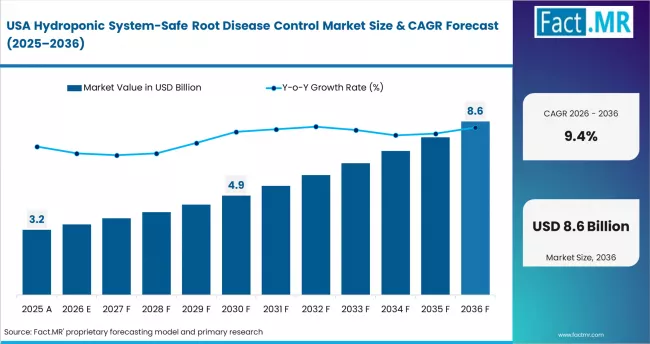
Hydroponic System Safe Root Disease Control Market Country Value Analysis | Source: Fact.MR
North America is the largest value market. Growth is driven by vertical farm expansion and certification frameworks. BASF and Koppert Biological Systems lead in product registration and program delivery. Retail and organic compliance standards are driving adoption.
- United States: Compliance frameworks drive structured adoption. Demand is projected at 9.4% CAGR through 2036. USDA expanded approved biofungicide actives in 2024. This supports organic hydroponic systems. AeroFarms resumed operations in 2024. This increased institutional procurement demand. Product selection follows approved supplier lists. Retail audit requirements influence procurement. Price-driven switching is limited.
Fact.MR covers the United States, Canada, and Mexico. Includes adoption rates, investment data, and certification trends.
Europe Hydroponic System-Safe Root Disease Control Market Analysis
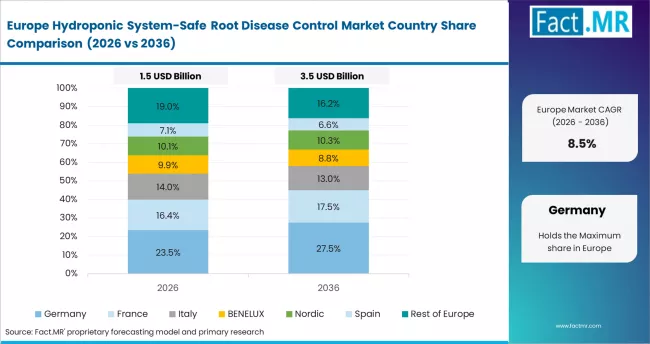
Hydroponic System Safe Root Disease Control Market Europe Country Market Share Analysis, 2026 & 2036 | Source: Fact.MR
Europe is a compliance-driven market. EU regulations and retailer standards are key drivers. Biobest Group and Koppert Biological Systems lead through integrated biological programs. The Netherlands drives regional innovation.
- Netherlands: Technology leadership supports adoption. Demand is projected at 9.0% CAGR through 2036. Wageningen University released IPM guidelines in Q1 2025. These include biofungicide protocols for hydroponics. Biobest Group expanded product offerings in 2024. Focus is on tomato and pepper systems. Adoption is coordinated through cooperatives. This enables large-scale implementation.
Fact.MR covers Germany, France, the UK, Italy, the Netherlands, and Rest of Europe. Includes compliance data, procurement models, and adoption trends.
Competitive Aligners for Market Players
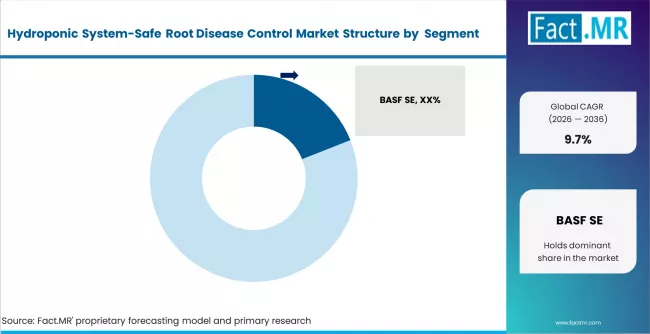
Hydroponic System Safe Root Disease Control Market Analysis By Company | Source: Fact.MR
The hydroponic system-safe root disease control market is becoming more specialised as commercial growers move toward structured, system-specific solutions. Competition is no longer about offering generic bio pesticides. It is about delivering products that work reliably within recirculating nutrient systems. Companies that can prove consistent performance in NFT, DWC, and drip systems are gaining stronger acceptance. At the same time, getting products approved and listed in preferred supplier programs of large vertical farm operators has become a key route to long-term demand.
Players such as Koppert Biological Systems and Biobest Group have an advantage because they combine biological solutions with on-ground agronomy support. Their ability to guide growers on system-specific usage improves adoption. Meanwhile, BASF and Syngenta compete through broader product portfolios and strong regulatory coverage across crops and geographies. Valent BioSciences is expanding its presence by focusing on registrations tailored to hydroponic environments. Companies investing in real-world performance data and technical advisory services are seeing faster onboarding by commercial operators. Buyer behaviour varies significantly. Large vertical farms supplying European and UK retailers prioritise reliability over cost. Crop loss in these systems is expensive, so proven solutions are preferred even at higher prices. In contrast, smaller or newer hydroponic operators are more cost-conscious. They often look for bundled or entry-level solutions. This creates a split market, where premium, compliance-driven buyers coexist with price-sensitive adopters in emerging regions.
Key Players
- BASF SE
- Bayer AG
- Syngenta AG
- Corteva Agriscience
- Koppert Biological Systems
- Biobest Group NV
- Valent BioSciences LLC
- Marrone Bio Innovations, Inc.
- Nufarm Limited
- BioWorks, Inc.
Bibliography
- [1] Tesco PLC and REWE Group. Fresh Produce Residue Monitoring Protocol Updates for Retail Supply Chain Hydroponic Supplier Requirements. 2024. tescoplc.com/sustainability; rewe-group.com/en/sustainability
- [2] European Commission. Sustainable Use Regulation Guidance Update: Biopesticide Substitution in Enclosed Controlled-Environment Agriculture as Priority Pathway. January 2025. ec. europa.eu/food/plants/pesticides/sustainable-use-regulation
- [3] Ministry of Agriculture, Forestry and Fisheries Japan (MAFF). Plant Factory Support Program FY2024 Funding Allocation for Commercial Leafy Green NFT Facility Root Disease Control Program Adoption. 2024. maff.go.jp/plant-factory
- [4] Koppert Biological Systems. North America Hydroponic Biofungicide Distribution Expansion: Trichoderma-Based Supply Agreements with NFT Lettuce and Herb Operators in United States and Canada. Q2 2024. koppert.com/press-releases
- [5] BASF SE. Velondis Biological Fungicide Program DWC and NFT Efficacy Trial Completion for Lettuce and Herb Root Disease Control in Closed Hydroponic Systems. 2025. basf.com/agricultural-solutions/crop-protection
- [6] Biobest Group. Netherlands Greenhouse Hydroponic Tomato and Pepper Root Zone Treatment Adoption Growth Report: Hydrogen Peroxide Protocol Uptake Driven by Retailer Residue Audit Requirements. 2024. biobestgroup.com/news
- [7] Syngenta AG. Indoor Root Disease Management Program Update for NFT Lettuce and Spinach Producers in Europe: Biofungicide Sequencing Protocols for Pythium and Fusarium. Q1 2024. syngenta.com/crop-protection
- [8] Valent BioSciences LLC. Bacillus-Based Biofungicide EPA Approval Announcement for DWC and NFT Hydroponic Tomato and Cucumber Root Zone Protection. 2025. valentbiosciences.com/press
- [9] Corteva Agriscience. Low-Residue Root Fungicide Portfolio Demand Growth from Herbs and Microgreen Hydroponic Operators in North America and Japan. 2024. corteva.com/news
This Report Addresses
- Strategic intelligence on hydroponic root disease control demand. Covers biofungicides, oxidising agents, and low-residue synthetics across global facilities.
- Market forecast from USD 6.03 billion in 2026 to USD 15.3 billion by 2036. CAGR stands at 9.7%.
- Opportunity mapping across India, Japan, China, the U.S., and the Netherlands. Focus on startups, plant factories, and compliance-driven demand.
- Segment analysis by product type, crop type, and system type. Includes biofungicides, leafy greens, and NFT/DWC systems.
- Regional outlook covering Asia Pacific expansion, North America compliance, Latin America export trends, and Europe regulation-driven demand.
- Competitive landscape covering BASF, Koppert Biological Systems, Biobest Group, and Valent BioSciences. Focus on registration depth and system integration.
- Regulatory analysis across EU, U.S., Japan, and retail standards. Includes biopesticide mandates and residue compliance frameworks.
- Report delivered in PDF, Excel, and presentation formats. Supported by validated operator data and regulatory benchmarks.
Hydroponic System-Safe Root Disease Control Market Definition
The hydroponic system-safe root disease control market includes biofungicides, oxidising agents, and low-residue synthetic fungicides formulated for use in recirculating nutrient solution environments. These products control Pythium, Fusarium, and Phytophthora root pathogens without disrupting beneficial microbial populations or leaving produce residues.
Hydroponic System-Safe Root Disease Control Market Inclusions
Covers global and regional forecasts from 2026 to 2036. Includes product type, crop type, and system type segments. Covers NFT, DWC, and drip hydroponic systems. Includes biofungicide registration benchmarks, oxidising agent dosage protocols, and retailer compliance positioning across commercial operators.
Hydroponic System-Safe Root Disease Control Market Exclusions
Excludes conventional broad-spectrum synthetic fungicides not formulated for recirculating hydroponic systems. Omits growing media, nutrient solution products, and environmental control hardware. Also excludes outdoor soil-applied root disease control products and field-use fungicide programs.
Hydroponic System-Safe Root Disease Control Market Research Methodology
- Primary Research
- Interviews with hydroponic facility operators, biofungicide formulators, indoor agronomy consultants, and food retail procurement managers in the United States, Netherlands, Japan, and India.
- Desk Research
- Uses USDA AMS organic input material approvals, EU plant protection product registrations for enclosed systems, FAO CODEX residue limit databases, and company disclosures from BASF, Koppert, Biobest, and Valent BioSciences (2024–2025).
- Market-Sizing and Forecasting
- Hybrid model using hydroponic facility area data, root disease control spend per square metre benchmarks, biofungicide adoption rates, and system-specific product registration volumes across key geographies.
- Data Validation and Update Cycle
- Validated through hydroponic operator procurement surveys, biofungicide manufacturer disclosures, and food retail residue audit records. Updated annually.
Segmentation
Scope of Report
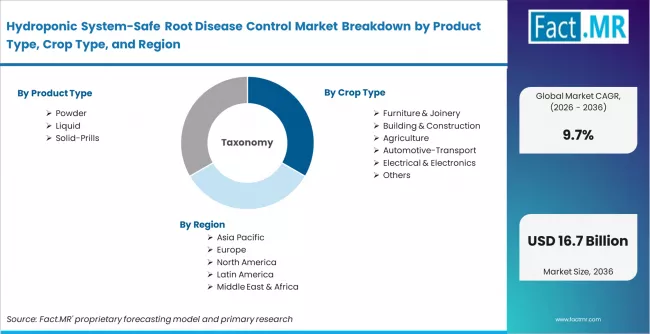
Hydroponic System Safe Root Disease Control Market Breakdown By Product Type Crop Type And Region | Source: Fact.MR
| Attribute | Details |
|---|---|
| Quantitative Units | USD 6.03 billion (2026) to USD 15.3 billion (2036), at a CAGR of 9.7% |
| Market Definition | Biofungicides, hydrogen peroxide-based oxidising agents, and low-residue synthetic fungicides formulated for root disease control in recirculating NFT, DWC, and drip hydroponic growing systems. |
| Product Type Segmentation | Biofungicides, Hydrogen Peroxide & Oxidizing Agents, Low-Residue Synthetic Fungicides |
| Crop Type Segmentation | Leafy Greens, Tomatoes & Cucumbers, Herbs & Microgreens |
| System Type Segmentation | Nutrient Film Technique (NFT), Deep Water Culture (DWC), Drip Hydroponics |
| Application Coverage | Pythium and Fusarium root zone control, recirculating nutrient solution disinfection, system-compatible IPM program management, biofungicide pre-harvest interval compliance. |
| Regions Covered | North America, Europe, Asia Pacific, Latin America, Middle East and Africa |
| Countries Covered | USA, Canada, Mexico, Germany, UK, France, Italy, Spain, Netherlands, China, Japan, South Korea, India, ASEAN, Australia and New Zealand, Brazil, Argentina, Saudi Arabia, South Africa, Rest of MEA |
| Key Companies Profiled | BASF SE, Bayer AG, Syngenta AG, Corteva Agriscience, Koppert Biological Systems, Biobest Group NV, Valent BioSciences LLC, Marrone Bio Innovations, Nufarm Limited, BioWorks Inc. |
| Forecast Period | 2026 to 2036 |
| Approach | Hybrid top-down and bottom-up model using hydroponic facility area data, root disease control spend-per-square-metre benchmarks, biofungicide adoption rates, regulatory approval databases, and primary interviews with facility operators and formulators. |
Source: Fact.MR analysis. Updated Apr 24, 2026
Hydroponic System-Safe Root Disease Control Market by Segments
-
By Product Type:
- Biofungicides (Microbial Root Protectants)
- Hydrogen Peroxide & Oxidizing Agents
- Low-Residue Synthetic Fungicides
-
By Crop Type:
- Leafy Greens
- Tomatoes & Cucumbers
- Herbs & Microgreens
-
By System Type:
- Nutrient Film Technique (NFT)
- Deep Water Culture (DWC)
- Drip Hydroponics
-
By Region:
- North America
- United States
- Canada
- Mexico
- Latin America
- Brazil
- Argentina
- Chile
- Mexico
- Rest of Latin America
- Western Europe
- Germany
- United Kingdom
- France
- Italy
- Spain
- Nordic Countries
- BENELUX
- Rest of Western Europe
- Eastern Europe
- Russia
- Poland
- Hungary
- Balkan and Baltic
- Rest of Eastern Europe
- East Asia
- China
- Japan
- South Korea
- South Asia and Pacific
- India
- ASEAN
- Australia and New Zealand
- Rest of South Asia and Pacific
- Middle East and Africa
- Kingdom of Saudi Arabia
- Other GCC Countries
- Turkey
- South Africa
- Rest of Middle East and Africa
- North America
Frequently Asked Questions
How large is the global hydroponic system-safe root disease control market in 2025?
What will the market size be in 2026?
What is the projected market size by 2036?
What is the expected CAGR from 2026 to 2036?
Which product type segment is poised to lead the market?
Which crop type segment holds the largest share?
Which country shows the fastest growth?
What are the primary uses of hydroponic root disease control products?
What drives demand in this market?
Who are the key players in the market?
Who worked on this report


Preview the report firsthand - request a free sample
Free SampleGet the brochure for pricing and purchase details
Download PDF