Photochromic Temperature Labels Market
Photochromic Temperature Labels Market Size and Share Forecast Outlook 2026 to 2036
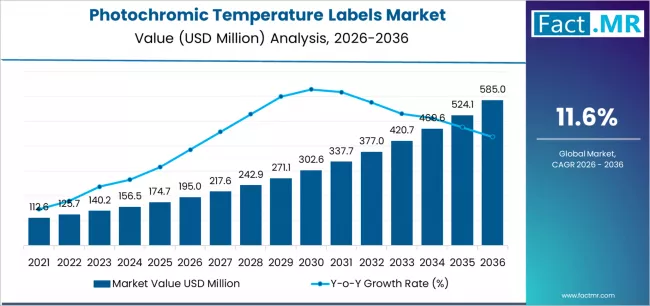
Photochromic temperature labels market is projected to grow from USD 195.0 million in 2026 to USD 585.0 million by 2036, at a CAGR of 11.6%. Cold Chain Pharma will dominate with a 45.0% market share, while smart temperature labels will lead the packaging format segment with a 48.0% share.
Photochromic Temperature Labels Market Forecast and Outlook 2026 to 2036
The global photochromic temperature labels market is valued at USD 195.0 million in 2026. The market is forecast to reach USD 585.0 million by 2036, an increase of USD 390.0 million. This represents total growth of 200.0%, expanding at a compound annual growth rate (CAGR) of 11.6% between 2026 and 2036.
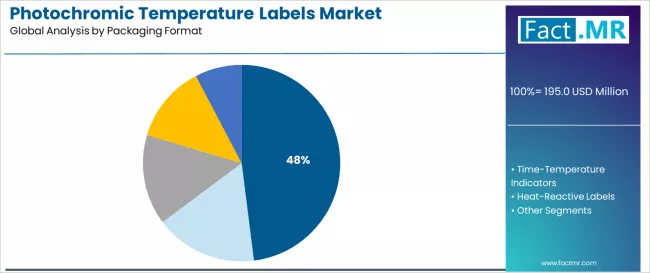
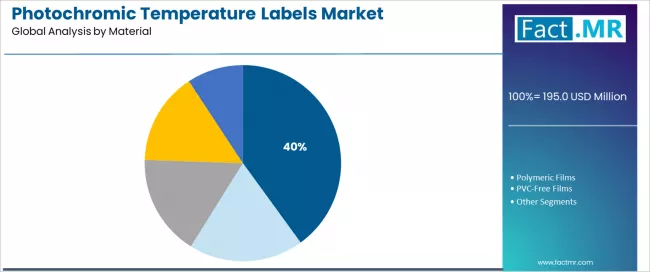
Cold chain pharmaceuticals command a leading 45.0% share in 2026. Smart temperature labels lead the packaging format segment with a 48.0% share. PET combined with a specialized dye layer holds a 40.0% material share, while photochromic ink activation dominates technology with a 52.0% share. This data underscores the critical role of visual, irreversible indicators in safeguarding product integrity across sensitive supply chains.
Key Takeaways from the Photochromic Temperature Labels Market Study
- Market Value (2026): USD 195.0 million
- Market Forecast Value (2036): USD 585.0 million
- Market Forecast CAGR: 11.6%
- Leading End-Use: Cold Chain Pharma (45.0%)
- Key Growth Regions: Asia Pacific, North America, Europe
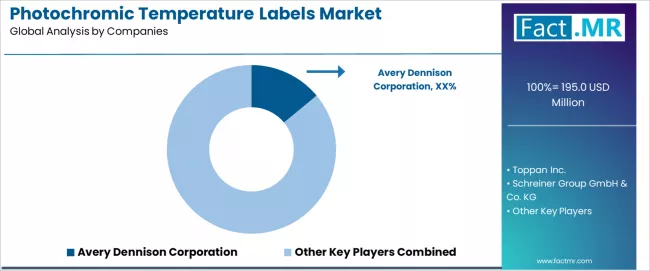
- Key Players: Avery Dennison Corporation, Toppan Inc., Schreiner Group GmbH & Co. KG, Smartrac Technology Group, Uflex Limited, Brady Corporation

A primary macro trend shaping growth is the global escalation of regulatory standards for product integrity, particularly in pharmaceutical logistics and food safety. Regulations like the EU's GDP and FSMA in USA are mandating stricter, verifiable temperature monitoring. This moves the market beyond simple logging to requiring immediate, unambiguous visual proof of compliance or failure, directly at the unit level.
Convergence of smart packaging with broader digital transformation initiatives is accelerating adoption. While photochromic labels provide an essential analog, on-package verdict, they are increasingly part of hybrid systems. Their clear visual alert can trigger a digital scan or audit, feeding data into blockchain or IoT platforms for enhanced traceability. This dual function satisfies both frontline worker needs for instant insight and management's need for audit-ready data, positioning these labels as a critical nexus between physical logistics and digital supply chain intelligence.
Photochromic Temperature Labels Market
| Metric | Value |
|---|---|
| Estimated Value in (2026E) | USD 195.0 million |
| Forecast Value in (2036F) | USD 585.0 million |
| Forecast CAGR (2026 to 2036) | 11.6% |
Category
| Category | Segment |
|---|---|
| End-Use | Cold Chain Pharma, Fresh Food, Industrial Monitoring, E-commerce Fresh Delivery, Others |
| Packaging Format | Smart Temperature Labels, Time-Temperature Indicators, Heat-Reactive Labels, Sleeve Labels, Others |
| Material | PET + Dye Layer, Polymeric Films, PVC-Free Films, Synthetic Paper, Others |
| Technology | Photochromic Ink Activation, Micro-capsule Printing, Digital Smart Labeling, UV-sensitive Layering, Others |
| Region | North America, Europe, Asia Pacific, Latin America, MEA |
Segment Analysis
How is Cold Chain Pharma’s Zero-Tolerance Policy Driving Label Precision?

The cold chain pharmaceutical segment holds a 45.0% market share in 2026. This dominance is driven by an absolute intolerance for temperature excursions in valuable, life-saving products like vaccines, biologics, and insulin. The sector demands labels with exceptionally accurate and reliable activation thresholds, often requiring validation against stringent regulatory standards.
Development focuses on creating multi-stage indicators that show not just a single breach, but cumulative exposure over time or specific threshold violations. The label’s evidence must be court-admissible in quality disputes, making reliability and tamper-evidence as important as the color change itself. This high-stakes environment sets the performance benchmark for the entire market.
What Makes Smart Temperature Labels the Central Tool for Supply Chain Decisions?

Smart temperature labels lead the packaging format segment with a 48.0% share. Their ascendancy is due to their role as a direct, decision-making tool at critical handoff points. Unlike data loggers that require downloading, these labels offer an immediate visual pass/fail signal. This allows warehouse personnel, drivers, or clinic staff to instantly segregate compromised product without delay or technical training.
The format is evolving to include more information, such as displaying the specific temperature peak reached or integrating QR codes that link to digital documentation. By empowering frontline workers with clear, actionable intelligence, these labels prevent costly product losses and protect patient safety.
Why is the PET + Dye Layer Combination Critical for Reliability and Clarity?

The PET + dye layer material combination accounts for a 40.0% share. This structure is favored for its stability and performance clarity. The PET film provides a durable, moisture-resistant, and dimensionally stable base that withstands the rigors of global logistics. The specialized dye layer is engineered for precise, irreversible activation at target temperatures, providing a high-contrast color change that is easy to interpret.
The innovation lies in formulating dyes that remain completely inert until the exact activation energy is reached, ensuring no false positives during normal handling. This material pairing delivers the chemical precision and physical robustness required for high-value applications.
Is Photochromic Ink Activation Becoming the Universal Visual Language for Safety?

Photochromic ink activation technology commands a 52.0% share. Its dominance is rooted in creating an intuitive, universally understood visual cue, a permanent color change. This technology’s development focuses on increasing sophistication, inks that change to different colors based on different temperature thresholds, or that reveal text like "EXPOSED" for unambiguous interpretation.
The goal is to eliminate ambiguity at the point of inspection, reducing human error. As supply chains become more complex and involve more actors, this simple, powerful visual language becomes indispensable for ensuring consistent safety protocols are followed, regardless of the reader's language or technical expertise.
What are the Drivers, Restraints, and Key Trends of the Photochromic Temperature Labels Market?
Market growth is propelled by stringent global regulatory mandates for temperature-controlled logistics, the soaring value of biopharmaceuticals, and rising consumer demand for transparency in fresh food quality. The expansion of global vaccine programs and e-commerce grocery delivery are significant demand accelerators.
Higher cost per unit compared to standard labels and the challenge of calibrating indicators for ultra-precise, product-specific temperature ranges serve as key restraints. Integration with existing packaging lines at high speeds can also present technical hurdles.
Development is concentrated on creating multi-parameter indicators that monitor temperature and other variables like humidity or shock. Another focus is on developing more sustainable label substrates without compromising the sensitive chemistry of the indicator system.
Analysis of the Photochromic Temperature Labels Market by Key Countries

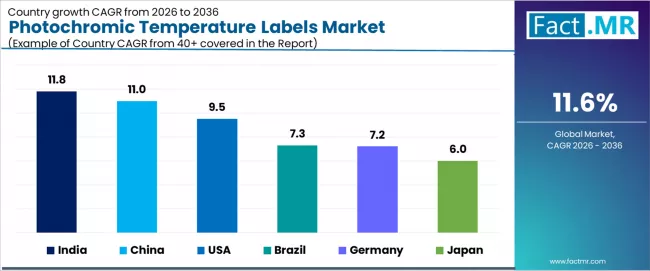
| Country | CAGR (2026 to 2036) |
|---|---|
| USA | 9.5% |
| Japan | 6.0% |
| Germany | 7.2% |
| China | 11.0% |
| India | 11.8% |
| Brazil | 7.3% |
How are Pharma Regulations and Food Service Standards Co-Driving Adoption in USA?

The USA’s market grows at a 9.5% CAGR, fueled by the robust FDA oversight of pharmaceutical cold chains and rigorous food safety standards in hospitality and grocery. Growth spans from protecting high-value cell and gene therapies to ensuring restaurant shellfish deliveries are safe.
Development focuses on creating labels that meet diverse sector needs, from long-duration indicators for cross-country pharma shipments to shorter, more sensitive labels for local fresh food delivery. The market demands solutions that provide legal defensibility and integrate smoothly with third-party logistics provider protocols.
- The rise of direct-to-patient pharmaceutical delivery models is creating demand for compact, patient-friendly indicators that build trust in home-administered therapies.
- Major food service and retail contracts increasingly mandate the use of such indicators as a condition for suppliers, standardizing their adoption.
Does Japan’s Market Focus on Ultra-Precision in Pharma and Premium Fresh Goods?

Japan’s market advances at a 6.0% CAGR, characterized by an extreme demand for precision and reliability in its advanced pharmaceutical industry and premium food sector. Indicators for high-value seafood, dairy, and specialty fruits must have exceptionally accurate activation points to reflect minute quality deviations.
In pharmaceuticals, the focus is on indicators validated for specific biologic products’ very narrow stability windows. The market favors labels with minimalist, clear designs and seamless application to high-speed packaging lines for products like pre-portioned sushi or chilled ready meals.
- Integration of indicator data with national cold chain quality certification programs is a growing requirement.
- Development focuses on ultra-compact label designs that fit on small vials and unit-dose packages without obscuring crucial product information.
How do Germany’s Engineering and EU-Wide Logistics Shape Demand?
Germany’s market grows at a 7.2% CAGR, driven by its central role in European pharmaceutical manufacturing and distribution, and its engineering approach to quality. Labels are viewed as a critical component in a fail-safe system.
Growth is strong for indicators used in the distribution of clinical trial materials and temperature-sensitive chemicals. The market demands labels with comprehensive documentation, including detailed performance validation data under varying environmental conditions, aligning with Germany’s meticulous technical standards.
- There is significant interest in indicators that are electronically scanned to automatically log a temperature status into a Warehouse Management System (WMS), bridging analog and digital.
- Sustainability pressures are driving R&D into indicator materials that are compatible with recycling streams for pharmaceutical packaging.
Is China’s Expansion Fueled by Vaccine Sovereignty and E-commerce Scale?
China’s market is projected to grow at an 11.0% CAGR, powered by national investments in biopharmaceutical capability and the world’s largest e-commerce ecosystem for fresh food. Domestic vaccine production and distribution create massive, policy-driven demand for reliable monitoring.
In e-commerce, indicators build consumer trust in online grocery purchases. Development emphasizes scalable, cost-effective production of indicators suitable for the vast volumes and diverse logistics tiers of the domestic market, from national cold chain networks to last-mile delivery bikes.
- Government-led cold chain infrastructure upgrades for agricultural products and pharmaceuticals are specifying the use of visual temperature indicators.
- Smart label integration with super-apps like WeChat, allowing consumers to scan and verify product history, is a sought-after feature.
Can India’s Pharma Growth and E-commerce Boom Create a High-Velocity Market?
India demonstrates the highest growth potential at an 11.8% CAGR. The explosive growth of its generic pharma industry, coupled with the rapid expansion of quick-commerce grocery delivery, creates parallel high-demand streams. In pharma, the need is for affordable yet reliable indicators for both domestic consumption and export.
In e-commerce, labels are a tool to reduce return rates for spoiled fresh goods. The market prioritizes solutions that offer excellent performance at the lowest possible cost-in-use and can be applied in sometimes less-controlled packaging environments.
- The growth of cloud kitchens and food delivery aggregators is creating a new B2B demand channel for temperature verification on every order.
- Local manufacturing of indicator components is key to achieving the price points needed for mass adoption in mid-tier pharma and food segments.
How is Brazil’s Market Focused on Agriculture Exports and Regional Distribution Challenges?
Brazil’s market is set to grow at a 7.3% CAGR, with demand centered on protecting the quality of high-value agricultural exports like premium meats, poultry, and tropical fruits during long shipping routes. Domestically, the vast geography and variable climate make temperature monitoring critical for distributing perishable goods across regions.
Development focuses on labels robust enough for extended transit times in container ships and that provide clear evidence to resolve quality disputes with international buyers. The market favors highly visible, tamper-evident designs.
- Export contracts with foreign retailers increasingly stipulate the use of specific temperature indicators as proof of condition during transit.
- There is growing adoption in the domestic pharmaceutical distribution network, particularly for vaccines requiring distribution to remote areas.
Competitive Landscape of the Photochromic Temperature Labels Market

The competitive landscape features a mix of global label and packaging giants and specialized functional materials companies. Competition centers on proprietary chemical formulations for inks and dyes, precision manufacturing of microencapsulated systems, and the ability to provide tailored solutions for specific temperature thresholds and product types.
Key players differentiate through partnerships with pharmaceutical and food majors to develop custom indicators, and by offering integrated services including label design, validation support, and data integration platforms. Success requires navigating a complex regulatory landscape across multiple industries and providing globally consistent quality, as a label produced in one region may need to perform identically and be trusted in another.
Key Players in the Photochromic Temperature Labels Market
- Avery Dennison Corporation
- Toppan Inc.
- Schreiner Group GmbH & Co. KG
- Smartrac Technology Group
- Uflex Limited
- Brady Corporation
Scope of the Report
| Items | Values |
|---|---|
| Quantitative Units (2026) | USD 195.0 Million |
| End-use | Cold Chain Pharma, Fresh Food, Industrial Monitoring, E-commerce Fresh Delivery, Others |
| Packaging Format | Smart Temperature Labels, Time-Temperature Indicators, Heat-Reactive Labels, Sleeve Labels, Others |
| Material | PET + Dye Layer, Polymeric Films, PVC-Free Films, Synthetic Paper, Others |
| Technology | Photochromic Ink Activation, Micro-capsule Printing, Digital Smart Labeling, UV-sensitive Layering, Others |
| Regions Covered | North America, Europe, Asia Pacific, Latin America, MEA |
| Key Companies Profiled | Avery Dennison Corporation, Toppan Inc., Schreiner Group GmbH & Co. KG, Smartrac Technology Group, Uflex Limited, Brady Corporation |
Photochromic Temperature Labels Market by Segments
-
End-Use:
- Cold Chain Pharma
- Fresh Food
- Industrial Monitoring
- E-commerce Fresh Delivery
- Others
-
Packaging Format:
- Smart Temperature Labels
- Time-Temperature Indicators
- Heat-Reactive Labels
- Sleeve Labels
- Others
-
Material:
- PET + Dye Layer
- Polymeric Films
- PVC-Free Films
- Synthetic Paper
- Others
-
Technology :
- Photochromic Ink Activation
- Micro-capsule Printing
- Digital Smart Labeling
- UV-sensitive Layering
- Others
-
Region :
- North America
- USA
- Canada
- Mexico
- Europe
- Germany
- UK
- France
- Italy
- Spain
- Rest of Europe
- Asia Pacific
- China
- India
- Japan
- South Korea
- Australia
- Rest of Asia Pacific
- Latin America
- Brazil
- Argentina
- Rest of Latin America
- MEA
- Saudi Arabia
- UAE
- South Africa
- Rest of MEA
- North America
Table of Content
- Executive Summary
- Global Market Outlook
- Demand to side Trends
- Supply to side Trends
- Technology Roadmap Analysis
- Analysis and Recommendations
- Market Overview
- Market Coverage / Taxonomy
- Market Definition / Scope / Limitations
- Market Background
- Market Dynamics
- Drivers
- Restraints
- Opportunity
- Trends
- Scenario Forecast
- Demand in Optimistic Scenario
- Demand in Likely Scenario
- Demand in Conservative Scenario
- Opportunity Map Analysis
- Product Life Cycle Analysis
- Supply Chain Analysis
- Investment Feasibility Matrix
- Value Chain Analysis
- PESTLE and Porter’s Analysis
- Regulatory Landscape
- Regional Parent Market Outlook
- Production and Consumption Statistics
- Import and Export Statistics
- Market Dynamics
- Global Market Analysis 2021 to 2025 and Forecast, 2026 to 2036
- Historical Market Size Value (USD Million) Analysis, 2021 to 2025
- Current and Future Market Size Value (USD Million) Projections, 2026 to 2036
- Y to o to Y Growth Trend Analysis
- Absolute $ Opportunity Analysis
- Global Market Pricing Analysis 2021 to 2025 and Forecast 2026 to 2036
- Global Market Analysis 2021 to 2025 and Forecast 2026 to 2036, By End-use
- Introduction / Key Findings
- Historical Market Size Value (USD Million) Analysis By End-use, 2021 to 2025
- Current and Future Market Size Value (USD Million) Analysis and Forecast By End-use, 2026 to 2036
- Cold Chain Pharma
- Fresh Food
- Industrial Monitoring
- E-commerce Fresh Delivery
- Others
- Y to o to Y Growth Trend Analysis By End-use, 2021 to 2025
- Absolute $ Opportunity Analysis By End-use, 2026 to 2036
- Global Market Analysis 2021 to 2025 and Forecast 2026 to 2036, By Packaging Format
- Introduction / Key Findings
- Historical Market Size Value (USD Million) Analysis By Packaging Format, 2021 to 2025
- Current and Future Market Size Value (USD Million) Analysis and Forecast By Packaging Format, 2026 to 2036
- Smart Temperature Labels
- Time-Temperature Indicators
- Heat-Reactive Labels
- Sleeve Labels
- Others
- Y to o to Y Growth Trend Analysis By Packaging Format, 2021 to 2025
- Absolute $ Opportunity Analysis By Packaging Format, 2026 to 2036
- Global Market Analysis 2021 to 2025 and Forecast 2026 to 2036, By Material
- Introduction / Key Findings
- Historical Market Size Value (USD Million) Analysis By Material, 2021 to 2025
- Current and Future Market Size Value (USD Million) Analysis and Forecast By Material, 2026 to 2036
- PET + Dye Layer
- Polymeric Films
- PVC-Free Films
- Synthetic Paper
- Others
- Y to o to Y Growth Trend Analysis By Material, 2021 to 2025
- Absolute $ Opportunity Analysis By Material, 2026 to 2036
- Global Market Analysis 2021 to 2025 and Forecast 2026 to 2036, By Technology
- Introduction / Key Findings
- Historical Market Size Value (USD Million) Analysis By Technology, 2021 to 2025
- Current and Future Market Size Value (USD Million) Analysis and Forecast By Technology, 2026 to 2036
- Photochromic Ink Activation
- Micro-capsule Printing
- Digital Smart Labeling
- UV-sensitive Layering
- Others
- Y to o to Y Growth Trend Analysis By Technology, 2021 to 2025
- Absolute $ Opportunity Analysis By Technology, 2026 to 2036
- Global Market Analysis 2021 to 2025 and Forecast 2026 to 2036, By Region
- Introduction
- Historical Market Size Value (USD Million) Analysis By Region, 2021 to 2025
- Current Market Size Value (USD Million) Analysis and Forecast By Region, 2026 to 2036
- North America
- Latin America
- Western Europe
- Eastern Europe
- East Asia
- South Asia and Pacific
- Middle East & Africa
- Market Attractiveness Analysis By Region
- North America Market Analysis 2021 to 2025 and Forecast 2026 to 2036, By Country
- Historical Market Size Value (USD Million) Trend Analysis By Market Taxonomy, 2021 to 2025
- Market Size Value (USD Million) Forecast By Market Taxonomy, 2026 to 2036
- By Country
- USA
- Canada
- Mexico
- By End-use
- By Packaging Format
- By Material
- By Technology
- By Country
- Market Attractiveness Analysis
- By Country
- By End-use
- By Packaging Format
- By Material
- By Technology
- Key Takeaways
- Latin America Market Analysis 2021 to 2025 and Forecast 2026 to 2036, By Country
- Historical Market Size Value (USD Million) Trend Analysis By Market Taxonomy, 2021 to 2025
- Market Size Value (USD Million) Forecast By Market Taxonomy, 2026 to 2036
- By Country
- Brazil
- Chile
- Rest of Latin America
- By End-use
- By Packaging Format
- By Material
- By Technology
- By Country
- Market Attractiveness Analysis
- By Country
- By End-use
- By Packaging Format
- By Material
- By Technology
- Key Takeaways
- Western Europe Market Analysis 2021 to 2025 and Forecast 2026 to 2036, By Country
- Historical Market Size Value (USD Million) Trend Analysis By Market Taxonomy, 2021 to 2025
- Market Size Value (USD Million) Forecast By Market Taxonomy, 2026 to 2036
- By Country
- Germany
- UK
- Italy
- Spain
- France
- Nordic
- BENELUX
- Rest of Western Europe
- By End-use
- By Packaging Format
- By Material
- By Technology
- By Country
- Market Attractiveness Analysis
- By Country
- By End-use
- By Packaging Format
- By Material
- By Technology
- Key Takeaways
- Eastern Europe Market Analysis 2021 to 2025 and Forecast 2026 to 2036, By Country
- Historical Market Size Value (USD Million) Trend Analysis By Market Taxonomy, 2021 to 2025
- Market Size Value (USD Million) Forecast By Market Taxonomy, 2026 to 2036
- By Country
- Russia
- Poland
- Hungary
- Balkan & Baltic
- Rest of Eastern Europe
- By End-use
- By Packaging Format
- By Material
- By Technology
- By Country
- Market Attractiveness Analysis
- By Country
- By End-use
- By Packaging Format
- By Material
- By Technology
- Key Takeaways
- East Asia Market Analysis 2021 to 2025 and Forecast 2026 to 2036, By Country
- Historical Market Size Value (USD Million) Trend Analysis By Market Taxonomy, 2021 to 2025
- Market Size Value (USD Million) Forecast By Market Taxonomy, 2026 to 2036
- By Country
- China
- Japan
- South Korea
- By End-use
- By Packaging Format
- By Material
- By Technology
- By Country
- Market Attractiveness Analysis
- By Country
- By End-use
- By Packaging Format
- By Material
- By Technology
- Key Takeaways
- South Asia and Pacific Market Analysis 2021 to 2025 and Forecast 2026 to 2036, By Country
- Historical Market Size Value (USD Million) Trend Analysis By Market Taxonomy, 2021 to 2025
- Market Size Value (USD Million) Forecast By Market Taxonomy, 2026 to 2036
- By Country
- India
- ASEAN
- Australia & New Zealand
- Rest of South Asia and Pacific
- By End-use
- By Packaging Format
- By Material
- By Technology
- By Country
- Market Attractiveness Analysis
- By Country
- By End-use
- By Packaging Format
- By Material
- By Technology
- Key Takeaways
- Middle East & Africa Market Analysis 2021 to 2025 and Forecast 2026 to 2036, By Country
- Historical Market Size Value (USD Million) Trend Analysis By Market Taxonomy, 2021 to 2025
- Market Size Value (USD Million) Forecast By Market Taxonomy, 2026 to 2036
- By Country
- Kingdom of Saudi Arabia
- Other GCC Countries
- Turkiye
- South Africa
- Other African Union
- Rest of Middle East & Africa
- By End-use
- By Packaging Format
- By Material
- By Technology
- By Country
- Market Attractiveness Analysis
- By Country
- By End-use
- By Packaging Format
- By Material
- By Technology
- Key Takeaways
- Key Countries Market Analysis
- USA
- Pricing Analysis
- Market Share Analysis, 2025
- By End-use
- By Packaging Format
- By Material
- By Technology
- Canada
- Pricing Analysis
- Market Share Analysis, 2025
- By End-use
- By Packaging Format
- By Material
- By Technology
- Mexico
- Pricing Analysis
- Market Share Analysis, 2025
- By End-use
- By Packaging Format
- By Material
- By Technology
- Brazil
- Pricing Analysis
- Market Share Analysis, 2025
- By End-use
- By Packaging Format
- By Material
- By Technology
- Chile
- Pricing Analysis
- Market Share Analysis, 2025
- By End-use
- By Packaging Format
- By Material
- By Technology
- Germany
- Pricing Analysis
- Market Share Analysis, 2025
- By End-use
- By Packaging Format
- By Material
- By Technology
- UK
- Pricing Analysis
- Market Share Analysis, 2025
- By End-use
- By Packaging Format
- By Material
- By Technology
- Italy
- Pricing Analysis
- Market Share Analysis, 2025
- By End-use
- By Packaging Format
- By Material
- By Technology
- Spain
- Pricing Analysis
- Market Share Analysis, 2025
- By End-use
- By Packaging Format
- By Material
- By Technology
- France
- Pricing Analysis
- Market Share Analysis, 2025
- By End-use
- By Packaging Format
- By Material
- By Technology
- India
- Pricing Analysis
- Market Share Analysis, 2025
- By End-use
- By Packaging Format
- By Material
- By Technology
- ASEAN
- Pricing Analysis
- Market Share Analysis, 2025
- By End-use
- By Packaging Format
- By Material
- By Technology
- Australia & New Zealand
- Pricing Analysis
- Market Share Analysis, 2025
- By End-use
- By Packaging Format
- By Material
- By Technology
- China
- Pricing Analysis
- Market Share Analysis, 2025
- By End-use
- By Packaging Format
- By Material
- By Technology
- Japan
- Pricing Analysis
- Market Share Analysis, 2025
- By End-use
- By Packaging Format
- By Material
- By Technology
- South Korea
- Pricing Analysis
- Market Share Analysis, 2025
- By End-use
- By Packaging Format
- By Material
- By Technology
- Russia
- Pricing Analysis
- Market Share Analysis, 2025
- By End-use
- By Packaging Format
- By Material
- By Technology
- Poland
- Pricing Analysis
- Market Share Analysis, 2025
- By End-use
- By Packaging Format
- By Material
- By Technology
- Hungary
- Pricing Analysis
- Market Share Analysis, 2025
- By End-use
- By Packaging Format
- By Material
- By Technology
- Kingdom of Saudi Arabia
- Pricing Analysis
- Market Share Analysis, 2025
- By End-use
- By Packaging Format
- By Material
- By Technology
- Turkiye
- Pricing Analysis
- Market Share Analysis, 2025
- By End-use
- By Packaging Format
- By Material
- By Technology
- South Africa
- Pricing Analysis
- Market Share Analysis, 2025
- By End-use
- By Packaging Format
- By Material
- By Technology
- USA
- Market Structure Analysis
- Competition Dashboard
- Competition Benchmarking
- Market Share Analysis of Top Players
- By Regional
- By End-use
- By Packaging Format
- By Material
- By Technology
- Competition Analysis
- Competition Deep Dive
- Avery Dennison Corporation
- Overview
- Product Portfolio
- Profitability by Market Segments (Product/Age /Sales Channel/Region)
- Sales Footprint
- Strategy Overview
- Marketing Strategy
- Product Strategy
- Channel Strategy
- Toppan Inc.
- Schreiner Group GmbH & Co. KG
- Smartrac Technology Group
- Uflex Limited
- Brady Corporation
- Avery Dennison Corporation
- Competition Deep Dive
- Assumptions & Acronyms Used
- Research Methodology
List Of Table
- Table 1: Global Market Value (USD Million) Forecast by Region, 2021 to 2036
- Table 2: Global Market Value (USD Million) Forecast by End-use, 2021 to 2036
- Table 3: Global Market Value (USD Million) Forecast by Packaging Format, 2021 to 2036
- Table 4: Global Market Value (USD Million) Forecast by Material, 2021 to 2036
- Table 5: Global Market Value (USD Million) Forecast by Technology, 2021 to 2036
- Table 6: North America Market Value (USD Million) Forecast by Country, 2021 to 2036
- Table 7: North America Market Value (USD Million) Forecast by End-use, 2021 to 2036
- Table 8: North America Market Value (USD Million) Forecast by Packaging Format, 2021 to 2036
- Table 9: North America Market Value (USD Million) Forecast by Material, 2021 to 2036
- Table 10: North America Market Value (USD Million) Forecast by Technology, 2021 to 2036
- Table 11: Latin America Market Value (USD Million) Forecast by Country, 2021 to 2036
- Table 12: Latin America Market Value (USD Million) Forecast by End-use, 2021 to 2036
- Table 13: Latin America Market Value (USD Million) Forecast by Packaging Format, 2021 to 2036
- Table 14: Latin America Market Value (USD Million) Forecast by Material, 2021 to 2036
- Table 15: Latin America Market Value (USD Million) Forecast by Technology, 2021 to 2036
- Table 16: Western Europe Market Value (USD Million) Forecast by Country, 2021 to 2036
- Table 17: Western Europe Market Value (USD Million) Forecast by End-use, 2021 to 2036
- Table 18: Western Europe Market Value (USD Million) Forecast by Packaging Format, 2021 to 2036
- Table 19: Western Europe Market Value (USD Million) Forecast by Material, 2021 to 2036
- Table 20: Western Europe Market Value (USD Million) Forecast by Technology, 2021 to 2036
- Table 21: Eastern Europe Market Value (USD Million) Forecast by Country, 2021 to 2036
- Table 22: Eastern Europe Market Value (USD Million) Forecast by End-use, 2021 to 2036
- Table 23: Eastern Europe Market Value (USD Million) Forecast by Packaging Format, 2021 to 2036
- Table 24: Eastern Europe Market Value (USD Million) Forecast by Material, 2021 to 2036
- Table 25: Eastern Europe Market Value (USD Million) Forecast by Technology, 2021 to 2036
- Table 26: East Asia Market Value (USD Million) Forecast by Country, 2021 to 2036
- Table 27: East Asia Market Value (USD Million) Forecast by End-use, 2021 to 2036
- Table 28: East Asia Market Value (USD Million) Forecast by Packaging Format, 2021 to 2036
- Table 29: East Asia Market Value (USD Million) Forecast by Material, 2021 to 2036
- Table 30: East Asia Market Value (USD Million) Forecast by Technology, 2021 to 2036
- Table 31: South Asia and Pacific Market Value (USD Million) Forecast by Country, 2021 to 2036
- Table 32: South Asia and Pacific Market Value (USD Million) Forecast by End-use, 2021 to 2036
- Table 33: South Asia and Pacific Market Value (USD Million) Forecast by Packaging Format, 2021 to 2036
- Table 34: South Asia and Pacific Market Value (USD Million) Forecast by Material, 2021 to 2036
- Table 35: South Asia and Pacific Market Value (USD Million) Forecast by Technology, 2021 to 2036
- Table 36: Middle East & Africa Market Value (USD Million) Forecast by Country, 2021 to 2036
- Table 37: Middle East & Africa Market Value (USD Million) Forecast by End-use, 2021 to 2036
- Table 38: Middle East & Africa Market Value (USD Million) Forecast by Packaging Format, 2021 to 2036
- Table 39: Middle East & Africa Market Value (USD Million) Forecast by Material, 2021 to 2036
- Table 40: Middle East & Africa Market Value (USD Million) Forecast by Technology, 2021 to 2036
List Of Figures
- Figure 1: Global Market Pricing Analysis
- Figure 2: Global Market Value (USD Million) Forecast 2021 to 2036
- Figure 3: Global Market Value Share and BPS Analysis by End-use, 2026 and 2036
- Figure 4: Global Market Y to o to Y Growth Comparison by End-use, 2026 to 2036
- Figure 5: Global Market Attractiveness Analysis by End-use
- Figure 6: Global Market Value Share and BPS Analysis by Packaging Format, 2026 and 2036
- Figure 7: Global Market Y to o to Y Growth Comparison by Packaging Format, 2026 to 2036
- Figure 8: Global Market Attractiveness Analysis by Packaging Format
- Figure 9: Global Market Value Share and BPS Analysis by Material, 2026 and 2036
- Figure 10: Global Market Y to o to Y Growth Comparison by Material, 2026 to 2036
- Figure 11: Global Market Attractiveness Analysis by Material
- Figure 12: Global Market Value Share and BPS Analysis by Technology, 2026 and 2036
- Figure 13: Global Market Y to o to Y Growth Comparison by Technology, 2026 to 2036
- Figure 14: Global Market Attractiveness Analysis by Technology
- Figure 15: Global Market Value (USD Million) Share and BPS Analysis by Region, 2026 and 2036
- Figure 16: Global Market Y to o to Y Growth Comparison by Region, 2026 to 2036
- Figure 17: Global Market Attractiveness Analysis by Region
- Figure 18: North America Market Incremental Dollar Opportunity, 2026 to 2036
- Figure 19: Latin America Market Incremental Dollar Opportunity, 2026 to 2036
- Figure 20: Western Europe Market Incremental Dollar Opportunity, 2026 to 2036
- Figure 21: Eastern Europe Market Incremental Dollar Opportunity, 2026 to 2036
- Figure 22: East Asia Market Incremental Dollar Opportunity, 2026 to 2036
- Figure 23: South Asia and Pacific Market Incremental Dollar Opportunity, 2026 to 2036
- Figure 24: Middle East & Africa Market Incremental Dollar Opportunity, 2026 to 2036
- Figure 25: North America Market Value Share and BPS Analysis by Country, 2026 and 2036
- Figure 26: North America Market Value Share and BPS Analysis by End-use, 2026 and 2036
- Figure 27: North America Market Y to o to Y Growth Comparison by End-use, 2026 to 2036
- Figure 28: North America Market Attractiveness Analysis by End-use
- Figure 29: North America Market Value Share and BPS Analysis by Packaging Format, 2026 and 2036
- Figure 30: North America Market Y to o to Y Growth Comparison by Packaging Format, 2026 to 2036
- Figure 31: North America Market Attractiveness Analysis by Packaging Format
- Figure 32: North America Market Value Share and BPS Analysis by Material, 2026 and 2036
- Figure 33: North America Market Y to o to Y Growth Comparison by Material, 2026 to 2036
- Figure 34: North America Market Attractiveness Analysis by Material
- Figure 35: North America Market Value Share and BPS Analysis by Technology, 2026 and 2036
- Figure 36: North America Market Y to o to Y Growth Comparison by Technology, 2026 to 2036
- Figure 37: North America Market Attractiveness Analysis by Technology
- Figure 38: Latin America Market Value Share and BPS Analysis by Country, 2026 and 2036
- Figure 39: Latin America Market Value Share and BPS Analysis by End-use, 2026 and 2036
- Figure 40: Latin America Market Y to o to Y Growth Comparison by End-use, 2026 to 2036
- Figure 41: Latin America Market Attractiveness Analysis by End-use
- Figure 42: Latin America Market Value Share and BPS Analysis by Packaging Format, 2026 and 2036
- Figure 43: Latin America Market Y to o to Y Growth Comparison by Packaging Format, 2026 to 2036
- Figure 44: Latin America Market Attractiveness Analysis by Packaging Format
- Figure 45: Latin America Market Value Share and BPS Analysis by Material, 2026 and 2036
- Figure 46: Latin America Market Y to o to Y Growth Comparison by Material, 2026 to 2036
- Figure 47: Latin America Market Attractiveness Analysis by Material
- Figure 48: Latin America Market Value Share and BPS Analysis by Technology, 2026 and 2036
- Figure 49: Latin America Market Y to o to Y Growth Comparison by Technology, 2026 to 2036
- Figure 50: Latin America Market Attractiveness Analysis by Technology
- Figure 51: Western Europe Market Value Share and BPS Analysis by Country, 2026 and 2036
- Figure 52: Western Europe Market Value Share and BPS Analysis by End-use, 2026 and 2036
- Figure 53: Western Europe Market Y to o to Y Growth Comparison by End-use, 2026 to 2036
- Figure 54: Western Europe Market Attractiveness Analysis by End-use
- Figure 55: Western Europe Market Value Share and BPS Analysis by Packaging Format, 2026 and 2036
- Figure 56: Western Europe Market Y to o to Y Growth Comparison by Packaging Format, 2026 to 2036
- Figure 57: Western Europe Market Attractiveness Analysis by Packaging Format
- Figure 58: Western Europe Market Value Share and BPS Analysis by Material, 2026 and 2036
- Figure 59: Western Europe Market Y to o to Y Growth Comparison by Material, 2026 to 2036
- Figure 60: Western Europe Market Attractiveness Analysis by Material
- Figure 61: Western Europe Market Value Share and BPS Analysis by Technology, 2026 and 2036
- Figure 62: Western Europe Market Y to o to Y Growth Comparison by Technology, 2026 to 2036
- Figure 63: Western Europe Market Attractiveness Analysis by Technology
- Figure 64: Eastern Europe Market Value Share and BPS Analysis by Country, 2026 and 2036
- Figure 65: Eastern Europe Market Value Share and BPS Analysis by End-use, 2026 and 2036
- Figure 66: Eastern Europe Market Y to o to Y Growth Comparison by End-use, 2026 to 2036
- Figure 67: Eastern Europe Market Attractiveness Analysis by End-use
- Figure 68: Eastern Europe Market Value Share and BPS Analysis by Packaging Format, 2026 and 2036
- Figure 69: Eastern Europe Market Y to o to Y Growth Comparison by Packaging Format, 2026 to 2036
- Figure 70: Eastern Europe Market Attractiveness Analysis by Packaging Format
- Figure 71: Eastern Europe Market Value Share and BPS Analysis by Material, 2026 and 2036
- Figure 72: Eastern Europe Market Y to o to Y Growth Comparison by Material, 2026 to 2036
- Figure 73: Eastern Europe Market Attractiveness Analysis by Material
- Figure 74: Eastern Europe Market Value Share and BPS Analysis by Technology, 2026 and 2036
- Figure 75: Eastern Europe Market Y to o to Y Growth Comparison by Technology, 2026 to 2036
- Figure 76: Eastern Europe Market Attractiveness Analysis by Technology
- Figure 77: East Asia Market Value Share and BPS Analysis by Country, 2026 and 2036
- Figure 78: East Asia Market Value Share and BPS Analysis by End-use, 2026 and 2036
- Figure 79: East Asia Market Y to o to Y Growth Comparison by End-use, 2026 to 2036
- Figure 80: East Asia Market Attractiveness Analysis by End-use
- Figure 81: East Asia Market Value Share and BPS Analysis by Packaging Format, 2026 and 2036
- Figure 82: East Asia Market Y to o to Y Growth Comparison by Packaging Format, 2026 to 2036
- Figure 83: East Asia Market Attractiveness Analysis by Packaging Format
- Figure 84: East Asia Market Value Share and BPS Analysis by Material, 2026 and 2036
- Figure 85: East Asia Market Y to o to Y Growth Comparison by Material, 2026 to 2036
- Figure 86: East Asia Market Attractiveness Analysis by Material
- Figure 87: East Asia Market Value Share and BPS Analysis by Technology, 2026 and 2036
- Figure 88: East Asia Market Y to o to Y Growth Comparison by Technology, 2026 to 2036
- Figure 89: East Asia Market Attractiveness Analysis by Technology
- Figure 90: South Asia and Pacific Market Value Share and BPS Analysis by Country, 2026 and 2036
- Figure 91: South Asia and Pacific Market Value Share and BPS Analysis by End-use, 2026 and 2036
- Figure 92: South Asia and Pacific Market Y to o to Y Growth Comparison by End-use, 2026 to 2036
- Figure 93: South Asia and Pacific Market Attractiveness Analysis by End-use
- Figure 94: South Asia and Pacific Market Value Share and BPS Analysis by Packaging Format, 2026 and 2036
- Figure 95: South Asia and Pacific Market Y to o to Y Growth Comparison by Packaging Format, 2026 to 2036
- Figure 96: South Asia and Pacific Market Attractiveness Analysis by Packaging Format
- Figure 97: South Asia and Pacific Market Value Share and BPS Analysis by Material, 2026 and 2036
- Figure 98: South Asia and Pacific Market Y to o to Y Growth Comparison by Material, 2026 to 2036
- Figure 99: South Asia and Pacific Market Attractiveness Analysis by Material
- Figure 100: South Asia and Pacific Market Value Share and BPS Analysis by Technology, 2026 and 2036
- Figure 101: South Asia and Pacific Market Y to o to Y Growth Comparison by Technology, 2026 to 2036
- Figure 102: South Asia and Pacific Market Attractiveness Analysis by Technology
- Figure 103: Middle East & Africa Market Value Share and BPS Analysis by Country, 2026 and 2036
- Figure 104: Middle East & Africa Market Value Share and BPS Analysis by End-use, 2026 and 2036
- Figure 105: Middle East & Africa Market Y to o to Y Growth Comparison by End-use, 2026 to 2036
- Figure 106: Middle East & Africa Market Attractiveness Analysis by End-use
- Figure 107: Middle East & Africa Market Value Share and BPS Analysis by Packaging Format, 2026 and 2036
- Figure 108: Middle East & Africa Market Y to o to Y Growth Comparison by Packaging Format, 2026 to 2036
- Figure 109: Middle East & Africa Market Attractiveness Analysis by Packaging Format
- Figure 110: Middle East & Africa Market Value Share and BPS Analysis by Material, 2026 and 2036
- Figure 111: Middle East & Africa Market Y to o to Y Growth Comparison by Material, 2026 to 2036
- Figure 112: Middle East & Africa Market Attractiveness Analysis by Material
- Figure 113: Middle East & Africa Market Value Share and BPS Analysis by Technology, 2026 and 2036
- Figure 114: Middle East & Africa Market Y to o to Y Growth Comparison by Technology, 2026 to 2036
- Figure 115: Middle East & Africa Market Attractiveness Analysis by Technology
- Figure 116: Global Market - Tier Structure Analysis
- Figure 117: Global Market - Company Share Analysis
- FAQs -
How big is the photochromic temperature labels market in 2026?
The global photochromic temperature labels market is estimated to be valued at USD 195.0 million in 2026.
What will be the size of photochromic temperature labels market in 2036?
The market size for the photochromic temperature labels market is projected to reach USD 585.0 million by 2036.
How much will be the photochromic temperature labels market growth between 2026 and 2036?
The photochromic temperature labels market is expected to grow at a 11.6% CAGR between 2026 and 2036.
What are the key product types in the photochromic temperature labels market?
The key product types in photochromic temperature labels market are cold chain pharma, fresh food, industrial monitoring, e-commerce fresh delivery and others.
Which packaging format segment to contribute significant share in the photochromic temperature labels market in 2026?
In terms of packaging format, smart temperature labels segment to command 48.0% share in the photochromic temperature labels market in 2026.