RFID-Enabled Gift Boxes Market
RFID-Enabled Gift Boxes Market Size and Share Forecast Outlook 2026 to 2036
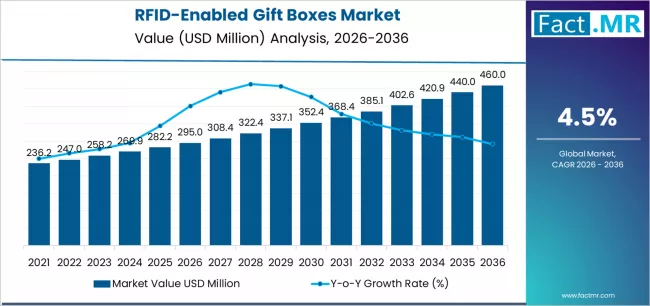
RFID-enabled gift boxes market is projected to grow from USD 295.0 million in 2026 to USD 460.0 million by 2036, at a CAGR of 4.5%. Dairy Products will dominate with a 48.0% market share, while aluminium-paper lids will lead the product type segment with a 55.0% share.
RFID-Enabled Gift Boxes Market Forecast and Outlook 2026 to 2036
The global RFID-enabled gift boxes market is valued at USD 295.0 million in 2026. The market is forecast to reach USD 460.0 million by 2036, an increase of USD 165.0 million. This represents total growth of 55.9%, expanding at a compound annual growth rate (CAGR) of 4.5% between 2026 and 2036.
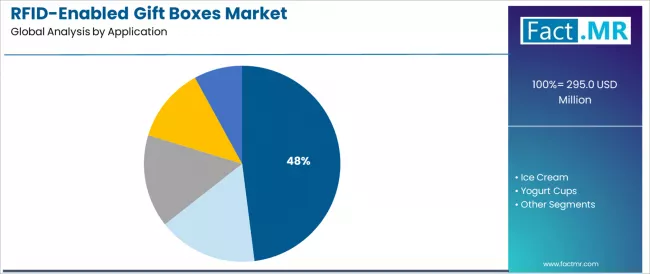
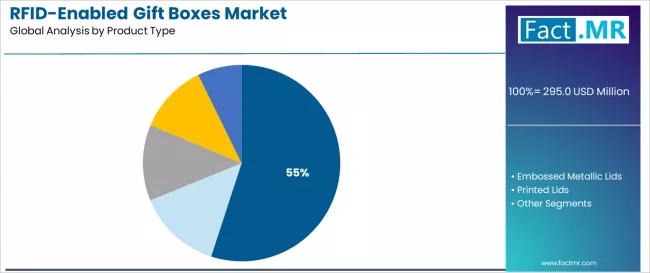
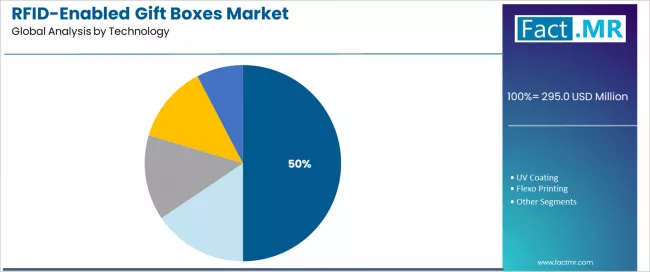
The segmentation highlights a market driven by premium, high-volume sectors. By application, the dairy products segment holds a commanding 48.0% share in 2026, reflecting the need for brand security and traceability in fast-moving consumer goods. Aluminium-paper lids lead the product type segment with a 55.0% share, prized for their premium feel and excellent compatibility with RFID inlays. Hot foil stamping technology dominates with a 50.0% share, as it provides a high-end, durable method for embedding and concealing RFID tags within decorative designs.
Key Takeaways from the RFID-Enabled Gift Boxes Market Report
- Market Value (2026): USD 295.0 million
- Market Forecast Value (2036): USD 460.0 million
- Market Forecast CAGR: 4.5%
- Leading Application: Dairy Products (48.0%)
- Key Growth Regions: Asia Pacific, Europe, North America
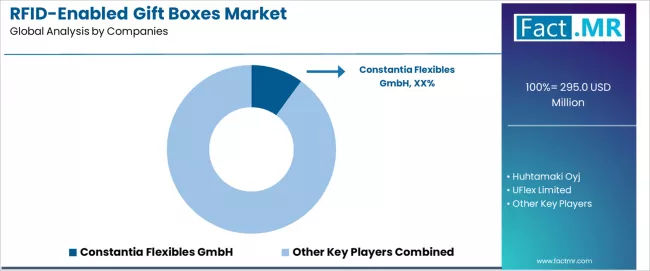
- Key Players: Constantia Flexibles, Huhtamaki Oyj, UFlex Limited, Amcor plc, Klabin S.A.

Growth is fueled by the dual demand for enhanced consumer engagement and robust supply chain control. Brands are moving beyond simple packaging to create interactive, connected experiences. A gift box that verifies authenticity, shares a brand story, or enables a seamless returns process adds tangible value. This shift turns packaging into a dynamic touchpoint in the customer journey.
The market’s expansion is part of a broader convergence of physical and digital retail. RFID technology provides actionable data on inventory movement and consumer interaction, making it a strategic tool beyond anti-counterfeiting. Brands now use these smart boxes to combat fraud, personalize the unboxing moment, and gather insights into gifting patterns, creating a smarter link between production, logistics, and the end recipient.
RFID-Enabled Gift Boxes Market
| Metric | Value |
|---|---|
| Estimated Value in (2026E) | USD 295.0 million |
| Forecast Value in (2036F) | USD 460.0 million |
| Forecast CAGR (2026 to 2036) | 4.5% |
Category
| Category | Segment |
|---|---|
| Application | Dairy Products, Ice Cream, Yogurt Cups, Ready Meals, Others |
| Product Type | Aluminium-Paper Lids, Embossed Metallic Lids, Printed Lids, Metallized Paper Sheets, Others |
| Technology | Hot Foil Stamping, UV Coating, Flexo Printing, Metallization, Others |
| Region | North America, Europe, Asia Pacific, Latin America, MEA |
Segment Analysis
Why do Dairy Products account for the Majority Share of RFID-Enabled Gift Boxes by Application?

Dairy products command a 48.0% market share in 2026. This dominance stems from the sector’s unique challenges such as high-volume production, significant brand equity, and vulnerability to counterfeiting. Premium cheese, butter, and specialty milk brands use RFID-enabled boxes to guarantee authenticity from farm to shelf, a critical concern for both producers and retailers.
The technology also enables sophisticated loyalty programs; scanning a gift box can unlock recipes or content, deepening brand connection. This application is not just about protection. It transforms a perishable commodity into a traceable, experiential gift, adding value that resonates with today's conscious consumers.
What is the Scope for Aluminum-Paper Lid RFID-Enable Gift Boxes?

Aluminium-paper lids lead the product type segment with a 55.0% share. This material combination wins because it delivers what the market needs: a luxury aesthetic with practical functionality. The aluminium layer provides a flawless, conductive surface for reliable RFID tag reading, while the paper backing offers stiffness and excellent printability for branding.
Consumers perceive these lids as high-quality, which justifies the added cost of the embedded technology. For brands, this substrate allows seamless integration of smart features without compromising the unboxing experience, making it the preferred choice for gift sets where first impression is everything.
Why are Hot Foil Stamping Technologies the Preferred Technology for Manufacturing RFID-Enabled Gift Boxes?

Hot foil stamping technology accounts for a 50.0% market share. Its lead is unsurprising, as it elegantly solves a key design challenge: how to make technology invisible. This process allows RFID inlays to be precisely embedded under metallic foils, logos, or decorative patterns, hiding them in plain sight.
The result is a clean, premium finish with no unsightly tags or labels to disrupt the package design. Beyond aesthetics, the hot stamping process securely bonds the tag, ensuring it survives handling. This marriage of flawless design and reliable function makes it the go-to method for brands that refuse to choose between beauty and brains in their packaging.
What are the Drivers, Restraints, and Key Trends of the RFID-Enabled Gift Boxes Market?
The market is propelled by brands needing to combat counterfeiting in premium goods and a growing desire to create memorable, interactive unboxing experiences. The rise of omnichannel retail, which requires perfect inventory visibility, is a major driver. Higher unit costs compared to standard packaging and complexity in recycling composite materials with electronic inlays act as restraints.
Integration challenges with existing warehouse management systems can also slow adoption. Developments focus on chip-less RFID alternatives to reduce cost and environmental impact. The market is also seeing RFID data used not just for logistics, but to trigger personalized digital content, blurring the line between physical gift and digital experience.
Analysis of the RFID-Enabled Gift Boxes Market by Key Countries

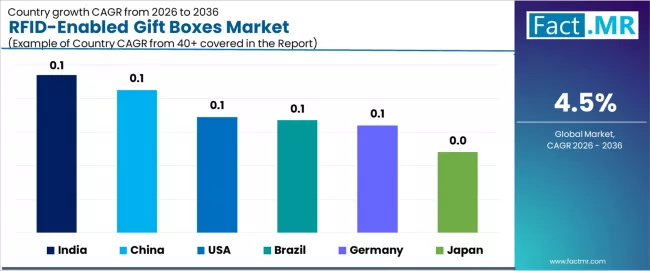
| Country | CAGR (2026 to 2036) |
|---|---|
| Germany | 6.4% |
| USA | 6.9% |
| India | 9.4% |
| China | 8.5% |
| Brazil | 6.7% |
| Japan | 4.8% |
How is Germany’s Luxury Sector Driving Sophisticated Adoption?
Germany’s market grows at a 6.4% CAGR, with demand centered in its renowned luxury automotive, engineering, and gourmet food sectors. Here, RFID gift boxes are less about inventory and more about brand stewardship. A high-end car manufacturer might use them for key fob presentation, where the box authenticates the vehicle's service history.
Development focuses on dual-purpose technology: providing a stunning reveal while serving as a permanent, traceable asset case. This reflects a German preference for engineering excellence that delivers both immediate pleasure and long-term utility, pushing suppliers to develop exceptionally durable and discreet tag integrations.
- Collaboration between premium brands and specialty printers centers on embedding NFC tags that can be rewritten at different ownership stages, adding a lifecycle narrative to the physical object.
- Sustainability directives are driving R&D into easily separable RFID inlays, ensuring the luxurious box remains fully recyclable at its end of life.
Why is USA’s Market Focused on Retail Integration and Brand Experience?

The USA’s market expands at a 6.9% CAGR, fueled by the need to merge e-commerce efficiency with in-store theatre. Major retailers and direct-to-consumer brands use these boxes to solve logistical headaches like effortless returns while creating a shareable moment. The market sees growing demand for the "phygital" experience, a box that, when opened, prompts a phone notification with a tutorial, playlist, or thank-you video from the founder.
This turns gifting into a multi-sensory journey. The focus is on scalability, pushing for standardized tag placements that work flawlessly across massive distribution networks, from fulfillment centers to the customer's doorstep.
- The dominance of large retail chains is accelerating the adoption of ultra-high-frequency (UHF) RFID systems for store-level inventory accuracy, directly influencing gift box specifications.
- There is growing demand for branded, app-less experiences using native smartphone readers, lowering the barrier for consumer interaction and data capture.
What Unique Cultural Factors are Accelerating Growth in India?
India demonstrates the strongest growth at a 9.4% CAGR, driven by its colossal wedding industry and corporate gifting culture. Here, the value proposition shifts to scale and symbolism. RFID manages the logistical nightmare of distributing thousands of identical gift boxes while allowing for personalization; a tag might link to a personalized message for the recipient.
The market favors ostentatious, reusable boxes for jewelry and apparel, where the container itself becomes a status symbol. Technology integration prioritizes durability to withstand multi-day events and crowded venues, with a strong preference for vibrant, printed designs over metallic minimalism.
- The rise of organized gifting aggregators and corporate procurement platforms is creating bulk demand for smart packaging with centralized digital greeting card management.
- Local manufacturers are innovating with cost-effective, paper-based RFID tags that withstand humid climates, making the technology accessible for mid-tier gift segments.
How is China’s Market Balancing Anti-Counterfeiting with Digital Storytelling?
China’s market grows at an 8.5% CAGR, anchored in the critical need to protect domestic luxury brands and international imports from sophisticated fakery. The verification function is paramount, with consumers actively scanning boxes to confirm authenticity.
Current developments leverage China’s digital ecosystem, such as RFID or NFC tags, connect directly to mini-programs on WeChat, launching unboxing games, social sharing prompts, or loyalty point collection. This seamless bridge between a physical luxury item and the dominant social media platform creates a powerful, interactive feedback loop for brands.
- Government support for traceability in food and premium goods to ensure quality and safety is formalizing standards that benefit RFID adoption in gifting.
- Significant investment is flowing into combining blockchain technology with RFID tags in gift boxes, creating an immutable record of provenance for high-value items like tea and spirits.
How is Brazil’s Growth led by Beauty and Experiential Gifting?
Brazil’s market progresses at a 6.7% CAGR, with vibrant demand from the beauty, fragrance, and confectionery sectors. Gift boxes here are central to the experience economy. A premium perfume box might use RFID to trigger an ambient scent release or an augmented reality try-on experience.
Consumer preference leans toward bold, tactile designs where the technology enables a moment of surprise or sensory engagement. The focus is on emotional connection, using technology to amplify the warmth and personal nature of gift-giving, which is deeply ingrained in the social and corporate culture.
- Strong seasonal peaks in gifting around Carnival and Christmas drive demand for robust, pre-programmed solutions that can be deployed reliably under tight deadlines.
- Local converters specialize in integrating RFID into intricate, sculpted paper structures popular in the beauty sector, proving technology need not compromise creativity.
How does Japan’s Culture of ‘Omiyage’ Define Market Precision?

Japan’s market grows at a 4.8% CAGR, defined by the meticulous ‘omiyage’ culture. The requirement is for flawless, understated integration that honors tradition while enabling modernity. RFID is used for discreet quality assurance and to tell the story of a regional specialty’s origin.
The market demands hyper-minimalism, tags so thin and well-integrated they are undetectable, preserving the pure, respectful aesthetic of Japanese presentation. The technology must be utterly reliable and silent, serving its purpose without ever intruding on the refined ritual of gift exchange.
- Demand for seasonal, limited-edition packaging in the confectionery sector requires RFID solutions that are flexible for short production runs without sacrificing performance.
- High value is placed on the end-of-life experience; innovation focuses on tags that can be cleanly removed by the recipient, allowing the beautiful box to be repurposed or recycled without complication.
Competitive Landscape of the RFID-Enabled Gift Boxes Market

Competition is shaped by a blend of flexible packaging giants and specialty label converters. Leaders distinguish themselves through deep partnerships with RFID chip providers and mastery of hybrid production lines that marry conventional printing with delicate tag insertion.
The race is to offer not just a smart box, but the software platform that manages the data it generates. Success hinges on understanding diverse market drivers from a German luxury brand’s need for covert security to an Indian wedding planner’s requirement for bulk personalization. Companies that act as consultants, guiding brands on how to leverage data for engagement, are pulling ahead. Sustainability of the integrated package is now a key battleground, with leaders investing in mono-material structures and detachable tag solutions.
Key Players in the RFID-Enabled Gift Boxes Market
- Constantia Flexibles GmbH
- Huhtamaki Oyj
- UFlex Limited
- Amcor plc
- Klabin S.A.
Scope of the Report
| Items | Values |
|---|---|
| Quantitative Units (2026) | USD 295.0 Million |
| Application Type | Dairy Products, Ice Cream, Yogurt Cups, Ready Meals, Others |
| Product Type | Aluminium-Paper Lids, Embossed Metallic Lids, Printed Lids, Metallized Paper Sheets, Others |
| Technology | Hot Foil Stamping, UV Coating, Flexo Printing, Metallization, Others |
| Regions Covered | North America, Europe, Asia Pacific, Latin America, MEA |
| Key Companies Profiled | Constantia Flexibles GmbH, Huhtamaki Oyj, UFlex Limited, Amcor plc, Klabin S.A. |
RFID-Enabled Gift Boxes Market by Segments
-
Application :
- Dairy Products
- Ice Cream
- Yogurt Cups
- Ready Meals
- Others
-
Product Type :
- Aluminium-Paper Lids
- Embossed Metallic Lids
- Printed Lids
- Metallized Paper Sheets
- Others
-
Technology :
- Hot Foil Stamping
- UV Coating
- Flexo Printing
- Metallization
- Others
-
Region :
-
North America
- USA
- Canada
- Mexico
-
Europe
- Germany
- UK
- France
- Italy
- Spain
- Rest of Europe
-
Asia Pacific
- China
- India
- Japan
- South Korea
- Australia
- Rest of Asia Pacific
-
Latin America
- Brazil
- Argentina
- Rest of Latin America
-
MEA
- Saudi Arabia
- UAE
- South Africa
- Rest of MEA
-
Table of Content
- Executive Summary
- Global Market Outlook
- Demand to side Trends
- Supply to side Trends
- Technology Roadmap Analysis
- Analysis and Recommendations
- Market Overview
- Market Coverage / Taxonomy
- Market Definition / Scope / Limitations
- Market Background
- Market Dynamics
- Drivers
- Restraints
- Opportunity
- Trends
- Scenario Forecast
- Demand in Optimistic Scenario
- Demand in Likely Scenario
- Demand in Conservative Scenario
- Opportunity Map Analysis
- Product Life Cycle Analysis
- Supply Chain Analysis
- Investment Feasibility Matrix
- Value Chain Analysis
- PESTLE and Porter’s Analysis
- Regulatory Landscape
- Regional Parent Market Outlook
- Production and Consumption Statistics
- Import and Export Statistics
- Market Dynamics
- Global Market Analysis 2021 to 2025 and Forecast, 2026 to 2036
- Historical Market Size Value (USD Million) Analysis, 2021 to 2025
- Current and Future Market Size Value (USD Million) Projections, 2026 to 2036
- Y to o to Y Growth Trend Analysis
- Absolute $ Opportunity Analysis
- Global Market Pricing Analysis 2021 to 2025 and Forecast 2026 to 2036
- Global Market Analysis 2021 to 2025 and Forecast 2026 to 2036, By Application
- Introduction / Key Findings
- Historical Market Size Value (USD Million) Analysis By Application, 2021 to 2025
- Current and Future Market Size Value (USD Million) Analysis and Forecast By Application, 2026 to 2036
- Dairy Products
- Ice Cream
- Yogurt Cups
- Ready Meals
- Others
- Y to o to Y Growth Trend Analysis By Application, 2021 to 2025
- Absolute $ Opportunity Analysis By Application, 2026 to 2036
- Global Market Analysis 2021 to 2025 and Forecast 2026 to 2036, By Product Type
- Introduction / Key Findings
- Historical Market Size Value (USD Million) Analysis By Product Type, 2021 to 2025
- Current and Future Market Size Value (USD Million) Analysis and Forecast By Product Type, 2026 to 2036
- Aluminium-Paper Lids
- Embossed Metallic Lids
- Printed Lids
- Metallized Paper Sheets
- Others
- Y to o to Y Growth Trend Analysis By Product Type, 2021 to 2025
- Absolute $ Opportunity Analysis By Product Type, 2026 to 2036
- Global Market Analysis 2021 to 2025 and Forecast 2026 to 2036, By Technology
- Introduction / Key Findings
- Historical Market Size Value (USD Million) Analysis By Technology, 2021 to 2025
- Current and Future Market Size Value (USD Million) Analysis and Forecast By Technology, 2026 to 2036
- Hot Foil Stamping
- UV Coating
- Flexo Printing
- Metallization
- Others
- Y to o to Y Growth Trend Analysis By Technology, 2021 to 2025
- Absolute $ Opportunity Analysis By Technology, 2026 to 2036
- Global Market Analysis 2021 to 2025 and Forecast 2026 to 2036, By Region
- Introduction
- Historical Market Size Value (USD Million) Analysis By Region, 2021 to 2025
- Current Market Size Value (USD Million) Analysis and Forecast By Region, 2026 to 2036
- North America
- Latin America
- Western Europe
- Eastern Europe
- East Asia
- South Asia and Pacific
- Middle East & Africa
- Market Attractiveness Analysis By Region
- North America Market Analysis 2021 to 2025 and Forecast 2026 to 2036, By Country
- Historical Market Size Value (USD Million) Trend Analysis By Market Taxonomy, 2021 to 2025
- Market Size Value (USD Million) Forecast By Market Taxonomy, 2026 to 2036
- By Country
- USA
- Canada
- Mexico
- By Application
- By Product Type
- By Technology
- By Country
- Market Attractiveness Analysis
- By Country
- By Application
- By Product Type
- By Technology
- Key Takeaways
- Latin America Market Analysis 2021 to 2025 and Forecast 2026 to 2036, By Country
- Historical Market Size Value (USD Million) Trend Analysis By Market Taxonomy, 2021 to 2025
- Market Size Value (USD Million) Forecast By Market Taxonomy, 2026 to 2036
- By Country
- Brazil
- Chile
- Rest of Latin America
- By Application
- By Product Type
- By Technology
- By Country
- Market Attractiveness Analysis
- By Country
- By Application
- By Product Type
- By Technology
- Key Takeaways
- Western Europe Market Analysis 2021 to 2025 and Forecast 2026 to 2036, By Country
- Historical Market Size Value (USD Million) Trend Analysis By Market Taxonomy, 2021 to 2025
- Market Size Value (USD Million) Forecast By Market Taxonomy, 2026 to 2036
- By Country
- Germany
- UK
- Italy
- Spain
- France
- Nordic
- BENELUX
- Rest of Western Europe
- By Application
- By Product Type
- By Technology
- By Country
- Market Attractiveness Analysis
- By Country
- By Application
- By Product Type
- By Technology
- Key Takeaways
- Eastern Europe Market Analysis 2021 to 2025 and Forecast 2026 to 2036, By Country
- Historical Market Size Value (USD Million) Trend Analysis By Market Taxonomy, 2021 to 2025
- Market Size Value (USD Million) Forecast By Market Taxonomy, 2026 to 2036
- By Country
- Russia
- Poland
- Hungary
- Balkan & Baltic
- Rest of Eastern Europe
- By Application
- By Product Type
- By Technology
- By Country
- Market Attractiveness Analysis
- By Country
- By Application
- By Product Type
- By Technology
- Key Takeaways
- East Asia Market Analysis 2021 to 2025 and Forecast 2026 to 2036, By Country
- Historical Market Size Value (USD Million) Trend Analysis By Market Taxonomy, 2021 to 2025
- Market Size Value (USD Million) Forecast By Market Taxonomy, 2026 to 2036
- By Country
- China
- Japan
- South Korea
- By Application
- By Product Type
- By Technology
- By Country
- Market Attractiveness Analysis
- By Country
- By Application
- By Product Type
- By Technology
- Key Takeaways
- South Asia and Pacific Market Analysis 2021 to 2025 and Forecast 2026 to 2036, By Country
- Historical Market Size Value (USD Million) Trend Analysis By Market Taxonomy, 2021 to 2025
- Market Size Value (USD Million) Forecast By Market Taxonomy, 2026 to 2036
- By Country
- India
- ASEAN
- Australia & New Zealand
- Rest of South Asia and Pacific
- By Application
- By Product Type
- By Technology
- By Country
- Market Attractiveness Analysis
- By Country
- By Application
- By Product Type
- By Technology
- Key Takeaways
- Middle East & Africa Market Analysis 2021 to 2025 and Forecast 2026 to 2036, By Country
- Historical Market Size Value (USD Million) Trend Analysis By Market Taxonomy, 2021 to 2025
- Market Size Value (USD Million) Forecast By Market Taxonomy, 2026 to 2036
- By Country
- Kingdom of Saudi Arabia
- Other GCC Countries
- Turkiye
- South Africa
- Other African Union
- Rest of Middle East & Africa
- By Application
- By Product Type
- By Technology
- By Country
- Market Attractiveness Analysis
- By Country
- By Application
- By Product Type
- By Technology
- Key Takeaways
- Key Countries Market Analysis
- USA
- Pricing Analysis
- Market Share Analysis, 2025
- By Application
- By Product Type
- By Technology
- Canada
- Pricing Analysis
- Market Share Analysis, 2025
- By Application
- By Product Type
- By Technology
- Mexico
- Pricing Analysis
- Market Share Analysis, 2025
- By Application
- By Product Type
- By Technology
- Brazil
- Pricing Analysis
- Market Share Analysis, 2025
- By Application
- By Product Type
- By Technology
- Chile
- Pricing Analysis
- Market Share Analysis, 2025
- By Application
- By Product Type
- By Technology
- Germany
- Pricing Analysis
- Market Share Analysis, 2025
- By Application
- By Product Type
- By Technology
- UK
- Pricing Analysis
- Market Share Analysis, 2025
- By Application
- By Product Type
- By Technology
- Italy
- Pricing Analysis
- Market Share Analysis, 2025
- By Application
- By Product Type
- By Technology
- Spain
- Pricing Analysis
- Market Share Analysis, 2025
- By Application
- By Product Type
- By Technology
- France
- Pricing Analysis
- Market Share Analysis, 2025
- By Application
- By Product Type
- By Technology
- India
- Pricing Analysis
- Market Share Analysis, 2025
- By Application
- By Product Type
- By Technology
- ASEAN
- Pricing Analysis
- Market Share Analysis, 2025
- By Application
- By Product Type
- By Technology
- Australia & New Zealand
- Pricing Analysis
- Market Share Analysis, 2025
- By Application
- By Product Type
- By Technology
- China
- Pricing Analysis
- Market Share Analysis, 2025
- By Application
- By Product Type
- By Technology
- Japan
- Pricing Analysis
- Market Share Analysis, 2025
- By Application
- By Product Type
- By Technology
- South Korea
- Pricing Analysis
- Market Share Analysis, 2025
- By Application
- By Product Type
- By Technology
- Russia
- Pricing Analysis
- Market Share Analysis, 2025
- By Application
- By Product Type
- By Technology
- Poland
- Pricing Analysis
- Market Share Analysis, 2025
- By Application
- By Product Type
- By Technology
- Hungary
- Pricing Analysis
- Market Share Analysis, 2025
- By Application
- By Product Type
- By Technology
- Kingdom of Saudi Arabia
- Pricing Analysis
- Market Share Analysis, 2025
- By Application
- By Product Type
- By Technology
- Turkiye
- Pricing Analysis
- Market Share Analysis, 2025
- By Application
- By Product Type
- By Technology
- South Africa
- Pricing Analysis
- Market Share Analysis, 2025
- By Application
- By Product Type
- By Technology
- USA
- Market Structure Analysis
- Competition Dashboard
- Competition Benchmarking
- Market Share Analysis of Top Players
- By Regional
- By Application
- By Product Type
- By Technology
- Competition Analysis
- Competition Deep Dive
- Constantia Flexibles GmbH
- Overview
- Product Portfolio
- Profitability by Market Segments (Product/Age /Sales Channel/Region)
- Sales Footprint
- Strategy Overview
- Marketing Strategy
- Product Strategy
- Channel Strategy
- Huhtamaki Oyj
- UFlex Limited
- Amcor plc
- Klabin S.A.
- Constantia Flexibles GmbH
- Competition Deep Dive
- Assumptions & Acronyms Used
- Research Methodology
List Of Table
- Table 1: Global Market Value (USD Million) Forecast by Region, 2021 to 2036
- Table 2: Global Market Value (USD Million) Forecast by Application, 2021 to 2036
- Table 3: Global Market Value (USD Million) Forecast by Product Type, 2021 to 2036
- Table 4: Global Market Value (USD Million) Forecast by Technology, 2021 to 2036
- Table 5: North America Market Value (USD Million) Forecast by Country, 2021 to 2036
- Table 6: North America Market Value (USD Million) Forecast by Application, 2021 to 2036
- Table 7: North America Market Value (USD Million) Forecast by Product Type, 2021 to 2036
- Table 8: North America Market Value (USD Million) Forecast by Technology, 2021 to 2036
- Table 9: Latin America Market Value (USD Million) Forecast by Country, 2021 to 2036
- Table 10: Latin America Market Value (USD Million) Forecast by Application, 2021 to 2036
- Table 11: Latin America Market Value (USD Million) Forecast by Product Type, 2021 to 2036
- Table 12: Latin America Market Value (USD Million) Forecast by Technology, 2021 to 2036
- Table 13: Western Europe Market Value (USD Million) Forecast by Country, 2021 to 2036
- Table 14: Western Europe Market Value (USD Million) Forecast by Application, 2021 to 2036
- Table 15: Western Europe Market Value (USD Million) Forecast by Product Type, 2021 to 2036
- Table 16: Western Europe Market Value (USD Million) Forecast by Technology, 2021 to 2036
- Table 17: Eastern Europe Market Value (USD Million) Forecast by Country, 2021 to 2036
- Table 18: Eastern Europe Market Value (USD Million) Forecast by Application, 2021 to 2036
- Table 19: Eastern Europe Market Value (USD Million) Forecast by Product Type, 2021 to 2036
- Table 20: Eastern Europe Market Value (USD Million) Forecast by Technology, 2021 to 2036
- Table 21: East Asia Market Value (USD Million) Forecast by Country, 2021 to 2036
- Table 22: East Asia Market Value (USD Million) Forecast by Application, 2021 to 2036
- Table 23: East Asia Market Value (USD Million) Forecast by Product Type, 2021 to 2036
- Table 24: East Asia Market Value (USD Million) Forecast by Technology, 2021 to 2036
- Table 25: South Asia and Pacific Market Value (USD Million) Forecast by Country, 2021 to 2036
- Table 26: South Asia and Pacific Market Value (USD Million) Forecast by Application, 2021 to 2036
- Table 27: South Asia and Pacific Market Value (USD Million) Forecast by Product Type, 2021 to 2036
- Table 28: South Asia and Pacific Market Value (USD Million) Forecast by Technology, 2021 to 2036
- Table 29: Middle East & Africa Market Value (USD Million) Forecast by Country, 2021 to 2036
- Table 30: Middle East & Africa Market Value (USD Million) Forecast by Application, 2021 to 2036
- Table 31: Middle East & Africa Market Value (USD Million) Forecast by Product Type, 2021 to 2036
- Table 32: Middle East & Africa Market Value (USD Million) Forecast by Technology, 2021 to 2036
List Of Figures
- Figure 1: Global Market Pricing Analysis
- Figure 2: Global Market Value (USD Million) Forecast 2021 to 2036
- Figure 3: Global Market Value Share and BPS Analysis by Application, 2026 and 2036
- Figure 4: Global Market Y to o to Y Growth Comparison by Application, 2026 to 2036
- Figure 5: Global Market Attractiveness Analysis by Application
- Figure 6: Global Market Value Share and BPS Analysis by Product Type, 2026 and 2036
- Figure 7: Global Market Y to o to Y Growth Comparison by Product Type, 2026 to 2036
- Figure 8: Global Market Attractiveness Analysis by Product Type
- Figure 9: Global Market Value Share and BPS Analysis by Technology, 2026 and 2036
- Figure 10: Global Market Y to o to Y Growth Comparison by Technology, 2026 to 2036
- Figure 11: Global Market Attractiveness Analysis by Technology
- Figure 12: Global Market Value (USD Million) Share and BPS Analysis by Region, 2026 and 2036
- Figure 13: Global Market Y to o to Y Growth Comparison by Region, 2026 to 2036
- Figure 14: Global Market Attractiveness Analysis by Region
- Figure 15: North America Market Incremental Dollar Opportunity, 2026 to 2036
- Figure 16: Latin America Market Incremental Dollar Opportunity, 2026 to 2036
- Figure 17: Western Europe Market Incremental Dollar Opportunity, 2026 to 2036
- Figure 18: Eastern Europe Market Incremental Dollar Opportunity, 2026 to 2036
- Figure 19: East Asia Market Incremental Dollar Opportunity, 2026 to 2036
- Figure 20: South Asia and Pacific Market Incremental Dollar Opportunity, 2026 to 2036
- Figure 21: Middle East & Africa Market Incremental Dollar Opportunity, 2026 to 2036
- Figure 22: North America Market Value Share and BPS Analysis by Country, 2026 and 2036
- Figure 23: North America Market Value Share and BPS Analysis by Application, 2026 and 2036
- Figure 24: North America Market Y to o to Y Growth Comparison by Application, 2026 to 2036
- Figure 25: North America Market Attractiveness Analysis by Application
- Figure 26: North America Market Value Share and BPS Analysis by Product Type, 2026 and 2036
- Figure 27: North America Market Y to o to Y Growth Comparison by Product Type, 2026 to 2036
- Figure 28: North America Market Attractiveness Analysis by Product Type
- Figure 29: North America Market Value Share and BPS Analysis by Technology, 2026 and 2036
- Figure 30: North America Market Y to o to Y Growth Comparison by Technology, 2026 to 2036
- Figure 31: North America Market Attractiveness Analysis by Technology
- Figure 32: Latin America Market Value Share and BPS Analysis by Country, 2026 and 2036
- Figure 33: Latin America Market Value Share and BPS Analysis by Application, 2026 and 2036
- Figure 34: Latin America Market Y to o to Y Growth Comparison by Application, 2026 to 2036
- Figure 35: Latin America Market Attractiveness Analysis by Application
- Figure 36: Latin America Market Value Share and BPS Analysis by Product Type, 2026 and 2036
- Figure 37: Latin America Market Y to o to Y Growth Comparison by Product Type, 2026 to 2036
- Figure 38: Latin America Market Attractiveness Analysis by Product Type
- Figure 39: Latin America Market Value Share and BPS Analysis by Technology, 2026 and 2036
- Figure 40: Latin America Market Y to o to Y Growth Comparison by Technology, 2026 to 2036
- Figure 41: Latin America Market Attractiveness Analysis by Technology
- Figure 42: Western Europe Market Value Share and BPS Analysis by Country, 2026 and 2036
- Figure 43: Western Europe Market Value Share and BPS Analysis by Application, 2026 and 2036
- Figure 44: Western Europe Market Y to o to Y Growth Comparison by Application, 2026 to 2036
- Figure 45: Western Europe Market Attractiveness Analysis by Application
- Figure 46: Western Europe Market Value Share and BPS Analysis by Product Type, 2026 and 2036
- Figure 47: Western Europe Market Y to o to Y Growth Comparison by Product Type, 2026 to 2036
- Figure 48: Western Europe Market Attractiveness Analysis by Product Type
- Figure 49: Western Europe Market Value Share and BPS Analysis by Technology, 2026 and 2036
- Figure 50: Western Europe Market Y to o to Y Growth Comparison by Technology, 2026 to 2036
- Figure 51: Western Europe Market Attractiveness Analysis by Technology
- Figure 52: Eastern Europe Market Value Share and BPS Analysis by Country, 2026 and 2036
- Figure 53: Eastern Europe Market Value Share and BPS Analysis by Application, 2026 and 2036
- Figure 54: Eastern Europe Market Y to o to Y Growth Comparison by Application, 2026 to 2036
- Figure 55: Eastern Europe Market Attractiveness Analysis by Application
- Figure 56: Eastern Europe Market Value Share and BPS Analysis by Product Type, 2026 and 2036
- Figure 57: Eastern Europe Market Y to o to Y Growth Comparison by Product Type, 2026 to 2036
- Figure 58: Eastern Europe Market Attractiveness Analysis by Product Type
- Figure 59: Eastern Europe Market Value Share and BPS Analysis by Technology, 2026 and 2036
- Figure 60: Eastern Europe Market Y to o to Y Growth Comparison by Technology, 2026 to 2036
- Figure 61: Eastern Europe Market Attractiveness Analysis by Technology
- Figure 62: East Asia Market Value Share and BPS Analysis by Country, 2026 and 2036
- Figure 63: East Asia Market Value Share and BPS Analysis by Application, 2026 and 2036
- Figure 64: East Asia Market Y to o to Y Growth Comparison by Application, 2026 to 2036
- Figure 65: East Asia Market Attractiveness Analysis by Application
- Figure 66: East Asia Market Value Share and BPS Analysis by Product Type, 2026 and 2036
- Figure 67: East Asia Market Y to o to Y Growth Comparison by Product Type, 2026 to 2036
- Figure 68: East Asia Market Attractiveness Analysis by Product Type
- Figure 69: East Asia Market Value Share and BPS Analysis by Technology, 2026 and 2036
- Figure 70: East Asia Market Y to o to Y Growth Comparison by Technology, 2026 to 2036
- Figure 71: East Asia Market Attractiveness Analysis by Technology
- Figure 72: South Asia and Pacific Market Value Share and BPS Analysis by Country, 2026 and 2036
- Figure 73: South Asia and Pacific Market Value Share and BPS Analysis by Application, 2026 and 2036
- Figure 74: South Asia and Pacific Market Y to o to Y Growth Comparison by Application, 2026 to 2036
- Figure 75: South Asia and Pacific Market Attractiveness Analysis by Application
- Figure 76: South Asia and Pacific Market Value Share and BPS Analysis by Product Type, 2026 and 2036
- Figure 77: South Asia and Pacific Market Y to o to Y Growth Comparison by Product Type, 2026 to 2036
- Figure 78: South Asia and Pacific Market Attractiveness Analysis by Product Type
- Figure 79: South Asia and Pacific Market Value Share and BPS Analysis by Technology, 2026 and 2036
- Figure 80: South Asia and Pacific Market Y to o to Y Growth Comparison by Technology, 2026 to 2036
- Figure 81: South Asia and Pacific Market Attractiveness Analysis by Technology
- Figure 82: Middle East & Africa Market Value Share and BPS Analysis by Country, 2026 and 2036
- Figure 83: Middle East & Africa Market Value Share and BPS Analysis by Application, 2026 and 2036
- Figure 84: Middle East & Africa Market Y to o to Y Growth Comparison by Application, 2026 to 2036
- Figure 85: Middle East & Africa Market Attractiveness Analysis by Application
- Figure 86: Middle East & Africa Market Value Share and BPS Analysis by Product Type, 2026 and 2036
- Figure 87: Middle East & Africa Market Y to o to Y Growth Comparison by Product Type, 2026 to 2036
- Figure 88: Middle East & Africa Market Attractiveness Analysis by Product Type
- Figure 89: Middle East & Africa Market Value Share and BPS Analysis by Technology, 2026 and 2036
- Figure 90: Middle East & Africa Market Y to o to Y Growth Comparison by Technology, 2026 to 2036
- Figure 91: Middle East & Africa Market Attractiveness Analysis by Technology
- Figure 92: Global Market - Tier Structure Analysis
- Figure 93: Global Market - Company Share Analysis
- FAQs -
How big is the RFID-enabled gift boxes market in 2026?
The global RFID-enabled gift boxes market is estimated to be valued at USD 295.0 million in 2026.
What will be the size of RFID-enabled gift boxes market in 2036?
The market size for the RFID-enabled gift boxes market is projected to reach USD 460.0 million by 2036.
How much will be the RFID-enabled gift boxes market growth between 2026 and 2036?
The RFID-enabled gift boxes market is expected to grow at a 4.5% CAGR between 2026 and 2036.
What are the key product types in the RFID-enabled gift boxes market?
The key product types in RFID-enabled gift boxes market are dairy products, ice cream, yogurt cups, ready meals and others.
Which product type segment to contribute significant share in the RFID-enabled gift boxes market in 2026?
In terms of product type, aluminium-paper lids segment to command 55.0% share in the RFID-enabled gift boxes market in 2026.