- Base Value(2025): 17.9 Bn
- Estimated Value(2026): 19 Bn
- Forecast Value (2036): 34.6 Bn
- CAGR (2026 - 2036): 6.2%
SGLT2 Inhibitors Market Forecast 2026 to 2036
In 2025, the SGLT2 inhibitors market was valued at USD 17.9 billion. Based on Future Market Insights' analysis, demand for SGLT2 inhibitors is estimated to grow to USD 19 billion in 2026 and USD 34.6 billion by 2036. FMI projects a CAGR of 6.2% during the forecast period.
The absolute dollar growth from 2026 to 2036 is USD 15.6 billion. This growth is driven by the increasing prevalence of diabetes and the rising demand for effective treatment options, particularly for type 2 diabetes. SGLT2 inhibitors, which help regulate blood sugar levels, are becoming a popular choice due to their efficacy and added benefits, such as cardiovascular protection. However, challenges such as the high cost of medications and competition from other diabetes treatments may affect the growth in some regions.
As Pascal Soriot, Chief Executive Officer of AstraZeneca, noted regarding the company’s commercial performance across its therapy areas including cardiovascular and metabolic medicines such as SGLT2 inhibitors, “In 2025 we saw strong commercial performance across our therapy areas and excellent pipeline delivery.”
Summary of the SGLT2 Inhibitors Market
- Market Definition
- The SGLT2 Inhibitors Market involves the development, manufacture, and sale of sodium-glucose co-transporter 2 (SGLT2) inhibitor drugs used primarily for treating type 2 diabetes, heart failure, and chronic kidney disease (CKD). These drugs lower blood glucose levels by promoting renal glucose excretion.
- Demand Drivers
- Increasing prevalence of type 2 diabetes and the rising need for effective management options.
- Expanding clinical evidence supporting the use of SGLT2 inhibitors for cardiovascular protection and kidney disease management.
- Rising demand for combination therapies to address multiple comorbid conditions in patients with type 2 diabetes.
- Continued guideline adoption for using SGLT2 inhibitors in heart failure and chronic kidney disease, which broadens their market use.
- Key Segments Analyzed
- Drug: Jardiance (empagliflozin) is expected to dominate the market with 55.3% market share in 2026, driven by its efficacy in managing type 2 diabetes and cardiovascular diseases.
- Indication: Type 2 diabetes is expected to lead with 71.8% market share, as SGLT2 inhibitors remain a cornerstone in managing blood glucose in diabetic patients.
- Geography: China leads with the highest growth rate, projected at 8.4% CAGR, followed by India at 7.7%, and the USA at 5.3%.
- Analyst Opinion at FMR
- Shambhu Nath Jha, Principal Consultant at Fact MR, comments, "The SGLT2 inhibitors market is poised for sustained growth, driven by expanding clinical indications and increasing prevalence of comorbidities such as cardiovascular diseases and kidney disease. As clinical evidence strengthens, these drugs are being integrated into more care pathways, which is positively impacting market dynamics. The potential for broader adoption across key global markets, especially in Asia Pacific, presents significant growth opportunities."
- Strategic Implications/Executive Takeaways
- Guideline Expansion: Continue pushing for clinical guideline adoption and regulatory approvals for new indications like heart failure and CKD to increase market penetration.
- Focus on Combination Therapies: Develop and market combination therapies to leverage the benefits of SGLT2 inhibitors alongside other diabetic and cardiovascular treatments.
- Geographical Expansion: Focus on expanding in rapidly growing markets like China and India, where diabetes prevalence is increasing rapidly, and healthcare access is improving.
- Methodology
- Primary research conducted through interviews with endocrinologists, nephrologists, cardiologists, and pharmaceutical market experts.
- Data sourced from clinical trial databases, regulatory filings, and industry research reports.
- Market sizing and forecasting using a hybrid model combining top-down therapeutic demand forecasts with bottom-up sales and utilization data.
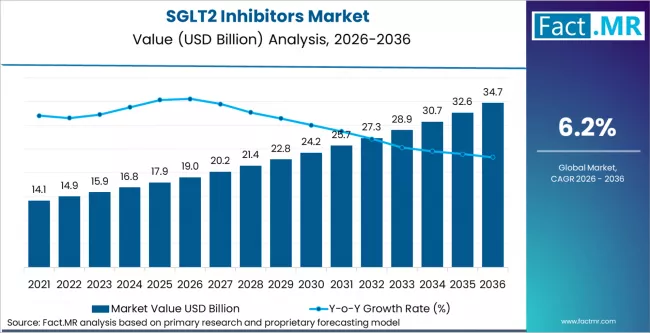
Sglt2 Inhibitors Market Market Value Analysis | Source: Fact.MR
China leads with a CAGR of 8.4%, driven by the rising prevalence of diabetes and increasing healthcare access. India follows with a 7.7% CAGR, supported by growing diabetes awareness and a large diabetic population. Germany grows at 7.1%, benefiting from strong healthcare infrastructure and growing demand for diabetes management solutions. France shows growth at 6.5%, fueled by an increasing focus on healthcare and preventive treatments. The UK grows at 5.9%, reflecting steady demand for diabetes care solutions. The USA grows at 5.3%, driven by steady adoption of advanced diabetes treatments. Brazil shows slower growth at 4.6%, driven by improving healthcare infrastructure and growing diabetes awareness.
SGLT2 Inhibitors Market
| Metric | Value |
|---|---|
| Estimated Value in (2026E) | USD 19 billion |
| Forecast Value in (2036F) | USD 34.6 billion |
| Forecast CAGR (2026 to 2036) | 6.2% |
Source: Fact.MR analysis. Updated Mar 2, 2026
SGLT2 Inhibitors Market Definition
The SGLT2 inhibitors market involves the development, manufacture, and sale of sodium‑glucose co‑transporter‑2 inhibitor drugs used to lower blood glucose by promoting renal glucose excretion in patients with type 2 diabetes, and increasingly for heart failure and chronic kidney disease management.
Market Inclusions
This report covers global and regional market sizes for SGLT2 inhibitors over a defined forecast period, including drug classes and formulations, major therapeutic indications (type 2 diabetes, heart failure, CKD), and distribution channels (hospitals, retail pharmacies, specialty clinics).
Market Exclusions
The scope excludes glucose‑lowering therapies outside the SGLT2 mechanism (such as DPP‑4 inhibitors, insulin, GLP‑1 receptor agonists), diagnostic equipment, and unrelated cardiovascular or renal drugs not approved for SGLT2 indications.
Research Methodology
- Primary Research: Interviews were conducted with endocrinologists, nephrologists, cardiologists, and pharmaceutical market experts.
- Desk Research: Data was sourced from clinical trial databases, regulatory filings, and industry research reports.
- Market‑Sizing and Forecasting: A hybrid model combining top‑down therapeutic demand forecasts with bottom‑up sales and utilization data was used.
- Data Validation and Update Cycle: Findings were validated through expert review and aligned with recent treatment uptake, approval, and sales statistics.
Segmental Analysis
SGLT2 Inhibitors Market Analysis by Indication
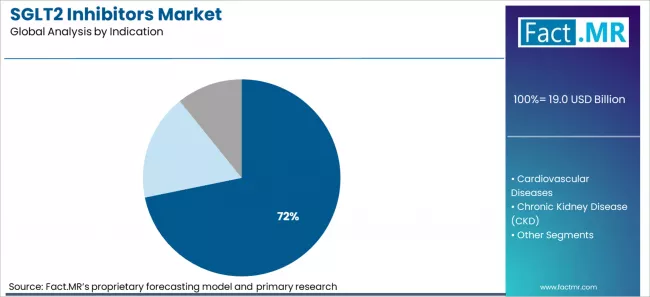
Sglt2 Inhibitors Market Analysis By Indication | Source: Fact.MR
- Market Overview: Type 2 diabetes is expected to account for 71.8% of the SGLT2 inhibitors market by 2026. SGLT2 inhibitors are primarily used to treat type 2 diabetes by inhibiting the sodium-glucose co-transporter 2 (SGLT2) in the kidneys, which reduces glucose reabsorption and lowers blood sugar levels. This makes them an essential treatment option for diabetes management.
- Demand Drivers:
- Growing Prevalence of Type 2 Diabetes: With the increasing global prevalence of type 2 diabetes due to lifestyle factors, rising obesity rates, and an aging population, the demand for effective treatments, including SGLT2 inhibitors, continues to grow. These drugs provide significant benefits in managing blood sugar levels while also offering cardiovascular and renal protection.
- Multiple Health Benefits: SGLT2 inhibitors are not only effective in lowering blood glucose but also provide additional benefits, such as weight loss, lowering blood pressure, and reducing the risk of cardiovascular events and kidney damage. These multi-benefit properties drive their adoption in the management of type 2 diabetes.
- Increased Focus on Personalized Medicine: With personalized treatment plans becoming more common in diabetes care, SGLT2 inhibitors are gaining popularity due to their efficacy in managing blood sugar, reducing complications, and improving overall patient outcomes.
SGLT2 Inhibitors Market Analysis by Drug
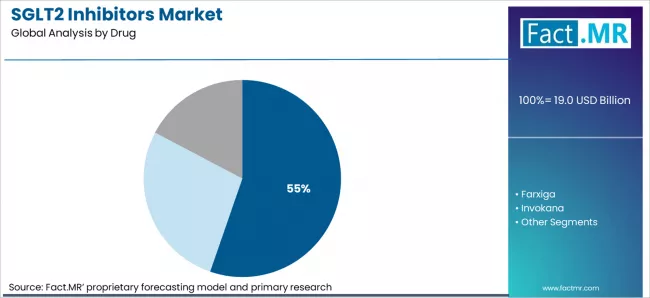
Sglt2 Inhibitors Market Analysis By Drug | Source: Fact.MR
- Market Overview: Jardiance (empagliflozin) is projected to capture 55.3% of the market share by 2026. Jardiance, one of the leading SGLT2 inhibitors, is widely prescribed for the treatment of type 2 diabetes and has demonstrated additional benefits in reducing the risk of cardiovascular events, further expanding its market adoption.
- Demand Drivers:
- Proven Efficacy in Type 2 Diabetes and Cardiovascular Benefits: Jardiance has been shown to reduce the risk of cardiovascular events, which is a significant concern for type 2 diabetes patients who are at a higher risk for heart disease. Its proven efficacy in both managing blood glucose levels and providing cardiovascular protection makes it a leading choice among SGLT2 inhibitors.
- Expanding Clinical Indications: Jardiance has been approved for use in a wide range of indications, including type 2 diabetes, cardiovascular diseases, and chronic kidney disease. Its ability to address multiple comorbid conditions increases its appeal among healthcare providers and patients.
- Brand Recognition and Market Position: As one of the most recognized brands in the SGLT2 inhibitor class, Jardiance continues to dominate the market due to its established track record of safety, effectiveness, and clinical trial success.
SGLT2 Inhibitors Market Drivers, Restraints, and Opportunities
FMR analysts observe that the Sodium‑Glucose Cotransporter‑2 (SGLT2) inhibitors market is a growth‑aligned pharmaceutical segment anchored in expanding clinical evidence beyond glycemic control into cardiovascular and renal protection. Originally developed to improve blood glucose levels in type 2 diabetes, structural demand for SGLT2 inhibitors broadened after numerous large‑scale trials demonstrated significant benefits in reducing heart failure hospitalizations and slowing chronic kidney disease progression. The 2026 market valuation reflects continued adoption driven by guideline updates, expanding indications, and rising prevalence of metabolic, cardiac, and renal comorbidities globally.
While earlier use was primarily for type 2 diabetes, uptake has accelerated as clinical guidelines increasingly recommend SGLT2 inhibitors for heart failure (with and without diabetes) and chronic kidney disease. These broader indications support premium pricing and sustained market growth even as competition increases with emerging generics. The market exists at its current size because healthcare providers now integrate these therapies into multiple care pathways, reflecting both evolving evidence and regulatory approvals expanding labeled uses.
- Guideline & Indication Expansion: Updated clinical guidelines recommending SGLT2 inhibitors for heart failure and renal disease beyond glucose lowering are expanding the eligible patient pool.
- Regulatory Approvals & Standards: Broadened regulatory labels in major markets for cardiovascular and kidney outcomes encourage adoption of these agents as standard therapies.
- Regional Treatment Uptake: In North America and Europe, strong reimbursement and early guideline adoption drive higher use, while Asia‑Pacific shows rapid growth as access and clinical awareness improve.
Regional Analysis
The market analysis covers key global regions, including East Asia, South Asia, Western Europe, North America, and Latin America. It is segmented geographically, with specific market dynamics for each region. The full report provides a detailed market attractiveness analysis.
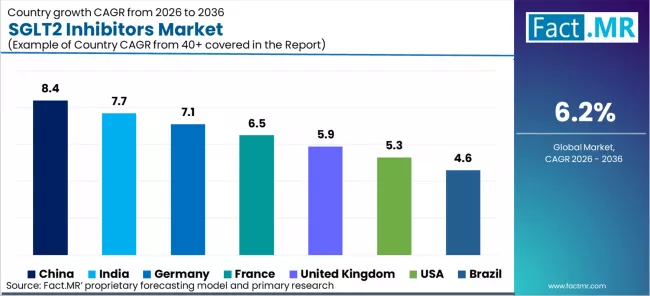
Sglt2 Inhibitors Market Cagr Analysis By Country | Source: Fact.MR
| Country | CAGR (%) |
|---|---|
| China | 8.4% |
| India | 7.7% |
| Germany | 7.1% |
| France | 6.5% |
| United Kingdom | 5.9% |
| USA | 5.3% |
| Brazil | 4.6% |
Source: Fact.MR analysis. Updated Mar 2, 2026
Source: Fact MR (FMR) analysis, based on proprietary forecasting model and primary research.
East Asia:
In East Asia, China is the leading market for SGLT2 inhibitors, supported by the country’s large diabetic population, growing healthcare infrastructure, and increasing adoption of advanced diabetes treatments.
- China: Demand for SGLT2 inhibitors in China is projected to rise at 8.4% CAGR through 2036. China’s increasing diabetic patient base, expanding healthcare access, and rising demand for effective diabetes treatments continue to drive market growth.
- India: Demand for SGLT2 inhibitors in India is projected to rise at 7.7% CAGR through 2036. India’s rapidly increasing prevalence of diabetes and growing healthcare awareness contribute to steady market growth for SGLT2 inhibitors.
Western Europe:
In Western Europe, Germany and France are key markets for SGLT2 inhibitors, supported by high healthcare standards, increasing diabetes prevalence, and growing adoption of advanced diabetes management options.
- Germany: Demand for SGLT2 inhibitors in Germany is projected to rise at 7.1% CAGR through 2036. Germany’s strong healthcare infrastructure and growing prevalence of diabetes continue to support strong market demand.
- France: Demand for SGLT2 inhibitors in France is projected to rise at 6.5% CAGR through 2036. France’s focus on diabetes care and government support for healthcare advancements continue to contribute to the growth of the market.
- United Kingdom: Demand for SGLT2 inhibitors in the UK is projected to rise at 5.9% CAGR through 2036. The UK’s expanding diabetes care programs and increased adoption of SGLT2 inhibitors contribute to steady market growth.
North America:
In North America, the USA is a significant market for SGLT2 inhibitors, driven by a large diabetic population, strong healthcare infrastructure, and rising awareness of novel treatments for diabetes.
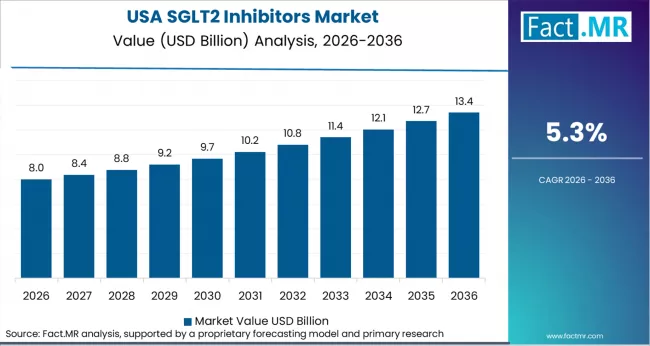
Sglt2 Inhibitors Market Country Value Analysis | Source: Fact.MR
- USA: Demand for SGLT2 inhibitors in the U.S. is projected to rise at 5.3% CAGR through 2036. The USA’s large diabetes patient population and growing focus on advanced diabetes treatments continue to drive the market for SGLT2 inhibitors.
Latin America:
In Latin America, Brazil is the leading market for SGLT2 inhibitors, supported by an increasing incidence of diabetes and rising demand for modern diabetes treatments.
- Brazil: Demand for SGLT2 inhibitors in Brazil is projected to rise at 4.6% CAGR through 2036. Brazil’s growing healthcare access and rising demand for advanced diabetes treatments continue to contribute to market growth.
Fact MR's analysis of the SGLT2 Inhibitors Market in East Asia, South Asia, Western Europe, North America, and Latin America consists of country-wise assessments that include China, India, Germany, France, the United Kingdom, the USA, and Brazil. Readers can find detailed trends, regulatory updates, and company-specific investments shaping the market’s growth in these countries.
Competitive Landscape
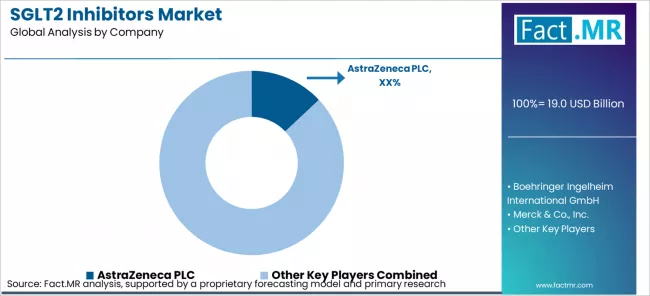
Sglt2 Inhibitors Market Analysis By Company | Source: Fact.MR
How Are Key Players Competing in the SGLT2 Inhibitors Market?
The SGLT2 Inhibitors Market is highly competitive with leading players such as AstraZeneca PLC and Boehringer Ingelheim International GmbH dominating the landscape with their highly effective treatments for type 2 diabetes and heart failure. Merck & Co., Inc. and Johnson & Johnson Services, Inc. are also leveraging their research and development capabilities to introduce novel drugs targeting diabetic complications and cardiovascular diseases. Eli Lilly and Company and Bristol-Myers Squibb Company focus on expanding their portfolios with innovative SGLT2 inhibitors for broader therapeutic indications. Lexicon Pharmaceuticals, Inc. and Glenmark Pharmaceuticals Limited are working to carve out niche opportunities with differentiated formulations. Meanwhile, TheracosBio, LLC is looking to capitalize on new clinical findings to offer competitive alternatives. These players are focused on advancing their research, gaining regulatory approvals, and addressing unmet patient needs, particularly in diabetes and cardiovascular care.
Recent Industry Developments
- SGLT2i and Liver Cirrhosis Cardiorenal Protection
- A landmark cohort study published in JAMA Network Open in February 2026 demonstrated that SGLT2 inhibitors are associated with significantly lower risks of end-stage kidney disease (aHR 0.34), major adverse cardiovascular events (0.67), and hepatic decompensation (0.65) in patients with Type 2 diabetes and liver cirrhosis.
- Perioperative Management "Liberalization" Study
- A major study by Dixit et al., published in JAMA Surgery in early 2025 and reviewed in 2026, challenged the strict 3-day withholding mandate for SGLT2 inhibitors before emergency surgery, finding no statistically significant increase in postoperative DKA when medications were continued.
- SGLT2i vs. GLP-1RA Kidney Head-to-Head Data
- A 2026 nationwide comparative effectiveness study from Denmark revealed that initiating SGLT2 inhibitors leads to a 19% greater relative risk reduction in chronic kidney disease (CKD) progression compared to GLP-1 receptor agonists in patients with Type 2 diabetes.
Key Players of the SGLT2 Inhibitors Market
- AstraZeneca PLC
- Boehringer Ingelheim International GmbH
- Merck & Co., Inc.
- Johnson & Johnson Services, Inc.
- Lexicon Pharmaceuticals, Inc.
- Eli Lilly and Company
- Bristol‑Myers Squibb Company
- Glenmark Pharmaceuticals Limited
- TheracosBio, LLC
Report Scope
| Metric | Value |
|---|---|
| Quantitative Units | USD 19 billion (2026) to USD 34.6 billion (2036), at a CAGR of 6.2% |
| Market Definition | The SGLT2 Inhibitors Market includes drugs that inhibit the sodium-glucose co-transporter 2 (SGLT2), used primarily in the treatment of type 2 diabetes, cardiovascular diseases, and chronic kidney disease. |
| By Drug | Jardiance (empagliflozin), Farxiga (dapagliflozin), Invokana (canagliflozin), Inpefa (sotagliflozin), Qtern (dapagliflozin/saxagliptin), Other SGLT2 Inhibitors |
| By Indication | Type 2 Diabetes, Cardiovascular Diseases, Chronic Kidney Disease (CKD), Others |
| By Distribution Channel | Hospital Pharmacies, Retail Pharmacies, Online Pharmacies |
| Regions Covered | North America, Latin America, Europe, East Asia, South Asia, Oceania, Middle East and Africa |
| Countries Covered | United States, Canada, Mexico, Brazil, Argentina, Germany, France, United Kingdom, Italy, Spain, China, India, Japan, South Korea, Indonesia, Australia, and 40+ countries |
| Key Companies Profiled | AstraZeneca PLC, Boehringer Ingelheim International GmbH, Merck & Co., Inc., Johnson & Johnson Services, Inc., Lexicon Pharmaceuticals, Inc., Eli Lilly and Company, Bristol‑Myers Squibb Company, Glenmark Pharmaceuticals Limited, TheracosBio, LLC |
| Forecast Period | 2026 to 2036 |
| Approach | Hybrid top-down and bottom-up market modeling validated through primary interviews with manufacturers and supported by trade data benchmarking and market research. |
Source: Fact.MR analysis. Updated Mar 2, 2026
Bibliographies
- AJMC. (2026, February). SGLT2 inhibitors linked to lower cardiorenal and hepatic risks in type 2 diabetes and liver cirrhosis [Clinical study]. AJMC.
- EMJ Nephrology. (2026, February). SGLT2 inhibitors linked to improved kidney outcomes in type 2 diabetes compared to GLP-1 receptor agonists [Head-to-head study]. EMJ Nephrology.
- Frontiers in Endocrinology. (2026, February). The SGLT2 inhibitor checklist: A comprehensive review of perioperative safety management [Perioperative study]. Frontiers in Endocrinology.
- Johnson & Johnson Services, Inc. (2025). Innovations in diabetes care with SGLT2 inhibitors. Johnson & Johnson Services, Inc.
- Lexicon Pharmaceuticals, Inc. (2025). Development of sotagliflozin for the treatment of type 2 diabetes and related conditions. Lexicon Pharmaceuticals, Inc.
- Merck & Co., Inc. (2025). SGLT2 inhibitors in the treatment of type 2 diabetes and cardiovascular diseases. Merck & Co., Inc.
- TheracosBio, LLC. (2025). SGLT2 inhibitors: Innovative clinical research and new therapy approaches. TheracosBio, LLC.
This report addresses
- Market Intelligence enabling comprehensive assessment of leading countries and service segments across the SGLT2 Inhibitors Market globally.
- Market Volume (Sales Units) estimates and 10-year revenue forecasts from 2026 to 2036, validated through manufacturer shipment data, channel partner surveys, and country-level demand modeling.
- Growth Opportunity Mapping across drug types (Jardiance (empagliflozin), Farxiga (dapagliflozin), Invokana (canagliflozin), Inpefa (sotagliflozin), Qtern (dapagliflozin/saxagliptin), and other SGLT2 inhibitors), therapeutic indications (Type 2 Diabetes, Cardiovascular Diseases, Chronic Kidney Disease (CKD), and others), distribution channels (Hospital Pharmacies, Retail Pharmacies, Online Pharmacies), and regions.
- Segment and Regional Revenue Forecasts by drug, indication, distribution channel, and geography across 40+ countries.
- Competition Strategy Analysis covering dealer network structure, recent developments, product portfolio, USPs, and market share analysis.
- Product and Regulatory Compliance Tracking aligned with industry standards, regulatory frameworks, and clinical guidelines.
- Regulatory Impact Analysis addressing global market compliance, data security standards, and evolving therapies for diabetes, cardiovascular diseases, and chronic kidney disease.
- Report Delivery in PDF, Excel, PowerPoint, and interactive dashboard formats for executive, procurement, and operational planning use.
Segmentation
SGLT2 Inhibitors Market Key Segments
-
Drug :
- Jardiance (empagliflozin)
- Farxiga (dapagliflozin)
- Invokana (canagliflozin)
- Inpefa (sotagliflozin)
- Qtern (dapagliflozin/saxagliptin)
- Other SGLT2 Inhibitors
-
Indication :
- Type 2 Diabetes
- Cardiovascular Diseases
- Chronic Kidney Disease (CKD)
- Others
-
Distribution Channel :
- Hospital Pharmacies
- Retail Pharmacies
- Online Pharmacies
-
Region :
- North America
- USA
- Canada
- Mexico
- Europe
- Germany
- UK
- France
- Italy
- Spain
- Nordic Countries
- BENELUX
- Rest of Europe
- Asia Pacific
- China
- Japan
- South Korea
- India
- Australia
- Rest of Asia Pacific
- Latin America
- Brazil
- Argentina
- Rest of Latin America
- Middle East and Africa
- Kingdom of Saudi Arabia
- United Arab Emirates
- South Africa
- Rest of Middle East and Africa
- Other Regions
- Oceania
- Central Asia
- Other Markets
- North America
Frequently Asked Questions
How large is the demand for SGLT2 Inhibitors in the global market in 2026?
What will be the market size of SGLT2 Inhibitors in the global market by 2036?
What is the expected demand growth for SGLT2 Inhibitors in the global market between 2026 and 2036?
Which indication is expected to dominate the market?
Which region is expected to show the highest growth rate for SGLT2 Inhibitors?
How significant is the growth outlook for India in this market?
What is the growth outlook for Germany in the SGLT2 Inhibitors market?
What is the growth forecast for France in the SGLT2 Inhibitors market?
What is the growth forecast for the United Kingdom in the SGLT2 Inhibitors market?
What is the growth forecast for the United States in the SGLT2 Inhibitors market?
What is the growth forecast for Brazil in the SGLT2 Inhibitors market?
Which company is identified as a leading player in the SGLT2 Inhibitors market?
What are SGLT2 Inhibitors used for?
What does the SGLT2 Inhibitors market include in this report?
How is the market forecast developed in this report?
What is meant by the SGLT2 Inhibitors market in this report?
Who worked on this report


Preview the report firsthand - request a free sample
Free SampleGet the brochure for pricing and purchase details
Download PDF