- Base Value(2025): 9 Bn
- Forecast Value (2035): 18.2 Bn
- CAGR (2035): 8.4%
Wellness Perfumes Market Outlook 2025 to 2035
The global wellness perfumes market is expected to reach USD 18.2 billion by 2035, up from USD 9 billion in 2025. During the forecast period 2025 to 2035, the industry is projected to expand at a CAGR of 7.3%.
The wellness perfumes industry is growing at a healthy rate, which can be attributed to the growing interest by consumers in health conscious and sustainability-friendly products. Increasing need as dictated by new wellness trends, the fragrance products manufactured using natural components like essential oils, botanicals extracts and so on are gaining popularity in the market day by day. The wellness perfumes are considered to be a plentiful part of the self-care routines, which explains massive presence in the market.
Quick Stats for Wellness Perfumes Market
- Industry Value (2025): USD 9 billion
- Projected Value (2035): USD 18.2 billion
- Forecast CAGR (2025 to 2035): 7.3%
- Leading Segment (2025): Essential Oil-Based (30.9% Market Share)
- Fastest Growing Country (2025-2035): India (9.4% CAGR)
- Top Key Players: House of Aroma, ONE SEED, Forest Essentials, Vyrao, Dime Beauty, NEST New York, and Siberian Wellness
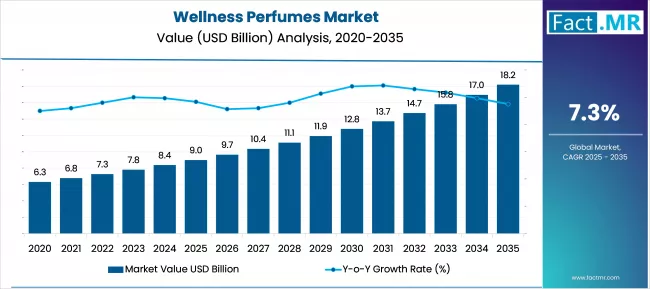
Wellness Perfumes Market Market Value Analysis | Source: Fact.MR
What are the drivers of the Wellness Perfumes market?
Consumers are getting more aware of the aspects of wellness and personal health leading to a growth in the demand of wellness perfumes. The trend of using natural fragrance products (natural ingredients, including essential oils and botanical extracts) is rising, and consumers tend to show interest in non-toxic, eco-friendly products. This need is also backed with ever-growing popularity of aromatherapy and positive effect it has on mental health and well-being.
With an increasing number of consumers trying to find healthier substitutes to standard synthetic perfumes, wellness perfumes are bound to become the solution of choice to people, who want to adopt a more wholesome attitude towards perfumes.
Wellness perfumes market is also getting a contribution of the technological changes. The innovation in the space is fuelled by the capacity to develop fragrances that address the very specific wellness desires of people like relieving of stress, improving energy levels and relaxation. As the application of CBD, hemp oil, and other functional ingredients intensifies its application, wellness perfumes are becoming more and more personalized to meet certain emotional and physical demands. This invention is one of the prime growth boosters in the industry.
The increasing urge of wellness tourism across the world and the growing wellness sector with wellness resorts, spas and yoga centres is also contributing to the rising demand of wellness perfumes. Together with these establishments trying to improve their services, perfumes and fragrances are emerging as much-needed elements in the total culture of wellbeing. This is also predicted to proceed as wellness tourism will keep expanding and place new opportunities to the market of wellness perfumes.
What are the regional trends of the Wellness Perfumes market?
In North America, the wellness perfumes market is driven by increasing consumer demand for holistic wellness products, as well as a growing preference for organic and natural beauty products. Consumers in the U.S. are increasingly seeking perfumes that align with their eco-conscious and health-focused lifestyles. The market is further supported by the expanding wellness industry and the popularity of wellness-related travel, creating more demand for therapeutic and aromatherapy-based fragrances in spas and wellness centers.
In Europe, wellness perfumes are gaining traction due to a heightened focus on sustainability and the growing trend of mindful self-care. The region's emphasis on clean beauty and the use of natural ingredients in personal care products is driving the demand for wellness perfumes. The rise in wellness tourism, particularly in countries like France, Spain, and Italy, is contributing to market growth as more spas and wellness centers incorporate perfumes into their offerings, creating new growth opportunities.
In Asia Pacific, the wellness perfumes market is expanding as consumers are becoming more aware of the importance of self-care and mental health. In countries like Japan and China, the adoption of wellness and aromatherapy products is on the rise, driven by an increased focus on personal well-being and natural products. As a result, wellness perfumes are expected to see significant growth in this region, with rising demand for both men’s and women’s wellness-focused fragrances.
What are the challenges and restraining factors of the wellness perfumes market?
Wellness perfumes market is also experiencing a number of challenges despite the growth it has been experiencing. High cost of natural ingredients such as Essential oils and botanical extracts being the natural ingredients, it has been identified as one of the main impediments, as the cost of production may rise. It is this that puts well-being fragrances at a higher cost than traditional perfumes, therefore narrowing down its reach to the mass market. Pressure may also be imposed on the manufacturers by the reliance on the readily available sources and friendly manufacturing processes towards the environment.
Regulatory environment of wellness related products in those countries with strict cosmetic product and therapeutic product laws is another risk. These regulations can be very expansive and time-consuming especially in ensuring that they are well adhered to in line with both local and international standards. Another issue that manufacturers may face is the safety and effectiveness of such functional ingredients as CBD and hemp oil, which are still rather regulated with the ever-changing regulations.
Country-Wise Insights
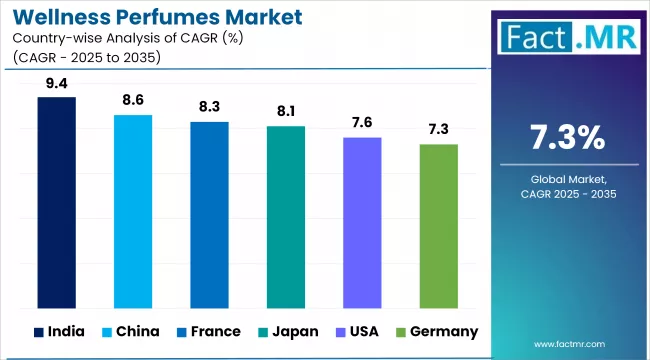
Wellness Perfumes Market Cagr Analysis By Country | Source: Fact.MR
United States: The Innovation Hub for Wellness Fragrances
The U.S. market on wellness perfumes is rapidly maturing, and the focus of the growth is on the rising consumer awareness about self-care and mental well-being and non-toxic personal care products. American consumers are in search of fragrances that aid in healthy whole lifestyles and some of the aromatherapy benefits sought include stress reduction, mood and mindfulness. This has prompted the introduction of essential oil, non-alcoholic and hypoallergenic formulas among brands that are sensitive and are geared towards the green market.
It is regulatory support from the likes of the FDA and EPA that further pushes personal fragrances to transparency in formulation, ingredient disclosure, and utmost restraint in using synthetic compounds in them. Hence, many a wellness perfume brand in the United States put forth a clean label and often worthy of third-party sustainability and cruelty-free certifications.
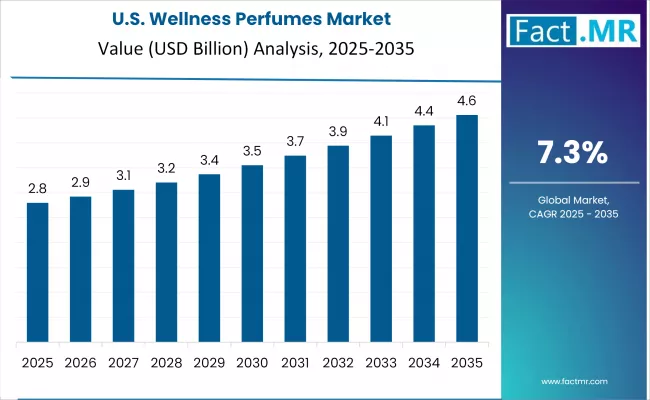
Wellness Perfumes Market Country Value Analysis | Source: Fact.MR
Distribution channels on the internet and wellness-oriented stores have now become feasible avenues; influencer marketing and lifestyle branding further trickle down to public consciousness of mindful perfumes. With several innovations happening in packaging, refillable bottles, and materials that are biodegradable, the industry is committed to environmental consciousness coupled with long-term consumer engagement.
China: A Pioneer in Sustainable Wellness Fragrance Production
The wellness perfumes industry in China is witnessing a great metamorphosis with wellness culture itself being made a part of modern urban way of life. The growing middle class is buying perfumes to integrate them into their pantheon of rituals to reduce stress, relieve an imbalance of emotions, or express an identity. Wellness perfumes are more popular among the younger generations. Gen Z and millennials in China are attracted by the natural ingredients, stripped-down picturing, and rather soft and functional scent profiles.
Fragrance producers are now increasingly combining Chinese herbal medicines and herbs to gain culturally commendable wellness benefit claims. Domestic brands are tapping into the demand for locally inspired scents, bioratings packaging, and modern design along with ancient-from-unearthly healing philosophies. While cross-border influences and social media platforms are key in cultivating consumer tastes, they allow for niche wellness brands to resonate via storytelling, influencer campaigns, and live-stream retailing. Local governments in harmony with clean beauty and sustainability propound an otherwise balanced market that leans into innovation, heritage, and health awareness.
France: A Leader in Perfume Craftsmanship and Wellness Innovation
The global fragrance center that had formerly stood undisturbed is now welcoming the incorporation of wellness into perfume traditions, as much as this profession is steeped in the ancestral sciences. A French client would especially lean toward a product that stands for the significance of emotional well-being, freedom of self-expression, and environmental integrity. Wellness fragrances in France would run the gamut from botanicals to essential oils and organic alcohols, all claimed to relax, rejuvenate, and be skin-friendly.
The market trend or preference leans toward clean compositions that do not include parabens, phthalates, or synthetic additives. These ideologies are paramount to any European worth spirit, with sustainability and safety remaining key values. French perfumers continue to capitalize on the artisanal trend of slow beauty through limited-edition wellness perfume creations with a heavy emphasis on ethical sourcing and stories.
Regulatory frameworks within the EU further stimulate innovation from both a luxury and responsible viewpoint, as consumer demand grows stronger for transparent labeling and cruelty-free processes. Maison de parfum, from the old to the new, are answering the cry eminently by focusing on yoga-themed fragrance offerings, sensory experiences, and the healing nature of fragrance.
Category-Wise Analysis
By Product Type Perfume Oil Leading the Shift Toward Long-Lasting Natural Solutions
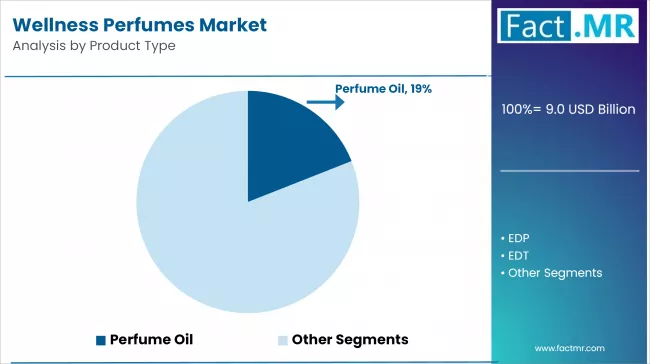
Wellness Perfumes Market Analysis By Product Type | Source: Fact.MR
Among various categories, Perfume Oils experience a rapid growth. Their advantage comes from the growing consumer inclination toward alcohol-free and skin-friendly fragrance options. Drops of perfume oil contain a scent that is more concentrated than sprays and is suitable for wellness-focused Australians who seek therapy and sustain their shirt wear. Being friendly to skin-sensitive nature and suitable for mixing with essential oils for holistic applications further boost their demand in the wellness and aromatherapy arenas.
By Ingredient Source Essential Oil-Based Perfumes Surging Ahead
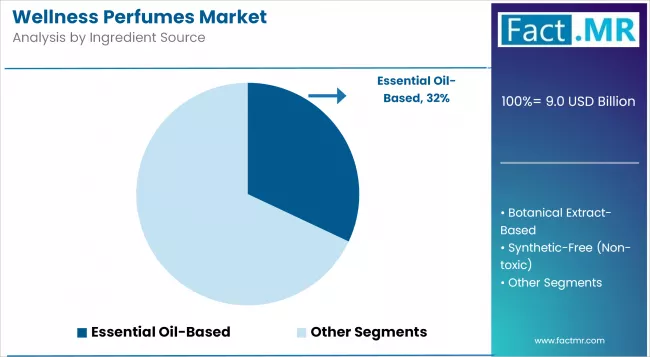
Wellness Perfumes Market Analysis By Ingredient Source | Source: Fact.MR
The essential oil-based category is emerging as consumers are further turning toward natural, organic, and clean-label fragrance options. Essential oils are appreciated not only for their scent but also for their perception as remedies for elevating moods and reducing anxiety. Rising demand for such cosmetic-type formulations with consumers associating smell with wellness is a direct consequence of consumer awareness of the negative impact of synthetic and alcohol-based ingredients.
By Application Therapeutic Use (Aromatherapy Treatment) Rising as Wellness Becomes Central
Therapeutic Use (Aromatherapy Treatment) is a rapidly growing sector, owing to the wellness movement for holistic healing and emotional well-being. These days, various aromatherapy fragrances are addressed with the affected population, either in mental health programs and spa treatments or in their homes, acting against stress, anxiety, and fatigue. On their journey, consumers look for evidence-backed, plant-based formulas to increase alertness, lift mood, and fortify sleep hygiene, which pushes the soaring in growth of this application.
Competitive Analysis
Key players in the wellness perfumes market House of Aroma, ONE SEED, Forest Essentials, Vyrao, Dime Beauty, NEST New York, Siberian Wellness, Abel, Ormaie, Ffern, COSMOSS by Kate Moss, Jo Malone London, Marks & Spencer, The Neu Co., D.S. & DURGA, Gabar, and PHLUR.
The perfumes wellness industry is also a very competitive industry with both old and new perfume brands competing to gain a market share. The most successful companies have separated themselves by innovative fragrance compositions, exclusive use of natural ingredient, and the addition of functional wellness effects like less stress, improved mood and energy. Competitive forces are also enhanced by the consumer demand towards sustainability and transparency, which makes the companies to implement sustainable production processes and more ethical approach to source.
Some of the major trends that make up the competition in the market are innovation in terms of sourcing ingredients, customisation of fragrance products, and utilisation of advanced technologies. The new entrants are also targeting the niche segments like CBD-infused perfumes or alcohol-free products to attract the specific preferences of the consumers. With increasing market, competition will be more and companies will invest more in research and development in order to be ahead of the changing situation demanded by the consumers and government.
Recent Development
- In October 2024, Vyrao launched "Mamajuju," a genderless wellness fragrance crafted to foster relaxation, self-confidence, and emotional clarity. Developed in collaboration with neuroscientists, the scent combines aromatherapeutic principles with modern perfumery, aligning with Vyrao’s mission to offer functional fragrances that support psychological well-being through intentional, science-backed olfactory experiences.
- In May 2023, Forest Essentials launched its "Cologne Intense Vetiver". This launch was part of a new collection that also included three intense perfumes: Nargis, Lime, Saffron & Oudh, and Rose & Carnation. These fragrances reflect the brand's dedication to blending traditional Ayurvedic principles with modern perfumery, catering to consumers seeking luxury wellness products rooted in natural ingredients.
Fact.MR has provided detailed information about the price points of key manufacturers of Wellness Perfumes Market positioned across regions, sales growth, production capacity, and speculative technological expansion, in the recently published report.
Methodology and Industry Tracking Approach
The 2025 wellness perfumes market report by Fact.MR is based on insights gathered from 1,200 stakeholders across 12 countries, with a minimum of 75 respondents per country. Among the participants, 65% were end users—including wellness centers, spas, yoga studios, and individual consumers—while the remaining 35% included procurement leads, regulatory consultants, and fragrance manufacturers. Data collection was conducted between June 2024 and May 2025, focusing on key factors such as ingredient sourcing, production processes, and market trends.
The study draws from over 95 validated sources, including market reports, industry surveys, and product specification sheets. These sources were rigorously triangulated to produce reliable estimates and actionable insights for stakeholders in the wellness perfumes value chain. The report provides an in-depth analysis of current trends, challenges, and opportunities within the market.
Fact.MR applied rigorous analytical tools such as multi-variable regression and scenario modeling to ensure data robustness. With continuous monitoring of the glass adhesives space since 2018, this report offers a comprehensive roadmap for firms seeking competitive advantage, innovation, and sustainable growth within the sector.
Segmentation
Segmentation of Wellness Perfumes Market
-
By Product Type :
- Parfum
- Eau de Perfume
- Eau de Toilette
- Eau de Cologne
- Eau Fraiche
- Perfume Oil
-
By Ingredient Source :
- Essential Oil-Based
- Botanical Extract-Based
- Synthetic-Free (Non-toxic)
- Alcohol-Free / Water-Based
- CBD or Hemp Oil-Based
-
By Fragrance Families :
- Floral Notes
- Oriental Notes
- Woody Notes
- Fresh Notes
-
By Application :
- Daily Wear Wellness Perfumes
- Therapeutic Use (Aromatherapy Treatment)
- Sleep and Relaxation Aids
- Workout or Post-Exercise Fresheners
- Focus and Energy Enhancers
-
By Gender :
- Women’s Wellness Perfumes
- Men’s Wellness Perfumes
- Unisex / Gender-Neutral Perfumes
-
By Distribution Channel :
- Offline
- Specialty wellness stores
- Perfume boutiques
- Department stores
- Pharmacies
- Online
- Brand-owned websites
- Wellness-focused e-commerce platforms
- General marketplaces
- Offline
-
By End User :
- Individual Consumers
- Spas and Wellness Centers
- Yoga & Meditation Studios
- Corporate Wellness Programs
- Hotels & Resorts (Aromatherapy Amenities)
-
By Region :
- North America
- Latin America
- Western Europe
- Eastern Europe
- East Asia
- South Asia & Pacific
- Middle East & Africa
Frequently Asked Questions
What was the Global Wellness Perfumes Market Size Reported by Fact.MR for 2025?
Who are the Major Players Operating in the Wellness Perfumes Market?
What is the Estimated Valuation of the Wellness Perfumes Market in 2035?
What Value CAGR did the Wellness Perfumes Market Exhibit Over the Last Five Years?
Who worked on this report


Preview the report firsthand - request a free sample
Free SampleGet the brochure for pricing and purchase details
Download PDF