PU Foam-In-Place Packaging Market Size, Share, Growth and Forecast (2026 - 2036)
The PU Foam-In-Place Packaging Market is segmented by Foam Chemistry, by Packaging Format, by Dispensing Mode, by End Use, by Customer Type and Region. Forecast for 2026 to 2036.
What is the PU foam-in-place packaging market forecast to be worth by 2036?
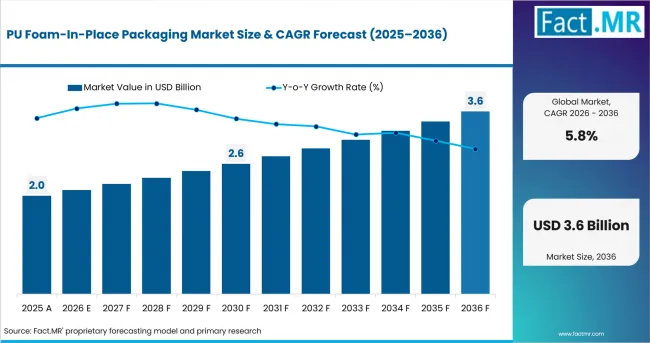
USD 2.05 billion in 2026 to USD 3.60 billion by 2036, at 5.8% CAGR.
- The PU foam-in-place packaging market crossed a 2025 baseline of USD 1.95 billion. Growth through the forecast period is supported by electronics, industrial equipment, automotive parts, appliances, medical devices and fragile export shippers adding on-demand cushioning inside packing cells.
- Two-component polyurethane foam systems, dispensing equipment, bag-based systems and molded-in-place packs form the core of this market. The American Chemistry Council states that flexible polyurethane foam is used for cushioning, including packaging, because it is light and can be supplied in many shapes and firmness levels.
- This supports demand for fitted protection when product geometry changes by shipment.
What are the defining numbers behind PU foam-in-place packaging growth?
USD 1.55 billion absolute opportunity by 2036, led by India, China, South Korea and the United States.
- Demand Drivers in the Market
- Electronics and appliance shippers need fitted cushioning when products have fragile corners, protrusions or mixed accessories.
- Industrial equipment suppliers use on-demand foam to reduce pack rework for spare parts and irregular components.
- Contract packagers favor systems that create cushions at the station and reduce dependence on stocked insert sizes.
- Export shippers use molded-in-place packs when vibration, handling variation and return damage create higher replacement costs.
- Key Segments Analyzed
- By Foam Chemistry: Polyurethane is expected to hold 62.5% share in 2026 because standard two-component systems anchor installed equipment.
- By Packaging Format: Bag systems account for 44.8% share in 2026 because they simplify cushioning for mixed product dimensions.
- By Dispensing Mode: On-demand systems are projected to hold 47.6% share in 2026 because packers need controlled output near the product.
- By End Use: Electronics captures 31.5% share in 2026 as devices, accessories and components require repeatable drop protection.
- By Customer Type: OEMs hold 36.8% share in 2026 because product owners manage damage rates and packaging specifications directly.
- By Geography: North America accounts for 33.5% share in 2026 due to installed systems, distributor coverage and high-value parcel flows.
- Analyst Opinion at Fact.MR
- Shambhu Nath Jha, Senior Analyst at Fact.MR, states, “PU foam-in-place packaging is no longer a last-minute fix for odd-shaped products. The best customers now treat it as a damage-control system. They ask how much foam is needed, how often equipment stops, how clean the pack station stays and whether the cushion is justified for the product value. Suppliers that answer those four questions clearly have the strongest case with OEMs and contract packagers.”
- Strategic Implications
- Equipment suppliers should align foam dosing, bag size and operator workflow before quoting a system.
- Chemical suppliers need low-odor and low-emission grades where indoor packing cells handle high daily volumes.
- Distributors can win repeat orders by combining material supply with service response and packaging trials.
- OEMs should connect packaging choice to damage cost, product value, return rate and storage space.
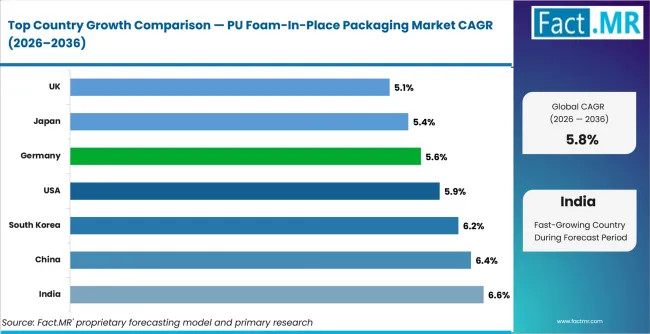
India, China and South Korea sit above the global pace because fulfillment complexity, electronics packaging and mobile commerce create frequent need for fitted cushioning. The United States, Germany, Japan and the United Kingdom remain important because industrial distribution, machinery exports, quality-sensitive shipments and compact fulfillment operations support selective foam-in-place use.
How does the PU foam-in-place packaging market break down by segment?
Polyurethane leads by chemistry, bag systems lead by format and on-demand systems lead by dispensing mode.
Which foam chemistry dominates?
Polyurethane leads with 62.5% share in 2026.
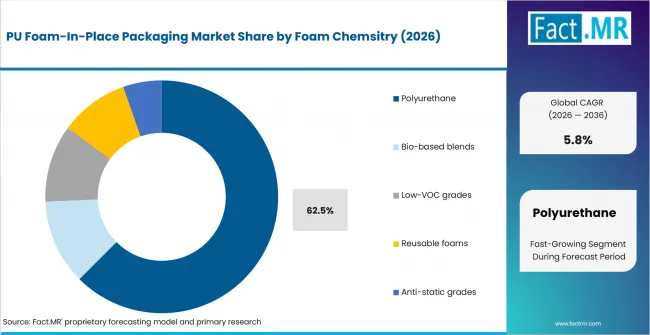
Polyurethane leads because the chemistry already fits installed foam-in-place equipment and is proven in cushioning applications. Bio-based blends and low-VOC grades gain attention where pack stations need reduced odor and clearer material claims, but standard PU continues as the anchor chemistry because it offers predictable expansion and handling behavior.
Which packaging format dominates?
Bag systems hold 44.8% share in 2026.
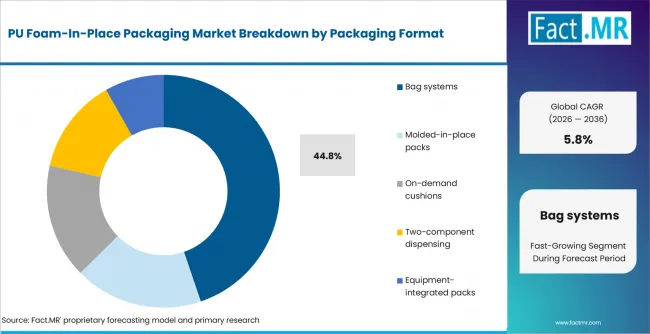
Bag systems give packers a repeatable way to create bottom pads, top cushions and corner blocks without storing many molded insert sizes. Pregis describes foam-in-place as a real-time method in which two liquid foams are combined in a bag or liner and expand around the product as a custom mold. This format fits contract packagers and OEM shipping rooms that handle mixed dimensions each day.
Which dispensing mode dominates?
On-demand systems lead with 47.6% share in 2026.
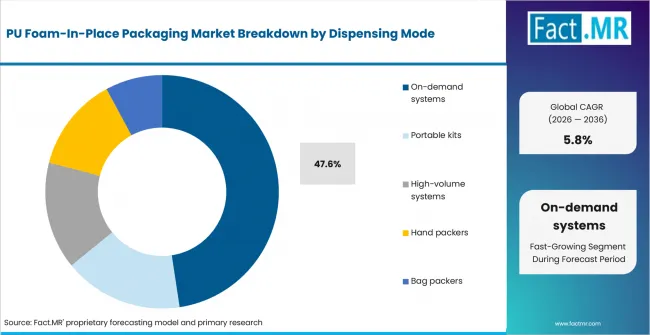
On-demand systems move material creation closer to the packing decision. Sealed Air describes Instapak systems as on-demand expanding foam bags and equipment for product protection, with equipment formats that dispense foam into tubes or bags. For high-throughput sites, packers also compare station reliability with adjacent foam mixing machine requirements because stoppages can slow outbound shipping.
Which end use dominates?
Electronics leads with 31.5% share in 2026.
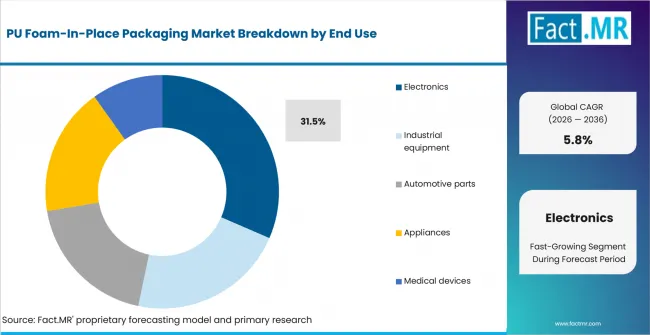
Electronics leads because devices and components have high replacement costs and low tolerance for corner damage. Electronics customers often require drop-test-compliant packaging when laptops, instruments, small appliances and accessories move through parcel networks.
Which customer type dominates?
OEMs hold 36.8% share in 2026.
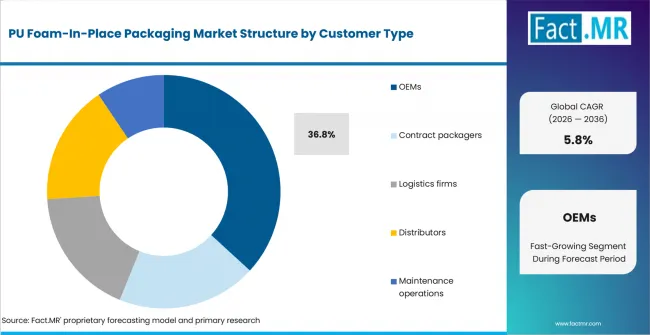
OEMs lead because product owners carry warranty, replacement and brand-risk costs when goods arrive damaged. Maintenance and repair operations are smaller, but they value portable kits because spare-part geometry changes often. Logistics firms and contract packagers choose the format when mixed-SKU order flow makes pre-molded inserts harder to manage.
What is accelerating demand, and what is holding it back?
Damage-cost control and packaging regulation support demand; chemical handling and disposal perception restrain faster penetration.
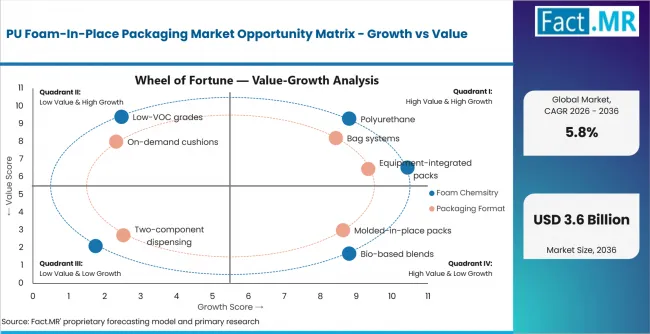
Protective packaging spend is moving toward fit-for-product systems where shipment value justifies customized cushioning. This keeps pressure on pack stations to handle varied product shapes without building large inventories of inserts.
Plastic protective packaging is under closer review as regulators push suppliers to reduce unnecessary material and improve recyclability. The European Union’s Regulation (EU) 2025/40 entered into force on 11 February 2025 and is scheduled to apply from 12 August 2026. This does not remove foam-in-place use, but it raises the need for pack validation, material justification and clear return or recycling guidance for plastic protective packaging applications.
The main restraint is the operating discipline required inside a packing cell. Two-component foam requires correct storage, dosing, operator training and equipment service. Smaller sites can avoid the format when product value is low or when paper, air and molded alternatives give adequate protection at lower operating complexity.
Regulatory pressure is also changing the sales conversation. Customers ask suppliers to prove when foam reduces damage enough to justify plastic material use, especially when recycling teams review pack-room choices.
Where do the biggest PU foam-in-place packaging opportunities sit?
Electronics refurbishment, industrial spare parts and export packaging.
- Electronics Refurbishment: Device returns and resale channels need validated packaging when accessories, screens and power units ship together.
- Industrial Spare Parts: Heavy components often need block-and-brace cushioning because part geometry changes by shipment and inventory turns are hard to predict. Custom inserts compete where repeat product shapes justify pre-cut designs.
- Export Packaging: Mixed destination routes require pack validation before long-distance shipping.
Which countries are scaling PU foam-in-place packaging fastest?
India leads the country ranking, followed by China, South Korea, the United States, Germany, Japan and the United Kingdom.
Based on regional analysis, the PU foam-in-place packaging market is segmented into North America, Europe, East Asia, South Asia and Pacific, Latin America, and Middle East and Africa.
.webp)
| Country | CAGR |
|---|---|
| India | 6.6% |
| China | 6.4% |
| South Korea | 6.2% |
| United States | 5.9% |
| Germany | 5.6% |
| Japan | 5.4% |
| United Kingdom | 5.1% |

What is powering India’s lead?
6.6% CAGR, driven by direct-to-consumer shipping and higher fulfillment complexity.
India’s packaging customers are moving from low-cost void fill toward stronger damage control for electronics, appliances and industrial spares. India Brand Equity Foundation reported that direct-to-consumer channels could reach USD 100.0 billion in 2025 and cited 17% to 22% annual industry growth. Foam-in-place suppliers can gain access when they offer small-footprint dispensing, local service and pack trials for mixed SKU operations.
How is China scaling demand?
6.4% CAGR, supported by electronics exports and high online retail shipment depth.
China combines large electronics manufacturing with a deep domestic online retail base. The National Bureau of Statistics of China reported that online retail sales of physical goods reached 13,092.3 billion yuan in 2025 and accounted for 26.1% of total retail sales. Export packaging, factory-direct shipping and high-volume domestic order flows support demand. Suppliers that support high-throughput dispensing and packaging tests can serve electronics, appliances and industrial component exporters better than material-only sellers.
Why does South Korea rank above the global average?
6.2% CAGR, backed by electronics concentration and mobile-led online shopping.
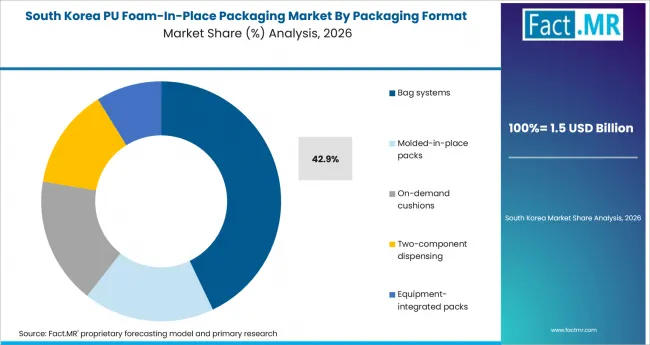
South Korea’s electronics base creates a natural pool of products that need tight pack validation. Statistics Korea reported that online shopping transaction value reached 24.2904 trillion won in December 2025, while mobile shopping reached 18.7991 trillion won. Product returns and device shipments place pressure on pack rooms to protect small, high-value items with variable accessory sets. Electronics, appliances and export packaging use cases sit above the global average in cushioning intensity.
What supports the United States outlook?
5.9% CAGR, led by installed protective packaging systems and industrial distribution density.
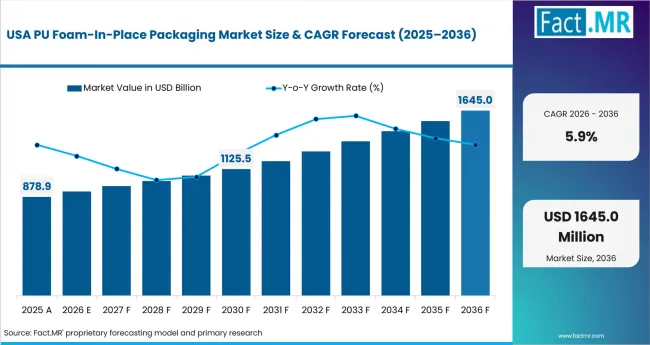
The United States has a large installed base of industrial distribution, maintenance shipping and electronics fulfillment operations. U.S. e-commerce sales reached USD 326.7 billion in the first quarter of 2026, according to the U.S. Census Bureau, and that channel represented 16.9% of total retail sales. High-value replacement parts and electronics shipments create a clear damage-cost case. Suppliers win when they connect foam chemistry, operator training and field service under one contract.
What underpins Germany’s growth?
5.6% CAGR, backed by machinery exports and EU packaging reduction rules.
Germany’s machinery and industrial goods base creates a steady need for export-grade cushioning. Eurostat reported in October 2025 that Germany generated 215.2 kg of packaging waste per inhabitant in 2023 and recycled 149.3 kg per inhabitant. Customers therefore evaluate protective performance and material justification together. Exporters also compare foam-in-place packs with expanded polypropylene foam where repeatable shapes make molded cushioning practical.
How does Japan use foam-in-place packaging?
5.4% CAGR, driven by electronics, precision equipment and quality-led shipping rules.
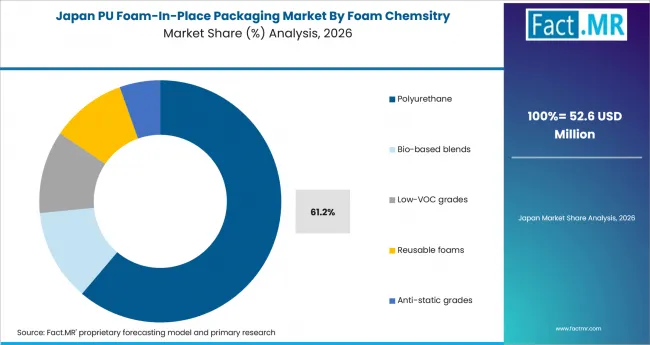
Japanese customers often require packaging validation before changing a pack design. The Ministry of Economy, Trade and Industry of Japan reported that business-to-consumer e-commerce reached 26.1 trillion yen in 2024, while business-to-business e-commerce reached 514.4 trillion yen. Foam-in-place is used where product value, accessory variation and export handling risk justify a custom cushion, with volume concentrated in quality-sensitive electronics, instruments, appliances and service parts.
What shapes the United Kingdom market?
5.1% CAGR, supported by online retail share and compact fulfillment operations.
The United Kingdom has a parcel-heavy retail structure, but customers are careful about foam usage because disposal expectations are strict. The Office for National Statistics reported that the proportion of sales made online rose from 28.1% in April 2026 to 28.8% in May 2026. That retail profile supports fitted cushioning for high-value electronics, appliances and repaired equipment because foam-in-place serves selected product groups, not broad daily parcel use.
Who leads the PU foam-in-place packaging landscape?
Sealed Air Corporation, Pregis, Storopack, Dow, BASF, Huntsman and Carpenter Co. lead through systems, chemistry and service depth.
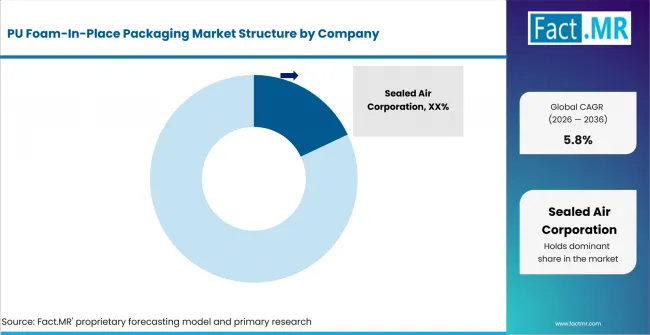
Sealed Air participates through Instapak systems and foam formulations, while Pregis competes through IntelliPack systems for custom cushioning and block-and-brace protection. Storopack supports pack-station foam use through FOAMplus systems. Pregis also linked foam-in-place customers with Inspyre Film in June 2025, showing how suppliers are adding service and material programs around installed foam systems. Sealed Air is kept under its current corporate name because the company announced completion of CD&R’s acquisition in April 2026. These suppliers compete on pack validation, equipment uptime, training and chemical availability instead of product listing alone.
Packaging automation solution suppliers influence pack-station expectations as customers connect protective cushioning with line speed, operator movement and carton handling. Dow, BASF and Huntsman support the upstream polyurethane chemistry base, while Carpenter Co. adds engineered foam capability through the Recticel Engineered Foams and FoamPartner lineage. Carpenter states that its June 2023 acquisition of Recticel N.V.’s Engineered Foams Division added production facilities in Europe and the United States.
The competitive field is shaped by four criteria. Company position matters when global OEMs want supply continuity. Capability matters when foam chemistry must meet indoor pack-room needs. Customer criteria matter when equipment service and packaging tests decide the quote. Barriers matter when disposal concerns and chemical-handling rules slow smaller users. Case packing machines also shape downstream workflows when foam-in-place systems operate beside carton handling equipment.
Which companies are the key players?
Sealed Air Corporation, Pregis, Storopack, Dow, BASF, Huntsman and Carpenter Co. are profiled.
- Sealed Air Corporation
- Pregis LLC
- Storopack Hans Reichenecker GmbH
- Dow Inc.
- BASF SE
- Huntsman Corporation
- Carpenter Co.
Bibliography
- [1] American Chemistry Council. (2024). Polyurethane applications: Flexible polyurethane foam. American Chemistry Council.
- [2] Pregis LLC. (2026). IntelliPack on-demand foam-in-place systems. Pregis LLC.
- [3] Sealed Air Corporation. (2026). Instapak expanding foam bags and equipment. Sealed Air Corporation.
- [4] Ministry of Economy, Trade and Industry of Japan. (2025, August). Results of FY2024 e-commerce market survey compiled. METI.
- [5] Storopack Hans Reichenecker GmbH. (2026). Protective packaging made from foam. Storopack Hans Reichenecker GmbH.
- [6] U.S. Census Bureau. (2026, May). Quarterly retail e-commerce sales, first quarter 2026. U.S. Department of Commerce.
- [7] European Union. (2025). Regulation (EU) 2025/40 on packaging and packaging waste. EUR-Lex.
- [8] Eurostat. (2025, October). Packaging waste statistics. European Commission.
- [9] India Brand Equity Foundation. (2025). E-commerce industry in India. India Brand Equity Foundation.
- [10] National Bureau of Statistics of China. (2026, January). Total retail sales of consumer goods in December 2025. National Bureau of Statistics of China.
- [11] Statistics Korea. (2026, February). Online shopping in December 2025. Statistics Korea.
- [12] Office for National Statistics. (2026, June). Retail sales, Great Britain: May 2026. Office for National Statistics.
- [13] Sealed Air Corporation. (2026, April). Sealed Air announces completion of acquisition by CD&R. Sealed Air Corporation.
- [14] Carpenter Co. (2026). History. Carpenter Co.
- [15] Pregis LLC. (2025, June). Foam packaging with purpose: Protect and support clean water access. Pregis LLC.
This Report Address
Strategic intelligence on PU foam-in-place packaging across foam chemistry, packaging format, dispensing mode, end use and customer type.
- Segment analysis covering Polyurethane, Bag Systems, On-Demand Systems, Electronics and OEMs.
- Regional outlook covering India, China, South Korea, United States, Germany, Japan and United Kingdom.
- Competitive analysis of Sealed Air Corporation, Pregis LLC, Storopack Hans Reichenecker GmbH, Dow Inc., BASF SE, Huntsman Corporation and Carpenter Co.
- Packaging-system assessment covering foam chemistry, dispensing systems, pack-station workflow, service response and material justification.
- Regulatory assessment covering EU packaging and packaging waste rules, packaging waste data and customer disposal expectations.
- Primary interviews, distributor checks, official source review and supplier portfolio validation support the forecast.
What does the PU foam-in-place packaging market cover?
On-demand polyurethane foam cushioning for fragile, heavy and irregular products.
The PU foam-in-place packaging market covers dispensing machines, bag systems, molded-in-place cushions, chemistry supply, spare parts, installation support and service contracts. It differs from general cushioning because the foam is formed at the packing point and fits the product after the packer activates or dispenses the two-component system.
What is included in the scope?
Foam chemistry, dispensing systems and equipment-integrated packs.
The scope includes two-component polyurethane foam chemicals used in packaging cells. It covers bag systems, molded-in-place packs, on-demand cushions and equipment-integrated dispensing formats. It also includes service support tied to foam dosing, installation, operator training and protective packaging validation for electronics, machinery parts, appliances, medical devices, automotive parts and export shipments.
What is excluded from the scope?
General foam materials and non-PU protective packaging not dispensed or formed in place.
The scope excludes loose-fill, molded pulp, air pillows, corrugated partitions and paper void fill sold without PU foam-in-place use. It excludes insulation panels, furniture foam, mattresses, building spray foam and automotive seating foam. It also excludes general packaging automation that does not meter, dispense or activate PU foam cushioning.
How was the analysis built?
100+ sources, 35+ company portfolios, 25+ countries, 18 interviews.
- Primary Research:
- Primary research includes interviews with packaging engineers, OEM shipping teams, protective packaging distributors and contract packagers. It captures how customers compare foam yield, pack fit, equipment uptime, return damage and operator safety before supplier selection.
- Desk Research:
- Desk research reviews government e-commerce data, packaging waste regulation, polyurethane chemistry references, company product portfolios and official supplier pages. It also checks whether listed companies still sell in this specific product chain.
- Market-Sizing and Forecasting:
- Forecasting uses the provided market anchors, parent-market checks, on-demand foam system penetration, electronics and industrial shipment signals and country-level e-commerce indicators. The base-year value is reconciled against the broader protective packaging pool.
- Data Validation and Update Cycle:
- The forecast was validated through distributor checks and packaging-engineer interviews. Values were reviewed against country-level online retail indicators, EU packaging rules and company activity during 2024 to 2026.
What is the report’s scope and coverage?
| Attribute | Details |
|---|---|
| Quantitative Units | USD Billion in 2026 to USD Billion by 2036 at CAGR |
| Market Definition | On-demand polyurethane foam cushioning systems, chemicals, equipment and support services for fragile, heavy and irregular products |
| Foam Chemistry | Polyurethane, Bio-based Blends, Low-VOC Grades, Reusable Foams, Anti-static Grades |
| Packaging Format | Bag Systems, Molded-in-Place Packs, On-Demand Cushions, Two-Component Dispensing, Equipment-Integrated Packs |
| Dispensing Mode | On-Demand Systems, Portable Kits, High-Volume Systems, Hand Packers, Bag Packers, Molded Stations |
| End Use | Electronics, Industrial Equipment, Automotive Parts, Appliances, Medical Devices, Fragile Exports, Heavy Goods |
| Customer Type | OEMs, Contract Packagers, Logistics Firms, Distributors, Maintenance Operations |
| Regions Covered | North America, Europe, East Asia, South Asia and Pacific, Latin America, Middle East and Africa |
| Countries Covered | India, China, South Korea, United States, Germany, Japan, United Kingdom |
| Key Companies Profiled | Sealed Air Corporation, Pregis LLC, Storopack Hans Reichenecker GmbH, Dow Inc., BASF SE, Huntsman Corporation, Carpenter Co. |
| Forecast Period | 2026 to 2036 |
| Approach | Hybrid top-down and bottom-up approach using provided market anchors, parent-market checks, on-demand foam penetration, country e-commerce indicators, supplier portfolios and distributor validation |
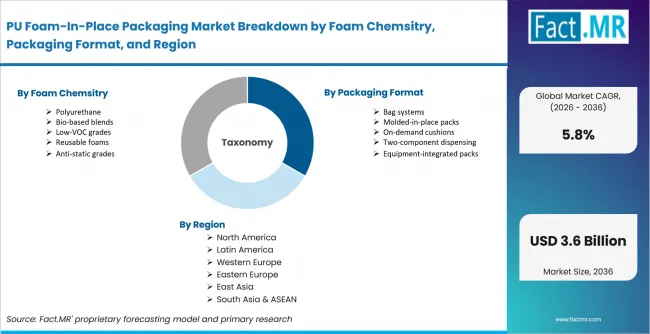
How is the market segmented?
-
By Foam Chemistry:
- Polyurethane
- Bio-based blends
- Low-VOC grades
- Reusable foams
- Anti-static grades
-
By Packaging Format:
- Bag systems
- Molded-in-place packs
- On-demand cushions
- Two-component dispensing
- Equipment-integrated packs
-
By Dispensing Mode:
- On-demand systems
- Portable kits
- High-volume systems
- Hand packers
- Bag packers
- Molded stations
-
By End Use:
- Electronics
- Industrial equipment
- Automotive parts
- Appliances
- Medical devices
- Fragile exports
- Heavy goods
-
By Customer Type:
- OEMs
- Contract packagers
- Logistics firms
- Distributors
- Maintenance operations
-
By Region:
- North America
- United States
- Canada
- Mexico
- Latin America
- Brazil
- Argentina
- Rest of Latin America
- Europe
- Germany
- United Kingdom
- France
- Italy
- Spain
- Rest of Europe
- East Asia
- China
- Japan
- South Korea
- South Asia and Pacific
- India
- ASEAN
- Australia and New Zealand
- Rest of South Asia and Pacific
- Middle East and Africa
- GCC Countries
- South Africa
- UAE
- Rest of Middle East and Africa
- North America
- Frequently Asked Questions -
Which foam chemistry leads the PU Foam-In-Place Packaging Market?
Polyurethane leads because standard two-component systems support the installed equipment base.
Which packaging format holds the highest share?
Bag systems lead because they let packers create fitted cushions without storing many insert sizes.
Which country expands faster in the PU Foam-In-Place Packaging Market?
India leads the country ranking as direct-to-consumer shipping and mixed-SKU fulfillment expand.
How does China perform in the PU Foam-In-Place Packaging Market?
China performs above the global pace because electronics exports and domestic online retail keep fragile-product shipping volumes high.
Who are the key companies in the PU Foam-In-Place Packaging Market?
Sealed Air Corporation, Pregis, Storopack, Dow, BASF, Huntsman and Carpenter Co. are the profiled companies.
What is the main restraint in the PU Foam-In-Place Packaging Market?
The main restraint is the operating discipline needed for two-component foam handling, equipment service and customer disposal acceptance.
What is excluded from this market?
Loose-fill, molded pulp, air pillows, insulation foam, furniture foam and general automation are excluded unless tied directly to PU foam-in-place protective packaging.
Table of Content
- Executive Summary
- Global Market Outlook
- Demand to side Trends
- Supply to side Trends
- Technology Roadmap Analysis
- Analysis and Recommendations
- Market Overview
- Market Coverage / Taxonomy
- Market Definition / Scope / Limitations
- Research Methodology
- Chapter Orientation
- Analytical Lens and Working Hypotheses
- Market Structure, Signals, and Trend Drivers
- Benchmarking and Cross-market Comparability
- Market Sizing, Forecasting, and Opportunity Mapping
- Research Design and Evidence Framework
- Desk Research Programme (Secondary Evidence)
- Company Annual and Sustainability Reports
- Peer-reviewed Journals and Academic Literature
- Corporate Websites, Product Literature, and Technical Notes
- Earnings Decks and Investor Briefings
- Statutory Filings and Regulatory Disclosures
- Technical White Papers and Standards Notes
- Trade Journals, Industry Magazines, and Analyst Briefs
- Conference Proceedings, Webinars, and Seminar Materials
- Government Statistics Portals and Public Data Releases
- Press Releases and Reputable Media Coverage
- Specialist Newsletters and Curated Briefings
- Sector Databases and Reference Repositories
- Fact.MR Internal Proprietary Databases and Historical Market Datasets
- Subscription Datasets and Paid Sources
- Social Channels, Communities, and Digital Listening Inputs
- Additional Desk Sources
- Expert Input and Fieldwork (Primary Evidence)
- Primary Modes
- Qualitative Interviews and Expert Elicitation
- Quantitative Surveys and Structured Data Capture
- Blended Approach
- Why Primary Evidence is Used
- Field Techniques
- Interviews
- Surveys
- Focus Groups
- Observational and In-context Research
- Social and Community Interactions
- Stakeholder Universe Engaged
- C-suite Leaders
- Board Members
- Presidents and Vice Presidents
- R&D and Innovation Heads
- Technical Specialists
- Domain Subject-matter Experts
- Scientists
- Physicians and Other Healthcare Professionals
- Governance, Ethics, and Data Stewardship
- Research Ethics
- Data Integrity and Handling
- Primary Modes
- Tooling, Models, and Reference Databases
- Desk Research Programme (Secondary Evidence)
- Data Engineering and Model Build
- Data Acquisition and Ingestion
- Cleaning, Normalisation, and Verification
- Synthesis, Triangulation, and Analysis
- Quality Assurance and Audit Trail
- Market Background
- Market Dynamics
- Drivers
- Restraints
- Opportunity
- Trends
- Scenario Forecast
- Demand in Optimistic Scenario
- Demand in Likely Scenario
- Demand in Conservative Scenario
- Opportunity Map Analysis
- Product Life Cycle Analysis
- Supply Chain Analysis
- Investment Feasibility Matrix
- Value Chain Analysis
- PESTLE and Porter’s Analysis
- Regulatory Landscape
- Regional Parent Market Outlook
- Production and Consumption Statistics
- Import and Export Statistics
- Market Dynamics
- Global Market Analysis 2021 to 2025 and Forecast, 2026 to 2036
- Historical Market Size Value (USD Billion) Analysis, 2021 to 2025
- Current and Future Market Size Value (USD Billion) Projections, 2026 to 2036
- Y to o to Y Growth Trend Analysis
- Absolute $ Opportunity Analysis
- Global Market Pricing Analysis 2021 to 2025 and Forecast 2026 to 2036
- Global Market Analysis 2021 to 2025 and Forecast 2026 to 2036, By Foam Chemsitry
- Introduction / Key Findings
- Historical Market Size Value (USD Billion) Analysis By Foam Chemsitry , 2021 to 2025
- Current and Future Market Size Value (USD Billion) Analysis and Forecast By Foam Chemsitry , 2026 to 2036
- Polyurethane
- Bio-based blends
- Low-VOC grades
- Reusable foams
- Anti-static grades
- Y to o to Y Growth Trend Analysis By Foam Chemsitry , 2021 to 2025
- Absolute $ Opportunity Analysis By Foam Chemsitry , 2026 to 2036
- Global Market Analysis 2021 to 2025 and Forecast 2026 to 2036, By Packaging Format
- Introduction / Key Findings
- Historical Market Size Value (USD Billion) Analysis By Packaging Format, 2021 to 2025
- Current and Future Market Size Value (USD Billion) Analysis and Forecast By Packaging Format, 2026 to 2036
- Bag systems
- Molded-in-place packs
- On-demand cushions
- Two-component dispensing
- Equipment-integrated packs
- Y to o to Y Growth Trend Analysis By Packaging Format, 2021 to 2025
- Absolute $ Opportunity Analysis By Packaging Format, 2026 to 2036
- Global Market Analysis 2021 to 2025 and Forecast 2026 to 2036, By Dispensing Mode
- Introduction / Key Findings
- Historical Market Size Value (USD Billion) Analysis By Dispensing Mode, 2021 to 2025
- Current and Future Market Size Value (USD Billion) Analysis and Forecast By Dispensing Mode, 2026 to 2036
- On-demand systems
- Portable kits
- High-volume systems
- Hand packers
- Bag packers
- Molded stations
- Y to o to Y Growth Trend Analysis By Dispensing Mode, 2021 to 2025
- Absolute $ Opportunity Analysis By Dispensing Mode, 2026 to 2036
- Global Market Analysis 2021 to 2025 and Forecast 2026 to 2036, By End Use
- Introduction / Key Findings
- Historical Market Size Value (USD Billion) Analysis By End Use, 2021 to 2025
- Current and Future Market Size Value (USD Billion) Analysis and Forecast By End Use, 2026 to 2036
- Electronics
- Industrial equipment
- Automotive parts
- Appliances
- Medical devices
- Fragile exports
- Heavy goods
- Y to o to Y Growth Trend Analysis By End Use, 2021 to 2025
- Absolute $ Opportunity Analysis By End Use, 2026 to 2036
- Global Market Analysis 2021 to 2025 and Forecast 2026 to 2036, By Customer Type
- Introduction / Key Findings
- Historical Market Size Value (USD Billion) Analysis By Customer Type, 2021 to 2025
- Current and Future Market Size Value (USD Billion) Analysis and Forecast By Customer Type, 2026 to 2036
- OEMs
- Contract packagers
- Logistics firms
- Distributors
- Maintenance operations
- Y to o to Y Growth Trend Analysis By Customer Type, 2021 to 2025
- Absolute $ Opportunity Analysis By Customer Type, 2026 to 2036
- Global Market Analysis 2021 to 2025 and Forecast 2026 to 2036, By Region
- Introduction
- Historical Market Size Value (USD Billion) Analysis By Region, 2021 to 2025
- Current Market Size Value (USD Billion) Analysis and Forecast By Region, 2026 to 2036
- North America
- Latin America
- Western Europe
- Eastern Europe
- East Asia
- South Asia and Pacific
- Middle East & Africa
- Market Attractiveness Analysis By Region
- North America Market Analysis 2021 to 2025 and Forecast 2026 to 2036, By Country
- Historical Market Size Value (USD Billion) Trend Analysis By Market Taxonomy, 2021 to 2025
- Market Size Value (USD Billion) Forecast By Market Taxonomy, 2026 to 2036
- By Country
- USA
- Canada
- Mexico
- By Foam Chemsitry
- By Packaging Format
- By Dispensing Mode
- By End Use
- By Customer Type
- By Country
- Market Attractiveness Analysis
- By Country
- By Foam Chemsitry
- By Packaging Format
- By Dispensing Mode
- By End Use
- By Customer Type
- Key Takeaways
- Latin America Market Analysis 2021 to 2025 and Forecast 2026 to 2036, By Country
- Historical Market Size Value (USD Billion) Trend Analysis By Market Taxonomy, 2021 to 2025
- Market Size Value (USD Billion) Forecast By Market Taxonomy, 2026 to 2036
- By Country
- Brazil
- Chile
- Rest of Latin America
- By Foam Chemsitry
- By Packaging Format
- By Dispensing Mode
- By End Use
- By Customer Type
- By Country
- Market Attractiveness Analysis
- By Country
- By Foam Chemsitry
- By Packaging Format
- By Dispensing Mode
- By End Use
- By Customer Type
- Key Takeaways
- Western Europe Market Analysis 2021 to 2025 and Forecast 2026 to 2036, By Country
- Historical Market Size Value (USD Billion) Trend Analysis By Market Taxonomy, 2021 to 2025
- Market Size Value (USD Billion) Forecast By Market Taxonomy, 2026 to 2036
- By Country
- Germany
- UK
- Italy
- Spain
- France
- Nordic
- BENELUX
- Rest of Western Europe
- By Foam Chemsitry
- By Packaging Format
- By Dispensing Mode
- By End Use
- By Customer Type
- By Country
- Market Attractiveness Analysis
- By Country
- By Foam Chemsitry
- By Packaging Format
- By Dispensing Mode
- By End Use
- By Customer Type
- Key Takeaways
- Eastern Europe Market Analysis 2021 to 2025 and Forecast 2026 to 2036, By Country
- Historical Market Size Value (USD Billion) Trend Analysis By Market Taxonomy, 2021 to 2025
- Market Size Value (USD Billion) Forecast By Market Taxonomy, 2026 to 2036
- By Country
- Russia
- Poland
- Hungary
- Balkan & Baltic
- Rest of Eastern Europe
- By Foam Chemsitry
- By Packaging Format
- By Dispensing Mode
- By End Use
- By Customer Type
- By Country
- Market Attractiveness Analysis
- By Country
- By Foam Chemsitry
- By Packaging Format
- By Dispensing Mode
- By End Use
- By Customer Type
- Key Takeaways
- East Asia Market Analysis 2021 to 2025 and Forecast 2026 to 2036, By Country
- Historical Market Size Value (USD Billion) Trend Analysis By Market Taxonomy, 2021 to 2025
- Market Size Value (USD Billion) Forecast By Market Taxonomy, 2026 to 2036
- By Country
- China
- Japan
- South Korea
- By Foam Chemsitry
- By Packaging Format
- By Dispensing Mode
- By End Use
- By Customer Type
- By Country
- Market Attractiveness Analysis
- By Country
- By Foam Chemsitry
- By Packaging Format
- By Dispensing Mode
- By End Use
- By Customer Type
- Key Takeaways
- South Asia and Pacific Market Analysis 2021 to 2025 and Forecast 2026 to 2036, By Country
- Historical Market Size Value (USD Billion) Trend Analysis By Market Taxonomy, 2021 to 2025
- Market Size Value (USD Billion) Forecast By Market Taxonomy, 2026 to 2036
- By Country
- India
- ASEAN
- Australia & New Zealand
- Rest of South Asia and Pacific
- By Foam Chemsitry
- By Packaging Format
- By Dispensing Mode
- By End Use
- By Customer Type
- By Country
- Market Attractiveness Analysis
- By Country
- By Foam Chemsitry
- By Packaging Format
- By Dispensing Mode
- By End Use
- By Customer Type
- Key Takeaways
- Middle East & Africa Market Analysis 2021 to 2025 and Forecast 2026 to 2036, By Country
- Historical Market Size Value (USD Billion) Trend Analysis By Market Taxonomy, 2021 to 2025
- Market Size Value (USD Billion) Forecast By Market Taxonomy, 2026 to 2036
- By Country
- Kingdom of Saudi Arabia
- Other GCC Countries
- Turkiye
- South Africa
- Other African Union
- Rest of Middle East & Africa
- By Foam Chemsitry
- By Packaging Format
- By Dispensing Mode
- By End Use
- By Customer Type
- By Country
- Market Attractiveness Analysis
- By Country
- By Foam Chemsitry
- By Packaging Format
- By Dispensing Mode
- By End Use
- By Customer Type
- Key Takeaways
- Key Countries Market Analysis
- USA
- Pricing Analysis
- Market Share Analysis, 2025
- By Foam Chemsitry
- By Packaging Format
- By Dispensing Mode
- By End Use
- By Customer Type
- Canada
- Pricing Analysis
- Market Share Analysis, 2025
- By Foam Chemsitry
- By Packaging Format
- By Dispensing Mode
- By End Use
- By Customer Type
- Mexico
- Pricing Analysis
- Market Share Analysis, 2025
- By Foam Chemsitry
- By Packaging Format
- By Dispensing Mode
- By End Use
- By Customer Type
- Brazil
- Pricing Analysis
- Market Share Analysis, 2025
- By Foam Chemsitry
- By Packaging Format
- By Dispensing Mode
- By End Use
- By Customer Type
- Chile
- Pricing Analysis
- Market Share Analysis, 2025
- By Foam Chemsitry
- By Packaging Format
- By Dispensing Mode
- By End Use
- By Customer Type
- Germany
- Pricing Analysis
- Market Share Analysis, 2025
- By Foam Chemsitry
- By Packaging Format
- By Dispensing Mode
- By End Use
- By Customer Type
- UK
- Pricing Analysis
- Market Share Analysis, 2025
- By Foam Chemsitry
- By Packaging Format
- By Dispensing Mode
- By End Use
- By Customer Type
- Italy
- Pricing Analysis
- Market Share Analysis, 2025
- By Foam Chemsitry
- By Packaging Format
- By Dispensing Mode
- By End Use
- By Customer Type
- Spain
- Pricing Analysis
- Market Share Analysis, 2025
- By Foam Chemsitry
- By Packaging Format
- By Dispensing Mode
- By End Use
- By Customer Type
- France
- Pricing Analysis
- Market Share Analysis, 2025
- By Foam Chemsitry
- By Packaging Format
- By Dispensing Mode
- By End Use
- By Customer Type
- India
- Pricing Analysis
- Market Share Analysis, 2025
- By Foam Chemsitry
- By Packaging Format
- By Dispensing Mode
- By End Use
- By Customer Type
- ASEAN
- Pricing Analysis
- Market Share Analysis, 2025
- By Foam Chemsitry
- By Packaging Format
- By Dispensing Mode
- By End Use
- By Customer Type
- Australia & New Zealand
- Pricing Analysis
- Market Share Analysis, 2025
- By Foam Chemsitry
- By Packaging Format
- By Dispensing Mode
- By End Use
- By Customer Type
- China
- Pricing Analysis
- Market Share Analysis, 2025
- By Foam Chemsitry
- By Packaging Format
- By Dispensing Mode
- By End Use
- By Customer Type
- Japan
- Pricing Analysis
- Market Share Analysis, 2025
- By Foam Chemsitry
- By Packaging Format
- By Dispensing Mode
- By End Use
- By Customer Type
- South Korea
- Pricing Analysis
- Market Share Analysis, 2025
- By Foam Chemsitry
- By Packaging Format
- By Dispensing Mode
- By End Use
- By Customer Type
- Russia
- Pricing Analysis
- Market Share Analysis, 2025
- By Foam Chemsitry
- By Packaging Format
- By Dispensing Mode
- By End Use
- By Customer Type
- Poland
- Pricing Analysis
- Market Share Analysis, 2025
- By Foam Chemsitry
- By Packaging Format
- By Dispensing Mode
- By End Use
- By Customer Type
- Hungary
- Pricing Analysis
- Market Share Analysis, 2025
- By Foam Chemsitry
- By Packaging Format
- By Dispensing Mode
- By End Use
- By Customer Type
- Kingdom of Saudi Arabia
- Pricing Analysis
- Market Share Analysis, 2025
- By Foam Chemsitry
- By Packaging Format
- By Dispensing Mode
- By End Use
- By Customer Type
- Turkiye
- Pricing Analysis
- Market Share Analysis, 2025
- By Foam Chemsitry
- By Packaging Format
- By Dispensing Mode
- By End Use
- By Customer Type
- South Africa
- Pricing Analysis
- Market Share Analysis, 2025
- By Foam Chemsitry
- By Packaging Format
- By Dispensing Mode
- By End Use
- By Customer Type
- USA
- Market Structure Analysis
- Competition Dashboard
- Competition Benchmarking
- Market Share Analysis of Top Players
- By Regional
- By Foam Chemsitry
- By Packaging Format
- By Dispensing Mode
- By End Use
- By Customer Type
- Competition Analysis
- Competition Deep Dive
- Sealed Air Corporation
- Overview
- Product Portfolio
- Profitability by Market Segments (Product/Age /Sales Channel/Region)
- Sales Footprint
- Strategy Overview
- Marketing Strategy
- Product Strategy
- Channel Strategy
- Pregis LLC
- Storopack Hans Reichenecker GmbH
- Dow Inc.
- BASF SE
- Huntsman Corporation
- Carpenter Co.
- Sealed Air Corporation
- Competition Deep Dive
- Assumptions & Acronyms Used
List Of Table
- Table 1: Global Market Value (USD Billion) Forecast by Region, 2026-2036
- Table 2: Global Market Value (USD Billion) Forecast by Foam Chemsitry , 2026-2036
- Table 3: Global Market Value (USD Billion) Forecast by Packaging Format, 2026-2036
- Table 4: Global Market Value (USD Billion) Forecast by Dispensing Mode, 2026-2036
- Table 5: Global Market Value (USD Billion) Forecast by End Use, 2026-2036
- Table 6: Global Market Value (USD Billion) Forecast by Customer Type, 2026-2036
- Table 7: North America Market Value (USD Billion) Forecast by Country, 2026-2036
- Table 8: North America Market Value (USD Billion) Forecast by Foam Chemsitry , 2026-2036
- Table 9: North America Market Value (USD Billion) Forecast by Packaging Format, 2026-2036
- Table 10: North America Market Value (USD Billion) Forecast by Dispensing Mode, 2026-2036
- Table 11: North America Market Value (USD Billion) Forecast by End Use, 2026-2036
- Table 12: North America Market Value (USD Billion) Forecast by Customer Type, 2026-2036
- Table 13: Latin America Market Value (USD Billion) Forecast by Country, 2026-2036
- Table 14: Latin America Market Value (USD Billion) Forecast by Foam Chemsitry , 2026-2036
- Table 15: Latin America Market Value (USD Billion) Forecast by Packaging Format, 2026-2036
- Table 16: Latin America Market Value (USD Billion) Forecast by Dispensing Mode, 2026-2036
- Table 17: Latin America Market Value (USD Billion) Forecast by End Use, 2026-2036
- Table 18: Latin America Market Value (USD Billion) Forecast by Customer Type, 2026-2036
- Table 19: Western Europe Market Value (USD Billion) Forecast by Country, 2026-2036
- Table 20: Western Europe Market Value (USD Billion) Forecast by Foam Chemsitry , 2026-2036
- Table 21: Western Europe Market Value (USD Billion) Forecast by Packaging Format, 2026-2036
- Table 22: Western Europe Market Value (USD Billion) Forecast by Dispensing Mode, 2026-2036
- Table 23: Western Europe Market Value (USD Billion) Forecast by End Use, 2026-2036
- Table 24: Western Europe Market Value (USD Billion) Forecast by Customer Type, 2026-2036
- Table 25: Eastern Europe Market Value (USD Billion) Forecast by Country, 2026-2036
- Table 26: Eastern Europe Market Value (USD Billion) Forecast by Foam Chemsitry , 2026-2036
- Table 27: Eastern Europe Market Value (USD Billion) Forecast by Packaging Format, 2026-2036
- Table 28: Eastern Europe Market Value (USD Billion) Forecast by Dispensing Mode, 2026-2036
- Table 29: Eastern Europe Market Value (USD Billion) Forecast by End Use, 2026-2036
- Table 30: Eastern Europe Market Value (USD Billion) Forecast by Customer Type, 2026-2036
- Table 31: East Asia Market Value (USD Billion) Forecast by Country, 2026-2036
- Table 32: East Asia Market Value (USD Billion) Forecast by Foam Chemsitry , 2026-2036
- Table 33: East Asia Market Value (USD Billion) Forecast by Packaging Format, 2026-2036
- Table 34: East Asia Market Value (USD Billion) Forecast by Dispensing Mode, 2026-2036
- Table 35: East Asia Market Value (USD Billion) Forecast by End Use, 2026-2036
- Table 36: East Asia Market Value (USD Billion) Forecast by Customer Type, 2026-2036
- Table 37: South Asia and Pacific Market Value (USD Billion) Forecast by Country, 2026-2036
- Table 38: South Asia and Pacific Market Value (USD Billion) Forecast by Foam Chemsitry , 2026-2036
- Table 39: South Asia and Pacific Market Value (USD Billion) Forecast by Packaging Format, 2026-2036
- Table 40: South Asia and Pacific Market Value (USD Billion) Forecast by Dispensing Mode, 2026-2036
- Table 41: South Asia and Pacific Market Value (USD Billion) Forecast by End Use, 2026-2036
- Table 42: South Asia and Pacific Market Value (USD Billion) Forecast by Customer Type, 2026-2036
- Table 43: Middle East & Africa Market Value (USD Billion) Forecast by Country, 2026-2036
- Table 44: Middle East & Africa Market Value (USD Billion) Forecast by Foam Chemsitry , 2026-2036
- Table 45: Middle East & Africa Market Value (USD Billion) Forecast by Packaging Format, 2026-2036
- Table 46: Middle East & Africa Market Value (USD Billion) Forecast by Dispensing Mode, 2026-2036
- Table 47: Middle East & Africa Market Value (USD Billion) Forecast by End Use, 2026-2036
- Table 48: Middle East & Africa Market Value (USD Billion) Forecast by Customer Type, 2026-2036
List Of Figures
- Figure 1: Global Market Pricing Analysis
- Figure 2: Global Market Value (USD Billion) Forecast 2021-2036
- Figure 3: Global Market Value Share and BPS Analysis by Foam Chemsitry , 2026 and 2036
- Figure 4: Global Market Y-o-Y Growth Comparison by Foam Chemsitry , 2026-2036
- Figure 5: Global Market Attractiveness Analysis by Foam Chemsitry
- Figure 6: Global Market Value Share and BPS Analysis by Packaging Format, 2026 and 2036
- Figure 7: Global Market Y-o-Y Growth Comparison by Packaging Format, 2026-2036
- Figure 8: Global Market Attractiveness Analysis by Packaging Format
- Figure 9: Global Market Value Share and BPS Analysis by Dispensing Mode, 2026 and 2036
- Figure 10: Global Market Y-o-Y Growth Comparison by Dispensing Mode, 2026-2036
- Figure 11: Global Market Attractiveness Analysis by Dispensing Mode
- Figure 12: Global Market Value Share and BPS Analysis by End Use, 2026 and 2036
- Figure 13: Global Market Y-o-Y Growth Comparison by End Use, 2026-2036
- Figure 14: Global Market Attractiveness Analysis by End Use
- Figure 15: Global Market Value Share and BPS Analysis by Customer Type, 2026 and 2036
- Figure 16: Global Market Y-o-Y Growth Comparison by Customer Type, 2026-2036
- Figure 17: Global Market Attractiveness Analysis by Customer Type
- Figure 18: Global Market Value (USD Billion) Share and BPS Analysis by Region, 2026 and 2036
- Figure 19: Global Market Y-o-Y Growth Comparison by Region, 2026-2036
- Figure 20: Global Market Attractiveness Analysis by Region
- Figure 21: North America Market Incremental Dollar Opportunity, 2026-2036
- Figure 22: Latin America Market Incremental Dollar Opportunity, 2026-2036
- Figure 23: Western Europe Market Incremental Dollar Opportunity, 2026-2036
- Figure 24: Eastern Europe Market Incremental Dollar Opportunity, 2026-2036
- Figure 25: East Asia Market Incremental Dollar Opportunity, 2026-2036
- Figure 26: South Asia and Pacific Market Incremental Dollar Opportunity, 2026-2036
- Figure 27: Middle East & Africa Market Incremental Dollar Opportunity, 2026-2036
- Figure 28: North America Market Value Share and BPS Analysis by Country, 2026 and 2036
- Figure 29: North America Market Value Share and BPS Analysis by Foam Chemsitry , 2026 and 2036
- Figure 30: North America Market Y-o-Y Growth Comparison by Foam Chemsitry , 2026-2036
- Figure 31: North America Market Attractiveness Analysis by Foam Chemsitry
- Figure 32: North America Market Value Share and BPS Analysis by Packaging Format, 2026 and 2036
- Figure 33: North America Market Y-o-Y Growth Comparison by Packaging Format, 2026-2036
- Figure 34: North America Market Attractiveness Analysis by Packaging Format
- Figure 35: North America Market Value Share and BPS Analysis by Dispensing Mode, 2026 and 2036
- Figure 36: North America Market Y-o-Y Growth Comparison by Dispensing Mode, 2026-2036
- Figure 37: North America Market Attractiveness Analysis by Dispensing Mode
- Figure 38: North America Market Value Share and BPS Analysis by End Use, 2026 and 2036
- Figure 39: North America Market Y-o-Y Growth Comparison by End Use, 2026-2036
- Figure 40: North America Market Attractiveness Analysis by End Use
- Figure 41: North America Market Value Share and BPS Analysis by Customer Type, 2026 and 2036
- Figure 42: North America Market Y-o-Y Growth Comparison by Customer Type, 2026-2036
- Figure 43: North America Market Attractiveness Analysis by Customer Type
- Figure 44: Latin America Market Value Share and BPS Analysis by Country, 2026 and 2036
- Figure 45: Latin America Market Value Share and BPS Analysis by Foam Chemsitry , 2026 and 2036
- Figure 46: Latin America Market Y-o-Y Growth Comparison by Foam Chemsitry , 2026-2036
- Figure 47: Latin America Market Attractiveness Analysis by Foam Chemsitry
- Figure 48: Latin America Market Value Share and BPS Analysis by Packaging Format, 2026 and 2036
- Figure 49: Latin America Market Y-o-Y Growth Comparison by Packaging Format, 2026-2036
- Figure 50: Latin America Market Attractiveness Analysis by Packaging Format
- Figure 51: Latin America Market Value Share and BPS Analysis by Dispensing Mode, 2026 and 2036
- Figure 52: Latin America Market Y-o-Y Growth Comparison by Dispensing Mode, 2026-2036
- Figure 53: Latin America Market Attractiveness Analysis by Dispensing Mode
- Figure 54: Latin America Market Value Share and BPS Analysis by End Use, 2026 and 2036
- Figure 55: Latin America Market Y-o-Y Growth Comparison by End Use, 2026-2036
- Figure 56: Latin America Market Attractiveness Analysis by End Use
- Figure 57: Latin America Market Value Share and BPS Analysis by Customer Type, 2026 and 2036
- Figure 58: Latin America Market Y-o-Y Growth Comparison by Customer Type, 2026-2036
- Figure 59: Latin America Market Attractiveness Analysis by Customer Type
- Figure 60: Western Europe Market Value Share and BPS Analysis by Country, 2026 and 2036
- Figure 61: Western Europe Market Value Share and BPS Analysis by Foam Chemsitry , 2026 and 2036
- Figure 62: Western Europe Market Y-o-Y Growth Comparison by Foam Chemsitry , 2026-2036
- Figure 63: Western Europe Market Attractiveness Analysis by Foam Chemsitry
- Figure 64: Western Europe Market Value Share and BPS Analysis by Packaging Format, 2026 and 2036
- Figure 65: Western Europe Market Y-o-Y Growth Comparison by Packaging Format, 2026-2036
- Figure 66: Western Europe Market Attractiveness Analysis by Packaging Format
- Figure 67: Western Europe Market Value Share and BPS Analysis by Dispensing Mode, 2026 and 2036
- Figure 68: Western Europe Market Y-o-Y Growth Comparison by Dispensing Mode, 2026-2036
- Figure 69: Western Europe Market Attractiveness Analysis by Dispensing Mode
- Figure 70: Western Europe Market Value Share and BPS Analysis by End Use, 2026 and 2036
- Figure 71: Western Europe Market Y-o-Y Growth Comparison by End Use, 2026-2036
- Figure 72: Western Europe Market Attractiveness Analysis by End Use
- Figure 73: Western Europe Market Value Share and BPS Analysis by Customer Type, 2026 and 2036
- Figure 74: Western Europe Market Y-o-Y Growth Comparison by Customer Type, 2026-2036
- Figure 75: Western Europe Market Attractiveness Analysis by Customer Type
- Figure 76: Eastern Europe Market Value Share and BPS Analysis by Country, 2026 and 2036
- Figure 77: Eastern Europe Market Value Share and BPS Analysis by Foam Chemsitry , 2026 and 2036
- Figure 78: Eastern Europe Market Y-o-Y Growth Comparison by Foam Chemsitry , 2026-2036
- Figure 79: Eastern Europe Market Attractiveness Analysis by Foam Chemsitry
- Figure 80: Eastern Europe Market Value Share and BPS Analysis by Packaging Format, 2026 and 2036
- Figure 81: Eastern Europe Market Y-o-Y Growth Comparison by Packaging Format, 2026-2036
- Figure 82: Eastern Europe Market Attractiveness Analysis by Packaging Format
- Figure 83: Eastern Europe Market Value Share and BPS Analysis by Dispensing Mode, 2026 and 2036
- Figure 84: Eastern Europe Market Y-o-Y Growth Comparison by Dispensing Mode, 2026-2036
- Figure 85: Eastern Europe Market Attractiveness Analysis by Dispensing Mode
- Figure 86: Eastern Europe Market Value Share and BPS Analysis by End Use, 2026 and 2036
- Figure 87: Eastern Europe Market Y-o-Y Growth Comparison by End Use, 2026-2036
- Figure 88: Eastern Europe Market Attractiveness Analysis by End Use
- Figure 89: Eastern Europe Market Value Share and BPS Analysis by Customer Type, 2026 and 2036
- Figure 90: Eastern Europe Market Y-o-Y Growth Comparison by Customer Type, 2026-2036
- Figure 91: Eastern Europe Market Attractiveness Analysis by Customer Type
- Figure 92: East Asia Market Value Share and BPS Analysis by Country, 2026 and 2036
- Figure 93: East Asia Market Value Share and BPS Analysis by Foam Chemsitry , 2026 and 2036
- Figure 94: East Asia Market Y-o-Y Growth Comparison by Foam Chemsitry , 2026-2036
- Figure 95: East Asia Market Attractiveness Analysis by Foam Chemsitry
- Figure 96: East Asia Market Value Share and BPS Analysis by Packaging Format, 2026 and 2036
- Figure 97: East Asia Market Y-o-Y Growth Comparison by Packaging Format, 2026-2036
- Figure 98: East Asia Market Attractiveness Analysis by Packaging Format
- Figure 99: East Asia Market Value Share and BPS Analysis by Dispensing Mode, 2026 and 2036
- Figure 100: East Asia Market Y-o-Y Growth Comparison by Dispensing Mode, 2026-2036
- Figure 101: East Asia Market Attractiveness Analysis by Dispensing Mode
- Figure 102: East Asia Market Value Share and BPS Analysis by End Use, 2026 and 2036
- Figure 103: East Asia Market Y-o-Y Growth Comparison by End Use, 2026-2036
- Figure 104: East Asia Market Attractiveness Analysis by End Use
- Figure 105: East Asia Market Value Share and BPS Analysis by Customer Type, 2026 and 2036
- Figure 106: East Asia Market Y-o-Y Growth Comparison by Customer Type, 2026-2036
- Figure 107: East Asia Market Attractiveness Analysis by Customer Type
- Figure 108: South Asia and Pacific Market Value Share and BPS Analysis by Country, 2026 and 2036
- Figure 109: South Asia and Pacific Market Value Share and BPS Analysis by Foam Chemsitry , 2026 and 2036
- Figure 110: South Asia and Pacific Market Y-o-Y Growth Comparison by Foam Chemsitry , 2026-2036
- Figure 111: South Asia and Pacific Market Attractiveness Analysis by Foam Chemsitry
- Figure 112: South Asia and Pacific Market Value Share and BPS Analysis by Packaging Format, 2026 and 2036
- Figure 113: South Asia and Pacific Market Y-o-Y Growth Comparison by Packaging Format, 2026-2036
- Figure 114: South Asia and Pacific Market Attractiveness Analysis by Packaging Format
- Figure 115: South Asia and Pacific Market Value Share and BPS Analysis by Dispensing Mode, 2026 and 2036
- Figure 116: South Asia and Pacific Market Y-o-Y Growth Comparison by Dispensing Mode, 2026-2036
- Figure 117: South Asia and Pacific Market Attractiveness Analysis by Dispensing Mode
- Figure 118: South Asia and Pacific Market Value Share and BPS Analysis by End Use, 2026 and 2036
- Figure 119: South Asia and Pacific Market Y-o-Y Growth Comparison by End Use, 2026-2036
- Figure 120: South Asia and Pacific Market Attractiveness Analysis by End Use
- Figure 121: South Asia and Pacific Market Value Share and BPS Analysis by Customer Type, 2026 and 2036
- Figure 122: South Asia and Pacific Market Y-o-Y Growth Comparison by Customer Type, 2026-2036
- Figure 123: South Asia and Pacific Market Attractiveness Analysis by Customer Type
- Figure 124: Middle East & Africa Market Value Share and BPS Analysis by Country, 2026 and 2036
- Figure 125: Middle East & Africa Market Value Share and BPS Analysis by Foam Chemsitry , 2026 and 2036
- Figure 126: Middle East & Africa Market Y-o-Y Growth Comparison by Foam Chemsitry , 2026-2036
- Figure 127: Middle East & Africa Market Attractiveness Analysis by Foam Chemsitry
- Figure 128: Middle East & Africa Market Value Share and BPS Analysis by Packaging Format, 2026 and 2036
- Figure 129: Middle East & Africa Market Y-o-Y Growth Comparison by Packaging Format, 2026-2036
- Figure 130: Middle East & Africa Market Attractiveness Analysis by Packaging Format
- Figure 131: Middle East & Africa Market Value Share and BPS Analysis by Dispensing Mode, 2026 and 2036
- Figure 132: Middle East & Africa Market Y-o-Y Growth Comparison by Dispensing Mode, 2026-2036
- Figure 133: Middle East & Africa Market Attractiveness Analysis by Dispensing Mode
- Figure 134: Middle East & Africa Market Value Share and BPS Analysis by End Use, 2026 and 2036
- Figure 135: Middle East & Africa Market Y-o-Y Growth Comparison by End Use, 2026-2036
- Figure 136: Middle East & Africa Market Attractiveness Analysis by End Use
- Figure 137: Middle East & Africa Market Value Share and BPS Analysis by Customer Type, 2026 and 2036
- Figure 138: Middle East & Africa Market Y-o-Y Growth Comparison by Customer Type, 2026-2036
- Figure 139: Middle East & Africa Market Attractiveness Analysis by Customer Type
- Figure 140: Global Market - Tier Structure Analysis
- Figure 141: Global Market - Company Share Analysis